CN101376910B - Use of miRNA genes in systemic lupus erythematosus disease diagnose and treatment - Google Patents
Use of miRNA genes in systemic lupus erythematosus disease diagnose and treatment Download PDFInfo
- Publication number
- CN101376910B CN101376910B CN200810095841XA CN200810095841A CN101376910B CN 101376910 B CN101376910 B CN 101376910B CN 200810095841X A CN200810095841X A CN 200810095841XA CN 200810095841 A CN200810095841 A CN 200810095841A CN 101376910 B CN101376910 B CN 101376910B
- Authority
- CN
- China
- Prior art keywords
- mir
- ribonucleic acid
- seq
- expression
- small ribonucleic
- Prior art date
- Legal status (The legal status is an assumption and is not a legal conclusion. Google has not performed a legal analysis and makes no representation as to the accuracy of the status listed.)
- Active
Links
Images


Classifications
-
- C—CHEMISTRY; METALLURGY
- C12—BIOCHEMISTRY; BEER; SPIRITS; WINE; VINEGAR; MICROBIOLOGY; ENZYMOLOGY; MUTATION OR GENETIC ENGINEERING
- C12Q—MEASURING OR TESTING PROCESSES INVOLVING ENZYMES, NUCLEIC ACIDS OR MICROORGANISMS; COMPOSITIONS OR TEST PAPERS THEREFOR; PROCESSES OF PREPARING SUCH COMPOSITIONS; CONDITION-RESPONSIVE CONTROL IN MICROBIOLOGICAL OR ENZYMOLOGICAL PROCESSES
- C12Q1/00—Measuring or testing processes involving enzymes, nucleic acids or microorganisms; Compositions therefor; Processes of preparing such compositions
- C12Q1/68—Measuring or testing processes involving enzymes, nucleic acids or microorganisms; Compositions therefor; Processes of preparing such compositions involving nucleic acids
- C12Q1/6876—Nucleic acid products used in the analysis of nucleic acids, e.g. primers or probes
- C12Q1/6883—Nucleic acid products used in the analysis of nucleic acids, e.g. primers or probes for diseases caused by alterations of genetic material
-
- A—HUMAN NECESSITIES
- A61—MEDICAL OR VETERINARY SCIENCE; HYGIENE
- A61K—PREPARATIONS FOR MEDICAL, DENTAL OR TOILETRY PURPOSES
- A61K31/00—Medicinal preparations containing organic active ingredients
- A61K31/70—Carbohydrates; Sugars; Derivatives thereof
- A61K31/7088—Compounds having three or more nucleosides or nucleotides
-
- A—HUMAN NECESSITIES
- A61—MEDICAL OR VETERINARY SCIENCE; HYGIENE
- A61P—SPECIFIC THERAPEUTIC ACTIVITY OF CHEMICAL COMPOUNDS OR MEDICINAL PREPARATIONS
- A61P37/00—Drugs for immunological or allergic disorders
-
- A—HUMAN NECESSITIES
- A61—MEDICAL OR VETERINARY SCIENCE; HYGIENE
- A61P—SPECIFIC THERAPEUTIC ACTIVITY OF CHEMICAL COMPOUNDS OR MEDICINAL PREPARATIONS
- A61P37/00—Drugs for immunological or allergic disorders
- A61P37/02—Immunomodulators
-
- C—CHEMISTRY; METALLURGY
- C12—BIOCHEMISTRY; BEER; SPIRITS; WINE; VINEGAR; MICROBIOLOGY; ENZYMOLOGY; MUTATION OR GENETIC ENGINEERING
- C12N—MICROORGANISMS OR ENZYMES; COMPOSITIONS THEREOF; PROPAGATING, PRESERVING, OR MAINTAINING MICROORGANISMS; MUTATION OR GENETIC ENGINEERING; CULTURE MEDIA
- C12N15/00—Mutation or genetic engineering; DNA or RNA concerning genetic engineering, vectors, e.g. plasmids, or their isolation, preparation or purification; Use of hosts therefor
- C12N15/09—Recombinant DNA-technology
- C12N15/11—DNA or RNA fragments; Modified forms thereof; Non-coding nucleic acids having a biological activity
- C12N15/111—General methods applicable to biologically active non-coding nucleic acids
-
- C—CHEMISTRY; METALLURGY
- C12—BIOCHEMISTRY; BEER; SPIRITS; WINE; VINEGAR; MICROBIOLOGY; ENZYMOLOGY; MUTATION OR GENETIC ENGINEERING
- C12N—MICROORGANISMS OR ENZYMES; COMPOSITIONS THEREOF; PROPAGATING, PRESERVING, OR MAINTAINING MICROORGANISMS; MUTATION OR GENETIC ENGINEERING; CULTURE MEDIA
- C12N15/00—Mutation or genetic engineering; DNA or RNA concerning genetic engineering, vectors, e.g. plasmids, or their isolation, preparation or purification; Use of hosts therefor
- C12N15/09—Recombinant DNA-technology
- C12N15/11—DNA or RNA fragments; Modified forms thereof; Non-coding nucleic acids having a biological activity
- C12N15/113—Non-coding nucleic acids modulating the expression of genes, e.g. antisense oligonucleotides; Antisense DNA or RNA; Triplex- forming oligonucleotides; Catalytic nucleic acids, e.g. ribozymes; Nucleic acids used in co-suppression or gene silencing
-
- C—CHEMISTRY; METALLURGY
- C12—BIOCHEMISTRY; BEER; SPIRITS; WINE; VINEGAR; MICROBIOLOGY; ENZYMOLOGY; MUTATION OR GENETIC ENGINEERING
- C12N—MICROORGANISMS OR ENZYMES; COMPOSITIONS THEREOF; PROPAGATING, PRESERVING, OR MAINTAINING MICROORGANISMS; MUTATION OR GENETIC ENGINEERING; CULTURE MEDIA
- C12N2310/00—Structure or type of the nucleic acid
- C12N2310/10—Type of nucleic acid
- C12N2310/14—Type of nucleic acid interfering nucleic acids [NA]
- C12N2310/141—MicroRNAs, miRNAs
-
- C—CHEMISTRY; METALLURGY
- C12—BIOCHEMISTRY; BEER; SPIRITS; WINE; VINEGAR; MICROBIOLOGY; ENZYMOLOGY; MUTATION OR GENETIC ENGINEERING
- C12N—MICROORGANISMS OR ENZYMES; COMPOSITIONS THEREOF; PROPAGATING, PRESERVING, OR MAINTAINING MICROORGANISMS; MUTATION OR GENETIC ENGINEERING; CULTURE MEDIA
- C12N2320/00—Applications; Uses
- C12N2320/10—Applications; Uses in screening processes
- C12N2320/12—Applications; Uses in screening processes in functional genomics, i.e. for the determination of gene function
-
- C—CHEMISTRY; METALLURGY
- C12—BIOCHEMISTRY; BEER; SPIRITS; WINE; VINEGAR; MICROBIOLOGY; ENZYMOLOGY; MUTATION OR GENETIC ENGINEERING
- C12Q—MEASURING OR TESTING PROCESSES INVOLVING ENZYMES, NUCLEIC ACIDS OR MICROORGANISMS; COMPOSITIONS OR TEST PAPERS THEREFOR; PROCESSES OF PREPARING SUCH COMPOSITIONS; CONDITION-RESPONSIVE CONTROL IN MICROBIOLOGICAL OR ENZYMOLOGICAL PROCESSES
- C12Q2600/00—Oligonucleotides characterized by their use
- C12Q2600/178—Oligonucleotides characterized by their use miRNA, siRNA or ncRNA
Landscapes
- Health & Medical Sciences (AREA)
- Life Sciences & Earth Sciences (AREA)
- Engineering & Computer Science (AREA)
- Chemical & Material Sciences (AREA)
- Genetics & Genomics (AREA)
- Organic Chemistry (AREA)
- Biomedical Technology (AREA)
- Bioinformatics & Cheminformatics (AREA)
- Molecular Biology (AREA)
- Zoology (AREA)
- Wood Science & Technology (AREA)
- General Health & Medical Sciences (AREA)
- General Engineering & Computer Science (AREA)
- Biotechnology (AREA)
- Immunology (AREA)
- Biochemistry (AREA)
- Animal Behavior & Ethology (AREA)
- Proteomics, Peptides & Aminoacids (AREA)
- Biophysics (AREA)
- Physics & Mathematics (AREA)
- Microbiology (AREA)
- Veterinary Medicine (AREA)
- Medicinal Chemistry (AREA)
- Public Health (AREA)
- Pharmacology & Pharmacy (AREA)
- Chemical Kinetics & Catalysis (AREA)
- Nuclear Medicine, Radiotherapy & Molecular Imaging (AREA)
- General Chemical & Material Sciences (AREA)
- Analytical Chemistry (AREA)
- Plant Pathology (AREA)
- Epidemiology (AREA)
- Pathology (AREA)
- Measuring Or Testing Involving Enzymes Or Micro-Organisms (AREA)
Abstract
本发明属于生物技术领域,公开了一类小核糖核酸的用途,用于制备检测系统性红斑狼疮(SLE)的试剂或试剂盒。本发明还公开了可用于检测所述小核糖核酸水平、进而用于诊断系统性红斑狼疮的检测试剂或试剂盒。本发明首次揭示和证明了所述小核糖核酸与系统性红斑狼疮密切相关,为该疾病的防治提供了新的药物靶点,调节小核糖核酸水平是一种新的治疗、干预疾病的手段。The invention belongs to the field of biotechnology, and discloses the use of a small ribonucleic acid for preparing a reagent or kit for detecting systemic lupus erythematosus (SLE). The invention also discloses a detection reagent or a kit that can be used to detect the level of the small ribonucleic acid, and then to diagnose systemic lupus erythematosus. The present invention discloses and proves for the first time that the small RNA is closely related to systemic lupus erythematosus, provides a new drug target for the prevention and treatment of the disease, and regulates the level of small RNA is a new method for treating and intervening diseases.
Description
技术领域technical field
本发明属于生物技术领域;具体地,本发明涉及诊断系统性红斑狼疮的方法和试剂盒,以及微小RNA基因在I型干扰素通路异常激活相关疾病(如系统性红斑狼疮疾病)防治中的应用。The invention belongs to the field of biotechnology; specifically, the invention relates to methods and kits for diagnosing systemic lupus erythematosus, and the application of microRNA genes in the prevention and treatment of diseases related to abnormal activation of type I interferon pathway (such as systemic lupus erythematosus disease) .
背景技术Background technique
系统性红斑狼疮(Systemic Lupus Erythematosus,SLE)是典型的非器官特异性自身免疫病,其临床及免疫学表型极为复杂多样,包括免疫耐受缺陷,淋巴细胞功能调节和凋亡障碍,补体缺陷和免疫复合物清除障碍,细胞因子分泌调节障碍等,几乎覆盖整个免疫系统的紊乱,被公认为是自身免疫病的原型。目前SLE的发病机制还没有完全阐明,由于病因和发病机理未明,缺乏特异的治疗手段,无法从根本上提高疾病防治水平。Systemic Lupus Erythematosus (SLE) is a typical non-organ-specific autoimmune disease, and its clinical and immunological phenotypes are extremely complex and diverse, including immune tolerance deficiency, lymphocyte function regulation and apoptosis disorders, and complement deficiency. And immune complex clearance disorders, cytokine secretion regulation disorders, etc., almost covering the entire immune system disorders, are recognized as the prototype of autoimmune diseases. At present, the pathogenesis of SLE has not been fully elucidated. Due to the unknown etiology and pathogenesis, and the lack of specific treatment methods, it is impossible to fundamentally improve the level of disease prevention and treatment.
人类疾病很多是由于一些基因表达紊乱或失控所引起的。小RNA(microRNA,miRNA)是一类长度约21-25nt的不编码蛋白质的单链小分子RNA,广泛存在于真核生物中,通过核酸序列互补性结合到特定的靶mRNA上来调节靶mRNA翻译或降解靶mRNA,是一种起负调控作用的分子。目前研究显示许多miRNA参与了生物体发育、分化、生长、免疫应答等生理过程,且其表达及功能失调可能导致肿瘤发生,白血病以及病毒感染等多种病理现象。目前研究认为,miRNA的5’端2-8个碱基对其发挥作用起着关键作用,要求这区域与靶基因完全配对,其它区域与靶序列的配对要求不是很严格。Many human diseases are caused by disordered or out-of-control gene expression. Small RNA (microRNA, miRNA) is a kind of single-stranded small molecule RNA with a length of about 21-25nt that does not code for protein. It exists widely in eukaryotes and regulates the translation of target mRNA by binding to specific target mRNA through complementary nucleic acid sequence. Or degrade target mRNA, which is a molecule that plays a negative regulatory role. Current studies have shown that many miRNAs are involved in biological processes such as development, differentiation, growth, and immune response, and their expression and dysfunction may lead to various pathological phenomena such as tumorigenesis, leukemia, and viral infection. Current studies believe that the 2-8 bases at the 5' end of miRNA play a key role in its function, requiring this region to be completely paired with the target gene, and the pairing requirements for other regions and the target sequence are not very strict.
尽管目前有报道显示miR-146在免疫应答中起着重要的作用,然而本领域仍然不知道其对于一些具体的免疫疾病的影响状况,更没有报导其与系统性红斑狼疮的关系。Although reports have shown that miR-146 plays an important role in the immune response, its influence on some specific immune diseases is still unknown in the art, let alone its relationship with systemic lupus erythematosus.
发明内容Contents of the invention
本发明的目的在于提供小核糖核酸的用途,用于诊断系统性红斑狼疮或制备诊断系统性红斑狼疮的试剂或试剂盒,或作为筛选疾病治疗药物的靶点,或直接用于治疗相关疾病。The purpose of the present invention is to provide the use of small ribonucleic acid for diagnosing systemic lupus erythematosus or preparing reagents or kits for diagnosing systemic lupus erythematosus, or as a target for screening disease treatment drugs, or directly for treating related diseases.
本发明的另一目的在于提供所述诊断系统性红斑狼疮的试剂或试剂盒。Another object of the present invention is to provide the reagent or kit for diagnosing systemic lupus erythematosus.
在本发明的第一方面,提供一种小核糖核酸的用途,用于制备检测系统性红斑狼疮(SLE)的试剂或试剂盒;In a first aspect of the present invention, there is provided a use of small ribonucleic acid for preparing a reagent or kit for detecting systemic lupus erythematosus (SLE);
其中,所述的小核糖核酸具有SEQ ID NO:2(miR-146a)所示的序列。Wherein, described small ribonucleic acid has the sequence shown in SEQ ID NO: 2 (miR-146a).
在另一优选例中,所述的小核糖核酸还包括选自下组的小核糖核酸:In another preference, the small ribonucleic acid also includes a small ribonucleic acid selected from the following group:
具有SEQ ID NO:4所示核酸序列的小核糖核酸(miR-130b),Small ribonucleic acid (miR-130b) having the nucleotide sequence shown in SEQ ID NO: 4,
具有SEQ ID NO:5所示核酸序列的小核糖核酸(miR99a),Small ribonucleic acid (miR99a) having the nucleotide sequence shown in SEQ ID NO: 5,
具有SEQ ID NO:6所示核酸序列的小核糖核酸(miR-10a),Small ribonucleic acid (miR-10a) having the nucleotide sequence shown in SEQ ID NO: 6,
具有SEQ ID NO:7所示核酸序列的小核糖核酸(miR-134),Small ribonucleic acid (miR-134) with the nucleotide sequence shown in SEQ ID NO: 7,
具有SEQ ID NO:8所示核酸序列的小核糖核酸(miR-31),或Small ribonucleic acid (miR-31) with the nucleotide sequence shown in SEQ ID NO: 8, or
具有SEQ ID NO:9所示核酸序列的小核糖核酸(miR-95)。There is the small ribonucleic acid (miR-95) of nucleotide sequence shown in SEQ ID NO:9.
在另一优选例中,所述的试剂或试剂盒用于检测系统性红斑狼疮疾病活动程度或肾脏受累程度。In another preferred example, the reagent or kit is used to detect the degree of disease activity of systemic lupus erythematosus or the degree of kidney involvement.
在本发明的第二方面,提供一种可用于检测系统性红斑狼疮的试剂盒,所述的试剂盒包含:In the second aspect of the present invention, there is provided a kit for detecting systemic lupus erythematosus, the kit comprising:
容器;container;
位于容器中的特异性地针对小核糖核酸的引物或探针,所述的小核糖核酸具有SEQ ID NO:2(miR-146a)所示的序列;以及Primers or probes specifically directed at small ribonucleic acids in the container, said small ribonucleic acids have the sequence shown in SEQ ID NO: 2 (miR-146a); and
用于检测系统性红斑狼疮的说明书。Instructions for use in the detection of systemic lupus erythematosus.
在另一优选例中,所述试剂盒中还包括特异性地针对选自下组的小核糖核酸的引物或探针:In another preference, the kit also includes primers or probes specifically directed at small ribonucleic acids selected from the following group:
具有SEQ ID NO:4所示核酸序列的小核糖核酸(miR-130b),Small ribonucleic acid (miR-130b) having the nucleotide sequence shown in SEQ ID NO: 4,
具有SEQ ID NO:5所示核酸序列的小核糖核酸(miR99a),Small ribonucleic acid (miR99a) having the nucleotide sequence shown in SEQ ID NO: 5,
具有SEQ ID NO:6所示核酸序列的小核糖核酸(miR-10a),Small ribonucleic acid (miR-10a) having the nucleotide sequence shown in SEQ ID NO: 6,
具有SEQ ID NO:7所示核酸序列的小核糖核酸(miR-134),Small ribonucleic acid (miR-134) with the nucleotide sequence shown in SEQ ID NO: 7,
具有SEQ ID NO:8所示核酸序列的小核糖核酸(miR-31),或Small ribonucleic acid (miR-31) with the nucleotide sequence shown in SEQ ID NO: 8, or
具有SEQ ID NO:9所示核酸序列的小核糖核酸(miR-95)。There is the small ribonucleic acid (miR-95) of nucleotide sequence shown in SEQ ID NO:9.
在另一优选例中,所述的探针是Taqman探针。In another preferred example, the probe is a Taqman probe.
在本发明的第三方面,提供一种小核糖核酸的用途,用于制备调控I型干扰素通路的组合物;或用于筛选调控I型干扰素通路的物质,In a third aspect of the present invention, a use of small ribonucleic acid is provided for preparing a composition for regulating type I interferon pathway; or for screening substances for regulating type I interferon pathway,
其中,所述的小核糖核酸具有通式(I)所示的序列:Wherein, described small ribonucleic acid has the sequence shown in general formula (I):
5’UGAGAACUGAAUUCCAURGGYU 3’ (I);5'UGAGAACUGAAUUCCAURGGYU 3' (I);
其中,R选自A或G;Y选自C、U、或T。Wherein, R is selected from A or G; Y is selected from C, U, or T.
在另一优选例中,所述的小核糖核酸用于制备抑制I型干扰素通路异常激活的组合物;或用于筛选抑制I型干扰素通路异常激活的物质。In another preferred embodiment, the small ribonucleic acid is used for preparing a composition for inhibiting abnormal activation of type I interferon pathway; or for screening substances for inhibiting abnormal activation of type I interferon pathway.
在另一优选例中,所述的组合物还用于防治系统性红斑狼疮。In another preferred example, the composition is also used for preventing and treating systemic lupus erythematosus.
在另一优选例中,所述的小核糖核酸调控I型干扰素通路选自(但不限于):(a)抑制肿瘤坏死因子受体相关因子6(TRAF6)的表达、(b)抑制白介素1受体相关激酶1(IRAK1)的表达、(c)抑制干扰素诱导因子5(IRF5)的表达;(d)抑制信号转导和转录激活子1(STAT1)的表达(e)抑制IFNα的表达;(f)抑制IFNβ的表达;(g)抑制粘液病毒抗性因子1(MX1)表达;(h)抑制5’寡核苷酸合成酶(OAS1)表达;或(e)抑制淋巴细胞抗原6(Ly6E)表达。所述的调控包括:直接调控或间接调控。In another preferred example, the small RNA-regulated type I interferon pathway is selected from (but not limited to): (a) inhibiting the expression of tumor necrosis factor receptor-associated factor 6 (TRAF6), (b) inhibiting the expression of
在本发明的第四方面,提供一种筛选调控I型干扰素通路的潜在物质的方法,所述方法包括步骤:In a fourth aspect of the present invention, there is provided a method for screening potential substances regulating type I interferon pathway, said method comprising the steps of:
(a)将候选物质与含有小核糖核酸的体系接触,所述的小核糖核酸具有通式(I)所示的序列:(a) candidate substance is contacted with the system containing small ribonucleic acid, and described small ribonucleic acid has the sequence shown in general formula (I):
5’UGAGAACUGAAUUCCAURGGYU 3’ (I);5'UGAGAACUGAAUUCCAURGGYU 3' (I);
其中,R选自A或G;Y选自C、U、或T;Wherein, R is selected from A or G; Y is selected from C, U, or T;
(b)观察候选物质对于小核糖核酸的表达的影响;(b) observe the impact of candidate substances on the expression of small ribonucleic acids;
其中,若所述候选物质可提高小核糖核酸的表达,则表明该候选物质是抑制I型干扰素通路的潜在物质;若所述候选物质可降低小核糖核酸的表达,则表明该候选物质是促进I型干扰素通路的潜在物质。Wherein, if the candidate substance can increase the expression of small ribonucleic acid, it indicates that the candidate substance is a potential substance for inhibiting type I interferon pathway; if the candidate substance can reduce the expression of small ribonucleic acid, it indicates that the candidate substance is Potential substance promoting type I interferon pathway.
在另一优选例中,步骤(a)包括:在测试组中,将候选物质加入到含有小核糖核酸的体系中;和/或In another preferred example, step (a) includes: in the test group, adding the candidate substance to the system containing small ribonucleic acid; and/or
步骤(b)包括:检测测试组的体系小核糖核酸的表达,并与对照组比较,其中所述的对照组是不添加所述候选物质的含有小核糖核酸的体系;Step (b) includes: detecting the expression of small ribonucleic acid in the system of the test group, and comparing it with the control group, wherein the control group is a system containing small ribonucleic acid without adding the candidate substance;
如果测试小核糖核酸的表达在统计学上高于(优选显著高于,如高20%,更优选高40%,进一步优选高60%或更高)对照组,就表明该候选物是抑制I型干扰素通路的物质;如果测试小核糖核酸的表达在统计学上低于(优选显著低于,如低20%,更优选低40%,进一步优选低60%或更低)对照组,就表明该候选物是促进I型干扰素通路的物质。If the expression of the test small ribonucleic acid is statistically higher (preferably significantly higher, such as high 20%, more preferably high 40%, further preferably high 60% or higher) control group, it is shown that the candidate is the inhibitor of I If the expression of test small ribonucleic acid is statistically lower (preferably significantly lower, such as lower 20%, more preferably lower 40%, further preferably lower 60% or lower) control group, then This candidate was suggested to be a substance that promotes the type I interferon pathway.
在另一优选例中,所述的体系是细胞体系(如Hela细胞(或细胞培养物),HEK 293细胞(或细胞培养物),或原代培养的PBMC细胞(或细胞培养物))。In another preference, the system is a cell system (such as Hela cells (or cell culture), HEK 293 cells (or cell culture), or primary cultured PBMC cells (or cell culture)).
本发明的其它方面由于本文的公开内容,对本领域的技术人员而言是显而易见的。Other aspects of the invention will be apparent to those skilled in the art from the disclosure herein.
附图说明Description of drawings
图1显示了SLE患者中miR-146a表达水平下降。Figure 1 shows the decreased expression level of miR-146a in SLE patients.
A:将在SLE患者和正常对照组之间表达水平有明显差异的42个miRNA聚类分析作图,其中箭头所指代表下降幅度大于六倍的7个miRNA。A: The cluster analysis of 42 miRNAs with significant differences in expression levels between SLE patients and normal controls was plotted, and the arrows indicated 7 miRNAs with a decrease of more than six times.
B:miR-146a在47例SLE患者,6例白塞病患者(BD)和21例正常对照(NC)中表达水平比较,数据以平均值(mean)±平均标准误(SEM)格式显示。B: Comparison of the expression levels of miR-146a in 47 SLE patients, 6 Behcet's disease patients (BD) and 21 normal controls (NC), and the data are shown in the format of mean (mean) ± standard error of the mean (SEM).
图2显示了miR-146a表达水平与疾病活动相关。其中,Figure 2 shows that miR-146a expression levels correlate with disease activity. in,
A:miR-146a在正常对照、稳定性SLE患者和活动性SLE患者三组中的表达差异比较。A: Comparison of the expression difference of miR-146a in normal control, stable SLE patients and active SLE patients.
B:根据有无蛋白尿将病人分成两组,有蛋白尿组miR-146a表达水平明显低于无蛋白尿组。B: The patients were divided into two groups according to the presence or absence of proteinuria. The expression level of miR-146a in the proteinuria group was significantly lower than that in the non-proteinuria group.
C:miR-146a表达与SLE患者SLEDAI积分之间的相关性,根据前面结果,此处采用单尾Spearman检验方法。C: Correlation between miR-146a expression and SLEDAI score in SLE patients. According to the previous results, the one-tailed Spearman test method is used here.
D:miR-146a表达与SLE患者肾脏SLEDAI积分之间的相关性。D: Correlation between miR-146a expression and renal SLEDAI score in SLE patients.
图3显示了miR-146a表达水平与干扰素积分之间呈现负相关(r=-0.3073,P=0.0378)。Figure 3 shows that there is a negative correlation between the expression level of miR-146a and the interferon score (r=-0.3073, P=0.0378).
图4显示了miR-146a在I型干扰素通路活化中的作用。Figure 4 shows the role of miR-146a in the activation of the type I interferon pathway.
A:过表达miR-146a能够抑制I型干扰素的产生,其中IFNα引物能够识别最多的IFNα亚型。A: Overexpression of miR-146a can inhibit the production of type I interferon, and the IFNα primer can recognize the most IFNα subtypes.
B:首先转染miR-146a抑制序列或者随机无关序列预处理PBMC后,用R837(5ug/ml)刺激,两小时后检测两种不同处理方法miR-146a表达水平差异。B: After transfecting miR-146a inhibitory sequence or random irrelevant sequence to pretreat PBMC, they were stimulated with R837 (5ug/ml), and the difference in miR-146a expression level between the two different treatment methods was detected two hours later.
C:I型干扰素(1000U/ml)孵育293T/ISRE 6小时后,转染入miR-146a,结果显示miR-146a能够抑制ISRE报告基因活性,数据以mean±SEM格式显示。C: Type I interferon (1000U/ml) was incubated at 293T/ISRE for 6 hours, and then transfected into miR-146a. The results showed that miR-146a could inhibit the ISRE reporter gene activity, and the data were shown in mean±SEM format.
D:I型干扰素(1000U/ml)孵育PBMC6小时后,转染入miR-146a,PBMC原代细胞中miR-146a能够抑制I型干扰素下游干扰素诱导基因的产生。D: PBMC were incubated with type I interferon (1000U/ml) for 6 hours, and then transfected into miR-146a, and miR-146a in PBMC primary cells could inhibit the production of interferon-induced genes downstream of type I interferon.
图5显示了miR-146a的两个靶基因IRF5和STAT1的鉴定。Figure 5 shows the identification of two target genes of miR-146a, IRF5 and STAT1.
A:生物学预测miR-146a与IRF5和STAT13’UTR结合位点。A: Biologically predicted binding sites of miR-146a and IRF5 and STAT1 3'UTR.
B:过转染空载体或者miR-146a表达载体后,比较两者IRF5和STAT13’UTR报告基因的活性,数据以mean±SEM格式显示。B: After transfection of empty vector or miR-146a expression vector, the activities of IRF5 and STAT13'UTR reporter genes were compared, and the data were displayed in mean±SEM format.
C:293T细胞中应用Western免疫印迹的方法检测miR-146a对IRF5和STAT1蛋白水平的影响。以GAPDH的表达作为参照。其中,以空质粒转染组的IRF5/GAPDH和STAT1/GAPDH的比值表示为1。C: Western blotting was used to detect the effect of miR-146a on the protein levels of IRF5 and STAT1 in 293T cells. The expression of GAPDH was used as a reference. Wherein, the ratio of IRF5/GAPDH and STAT1/GAPDH in the empty plasmid transfection group was expressed as 1.
图6显示了将病人来源的PBMC中人为增加miR-146a表达水平后,干扰素诱导基因表达水平下降。Figure 6 shows that after artificially increasing the expression level of miR-146a in patient-derived PBMC, the expression level of interferon-induced genes decreased.
图7显示了在正常人来源的PBMC中检测不同刺激剂对miR-146a表达水平的影响。刺激剂浓度分别是LPS(10ug/ml),R837(5ug/ml),CpG-A(5uM)和I型干扰素(1000U/ml),刺激时间为6小时。Figure 7 shows the detection of the effects of different stimulators on the expression level of miR-146a in normal human-derived PBMCs. The stimulant concentrations were LPS (10ug/ml), R837 (5ug/ml), CpG-A (5uM) and type I interferon (1000U/ml), and the stimulation time was 6 hours.
图8显示了miR-146a负反馈调节I型干扰素通路。Figure 8 shows that miR-146a negatively feedback regulates the type I interferon pathway.
具体实施方式Detailed ways
本发明人经过广泛的研究,首次发现和证明了具有通式(I)所示的序列的小核糖核酸(miRNA)与系统性红斑狼疮(SLE)密切相关。本发明人还进一步验证了所述miRNA的作用靶基因。并且,本发明人还发现所述的小核糖核酸可抑制I型干扰素通路,从而可用于防治I型干扰素通路异常活化相关疾病(如系统性红斑狼疮)。在此基础上完成了本发明。After extensive research, the inventors first discovered and proved that the small ribonucleic acid (miRNA) having the sequence shown in general formula (I) is closely related to systemic lupus erythematosus (SLE). The inventors further verified the target gene of the miRNA. Moreover, the inventors also found that the small ribonucleic acid can inhibit type I interferon pathway, so it can be used to prevent and treat diseases related to abnormal activation of type I interferon pathway (such as systemic lupus erythematosus). The present invention has been accomplished on this basis.
本文中,除非另行定义,所述的“miR-146”是指miR-146a或miR-146b。Herein, unless otherwise defined, the "miR-146" refers to miR-146a or miR-146b.
本发明人发现,一种小核糖核酸可调控I型干扰素通路。所述的小核糖核酸具有以下通式:The present inventors found that a small ribonucleic acid can regulate the type I interferon pathway. Described small ribonucleic acid has following general formula:
5’UGAGAACUGAAUUCCAURGGYU 3’ (I);5'UGAGAACUGAAUUCCAURGGYU 3' (I);
其中,R选自A或G;Y选自C、U、或T。Wherein, R is selected from A or G; Y is selected from C, U, or T.
通式(I)所示的小核糖核酸只是在3’端有两个碱基不同,而该小核糖核酸发挥作用的关键序列位于5’端2-8个碱基;并且,通式(I)所示的小核糖核酸具有相同的靶基因,因此它们具有基本相同的调控I型干扰素通路功能。所述的小核糖核酸优选具有SEQ ID NO:2(miR-146a)或SEQ ID NO:3(miR-146b)所示的序列。The small ribonucleic acid shown in general formula (I) just has two bases different at the 3' end, and the key sequence that this small ribonucleic acid plays a role is positioned at 5' end 2-8 base; And, general formula (I ) The small ribonucleic acids shown in ) have the same target gene, so they have basically the same function of regulating the type I interferon pathway. Described small ribonucleic acid preferably has the sequence shown in SEQ ID NO: 2 (miR-146a) or SEQ ID NO: 3 (miR-146b).
作为本发明的优选方式,所述的小核糖核酸是具有SEQ ID NO:2所示核酸序列的小核糖核酸(miR-146a),其在系统性红斑狼疮中表达非常低,进一步的研究发现,所述的小核糖核酸的表达信号与系统性红斑狼疮的活动程度和肾脏受累程度负相关;在系统性红斑狼疮中,所述的小核糖核酸的靶基因较正常对照组显著升高且与该小核糖核酸的表达信号呈负相关。As a preferred mode of the present invention, the described small ribonucleic acid is a small ribonucleic acid (miR-146a) having a nucleic acid sequence shown in SEQ ID NO: 2, which is expressed very low in systemic lupus erythematosus. Further studies have found that, The expression signal of the small ribonucleic acid is negatively correlated with the activity degree of systemic lupus erythematosus and the degree of kidney involvement; in systemic lupus erythematosus, the target gene of the small ribonucleic acid is significantly higher than that of the normal control group and has Expression signals of small RNAs were inversely correlated.
本发明人还发现,选自下组的小核糖核酸均在系统性红斑狼疮中表达非常低(与正常人的水平相比,降低6倍以上):The inventors also found that the small ribonucleic acids selected from the following groups are all expressed very low in systemic lupus erythematosus (compared with the level of normal people, more than 6 times lower):
具有SEQ ID NO:4所示核酸序列的小核糖核酸(miR-130b),Small ribonucleic acid (miR-130b) having the nucleotide sequence shown in SEQ ID NO: 4,
具有SEQ ID NO:5所示核酸序列的小核糖核酸(miR99a),Small ribonucleic acid (miR99a) having the nucleotide sequence shown in SEQ ID NO: 5,
具有SEQ ID NO:6所示核酸序列的小核糖核酸(miR-10a),Small ribonucleic acid (miR-10a) having the nucleotide sequence shown in SEQ ID NO: 6,
具有SEQ ID NO:7所示核酸序列的小核糖核酸(miR-134),Small ribonucleic acid (miR-134) with the nucleotide sequence shown in SEQ ID NO: 7,
具有SEQ ID NO:8所示核酸序列的小核糖核酸(miR-31),或Small ribonucleic acid (miR-31) with the nucleotide sequence shown in SEQ ID NO: 8, or
具有SEQ ID NO:9所示核酸序列的小核糖核酸(miR-95)。There is the small ribonucleic acid (miR-95) of nucleotide sequence shown in SEQ ID NO:9.
基于本发明的上述新发现,所述的小核糖核酸有多方面的新用途。这些用途包括(但不限于):Based on the above-mentioned new discoveries of the present invention, the described small ribonucleic acid has many new applications. These uses include (but are not limited to):
(i)将所述小核糖核酸直接作为药物治疗小核糖核酸水平下降所致的疾病,如系统性红斑狼疮;(i) using the small ribonucleic acid directly as a drug to treat diseases caused by a decrease in the level of the small ribonucleic acid, such as systemic lupus erythematosus;
(ii)用于制备系统性红斑狼疮(SLE)临床检测的试剂或试剂盒;(ii) for the preparation of reagents or kits for clinical detection of systemic lupus erythematosus (SLE);
(iii)用于筛选防治系统性红斑狼疮的物质;(iii) Substances used to screen for the prevention and treatment of systemic lupus erythematosus;
(iv)用于调节肿瘤坏死因子受体相关因子6、白介素1受体相关激酶1、干扰素诱导因子5或信号转导和转录激活子1的表达水平,或预防或治疗肿瘤坏死因子受体相关因子6、白介素1受体相关激酶1、干扰素诱导因子5或信号转导和转录激活子1表达或活性失调相关的疾病;(iv) For regulating the expression level of tumor necrosis factor receptor-associated factor 6, interleukin-1 receptor-associated
(v)用于进行系统性红斑狼疮的分型、鉴别诊断、和/或易感性分析。(v) For classification, differential diagnosis, and/or susceptibility analysis of systemic lupus erythematosus.
(vi)用于评估相关人群系统性红斑狼疮的患病风险,早期监测早期预防;(vi) It is used to assess the risk of systemic lupus erythematosus in related populations, early monitoring and early prevention;
(vii)用于评估相关人群的系统性红斑狼疮治疗药物、药物疗效、预后,以及选择合适的治疗方法。(vii) To evaluate the relevant population's systemic lupus erythematosus treatment drugs, drug efficacy, prognosis, and to select appropriate treatment methods.
(viii)直接作为药物防治I型干扰素通路异常相关疾病,如系统性红斑狼疮。(viii) Directly used as a drug to prevent and treat diseases related to type I interferon pathway abnormalities, such as systemic lupus erythematosus.
(X)作为一种靶点,筛选调控I型干扰素通路的物质,所述物质例如被用于制备抑制I型干扰素通路异常激活相关疾病的药物。(X) As a target, screening substances that regulate type I interferon pathways, such substances are used to prepare drugs for inhibiting diseases related to abnormal activation of type I interferon pathways.
在得知了所述的小核糖核酸的用途后,可以采用本领域熟知的多种方法来筛选调控I型干扰素通路的物质。After knowing the use of the small ribonucleic acid, various methods well known in the art can be used to screen substances that regulate the type I interferon pathway.
在本发明的一种优选方式中,提供一种筛选方法,所述的方法包括:将候选物质与含有通式(I)所示小核糖核酸的体系接触;观察候选物质对于通式(I)所示小核糖核酸的表达的影响;若所述候选物质可提高(优选显著提高,如提高20%或更低;更优选提高40%或更高)通式(I)所示小核糖核酸的表达,则表明该候选物质是抑制I型干扰素通路的潜在物质;反之,则该候选物质是促进I型干扰素通路的潜在物质。In a preferred mode of the present invention, a screening method is provided, said method comprising: contacting a candidate substance with a system containing small ribonucleic acid shown in general formula (I); The influence of the expression of shown small ribonucleic acid; If described candidate substance can improve (preferably significantly improve, as improving 20% or lower; More preferably improve 40% or higher) expression of small ribonucleic acid shown in general formula (I) expression, it indicates that the candidate substance is a potential substance that inhibits the type I interferon pathway; otherwise, the candidate substance is a potential substance that promotes the type I interferon pathway.
更优选的,可通过设置对照组来观察候选物质对于通式(I)所示小核糖核酸的表达的影响状况;所述对照组是不添加所述候选物质的含有通式(I)所示小核糖核酸的体系。More preferably, the effect of candidate substances on the expression of small ribonucleic acids shown in general formula (I) can be observed by setting a control group; A system of small RNAs.
由于通式(I)所示小核糖核酸的激动剂或拮抗剂可调节通式(I)所示小核糖核酸的表达,因此,所述的通式(I)所示小核糖核酸的激动剂或拮抗剂可通过对通式(I)所示小核糖核酸的影响来调节I型干扰素通路。Because the agonist or antagonist of small ribonucleic acid shown in general formula (I) can regulate the expression of small ribonucleic acid shown in general formula (I), therefore, the agonist of small ribonucleic acid shown in described general formula (I) Or the antagonist can regulate the type I interferon pathway through the influence on the small ribonucleic acid shown in general formula (I).
所述的通式(I)所示小核糖核酸的激动剂是指任何可维持通式(I)所示小核糖核酸的稳定性、促进通式(I)所示小核糖核酸表达、延长通式(I)所示小核糖核酸有效作用时间的物质,这些物质均可用于本发明,作为可用于调控(特别是抑制)I型干扰素通路有用的物质。The agonist of the small ribonucleic acid shown in the general formula (I) refers to any stability that can maintain the small ribonucleic acid shown in the general formula (I), promote the expression of the small ribonucleic acid shown in the general formula (I), prolong the passage The substances with effective action time of the small ribonucleic acid represented by formula (I), these substances can be used in the present invention, as useful substances that can be used to regulate (especially inhibit) the type I interferon pathway.
所述的通式(I)所示小核糖核酸的拮抗剂是指任何可降低通式(I)所示小核糖核酸的稳定性、抑制通式(I)所示小核糖核酸表达的物质,这些物质均可用于本发明,作为可用于调控(特别是促进)I型干扰素通路有用的物质。所述的拮抗剂例如是miR-146a或miR-146b或它们的类似物的反义寡核苷酸链;所述的拮抗剂通过增强I型干扰素通路,可开发为一些肿瘤和感染性疾病的治疗药物。The antagonist of the small ribonucleic acid shown in the general formula (I) refers to any substance that can reduce the stability of the small ribonucleic acid shown in the general formula (I) and inhibit the expression of the small ribonucleic acid shown in the general formula (I), All of these substances can be used in the present invention as useful substances for regulating (especially promoting) the type I interferon pathway. The antagonist is, for example, an antisense oligonucleotide chain of miR-146a or miR-146b or their analogs; the antagonist can be developed into some tumors and infectious diseases by enhancing the type I interferon pathway of therapeutic drugs.
在得知了所述通式(I)所示小核糖核酸的用途后,可以采用本领域熟知的多种方法来将所述的通式(I)所示小核糖核酸或其编码基因、或其药物组合物给药于需要治疗的受试者(如SLE患者)。优选的,可采用基因治疗的手段进行。比如,可直接将通式(I)所示小核糖核酸或其类似物通过诸如注射等方法给药于受试者;或者,可通过一定的途径将携带通式(I)所示小核糖核酸或其类似物的表达单位递送到靶点上,并使之表达通式(I)所示小核糖核酸,这些均是本领域技术人员所熟知的。After knowing the purposes of the small ribonucleic acid shown in the general formula (I), various methods well known in the art can be used to convert the small ribonucleic acid or its coding gene shown in the general formula (I), or The pharmaceutical composition thereof is administered to subjects in need of treatment (such as SLE patients). Preferably, it can be carried out by means of gene therapy. For example, the small ribonucleic acid shown in general formula (I) or its analogue can be directly administered to the subject through methods such as injection; or, the small ribonucleic acid shown in general formula (I) can be carried The expression unit of its analogues is delivered to the target, and it is made to express the small ribonucleic acid represented by the general formula (I), which are well known to those skilled in the art.
所述的小核糖核酸的类似物是指关键区域与通式(I)所示序列相同(即SEQID NO:1中第2-8位),且具有与通式(I)所示序列相同或接近的对I型干扰素通路调控作用的小核糖核酸。较佳的,该类似物与SEQ ID NO:2所示的序列具有70%以上的同源性,更佳的具有85%以上的同源性,最佳的具有95%以上的同源性。The analog of described small ribonucleic acid refers to that the key region is identical to the sequence shown in general formula (I) (i.e. the 2-8th position in SEQID NO: 1), and has the same sequence as shown in general formula (I) or Proximity to small RNAs for regulation of the type I interferon pathway. Preferably, the analog has more than 70% homology with the sequence shown in SEQ ID NO: 2, more preferably has more than 85% homology, and most preferably has more than 95% homology.
本发明的小核糖核酸或其激动剂或拮抗剂,当在治疗上进行施用(给药)时,可提供不同的效果。通常,可将这些物质配制于无毒的、惰性的和药学上可接受的水性载体介质中,其中pH通常约为5-8,较佳地pH约为6-8,尽管pH值可随被配制物质的性质以及待治疗的病症而有所变化。配制好的药物组合物可以通过常规途径进行给药,其中包括(但并不限于):肌注、静脉、或皮下给药。When the small RNA or its agonist or antagonist of the present invention is administered (administered) therapeutically, various effects can be provided. Generally, these materials can be formulated in a non-toxic, inert and pharmaceutically acceptable aqueous carrier medium, wherein the pH is usually about 5-8, preferably about 6-8, although the pH value can be changed according to the Depending on the nature of the substance formulated and the condition to be treated. The prepared pharmaceutical composition can be administered through conventional routes, including (but not limited to): intramuscular injection, intravenous administration, or subcutaneous administration.
所述的小核糖核酸或其激动剂或拮抗剂可直接用于疾病治疗,例如,用于系统性红斑狼疮的治疗。在使用本发明小核糖核酸或其激动剂时,还可同时使用其他治疗系统性红斑狼疮的药剂。The small ribonucleic acid or its agonist or antagonist can be directly used for disease treatment, for example, for the treatment of systemic lupus erythematosus. When using the small ribonucleic acid of the present invention or its agonist, other medicaments for treating systemic lupus erythematosus can also be used at the same time.
本发明还提供了一种药物组合物,它含有安全有效量的本发明的小核糖核酸或其激动剂或拮抗剂以及药学上可接受的载体或赋形剂。这类载体包括(但并不限于):盐水、缓冲液、葡萄糖、水、甘油、乙醇、及其组合。药物制剂应与给药方式相匹配。本发明的药物组合物可以被制成针剂形式,例如用生理盐水或含有葡萄糖和其他辅剂的水溶液通过常规方法进行制备。药物组合物如针剂、溶液宜在无菌条件下制造。活性成分的给药量是治疗有效量,例如每天约0.1微克/千克体重-约10毫克/千克体重。The present invention also provides a pharmaceutical composition, which contains a safe and effective amount of the small ribonucleic acid or its agonist or antagonist of the present invention and a pharmaceutically acceptable carrier or excipient. Such carriers include, but are not limited to: saline, buffer, dextrose, water, glycerol, ethanol, and combinations thereof. The pharmaceutical preparation should match the mode of administration. The pharmaceutical composition of the present invention can be prepared in the form of injection, for example, by conventional methods using physiological saline or an aqueous solution containing glucose and other adjuvants. Pharmaceutical compositions such as injections and solutions are preferably produced under sterile conditions. The active ingredient is administered in a therapeutically effective amount, for example about 0.1 microgram/kg body weight to about 10 mg/kg body weight per day.
使用药物组合物时,是将安全有效量的所述小核糖核酸或其激动剂施用于哺乳动物,其中该安全有效量通常至少约0.1微克/千克体重,而且在大多数情况下不超过约10毫克/千克体重,较佳地该剂量是约0.1微克/千克体重-约100微克/千克体重。当然,具体剂量还应考虑给药途径、病人健康状况等因素,这些都是熟练医师技能范围之内的。When using the pharmaceutical composition, the safe and effective amount of said small ribonucleic acid or its agonist is administered to mammals, wherein the safe and effective amount is usually at least about 0.1 μg/kg body weight, and in most cases no more than about 10 mg/kg body weight, preferably the dosage is about 0.1 μg/kg body weight to about 100 μg/kg body weight. Of course, factors such as the route of administration and the health status of the patient should also be considered for the specific dosage, which are within the skill of skilled physicians.
通过给予受试者所述的小核糖核酸(如miR-146a或miR-146b)或其激动剂或拮抗剂,可提高受试者中该小核糖核酸的含量、表达,从而预防或治疗该小核糖核酸降低相关的疾病,如干扰素通路异常激活相关疾病。已有研究显示,I型干扰素通路的异常激活在狼疮发病中发挥着关键的作用。By giving the small ribonucleic acid (such as miR-146a or miR-146b) or its agonist or antagonist to the subject, the content and expression of the small ribonucleic acid in the subject can be improved, thereby preventing or treating the small ribonucleic acid. Diseases associated with decreased ribonucleic acid, such as diseases associated with abnormal activation of interferon pathways. Studies have shown that the abnormal activation of type I interferon pathway plays a key role in the pathogenesis of lupus.
本发明还涉及定量和定性检测所述小核糖核酸水平,从而判断系统性红斑狼疮的发生或发展的诊断试验方法。这些试验是本领域所熟知的,例如包括(但不限于):实时荧光定量PCR,聚类分析,非参数Mann-Whitney检验,Spearman相关性分析等。The present invention also relates to a diagnostic test method for quantitatively and qualitatively detecting the level of the small ribonucleic acid to determine the occurrence or development of systemic lupus erythematosus. These tests are well known in the art, for example including (but not limited to): real-time fluorescent quantitative PCR, cluster analysis, non-parametric Mann-Whitney test, Spearman correlation analysis and the like.
一种检测待测组织或样品中是否存在所述小核糖核酸及其存在量的方法是利用实时荧光定量PCR进行检测,它包括:制备各miRNA的特异性探针(所述探针优选携带可检测信号),制备各miRNA的特异性引物,进行PCR,然后通过检测PCR结束后的可检测信号的强弱来判断所述小核糖核酸的水平。作为本发明的优选方式,基于TaqMan荧光技术,即以TaqMan荧光探针为基础进行检测。TaqMan荧光探针为一种寡核苷酸,其两端分别标记一个荧光发射基团(作为可检测信号)和一个荧光淬灭基团。当探针完整时,荧光发射基团发射的荧光信号被淬灭基团吸收;PCR扩增时,Taq酶的5’-3’外切酶活性将探针酶切降解,使荧光发射基团和荧光淬灭基团分离,从而通过荧光检测系统可接受到荧光信号,即每扩增一条DNA链,就有一个荧光分子形成,即荧光信号的累计与PCR产物形成的完全同步,从而实现定性和定量。A method for detecting whether there is said small ribonucleic acid and its amount in the tissue or sample to be tested is to utilize real-time fluorescence quantitative PCR to detect, and it includes: preparing specific probes for each miRNA (the probes preferably carry detection signal), prepare specific primers for each miRNA, carry out PCR, and then judge the level of the small ribonucleic acid by detecting the strength of the detectable signal after the PCR ends. As a preferred mode of the present invention, the detection is based on TaqMan fluorescence technology, that is, based on TaqMan fluorescent probes. TaqMan Fluorescent Probes are oligonucleotides labeled with a fluorescent emitting group (as a detectable signal) and a fluorescent quencher at both ends. When the probe is intact, the fluorescent signal emitted by the fluorescent emitting group is absorbed by the quenching group; during PCR amplification, the 5'-3' exonuclease activity of Taq enzyme will degrade the probe, so that the fluorescent emitting group It is separated from the fluorescent quenching group, so that the fluorescent signal can be received by the fluorescent detection system, that is, every time a DNA strand is amplified, a fluorescent molecule is formed, that is, the accumulation of the fluorescent signal is completely synchronized with the formation of the PCR product, so as to achieve qualitative and quantitative.
所述的小核糖核酸特异性的引物和/或探针也包含在本发明内,用于检测样品中是否存在所述小核糖核酸及其存在量,从而用于判断受试者是否患有系统性红斑狼疮或患病风险。所述的探针可固定在微阵列(microarray)或基因芯片上,用于分析组织或样品中miRNA的差异表达分析和基因诊断。The primers and/or probes specific to the small ribonucleic acid are also included in the present invention, and are used to detect whether there is the small ribonucleic acid and its amount in the sample, so as to determine whether the subject has systemic lupus erythematosus or disease risk. The probes can be immobilized on microarrays or gene chips for differential expression analysis and gene diagnosis of miRNAs in tissues or samples.
本发明还包括可用于检测miRNA的表达水平,进而诊断系统性红斑狼疮的试剂盒,所述的试剂盒中可包括特异性扩增所述的miRNA(选自以下组的至少一个:miR-146a、miR-130b、miR99a、miR-10a、miR-134、miR-31、miR-95)的引物。优选的,它还含有以下试剂:与所述的miRNA特异性结合的探针;更优选所述探针携带可检测信号。作为本发明的优选方式,所述的小核糖核酸是通式(I)所示小核糖核酸。作为本发明的优选方式,所述的试剂盒中还含有系统性红斑狼疮临床检测的说明书。The present invention also includes a kit that can be used to detect the expression level of miRNA, and then diagnose systemic lupus erythematosus. The kit can include specific amplification of the miRNA (at least one selected from the following group: miR-146a , miR-130b, miR99a, miR-10a, miR-134, miR-31, miR-95) primers. Preferably, it also contains the following reagents: a probe specifically binding to the miRNA; more preferably, the probe carries a detectable signal. As a preferred mode of the present invention, the small ribonucleic acid is a small ribonucleic acid represented by general formula (I). As a preferred mode of the present invention, the kit also contains instructions for clinical detection of systemic lupus erythematosus.
本发明的主要优点在于:The main advantages of the present invention are:
(1)首次揭示和证明了一类小核糖核酸与系统性红斑狼疮密切相关,找到了可作为SLE临床诊断的重要生物标志物,为该疾病的诊断或防治提供了新的靶点。(1) For the first time, it revealed and proved that a type of small RNA is closely related to systemic lupus erythematosus, and found an important biomarker that can be used as a clinical diagnosis of SLE, providing a new target for the diagnosis or prevention of the disease.
(2)首次揭示通式(I)所示小核糖核酸的过表达可抑制I型干扰素通路的激活,从而为I型干扰素通路异常激活相关疾病的防治提供了有效途径。(2) It is revealed for the first time that the overexpression of the small ribonucleic acid represented by the general formula (I) can inhibit the activation of the type I interferon pathway, thus providing an effective way for the prevention and treatment of diseases related to the abnormal activation of the type I interferon pathway.
(3)本发明人分析了大量的SLE患者中小核糖核酸的水平,并与正常人作了细致的比较,因此结果准确可靠。(3) The inventors analyzed the levels of small RNAs in a large number of SLE patients, and compared them carefully with normal people, so the results are accurate and reliable.
材料和方法Materials and methods
1.研究对象1. Research object
选择SLE患者共52例,均为上海仁济医院风湿免疫科门诊与病房病人(来自于上海市以及中国其它多个省市),诊断均符合美国风湿病学会SLE分类标准推荐的11项标准中的至少4项,其中男4例,女48例,平均年龄33.5岁(12-60岁),将其中47例病人按SLE疾病活动性积分(SLEDAI 2K)分为SLE非活动组(0~4分,即SLE稳定组)18例和SLE活动组(≥5分)29例。其中26例符合ARA狼疮肾炎标准。A total of 52 SLE patients were selected, all of whom were outpatients and wards of the Department of Rheumatology and Immunology of Shanghai Renji Hospital (from Shanghai and other provinces and cities in China), and all of them were diagnosed in accordance with the 11 criteria recommended by the American College of Rheumatology SLE classification criteria At least 4 items, including 4 males and 48 females, with an average age of 33.5 years (12-60 years old), 47 patients were divided into SLE inactive group (0-4 18 cases in the SLE stable group) and 29 cases in the SLE active group (≥5 points). Among them, 26 cases met the criteria of ARA lupus nephritis.
另外,设置正常对照组29例,来自医院体检正常人群(来自于上海市以及中国其它多个省市),其中男2例,女27例,平均年龄28.5岁(19-50岁)。设置6例白塞病(BD)患者。In addition, 29 cases of normal control group were set up, from the normal population of the hospital (from Shanghai and other provinces and cities in China), including 2 males and 27 females, with an average age of 28.5 years (19-50 years). Set up 6 patients with Behcet's disease (BD).
各组性别和年龄差异无统计学意义,无现存感染,研究组与对照组每人采外周静脉ACD抗凝血1ml,作为检测样品。There was no statistically significant difference in gender and age among the groups, and there was no existing infection. 1ml of ACD anticoagulant blood was collected from each person in the study group and the control group as a test sample.
2.引物和探针设计2. Primer and Probe Design
miRNA逆转录引物和Real-time PCR反应探针直接从ABI(AppliedBiosystems公司,
靶基因和I型干扰素下游基因定量引物的设计:检索NCBI数据库查到人类IRAK1、TRAF6、Ly6E、OAS1、MX1基因cDNA全长序列,以Oligo 6.71软件设计扩增模板的引物如下:Design of quantitative primers for target genes and downstream genes of type I interferon: search the NCBI database to find the full-length cDNA sequences of human IRAK1, TRAF6, Ly6E, OAS1, and MX1 genes, and use Oligo 6.71 software to design primers for amplifying templates as follows:
IRAK1正义链:5′TGGACTTTGCTGGCTACTG 3′(SEQ ID NO:10),IRAK1 sense strand: 5'TGGACTTTGCTGGCTACTG 3' (SEQ ID NO: 10),
IRAK1反义链:5′CTGTCCTGATGTAGAAACTGAAT 3′(SEQ ID NO:11);IRAK1 antisense strand: 5'CTGTCCTGATGTAGAAACTGAAT 3' (SEQ ID NO: 11);
TRAF6正义链:5′TTGCACAAGATGGAACTGAG 3′(SEQ ID NO:12),TRAF6 sense strand: 5'TTGCACAAGATGGAACTGAG 3' (SEQ ID NO: 12),
TRAF6反义链:5′ATTGATGCAGCACAGTTGTC 3′(SEQ ID NO:13);TRAF6 antisense strand: 5'ATTGATGCAGCACAGTTGTC 3' (SEQ ID NO: 13);
Ly6E正义链:5′CTTACGGTCCAACATCAGAC 3′(SEQ ID NO:14),Ly6E sense strand: 5'CTTACGGTCCAACATCAGAC 3' (SEQ ID NO: 14),
Ly6E反义链:5′GCACACATCCCTACTGACAC 3′(SEQ ID NO:15);Ly6E antisense strand: 5'GCACACATCCCTACTGACAC 3' (SEQ ID NO: 15);
OAS1正义链:5′GAAGGCAGCTCACGAAAC 3′(SEQ ID NO:16),OAS1 sense strand: 5'GAAGGCAGCTCACGAAAC 3' (SEQ ID NO: 16),
OAS1反义链:5′TTCTTAAAGCATGGGTAATTC 3′(SEQ ID NO:17);OAS1 antisense strand: 5'TTCTTAAAGCATGGGTAATTC 3' (SEQ ID NO: 17);
MX1正义链:5′GGGTAGCCACTGGACTGA 3′(SEQ ID NO:18),MX1 sense strand: 5'GGGTAGCCACTGGACTGA 3' (SEQ ID NO: 18),
MX1反义链:5′AGGTGGAGCGATTCTGAG 3′(SEQ ID NO:19);MX1 antisense strand: 5'AGGTGGAGCGATTCTGAG 3' (SEQ ID NO: 19);
IFNα正义链:5’-TCCATGAGATGATCCAGCAG-3’(SEQ ID NO:24),IFNα sense strand: 5'-TCCATGAGATGATCCAGCAG-3' (SEQ ID NO: 24),
IFNα反义链:5’-ATTTCTGCTCTGACAACCTCCC-3’(SEQ ID NO:25);IFNα antisense strand: 5'-ATTTCTGCTCTGACAACCTCCC-3' (SEQ ID NO: 25);
IFNβ正义链:5’-TCTAGCACTGGCTGGAATGAG-3’(SEQ ID NO:26),IFNβ sense strand: 5'-TCTAGCACTGGCTGGAATGAG-3' (SEQ ID NO: 26),
IFNβ反义链:5’-GTTTCGGAGGTAACCTGTAAG-3’(SEQ ID NO:27)。IFNβ antisense strand: 5'-GTTTCGGAGGTAACCTGTAAG-3' (SEQ ID NO: 27).
引物设计好后通过BLAST分析(www.ncbi.nlm.nih.gov/BLAST)避免扩增的目的片段序列存在非特异性,由上海生工公司合成。After the primers were designed, they were analyzed by BLAST (www.ncbi.nlm.nih.gov/BLAST) to avoid non-specificity of the amplified target fragment sequence, and were synthesized by Shanghai Sangong Company.
内参照基因---核糖体蛋白L13a(RPL13A)的定量引物来源于QuantitativePCR Primer Database(QPPD)网站所报导序列,也为上海生工公司合成:The internal reference gene --- the quantitative primer of ribosomal protein L13a (RPL13A) is derived from the sequence reported on the QuantitativePCR Primer Database (QPPD) website, and was also synthesized by Shanghai Sangong Company:
RPL13A正义链5′CCTGGAGGAGAAGAGGAAAGAGA 3′(SEQ ID NO:20),RPL13A sense strand 5'CCTGGAGGAGAAGAGGAAAGAGA 3' (SEQ ID NO: 20),
RPL13A反义链5′TTGAGGACCTCTGTGTATTTGTCAA 3′(SEQ ID NO:21)。RPL13A antisense strand 5' TTGAGGACCTCTGTGTATTTGTCAA 3' (SEQ ID NO: 21).
3.RNA抽提和逆转录3. RNA extraction and reverse transcription
应用Trizol酚氯仿法抽提(Invitrogen公司产品)血液样品的总RNA,得到的RNA用毛细管电泳(NanoDrop Specthophotometer)鉴定其完整性,紫外分光光度计测定其浓度。The total RNA of blood samples was extracted by Trizol phenol chloroform method (product of Invitrogen Company), the integrity of the obtained RNA was identified by capillary electrophoresis (NanoDrop Specthophotometer), and its concentration was determined by an ultraviolet spectrophotometer.
一部分总RNA用作oligo dT逆转录,使用Superscript II逆转录酶试剂盒(Invitrogen公司产品)逆转录为cDNA,首先加RNA 8ul、oligo dT 1ul、dNTP 4ul混匀离心后65℃5min,快速置于冰上再加入5×FS缓冲液4ul、0.1M DTT 2ul,混匀离心后42℃2min,最后加入1ul的SSRT II混匀离心后于42℃50min,70℃15min条件下反应。A part of the total RNA was used for reverse transcription of oligo dT, and it was reverse-transcribed into cDNA using Superscript II reverse transcriptase kit (product of Invitrogen Company). First, 8ul of RNA, 1ul of oligo dT, and 4ul of dNTP were added, mixed and centrifuged at 65°C for 5min, and quickly placed in Then add 4ul of 5×FS buffer solution and 2ul of 0.1M DTT on ice, mix well and centrifuge at 42°C for 2min, finally add 1ul of SSRT II, mix well and centrifuge, then react at 42°C for 50min and 70°C for 15min.
另一部分总RNA用作miRNA特异性引物逆转录,加样体系为:Another part of total RNA is used as miRNA-specific primers for reverse transcription, and the loading system is:
dNTP 0.03ul,MMLV 0.2ul,10×缓冲液0.3ul,RNase抑制剂0.02ul,ddH2O(无RNase)0.45ul,引物1ul,RNA 1ul。dNTP 0.03ul, MMLV 0.2ul, 10× buffer 0.3ul, RNase inhibitor 0.02ul, ddH 2 O (RNase-free) 0.45ul, primer 1ul, RNA 1ul.
逆转录反应条件为16℃30min,42℃30min,85℃5min。The reverse transcription reaction conditions were 16°C for 30 minutes, 42°C for 30 minutes, and 85°C for 5 minutes.
4.实时荧光定量PCR(Real-time PCR)4. Real-time fluorescent quantitative PCR (Real-time PCR)
在ABI Prism 7900测序仪(Applied Biosystems公司)上进行实时荧光定量PCR操作。Real-time fluorescent quantitative PCR was performed on an ABI Prism 7900 sequencer (Applied Biosystems).
针对每一个所检测的miRNA,用miRNA Taqman方法的加样体系为MasterMix 2ul、特异性探针1ul和模板1ul,每个样本做两负孔,负孔之间CT值差异均控制在0.5个CT之内,每块板上均设有板间对照(Control)。反应条件为50℃2min,95℃10min;之后95℃15s,60℃1min共进行40个循环。For each detected miRNA, the sample loading system using the miRNA Taqman method is MasterMix 2ul, specific probe 1ul and template 1ul. Two negative holes are made for each sample, and the difference in CT value between the negative holes is controlled at 0.5 CT Inside, there is a control between the plates on each plate. The reaction conditions were 50°C for 2min, 95°C for 10min, followed by 95°C for 15s, and 60°C for 1min for a total of 40 cycles.
靶基因SYBR Green定量加样体系为SYBR Green Master Mix 2.5ul、ROX0.1ul、引物(正义链0.1ul,反义链0.1ul)、ddH2O 1.2ul和cDNA模板1ul,同样每个样本做两负孔,负孔之间CT值差异控制在0.5个CT之内,每块板上设置有板间对照(Control)。反应条件为95℃15s;之后95℃5s,60℃30s共进行40个循环;之后95℃15s,60℃15s,95℃15s。The target gene SYBR Green quantitative sampling system is SYBR Green Master Mix 2.5ul, ROX 0.1ul, primers (sense strand 0.1ul, antisense strand 0.1ul), ddH 2 O 1.2ul and cDNA template 1ul, and each sample is also prepared twice Negative wells, the difference in CT value between negative wells is controlled within 0.5 CT, and each plate is provided with an inter-plate control (Control). The reaction conditions were 95°C for 15s; then 95°C for 5s and 60°C for 30s for a total of 40 cycles; then 95°C for 15s, 60°C for 15s, and 95°C for 15s.
5.IFN积分计算5. Calculation of IFN points
IFN积分计算根据已有的相关研究报道[Xuebing Feng,Hui Wu,Bevra H.Hahn,and Betty P.Tsao,et al Association of Increased Interferon-Inducible GeneExpression With Disease Activity and Lupus Nephritis in Patients With SystemicLupus Erythematosus.Arthritis Rheum 2006Sep;54(9):2951-62.],本发明人选用Ly6E、OAS1、MX1三个基因来计算IFN积分。首先利用正常对照组各个基因表达水平的平均值和标准差来标化每个样本相应基因的表达水平,然后将每个样本的标化值相加即可得IFN积分。公式如下:The calculation of IFN points is based on existing relevant research reports [Xuebing Feng, Hui Wu, Bevra H.Hahn, and Betty P.Tsao, et al Association of Increased Interferon-Inducible Gene Expression With Disease Activity and Lupus Nephritis in Patients With SystemicLupus Erythematosus.Arthritis Rheum 2006Sep; 54(9):2951-62.], the inventors selected three genes, Ly6E, OAS1, and MX1, to calculate the IFN integral. First, the average and standard deviation of the expression levels of each gene in the normal control group were used to standardize the expression level of the corresponding gene in each sample, and then the standardized values of each sample were added to obtain the IFN score. The formula is as follows:
i=Ly6E、OAS1、MX1三个基因中的一个基因,i=one of the three genes Ly6E, OAS1, and MX1,
Gene iSLE=每个SLE患者的基因表达水平,Gene i SLE = gene expression level for each SLE patient,
Gene ictr=正常对照组的基因表达水平。Gene i ctr = gene expression level of normal control group.
SLE患者中IFN积分的平均值为65.3,最小值和最大值分别为-0.45和412.6;正常对照组中三个值分别是为0、-1.88和6.55。The average value of IFN score in SLE patients was 65.3, the minimum and maximum values were -0.45 and 412.6 respectively; the three values in the normal control group were 0, -1.88 and 6.55 respectively.
6.数据分析6. Data analysis
分析各孔CT值,选取CT值小于33并且复孔间重复性好的样本,计算出用内参标化后的2(-ΔΔCT)值,即代表该样本该基因初始拷贝数的数量。第一批表达数据首先运用SAM 2.20软件分析,然后将表达有差异的数据导入HCE 3.0软件作聚类分析。后一批扩大样本数据用Graph Pad 4.03软件进行分析,两组独立样本数据比较应用非参数Mann-Whitney检验,相关分析应用Spearman相关性检验。P值小于0.05代表有统计学意义。Analyze the CT value of each well, select a sample with a CT value less than 33 and good repeatability among multiple wells, and calculate the 2 (-ΔΔCT) value after standardization with the internal reference, which represents the initial copy number of the gene in this sample. The first batch of expression data was first analyzed using SAM 2.20 software, and then the data with differential expression was imported into HCE 3.0 software for cluster analysis. The latter batch of expanded sample data was analyzed with Graph Pad 4.03 software, the non-parametric Mann-Whitney test was used for comparison of two independent sample data, and the Spearman correlation test was used for correlation analysis. P values less than 0.05 represent statistical significance.
7.miR-146a表达载体的构建7. Construction of miR-146a expression vector
以采用常规方法获得的基因组DNA为模板,运用PCR方法扩增出长度约为280bp的miR-146a前体片段,引物如下:Using genomic DNA obtained by conventional methods as a template, the miR-146a precursor fragment with a length of about 280 bp was amplified by PCR method, and the primers were as follows:
上游引物5’GTGAGATCTGCATTGGATTTACC 3’(SEQ ID NO:22);Upstream primer 5'GTGAGATCTGCATTGGATTTACC 3' (SEQ ID NO: 22);
下游引物:5’GACCTCGAGACTCTGCCTTCTGT 3’(SEQ ID NO:23)。Downstream primer: 5'GACCTCGAGACTCTGCCTTCTGT 3' (SEQ ID NO: 23).
利用Bgl II/Xho I进行酶切,然后将其插入经过同样酶切的pSUPER basic载体(OligoEngine)内。通过常规测序方法确定插入片段的完整性和准确性,获得正确的miR-146a表达载体。Use Bgl II/Xho I to digest, and then insert it into the pSUPER basic vector (OligoEngine) that has undergone the same digestion. The integrity and accuracy of the inserted fragments were determined by conventional sequencing methods to obtain the correct miR-146a expression vector.
将干扰素诱导因子5(IRF5)和信号转导和转录激活子1(STAT1)基因3’端非翻译区(UTR)内预测可与miR-146a互补结合的一段序列克隆接入pMIR-REPORT载体(Ambion公司)萤火虫荧光素酶下游的Sac I/Hind III酶切位点内,构建3’UTR荧光报告载体。引物序列如下:Cloning a sequence in the 3' untranslated region (UTR) of the interferon-inducible factor 5 (IRF5) and signal transducer and activator of transcription 1 (STAT1) genes that can be complementary to miR-146a was cloned into the pMIR-REPORT vector (Ambion Company) In the Sac I/Hind III restriction site downstream of firefly luciferase, a 3'UTR fluorescent reporter vector was constructed. The primer sequences are as follows:
IRF5正向引物:5-’GTCGAGCTCTCTTGTGTATATTC-3’(SEQ ID NO:28),IRF5 forward primer: 5-'GTCGAGCTCTCTTGTGTATATTC-3' (SEQ ID NO: 28),
IRF5反向引物:5’-GAGAAGCTTGGAGTGTGCAGAGAT-3’(SEQ ID NO:29);IRF5 reverse primer: 5'-GAGAAGCTTGGAGTGTGCAGAGAT-3' (SEQ ID NO: 29);
STAT1正向引物:5’-GTGGAGCTCTTTACTGTTTGTTATGG-3’(SEQ ID NO:30),STAT1 forward primer: 5'-GTGGAGCTCTTTACTGTTTGTTATGG-3' (SEQ ID NO: 30),
STAT1反向引物:5’-ACGAAGCTTAATAGACTAAATACCAC-3’(SEQ ID NO:31)。STAT1 reverse primer: 5'-ACGAAGCTTAATAGACTAAAATACCAC-3' (SEQ ID NO: 31).
所有载体均通过测序方法确定其插入片段的完整性和准确性。表达载体扩增提取采用EndoFree Plasmid Maxi kit(Qiagen公司)方法。转染以后miR-146a是否成功过表达采用RT-PCR方法检测。All vectors are sequenced to confirm the integrity and accuracy of their inserts. The expression vector was amplified and extracted using the method of EndoFree Plasmid Maxi kit (Qiagen Company). Whether miR-146a was successfully overexpressed after transfection was detected by RT-PCR method.
8.细胞培养,转染和刺激8. Cell Culture, Transfection and Stimulation
293T和SMMC-7721细胞培养于加了10%FBS的DMEM营养液中,293T/ISRE(稳转ISRE报告基因的293T细胞)则培养于加了10%FBS和20μg/ml的潮霉素B的DMEM营养液中,这三种细胞系采用脂质体2000(Invitrogen公司)转染方法。通过密度梯度离心方法(Cedarlane公司)从人外周血中分选得到外周血单个核细胞(PBMC),然后在加了10%FBS的RPMI 1640中培养2小时,运用电转仪(Amaxa公司,programme T-16)将1.5μg空载体或者miR-146表达载体分别电转入3×10⁶的PBMC中,否则电转入3μg miRIDIANTM(有miR-146a抑制剂)或一段随机无关序列(Dharmacon公司)。刺激细胞时,首先在转染后18或者24小时之后细胞换液,然后将细胞分别培养于单独新鲜培养基中和加入I型干扰素(PBLInterferonsource公司)或各种TLR配体(Invivogen)的新鲜培养基中。293T and SMMC-7721 cells were cultured in DMEM supplemented with 10% FBS, and 293T/ISRE (293T cells stably transfected with ISRE reporter gene) were cultured in DMEM supplemented with 10% FBS and 20 μg/ml hygromycin B In DMEM nutrient solution, the three cell lines were transfected using Lipofectamine 2000 (Invitrogen). Peripheral blood mononuclear cells (PBMCs) were sorted from human peripheral blood by density gradient centrifugation (Cedarlane Company), and then cultured in RPMI 1640 with 10% FBS for 2 hours, using an electroporator (Amaxa Company, program T -16) Electrotransform 1.5 μg empty vector or miR-146 expression vector into 3×10 6 PBMCs respectively, otherwise electrotransform 3 μg miRIDIAN TM (with miR-146a inhibitor) or a random unrelated sequence (Dharmacon Company) . When stimulating the cells, the cells were first changed 18 or 24 hours after transfection, and then the cells were cultured in separate fresh medium and fresh medium added with type I interferon (PBL Interferonsource) or various TLR ligands (Invivogen). medium.
9.荧光报告系统9. Fluorescence reporter system
首先把SMMC-7721细胞系铺于96孔板,将20ng 3’UTR荧光报告载体,10ng pRL-TK载体(Promega公司)和270ng空载体(pSUPER basic)或者miR-146a表达载体混匀后转染入每孔SMMC-7721细胞,转染后细胞培养24小时,裂解后即可按照双荧光报告系统(Promega公司)说明上机(TR717,AppliedBiosystems公司)检测,对于每个孔而言可以得到一个ISRE与Renilla的荧光信号比值。293T/ISRE细胞系步骤同上,不同的是转入300ng空载体或miR-146a表达载体。每次实验均为四复孔,每个实验重复三次。First spread the SMMC-7721 cell line on a 96-well plate, mix 20ng 3'UTR fluorescent reporter vector, 10ng pRL-TK vector (Promega) and 270ng empty vector (pSUPER basic) or miR-146a expression vector and transfect Into each well of SMMC-7721 cells, and the cells were cultured for 24 hours after transfection. After lysing, they can be detected on the machine (TR717, Applied Biosystems) according to the instructions of the dual fluorescent reporter system (Promega Company), and an ISRE can be obtained for each well. Ratio of fluorescent signal to Renilla. The procedure for the 293T/ISRE cell line was the same as above, except that 300ng of empty vector or miR-146a expression vector was transferred. Each experiment consisted of quadruple wells, and each experiment was repeated three times.
10.Western免疫印迹法10. Western blotting
首先将293T细胞培养在6孔板上,然后分别在每孔细胞内转染入3μgmiR-146a表达载体,转染24小时后,裂解细胞抽取蛋白。上清加入SDS-PAGE胶中进行电泳,用直接抗体进行免疫印迹,通过Luminol/Enhancer试剂(Pierce公司)检测。IRF5和GAPDH抗体分别由Abcam公司和Chenicon公司购买获得,SATA1和HRP标记的二抗来源于Santa Cruz公司。蛋白质相对表达量通过Quantity One 4.52软件(Bio-Rad公司)计算分析获得。First, 293T cells were cultured on a 6-well plate, and then 3 μg of miR-146a expression vector was transfected into each well of the cells. After 24 hours of transfection, the cells were lysed to extract proteins. The supernatant was added to SDS-PAGE gel for electrophoresis, immunoblotting was performed with direct antibody, and detected by Luminol/Enhancer reagent (Pierce Company). IRF5 and GAPDH antibodies were purchased from Abcam and Chenicon, respectively, and SATA1 and HRP-labeled secondary antibodies were from Santa Cruz. The relative protein expression was calculated and analyzed by Quantity One 4.52 software (Bio-Rad).
实施例1一组miRNA在SLE患者和正常对照组之间表达水平存在差异Example 1 There are differences in the expression levels of a group of miRNAs between SLE patients and normal controls
为探讨miRNA在SLE方面发挥的作用,本发明人应用Real-time PCR方法对SLE患者和正常对照组外周血156个成熟miRNA表达水平差异进行了研究。In order to explore the role of miRNA in SLE, the inventors used the Real-time PCR method to study the differences in the expression levels of 156 mature miRNAs in the peripheral blood of SLE patients and normal controls.
结果发现,有42个miRNA表达水平在SLE患者中明显低于正常人,其中包括miR-146a在内的7个miRNA表达水平降低高达6倍以上,见图1A和表1。It was found that the expression levels of 42 miRNAs in SLE patients were significantly lower than those in normal people, and the expression levels of 7 miRNAs including miR-146a were reduced by more than 6 times, as shown in Figure 1A and Table 1.
表1 Table 1
接着,本发明人对47例SLE患者,6例BD患者和21例正常对照运用同样的方法检测miR-146a的表达水平。miR-146a在SLE患者中表达水平显著低于正常对照(P<0.0001),而BD患者相比正常人无明显变化,见图1B。Next, the inventors used the same method to detect the expression level of miR-146a on 47 SLE patients, 6 BD patients and 21 normal controls. The expression level of miR-146a in SLE patients was significantly lower than that in normal controls (P<0.0001), while BD patients had no significant change compared with normal controls, as shown in Figure 1B.
根据病人具体情况和个体化治疗原则,所有病人用药种类和剂量不尽相同,进一步本发明人分析了用药剂量与miR-146a表达之间的关系。挑选了29例激素用量较大的活动性病人,分析激素用量与miR-146a之间的相关性,发现激素水平对miR-146a表达并无影响(P=0.1442)。根据是否同时服用非特异性免疫抑制剂将病人分成两组,两组之间miR-146a表达同样不存在统计学差异(P=0.7149)。综上表明在SLE病人中miR-146a表达水平降低系原发性的,与用药情况无关。According to the specific conditions of the patients and the principles of individualized treatment, the types and dosages of medications for all patients are not the same, and the present inventors further analyzed the relationship between the dosage of medications and the expression of miR-146a. Selected 29 cases of active patients with large doses of hormones, and analyzed the correlation between the doses of hormones and miR-146a, and found that hormone levels had no effect on the expression of miR-146a (P=0.1442). The patients were divided into two groups according to whether they took non-specific immunosuppressants at the same time, and there was no statistical difference in the expression of miR-146a between the two groups (P=0.7149). In summary, it is indicated that the decrease of miR-146a expression level in SLE patients is primary and has nothing to do with drug use.
实施例2miR-146表达信号与疾病活动程度和肾脏受累程度负相关Example 2 miR-146 expression signal is negatively correlated with disease activity and kidney involvement
根据本发明人前面数据结果,进一步研究了miR-146a表达水平与疾病的相关性。According to the previous data results of the present inventors, the correlation between the expression level of miR-146a and diseases was further studied.
结果显示,miR-146a在SLE患者中显著低于正常对照组,非参数Mann-Whitney检验显示差异有统计学意义(P值均<0.0001),见图2A。The results showed that miR-146a in SLE patients was significantly lower than that in the normal control group, and the non-parametric Mann-Whitney test showed that the difference was statistically significant (all P values <0.0001), as shown in Figure 2A.
miR-146a水平在SLE患者活动组(SLEDAI积分≥5)显著低于稳定组(SLEDAI积分0~4分),非参数Mann-Whitney检验显示差异有统计学意义(P=0.0080),见图2A。The level of miR-146a in the active group of SLE patients (SLEDAI score ≥ 5) was significantly lower than that in the stable group (SLEDAI score 0-4 points), and the non-parametric Mann-Whitney test showed that the difference was statistically significant (P=0.0080), see Figure 2A .
在此基础之上进一步应用Spearman单尾相关性检验发现SLEDAI积分和miR-146a两者之间存在负相关(r=-0.2882,P=0.0247),见图2C。On this basis, further application of Spearman one-tailed correlation test found that there was a negative correlation between the SLEDAI score and miR-146a (r=-0.2882, P=0.0247), as shown in Figure 2C.
排除其他肾脏疾患影响后本发明人根据24小时尿蛋白水平将SLE分成尿蛋白阳性组(24小时尿蛋白大于0.5g)和尿蛋白阴性组(24小时尿蛋白小于0.5g)两组,分析后发现miR-146a水平在两组之间同样存在明显差异(P=0.0271),见图2B。After excluding the influence of other kidney diseases, the inventors divided SLE into two groups according to the 24-hour urine protein level, the urine protein-positive group (24-hour urine protein is greater than 0.5g) and the urine protein-negative group (24-hour urine protein is less than 0.5g). It was found that the level of miR-146a was also significantly different between the two groups (P=0.0271), see Figure 2B.
单纯根据肾脏累及的四项指标(血尿、脓尿、蛋白尿和管型尿)计算得到肾脏(Renal)积分,本发明人也发现miR-146a水平与肾脏积分之间存在负性相关(r=-0.3815,P=0.0081),见图2D。The renal (Renal) score was calculated based solely on the four indicators of renal involvement (hematuria, pyuria, proteinuria, and casturia), and the inventors also found that there was a negative correlation between the miR-146a level and the renal score (r=- 0.3815, P=0.0081), see Figure 2D.
实施例3miR-146a水平与I型干扰素通路过度活化相关Example 3 miR-146a level is associated with overactivation of type I interferon pathway
已有研究结果显示IRAK1和TRAF6活化后可通过多种信号通路传导导致下游I型干扰素的产生,而且I型干扰素通路在狼疮发病中发挥着关键性作用。本发明人通过检测I型干扰素下游三个代表性基因的mRNA表达水平来反映病人体内I型干扰素通路的活化程度,并探索SLE中miR-146a表达水平降低与I型干扰素通路的关系。Spearman双尾相关性检验结果显示,miR-146a表达水平与IFN积分水平之间存在负性相关(r=-0.3073,P=0.0378),见图3。Existing research results have shown that the activation of IRAK1 and TRAF6 can lead to the production of downstream type I interferon through various signaling pathways, and the type I interferon pathway plays a key role in the pathogenesis of lupus. The inventors reflected the degree of activation of the type I interferon pathway in patients by detecting the mRNA expression levels of three representative genes downstream of the type I interferon, and explored the relationship between the decreased expression level of miR-146a and the type I interferon pathway in SLE . The results of Spearman's two-tailed correlation test showed that there was a negative correlation between the expression level of miR-146a and the integral level of IFN (r=-0.3073, P=0.0378), as shown in Figure 3 .
实施例4miR-146a可负反馈调节I型干扰素通路Example 4 miR-146a can negatively feedback regulate type I interferon pathway
为了进一步研究miR-146a表达与I型干扰素通路过度活化之间的相关性,本发明人对miR-146a对I型干扰素的产生及干扰素通路下游活化的影响作了进一步研究。把miR-146a电转入1名正常人来源的PBMC中,然后用TLR7的配体R837(购自invivogen)刺激,检测I型干扰素的mRNA水平。In order to further study the correlation between the expression of miR-146a and the overactivation of type I interferon pathway, the inventors further studied the effect of miR-146a on the production of type I interferon and the downstream activation of interferon pathway. MiR-146a was electrotransferred into PBMC derived from a normal person, and then stimulated with TLR7 ligand R837 (purchased from invivogen), and the mRNA level of type I interferon was detected.
结果发现,过表达miR-146a能够明显抑制IFNα和IFNβ的表达(见图4A)。预先处理将体内miR-146a抑制后,可发现I型干扰素表达明显上调(见图4B),结果提示,miR-146a能够负反馈调节I型干扰素的产生。It was found that overexpression of miR-146a could significantly inhibit the expression of IFNα and IFNβ (see Figure 4A). After pretreatment inhibited miR-146a in vivo, it was found that the expression of type I interferon was significantly up-regulated (see Figure 4B), and the results suggested that miR-146a could negatively feedback regulate the production of type I interferon.
I型干扰素被诱导产生后,可与细胞膜表面干扰素受体(如IFNAR1或IFNAR2)结合使下游STAT磷酸化。活化的STAT1和STAT2,与DNA结合蛋白干扰素诱导因子9(IRF9)共同形成干扰素刺激基因因子3(ISGF3),ISGF3可结合于ISRE产生活化信号,刺激下游干扰素诱导基因的产生[Platanias LC.Mechanisms of type-I-and type-II-interferon-mediated signalling.Nat RevImmunol 2005;5:375-86]。因此,本发明人通过测定ISRE的荧光活性来估计miR-146a对I型干扰素下游信号传导的影响。在用I型干扰素刺激的293T/ISRE细胞系中过表达miR-146a后能够明显抑制ISRE报告基因活性(见图4C),提示miR-146a能够直接调控干扰素受体下游活化信号的传导。After type I interferon is induced, it can bind to interferon receptors (such as IFNAR1 or IFNAR2) on the cell membrane surface to phosphorylate downstream STATs. Activated STAT1 and STAT2 form interferon-stimulated gene factor 3 (ISGF3) together with DNA-binding protein interferon-inducible factor 9 (IRF9). ISGF3 can bind to ISRE to generate an activation signal and stimulate the production of downstream interferon-inducible genes [Platanias LC . Mechanisms of type-I-and type-II-interferon-mediated signaling. Nat Rev Immunol 2005;5:375-86]. Therefore, the present inventors estimated the effect of miR-146a on type I interferon downstream signaling by measuring the fluorescence activity of ISREs. Overexpression of miR-146a in the 293T/ISRE cell line stimulated with type I interferon can significantly inhibit the ISRE reporter gene activity (see Figure 4C), suggesting that miR-146a can directly regulate the transduction of activation signals downstream of interferon receptors.
为了进一步阐明miR-146a对干扰素诱导基因表达的影响,本发明人将来源于另外一个正常人的PBMC按照上面同样步骤处理,过表达miR-146a后同样能够抑制干扰素诱导基因的表达(见图4D)。综上miR-146a同时能够有效地调节I型干扰素下游的激活。In order to further clarify the influence of miR-146a on the expression of interferon-induced genes, the present inventors will be derived from another normal person's PBMC according to the same steps above, after overexpression of miR-146a can also inhibit the expression of interferon-induced genes (see Figure 4D). In summary, miR-146a can also effectively regulate the activation of type I interferon downstream.
实施例5miR-146a通过多个关键信号分子来调控I型干扰素通路Example 5 miR-146a regulates type I interferon pathway through multiple key signaling molecules
上面的研究结果提示miR-146a是I型干扰素通路的一个负反馈调控因子,为了探索其作用发挥的分子机制,本发明人运用生物信息学分析miR-146a潜在的靶基因。已有的很多软件分析结果都显示miRNA主要作用于基因的阳性调节基序及其下游的信号转导分子网络。因此,本发明人将I型干扰素通路上关键的信号蛋白与miR-146a序列综合预测,寻找其潜在的结合位点。使用miRBase(http://microrna.sanger.ac.uk/targets/v5/)和TargetScan(http://www.targetscan.org/)软件。结果发现,在已经确定的两个靶基因IRAK1和TRAF6以外,IRF5和STAT13’UTR同样存在miR-146a的结合位点,见图5A。已知这几个蛋白质都是I型干扰素通路上的相关分子。在多个种族中均发现IRF5基因上的一个单倍型可以影响IRF5多个剪切体的表达从而增加SLE发病易感性,且SLE病人和狼疮鼠模型中也同时检测到基础状态下及刺激后状态下STAT1表达水平皆明显升高。The above research results suggest that miR-146a is a negative feedback regulator of type I interferon pathway. In order to explore the molecular mechanism of its function, the inventors used bioinformatics to analyze the potential target genes of miR-146a. Many software analysis results have shown that miRNAs mainly act on positive regulatory motifs of genes and their downstream signal transduction molecular networks. Therefore, the present inventors comprehensively predicted the key signaling proteins in the type I interferon pathway and the miR-146a sequence, and searched for their potential binding sites. miRBase (http://microrna.sanger.ac.uk/targets/v5/) and TargetScan (http://www.targetscan.org/) software were used. It was found that, in addition to the two identified target genes IRAK1 and TRAF6, IRF5 and STAT13'UTR also had miR-146a binding sites, as shown in Figure 5A. These proteins are known to be related molecules on the type I interferon pathway. It was found that a haplotype on the IRF5 gene can affect the expression of multiple splice forms of IRF5 in multiple races, thereby increasing the susceptibility to SLE, and it was also detected in SLE patients and lupus mouse models at the basal state and post-stimulation The expression level of STAT1 was significantly increased in both states.
进一步体外实验验证了本发明人这一预测,在过转染miR-146a的SMMC-7721细胞系中,IRF5和STAT1 3’UTR报告基因的活性明显受到抑制,见图5B,提示miR-146a可通过互补结合于预测序列抑制这两个基因的表达。在293T细胞系过表达miR-146a后使用Western免疫印迹检测,发现蛋白水平上IRF5和STAT1的表达均有明显下降,见图5C。因此,miR-146a可通过调节I型干扰素通路上的关键信号分子来调控固有免疫应答。Further in vitro experiments verified the inventor's prediction. In the SMMC-7721 cell line overtransfected with miR-146a, the activity of IRF5 and STAT1 3'UTR reporter genes was significantly inhibited, as shown in Figure 5B, suggesting that miR-146a can The expression of these two genes is inhibited by complementary binding to the predicted sequence. After overexpressing miR-146a in the 293T cell line, Western blot was used to detect that the expression of IRF5 and STAT1 at the protein level was significantly decreased, as shown in Figure 5C. Therefore, miR-146a can regulate the innate immune response by regulating key signaling molecules on the type I interferon pathway.
实施例6人为升高SLE患者中miR-146a表达水平可部分逆转I型干扰素活化水平Example 6 Artificially increasing the expression level of miR-146a in SLE patients can partially reverse the activation level of type I interferon
miR-146a通过调节I型干扰素通路上的关键信号分子来调控固有免疫应答,那么人为升高SLE患者体内miR-146a表达水平是否会逆转I型干扰素通路过度活化的程度。将miR-146a电转入来源于一例SLE患者的PBMC,miR-146a水平升高能够降低部分干扰素诱导基因的水平,见图6。计算干扰素积分,也发现过转染miR-146a载体的干扰素积分(67.87)低于过转空载体的干扰素积分(153.59),提示人为升高SLE患者体内miR-146a表达水平可作为潜在的治疗手段。miR-146a regulates the innate immune response by regulating key signaling molecules on the type I interferon pathway, so whether artificially increasing the expression level of miR-146a in SLE patients can reverse the degree of overactivation of the type I interferon pathway. Electrotransfer of miR-146a into PBMC derived from a SLE patient, the increase of miR-146a level can reduce the level of some interferon-induced genes, as shown in Figure 6. Calculating the interferon score, it was also found that the interferon score (67.87) of the transfected miR-146a vector was lower than that of the empty vector (153.59), suggesting that artificially increasing the expression level of miR-146a in SLE patients could be used as a potential treatment means.
实施例7药物筛选Embodiment 7 drug screening
以HEK 293T为受试对象,检测候选物质刺激前后的HEK 293T中miR-146的表达状况;检测方法如前述“材料和方法”中第4项、第8项和实施例4中所述。Taking HEK 293T as the subject, the expression status of miR-146 in HEK 293T before and after candidate substance stimulation was detected; the detection method was as described in item 4,
测试组:添加候选物质的重组的HEK 293T(制备方法见“材料和方法”中第8项)培养物;Test group: the culture of recombinant HEK 293T (see
对照组:不添加候选物质的重组的HEK 293T(制备方法见“材料和方法”中第8项)培养物。Control group: culture of recombinant HEK 293T (see
观察测试组和对照组的miR-146的表达状况,如果测试组中miR-146的表达上升,则说明该候选物质是对于防治I型干扰素通路异常激活相关疾病有用的物质。Observe the expression status of miR-146 in the test group and the control group. If the expression of miR-146 in the test group increases, it indicates that the candidate substance is a useful substance for preventing and treating diseases related to abnormal activation of type I interferon pathway.
实施例8miR-146a的拮抗剂可用来增强I型干扰素通路Antagonists of Example 8 miR-146a can be used to enhance type I interferon pathway
上面的研究结果表明miR-146a能抑制I型干扰素通路。而降低miR-146a的水平或用miR-146a的反义寡核苷酸链及其类似物抑制miR-146a的作用,将会增强I型干扰素通路。见图4B,利用miR-146a的反义寡核苷酸抑制miR-146a,IFNα和IFNβ的表达明显高于对照组。The above findings suggest that miR-146a can inhibit the type I interferon pathway. Reducing the level of miR-146a or inhibiting the effect of miR-146a with antisense oligonucleotide chains of miR-146a and its analogs will enhance the type I interferon pathway. As shown in Figure 4B, the expression of IFNα and IFNβ was significantly higher than that of the control group when miR-146a was inhibited by antisense oligonucleotides of miR-146a.
讨论discuss
本发明首先检测SLE患者中miRNA的表达差异,分析差异表达的miR-146a在I型干扰素通路活化中的左右,对自身免疫性疾病的发病机理做了进一步的扩展。miR-146a表达与疾病活动之间的明显相关也提示miR-146a可作为SLE的一个新的生物标志物。The present invention firstly detects the expression difference of miRNA in SLE patients, analyzes the left and right of differentially expressed miR-146a in the activation of type I interferon pathway, and further expands the pathogenesis of autoimmune diseases. The apparent correlation between miR-146a expression and disease activity also suggested that miR-146a could serve as a new biomarker for SLE.
本发明在样本筛选阶段排除了感染因素的影响,其次将miR-146a表达水平与不同用药(包括激素和免疫抑制剂)剂量之间做相应统计分析后所得均未发现差异,故排除了药物因素对结果的干扰,表明结果差异确实是因为疾病本身情况所致。The present invention excludes the influence of infection factors in the sample screening stage, and secondly, no difference is found after corresponding statistical analysis between the expression level of miR-146a and the dosage of different medications (including hormones and immunosuppressants), so the drug factor is excluded The interference of the results indicates that the difference in the results is indeed caused by the condition of the disease itself.
miR-146a在病人中水平显著低于正常对照,且其水平与反映病情活动程度和肾脏损害情况的SLEDAI积分和Renal积分呈负性相关,提示miR-146a可以作为判断病情活动程度和肾脏损害严重度的一个生物标记物,为早期便捷地对SLE进行诊断,评估疾病活动程度和肾脏受累严重情况提供了良好的依据。The level of miR-146a in patients was significantly lower than that in normal controls, and its level was negatively correlated with the SLEDAI score and Renal score reflecting the degree of disease activity and kidney damage, suggesting that miR-146a can be used to judge the degree of disease activity and the severity of kidney damage. It provides a good basis for early and convenient diagnosis of SLE, assessment of disease activity and severity of renal involvement.
已知干扰素通路在SLE发病中发挥重要作用,干扰素通路异常激活是SLE的一个主要分子表型[Pascual V等,Banchereau J Systemic lupuserythematosus:all roads lead to type I interferons.Curr Opin Immunol.2006Dec;18(6):676-82.Epub 2006 Oct 2]。TRAF6/IRAK1作为TLR通路下游的接头蛋白,在诱导I型IFN的产生中起着关键的作用[Uematsu S,Sato SInterleukin-1 receptor-associated kinase-1 plays an essential role forToll-like receptor(TLR)7-and TLR9-mediated interferon-{alpha}induction.J Exp Med.2005 Mar 21;201(6):915-23.Epub 2005 Mar 14.和Kawai T,Sato S等,Interferon-alpha induction through Toll-likereceptors involves a direct interaction of IRF7 with MyD88 and TRAF6.Nat Immunol.2004 Oct;5(10):1061-8.Epub 2004 Sep 7]。本发明人的研究结果表明miRNA参与SLE疾病的发生发展,miRNA表达信号可作为SLE临床诊断的一个重要生物标志物;miR-146a可作为一个新的药物干预靶点,特异性干预miR-146a的表达水平可发展为新的治疗手段,这种有针对性和特异性的干预有望高效低副作用地对疾病进行治疗。It is known that the interferon pathway plays an important role in the pathogenesis of SLE, and abnormal activation of the interferon pathway is a major molecular phenotype of SLE [Pascual V et al., Banchereau J Systemic lupuserythematosus: all roads lead to type I interferons. Curr Opin Immunol.2006Dec; 18(6):676-82. Epub 2006 Oct 2]. TRAF6/IRAK1, as an adapter protein downstream of the TLR pathway, plays a key role in inducing type I IFN production [Uematsu S, Sato S Interleukin-1 receptor-associated kinase-1 plays an essential role for Toll-like receptor(TLR)7 -and TLR9-mediated interferon-{alpha}induction.J Exp Med.2005 Mar 21;201(6):915-23.Epub 2005
TLR通过与其相应的配体结合在自身免疫反应中发挥着重要的作用,在SLE患者的浆细胞样树突状细胞(p DC)中,RNA结合核蛋白和自身DNA与相应的自身抗体结合形成的免疫复合物可通过结合于TLR7或者TLR9促进I型干扰素的大量产生,这个反应需要包括MyD88,IRAK1,TRAF6,IRF5和IRF7在内的信号接头蛋白和转录蛋白的次序激活来实现。目前研究发现包含RNA的自身免疫复合物主要通过结合于细胞内涵体膜上组成性表达的TLR7和TLR9,使下游IRF5激活,在I型干扰素产生中发挥重要的作用。干扰素一旦产生,便可结合于干扰素受体,通过STAT蛋白的活化最终导致干扰素诱导基因基因的转录产生。生理状态下,免疫细胞可自发地通过多种机制来负反馈调节TLR信号传导通路从而保证免疫系统处于一个相对平衡的状态,这些机制包括细胞内组成性表达或者诱导表达负调节因子(如MyD88s,IRAKM,SOCS1),负反馈调节的缺陷造成正向信号的过度传导最终引起人体疾病。这些观点已经在很多研究中得到证实,比如哮喘病人中遗传学研究发现IRAKM基因存在非活性损伤,同时在SOCS1基因缺陷狼疮鼠模型中可发现类似于系统性自身免疫病的临床表型。现在的研究结果发现miRNA也属于负调节因子中的一类,如在人单核细胞THP-1细胞系中发现miR-146可通过形成负反馈调节通路来调节TLR4信号传导。在原代细胞中,本发明人也发现R837(TLR7配体)、CpG(TLR9配体)、I型干扰素和LPS(TLR4配体)能够刺激正常人来源的PBMC中miR-146a表达升高(见图7)。这说明miR-146a确实参与了固有免疫应答的复杂的调节网络。虽然以往的研究中曾显示THP-1细胞系中TLR7和TLR9并不能刺激miR-146a表达,但可能是TLR表达模式的不同和刺激反应强度不同所致。因为已有研究证明在体外简单培养基中单一细胞的反应没有办法重复人外周血内激素与细胞因子多重相互作用下的实验结果。TLRs play an important role in autoimmune responses by binding to their corresponding ligands. In plasmacytoid dendritic cells (p DCs) of SLE patients, RNA-binding nucleoproteins and self-DNA bind to corresponding autoantibodies to form The immune complexes of TLR7 or TLR9 promote the production of large amounts of type I interferons, which requires the sequential activation of signaling adapter proteins and transcription proteins including MyD88, IRAK1, TRAF6, IRF5 and IRF7. Current studies have found that autoimmune complexes containing RNA mainly bind to TLR7 and TLR9, which are constitutively expressed on the endosomal membrane, and activate downstream IRF5, which plays an important role in the production of type I interferon. Once the interferon is produced, it can bind to the interferon receptor, and finally lead to the transcription of the interferon-induced gene through the activation of the STAT protein. Under physiological conditions, immune cells can spontaneously negatively regulate TLR signaling pathways through various mechanisms to ensure that the immune system is in a relatively balanced state. These mechanisms include constitutive expression or induced expression of negative regulators (such as MyD88s, IRAKM, SOCS1), defects in negative feedback regulation lead to excessive transmission of positive signals and ultimately cause human diseases. These views have been confirmed in many studies. For example, genetic studies in asthmatic patients have found that there is inactive damage to the IRAKM gene, and at the same time, clinical phenotypes similar to systemic autoimmune diseases can be found in the SOCS1 gene-deficient lupus mouse model. The current research results found that miRNA also belongs to the category of negative regulators. For example, miR-146 was found in the human monocyte THP-1 cell line to regulate TLR4 signaling by forming a negative feedback regulatory pathway. In primary cells, the inventors also found that R837 (TLR7 ligand), CpG (TLR9 ligand), type I interferon and LPS (TLR4 ligand) can stimulate the expression of miR-146a in normal human-derived PBMC ( See Figure 7). This shows that miR-146a is indeed involved in the complex regulatory network of the innate immune response. Although previous studies have shown that TLR7 and TLR9 cannot stimulate the expression of miR-146a in THP-1 cell line, it may be due to the difference in the expression pattern of TLR and the intensity of the stimulation response. Because it has been proved that the response of a single cell in a simple culture medium in vitro cannot repeat the experimental results of multiple interactions between hormones and cytokines in human peripheral blood.
在本发明中,发现miR-146a可通过TLR7通路抑制下游I型干扰素的产生及干扰素下游的反应性。为了探讨miR-146a的作用机制,本发明人采用生物信息学方法预测,在原有的发现基础上,预测得到两个新的靶基因:IRF5和STAT1,所有这些基因分子都是干扰素通路上下游关键的信号分子,因此miR-146a能够调节I型干扰素通路中的多个组成部分(见图8)。也许miR-146a对于某一个靶基因而言调节作用有限,但是几个靶基因的协同作用使miR-146a的调节明显放大。这与miR-181a的作用机制有类似之处,miR-181a通过对多种磷酸酶的温和调节,有效地降低T细胞对抗原识别的兴奋阈值,这是siRNA的单靶点强大的调节作用所无法比拟的。miR-146a的表达缺陷,导致其靶基因的大量蓄积,可进一步促进I型干扰素的大量产生及其下游信号的过度活化,结果中显示的miR-146a表达与I型干扰素之间的负相关也同样符合上面假设,本研究揭示了miRNA失调在自身免疫性疾病中发挥的作用。In the present invention, it is found that miR-146a can inhibit the production of downstream type I interferon and the downstream reactivity of interferon through the TLR7 pathway. In order to explore the mechanism of action of miR-146a, the inventors used bioinformatics methods to predict, based on the original findings, predicted two new target genes: IRF5 and STAT1, all of these gene molecules are upstream and downstream of the interferon pathway As a key signaling molecule, miR-146a is able to regulate multiple components in the type I interferon pathway (see Figure 8). Perhaps miR-146a has a limited regulatory effect on a certain target gene, but the synergistic effect of several target genes makes the regulation of miR-146a significantly amplified. This is similar to the mechanism of action of miR-181a. miR-181a effectively reduces the excitatory threshold of T cells for antigen recognition through mild regulation of various phosphatases, which is due to the powerful single-target regulation of siRNA. incomparable. The expression deficiency of miR-146a leads to the massive accumulation of its target genes, which can further promote the massive production of type I interferon and the overactivation of downstream signals. The negative correlation between miR-146a expression and type I interferon was shown in the results The correlation is also consistent with the above hypothesis, and this study reveals the role of miRNA dysregulation in autoimmune diseases.
为探讨SLE病人中miR-146a下降原因,本发明人应用生物信息学分析发现miR-146a启动子区域有一个潜在甲基化位点(http://cpgislands.usc.edu/)。该CpG岛的位置与一个预测的STAT1结合位点和一个确证的NFκB结合位点明显重叠(http://ecrbrowser.dcode.org/)。In order to explore the reason for the decline of miR-146a in SLE patients, the inventors applied bioinformatics analysis and found a potential methylation site in the promoter region of miR-146a (http://cpgislands.usc.edu/). The location of this CpG island overlaps significantly with a predicted STAT1 binding site and a confirmed NFκB binding site (http://ecrbrowser.dcode.org/).
因为I型干扰素在SLE发病机制中举足轻重的地位,导致TLR和IFN的拮抗剂成为靶点治疗SLE的热门,然而由于其对固有免疫和适应性免疫的潜在威胁使人们不得不谨慎对待。而不同于以往的有或无的调节特点,miRNA主要是在数量上对靶基因进行调节。因此人为调节体内miRNA的表达水平有可能发展成为对抗SLE的新生手段。本研究结果也显示当人为增加SLE病人PBMC中miR-146a表达水平时,反应干扰素通路活化程度的干扰素诱导基因的表达均明显下调。综上提示miR-146a可作为新的SLE治疗的靶点。Because type I interferon plays a pivotal role in the pathogenesis of SLE, antagonists of TLR and IFN have become popular targets for the treatment of SLE. However, due to its potential threat to innate immunity and adaptive immunity, people have to be cautious. Unlike the previous regulation characteristics of presence or absence, miRNA mainly regulates target genes quantitatively. Therefore, artificially regulating the expression level of miRNA in vivo may develop into a new method against SLE. The results of this study also showed that when the expression level of miR-146a in PBMCs of SLE patients was artificially increased, the expression of interferon-induced genes that reflect the degree of activation of the interferon pathway was significantly down-regulated. In summary, miR-146a can be used as a new target for SLE treatment.
综上所述,SLE患者中miR-146a表达缺陷与疾病生物学及临床表型密切相关。本发明人的结果提示miR-146a可作为SLE一个新的生物标志物,人为改变患者体内miR-146a表达水平可发展为新的治疗手段。In summary, miR-146a expression defect in SLE patients is closely related to disease biology and clinical phenotype. The results of the present inventors suggest that miR-146a can be used as a new biomarker of SLE, and artificially changing the expression level of miR-146a in patients can be developed into a new treatment method.
在本发明提及的所有文献都在本申请中引用作为参考,就如同每一篇文献被单独引用作为参考那样。此外应理解,在阅读了本发明的上述讲授内容之后,本领域技术人员可以对本发明作各种改动或修改,这些等价形式同样落于本申请所附权利要求书所限定的范围。All documents mentioned in this application are incorporated by reference in this application as if each were individually incorporated by reference. In addition, it should be understood that after reading the above teaching content of the present invention, those skilled in the art can make various changes or modifications to the present invention, and these equivalent forms also fall within the scope defined by the appended claims of the present application.
序列表Sequence Listing

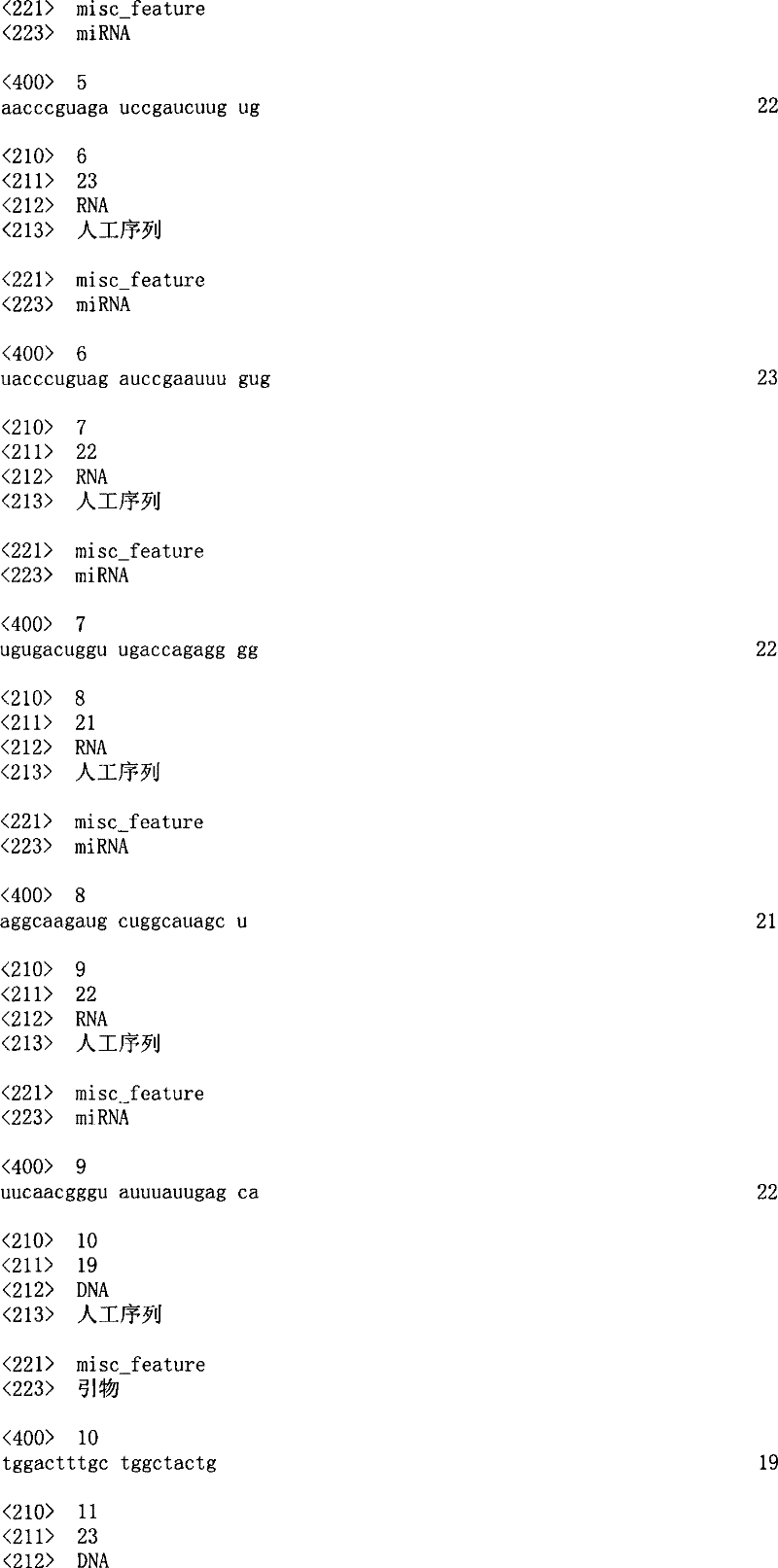
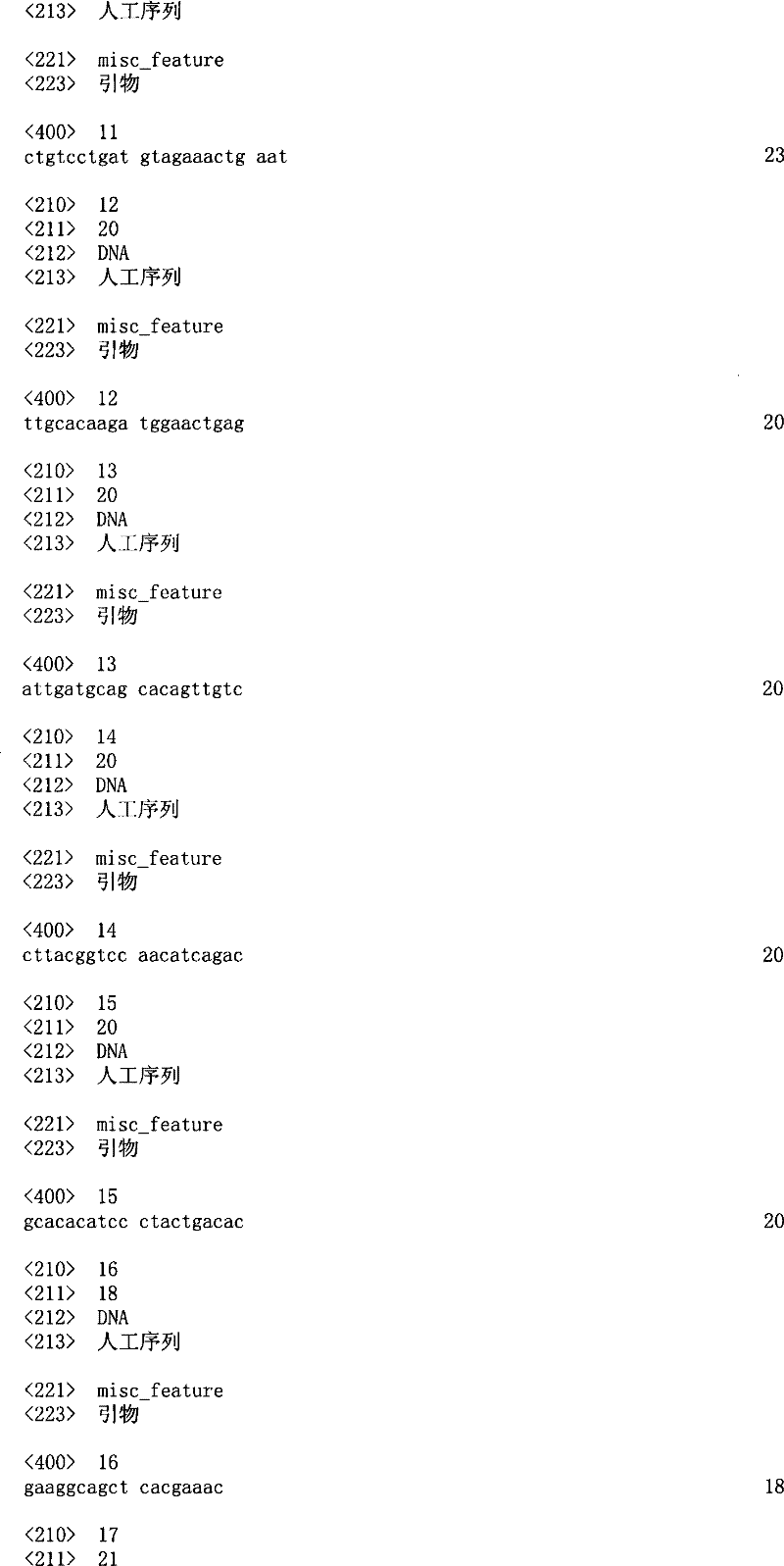


Claims (6)
Priority Applications (2)
| Application Number | Priority Date | Filing Date | Title |
|---|---|---|---|
| CN200810095841XA CN101376910B (en) | 2007-08-27 | 2008-04-30 | Use of miRNA genes in systemic lupus erythematosus disease diagnose and treatment |
| PCT/CN2008/072159 WO2009030153A1 (en) | 2007-08-27 | 2008-08-27 | The roles of mirnas in the diagnosis and treatment of systemic lupus erythematosus |
Applications Claiming Priority (3)
| Application Number | Priority Date | Filing Date | Title |
|---|---|---|---|
| CN200710045278 | 2007-08-27 | ||
| CN200710045278.0 | 2007-08-27 | ||
| CN200810095841XA CN101376910B (en) | 2007-08-27 | 2008-04-30 | Use of miRNA genes in systemic lupus erythematosus disease diagnose and treatment |
Publications (2)
| Publication Number | Publication Date |
|---|---|
| CN101376910A CN101376910A (en) | 2009-03-04 |
| CN101376910B true CN101376910B (en) | 2012-01-11 |
Family
ID=40420649
Family Applications (1)
| Application Number | Title | Priority Date | Filing Date |
|---|---|---|---|
| CN200810095841XA Active CN101376910B (en) | 2007-08-27 | 2008-04-30 | Use of miRNA genes in systemic lupus erythematosus disease diagnose and treatment |
Country Status (2)
| Country | Link |
|---|---|
| CN (1) | CN101376910B (en) |
| WO (1) | WO2009030153A1 (en) |
Families Citing this family (10)
| Publication number | Priority date | Publication date | Assignee | Title |
|---|---|---|---|---|
| CN102078621B (en) * | 2009-11-27 | 2013-04-10 | 中国科学院上海生命科学研究院 | Method and composition of regulating and controlling plasmacytoid dendritic cell I type interferon expression |
| CN102399852A (en) * | 2010-09-08 | 2012-04-04 | 上海市公共卫生临床中心 | Plasma miRNA spectrum and detection kit for predicting curative effect of interferon on chronic hepatitis B |
| BR112013033794A2 (en) * | 2011-06-27 | 2019-09-24 | Medimmune Llc | use of an effective amount of a composition, and method for assessing the presence, absence or amount of a biomarker |
| US20140228243A1 (en) * | 2011-09-04 | 2014-08-14 | Yissum Research Development Company Of The Hebrew University Of Jerusalem | Prognostic methods and compositions for predicting interferon treatment eficacy in a subject |
| CN102813926B (en) * | 2012-08-10 | 2014-07-02 | 中国医学科学院北京协和医院 | Application of miR-7 expression inhibitor in preparing medicines used for treating systemic lupus erythematosus |
| EP2954071B1 (en) * | 2013-02-08 | 2020-08-12 | Allegheny-Singer Research Institute | Cell-bound complement activation products as diagnostic biomarkers for pre-lupus |
| TWI698640B (en) * | 2018-04-23 | 2020-07-11 | 長庚醫療財團法人高雄長庚紀念醫院 | Methods for detecting or assessing the risk of developing lupus nephritis and application thereof |
| US20210349088A1 (en) * | 2018-10-18 | 2021-11-11 | Oklahoma Medical Research Foundation | Biomarkers For A Systemic Lupus Erythematosus (SLE) Disease Activity Immune Index That Characterizes Disease Activity |
| CN111603477B (en) * | 2019-02-25 | 2023-06-02 | 中国科学院分子细胞科学卓越创新中心 | Application of circular RNA in the preparation of therapeutic drugs for systemic lupus erythematosus |
| CN111378742A (en) * | 2020-04-16 | 2020-07-07 | 嘉兴程瑞医药科技有限公司 | MicroRNA biomarker and application thereof in preparation of autoimmune disease detection kit |
Citations (1)
| Publication number | Priority date | Publication date | Assignee | Title |
|---|---|---|---|---|
| WO2006137941A2 (en) * | 2004-11-12 | 2006-12-28 | Ambion, Inc. | Methods and compositions involving mirna and mirna inhibitor molecules |
Family Cites Families (1)
| Publication number | Priority date | Publication date | Assignee | Title |
|---|---|---|---|---|
| EP1771563A2 (en) * | 2004-05-28 | 2007-04-11 | Ambion, Inc. | METHODS AND COMPOSITIONS INVOLVING MicroRNA |
-
2008
- 2008-04-30 CN CN200810095841XA patent/CN101376910B/en active Active
- 2008-08-27 WO PCT/CN2008/072159 patent/WO2009030153A1/en not_active Ceased
Patent Citations (1)
| Publication number | Priority date | Publication date | Assignee | Title |
|---|---|---|---|---|
| WO2006137941A2 (en) * | 2004-11-12 | 2006-12-28 | Ambion, Inc. | Methods and compositions involving mirna and mirna inhibitor molecules |
Also Published As
| Publication number | Publication date |
|---|---|
| WO2009030153A1 (en) | 2009-03-12 |
| CN101376910A (en) | 2009-03-04 |
Similar Documents
| Publication | Publication Date | Title |
|---|---|---|
| CN101376910B (en) | Use of miRNA genes in systemic lupus erythematosus disease diagnose and treatment | |
| Hu et al. | Two common SNPs in pri-miR-125a alter the mature miRNA expression and associate with recurrent pregnancy loss in a Han-Chinese population | |
| US8349560B2 (en) | Method for diagnosing acute lymphomic leukemia (ALL) using miR-222 | |
| US8378088B2 (en) | Compositions comprising MIR34 therapeutic agents for treating cancer | |
| CN101842484B (en) | MIRNA expression in human peripheral blood microvesicles and use thereof | |
| US9315809B2 (en) | Differentially expressed microRNA molecules for the treatment and diagnosis of cancer | |
| US20100202973A1 (en) | Microrna molecules associated with inflammatory skin disorders | |
| JP6081798B2 (en) | Methods and compositions and miRNA inhibitors and targets for detecting and treating cancers associated with miRNA | |
| Cai et al. | MiR-17-5p promotes cervical cancer cell proliferation and metastasis by targeting transforming growth factor-β receptor 2. | |
| US20160160217A1 (en) | Compositions and methods for characterizing and treating muscular dystrophy | |
| US20140045924A1 (en) | Melanoma treatments | |
| Chiappinelli et al. | Reduced DICER1 elicits an interferon response in endometrial cancer cells | |
| US20120190729A1 (en) | Mirna inhibition of six1 expression | |
| AU2013224690B2 (en) | Oncogenic ALL-1 fusion proteins for targeting drosha-mediated microRNA processing | |
| KR20190005727A (en) | Use of microRNA-1236 as a diagnostic marker and therapeutic agent of granulosa cell tumor or Endometrial cancer | |
| Di Giuliani | Deciphering the impact of a diagnostic/prognostic miR-1, miR-26a-1 and miR-487 signature in the response to treatment in human glioblastomas | |
| KR101501562B1 (en) | Method for Detecting Diagnostic Marker of Pancreatic Cancer | |
| Zhou | tRNA Fragments: Expression and Function in Ovarian Cancer | |
| Chaparala | Role of micro RNA 148/152 family in cancer progression | |
| Pedersen | MicroRNA 21’s effect on apoptosis and insulin secretion in insulin secreting β-cell lines. |
Legal Events
| Date | Code | Title | Description |
|---|---|---|---|
| C06 | Publication | ||
| PB01 | Publication | ||
| C10 | Entry into substantive examination | ||
| SE01 | Entry into force of request for substantive examination | ||
| C14 | Grant of patent or utility model | ||
| GR01 | Patent grant | ||
| C53 | Correction of patent for invention or patent application | ||
| CB03 | Change of inventor or designer information |
Inventor after: Shen Nan Inventor after: Tang Yuanjia Inventor after: Cui Huijuan Inventor after: Luo Xiaobing Inventor after: Ni Xuming Inventor after: Liang Dong Inventor before: Shen Nan Inventor before: Tang Yuanjia Inventor before: Cui Huijuan Inventor before: Luo Xiaobing Inventor before: Ni Xuming |
|
| COR | Change of bibliographic data |
Free format text: CORRECT: INVENTOR; FROM: SHEN NAN TANG YUANJIA CUI HUIJUAN LUO XIAOBING NI XUMING TO: SHEN NAN TANG YUANJIA CUI HUIJUAN LUO XIAOBING NI XUMING LIANG DONG |
|
| CP03 | Change of name, title or address |
Address after: 200031 Yueyang Road, Shanghai, No. 319, No. Patentee after: Shanghai Institute of nutrition and health, Chinese Academy of Sciences Address before: 200031 No. 320, Yueyang Road, Shanghai Patentee before: SHANGHAI INSTITUTES FOR BIOLOGICAL SCIENCES, CHINESE ACADEMY OF SCIENCES |
|
| CP03 | Change of name, title or address |