CN101331688A - Receiver with Chip Level Equalization - Google Patents
Receiver with Chip Level Equalization Download PDFInfo
- Publication number
- CN101331688A CN101331688A CNA2006800475659A CN200680047565A CN101331688A CN 101331688 A CN101331688 A CN 101331688A CN A2006800475659 A CNA2006800475659 A CN A2006800475659A CN 200680047565 A CN200680047565 A CN 200680047565A CN 101331688 A CN101331688 A CN 101331688A
- Authority
- CN
- China
- Prior art keywords
- signal sample
- filtering
- receiver
- branch
- equalizer
- Prior art date
- Legal status (The legal status is an assumption and is not a legal conclusion. Google has not performed a legal analysis and makes no representation as to the accuracy of the status listed.)
- Pending
Links
Images


Landscapes
- Cable Transmission Systems, Equalization Of Radio And Reduction Of Echo (AREA)
Abstract
Description
技术领域 technical field
本发明涉及一种在利用正交扩频码的码分复用通信系统的接收机中控制权值适配的接收机设备和方法。作为示例,本发明涉及一种用于全球移动通信系统(UMTS)第5版标准所引入的高速下行分组数据接入(HSDPA)系统的接收机设备和权值适配方法。The present invention relates to a receiver apparatus and method for controlling weight adaptation in a receiver of a code division multiplexing communication system using orthogonal spreading codes. As an example, the present invention relates to a receiver device and weight adaptation method for a High Speed Downlink Packet Data Access (HSDPA) system introduced by the Universal Mobile Telecommunications System (UMTS) Release 5 standard.
背景技术 Background technique
码分多址(CDMA)系统基于数字宽带扩频技术,其中多个独立用户信号通过所分配的可用无线电频段进行传送。在CDMA中,每个用户信号包括不同的正交码和调制载波的伪随机二进制序列,由此扩展了波形的频谱,从而允许大量用户信号共享相同的频谱。在接收机中,利用相关器对用户信号进行分离,相关器只能够对具有所选正交码的信号进行解扩。其正交码不匹配的其他用户信号不能被解扩,并且这样的信号贡献了系统噪。系统的信噪比(SNR)由所需信号功率与所有干扰信号功率之和的比值确定,并通过系统处理增益和扩频带宽与基带数据速率的比值得到增强。在第3代宽带CDMA(WCDMA)中,可以同时支持不同的扩频因子和可变用户数据速率。A Code Division Multiple Access (CDMA) system is based on a digital wideband spread spectrum technique in which multiple independent user signals are transmitted over an allocated available radio frequency band. In CDMA, each user signal includes a different orthogonal code and a pseudo-random binary sequence that modulates the carrier, thereby spreading the spectrum of the waveform, thereby allowing a large number of user signals to share the same spectrum. In the receiver, the user signals are separated using correlators, which are only capable of despreading signals with selected orthogonal codes. Other user signals whose orthogonal codes do not match cannot be despread, and such signals contribute to system noise. The signal-to-noise ratio (SNR) of a system is determined by the ratio of the desired signal power to the sum of the powers of all interfering signals, and is enhanced by the system processing gain and the ratio of the spreading bandwidth to the baseband data rate. In the third generation of Wideband CDMA (WCDMA), different spreading factors and variable user data rates can be supported simultaneously.
通过使用扩频码,传送信号的频带被扩宽至码片速率,码片速率大于实际数据或信息符号的速率。例如,如果使用的扩频码具有8个数据符号(称为“码片”)的长度,则针对每个数据符号将传送8个码片。扩频码的正交特性提供了唯一码的特性,这在数学上表示所使用的或要用于通信的扩频码各自的内积或相关性为零。扩频码的正交性确保了由扩频码分别编码的信号或数据符号序列的传送对其他正交扩频码所编码的对应于通信系统中的其他用户的其他信号既不产生也不传播副作用。寻找某个发射机的某个扩频码的接收机将由正交扩频码编码的信号视为射频(RF)信道的噪声。由于扩频码可以具有不同的长度,因此不同长度的扩频码之间也必须具有正交性。By using spreading codes, the frequency band of the transmitted signal is widened to a chip rate, which is greater than the actual data or information symbol rate. For example, if the spreading code used has a length of 8 data symbols (called "chips"), then 8 chips will be transmitted for each data symbol. The orthogonal nature of the spreading codes provides the property of a unique code, which mathematically means that the respective inner product or correlation of the spreading codes used or intended for communication is zero. The orthogonality of the spreading codes ensures that the transmission of the signal or sequence of data symbols respectively encoded by the spreading codes neither generates nor propagates other signals corresponding to other users in the communication system encoded by other orthogonal spreading codes side effect. A receiver looking for a certain spreading code for a certain transmitter sees a signal encoded by an orthogonal spreading code as noise on the radio frequency (RF) channel. Since spreading codes can have different lengths, there must also be orthogonality between spreading codes of different lengths.
扩频码的构建可以通过如图2所示的正交可变扩频因子(OVSF)树来实现,其中缩写“SF”指示表征扩频码长度的扩频因子和OVSF树的等级。在每一个树等级内,可用扩频码具有相同的长度并正交。扩频因子也可以通过码片速率与数据符号速率之间的比值或码片周期与数据符号周期之间的比值来表示。不同用户的扩频码可落入OVSF树的不同等级内,由此提供各种等级的服务质量(QoS)。可以通过从4至512范围的扩频因子对用户符号进行扩频。The construction of spreading codes can be realized by an Orthogonal Variable Spreading Factor (OVSF) tree as shown in Figure 2, where the abbreviation "SF" indicates the spreading factor that characterizes the length of the spreading code and the level of the OVSF tree. Within each tree level, the available spreading codes have the same length and are orthogonal. The spreading factor can also be expressed by the ratio between the chip rate and the data symbol rate or the ratio between the chip period and the data symbol period. Spreading codes for different users can fall into different levels of the OVSF tree, thereby providing various levels of quality of service (QoS). User symbols may be spread by a spreading factor ranging from 4 to 512.
然而,在CDMA系统中,一般而言,由于多径传播和频率选择性衰落,各用户波形之间的正交性退化,并且多址干扰削弱了接收机的性能。尽管在基站(BS)侧传送的用户信号是正交的,由于发射机与接收机之间的传播信道的多径效应,这种正交性在移动站(MS)前端可能不复存在,引起多径效应的原因是信道可能由针对用户的每个信号的多于一个的截然不同的传播路径构成。因此,多径是一种传播现象,其导致无线电信号通过两个或更多个路径到达接收机天线,因此到达接收机的无线电信号具有不同的时延。造成多径传播的原因包括大气波导、电离层反射和折射以及诸如山脉和建筑物之类的地面物体的反射。However, in CDMA systems, generally speaking, due to multipath propagation and frequency-selective fading, the orthogonality between individual user waveforms degrades, and multiple access interference impairs receiver performance. Although the user signals transmitted at the base station (BS) side are orthogonal, due to the multipath effect of the propagation channel between the transmitter and receiver, this orthogonality may no longer exist at the mobile station (MS) front end, causing The reason for multipath effects is that a channel may consist of more than one distinct propagation path for each signal of a user. Thus, multipath is a propagation phenomenon that causes a radio signal to take two or more paths to reach a receiver antenna, so that the radio signal arrives at the receiver with different time delays. Causes of multipath propagation include atmospheric ducting, ionospheric reflection and refraction, and reflections from terrestrial objects such as mountains and buildings.
图3示出了典型的CDMA通信系统,其包括多个移动或用户站MS1,...,MSK,并使得多个用户(1,...,K)能够与基站BS1进行通信。每个基站BS1和移动台MS1,...MSK包括发射机


以下三种常见方法用于克服正交性损失或干扰问题,这三种方法分别是:The following three common methods are used to overcome the problem of orthogonality loss or interference, these three methods are:
第一种也是最直接的方法是将多径传播所产生的干扰视为加性高斯白噪声(AWGN)处理,并实现传统的Rake接收机,以通过经由与特定用户扩频码的进行相关来收集接收信号的多种延迟形式的能量,独立于其他用户符号地检测用户符号。The first and most straightforward approach is to treat the interference caused by multipath propagation as Additive White Gaussian Noise (AWGN) and implement a conventional Rake receiver to detect Energy in multiple delayed forms of the received signal is harvested to detect user symbols independently of other user symbols.
第二种方法是干扰抑制,其通过使用码片速率信道均衡器部分地恢复正交性,并再次通过与扩频码进行相关,独立于其他用户符号地估计特定用户的符号。The second approach is interference suppression, which partially restores orthogonality by using a chip-rate channel equalizer, and again by correlating with a spreading code, estimating a particular user's symbols independently of other users' symbols.
最后,第三种方法是干扰消除(IC)。首先,通过前两种方法之一估计已知的有效干扰扩频码的符号。其后,对所估计的符号进行重新扩频、重新信道化,并将其从原始接收信号中删除。Finally, the third method is interference cancellation (IC). First, the symbols of known effective interfering spreading codes are estimated by one of the first two methods. Thereafter, the estimated symbols are respread, rechannelized, and deleted from the original received signal.
如上所述,由于发射机与接收机之间的传播信道的多径效应,正交性在移动站MS前端可能不复存在。这种正交性的损失可能引起符号估计中的码间干扰(也被称为多用户干扰或多址干扰)、码片间干扰和符号间干扰。最优或次最优类型的接收机,即多用户检测器(MUD)和干扰消除器(IC),在大多数情况下需要知道所有有效用户的信号和信道参数,以减轻多径效应并以最可靠的方式检测所需数据流。然而,由于其高度复杂以及通常无法获知所有用户的传输参数的事实,在移动站中实现MUD或IC的可能性受到限制。一种很实际且被广泛利用的次优解决方案是根据上述第一种方法的传统Rake接收机,它对所需用户的码执行匹配滤波操作,以便多用户干扰被视为加性白噪声。As mentioned above, due to the multipath effects of the propagation channel between the transmitter and the receiver, the orthogonality may not exist at the front end of the mobile station MS. This loss of orthogonality can cause intersymbol interference (also known as multiuser interference or multiple access interference), interchip interference, and intersymbol interference in symbol estimation. Receivers of optimal or sub-optimal type, i.e. multiuser detectors (MUDs) and interference cancellers (ICs), in most cases need to know the signal and channel parameters of all effective users in order to mitigate multipath effects and to Most reliable way to detect desired data flow. However, the possibility to implement a MUD or IC in a mobile station is limited due to its high complexity and the fact that the transmission parameters of all users are usually not known. A very practical and widely exploited sub-optimal solution is a conventional Rake receiver according to the first method above, which performs a matched filtering operation on the codes of the desired users so that the multi-user interference is seen as additive white noise.
然而,在使用较小的扩频因子来实现高数据速率时,例如在HSDPA系统中,由于多径干扰变得显著并且扩频序列的相关特性被破坏的事实,Rake接收机的性能下降。因此,具有较小扩频因子的系统考虑根据上述第二种方法的均衡器,以恢复用户之间的正交性并限制干扰,以便能够实现更高的数据速率。这对于像HSDPA这样的、以提供非常高的数据速率为目标的系统来说尤为重要。However, when using smaller spreading factors to achieve high data rates, such as in HSDPA systems, the performance of the Rake receiver degrades due to the fact that multipath interference becomes significant and the correlation properties of the spreading sequences are destroyed. Therefore, systems with smaller spreading factors consider an equalizer according to the second method described above to restore the orthogonality between users and limit interference so that higher data rates can be achieved. This is especially important for systems like HSDPA that aim to provide very high data rates.
在UMTS标准中,定义了具有不同延迟和不同顺序需要的四种QoS类别。这四种类别是:具有低延迟和严格顺序的会话类(例如话音)、具有适度延迟和严格顺序的流类(例如视频)、具有适度延迟和适度顺序的交互类(例如网页浏览)、以及没有延迟保证也没有顺序的背景类(例如大批量数据传送)。在这些业务类中,背景类和交互类具有突发特性。突发性触发了用户在时间上共享一些资源的思想,其中最重要的是下行链路的正交码,以及其他应用在这些信道上的支撑技术、扩展、改变和删除。因此,HSDPA作为一种可以通过使用快速物理层重传和传输结合以及基站(或在UMTS技术中的Node B)所控制的链路适配来提高下行链路数据吞吐量的系统而出现。在HSDPA中,WCDMA的两个主要特征被禁用了,即可变扩频因子和快速功率控制。它们被自适应编码速率和自适应调制以及广泛的多码操作取代。扩频因子固定为SF=16。用户可以同时使用多达15个码,这使HSDPA链路适配具有很大的动态范围并保持良好的频谱效率。调度处理在Node B中完成,以便在必要时并且信道条件使得该策略有效时,可以给一个用户分配容量。In the UMTS standard, four QoS classes with different delay and different sequence requirements are defined. The four classes are: Conversational classes with low latency and strict order (e.g. voice), Streaming classes with moderate delay and strict order (e.g. video), Interactive classes with moderate delay and order (e.g. web browsing), and Background classes that have no latency guarantees and no order (such as bulk data transfers). Among these business classes, the background class and the interactive class have burst characteristics. The burstiness triggers the idea of users sharing some resources in time, the most important of which are the orthogonal codes for the downlink, and other supporting techniques, extensions, changes and deletions applied on these channels. Thus, HSDPA emerged as a system that can improve downlink data throughput by using a combination of fast physical layer retransmissions and transmissions and link adaptation controlled by the base station (or Node B in UMTS technology). In HSDPA, two main features of WCDMA, variable spreading factor and fast power control, are disabled. They are replaced by adaptive coding rate and adaptive modulation and extensive multicode operation. The spreading factor is fixed at SF=16. Users can use up to 15 codes at the same time, which enables HSDPA link adaptation to have a large dynamic range and maintain good spectral efficiency. The scheduling process is done in the Node B so that capacity can be allocated to a user when necessary and channel conditions make this policy effective.
为了支持新的HSDPA功能,引入了两个附加类型的信道。在从BS或Node B到MS的下行链路方向上,一个或更多个共享控制信道(HS-SCCH)广播HSDPA信道分配标识、传输格式和混合自动请求重传(HARQ)处理标识符。在上行链路方向,高速专用物理控制信道(HS-DPCCH)携带HARQ的状态报告以及信道质量指示符(CQI)。In order to support new HSDPA functions, two additional types of channels have been introduced. In the downlink direction from the BS or Node B to the MS, one or more shared control channels (HS-SCCH) broadcast the HSDPA channel assignment identification, transport format and hybrid automatic repeat request (HARQ) process identifier. In the uplink direction, the High Speed Dedicated Physical Control Channel (HS-DPCCH) carries HARQ status reports and Channel Quality Indicators (CQI).
基于上述两种方法的均衡概念已经被应用于不同系统多年。因此,存在多个均衡器方案。The concept of equalization based on the above two methods has been applied to different systems for many years. Therefore, there are multiple equalizer schemes.
作为示例,US 6 658 047公开了一种用于CDMA通信系统的接收机的自适应信道均衡器。用于估计信道的冲击响应的估计器为自适应均衡器提供了参考,并且自适应均衡器操作用于估计信道传送的码片序列并恢复接收信号之间的正交性。自适应均衡器包括用于利用盲自适应算法(被称为Griffith算法)的电路,以估计信道传送的码片序列。As an example, US 6 658 047 discloses an adaptive channel equalizer for a receiver of a CDMA communication system. An estimator for estimating the impulse response of the channel provides a reference for the adaptive equalizer, and the adaptive equalizer operates to estimate the chip sequence transmitted by the channel and restore the orthogonality between the received signals. An adaptive equalizer includes circuitry for using a blind adaptive algorithm, known as the Griffith algorithm, to estimate the sequence of chips transmitted by the channel.
此外,Schniter P.等人的“Adaptive Chip-Rate Equalisation ofDownlink Multirate Wideband CDMA”,IEEE Transactions on SingalProcessing,Volume 53,Issue 6,June 2005,pp.2205-2215公开了一种使用多址干扰(MAI)滤波和/或消除的判决导向(DD)码片速率自适应均衡方案。在捕获模式下,使用码复用导频从码起始或失锁开始对均衡器进行适配。使用MAI滤波产生了3阶最小均方(LMS)算法,其较标准(即一阶)LMS算法在非静态环境下具有显著的优点。在跟踪模式下,判决方向有利于在均衡器更新中消除MAI,从而增强了性能。In addition, "Adaptive Chip-Rate Equalization of Downlink Multirate Wideband CDMA" by Schniter P. et al., IEEE Transactions on Signal Processing, Volume 53,
图4示出了上述现有技术中所描述的DD码片速率自适应均衡的示意框图。在DD模式下,接收机对所有有效用户的符号做出临时的硬判决,并使用该判决来构造传送序列的延迟的近似拷贝。接着,传送序列被用于以码片速率更新自适应滤波器。由于不可能在没有正确调节均衡器的情况下做出可靠的信号估计,因此DD模式仅在之前的导频训练模式收敛后才工作。根据图4,符号估计过程包括通过乘以解扰信号s*(i-v)对临时均衡器的输出进行的解扰。接着,在解扰单元4针对每个有效用户计算匹配滤波器的输出,并在检测单元6中对匹配滤波器的输出进行量化。然后,将硬符号估计和扩频码用于通过在重扩频单元8中进行重新扩频并乘以重新加扰信号s(i-Nmax-v)来重新产生多用户序列的延迟的近似拷贝。重新加扰操作产生信号
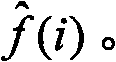


在HSDPA系统中,存在两个可能的阶段,在这两个阶段期间,UMTS技术中的MS或用户设备(UE)可以对信道进行跟踪(估计)和/或均衡,这两个阶段是非有效阶段和有效阶段。非有效阶段(或状态)是当用户监听信道,但是没有给他分配高速下行链路共享信道(HSDSCH)的情况;而有效阶段是给用户分配了至少一个HSDSCH码的情况。上述由Schniter等人所描述的自适应均衡器没有提供针对HSDPA系统中所提供的高速信道的最优解决方案。由于延迟均衡器的适配分支引入了很大的延迟,因此适配的滤波器权值或抽头不能直接用于临时均衡器的上游分支的滤波操作。在非常快速变化的信道中,预测单元2的预测机制实质上是根据自适应均衡器的下游分支的滤波权值来猜测临时均衡器的上游分支的滤波权值。此外,引入了与系统中的最大有效扩频因子相对应的重大延迟,该延迟在某些情况下甚至可能达到512个码片。此外,在Schniter等人所提出的自适应均衡器方案中,假定知道系统中所有的有效码。因此,需要检测有效码位于OVSF分层结构中的何处并估计其幅度。然而,这是非常复杂的过程,因而不容易实现。即便实现了,也可能出现误检测、漏检测和错误估计幅度的问题。此外,解扩是在OVSF树的各等级中独立地对每个有效码进行的,这导致了很高的计算复杂度。In HSDPA systems, there are two possible phases during which a MS or User Equipment (UE) in UMTS technology can track (estimate) and/or equalize the channel, these two phases are inactive phases and valid phase. The inactive phase (or state) is when the user listens to the channel, but is not assigned a High Speed Downlink Shared Channel (HSDSCH); and the active phase is when at least one HSDSCH code is assigned to the user. The adaptive equalizer described above by Schniter et al. does not provide an optimal solution for the high speed channels provided in HSDPA systems. Since the adaptation branch of the delayed equalizer introduces a large delay, the adapted filter weights or taps cannot be directly used in the filtering operation of the upstream branch of the temporal equalizer. In a very rapidly changing channel, the prediction mechanism of the
发明内容 Contents of the invention
因此,本发明的目的是提供一种改进的接收机端权值适配控制方法,通过该方法,可以在复杂度增加很小的情况下,降低干扰功率的不利影响。根据第一个方面,分别通过如权利要求1所述的接收机设备和权利要求16所述的权值适配控制方法来实现本发明的目的。Therefore, the object of the present invention is to provide an improved weight adaptation control method at the receiver, by which the adverse effect of interference power can be reduced with little increase in complexity. According to the first aspect, the object of the present invention is achieved by the receiver device as claimed in
相应地,适配分支中所引入的延迟是固定的,并被减小至仅16个码片的一个符号周期。因此,滤波器权值可以从适配分支的均衡器复制到滤波分支的均衡器而不需要任何预测。此外,符号估计的非线性滤波可以基于特定的信道码的知识,从而实现更为鲁棒的方法和系统。Accordingly, the delay introduced in the adaptation branch is fixed and reduced to one symbol period of only 16 chips. Therefore, the filter weights can be copied from the equalizer of the adaptation branch to the equalizer of the filtering branch without any prediction. Furthermore, non-linear filtering of symbol estimates can be based on knowledge of specific channel codes, enabling more robust methods and systems.
此外,在根据权利要求3和16的解决方案中,只需要一个均衡功能或单元,这明显降低了复杂度、开销和功率消耗。Furthermore, in the solutions according to
根据附加的或备选的第二方面,上述目的可以通过如权利要求19所述的接收机设备和权利要求21所述的权值适配控制方法来实现。According to an additional or alternative second aspect, the above objects can be achieved by the receiver device as claimed in claim 19 and the weight adaptation control method as claimed in claim 21 .
相应地,提出了一种利用选择性权值适配方案的混合均衡器架构,其中,基于通信系统的阶段(即有效阶段和非有效阶段)来选择更新的算法。由此,希望滤波器权值或抽头在有效阶段的开始时更加可靠,以减小计算负荷和复杂度。在非有效阶段期间使用的第二更新方案的更新速率可以被选择为低于在有效阶段期间所用的更新速率的值。必须以不放松信道跟踪能力的方式进行对第二权值更新方案的选择。Correspondingly, a hybrid equalizer architecture utilizing a selective weight adaptation scheme is proposed, where the updated algorithm is selected based on the phase of the communication system (i.e. active and inactive). Thus, it is desirable that the filter weights or taps be more reliable at the beginning of the active phase to reduce computational load and complexity. The update rate of the second update scheme used during the non-active phase may be chosen to be a lower value than the update rate used during the active phase. The selection of the second weight update scheme must be done in such a way that the channel tracking capability is not relaxed.
在HSDPA系统的特定示例中,时间周期可以对应于16个码片正交扩频码的固定符号长度。因此,只引入了16个码片的短延迟,以使得适配分支中所更新的权值可以被立即用于滤波分支的第一均衡器装置。In the specific example of an HSDPA system, the time period may correspond to a fixed symbol length of 16 chips for an orthogonal spreading code. Therefore, only a short delay of 16 chips is introduced so that the updated weights in the adaptation branch can be immediately used in the first equalizer means of the filtering branch.
滤波分支可以包括用于通过在单个码树等级采用快速WalshHadamard变换(FWHT)对经解扰和均衡的信号样本进行解扩,其中将解扩信号样本提供给反馈装置。利用固定等级的FWHT提供了降低解扩复杂度的优点。在16个码片的固定符号长度的示例中,解扩复杂度可以降低至1/4。可以在扩频装置中,使用FWHT再次对通过反馈装置反馈的滤波信号的估计进行重新扩频。The filtering branch may comprise means for despreading the descrambled and equalized signal samples by employing a Fast Walsh Hadamard Transform (FWHT) at the level of a single code tree, wherein the despread signal samples are provided to the feedback means. Utilizing a fixed level of FWHT offers the advantage of reducing despreading complexity. In the example of a fixed symbol length of 16 chips, the despreading complexity can be reduced to 1/4. The estimate of the filtered signal fed back by the feedback means may be respread again using the FWHT in the spreading means.
此外,可以提供减法装置,用于获得从第二均衡器装置输出的均衡信号样本与从反馈装置获得的反馈信号样本之间的差值,并将这个差值提供给更新装置,该更新装置用于对第二均衡器装置的均衡器权值进行适配。由此,估计的码片级信号可作为用于位于适配分支的第二均衡器装置的一种训练序列或期望信号。在单个均衡器的备选实现方式中,减法装置可以被布置用于获得均衡器装置输出的、并经另一个被布置用于使滤波信号样本延迟与数据符号相对应的时间周期的延迟装置延迟之后的滤波信号样本与从反馈装置获得的反馈信号样本之间的差值,并将差值提供给更新装置,该更新装置用于对均衡器装置的均衡器权值进行适配。Furthermore, subtraction means may be provided for obtaining the difference between the equalized signal samples output from the second equalizer means and the feedback signal samples obtained from the feedback means, and supplying this difference to updating means, which update means uses for adapting the equalizer weights of the second equalizer means. Thereby, the estimated chip-level signal can be used as a kind of training sequence or desired signal for the second equalizer means located in the adaptation branch. In an alternative implementation of a single equalizer, the subtraction means may be arranged to obtain the output of the equalizer means and delayed via another delay means arranged to delay the filtered signal samples by a time period corresponding to a data symbol The difference between the filtered signal samples and the feedback signal samples obtained from the feedback means is then provided to update means for adapting the equalizer weights of the equalizer means.
此外,提供选择装置,用于在给接收机设备分配至少一个信道码的有效阶段期间选择第二均衡器装置,并在没有给接收机设备分配信道码的非有效阶段期间选择其他权值更新装置。这样的混合均衡器架构提供了以下优点:在信道的非有效阶段和有效阶段使用不同的更新机制和支撑的期望信号或统计特性,从而降低了运算负荷。特别地,其他权值更新装置可以被布置为基于第一均衡器装置的输入和输出的直接比较进行操作。一个特定但不限于的示例是,其他权值更新装置可被设置为基于Griffith算法进行操作。Furthermore, selection means are provided for selecting the second equalizer means during an active phase in which at least one channel code is assigned to the receiver device and for selecting the other weight updating means during an inactive phase in which no channel code is assigned to the receiver device . Such a hybrid equalizer architecture offers the advantage of reducing computational load by using different update mechanisms and supporting desired signal or statistical properties during the inactive and active phases of the channel. In particular, the other weight updating means may be arranged to operate based on a direct comparison of the input and output of the first equalizer means. As a specific but not limited example, other weight updating means can be configured to operate based on the Griffith algorithm.
作为另外的选择,反馈装置可以被布置为将在滤波分支中获得的符号估计分类为:应承载将被硬检测的最可靠的估计的下行链路共享信道的第一分支组,将第一输出从反馈中排除并被已知的常量序列取代或要通过线性最小均方误差(LMMSE)加权进行缩放而被反馈的第二分支组,以及再次通过LMMSE加权进行缩放而反馈的剩余的第三分支组。如果所估计的LMMSE权值在任意特定分支均为负,则用零代替。这最后的情况等同于阻断这些分支的反馈,并且这发生在特定分支的功率低于预定阈值σth 2时。这样的混合机制提供了以下优点:只显式地使用特定下行链路共享信道的知识,从而改进了系统的鲁棒性。特别地,应用于第三分支组的预定阈值可以与所有下行链路共享信道的硬检测和软检测值之间的平均能量水平相对应。在下行链路共享信道码间进行平均减小了估计误差的方差。Alternatively, the feedback means may be arranged to classify the symbol estimates obtained in the filtering branch into: a first group of branches which should carry the most reliable estimate of the downlink shared channel to be hard detected, the first output The second group of branches excluded from feedback and replaced by a known constant sequence or to be fed back scaled by linear minimum mean square error (LMMSE) weighting, and the remaining third branch fed back again scaled by LMMSE weighting Group. If the estimated LMMSE weights are negative at any particular branch, they are replaced by zero. This last case is equivalent to blocking the feedback of these branches, and this occurs when the power of a particular branch is below a predetermined threshold σ th 2 . Such a hybrid mechanism provides the advantage of only explicitly using the knowledge of a specific downlink shared channel, thereby improving the robustness of the system. In particular, the predetermined threshold applied to the third branch group may correspond to the average energy level between the hard detection and soft detection values of all downlink shared channels. Averaging across downlink shared channel codes reduces the variance of the estimation error.
LMMSE加权是对信号与干扰加噪声比(SINR)的测量。通过这种测量,为硬线性判决和加权线性判决的混合提供了清晰可靠的测量。LMMSE weighting is a measure of the signal-to-interference-plus-noise ratio (SINR). With this measure, a clear and reliable measure is provided for a mixture of hard linear decisions and weighted linear decisions.
可以按照以下方式计算对剩余的码分支所进行的LMMSE加权。假定任意分支k的瞬时功率是
硬导频添加与第一分支的缩放线性反馈之间的复用机制需要阈值。如果导频音功率为PCPICH,则所计算的最优阈值为
在从属权利要求中定义另外的优点展开。Further advantageous developments are defined in the dependent claims.
附图说明 Description of drawings
现在,基于优选实施例,参考附图描述本发明,在附图中:Now, based on a preferred embodiment, the invention is described with reference to the accompanying drawings, in which:
图1示出了本发明可以在其中实现的接收机架构的示意框图;Figure 1 shows a schematic block diagram of a receiver architecture in which the present invention can be implemented;
图2示出了正交可变扩频因子(OVSF)树的图形表示;Figure 2 shows a graphical representation of an Orthogonal Variable Spreading Factor (OVSF) tree;
图3示出了多用户通信系统的典型结构;Figure 3 shows a typical structure of a multi-user communication system;
图4示出了根据现有技术的判决导向的码片速率自适应均衡器的示意框图;Fig. 4 shows a schematic block diagram of a decision-oriented chip rate adaptive equalizer according to the prior art;
图5示出了根据优选实施例的利用相应的更新算法的非有效阶段和有效阶段的时间图;Figure 5 shows a time diagram of the non-valid phase and the valid phase with corresponding update algorithms according to a preferred embodiment;
图6示出了根据第一优选实施例的均衡器架构的框图;Figure 6 shows a block diagram of an equalizer architecture according to a first preferred embodiment;
图7示出了与优选实施例中的选择性非线性滤波操作相关的图;以及Figure 7 shows a diagram related to the selective non-linear filtering operation in the preferred embodiment; and
图8示出了根据第二优选实施例的均衡器架构的框图。Fig. 8 shows a block diagram of an equalizer architecture according to a second preferred embodiment.
具体实施方式 Detailed ways
在下文中,将基于根据UMTS标准第5版规范的HSDPA数据接入系统来描述优选实施例。HSDPA已经发展到在下行链路方向上提供高速数据速率。由于这个特征以及由于HSPDA信道的色散特性,根据上述第一种方法的传统Rake接收机不再被考虑,而根据上述第二种方法的均衡器方案被认为是关键解决方案。In the following, preferred embodiments will be described based on the HSDPA data access system according to the UMTS standard Release 5 specification. HSDPA has been developed to provide high speed data rates in the downlink direction. Due to this feature and due to the dispersion properties of the HSPDA channel, the traditional Rake receiver according to the first method above is no longer considered, while the equalizer scheme according to the second method above is considered as a key solution.
图1示出了本发明的优选实施例可以在其中实现的接收机10的示意框图。接收机10具有自适应干扰抑制算法,该算法基于信道均衡并适用于以扰码的方式使用正交扩频码的同步CDMA系统。特别地,接收机10不必需具有任何用于适配均衡的训练序列或训练信息。接收机10只需要初始权值,该初始权值可能需要或可能不需要要求训练序列的信道估计方案。Fig. 1 shows a schematic block diagram of a
根据图1,天线1001至100N中至少一根天线从通信信道接收信号。该信号被耦合至包括模数(A/D)转换的传统RF收发机110。传统RF收发机110可选地执行码片波形滤波。将转换后的信号r1至rN转发至信道冲击响应估计器120和自适应码片估计器130。信道冲击响应估计器120操作用于估计信道的冲击响应,并向自适应码片估计器130提供参考输入因子或权值h1至hN,以提供初始权值。将自适应码片估计器130的输出耦合至符号同步码相关器140。相关器140通过将自适应码片估计器130的输出d乘以码生成器150的输出来对自适应码片估计器130的输出d进行解扩,并在符号周期内进行积分。码生成器150能够根据图2中的上述OVSF树生成所需的扩频码。将相关器140的输出耦合至传统的解交织器160,解交织器160的内部被耦合至传统解码器170,传统解码器170输出数据判决。According to Fig. 1, at least one of the antennas 1001 to 100N receives a signal from a communication channel. This signal is coupled to a
所建议的通过信道冲击响应估计器120和自适应码片估计器130所实现的均衡器功能,通过在接收机处通过估计所传送的多用户码片并由此均衡信道来努力恢复用户波形的正交性,来抑制多址干扰。根据完美估计的码片序列,通过将多用户码片序列与扰码和用户扩频码进行相关,可以恢复期望的用户信号而没有来自其他用户的任何残留的干扰。The proposed equalizer function, implemented by the channel
用于基于UMTS系统的CDMA的自适应方法的一个问题是没有可用的可靠的训练多用户码片序列。不过,通过使用期望信号(多用户码片序列)与接收信号之间的相关性的知识,可以不需要这样的训练序列。为此,接收机10采用了信道冲击响应估计器120来估计信道冲击响应。One problem with adaptive methods for CDMA in UMTS based systems is that no reliable training multi-user chip sequences are available. However, by using the knowledge of the correlation between the desired signal (multi-user chip sequence) and the received signal, such training sequences may not be needed. To this end, the
根据优选实施例,提出了基于码片级LMS算法的变体的混合均衡器架构。均衡器权值的更新规则或者在HSDPA信道的非有效时段是Griffith算法,或者在有效时段是新的基于判决导向的方案,该新方案通过利用HSDPA码的部分码知识来利用所有可用的功率。由此,滤波器抽头或权值的更新可以以低于码片速率的速率进行,从而重要地节省了复杂度。与基于传统Rake接收机的解决方案相比,优选实施例提供了显著的增益。According to a preferred embodiment, a hybrid equalizer architecture based on a variant of the chip-level LMS algorithm is proposed. The update rule for the equalizer weights is either Griffith's algorithm in the inactive period of the HSDPA channel, or a new decision-oriented scheme in the active period, which utilizes all available power by exploiting partial code knowledge of the HSDPA code. Thus, the update of filter taps or weights can be performed at a rate lower than the chip rate, resulting in important savings in complexity. The preferred embodiment provides significant gains compared to conventional Rake receiver based solutions.
在HSDPA系统的现有示例中,提供了两个可能的阶段,在这两个阶段期间,例如第三代条件下的移动终端或用户设备(UE)之类的终端设备可以对信道进行跟踪或估计和/或均衡。将这两个阶段称为非有效阶段和有效阶段。非有效阶段或状态是当用户监听信道,但是没有高速下行共享信道HSDSCH码分配给他;另一方面,有效阶段或状态是给用户分配至少一个HSDSCH码。在非有效和有效阶段期间,可以使用类似的自适应均衡器架构,但是更新机制和支撑的期望信号或统计特性不同。In existing examples of HSDPA systems, two possible phases are provided during which a terminal device such as a mobile terminal or user equipment (UE) in third generation conditions can track the channel or Estimation and/or equalization. These two phases are referred to as the non-valid phase and the valid phase. The inactive stage or state is when the user monitors the channel, but no high-speed downlink shared channel HSDSCH code is allocated to him; on the other hand, the active stage or state is to allocate at least one HSDSCH code to the user. During the inactive and active phases, a similar adaptive equalizer architecture can be used, but with different update mechanisms and supported desired signals or statistical properties.
图5示出了指示非有效阶段I和有效阶段A以及对应的用于更新均衡器权值的更新机制的示意时间图。选择更新机制是为了在运算负荷、估计速度、干扰抑制等方面优化均衡器操作。在非有效阶段I,更新机制应简单地不放松对时变信道的跟踪能力。为此,已知的Griffith算法G一般用于训练序列(期望信号)不可用或不可靠时。在非有效阶段I期间使用的Griffith算法G通过利用基站总信号的方差和信道估计,近似得到Wiener滤波的输入/输出互相关部分。这提供了以下优点:在有效阶段A开始时的滤波器抽头将比简单地考虑Rake接收机作为在转换瞬间的临时初始解决方案更加可靠。为了降低运算负荷,可以考虑Griffith算法G的更新速率低于在有效阶段A期间选择的更新速率。然而,此处应注意,使用导频音的符号级LMS机制也可以在非有效阶段I很好地被使用,其中滤波器抽头或权值至多每256个码片更新一次。Fig. 5 shows a schematic timing diagram indicating the non-active phase I and the active phase A and the corresponding update mechanism for updating equalizer weights. The update mechanism is chosen to optimize the equalizer operation in terms of computational load, estimation speed, interference suppression, and the like. In the inactive phase I, the update mechanism should simply not relax the ability to track the time-varying channel. For this reason, the known Griffith algorithm G is generally used when a training sequence (desired signal) is not available or reliable. The Griffith algorithm G used during the inactive phase I approximates the input/output cross-correlation part of the Wiener filter by exploiting the variance of the base station total signal and the channel estimate. This provides the advantage that the filter taps at the beginning of the active phase A will be more reliable than simply considering the Rake receiver as a temporary initial solution at the transition instant. In order to reduce the computational load, it can be considered that the update rate of the Griffith algorithm G is lower than the update rate selected during the active phase A. However, it should be noted here that the symbol-level LMS mechanism using pilot tones can also be well used in the non-active phase I, where filter taps or weights are updated at most every 256 chips.
另一方面,在给用户分配了至少一个HSDSCH的有效阶段A期间,基于判决导向最小均方误差(DD-LMS)均衡器的新变体,建议了新的更新机制。On the other hand, a new update mechanism is proposed based on a new variant of the Decision-Directed Least Mean Square Error (DD-LMS) equalizer during active phase A in which a user is allocated at least one HSDSCH.
图6示出了所建议的具有DD-LMS均衡器的新变体的根据第一优选实施例的混合均衡器架构。Fig. 6 shows the proposed hybrid equalizer architecture according to the first preferred embodiment with a new variant of the DD-LMS equalizer.
图6中的虚线和框表示在非有效阶段期间(即,在将Griffith算法用于权值更新时)运行的均衡器架构的部分。第一更新功能或单元280控制权值确定功能或单元285将滤波器权值应用到均衡器架构的滤波分支中的第一均衡器215。第一更新单元280的更新规则由下列等式(1)给出,并根据Griffith算法实现了递归滤波器更新过程,其中wRake表示具有与信道长度一样多的抽头的传统Rake接收机的有限冲击响应(FIR)形式。Rake接收机的FIR形式被称为信道匹配滤器(CMF)。它对应于信道的共轭对称,即wRake[n]=h*[-n],其中h[n]表示具有延迟n的信道抽头。σd 2表示总的基站信号的方差,wl表示当前状态的滤波器列向量,wl+1表示下一状态的滤波器向量,ul表示输入回归的行向量,以及μ表示算法的步长。通过输入回归向量的能量,将更新向量归一化为归一化最小均方误差(NLMS)的Griffith计算器部分。The dashed lines and boxes in Figure 6 represent the parts of the equalizer architecture that operate during the non-active phase (ie, when Griffith's algorithm is used for weight updates). The first update function or
因此,在非有效阶段,将第一均衡器215的输入和输出值提供给第一更新单元280,以便基于上述Griffith算法进行处理,以将自适应权值更新机制应用于第一均衡器215。Therefore, in the inactive stage, the input and output values of the
在给用户分配了至少一个信道的有效阶段期间,使用连续的非虚线和框。新的更新算法(考虑数字信号处理器或向量处理器的软件实现)或架构(考虑硬件上下文)被布置为将接收的离散时间样本y[l]路由至两个分支,滤波分支(上游分支)和适配分支(下游分支)。经由延迟功能或元件290将信号样本路由至适配分支,在延迟功能或元件290中,信号样本被延迟例如16个码片(对应于一个HSDSCH符号周期)。与无线信道中的相对大的典型相关时间相比,16个码片的短符号持续时间是较小的。由此,可以利用下述事实:信道与其相关联的最优均衡器权值在这样短的16个码片周期之内不会有太大改变。Continuous non-dashed lines and boxes are used during the active phase when the user is assigned at least one channel. The new update algorithm (considering a software implementation of a digital signal processor or a vector processor) or architecture (considering a hardware context) is arranged to route the received discrete-time samples y[l] to two branches, the filtering branch (upstream branch) and the adaptation branch (downstream branch). The signal samples are routed to the adaptation branch via a delay function or
所建议的根据阶段的转换或选择可以通过转换或选择功能或单元(未示出)响应于例如标记之类的指示主导阶段(有效阶段或非有效阶段)的控制信息来实现。在硬件实现中,转换或选择单元可以是模拟或数字电子开关或选择器。在基于软件的实现中,转换或选择功能可以通过软件例程中的传统分支或跳转操作来实现。The suggested switching or selection according to phase may be achieved by a switching or selection function or unit (not shown) responding to control information, such as a flag, indicating the dominant phase (active phase or inactive phase). In a hardware implementation, the conversion or selection unit may be an analog or digital electronic switch or selector. In software-based implementations, the switching or selection functions may be implemented by conventional branch or jump operations within software routines.
如图1所示,上游分支对应于任何具有码片级滤波随后是解扰和扩频结构的接收机中的典型数据流路径。一开始,由外部滤波器设置机制210提供滤波器权值h[l]。提供快速Walsh Hadamard变换(FWHT)用于高效地实现多个解扩操作。如果在扩频级N处对M个码进行解扩,使用FWHT代替M个独立相关器将复杂度从M·N个单位降至Nlog2(N)个单位。因此,只要M>log2(N),FWHT就保持有优势。对SF=16的交叉M值是log2(16)=4。因此,为了联合解扩多个对应于所感兴趣的用户和其他用户的HSDPA信道,可以使用长度为16的FWHT,其固有16个输出。在下文中,将这样的FWHT称为FWHT-16。As shown in Figure 1, the upstream branch corresponds to the typical data flow path in any receiver with a chip-level filtering followed by descrambling and spreading structure. Initially, the filter weight h[l] is provided by the external
从图6可以看到,通过解扰功能或单元220对从滤波分支中的第一均衡器215输出的信号样本进行解扰,接着将其提供给应用FWHT-16的解扩功能或单元230。与感兴趣的用户的各自HSDSCH相关联的FWHT-16输出经过判决模块(限幅器),并被前馈至解码单元,例如图1中的解码器170,或其他比特级处理单元。As can be seen from Figure 6, the signal samples output from the
然而,所有硬检测的HSDSCH符号(例如,从正交相移键控(QPSK)或16正交幅度调制(16-QAM)星座图)也和其他假如其信道化码也已知的用户的硬检测或硬判决HSDSCH符号一起,被反馈至下游适配分支。由于码搜索空间仅限于至多14个码(由于至多给感兴趣的用户分配一个码,而至多可以给HSDPA业务分配15个码),因而即使未知,也容易对其进行检测。此外,HSDSCH码被连续放置(这使检测成为更容易的任务),并且星座图也限于QPSK和16-QAM,这也便于检测。因此,通过很少的努力,就可以利用其他可能存在的HSPDA码。However, all hard-detected HSDSCH symbols (e.g., from Quadrature Phase-Shift Keying (QPSK) or 16-Quadrature Amplitude Modulation (16-QAM) constellations) are also correlated with other hard-detected HSDSCH symbols provided their channelization codes are also known. The detected or hard-decided HSDSCH symbols are fed back to the downstream adaptation branch together. Since the code search space is limited to at most 14 codes (since at most one code is assigned to interested users, at most 15 codes can be assigned to HSDPA traffic), it is easy to detect even if it is unknown. Also, HSDSCH codes are placed consecutively (which makes detection an easier task), and the constellation is also limited to QPSK and 16-QAM, which also facilitates detection. Therefore, with little effort, other possible HSPDA codes can be exploited.
然而,反馈至下游分支的符号估计不仅局限于HSDPA码。更合适地,将所有其他FWHT-16输出提供给非线性滤波功能或单元240,在其中将所有其他FWHT-16输出提供用于进行非线性滤波,例如,在非线性滤波模块中通过LMMSE缩放来阻塞或允许所有其他FWHT-16输出,非线性滤波控制到适配分支的反馈。接着,首先在扩频单元260中根据FWHT-16算法对反馈至适配分支的估计或检测的符号进行重新扩频,然后在扰码单元250中进行重新加扰,以获得可被用作为一种训练序列或期望信号的期望信号。However, the symbol estimation fed back to the downstream branch is not limited to HSDPA codes. More suitably, all other FWHT-16 outputs are provided to a non-linear filtering function or
将期望信号d[l]与被提供延迟输入信号样本u[l]的第二均衡器255的输出之间的差作为误差信号e[l]提供给第二更新单元270,第二更新单元270为第二均衡器255进行权值更新。接着,第二均衡器255的更新后的权值可以直接用作上游滤波分支的第一均衡器215的权值。The difference between the desired signal d[l] and the output of the
硬检测HSDPA符号和线性估计的其他有效符号的反馈提供了以下优点:可以尽可能精确地估计基站同步传送的总的码片级信号,并将其用作位于下游适配分支的第二均衡器255的训练序列。特别地,第二均衡器255对接收到的信号样本的延迟形式(被延迟了一个HSDPA符号周期)进行操作。因此,检测或估计出的信号(在线性反馈部分的情况下)在接下来的符号周期内作为用于下游适配分支的完美同步的码片级的期望响应。尽管流经上游滤波分支的数据比流经适配分支的数据提前一个符号周期,但可以将在适配分支的第二均衡器255处进行适配的均衡器权值安全地用于对上游滤波分支的实际数据进行滤波。由于一个HSDPA的符号周期(即16个码片)与典型无线信道的相关时间相比几乎可以忽略,因此这样是可行的。Feedback of hard-detected HSDPA symbols and linearly estimated other valid symbols provides the advantage that the total chip-level signal synchronously transmitted by the base station can be estimated as precisely as possible and used as a second equalizer located in the
图7示出了指示应用于解扩单元230处的FWHT-16处理的特定类型的输出样本的非线性滤波器操作。特别地,如图7中间的处理流程所示,非线性滤波单元240将样本输出分类为进行硬检测的HSDSCH分支。HSDSCH分支应承载最可靠的期望信号的估计。只要多数时候的判决是正确的,并且精确估计HSDSCH符号的幅度,这就可以实现。幅度估计可以基于HSDSCH与基站(即NodeB)发信号通知的控制导频信道CPICH之间的功率偏移值。FIG. 7 shows the non-linear filter operation indicative of a particular type of output samples applied to the FWHT-16 processing at the
此外,第一输出分支对应于第一输出,即对部分解扩CPICH导频音的全1码、PCCPCH码和植根于图2的OVSF树的码c16,0的OVSF子树下的所有有效码的解扩的有效输出。这里有两个可能的选择。根据第一选择,第一输出分支被排除在反馈操作之外,取代它的是加入了CPICH码片序列,因为该序列是已知的常量序列。然而,这种方法有以下缺点:它也需要估计CPICH的幅度,而且一旦显式反馈CPICH,则不能包括植根于码c16,0的OVSF子树下的其他码。根据第二选择,如图7的上游流所示,第一输出分支不进行任何处理就被反馈,或通过LMMSE加权缩放被反馈。Furthermore, the first output branch corresponds to the first output, i.e. all 1 codes for the partially despread CPICH pilot tones, PCCPCH codes and all under the OVSF subtree rooted at code c 16,0 of the OVSF tree of Fig. 2 Valid output of despreading of valid codes. There are two possible options here. According to a first option, the first output branch is excluded from the feedback operation and instead the sequence of CPICH chips is added, since this sequence is a known constant sequence. However, this approach has the following disadvantages: it also needs to estimate the magnitude of the CPICH, and once the CPICH is fed back explicitly, other codes under the OVSF subtree rooted at code c 16,0 cannot be included. According to a second option, as shown in the upstream flow of Fig. 7, the first output branch is fed back without any processing, or fed back with LMMSE weighted scaling.
对于剩下的其他分支OB,处理方式被选择为完全隐蔽。事先不能知道植根于其中每一个的OVSF子树是否有明显的有效性。技巧是,只要不考虑明确要求星座图和符号幅度信息的硬判决或其他非线性操作,就不需要知道有效的概括化(扩频码)码,并且不需要估计其实际符号。得到从位于OVSF分层结构的特定位置的实际符号反射到其父码或子码的伪符号估计同样是足够的。因此,如图7的下部处理流程图所示,其他分支OB可以通过下列操作进行处理:首先估计能量阈值σth 2,再将其他分支OB的能量与该阈值进行比较。高于该能量阈值σth 2的分支通过非线性滤波单元240并被反馈,而其他分支被阻塞。For the rest of the other branch OBs, the treatment is chosen to be completely covert. It cannot be known in advance whether the OVSF subtrees rooted in each of them have apparent validity. The trick is that you don't need to know the effective generalization (spreading code) code, and don't need to estimate its actual symbols, as long as you don't take into account hard decisions or other nonlinear operations that explicitly require constellation and symbol magnitude information. It is also sufficient to obtain a pseudo-symbol estimate reflected from an actual symbol at a particular position in the OVSF hierarchy to its parent or child. Therefore, as shown in the lower processing flow chart of FIG. 7 , other branch OBs can be processed by the following operations: first estimate the energy threshold σ th 2 , and then compare the energy of other branch OBs with the threshold. Branches above this energy threshold σ th 2 pass through the
这里应强调,正确检测任一分支下的所有有效性不是非常有用。而确定包括或排除任何特定分支是否有利就足够了。例如,在某些分支下可能有弱有效性,但是该FWHT-16分支所捕捉的干扰和噪声更加占优势。在这种情况下,最好阻塞该分支。It should be emphasized here that it is not very useful to correctly detect all validity under either branch. Rather it is sufficient to determine whether it is beneficial to include or exclude any particular branch. For example, there may be weak effectiveness under some branches, but the interference and noise captured by this FWHT-16 branch are more dominant. In this case it is better to block that branch.
作为可选的改进机制,LMMSE加权机制也可以被引入非线性滤波单元240或作为一个分离的单元,该装置在硬检测和基于例如分支的SINR值之类的可靠性测量对所有通过的或反馈的分支进行非线性处理之后进行工作。As an optional improvement mechanism, the LMMSE weighting mechanism can also be introduced into the
反馈策略改进了期望信号的能量,允许更好的信道跟踪。此外,递归处理可以被理解为也是对期望信号的学习过程。在每一步递归中,改进滤波器权值的质量,从而改进检测或估计的反馈信号(即期望信号)的质量。The feedback strategy improves the energy of the desired signal, allowing better channel tracking. In addition, recursive processing can be understood as also a learning process for the desired signal. At each recursive step, the quality of the filter weights is improved, thereby improving the quality of the detected or estimated feedback signal (ie the desired signal).
可以以码片速率或甚至低于码片速率的速率完成在第二更新单元270处更新滤波器抽头或权值,因此可以降低复杂度。第二更新单元270中实现的更新规则可以是在如一开始提到的由Schniter等人在现有技术中所提出的DD-LMS算法下用于更新滤波器抽头的递归等式,其中μ是算法的步长。Updating the filter taps or weights at the
注意到解扩单元230在单个等级,即SF=16联合地完成了解扩。因此,在FWHT-16操作的示例中,解扩复杂度可以降低至1/4。与其他方法相比,计算复杂度甚至更低。由于多个在OVSF更高扩频因子的有效码和在SF=16扩频因子的单个伪码,码的数量显著减少。此外,硬判决和加权线性判决的混合以及可选的显式可靠性测量使所提出的方案的效率提高。Note that
本方案通过外部权值设置机制210的初始化可以基于传统Rake原理。此后,在非有效阶段,可以使用Griffith算法或另外的合适算法。In this solution, the initialization through the external
任何DD方案倾向于具有不收敛的问题。当均衡器锁定在旋转星座图(状态)且不能从其中恢复时会发生这种现象。为了避免不收敛,可以利用PCPICH信号,解扰之后它在码片级和符号级都是45度向量。首先,每5或10个PCPICH符号周期获得Super-PCPICH-Symbol(一块PCPICH符号之和),PCPICH符号周期是取决于多普勒扩展和噪声的设计参数,并且可少可多,均衡器滤波器权值被旋转一个角度,该角度等于估计的Super-PCPICH-Symbol的相位与45度之间的差,45度是导频信号的正确相位。Any DD scheme tends to have the problem of non-convergence. This behavior occurs when the equalizer is locked into a rotating constellation (state) and cannot recover from it. In order to avoid non-convergence, the PCPICH signal can be utilized, which is a 45-degree vector at both the chip level and the symbol level after descrambling. First, Super-PCPICH-Symbol (the sum of one PCPICH symbol) is obtained every 5 or 10 PCPICH symbol periods. The PCPICH symbol period is a design parameter that depends on Doppler spread and noise, and can be less or more. The equalizer filter The weights are rotated by an angle equal to the difference between the estimated phase of the Super-PCPICH-Symbol and 45 degrees, which is the correct phase of the pilot signal.
自适应LMS滤波的复杂度基于适配和滤波的组件。两种具有几乎相同的复杂度,即大约4倍于抽头或权值数的实数乘法和加法。用于第二更新单元270的DD算法需要两个滤波和一个适配机制。因此,当以码片速率进行适配时,DD更新方案比自适应LMS滤波复杂50%。然而,当适配速率降低至1/χ时,LMS算法的适配部分的复杂度和DD-LMS算法的一个滤波部分和适配部分的复杂度都成比例地降低。这可以通过下列等式(2)表示:The complexity of adaptive LMS filtering is based on the components of adaptation and filtering. Both have almost the same complexity, about 4 times the number of taps or weights for real multiplication and addition. The DD algorithm for the
因此,例如,当滤波器以HSDSCH符号速率进行适配时,对LMS算法的复杂度的增加可以被减小到仅6%。附加的重扩频单元260和重加扰单元250对滤波操作增加的复杂度的量可以忽略。Thus, for example, the increase in complexity to the LMS algorithm can be reduced to only 6% when the filter is adapted at the HSDSCH symbol rate. The additional
所提出的均衡方案减小了干扰功率的影响,由于非线性滤波单元240用于利用所有可用功率,因此期望的反馈信号d[l]的功率远好于传统解决方案。与传统NLMS算法相比,实现了显著的增益,在传统NLMS算法中,由于所提供的功率与干扰电平相比太小,因而仅使用导频音的滤波器抽头或权值的适配无法进行。由于复杂度取决于适配速率,因此所需的复杂度增加可以被减小也可以被调谐。The proposed equalization scheme reduces the impact of interfering power, and since the
图8示出了根据第二优选实施例的备选混合均衡器架构的示意框图。其原理与第一优选实施例类似。因此,下面只描述那些新的或其功能和操作在第二优选实施例中改变了的模块。剩余模块的功能和操作与第一优选实施例类似,在此不再描述。此外,结合图7所描述的第一优选实施例的特征也适用于以下的第二优选实施例。Fig. 8 shows a schematic block diagram of an alternative hybrid equalizer architecture according to a second preferred embodiment. Its principle is similar to that of the first preferred embodiment. Therefore, only those modules that are new or whose functions and operations are changed in the second preferred embodiment are described below. The functions and operations of the remaining modules are similar to those of the first preferred embodiment and will not be described here. Furthermore, the features of the first preferred embodiment described in conjunction with FIG. 7 are also applicable to the following second preferred embodiment.
在第二优选实施例的DD-LMS中引入了以下架构性改变,将适配复杂度降低50%,总复杂度降低33%。The following architectural changes are introduced in the DD-LMS of the second preferred embodiment, reducing the adaptation complexity by 50% and the overall complexity by 33%.
在图6所示的第一优选实施例中,输入信号y[l]在延迟元件290被延迟16个码片,即一个HSDPA符号,并作为信号u[l]前馈至下游适配分支。上游数据滤波分支估计用户符号。上游数据滤波分支由下列部分组成:在第一均衡器215中滤波、在解扰单元220中解扰、在解扩单元230中经由FWHT以扩频因子等级16对所有伪码进行解扩、并最终在非线性滤波单元240中对HSDPA码做出硬判决并对其他码进行LMMSE加权。估计的符号通过重扩频单元260的FWHT和重加扰单元250的重新加扰反馈至下游分支。产生的BS码片估计d[l]用作适配第二均衡器255的期望响应。导致的延迟是16个码片加上单元260和250(可以以高处理器速度完成而不必须以码片速率完成)的一些处理延迟,这远小于移动信道的典型相关时间。因此,估计的第二均衡器255的滤波器权值可以直接用于数据滤波分支的第一均衡器215。In the first preferred embodiment shown in FIG. 6, the input signal y[l] is delayed by 16 chips, ie one HSDPA symbol, in the
图6的第一优选实施例的整体架构的主要复杂度来自第一和第二均衡器215、255的两个滤波器功能。在第二均衡器255中,完成码片速率的滤波和适配处理。在第一均衡器215中,由于第二均衡器255已经提供了权值,因此只完成滤波。两个操作都具有O(N)复杂度,其中N是FIR滤器抽头的数目。因此,两个模块215和255导致了总计3个单位的计算复杂度。The main complexity of the overall architecture of the first preferred embodiment of FIG. 6 comes from the two filter functions of the first and
在图8的第二优选实施例中,在上游分支,第一均衡器215的输出信号也被第二延迟元件290延迟了相同的延迟量(即,一个符号周期)。将第一均衡器215的延迟的输出信号从源自重加扰单元250的重新加扰的反馈信号中减去,或与源自重加扰单元250的重新加扰的反馈信号进行比较,并将产生的误差信号e[l]提供给第二更新单元270,第二更新单元270此时直接馈送给第一均衡器215。此外,将源自第一延迟元件290的延迟的输出信号u[l]提供给第一均衡器215。由此,可以在不需要下游分支的第二均衡器255的情况下对上游分支的第一均衡器215进行适配。因此,适配过程从第二均衡器255移至第一均衡器215,并且可以删除第二均衡器255。图8示出了产生的架构性改变。第二均衡器255的剩余的架构(即符号估计处理等等)与第一优选实施例中的相同。In the second preferred embodiment of Fig. 8, in the upstream branch, the output signal of the
由于第二优选实施例的架构性改变,适配开销可以降低50%(从两个单元减至一个单元),总的复杂度可降低33%(从三个单元减至两个单元)。此外,这也实现了成比例的功率节约量。Due to the architectural changes of the second preferred embodiment, the adaptation overhead can be reduced by 50% (from two units to one unit), and the overall complexity can be reduced by 33% (from three units to two units). Furthermore, this also achieves proportional power savings.
应理解,图6和图8的功能或模块可以利用离散电路元件或合适的数据处理器所执行的软件例程来实现。也可以采用电路元件与软件例程的组合。也可以使用其他提供自适应复码片估计滤波器的权值更新算法。It should be appreciated that the functions or modules of Figures 6 and 8 may be implemented using discrete circuit elements or software routines executed by a suitable data processor. A combination of circuit elements and software routines may also be employed. Other weight update algorithms that provide adaptive complex chip estimation filters can also be used.
应注意,本发明的两个方面(即一方面根据阶段选择不同的更新架构或算法,另一方面采用DD-LMS均衡器的新变体)可以在分离的实施例中实现。也就是说,图6和图8中的虚线块可以被认为是可选的,剩下的对应于图6和图8中的非虚线块的DD-LMS均衡器架构或算法的新变体可以在没有根据阶段的转换或选择的情况下提供。此外,在不同均衡器架构或更新算法之间根据阶段进行转换和选择的混合均衡器架构可以在没有DD-LMS均衡器的新变体的情况下实现。作为替代,转换或选择可以在两种已知均衡器架构或更新算法之间进行,例如Griffith算法和Schniter等人在上述现有技术中公开的传统DD-LMS算法。It should be noted that the two aspects of the invention (ie choosing different update architectures or algorithms according to the stage on the one hand and employing new variants of the DD-LMS equalizer on the other) can be implemented in separate embodiments. That is, the dashed blocks in Figures 6 and 8 can be considered optional, and the remaining new variants of the DD-LMS equalizer architecture or algorithm corresponding to the non-dashed blocks in Figures 6 and 8 can be Provided without transition or selection according to stage. Furthermore, a hybrid equalizer architecture with stage-based transition and selection between different equalizer architectures or update algorithms can be implemented without new variants of the DD-LMS equalizer. Alternatively, the switch or selection can be made between two known equalizer architectures or update algorithms, such as the Griffith algorithm and the traditional DD-LMS algorithm disclosed in the aforementioned prior art by Schniter et al.
概括而言,描述了一种在利用正交扩频码的码分复用通信系统的接收机中控制权值适配的接收机设备和方法,其中通过使用第一均衡步骤对所接收到的离散时间信号样本进行码片级滤波。此外,将接收到的离散时间信号样本延迟与数据符号相对应的时间周期,并将其用于第二均衡步骤。对根据第一均衡步骤得到的符号估计进行非线性滤波并在以后的符号周期中将其用作针对第二均衡步骤的期望响应,其中,将第二均衡步骤中适配的均衡器权值用于第一均衡步骤。备选地,可以省略第二均衡步骤,并且可以将权值适配合并到单个均衡步骤中。作为附加的或备选的选项,可以提供一种混合均衡器架构,其中将上述两个步骤的均衡用于被分配了信道的有效阶段期间,而将另一个权值更新方案用于没有被分配信道的非有效阶段期间。由此,可以在复杂度增加很小的情况下,减小干扰功率的有害影响。In summary, a receiver apparatus and method for controlling weight adaptation in a receiver of a code division multiplexing communication system using orthogonal spreading codes is described, wherein the received Chip-level filtering of discrete-time signal samples. In addition, the received discrete-time signal samples are delayed by a time period corresponding to the data symbols and used in a second equalization step. The symbol estimates obtained from the first equalization step are non-linearly filtered and used in subsequent symbol periods as the expected response for the second equalization step, where the equalizer weights adapted in the second equalization step are used by in the first equalization step. Alternatively, the second equalization step can be omitted, and the weight adaptation can be incorporated into a single equalization step. As an additional or alternative option, it is possible to provide a hybrid equalizer architecture in which the above two-step equalization is used during the active phase for allocated channels and another weight update scheme is used for unassigned channels. During the inactive phase of the channel. As a result, the detrimental effect of interference power can be reduced with a small increase in complexity.
最后但也很重要的是,应注意,术语“包括”在用于包括权利要求的说明书中时旨在指定所声明的特征、装置、步骤或组件的存在,但不排除一个或更多其他特征、装置、步骤、组件或其组合的存在或添加。此外,在权利要求中,元素之前的词“一”或“一个”不排除出现多个这种元素的存在。此外,任何附图标记都不限制权利要求的范围。Last but not least, it should be noted that the term "comprising" when used in a specification including claims is intended to specify the presence of stated features, means, steps or components, but not to exclude one or more other features. , the presence or addition of means, steps, components or combinations thereof. Furthermore, in the claims, the word "a" or "an" preceding an element does not exclude the presence of a plurality of such elements. Furthermore, any reference signs do not limit the scope of the claims.
Claims (22)
Applications Claiming Priority (3)
| Application Number | Priority Date | Filing Date | Title |
|---|---|---|---|
| EP05301071.6 | 2005-12-19 | ||
| EP05301071 | 2005-12-19 | ||
| EP06300391.7 | 2006-04-21 |
Publications (1)
| Publication Number | Publication Date |
|---|---|
| CN101331688A true CN101331688A (en) | 2008-12-24 |
Family
ID=40206459
Family Applications (1)
| Application Number | Title | Priority Date | Filing Date |
|---|---|---|---|
| CNA2006800475659A Pending CN101331688A (en) | 2005-12-19 | 2006-12-12 | Receiver with Chip Level Equalization |
Country Status (1)
| Country | Link |
|---|---|
| CN (1) | CN101331688A (en) |
Cited By (2)
| Publication number | Priority date | Publication date | Assignee | Title |
|---|---|---|---|---|
| CN106998192A (en) * | 2016-01-26 | 2017-08-01 | 恩智浦有限公司 | In the presence of the equilibrium of change transition |
| CN111682881A (en) * | 2020-06-17 | 2020-09-18 | 北京润科通用技术有限公司 | Communication reconnaissance simulation method and system suitable for multi-user signals |
-
2006
- 2006-12-12 CN CNA2006800475659A patent/CN101331688A/en active Pending
Cited By (4)
| Publication number | Priority date | Publication date | Assignee | Title |
|---|---|---|---|---|
| CN106998192A (en) * | 2016-01-26 | 2017-08-01 | 恩智浦有限公司 | In the presence of the equilibrium of change transition |
| CN106998192B (en) * | 2016-01-26 | 2022-05-10 | 恩智浦有限公司 | Equilibrium with changing transients |
| CN111682881A (en) * | 2020-06-17 | 2020-09-18 | 北京润科通用技术有限公司 | Communication reconnaissance simulation method and system suitable for multi-user signals |
| CN111682881B (en) * | 2020-06-17 | 2021-12-24 | 北京润科通用技术有限公司 | Communication reconnaissance simulation method and system suitable for multi-user signals |
Similar Documents
| Publication | Publication Date | Title |
|---|---|---|
| JP5412657B2 (en) | Receiver with chip level equalization | |
| US8090006B2 (en) | Systems and methods for serial cancellation | |
| US7167506B2 (en) | Method and rake receiver for phasor estimation in communication systems | |
| US8548028B2 (en) | Method and apparatus for equalizing CDMA signals | |
| JP2007053807A (en) | Low complexity data detection using fast fourier transform of channel correlation matrix | |
| KR20030005430A (en) | Adaptive chip equalizers for synchronous ds-cdma system with pilot sequences | |
| US7599426B2 (en) | Use of adaptive filters in multiple access wireless systems employing predictable signals | |
| US20030072282A1 (en) | Code division multiple access downlink receiver | |
| JP5211305B2 (en) | Method and apparatus for estimating noise variance | |
| KR101133839B1 (en) | Filter weight estimation device with update at hsdsch symbol rate, for a symbol level equaliser | |
| Kim et al. | A constrained MMSE receiver for DS/CDMA systems in fading channels | |
| US8126451B2 (en) | Synchronous CDMA communication system | |
| Chan et al. | Multicode high-speed transmission with interference cancellation for wireless personal communications | |
| CN101331688A (en) | Receiver with Chip Level Equalization | |
| JP2006054759A (en) | Transmitting apparatus, transmitting / receiving apparatus, and mobile station apparatus | |
| KR100993183B1 (en) | Hybrid Rake / Equalizer Receivers for Spread Spectrum Systems | |
| Schlagenhaufer | Equalizer structures for spread spectrum multiuser systems |
Legal Events
| Date | Code | Title | Description |
|---|---|---|---|
| C06 | Publication | ||
| PB01 | Publication | ||
| C10 | Entry into substantive examination | ||
| SE01 | Entry into force of request for substantive examination | ||
| C02 | Deemed withdrawal of patent application after publication (patent law 2001) | ||
| WD01 | Invention patent application deemed withdrawn after publication |
Application publication date: 20081224 |