CN101212990A - Medical Devices Containing Mesh Composite Materials - Google Patents
Medical Devices Containing Mesh Composite Materials Download PDFInfo
- Publication number
- CN101212990A CN101212990A CNA200680024263XA CN200680024263A CN101212990A CN 101212990 A CN101212990 A CN 101212990A CN A200680024263X A CNA200680024263X A CN A200680024263XA CN 200680024263 A CN200680024263 A CN 200680024263A CN 101212990 A CN101212990 A CN 101212990A
- Authority
- CN
- China
- Prior art keywords
- metal
- reticulating agent
- reticulating
- composite material
- matrix material
- Prior art date
- Legal status (The legal status is an assumption and is not a legal conclusion. Google has not performed a legal analysis and makes no representation as to the accuracy of the status listed.)
- Pending
Links
Images


Classifications
-
- A—HUMAN NECESSITIES
- A61—MEDICAL OR VETERINARY SCIENCE; HYGIENE
- A61L—METHODS OR APPARATUS FOR STERILISING MATERIALS OR OBJECTS IN GENERAL; DISINFECTION, STERILISATION OR DEODORISATION OF AIR; CHEMICAL ASPECTS OF BANDAGES, DRESSINGS, ABSORBENT PADS OR SURGICAL ARTICLES; MATERIALS FOR BANDAGES, DRESSINGS, ABSORBENT PADS OR SURGICAL ARTICLES
- A61L27/00—Materials for grafts or prostheses or for coating grafts or prostheses
- A61L27/40—Composite materials, i.e. containing one material dispersed in a matrix of the same or different material
- A61L27/44—Composite materials, i.e. containing one material dispersed in a matrix of the same or different material having a macromolecular matrix
- A61L27/48—Composite materials, i.e. containing one material dispersed in a matrix of the same or different material having a macromolecular matrix with macromolecular fillers
-
- A—HUMAN NECESSITIES
- A61—MEDICAL OR VETERINARY SCIENCE; HYGIENE
- A61L—METHODS OR APPARATUS FOR STERILISING MATERIALS OR OBJECTS IN GENERAL; DISINFECTION, STERILISATION OR DEODORISATION OF AIR; CHEMICAL ASPECTS OF BANDAGES, DRESSINGS, ABSORBENT PADS OR SURGICAL ARTICLES; MATERIALS FOR BANDAGES, DRESSINGS, ABSORBENT PADS OR SURGICAL ARTICLES
- A61L27/00—Materials for grafts or prostheses or for coating grafts or prostheses
- A61L27/28—Materials for coating prostheses
-
- A—HUMAN NECESSITIES
- A61—MEDICAL OR VETERINARY SCIENCE; HYGIENE
- A61L—METHODS OR APPARATUS FOR STERILISING MATERIALS OR OBJECTS IN GENERAL; DISINFECTION, STERILISATION OR DEODORISATION OF AIR; CHEMICAL ASPECTS OF BANDAGES, DRESSINGS, ABSORBENT PADS OR SURGICAL ARTICLES; MATERIALS FOR BANDAGES, DRESSINGS, ABSORBENT PADS OR SURGICAL ARTICLES
- A61L27/00—Materials for grafts or prostheses or for coating grafts or prostheses
- A61L27/40—Composite materials, i.e. containing one material dispersed in a matrix of the same or different material
- A61L27/44—Composite materials, i.e. containing one material dispersed in a matrix of the same or different material having a macromolecular matrix
- A61L27/446—Composite materials, i.e. containing one material dispersed in a matrix of the same or different material having a macromolecular matrix with other specific inorganic fillers other than those covered by A61L27/443 or A61L27/46
-
- A—HUMAN NECESSITIES
- A61—MEDICAL OR VETERINARY SCIENCE; HYGIENE
- A61L—METHODS OR APPARATUS FOR STERILISING MATERIALS OR OBJECTS IN GENERAL; DISINFECTION, STERILISATION OR DEODORISATION OF AIR; CHEMICAL ASPECTS OF BANDAGES, DRESSINGS, ABSORBENT PADS OR SURGICAL ARTICLES; MATERIALS FOR BANDAGES, DRESSINGS, ABSORBENT PADS OR SURGICAL ARTICLES
- A61L27/00—Materials for grafts or prostheses or for coating grafts or prostheses
- A61L27/50—Materials characterised by their function or physical properties, e.g. injectable or lubricating compositions, shape-memory materials, surface modified materials
- A61L27/56—Porous materials, e.g. foams or sponges
-
- A—HUMAN NECESSITIES
- A61—MEDICAL OR VETERINARY SCIENCE; HYGIENE
- A61L—METHODS OR APPARATUS FOR STERILISING MATERIALS OR OBJECTS IN GENERAL; DISINFECTION, STERILISATION OR DEODORISATION OF AIR; CHEMICAL ASPECTS OF BANDAGES, DRESSINGS, ABSORBENT PADS OR SURGICAL ARTICLES; MATERIALS FOR BANDAGES, DRESSINGS, ABSORBENT PADS OR SURGICAL ARTICLES
- A61L31/00—Materials for other surgical articles, e.g. stents, stent-grafts, shunts, surgical drapes, guide wires, materials for adhesion prevention, occluding devices, surgical gloves, tissue fixation devices
- A61L31/08—Materials for coatings
- A61L31/10—Macromolecular materials
-
- A—HUMAN NECESSITIES
- A61—MEDICAL OR VETERINARY SCIENCE; HYGIENE
- A61L—METHODS OR APPARATUS FOR STERILISING MATERIALS OR OBJECTS IN GENERAL; DISINFECTION, STERILISATION OR DEODORISATION OF AIR; CHEMICAL ASPECTS OF BANDAGES, DRESSINGS, ABSORBENT PADS OR SURGICAL ARTICLES; MATERIALS FOR BANDAGES, DRESSINGS, ABSORBENT PADS OR SURGICAL ARTICLES
- A61L31/00—Materials for other surgical articles, e.g. stents, stent-grafts, shunts, surgical drapes, guide wires, materials for adhesion prevention, occluding devices, surgical gloves, tissue fixation devices
- A61L31/12—Composite materials, i.e. containing one material dispersed in a matrix of the same or different material
- A61L31/125—Composite materials, i.e. containing one material dispersed in a matrix of the same or different material having a macromolecular matrix
- A61L31/127—Composite materials, i.e. containing one material dispersed in a matrix of the same or different material having a macromolecular matrix containing fillers of phosphorus-containing inorganic materials
-
- A—HUMAN NECESSITIES
- A61—MEDICAL OR VETERINARY SCIENCE; HYGIENE
- A61L—METHODS OR APPARATUS FOR STERILISING MATERIALS OR OBJECTS IN GENERAL; DISINFECTION, STERILISATION OR DEODORISATION OF AIR; CHEMICAL ASPECTS OF BANDAGES, DRESSINGS, ABSORBENT PADS OR SURGICAL ARTICLES; MATERIALS FOR BANDAGES, DRESSINGS, ABSORBENT PADS OR SURGICAL ARTICLES
- A61L31/00—Materials for other surgical articles, e.g. stents, stent-grafts, shunts, surgical drapes, guide wires, materials for adhesion prevention, occluding devices, surgical gloves, tissue fixation devices
- A61L31/14—Materials characterised by their function or physical properties, e.g. injectable or lubricating compositions, shape-memory materials, surface modified materials
- A61L31/146—Porous materials, e.g. foams or sponges
-
- Y—GENERAL TAGGING OF NEW TECHNOLOGICAL DEVELOPMENTS; GENERAL TAGGING OF CROSS-SECTIONAL TECHNOLOGIES SPANNING OVER SEVERAL SECTIONS OF THE IPC; TECHNICAL SUBJECTS COVERED BY FORMER USPC CROSS-REFERENCE ART COLLECTIONS [XRACs] AND DIGESTS
- Y10—TECHNICAL SUBJECTS COVERED BY FORMER USPC
- Y10T—TECHNICAL SUBJECTS COVERED BY FORMER US CLASSIFICATION
- Y10T428/00—Stock material or miscellaneous articles
- Y10T428/249921—Web or sheet containing structurally defined element or component
- Y10T428/249953—Composite having voids in a component [e.g., porous, cellular, etc.]
- Y10T428/249978—Voids specified as micro
Landscapes
- Health & Medical Sciences (AREA)
- Chemical & Material Sciences (AREA)
- Epidemiology (AREA)
- Veterinary Medicine (AREA)
- Public Health (AREA)
- General Health & Medical Sciences (AREA)
- Animal Behavior & Ethology (AREA)
- Life Sciences & Earth Sciences (AREA)
- Medicinal Chemistry (AREA)
- Transplantation (AREA)
- Oral & Maxillofacial Surgery (AREA)
- Dermatology (AREA)
- Surgery (AREA)
- Composite Materials (AREA)
- Engineering & Computer Science (AREA)
- Heart & Thoracic Surgery (AREA)
- Materials Engineering (AREA)
- Vascular Medicine (AREA)
- Inorganic Chemistry (AREA)
- Dispersion Chemistry (AREA)
- Materials For Medical Uses (AREA)
- Manufacture Of Porous Articles, And Recovery And Treatment Of Waste Products (AREA)
- Prostheses (AREA)
- Surgical Instruments (AREA)
- External Artificial Organs (AREA)
Abstract
本发明涉及包括多孔网状复合材料的具体用于治疗和/或诊断目的的医疗器械及其生产方法。具体地,本发明涉及一种包含多孔复合材料的医疗器械,所述材料可通过包括以下步骤的方法获得:提供包含至少一种无机和/或有机成网剂和选自聚合物或聚合物混合物的至少一种基体材料的液体混合物;和凝固所述混合物。
This invention relates to medical devices comprising porous network composite materials for therapeutic and/or diagnostic purposes, and methods for manufacturing the same. Specifically, this invention relates to a medical device comprising a porous composite material, said material being obtained by a method comprising the steps of: providing a liquid mixture comprising at least one inorganic and/or organic network-forming agent and at least one matrix material selected from polymers or polymer mixtures; and solidifying said mixture.
Description
技术领域technical field
本发明涉及具体用于治疗和/或诊断目的包括多孔网状复合材料的医疗器械及其生产方法。具体地,本发明涉及一种包括多孔复合材料的医疗器械,所述材料可以通过包括下列步骤的方法获得:提供一种包含至少一种无机和/或有机成网剂的液体混合物和至少一种选自聚合物或聚合物混合物的基体材料;和固化所述混合物。The present invention relates to medical devices comprising porous mesh composites and methods for their production, in particular for therapeutic and/or diagnostic purposes. In particular, the invention relates to a medical device comprising a porous composite material obtainable by a process comprising the steps of providing a liquid mixture comprising at least one inorganic and/or organic reticulating agent and at least one a matrix material selected from a polymer or polymer blend; and curing the blend.
背景技术Background technique
在生物医学技术的不同应用领域中,多孔材料对可植入材料和作为药物载体等起着日益重要的作用。In different fields of application in biomedical technology, porous materials play an increasingly important role as implantable materials and as drug carriers, among others.
复合物的应用允许组合具有不同物理-化学性质的不同材料,产生具有全新或至少改进性质的复合材料。因此,与非复合材料相比,在总重较轻的情况下,复合物可以表现出相同或较高的稳定性、生物相容性和/或强度。The application of composites allows combining different materials with different physico-chemical properties, resulting in composite materials with completely new or at least improved properties. Thus, composites may exhibit equal or greater stability, biocompatibility, and/or strength at a lower overall weight than non-composite materials.
传统上,多孔复合材料经常通过烧结法制备。将包含纤维、树枝状或球状形式的前体颗粒的粉末压入模中或挤出,然后经历烧结过程。在该材料中,材料的刚性、孔径和表面积取决于实际所用粉末的填充密度、尺寸、形式和颗粒组成。Traditionally, porous composites are often prepared by sintering. A powder comprising precursor particles in fibrous, dendritic or spherical form is pressed into a die or extruded and then undergoes a sintering process. In this material, the rigidity, pore size and surface area of the material depend on the packing density, size, form and particle composition of the actual powder used.
这些方法的一个缺点可能在于孔径的调整几乎不可控制,并且机械性质只能被不充分地调整,尤其与孔径、孔隙率或表面积相关。特别地,烧结过程的参数也可以影响多孔材料的强度、孔径和表面积。通常,必须随后在附加加工步骤中例如通过气相沉积、电镀或化学镀来调整孔径,以通过加入其它材料来减小大孔的尺寸,以改善均匀的孔径分布。但是,这些方法导致这些多孔材料中可用面积减少。其它方法基于用浆料喷涂预烧结的多孔材料、后续烘干和再次烧结。这些方法导致材料从浆料中孔扩散进入多孔的烧结结构,并导致第二加工步骤中沉淀的材料粘性不足,这尤其是由于材料的不同的热膨胀和收缩系数所引起。A disadvantage of these methods may be that the tuning of the pore size is hardly controllable and the mechanical properties can only be tuned insufficiently, especially in relation to pore size, porosity or surface area. In particular, the parameters of the sintering process can also affect the strength, pore size and surface area of porous materials. Often, the pore size must then be adjusted in additional processing steps, eg by vapor deposition, electroplating or electroless plating, to reduce the size of the macropores by adding other materials to improve a uniform pore size distribution. However, these methods lead to a reduction in the available area in these porous materials. Other methods are based on spraying pre-sintered porous material with slurry, subsequent drying and re-sintering. These methods lead to the diffusion of material from the pores of the slurry into the porous sintered structure and to insufficient viscosity of the deposited material in the second processing step, due in particular to the different coefficients of thermal expansion and contraction of the materials.
在国际专利申请WO 04/054625中,用粉末状纳米颗粒材料涂布已经预烧结的多孔材料,随后再烧结。在国际专利申请WO99/15292中,通过利用粘结剂分散纤维和随后在烧结加工之前、期间或之后气化该混合物来获得包含多孔纤维的复合结构。In International Patent Application WO 04/054625, an already pre-sintered porous material is coated with powdered nanoparticulate material and subsequently sintered. In International Patent Application WO 99/15292, composite structures comprising porous fibers are obtained by dispersing the fibers with a binder and subsequently gasifying this mixture before, during or after the sintering process.
上述方法的另一个缺点在于烧结法通常在高温下进行,因而在例如用于涂布热稳定性不足的医疗器械时产生问题。例如,由形状记忆合金制成的支架或由聚合物材料制备的人工心脏瓣膜对极端温度相当敏感。因此,这些方法的特殊缺点在于以成本高昂的模制成型工艺将材料加工成稳定的二或三维结构,并且由于材料的脆性,通常只能形成有限的形式。A further disadvantage of the above-mentioned methods is that the sintering process is generally carried out at high temperatures, thus causing problems, for example, when used for coating medical devices with insufficient thermal stability. For example, stents made of shape memory alloys or artificial heart valves made of polymer materials are quite sensitive to extreme temperatures. These methods therefore have the particular disadvantage of processing the material into stable two- or three-dimensional structures in costly molding processes and, due to the brittle nature of the material, usually only limited forms can be formed.
此外,根据常规方法加工材料经常需要几个后处理加工步骤,并且烧结工艺实质上因必须使用的条件而仅限于无机复合物。Furthermore, processing materials according to conventional methods often requires several post-processing processing steps, and the sintering process is essentially limited to inorganic composites due to the conditions that must be used.
发明内容Contents of the invention
可能需要继续在医疗器械上提供具有改进性质的多孔涂层,尤其是需要对可在物理化学性质如生物相容性方面适应其单一应用的特殊需要的材料。此外,可能需要继续使医疗器械上的多孔涂层或器械自身的结构材料具有另外的功能,例如赋予允许通过成像法检测涂层器械的发送信号性质。There may continue to be a need to provide porous coatings with improved properties on medical devices, especially for materials that can be tailored to the specific needs of their single application in terms of physicochemical properties such as biocompatibility. In addition, it may be desirable to continue to impart additional functionality to the porous coating on the medical device or to the material of construction of the device itself, such as imparting signaling properties that allow detection of the coated device by imaging methods.
此外,可能需要包括功能性多孔材料的医疗器械和它们的制造方法,其可采用成本有效方式生产。Furthermore, there may be a need for medical devices comprising functional porous materials and methods of their manufacture, which can be produced in a cost effective manner.
在本发明的几个目的中,一个示例性目的是提供一种功能涂层医疗器械,其涂层例如是基于与合适的基体材料联合使用的易于改性的有机和/或无机颗粒。Among the several objects of the present invention, an exemplary object is to provide a functionally coated medical device, the coating of which is eg based on easily modifiable organic and/or inorganic particles in combination with suitable matrix materials.
另一个目的是提供例如改进的医疗器械,其部分由性质可单独调整适应该器械专门应用的材料构成。Another object is to provide, for example, improved medical devices, parts of which consist of materials whose properties can be individually adjusted to the specific application of the device.
本发明的另一个目的是在涂层中提供例如可调整的、优选自组织的网状结构性质,在同一材料的基础上,其允许生产任意可能的二或三维结构的涂层,以及提供一种精细结构,例如单独调整的孔隙率,优选基本不使材料的化学和/或物理稳定性劣化。Another object of the present invention is to provide, for example, adjustable, preferably self-organized network properties in the coating, which allow the production of coatings of any possible two- or three-dimensional structure on the basis of the same material, as well as to provide a A fine structure, such as an individually tuned porosity, preferably does not substantially degrade the chemical and/or physical stability of the material.
本发明的另一个目的在于例如提供一种医疗器械,其由可用作涂层的材料以及具有期望性质的本体材料制成。Another object of the present invention is, for example, to provide a medical device made of a material usable as a coating and a body material with desired properties.
本发明的另一个目的在于例如提供一种医疗器械,其可整体或部分由具有期望性质的功能性多孔复合材料生产。Another object of the present invention is, for example, to provide a medical device which can be produced in whole or in part from a functional porous composite material having the desired properties.
本发明的另一个目的在于例如提供一种生产多孔网状复合材料的方法,该多孔网状复合材料可由廉价的和性质可大幅变化的原料以成本有效的方式在少数几个加工步骤中生产。Another object of the present invention is, for example, to provide a method for producing a porous reticulated composite material which can be produced cost-effectively in a few processing steps from cheap and widely variable raw materials.
本发明的另一个目的在于例如提供一种生产由多孔复合材料制成的医疗器械或该器械上的涂层的方法,该多孔复合材料可允许单独调整生物相容性、热膨胀系数、电学性质、介电性质、导电性质或半导电性质和磁性或光学性质及其任意组合。Another object of the present invention is, for example, to provide a method for producing medical devices or coatings on such devices made of porous composite materials that allow individual adjustment of biocompatibility, coefficient of thermal expansion, electrical properties, Dielectric, conductive or semiconductive properties and magnetic or optical properties and any combination thereof.
例如,本发明的这些或其它目的可以通过本发明的一个示例性实施方案来实现,该实施方案提供包含多孔复合材料的医疗器械,其中所述复合材料包括至少一种成网剂和至少一种基体材料,该基体材料包含至少一种有机聚合物。该成网剂可嵌入基体材料中。For example, these and other objects of the present invention can be achieved by an exemplary embodiment of the present invention, which provides a medical device comprising a porous composite material, wherein the composite material includes at least one reticulating agent and at least one A matrix material comprising at least one organic polymer. The reticulating agent can be embedded in the matrix material.
在本发明的另一个示例实施方案中,提供一种如上所述的医疗器械,其中所述复合材料可通过包括下列步骤的方法获得:In another exemplary embodiment of the present invention there is provided a medical device as described above, wherein said composite material is obtainable by a method comprising the steps of:
a)提供一种液体混合物,其包含:a) providing a liquid mixture comprising:
i)至少一种成网剂;和i) at least one reticulating agent; and
ii)至少一种基体材料,其包含至少一种有机聚合物;和ii) at least one matrix material comprising at least one organic polymer; and
b)固化所述混合物。b) curing the mixture.
在本发明的又一个示例实施方案中,提供一种具有包括多孔复合材料的涂层的医疗器械,其中所述复合材料包含至少一种成网剂和至少一种基体材料,该基体材料包含至少一种有机聚合物。In yet another exemplary embodiment of the present invention, there is provided a medical device having a coating comprising a porous composite material, wherein the composite material comprises at least one reticulating agent and at least one matrix material comprising at least An organic polymer.
该医疗器械可以部分由复合材料构成,其可基本完全由复合材料构成,并且其可以例如包含由复合材料制成的涂层,该涂层可以覆盖该器械的至少部分表面。The medical device may partly consist of composite material, it may substantially completely consist of composite material, and it may eg comprise a coating made of composite material which may cover at least part of the surface of the device.
在本发明的另一个示例实施方案中,多孔复合材料可以具有多孔网状结构,其孔径范围是1nm到约400微米,或者,在另一个示例实施方案中,孔径范围是约500nm到约1000微米。In another exemplary embodiment of the present invention, the porous composite material may have a porous network structure with a pore size ranging from 1 nm to about 400 microns, or, in another exemplary embodiment, a pore size ranging from about 500 nm to about 1000 microns .
在本发明的又一个示例实施方案中,该器械可以包含例如纳米或微米晶体颗粒的颗粒形式的成网剂。In yet another exemplary embodiment of the invention, the device may comprise a reticulating agent in particulate form, eg nano- or microcrystalline particles.
在本发明的另一个实施方案中,包含在该器械中的成网剂可以为选自管、纤维或线中的至少一种形式。In another embodiment of the present invention, the reticulating agent contained in the device may be in at least one form selected from tubes, fibers or threads.
在本发明的又一个示例实施方案中,包含在上述器械中的成网剂可以是例如纳米或微米晶体颗粒的颗粒形式,其可以包括至少两种粒径级分的相同或不同材料,该级分的尺寸相差至少1.1倍或至少2倍。而且,成网剂可以具有选自管、纤维或线的形式。In yet another exemplary embodiment of the present invention, the reticulating agent contained in the above-mentioned device may be in the form of particles such as nano- or micro-crystalline particles, which may include at least two particle size fractions of the same or different materials, the grades The dimensions of the points differ by a factor of at least 1.1 or by a factor of at least 2. Furthermore, the reticulating agent may have a form selected from tubes, fibers or threads.
在本发明的另一个实施方案中,包含在上述器械中的成网剂可以包括无机材料,例如金属、金属化合物、金属氧化物、半导体金属化合物、碳类例如碳纤维、石墨、烟碳、碳黑、富勒烯或纳米管;或者该成网材料可以包括颗粒状有机材料或由有机材料制成的纤维,该有机材料为例如聚合物、低聚物或预聚物,例如脂肪族或芳香族聚烯烃的均聚物或共聚物,例如聚乙烯或聚丙烯;或生物聚合物。In another embodiment of the present invention, the reticulating agent contained in the above device may comprise inorganic materials such as metals, metal compounds, metal oxides, semiconducting metal compounds, carbons such as carbon fibers, graphite, soot, carbon black , fullerenes or nanotubes; or the reticulated material may comprise particulate organic material or fibers made of organic material such as polymers, oligomers or prepolymers, such as aliphatic or aromatic Homopolymers or copolymers of polyolefins, such as polyethylene or polypropylene; or biopolymers.
在本发明的又一个示例实施方案中,包含在上述器械中的成网剂可以包括与至少一种有机材料联用的至少一种无机材料,或至少一种颗粒材料与具有选自管、纤维或线形式的至少一种材料的组合。In yet another exemplary embodiment of the present invention, the reticulating agent contained in the above device may comprise at least one inorganic material in combination with at least one organic material, or at least one particulate material combined with a material selected from the group consisting of tubes, fibers or a combination of at least one material in the form of a wire.
在本发明的另一个示例实施方案中,包含在上述器械中的基体材料可以包括低聚物、聚合物、共聚物或预聚物、热固性材料、热塑性材料、合成橡胶、可挤出的聚合物、注射成型聚合物或可模压成型聚合物,例如环氧树脂、苯氧基树脂、醇酸树脂、环氧聚合物、聚(甲基)丙烯酸酯、不饱和聚酯、饱和聚酯、聚烯烃、橡胶胶乳、聚酰胺、聚碳酸酯、聚苯乙烯、聚酚、聚硅氧烷、聚缩醛、纤维素或纤维素衍生物。In another exemplary embodiment of the present invention, the matrix material included in the above device may include oligomers, polymers, copolymers or prepolymers, thermosets, thermoplastics, synthetic rubbers, extrudable polymers , injection moldable polymers or moldable polymers such as epoxy resins, phenoxy resins, alkyd resins, epoxy polymers, poly(meth)acrylates, unsaturated polyesters, saturated polyesters, polyolefins , rubber latex, polyamide, polycarbonate, polystyrene, polyphenol, polysiloxane, polyacetal, cellulose or cellulose derivatives.
在本发明的又一个示例实施方案中,包含在上述器械中的基体材料选自适于插入人体或动物体的植入物,例如用于治疗或诊断目的的医疗器械或植入物,其选自血管内假体、支架、冠状动脉支架(coronary stent)、外周血管支架(peripheral stent)、外科植入物、矫形植入物、矫形骨假体、人工关节、骨替代物、脊柱的胸或腰区内的脊椎替代物;人工心脏、人工心脏瓣膜、皮下植入物、肌肉内植入物、可植入的药物递送装置、导管、用于导管或其部分的导线、手术器械、外科用针、螺钉、钉、夹具、U形钉、培养活材料的支持物或用于组织工程的支架。In yet another exemplary embodiment of the present invention, the matrix material comprised in the above device is selected from implants suitable for insertion into the human or animal body, such as medical devices or implants for therapeutic or diagnostic purposes, selected from From endovascular prostheses, stents, coronary stents, peripheral stents, surgical implants, orthopedic implants, orthopedic bone prostheses, artificial joints, bone substitutes, thoracic or Spinal substitutes in the lumbar region; artificial hearts, artificial heart valves, subcutaneous implants, intramuscular implants, implantable drug delivery devices, catheters, guide wires for catheters or parts thereof, surgical instruments, surgical Needles, screws, staples, clamps, staples, supports for culturing living material or scaffolds for tissue engineering.
在本发明的又一个示例实施方案中,包含在上述器械中的基体材料可以包括可从该器械内控制释放的活性成分,其选自生物活性成分,可包括微生物、病毒载体、细胞或活组织,优选在生理流体存在下可从复合材料溶解或萃取的治疗活性成分,或用于诊断目的的试剂,例如标记物、造影剂或不透射线材料,其可以通过物理、化学或生物学方法如x-射线、核磁共振(NMR)、计算机断层摄影法、闪烁照相法、单光子发射计算机断层扫描(SPECT)、超声、射频(RF)或光学相干断层扫描(OCT)检测或产生可通过上述方法检测的信号。In yet another exemplary embodiment of the present invention, the matrix material contained in the above device may include an active ingredient capable of controlled release from the device, selected from biologically active ingredients, which may include microorganisms, viral vectors, cells or living tissue , preferably therapeutically active ingredients that are soluble or extractable from the composite in the presence of physiological fluids, or reagents for diagnostic purposes, such as markers, contrast agents or radiopaque materials, which can be obtained by physical, chemical or biological methods such as x-ray, nuclear magnetic resonance (NMR), computed tomography, scintigraphy, single photon emission computed tomography (SPECT), ultrasound, radio frequency (RF) or optical coherence tomography (OCT) detection or generation can be by the above methods detected signal.
此外,在本发明的示例实施方案中,包含在上述器械中的成网剂可以选自能够形成网格状结构和/或能够自取向形成三维结构的材料。Furthermore, in an exemplary embodiment of the present invention, the reticulating agent contained in the above-mentioned device may be selected from materials capable of forming a network-like structure and/or capable of self-orientation to form a three-dimensional structure.
在本发明的又一个示例实施方案中,提供一种如上所述的医疗器械,其可以是支架、药物洗脱支架、药物递送植入物或药物洗脱矫形植入物。In yet another exemplary embodiment of the present invention, there is provided a medical device as described above, which may be a stent, a drug-eluting stent, a drug-delivery implant, or a drug-eluting orthopedic implant.
在本发明的其它示例实施方案中,该医疗器械的复合材料可以是选自烟碳、富勒烯、碳纤维、二氧化硅、二氧化钛、金属颗粒、钽颗粒或聚乙烯颗粒中的至少一种的成网剂;而基体材料可以是选自环氧树脂或苯氧基树脂中的至少一种。该器械或其部分,尤其是其涂层可以例如得自包含至少一种有机溶剂的液体混合物,其可以通过不分解基体材料的热处理除去溶剂而凝固。In other exemplary embodiments of the present invention, the composite material of the medical device may be at least one selected from soot, fullerene, carbon fiber, silicon dioxide, titanium dioxide, metal particles, tantalum particles or polyethylene particles A network forming agent; and the base material can be at least one selected from epoxy resin or phenoxy resin. The device or parts thereof, especially its coating, can eg be obtained from a liquid mixture comprising at least one organic solvent, which can be solidified by removing the solvent by heat treatment without decomposing the matrix material.
在本发明的其它示例实施方案中,提供上述医疗器械作为体内或体外培养细胞和/或组织的支持物的用途,例如用作组织工程支架,其中该器械可用于活体或用于生物反应器中。In other exemplary embodiments of the present invention, the use of the above-mentioned medical device as a support for culturing cells and/or tissues in vivo or in vitro, for example, as a tissue engineering scaffold, wherein the device can be used in a living body or in a bioreactor .
在本发明的其它示例实施方案中,上述器械的复合材料可以通过包括凝固步骤的方法生产,该方法可以包括热处理、干燥、冷冻干燥、施加真空,例如蒸发溶剂或交联,其中交联可以通过化学、热或辐射引发。In other exemplary embodiments of the present invention, composites of the devices described above may be produced by methods including a solidification step, which may include heat treatment, drying, freeze drying, application of vacuum, e.g. evaporation of solvents, or crosslinking, wherein crosslinking may be achieved by Chemical, thermal or radiation initiation.
在本发明的其它示例实施方案中,上述器械的复合材料可以通过以下方法生产:其中凝固可以包括将包含成网剂和基体材料的液体混合物相分离成固体和液相,或例如在除去溶剂之前或通过除去溶剂使液体混合物中的固体沉淀,和/或通过交联基体材料的方法。In other exemplary embodiments of the invention, composites of the devices described above may be produced by a method wherein solidification may include phase separation of a liquid mixture comprising a reticulating agent and matrix material into solid and liquid phases, or prior to solvent removal, for example Either by removing the solvent to precipitate solids from the liquid mixture, and/or by crosslinking the matrix material.
在本发明的其它示例实施方案中,生产上述器械的复合材料的过程中所用的相分离或沉淀可以通过增加包含成网剂和基体材料的液体混合物的粘度来引发,粘度增加可以通过例如交联、固化、干燥、快速升温、快速降温或快速去除溶剂等引起。In other exemplary embodiments of the present invention, the phase separation or precipitation used in the process of producing the composite materials for the devices described above may be induced by increasing the viscosity of the liquid mixture comprising the reticulating agent and the matrix material, the increase in viscosity may be achieved by, for example, cross-linking , curing, drying, rapid heating, rapid cooling or rapid removal of solvents.
在本发明的优选示例实施方案中,在生产该医疗器械的复合材料期间,基体材料基本不分解。In preferred exemplary embodiments of the present invention, the matrix material does not substantially decompose during production of the composite material for the medical device.
在本发明的其它示例实施方案中,在生产上述器械的复合材料的过程中所用的液体混合物可以包括至少一种交联剂,其可以合适地选择以使凝固步骤之前液体混合物加工期间的交联基本不导致体系的粘度变化,和/或交联反应基本只在凝固期间开始。In other exemplary embodiments of the present invention, the liquid mixture used in the process of producing the composite material of the device described above may include at least one crosslinking agent, which may be suitably selected so that the crosslinking during processing of the liquid mixture prior to the solidification step The viscosity of the system is not substantially changed, and/or the crosslinking reaction is substantially only initiated during the setting period.
根据本发明的示例实施方案,发现可由包含通过以下方法生产的网状多孔结构的复合材料获得改进的医疗器械,该方法提供单独调节材料的物理化学性质的高灵活性并且易于功能化用于治疗和诊断领域的几项应用。特别地,发现适于医疗器械的涂层或生产的复合材料的孔隙率及孔径可利用文中描述的过程选择性调整,例如通过合适地选择成网剂的量和种类、它们的几何形状和颗粒尺寸,以及例如通过适当地组合不同颗粒尺寸的成网剂和基体材料来调整。According to an exemplary embodiment of the present invention, it was found that improved medical devices can be obtained from composite materials comprising reticulated porous structures produced by a method that offers high flexibility in individually adjusting the physicochemical properties of the material and is easy to functionalize for therapeutic use and several applications in the field of diagnostics. In particular, the porosity and pore size of composites found to be suitable for coating or production of medical devices can be selectively tuned using the processes described herein, e.g. by suitable selection of the amount and type of reticulating agents, their geometry and particle size Size, and for example adjusted by appropriately combining different particle sizes of reticulating agent and matrix material.
特别地,根据本发明可以轻易地实现生物相容性、热膨胀系数,电学性质、介电性质、导电性质或半导电性质和磁性或光学性质和/或其它物理化学性质的调节。In particular, adjustment of biocompatibility, coefficient of thermal expansion, electrical, dielectric, conductive or semiconductive and magnetic or optical properties and/or other physicochemical properties can be easily achieved according to the invention.
此外,发现例如通过适当地选择生产期间的凝固条件,可以选择性地影响网状复合材料在孔隙率、孔径和形态方面的精细结构。此外,发现通过组合成网剂和合适的基体材料,可以生产特定用于医疗器械的复合材料,其机械、电学、热学和光学性质可以选择性地调节,例如通过液体混合物中成网剂和/或基体材料的固体含量、溶剂或溶剂混合物的种类、成网剂与基体材料的比例和/或根据材料的初始粒度和它们的结构与类型来适当选择材料。Furthermore, it was found that the fine structure of the reticulated composite in terms of porosity, pore size and morphology can be selectively influenced, for example by appropriate choice of solidification conditions during production. Furthermore, it was found that by combining a reticulating agent and a suitable matrix material, it is possible to produce composite materials specific for medical devices, whose mechanical, electrical, thermal and optical properties can be selectively tuned, e.g. by means of reticulating agents and/or Or the solid content of the matrix material, the type of solvent or solvent mixture, the ratio of the reticulating agent to the matrix material and/or appropriate selection of materials according to the primary particle size of the materials and their structure and type.
不希望局限于任何特殊理论,可以证明例如通过适当地选择液体混合物中的条件,尤其是凝固时的条件,成网颗粒可以被定向为固体网络的形式,其基本可确定所形成的复合材料的孔隙率和其它性质。在本发明的示例实施方案中,可以选择所用的材料和加工条件,使液体混合物中的固体形成自组织的网络结构,例如在凝固步骤之前和/或期间的网状结构。一般而言,假定恰当选择的成网剂,例如不同尺寸的成网剂混合物和/或具有管、纤维或线的成网剂颗粒的混合物可在液体混合物中具有强烈的自集聚倾向,并且这还可以通过例如适当选择基体材料、溶剂、以及任选的某些添加剂,形成特别适用于医疗器械、尤其适用于该器械上的涂层的复合材料。Without wishing to be bound by any particular theory, it can be shown, for example, that by appropriate choice of conditions in the liquid mixture, especially on solidification, the reticulated particles can be oriented in the form of a solid network which substantially determines the properties of the composite material formed. Porosity and other properties. In exemplary embodiments of the invention, the materials used and processing conditions can be selected such that the solids in the liquid mixture form a self-organized network structure, such as a network structure, before and/or during the solidification step. In general, it is assumed that properly selected reticulating agents, e.g. mixtures of reticulating agent mixtures of different sizes and/or reticulating agent particles with tubes, fibers or threads, can have a strong tendency to self-aggregate in liquid mixtures and that this Composite materials particularly suitable for medical devices, especially for coatings on such devices, can also be formed, for example by appropriate selection of matrix material, solvent, and optionally certain additives.
附图说明Description of drawings
下列详细说明以举例方式给出,但是无意将本发明仅限于所述的特定实施方案,可以结合附图对其最好地理解,附图中:The following detailed description is given by way of example, but is not intended to limit the invention to the particular embodiments described, which are best understood in conjunction with the accompanying drawings, in which:
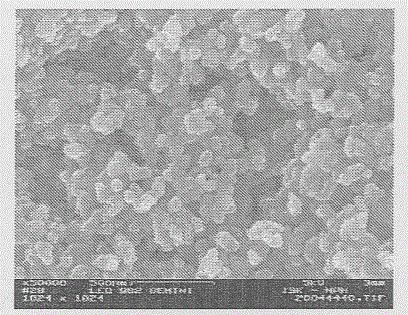
图1显示放大50000倍的实施例1的多孔复合材料层。Figure 1 shows the porous composite material layer of Example 1 at a magnification of 50000 times.
图2显示实施例2的材料放大20000倍的SEM图像。FIG. 2 shows a 20000 times magnified SEM image of the material of Example 2.
图3显示实施例3的涂有多孔复合材料的支架的放大150倍、1000倍和5000倍(图3a、b和c)的SEM图像。Figure 3 shows SEM images of the porous composite-coated scaffold of Example 3 at magnifications of 150X, 1000X and 5000X (Figure 3a, b and c).
图4显示实施例4的涂有多孔复合材料的支架的放大150倍、1000倍和20000倍(图4a、b和c)的SEM图像。Figure 4 shows SEM images of the porous composite-coated scaffold of Example 4 at magnifications of 150X, 1000X and 20000X (Figure 4a, b and c).
图5显示细胞培养物在实施例5的支架上分别生长120分钟、3天和5天(图5 a、b和c)的显微镜图像。Figure 5 shows microscopic images of cell cultures grown on the scaffolds of Example 5 for 120 minutes, 3 days and 5 days (Figure 5 a, b and c).
图6显示放大100倍的实施例6的骨替代材料。Figure 6 shows the bone substitute material of Example 6 at 100 times magnification.
图7显示实施例7的材料的SEM图像(图7a放大100倍,图7b放大20000倍)。Figure 7 shows a SEM image of the material of Example 7 (Figure 7a at 100X magnification and Figure 7b at 20000X magnification).
图8显示在不同放大倍率下实施例8的材料的图像。Figure 8 shows images of the material of Example 8 at different magnifications.
具体实施方式Detailed ways
根据本发明的一个示例方面,可提供一种医疗器械,其包括可通过文中所述方法得到的网状多孔复合材料。该复合材料可以包括文中限定的至少一种成网剂和至少一种基体材料,其中成网剂可以嵌入基体材料中。该器械可基本完全由复合材料构成。在本发明的一个备选示例实施方案中,该器械可部分由复合材料构成。在另一个示例实施方案中,提供一种医疗器械,其中该器械可包括由复合材料制成的涂层,并且其中该涂层可以覆盖该器械的至少一个表面的至少一部分,或该涂层可以基本完全覆盖该器械的至少一个表面或全部表面。在示例实施方案中,成网剂和基体材料中的至少一个,任选二者可以是合成材料,例如非天然来源的材料。生物来源的胞外基质材料可以排除在本发明某些实施方案的所有组分之外。本发明的示例实施方案中的复合材料可以是基本非弹性的刚性材料。According to an exemplary aspect of the present invention, there may be provided a medical device comprising a reticulated porous composite material obtainable by the methods described herein. The composite material may comprise at least one reticulating agent as defined herein and at least one matrix material, wherein the reticulating agent may be embedded in the matrix material. The device may consist essentially entirely of composite material. In an alternative exemplary embodiment of the invention, the device may be constructed in part of a composite material. In another exemplary embodiment, a medical device is provided, wherein the device may include a coating made of a composite material, and wherein the coating may cover at least a portion of at least one surface of the device, or the coating may At least one surface or all surfaces of the device are substantially completely covered. In exemplary embodiments, at least one, and optionally both, of the reticulating agent and the matrix material may be a synthetic material, such as a material of non-natural origin. Extracellular matrix materials of biological origin may be excluded from all components of certain embodiments of the present invention. Composite materials in example embodiments of the invention may be substantially inelastic rigid materials.
在本发明的示例实施方案中,该器械可选自用于治疗和/或诊断目的的医疗器械,包括用于插入人体或动物体的植入物,例如血管内假体,支架、冠状动脉支架、外周血管支架;暂时使用的外科和/或矫形植入物,包括外科用螺钉、板、钉和其它固定装置;永久性外科或矫形植入物,如骨假体或关节假体,例如人造髋或膝关节、球窝关节插入物、骨替代物或脊柱的胸或腰区内的脊椎替代物;螺钉、板、钉、可植入的矫形固定辅助器;脊骨假体和人造器官;心脏及其部分,包括人工心脏瓣膜、心脏起搏器的外壳、电极;皮下和/或肌肉内可植入的植入物;活性成分库、微芯片、导管、用于导管或其部分的导线、手术器械、外科用针、夹具、U型钉等。在本发明的一些优选示例实施方案中,该医疗器械包括支架、涂层支架、药物洗脱支架、药物递送植入物或药物洗脱矫形植入物等。同时,上述任意医疗器械可以包括含有信号发送试剂、标记物或治疗活性成分的植入物。In an exemplary embodiment of the invention, the device may be selected from medical devices used for therapeutic and/or diagnostic purposes, including implants for insertion into the human or animal body, such as endovascular prostheses, stents, coronary stents , peripheral vascular stents; surgical and/or orthopedic implants for temporary use, including surgical screws, plates, nails and other fixation devices; permanent surgical or orthopedic implants, such as bone prostheses or joint prostheses, such as artificial Hip or knee joints, ball and socket joint inserts, bone substitutes or spinal substitutes in the thoracic or lumbar region of the spine; screws, plates, nails, implantable orthopedic fixation aids; spinal prostheses and artificial organs; Heart and parts thereof, including artificial heart valves, casings for pacemakers, electrodes; subcutaneous and/or intramuscular implantable implants; active ingredient banks, microchips, catheters, wires for catheters or parts thereof , surgical instruments, surgical needles, clamps, U-shaped nails, etc. In some preferred exemplary embodiments of the present invention, the medical device comprises a stent, a coated stent, a drug eluting stent, a drug delivery implant or a drug eluting orthopedic implant, and the like. Also, any of the medical devices described above may include implants containing signaling agents, markers, or therapeutically active ingredients.
如果不是完全由本发明的复合材料制成,则该医疗器械可由几乎任何材料构成或包括几乎任何材料,尤其是通常生产该植入物的所有材料。例子包括非晶和/或(部分)结晶碳、固体碳材料、多孔碳、石墨、碳复合材料、碳纤维;陶瓷,如沸石、硅酸盐、氧化铝、铝硅酸盐、碳化硅、氮化硅,过渡金属如钛、锆、铪、钒、铌、钽、铬、钼、钨、锰、铼、铁、钴、镍的金属碳化物、金属氧化物、金属氮化物、金属碳氮化物、金属碳氧化物、金属氮氧化物和金属氮碳氧化物;金属和金属合金,尤其是贵金属如金、银、钌、铑、钯、锇、铱、铂;钛、锆、铪、钒、铌、钽、铬、钼、钨、锰、铼、铁、钴、镍、铜的金属和金属合金;钢,尤其是不锈钢;记忆合金如镍钛诺(nitinol)、镍钛合金;玻璃、石头、玻璃纤维、矿物;天然或合成骨质,基于碱土金属碳酸盐如碳酸钙、碳酸镁、碳酸锶的模拟骨;磷灰石矿物如羟基磷灰石;泡沫材料如聚合物泡沫、泡沫陶瓷等;在生理条件下可溶解的材料如镁、锌或包含镁和/或锌的合金,以及上述材料的任意组合物及其与如文中所述多孔复合材料的组合物。The medical device may consist of or comprise almost any material, if not entirely made of the composite material according to the invention, in particular all materials from which the implant is usually produced. Examples include amorphous and/or (partially) crystalline carbon, solid carbon materials, porous carbon, graphite, carbon composites, carbon fibers; ceramics such as zeolites, silicates, alumina, aluminosilicates, silicon carbide, nitride Silicon, transition metals such as titanium, zirconium, hafnium, vanadium, niobium, tantalum, chromium, molybdenum, tungsten, manganese, rhenium, iron, cobalt, nickel metal carbides, metal oxides, metal nitrides, metal carbonitrides, Metal oxycarbides, metal oxynitrides and metal oxynitrides; metals and metal alloys, especially noble metals such as gold, silver, ruthenium, rhodium, palladium, osmium, iridium, platinum; titanium, zirconium, hafnium, vanadium, niobium , tantalum, chromium, molybdenum, tungsten, manganese, rhenium, iron, cobalt, nickel, copper metals and metal alloys; steel, especially stainless steel; memory alloys such as nitinol, nickel-titanium alloys; glass, stone, Fiberglass, minerals; natural or synthetic bone, simulated bone based on alkaline earth metal carbonates such as calcium carbonate, magnesium carbonate, strontium carbonate; apatite minerals such as hydroxyapatite; foam materials such as polymer foam, ceramic foam, etc. ; materials soluble under physiological conditions such as magnesium, zinc or alloys comprising magnesium and/or zinc, as well as any combination of the aforementioned materials and their combinations with porous composite materials as described herein.
在本发明的一个示例实施方案中,该医疗器械可以是在生理条件下可溶解的材料制成的支架,所述材料例如是镁、锌或包含镁和/或锌的合金。该器械还可以包含复合材料,例如涂层,其是不透射线的或其包括标记物,例如金属或金属颗粒,例如银或金。植入后,该涂层可以在生理条件下被快速溶解或从例如支架的器械上剥离,允许出现暂时标记。该复合材料还可以负载治疗活性成分。In an exemplary embodiment of the present invention, the medical device may be a stent made of a material dissolvable under physiological conditions, such as magnesium, zinc or an alloy comprising magnesium and/or zinc. The device may also comprise a composite material, such as a coating, which is radiopaque or which includes markers, such as metal or metal particles, such as silver or gold. After implantation, the coating can be quickly dissolved or stripped from the device, such as a stent, under physiological conditions, allowing temporary marking to appear. The composite can also be loaded with therapeutically active ingredients.
文中所述医疗器械的复合材料的生产方法导致形成复合材料的网状多孔结构,该结构可以影响复合材料和包括该材料的器械的某些宏观性质。因此,可以通过参照用于生产本文中所述医疗器械的方法和材料来最好地解释本发明医疗器械和包括在该医疗器械中的复合材料的性质。The methods of producing composite materials for medical devices described herein result in the formation of a network-like porous structure of the composite material that can affect certain macroscopic properties of the composite material and devices comprising the material. Accordingly, the properties of the medical devices of the present invention and the composite materials included therein can best be explained by reference to the methods and materials used to produce the medical devices described herein.
在制造本发明医疗器械的示例实施方案中,可以制备一种能够流动的混合物,其包括至少一种成网剂、至少一种选自聚合物或聚合物混合物的可随后凝固的基体材料。可以通过例如固化、交联、硬化、干燥等进行凝固,而基本不分解基体材料,这可基本保持其结构的完整性。该混合物可以包括分散液、悬浮液、乳液或溶液形式的液体混合物,任选包含溶剂或溶剂混合物。In an exemplary embodiment of making a medical device of the present invention, a flowable mixture can be prepared that includes at least one reticulating agent, at least one subsequently settable matrix material selected from a polymer or a mixture of polymers. Setting may occur, for example, by curing, crosslinking, hardening, drying, etc., without substantial decomposition of the matrix material, which substantially maintains its structural integrity. The mixture may comprise a liquid mixture in the form of a dispersion, suspension, emulsion or solution, optionally containing a solvent or mixture of solvents.
在本发明的一个示例实施方案中,该混合物可基本不含任何溶剂,并可使用液体基体材料,其可以是熔融状态的材料,例如基体材料的熔融物。In an exemplary embodiment of the invention, the mixture may be substantially free of any solvent, and a liquid matrix material may be used, which may be the material in a molten state, such as a melt of the matrix material.
在下文中,无论何时使用术语“液体混合物”或“能够流动的混合物”,都应该理解这些术语是可交换使用的,并且它们可以包括含有或不含溶剂的任何可流动混合物,而无论其粘度如何,即该术语也包括高粘度的熔融物、浆液或糊状材料,其包括基本干燥的可流动粉末或颗粒混合物。Hereinafter, whenever the terms "liquid mixture" or "flowable mixture" are used, it should be understood that these terms are used interchangeably and that they may include any flowable mixture, with or without solvent, regardless of its viscosity However, the term also includes highly viscous melts, slurries or pasty materials including substantially dry flowable powder or granular mixtures.
可采用任何常规方式制备该液体混合物,例如通过以任意合适的顺序将固体组分溶解或分散到至少一种溶剂或至少一种基体材料中;通过混合干燥状态下的固体,任选随后加入至少一种溶剂;通过任选在加入至少一种溶剂之前,熔融基体材料并将至少一种成网剂分散在其中;或通过制备糊料或浆料并随后用至少一种溶剂或其它组分在溶剂中的分散液将其稀释来制备。The liquid mixture may be prepared in any conventional manner, for example by dissolving or dispersing the solid components in at least one solvent or at least one matrix material in any suitable order; by mixing the solids in the dry state, optionally followed by adding at least a solvent; by optionally melting the matrix material and dispersing at least one reticulating agent in it before adding at least one solvent; or by preparing a paste or slurry and subsequently using at least one solvent or other component in A dispersion in a solvent is prepared by diluting it.
成网剂Networking agent
在本发明中,术语“成网剂”包括在文中所述条件下可取向成为网络或网络状结构,用以将液体混合物转化成多孔凝固复合材料的材料。在本发明的示例实施方案中,成网剂可包括能够自取向或促进自取向形成网络或网络状结构的材料。本发明含义中的“网络”或“网络状结构”可以是任意具有空隙例如其中的孔的规则和/或不规则的三维排列。复合材料的多孔结构可以例如允许或促进生物组织的向内生长和/或增殖到材料中,并且其能够例如用于储存和释放活性成分、诊断标记物等。In the present invention, the term "reticulating agent" includes materials which, under the conditions described herein, can be oriented into a network or network-like structure for converting a liquid mixture into a porous solidified composite. In an exemplary embodiment of the present invention, the reticulating agent may include a material capable of self-orientation or promoting self-orientation to form a network or network-like structure. A "network" or "network-like structure" within the meaning of the present invention may be any regular and/or irregular three-dimensional arrangement having interstices, eg pores therein. The porous structure of the composite material may, for example, allow or promote ingrowth and/or proliferation of biological tissue into the material, and it can be used, for example, to store and release active ingredients, diagnostic markers and the like.
所述至少一种成网剂可以选自具有任意合适的形式或尺寸的有机和/或无机材料或其任意混合物。The at least one reticulating agent may be selected from organic and/or inorganic materials of any suitable form or size or any mixture thereof.
例如,该成网剂可包括无机材料,例如零价金属、金属粉末、金属化合物、金属合金、金属氧化物、金属碳化物、金属氮化物、金属氧氮化物、金属碳氮化物、金属碳氧化物、金属氮氧化物、金属氮碳氧化物、有机或无机金属盐,包括碱金属和/或碱土金属和/或过渡金属的盐,包括碱金属或碱土金属的碳酸盐、硫酸盐、亚硫酸盐、半导体金属化合物,包括周期表的过渡金属和/或主族金属的半导体金属化合物;金属基核-壳纳米颗粒、玻璃或玻璃纤维、碳或碳纤维、硅、氧化硅、沸石、氧化钛、氧化锆、氧化铝、硅酸铝、滑石、石墨、烟碳、焰烟碳、炉烟碳、气相烟碳、碳黑、灯黑、矿物、层状硅酸盐或其任意混合物。For example, the reticulating agent can include inorganic materials such as zero-valent metals, metal powders, metal compounds, metal alloys, metal oxides, metal carbides, metal nitrides, metal oxynitrides, metal carbonitrides, metal oxycarbides metal oxynitrides, metal nitrogen oxycarbides, salts of organic or inorganic metals, including salts of alkali metals and/or alkaline earth metals and/or transition metals, including carbonates of alkali metals or alkaline earth metals, sulfates, nitrites Sulfates, semiconducting metal compounds, including those of transition metals and/or main group metals of the periodic table; metal-based core-shell nanoparticles, glass or glass fibers, carbon or carbon fibers, silicon, silicon oxide, zeolites, titanium oxide , zirconia, alumina, aluminum silicate, talc, graphite, soot carbon, flame soot carbon, furnace soot carbon, gas phase soot carbon, carbon black, lamp black, minerals, layered silicates or any mixture thereof.
也可以使用选自碱金属或碱土金属的盐或化合物的生物可降解金属基成网剂,例如镁基或锌基化合物等或纳米合金或其任意混合物。本发明的某些示例实施方案中所用的成网剂可选自镁的盐、氧化物或合金,其可用于在暴露于体液时可以降解的包括植入物或植入物上涂层形式的生物可降解涂层或模制体,并且其还可以导致镁离子和羟基磷灰石的形成。Biodegradable metal-based reticulating agents selected from salts or compounds of alkali metals or alkaline earth metals, such as magnesium-based or zinc-based compounds, etc. or nanoalloys or any mixture thereof, may also be used. The reticulating agent used in certain exemplary embodiments of the present invention may be selected from salts, oxides or alloys of magnesium, which may be used in implants or in the form of coatings on implants that degrade when exposed to body fluids. Biodegradable coatings or moldings, and it can also lead to the formation of magnesium ions and hydroxyapatite.
某些成网剂可以包括但不限于零价金属、金属氧化物或其组合物的粉末、优选其纳米非晶纳米颗粒,例如选自元素周期表中主族金属、过渡金属例如铜、金和银、钛、锆、铪、钒、铌、钽、铬、钼、钨、锰、铼、铁、钴、镍、钌、铑、钯、锇、铱或铂、或选自稀土金属的金属或金属化合物。可以使用的金属基化合物包括例如有机金属化合物、金属醇盐、碳颗粒例如烟碳、灯黑、焰烟碳、炉烟碳、气相烟碳、碳黑或金刚石颗粒等。其它例子包括,可以选自笼内含金属富勒烯和/或笼内金属富勒烯,其包括稀土金属例如铈、钕、钐、铕、钇、铽、镝、钬、铁、钴、镍、锰或其混合物例如铁-铂-混合物或合金的笼内含金属富勒烯和/或笼内金属富勒烯。也可使用磁性超顺磁或铁磁性的金属氧化物,例如铁氧化物和铁氧体,例如钴-、镍-、或锰铁氧体。为提供具有磁性超顺磁、铁磁性或发送信号性质的材料,可以使用磁性金属或合金,如铁氧体,例如γ-氧化铁、磁铁矿或Co、Ni或Mn的铁氧体。这些材料的例子记载于国际专利申请WO83/03920、WO83/01738、WO88/00060、WO85/02772,WO89/03675、WO90/01295和W090/01899以及美国专利No.4,452,773、4,675,173和4,770,183中。至少一种成网剂可以包括上文和下文所列举材料的任意组合。Certain reticulating agents may include, but are not limited to, powders, preferably nano-amorphous nanoparticles thereof, of zero-valent metals, metal oxides, or combinations thereof, for example selected from main group metals of the periodic table, transition metals such as copper, gold, and silver, titanium, zirconium, hafnium, vanadium, niobium, tantalum, chromium, molybdenum, tungsten, manganese, rhenium, iron, cobalt, nickel, ruthenium, rhodium, palladium, osmium, iridium or platinum, or a metal selected from the rare earth metals or metal compound. Metal-based compounds that can be used include, for example, organometallic compounds, metal alkoxides, carbon particles such as soot, lamp black, flame soot, furnace soot, gas phase soot, carbon black, or diamond particles, among others. Other examples include, which may be selected from caged metallofullerenes and/or caged metallofullerenes including rare earth metals such as cerium, neodymium, samarium, europium, yttrium, terbium, dysprosium, holmium, iron, cobalt, nickel , manganese or mixtures thereof such as iron-platinum-mixtures or alloys containing metallofullerenes and/or caged metallofullerenes. Magnetic superparamagnetic or ferromagnetic metal oxides, such as iron oxides and ferrites, such as cobalt-, nickel-, or manganese ferrites, can also be used. To provide materials with magnetic superparamagnetic, ferromagnetic or signaling properties, magnetic metals or alloys can be used, such as ferrites, eg gamma-iron oxide, magnetite or ferrites of Co, Ni or Mn. Examples of these materials are described in International Patent Applications WO83/03920, WO83/01738, WO88/00060, WO85/02772, WO89/03675, WO90/01295, and WO90/01899, and US Patent Nos. 4,452,773, 4,675,173, and 4,770,183. The at least one reticulating agent may comprise any combination of the materials listed above and below.
此外,在本发明的其它示例实施方案中,半导电化合物和/或纳米颗粒可用作成网剂,其包括元素周期系中第II~VI族、第III~V族或第IV族的半导体。合适的第II~VI族半导体包括例如MgS、MgSe、MgTe、CaS、CaSe、CaTe、SrS、SrSe、SrTe、BaS、BaSe、BaTe、ZnS、ZnSe、ZnTe、CdS、CdSe、CdTe、HgS、HgSe、HgTe或其混合物。第III~V族半导体的例子包括例如GaAs、GaN、GaP、GaSb、InGaAs、InP、InN、InSb、InAs、AlAs、AlP、AlSb、AlS或其混合物。第IV族半导体的例子包括锗、铅和硅。而且,也可以使用任何前述半导体的组合。Furthermore, in other exemplary embodiments of the present invention, semiconductive compounds and/or nanoparticles may be used as reticulating agents, which include semiconductors of Groups II-VI, III-V, or IV of the Periodic System of Elements. Suitable Group II-VI semiconductors include, for example, MgS, MgSe, MgTe, CaS, CaSe, CaTe, SrS, SrSe, SrTe, BaS, BaSe, BaTe, ZnS, ZnSe, ZnTe, CdS, CdSe, CdTe, HgS, HgSe, HgTe or its mixture. Examples of Group III-V semiconductors include, for example, GaAs, GaN, GaP, GaSb, InGaAs, InP, InN, InSb, InAs, AlAs, AlP, AlSb, AlS or mixtures thereof. Examples of Group IV semiconductors include germanium, lead, and silicon. Furthermore, combinations of any of the foregoing semiconductors may also be used.
在本发明的某些示例实施方案中,可以优选使用配位化合物金属基纳米颗粒作为成网剂。这些可以包括例如所谓的核/壳结构,其记载于Peng et al.Epitaxial Growth of Highly LuminescentCdSe/CdS Core/Shell Nanoparticles with Photo stability andElectronic Accessibility,Journal of the American Chemical Siciety(1997,119:7019-7029)。In certain exemplary embodiments of the present invention, it may be preferable to use coordination compound metal-based nanoparticles as a reticulating agent. These may include, for example, the so-called core/shell structures described in Peng et al. Epitaxial Growth of Highly Luminescent CdSe/CdS Core/Shell Nanoparticles with Photo stability and Electronic Accessibility, Journal of the American Chemical Siciety (1997, 119:7019-7029) .
半导电纳米颗粒可选自上文列出的那些材料,并且它们可具有直径约1到30nm或优选1到15nm的核,其它半导电纳米颗粒可以在其上结晶成为约1到50单分子层,或优选约1到15单分子层的深度。核和壳可存在于上文列出材料的组合物中,包括CdSe或CdTe核以及CdS或ZnS壳。The semiconducting nanoparticles may be selected from those materials listed above and they may have a core of about 1 to 30 nm or preferably 1 to 15 nm in diameter upon which other semiconducting nanoparticles may crystallize as about 1 to 50 monolayers , or preferably a depth of about 1 to 15 monolayers. Cores and shells may be present in combinations of the materials listed above, including a CdSe or CdTe core and a CdS or ZnS shell.
在本发明的其它示例实施方案中,可基于它们在伽马辐射到微波辐射范围的任意波长范围内对辐射的吸收性质,或基于它们发射辐射的能力,尤其发射在约60nm或更短的波长区内的辐射的能力来选择成网剂。通过选择合适的成网剂,可以生产具有非线性光学性质的材料。这些材料包括例如能够阻挡特定波长的IR辐射的材料,其可适用于标记目的或形成治疗性吸收辐射的植入物。可以选择成网剂、其粒度及其核与壳的直径以提供发射光子的化合物,使该辐射在约20nm到1000nm范围内。或者,可以选择在暴露于辐射时发射不同波长光子的合适化合物的混合物。在本发明的一个示例实施方案中,可选择不需要淬灭的荧光金属基化合物。In other exemplary embodiments of the present invention, they may be based on their absorption properties of radiation in any wavelength range from gamma radiation to microwave radiation, or based on their ability to emit radiation, especially at wavelengths of about 60 nm or less. The ability to radiate within the region to select a reticulating agent. By selecting a suitable reticulating agent, materials with nonlinear optical properties can be produced. These materials include, for example, materials capable of blocking specific wavelengths of IR radiation, which may be suitable for marking purposes or to form therapeutic radiation-absorbing implants. The reticulating agent, its particle size, and the diameters of its core and shell can be selected to provide a photon-emitting compound such that the radiation is in the range of about 20 nm to 1000 nm. Alternatively, a mixture of suitable compounds that emit photons of different wavelengths upon exposure to radiation can be selected. In an exemplary embodiment of the invention, fluorescent metal-based compounds may be selected that do not require quenching.
在本发明的示例实施方案中,所述至少一种成网剂可包括碳类,例如纳米非晶碳类,例如C36、C60、C70、C76、C80、C86、C112等富勒烯或其任意混合物;此外,多、双或单壁纳米管如MWNT、DWNT、SWNT、任意取向纳米管,以及所谓的洋葱状富勒烯或金属富勒烯,或简单的石墨、烟碳、碳黑等。In an exemplary embodiment of the present invention, the at least one reticulating agent may include carbons, such as nano-amorphous carbons, such as fullerenes such as C36, C60, C70, C76, C80, C86, C112, or any of them. Mixtures; moreover, multi-, double- or single-walled nanotubes such as MWNTs, DWNTs, SWNTs, randomly oriented nanotubes, and so-called onion-like fullerenes or metallofullerenes, or simple graphite, soot, carbon black, etc.
此外,在制备本发明医疗器械的方法中用作成网剂的材料可包括有机材料,例如聚合物、低聚物或预聚物;虫胶、棉或纤维;和其任意组合物。Additionally, materials used as reticulating agents in the methods of making the medical devices of the present invention may include organic materials such as polymers, oligomers, or prepolymers; shellac, cotton, or fibers; and any combination thereof.
在本发明的一些示例实施方案中,该成网剂可包括至少一种无机材料和至少一种有机材料的混合物。In some exemplary embodiments of the present invention, the reticulating agent may include a mixture of at least one inorganic material and at least one organic material.
此外,文中提到的成网剂的所有材料可选自颗粒即具有基本球状或类球状不规则形状的物质,或者纤维。它们可以纳米或微米晶体颗粒、粉末或纳米线的形式提供。该成网剂可具有约1nm到约1000μm、优选约1nm到300μm或者更优选约1nm到6μm的平均粒径。这些粒径通常指文中提到的可用作成网剂的所有材料。Furthermore, all materials mentioned herein as reticulating agents may be chosen from particles, ie substances having substantially spherical or spheroidal irregular shapes, or fibers. They can be provided in the form of nano- or microcrystalline particles, powders or nanowires. The reticulating agent may have an average particle size of about 1 nm to about 1000 μm, preferably about 1 nm to 300 μm, or more preferably about 1 nm to 6 μm. These particle sizes generally refer to all materials mentioned herein that can be used as reticulating agents.
该成网剂可包括相同或不同材料的至少两种颗粒,其颗粒的尺寸相差至少2倍,或至少3或5倍,有时至少10倍。不希望拘泥于任何特定理论,相信粒径的差异可以进一步在形成网络结构时促进成网剂的自取向。The reticulating agent may comprise at least two particles of the same or different material, the particle sizes of which differ by at least a factor of 2, or by a factor of at least 3 or 5, sometimes by a factor of at least 10. Without wishing to be bound by any particular theory, it is believed that the difference in particle size may further promote self-orientation of the reticulating agent when forming the network structure.
在示例实施方案中,成网剂包括如烟碳、碳黑或灯黑的碳颗粒与富勒烯或富勒烯混合物的组合物。该碳颗粒可具有从约50到200nm,例如约90到120nm的平均粒径。在另一个示例实施方案中,所述至少一种成网剂包括金属氧化物颗粒如二氧化硅、氧化铝、氧化钛、氧化锆或沸石或其组合物与富勒烯或富勒烯混合物的组合物。该金属氧化物颗粒可具有约5到150nm,例如约10到100nm的平均粒径。在一些示例实施方案中,所述至少一种成网剂可包括至少一种金属粉末与金属氧化物颗粒如二氧化硅、氧化铝、氧化钛、氧化锆或沸石或其组合的组合物。该金属氧化物颗粒可具有约5到150nm,例如约10到100nm的平均尺寸,而该金属粉末可具有从约0.5到10μm,或从约1到5μm的平均尺寸。所有这些成网剂可与如环氧树脂结合用作基体材料,优选可热固化和/或可交联的苯氧基树脂。In an exemplary embodiment, the reticulating agent includes a combination of carbon particles such as soot, carbon black, or lamp black with fullerenes or mixtures of fullerenes. The carbon particles may have an average particle size of from about 50 to 200 nm, such as about 90 to 120 nm. In another exemplary embodiment, the at least one reticulating agent comprises metal oxide particles such as silica, alumina, titania, zirconia or zeolites or combinations thereof with fullerenes or mixtures of fullerenes. combination. The metal oxide particles may have an average particle diameter of about 5 to 150 nm, such as about 10 to 100 nm. In some example embodiments, the at least one reticulating agent may include a combination of at least one metal powder and metal oxide particles such as silica, alumina, titania, zirconia, or zeolites, or combinations thereof. The metal oxide particles may have an average size of about 5 to 150 nm, such as about 10 to 100 nm, and the metal powder may have an average size of from about 0.5 to 10 μm, or from about 1 to 5 μm. All these reticulating agents can be used as matrix material in combination with eg epoxy resins, preferably thermally curable and/or crosslinkable phenoxy resins.
或者,所述至少一种成网剂也可为由上文提及的任何材料制成的管、纤维、纤维材料或线,尤其是纳米线的形式。合适的例子包括碳纤维、纳米管、玻璃纤维、金属纳米线或金属微米线。这些形式的成网剂可具有约5nm到1000μm,例如约5nm到300μm,例如约5nm到10μm,或约2nm到20μm的平均长度,和/或从约1nm到1μm,例如约1nm到500nm,例如5nm到300nm,或约10nm到200nm的平均直径。Alternatively, the at least one reticulating agent may also be in the form of tubes, fibers, fibrous materials or wires, especially nanowires, made of any of the materials mentioned above. Suitable examples include carbon fibers, nanotubes, glass fibers, metal nanowires or metal microwires. These forms of reticulating agents may have an average length of from about 5 nm to 1000 μm, such as from about 5 nm to 300 μm, such as from about 5 nm to 10 μm, or from about 2 nm to 20 μm, and/or from about 1 nm to 1 μm, such as from about 1 nm to 500 nm, such as 5nm to 300nm, or about 10nm to 200nm average diameter.
粒度可采用平均粒度的形式提供,其可以通过例如可在Ankersmid的CIS离子分析仪上测定的激光法如TOT-法(时间转换法)测定。测定粒度的其它合适方法包括粉末衍射或TEM(透射电子显微镜)。The particle size can be provided in the form of an average particle size, which can be determined by laser methods such as the TOT-method (time-transition method), which can be determined, for example, on the CIS ion analyzer from Ankersmid. Other suitable methods of determining particle size include powder diffraction or TEM (transmission electron microscopy).
在一些示例实施方案中可使用不含溶剂的混合物,其中基体材料可以是例如液体预聚物或熔融物,即熔融的基体材料,然后其可通过诸如交联或固化来凝固。Solvent-free mixtures may be used in some exemplary embodiments, where the matrix material may be, for example, a liquid prepolymer or a melt, ie a molten matrix material, which may then solidify, such as by crosslinking or curing.
在一些示例实施方案中,成网剂和基体材料不包括纤维或纤维材料,因此所形成的用于医疗器械中的复合物基本不含纤维。In some exemplary embodiments, the reticulating agent and matrix material do not include fibers or fibrous materials, thus forming composites for use in medical devices that are substantially free of fibers.
在其它实施方案中,改性成网剂例如以提高它们在溶剂或混合材料中的可分散性和可润湿性是有利的,从而产生其它功能性或提高相容性。如果必要,改性颗粒或纤维的技术对本领域的技术人员是熟知的,并且可根据所用的各组分和材料的需要采用。例如,可利用硅烷化合物例如有机硅烷来改性成网剂。合适的有机硅烷和其它改性剂是例如国际专利申请PCT/EP2006/050622和美国专利申请No.11/346,983所记载的那些和也可用于本发明实施方案的这些,以及这些专利和本文中限定用作交联剂的那些物质。In other embodiments, it may be advantageous to modify the reticulating agents, eg, to increase their dispersibility and wettability in solvents or hybrid materials, to create additional functionality or to increase compatibility. Techniques for modifying particles or fibers, if necessary, are well known to those skilled in the art and may be employed as desired depending on the individual components and materials used. For example, reticulating agents can be modified with silane compounds such as organosilanes. Suitable organosilanes and other modifiers are, for example, those described in International Patent Application PCT/EP2006/050622 and U.S. Patent Application No. 11/346,983 and which may also be used in embodiments of the present invention, as well as those patents and those defined herein. Those substances used as crosslinking agents.
在本发明的示例实施方案中,成网剂可用醇盐、金属醇盐、胶体颗粒、尤其是金属氧化物等中的至少一种来改性。金属醇盐可具有通式M(OR)x,其中M是来自当存在水时可例如水解和/或聚合的金属醇盐的任何金属。R是包括1到约30个碳原子的烷基,其可以是直链或支链的,并且x的值可等于金属离子的化合价。也可以使用例如Si(OR)4、Ti(OR)4、Al(OR)3、Zr(OR)3和Sn(OR)4的醇盐。特别地,R可以是甲基、乙基、丙基或丁基。合适的金属醇盐的其它例子可包括Ti(异丙氧基)4、Al(异丙氧基)3、Al(仲丁氧基)3、Zr(正丁氧基)4和Zr(正丙氧基)4。In an exemplary embodiment of the present invention, the reticulating agent may be modified with at least one of alkoxides, metal alkoxides, colloidal particles, especially metal oxides, and the like. The metal alkoxide may have the general formula M(OR) x , where M is any metal from a metal alkoxide that may, for example, hydrolyze and/or polymerize in the presence of water. R is an alkyl group comprising 1 to about 30 carbon atoms, which may be straight or branched, and the value of x may be equal to the valence of the metal ion. Alkoxides such as Si(OR) 4 , Ti(OR) 4 , Al(OR) 3 , Zr(OR) 3 and Sn(OR) 4 may also be used. In particular, R may be methyl, ethyl, propyl or butyl. Other examples of suitable metal alkoxides may include Ti(isopropoxy) 4 , Al(isopropoxy) 3 , Al(sec-butoxy) 3 , Zr(n-butoxy) 4 and Zr(n-propoxy) Oxygen) 4 .
其它合适的改性剂可选自诸如四烷氧基硅烷的硅醇盐中的至少一种,其中烷氧基可以是支链或直链的,并可包含1~25个碳原子,例如四甲氧基硅烷(TMOS)、四乙氧基硅烷(TEOS)或四正丙氧基硅烷及其低聚物的形式。烷基烷氧基硅烷也适合,其中烷氧基如上文限定,而烷基可以是含有1~25个碳原子的取代或未取代的支链或直链烷基,例如甲基三甲氧基硅烷(MTMOS)、甲基三乙氧基硅烷、乙基三乙氧基硅烷、乙基三甲氧基硅烷、甲基三丙氧基硅烷、甲基三丁氧基硅烷、丙基三甲氧基硅烷、丙基三甲氧基硅烷、异丁基三乙氧基硅烷、异丁基三甲氧基硅烷、辛基三乙氧基硅烷、辛基三甲氧基硅烷,其可从德国Degussa AG商业购得,甲基丙烯酰氧癸基三甲氧基硅烷(MDTMS);芳基三烷氧基硅烷,例如苯基三甲氧基硅烷(PTMOS)、苯基三乙氧基硅烷,其可从德国Degussa AG商业购得;苯基三丙氧基硅烷和苯基三丁氧基硅烷、苯基-三-(3-缩水甘油氧基)-硅烷-氧化物(TGPSO)、3-氨丙基三甲氧基硅烷、3-氨丙基-三乙氧基硅烷、2-氨乙基-3-氨丙基三甲氧基硅烷、三氨基官能团丙基三甲氧基硅烷(DynasylanTRIAMO可从德国Degussa AG商业购得)、N-(正丁基)-3-氨丙基三甲氧基硅烷、3-氨丙基甲基-二乙氧基硅烷、3-缩水甘油氧基丙基三甲氧基硅烷、3-缩水甘油氧基丙基三乙氧基硅烷、乙烯基三甲氧基硅烷、乙烯基三乙氧基硅烷、3-巯基丙基三甲氧基硅烷、双酚A-缩水甘油基硅烷;(甲基)丙烯硅烷、苯基硅烷、低聚或聚合硅烷、环氧硅烷;氟代烷基硅烷,例如具有约1到20个碳原子的部分或全氟化的直链或支链氟代烷基残基的氟代烷基三甲氧基硅烷、氟代烷基三乙氧基硅烷,例如十三氟代-1,1,2,2-四氢辛基三乙氧基硅烷或改性的反应性氟代烷基硅氧烷,其可购自德国Degussa AG,商品名为DynasylanF8800和F8815;及其任意混合物。此外,也可使用6-氨基-1-正己醇、2-(2-氨基乙氧基)乙醇、环己胺、丁酸胆甾醇酯(PCBCR)、1-(3-甲酯基)-丙基-1-苯基酯或其任意组合物。Other suitable modifiers may be selected from at least one of silicon alkoxides such as tetraalkoxysilanes, wherein the alkoxy groups may be branched or linear and may contain 1 to 25 carbon atoms, such as tetra Forms of methoxysilane (TMOS), tetraethoxysilane (TEOS) or tetra-n-propoxysilane and their oligomers. Also suitable are alkylalkoxysilanes, wherein the alkoxy group is as defined above and the alkyl group may be a substituted or unsubstituted branched or straight chain alkyl group containing 1 to 25 carbon atoms, for example methyltrimethoxysilane (MTMOS), Methyltriethoxysilane, Ethyltriethoxysilane, Ethyltrimethoxysilane, Methyltripropoxysilane, Methyltributoxysilane, Propyltrimethoxysilane, Propyltrimethoxysilane, isobutyltriethoxysilane, isobutyltrimethoxysilane, octyltriethoxysilane, octyltrimethoxysilane, which are commercially available from Degussa AG, Germany, as Acryloyloxydecyltrimethoxysilane (MDTMS); Aryltrialkoxysilanes such as phenyltrimethoxysilane (PTMOS), phenyltriethoxysilane, commercially available from Degussa AG, Germany ; Phenyltripropoxysilane and phenyltributoxysilane, phenyl-tris-(3-glycidyloxy)-silane-oxide (TGPSO), 3-aminopropyltrimethoxysilane, 3 - aminopropyl-triethoxysilane, 2-aminoethyl-3-aminopropyltrimethoxysilane, triaminofunctional propyltrimethoxysilane (Dynasylan(R) TRIAMO is commercially available from Degussa AG, Germany), N-(n-butyl)-3-aminopropyltrimethoxysilane, 3-aminopropylmethyl-diethoxysilane, 3-glycidyloxypropyltrimethoxysilane, 3-glycidyloxy propyltriethoxysilane, vinyltrimethoxysilane, vinyltriethoxysilane, 3-mercaptopropyltrimethoxysilane, bisphenol A-glycidylsilane; (meth)acrylsilane, Phenylsilanes, oligomeric or polymeric silanes, epoxysilanes; fluoroalkylsilanes, for example fluorinated partially or perfluorinated linear or branched fluoroalkyl residues having about 1 to 20 carbon atoms Alkyltrimethoxysilanes, fluoroalkyltriethoxysilanes such as tridecafluoro-1,1,2,2-tetrahydrooctyltriethoxysilane or modified reactive fluoroalkylsilanes Silicones, commercially available from Degussa AG, Germany, under the trade names Dynasylan(R) F8800 and F8815; and any mixtures thereof. In addition, 6-amino-1-n-hexanol, 2-(2-aminoethoxy)ethanol, cyclohexylamine, cholesteryl butyrate (PCBCR), 1-(3-carbomethoxy)-propane -1-phenyl ester or any combination thereof.
应该注意,通常上述改性剂和硅烷也可任选用作交联剂,例如在凝固步骤中用于固化/硬化液体混合物。It should be noted that generally the above-mentioned modifiers and silanes may optionally also be used as crosslinking agents, for example for curing/hardening the liquid mixture during the setting step.
在另一个示例实施方案中,所述至少一种成网剂包括选自聚合物、低聚物或预聚合的有机材料中的颗粒或纤维。这些颗粒或纤维可通过生产离散颗粒的常规聚合技术制备,例如在乳液、分散液、悬浮液或溶液等液体介质中的聚合。此外,这些纤维或颗粒也可通过聚合材料的挤出、纺丝、造粒、制粉或研磨制得。当成网剂选自聚合物、低聚物、预聚物、热塑性材料或弹性体的颗粒或纤维时,这些材料可选自如下文中限定的用于基体材料的均聚物或共聚物。如果不是颗粒或纤维的形式,则这些聚合物可用作基体材料,或者如果以颗粒或纤维形式使用,则可用作成网剂。聚合成网剂可选自高温下可分解的成网剂,并因此可用作复合材料中的成孔剂。例子包括聚烯烃,如聚乙烯或聚丙烯的颗粒或纤维。In another exemplary embodiment, the at least one reticulating agent comprises particles or fibers selected from polymers, oligomers, or pre-polymerized organic materials. These particles or fibers can be prepared by conventional polymerization techniques for producing discrete particles, for example polymerization in liquid media such as emulsions, dispersions, suspensions or solutions. Furthermore, these fibers or particles can also be produced by extrusion, spinning, pelletizing, milling or grinding of polymeric materials. When the reticulating agent is selected from particles or fibers of polymers, oligomers, prepolymers, thermoplastics or elastomers, these materials may be selected from homopolymers or copolymers as defined hereinafter for the matrix material. These polymers can be used as matrix materials if not in the form of particles or fibers, or as reticulating agents if used in the form of particles or fibers. The polymeric reticulating agent can be selected from reticulating agents which decompose at high temperature and thus can be used as porogen in the composite. Examples include particles or fibers of polyolefins such as polyethylene or polypropylene.
在一个示例实施方案中,成网剂可包括导电聚合物,例如下文限定用作导电基体材料的聚合物。In an example embodiment, the reticulating agent may comprise a conductive polymer, such as the polymers defined below for use as a conductive matrix material.
在本发明的其它示例实施方案中,所述至少一种成网剂例如可包括聚合物包封的非聚合物颗粒,其中非聚合物颗粒可选自上文提及的材料。用于包封非聚合物成网剂颗粒的技术和聚合包括常规使用的任意合适的聚合反应,例如自由基或非自由基聚合、酶促或非酶促聚合,例如缩聚反应。成网剂颗粒的包封-根据所用的各个组分-可导致共价或非共价包封的成网剂颗粒。为了结合基体材料,包封的成网剂可以分别是聚合物球的形式,尤其是纳米尺寸或微米球的形式,或者是分散、悬浮或乳化的颗粒或胶囊。本发明中可使用任意常规的方法来生产聚合物包封的颗粒。因此,所用的合适包封方法及材料和条件记载于例如国际专利申请PCT/EP2006/060783和PCT/EP2006/050373和美国专利申请No.11/385,145和11/339,161中,并且这些方法、材料和程序也可用于本发明的实施方案中。In other exemplary embodiments of the present invention, the at least one reticulating agent may, for example, comprise polymer-encapsulated non-polymeric particles, wherein the non-polymeric particles may be selected from the above-mentioned materials. Techniques and polymerisations for encapsulating non-polymeric reticulating agent particles include any suitable polymerisation reaction conventionally used, eg free radical or non-radical polymerisation, enzymatic or non-enzymatic polymerisation eg polycondensation. Encapsulation of reticulating agent particles - depending on the individual components used - can result in covalently or non-covalently encapsulated reticulating agent particles. The encapsulated reticulating agent may be in the form of polymer spheres, especially nanosized or microspheres, or dispersed, suspended or emulsified particles or capsules, respectively, for binding to the matrix material. Any conventional method may be used in the present invention to produce polymer-encapsulated particles. Accordingly, suitable encapsulation methods and materials and conditions used are described, for example, in International Patent Applications PCT/EP2006/060783 and PCT/EP2006/050373 and U.S. Patent Application Nos. 11/385,145 and 11/339,161, and these methods, materials and Procedures may also be used in embodiments of the invention.
合适的包封方法记载于例如澳大利亚专利申请No.AU9169501,欧洲专利公报No.EP 1205492、EP 1401878、EP 1352915和EP 1240215,美国专利No.6380281,美国专利公报No.2004192838,加拿大专利公报No.CA 1336218,中国专利公报No.CN 1262692T,英国专利公报No.GB 949722和德国专利公报No.DE 10037656中;以及在本文引用的其它文件中,例如上述国际专利申请公报PCT/EP2006/060783和PCT/EP2006/050373中。Suitable encapsulation methods are described, for example, in Australian Patent Application No. AU9169501, European Patent Publication Nos. EP 1205492, EP 1401878, EP 1352915 and EP 1240215, US Patent No. 6380281, US Patent Publication No. 2004192838, Canadian Patent Publication No. CA 1336218, Chinese Patent Publication No.CN 1262692T, British Patent Publication No.GB 949722 and German Patent Publication No.DE 10037656; and in other documents cited herein, such as the above-mentioned International Patent Application Publication PCT/EP2006/060783 and PCT /EP2006/050373.
包封的成网剂可制成约1nm到500nm的尺寸,或平均尺寸为约5nm到5μm的微粒形式。成网剂还可以包封在聚合物的微乳液中。术语“微乳液”可理解为是指包含水相、油或疏水相和一种或多种表面活性物质的分散液。该乳液可包含合适的油、水、一种或几种表面活性剂,任选一种或几种助表面活性剂和/或一种或几种疏水物质。微乳液可包括通过表面活性剂稳定的单体、低聚物或其它预聚反应物的易于聚合的水乳液,其中乳化液滴的粒度可在约10nm和500nm之间或更大。Encapsulated reticulating agents may be produced in particulate form with a size of about 1 nm to 500 nm, or an average size of about 5 nm to 5 μm. The reticulating agent can also be encapsulated in a microemulsion of the polymer. The term "microemulsion" is understood to mean a dispersion comprising an aqueous, oily or hydrophobic phase and one or more surface-active substances. The emulsion may contain suitable oils, water, one or several surfactants, optionally one or several co-surfactants and/or one or several hydrophobic substances. Microemulsions may include readily polymerizable aqueous emulsions of monomers, oligomers, or other prepolymerized reactants stabilized by surfactants, wherein the particle size of the emulsified droplets may be between about 10 nm and 500 nm or larger.
包封的成网剂的微乳液也可由非水介质如甲酰胺、乙二醇或非极性溶剂制成。预聚反应物可包括热固型材料、热塑性材料、塑料、合成橡胶、可挤出的聚合物、注射成型聚合物、可模压成型聚合物等或其混合物,包括其中可使用聚(甲基)丙烯酸类的预聚反应物。Microemulsions of encapsulated reticulating agents can also be prepared from non-aqueous media such as formamide, glycol or non-polar solvents. Prepolymerization reactants may include thermosets, thermoplastics, plastics, synthetic rubbers, extrudable polymers, injection moldable polymers, compression moldable polymers, etc. or mixtures thereof, including where poly(methyl) Acrylic prepolymerization reactant.
适用于包封成网剂的聚合物的例子包括但不限于:脂肪族或芳香族的聚烯烃如聚乙烯、聚丙烯、聚丁烯、聚异丁烯、聚戊烯;聚丁二烯;聚乙烯类如聚氯乙烯或聚乙烯醇、聚(甲基)丙烯酸、聚甲基丙烯酸甲酯(PMMA)、聚丙烯酰基氰基丙烯酸酯;聚丙烯腈、聚酰胺、聚酯、聚氨酯、聚苯乙烯、聚四氟乙烯;尤其优选的可以是生物聚合物,例如胶原、白蛋白、明胶、透明质酸、淀粉、纤维素,例如甲基纤维素、羟丙基纤维素、羟丙甲基纤维素、羧甲基纤维素邻苯二甲酸酯;酪朊、右旋糖苷、多糖、纤朊原、聚(D,L-丙交酯)、聚(D,L-丙交酯-co-乙交酯)、聚乙交酯、聚羟基丁酸酯、聚碳酸烷基酯、聚原酸酯、聚酯、聚羟基戊酸、聚二氧环己酮、对苯二酸乙二酯、聚马来酸、聚丙醇二酸、聚酐、聚磷腈、聚氨基酸;聚乙烯醋酸乙烯酯、硅氧烷、聚(酯聚氨酯),聚(醚聚氨酯)、聚醚如聚氧化乙烯、聚氧化丙烯、聚氧乙烯-聚氧丙烯共聚物(pluronics)、聚丁二醇、聚乙烯基吡硌烷酮、聚(邻苯二甲酸乙酸乙烯酯)、虫胶以及这些均聚物或共聚物的组合物;除了环糊精和其衍生物或类似载体系统之外。Examples of polymers suitable for encapsulating reticulating agents include, but are not limited to: aliphatic or aromatic polyolefins such as polyethylene, polypropylene, polybutene, polyisobutylene, polypentene; polybutadiene; polyethylene Polyvinyl chloride or polyvinyl alcohol, poly(meth)acrylic acid, polymethylmethacrylate (PMMA), polyacryloylcyanoacrylate; polyacrylonitrile, polyamide, polyester, polyurethane, polystyrene , polytetrafluoroethylene; especially preferred may be biopolymers such as collagen, albumin, gelatin, hyaluronic acid, starch, cellulose such as methylcellulose, hydroxypropylcellulose, hydroxypropylmethylcellulose , carboxymethylcellulose phthalate; casein, dextran, polysaccharide, fibrinogen, poly(D,L-lactide), poly(D,L-lactide-co-ethylene lactide), polyglycolide, polyhydroxybutyrate, polyalkylcarbonate, polyorthoester, polyester, polyhydroxyvaleric acid, polydioxanone, ethylene terephthalate, poly Maleic acid, polyalconate, polyanhydrides, polyphosphazenes, polyamino acids; polyethylene vinyl acetate, siloxane, poly(ester polyurethane), poly(ether polyurethane), polyethers such as polyethylene oxide, polyoxyethylene Propylene, polyoxyethylene-polyoxypropylene copolymers (pluronics), polytetramethylene glycol, polyvinylpyrrolidone, poly(vinyl acetate phthalate), shellac and homopolymers or copolymers of these Compositions; in addition to cyclodextrins and their derivatives or similar carrier systems.
其它可用的包封材料包括聚(甲基)丙烯酸酯、不饱和聚酯、饱和聚酯,聚烯烃如聚乙烯、聚丙烯、聚丁烯,醇酸树脂、环氧聚合物、环氧树脂、聚酰胺、聚酰亚胺、聚醚酰亚胺、聚酰胺酰亚胺、聚酯酰亚胺、聚酯酰胺酰亚胺酯、聚氨酯、聚碳酸酯、聚苯乙烯、聚酚、聚乙烯酯、聚硅氧烷、聚缩醛、醋酸纤维素、聚氯乙烯、聚醋酸乙烯酯、聚乙烯醇、聚砜、聚苯砜、聚醚砜、聚酮、聚醚酮、聚苯并咪唑、聚苯并唑、聚苯并噻唑、聚氟烃、聚苯醚、聚芳基化合物、氰酸酯聚合物,或前述任意物质的混合物或共聚物。Other useful encapsulating materials include poly(meth)acrylates, unsaturated polyesters, saturated polyesters, polyolefins such as polyethylene, polypropylene, polybutylene, alkyd resins, epoxy polymers, epoxy resins, Polyamide, polyimide, polyetherimide, polyamideimide, polyesterimide, polyesteramideimide ester, polyurethane, polycarbonate, polystyrene, polyphenol, polyvinyl ester , polysiloxane, polyacetal, cellulose acetate, polyvinyl chloride, polyvinyl acetate, polyvinyl alcohol, polysulfone, polyphenylsulfone, polyethersulfone, polyketone, polyetherketone, polybenzimidazole, Polybenzoxazole, polybenzothiazole, polyfluorocarbon, polyphenylene ether, polyarylate, cyanate polymer, or a mixture or copolymer of any of the foregoing.
在本发明的某些示例实施方案中,用于包封成网剂的聚合物可包括基于单(甲基)丙烯酸酯、二(甲基)丙烯酸酯、三(甲基)丙烯酸酯、四丙烯酸酯和五丙烯酸酯的聚(甲基)丙烯酸酯。合适的单(甲基)丙烯酸酯的例子是丙烯酸羟乙酯、甲基丙烯酸羟乙酯、甲基丙烯酸羟丙酯、丙烯酸羟丙酯、丙烯酸3-氯-2-羟基丙酯、甲基丙烯酸3-氯-2-羟基丙酯、丙烯酸2,2-二甲基羟基丙酯、丙烯酸5-羟基戊酯、单丙烯酸二乙二醇酯、单丙烯酸三羟甲基丙烷酯、单丙烯酸季戊四醇酯、丙烯酸2,2-二甲基-3-羟基丙酯、甲基丙烯酸5-羟基戊酯、单甲基丙烯酸二乙二醇酯、单甲基丙烯酸三羟甲基丙烷酯、单甲基丙烯酸季戊四醇酯、羟甲基化N-(1,1-二甲基-3-氧丁基)丙烯酰胺、N-羟甲基丙烯酰胺、N-羟甲基甲基丙烯酰胺、N-乙基-N-羟甲基甲基丙烯酰胺、N-乙基-N-羟甲基丙烯酰胺、N,N-二羟甲基-丙烯酰胺、N-羟乙基丙烯酰胺、N-羟丙基丙烯酰胺、N-羟甲基丙烯酰胺、丙烯酸缩水甘油酯和甲基丙烯酸缩水甘油酯、丙烯酸甲酯、丙烯酸乙酯、丙烯酸丙酯、丙烯酸丁酯、丙烯酸戊酯、丙烯酸乙基己酯、丙烯酸辛酯、丙烯酸叔辛酯、丙烯酸2-甲氧基乙酯、丙烯酸2-丁氧基乙酯、丙烯酸2-戊氧基乙酯、丙烯酸氯乙酯、丙烯酸氰基乙酯、丙烯酸二甲氨基乙酯、丙烯酸苄酯、丙烯酸甲氧基苄酯、丙烯酸糠酯、丙烯酸四氢糠酯和丙烯酸苯酯;二(甲基)丙烯酸酯可选自2,2-二(4-甲基丙烯酰氧苯基)丙烷、二丙烯酸1,2-丁二醇酯、二丙烯酸1,4-丁二醇酯、二甲基丙烯酸1,4-丁二醇酯、二甲基丙烯酸1,4-环己二醇酯、二甲基丙烯酸1,10-癸二醇酯、二丙烯酸二甘醇酯、二丙烯酸二丙二醇酯、二甲基丙烯酸二甲基丙二醇酯、二甲基丙烯酸三甘醇酯、二甲基丙烯酸四甘醇酯、二丙烯酸1,6-己二醇酯、二丙烯酸新戊酯、二甲基丙烯酸聚乙二醇酯、二丙烯酸三丙二醇酯、2,2-二(4-(2-丙烯酰氧乙氧基)苯基)丙烷、2,2-二(4-(2-羟基-3-甲基丙烯酰氧乙氧基)苯基)丙烷、二(2-甲基丙烯酰氧乙基)N,N-1,9-壬二醇-二氨基甲酸酯、二甲基丙烯酸酯1,4-环己烷二甲醇酯和二丙烯酸脲低聚物;三(甲基)丙烯酸酯可选自三(2-羟乙基)异氰脲酸酯-三甲基丙烯酸酯、三(2-羟乙基)异氰脲酸酯-三丙烯酸酯、三羟甲基丙烷-三甲基丙烯酸酯、三羟甲基丙烷-三丙烯酸酯或季戊四醇三丙烯酸酯;四(甲基)丙烯酸酯可选自季戊四醇四丙烯酸酯、二-三羟甲基丙烷-四丙烯酸酯或乙氧基化季戊四醇-四丙烯酸酯;合适的五(甲基)丙烯酸酯可选自二季戊四醇-五丙烯酸酯或五丙烯酸酯;以及任何前述物质的混合物、共聚物或组合物。在本发明的某些示例实施方案中,生物聚合物或丙烯酸树脂可优选用于包封成网剂,例如用于生物学或医学应用。In certain exemplary embodiments of the present invention, the polymer used to encapsulate the reticulating agent may include mono(meth)acrylate, di(meth)acrylate, tri(meth)acrylate, tetraacrylate based esters and poly(meth)acrylates of pentaacrylates. Examples of suitable mono(meth)acrylates are hydroxyethyl acrylate, hydroxyethyl methacrylate, hydroxypropyl methacrylate, hydroxypropyl acrylate, 3-chloro-2-hydroxypropyl acrylate, methacrylic acid 3-Chloro-2-hydroxypropyl acrylate, 2,2-dimethylhydroxypropyl acrylate, 5-hydroxypentyl acrylate, diethylene glycol monoacrylate, trimethylolpropane monoacrylate, pentaerythritol monoacrylate , 2,2-dimethyl-3-hydroxypropyl acrylate, 5-hydroxypentyl methacrylate, diethylene glycol monomethacrylate, trimethylolpropane monomethacrylate, monomethacrylic acid Pentaerythritol ester, methylolated N-(1,1-dimethyl-3-oxobutyl)acrylamide, N-methylolacrylamide, N-methylolmethacrylamide, N-ethyl- N-methylolmethacrylamide, N-ethyl-N-methylolacrylamide, N,N-dimethylol-acrylamide, N-hydroxyethylacrylamide, N-hydroxypropylacrylamide , N-methylolacrylamide, glycidyl acrylate and glycidyl methacrylate, methyl acrylate, ethyl acrylate, propyl acrylate, butyl acrylate, pentyl acrylate, ethylhexyl acrylate, octyl acrylate , tert-octyl acrylate, 2-methoxyethyl acrylate, 2-butoxyethyl acrylate, 2-pentoxyethyl acrylate, chloroethyl acrylate, cyanoethyl acrylate, dimethylaminoethyl acrylate , benzyl acrylate, methoxybenzyl acrylate, furfuryl acrylate, tetrahydrofurfuryl acrylate and phenyl acrylate; di(meth)acrylates may be selected from 2,2-bis(4-methacryloyloxybenzene Base) Propane, 1,2-Butanediol Diacrylate, 1,4-Butanediol Diacrylate, 1,4-Butanediol Dimethacrylate, 1,4-Cyclohexanediol Dimethacrylate Alcohol ester, 1,10-decanediol dimethacrylate, diethylene glycol diacrylate, dipropylene glycol diacrylate, dimethylpropylene glycol dimethacrylate, triethylene glycol dimethacrylate, dimethyl Tetraethylene glycol diacrylate, 1,6-hexanediol diacrylate, neopentyl diacrylate, polyethylene glycol dimethacrylate, tripropylene glycol diacrylate, 2,2-bis(4-(2 -acryloyloxyethoxy)phenyl)propane, 2,2-bis(4-(2-hydroxy-3-methacryloyloxyethoxy)phenyl)propane, bis(2-methacryloyl Oxyethyl) N,N-1,9-nonanediol-dicarbamate, 1,4-cyclohexanedimethanol dimethacrylate and urea diacrylate oligomer; Tris(methyl) The acrylate may be selected from tris(2-hydroxyethyl)isocyanurate-trimethacrylate, tris(2-hydroxyethyl)isocyanurate-triacrylate, trimethylolpropane-trimethacrylate Methacrylate, trimethylolpropane-triacrylate or pentaerythritol triacrylate; tetra(meth)acrylate may be selected from pentaerythritol tetraacrylate, di-trimethylolpropane-tetraacrylate or ethoxy dipentaerythritol-tetraacrylate; suitable penta(meth)acrylates may be selected from dipentaerythritol-pentaacrylate or pentaacrylate; and mixtures, copolymers or combinations of any of the foregoing. In certain exemplary embodiments of the present invention, biopolymers or acrylic resins may preferably be used to encapsulate the reticulating agent, for example for biological or medical applications.
包封聚合物反应物可包括可聚合单体、低聚物或合成橡胶,例如聚丁二烯、聚异丁二烯、聚异戊二烯、聚(苯乙烯-丁二烯-苯乙烯)、聚氨酯、聚氯丁烯、天然橡胶材料,树胶如阿拉伯树胶、槐豆树胶、刺梧桐胶(gum caraya)、或硅酮及其混合物、共聚物或任意组合物。该成网剂可包封在单独的弹性体聚合物中、或热塑性和弹性体聚合物混合物中、或交替顺序的热塑性和弹性体壳或层中。Encapsulating polymer reactants may include polymerizable monomers, oligomers or synthetic rubbers such as polybutadiene, polyisobutadiene, polyisoprene, poly(styrene-butadiene-styrene) , polyurethane, polychloroprene, natural rubber materials, gums such as gum arabic, locust bean gum, gum caraya, or silicone and mixtures, copolymers or any combination thereof. The reticulating agent may be encapsulated in a single elastomeric polymer, or in a blend of thermoplastic and elastomeric polymers, or in alternating sequences of thermoplastic and elastomeric shells or layers.
用于包封成网剂的聚合反应可包括任意合适的常规聚合反应,例如自由基或非自由基聚合、酶促或非酶促聚合,包括缩聚反应。所用的乳液、分散液或悬浮液可以是水、非水、极性或非极性体系。通过加入合适的表面活性剂,可以根据需要调节乳化或分散液滴的量和尺寸。Polymerization reactions for encapsulating the reticulating agent may include any suitable conventional polymerization reactions, such as free radical or non-radical polymerization, enzymatic or non-enzymatic polymerization, including polycondensation reactions. The emulsions, dispersions or suspensions used may be aqueous, non-aqueous, polar or non-polar systems. By adding suitable surfactants, the amount and size of the emulsified or dispersed droplets can be adjusted as desired.
表面活性剂可以是阴离子、阳离子、两性离子或非离子型表面活性剂或其任意组合物。优选的阴离子表面活性剂可包括但不限于皂、烷基苯磺酸盐、烷基磺酸盐、烯烃磺酸盐、烷基醚磺酸盐、甘油醚磺酸盐、α-甲酯磺酸盐、磺化脂肪酸、烷基硫酸盐、脂肪醇醚硫酸盐、甘油醚硫酸盐、脂肪酸醚硫酸盐、羟基混合醚硫酸盐、单酸甘油酯(醚)硫酸盐、脂肪酸酰胺(醚)硫酸盐、单-和二烷基磺基琥珀酸盐、单-和二烷基磺基琥珀酰胺酸酯、磺基三甘油脂、酰胺基皂、醚羧酸和它们的盐,脂肪酸异硫代硫酸盐、脂肪酸肌氨酸盐(arcosinate)、脂肪酸tauride,N-酰基氨基酸如酰基乳酸盐、酰基酒石酸盐、酰基谷氨酸盐和酰基天冬氨酸盐、烷基低聚糖苷硫酸盐、蛋白质脂肪酸的冷凝物,包括基于小麦的植物来源产品;和烷基(醚)磷酸盐。The surfactant can be anionic, cationic, zwitterionic or nonionic or any combination thereof. Preferred anionic surfactants may include, but are not limited to, soaps, alkylbenzene sulfonates, alkyl sulfonates, olefin sulfonates, alkyl ether sulfonates, glyceryl ether sulfonates, alpha-methyl ester sulfonates Salt, sulfonated fatty acid, alkyl sulfate, fatty alcohol ether sulfate, glyceryl ether sulfate, fatty acid ether sulfate, hydroxyl mixed ether sulfate, monoglyceride (ether) sulfate, fatty acid amide (ether) sulfate , mono- and dialkyl sulfosuccinates, mono- and dialkyl sulfosuccinamates, sulfotriglycerides, amido soaps, ether carboxylic acids and their salts, fatty acid isothiosulfates , fatty acid sarcosinate (arcosinate), fatty acid tauride, N-acyl amino acids such as acyl lactate, acyl tartrate, acyl glutamate and acyl aspartate, alkyl oligoglycoside sulfate, protein fatty acid condensates, including wheat-based products of plant origin; and alkyl (ether) phosphates.
在本发明的某些实施方案中,用于包封反应的阳离子表面活性剂可包括季铵化合物如二甲基二硬脂酰氯化氨、StepantexVL 90(Stepan)、季铵酯、尤其是季铵化脂肪酸三烷醇氨酯的盐、长链伯胺盐,季铵化合物如十六烷基三甲基氯化铵(CTMA-Cl)、DehyquartA(十六烷基三甲基氯化铵,Cognis)或DehyquartLDB 50(十二烷基二甲基苄基氯化铵,Cognis)。In certain embodiments of the present invention, the cationic surfactants used in the encapsulation reaction may include quaternary ammonium compounds such as dimethyldistearyl ammonium chloride, Stepantex(R) VL 90 (Stepan), quaternary ammonium esters, especially Salts of quaternized fatty acid trialkanol urethanes, salts of long-chain primary amines, quaternary ammonium compounds such as cetyltrimethylammonium chloride (CTMA-Cl), Dehyquart® A (cetyltrimethylchloride ammonium chloride, Cognis) or Dehyquart(R) LDB 50 (dodecyldimethylbenzyl ammonium chloride, Cognis).
其它优选表面活性剂可包括卵磷脂、泊洛沙姆(poloxamer),即环氧乙烷和环氧丙烷的嵌段聚合物,包括可购自BASF Co.的商品名为pluronic的那些聚合物,包括pluronicF68NF、购自SigmaAldrich或Krackeler Scientific Inc.的TWEEN系列的基于醇乙氧基化物的表面活性剂,等等。Other preferred surfactants may include lecithin, poloxamers, block polymers of ethylene oxide and propylene oxide, including those commercially available from BASF Co. under the tradename pluronic(R). , including pluronic(R) F68NF, the TWEEN(R) series of alcohol ethoxylate-based surfactants available from SigmaAldrich or Krackeler Scientific Inc., and the like.
成网剂可在聚合反应开始之前或期间加入,并且可以提供为分散液、乳液、悬浮液或固溶液或作为合适溶剂或溶剂混合物中的合适的成网剂溶液或其任意混合物的形式。包封过程可包括聚合反应,任选使用引发剂、发酵剂或催化剂,其中可进行成网剂在聚合物胶囊、球体或液滴中的原位包封。可以选择包封混合物中成网剂的固体含量,以使聚合物胶囊、球体或液滴中的固体含量占聚合物颗粒内活性成分的约10wt%和约80wt%。The reticulating agent may be added before or during the initiation of the polymerization reaction and may be provided as a dispersion, emulsion, suspension or solid solution or as a solution of a suitable reticulating agent in a suitable solvent or mixture of solvents or any mixture thereof. The encapsulation process may involve polymerization, optionally using initiators, leavening agents or catalysts, where in situ encapsulation of the reticulating agent in polymer capsules, spheres or droplets can be performed. The solids content of the reticulating agent in the encapsulating mixture can be selected such that the solids content in the polymer capsules, spheres or droplets comprises between about 10 wt% and about 80 wt% of the active ingredient in the polymer particles.
任选地,成网剂也可在聚合反应完成之后以固体形式或液体形式加入。成网剂可选自能够共价或非共价结合到聚合物球体或液滴上的那些化合物。可以选择聚合物的液滴尺寸和成网剂的固体含量,以使成网剂颗粒的固体含量占聚合混合物总重的约5wt%到约90wt%。Optionally, the reticulating agent may also be added in solid or liquid form after the polymerization reaction is complete. The reticulating agent may be selected from those compounds capable of covalently or non-covalently binding to polymer spheres or droplets. The droplet size of the polymer and the solids content of the reticulating agent can be selected such that the solids content of the reticulating agent particles is from about 5% to about 90% by weight of the total weight of the polymerization mixture.
在本发明的一个示例实施方案中,聚合期间成网剂的包封可在完成第一聚合/包封步骤后通过加入其它单体、低聚物或预聚试剂来重复至少一次。通过该方式执行至少一个重复的聚合步骤,可以生产多层涂覆的聚合物胶囊。而且,也可以通过随后加入单体、低聚物或预聚反应物对具有聚合物胶囊的成网剂涂覆外层,从而包封结合到聚合物球体或液滴的成网剂。该过程的重复可产生包含成网剂的多层聚合物胶囊。In an exemplary embodiment of the present invention, the encapsulation of the reticulating agent during polymerization may be repeated at least once after completion of the first polymerization/encapsulation step by adding other monomers, oligomers or prepolymerization agents. By performing at least one repeated polymerization step in this way, multilayer coated polymer capsules can be produced. Furthermore, it is also possible to encapsulate the reticulating agent bound to the polymer spheres or droplets by subsequently adding monomers, oligomers or prepolymerization reactants to coat the reticulating agent with polymer capsules in an outer layer. Repetition of this process can produce multilayered polymer capsules containing the reticulating agent.
上述包封步骤中的任意一步可相互结合。在本发明的优选示例实施方案中,聚合物包封的成网剂可进一步涂覆释放改性剂。Any one of the above encapsulation steps may be combined with each other. In a preferred exemplary embodiment of the present invention, the polymer-encapsulated reticulating agent may be further coated with a release modifier.
在本发明的其它实施方案中,成网剂或聚合物包封的成网剂可进一步包封在囊泡、脂质体或胶团,或外涂层中。适于该目的的合适表面活性剂包括如上文所述的包封反应中通常所用的表面活性剂。其它表面活性剂包括具有疏水基团的化合物,该疏水基团可包括烃残基或硅残基,例如聚硅氧烷链,烃基单体、低聚物和聚合物,或脂质或磷脂,或其任意组合物,尤其是甘油酯,例如磷脂酰乙醇胺、磷脂酰胆碱、聚乙交酯、聚交酯、聚甲基丙烯酸酯、聚乙烯基丁醚、聚苯乙烯、环戊二烯基甲基降冰片烯、聚丙烯、聚乙烯、聚异丁烯、聚硅氧烷,或其它任何类型的表面活性剂。In other embodiments of the invention, the reticulating agent or polymer-encapsulated reticulating agent may be further encapsulated in vesicles, liposomes or micelles, or in an outer coating. Suitable surfactants for this purpose include those commonly used in encapsulation reactions as described above. Other surfactants include compounds with hydrophobic groups which may include hydrocarbon residues or silicon residues, such as polysiloxane chains, hydrocarbon-based monomers, oligomers and polymers, or lipids or phospholipids, or any combination thereof, especially glycerides such as phosphatidylethanolamine, phosphatidylcholine, polyglycolide, polylactide, polymethacrylate, polyvinylbutyl ether, polystyrene, cyclopentadiene methylnorbornene, polypropylene, polyethylene, polyisobutylene, polysiloxane, or any other type of surfactant.
此外,根据聚合物壳,囊泡、外涂层等中用于包封聚合物包封的成网剂的表面活性剂可选自亲水表面活性剂或具有亲水残基的表面活性剂或亲水聚合物,例如合适分子量的聚苯乙烯磺酸、聚-N-烷基乙烯基吡啶-卤化物、聚(甲基)丙烯酸、聚氨基酸、聚-N-乙烯吡咯烷酮、聚甲基丙烯酸羟乙酯、聚乙烯基醚、聚乙二醇、聚环氧丙烷,多糖如琼脂糖、右旋糖苷、淀粉、纤维素、淀粉酶、支链淀粉或聚乙二醇或聚乙二酰亚胺。而且,来自疏水或亲水聚合物材料或脂质聚合物的化合物的混合物也可用于包封囊泡中聚合物包封的成网剂或用于对聚合物包封的成网剂进一步形成外涂层。Furthermore, depending on the polymer shell, the surfactant used to encapsulate the polymer-encapsulated reticulating agent in the vesicles, outer coat, etc. may be selected from hydrophilic surfactants or surfactants with hydrophilic residues or Hydrophilic polymers such as polystyrenesulfonic acid, poly-N-alkylvinylpyridine-halides, poly(meth)acrylic acid, polyamino acids, poly-N-vinylpyrrolidone, polymethacrylic hydroxy Ethyl esters, polyvinyl ethers, polyethylene glycols, polypropylene oxides, polysaccharides such as agarose, dextran, starch, cellulose, amylase, pullulan or polyethylene glycol or polyethylene glycol . Furthermore, mixtures of compounds derived from hydrophobic or hydrophilic polymeric materials or lipopolymers can also be used to encapsulate polymer-encapsulated reticulating agents in vesicles or to further form outer layers of polymer-encapsulated reticulating agents. coating.
此外,可以通过合适的连接基团或涂层的官能化对包封的成网剂进行改性。例如,可用有机硅烷化合物或有机官能硅烷来官能化。用于改性聚合物包封的成网剂的该化合物还在上文中描述。Furthermore, the encapsulated reticulating agent can be modified by suitable linking groups or functionalization of the coating. For example, it can be functionalized with organosilane compounds or organofunctional silanes. The compounds used to modify polymer-encapsulated reticulating agents are also described above.
文中所述的材料中加入聚合物包封的颗粒可被视为-不希望拘泥于任何特定理论-成网剂的特殊形式。分散或悬浮形式的聚合物包封的成网剂颗粒的粒度和粒度分布通常与完成的聚合物包封的颗粒的粒度和粒度分布相当。可在液相中通过如动态光散射法来鉴定聚合物包封的成网剂的粒度和单分散性。The addition of polymer-encapsulated particles to the materials described herein can be considered - without wishing to be bound by any particular theory - a particular form of reticulating agent. The particle size and particle size distribution of the polymer-encapsulated reticulating agent particles in dispersed or suspended form is generally comparable to the particle size and particle size distribution of the finished polymer-encapsulated particles. The particle size and monodispersity of polymer-encapsulated reticulating agents can be identified in the liquid phase by methods such as dynamic light scattering.
此外,在本发明方法中用作成网剂的颗粒可包封在生物相容的、优选生物可降解的聚合物内。例如,可使用文中提到的可用作基体材料的生物相容性聚合物。这些材料也可直接用作成网剂,如上文所讨论。Furthermore, the particles used as reticulating agents in the methods of the invention may be encapsulated within biocompatible, preferably biodegradable polymers. For example, the biocompatible polymers mentioned herein as useful as matrix materials can be used. These materials can also be used directly as reticulating agents, as discussed above.
在一些示例实施方案中,pH敏感的聚合物可用于包封成网剂颗粒或自身用作成网剂颗粒。例如,可使用文中提到的作为可能的基体材料的pH敏感的聚合物。此外,可使用多糖,例如醋酸纤维素邻苯二甲酸酯、羟丙基甲基纤维素邻苯二甲酸酯、羟丙基甲基纤维素琥珀酸酯、醋酸纤维素偏苯三酸酯和壳聚糖。In some exemplary embodiments, pH sensitive polymers may be used to encapsulate reticulating agent particles or act as reticulating agent particles themselves. For example, the pH-sensitive polymers mentioned in the text as possible matrix materials can be used. In addition, polysaccharides such as cellulose acetate phthalate, hydroxypropylmethylcellulose phthalate, hydroxypropylmethylcellulose succinate, cellulose acetate trimellitate can be used and chitosan.
温敏聚合物或具有热凝胶特性的聚合物也可用于包封成网剂颗粒或自身用作成网剂颗粒。例子将在基体材料的下文中提到。Thermosensitive polymers or polymers with thermogelling properties can also be used to encapsulate reticulating agent particles or act as reticulating agent particles themselves. Examples will be mentioned below for matrix materials.
所述至少一种成网剂例如聚合物包封的颗粒或用作成网剂的聚合物可在合适的溶剂中与基体材料结合,然后转变成本发明的多孔网状复合材料。The at least one reticulating agent, such as polymer-encapsulated particles or a polymer used as a reticulating agent, can be combined with a matrix material in a suitable solvent and then transformed into a porous reticulated composite material of the present invention.
基体材料Matrix material
根据本发明的示例实施方案,所述至少一种成网剂与基体材料结合,例如嵌入基体材料中,以形成包含在医疗器械中的复合材料。该复合材料可在存在或不存在合适的溶剂或溶剂混合物的条件下生产,其中基体材料可与选定的成网剂或其混合物结合以形成多孔的网状复合材料。According to an exemplary embodiment of the present invention, the at least one reticulating agent is combined with, eg embedded in, a matrix material to form a composite material comprised in a medical device. The composite can be produced in the presence or absence of a suitable solvent or solvent mixture, wherein the matrix material can be combined with a selected reticulating agent or mixture thereof to form a porous reticulated composite.
基体材料可包括聚合物、低聚物、单体或预聚物的形式,任选为合成来源,并且该聚合物可与上文提到的适用于成网剂或在参考文献中用于包封成网剂的聚合材料以及可合成为预聚合、部分聚合或聚合的材料或已经作为该材料存在、尤其也是聚合物复合物的材料相同。聚合物复合物已经可以作为纳米复合物存在或可包含均匀分散形式的纳米颗粒,以及可从悬浮液、分散液或乳液中凝固的物质和适于与选定的成网剂形成复合材料的物质。所用的聚合物可包括热固性材料、热塑性材料、合成橡胶、可挤出的聚合物、注射成型聚合物、可模压成型聚合物等或其混合物。The matrix material may comprise the form of polymers, oligomers, monomers or prepolymers, optionally of synthetic origin, and the polymers may be used in the same manner as mentioned above for reticulation agents or in references for encapsulation. The polymeric material of the reticulating agent is the same as the material which can be synthesized as prepolymerized, partially polymerized or polymerized or which is already present as such, in particular also a polymer composite. Polymer composites can already exist as nanocomposites or can contain nanoparticles in homogeneously dispersed form, as well as substances that can coagulate from suspensions, dispersions or emulsions and substances suitable for composite formation with selected reticulating agents . The polymers used may include thermosets, thermoplastics, synthetic rubbers, extrudable polymers, injection moldable polymers, compression moldable polymers, etc. or mixtures thereof.
此外,可加入在生产复合材料中使用的改善组分相容性的添加剂,例如偶联剂如硅烷、表面活性剂或填料,即有机或无机填料。In addition, additives which are used in the production of composite materials to improve the compatibility of the components can be added, for example coupling agents such as silanes, surfactants or fillers, ie organic or inorganic fillers.
在一个示例实施方案中,用作基体材料的聚合物可包括脂肪族或芳香族聚烯烃的均聚物、共聚物、预聚物形式和/或低聚物,例如聚乙烯、聚丙烯、聚丁烯、聚异丁烯、聚戊烯;聚丁二烯;聚乙烯类如聚氯乙烯、聚醋酸乙烯酯或聚乙烯醇,聚丙烯酸酯如聚(甲基)丙烯酸、聚甲基丙烯酸甲酯(PMMA)、聚丙烯氰基丙烯酸酯、聚丙烯腈、聚酰胺、聚酯、聚氨酯、聚苯乙烯、聚四氟乙烯;尤其优选的是如文中进一步限定的生物相容性聚合物;以及聚乙烯醋酸乙烯酯、硅氧烷;聚(酯聚氨酯),聚(醚聚氨酯),聚(酯脲),聚醚如聚氧化乙烯、聚氧化丙烯、聚氧乙烯-聚氧丙烯共聚物(pluronics)、聚丁二醇;聚乙烯基吡硌烷酮、聚(邻苯二甲酸乙酸乙烯酯)或虫胶,和这些物质的组合物。In an exemplary embodiment, polymers used as matrix materials may include homopolymers, copolymers, prepolymer forms and/or oligomers of aliphatic or aromatic polyolefins, such as polyethylene, polypropylene, polypropylene Butene, polyisobutylene, polypentene; polybutadiene; polyethylenes such as polyvinyl chloride, polyvinyl acetate or polyvinyl alcohol, polyacrylates such as poly(meth)acrylic acid, polymethylmethacrylate ( PMMA), polypropylene cyanoacrylate, polyacrylonitrile, polyamide, polyester, polyurethane, polystyrene, polytetrafluoroethylene; especially preferred are biocompatible polymers as further defined herein; and polyethylene Vinyl acetate, siloxane; poly(ester polyurethane), poly(ether polyurethane), poly(ester urea), polyethers such as polyethylene oxide, polypropylene oxide, polyoxyethylene-polyoxypropylene copolymers (pluronics), polytetramethylene glycol; polyvinylpyrrolidone, poly(vinyl acetate phthalate) or shellac, and combinations of these substances.
在其它示例实施方案中,用作基体材料的聚合物可包括不饱和或饱和聚酯、醇酸树脂、环氧聚合物、环氧树脂、苯氧基树脂、尼龙、聚酰亚胺、聚醚酰亚胺、聚酰胺酰亚胺、聚酯酰亚胺、聚酯酰胺酰亚胺、聚氨酯、聚碳酸酯、聚苯乙烯、聚酚、聚乙烯酯、聚硅氧烷、聚缩醛、醋酸纤维素、聚砜、聚苯砜、聚醚砜、聚酮、聚醚酮、聚醚醚酮、聚醚酮酮、聚苯并咪唑、聚苯并唑、聚苯并噻唑、聚氟烃、聚苯醚、聚芳基化合物、氰酸酯聚合物,或这些物质的任意共聚物或混合物。In other exemplary embodiments, polymers used as matrix materials may include unsaturated or saturated polyesters, alkyd resins, epoxy polymers, epoxy resins, phenoxy resins, nylons, polyimides, polyethers Imide, polyamideimide, polyesterimide, polyesteramideimide, polyurethane, polycarbonate, polystyrene, polyphenol, polyvinyl ester, polysiloxane, polyacetal, acetic acid Cellulose, polysulfone, polyphenylsulfone, polyethersulfone, polyketone, polyetherketone, polyetheretherketone, polyetherketoneketone, polybenzimidazole, polybenzoxazole, polybenzothiazole, polyfluorocarbon , polyphenylene ether, polyarylate, cyanate polymer, or any copolymer or mixture of these substances.
适用于基体材料的其它聚合物包括丙烯酸类,例如基于单(甲基)丙烯酸酯、双(甲基)丙烯酸酯、三(甲基)丙烯酸酯、四丙烯酸酯和五丙烯酸酯的聚(甲基)丙烯酸酯。合适的单(甲基)丙烯酸酯的例子为丙烯酸羟乙酯、甲基丙烯酸羟乙酯、甲基丙烯酸羟丙酯、丙烯酸羟丙酯、丙烯酸3-氯-2-羟基丙酯、甲基丙烯酸3-氯-2-羟基丙酯、丙烯酸2,2-二甲基羟基丙酯、丙烯酸5-羟基戊酯、单丙烯酸二甘醇酯、单丙烯酸三羟甲基丙烷酯、单丙烯酸季戊四醇酯、丙烯酸2,2-二甲基-3-羟基丙酯、甲基丙烯酸5-羟基戊酯、单甲基丙烯酸二甘醇酯、单甲基丙烯酸三羟甲基丙烷酯、单甲基丙烯酸季戊四醇酯、羟甲基化N-(1,1-二甲基-3-氧丁基)丙烯酰胺、N-羟甲基丙烯酰胺、N-羟甲基甲基丙烯酰胺、N-乙基-N-羟甲基甲基丙烯酰胺、N-乙基-N-羟甲基丙烯酰胺、N,N-二羟甲基-丙烯酰胺、N-羟乙基丙烯酰胺、N-羟丙基丙烯酰胺、N-羟甲基丙烯酰胺、丙烯酸缩水甘油酯和甲基丙烯酸缩水甘油酯、丙烯酸甲酯、丙烯酸乙酯、丙烯酸丙酯、丙烯酸丁酯、丙烯酸戊酯、丙烯酸乙基己酯、丙烯酸辛酯、丙烯酸叔辛酯、丙烯酸2-甲氧基乙酯、丙烯酸2-丁氧基乙酯、丙烯酸2-戊氧基乙酯、丙烯酸氯乙酯、丙烯酸氰基乙酯、丙烯酸二甲氨基乙酯、丙烯酸苄酯、丙烯酸甲氧基苄酯、丙烯酸糠酯、丙烯酸四氢糠酯和丙烯酸苯酯;二(甲基)丙烯酸酯可选自2,2-二(4-甲基丙烯酰氧基苯基)丙烷、二丙烯酸1,2-丁二醇酯、二丙烯酸1,4-丁二醇酯、二甲基丙烯酸1,4-丁二醇酯、二甲基丙烯酸1,4-环己二醇酯、二甲基丙烯酸1,10-癸二醇酯、二丙烯酸二甘醇酯、二丙烯酸二丙二醇酯、二甲基丙烯酸二甲基丙二醇酯、二甲基丙烯酸三甘醇酯、二甲基丙烯酸四甘醇酯、二丙烯酸1,6-己二醇酯、二丙烯酸新戊酯、二甲基丙烯酸聚乙二醇酯、二丙烯酸三丙二醇酯、2,2-二(4-(2-丙烯酰氧基乙氧基)苯基)丙烷、2,2-二(4-(2-羟基-3-甲基丙烯酰氧基乙氧基)苯基)丙烷、二(2-甲基丙烯酰氧基乙基)N,N-1,9-壬二醇-二氨基甲酸酯、1,4-环己烷二羟甲基-二甲基丙烯酸酯和二丙烯酸氨酯低聚物;三(甲基)丙烯酸酯可选自三(2-羟乙基)异氰脲酸酯-三甲基丙烯酸酯、三(2-羟乙基)异氰脲酸酯-三丙烯酸酯、三羟甲基丙烷-三甲基丙烯酸酯、三羟甲基丙烷-三丙烯酸酯或季戊四醇-三丙烯酸酯;四(甲基)丙烯酸酯可选自季戊四醇-四丙烯酸酯、二-三羟甲基丙烷-四丙烯酸酯或乙氧基化季戊四醇-四丙烯酸酯;合适的五(甲基)丙烯酸酯可选自二季戊四醇-五丙烯酸酯或五丙烯酸酯;聚丙烯酸酯的例子是聚丙烯酸异冰片酯、聚甲基丙烯酸异冰片酯、聚丙烯酸乙氧基乙氧基乙酯、聚丙烯酸2-羧乙酯、聚丙烯酸乙基己酯、聚丙烯酸2-羟乙酯、聚丙烯酸2-苯氧基乙酯、聚甲基丙烯酸2-苯氧基乙酯、聚甲基丙烯酸2-乙基丁酯、聚甲基丙烯酸9-蒽基甲酯、聚丙烯酸4-氯苯酯、聚丙烯酸环己酯、聚丙烯酸二环戊氧基乙酯、聚甲基丙烯酸2-(N,N-二乙氨基)乙酯、聚丙烯酸二甲氨基戊酯、聚己内酯2-(甲基丙烯酰氧基)乙酯、聚甲基丙烯酸糠酯、聚甲基丙烯酸乙二醇酯、聚丙烯酸及前述任意物质的混合物、共聚物或组合物。Other polymers suitable for matrix materials include acrylics such as poly(meth)acrylates based on mono(meth)acrylates, bis(meth)acrylates, tri(meth)acrylates, tetraacrylates and pentaacrylates )Acrylate. Examples of suitable mono(meth)acrylates are hydroxyethyl acrylate, hydroxyethyl methacrylate, hydroxypropyl methacrylate, hydroxypropyl acrylate, 3-chloro-2-hydroxypropyl acrylate, methacrylic acid 3-Chloro-2-hydroxypropyl acrylate, 2,2-dimethylhydroxypropyl acrylate, 5-hydroxypentyl acrylate, diethylene glycol monoacrylate, trimethylolpropane monoacrylate, pentaerythritol monoacrylate, 2,2-Dimethyl-3-hydroxypropyl acrylate, 5-hydroxypentyl methacrylate, diethylene glycol monomethacrylate, trimethylolpropane monomethacrylate, pentaerythritol monomethacrylate , methylolated N-(1,1-dimethyl-3-oxobutyl)acrylamide, N-methylolacrylamide, N-methylolmethacrylamide, N-ethyl-N- Methylolmethacrylamide, N-Ethyl-N-Methylolacrylamide, N,N-Dimethylol-acrylamide, N-Hydroxyethylacrylamide, N-Hydroxypropylacrylamide, N -Methylolacrylamide, Glycidyl Acrylate and Glycidyl Methacrylate, Methyl Acrylate, Ethyl Acrylate, Propyl Acrylate, Butyl Acrylate, Amyl Acrylate, Ethyl Hexyl Acrylate, Octyl Acrylate, Acrylic Acid tert-octyl acrylate, 2-methoxyethyl acrylate, 2-butoxyethyl acrylate, 2-pentoxyethyl acrylate, chloroethyl acrylate, cyanoethyl acrylate, dimethylaminoethyl acrylate, acrylic acid Benzyl ester, methoxybenzyl acrylate, furfuryl acrylate, tetrahydrofurfuryl acrylate and phenyl acrylate; di(meth)acrylate may be selected from 2,2-bis(4-methacryloxyphenyl ) propane, 1,2-butanediol diacrylate, 1,4-butanediol diacrylate, 1,4-butanediol dimethacrylate, 1,4-cyclohexanediol dimethacrylate ester, 1,10-decanediol dimethacrylate, diethylene glycol diacrylate, dipropylene glycol diacrylate, dimethylpropylene glycol dimethacrylate, triethylene glycol dimethacrylate, dimethyl Tetraethylene glycol acrylate, 1,6-hexanediol diacrylate, neopentyl diacrylate, polyethylene glycol dimethacrylate, tripropylene glycol diacrylate, 2,2-bis(4-(2- Acryloyloxyethoxy)phenyl)propane, 2,2-bis(4-(2-hydroxy-3-methacryloyloxyethoxy)phenyl)propane, bis(2-methylpropene Acyloxyethyl) N,N-1,9-nonanediol-diurethane, 1,4-cyclohexanedimethylol-dimethacrylate and diacrylate urethane oligomer; Tri(meth)acrylate may be selected from tris(2-hydroxyethyl)isocyanurate-trimethacrylate, tris(2-hydroxyethyl)isocyanurate-triacrylate, tris(2-hydroxyethyl)isocyanurate-triacrylate, Methylpropane-trimethacrylate, trimethylolpropane-triacrylate or pentaerythritol-triacrylate; tetra(meth)acrylate may be selected from pentaerythritol-tetraacrylate, di-trimethylolpropane- Tetraacrylate or ethoxylated pentaerythritol-tetraacrylate; suitable penta(meth)acrylates may be selected from dipentaerythritol-pentaacrylate or pentaacrylate; examples of polyacrylates are polyisobornyl acrylate, poly Isobornyl Methacrylate, Ethoxyethoxyethyl Polyacrylate, 2-Carboxyethyl Polyacrylate, Ethylhexyl Polyacrylate, 2-Hydroxyethyl Polyacrylate, 2-Phenoxyethyl Polyacrylate , 2-phenoxyethyl polymethacrylate, 2-ethylbutyl polymethacrylate, 9-anthrylmethyl polymethacrylate, 4-chlorophenyl polyacrylate, cyclohexyl polyacrylate, poly Dicyclopentyloxyethyl acrylate, 2-(N,N-diethylamino)ethyl polymethacrylate, dimethylaminopentyl polyacrylate, polycaprolactone 2-(methacryloyloxy)ethyl Esters, polyfurfuryl methacrylate, poly(ethylene glycol methacrylate), polyacrylic acid, and mixtures, copolymers, or combinations of any of the foregoing.
合适的聚丙烯酸酯还包括脂肪族不饱和有机化合物,例如聚丙烯酰胺和来自不饱和二羧酸和二醇缩合反应的不饱和聚酯,以及乙烯基衍生物或具有末端双键的化合物。例子包括N-乙烯基吡咯烷酮、苯乙烯、乙烯萘或乙烯酞酰亚胺。甲基丙烯酰胺衍生物包括N-烷基-或N-亚烃基取代或未取代的(甲基)丙烯酰胺,如丙烯酰胺、甲基丙烯酰胺、N-甲基丙烯酰胺、N-甲基甲基丙烯酰胺、N-乙基丙烯酰胺、N,N-二甲基丙烯酰胺、N,N-二甲基甲基丙烯酰胺、N,N-二乙基丙烯酰胺、N-乙基甲基丙烯酰胺、N-甲基-N-乙基丙烯酰胺、N-异丙基丙烯酰胺、N-正丙基丙烯酰胺、N-异丙基甲基丙烯酰胺、N-正丙基甲基丙烯酰胺、N-丙烯酰基吡咯烷、N-甲基丙烯酰基吡咯烷、N-丙烯酰基哌啶、N-甲基丙烯酰基哌啶、N-丙烯酰基六氢氮杂、N-丙烯酰基吗啉或N-甲基丙烯酰基吗啉。Suitable polyacrylates also include aliphatically unsaturated organic compounds, such as polyacrylamides and unsaturated polyesters from the condensation reaction of unsaturated dicarboxylic acids and diols, as well as vinyl derivatives or compounds with terminal double bonds. Examples include N-vinylpyrrolidone, styrene, vinylnaphthalene or vinylphthalimide. Methacrylamide derivatives include N-alkyl- or N-alkylene substituted or unsubstituted (meth)acrylamides, such as acrylamide, methacrylamide, N-methacrylamide, N-methylform N-methylacrylamide, N-ethylacrylamide, N,N-dimethylacrylamide, N,N-dimethylmethacrylamide, N,N-diethylacrylamide, N-ethylmethacrylamide Amide, N-methyl-N-ethylacrylamide, N-isopropylacrylamide, N-n-propylacrylamide, N-isopropylmethacrylamide, N-n-propylmethacrylamide, N-acryloylpyrrolidine, N-methacryloylpyrrolidine, N-acryloylpiperidine, N-methacryloylpiperidine, N-acryloylhexahydroazepine, N-acryloylmorpholine or N - Methacryloylmorpholine.
用作本发明基体材料的其它合适聚合物包括不饱和与饱和聚酯,尤其还包括醇酸树脂。聚酯可包括聚合物链,合适的是可用作单体、低聚物或聚合物的各种数量的饱和或芳香族二元酸和酐、或环氧树脂,尤其是包括一个或几个环氧乙烷环、一个脂肪族、芳香族或混合脂肪族-芳香族分子结构元素,或排它的非苯系结构,即具有或没有如卤素、酯基、醚基、磺酸基、硅氧烷基、硝基或磷酸基或其任意组合的脂肪族或环脂族结构的那些。Other suitable polymers for use as matrix material in the present invention include unsaturated and saturated polyesters and especially also alkyd resins. Polyesters may comprise polymer chains, suitably various amounts of saturated or aromatic dibasic acids and anhydrides, or epoxy resins, which may be used as monomers, oligomers or polymers, especially comprising one or several Oxirane rings, an aliphatic, aromatic or mixed aliphatic-aromatic molecular structural element, or exclusively non-benzene based structures, i.e. with or without e.g. halogen, ester, ether, sulfonic acid, silicon Those of aliphatic or cycloaliphatic structure of oxyalkyl, nitro or phosphate groups or any combination thereof.
在本发明的优选示例实施方案中,基体材料可包括,如缩水甘油基-环氧型环氧树脂,例如具有双酚A的二缩水甘油基的环氧树脂。其它环氧树脂包括氨基衍生的环氧树脂,尤其是四缩水甘油联苯胺甲烷、三缩水甘油邻氨基苯酚、三缩水甘油间氨基苯酚或三缩水甘油氨基甲酚和它们的异构体;酚衍生的环氧树脂如双酚A、双酚F、双酚S、酚-酚醛清漆、甲酚-酚醛清漆或间苯二酚的环氧树脂,苯氧基树脂,以及脂肪族环氧树脂。此外,可以使用卤代环氧树脂、多元酚的缩水甘油醚、双酚A的二缩水甘油醚、苯酚-甲醛-酚醛清漆树脂的缩水甘油醚和间苯二酚的二缩水甘油醚,以及如美国专利No.3,018,262中所述的其它环氧树脂,该专利在此通过引用并入本文。这些材料可容易地通过热、辐射或交联而凝固或固化。In a preferred exemplary embodiment of the present invention, the matrix material may comprise, for example, a glycidyl-epoxy type epoxy resin, for example an epoxy resin having a diglycidyl group of bisphenol A. Other epoxy resins include amino-derivatized epoxy resins, especially tetraglycidyl benzidine methane, triglycidyl o-aminophenol, triglycidyl m-aminophenol or triglycidylaminocresol and their isomers; phenol derivatized Epoxy resins such as bisphenol A, bisphenol F, bisphenol S, phenol-novolac, cresol-novolac or resorcinol epoxy resins, phenoxy resins, and aliphatic epoxy resins. In addition, halogenated epoxy resins, glycidyl ethers of polyhydric phenols, diglycidyl ethers of bisphenol A, glycidyl ethers of phenol-formaldehyde-novolac resins, and diglycidyl ethers of resorcinol, as well as Other epoxy resins are described in US Patent No. 3,018,262, which is hereby incorporated by reference. These materials can be readily set or cured by heat, radiation or crosslinking.
环氧树脂尤其可优选与金属或金属氧化物颗粒及其混合物一起用作成网剂。而且,在其它示例实施方案中,环氧树脂尤其可优选与碳颗粒和/或富勒烯一起用作成网剂。Epoxy resins can especially preferably be used as reticulating agents together with metal or metal oxide particles and mixtures thereof. Also, in other example embodiments, epoxy resins may be particularly preferred as reticulating agents together with carbon particles and/or fullerenes.
在本发明的一些示例实施方案中,基体材料不包括纤维素或纤维素衍生物,或其可以是基本非弹性的,或基体材料可基本不含纤维或颗粒。In some exemplary embodiments of the invention, the matrix material does not include cellulose or cellulose derivatives, or it may be substantially inelastic, or the matrix material may be substantially free of fibers or particles.
基体材料的选择不限于上文提到的材料,尤其也可使用上文提到的源自两种或几种成分的环氧树脂的混合物,以及单一环氧成分。环氧树脂也可包括可通过辐射如UV射线交联的树脂和环脂族树脂。The choice of matrix material is not limited to the above-mentioned materials, in particular also mixtures of the above-mentioned epoxy resins from two or more components, as well as single epoxy components, can be used. Epoxy resins may also include resins and cycloaliphatic resins that are crosslinkable by radiation such as UV rays.
其它基体材料包括聚酰胺,如脂肪族或芳香族聚酰胺和芳族聚酰胺(nomex)和它们的衍生物,例如尼龙-6(聚己内酰胺)、尼龙6/6(聚已二酰已二胺)、尼龙6/10、尼龙6/12、尼龙6/T(聚对苯二甲酰已二胺)、尼龙7(聚庚酰胺)、尼龙8(聚辛内酰胺)、尼龙9(聚壬酰胺)、尼龙10、尼龙11、尼龙12、尼龙55、尼龙XD6(聚己二酰甲基亚二甲苯基二胺)、尼龙6/1和聚丙氨酸。Other matrix materials include polyamides such as aliphatic or aromatic polyamides and aromatic polyamides (nomex(R)) and their derivatives such as nylon-6 (polycaprolactam), nylon 6/6 (polyadipyl adipamide amine), nylon 6/10, nylon 6/12, nylon 6/T (polyhexamethylene terephthalamide), nylon 7 (polyheptanamide), nylon 8 (polycapryllactam), nylon 9 (polycapryllactam) Nonamide), Nylon 10, Nylon 11, Nylon 12, Nylon 55, Nylon XD6 (polyadipylmethylxylylenediamine), Nylon 6/1, and Polyalanine.
而且,可使用金属亚磷酸盐或聚金属亚磷酸盐以及含无机金属的聚合物或含有机金属的聚合物,例如金属树枝状大分子、金属茂聚合物、碳硅烷、聚炔烃、贵金属炔基聚合物、金属卟啉聚合物、金属茂番聚合物(metallocenophanes)、金属茂硅烷(metallocenylsilane)-碳硅烷共聚物如单、二嵌段、三嵌段或多嵌段共聚物,以及聚(金属茂二甲基硅烷)化合物、carbothiametallocenophanes、聚(carbothiametallocenes)等,其中该化合物的列举不是穷举性的并且包括其任意组合。Furthermore, metal phosphites or polymetal phosphites as well as inorganic or organometallic polymers such as metal dendrimers, metallocene polymers, carbosilanes, polyalkynes, noble metal alkynes can be used Based polymers, metalloporphyrin polymers, metallocene polymers (metallocenophanes), metallocene silane (metallocenylsilane)-carbosilane copolymers such as mono-, di-block, tri-block or multi-block copolymers, and poly( metallocenedimethylsilane) compounds, carbothiametallocenophanes, poly(carbothiametallocenes), etc., wherein the list of the compounds is not exhaustive and includes any combination thereof.
在示例实施方案中,基体材料可包括导电聚合物,例如饱和与不饱和的聚对二乙烯基苯、聚对苯撑、聚苯胺、聚噻吩、聚(亚乙二氧基噻吩)、聚二烷基芴、聚吖嗪、聚呋喃、聚吡咯、聚硒吩、聚对苯硫醚、聚乙炔,及其单体、低聚物或聚合物或任意组合物和与由上述单体制备的其它单体、低聚物或聚合物或共聚物的混合物。导电或半导电聚合物可具有1012和1012欧姆·厘米的电阻。例子还包括包含一个或几个有机基团如烷基或芳基等或无机基团如硅氧烷或锗等的单体、低聚物或聚合物或其任意混合物。In example embodiments, the matrix material may include conductive polymers such as saturated and unsaturated poly(p-divinylbenzene), poly(p-phenylene), polyaniline, polythiophene, poly(ethylenedioxythiophene), poly(ethylenedioxythiophene), poly(dioxythiophene), Alkyl fluorene, polyazine, polyfuran, polypyrrole, polyselenophene, poly-p-phenylene sulfide, polyacetylene, monomers, oligomers or polymers thereof or any combination thereof and compounds prepared from the above-mentioned monomers Other monomers, oligomers or mixtures of polymers or copolymers. Conductive or semiconductive polymers can have electrical resistances of 10 12 and 10 12 ohm·cm. Examples also include monomers, oligomers or polymers containing one or several organic groups such as alkyl or aryl groups etc. or inorganic groups such as siloxane or germanium etc. or any mixture thereof.
包含配位金属盐的聚合物也可用作基体材料。该聚合物通常包括能够配位金属的氧、氮、硫或卤素原子或不饱和C-C键。不排除其它,该化合物的例子是弹性体,如聚氨酯、橡胶、粘性聚合物和热塑性材料。用于配位的金属盐包括过渡金属盐,如CuCl2、CuBr2、CoCl2、ZnCl2、NiCl2、FeCl2、FeBr2、FeBr3、CuI2、FeCl3、FeI3或FeI2;其它的盐如Cu(NO3)2、金属的乳酸盐、谷氨酸盐、琥珀酸盐、酒石酸盐、磷酸盐、草酸盐、LiBF4和H4Fe(CN)6等。Polymers comprising complex metal salts can also be used as matrix material. The polymer typically includes oxygen, nitrogen, sulfur or halogen atoms or unsaturated CC bonds capable of coordinating metals. Examples, without exclusion, of such compounds are elastomers, such as polyurethanes, rubbers, viscous polymers and thermoplastics. Metal salts for coordination include transition metal salts such as CuCl 2 , CuBr 2 , CoCl 2 , ZnCl 2 ,
在本发明的一些示例实施方案中,基体材料可包括生物聚合物,生物相容的或生物可降解的聚合物,如胶原、白蛋白、明胶、透明质酸、淀粉,纤维素如甲基纤维素、羟丙基纤维素、羟丙基甲基纤维素、羧甲基纤维素邻苯二甲酸酯;酪朊、右旋糖酐(dextranes)、多糖、纤朊原、聚(D,L-丙交酯)、聚(D,L-丙交酯-co-乙交酯)、聚乙交酯、聚羟基丁酸酯、聚碳酸烷基酯、聚原酸酯、聚羟基戊酸、聚二氧环己酮、聚(对苯二甲酸亚乙酯)、聚马来酸、聚酒石酸、聚酐、聚磷腈、聚氨基酸;或虫胶。In some exemplary embodiments of the invention, the matrix material may comprise biopolymers, biocompatible or biodegradable polymers such as collagen, albumin, gelatin, hyaluronic acid, starch, cellulose such as methylcellulose hydroxypropyl cellulose, hydroxypropyl methyl cellulose, carboxymethyl cellulose phthalate; casein, dextran (dextranes), polysaccharide, fibrinogen, poly(D, L-lactate ester), poly(D,L-lactide-co-glycolide), polyglycolide, polyhydroxybutyrate, polyalkylcarbonate, polyorthoester, polyhydroxyvaleric acid, polydiox Cyclohexanone, poly(ethylene terephthalate), polymaleic acid, polytartaric acid, polyanhydrides, polyphosphazenes, polyamino acids; or shellac.
此外,基体材料可选自低聚物或弹性体,如聚丁二烯、聚异丁烯、聚异戊二烯、聚(苯乙烯-丁二烯-苯乙烯)、聚氨酯、氯丁橡胶、或硅氧烷、及其任意混合物、共聚物和组合物。基体材料也可选自pH敏感的聚合物,例如聚丙烯酸及其衍生物,例如均聚物如聚氨基羧酸、聚丙烯酸、聚甲基丙烯酸及其共聚物;或可选自温敏聚合物,例如聚(N-异丙基丙烯酰胺-co-丙烯酸钠-co-n-N-烷基丙烯酰胺)、聚(N-甲基-N-n-丙基丙烯酰胺)、聚(N-甲基-N-异丙基丙烯酰胺)、聚(N-n-丙基甲基丙烯酰胺)、聚(N-异丙基甲基丙烯酰胺)、聚(N,n-二乙基丙烯酰胺)、聚(N-异丙基甲基丙烯酰胺)、聚(N-环丙基丙烯酰胺)、聚(N-乙基丙烯酰胺)、聚(N-乙基甲基丙烯酰胺)、聚(N-甲基-N-乙基丙烯酰胺)、聚(N-环丙基丙烯酰胺)。此外,具有热凝胶特性的合适基体材料包括羟丙基纤维素、甲基纤维素、羟丙基甲基纤维素、乙基羟乙基纤维素和pluronics如F-127、L-122、L-92、L81或L61。Furthermore, the matrix material can be selected from oligomers or elastomers such as polybutadiene, polyisobutylene, polyisoprene, poly(styrene-butadiene-styrene), polyurethane, neoprene, or silicon Oxanes, and any mixtures, copolymers and combinations thereof. The matrix material may also be selected from pH-sensitive polymers such as polyacrylic acid and its derivatives, such as homopolymers such as polyaminocarboxylic acid, polyacrylic acid, polymethacrylic acid and their copolymers; or may be selected from temperature-sensitive polymers , such as poly(N-isopropylacrylamide-co-sodium acrylate-co-nN-alkylacrylamide), poly(N-methyl-Nn-propylacrylamide), poly(N-methyl-N -isopropylacrylamide), poly(Nn-propylmethacrylamide), poly(N-isopropylmethacrylamide), poly(N,n-diethylacrylamide), poly(N- isopropylmethacrylamide), poly(N-cyclopropylacrylamide), poly(N-ethylacrylamide), poly(N-ethylmethacrylamide), poly(N-methyl-N -ethylacrylamide), poly(N-cyclopropylacrylamide). Additionally, suitable matrix materials with thermogelling properties include hydroxypropylcellulose, methylcellulose, hydroxypropylmethylcellulose, ethylhydroxyethylcellulose and pluronics(R ) such as F-127, L-122, L-92, L81 or L61.
在生产医疗器械的过程中,基体材料自身可以是液体形式,例如液体预聚物、熔融物、聚合物或溶液、分散液、乳液,并且可以在没有或存在溶剂时与至少一种成网剂混合,或者可以是固体。During the production of medical devices, the matrix material itself can be in liquid form, such as a liquid prepolymer, melt, polymer or solution, dispersion, emulsion, and can be mixed with at least one reticulating agent in the absence or presence of a solvent Mixed, or can be solid.
液体混合物liquid mixture
为生产该医疗器械,可将至少一种成网剂与基体材料任选在存在或没有合适溶剂或溶剂混合物的条件下混合以形成能够流动的混合物,例如溶液、分散液或乳液,或熔融物、浆料、糊料或可流动的颗粒混合物。液体混合物可以是基本均匀的和/或基本均质的。但是,大多数情况下,液体混合物的均匀性或同质性不是关键的。To produce the medical device, at least one reticulating agent can be mixed with a matrix material, optionally in the presence or absence of a suitable solvent or solvent mixture, to form a flowable mixture, such as a solution, dispersion or emulsion, or a melt , slurry, paste or flowable granular mixture. The liquid mixture can be substantially homogeneous and/or substantially homogeneous. However, in most cases the homogeneity or homogeneity of the liquid mixture is not critical.
合适的溶剂可包括水、溶胶或凝胶,或非极性或极性溶剂,例如甲醇、乙醇、正丙醇、异丙醇、丁氧基二甘醇、丁氧基乙醇、丁氧基异丙醇、丁氧基丙醇、正丁醇、叔丁醇、丁二醇、丁基辛醇、二甘醇、二甲氧基二甘醇、二甲醚、二丙二醇、乙氧基二甘醇、乙氧基乙醇、乙基己二醇、甘醇、己二醇、1,2,6-己三醇、己醇、己二醇、异丁氧基丙醇、异戊二醇、甲乙酮、醋酸乙氧基丙酯、3-甲氧基丁醇、甲氧基二甘醇、甲氧基乙醇、甲氧基异丙醇、甲氧基甲基丁醇、甲氧基PEG-10、甲缩醛、甲己醚、甲基丙二醇、新戊二醇、PEG-4、PEG-6、PEG-7、PEG-8、PEG-9、PEG-6-甲醚、戊二甘醇、PPG-7、PPG-2-丁醇聚醚(buteth)-3、PPG-2丁醚、PPG-3丁醚、PPG-2甲醚、PPG-3甲醚、PPG-2丙醚、丙二醇、丙二醇、丙二醇丁醚、丙二醇丙醚、四氢呋喃、三甲基己醇、苯酚、苯、甲苯、二甲苯,其中的任一种可与分散剂、表面活性剂或其它添加剂和上述物质的混合物混合。Suitable solvents may include water, sols or gels, or non-polar or polar solvents such as methanol, ethanol, n-propanol, isopropanol, butoxydiglycol, butoxyethanol, butoxyiso Propanol, butoxypropanol, n-butanol, tert-butanol, butylene glycol, butyl octanol, diethylene glycol, dimethoxydiethylene glycol, dimethyl ether, dipropylene glycol, ethoxydiglycol Alcohol, ethoxyethanol, ethyl hexanediol, ethylene glycol, hexanediol, 1,2,6-hexanetriol, hexanol, hexanediol, isobutoxypropanol, isoprene glycol, methyl ethyl ketone , Ethoxypropyl acetate, 3-methoxybutanol, methoxydiethylene glycol, methoxyethanol, methoxyisopropanol, methoxymethylbutanol, methoxy PEG-10, Methylal, methylhexyl ether, methyl propylene glycol, neopentyl glycol, PEG-4, PEG-6, PEG-7, PEG-8, PEG-9, PEG-6-methyl ether, pentylene glycol, PPG -7, PPG-2-butanol polyether (buteth)-3, PPG-2 butyl ether, PPG-3 butyl ether, PPG-2 methyl ether, PPG-3 methyl ether, PPG-2 propyl ether, propylene glycol, propylene glycol , propylene glycol butyl ether, propylene glycol propyl ether, tetrahydrofuran, trimethylhexanol, phenol, benzene, toluene, xylene, any of which can be mixed with a dispersant, a surfactant or other additives and a mixture of the above substances.
有时可优选容易除去的溶剂,即可易于挥发的溶剂。例子包括沸点低于120℃例如低于80℃或甚至低于50℃的溶剂。溶剂或溶剂混合物可用于促进固体的有效分散,尤其是在优选均匀或均质液体混合物的情况下。In some cases, a solvent that is easily removed, that is, a solvent that is easily volatilized, may be preferred. Examples include solvents with boiling points below 120°C, such as below 80°C or even below 50°C. Solvents or solvent mixtures can be used to facilitate effective dispersion of solids, especially where a homogeneous or homogeneous liquid mixture is preferred.
在某些示例实施方案中所用的溶剂还可选自适于溶解或溶胀基体材料的溶剂混合物,或在基体材料是复合物或混合物的的情况下适于溶解或溶胀基体材料的至少一部分或主要成分的溶剂混合物。在本发明的示例实施方案中可优选基本完全溶解基体材料的溶剂。The solvent used in certain exemplary embodiments may also be selected from solvent mixtures suitable for dissolving or swelling the matrix material, or in the case of a composite or mixture of matrix materials suitable for dissolving or swelling at least a portion or a substantial portion of the matrix material. Component solvent mixture. A solvent that substantially completely dissolves the matrix material may be preferred in exemplary embodiments of the present invention.
根据本发明的示例实施方案,液体混合物可以是胶体溶液、固溶液、分散液、悬浮液或乳液的形式,其包括至少一种基体材料和至少一种成网剂。本领域技术人员可选择基体材料、成网剂、溶剂和可能的添加剂以生产例如基本稳定和任选均质的分散液、悬浮液、乳液或溶液。According to an exemplary embodiment of the present invention, the liquid mixture may be in the form of a colloidal solution, a solid solution, a dispersion, a suspension or an emulsion comprising at least one matrix material and at least one reticulating agent. A person skilled in the art can select matrix materials, reticulating agents, solvents and possible additives in order to produce, for example, substantially stable and optionally homogeneous dispersions, suspensions, emulsions or solutions.
在凝固之前的液体混合物的应用温度下,优选约25℃下,含有溶剂的液体混合物例如包含基体材料和成网剂的溶液、分散液、悬浮液或乳液的动态粘度可比基体材料的粘度低至少约10到99%、优选20到90%或50到90%。At the application temperature of the liquid mixture prior to solidification, preferably at about 25° C., the dynamic viscosity of a solvent-containing liquid mixture such as a solution, dispersion, suspension or emulsion comprising a matrix material and a reticulating agent may be at least at least lower than the viscosity of the matrix material. About 10 to 99%, preferably 20 to 90% or 50 to 90%.
在可流动混合物不包含溶剂的情况下,可选择液体混合物或基体材料的温度和/或组成,以使所述温度下,不含任何溶剂的可流动混合物的动态粘度比基体材料的粘度低至少约10到99%,优选20到90%或50到90%。同时,这些值分别指的是基本在发生任何交联或加入交联剂之前的混合物。可通过常规的方法,例如在毛细管粘度计或在Brookfield仪中测量粘度。Where the flowable mixture does not contain a solvent, the temperature and/or composition of the liquid mixture or matrix material may be selected such that at said temperature, the dynamic viscosity of the flowable mixture without any solvent is lower than the viscosity of the matrix material by at least About 10 to 99%, preferably 20 to 90% or 50 to 90%. Also, these values refer to the mixture substantially before any crosslinking or addition of crosslinking agents, respectively. Viscosity can be measured by conventional methods, for example in a capillary viscometer or in a Brookfield apparatus.
此外,可选择成网剂、溶剂和基体材料的单个组合,以使溶剂、基体材料或液体混合物润湿选定的成网剂。任选地,可用如上述合适的添加剂或表面改性剂来改性成网剂以提高它们的可润湿性,优选基本完全润湿。In addition, individual combinations of reticulating agents, solvents, and matrix materials can be selected such that the solvent, matrix material, or liquid mixture wets the selected reticulating agent. Optionally, the reticulating agents may be modified with suitable additives or surface modifiers as described above to increase their wettability, preferably substantially complete wettability.
此外,至少一种成网剂和基体材料可以特定的重量或体积比相互组合,例如用以最优化在用于凝固液体混合物的条件下形成的多孔复合物的结构。两种组分的特定比例可取决于颗粒的分子量、粒度和比表面积。可选择所用的比例,使得在凝固步骤期间除去溶剂时或改变基体组分的粘度时可相分离成溶剂相和由基体材料与成网剂构成的固体相。粘度变化可通过改变温度至较高或较低的值或通过尤其是在不含溶剂的体系中加入交联剂来实现。Furthermore, at least one reticulating agent and matrix material can be combined with one another in specific weight or volume ratios, for example in order to optimize the structure of the porous composite formed under the conditions for coagulating the liquid mixture. The specific ratio of the two components may depend on the molecular weight, particle size and specific surface area of the particles. The ratios used can be selected such that a phase separation into a solvent phase and a solid phase consisting of matrix material and reticulating agent is possible when the solvent is removed during the coagulation step or when the viscosity of the matrix components is changed. Viscosity changes can be achieved by changing the temperature to higher or lower values or by adding crosslinkers, especially in solvent-free systems.
该相分离可通过例如所用组分的自取向来促进固相三维网络的形成。在本发明的示例实施方案中,成网剂总体积和基体材料总体积的比例可为约20∶80到70∶30,优选30∶70到60∶40,或50∶50到60∶40。This phase separation can promote the formation of a three-dimensional network in the solid phase by, for example, self-orientation of the components used. In exemplary embodiments of the present invention, the ratio of the total volume of the reticulating agent to the total volume of the matrix material may be about 20:80 to 70:30, preferably 30:70 to 60:40, or 50:50 to 60:40.
在本发明的示例实施方案中,液体混合物中的固含量可最高达到液体混合物总重的90重量%,优选最高达到80重量%,或低于液体混合物总重的20重量%,优选低于15重量%,例如低于10重量%或有时甚至低于5重量%。In exemplary embodiments of the present invention, the solids content of the liquid mixture can be up to 90% by weight, preferably up to 80% by weight, or less than 20% by weight, preferably less than 15%, of the total weight of the liquid mixture. % by weight, for example below 10% by weight or sometimes even below 5% by weight.
添加剂additive
使用添加剂可进一步改变和调整复合材料的机械、光和热学性质,其可尤其适于生产定制涂层。因此,在本发明的示例实施方案中,可在液体混合物中加入其它添加剂。The mechanical, optical and thermal properties of the composite can be further altered and tuned using additives, which can be especially suitable for producing custom coatings. Accordingly, in exemplary embodiments of the present invention, other additives may be added to the liquid mixture.
合适的添加剂的例子包括填料;其它成孔剂、金属和金属粉末等。无机添加剂和填料的例子包括二氧化硅和氧化铝、铝硅酸盐、沸石、氧化锆、氧化钛、滑石粉、石墨、碳黑、富勒烯、粘土材料、层状硅酸盐、硅化物、氮化物、金属粉末,包括过渡金属如铜、金、银、钛、锆、铪、钒、铌、钽、铬、钼、钨、锰、铼、铁、钴、镍、钌、铑、钯、锇、铱或铂。Examples of suitable additives include fillers; other porogens, metals and metal powders, and the like. Examples of inorganic additives and fillers include silica and alumina, aluminosilicates, zeolites, zirconia, titania, talc, graphite, carbon black, fullerenes, clay materials, layered silicates, silicides , nitrides, metal powders, including transition metals such as copper, gold, silver, titanium, zirconium, hafnium, vanadium, niobium, tantalum, chromium, molybdenum, tungsten, manganese, rhenium, iron, cobalt, nickel, ruthenium, rhodium, palladium , osmium, iridium or platinum.
其它合适的添加剂为交联剂、增塑剂、润滑剂、阻燃剂、玻璃或玻璃纤维、绵纤维、棉、织物、金属粉末、金属化合物、硅、二氧化硅、沸石、氧化钛、氧化锆、氧化铝、硅酸铝、滑石、石墨、烟碳、层状硅酸盐等。Other suitable additives are crosslinkers, plasticizers, lubricants, flame retardants, glass or glass fibers, cotton fibres, cotton, fabrics, metal powders, metal compounds, silicon, silicon dioxide, zeolites, titanium oxide, oxide Zirconium, alumina, aluminum silicate, talc, graphite, soot, layered silicate, etc.
典型的交联添加剂包括例如有机硅烷,例如四烷氧基硅烷、烷基烷氧基硅烷和芳基烷氧基硅烷,如上文和国际专利申请PCT/EP2006/050622和美国专利申请No.11/346,983中所述的那些添加剂,并且这些添加剂也可用作本发明实施方案中的交联添加剂。Typical crosslinking additives include, for example, organosilanes, such as tetraalkoxysilanes, alkylalkoxysilanes and arylalkoxysilanes, as described above and in International Patent Application PCT/EP2006/050622 and US Patent Application No. 11/ 346,983, and these additives may also be used as crosslinking additives in embodiments of the present invention.
如果必要,可加入其它用于润湿、分散和/或在空间上稳定组分的添加剂,或静电稳定剂、流变或触变改性剂,例如德国Byk-Chemie GmbH出售的商品名为Byk、Disperbyk或Nanobyk的各种添加剂和分散助剂,或来自其它厂商的等效成分。If necessary, further additives for wetting, dispersing and/or sterically stabilizing the components, or electrostatic stabilizers, rheological or thixotropic modifiers, such as those sold under the trade name Byk-Chemie GmbH, Germany, can be added. Various additives and dispersion aids of <RTI ID=0.0>(R),</RTI> Disperbyk(R), or Nanobyk(R), or equivalent ingredients from other manufacturers.
液体混合物中可使用乳化剂。合适的乳化剂可选自阴离子、阳离子、两性离子或非离子型表面活性剂及其任意组合物。阴离子表面活性剂包括皂、烷基苯磺酸盐、烷基磺酸盐如十二烷基磺酸钠(SDS)等、烯烃磺酸盐、烷基醚磺酸盐、甘油醚磺酸盐、α-甲酯磺酸盐、磺化脂肪酸、烷基硫酸盐、脂肪醇醚硫酸盐、甘油醚硫酸盐、脂肪酸醚硫酸盐、羟基混合醚硫酸盐、单酸甘油酯(醚)硫酸盐、脂肪酸酰胺(醚)硫酸盐、单-和二烷基硫代琥珀酸盐、单-和二烷基硫代琥珀酰胺酸盐、硫代甘油三酯、酰胺皂、醚羧酸和它们的盐、脂肪酸异硫代硫酸盐、脂肪酸肌氨酸盐(arcosinates)、脂肪酸tauride、N-酰基氨基酸,如酰基乳酸盐、酰基酒石酸盐、酰基谷氨酸盐和酰基天冬氨酸盐、烷基低聚糖苷硫酸盐、蛋白质脂肪酸的冷凝物,尤其是基于小麦的植物来源产品;和烷基(醚)磷酸盐。Emulsifiers may be used in liquid mixtures. Suitable emulsifiers may be selected from anionic, cationic, zwitterionic or nonionic surfactants and any combination thereof. Anionic surfactants include soap, alkyl benzene sulfonate, alkyl sulfonate such as sodium dodecyl sulfonate (SDS) etc., olefin sulfonate, alkyl ether sulfonate, glyceryl ether sulfonate, α-methyl ester sulfonate, sulfonated fatty acid, alkyl sulfate, fatty alcohol ether sulfate, glyceryl ether sulfate, fatty acid ether sulfate, hydroxyl mixed ether sulfate, monoglyceride (ether) sulfate, fatty acid Amide (ether) sulfates, mono- and dialkylsulfosuccinates, mono- and dialkylsulfosuccinamates, thiotriglycerides, amide soaps, ether carboxylic acids and their salts, fatty acids Isothiosulfates, fatty acid sarcosinates (arcosinates), fatty acid taurides, N-acylamino acids such as acyl lactates, acyl tartrates, acyl glutamates and acyl aspartates, alkyl oligomers Glycoside sulfates, condensates of protein fatty acids, especially wheat-based products of vegetable origin; and alkyl (ether) phosphates.
阳离子表面活性剂包括季胺化合物,如二甲基二硬脂酰氯化铵、StepantexVL 90(Stepan),季铵酯如季铵化脂肪酸三烷醇胺酯盐、长链伯胺盐,季胺化合物如十六烷基三甲基氯化铵(CTMA-Cl)、DehyquartA(氯化十六烷基三甲铵,可由Cognis购得)或DehyquartLDB 50(月桂酰二甲基苄基氯化铵,可由Cognis购得)。Cationic surfactants include quaternary ammonium compounds such as dimethyl distearyl ammonium chloride, Stepantex(R) VL 90 (Stepan), quaternary ammonium esters such as quaternized fatty acid trialkanolamine ester salts, long-chain primary amine salts, quaternary ammonium esters, etc. Amine compounds such as cetyltrimethylammonium chloride (CTMA-Cl), Dehyquart(R) A (cetyltrimethylammonium chloride, commercially available from Cognis) or Dehyquart(R) LDB 50 (lauroyldimethylbenzyl Ammonium chloride, commercially available from Cognis).
本领域技术人员可选择所必要的任一种或几种添加剂,以在液体混合物中生产稳定的分散液、悬浮液或乳液。Those skilled in the art can select any one or several additives necessary to produce a stable dispersion, suspension or emulsion in the liquid mixture.
对于所用的成网剂,还可使用其它填料来进一步改变尺寸和孔隙率。在本发明的一些示例实施方案中优选非聚合物填料。非聚合物填料包括可通过如热处理、洗脱或其它条件除去或降解而不对材料性质产生不良影响的任何物质。一些填料可溶解于合适的溶剂中,并可以该方式从最终的材料中除去。此外,也可使用在选定的热条件下可转变成可溶物质的非聚合物填料。非聚合物填料包括例如可在例如某些热条件下除去或降解的阴离子、阳离子或非离子型表面活性剂。填料也可包括无机金属盐,尤其是碱金属和/或碱土金属的盐,例如碱金属和/或碱土金属的碳酸盐、硫酸盐、亚硫酸盐、硝酸盐、亚硝酸盐、磷酸盐、亚磷酸盐、卤化物、硫化物和氧化物。其它合适的填料可包括有机金属盐,例如碱金属或碱土金属和/或过渡金属的盐,例如它们的甲酸盐、乙酸盐、丙酸盐、苹果酸盐、马来酸盐、草酸盐、酒石酸盐、柠檬酸盐、苯甲酸盐、水杨酸盐、邻苯二甲酸盐、硬脂酸盐、酚盐、磺酸盐和胺及其混合物。For the reticulating agents used, other fillers can also be used to further modify the size and porosity. Non-polymeric fillers are preferred in some exemplary embodiments of the invention. Non-polymeric fillers include any material that can be removed or degraded by, for example, heat treatment, elution, or other conditions without adversely affecting the properties of the material. Some fillers are soluble in suitable solvents and can be removed from the final material in this way. In addition, non-polymeric fillers that convert to soluble species under selected thermal conditions may also be used. Non-polymeric fillers include, for example, anionic, cationic or nonionic surfactants that can be removed or degraded, for example, under certain thermal conditions. Fillers may also comprise salts of inorganic metals, especially salts of alkali metals and/or alkaline earth metals, such as carbonates, sulfates, sulfites, nitrates, nitrites, phosphates, Phosphites, halides, sulfides and oxides. Other suitable fillers may include organometallic salts, such as salts of alkali metals or alkaline earth metals and/or transition metals, such as their formates, acetates, propionates, malates, maleates, oxalates Salts, tartrates, citrates, benzoates, salicylates, phthalates, stearates, phenates, sulfonates and amines and mixtures thereof.
在本发明的另一示例实施方案中可应用聚合物填料。合适的聚合物填料可以是上文提到的用作包封聚合物、尤其是球状或胶囊形式的物质。优选的例子包括饱和的线型或支链的脂肪烃,其可为均聚物或共聚物,例如聚烯烃如聚乙烯、聚丙烯、聚丁烯、聚异丁烯、聚戊烯及其共聚物或混合物。此外,由甲基丙烯酸酯或聚硬脂酸形成的聚合物颗粒以及上文所述的导电聚合物如聚乙炔、聚苯胺、聚(亚乙基二氧噻吩)、聚二烷基芴、聚噻吩或聚吡咯也可用作聚合物填料,例如用于提供导电材料。In another exemplary embodiment of the present invention polymeric fillers may be employed. Suitable polymeric fillers may be those mentioned above as encapsulating polymers, especially in spherical or encapsulated form. Preferred examples include saturated linear or branched aliphatic hydrocarbons, which may be homopolymers or copolymers, such as polyolefins such as polyethylene, polypropylene, polybutene, polyisobutylene, polypentene and their copolymers or mixture. In addition, polymer particles formed from methacrylate or polystearic acid as well as the above-mentioned conductive polymers such as polyacetylene, polyaniline, poly(ethylenedioxythiophene), polydialkylfluorene, poly Thiophene or polypyrrole can also be used as polymer fillers, for example to provide electrically conductive materials.
在上文提到的程序中,可以组合可溶填料和聚合物填料,它们在例如根据本发明的凝固步骤中所用的热条件下挥发,或可在热处理期间转化成挥发性化合物。以该方式,通过聚合物填料形成的孔可与成网剂或其它填料形成的孔结合,以实现各向同性或各向异性的孔分布,例如分等级的孔径分布。In the procedure mentioned above, it is possible to combine soluble fillers and polymeric fillers, which volatilize under the thermal conditions used eg in the solidification step according to the invention, or which can be converted into volatile compounds during thermal treatment. In this way, the pores formed by the polymeric filler can be combined with the pores formed by the reticulating agent or other filler to achieve an isotropic or anisotropic pore distribution, such as a graded pore size distribution.
本领域的技术人员可根据所得复合材料的期望孔隙率和/或孔径来确定非聚合物填料的合适颗粒度。One skilled in the art can determine the appropriate particle size of the non-polymeric filler based on the desired porosity and/or pore size of the resulting composite.
材料凝固后可用于除去填料或用于清洗步骤的合适溶剂包括例如(热)水、稀释或浓缩的无机或有机酸、碱或上文提到的任何溶剂。合适的无机酸包括例如盐酸、硫酸、磷酸、硝酸以及稀氢氟酸。合适的碱包括例如氢氧化钠、氨、碳酸盐及有机胺。合适的有机酸包括例如甲酸、乙酸、三氯甲酸、三氟甲酸、柠檬酸、酒石酸、草酸及其混合物。Suitable solvents which can be used to remove fillers or for cleaning steps after the material has solidified include eg (hot) water, diluted or concentrated inorganic or organic acids, bases or any of the solvents mentioned above. Suitable inorganic acids include, for example, hydrochloric acid, sulfuric acid, phosphoric acid, nitric acid, and dilute hydrofluoric acid. Suitable bases include, for example, sodium hydroxide, ammonia, carbonates and organic amines. Suitable organic acids include, for example, formic acid, acetic acid, trichloroformic acid, trifluoroformic acid, citric acid, tartaric acid, oxalic acid, and mixtures thereof.
根据溶剂处理的性质和时间,可将填料从网状复合材料中部分或全部除去。可优选在凝固后完全除去填料。Depending on the nature and timing of the solvent treatment, the filler can be partially or completely removed from the reticulated composite. It may be preferred to completely remove the filler after solidification.
凝固solidification
凝固步骤通常取决于所用液体混合物的特殊性质和组成。凝固可通过以下方式进行:例如热处理如加热或冷却;压力变化如抽真空、冲洗或换气;用包括惰性气体的气体干燥;干燥、冷冻干燥、喷雾干燥;过滤;或化学或物理固化或硬化,例如使用交联剂,任选结合热交联或辐射引发的交联,或其任意组合。The solidification step generally depends on the particular nature and composition of the liquid mixture used. Solidification can be effected by, for example, thermal treatment such as heating or cooling; pressure changes such as vacuuming, flushing or venting; drying with gases including inert gases; drying, freeze drying, spray drying; filtration; , for example using a crosslinking agent, optionally in combination with thermal crosslinking or radiation-induced crosslinking, or any combination thereof.
优选地,发生凝固时基本不分解基体材料或至少一种成网剂和基体材料的组合物,即基本没有基体材料的热分解或高温分解。Preferably, solidification occurs without substantial decomposition of the matrix material or the combination of at least one reticulating agent and matrix material, ie without substantial thermal or pyrolysis of the matrix material.
根据本发明的最终复合材料的期望性质和所用的组分,本领域的技术人员可使用合适的条件如温度、气压或压力来保证基本完全凝固。Depending on the desired properties of the final composite material of the invention and the components used, one skilled in the art can use suitable conditions such as temperature, gas pressure or pressure to ensure substantially complete solidification.
在本发明的优选示例实施方案中,凝固步骤可包括将液体混合物相分离成固体相和液体相,例如通过从液体混合物中沉淀固体。不希望拘泥于任何特殊理论,相信这种相分离或沉淀有助于甚至促进所形成的复合材料网状结构的发展。结构的这种发展可优选基本在除去溶剂前进行,例如可在除去至少一种溶剂之前引发相分离或沉淀。In a preferred exemplary embodiment of the invention, the solidification step may comprise phase separation of the liquid mixture into a solid phase and a liquid phase, for example by precipitating solids from the liquid mixture. Without wishing to be bound by any particular theory, it is believed that this phase separation or precipitation contributes to or even facilitates the development of the resulting composite network. This development of structure may preferably take place substantially prior to solvent removal, eg phase separation or precipitation may be induced prior to removal of at least one solvent.
在本发明示例实施方案的优选凝固步骤中,通过包括除去溶剂、交联基体材料或增加液体混合物粘度中的至少一种措施来引发相分离或沉淀。In the preferred solidification step of the exemplary embodiment of the present invention, phase separation or precipitation is induced by means including at least one of removing the solvent, crosslinking the matrix material, or increasing the viscosity of the liquid mixture.
可通过包括交联、固化、干燥、快速升温、快速降温或快速除去溶剂中的至少一种措施来引发液体混合物的粘度增加。本发明上下文中的“快速”指开始应用上述该具体措施后少于5小时,优选少于1小时之内,或少于30分钟、20分钟、15分钟、10分钟、5分钟或甚至少于2分钟或少于1分钟之内。所需的时间期间将通常取决于液体混合物的质量。The increase in viscosity of the liquid mixture may be induced by at least one of crosslinking, curing, drying, rapid temperature rise, rapid temperature decrease, or rapid removal of solvent. "Rapid" in the context of the present invention refers to less than 5 hours, preferably less than 1 hour, or less than 30 minutes, 20 minutes, 15 minutes, 10 minutes, 5 minutes or even less than 2 minutes or less than 1 minute. The period of time required will generally depend on the quality of the liquid mixture.
热处理可包括在-78℃到500℃的温度范围内加热或冷却,并可包括加热或冷冻、冷冻干燥等。Heat treatment may include heating or cooling within a temperature range of -78°C to 500°C, and may include heating or freezing, freeze-drying, and the like.
在热处理之前可从液体混合物中除去溶剂。这可通过过滤,或常规地通过液体混合物的热处理,例如通过在约-200℃到300℃的温度范围内,例如在约-100℃到200℃的温度范围内,或在从约-50℃到150℃的温度范围内,例如约0℃到100℃,或约50℃到80℃下的冷却或加热来实现。也可使用室温下或热空气或其它气体流中的溶剂蒸发。干燥可通过喷雾干燥、冷冻干燥或类似的常规方法来进行。The solvent may be removed from the liquid mixture prior to heat treatment. This can be done by filtration, or conventionally by heat treatment of the liquid mixture, for example by heating at a temperature in the range of about -200°C to 300°C, for example in the temperature range of about -100°C to 200°C, or at a temperature from about -50°C This is achieved by cooling or heating within a temperature range of from about 0°C to 100°C, or from about 50°C to 80°C, for example. Solvent evaporation at room temperature or in a stream of hot air or other gas may also be used. Drying can be performed by spray drying, freeze drying or similar conventional methods.
凝固处理也可涉及预先除去或未除去溶剂的高温热处理,温度通常为约20℃到4000℃,或约100℃到约3500℃,或约100℃到约2000℃,例如约150℃到约500℃,任选在减压或真空下,或存在惰性气体或反应性气体的情况下进行。The coagulation treatment may also involve high temperature heat treatment with or without prior removal of the solvent, typically at a temperature of from about 20°C to 4000°C, or from about 100°C to about 3500°C, or from about 100°C to about 2000°C, such as from about 150°C to about 500°C. °C, optionally under reduced pressure or vacuum, or in the presence of an inert or reactive gas.
不分解任何组分的凝固可在最高约500℃的温度下进行,但是,在本发明的一些示例实施方案中,也可优选在凝固期间或之后,部分或全部碳化、热分解或分解复合材料中的至少一种组分。这通常可在约150℃到约4000℃的较高温度下完成。而且,这些高温也可用于期望其它烧结步骤的本发明示例实施方案中。Solidification without decomposition of any components may be performed at temperatures up to about 500°C, however, in some exemplary embodiments of the invention, it may also be preferred to partially or fully carbonize, thermally decompose or decompose the composite material during or after solidification at least one of the components. This can generally be accomplished at elevated temperatures of about 150°C to about 4000°C. Moreover, these high temperatures may also be used in exemplary embodiments of the present invention where additional sintering steps are desired.
但是,通常不需要在高温下,即高于500℃的温度下的烧结步骤,并优选避免涉及物质分解的步骤如高温分解或碳化的步骤。本发明示例实施方案的凝固步骤可涉及约20℃到500℃,例如约30℃到350℃,例如约40℃到300℃,或低于200℃,例如约100℃到190℃的温度范围。However, a sintering step at high temperature, ie at a temperature above 500° C., is generally not required, and steps involving decomposition of substances such as pyrolysis or carbonization are preferably avoided. The solidification step of exemplary embodiments of the present invention may involve a temperature range of about 20°C to 500°C, such as about 30°C to 350°C, such as about 40°C to 300°C, or below 200°C, such as about 100°C to 190°C.
凝固步骤还可在不同的气氛如惰性气氛,例如氮气、SF6,或稀有气体如氩气,或其任意混合物中,或在包括例如氧气、一氧化碳、二氧化碳或氧化氮的氧化气氛中进行。此外,惰性气氛可与反应性气体如氢气、氨气、C1-C6饱和脂肪烃,如甲烷、乙烷、丙烷和丁烷、或其混合物相混合。The solidification step can also be performed in a different atmosphere such as an inert atmosphere such as nitrogen, SF6 , or a noble gas such as argon, or any mixture thereof, or in an oxidizing atmosphere comprising, for example, oxygen, carbon monoxide, carbon dioxide or nitrogen oxides. In addition, the inert atmosphere can be mixed with reactive gases such as hydrogen, ammonia, C 1 -C 6 saturated aliphatic hydrocarbons such as methane, ethane, propane and butane, or mixtures thereof.
在本发明的一些示例实施方案中,凝固步骤中的气氛,尤其是当热处理液体混合物时,可以是氧化气氛如空气、氧气或富氧的惰性气体。或者,凝固期间的气氛可基本不含氧气,即氧气含量低于10ppm,甚至低于1ppm。In some exemplary embodiments of the present invention, the atmosphere during the solidification step, especially when heat treating the liquid mixture, may be an oxidizing atmosphere such as air, oxygen, or an oxygen-enriched inert gas. Alternatively, the atmosphere during solidification may be substantially free of oxygen, ie the oxygen content is below 10 ppm, even below 1 ppm.
也可通过激光应用来凝固,例如通过选择性激光烧结(SLS)或例如当使用UV或伽马辐射固化交联剂时通过诱导辐射来凝固。Solidification can also be achieved by laser application, eg by selective laser sintering (SLS) or by inducing radiation eg when UV or gamma radiation is used to cure the crosslinker.
可优选例如通过热处理、交联或通过蒸发溶剂从基于溶剂的液体混合物中沉淀固体组分。为在所得混合材料中形成例如基本均质的多孔结构和/或促进液体混合物中颗粒的网络状或网状取向,可优选低粘度,以及例如在凝固步骤期间快速增加固体相的粘度。这可以通过从溶剂相中分离固体相实现。这样做时,所施加的温度常常取决于溶剂和基体材料各自的凝固点或沸点。Precipitation of solid components from solvent-based liquid mixtures may be preferred, for example by heat treatment, crosslinking or by evaporation of the solvent. Low viscosity, and rapid increase in viscosity of the solid phase, eg, during the solidification step, may be preferred in order to form, for example, a substantially homogeneous porous structure in the resulting mixed material and/or to promote network or network orientation of particles in the liquid mixture. This can be achieved by separating the solid phase from the solvent phase. In doing so, the temperature applied often depends on the respective freezing or boiling points of the solvent and matrix material.
在通过增加温度来凝固的情况下,溶剂可具有比基体材料的熔点低至少约5到约200℃,例如约30到200℃,或约40℃到100℃的沸点,以使液体混合物热处理期间和/或除去溶剂期间,基体材料的粘度不降低,基体材料或成网剂不熔化或不完全热分解。In the case of solidification by increasing the temperature, the solvent may have a boiling point that is at least about 5 to about 200° C. lower than the melting point of the matrix material, such as about 30 to 200° C., or about 40° C. to 100° C. And/or during removal of the solvent, the viscosity of the matrix material is not reduced, the matrix material or the reticulating agent is not melted or thermally decomposed completely.
在本发明的优选示例实施方案中,温度的快速瞬时降低使液体混合物凝固。这可利用包含或不包含溶剂的液体混合物完成。在基于溶剂的混合物中,溶剂可具有比基体材料的熔点高至少10到100℃,优选20到100℃和尤其优选30到60℃的沸点。In a preferred exemplary embodiment of the invention, the rapid transient decrease in temperature causes the liquid mixture to freeze. This can be done with a liquid mixture with or without solvent. In solvent-based mixtures, the solvent can have a boiling point which is at least 10 to 100° C., preferably 20 to 100° C. and especially preferably 30 to 60° C., higher than the melting point of the matrix material.
通过在优选聚合物的基体材料熔点区内的温度条件下生产分散液、悬浮液、乳液或溶液,可通过快速降温以致液体混合物粘度快速增加来形成成网剂的网络。为将成网剂引入基体材料,可通过真空处理将溶剂相从液体混合物中除去。By producing dispersions, suspensions, emulsions or solutions at temperatures preferably in the melting range of the matrix material of the polymer, a network of reticulating agents can be formed by rapid cooling such that the viscosity of the liquid mixture increases rapidly. To introduce the reticulating agent into the matrix material, the solvent phase can be removed from the liquid mixture by vacuum treatment.
可将交联剂加入形成液体混合物的分散液、悬浮液或乳液中。交联剂可包括例如异氰酸酯、硅烷、二醇、二羧酸、(甲基)丙烯酸酯,例如甲基丙烯酸2-羟乙酯、丙基三甲氧基硅烷、甲基丙烯酸3-(三甲基甲硅烷基)丙酯、异氟尔酮二异氰酸酯(isophoron diisocyanate)、多元醇、甘油等。例如,当液体混合物在相对低温如低于100℃下转变成固体复合材料时,可优选生物相容性交联剂如甘油、二亚乙基三氨基异氰酸酯和1,6-二异氰酸己烷。The crosslinking agent can be added to the dispersion, suspension or emulsion forming the liquid mixture. Crosslinking agents may include, for example, isocyanates, silanes, diols, dicarboxylic acids, (meth)acrylates such as 2-hydroxyethyl methacrylate, propyltrimethoxysilane, 3-(trimethylmethacrylate) Silyl) propyl ester, isophoron diisocyanate (isophoron diisocyanate), polyol, glycerin, etc. For example, when a liquid mixture is transformed into a solid composite at relatively low temperatures, such as below 100°C, biocompatible crosslinkers such as glycerol, diethylenetriaminoisocyanate, and 1,6-diisocyanohexane may be preferred .
可适当选择交联剂的含量和类型,使得在通过相分离或溶剂蒸发形成固体复合相之前,液体混合物凝固期间的交联基本不导致体系的粘度变化。交联可以被中断,还没有交联或只是不完全交联的基体材料组分可通过用合适的溶剂来处理体系而被溶解或除去,以改变复合材料的形态和整体结构。The amount and type of cross-linking agent can be suitably selected such that the cross-linking during solidification of the liquid mixture does not substantially change the viscosity of the system until the solid composite phase is formed by phase separation or solvent evaporation. Crosslinking can be interrupted, and matrix material components that have not been crosslinked or only incompletely crosslinked can be dissolved or removed by treating the system with a suitable solvent to change the morphology and overall structure of the composite.
进一步加工further processing
根据具体的期望用途,可以进一步加工包含在医疗器械内或其上的液体混合物或最终复合材料。Depending on the specific intended use, the liquid mixture or the final composite material contained in or on the medical device can be further processed.
例如,可应用还原或氧化处理步骤,其中利用合适的还原剂和/或氧化剂,例如氢气、二氧化碳、水蒸气、氧气、空气、一氧化二氮或氧化酸如硝酸等及其任选的混合物来处理凝固的材料或涂层,以改变孔径大小和表面性质。用空气活化可以是一个选择,例如在如约40℃到1000℃,或约70℃到900℃,或约100℃到850℃,有时约200℃到800℃,或在约700℃的高温下活化。可通过室温下的还原或氧化或这些处理步骤的组合来改性复合材料。在期望的情况下,也可使用氧化酸或碱中的沸腾来改变表面和本体性质。For example, a reducing or oxidizing treatment step may be employed wherein suitable reducing and/or oxidizing agents such as hydrogen, carbon dioxide, water vapor, oxygen, air, nitrous oxide or oxidizing acids such as nitric acid etc. and optional mixtures thereof are used to Manipulation of solidified materials or coatings to alter pore size and surface properties. Activation with air may be an option, for example at elevated temperatures such as about 40°C to 1000°C, or about 70°C to 900°C, or about 100°C to 850°C, sometimes about 200°C to 800°C, or at about 700°C . Composites can be modified by reduction or oxidation at room temperature or a combination of these treatment steps. Boiling in oxidizing acids or bases can also be used to modify surface and bulk properties where desired.
根据所用氧化剂或还原剂的类型、活化温度和持续时间,可改变孔径大小和孔的结构。可通过洗去复合材料中存在的填料来调整空隙度,如上文所述。这些填料可包括聚乙烯吡咯烷酮、聚乙二醇、粉末铝、脂肪酸、微晶蜡或其乳液、石蜡、碳酸盐、溶解的气体或水溶性盐,其可以利用水、溶剂、酸活碱或通过蒸馏或氧化和/或非氧化的热分解除去。合适的方法记载于例如德国专利DE 10322 187和/或国际专利申请PCT/EP2004/005277中,并可在此应用。Depending on the type of oxidizing or reducing agent used, the activation temperature and duration, the pore size and pore structure can vary. The porosity can be adjusted by washing away fillers present in the composite, as described above. These fillers may include polyvinylpyrrolidone, polyethylene glycol, powdered aluminum, fatty acids, microcrystalline waxes or emulsions thereof, paraffins, carbonates, dissolved gases, or water-soluble salts, which may be treated with water, solvents, acids, bases, or Removal by distillation or oxidative and/or non-oxidative thermal decomposition. Suitable methods are described, for example, in German patent DE 10322 187 and/or in international patent application PCT/EP2004/005277 and can be applied here.
也可任选通过利用粉末物质如金属粉末、碳黑、酚醛树脂粉末、纤维,尤其是碳纤维或天然纤维使表面结构化来改变复合材料的性质。The properties of the composite material can optionally also be modified by structuring the surface with powdery substances such as metal powder, carbon black, phenolic resin powder, fibers, especially carbon fibers or natural fibers.
也可任选使复合材料经历另一任选加工步骤中的所谓CVD工艺(化学气相沉积)或CVI工艺(化学气相渗透),以进一步改变表面结构或孔结构及其性质。为这样做,可用如常规所用的在高温下释放碳的合适前体气体来处理材料或涂层。此处可优选后续应用金刚石型碳。也可通过常规方法以该方式沉积其它元素,例如硅。几乎所有已知的在CVD条件下具有足够挥发性的饱和或不饱和烃类可用作前体来分裂碳。合适的陶瓷前体包括例如BCl3、NH3、硅烷如SiH4、四乙氧基甲硅烷(TEOS)、二氯二甲基硅烷(DDS)、甲基三氯硅烷(MTS)、三氯甲硅烷基二氯甲硼烷(TDADB)、六聚二氯甲基甲硅氧烷(HDMSO)、AlCl3、TiCl3或其混合物。通过CVD法,可以通过可控方式降低材料中的孔尺寸,甚至可以完全闭合和/或密封孔。这使得可以通过定制的方式来调整复合材料的吸附性质以及机械性质。通过任选在含有烃的混合物中进行的硅烷或硅氧烷CVD,材料或涂层可通过形成碳化物或碳氧化物来改性,以使它们例如可抗氧化。The composite material can optionally also be subjected to so-called CVD processes (Chemical Vapor Deposition) or CVI processes (Chemical Vapor Infiltration) in another optional processing step in order to further modify the surface or pore structure and its properties. To do this, the material or coating can be treated with a suitable precursor gas which releases carbon at high temperature as conventionally used. Subsequent application of diamond-like carbon can be preferred here. Other elements, such as silicon, can also be deposited in this way by conventional methods. Almost all known saturated or unsaturated hydrocarbons with sufficient volatility under CVD conditions can be used as precursors to split carbon. Suitable ceramic precursors include for example BCl3 , NH3, silanes such as SiH4 , tetraethoxysilane (TEOS), dichlorodimethylsilane (DDS), methyltrichlorosilane (MTS), trichlorosilane dichloroborane (TDADB), hexamethylene dichloromethylsiloxane (HDMSO), AlCl 3 , TiCl 3 or mixtures thereof. With CVD, the pore size in the material can be reduced in a controlled manner, and even completely closed and/or sealed. This makes it possible to tune the adsorption properties as well as the mechanical properties of the composite in a tailored manner. By silane or siloxane CVD, optionally carried out in mixtures containing hydrocarbons, materials or coatings can be modified by forming carbides or oxycarbides, so that they are resistant to oxidation, for example.
还可通过溅射法或离子注入/离子轰击法来涂布和/或改变根据该发明生产的材料或器械。可通过常规方法由合适的溅射靶施加碳、硅和金属和/或金属化合物。例如,通过CVD或PVD进入材料来引入硅化合物、钛化合物、锆化合物或钽化合物或金属,可以形成增加稳定性和抗氧化性的碳化物相。Materials or devices produced according to the invention may also be coated and/or altered by sputtering or ion implantation/ion bombardment. Carbon, silicon and metals and/or metal compounds can be applied by conventional methods from suitable sputtering targets. For example, introducing silicon compounds, titanium compounds, zirconium compounds or tantalum compounds or metals into the material by CVD or PVD can form carbide phases that increase stability and oxidation resistance.
文中所述的复合材料可具有至少1nm,优选至少5nm,更优选至少10nm或至少100nm,或约1nm到约400μm,优选1nm到80μm,更优选1nm到约40μm的平均孔径,或在约500nm到1000μm,优选500nm到约800μm,或500nm到约500μm,或500nm到约80μm的大孔区内,和具有约30%到约80%的平均孔隙率。The composite materials described herein may have an average pore size of at least 1 nm, preferably at least 5 nm, more preferably at least 10 nm or at least 100 nm, or from about 1 nm to about 400 μm, preferably from 1 nm to 80 μm, more preferably from 1 nm to about 40 μm, or between about 500 nm to about 400 μm. 1000 μm, preferably 500 nm to about 800 μm, or 500 nm to about 500 μm, or 500 nm to about 80 μm in the macroporous region, and have an average porosity of about 30% to about 80%.
此外,复合材料可经机械处理以产生多孔表面。例如,表面层通过合适方法的受控磨损可产生改进的多孔表面层。一个选择是在超声波浴中清洗和/或磨损,其中可通过各种孔径和硬度的研磨固体混合物和合适的能量输入及随处理时间变化的合适的超声波浴频率,以目标方式产生材料中的缺陷和孔隙率。可使用已经加入氧化铝、硅酸盐、氯酸盐等的超声波水浴,优选氧化铝的分散液。但是,也可使用其它任何适于超声波浴的溶剂来代替水或与水组合使用。Additionally, composite materials can be mechanically treated to create porous surfaces. For example, controlled abrasion of the surface layer by a suitable method can result in an improved porous surface layer. One option is cleaning and/or abrasion in an ultrasonic bath, where defects in the material can be generated in a targeted manner by a mixture of abrasive solids of various pore sizes and hardnesses and suitable energy input and appropriate frequency of the ultrasonic bath as a function of process time and porosity. An ultrasonic water bath to which alumina, silicates, chlorates, etc. have been added, preferably a dispersion of alumina, may be used. However, any other solvent suitable for an ultrasonic bath may be used instead of or in combination with water.
此外,通过金属离子、尤其是过渡金属离子和/或非金属离子的离子注入,可以进一步改变材料的表面性质。例如,通过氮注入可引入氮化物、氧氮化物、碳氮化物,尤其是过渡金属的氮化物、氧氮化物、碳氮化物。还可以通过碳的注入进一步改变材料的表面孔隙率和强度。In addition, the surface properties of the material can be further changed by ion implantation of metal ions, especially transition metal ions and/or non-metal ions. For example, nitrides, oxynitrides, carbonitrides, especially transition metal nitrides, oxynitrides, carbonitrides, can be introduced by nitrogen implantation. The surface porosity and strength of the material can also be further modified by carbon infusion.
可通过例如应用任选多孔的、例如层状或作为外涂层的生物可降解和/或可再吸收的或非生物可降解的和/或可再吸收的聚合物来进一步改变复合材料。The composite material can be further modified eg by applying optionally porous, eg layered or as outer coating biodegradable and/or resorbable or non-biodegradable and/or resorbable polymers.
此外,通过医疗器械在任意活化步骤之前或之后的任选聚对二甲苯化,可进一步改变材料的表面性质和孔隙率。可在通常约600℃高温下首先用对环芳处理该材料,在材料的表面上形成聚(对二甲苯)的聚合物膜。然后可任选通过已知方法在随后的碳化步骤中将该膜转变成碳。In addition, the surface properties and porosity of the material can be further modified by optional parylene of the medical device before or after any activation steps. The material may first be treated with paracyclic aromatics at elevated temperatures, typically about 600°C, to form a polymer film of poly(paraxylylene) on the surface of the material. The film can then be converted to carbon in a subsequent carbonization step, optionally by known methods.
如果必要,可使复合材料经历其它化学和/或物理表面改性。此处可提供用于除去可能存在的任何残基和杂质的清洗步骤。为此,可使用酸或溶剂,尤其是氧化酸,但优选在酸或溶剂中沸腾。一些材料的羧基化可通过在氧化酸中沸腾来实现。也可任选在高温下任选应用超声波和有机溶剂的洗涤进一步加工网状/器械材料。The composite can be subjected to other chemical and/or physical surface modifications, if necessary. A washing step may be provided here to remove any residues and impurities that may be present. For this purpose, acids or solvents can be used, especially oxidizing acids, but boiling in acids or solvents is preferred. Carboxylation of some materials can be achieved by boiling in oxidizing acids. The mesh/device material can also be further processed, optionally using ultrasonic waves and washing with organic solvents at elevated temperatures.
可通过常规方法如高压灭菌、环氧乙烷灭菌、压力灭菌或伽马辐射来对复合材料/器械灭菌。根据本发明,所有上述步骤可与它们中的任一步和下文所述步骤组合或一起使用。The composite/device can be sterilized by conventional methods such as autoclaving, ethylene oxide sterilization, pressure sterilization or gamma irradiation. According to the present invention, all of the above steps may be combined or used with any of them and the steps described below.
在应用到衬底或模压或成形之前或之后,通过折叠、压纹、冲压、挤压、挤出、采集、注射成型等凝固成为本发明复合材料之前或之后,可通过合适的方式构建器械内或器械上的多孔复合材料的涂层或本体材料。以这种方式,可将某些规则或不规则类型的结构引入用根据本发明材料生产的复合涂层中。The interior of the device can be constructed by suitable means, either before or after application to the substrate or molding or shaping, before or after solidification into the composite material of the invention by folding, embossing, stamping, extruding, extruding, gathering, injection molding, etc. or porous composite coatings or body materials on devices. In this way, certain regular or irregular types of structures can be introduced into composite coatings produced with the materials according to the invention.
可通过常规技术进一步加工复合材料以形成医疗器械或至少其一部分,例如通过建造模制垫料等或通过在任意医疗器械上形成涂层。The composite material may be further processed by conventional techniques to form a medical device or at least a portion thereof, such as by constructing molded pads or the like or by forming a coating on any medical device.
可采用任意期望的形式生产医疗器械。通过应用多层半成品模制形状,可由复合材料形成不对称结构。材料可通过应用任意合适的常规技术形成期望的形式,包括但不限于:铸造工艺如砂型铸造、壳模铸造、全模工艺、压铸、离心铸造或通过挤压、烧结、注射成型、压缩成型、吹塑、挤出、压光、熔焊、压焊、旋坯成形、流铸、干压、烘干、灼烧、长丝缠绕、拉挤、层压、高压釜处理、固化或编织。Medical devices may be produced in any desired form. By applying multiple layers of semi-finished molded shapes, asymmetrical structures can be formed from composite materials. The material can be formed into the desired form by applying any suitable conventional technique, including but not limited to: casting processes such as sand casting, shell casting, full mold processes, die casting, centrifugal casting or by extrusion, sintering, injection molding, compression molding, Blow molding, extrusion, calendering, fusion welding, pressure welding, rotational blanking, casting, dry pressing, drying, firing, filament winding, pultrusion, lamination, autoclaving, curing or weaving.
复合材料的涂层可采用液体、浆状或糊状形式应用,例如通过涂抹、装饰、相转换、分散雾化或熔融涂布、挤出、压铸、流铸、浸渍,或作为例如凝固前从液体混合物直接获得的热熔融物应用。在材料已经是固态的情况下,其可通过粉末涂覆、火焰喷雾、烧结等应用到合适的衬底上以形成医疗器械。可优选浸渍、喷雾、旋涂、喷墨印刷、刷镀(tampon)和微滴涂覆或3D印刷来将液体混合物涂覆到衬底上。液体混合物的涂覆可通过如申请人的国际专利申请PCT/EP2005/000041所记载的高频雾化装置或利用如申请人的国际专利申请WO 2005/042045所记载的装置的印刷或滚筒涂覆来完成。这些装置和方法也可用于进一步利用其它任何试剂如治疗或诊断活性试剂或如下文所述的其它涂层来涂布医疗器械。可以生产具有复合材料的涂层,例如将液体混合物涂覆到医疗器械上、干燥和必要时热处理。Coatings of composite materials can be applied in liquid, slurry or paste form, e.g. Hot melt applications obtained directly from liquid mixtures. Where the material is already in a solid state, it can be applied to a suitable substrate by powder coating, flame spraying, sintering, etc. to form a medical device. Dip, spray, spin coat, inkjet printing, tampon and droplet coating or 3D printing may be preferred to apply the liquid mixture to the substrate. The application of the liquid mixture can be by means of a high frequency atomization device as described in the applicant's international patent application PCT/EP2005/000041 or by printing or roller coating using a device as described in the applicant's international patent application WO 2005/042045 To be done. These devices and methods can also be used to further coat medical devices with any other agent such as a therapeutically or diagnostically active agent or other coatings as described below. Coatings with composite materials can be produced, for example, by applying liquid mixtures to medical devices, drying and, if necessary, heat treatment.
此外,可通过将复合材料以制好的分层结构涂覆到器械衬底上的转移法来获得涂层器械。可以干燥、固化涂层器械,然后例如可以热处理或进一步加工涂层。也可通过合适的印刷程序如照相凹版印刷、刮削或刀片印刷、喷雾技术或热分层或湿中湿分层法获得涂层的医疗器械。可应用多于一层的薄层,例如保证无差错的复合薄膜。通过应用上述转移法,也可从不同层序列的不同层中形成多层梯度膜,该膜在凝固后可提供复合材料的密度随位置变化的梯度材料。Furthermore, coated devices can be obtained by a transfer method in which the composite material is coated in a prepared layered structure onto a device substrate. The coated device can be dried, cured, and the coating can then be heat treated or further processed, for example. Coated medical devices can also be obtained by suitable printing procedures such as gravure printing, scrape or blade printing, spray techniques or thermal layering or wet-in-wet layering. More than one thin layer may be applied, such as a composite film that is guaranteed to be error-free. By applying the transfer method described above, it is also possible to form multilayer gradient films from different layers of different layer sequences which, after solidification, can provide gradient materials in which the density of the composite material varies with position.
此外,液体混合物可被干燥或热处理,然后通过常规技术如在球磨机、滚磨机内研磨的常规技术来粉碎。粉碎的复合材料可用作不同粒化的粉末、扁坯、棒、球、中空球,并且可通过常规技术加工成各种形式的颗粒或压出物。可使用热压程序使复合材料形成医疗器械或其部分,如果必要时,可与合适的粘合剂一起使用热压程序。Alternatively, the liquid mixture may be dried or heat treated and then comminuted by conventional techniques such as grinding in a ball mill, roller mill. The comminuted composite material is available as various granulated powders, slabs, rods, balls, hollow spheres and can be processed into various forms of granules or extrudates by conventional techniques. The composite material may be formed into a medical device or part thereof using a heat pressing process, if necessary with a suitable adhesive.
其它的加工可能性可以是通过其它通常使用的技术如喷雾热分解或沉淀来形成粉末,或通过纺丝技术如凝胶纺丝形成纤维。Further processing possibilities are the formation of powders by other commonly used techniques such as spray pyrolysis or precipitation, or the formation of fibers by spinning techniques such as gel spinning.
功能化和用途Functionality and use
通过合适地选择组分和加工条件,可生产具有内在的、直接或间接诊断和/或治疗效果的医疗器械,其具有生物可侵蚀的或生物可降解的涂层或在存在生理流体时可溶解或可从器械剥离的涂层和复合材料。By suitable selection of components and processing conditions, it is possible to produce medical devices with intrinsic, direct or indirect diagnostic and/or therapeutic effects, which have bioerodible or biodegradable coatings or are soluble in the presence of physiological fluids Or coatings and composites that can be stripped from the device.
在本发明的示例实施方案中,医疗器械可包括至少一种用于治疗和/或诊断目的的活性成分。治疗和/或诊断活性成分可包括在医疗器械中作为成网剂的至少一部分、基体材料、作为添加剂,或可以在凝固后应用到医疗器械的复合材料上或复合材料内。In an exemplary embodiment of the invention, a medical device may comprise at least one active ingredient for therapeutic and/or diagnostic purposes. Therapeutically and/or diagnostically active ingredients may be included in the medical device as at least a part of the reticulating agent, matrix material, as an additive, or may be applied on or within the composite material of the medical device after solidification.
诊断活性成分可以是标记物、造影剂或不透射线的材料,通常选自具有发送信号性质的材料,例如产生可通过物理、化学或生物检测法检测的信号的物质。术语“诊断活性成分”、“用于诊断目的的试剂”和“标记物”在本发明中同义使用。这些材料的合适例子在上文中作为成网剂被部分提及,其它合适的具有发信性质的诊断试剂详细记载于申请人的共同待审的美国专利申请No.11/322,694和国际专利申请PCT/EP2005/013732中,并且可作为标记物用于本发明的实施方案中。某些基体材料也可具有发信性质,因此也可用作标记物或造影剂。该器械可被适当地改性以允许诊断试剂的控制释放。The diagnostically active ingredient may be a marker, a contrast agent or a radiopaque material, usually selected from materials having signaling properties, eg substances producing a signal detectable by physical, chemical or biological detection methods. The terms "diagnostic active ingredient", "agent for diagnostic purposes" and "label" are used synonymously in the present invention. Suitable examples of these materials are mentioned in part above as reticulating agents, and other suitable diagnostic agents with signaling properties are described in detail in Applicant's co-pending U.S. Patent Application No. 11/322,694 and International Patent Application PCT /EP2005/013732, and may be used as markers in embodiments of the present invention. Certain matrix materials can also have signaling properties and thus also be used as markers or contrast agents. The device may be suitably modified to allow controlled release of diagnostic reagents.
可如文中所述生产可应用在冠状动脉植入物如支架上的涂层,其中该涂层包括包封的标记物,例如具有发信性质的金属化合物,即其产生可通过物理、化学或生物学检测方法如x-射线、核磁共振(NMR)、计算机断层摄影法、闪烁照相法、单光子发射计算机断层扫描(SPECT)、超声波、射频(RF)等检测的信号。例如,用作标记物的金属基成网剂可包封在聚合物壳中并因此不会干扰医疗器械,例如经常也是金属的植入物材料,这种干扰可导致电腐蚀或相关问题。涂层植入物可生产为具有包封的标记物,其中涂层永久性保留在植入物中。在本发明的一个示例实施方案中,植入后,在生理条件下涂层可从支架上快速溶解或剥离,以允许发生瞬时标记。Coatings applicable to coronary implants, such as stents, can be produced as described herein, wherein the coating includes encapsulated markers, such as metal compounds having signaling properties, i.e. produced by physical, chemical or Signals detected by biological detection methods such as x-rays, nuclear magnetic resonance (NMR), computed tomography, scintigraphy, single photon emission computed tomography (SPECT), ultrasound, radio frequency (RF), etc. For example, metal-based reticulating agents used as markers can be encapsulated in a polymer shell and thus not interfere with medical devices, such as implant materials, which are often also metallic, which interference could lead to galvanic corrosion or related problems. Coated implants can be produced with encapsulated markers where the coating remains permanently in the implant. In an exemplary embodiment of the invention, after implantation, the coating is rapidly soluble or peelable from the scaffold under physiological conditions to allow transient labeling to occur.
如果使用治疗活性成网剂,则这些成网剂可包封在生物可侵蚀的或可再吸收的材料内,任选允许活性成分在生理条件下的控制释放。同时,可以获得涂层或复合材料,其由于定制的孔隙率可渗入或装入在生理流体的存在下可溶解或萃取的治疗活性成分。这允许生产提供活性成分控制释放的医疗器械或植入物。例子包括药物洗脱支架、药物递送植入物、药物洗脱矫形植入物等。If therapeutically active reticulating agents are used, these may be encapsulated within bioerodible or resorbable materials, optionally allowing controlled release of the active ingredient under physiological conditions. At the same time, coatings or composites can be obtained which, due to tailored porosity, can infiltrate or encase therapeutically active ingredients that are soluble or extractable in the presence of physiological fluids. This allows the production of medical devices or implants that provide controlled release of active ingredients. Examples include drug-eluting stents, drug-delivery implants, drug-eluting orthopedic implants, and the like.
同时,本发明的医疗器械可为任选涂覆的多孔骨和组织移植物(可侵蚀的和不可侵蚀的)、任选涂覆的多孔植入物和关节植入物以及多孔的骨科器械如钉、螺钉或板,例如具有增强的移植性质和治疗功能性,具有可激发的辐射性质,例如用于组织和器官的局部放射治疗。Also, the medical devices of the present invention may be optionally coated porous bone and tissue grafts (erodible and non-erodable), optionally coated porous implants and joint implants, and porous orthopedic devices such as Nails, screws or plates, for example with enhanced implant properties and therapeutic functionality, with excitable radiation properties, eg for localized radiation therapy of tissues and organs.
其它包括复合材料和/或涂层的医疗器械可基于导电纤维如碳纳米管,其对电磁辐射具有高反射和吸收性质,因此具有用于例如电子医疗器械如金属植入物或起搏器和其部分的屏蔽性质。Other medical devices including composite materials and/or coatings can be based on conductive fibers such as carbon nanotubes, which have high reflective and absorbing properties for electromagnetic radiation and are therefore useful for e.g. electronic medical devices such as metal implants or pacemakers and Part of its shielding properties.
此外,基于高比表面积和比热导率和各向异性电导率的复合材料的碳管和纳米纤维可生产用作例如用于微观和宏观应用的激励器,也可用作用于生产人造肌肉或起动纤维和膜的薄膜材料。Furthermore, carbon tubes and nanofibers based on composite materials with high specific surface area and specific thermal conductivity and anisotropic electrical conductivity can be produced as actuators, for example, for micro and macro applications, but also as actuators for the production of artificial muscles or actuators. Film materials for fibers and membranes.
该医疗器械可进一步负载有活性成分。活性成分可通过合适的吸着法如吸附、吸收、物理吸附或化学吸附来装入多孔复合材料内或材料上;在最简单的情况下,它们可通过用合适溶剂中的活性成分溶液、活性成分分散液或活性成分悬浮液浸渍医疗器械来装入。活性成分共价或非共价结合到医疗器械内或医疗器械上可以是优选的选择,其取决于所用的活性成分和其化学性质。The medical device can be further loaded with active ingredients. The active ingredients can be loaded into or onto the porous composite material by suitable sorption methods such as adsorption, absorption, physisorption or chemisorption; Dispersions or active ingredient suspensions are impregnated into medical devices for encapsulation. Covalent or non-covalent incorporation of the active ingredient into or onto the medical device may be a preferred option, depending on the active ingredient used and its chemical nature.
活性成分可以是生物和/或治疗活性成分以及用于诊断目的的活性成分,在下文中通称为“活性成分”。该活性成分包括能够在人或动物有机体内提供直接或间接的治疗、生理和/或药理效果的治疗活性成分。治疗活性成分可以是药物、前药或甚至靶基团或包含靶基团的药物。The active ingredient may be a biological and/or therapeutic active ingredient as well as an active ingredient for diagnostic purposes, hereinafter collectively referred to as "active ingredient". The active ingredients include therapeutically active ingredients capable of providing direct or indirect therapeutic, physiological and/or pharmacological effects in the human or animal organism. The therapeutically active ingredient may be a drug, a prodrug or even a target group or a drug comprising a target group.
活性成分可以是晶体、多晶型体或无定形体或其任意组合。治疗活性成分的例子包括酶抑制剂、激素、细胞因子、生长因子、受体配体、抗体、抗原、离子结合剂如冠醚和螯合化合物、基本互补的核酸、包括转录因子的核酸结合蛋白、毒素等。可用于本发明实施方案的活性成分的其它例子是记载于国际专利申请PCT/EP2006/050622和美国专利申请No.11/346,983的活性成分、治疗活性成分和药物。The active ingredient may be crystalline, polymorphic or amorphous or any combination thereof. Examples of therapeutically active ingredients include enzyme inhibitors, hormones, cytokines, growth factors, receptor ligands, antibodies, antigens, ion-binding agents such as crown ethers and chelating compounds, substantially complementary nucleic acids, nucleic acid binding proteins including transcription factors , toxins, etc. Other examples of active ingredients that may be used in embodiments of the present invention are the active ingredients, therapeutically active ingredients and medicaments described in International Patent Application PCT/EP2006/050622 and US Patent Application No. 11/346,983.
合适的治疗活性成分可包括例如酶抑制剂、激素、细胞因子、生长因子、受体配体、抗体、抗原、离子结合剂如冠醚和螯合化合物、基本互补的核酸、包括转录因子的核酸结合蛋白、毒素等。活性成分的例子包括例如细胞因子如促红细胞生成素(EPO)、血栓形成素(TPO)、白细胞介素(包括IL-I到IL-17)、胰岛素、胰岛素样生长因子(包括IGF-1和IGF-2)、表皮生长因子(EGF)、转化生长因子(包括TGF-α和TGF-β)、人生长激素、转铁蛋白、低密度脂蛋白、高密度脂蛋白、瘦蛋白(leptine)、VEGF、PDGF、睫状神经营养因子、促乳素、促肾上腺皮质激素(ACTH)、降血钙素、人绒膜促性腺激素、皮质醇、雌二醇、促滤泡激素(FSH)、促甲状腺激素(TSH)、促黄体生成激素(LH)、黄体激素、睾酮、包括蓖麻毒蛋白的毒素和其它活性成分如记载于Physician′s Desk Reference,58th Edition,Medical Economics Data Production Company,Montvale,NJ.2004和the Merck Index,13th Edition,including those listed onpages Ther-1 to Ther-29中的活性成分。Suitable therapeutically active ingredients may include, for example, enzyme inhibitors, hormones, cytokines, growth factors, receptor ligands, antibodies, antigens, ion-binding agents such as crown ethers and chelating compounds, substantially complementary nucleic acids, nucleic acids including transcription factors Binding proteins, toxins, etc. Examples of active ingredients include, for example, cytokines such as erythropoietin (EPO), thrombopoietin (TPO), interleukins (including IL-1 to IL-17), insulin, insulin-like growth factors (including IGF-1 and IGF-2), epidermal growth factor (EGF), transforming growth factor (including TGF-α and TGF-β), human growth hormone, transferrin, low-density lipoprotein, high-density lipoprotein, leptine, VEGF, PDGF, ciliary neurotrophic factor, prolactin, adrenocorticotropic hormone (ACTH), calcitonin, human chorionic gonadotropin, cortisol, estradiol, follicle-stimulating hormone (FSH), Thyroid hormone (TSH), luteinizing hormone (LH), luteinizing hormone, testosterone, toxins including ricin, and other active ingredients as described in Physician's Desk Reference, 58th Edition, Medical Economics Data Production Company, Montvale, Active ingredients in NJ. 2004 and the Merck Index, 13th Edition, including those listed on pages Ther-1 to Ther-29.
在本发明的优选示例实施方案中,治疗活性成分可选自用于治疗肿瘤疾病和细胞或组织变异的药物。合适的治疗剂可包括例如抗肿瘤药,其包括烃化剂如烷基磺酸盐,例如甲磺酸丁二醇二酯、英丙舒凡、哌酰硫烷(piposulfane)、氮丙啶如苯佐替派、卡巴醌、美乌替派、尿烷亚胺;乙撑亚胺和甲基三聚氰胺如六甲蜜胺、三乙撑蜜胺、三乙撑磷酰胺、三乙撑硫代磷酰胺、三羟甲三聚氰胺;所谓的氮芥类如苯丁酸氮芥、双氯乙基β萘胺、环磷酰胺、雌氮芥、异环磷酰胺、二氯甲基二乙胺、盐酸甲氧氮芥、苯丙氨酸氮芥、新氮芥、胆甾醇对苯乙酸氮芥、泼尼氮芥、氯乙环磷酰胺、尿嘧啶氮芥;亚硝基脲化合物如亚硝脲氮芥、吡葡亚硝脲、福莫司汀、环己亚硝脲、嘧啶亚硝脲、雷诺氮芥;氮烯咪胺、甘露醇氮芥、二溴甘露醇、二溴卫矛醇、双溴丙基哌嗪;亚德里亚霉素和顺铂及其衍生物等,以及前述任意试剂的组合物和/或衍生物。In preferred exemplary embodiments of the present invention, the therapeutically active ingredient may be selected from drugs used in the treatment of neoplastic diseases and cell or tissue alterations. Suitable therapeutic agents may include, for example, antineoplastic agents including alkylating agents such as alkylsulfonates, for example butanediol mesylate, improsulfane, piposulfane, aziridines such as Benzotepa, carbaquinone, meutepa, urethaneimines; ethyleneimines and methylmelamines such as hexamethylmelamine, triethylenemelamine, triethylenephosphoramide, triethylenethiophosphoramide , trimethylolmelamine; so-called nitrogen mustards such as chlorambucil, dichloroethyl beta-naphthylamine, cyclophosphamide, estramustine, ifosfamide, dichloromethyldiethylamine, methoxyhydrochloride Nitrogen mustard, phenylalanine mustard, neonitrogen mustard, cholesteryl p-phenylacetate mustard, prednimustine, cyclophosphamide, uracil mustard; nitrosourea compounds such as nitrosourea mustard, Pyridamide, Formustine, Cyclohexylnitrosourea, Pyrimidylnitrosourea, Reynolds mustard; Dacarbazine, Mannitol nitrogen mustard, Dibromomannitol, Dibromodulcitol, Dibromopropane piperazine; adriamycin, cisplatin and derivatives thereof, etc., as well as combinations and/or derivatives of any of the aforementioned agents.
在本发明的另一个示例实施方案中,治疗活性成分可选自包括抗病毒剂和抗生素,如阿克拉霉素、放射菌素、氨茴霉素、重氮丝氨酸、博莱霉素、放线菌素(cuctinomycin)、阿柔比星、嗜癌霉素、色霉素、放线菌素D(ductinomycin)、道诺红菌素、6-重氮-5-氧-1-norieucin、亚德里亚霉素、表柔比星、丝裂霉素、mycophenolsaure、mogalumycin、橄榄霉素、戊糖苷、普卡霉素、紫菜霉素、嘌呤霉素、链黑菌素、链脲霉素、杀结核菌素、乌苯美司、净司他丁、柔红霉素苯腙、氨基糖苷类或聚烯或大环内酯-抗菌素等,以及前述任何试剂的组合物和/或衍生物。在本发明的又一个示例实施方案中,治疗活性成分可包括辐射敏化剂药物、甾族或非甾族消炎药,或关于血管生成的试剂,如内皮他丁、血管他丁、干扰素、血小板第四因子(PF4)、凝血栓蛋白、β-变异生长因子、金属蛋白1、2和3的组织抑制剂(TIMP-1,-2 and-3)、TNP-470、马立马司他、新伐司他、BMS-275291、COL-3、AG3340、酞胺哌啶酮、角鲨胺、combrestastatin、SU5416、SU6668、IFN-α、EMD121974、CAI、IL-12和IM862等,以及前述任何试剂的组合物和/或衍生物。In another exemplary embodiment of the present invention, the therapeutically active ingredient may be selected from the group consisting of antiviral agents and antibiotics such as aclarithromycin, actinomycin, anthranimycin, azaserine, bleomycin, actin Cuctinomycin, arubicin, carcinophilic mycin, chromomycin, actinomycin D (ductinomycin), daunorubicin, 6-diazo-5-oxo-1-norieucin, Adria Doxomycin, epirubicin, mitomycin, mycophenolsaure, mogalumycin, olivine, pentoside, plicamycin, lavermycin, puromycin, streptomigrin, streptozotocin, tuberculosis Bacterin, ubenimex, netastatin, daunorubicin phenylhydrazone, aminoglycosides or polyenes or macrolides-antibiotics, etc., as well as combinations and/or derivatives of any of the aforementioned agents. In yet another exemplary embodiment of the invention, therapeutically active ingredients may include radiosensitizer drugs, steroidal or non-steroidal anti-inflammatory drugs, or agents related to angiogenesis, such as endostatin, angiostatin, interferon, Platelet factor 4 (PF4), thrombin, beta-variant growth factor, tissue inhibitor of
在本发明的另一个示例实施方案中,治疗活性成分可选自包括核苷酸的组,其中术语核苷酸还包括其中至少两个核苷酸可相互共价连接的低聚核苷酸,例如以提供基因治疗或反义效果。核酸可包括磷酸二酯键,其可包括具有不同主链的类似物。类似物也可包括主链,例如在Beaucage et al.Tetrahedron 49(10):1925(1993)和本文中引用的参考文献;Letsinger,J.Org.Chem.35:3800(1970);Sprinzl et al.Eur.J.Biochem.81:579(1977);Letsinger et al.Nucl.Acids Res.14:3487(1986);Sawai et al,Chem.Lett.805(1984),Letsinger et al.J.Am.Chem.Soc.110:4470(1988);和Pauwels etal.Chemica Scripta 26:141(1986)中记载的磷酰胺;例如在Mag etal.Nucleic Acids Res.19:1437(1991)和美国专利No.5,644,048中记载的硫代磷酸酯;例如在Briu et al.J.Am.Chem.Soc.111:2321(1989)中记载的二硫代磷酸酯,O-甲基磷酰胺化合物(O-methylphosphoroamidit-compounds)(参见Eckstein,Oligo-nucleotides and Analogs:A Practical Approach,Oxford UniversityPress)和例如在Egholm,J.Am.Chem.Soc.114:1895(1992);Meieret al.Chem.Int.Ed.Engl:31:1008(1992);Nielsen,Nature,365:566(1993);Carlsson et al.Nature 380:207(1996)中记载的肽-核酸-主链和它们的化合物。其它类似物可包括具有如Denpcy et al.Proc.Natl.Acad.Sci.USA 92:6097(1995)中记载的具有离子型主链或如美国专利No.5,386,023,5,637,684,5,602,240,5,216,141和4,469,863;Kiedrowshi et al.Angew.Chem.Intl.Ed.English 30:423(1991);Letsinger et al.J.Am.Chem.Soc.110:4470(1988);Letsinger et al.Nucleoside&Nucleotide 13:1597(1994);chapters 2and 3,ASC Symposium Series 580,″Carbohydrate Modifications inAntisense Research″,Ed.Y.S.Sanghui and P.Dan Cook;Mesmaeker et al.Bioorganic&Medicinal Chem.Lett.4:395(1994);Jeffs et al.J.Biomolecular NMR 34:17(1994);TetrahedronLett.37:743(1996)中记载的非离子型主链和非核糖主链的类似物,其包括美国专利No.5,235,033和5,034,506中和chapters 6 and 7 ofASC Symposium Series 580,″Carbohydrate Modifications inAntisense Research,″Ed.Y.S.Sanghui and P.Dan Cook中记载的类似物。具有一个或多个含羧基的(carboxylic sugar)糖的核酸也可适于本发明示例实施方案中所用的核酸,例如Jenkins et al.Chemical Society Review(1995),pages 169-176和Rawls,C&ENews,2 June 1997,page 36中记载的核酸。除常规的核酸和核酸类似物之外,也可使用天然存在的核酸和核酸类似物的混合物或核酸类似物的混合物。In another exemplary embodiment of the invention, the therapeutically active ingredient may be selected from the group comprising nucleotides, wherein the term nucleotide also includes oligonucleotides in which at least two nucleotides may be covalently linked to each other, For example to provide gene therapy or antisense effects. Nucleic acids may include phosphodiester linkages, which may include analogs with different backbones. Analogs may also include backbones, for example in Beaucage et al. Tetrahedron 49(10): 1925 (1993) and references cited therein; Letsinger, J. Org. Chem. 35: 3800 (1970); Sprinzl et al .Eur.J.Biochem.81:579(1977); Letsinger et al.Nucl.Acids Res.14:3487(1986); Sawai et al, Chem.Lett.805(1984), Letsinger et al.J.Am .Chem.Soc.110: 4470 (1988); and the phosphoramides described in Pauwels et al. Chemica Scripta 26: 141 (1986); for example in Mag et al. Nucleic Acids Res. 19: 1437 (1991) and U.S. Patent No. 5,644,048 phosphorothioates; for example phosphorodithioate, O-methylphosphoroamidit- compounds) (see Eckstein, Oligo-nucleotides and Analogs: A Practical Approach, Oxford University Press) and e.g. in Egholm, J. Am. Chem. Soc. 114: 1895 (1992); Meier et al. Chem. Int. Ed. Engl: 31:1008 (1992); Nielsen, Nature, 365:566 (1993); Peptide-nucleic acid-backbone and their compounds described in Carlsson et al. Nature 380:207 (1996). Other analogs may include those having an ionic backbone as described in Denpcy et al. Proc. Natl. Acad. Sci. USA 92:6097 (1995) or as described in U.S. Pat. Kiedrowshi et al.Angew.Chem.Intl.Ed.English 30:423(1991); Letsinger et al.J.Am.Chem.Soc.110:4470(1988); Letsinger et al.Nucleoside&Nucleotide 13:1597(1994) ;
在本发明的另一个示例实施方案中,治疗活性成分可包括一个或多个金属离子配合物,例如国际专利申请PCT/US95/16377、PCT/US95/16377、PCT/US96/19900和PCT/US96/15527中记载的那些试剂,其中该试剂可降低或钝化其目标分子包括诸如酶的蛋白质的生物活性。In another exemplary embodiment of the invention, the therapeutically active ingredient may comprise one or more metal ion complexes, such as International Patent Applications PCT/US95/16377, PCT/US95/16377, PCT/US96/19900 and PCT/US96 /15527, wherein the agent reduces or inactivates the biological activity of its target molecules, including proteins such as enzymes.
治疗活性成分也可以是抗迁移剂、抗增殖剂或免疫抑制剂、抗炎剂或re-endotheliating试剂,例如依维莫司、血流谱、西罗莫司、霉酚酸酯、雷帕霉素、紫杉醇、防线菌素D、血管抑肽、batimastate、雌甾二醇、VEGF、他汀类药物等,以及它们的衍生物和类似物。Therapeutically active ingredients may also be anti-migratory, anti-proliferative or immunosuppressant, anti-inflammatory or re-endotheliating agents such as everolimus, blood flow, sirolimus, mycophenolate mofetil, rapamycin Paclitaxel, defamicin D, angiostatin, batimastate, estradiol, VEGF, statins, etc., and their derivatives and analogs.
其它活性成分或活性成分的组分可包括例如肝素、合成的肝素类似物(如磺达肝素(fondaparinux))、水蛭素、抗凝血酶III、drotrecogin alpha;溶纤维蛋白如阿替普酶、胞浆素、溶菌素酶、因子XIIa,尿激酶原、尿激酶、阿尼普酶、链激酶;抗血小板聚集抑制剂如乙酰水杨酸(即阿司匹林)、噻氯匹定、氯吡格雷、阿昔单抗、葡聚糖;皮质类固醇如阿氯米松、安西缩松、增广倍他米松、倍氯米松、倍他米松、布地缩松、可的松、氯倍他索、氯可托龙、地奈德、去羟米松、地塞米松、肤轻松、肤轻松醋酸酯、丙酮缩氟氢羟龙、氟尼缩松、氟替卡松、氯氟松、halobetasol、氢化可的松、甲基强的松龙、莫米松、泼尼卡酯、脱氢可的松、强的松龙、氟羟强的松龙;所谓的非甾体抗炎药(NSAIDs)如环氟拉嗪、二氟苯水杨酸、依托度酸、苯氧苯丙酸、氟联苯丙酸、对异丁基苯异丙酸、茚甲新、酮丙酸、酮咯酸、甲氯胺苯酸盐、甲灭酸、美洛昔康、萘丁美酮、甲氧萘丙酸、奥沙普秦、吡氧噻嗪、双水杨酯、舒林酸、甲苯酰吡酸、塞来考昔、罗非考昔;细胞抑制剂如生物碱和鬼臼属毒素如长春碱、长春新碱;烷化剂如亚硝基脲、nitrogen lost analog;细胞毒素抗生素如道诺红菌素、亚德里亚霉素和其它蒽环类抗生素和相关物质、博来霉素、丝裂霉素;抗代谢物如叶酸类似物、嘌呤类似物或嘧啶类似物;紫杉醇、多西紫杉醇、西罗莫司;铂化合物如卡波铂、顺氯氨铂或奥克赛铂;安吖啶、药薯、伊马替尼、托泊替康、干扰素-α2a、干扰素-α2b、羟基脲、米替福新、戊糖苷、卟菲尔钠、阿地白介素、贝沙罗汀、维甲酸;抗雄激素和抗雌激素;抗心律不齐药,尤其是第I类抗心律不齐药,例如奎尼丁型抗心律不齐药、奎尼丁、dysopyramide、阿马林、丙缓脉灵重酒石酸盐、二乙胺羟丙缓脉灵重酒石酸盐;利多卡因型抗心律不齐药,例如普罗帕酮、氟卡胺(醋酸盐);第II类抗心律不齐药β受体阻滞剂如美托洛尔、艾司洛尔、普萘洛尔、美托洛尔、阿替洛尔、阿替洛尔;第III类抗心律不齐药如胺碘酮、索他洛尔;第IV类抗心律不齐药,例如硫氮酮、戊脉安、戈洛帕米;其它抗心律不齐药如阿糖腺苷、间羟异丙肾上腺素、异丙托溴铵;用于刺激心肌内血管发生的试剂如血管内皮生长因子(VEGF)、基本的成纤维细胞生长因子(bFGF)、非病毒DNA、病毒DNA、内皮生长因子:FGF-1、FGF-2、VEGF、TGF;抗生素、单克隆抗体、抗运载蛋白(anticalin);干细胞、内皮祖细胞(EPC);毛地黄糖苷如乙酰基地高辛/甲地高辛、洋地黄毒苷、地高辛;强心苷如乌本甙、海葱次苷;抗高血压药如CNS活性抗肾上腺素能物质,例如甲基多巴、咪唑啉受体激动剂;二氢吡啶类钙通道阻滞剂如硝苯地平、尼群地平;ACE抑制剂:喹普利拉(quinaprilate)、西拉普利、西拉普利、群多普利、螺普利、咪达普利、群多普利;血管紧张素II对抗物:坎地沙坦西酯、缬沙坦、替米沙坦、奥美沙坦酯、依普罗沙坦;周围活性α-受体阻滞剂如哌唑嗪、乌拉地尔、多沙唑嗪、布那唑嗪、特拉唑嗪、吲哚拉明;血管舒张药如双肼屈嗪、二异丙胺、二氯乙酸盐(dichloracetate)、米诺地尔、硝普钠;其它抗高血压药如吲达帕胺、双氢麦角碱去铁胺、氢化麦角碱、甲磺酸盐、西氯他宁、波生坦、氟氢可的松;磷酸二酯酶抑制剂如米力农、依诺昔酮和抗低血压药例如尤其是肾上腺素和多巴胺能物质,例如多巴酚丁胺、肾上腺素、依替福林、去甲苯福林、去甲肾上腺素、奥洛福林、多巴胺、米多君、福来君、ameziniummetil;和部分肾上腺素受体促效剂如氢化麦角胺;纤维结合素、聚赖氨酸、乙烯醋酸乙烯酯,炎性细胞因子如:TGFβ、PDGF、VEGF、bFGF、TNFα、NGF、GM-CSF、IGF-a、IL-I、IL-8、IL-6、生长激素;以及粘性物质如氰丙烯酸盐粘结剂、铍、二氧化硅;和生长因子如红细胞生成素(erythropoietin),激素如促皮质素、促性腺素、生长激素、促甲状腺素、去氨加压素、特利加压素、缩宫素(oxytocin)、西曲瑞克、可的瑞林、亮丙瑞林、曲普瑞林、戈那瑞林、加尼瑞克、布舍瑞林、那法瑞林、戈舍瑞林以及调节肽如生长抑素、奥曲肽;骨和软骨刺激肽、骨形成蛋白(BMPs),尤其是重组BMPs如重组人BMP-2(rhBMP-2)、二碳磷酸盐化合物(例如利塞膦酸盐、氨羟二磷酸二钠、伊班膦酸盐、唑来膦酸、clodronsaure、etidronsaure、阿仑磷酸、替鲁膦酸),氟化物如氟磷酸二钠、氟化钠;降钙素、dihydrotachystyrol;生长因子和细胞因子如表皮生长因子(EGF)、血小板衍生的生长因子(PDGF)、成纤维细胞生长因子(FGFs)、转化生长因子-b(TGFs-b)、转化生长因子-a(TGFs-a)、红细胞生成素(EPO)、胰岛素样生长因子-I(IGF-I)、胰岛素样生长因子-II(IGF-II)、白细胞介素-1(IL-1)、白细胞介素-2(IL-2)、白细胞介素-6(IL-6)、白细胞介素-8(IL-8)、肿瘤坏死因子-a(TNF-a)、肿瘤坏死因子-b(TNF-b)、干扰素-g(INF-g)、集落刺激因子(CSFs);单核细胞趋化蛋白、成纤维细胞刺激因子1、组胺、纤维蛋白或纤维蛋白原、内皮素-1、血管紧张素II、胶原、溴隐亭、美西麦角、甲氨蝶呤、四氯化碳、硫代乙酰胺和乙醇;以及银(离子)、二氧化钛、抗生素和抗传染药,例如尤其是β-内酰胺类抗生素,例如β-内酰胺酶敏感的青霉素类如苄青霉素(青霉素G)、苯氧基甲基青霉素(青霉素V);抵抗β-内酰胺酶的青霉素类如氨基青霉素,例如阿莫西林、氨苄西林、巴氨西林;酰氨基青霉素如美洛西林、哌拉西林;羧基青霉素、头孢菌素类如头孢唑啉、呋肟头孢菌素酶、头孢西丁、头孢替安、头孢克洛、头孢羟氨苄、头孢氨苄、氯碳头孢、头孢克肟、cefuroximaxetil、头孢布烯、头孢泊肟酯;氨曲南、厄他培南(ertapenem)、美罗培南;β-内酰胺酶抑制剂如舒巴坦、舒他西林甲苯磺酸盐;四环素类如多西环素、米诺环素、四环素、金霉素、土霉素;氨基糖甙类如庆大霉素、新霉素、链霉素、妥布霉素、阿米卡星、奈替米星、巴龙霉素、新霉素B、大观霉素;大环内酯类抗生素如阿奇霉素、克拉霉素、红霉素、罗红霉素、螺旋霉素、交沙霉素;林可酰胺类抗生素如克林霉素、林可霉素;促旋酶抑制剂如氟喹诺酮类,例如环丙沙星、氧氟沙星、莫西沙星、诺氟沙星、加替沙星、依诺沙星、氟罗沙星、左氧氟沙星;喹诺酮类如吡哌酸;磺胺类药物、甲氧苄啶、磺胺嘧啶、磺胺林;糖肽抗生素如万古霉素、替考拉宁;多肽类抗生素如多粘菌素类,例如多粘菌素E、多粘菌素B;硝基咪唑衍生物如双唑泰栓、替硝唑;氨喹脲如二氯甲羟喹、甲氟喹、羟氯喹;双胍如氯胍;奎宁生物碱类和二氨基嘧啶如乙胺嘧啶;氨苯吡啶酮如氯霉素;利福布汀、氨苯砜、夫西地酸、磷霉素、硝呋太尔、泰利霉素、夫沙芬净、磷霉素、喷他脒、diisethionate、利福平、牛磺罗定、阿托伐醌、利奈唑胺;病毒抑制剂如阿昔洛韦、更昔洛韦、泛昔洛韦、膦甲酸、肌苷-(二甲氨丙醇-4-乙酰胺基苯甲酸脂)、缬更昔洛韦、伐昔洛韦;西多福韦、溴夫定;抗逆转录病毒的活性成分(核苷类似物逆转录酶抑制剂和衍生物)如拉米夫定、扎西他滨、去羟肌苷、齐多夫定、替诺福韦、司他夫定、阿巴卡韦;非核苷类似物逆转录酶抑制剂:金刚烷胺、利巴韦林、扎那米韦、奥塞米韦或拉米夫定,及其任意组合物和混合物。Other active ingredients or components of active ingredients may include, for example, heparin, synthetic heparin analogs (such as fondaparinux), hirudin, antithrombin III, drotrecogin alpha; fibrinolytic proteins such as alteplase, Cytoplasmin, lysinase, factor XIIa, prourokinase, urokinase, anistreplase, streptokinase; antiplatelet aggregation inhibitors such as acetylsalicylic acid (ie aspirin), ticlopidine, clopidogrel, Abciximab, dextran; corticosteroids such as aclomethasone, acetonide, augmented betamethasone, beclomethasone, betamethasone, budesonide, cortisone, clobetasol, clocotor Dexamethasone, Desonide, Dexamethasone, Dexamethasone, Fluocinolone, Fluocinolone Acetate, Hydroxyphenone Acetone, Flunisolide, Fluticasone, Clofloxone, Halobetasol, Hydrocortisone, Methylprednisolone So-called non-steroidal anti-inflammatory drugs (NSAIDs) such as cyclofluoperazine, difluperazine Salicylic acid, etodolac, phenoxyprofen, flurbiprofen, p-isobutylphenylisopropionate, indamecin, ketopropionate, ketorolac, mechlorphenate, memethazine meloxicam, nabumetone, naproxen, oxaprozin, piroxicam, salsalate, sulindac, meluoylpyramid, celecoxib, rofecol cytostatics such as alkaloids and podophyllotoxins such as vinblastine, vincristine; alkylating agents such as nitrosoureas, nitrogen lost analog; cytotoxic antibiotics such as daunorubicin, doxorubicin and Other anthracyclines and related substances, bleomycin, mitomycin; antimetabolites such as folic acid analogs, purine analogs or pyrimidine analogs; paclitaxel, docetaxel, sirolimus; platinum compounds such as carbamate Waveplatin, cisplatin, or oxaiplatin; amsacrine, yam, imatinib, topotecan, interferon-α2a, interferon-α2b, hydroxyurea, miltefosine, pentoside , porphyl sodium, aldesleukins, bexarotene, retinoic acid; antiandrogens and antiestrogens; antiarrhythmics, especially class I antiarrhythmics, such as quinidine-type antiarrhythmics Dysopyramide, quinidine, dysopyramide, amarin, probradylene bitartrate, diethylamine hypromeline bitartrate; lidocaine-type antiarrhythmics such as propafenone, fluoride Carmine (acetate); class II antiarrhythmic beta-blockers such as metoprolol, esmolol, propranolol, metoprolol, atenolol, atenolol Lol; class III antiarrhythmics such as amiodarone, sotalol; class IV antiarrhythmics such as diltiazem, verapamil, golopamil; other antiarrhythmics Such as vidarabine, metaproterenol, ipratropium bromide; agents used to stimulate intramyocardial angiogenesis such as vascular endothelial growth factor (VEGF), basic fibroblast growth factor (bFGF), non-viral DNA, viral DNA, endothelial growth factor: FGF-1, FGF-2, VEGF, TGF; antibiotics, monoclonal antibodies, anticalin; stem cells, endothelial progenitor cells (EPC); digitonin glycosides such as acetylated Digoxigenin/medigoxigenin, digitoxin, digoxin; cardiac glycosides such as ouabain, insantrinin; antihypertensives such as CNS active antiadrenergic substances such as methyldopa, imidazoline Receptor agonists; dihydropyridine calcium channel blockers such as nifedipine, nitrendipine; ACE inhibitors: quinaprilate, cilazapril, cilazapril, trandolapril, Spiropril, imidapril, trandolapril; angiotensin II antagonists: candesartan cilexetil, valsartan, telmisartan, olmesartan medoxomil, eprosartan; peripherally active alpha - Beta-blockers such as prazosin, urapidil, doxazosin, bunazosin, terazosin, indoramine; vasodilators such as dihydralazine, diisopropylamine, diclofenac Acetate (dichloracetate), minoxidil, sodium nitroprusside; other antihypertensive drugs such as indapamide, dihydroergot alkaloid deferoxamine, hydrogenated ergot alkaloid, mesylate, ciclotanine, wave Sentan, fludrocortisone; phosphodiesterase inhibitors such as milrinone, enoximone and antihypertensives such as especially adrenergic and dopaminergic substances such as dobutamine, epinephrine, Tiephrine, norphenylephrine, norepinephrine, olophrine, dopamine, midodrine, phalazine, ameziniummetil; and some adrenergic receptor agonists such as hydrogenated ergotamine; fibronectin, polylysine Amino acid, ethylene vinyl acetate, inflammatory cytokines such as: TGFβ, PDGF, VEGF, bFGF, TNFα, NGF, GM-CSF, IGF-a, IL-I, IL-8, IL-6, growth hormone; and Viscous substances such as cyanoacrylate binder, beryllium, silica; and growth factors such as erythropoietin, hormones such as corticotropin, gonadotropin, growth hormone, thyrotropin, desmopressin, Terlipressin, oxytocin, cetrorelix, cortirelin, leuprolide, triptorelin, gonadorelin, ganirelix, buserelin, nafa Relin, goserelin, and regulatory peptides such as somatostatin, octreotide; bone and cartilage stimulating peptides, bone morphogenic proteins (BMPs), especially recombinant BMPs such as recombinant human BMP-2 (rhBMP-2), dicarbophosphate Compounds (e.g. risedronate, pamidronate, ibandronate, zoledronic acid, clodronsaure, etidronsaure, alendronate, tiludronic acid), fluorides such as disodium fluorophosphate, fluoride Sodium chloride; calcitonin, dihydrotachystyrol; growth factors and cytokines such as epidermal growth factor (EGF), platelet-derived growth factor (PDGF), fibroblast growth factors (FGFs), transforming growth factors-b (TGFs-b) , transforming growth factor-a (TGFs-a), erythropoietin (EPO), insulin-like growth factor-I (IGF-I), insulin-like growth factor-II (IGF-II), interleukin-1 (IL -1), interleukin-2 (IL-2), interleukin-6 (IL-6), interleukin-8 (IL-8), tumor necrosis factor-a (TNF-a), tumor necrosis factor-b (TNF-b), interferon-g (INF-g), colony-stimulating factors (CSFs); monocyte chemoattractant protein, fibroblast-stimulating factor 1, histamine, fibrin or fibrinogen, Endothelin-1, angiotensin II, collagen, bromocriptine, methysergide, methotrexate, carbon tetrachloride, thioacetamide, and ethanol; and silver (ion), titanium dioxide, antibiotics, and antiinfectives , such as especially β-lactam antibiotics, such as β-lactamase-sensitive penicillins such as benzyl penicillin (penicillin G), phenoxymethylpenicillin (penicillin V); β-lactamase-resistant penicillins such as Aminopenicillins such as amoxicillin, ampicillin, bahamicillin; amidopenicillins such as mezlocillin, piperacillin; carboxypenicillins, cephalosporins such as cefazolin, cephalosporin furoxime, cefoxitin, Cefotiam, cefaclor, cefadroxil, cephalexin, clocarbef, cefixime, cefuroximaxetil, ceftibuten, cefpodoxime axetil; aztreonam, ertapenem, meropenem; beta - Lactamase inhibitors such as sulbactam, sultacillin tosylate; tetracyclines such as doxycycline, minocycline, tetracycline, chlortetracycline, oxytetracycline; aminoglycosides such as gentamicin Neomycin, streptomycin, tobramycin, amikacin, netilmicin, paromomycin, neomycin B, spectinomycin; macrolide antibiotics such as azithromycin, clarithromycin erythromycin, roxithromycin, spiramycin, josamycin; lincosamide antibiotics such as clindamycin, lincomycin; gyrase inhibitors such as fluoroquinolones, such as ciproxa star, ofloxacin, moxifloxacin, norfloxacin, gatifloxacin, enoxacin, fleroxacin, levofloxacin; quinolones such as pipemidic acid; sulfonamides, trimethoprim, sulfadiazine, Sulfaline; glycopeptide antibiotics such as vancomycin, teicoplanin; polypeptide antibiotics such as polymyxins, such as polymyxin E, polymyxin B; nitroimidazole derivatives such as bizoate suppository, Tinidazole; Aminoquine such as Mefloquine, Mefloquine, Hydroxychloroquine; Biguanides such as Proguanil; Quinine alkaloids and diaminopyrimidines such as pyrimethamine; Forbutin, dapsone, fusidic acid, fosfomycin, nifuratel, telithromycin, fusafengin, fosfomycin, pentamidine, diisethionate, rifampicin, taurolidine, Atovaquone, linezolid; viral inhibitors such as acyclovir, ganciclovir, famciclovir, foscarnet, inosine-(dimethylaminopropanol-4-acetamidobenzoate), valerian Cyclovir, valacyclovir; cidofovir, brovudine; antiretroviral active ingredients (nucleoside analog reverse transcriptase inhibitors and derivatives) such as lamivudine, zalcitabine, Didanosine, zidovudine, tenofovir, stavudine, abacavir; non-nucleoside analog reverse transcriptase inhibitors: amantadine, ribavirin, zanamivir, Semevir or lamivudine, and any combination and mixture thereof.
在本发明的优选示例实施方案中,活性成分可采用在合适溶剂或溶剂混合物中的溶液、分散液或悬浮液的形式应用,任选随后干燥。合适的溶剂在上文中提及。In preferred exemplary embodiments of the invention, the active ingredient may be applied in the form of a solution, dispersion or suspension in a suitable solvent or solvent mixture, optionally followed by drying. Suitable solvents are mentioned above.
根据本发明生产的医疗器械可被功能化用于一般如申请人公开的申请WO 2004/105826和US 2005/0079201中记载的治疗和/或诊断目的,申请中公开的内容通过引用并入本文。特别地,这些文献中记载的支架、矫形植入物和特殊实施方案也可与根据本发明的医疗器械一起应用。Medical devices produced according to the present invention may be functionalized for therapeutic and/or diagnostic purposes generally as described in the applicant's published applications WO 2004/105826 and US 2005/0079201, the disclosures of which are incorporated herein by reference. In particular, the braces, orthopedic implants and special embodiments described in these documents can also be used with the medical device according to the invention.
如文中所述根据本发明示例实施方案的医疗器械也可用于或与活体结合用于体内或体外。为此,本器械可通常在体外接触优选细胞、病毒载体或微生物的活体或与之一起培养,然后在合适的环境条件下培养,以促进活体生长或向内生长进入复合材料的多孔结构。在本发明的示例实施方案中,医疗器械可用作载体,用于体内或体外培养动物或植物细胞和/或组织,例如选自人或动物的皮肤、肝、骨、血管等的器官细胞或组织,或微生物、酶等。优选地,该器械可形成为组织工程支架,任选用于治疗或诊断目的的活体或生物反应器中,或其任意组合。因此,文中所述医疗器械可用作三维组织结构(支架),以在例如形成功能组织的过程中引导细胞的组织、生长和分化。这样产生的功能组织可用作例如需要用于取代失效的器官和组织如皮肤、肝、骨、血管等或其部分的组织替代物。Medical devices according to exemplary embodiments of the present invention as described herein may also be used in or in conjunction with a living body for use in vivo or in vitro. To this end, the device may be contacted or cultured with living organisms, preferably cells, viral vectors or microorganisms, typically in vitro, and then cultured under suitable environmental conditions to promote growth or ingrowth of the living organisms into the porous structure of the composite material. In an exemplary embodiment of the present invention, the medical device can be used as a carrier for culturing animal or plant cells and/or tissues in vivo or in vitro, such as organ cells selected from human or animal skin, liver, bone, blood vessels, etc. or Tissues, or microorganisms, enzymes, etc. Preferably, the device may be formed as a tissue engineered scaffold, optionally in an in vivo or bioreactor for therapeutic or diagnostic purposes, or any combination thereof. Thus, the medical devices described herein can be used as three-dimensional tissue structures (scaffolds) to guide the organization, growth and differentiation of cells, eg, during the formation of functional tissues. The functional tissues thus produced can be used, for example, as tissue substitutes as needed to replace failed organs and tissues such as skin, liver, bone, blood vessels, etc. or parts thereof.
复合材料的平均孔径可通过SEM(扫描电子显微镜)、吸附法如气体吸附或水银注入孔率法、通过色谱孔隙率测定法确定。孔隙率和比表面积可通过N2或He吸附技术、例如根据BET法测定。粒度,例如成网剂的粒度,可通过例如CIS离子分析仪(Ankersmid)上通过TOT法(时间转换法)、X射线粉末衍射、激光衍射或TEM(透射电子显微镜术)测定。悬浮液、乳液或分散液中的平均粒度可通过动态光散射法测定。液体混合物的固含量可通过重量分析法或通过湿度测量来测定。The average pore size of the composite material can be determined by SEM (Scanning Electron Microscopy), adsorption methods such as gas adsorption or mercury injection porosimetry, by chromatographic porosimetry. Porosity and specific surface area can be determined by N2 or He adsorption techniques, for example according to the BET method. The particle size, eg of the reticulating agent, can be determined eg by the TOT method (time shift method), X-ray powder diffraction, laser diffraction or TEM (transmission electron microscopy) on a CIS ion analyzer (Ankersmid). The average particle size in a suspension, emulsion or dispersion can be determined by dynamic light scattering. The solids content of the liquid mixture can be determined gravimetrically or by moisture measurement.
现在本发明将通过下列非限制性实施例的方式来进一步说明。The invention will now be further illustrated by way of the following non-limiting examples.
实施例1Example 1
制备烟碳、初级粒度约90到120nm的灯黑(德国Degussa)和苯基-1-甲基乙酸乙酯中嵌段共聚物的溶液,德国Byk-Chemie)并加入氧基树脂(BeckopoxEP 401,Cytec)的均质悬浮液。首先,制备甲乙酮(31g)、3.1g BeckopoxEP 401和0.4g甘油(SigmaAldrich)(交联剂)的母液。由1.65g灯黑和1.65g分散添加剂(Disperbyk 2150,2-甲氧基-1-甲乙酮中嵌段共聚物溶液,德国Byk-Chemie)通过加入部分甲乙酮/BeckopoxEP 401的母液来制备烟碳糊。随后,通过加入其余的母液,使用Pentraulik溶解器15分钟将该糊转变成分散液以获得均质的悬浮液。A solution of soot, lamp black with a primary particle size of about 90 to 120 nm (Degussa, Germany) and a block copolymer in phenyl-1-methyl ethyl acetate, Byk-Chemie, Germany) was prepared and oxygen resin (Beckopox(R) EP 401, a homogeneous suspension of Cytec). First, a mother liquor of methyl ethyl ketone (31 g), 3.1 g Beckopox(R) EP 401 and 0.4 g glycerol (Sigma Aldrich) (crosslinker) was prepared. Soot was prepared from 1.65 g of lamp black and 1.65 g of dispersing additive (Disperbyk 2150, 2-methoxy-1-methyl ethyl ketone mid-block copolymer solution, Byk-Chemie, Germany) by adding part of the mother liquor of methyl ethyl ketone/Beckopox(R) EP 401 paste. Subsequently, the paste was converted into a dispersion using a Pentraulik(R) dissolver for 15 minutes by adding the rest of the mother liquor to obtain a homogeneous suspension.
该悬浮液具有约3.5%的总固含量,其通过湿度测量装置(Sartorius MA 50)测定。悬浮液中的粒度分布为D50=150nm,其通过激光衍射仪Horiba LB 550测定。The suspension has a total solids content of about 3.5%, determined by means of a moisture measuring device (Sartorius MA 50). The particle size distribution in the suspension is D50 = 150 nm, which is determined by laser diffractometer Horiba LB 550.
分散液被喷涂到钢衬底上,其中平均表面积重量为4g/m2。喷涂后立即用热空气干燥该层2分钟。然后,在常规的管式炉内于氮气氛中热处理该样品,其中加热和冷却温度以1.33k/min升至最高温度Tmax 280℃,然后保持该温度30分钟。用扫描电子显微镜(SEM)检查该过程所形成的样品。在图1中,显示放大50000倍的平均孔径为100到200nm的所得多孔复合材料层。The dispersion was sprayed onto a steel substrate with an average surface area weight of 4 g/m 2 . Dry the layer with hot air for 2 minutes immediately after spraying. Then, the sample was heat-treated in a conventional tube furnace in a nitrogen atmosphere, wherein the heating and cooling temperature was increased at 1.33 k/min to a maximum temperature T max 280° C., and then maintained at this temperature for 30 minutes. Samples formed by this process were examined with a scanning electron microscope (SEM). In FIG. 1 , the resulting porous composite material layer with an average pore diameter of 100 to 200 nm is shown at a magnification of 50000 times.
实施例2Example 2
由使用与如实施例1中所述相同量的成分制备均匀的分散液。但是使用1.6g二氧化硅(德国Degussa的Aerosil R972)代替烟碳。该分散液具有约3.2%的总固含量,并且平均粒度分布为D50=150nm。将该分散液以3.3g/m2的平均比表面重量喷涂到钢衬底上并用热空气干燥2分钟。热处理与实施例1中所述热处理相同。A homogeneous dispersion was prepared by using the same amounts of ingredients as described in Example 1. Instead of soot, however, 1.6 g of silica (Aerosil R972, Degussa, Germany) was used. The dispersion has a total solids content of about 3.2% and an average particle size distribution of D50 = 150 nm. The dispersion was sprayed onto a steel substrate at an average specific surface weight of 3.3 g/m 2 and dried with hot air for 2 minutes. The heat treatment was the same as that described in Example 1.
图2中放大2000倍的扫描电镜照片显示所形成的具有150nm平均孔径的多孔复合材料。The 2000 times magnified scanning electron micrograph in Fig. 2 shows the formed porous composite material with an average pore diameter of 150 nm.
实施例3Example 3
如实施例1中一样制备烟碳、初级粒度约90到120nm的灯黑(Degussa德国)和富勒烯(Nanom Mix,FCC)和苯氧基树脂(BeckopoxEP 401,Cytec)的均匀分散液。首先,制备甲乙酮(31g)、3.1g BeckopoxEP 401(得到约50%的固含量)和作为交联剂的0.4g甘油(Sigma Aldrich)的母液。由0.9g灯黑、0.75g富勒烯混合物和1.65g分散添加剂(Disperbyk 2150,德国Byk-Chemie)通过加入部分甲乙酮/BeckopoxEP 401的母液来制备成网颗粒的糊剂。随后,通过加入其余的母液和使用Pentraulik溶解器15分钟将糊剂转变成分散液以获得均质的悬浮液。该悬浮液具有约3.6%(重量)的总固含量,其通过湿度测量装置(Sartorius MA 50)测定。悬浮液中的粒度分布为D50=1μm,其通过激光衍射仪Horiba LB 550测定。Homogeneous dispersions of soot, lamp black (Degussa Germany) with a primary particle size of about 90 to 120 nm and fullerenes (Nanom Mix, FCC) and phenoxy resins (Beckopox® EP 401, Cytec) were prepared as in Example 1 . First, a stock solution of methyl ethyl ketone (31 g), 3.1 g of Beckopox(R) EP 401 (to give about 50% solids content) and 0.4 g of glycerol (Sigma Aldrich) as crosslinker was prepared. A paste of reticulated particles was prepared from 0.9 g lamp black, 0.75 g fullerene mixture and 1.65 g dispersing additive (Disperbyk 2150, Byk-Chemie, Germany) by adding part of the mother liquor of methyl ethyl ketone/Beckopox(R) EP 401. Subsequently, the paste was converted into a dispersion by adding the rest of the mother liquor and using a Pentraulik(R) dissolver for 15 minutes to obtain a homogeneous suspension. The suspension has a total solids content of about 3.6% by weight, determined by means of a moisture measuring device (Sartorius MA 50). The particle size distribution in the suspension is D50 = 1 μm, which is determined by laser diffractometer Horiba LB 550.
用MediCoat支架涂覆器(Sono-Tek,美国)将分散液以约3.5μg/mm2的平均表面积重量喷涂到10个商业购买的冠状动脉支架(KAON支架,18.5mm,Fortimedix Co.荷兰)上,随后用热风扇(WAD 101,Weller Co.德国)干燥2分钟。然后,在在常规管式炉(Linn Co.德国)中在氮气氛中对涂层支架进行热处理,其中加热和冷却温度以1.33k/min升至最高温度Tmax 280℃,然后保持该温度30分钟。随后,在对流烘箱中,在80℃下对涂层另外固化2小时;下文中用扫描电子显微镜检查该支架。图3a、b和c显示放大150、1000和5000倍的多孔海绵状复合物涂层的SEM照片。The dispersion was sprayed onto 10 commercially purchased coronary artery stents (KAON stents, 18.5mm, Fortimedix Co. Netherlands) with a MediCoat® stent coater (Sono-Tek, USA) with an average surface area weight of about 3.5 μg/mm on, followed by drying with a hot fan (WAD 101, Weller Co. Germany) for 2 minutes. Then, the coated stent was heat-treated in a nitrogen atmosphere in a conventional tube furnace (Linn Co. Germany), where the heating and cooling temperature was raised to a maximum temperature Tmax of 280 °C at 1.33 k/min, and then maintained at this temperature for 30 minute. Subsequently, the coating was cured for an additional 2 hours at 80° C. in a convection oven; hereinafter the scaffold was examined by scanning electron microscopy. Figure 3a, b and c show the SEM photographs of the porous sponge-like composite coating at magnifications of 150, 1000 and 5000 times.
实施例4Example 4
热处理后,将如实施例3中制备的一个涂层支架在35℃下、丙酮和超声波浴中直接进行30分钟的处理,然后干燥并在80℃下、在对流烘箱中另外固化2小时。图4a、b和c显示放大150、1000和20000倍的多孔海绵状复合物涂层的SEM照片。After heat treatment, one coated stent prepared as in Example 3 was directly treated in acetone and ultrasonic bath at 35°C for 30 minutes, then dried and cured for an additional 2 hours at 80°C in a convection oven. Figure 4a, b and c show the SEM pictures of the porous sponge-like composite coating at magnifications of 150, 1000 and 20000 times.
实施例5Example 5
用于关节植入物的网状海绵状多孔涂层的制备,该关节植入物具有与骨组织的海绵状支架结构界面。Preparation of reticulated spongy porous coatings for joint implants with a spongy scaffold structure interface with bone tissue.
使用相同的量和成分,如实施例3中一样制备烟碳、初级粒度约90到120nm的灯黑(Degussa德国)和富勒烯(Nanom Mix,FCC)和苯氧基树脂(BeckopoxEP 401,Cytec)的均匀分散液。用分散液浸渍涂覆20个不锈钢316L的圆柱样品,然后用热风扇(WAD 101,Weller Co.德国)干燥2分钟。然后,在常规管式炉(Linn Co.德国)内在氮气氛中对涂层样品进行热处理,其中加热和冷却温度以1.33k/min升至最高温度Tmax 280℃,然后保持该温度30分钟。随后,样品在35℃下、丙酮和超声波浴中直接进行30分钟的处理,然后干燥并在在80℃下、在对流烘箱中另外固化2小时。然后,样品在乙醇(98%)中灭菌,并用1ml包含约106个细胞的平均细胞数的成骨细胞培养基培养每个样品7天。之前,细胞培养基被重新悬浮在1ml Calcein AM中并在CO2中孵育30分钟,以进行荧光显微镜活体染色。120分钟、3天、5天和7天后在显微镜下观察样品。120分钟后,观察到成骨细胞正常粘附在涂层样品上,在3、5和7天期间其分别以逐渐增加扰动或有小梁的方向生长。图5a、b和c分别显示细胞培养物在样品上生长120分钟、3天和5天(图5a、b和c)的显微镜图像。Soot, lamp black (Degussa Germany) with a primary particle size of about 90 to 120 nm and fullerenes (Nanom Mix, FCC) and phenoxy resin (Beckopox® EP 401 ) were prepared as in Example 3 using the same amounts and ingredients. , Cytec) homogeneous dispersion. Twenty cylindrical samples of stainless steel 316L were dip-coated with the dispersion and then dried with a hot fan (WAD 101, Weller Co. Germany) for 2 minutes. The coated samples were then heat-treated in a nitrogen atmosphere in a conventional tube furnace (Linn Co. Germany), where the heating and cooling temperature was increased at 1.33 k/min to a maximum temperature Tmax of 280° C. and then maintained at this temperature for 30 minutes. Subsequently, the samples were directly treated in an acetone and ultrasonic bath at 35°C for 30 minutes, then dried and cured for an additional 2 hours at 80°C in a convection oven. Then, the samples were sterilized in ethanol (98%), and each sample was cultured for 7 days with 1 ml of osteoblast medium containing an average cell number of about 10 6 cells. Previously, cell culture medium was resuspended in 1 ml Calcein AM and incubated in CO for 30 min for fluorescent microscopy vital staining. The samples were observed under the microscope after 120 minutes, 3 days, 5 days and 7 days. After 120 minutes, normal adhesion of osteoblasts to the coated samples was observed, growing in progressively more perturbed or trabecular directions during 3, 5 and 7 days, respectively. Figures 5a, b and c show microscope images of cell cultures grown on samples for 120 minutes, 3 days and 5 days, respectively (Figure 5a, b and c).
实施例6Example 6
为制备用作骨替代材料的多孔海绵状复合物,在搅拌下加热30 g环氧酚醛清漆树脂(D.E.N.438,Dow Chemical)至80℃。在80℃下,在搅拌下分散具有约3μm中等粒度的1g钽粉(HC Stark,德国)和具有约25nm中等粒度的1g TiO2粉末(Aeroxide P25,DegussaAG,德国),然后加入2ml由10wt%的苯二胺(Acros Organics)、40wt%的二乙胺(Acros Organics)、1wt%的双氰胺(AcrosOrganics)、9wt%的乙二胺(Acros Organics)和40wt%的BeckopoxEX651(Cytec)构成的交联剂溶液。然后,将混合物倒入模中,并在对流烘箱中于80℃下固化24小时。此后,在200℃的空气气氛中对模制填料进行热处理。将样品切成两部分,然后用SEM检查切割区。图6显示其100倍的放大图。测得其平均孔径为约5μm。To prepare porous spongy composites for use as bone substitute materials, 30 g of epoxy novolak resin (DEN438, Dow Chemical) were heated to 80° C. with stirring. At 80°C, 1 g of tantalum powder (HC Stark, Germany) with a median particle size of about 3 μm and 1 g of TiO powder (Aeroxide P25, DegussaAG, Germany) with a median particle size of about 25 nm were dispersed under stirring, and then 2 ml of 10 wt % phenylenediamine (Acros Organics), 40 wt% diethylamine (Acros Organics), 1 wt% dicyandiamide (Acros Organics), 9 wt% ethylenediamine (Acros Organics) and 40 wt% Beckopox(R) EX651 (Cytec) constituted crosslinker solution. The mixture was then poured into molds and cured in a convection oven at 80°C for 24 hours. Thereafter, the molding filler was heat-treated in an air atmosphere at 200°C. The sample was cut into two parts, and the cut area was examined by SEM. Figure 6 shows its magnification of 100 times. Its average pore diameter was measured to be about 5 μm.
实施例7Example 7
将1.87g苯氧基树脂(Beckopox EP 401(Cytex))置于研钵中,然后按比例加入0.635g具有约3μm中等粒度的钽颗粒(H.C.Stark),研磨该混合物形成基本均匀的糊剂。1.87 g of phenoxy resin (Beckopox EP 401 (Cytex)) was placed in a mortar, then 0.635 g of tantalum particles (H.C. Stark) having a medium particle size of about 3 μm were added proportionally, and the mixture was ground to form a substantially homogeneous paste.
单独地,将0.626g具有约21nm中等粒度的二氧化钛颗粒(Aeroxide P25,Degussa,德国)与1.268g分散助剂(Dysperbyk P-104,Byk Chemie,德国)合并,研磨形成糊剂,并加入4.567g甲乙酮稀释形成分散液。将分散液与在苯氧基树脂中的钽颗粒均匀糊剂合并,并加入0.649g乙酸乙氧基丙酯、0.782g甘油(交联剂)以及0.057g聚乙烯颗粒(Microscrub,平均粒度约150μm,ImpagCompany)和0.126g聚环氧乙烷(MW 300,000,Sigma Aldrich)。在存在3个直径1cm的钢珠的情况下,在摆动磨机(Retsch)中以25kHz的频率使所形成的混合物匀化2分钟。利用移液管将所形成的分散液滴入由钛制成的圆坯中,并在约50℃下在常规空气对流烘箱中干燥30分钟。然后,在约300℃下在氮气氛中对样品进行热处理以完全固化树脂。如图7a和b中所示,所形成的材料显示具有约100到200μm孔径的微孔。扫描电子显微镜显示与微孔组合的更小的网状海绵状结构,其产生分等级的孔隙率,如图7a(放大100倍)和7b(20000倍)所示。Separately, 0.626 g of titanium dioxide particles (Aeroxide P25, Degussa, Germany) with a median particle size of about 21 nm (Aeroxide P25, Degussa, Germany) were combined with 1.268 g of a dispersing aid (Dysperbyk P-104, Byk Chemie, Germany), ground to form a paste, and 4.567 g Dilute with methyl ethyl ketone to form a dispersion. The dispersion was combined with a homogeneous paste of tantalum particles in phenoxy resin, and 0.649 g ethoxypropyl acetate, 0.782 g glycerin (crosslinker) and 0.057 g polyethylene particles (Microscrub, average particle size about 150 μm) were added. , Impag Company) and 0.126 g polyethylene oxide (MW 300,000, Sigma Aldrich). The resulting mixture was homogenized in a swing mill (Retsch) for 2 minutes at a frequency of 25 kHz in the presence of 3 steel balls with a diameter of 1 cm. The resulting dispersion was dropped into a round billet made of titanium using a pipette and dried in a conventional air convection oven at about 50° C. for 30 minutes. Then, the samples were heat-treated at about 300° C. in a nitrogen atmosphere to completely cure the resin. As shown in Figures 7a and b, the formed material exhibited micropores with a pore size of about 100 to 200 [mu]m. Scanning electron microscopy revealed a smaller network of sponge-like structures combined with micropores, which yielded a graded porosity, as shown in Figures 7a (100X magnification) and 7b (20000X magnification).
实施例8Example 8
如上文实施例7中所述,生产含有钽的糊剂,但是使用Dysperbyk180(Byk Chemie,Germany)作为分散助剂,并与含二氧化钛的分散液相混合,如实施例7中所述。然后,分别加入0.649g乙酸乙氧基丙酯、0.782g甘油(交联剂)和0.057g聚乙烯颗粒(Microscrub,约150μm的中等粒度,可由Impag Company购得)和0.126g聚环氧乙烷(MW 300,000,Sigma Aldrich)作为成孔剂(porogene)。在存在3个直径1cm的钢珠的情况下,在摆动磨机(Retsch)中以25kHz的频率使所形成的混合物匀化2分钟。利用移液管将所形成的分散液滴入由钛制成的圆坯中,并在50℃下在常规空气对流烘箱中干燥30分钟。样品显示具有约100μm孔径的微孔表面,如图8a所示。图8b显示其100倍放大图;其清楚地显示在微多孔结构的精细结构复合材料中同时存在微孔。A tantalum-containing paste was produced as described above in Example 7, but using Dysperbyk(R) 180 (Byk Chemie, Germany) as a dispersion aid and mixed with a titanium dioxide-containing dispersion as described in Example 7. Then, 0.649 g of ethoxypropyl acetate, 0.782 g of glycerin (crosslinking agent), and 0.057 g of polyethylene particles (Microscrub, medium particle size of about 150 μm, commercially available from Impag Company) and 0.126 g of polyethylene oxide were added respectively. (MW 300,000, Sigma Aldrich) as a porogene. The resulting mixture was homogenized in a swing mill (Retsch) for 2 minutes at a frequency of 25 kHz in the presence of 3 steel balls with a diameter of 1 cm. The resulting dispersion was dropped into a round billet made of titanium using a pipette and dried in a conventional air convection oven at 50° C. for 30 minutes. The sample shows a microporous surface with a pore size of about 100 μm, as shown in Fig. 8a. Figure 8b shows its 100X magnification; it clearly shows the simultaneous presence of micropores in the fine structure composite of the microporous structure.
******
已经详细描述了本发明的几个示例实施方案,因此可以理解上文所述的本发明不限于上述说明书中列举的具体细节,因为许多显而易见的变化是可能的而不违背本发明的精神或范围。本发明的实施方案在文中公开,或从详细的说明书和图中明显可知,或包括在详细的说明书和图中。以举例方式给出的详细说明无意于将本发明仅限于所述的特殊实施方案。Having described several exemplary embodiments of the present invention in detail, it is therefore to be understood that the invention described above is not limited to the specific details set forth in the foregoing specification, as many obvious variations are possible without departing from the spirit or scope of the invention. . Embodiments of the invention are disclosed herein, or are obvious from, or are included in, the detailed description and drawings. The detailed description, given by way of example, is not intended to limit the invention to the particular embodiments described.
前述应用和文中或在其诉讼期间引用的所有文件(“申请引用文件”)和申请引用文件中引用或参考的所有文件、文中所引用或参考的所有文件、参考文献和出版物(“本文引用文件”)和本文引用文件中所引用和参考的所有文件,以及文中或通过引用并入本文的任何文件中提到产品的任何制造说明书、说明书、产品规格说明书和产品目录均通过引用并入本文,并且可在本发明的实施中使用。该申请中任何文件的引用或确认并不意味着承认该文件可用作本发明的现有技术。注意,在本公开、尤其是权利要求中,术语如“包含”(″comprises″、″comprised″和″comprising″)等可具有最宽的可能含义;例如它们可以指“包括”(″includes,″″included,″″including″)等含义;术语如“基本由...构成”(consisting essentially of and″consists essentially of)可具有美国专利法所赋予的最宽的可能含义,例如它们允许包含未明显列出的要素,但是排除现有技术中发现的要素或影响本发明基本特性或新颖性的要素。All documents cited in or referred to in the foregoing application and text (“Application Citations”) and all documents cited or referenced in Application Citations, all documents, references and publications cited or referenced herein (“Application Citations”) Documents") and all documents cited and referenced in documents cited herein, as well as any manufacturing instructions, instructions, product specifications, and catalogs for products referred to in any document contained herein or incorporated by reference, are hereby incorporated by reference , and can be used in the practice of the present invention. Citation or identification of any document in this application does not constitute an admission that such document is available as prior art to the present invention. Note that in this disclosure, especially in the claims, terms such as "comprises", "comprised" and "comprising", etc. may have the broadest possible meaning; for example they may refer to "includes", ""included, ""including") and other meanings; terms such as "consisting essentially of and"consists essentially of" may have the broadest possible meaning given by US patent law, for example, they allow the inclusion of Elements not explicitly listed, but excluding elements found in the prior art or affecting the essential character or novelty of the invention.
Claims (57)
Applications Claiming Priority (2)
| Application Number | Priority Date | Filing Date | Title |
|---|---|---|---|
| US69625505P | 2005-07-01 | 2005-07-01 | |
| US60/696,255 | 2005-07-01 |
Publications (1)
| Publication Number | Publication Date |
|---|---|
| CN101212990A true CN101212990A (en) | 2008-07-02 |
Family
ID=37604824
Family Applications (1)
| Application Number | Title | Priority Date | Filing Date |
|---|---|---|---|
| CNA200680024263XA Pending CN101212990A (en) | 2005-07-01 | 2006-06-22 | Medical Devices Containing Mesh Composite Materials |
Country Status (11)
| Country | Link |
|---|---|
| US (1) | US20070003753A1 (en) |
| EP (1) | EP1898969A2 (en) |
| JP (1) | JP2009500054A (en) |
| CN (1) | CN101212990A (en) |
| AU (1) | AU2006265196A1 (en) |
| BR (1) | BRPI0612602A2 (en) |
| CA (1) | CA2612195A1 (en) |
| EA (1) | EA012091B1 (en) |
| IL (1) | IL187880A0 (en) |
| MX (1) | MX2008000131A (en) |
| WO (1) | WO2007003516A2 (en) |
Cited By (37)
| Publication number | Priority date | Publication date | Assignee | Title |
|---|---|---|---|---|
| CN102134484A (en) * | 2010-11-22 | 2011-07-27 | 鲍克燕 | Preparation method of GaN@SiO2 micron material |
| CN102181151A (en) * | 2010-01-12 | 2011-09-14 | 财团法人工业技术研究院 | Organic/inorganic blend material and method for producing the same |
| CN102316913A (en) * | 2008-12-29 | 2012-01-11 | 斯恩蒂斯有限公司 | A method of forming and the resulting membrane composition for surgical site preservation |
| CN102405590A (en) * | 2009-09-18 | 2012-04-04 | 东海橡胶工业株式会社 | Dielectric film, method for producing same, and transducer using same |
| CN102458497A (en) * | 2009-04-24 | 2012-05-16 | 优洛可股份有限公司 | Catheter balloon coated with shellac and paclitaxel |
| CN102605552A (en) * | 2012-02-17 | 2012-07-25 | 山东大学 | A kind of preparation method of nitrogen-doped nano TiO2 fiber cloth |
| CN102743218A (en) * | 2011-04-20 | 2012-10-24 | 重庆润泽医疗器械有限公司 | Porous tantalum rod |
| CN102764168A (en) * | 2011-05-03 | 2012-11-07 | 上海理工大学 | Elastic shape memory recyclable bracket and manufacturing method and using method thereof |
| CN102924736A (en) * | 2012-10-30 | 2013-02-13 | 天津大学 | Preparation of carbon fiber/ carbon nano tube/ epoxy resin composite material and assisted by freezing and drying |
| CN103191468A (en) * | 2013-04-19 | 2013-07-10 | 深圳大学 | Human bone substitute material and preparation method thereof |
| CN103289029A (en) * | 2013-06-24 | 2013-09-11 | 苏州新区佳合塑胶有限公司 | Flame retardant and acid and alkali-resistant plastic containing 1,4-pentadiene |
| CN104159540A (en) * | 2012-02-01 | 2014-11-19 | 普罗迪迈德公司 | Device used for a gynecological transfer and method for manufacturing such a device |
| CN104328297A (en) * | 2014-10-22 | 2015-02-04 | 苏州莱特复合材料有限公司 | Carbon fiber reinforced aluminum-based composite material and preparation method thereof |
| TWI472351B (en) * | 2012-07-02 | 2015-02-11 | Formosa Epitaxy Inc | Dental composite resin for fitting natural teeth and its preparation method |
| CN104710793A (en) * | 2015-03-31 | 2015-06-17 | 苏州维泰生物技术有限公司 | Medical alloy material and preparation method thereof |
| CN104780953A (en) * | 2012-11-09 | 2015-07-15 | 卡尔·莱宾格医疗技术有限责任两合公司 | Bone implant made of at least two different absorbable and biodegradable materials adapted to be combined as hybrid or composite material |
| CN105744965A (en) * | 2013-11-22 | 2016-07-06 | 柯惠有限合伙公司 | Medical device and method for antithrombosis |
| CN106037732A (en) * | 2016-05-11 | 2016-10-26 | 苏州海神联合医疗器械有限公司 | Electromagnetism-shielding surface electromyography electrode and preparation method thereof |
| CN106237393A (en) * | 2016-08-30 | 2016-12-21 | 何仁英 | Medical catheter biomaterial and preparation method thereof |
| WO2017028714A1 (en) * | 2015-08-18 | 2017-02-23 | 重庆润泽医药有限公司 | Culture device for tissue cell |
| CN106604751A (en) * | 2014-04-11 | 2017-04-26 | 柯惠Lp公司 | Tagged surgical instruments and methods therefor |
| CN106693081A (en) * | 2016-11-28 | 2017-05-24 | 西藏淇华生物科技有限公司 | Method for preparing nuclear magnetic resonance development material and application |
| CN107296986A (en) * | 2016-04-14 | 2017-10-27 | 医盟生技股份有限公司 | Bioabsorbable bone nail capable of developing under x-ray |
| CN107648658A (en) * | 2017-09-27 | 2018-02-02 | 广州润虹医药科技股份有限公司 | A kind of antipruritic analgesic chitosan wound can glue and preparation method thereof |
| CN107890391A (en) * | 2017-11-18 | 2018-04-10 | 安徽玉然经编科技有限公司 | A kind of memory-type medical bandage for fracture fixation |
| CN108186173A (en) * | 2018-01-12 | 2018-06-22 | 付静 | A kind of reparation fusion type heart stent and its manufacturing method |
| CN108452369A (en) * | 2018-06-21 | 2018-08-28 | 浙江派菲特新材料科技有限公司 | A kind of preparation method of high anti-microbial property adhesive of medical |
| US10226366B2 (en) | 2013-03-15 | 2019-03-12 | Covidien Lp | Anti-thrombogenic medical devices |
| CN110227424A (en) * | 2019-06-28 | 2019-09-13 | 江苏大学 | A kind of preparation method and applications of covalent modification high density crown ether functionalization porous adsorbent |
| CN110292346A (en) * | 2018-03-22 | 2019-10-01 | 尼尔·萨丹 | Catheterization systems and methods utilizing intraluminal electromagnetic working capsules |
| CN110545855A (en) * | 2017-04-21 | 2019-12-06 | 安全植入科技公司 | Gold particles for use in therapy to prevent or reduce capsular contracture |
| CN111110938A (en) * | 2020-01-14 | 2020-05-08 | 启晨(上海)医疗器械有限公司 | Ventricular assist device and using method thereof |
| CN113046164A (en) * | 2021-03-30 | 2021-06-29 | 扬州工业职业技术学院 | Environment-responsive water-based lubricant and preparation method thereof |
| WO2021248260A1 (en) * | 2020-06-08 | 2021-12-16 | 南京江东工贸有限公司 | Metal material, preparation method therefor and application thereof |
| CN114681681A (en) * | 2021-07-07 | 2022-07-01 | 浙江天原医用材料有限公司 | Material for medical catheter and preparation method and application thereof |
| CN115246935A (en) * | 2022-02-10 | 2022-10-28 | 王芳 | A kind of lightweight high temperature resistant plastic and preparation method thereof |
| RU2818675C1 (en) * | 2023-01-20 | 2024-05-03 | федеральное государственное бюджетное образовательное учреждение высшего образования "Московский государственный медико-стоматологический университет имени А.И. Евдокимова" Министерства здравоохранения Российской Федерации (ФГБОУ ВО МГМСУ им. А.И. Евдокимова Минздрава России) | Nanobiocomposition for bone defect filling and regeneration stimulation |
Families Citing this family (117)
| Publication number | Priority date | Publication date | Assignee | Title |
|---|---|---|---|---|
| US7967855B2 (en) * | 1998-07-27 | 2011-06-28 | Icon Interventional Systems, Inc. | Coated medical device |
| US8734421B2 (en) | 2003-06-30 | 2014-05-27 | Johnson & Johnson Consumer Companies, Inc. | Methods of treating pores on the skin with electricity |
| CN1789365A (en) * | 2004-12-16 | 2006-06-21 | 鸿富锦精密工业(深圳)有限公司 | Polishing abrasive and its production method |
| BRPI0519739A2 (en) * | 2004-12-30 | 2009-03-10 | Cinv Ag | combination comprising an agent providing a signal, an implant material and a drug |
| DE602005010747D1 (en) | 2005-01-13 | 2008-12-11 | Cinv Ag | CARBON NANOPARTICLES CONTAINING COMPOSITE MATERIALS |
| JP2008528660A (en) * | 2005-02-03 | 2008-07-31 | シンベンション アーゲー | Drug delivery material manufactured by sol / gel technology |
| US9107899B2 (en) | 2005-03-03 | 2015-08-18 | Icon Medical Corporation | Metal alloys for medical devices |
| US20060264914A1 (en) * | 2005-03-03 | 2006-11-23 | Icon Medical Corp. | Metal alloys for medical devices |
| US7540995B2 (en) * | 2005-03-03 | 2009-06-02 | Icon Medical Corp. | Process for forming an improved metal alloy stent |
| WO2006096251A2 (en) * | 2005-03-03 | 2006-09-14 | Icon Medical Corp. | Improved metal alloys for medical device |
| US7452502B2 (en) * | 2005-03-03 | 2008-11-18 | Icon Medical Corp. | Metal alloy for a stent |
| WO2008088423A1 (en) * | 2007-01-16 | 2008-07-24 | Icon Medical Corp. | Improved metal alloys for medical devices |
| JP2008532913A (en) * | 2005-03-18 | 2008-08-21 | シンベンション アーゲー | Process for the preparation of porous sintered metal materials |
| US7838532B2 (en) * | 2005-05-18 | 2010-11-23 | Mpex Pharmaceuticals, Inc. | Aerosolized fluoroquinolones and uses thereof |
| US8524734B2 (en) * | 2005-05-18 | 2013-09-03 | Mpex Pharmaceuticals, Inc. | Aerosolized fluoroquinolones and uses thereof |
| WO2007003513A1 (en) * | 2005-07-01 | 2007-01-11 | Cinvention Ag | Process for the production of porous reticulated composite materials |
| US8722074B2 (en) | 2005-07-19 | 2014-05-13 | Boston Scientific Scimed, Inc. | Medical devices containing radiation resistant polymers |
| DE102005060203B4 (en) * | 2005-12-14 | 2009-11-12 | Gkss-Forschungszentrum Geesthacht Gmbh | Biocompatible magnesium material, process for its preparation and its use |
| US20070160845A1 (en) * | 2006-01-09 | 2007-07-12 | Siemens Aktiengesellschaft | Electrical device with flame retardant coating and manufacturing method therefor |
| WO2008008291A2 (en) * | 2006-07-13 | 2008-01-17 | Icon Medical Corp. | Stent |
| ATE516827T1 (en) * | 2006-09-15 | 2011-08-15 | Boston Scient Scimed | BIOLOGICALLY ERODABLE ENDOPROSTHESIS WITH BIOSTABLE INORGANIC LAYERS |
| DE102007005817A1 (en) * | 2007-02-06 | 2008-08-14 | Laser Zentrum Hannover E.V. | Biologically active device and process for its preparation |
| WO2008098922A2 (en) * | 2007-02-13 | 2008-08-21 | Cinvention Ag | Biodegradable porous stent |
| WO2008098923A2 (en) * | 2007-02-13 | 2008-08-21 | Cinvention Ag | Porous stent |
| WO2008122594A2 (en) * | 2007-04-05 | 2008-10-16 | Cinvention Ag | Partially biodegradable therapeutic implant for bone and cartilage repair |
| WO2008122596A2 (en) * | 2007-04-05 | 2008-10-16 | Cinvention Ag | Curable therapeutic implant composition |
| WO2008122595A2 (en) * | 2007-04-05 | 2008-10-16 | Cinvention Ag | Biodegradable therapeutic implant for bone or cartilage repair |
| DE102007020302B4 (en) * | 2007-04-20 | 2012-03-22 | Fraunhofer-Gesellschaft zur Förderung der angewandten Forschung e.V. | Improved three-dimensional biocompatible scaffold structure that incorporates nanoparticles |
| JP2010526625A (en) | 2007-05-15 | 2010-08-05 | カメレオン バイオサーフェセズ リミテッド | Polymer coating on medical devices |
| WO2008150867A2 (en) * | 2007-05-29 | 2008-12-11 | Innova Materials, Llc | Surfaces having particles and related methods |
| DE102007032686A1 (en) * | 2007-07-13 | 2009-01-15 | Biotronik Vi Patent Ag | Stent with a coating |
| US9060560B2 (en) * | 2007-08-10 | 2015-06-23 | Greenhill Antiballistics Corporation | Composite material |
| US20090048666A1 (en) * | 2007-08-14 | 2009-02-19 | Boston Scientific Scimed, Inc. | Medical devices having porous carbon adhesion layers |
| US8845751B2 (en) * | 2007-09-21 | 2014-09-30 | Waldemar Link Gmbh & Co. Kg | Endoprosthesis component |
| CA2704032C (en) * | 2007-10-29 | 2016-10-18 | Zimmer, Inc. | Medical implants and methods for delivering biologically active agents |
| US20090118809A1 (en) * | 2007-11-02 | 2009-05-07 | Torsten Scheuermann | Endoprosthesis with porous reservoir and non-polymer diffusion layer |
| EP2222766B1 (en) * | 2007-11-23 | 2017-11-22 | Solvay Specialty Polymers USA, LLC. | Gamma radiation sterilizable, reinforced polymer composition with improved color stability |
| KR101289122B1 (en) * | 2008-03-18 | 2013-07-23 | 한국보건산업진흥원 | COMPLEX IMPLANTS INFILTERATED WITH BIODEGRADABLE Mg(ALLOYS) INSIDE POROUS STRUCTURAL MATERIALS AND METHOD FOR MANUFACTURING THE SAME |
| CN101251535B (en) * | 2008-03-25 | 2012-05-30 | 南京大学 | Electrochemiluminescence immunosensor based on CdSe nanocrystal composite and its preparation method and application |
| WO2009120804A2 (en) * | 2008-03-28 | 2009-10-01 | Applied Materials, Inc. | Improved pad properties using nanoparticle additives |
| CN101607097B (en) * | 2008-07-30 | 2012-10-03 | 乐普(北京)医疗器械股份有限公司 | Biological polypeptide medical device and manufacturing method thereof |
| US10105875B2 (en) | 2008-08-21 | 2018-10-23 | Cam Holding Corporation | Enhanced surfaces, coatings, and related methods |
| US8114429B2 (en) | 2008-09-15 | 2012-02-14 | Cv Ingenuity Corp. | Local delivery of water-soluble or water-insoluble therapeutic agents to the surface of body lumens |
| US8257722B2 (en) | 2008-09-15 | 2012-09-04 | Cv Ingenuity Corp. | Local delivery of water-soluble or water-insoluble therapeutic agents to the surface of body lumens |
| US9198968B2 (en) | 2008-09-15 | 2015-12-01 | The Spectranetics Corporation | Local delivery of water-soluble or water-insoluble therapeutic agents to the surface of body lumens |
| WO2010042553A1 (en) * | 2008-10-07 | 2010-04-15 | Mpex Pharmaceuticals, Inc. | Aerosol fluoroquinolone formulations for improved pharmacokinetics |
| WO2010042549A1 (en) * | 2008-10-07 | 2010-04-15 | Mpex Pharmaceuticals, Inc. | Inhalation of levofloxacin for reducing lung inflammation |
| US9040080B2 (en) * | 2008-10-21 | 2015-05-26 | Southwest Research Institute | Processing of heat-sensitive active agents |
| DE102008060708A1 (en) * | 2008-12-05 | 2010-06-17 | Dianogen Gmbh | Improving contrast properties of medical polymer substrates in framework of imaging processes using magnetic nanoparticles, noble metal colloids or paramagnetic salts, by introducing magnetic nanoparticles or noble metals on the substrate |
| AU2010226254B2 (en) * | 2009-03-17 | 2013-08-29 | Cardiac Pacemakers, Inc. | Porous fiber electrode coating and related methods |
| DE102009002153A1 (en) * | 2009-04-02 | 2010-10-21 | Biotronik Vi Patent Ag | Implant of a biocorrodible metallic material with a nanoparticle-containing silane coating and associated manufacturing method |
| US20100266694A1 (en) * | 2009-04-21 | 2010-10-21 | Jessica Amber Jennings | Chitosan/Carbon Nanotube Composite Scaffolds for Drug Delivery |
| US9067384B2 (en) * | 2009-06-10 | 2015-06-30 | Ppg Industries Ohio, Inc. | Microporous material having degradation properties and articles prepared therefrom |
| EP2451988A1 (en) * | 2009-07-07 | 2012-05-16 | Eurocoating S.p.A. | Laser process for producing metallic objects, and object obtained therefrom |
| US9889012B2 (en) | 2009-07-23 | 2018-02-13 | Didier NIMAL | Biomedical device, method for manufacturing the same and use thereof |
| EP2456473B1 (en) * | 2009-07-23 | 2016-02-17 | Didier Nimal | Biomedical device, method for manufacturing the same and use thereof |
| US9399086B2 (en) * | 2009-07-24 | 2016-07-26 | Warsaw Orthopedic, Inc | Implantable medical devices |
| US20090311785A1 (en) * | 2009-08-20 | 2009-12-17 | Luis Nunez | Method for organizing and controlling cell growth and tissue regeneration |
| JP6180012B2 (en) | 2009-09-04 | 2017-08-16 | ラプター ファーマスーティカルズ,インコーポレイテッド | Use of aerosolized levofloxacin to treat cystic fibrosis |
| CA2779109A1 (en) | 2009-10-29 | 2011-05-05 | Prosidyan, Inc. | Dynamic bioactive bone graft material having an engineered porosity |
| CN102596102A (en) * | 2009-10-29 | 2012-07-18 | 普罗斯蒂安公司 | Bone graft material |
| US8398916B2 (en) | 2010-03-04 | 2013-03-19 | Icon Medical Corp. | Method for forming a tubular medical device |
| US20130004765A1 (en) * | 2010-03-19 | 2013-01-03 | Chaofeng Zou | Anti-corrosion agents for transparent conductive film |
| CA2829242A1 (en) | 2010-08-07 | 2012-02-16 | Arjun Daniel Srinivas | Device components with surface-embedded additives and related manufacturing methods |
| US8632846B2 (en) * | 2010-09-17 | 2014-01-21 | Medtronic Vascular, Inc. | Apparatus and methods for loading a drug eluting medical device |
| CA2814986C (en) | 2010-10-18 | 2019-01-15 | Greenhill Antiballistics Corporation | Gradient nanoparticle-carbon allotrope-polymer composite material |
| EP2629812A1 (en) * | 2010-10-19 | 2013-08-28 | Aarhus Universitet | Tissue scaffold with controlled drug release |
| RU2477627C1 (en) * | 2011-07-18 | 2013-03-20 | Общество с ограниченной ответственностью "ИЛЬКОМ" | Polymer composite |
| EP2736431B1 (en) * | 2011-07-27 | 2017-09-06 | Fraunhofer Gesellschaft zur Förderung der angewandten Forschung E.V. | Implant |
| US9156999B2 (en) * | 2011-07-28 | 2015-10-13 | Hewlett-Packard Development Company, L.P. | Liquid inkjettable materials for three-dimensional printing |
| US20130103162A1 (en) * | 2011-10-25 | 2013-04-25 | Kieran Costello | Coated stent |
| RU2476215C1 (en) * | 2012-02-27 | 2013-02-27 | Руслан Юрьевич Яковлев | Antibacterial agent and method for preparing it |
| RU2494751C1 (en) * | 2012-04-28 | 2013-10-10 | Общество с ограниченной ответственностью "Имплантбио" | Method for preparing biological hydroxyapatite |
| JP5888740B2 (en) * | 2012-06-13 | 2016-03-22 | 朝日インテック株式会社 | Guide wire |
| US9956385B2 (en) * | 2012-06-28 | 2018-05-01 | The Spectranetics Corporation | Post-processing of a medical device to control morphology and mechanical properties |
| US9320592B2 (en) | 2013-03-15 | 2016-04-26 | Covidien Lp | Coated medical devices and methods of making and using same |
| CN103233299A (en) * | 2013-05-20 | 2013-08-07 | 大连交通大学 | Porous hollow carbon nanofiber as well as preparation method and application thereof |
| US9498337B2 (en) * | 2013-12-23 | 2016-11-22 | Metal Industries Research & Development Centre | Intervertebral implant |
| RU2580037C2 (en) * | 2013-12-24 | 2016-04-10 | Сергей Викторович Гюнтер | Cryoprobe |
| US10086539B2 (en) | 2014-03-25 | 2018-10-02 | University Of Houston System | Synthesis of effective carbon nanoreinforcements for structural applications |
| KR101472114B1 (en) | 2014-05-30 | 2014-12-16 | 에스엠티글로벌 주식회사 | Multi-link high frequency treatment apparatus with flexible insulation-patch type |
| EP3160397A4 (en) | 2014-06-24 | 2018-03-21 | Icon Medical Corp. | Improved metal alloys for medical devices |
| US20160022570A1 (en) | 2014-07-25 | 2016-01-28 | Robert W. Adams | Medical implant |
| US20160022819A1 (en) * | 2014-07-25 | 2016-01-28 | Robert W. Adams | Medical implant |
| RU2627371C2 (en) * | 2014-08-15 | 2017-08-08 | Акционерное общество "Государственный оптический институт имени С.И. Вавилова" (АО "ГОИ им. С.И. Вавилова") | Optic composite material and method for treatment thereof |
| RU2561830C1 (en) * | 2014-11-20 | 2015-09-10 | Евгений Дмитриевич Склянчук | Method for increasing regeneration potential of implants for reconstructive surgery of connective tissue |
| US9789228B2 (en) | 2014-12-11 | 2017-10-17 | Covidien Lp | Antimicrobial coatings for medical devices and processes for preparing such coatings |
| EP3237972B1 (en) | 2014-12-23 | 2024-11-20 | Bridgestone Americas Tire Operations, LLC | Process for producing a cured polymeric product, kit for use with the process and tire |
| US10537667B2 (en) * | 2015-01-28 | 2020-01-21 | Ethicon Llc | High temperature material for use in medical devices |
| US10716671B2 (en) * | 2015-07-02 | 2020-07-21 | Boston Scientific Scimed, Inc. | Prosthetic heart valve composed of composite fibers |
| US10039858B2 (en) * | 2015-08-03 | 2018-08-07 | University of Pittsburgh—Of the Commonweatlh System of Higher Education | Biodegradable poly(ester amide) elastomers and uses therefor |
| TWI558423B (en) * | 2015-12-08 | 2016-11-21 | 財團法人金屬工業研究發展中心 | Tissue-mimicking phantom material for microwave applications and method for producing thereof |
| KR101777194B1 (en) * | 2015-12-15 | 2017-09-11 | 전북대학교산학협력단 | Stent having drug release and heat treatment functions and electromagnetic field-driven treatment system using the same |
| US11097531B2 (en) | 2015-12-17 | 2021-08-24 | Bridgestone Americas Tire Operations, Llc | Additive manufacturing cartridges and processes for producing cured polymeric products by additive manufacturing |
| JP2019509393A (en) * | 2015-12-30 | 2019-04-04 | モット・コーポレーション | Porous equipment manufactured by laser additive manufacturing |
| US11766506B2 (en) | 2016-03-04 | 2023-09-26 | Mirus Llc | Stent device for spinal fusion |
| US12191228B2 (en) | 2016-04-06 | 2025-01-07 | Sanctioned Risk Solutions, Inc. | Heat dissipation using nanoscale materials |
| US11096781B2 (en) | 2016-08-01 | 2021-08-24 | Edwards Lifesciences Corporation | Prosthetic heart valve |
| EP3532267B1 (en) | 2016-10-27 | 2023-03-01 | Bridgestone Americas Tire Operations, LLC | Processes for producing cured polymeric products by additive manufacturing |
| RU2649047C1 (en) * | 2017-02-28 | 2018-03-29 | Федеральное государственное бюджетное учреждение науки Институт общей и неорганической химии им. Н.С. Курнакова Российской академии наук (ИОНХ РАН) | METHOD FOR OBTAINING A FERROMAGNETIC COMPOSITE AlSb-MnSb |
| RU2668132C9 (en) * | 2017-03-09 | 2018-11-19 | Акционерное общество "Военно-промышленная корпорация "Научно-производственное объединение машиностроения" | Hip implant cup |
| RU183802U1 (en) * | 2017-09-27 | 2018-10-02 | Назир Маилович Галиакберов | UNRESOLVABLE MEMBRANE FOR DIRECTED TISSUE REGENERATION |
| US12146222B2 (en) * | 2019-01-08 | 2024-11-19 | Imtechnology.Co., Ltd | Metal coating method for plastic outer shape requiring robustness |
| KR101973729B1 (en) * | 2019-02-21 | 2019-04-29 | 주식회사 디맥스 | Method of manufacturing for zirconia sludge and method of manufacturing for solar cell using the same |
| EP3721915A1 (en) * | 2019-04-11 | 2020-10-14 | B. Braun Melsungen AG | Medical device and manufacture thereof |
| RU2724437C1 (en) * | 2019-08-26 | 2020-06-23 | Общество с ограниченной ответственностью "НС ТЕХНОЛОГИЯ" | Method for making dental implant of nanotitanium using laser surface structuring and nanostructured composite coating and implant |
| RU2733708C1 (en) * | 2020-01-31 | 2020-10-06 | Общество с ограниченной ответственностью «ЦЕНТР НОВЫХ МАТЕРИАЛОВ» | Method of producing titanium-polylactide nickelide composite biomedical material with possibility of controlled drug delivery |
| RU2741015C1 (en) * | 2020-03-26 | 2021-01-22 | Федеральное государственное бюджетное учреждение науки Институт химии Дальневосточного отделения Российской академии наук (ИХ ДВО РАН) | Method of producing osteoplastic disperse biocomposite |
| BR112023002487A2 (en) | 2020-08-24 | 2023-05-02 | Edwards Lifesciences Corp | BALLOON COVER FOR A DISTRIBUTION APPLIANCE FOR AN EXPANDABLE PROSTHETIC HEART VALVE |
| CN113101414B (en) * | 2021-03-18 | 2023-03-14 | 常熟中科世纪生物科技有限公司 | An artificial joint prosthesis with anti-infection function |
| US12161756B2 (en) * | 2021-07-14 | 2024-12-10 | Imam Abdulrahman Bin Faisal University | Pharmaceutical-loaded nanocomposite for treating pulmonary infections |
| CN114470324B (en) * | 2022-02-08 | 2023-04-04 | 福建医科大学附属协和医院 | Novel strategy for the modification of universal bone implants for the intervention of bone defects associated with diabetes |
| WO2024006536A1 (en) * | 2022-07-01 | 2024-01-04 | Orthofundamentals, Llc | Medical screw implants for generating fusion between two bones |
| US12492484B2 (en) | 2022-09-22 | 2025-12-09 | King Fahd University Of Petroleum And Minerals | Method of coating a metallic substrate with a polymeric bioactive coating |
| WO2024220706A1 (en) * | 2023-04-18 | 2024-10-24 | Nano Catalytics, Inc. | Nano and micro particles enhancing physical performance of formulations, preparation, and final product |
| CN117138126B (en) * | 2023-08-30 | 2024-04-09 | 江苏恰瑞生物科技有限公司 | Filtering material for directionally removing inflammatory factor IL-6 and filtering column |
| CN119838121B (en) * | 2025-03-20 | 2025-08-19 | 宁波琳盛高分子材料有限公司 | Long-term implantable gel composite braided medical catheter and forming method thereof |
Family Cites Families (104)
| Publication number | Priority date | Publication date | Assignee | Title |
|---|---|---|---|---|
| US1993039A (en) * | 1931-10-15 | 1935-03-05 | Winthrop Chem Co Inc | Aliphatic amine salts of halogenated pyridones containing an acid group |
| US2551696A (en) * | 1945-07-06 | 1951-05-08 | Landis & Gyr Ag | Transformer |
| US2705726A (en) * | 1949-07-23 | 1955-04-05 | Sterling Drug Inc | Iodinated aminophenyl-carboxylic acids |
| US3018262A (en) * | 1957-05-01 | 1962-01-23 | Shell Oil Co | Curing polyepoxides with certain metal salts of inorganic acids |
| US2895988A (en) * | 1957-09-05 | 1959-07-21 | Sterling Drug Inc | Acylated trhodoaminophenylalkanoic acids and preparation thereof |
| US3015128A (en) * | 1960-08-18 | 1962-01-02 | Southwest Res Inst | Encapsulating apparatus |
| US3171820A (en) * | 1964-02-17 | 1965-03-02 | Scott Paper Co | Reticulated polyurethane foams and process for their production |
| US3594326A (en) * | 1964-12-03 | 1971-07-20 | Ncr Co | Method of making microscopic capsules |
| US3401475A (en) * | 1966-07-18 | 1968-09-17 | Dow Chemical Co | Label and labelled container |
| US3488714A (en) * | 1966-09-19 | 1970-01-06 | Dow Chemical Co | Formed laminate structure and method of preparation |
| US3489555A (en) * | 1967-05-18 | 1970-01-13 | Clevite Corp | Method of slip casting titanium structures |
| US3732172A (en) * | 1968-02-28 | 1973-05-08 | Ncr Co | Process for making minute capsules and prefabricated system useful therein |
| US4108806A (en) * | 1971-12-06 | 1978-08-22 | The Dow Chemical Company | Thermoplastic expandable microsphere process and product |
| GB1434055A (en) * | 1972-04-28 | 1976-04-28 | Asahi Chemical Ind | Hollow fibres of acrylonitrile polymers for use as an ultrafitter and method for producing the same |
| GB1488903A (en) * | 1974-05-31 | 1977-10-19 | Guerbet Sa | X-ray contrast media |
| US3945956A (en) * | 1975-06-23 | 1976-03-23 | The Dow Chemical Company | Polymerization of styrene acrylonitrile expandable microspheres |
| US4314055A (en) * | 1975-09-29 | 1982-02-02 | Mallinckrodt, Inc. | 3,5-Disubstituted-2,4,6-triiodoanilides of polyhydroxy-monobasic acids |
| US4469863A (en) * | 1980-11-12 | 1984-09-04 | Ts O Paul O P | Nonionic nucleic acid alkyl and aryl phosphonates and processes for manufacture and use thereof |
| US4452773A (en) * | 1982-04-05 | 1984-06-05 | Canadian Patents And Development Limited | Magnetic iron-dextran microspheres |
| US4540629A (en) * | 1982-04-08 | 1985-09-10 | Pq Corporation | Hollow microspheres with organosilicon-silicate walls |
| US5188816A (en) * | 1984-10-18 | 1993-02-23 | Board Of Regents, The University Of Texas System | Using polyazamacrocyclic compounds for intracellular measurement of metal ions using MRS |
| US5034506A (en) * | 1985-03-15 | 1991-07-23 | Anti-Gene Development Group | Uncharged morpholino-based polymers having achiral intersubunit linkages |
| US5235033A (en) * | 1985-03-15 | 1993-08-10 | Anti-Gene Development Group | Alpha-morpholino ribonucleoside derivatives and polymers thereof |
| US4675173A (en) * | 1985-05-08 | 1987-06-23 | Molecular Biosystems, Inc. | Method of magnetic resonance imaging of the liver and spleen |
| US4722344A (en) * | 1986-05-23 | 1988-02-02 | Critikon, Inc. | Radiopaque polyurethanes and catheters formed therefrom |
| US5554386A (en) * | 1986-07-03 | 1996-09-10 | Advanced Magnetics, Inc. | Delivery of therapeutic agents to receptors using polysaccharides |
| US4770183A (en) * | 1986-07-03 | 1988-09-13 | Advanced Magnetics Incorporated | Biologically degradable superparamagnetic particles for use as nuclear magnetic resonance imaging agents |
| US5219553A (en) * | 1986-08-04 | 1993-06-15 | Salutar, Inc. | Composition of a n-carboxymethylated tetraazacyclododecane chelating agent, a paramagnetic metal and excess calcium ions for MRI |
| CA1321048C (en) * | 1987-03-05 | 1993-08-10 | Robert W. J. Lencki | Microspheres and method of producing same |
| US4898734A (en) * | 1988-02-29 | 1990-02-06 | Massachusetts Institute Of Technology | Polymer composite for controlled release or membrane formation |
| US5216141A (en) * | 1988-06-06 | 1993-06-01 | Benner Steven A | Oligonucleotide analogs containing sulfur linkages |
| GB8916782D0 (en) * | 1989-07-21 | 1989-09-06 | Nycomed As | Compositions |
| GB8916781D0 (en) * | 1989-07-21 | 1989-09-06 | Nycomed As | Compositions |
| US5087440A (en) * | 1989-07-31 | 1992-02-11 | Salutar, Inc. | Heterocyclic derivatives of DTPA used for magnetic resonance imaging |
| US5228900A (en) * | 1990-04-20 | 1993-07-20 | Weyerhaeuser Company | Agglomeration of particulate materials with reticulated cellulose |
| US5386023A (en) * | 1990-07-27 | 1995-01-31 | Isis Pharmaceuticals | Backbone modified oligonucleotide analogs and preparation thereof through reductive coupling |
| US5602240A (en) * | 1990-07-27 | 1997-02-11 | Ciba Geigy Ag. | Backbone modified oligonucleotide analogs |
| US5190657A (en) * | 1991-07-22 | 1993-03-02 | Lydall, Inc. | Blood filter and method of filtration |
| US5213612A (en) * | 1991-10-17 | 1993-05-25 | General Electric Company | Method of forming porous bodies of molybdenum or tungsten |
| US5290830A (en) * | 1991-11-06 | 1994-03-01 | The Goodyear Tire And Rubber Company | Reticulated bacterial cellulose reinforcement for elastomers |
| WO1993011182A1 (en) * | 1991-11-27 | 1993-06-10 | Weyerhaeuser Company | Conditioned bacterial cellulose |
| US5644048A (en) * | 1992-01-10 | 1997-07-01 | Isis Pharmaceuticals, Inc. | Process for preparing phosphorothioate oligonucleotides |
| US5177170A (en) * | 1992-07-02 | 1993-01-05 | Miles Inc. | Radiopaque polyurethanes |
| AU660852B2 (en) * | 1992-11-25 | 1995-07-06 | Elan Pharma International Limited | Method of grinding pharmaceutical substances |
| US5322679A (en) * | 1992-12-16 | 1994-06-21 | Sterling Winthrop Inc. | Iodinated aroyloxy esters |
| US5346981A (en) * | 1993-01-13 | 1994-09-13 | Miles Inc. | Radiopaque polyurethanes |
| US5637684A (en) * | 1994-02-23 | 1997-06-10 | Isis Pharmaceuticals, Inc. | Phosphoramidate and phosphorothioamidate oligomeric compounds |
| US6391808B1 (en) * | 1994-04-12 | 2002-05-21 | California Institute Of Technology | Metal-silica sol-gel materials |
| US5718388A (en) * | 1994-05-25 | 1998-02-17 | Eastman Kodak | Continuous method of grinding pharmaceutical substances |
| US6232295B1 (en) * | 1994-10-12 | 2001-05-15 | Jon Faiz Kayyem | Cell-specific contrast agent and gene delivery vehicles |
| US6203814B1 (en) * | 1994-12-08 | 2001-03-20 | Hyperion Catalysis International, Inc. | Method of making functionalized nanotubes |
| EP0727832B1 (en) * | 1995-02-20 | 2001-11-28 | Seiko Epson Corporation | Method of producning a piezoelectric thin film |
| WO1997006896A1 (en) * | 1995-08-14 | 1997-02-27 | Central Glass Company Limited | Porous metal-oxide thin film and method of forming same on glass substrate |
| US6048964A (en) * | 1995-12-12 | 2000-04-11 | Stryker Corporation | Compositions and therapeutic methods using morphogenic proteins and stimulatory factors |
| US5900228A (en) * | 1996-07-31 | 1999-05-04 | California Institute Of Technology | Bifunctional detection agents having a polymer covalently linked to an MRI agent and an optical dye |
| US6054142A (en) * | 1996-08-01 | 2000-04-25 | Cyto Therapeutics, Inc. | Biocompatible devices with foam scaffolds |
| US6380281B1 (en) * | 1996-08-13 | 2002-04-30 | Georgia Tech Research Corporation | Water-borne polyester coatings by miniemulsion polymerization |
| US6066272A (en) * | 1996-10-07 | 2000-05-23 | The Hong Kong University Of Science & Technology | Fullerene-containing optical materials with novel light transmission characteristics |
| DE19724796A1 (en) * | 1997-06-06 | 1998-12-10 | Max Delbrueck Centrum | Antitumor therapy agents |
| US6048546A (en) * | 1997-07-31 | 2000-04-11 | Sandia Corporation | Immobilized lipid-bilayer materials |
| US6296667B1 (en) * | 1997-10-01 | 2001-10-02 | Phillips-Origen Ceramic Technology, Llc | Bone substitutes |
| GB9817671D0 (en) * | 1998-08-13 | 1998-10-07 | Flight Refueling Ltd | A method of bonding, a bonded joint and a bonded assembly |
| US6187823B1 (en) * | 1998-10-02 | 2001-02-13 | University Of Kentucky Research Foundation | Solubilizing single-walled carbon nanotubes by direct reaction with amines and alkylaryl amines |
| EP1155418B1 (en) * | 1999-02-25 | 2007-04-11 | GE Healthcare Limited | Medical tools and devices with improved ultrasound visibility |
| JP3007973B1 (en) * | 1999-03-18 | 2000-02-14 | 東京大学長 | Method for producing fullerene-dispersed ceramics |
| US6355058B1 (en) * | 1999-12-30 | 2002-03-12 | Advanced Cardiovascular Systems, Inc. | Stent with radiopaque coating consisting of particles in a binder |
| US6521808B1 (en) * | 2000-02-17 | 2003-02-18 | The Ohio State University | Preparation and use of a catalyst for the oxidative dehydrogenation of lower alkanes |
| US20030157852A1 (en) * | 2001-01-31 | 2003-08-21 | Hiroshi Honna | Water-vapor-permeable waterproof composite fabric, waterproof textile article containing same and process for producing same |
| US6815121B2 (en) * | 2000-07-31 | 2004-11-09 | Electrovaya Inc. | Particulate electrode including electrolyte for a rechargeable lithium battery |
| US6749712B2 (en) * | 2000-08-23 | 2004-06-15 | Nano Dynamics, Inc. | Method of utilizing sol-gel processing in the production of a macroscopic two or three dimensionally ordered array of single wall nonotubes (SWNTs) |
| US6899777B2 (en) * | 2001-01-02 | 2005-05-31 | Advanced Ceramics Research, Inc. | Continuous fiber reinforced composites and methods, apparatuses, and compositions for making the same |
| EP1362129A1 (en) * | 2001-02-19 | 2003-11-19 | IsoTis N.V. | Porous metals and metal coatings for implants |
| US20020122828A1 (en) * | 2001-03-02 | 2002-09-05 | Jun Liu | Hybrid porous materials for controlled release |
| US6720028B1 (en) * | 2001-03-27 | 2004-04-13 | Howmet Research Corporation | Impregnated ceramic core and method of making |
| US7311731B2 (en) * | 2001-04-27 | 2007-12-25 | Richard C. Satterfield | Prevention of myocardial infarction induced ventricular expansion and remodeling |
| US8088482B2 (en) * | 2001-05-25 | 2012-01-03 | Ip Rights, Llc | Expandable microspheres for foam insulation and methods |
| US6673258B2 (en) * | 2001-10-11 | 2004-01-06 | Tmp Technologies, Inc. | Magnetically responsive foam and manufacturing process therefor |
| US6811918B2 (en) * | 2001-11-20 | 2004-11-02 | General Motors Corporation | Low contact resistance PEM fuel cell |
| TW574273B (en) * | 2001-12-21 | 2004-02-01 | Ind Tech Res Inst | Process for producing porous polymer materials |
| US7458991B2 (en) * | 2002-02-08 | 2008-12-02 | Howmedica Osteonics Corp. | Porous metallic scaffold for tissue ingrowth |
| JP3646167B2 (en) * | 2002-02-19 | 2005-05-11 | 独立行政法人産業技術総合研究所 | Composite biomaterials containing phosphophorin |
| US7066962B2 (en) * | 2002-07-23 | 2006-06-27 | Porex Surgical, Inc. | Composite surgical implant made from macroporous synthetic resin and bioglass particles |
| US20050032246A1 (en) * | 2002-11-14 | 2005-02-10 | Mcmaster University | Method of immobilizing membrane-associated molecules |
| US6911169B2 (en) * | 2002-12-09 | 2005-06-28 | General Motors Corporation | Carbon fiber-reinforced composite material and method of making |
| US6919504B2 (en) * | 2002-12-19 | 2005-07-19 | 3M Innovative Properties Company | Flexible heat sink |
| EP1433489A1 (en) * | 2002-12-23 | 2004-06-30 | Degradable Solutions AG | Biodegradable porous bone implant with a barrier membrane sealed thereto |
| US20050043585A1 (en) * | 2003-01-03 | 2005-02-24 | Arindam Datta | Reticulated elastomeric matrices, their manufacture and use in implantable devices |
| JP4345308B2 (en) * | 2003-01-15 | 2009-10-14 | 富士ゼロックス株式会社 | Polymer composite and method for producing the same |
| AU2004241111B2 (en) * | 2003-05-15 | 2010-05-27 | Dsm Ip Assets B.V | Manufacture and use of implantable reticulated elastomeric matrices |
| DE10322182A1 (en) * | 2003-05-16 | 2004-12-02 | Blue Membranes Gmbh | Process for the production of porous, carbon-based material |
| EA009836B1 (en) * | 2003-05-28 | 2008-04-28 | Синвеншн Аг | Implants comprising functionalized carbon surfaces |
| DE10335131A1 (en) * | 2003-07-31 | 2005-02-24 | Blue Membranes Gmbh | Porous carbon moldings, e.g. for catalyst support; insulant, tube membrane, ex or in vivo cell culture substrate or scaffold or implant, are made by molding carbonizable polymer and removing filler or partial oxidation to form pores |
| ATE416223T1 (en) * | 2003-08-29 | 2008-12-15 | Mayo Foundation | HYDROGEL PORE FORMING AGENT FOR PRODUCING BIODEGRADABLE SCAFFOLDS |
| US6971387B2 (en) * | 2003-09-19 | 2005-12-06 | Santa Barbara Medco | Personal air purifier |
| US20050100578A1 (en) * | 2003-11-06 | 2005-05-12 | Schmid Steven R. | Bone and tissue scaffolding and method for producing same |
| US7108947B2 (en) * | 2003-12-19 | 2006-09-19 | Xerox Corporation | Sol-gel processes for photoreceptor layers |
| KR100583849B1 (en) * | 2004-01-20 | 2006-05-26 | 재단법인서울대학교산학협력재단 | Method for preparing polymer sol of calcium phosphate compound |
| US20060013853A1 (en) * | 2004-07-19 | 2006-01-19 | Richard Robert E | Medical devices having conductive substrate and covalently bonded coating layer |
| BRPI0519739A2 (en) * | 2004-12-30 | 2009-03-10 | Cinv Ag | combination comprising an agent providing a signal, an implant material and a drug |
| DE602005010747D1 (en) * | 2005-01-13 | 2008-12-11 | Cinv Ag | CARBON NANOPARTICLES CONTAINING COMPOSITE MATERIALS |
| BRPI0606486A2 (en) * | 2005-01-24 | 2009-06-30 | Cinv Ag | metal-containing composite materials |
| JP2008528660A (en) * | 2005-02-03 | 2008-07-31 | シンベンション アーゲー | Drug delivery material manufactured by sol / gel technology |
| WO2007003513A1 (en) * | 2005-07-01 | 2007-01-11 | Cinvention Ag | Process for the production of porous reticulated composite materials |
| CA2624906A1 (en) * | 2005-10-18 | 2007-04-26 | Cinvention Ag | Thermoset particles and methods for production thereof |
-
2006
- 2006-06-22 CN CNA200680024263XA patent/CN101212990A/en active Pending
- 2006-06-22 EP EP06763843A patent/EP1898969A2/en not_active Withdrawn
- 2006-06-22 CA CA 2612195 patent/CA2612195A1/en not_active Abandoned
- 2006-06-22 WO PCT/EP2006/063450 patent/WO2007003516A2/en not_active Ceased
- 2006-06-22 JP JP2008518795A patent/JP2009500054A/en active Pending
- 2006-06-22 AU AU2006265196A patent/AU2006265196A1/en not_active Abandoned
- 2006-06-22 EA EA200800197A patent/EA012091B1/en not_active IP Right Cessation
- 2006-06-22 BR BRPI0612602-2A patent/BRPI0612602A2/en not_active IP Right Cessation
- 2006-06-22 MX MX2008000131A patent/MX2008000131A/en unknown
- 2006-06-30 US US11/479,658 patent/US20070003753A1/en not_active Abandoned
-
2007
- 2007-12-04 IL IL187880A patent/IL187880A0/en unknown
Cited By (63)
| Publication number | Priority date | Publication date | Assignee | Title |
|---|---|---|---|---|
| CN102316913A (en) * | 2008-12-29 | 2012-01-11 | 斯恩蒂斯有限公司 | A method of forming and the resulting membrane composition for surgical site preservation |
| CN102458497A (en) * | 2009-04-24 | 2012-05-16 | 优洛可股份有限公司 | Catheter balloon coated with shellac and paclitaxel |
| CN102405590B (en) * | 2009-09-18 | 2014-12-03 | 东海橡塑工业株式会社 | Dielectric film, method for producing same, and transducer using same |
| CN102405590A (en) * | 2009-09-18 | 2012-04-04 | 东海橡胶工业株式会社 | Dielectric film, method for producing same, and transducer using same |
| CN102181151A (en) * | 2010-01-12 | 2011-09-14 | 财团法人工业技术研究院 | Organic/inorganic blend material and method for producing the same |
| CN102181151B (en) * | 2010-01-12 | 2014-06-11 | 财团法人工业技术研究院 | Organic/inorganic blend material and method for producing the same |
| CN102134484A (en) * | 2010-11-22 | 2011-07-27 | 鲍克燕 | Preparation method of GaN@SiO2 micron material |
| WO2012142952A1 (en) * | 2011-04-20 | 2012-10-26 | 重庆润泽医疗器械有限公司 | Porous tantalum rod |
| CN102743218B (en) * | 2011-04-20 | 2017-03-22 | 重庆润泽医药有限公司 | Porous tantalum rod |
| CN102743218A (en) * | 2011-04-20 | 2012-10-24 | 重庆润泽医疗器械有限公司 | Porous tantalum rod |
| CN102764168A (en) * | 2011-05-03 | 2012-11-07 | 上海理工大学 | Elastic shape memory recyclable bracket and manufacturing method and using method thereof |
| CN104159540A (en) * | 2012-02-01 | 2014-11-19 | 普罗迪迈德公司 | Device used for a gynecological transfer and method for manufacturing such a device |
| CN102605552B (en) * | 2012-02-17 | 2014-04-02 | 山东大学 | A kind of preparation method of nitrogen-doped nano TiO2 fiber cloth |
| CN102605552A (en) * | 2012-02-17 | 2012-07-25 | 山东大学 | A kind of preparation method of nitrogen-doped nano TiO2 fiber cloth |
| TWI472351B (en) * | 2012-07-02 | 2015-02-11 | Formosa Epitaxy Inc | Dental composite resin for fitting natural teeth and its preparation method |
| CN102924736A (en) * | 2012-10-30 | 2013-02-13 | 天津大学 | Preparation of carbon fiber/ carbon nano tube/ epoxy resin composite material and assisted by freezing and drying |
| CN104780953A (en) * | 2012-11-09 | 2015-07-15 | 卡尔·莱宾格医疗技术有限责任两合公司 | Bone implant made of at least two different absorbable and biodegradable materials adapted to be combined as hybrid or composite material |
| US10695200B2 (en) | 2013-03-15 | 2020-06-30 | Covidien Lp | Anti-thrombogenic medical devices |
| US10226366B2 (en) | 2013-03-15 | 2019-03-12 | Covidien Lp | Anti-thrombogenic medical devices |
| US11376141B2 (en) | 2013-03-15 | 2022-07-05 | Covidien Lp | Anti-thrombogenic medical devices |
| CN103191468B (en) * | 2013-04-19 | 2014-07-09 | 深圳大学 | Human bone substitute material and preparation method thereof |
| CN103191468A (en) * | 2013-04-19 | 2013-07-10 | 深圳大学 | Human bone substitute material and preparation method thereof |
| CN103289029A (en) * | 2013-06-24 | 2013-09-11 | 苏州新区佳合塑胶有限公司 | Flame retardant and acid and alkali-resistant plastic containing 1,4-pentadiene |
| CN103289029B (en) * | 2013-06-24 | 2015-04-29 | 苏州新区佳合塑胶有限公司 | Flame retardant and acid and alkali-resistant plastic containing 1,4-pentadiene |
| US11903850B2 (en) | 2013-11-22 | 2024-02-20 | Covidien Lp | Anti-thrombogenic medical devices and methods |
| US12268617B2 (en) | 2013-11-22 | 2025-04-08 | Covidien Lp | Anti-thrombogenic medical devices and methods |
| US11406514B2 (en) | 2013-11-22 | 2022-08-09 | Covidien Lp | Anti-thrombogenic medical devices and methods |
| CN105744965A (en) * | 2013-11-22 | 2016-07-06 | 柯惠有限合伙公司 | Medical device and method for antithrombosis |
| US20170232156A1 (en) | 2013-11-22 | 2017-08-17 | Covidien Lp | Anti-thrombogenic medical devices and methods |
| US11369497B2 (en) | 2013-11-22 | 2022-06-28 | Covidien Lp | Anti-thrombogenic medical devices and methods |
| US10835393B2 (en) | 2013-11-22 | 2020-11-17 | Covidien Lp | Anti-thrombogenic medical devices and methods |
| CN105744965B (en) * | 2013-11-22 | 2019-07-09 | 柯惠有限合伙公司 | Antithrombotic medical devices and methods |
| US10258486B2 (en) | 2013-11-22 | 2019-04-16 | Covidien Lp | Anti-thrombogenic medical devices and methods |
| CN106604751A (en) * | 2014-04-11 | 2017-04-26 | 柯惠Lp公司 | Tagged surgical instruments and methods therefor |
| CN104328297B (en) * | 2014-10-22 | 2016-07-27 | 广州贵宇光电材料科技有限公司 | Carbon fiber reinforced aluminum matrix composite and preparation method thereof |
| CN104328297A (en) * | 2014-10-22 | 2015-02-04 | 苏州莱特复合材料有限公司 | Carbon fiber reinforced aluminum-based composite material and preparation method thereof |
| CN104710793A (en) * | 2015-03-31 | 2015-06-17 | 苏州维泰生物技术有限公司 | Medical alloy material and preparation method thereof |
| CN106701569A (en) * | 2015-08-18 | 2017-05-24 | 重庆润泽医药有限公司 | Tissue cell culture device |
| US10913923B2 (en) | 2015-08-18 | 2021-02-09 | Chongqing Runze Pharmaceutical Co., Ltd. | Tissue cell culture device |
| WO2017028714A1 (en) * | 2015-08-18 | 2017-02-23 | 重庆润泽医药有限公司 | Culture device for tissue cell |
| CN107296986A (en) * | 2016-04-14 | 2017-10-27 | 医盟生技股份有限公司 | Bioabsorbable bone nail capable of developing under x-ray |
| CN106037732A (en) * | 2016-05-11 | 2016-10-26 | 苏州海神联合医疗器械有限公司 | Electromagnetism-shielding surface electromyography electrode and preparation method thereof |
| CN106237393A (en) * | 2016-08-30 | 2016-12-21 | 何仁英 | Medical catheter biomaterial and preparation method thereof |
| CN106693081A (en) * | 2016-11-28 | 2017-05-24 | 西藏淇华生物科技有限公司 | Method for preparing nuclear magnetic resonance development material and application |
| CN110545855A (en) * | 2017-04-21 | 2019-12-06 | 安全植入科技公司 | Gold particles for use in therapy to prevent or reduce capsular contracture |
| CN110545855B (en) * | 2017-04-21 | 2022-03-22 | 安全植入科技公司 | Gold particles for use in therapy to prevent or reduce capsular contracture |
| CN107648658B (en) * | 2017-09-27 | 2020-06-19 | 广州润虹医药科技股份有限公司 | Itching-relieving pain-relieving chitosan adhesive and preparation method thereof |
| CN107648658A (en) * | 2017-09-27 | 2018-02-02 | 广州润虹医药科技股份有限公司 | A kind of antipruritic analgesic chitosan wound can glue and preparation method thereof |
| CN107890391B (en) * | 2017-11-18 | 2020-08-04 | 安徽玉然经编科技有限公司 | Memory type medical bandage for fracture fixation |
| CN107890391A (en) * | 2017-11-18 | 2018-04-10 | 安徽玉然经编科技有限公司 | A kind of memory-type medical bandage for fracture fixation |
| CN108186173A (en) * | 2018-01-12 | 2018-06-22 | 付静 | A kind of reparation fusion type heart stent and its manufacturing method |
| CN110292346A (en) * | 2018-03-22 | 2019-10-01 | 尼尔·萨丹 | Catheterization systems and methods utilizing intraluminal electromagnetic working capsules |
| CN108452369A (en) * | 2018-06-21 | 2018-08-28 | 浙江派菲特新材料科技有限公司 | A kind of preparation method of high anti-microbial property adhesive of medical |
| CN110227424A (en) * | 2019-06-28 | 2019-09-13 | 江苏大学 | A kind of preparation method and applications of covalent modification high density crown ether functionalization porous adsorbent |
| CN111110938A (en) * | 2020-01-14 | 2020-05-08 | 启晨(上海)医疗器械有限公司 | Ventricular assist device and using method thereof |
| WO2021248260A1 (en) * | 2020-06-08 | 2021-12-16 | 南京江东工贸有限公司 | Metal material, preparation method therefor and application thereof |
| CN113046164B (en) * | 2021-03-30 | 2022-05-17 | 扬州工业职业技术学院 | A kind of environment-responsive water-based lubricant and preparation method thereof |
| CN113046164A (en) * | 2021-03-30 | 2021-06-29 | 扬州工业职业技术学院 | Environment-responsive water-based lubricant and preparation method thereof |
| CN114681681A (en) * | 2021-07-07 | 2022-07-01 | 浙江天原医用材料有限公司 | Material for medical catheter and preparation method and application thereof |
| CN114681681B (en) * | 2021-07-07 | 2023-06-30 | 浙江天原医用材料有限公司 | Material for medical catheter as well as preparation method and application thereof |
| CN115246935A (en) * | 2022-02-10 | 2022-10-28 | 王芳 | A kind of lightweight high temperature resistant plastic and preparation method thereof |
| RU2818675C1 (en) * | 2023-01-20 | 2024-05-03 | федеральное государственное бюджетное образовательное учреждение высшего образования "Московский государственный медико-стоматологический университет имени А.И. Евдокимова" Министерства здравоохранения Российской Федерации (ФГБОУ ВО МГМСУ им. А.И. Евдокимова Минздрава России) | Nanobiocomposition for bone defect filling and regeneration stimulation |
| RU2836678C1 (en) * | 2023-09-29 | 2025-03-19 | федеральное государственное бюджетное образовательное учреждение высшего образования "Московский государственный медико-стоматологический университет имени А.И. Евдокимова" Министерства здравоохранения Российской Федерации (ФГБОУ ВО МГМСУ им. А.И. Евдокимова Минздрава России) | Method of jaw bone defect regeneration in experiment |
Also Published As
| Publication number | Publication date |
|---|---|
| CA2612195A1 (en) | 2007-01-11 |
| AU2006265196A1 (en) | 2007-01-11 |
| IL187880A0 (en) | 2008-03-20 |
| JP2009500054A (en) | 2009-01-08 |
| US20070003753A1 (en) | 2007-01-04 |
| EA012091B1 (en) | 2009-08-28 |
| BRPI0612602A2 (en) | 2010-11-23 |
| EA200800197A1 (en) | 2008-06-30 |
| EP1898969A2 (en) | 2008-03-19 |
| MX2008000131A (en) | 2008-04-04 |
| WO2007003516A3 (en) | 2007-06-28 |
| WO2007003516A2 (en) | 2007-01-11 |
Similar Documents
| Publication | Publication Date | Title |
|---|---|---|
| CN101212990A (en) | Medical Devices Containing Mesh Composite Materials | |
| CN101238166A (en) | Method for preparing porous network composite material | |
| EP1626749B1 (en) | Implants comprising functionalized carbon surfaces | |
| CN100384490C (en) | Medical implants with biocompatible coatings | |
| EP1626752A2 (en) | Medical implants comprising biocompatible coatings | |
| US20060171990A1 (en) | Drug delivery materials made by sol/gel technology | |
| CN101646402A (en) | Porous, non-degradable implants made by powder molding | |
| CN100594040C (en) | Implants with functionalized carbon surfaces | |
| DE10333098A1 (en) | New biocompatible, coated, implantable medicinal devices, e.g. stents, obtained by thermally carbonizing a polymeric coating, useful e.g. for controlled drug release | |
| DE10333099A1 (en) | Medicinal implants, e.g. stents, with a functionalized surface, obtained by activating a carbon-containing coating to provide porosity then functionalizing, useful e.g. for controlled drug release | |
| Torres | Tracing fast roads towards bone regeneration: strategies to augment the bioactivity of additive manufactured scaffolds |
Legal Events
| Date | Code | Title | Description |
|---|---|---|---|
| C06 | Publication | ||
| PB01 | Publication | ||
| C10 | Entry into substantive examination | ||
| SE01 | Entry into force of request for substantive examination | ||
| C02 | Deemed withdrawal of patent application after publication (patent law 2001) | ||
| WD01 | Invention patent application deemed withdrawn after publication |
Open date: 20080702 |