CN101199160B - String-based biometric authentication method and system - Google Patents
String-based biometric authentication method and system Download PDFInfo
- Publication number
- CN101199160B CN101199160B CN2006800211788A CN200680021178A CN101199160B CN 101199160 B CN101199160 B CN 101199160B CN 2006800211788 A CN2006800211788 A CN 2006800211788A CN 200680021178 A CN200680021178 A CN 200680021178A CN 101199160 B CN101199160 B CN 101199160B
- Authority
- CN
- China
- Prior art keywords
- character string
- random
- biometric
- biometric data
- individual
- Prior art date
- Legal status (The legal status is an assumption and is not a legal conclusion. Google has not performed a legal analysis and makes no representation as to the accuracy of the status listed.)
- Expired - Fee Related
Links
Images



Classifications
-
- G—PHYSICS
- G06—COMPUTING OR CALCULATING; COUNTING
- G06F—ELECTRIC DIGITAL DATA PROCESSING
- G06F21/00—Security arrangements for protecting computers, components thereof, programs or data against unauthorised activity
- G06F21/30—Authentication, i.e. establishing the identity or authorisation of security principals
- G06F21/31—User authentication
- G06F21/32—User authentication using biometric data, e.g. fingerprints, iris scans or voiceprints
-
- G—PHYSICS
- G06—COMPUTING OR CALCULATING; COUNTING
- G06V—IMAGE OR VIDEO RECOGNITION OR UNDERSTANDING
- G06V40/00—Recognition of biometric, human-related or animal-related patterns in image or video data
- G06V40/10—Human or animal bodies, e.g. vehicle occupants or pedestrians; Body parts, e.g. hands
- G06V40/12—Fingerprints or palmprints
- G06V40/1347—Preprocessing; Feature extraction
-
- G—PHYSICS
- G06—COMPUTING OR CALCULATING; COUNTING
- G06V—IMAGE OR VIDEO RECOGNITION OR UNDERSTANDING
- G06V40/00—Recognition of biometric, human-related or animal-related patterns in image or video data
- G06V40/10—Human or animal bodies, e.g. vehicle occupants or pedestrians; Body parts, e.g. hands
- G06V40/12—Fingerprints or palmprints
- G06V40/1365—Matching; Classification
Landscapes
- Engineering & Computer Science (AREA)
- Theoretical Computer Science (AREA)
- Physics & Mathematics (AREA)
- General Physics & Mathematics (AREA)
- Computer Security & Cryptography (AREA)
- Human Computer Interaction (AREA)
- Multimedia (AREA)
- Computer Vision & Pattern Recognition (AREA)
- Computer Hardware Design (AREA)
- Software Systems (AREA)
- General Engineering & Computer Science (AREA)
- Collating Specific Patterns (AREA)
- Storage Device Security (AREA)
- Measurement Of The Respiration, Hearing Ability, Form, And Blood Characteristics Of Living Organisms (AREA)
Abstract
Description
相关申请的交叉引用Cross References to Related Applications
本PCT在35 U.S.C.119(e)的指导下要求于2005年4月15日提交的申请专利号为60/671870的美国临时申请的优先权利益。This PCT, under 35 U.S.C. 119(e), claims the benefit of priority to U.S. Provisional Application No. 60/671,870, filed April 15, 2005.
联邦资助研究或发展federally funded research or development
不适用not applicable
对顺序列表、表格或者计算机附表附录的参考References to Sequential Listings, Tables, or Computer Schedule Addendums
不适用not applicable
技术领域technical field
本申请大体涉及生物测定验证(biometric authentication)系统。更具体地,本发明涉及使用表示生物测定的唯一截取的字符串来验证授权用户的生物测定验证系统。The present application generally relates to biometric authentication systems. More specifically, the present invention relates to a biometric authentication system that uses a unique truncated string representing a biometric to authenticate an authorized user.
背景技术Background technique
网上银行业务欺诈行为的增加对用户和银行有厉害关系。身份被盗和密码剽窃日益增加。用户需要更加安全的并且给他们提供保护其数据的保密性的能力的软件。对受保护的资源的访问应只授予给合法和授权的用户。The increase in online banking fraud has serious implications for both users and banks. Identity theft and password theft are on the rise. Users demand software that is more secure and that provides them with the ability to protect the confidentiality of their data. Access to protected resources should only be granted to legitimate and authorized users.
通过使用生物测定技术进行了其它已知的努力来使银行业务系统更安全。然而,它们的应用一般限制于存储完整的指纹(例如,没有限制性的指纹)图像或模板,或者使用标记。基于标记的方法不存储指纹,并可能由此产生多个问题。这样的问题包括在数据库存储器中占据增加数量的空间、网络安全以及用户对他们存储在数据库中的指纹的担心。结果,对一个问题的解决方案导致甚至更多的问题,所以仍然必须考虑对网上银行业务欺诈行为的可行的解决方案。Other known efforts have been made to make banking systems more secure by using biometric technology. However, their application is generally limited to storing complete fingerprint (eg, non-restrictive fingerprint) images or templates, or using markers. Token-based methods do not store fingerprints, and several problems can arise from this. Such problems include taking up an increasing amount of space in database memory, network security, and user concerns about their fingerprints stored in the database. As a result, solutions to one problem lead to even more problems, so viable solutions to online banking fraud must still be considered.
附图说明Description of drawings
在附图中本发明作为例子而不是限制被示出,并且其中相似的参考号表示相似的组成部分,其中:In the drawings the invention is shown by way of example rather than limitation, and in which like reference numbers indicate like components, wherein:
图1示出了显示传统银行业务系统的流程图;Figure 1 shows a flowchart showing a traditional banking system;
图2示出了根据本发明的实施方案被嵌入图1的传统验证系统中的本发明的指纹I/P和验证(TA)步骤的实施例;Figure 2 shows an example of the Fingerprint I/P and Authentication (TA) steps of the present invention embedded in the conventional authentication system of Figure 1 according to an embodiment of the present invention;
图3示出了根据本发明的实施方案的指纹I/P和验证(TA)的示例性详细步骤;Figure 3 shows exemplary detailed steps of fingerprint I/P and authentication (TA) according to an embodiment of the present invention;
图4作为例子而不是限制示出了根据本发明的实施方案指纹验证系统可以如何加强传统验证系统;Figure 4 shows by way of example and not limitation how a fingerprint verification system according to an embodiment of the present invention can enhance traditional verification systems;
图5a和5b示出了根据本发明的实施方案的在验证处理期间事件的最高阶层流动(top-level flow);Figures 5a and 5b show the top-level flow of events during the verification process according to an embodiment of the invention;
图6a和6b作为例子而不是限制示出了包括实现本发明的实施方案的软件代码的示例性代码模块的名称;Figures 6a and 6b show, by way of example and not limitation, the names of exemplary code modules comprising software code implementing embodiments of the present invention;
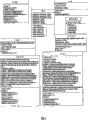
图7示出了根据本发明的实施方案的图6的不同类之间的继承以及它们如何关联和集合;Figure 7 shows the inheritance between the different classes of Figure 6 and how they relate and aggregate according to an embodiment of the present invention;
图8示出了根据本发明的实施方案在可能的实现中产生的一些示例性的类;以及Figure 8 shows some exemplary classes generated in a possible implementation according to an embodiment of the present invention; and
图9示出了根据本发明的实施方案在被适当配置或设计时可以作为可实现验证系统的计算机系统的示例性计算机系统。Figure 9 illustrates an exemplary computer system that, when properly configured or designed, can serve as a computer system that can implement an authentication system according to an embodiment of the present invention.
除非另有说明,附图中的实例不需要按照比例绘制。The examples in the figures are not necessarily drawn to scale unless otherwise indicated.
发明内容Contents of the invention
为了实现前述和其他目标以及根据本发明的目的,描述了用于基于字符串的生物测定验证的各种技术。To achieve the foregoing and other objectives and in accordance with the objects of the present invention, various techniques for string-based biometric authentication are described.
在一个实施方案中,提供了包括以下步骤的基于字符串的生物测定验证方法:接收与个人有关的用户名和密码组合;从个人获取生物测定数据;如果是第一次验证个人,则利用随机化函数根据生物测定数据来产生生物测定信息的随机字符串,截取所述随机生物测定字符串,并将所述截取的随机生物测定字符串连同个人的相关用户名和密码组合一起存储在生物测定数据库中,用于将来验证同一个人;但是,如果不是第一次验证个人,则将所获取的生物测定数据与所述生物测定数据库中截取的生物测定字符串进行比较而搜索匹配;以及如果找到匹配,就传送个人的授权以访问资源。In one embodiment, a string-based biometric authentication method is provided comprising the steps of: receiving a username and password combination associated with an individual; obtaining biometric data from the individual; and utilizing randomization if authenticating the individual for the first time The function generates a random string of biometric information from the biometric data, truncates the random biometric string, and stores the truncated random biometric string together with the individual's associated username and password combination in the biometric database , for future authentication of the same person; however, if it is not the first authentication of the person, the obtained biometric data is compared to the intercepted biometric string in said biometric database to search for a match; and if a match is found , to pass the individual's authorization to access the resource.
还提供了系统、装置、步骤、计算机软件产品和计算机可读介质,其实施方案适于实现和/或获得前述功能。Also provided are systems, apparatuses, steps, computer software products and computer readable media, embodiments of which are adapted to implement and/or obtain the aforementioned functions.
根据应结合附图阅读的下列详细说明,本发明的其他特征、优点以及目的将变得更加明显并且更加容易理解。Other features, advantages, and objects of the present invention will become more apparent and better understood from the following detailed description, which should be read in conjunction with the accompanying drawings.
具体实施方式Detailed ways
通过参考这里陈述的详细附图和说明来最佳地理解本发明。The present invention is best understood by reference to the detailed drawings and descriptions set forth herein.
以下参考附图来讨论本发明的实施方案。但是,本领域的技术人员应该容易认识到,这里给出的关于这些图的详细说明是出于解释的目的,因为本发明扩展而超出这些限制的实施方案。Embodiments of the present invention are discussed below with reference to the accompanying drawings. However, those skilled in the art should readily recognize that the detailed description given herein with respect to these figures is for explanatory purposes as the invention extends beyond these limited embodiments.
现在参考其中如附图中所示的实施方案来详细描述本发明。尽管以下参考附图讨论了本发明的实施方案,本领域的技术人员应该容易认识到,这里给出的关于这些图的详细说明是出于解释的目的,因为本发明扩展而超出这些限制的实施方案。The invention will now be described in detail with reference to the embodiments thereof as shown in the accompanying drawings. Although embodiments of the present invention are discussed below with reference to the accompanying drawings, those skilled in the art will readily recognize that the detailed description given herein with respect to these drawings is for explanatory purposes as the invention extends beyond these limited implementations. plan.
本发明的一个方面是以创新的方法实现生物测定技术,该方法处理网上系统中安全性的缺乏和与生物测定的使用有关的实际问题。本发明的优选实施方案利用生物测定验证作为安全的附加层,而没有用传统的验证系统代替或干预。此外,所述的实施方案对指纹扫描是快速、可靠、方便并且相对负担得起的事实产生影响。One aspect of the present invention is to implement biometric technology in an innovative way that addresses the lack of security in online systems and the practical problems associated with the use of biometrics. Preferred embodiments of the present invention utilize biometric authentication as an additional layer of security without replacing or interfering with traditional authentication systems. Furthermore, the described embodiments have an impact on the fact that fingerprint scanning is fast, reliable, convenient and relatively affordable.
本发明的一个方面是随机产生的稍后被截取并存储在数据库中的字符串与用户的指纹图像或模板无直接关系,该方面至少具有两个附带方面。一个是用户的指纹不能在网络上传送。而是它被转换为字符串,第二个是对数据库的任何未授权的访问不产生用户日志在数据方面的任何损害。本实施方案的另一方面是随机产生的字符串而不是指纹图像或模板存储在数据库中。这解决了数据库存储、网络安全以及反对生物测定的使用如指纹数据的存储的问题。在数据库中数据的字符串不占据很多空间,且没有黑客或身份盗贼能够像他们可用基于安全系统的帐户密码做的那样来利用字符串。An aspect of the present invention that the randomly generated character strings that are later intercepted and stored in the database not directly related to the user's fingerprint image or template has at least two incidental aspects. One is that the user's fingerprint cannot be transmitted over the network. Instead it is converted to a string, and the second is that any unauthorized access to the database does not generate any damage in terms of user log data. Another aspect of this embodiment is that randomly generated character strings are stored in the database rather than fingerprint images or templates. This addresses issues of database storage, network security, and storage against the use of biometrics such as fingerprint data. The strings of data in the database don't take up a lot of space, and no hacker or identity thief can exploit the strings like they can do with account passwords based on security systems.
图1示出了显示传统银行业务系统的流程图。传统的银行业务系统100包括称为用户ID的用户名以及密码(110),用户名是用户的身份,密码是具体用户的授权密钥。传统的银行业务系统100仅仅需要两个数据输入:用户名和密码。当验证了用户名和密码时(120),用户就被允许访问受保护的资源(130)。图1清楚地示出了人们在被认出并最终被阻止之前可以获得对帐户的访问并获得对帐户的全部控制是多么简单。Fig. 1 shows a flowchart showing a conventional banking system. The
图2示出了根据本发明的实施方案被嵌入图1的传统验证系统中的本发明的指纹I/P和验证(TA)方法的实施例。在本实施方案中,在通过指纹验证方法对用户授权之后,他或她被允许在例如不受限制的情况下访问受保护的资源,获得对网上银行业务系统的访问。在步骤210验证了用户名和密码之后,在步骤220指纹验证用于验证用户的ID。如果在步骤210用户名和密码在输入时是错误的,那么提示用户重新输入用户名和密码。如果在步骤210用户名和密码是正确的,系统继续转到获取并验证用户指纹数据的步骤220。应认识到,执行部分或所有指纹数据获取和/或验证的系统可以与执行任何其他步骤的位置相隔甚远(例如,非限制性地,在网络、因特网、内联网、电话线、无线设备等范围内的服务器上)。可以预料,本领域的技术人员根据本发明的教导将容易地认识到,本算法可以适于在各种可选的配置中使用。例如,非限制性地,一些可选系统配置包括在中央服务器上用于验证的基于窗口的内联网系统中的用户和计算机验证、门保护和出勤记录以及作为独立应用的桌上型电脑保护。FIG. 2 shows an example of the fingerprint I/P and authentication (TA) method of the present invention embedded in the conventional authentication system of FIG. 1 according to an embodiment of the present invention. In this embodiment, after the user is authorized by the fingerprint authentication method, he or she is allowed to access protected resources, eg without restriction, gaining access to the online banking system. After verifying the username and password at
图3示出了根据本发明的实施方案的指纹I/P和验证(TA)的示例性详细步骤。在本实施方案中,程序通过对访问的用户请求开始。在步骤305,用户通过输入用户名和密码来请求访问。接着,在步骤310通过将该用户名和密码与存储在用户名和密码数据库中的用户名和密码进行比较而验证该用户名和密码。如果用户名和密码在步骤312被验证,那么系统进行至以步骤315开始的指纹I/P和验证(TA),如以下所详述的。Figure 3 shows exemplary detailed steps of fingerprint I/P and authentication (TA) according to an embodiment of the present invention. In this embodiment, the procedure begins with a user request for access. At
在本实施方案中,一旦利用图1中所示的传统验证系统验证了用户,在步骤315就提示用户在传统的指纹设备/控制台上输入指纹,并处理该指纹。作为实施例而不是限制,一般类型的指纹设备/控制台可以是插入合并在系统中的计算机的USB端口/控制台的一种设备。在本实施方案中,如果用户使用系统第一次验证,则系统转到步骤335,其中它产生指纹信息的随机字符串。随机字符串是利用随机化函数基于指纹数据来产生的。可以利用本领域的技术人员公知的任何适当的技术来实现随机化;然而,本实施方案使用RSA加密法,因为RSA是一种用于加密的广泛接受的算法,并且基于用法来产生不同长度的随机字符串。与直接映射的字符串或者利用简单技术产生的字符串相比,随机字符串一般更加安全并且难以推测。根据本发明的教导,本领域的技术人员将容易地认识到基于指纹信息来产生指纹字符串表示的许多可选和适当的技术。In this embodiment, once the user is authenticated using the conventional authentication system shown in FIG. 1, the user is prompted at
在相同用户的随后验证中,系统将改为从步骤315进入步骤330,其中利用数据库中存储的截取的字符串来验证用户。存储的截取的字符串与在步骤315中用户试图验证时产生的字符串比较。对于新用户,来自步骤335的随机字符串在步骤330中被截取。在本实施方案中,截取字符串增加了字符串的复杂性,并使它甚至更难推测和解译字符串。本方法的一个方面是,它提供了每字符串存储较少的数据的益处,并且它更加复杂。在步骤330中产生截取的数据字符串的过程中,数据字符串在它被验证并允许访问之前,优选地缩短一个位的信息。在本实施方案中,利用压缩算法来执行截取,其中可以保证截取的字符串包括与原字符串相比至少少一位的字符串。以下将更加详细地描述截取过程的实施例。本实施方案中,在步骤335和330中指纹数据字符串产生并被存储之后,系统继续进行到步骤325,其中,截取的数据字符串存储在指纹数据库中,指纹数据库还存储了用于随后验证相同用户的用户的用户名和密码数据。接着在步骤320中,通过将用户输入的数据、用户名、密码和指纹与存储在指纹数据库中的数据进行比较而验证用户。如果数据被证实为匹配指纹数据库中存储的数据,则系统进行至步骤340,在该步骤中用户被允许访问受保护的资源。如果用户名、密码或指纹数据不匹配存储的数据,则系统返回步骤312或步骤315,且用户被请求重新输入用户名、密码或指纹。On subsequent authentications of the same user, the system will instead proceed from
图4作为实施例而不是限制示出了根据本发明的实施方案加强传统验证系统的示例性指纹验证方法。将会显示,本验证方法的加强如何比单独的传统系统提供更多的安全性。所示的方法包括利用密码验证用户名的传统/现有的验证模块410。然而,不是到访问准予模块460的直接路径,其中访问权通常授予给用户(省略的路径由带双画线的箭头表示),本实施方案提供了验证用户的附加安全装置,因此对传统的/现有验证系统410增加了另一安全层。FIG. 4 illustrates, by way of example and not limitation, an exemplary fingerprint verification method that augments a conventional verification system according to an embodiment of the present invention. It will be shown how enhancements to the present authentication method provide more security than conventional systems alone. The illustrated method includes a legacy/existing
图中示出了根据本发明的实施方案的验证系统400。以下将结合图6,进一步描述一些实现的细节。本过程以用户的指纹被输入指纹获取模块420开始。唯一的ID由传统的验证系统410产生,并被传输至本验证系统,以唯一地验证特定的用户。用户可被提示来利用指纹设备/控制台输入其指纹,且指纹被扫描并被提供至本验证系统,所述指纹设备/控制台例如非限制性地插入计算机的USB端口或合并在特定的电子设备中。随机化模块425为用户指纹分配随机字符串,并将随机指纹字符串传送给截取模块440,其将截取的指纹字符串连同其相应的唯一ID存储在指纹数据库(未示出)中。在本实施方案中,随机产生的字符串在用户和指纹之间有识别联系。但是,在本发明的一些可选实施方案中,唯一的ID可以由任何传统装置提供,或者在其他实施方案中,根本不使用;例如非限制性地,在一些应用中,可以不要求它明确地或者唯一地识别个体(即,利用唯一的ID),而是改为确定指纹是否是访问特定资源的授权类用户的一部分(例如非限制性地为安全系统的管理员)。验证模块验证来自数据库的用户的指纹。The figure shows an authentication system 400 according to an embodiment of the present invention. The following will further describe some implementation details with reference to FIG. 6 . The process begins with the user's fingerprint being entered into the
在本实施方案中,验证模块450对现有用户与它对新用户起不同的作用。在现有用户的情况下,比较存储在数据库中的随机字符串和验证时输入的字符串来验证用户。在成功验证之后,验证模块450将验证信号传送至允许用户访问受保护资源的访问准予模块460。然而,如果用户是第一次访问系统,随机字符串会被存储在数据库中,用户会被注册,并且最终用户通过访问准予模块460被允许访问数据。根据本发明的教导,本领域的技术人员将容易地认识到许多可选和适当的应用、步骤和/或系统配置来实现本实施方案的一些或所有的新颖方面。In this embodiment, the
图5a和5b作为例子示出根据本发明的实施方案的在验证处理期间事件的最高阶层流动。在本实施方案中,注册提示阶段500用于确定用户是新用户还是现有用户。在开始502,用户在步骤504确定用户是新用户还是现有用户。帐户创建和验证阶段510将处理新用户和现有用户。如果用户是新的,那么帐户开始在步骤512被创建,与现有用户相反,其改为在步骤514被提示输入现有用户的用户名和密码用于验证。在错误处理阶段520确定用户名和密码的正确性。可以预料,在一些实际的验证系统实施方案中,利用被管理因特网空间的创造团体识别和接受的标准加密技术来加密所有的密码。对于密码,存在某些传统的准则,例如最少数量的字符、至少一个数字等。这些准则的任何违背将产生被显示给用户的适当的错误消息,并要求用户纠正它。如果用户名和密码无效,则用户步骤528接收错误消息。作为实施例而不是限制,在步骤528可以给予现有用户三次机会来正确地输入有效的用户名和密码。一些实施方案可以允许更多或更少的输入用户名和密码的机会。在本实施方案中,在用户名/密码数据库处理阶段530,帐户在步骤532创建以匹配新信息,或用户在步骤535被验证。为了验证现有用户,输入的数据在数据库中与现有数据比较和匹配(534)。如果为新用户创建新的帐户,那么在步骤532将新用户客户数据输入用户/密码数据库中。一般,在将数据输入数据库之前,需要在数据库中创建类似于数据库表格的结构,以按正确的格式保存数据。一旦这种情况实现,数据库连接就被建立且数据以正确的格式输入。在此之后通常关闭到数据库的连接以维持数据库系统的完整性和一致性。但是,本领域的技术人员可以基于前述最适合特定应用的教导来设计可选的方法。Figures 5a and 5b illustrate by way of example the highest level flow of events during the verification process according to an embodiment of the present invention. In this embodiment, the
在任何情况下,无论用户是新的还是现有的,指纹都在指纹输入阶段540被扫描并在步骤542被输入系统中。应该注意,出于清楚的目的,图5b顶部的圆圈A表示从前面的图5a的继续。在拇指处理阶段544期间,指纹图像在步骤546变成数据字符串。接着在步骤547产生唯一的随机数字。然后,在步骤548截取随机产生的数字。在用户分类阶段550,在步骤552确定用户是新的还是现有的。在指纹/用户ID/密码(T/U/P)数据库处理阶段560,如果用户是新的,则在步骤562将关于指纹、用户名和密码的数据存储在数据库中。但是,如果用户已经有帐户,即,现有用户,则在保存所存储的指纹验证信息的数据库中搜索并匹配现有用户的指纹。在本实施方案中,系统在步骤564建立数据库连接。在本实施方案中,利用数据库中存储的指纹字符串与当用户试图验证时产生的指纹字符串来验证现有用户。作为实施例而不是限制,一些实施方案可以利用一般的防欺诈措施,例如但不限于在指纹匹配之前给予现有用户有限数量的时间来正确地扫描其指纹;否则,用户被阻止访问受保护的资源。步骤568示出了给予用户3次尝试来正确地扫描其指纹,但是可以允许任意数量的扫描。在本实施方案中,在指纹验证阶段570,对于新用户可以确定在步骤574拇指是否正确地插入在设备中。如果拇指不正确地插入,新用户被退回到步骤572并接收到错误消息。在阶段570对于现有用户,在步骤576检查指纹数据以确定指纹是否是真实的。在权限准予阶段580,在步骤582为新用户创建帐户。对于现有用户,在步骤586验证帐户并准予对数据的访问。在控制移交阶段590期间,控制在步骤592被移交至客户平台用于综合处理。根据本发明的教导,本领域的技术人员将容易认识到许多可选和适当的方案,以结合传统的安全方案来实现本实施方案的一些或所有的新颖方面,从而满足具体应用的需要。In any event, whether the user is new or existing, the fingerprints are scanned in the
图6a和6b作为例子而不是限制示出了包括实现本发明的实施方案的软件代码的示例性代码模块的名称。这些类对本领域的技术人员是自我解释的,且代码维持前述系统和方法实施方案的模块性和结构。在本实施方案中,“DBCreat”类处理与数据库有关的所有活动如创建表格、从表格中插入并选择数据。它还建立了与数据库服务器的连接。“ProcessThumb”类处理输入的指纹并验证来自数据库的指纹字符串和用户输入的指纹字符串之间的匹配。Figures 6a and 6b show, by way of example and not limitation, the names of exemplary code modules comprising software code implementing embodiments of the present invention. These classes are self explanatory to those skilled in the art, and the code maintains the modularity and structure of the aforementioned system and method embodiments. In this embodiment, the "DBCreat" class handles all database-related activities such as creating tables, inserting and selecting data from tables. It also establishes a connection to the database server. The "ProcessThumb" class processes the input thumbprint and verifies the match between the thumbprint string from the database and the user-entered thumbprint string.
作为例子而不是限制,参考图3和6b,在本发明的一个实施方案中,指纹(TP)获取、处理和存储算法(例如,步骤315至340)可实现为如下以伪代码定义的软件子程序:By way of example and not limitation, referring to Figures 3 and 6b, in one embodiment of the present invention, the fingerprint (TP) acquisition, processing and storage algorithm (eg, steps 315 to 340) can be implemented as a software subclass defined in pseudocode as follows program:
输入:用户指纹输入Input: user fingerprint input
输出:在数据库中存储的字符串Output: String stored in database
100开始100 start
110获得作为输入数据的指纹特征;并定义为TP(i)(来自指纹获取设备)。110 Obtain fingerprint features as input data; and define as TP(i) (from the fingerprint acquisition device).
120将指纹转换为字符串;定义为TP(s)。120 Convert the fingerprint to a string; defined as TP(s).
130应用具有TP(r)的输出的随机算法(例如,对TP(s)的随机)。130 Apply a random algorithm (eg, random to TP(s)) with an output of TP(r).
140应用具有TP(t)的输出的截取算法(对TP(r)的截取)。140 Apply the truncation algorithm with the output of TP(t) (truncation on TP(r)).
150将TP(t)存储在指纹数据库中。150 stores TP(t) in the fingerprint database.
160停止。160 stops.
作为进一步的例子而不是限制,参考图4和6a,在本发明的一个实施方案中,从数据库中获取字符串以及将其与输入的指纹匹配(例如步骤450)可实现为如下以伪代码定义的软件子程序:As a further example rather than limitation, with reference to Figures 4 and 6a, in one embodiment of the present invention, obtaining a character string from a database and matching it with an input fingerprint (for example, step 450) can be implemented as defined in pseudocode as follows The software subroutine:
输入:数据库中存储的指纹字符串Input: fingerprint string stored in the database
输出:匹配成功或失败结果的指纹Output: Fingerprint of matching success or failure results
200开始200 start
210从指纹数据库中获取指纹字符串TP(t)。210 Obtain the fingerprint string TP(t) from the fingerprint database.
220对TP(t)应用截取逆算法(truncation reversal algorithm)Truncaterev以恢复TP(r)。220 Apply the truncation reversal algorithm Truncaterev to TP(t) to recover TP(r).
230对TP(r)应用随机化逆算法Randomrev以恢复TP(s)。230 Apply the randomized inverse algorithm Randomrev to TP(r) to recover TP(s).
240将指纹字符串TP(s)转换为指纹特征TP(i)。240 Convert the fingerprint string TP(s) into fingerprint features TP(i).
250从待验证的用户获得作为新输入的指纹特征TP(n)。250 Get the fingerprint feature TP(n) as a new input from the user to be authenticated.
260利用卖方特定的匹配算法使TP(i)与TP(n)匹配。260 Match TP(i) with TP(n) using a vendor-specific matching algorithm.
270根据用于匹配的阈值显示成功/失败。270 displays success/failure based on thresholds used for matching.
停止。stop.
在本实施方案中,“Fingerprint”类包含唯一的ID和指纹特性。同样,“StringCrypto”用于字符串数据的加密和解密。In this embodiment, the "Fingerprint" class contains unique ID and fingerprint properties. Likewise, "StringCrypto" is used for encryption and decryption of string data.
作为进一步的例子而不是限制,前述随机化算法可实现为如下以伪代码定义的软件子程序:As a further example and not limitation, the aforementioned randomization algorithm may be implemented as a software subroutine defined in pseudocode as follows:
Algorithm Random()Algorithm Random()
输入:字符串TP(s)Input: String TP(s)
输出:字符串TP(r)Output: String TP(r)
300开始300 start
310将输入TP(s)分割为等长的字符串,最后的字符串小于其他字符串。这些字符串现在是以S(i)格式。在本实施方案中,基于编码格式的实现而执行TP(s)的分割。对于统一代码编码,每个字符串优选地不能超过58个字符,而对于其他编码,此限制为116个字符。310 Split the input TP(s) into strings of equal length, the last string being smaller than the other strings. These strings are now in S(i) format. In this embodiment, segmentation of TP(s) is performed based on the implementation of the encoding format. For Unicode encodings, each string preferably cannot exceed 58 characters, while for other encodings this limit is 116 characters.
320对Tp(s)中的每个S(i)重复:320 Repeat for each S(i) in Tp(s):
325利用具有公共密钥P(pub-k)的RSA加密S(i)以获取S(r)。325 Encrypt S(i) using RSA with public key P(pub-k) to obtain S(r).
330结束循环。330 ends the loop.
340将所有的S(r)组合在一起以产生TP(r)。340 combines all S(r) together to produce TP(r).
350返回TP(r)。350 returns TP(r).
360停止。360 stops.
应认识到,根据具体应用的需要,所使用的加密可以基于其他标准的加密算法。然而,目前RSA在数据中提供了最大的冗余度。优选地,通过适当地分割数据并在单独段的数据上执行RSA来实现随机化。It should be appreciated that the encryption used may be based on other standard encryption algorithms as required by a particular application. However, currently RSA provides the greatest degree of redundancy in the data. Preferably, randomization is achieved by splitting the data appropriately and performing RSA on the individual segments of the data.
作为进一步的例子而不是限制,前述随机化逆算法可实现为如下以伪代码定义的软件子程序:As a further example and not limitation, the aforementioned randomization inverse algorithm may be implemented as a software subroutine defined in pseudocode as follows:
Randomrev()Random rev()
输入:字符串TP(r)Input: string TP(r)
输出:字符串TP(s)Output: String TP(s)
400开始400 start
410将输入TP(r)分割为等长的字符串S(i)。最后的字符串也与其他字符串等长。410 Split the input TP(r) into strings S(i) of equal length. The final string is also as long as the other strings.
420对Tp(r)中的每个S(i)重复。420 repeats for each S(i) in Tp(r).
430利用具有个人密钥P(pri-k)的RSA加密法解密S(i)以获取S(s)。430 Decrypt S(i) using RSA encryption with private key P(pri-k) to obtain S(s).
440结束循环。440 to end the loop.
450将所有的S(s)组合在一起以产生TP(s)。450 combines all S(s) together to produce TP(s).
460返回TP(s)。460 returns TP(s).
470停止。470 stops.
该类可以用于提供被应用程序使用的附加的加密和解密特征,并且可以用于整个本验证系统以实现应用程序中的安全性。This class can be used to provide additional encryption and decryption features used by the application and can be used throughout the present authentication system to implement security in the application.
作为进一步的例子而不是限制,前述缩短算法可实现为如下以伪代码定义的软件子程序:As a further example and not limitation, the foregoing shortening algorithm may be implemented as a software subroutine defined in pseudocode as follows:
Truncate()Truncate()
输出:字符串TP(r)Output: String TP(r)
输出:字符串TP(t)Output: String TP(t)
500开始500 start
510获得输入TP(r)。510 Get input TP(r).
520利用现有算法压缩以产生TP(t)。520 Compress using existing algorithms to produce TP(t).
530返回TP(t)。530 returns TP(t).
540停止540 stop
作为进一步的例子而不是限制,前述缩短逆算法可实现为如下以伪代码定义的软件子程序:As a further example and not limitation, the aforementioned shortening inverse algorithm can be implemented as a software subroutine defined in pseudocode as follows:
Truncalerev()Truncalerev()
输入:字符串TP(t)Input: String TP(t)
输出:字符串TP(r)Output: String TP(r)
600开始600 start
610获得输入TP(t)610 obtain input TP(t)
620在Truncate()中利用相同的算法解压以产生TP(r)。620 decompress using the same algorithm in Truncate( ) to produce TP(r).
630返回TP(r)630 returns TP(r)
640停止640 stop
作为进一步的例子而不是限制,得到随机化截取的字符串的方法可实现为如下的一系列数学变换。在下列实施例中,输入的指纹特征是以字符串/字节格式的tp(i)。程序通过对tp(i)应用变换T而开始:Tp=T[tp(i)]。然后,对tp(s)应用Algorithm Random():TP(r)=R[tp(s)],接着对tp(r)应用Algorithm Truncate():tp(t)=Tr[tp(r)],其中,T为从字节/字符串到字符串格式的变换,R是随机化函数,以及Tr是截取函数。同样,T′、R′、Tr′分别是T、R、Tr的逆变换。As a further example rather than limitation, the method of obtaining a randomized truncated character string can be implemented as a series of mathematical transformations as follows. In the following embodiments, the input fingerprint feature is tp(i) in string/byte format. The program starts by applying a transformation T to tp(i): Tp=T[tp(i)]. Then, apply Algorithm Random() to tp(s): TP(r)=R[tp(s)], then apply Algorithm Truncate() to tp(r): tp(t)=Tr[tp(r)] , where T is the transformation from byte/string to string format, R is the randomization function, and Tr is the truncation function. Similarly, T', R', and Tr' are the inverse transformations of T, R, and Tr, respectively.
作为进一步的例子而不是限制,随机化函数R可实现为如下的一系列数学过程,其中tp(s)作为输入P(即,R[输入])传递:As a further example and not limitation, the randomization function R may be implemented as a series of mathematical procedures as follows, where tp(s) is passed as input P (i.e., R[input]):
700对输入求微分为F(p)=d/d(x)(P),以产生P0,P1,P2......Pn,其中x=0......n;700 differentiates the input as F(p)=d/d(x)(P) to produce P 0 , P 1 , P 2 . . . P n , where x=0 … n;
710将RSA应用于P0,P1,P2......Pn,其中x=0......n:710 Apply RSA to P 0 , P 1 , P 2 . . . P n , where x=0 . . . n:
F(p)=RSA(P0,P1,P2......Pn),其中x=0......n;F(p)=RSA(P 0 , P 1 , P 2 ...P n ), where x=0...n;
F(p)=RSA(P0)+RSA(P1)+RSA(P2)+......+RSA(Pn);其中x=0......n;(以下将更加详细地描述RSA)F(p)=RSA(P 0 )+RSA(P 1 )+RSA(P 2 )+...+RSA(P n ); where x=0...n; (below RSA will be described in more detail)
产生的结果是:The result produced is:
720F(r)=R0+R1+R2+......+Rn;其中x=0......n;720F(r)=R 0 +R 1 +R 2 +...+R n ; where x=0...n;
对所有的项求和F(r)=∑Ri;其中x=0......n;Sum over all terms F(r)=∑Ri; where x=0...n;
在本实施方案中,,随机化不必是仅仅执行RSA的事件,而是包括将数据分割为不同的段,并对这些数据的单独段应用RSA。当这些应用RSA的数据被收集到一起时,就获得了随机字符串。这个完整的过程称为随机化,并且对此目前称为随机化函数。In this embodiment, randomization need not be a mere matter of performing RSA, but rather involves splitting the data into different segments and applying RSA to these individual segments of data. When these RSA-applied data are collected together, random strings are obtained. This complete process is called randomization, and for this is currently called the randomization function.
730对标准导数求积分项,结果:730 calculates the integral term for the standard derivative, the result:
tp(r)=(x=0,x=n)∫R(x)dx;tp(r)现在代表随机字符串。tp(r)=(x=0, x=n)∫R(x)dx; tp(r) now represents a random string.
740对tp(r)应用Tr以得到F(t):740 Apply Tr to tp(r) to get F(t):
F(t)=Tr[tp(r)]F(t)=Tr[tp(r)]
置换tp(r)permutation tp(r)
F(t)=Tr[(x=0,x=n)∫R(x)dx];F(t)=Tr[(x=0,x=n)∫R(x)dx];
F(I)=C(R0+C(R1)+C(R2)+......C(Rn);其中,x=0......n,且C是压缩变换。压缩技术在计算机领域中是公知的,以压缩数据来降低空间要求并通过提供传输较少位的数据来维持网络上的高性能。F(I)=C(R0+C(R1)+C(R2)+...C(Rn); where x=0...n, and C is a compression transform. Compression Techniques are well known in the computer arts to compress data to reduce space requirements and to maintain high performance over networks by providing data with fewer bits transferred.
F(t)=∑C(Ri);其中x=0......n;F(t)=∑C(Ri); where x=0...n;
740tp(t)=(x=0,x=n)∫C(R(x))dx;其中tp(t)为随机截取的字符串,其存储在数据库中。740 tp(t)=(x=0, x=n)∫C(R(x))dx; where tp(t) is a randomly intercepted character string, which is stored in the database.
750以逆序对Tr、R和T应用逆变换,如下:750 applies the inverse transform to Tr, R, and T in reverse order, as follows:
对tp(t)应用变换Tr′:tp(r)=Tr′[tp(t)];Apply transformation Tr' to tp(t): tp(r) = Tr'[tp(t)];
对tp(r)应用变换R′:tp(s)=R[tp(r)];Apply transformation R' to tp(r): tp(s) = R[tp(r)];
对tp(s)应用变换T′:tp(i)=T[tp(s)];Apply transformation T' to tp(s): tp(i) = T[tp(s)];
其中tp(i)是待匹配的最终的字符串/字节数据where tp(i) is the final string/byte data to be matched
接着是对RSA(输入,密钥)的更详细的描述。在本实施方案中,如果密钥是公共的,则它加密输入,否则它解密输入。A more detailed description of RSA(input, key) follows. In this embodiment, if the key is public, it encrypts the input, otherwise it decrypts the input.
作为例子而不是限制,前述RSA公共密钥加密算法可实现为如下以伪代码的定义的软件子程序:As an example rather than a limitation, the aforementioned RSA public key encryption algorithm can be implemented as a software subroutine defined in pseudocode as follows:
800找出P和Q,两个大(例如,1024位)质数。The 800 finds P and Q, two large (eg, 1024 bit) prime numbers.
810选择E,使得E大于1、E小于PQ,以及E和(P-1)(Q-1)为互质数,这意味着它们没有公共的质因子。E不必是质数,但是它必须是奇数。(P-1)(Q-1)不可以是质数,因为它是偶数。810 chooses E such that E is greater than 1, E is less than PQ, and E and (P-1)(Q-1) are relatively prime numbers, meaning they have no common prime factors. E doesn't have to be prime, but it has to be odd. (P-1)(Q-1) cannot be prime because it is even.
820计算D,使得(DE-1)被(P-1)(Q-1)恰好整除。数学家将这写为DE=l(mod(P-1)(Q-1)),并且他们将D称为E的乘法逆元素。对于本领域的技术人员而言这是众所周知的;例如,技术人员可以简单地找出使D=(X(P-1)(Q-1)+I)/E为整数的整数X,并且接着使用D的那个值。820 calculates D such that (DE-1) is exactly divisible by (P-1)(Q-1). Mathematicians write this as DE=l(mod(P-1)(Q-1)), and they call D the multiplicative inverse of E. This is well known to those skilled in the art; for example, one can simply find the integer X such that D=(X(P-1)(Q-1)+I)/E is an integer, and then Use that value of D.
830根据加密函数C=(T^E)mod PQ加密,其中C为密文(正整数),T为明文(正整数),而^表示求幂。消息被加密,T必须小于模数PQ。830 is encrypted according to encryption function C=(T ^ E) mod PQ, wherein C is ciphertext (positive integer), T is plaintext (positive integer), and ^ represents exponentiation. For the message to be encrypted, T must be less than the modulus PQ.
840根据解密函数T=(C^D)mod PQ解密,其中C为密文(正整数),T为明文(正整数),而^表示求幂。840 is decrypted according to decryption function T=(C ^ D) mod PQ, wherein C is ciphertext (positive integer), T is plaintext (positive integer), and ^ represents exponentiation.
公共密钥为对(PQ,E)。个人密钥为数字D,并且应该保密。乘积PQ为模数,在文献中一般称为N。E是公共指数。D为秘密指数。在本实施方案中,“ThumbControl”包括与设备连接有关的所有功能,从用户获取指纹以及对设备处理的误差。“Already Registered”类处理与已经用系统注册的用户有关的函数。它还利用数据库验证用户。“New User”类处理与使用系统的新用户有关的功能。它还将用户的记录插入系统中。在本实施方案中,Jagrsa.cs类(未示出)包括实现字符串的截取和缩减的方法的公共界面,字符串通过Jagcompress方法被随机化。CryptoGrapliy.es类(未示出)实现系统的截取和加密特征的核心功能。类使用128位密钥加密,并且完整的数据利用该类提供的方法被截取和加密。Jagcompress.es类提供了随机化指纹输入的特征,并将它转换为包括无用数据的随机字符串,而且数据与实际的指纹没有关系。它还实现了字符串到指纹转换的反向过程。根据本发明的教导,本领域的技术人员根据具体应用的需要将容易地认识到许多可选和适当的加密/解密或者可逆字符串安全技术。The public key is the pair (PQ, E). The personal key is number D and should be kept secret. The product PQ is a modulus, generally referred to as N in the literature. E is the public exponent. D is the secret index. In this embodiment, "ThumbControl" includes all functions related to device connection, taking fingerprints from the user and handling errors to the device. The "Already Registered" class handles functions related to users who are already registered with the system. It also authenticates users against a database. The "New User" class handles functionality related to new users using the system. It also inserts the user's record into the system. In this embodiment, the Jagrsa.cs class (not shown) includes a public interface that implements methods for truncation and reduction of strings that are randomized by the Jagcompress method. The CryptoGrapliy.es class (not shown) implements the core functionality of the interception and encryption features of the system. The class is encrypted with a 128-bit key, and the complete data is intercepted and encrypted using the methods provided by this class. The Jagcompress.es class provides features that randomize the fingerprint input and convert it to a random string including garbage data that has no relation to the actual fingerprint. It also implements the reverse process of string-to-fingerprint conversion. Based on the teachings of the present invention, those skilled in the art will readily recognize many alternative and appropriate encryption/decryption or reversible string security techniques as required by the specific application.
图7示出了根据本发明的实施方案的图6的不同类之间的继承以及它们如何关联并集合。附图示出了这些类的功能和关联以及它们互相作用来完成系统的方式。例如,非限制性地,一页是其他页起源的主要类。登记页为新用户产生,并且当新用户成功地登录时,他们被引向欢迎页。该继承是基本发展平台和语言的特征。Figure 7 shows the inheritance between the different classes of Figure 6 and how they are related and aggregated according to an embodiment of the present invention. The figures show the functions and associations of these classes and the way they interact to complete the system. For example, without limitation, a page is the main class from which other pages originate. A registration page is generated for new users, and when new users log in successfully, they are directed to a welcome page. This inheritance is a feature of basic development platforms and languages.
图8示出了根据本发明的实施方案的在可能的实现中产生的一些示例性的类。附图中所示的是取样类,其包括被相同类或其他类使用以得到功能的特性和方法。例如,非限制性地,thumbprint类包括用户名、密码和指纹,作为可被设置并使用它的方法获得的功能。类似地,页类包括按钮、文本框等以及执行基于输入的活动的方法。Figure 8 shows some exemplary classes generated in a possible implementation according to an embodiment of the present invention. Shown in the figures are sample classes that include properties and methods that are used by the same class or other classes to obtain functionality. For example, without limitation, the thumbprint class includes username, password, and thumbprint as functionality that can be set and obtained using its methods. Similarly, page classes include buttons, text boxes, etc. and methods to perform input-based activities.
图9示出了根据本发明的实施方案的示例性计算机系统,在适当配置或设计时,所述计算机系统可以用作可实现验证系统的计算机系统。计算机系统1300包括也被称为中央处理单元或CPU的任何数量的处理器1310。CPU 1310可以连接至包括主存储器1306和主存储器1304的存储设备,主存储器1306一般为随机存取存储器或RAM,主存储器1304一般为只读存储器或ROM。CPU 3310可以为各种类型的微控制器或微处理器,例如但不限于可编程设备,例如但不限于CPLD和FPGA,以及不可编程设备例如但不限于门阵列ASIC或通用微处理器。如本领域所公知的,主存储器1304起作用来将数据和指令单向地传递至CPU 1310,而主存储器1306一般用于以双向方式传递数据和指令。这两个主存储设备都可以包括任何适当的计算机可读介质,例如以上所述的计算机可读介质。在本实施方案中,大容量存储设备1308还可以双向地连接至CPU 1310,并提供额外的数据存储容量,而且可以包括以上所述的任何计算机可读介质。大容量存储设备1308可以用于存储程序、数据等,并且一般为辅助存储介质例如硬盘。应认识到,在适当情况下,保留在大容量存储设备1308中的信息可按标准方式合并作为虚拟存储器的主存储器1306的一部分。在本实施方案中,特定的大容量存储设备例如CD-ROM还可以将数据双向地传送至CPU。Figure 9 illustrates an exemplary computer system that, when properly configured or designed, can be used as a computer system that can implement an authentication system, according to an embodiment of the present invention.
在本实施方案中,CPU 1310还可以连接至接口1302,所述接口1302连接至一个或更多的输入/输出设备,例如但不限于视频监控器、跟踪球、鼠标、键盘、扩音器、触敏显示器、传感器读卡器、磁或纸带阅读机、写字板、触针、声音或笔迹识别器。最后,CPU 1310可选地可光学连接至外部设备,例如但不限于使用外部连接的数据库或计算机或电信或因特网网络,如通常在1312所示的。利用这样的连接,可以预料,在执行这里所述的方法步骤的过程中,CPU可以接收来自因特网的信息,或者可以将信息输出至网络。In this embodiment, the
鉴于前述教导,显然,本发明的实施方案超过传统验证系统而有效地保护商业和金融业务/资源。本发明的另一方面是它使想要控制其金融和/或交易本身的个人能够不依赖于独立缔约团队来建立他们的生物测定验证系统。以这种方式,企业、商行以及个人获得了更多的自由和控制,因为他们是其活动的主要决策者。In view of the foregoing teachings, it is apparent that embodiments of the present invention effectively secure commercial and financial transactions/resources over traditional authentication systems. Another aspect of the invention is that it enables individuals who want to control their finances and/or transactions themselves to set up their biometric verification system without relying on an independent contracting team. In this way, businesses, businesses and individuals gain more freedom and control as they are the main decision makers of their activities.
本领域的技术人员将容易地认识到根据前述教导来如何实现本发明的编码。作为实施例而不是限制,可以利用C#的Microsoft VisualStudio.Net和ASP.NET来编写软件代码。它还可以被编码成在IIS 6.0和更高版本以及现代网页浏览器(例如,Internet Explorer 6.0和更高版本)上适当地执行。适当的数据库例如但不限于Microsoft SQL Server、Oracle以及IBM DB2。Those skilled in the art will readily recognize how to implement the encoding of the present invention in light of the foregoing teachings. By way of example and not limitation, the software code can be written using Microsoft Visual Studio.Net and ASP.NET in C#. It can also be coded to execute properly on IIS 6.0 and later and modern web browsers (for example, Internet Explorer 6.0 and later). Suitable databases are such as, but not limited to, Microsoft SQL Server, Oracle and IBM DB2.
根据本发明的教导,本领域的技术人员应该容易认识到,可以适当地替换、重新排序、去除任何前述步骤和/或系统模块,以及可以根据具体应用的需要插入另外的步骤和/或系统模块,并且前述实施方案的系统可以利用各种适当的程序和系统模块中的任一个来实现,而且不限于任何特定的计算机硬件、软件、固件、微代码等。Based on the teachings of the present invention, those skilled in the art should readily recognize that any of the aforementioned steps and/or system modules can be appropriately replaced, reordered, removed, and additional steps and/or system modules can be inserted according to the needs of specific applications , and the system of the foregoing embodiments may be implemented using any of various suitable programs and system modules, and is not limited to any specific computer hardware, software, firmware, microcode, etc.
已经完整地描述了本发明的至少一个实施方案,根据本发明实现基于字符串的指纹验证技术的其他等效或可选方法对本领域的技术人员是显而易见的。例如,尽管前述基于字符串的验证技术的具体实现指向指纹实现,可以预料,类似的技术可以应用于能够用参数表示成参量字符串的任何生物测定验证信息(其中,指纹仅仅是一种),例如但不限于视网膜扫描、声纹、掌纹、血管和血流识别系统、手部几何形状以及脸部特征,其中,本发明的这样的实现全部设想为在本发明的范围中。已经通过例证描述了本发明,并且公开的具体实施方案并不旨在将本发明限于公开的特定形式。因此,本发明覆盖了落于下列权利要求的精神和范围内的所有的修改、等效以及可选形式。Having fully described at least one embodiment of the present invention, other equivalent or alternative methods of implementing string-based fingerprint authentication techniques according to the present invention will be apparent to those skilled in the art. For example, although the foregoing specific implementation of the string-based authentication technique is directed to a fingerprint implementation, it is contemplated that similar techniques can be applied to any biometric authentication information (of which fingerprint is only one) that can be parameterized as a string of parameters, For example, but not limited to, retinal scans, voice prints, palm prints, blood vessel and blood flow recognition systems, hand geometry, and facial features, where such implementations of the invention are all contemplated as being within the scope of the invention. The invention has been described by way of illustration and the specific embodiments disclosed are not intended to limit the invention to the particular forms disclosed. Accordingly, the present invention covers all modifications, equivalents, and alternatives falling within the spirit and scope of the following claims.
Claims (13)
Applications Claiming Priority (3)
| Application Number | Priority Date | Filing Date | Title |
|---|---|---|---|
| US67187005P | 2005-04-15 | 2005-04-15 | |
| US60/671,870 | 2005-04-15 | ||
| PCT/US2006/013786 WO2006113312A2 (en) | 2005-04-15 | 2006-04-12 | Method and system for string-based biometric authentication |
Publications (2)
| Publication Number | Publication Date |
|---|---|
| CN101199160A CN101199160A (en) | 2008-06-11 |
| CN101199160B true CN101199160B (en) | 2011-08-03 |
Family
ID=37115684
Family Applications (1)
| Application Number | Title | Priority Date | Filing Date |
|---|---|---|---|
| CN2006800211788A Expired - Fee Related CN101199160B (en) | 2005-04-15 | 2006-04-12 | String-based biometric authentication method and system |
Country Status (7)
| Country | Link |
|---|---|
| US (1) | US20070031009A1 (en) |
| CN (1) | CN101199160B (en) |
| CA (1) | CA2605041A1 (en) |
| IL (1) | IL186640A0 (en) |
| RU (1) | RU2007142215A (en) |
| WO (1) | WO2006113312A2 (en) |
| ZA (1) | ZA200709847B (en) |
Families Citing this family (20)
| Publication number | Priority date | Publication date | Assignee | Title |
|---|---|---|---|---|
| NL1032340C2 (en) * | 2006-08-17 | 2008-02-25 | Hieronymus Watse Wiersma | System and method for digitally signing data files. |
| JP4359636B2 (en) * | 2007-07-06 | 2009-11-04 | 京セラミタ株式会社 | Authentication apparatus, authentication method, and authentication program |
| JP4579315B2 (en) * | 2008-06-27 | 2010-11-10 | 京セラ株式会社 | Portable terminal device, function activation control method, and program |
| US20100083000A1 (en) * | 2008-09-16 | 2010-04-01 | Validity Sensors, Inc. | Fingerprint Sensor Device and System with Verification Token and Methods of Using |
| US8799666B2 (en) * | 2009-10-06 | 2014-08-05 | Synaptics Incorporated | Secure user authentication using biometric information |
| US8041956B1 (en) * | 2010-08-16 | 2011-10-18 | Daon Holdings Limited | Method and system for biometric authentication |
| US9589399B2 (en) | 2012-07-02 | 2017-03-07 | Synaptics Incorporated | Credential quality assessment engine systems and methods |
| CN103152157A (en) * | 2013-02-04 | 2013-06-12 | 快车科技有限公司 | A kind of security secret protection method and related device |
| CN104424408A (en) * | 2013-08-26 | 2015-03-18 | 联想(北京)有限公司 | Information processing method and electronic device |
| JP5928733B2 (en) * | 2013-09-06 | 2016-06-01 | インターナショナル・ビジネス・マシーンズ・コーポレーションInternational Business Machines Corporation | Method for automatically generating test data consisting of character strings, method for identifying signatures embedded in test data consisting of character strings, and their computers and computer programs |
| CN103761647A (en) * | 2014-01-24 | 2014-04-30 | 金硕澳门离岸商业服务有限公司 | Electronic payment system and electronic payment method |
| CN105590044B (en) * | 2014-10-23 | 2018-12-21 | 阿里巴巴集团控股有限公司 | A kind of information authentication method and device |
| FR3027753B1 (en) * | 2014-10-28 | 2021-07-09 | Morpho | AUTHENTICATION PROCESS FOR A USER HOLDING A BIOMETRIC CERTIFICATE |
| US9577992B2 (en) * | 2015-02-04 | 2017-02-21 | Aerendir Mobile Inc. | Data encryption/decryption using neuro and neuro-mechanical fingerprints |
| CN105337964B (en) * | 2015-09-30 | 2019-06-11 | 宇龙计算机通信科技(深圳)有限公司 | Data security protection method and device |
| CN106909852B (en) * | 2017-03-06 | 2019-11-08 | 广东工业大学 | Smart contract encryption method and device based on triple MD5 encryption algorithm |
| US10523648B2 (en) | 2017-04-03 | 2019-12-31 | Microsoft Technology Licensing, Llc | Password state machine for accessing protected resources |
| GB2565551A (en) * | 2017-08-14 | 2019-02-20 | Universal Biometric Payment System Ltd | Method of biometric user registration with the possibility of management of the data depersonalization level |
| EP3771142B1 (en) * | 2019-07-24 | 2025-12-24 | Robert Bosch GmbH | Computer-implemented method for controlling access in a network |
| EP3771143A1 (en) * | 2019-07-24 | 2021-01-27 | Robert Bosch GmbH | Computer-implemented method to provide secure interactions between users in a network |
Citations (5)
| Publication number | Priority date | Publication date | Assignee | Title |
|---|---|---|---|---|
| US6202151B1 (en) * | 1997-05-09 | 2001-03-13 | Gte Service Corporation | System and method for authenticating electronic transactions using biometric certificates |
| US20010042206A1 (en) * | 2000-05-12 | 2001-11-15 | International Business Machines Corporation Of Armonk | System and method of uniquely authenticating each replication of a group of soft-copy documents |
| US20020174345A1 (en) * | 2001-05-17 | 2002-11-21 | Patel Pankaj B. | Remote authenticating biometric apparatus and method for networks and the like |
| US20040205176A1 (en) * | 2003-03-21 | 2004-10-14 | Ting David M.T. | System and method for automated login |
| US20040268142A1 (en) * | 2003-06-30 | 2004-12-30 | Nokia, Inc. | Method of implementing secure access |
Family Cites Families (1)
| Publication number | Priority date | Publication date | Assignee | Title |
|---|---|---|---|---|
| US6487306B1 (en) * | 1997-08-22 | 2002-11-26 | International Business Machines Corporation | System and method for deriving a string-based representation of a fingerprint image |
-
2006
- 2006-04-11 US US11/401,833 patent/US20070031009A1/en not_active Abandoned
- 2006-04-12 WO PCT/US2006/013786 patent/WO2006113312A2/en not_active Ceased
- 2006-04-12 CA CA002605041A patent/CA2605041A1/en not_active Abandoned
- 2006-04-12 CN CN2006800211788A patent/CN101199160B/en not_active Expired - Fee Related
- 2006-04-12 RU RU2007142215/09A patent/RU2007142215A/en not_active Application Discontinuation
-
2007
- 2007-10-14 IL IL186640A patent/IL186640A0/en unknown
- 2007-11-15 ZA ZA200709847A patent/ZA200709847B/en unknown
Patent Citations (5)
| Publication number | Priority date | Publication date | Assignee | Title |
|---|---|---|---|---|
| US6202151B1 (en) * | 1997-05-09 | 2001-03-13 | Gte Service Corporation | System and method for authenticating electronic transactions using biometric certificates |
| US20010042206A1 (en) * | 2000-05-12 | 2001-11-15 | International Business Machines Corporation Of Armonk | System and method of uniquely authenticating each replication of a group of soft-copy documents |
| US20020174345A1 (en) * | 2001-05-17 | 2002-11-21 | Patel Pankaj B. | Remote authenticating biometric apparatus and method for networks and the like |
| US20040205176A1 (en) * | 2003-03-21 | 2004-10-14 | Ting David M.T. | System and method for automated login |
| US20040268142A1 (en) * | 2003-06-30 | 2004-12-30 | Nokia, Inc. | Method of implementing secure access |
Also Published As
| Publication number | Publication date |
|---|---|
| ZA200709847B (en) | 2009-02-25 |
| CN101199160A (en) | 2008-06-11 |
| WO2006113312A3 (en) | 2007-09-07 |
| US20070031009A1 (en) | 2007-02-08 |
| WO2006113312A2 (en) | 2006-10-26 |
| CA2605041A1 (en) | 2006-10-26 |
| IL186640A0 (en) | 2008-01-20 |
| RU2007142215A (en) | 2009-05-27 |
Similar Documents
| Publication | Publication Date | Title |
|---|---|---|
| US11803633B1 (en) | Method and system for securing user access, data at rest and sensitive transactions using biometrics for mobile devices with protected, local templates | |
| CN101199160B (en) | String-based biometric authentication method and system | |
| US8842887B2 (en) | Method and system for combining a PIN and a biometric sample to provide template encryption and a trusted stand-alone computing device | |
| JP6507115B2 (en) | 1: N biometric authentication · encryption · signature system | |
| US8838990B2 (en) | Bio-cryptography: secure cryptographic protocols with bipartite biotokens | |
| CN101087194B (en) | Organism authenticating method and system | |
| EP2813961B1 (en) | Biometric verification with improved privacy and network performance in client-server networks | |
| US20070118758A1 (en) | Processing device, helper data generating device, terminal device, authentication device and biometrics authentication system | |
| JP2008097438A (en) | User authentication system, authentication server, terminal, and tamper resistant device | |
| JP2000358025A (en) | Information processing method, information processor and recording medium storing information processing program | |
| Uzun et al. | Cryptographic key derivation from biometric inferences for remote authentication | |
| KR20080022729A (en) | Biometric method and apparatus therefor | |
| JP7573455B2 (en) | Authentication device and authentication method | |
| CN115967581A (en) | Login verification method and device, electronic equipment and storage medium | |
| CN1965279A (en) | Architectures for privacy protection of biometric templates | |
| CN101316119A (en) | Identity recognition system, identity recognition device and identity recognition method | |
| HK40090866A (en) | Authentication device and authentication method | |
| TW202443421A (en) | Passwordless authentication method and computer program product | |
| CN119106414A (en) | Key protection method, system, device and storage medium for software cryptographic module | |
| Maale et al. | Enhancing Security in the Banking Sector using Biometric and Cryptography. A proposed framework for BACCSOD in Ghana. | |
| JP2004021591A (en) | Management device and authentication device | |
| Mohammadi et al. | Enhancement of security via real time authentication with biometric methods in e-commerce transactions | |
| KR20010035407A (en) | Password security method by verification technique of timing interval.(time signature technique) | |
| JP2004254020A (en) | Certificate Authority system |
Legal Events
| Date | Code | Title | Description |
|---|---|---|---|
| C06 | Publication | ||
| PB01 | Publication | ||
| C10 | Entry into substantive examination | ||
| SE01 | Entry into force of request for substantive examination | ||
| C14 | Grant of patent or utility model | ||
| GR01 | Patent grant | ||
| C17 | Cessation of patent right | ||
| CF01 | Termination of patent right due to non-payment of annual fee |
Granted publication date: 20110803 Termination date: 20120412 |