CN101175301B - Sharing method of non-scheduled resources and scheduled resources in uplink enhanced system - Google Patents
Sharing method of non-scheduled resources and scheduled resources in uplink enhanced system Download PDFInfo
- Publication number
- CN101175301B CN101175301B CN200610137808XA CN200610137808A CN101175301B CN 101175301 B CN101175301 B CN 101175301B CN 200610137808X A CN200610137808X A CN 200610137808XA CN 200610137808 A CN200610137808 A CN 200610137808A CN 101175301 B CN101175301 B CN 101175301B
- Authority
- CN
- China
- Prior art keywords
- scheduling
- scheduled
- resource
- services
- service
- Prior art date
- Legal status (The legal status is an assumption and is not a legal conclusion. Google has not performed a legal analysis and makes no representation as to the accuracy of the status listed.)
- Expired - Fee Related
Links
Images

Classifications
-
- H—ELECTRICITY
- H04—ELECTRIC COMMUNICATION TECHNIQUE
- H04W—WIRELESS COMMUNICATION NETWORKS
- H04W74/00—Wireless channel access
- H04W74/02—Hybrid access
Landscapes
- Engineering & Computer Science (AREA)
- Computer Networks & Wireless Communication (AREA)
- Signal Processing (AREA)
- Mobile Radio Communication Systems (AREA)
Abstract
本发明主要公开了一种非调度资源和调度资源的共享方法,包括以下处理:分别为非调度业务和调度业务分配E-HICH信道;为非调度业务和调度业务分配不同的HARQ处理标识;UE选择发送非调度业务或调度业务,并将相应的HARQ处理标识发送给节点B;节点B根据HARQ处理标识区分非调度业务和调度业务,并对其进行处理;节点B通过选择非调度或调度的E-HICH信道来向UE发送HARQ接收确认指示消息;UE根据其选择的业务类型决定在非调度或调度的E-HICH信道上接收HARQ接收确认指示消息。通过以上技术方案,实现了以下有益效果:提高了资源利用率,避免了资源浪费或用户调度业务的不公平对待。
The present invention mainly discloses a method for sharing non-scheduling resources and scheduling resources, including the following processing: respectively assigning E-HICH channels to non-scheduling services and scheduling services; assigning different HARQ processing identifiers to non-scheduling services and scheduling services; UE Select to send non-scheduled services or scheduled services, and send the corresponding HARQ processing identification to Node B; Node B distinguishes non-scheduled services and scheduled services according to the HARQ processing identification, and processes them; Node B selects non-scheduled or scheduled services The E-HICH channel is used to send the HARQ reception confirmation indication message to the UE; the UE decides to receive the HARQ reception confirmation indication message on the non-scheduled or scheduled E-HICH channel according to the service type selected by it. Through the above technical solutions, the following beneficial effects are achieved: resource utilization is improved, resource waste or unfair treatment of user scheduling services is avoided.
Description
技术领域technical field
本发明涉及通信领域,并且更特别地,涉及一种用于时分码分多址接入无线通讯系统中的上行增强技术中的非调度资源和调度资源的共享方法,其可适用于TD-CDMA和TD-SCDMA系统。The present invention relates to the field of communication, and more particularly, relates to a method for sharing non-scheduled resources and scheduled resources in the uplink enhancement technology of time division code division multiple access wireless communication system, which is applicable to TD-CDMA and TD-SCDMA system.
背景技术Background technique
在第三代移动通信系统中,为了提供更高速率的上行分组业务,提高频谱利用效率,3GPP(3rd Generation Partnership Project)在WCDMA和TD-CDMA系统的规范中引入了高速上行分组接入(HSUPA:High Speed Uplink Packet Access)特性,即上行增强特性。在HSDPA特性中,通过引入自适应编码调制(AMC:AdaptiveModulation and Coding)、混合自动重传请求(HARQ:HybridAutomatic Retransmission Request)、以及Node B(节点B)控制的调度技术来减小网络处理时延,从而来提高上行分组业务速率,提高频谱利用效率。In the third-generation mobile communication system, in order to provide higher-speed uplink packet services and improve spectrum utilization efficiency, 3GPP (3rd Generation Partnership Project) introduced high-speed uplink packet access (HSUPA) in the specifications of WCDMA and TD-CDMA systems. : High Speed Uplink Packet Access) feature, that is, the uplink enhanced feature. In the HSDPA feature, the network processing delay is reduced by introducing Adaptive Modulation and Coding (AMC: Adaptive Modulation and Coding), Hybrid Automatic Retransmission Request (HARQ: Hybrid Automatic Retransmission Request), and Node B (Node B)-controlled scheduling technology , so as to increase the uplink packet service rate and improve spectrum utilization efficiency.
其中,由于FDD系统(包括WCDMA)与TDD系统(包括TD-CDMA和TD-SCDMA)的系统特性差异,导致Node B控制的调度技术在FDD和TDD系统中是有差异的。在FDD系统中,NodeB主要通过控制UE(用户设备)的上行发射功率来控制UE的上行业务发送速率;而在TDD系统中,Node B除了控制UE(用户设备)的上行发射功率外,还需要控制UE使用的上行物理信道资源。Among them, due to the difference in system characteristics between the FDD system (including WCDMA) and the TDD system (including TD-CDMA and TD-SCDMA), the scheduling technology controlled by the Node B is different in the FDD and TDD systems. In the FDD system, the NodeB mainly controls the uplink service transmission rate of the UE (user equipment) by controlling the uplink transmission power of the UE (user equipment); while in the TDD system, in addition to controlling the uplink transmission power of the UE (user equipment), the Node B also needs Control the uplink physical channel resources used by UE.
HSUPA系统又被称之为上行增强系统,简称为E-DCH系统。在TD-CDMA系统中,HSUPA系统引入的新技术包括如下内容:The HSUPA system is also called an uplink enhanced system, or E-DCH system for short. In the TD-CDMA system, the new technologies introduced by the HSUPA system include the following:
在MAC(媒体接入控制)层,在UE侧引入新的MAC实体(MAC-es/MAC-e),位于MAC-d之下,负责HARQ重传、MAC-e复用、和E-TFC选择。在网络侧的Node B中引入新的MAC实体(MAC-e),负责HARQ重传、调度和MAC-e解复用。在网络侧的SRNC中引入新的MAC实体(MAC-es),负责提供MAC-es重组(用于MAC-d PDU的顺序传递)。At the MAC (Media Access Control) layer, a new MAC entity (MAC-es/MAC-e) is introduced on the UE side, located under MAC-d, responsible for HARQ retransmission, MAC-e multiplexing, and E-TFC choose. A new MAC entity (MAC-e) is introduced into the Node B on the network side, responsible for HARQ retransmission, scheduling and MAC-e demultiplexing. A new MAC entity (MAC-es) is introduced in the SRNC on the network side, which is responsible for providing MAC-es reassembly (for sequential delivery of MAC-d PDUs).
在传输信道方面,增强上行链路数据承载在新引入的专用传输信道E-DCH上。每个UE最多只有一条E-DCH类型的CCTrCH,每条CCTrCH中只能复用一条E-DCH。E-DCH在一个TTI中承载一个MAC-e传输块,E-DCH的TTI为10ms。In terms of transport channels, the enhanced uplink data is carried on the newly introduced dedicated transport channel E-DCH. Each UE has at most one CCTrCH of E-DCH type, and only one E-DCH can be multiplexed in each CCTrCH. The E-DCH carries one MAC-e transport block in one TTI, and the TTI of the E-DCH is 10ms.
在物理层,新引入E-PUCH物理信道,用于传输E-DCH类型的CCTrCH。位于Node B的MAC-e中的调度实体负责E-PUCH物理资源的分配。MAC-e上行信令中的一部分由2条新引入的上行控制信道承载,主要传输HARQ、辅助调度相关的信息,这些信道都终结于Node B。包括E-UCCH(E-DCH上行链路控制信道),用于传输E-TFCI、HARQ相关的信息。E-UCCH信息可以在E-DCH的一个或多个时隙中传输,并且和E-DCH复用到TTI内的一组E-PUCH上。E-UCCH的复用方式是使用物理层指示域。E-RUCCH(E-DCH随机接入上行链路控制信道),用于传输辅助调度相关的信息。E-RUCCH可以映射到随机接入物理信道资源上,且可以和现有的PRACH共用一些资源。E-UCCH和E-RUCCH携带的信息在一个时隙中是自成一体的。新引入下行信令信道E-AGCH和E-HICH,其中,E-AGCH用于传输授权信息,E-HICH用于携带上行E-DCH HARQ指示信息。In the physical layer, a new E-PUCH physical channel is introduced to transmit the CCTrCH of the E-DCH type. The scheduling entity located in MAC-e of Node B is responsible for the allocation of E-PUCH physical resources. Part of the MAC-e uplink signaling is carried by two newly introduced uplink control channels, which mainly transmit information related to HARQ and auxiliary scheduling. These channels are all terminated at Node B. Including E-UCCH (E-DCH Uplink Control Channel), used to transmit information related to E-TFCI and HARQ. E-UCCH information can be transmitted in one or more time slots of E-DCH, and multiplexed with E-DCH to a group of E-PUCH in TTI. The multiplexing method of E-UCCH is to use the physical layer indicator field. E-RUCCH (E-DCH Random Access Uplink Control Channel) is used to transmit information related to auxiliary scheduling. The E-RUCCH can be mapped to random access physical channel resources, and can share some resources with the existing PRACH. The information carried by E-UCCH and E-RUCCH is self-contained in one time slot. The downlink signaling channels E-AGCH and E-HICH are newly introduced. Among them, E-AGCH is used to transmit authorization information, and E-HICH is used to carry uplink E-DCH HARQ indication information.
上述TD-CDMA系统中的HSUPA技术支持调度和非调度传输的方法是:对于非调度传输,RNC配置非调度传输的E-PUCH资源,只要该资源可用,UE可以在任何时间通过该资源发送E-DCH而不需要从Node B中获得调度授权。这可以减少信令负荷和调度延迟。使用非调度传输的典型业务是SRB和GBR业务。对于调度传输,由RNC分配调度E-PUCH资源池,UE通过E-RUCCH或者E-DCH请求分配资源,然后由Node B动态配置每个UE调度传输的E-PUCH资源,只有Node B通过E-AGCH信道授权UE使用某些调度传输的E-PUCH资源时,UE才可以通过该资源发送E-DCH。在该方法中,UE在进行上行传输时,需要确定下一个TTI用于调度传输还是非调度传输。非调度传输使用非调度E-PUCH资源,调度业务使用调度E-PUCH资源。如果两个都不适合(调度传输没有授权的资源、非调度传输的资源也不可用),则不进行传输。The HSUPA technology in the above TD-CDMA system supports scheduled and non-scheduled transmission methods: for non-scheduled transmission, RNC configures the E-PUCH resource for non-scheduled transmission, as long as the resource is available, UE can send E-PUCH through this resource at any time -DCH does not need to obtain scheduling authorization from Node B. This can reduce signaling load and scheduling delays. Typical services using non-scheduled transmission are SRB and GBR services. For scheduled transmission, the RNC allocates and schedules the E-PUCH resource pool, UE requests resource allocation through E-RUCCH or E-DCH, and then the Node B dynamically configures the E-PUCH resource for scheduling transmission of each UE, and only the Node B passes the E-PUCH When the AGCH channel authorizes the UE to use certain E-PUCH resources for scheduled transmission, the UE can send the E-DCH through the resources. In this method, when performing uplink transmission, the UE needs to determine whether the next TTI is used for scheduled transmission or non-scheduled transmission. Non-scheduled transmission uses non-scheduled E-PUCH resources, and scheduled services use scheduled E-PUCH resources. If neither is suitable (no resources granted for scheduled transmission, no resources available for unscheduled transmission), no transmission is performed.
上述TD-CDMA系统中的HSUPA技术支持调度和非调度传输的方法也可以适用于TD-SCDMA系统,详细信息可以参考现有3GPP协议。但是这种方法存在着下面的一些问题:UE在任意传输时刻(比如TD-SCDMA系统中的5ms TTI)只能使用非调度资源或调度资源两者中的一种,即要么以非调度资源发送非调度业务数据,要么以授权的调度资源发送调度业务数据,尽管Node B也知道RNC分配给UE的非调度资源,因而可以在调度资源的分配中避免为该UE在非调度资源生效时刻分配调度资源,避免资源的浪费,但是这样做可能会导致那些即拥有调度业务又拥有非调度业务的用户中的调度业务的不公平对待,即,如果某用户长期拥有非调度资源,则该用户的调度业务就会长期得不到调度;而如果要兼顾到调度业务的传输,则需要Node B按照正常的调度策略给此类UE分配授权调度资源,而UE在同一发送时刻只能选择非调度资源或授权的调度资源两者中的一个,这必然造成资源上的浪费。The method for supporting scheduled and non-scheduled transmissions in the above-mentioned TD-CDMA system by HSUPA technology can also be applied to the TD-SCDMA system. For details, please refer to the existing 3GPP protocol. However, this method has some problems as follows: UE can only use one of non-scheduled resources or scheduled resources at any transmission time (such as 5ms TTI in TD-SCDMA system), that is, either transmits with non-scheduled resources Non-scheduled service data, or send scheduled service data with authorized scheduling resources, although Node B also knows the non-scheduled resources allocated to UE by RNC, so it can avoid allocating scheduling for the UE when the non-scheduled resources take effect in the allocation of scheduling resources resources to avoid waste of resources, but doing so may lead to unfair treatment of scheduling services among users who have both scheduling services and non-scheduling services, that is, if a user has long-term non-scheduling resources, the user’s scheduling The service will not be scheduled for a long time; and if the transmission of the scheduled service is to be taken into account, the Node B needs to allocate authorized scheduling resources to such UEs according to the normal scheduling policy, and the UE can only choose non-scheduled resources or One of the two authorized scheduling resources will inevitably result in a waste of resources.
因此,通过以上描述可以看出,根据相关技术的技术方案存在非调度资源和调度资源不能同时使用,因此不能充分利用资源从而导致资源浪费的问题。Therefore, it can be seen from the above description that, according to the technical solution of the related art, there is a problem that non-scheduled resources and scheduled resources cannot be used at the same time, so resources cannot be fully utilized, resulting in waste of resources.
发明内容Contents of the invention
考虑到上述问题而做出本发明,本发明的主要目的在于提供一种能够同时使用非调度资源和调度资源的技术方案。The present invention is made in consideration of the above problems, and the main purpose of the present invention is to provide a technical solution capable of using non-scheduled resources and scheduled resources at the same time.
为了实现上述目的,本发明提供了一种非调度资源和调度资源的共享方法,应用于TD-CDMA或TD-SCDMA系统。In order to achieve the above object, the present invention provides a method for sharing non-scheduled resources and scheduled resources, which is applied to TD-CDMA or TD-SCDMA systems.
该方法包括以下步骤:第一步骤,分别为非调度业务和调度业务分配E-HICH信道;第二步骤,为非调度业务和调度业务分配不同的混合自动重传请求处理标识;第三步骤,用户设备选择发送非调度业务或调度业务,并将相应的混合自动重传请求处理标识发送给节点B;第四步骤,节点B根据混合自动重传请求处理标识区分非调度业务和调度业务,并对其进行处理;第五步骤,节点B通过选择非调度或调度的E-HICH信道来向用户设备发送混合自动重传请求接收确认指示消息;以及第六步骤,用户设备根据其选择的业务类型决定在非调度或调度的E-HICH信道上接收混合自动重传请求接收确认指示消息。The method comprises the following steps: a first step, assigning E-HICH channels for non-scheduling services and scheduling services respectively; a second step, distributing different hybrid automatic repeat request processing identifiers for non-scheduling services and scheduling services; third step, The user equipment chooses to send non-scheduled services or scheduled services, and sends the corresponding HARQ processing identifier to Node B; in the fourth step, Node B distinguishes non-scheduled services and scheduled services according to the HARQ processing identifier, and It is processed; in the fifth step, the Node B sends a hybrid automatic repeat request reception confirmation indication message to the user equipment by selecting a non-scheduled or scheduled E-HICH channel; and in the sixth step, the user equipment selects the service type according to the It is decided to receive the HARQ reception acknowledgment indication message on the non-scheduled or scheduled E-HICH channel.
以下将描述各个步骤的细节。Details of each step will be described below.
其中,在第一步骤中,通过高层信令来配置非调度业务的E-HICH信道化码,或者由节点B动态地配置调度业务的E-HICH信道化码,并将其通过E-AGCH发送给用户设备。Wherein, in the first step, the E-HICH channelization code of the non-scheduled service is configured through high-layer signaling, or the E-HICH channelization code of the scheduled service is dynamically configured by the Node B, and it is sent through the E-AGCH to user equipment.
在第二步骤中,通过系统定义或高层信令来配置混合自动重传请求处理标识。In the second step, the HARQ processing identifier is configured through system definition or high-layer signaling.
在第三步骤中,在仅有上行非调度传输需求而没有上行调度传输请求的情况下,用户设备选择发送非调度业务;在仅有上行调度传输请求而没有上行非调度传输请求并且用户设备请求节点B授权了调度E-PUCH资源的情况下,用户设备选择发送调度业务;在既有上行非调度传输又有上行调度传输需求的情况下,用户设备根据预定策略选择进行发送非调度业务或调度业务。In the third step, when there is only an uplink non-scheduled transmission request but no uplink scheduled transmission request, the user equipment selects to send a non-scheduled service; when there is only an uplink scheduled transmission request but no uplink non-scheduled transmission request and the user equipment requests When Node B authorizes the scheduling of E-PUCH resources, the user equipment chooses to send scheduled services; when there are both uplink non-scheduled transmission and uplink scheduled transmission requirements, the user equipment chooses to send non-scheduled services or scheduled services according to the predetermined policy business.
在第三步骤中,当只有调度E-PUCH资源存在时,传输调度或非调度类型的业务;当只有非调度E-PUCH资源时,只允许传非调度类型的业务;在既有非调度又有调度E-PUCH资源时,用户设备根据预定策略选择进行发送非调度业务或调度业务。In the third step, when only scheduled E-PUCH resources exist, transmit scheduled or non-scheduled services; when there are only non-scheduled E-PUCH resources, only non-scheduled services are allowed to be transmitted; When there are scheduled E-PUCH resources, the user equipment chooses to send non-scheduled services or scheduled services according to a predetermined strategy.
在第三步骤中,当既有非调度又有调度E-PUCH资源时,同时使用调度和非调度资源进行调度或者非调度业务发送,同时使用的方式包括:同一个时隙的调度和非调度信道化码资源和功率资源,不同时隙的调度和非调度信道化码资源和功率资源。In the third step, when there are both non-scheduled and scheduled E-PUCH resources, both scheduled and non-scheduled resources are used for scheduling or non-scheduled service transmission, and the methods used at the same time include: scheduling and non-scheduling in the same time slot Channelization code resources and power resources, scheduled and non-scheduled channelization code resources and power resources for different time slots.
在第四步骤中,节点B同时参照在第二步骤中分配的混合自动重传请求处理标识区分非调度业务和调度业务。In the fourth step, Node B simultaneously refers to the HARQ processing identifier assigned in the second step to distinguish between non-scheduled traffic and scheduled traffic.
在第五步骤中,对于非调度业务,节点B通过选择高层信令静态配置的E-HICH信道化码来发送混合自动重传请求接收确认指示消息;对于调度业务,节点B通过之前经过E-AGCH指示的E-HICH信道化码来发送混合自动重传请求接收确认指示消息。In the fifth step, for non-scheduled services, Node B sends the HARQ reception confirmation indication message by selecting the E-HICH channelization code statically configured by high-level signaling; for scheduled services, Node B passes through E-HICH before The E-HICH channelization code indicated by the AGCH is used to send the hybrid automatic repeat request reception confirmation indication message.
在第六步骤中,在业务类型为非调度业务的情况下,用户设备选择接收通过高层信令静态配置的E-HICH信道化码道;在业务类型为调度业务的情况下,用户设备选择之前经过E-AGCH指示的E-HICH信道化码道。In the sixth step, when the service type is a non-scheduled service, the user equipment selects to receive the E-HICH channelization code channel statically configured through high-level signaling; E-HICH channelization code channel indicated by E-AGCH.
通过上述技术方案,本发明实现了以下有益效果:在时分码分多址系统中,HSUPA技术在支持调度和非调度传输时,非调度传输和调度传输的E-PUCH物理信道资源可以同时使用,提高了资源利用率,避免了资源浪费或用户调度业务的不公平对待。Through the above technical solution, the present invention achieves the following beneficial effects: in the time division code division multiple access system, when the HSUPA technology supports scheduling and non-scheduling transmission, the E-PUCH physical channel resources of non-scheduling transmission and scheduling transmission can be used at the same time, The utilization rate of resources is improved, and resource waste or unfair treatment of user scheduling services are avoided.
附图说明Description of drawings
此处所说明的附图用来提供对本发明的进一步理解,构成本申请的一部分,本发明的示意性实施例及其说明用于解释本发明,并不构成对本发明的不当限定。在附图中:The accompanying drawings described here are used to provide a further understanding of the present invention and constitute a part of the application. The schematic embodiments of the present invention and their descriptions are used to explain the present invention and do not constitute improper limitations to the present invention. In the attached picture:
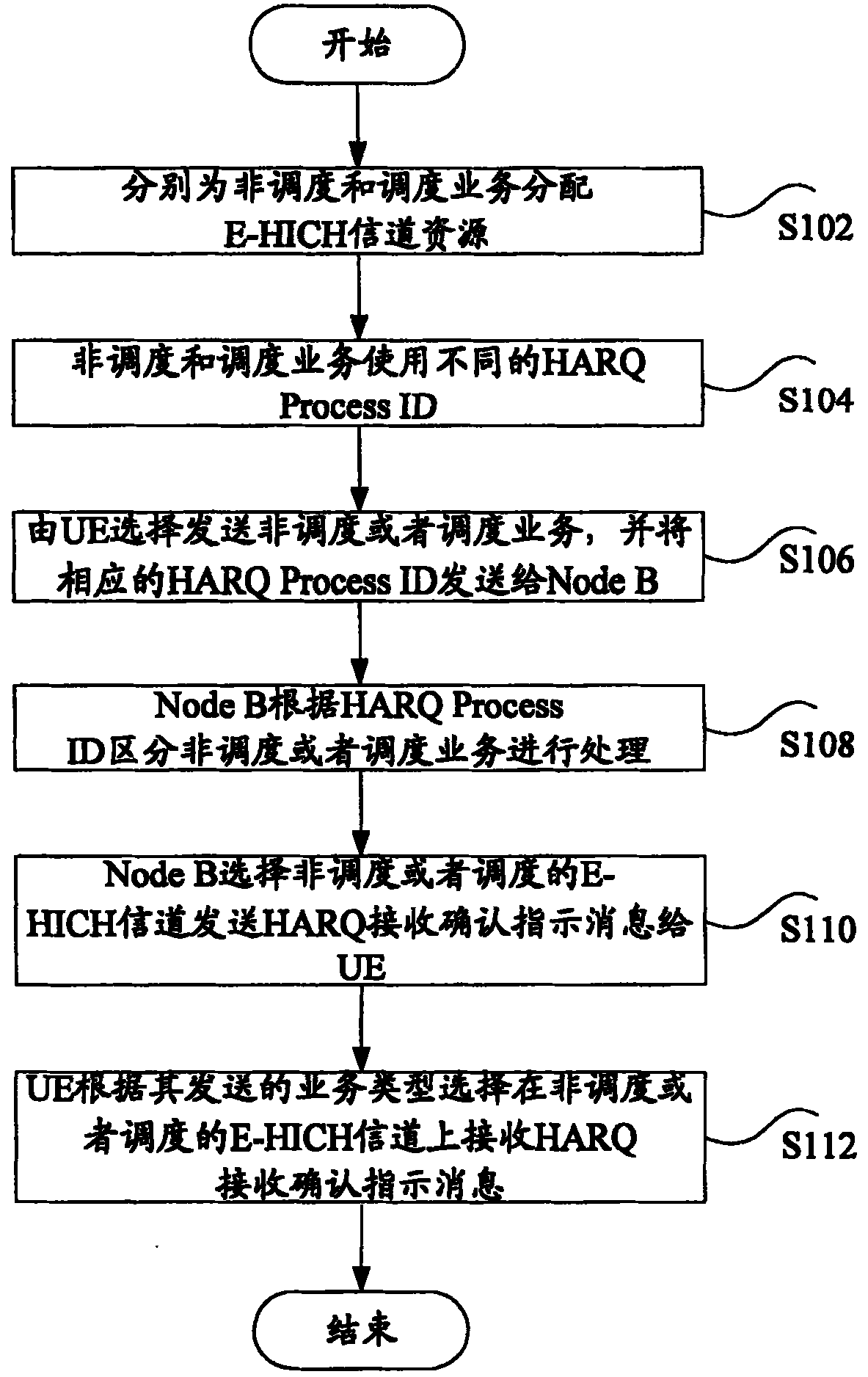
图1是根据本发明实施例的非调度资源和调度资源的共享方法的流程图。Fig. 1 is a flowchart of a method for sharing non-scheduled resources and scheduled resources according to an embodiment of the present invention.
具体实施方式Detailed ways
下面将参考附图来详细说明本发明的实施例。Embodiments of the present invention will be described in detail below with reference to the accompanying drawings.
第一实施例first embodiment
在本实施例中,提供了一种非调度资源和调度资源的共享方法。In this embodiment, a method for sharing non-scheduled resources and scheduled resources is provided.
如图1所示,该方法包括以下步骤:步骤S102,分别为非调度业务和调度业务分配E-HICH信道;步骤S104,为非调度业务和调度业务分配不同的混合自动重传请求处理标识(HARQ ProcessID);步骤S106,用户设备选择发送非调度业务或调度业务,并将相应的混合自动重传请求处理标识发送给节点B;步骤S108,节点B根据混合自动重传请求处理标识区分非调度业务和调度业务,并对其进行处理;步骤S110,节点B通过选择非调度或调度的E-HICH信道来向用户设备发送混合自动重传请求接收确认指示消息;以及步骤S112,用户设备根据其选择的业务类型决定在非调度或调度的E-HICH信道上接收混合自动重传请求接收确认指示消息。As shown in Figure 1, the method comprises the following steps: Step S102, assigning the E-HICH channel for non-scheduled traffic and dispatched traffic respectively; Step S104, distributing different hybrid automatic repeat request processing identifiers for non-scheduled traffic and dispatched traffic ( HARQ ProcessID); step S106, the user equipment selects to send a non-scheduled service or a scheduled service, and sends the corresponding HARQ processing identifier to the node B; step S108, the node B distinguishes the non-scheduled according to the hybrid automatic repeat request processing identifier business and scheduling business, and process it; step S110, Node B sends a hybrid automatic repeat request reception confirmation indication message to the user equipment by selecting a non-scheduled or scheduled E-HICH channel; and step S112, the user equipment according to its The selected service type decides to receive the HARQ reception acknowledgment indication message on the non-scheduled or scheduled E-HICH channel.
以下将详细描述以上的各个步骤。Each of the above steps will be described in detail below.
首先,在步骤S102中,在一个小区中,如果支持上行增强技术,RNC将配置并保存一条或者多条E-HICH信道化码资源,同时发送给Node B,Node B配置并保存所有E-HICH信道化码资源。First, in step S102, in a cell, if the uplink enhancement technology is supported, the RNC will configure and save one or more E-HICH channelization code resources, and send them to the Node B at the same time, and the Node B configures and saves all E-HICH resources Channelization code resource.
具体而言,针对非调度业务和调度业务,分别分配E-HICH信道化码资源。其中,调度业务的E-HICH信道化码由Node B动态配置,并通过E-AGCH发送给UE;非调度业务的E-HICH信道化码可以采用高层信令静态配置的方法。可以由RNC在上述配置的一条或者多条E-HICH信道化码资源中分配一条给UE,然后将分配信息通过高层信令分别发送给Node B和UE;也可以由Node B在上述配置的一条或者多条E-HICH信道化码资源中分配一条给UE,然后将分配信息通过高层信令发送给RNC,RNC再通过高层信令发送给UE。Specifically, for non-scheduled services and scheduled services, E-HICH channelization code resources are allocated respectively. Among them, the E-HICH channelization code of the scheduling service is dynamically configured by the Node B and sent to the UE through the E-AGCH; the E-HICH channelization code of the non-scheduling service can be statically configured by high-level signaling. The RNC can allocate one or more E-HICH channelization code resources configured above to the UE, and then send the allocation information to the Node B and UE respectively through high-level signaling; Alternatively, one of the multiple E-HICH channelization code resources is allocated to the UE, and then the allocation information is sent to the RNC through high-layer signaling, and the RNC then sends it to the UE through high-layer signaling.
在步骤S104中:在进行E-DCH传输过程中,UE把本次传输中的HARQ实体处理的Process ID通过E-UCCH发送给Node B,以便对等的HARQ实体处理对应该Process ID的Process。因此,为了区分非调度业务和调度业务,系统为非调度业务和调度业务配置不同的HARQ Process ID,例如,系统共配置8个Process ID,编号为0...7,系统规定0...3的Process ID配置给调度业务使用,4...7的Process ID配置给非调度业务使用。当然,也可以通过高层信令向Node B和UE为调度和非调度业务配置不同的Process ID。In step S104: During the E-DCH transmission process, the UE sends the Process ID processed by the HARQ entity in this transmission to the Node B through the E-UCCH, so that the peer HARQ entity processes the Process corresponding to the Process ID. Therefore, in order to distinguish non-scheduled services from scheduled services, the system configures different HARQ Process IDs for non-scheduled services and scheduled services. For example, the system configures 8 Process IDs in total, numbered 0...7, and the system specifies 0... Process ID 3 is configured for dispatching services, and Process IDs 4...7 are configured for non-scheduling services. Of course, it is also possible to configure different Process IDs for scheduling and non-scheduling services to Node B and UE through high-level signaling.
在步骤S106中,在进行E-DCH传输开始前,UE根据网络侧配置信息配置非调度传输和/或调度传输相关的所有资源。对于调度业务,UE还需要向Node B请求分配调度传输的E-PUCH资源,Node B动态分配调度传输E-PUCH信道资源池中的E-PUCH信道资源以及相应功率资源给UE。在进行E-DCH传输时,由UE来选择发送非调度业务或者调度业务,当然,RNC也可以提供一些参数来辅助或者控制UE的选择。但是,对于E-PUCH资源,UE可以采用共享的方式使用非调度传输和调度传输的E-PUCH资源进行E-DCH传输。在UE进行E-DCH传输时,如果仅有上行非调度传输需求,没有上行调度传输需求,而且也没有授权的调度E-PUCH资源,则UE可以随时使用非调度E-PUCH资源进行非调度传输,并将此次传输对应的非调度HARQ Process ID发送给Node B;如果仅有上行调度传输需求,没有上行非调度传输需求,而且,UE请求Node B授权了调度E-PUCH资源,则UE选择进行调度传输。对于E-PUCH资源,如果此时非调度E-PUCH资源可用,则使用授权的调度E-PUCH资源和所有非调度E-PUCH资源进行调度传输;否则,使用授权的调度E-PUCH资源进行调度传输。同时将此次传输对应的调度HARQ Process ID发送给Node B;在某些情况下,如调度资源分配授权可以持续多个TTI的情况下,有授权的调度E-PUCH资源,但可能没有上行调度传输需求,如果此时有上行非调度传输需求,则UE选择进行非调度传输。对于E-PUCH资源,如果此时非调度E-PUCH资源可用,则使用授权的调度E-PUCH资源和所有非调度E-PUCH资源进行非调度传输;否则,使用授权的调度E-PUCH资源进行非调度传输。并将此次传输对应的非调度HARQ Process ID发送给Node B;In step S106, before the E-DCH transmission starts, the UE configures all resources related to the unscheduled transmission and/or the scheduled transmission according to the configuration information on the network side. For the scheduling service, the UE also needs to request the allocation of E-PUCH resources for scheduled transmission to the Node B, and the Node B dynamically allocates the E-PUCH channel resources and corresponding power resources in the E-PUCH channel resource pool for scheduled transmission to the UE. During E-DCH transmission, UE can choose to send non-scheduled service or scheduled service. Of course, RNC can also provide some parameters to assist or control UE's selection. However, for the E-PUCH resources, the UE may use the E-PUCH resources for non-scheduled transmission and scheduled transmission in a shared manner to perform E-DCH transmission. When UE transmits E-DCH, if there is only uplink non-scheduled transmission requirement, no uplink scheduled transmission requirement, and no authorized scheduling E-PUCH resources, UE can use non-scheduled E-PUCH resources for non-scheduled transmission at any time , and send the non-scheduled HARQ Process ID corresponding to this transmission to the Node B; if there is only an uplink scheduled transmission requirement and no uplink non-scheduled transmission requirement, and the UE requests the Node B to authorize the scheduling of E-PUCH resources, then the UE chooses Make scheduled transfers. For E-PUCH resources, if non-scheduled E-PUCH resources are available at this time, use the authorized scheduled E-PUCH resources and all non-scheduled E-PUCH resources for scheduled transmission; otherwise, use the authorized scheduled E-PUCH resources for scheduling transmission. At the same time, the scheduling HARQ Process ID corresponding to this transmission is sent to the Node B; in some cases, such as when the scheduling resource allocation authorization can last for multiple TTIs, there are authorized scheduling E-PUCH resources, but there may be no uplink scheduling Transmission demand, if there is an uplink non-scheduled transmission demand at this time, the UE chooses to perform non-scheduled transmission. For E-PUCH resources, if unscheduled E-PUCH resources are available at this time, use the authorized scheduled E-PUCH resources and all unscheduled E-PUCH resources for unscheduled transmission; otherwise, use the authorized scheduled E-PUCH resources for unscheduled transmission Unscheduled transfers. And send the non-scheduled HARQ Process ID corresponding to this transmission to Node B;
如果既有上行非调度传输又有上行调度传输需求,则对于调度传输需求,由UE请求Node B授权调度E-PUCH资源。但是UE需要根据某种既定的策略选择此时是进行调度传输还是进行非调度传输。对于E-PUCH资源,如果此时非调度E-PUCH资源可用,则使用授权的调度E-PUCH资源和所有非调度E-PUCH资源进行非调度或者调度传输;否则,使用授权的调度E-PUCH资源进行非调度或者调度传输。并将此次传输对应的非调度或者调度HARQProcess ID发送给Node B;此外,调度资源和非调度资源的HARQ处理应该独立进行。另外,如果此时UE决定进行非调度传输,那么仍然可以通过E-PUCH信道以MAC-e PDU中负荷的形式上报上行调度传输状态信息,以请求Node B分配新的调度E-PUCH资源。If there are both uplink non-scheduled transmission and uplink scheduled transmission requirements, then for scheduled transmission requirements, the UE requests the Node B to authorize the scheduling of E-PUCH resources. However, the UE needs to choose whether to perform scheduled transmission or non-scheduled transmission at this time according to a predetermined policy. For E-PUCH resources, if non-scheduled E-PUCH resources are available at this time, use the authorized scheduled E-PUCH resources and all non-scheduled E-PUCH resources for non-scheduled or scheduled transmission; otherwise, use the authorized scheduled E-PUCH Resources for unscheduled or scheduled transmissions. And send the non-scheduled or scheduled HARQProcess ID corresponding to this transmission to Node B; in addition, the HARQ processing of scheduled resources and non-scheduled resources should be performed independently. In addition, if the UE decides to perform non-scheduled transmission at this time, it can still report the uplink scheduled transmission status information in the form of MAC-e PDU payload through the E-PUCH channel, so as to request Node B to allocate new scheduled E-PUCH resources.
在步骤S106中,另外一种实现方案:通过RNC配置非调度E-PUCH资源和UE向Node B请求分配调度E-PUCH资源,在一个调度周期,如一个E-PUCH TTI中,如果只有非调度E-PUCH资源可用,则UE选择发送非调度业务,不能选择发送调度业务;如果只有调度E-PUCH资源可用,则UE选择发送调度业务,不能选择发送非调度业务;如果非调度和调度E-PUCH资源同时可用,则UE使用全部非调度和调度资源并根据某种既定的策略选择进行调度传输或者非调度传输。In step S106, another implementation scheme: Configure non-scheduled E-PUCH resources through RNC and UE requests Node B to allocate scheduled E-PUCH resources. In a scheduling period, such as in an E-PUCH TTI, if only non-scheduled If E-PUCH resources are available, the UE chooses to send non-scheduled services and cannot choose to send scheduled services; if only scheduling E-PUCH resources are available, the UE chooses to send scheduled services and cannot choose to send non-scheduled services; if non-scheduled and scheduled E- If PUCH resources are available at the same time, the UE uses all non-scheduled and scheduled resources and chooses to perform scheduled transmission or non-scheduled transmission according to a predetermined strategy.
在步骤S106中的两种实现方案中,同时使用调度资源和非调度资源的方式包括:同一个时隙的调度和非调度信道化码资源和功率资源;不同时隙的调度和非调度信道化码资源和功率资源。具体为:当调度和非调度码资源分布在不同时隙时,同时使用不同时隙的调度和非调度信道化码资源和功率资源;当调度和非调度码资源分布在相同时隙时,可以同时使用该时隙的调度和非调度信道化码资源和功率资源,或者,仅仅使用调度或者非调度的信道化码资源,如选择SF相对较小的那个信道化码,而将调度和非调度的功率资源相加。In the two implementation schemes in step S106, the ways of using scheduled resources and non-scheduled resources at the same time include: scheduled and non-scheduled channelization code resources and power resources in the same time slot; scheduled and non-scheduled channelized channelized resources in different time slots code resources and power resources. Specifically: when the scheduling and non-scheduling code resources are distributed in different time slots, use the scheduling and non-scheduling channelization code resources and power resources of different time slots at the same time; when the scheduling and non-scheduling code resources are distributed in the same time slot, you can Use the scheduled and non-scheduled channelization code resources and power resources of the time slot at the same time, or only use the scheduled or non-scheduled channelization code resources, such as selecting the channelization code with a relatively small SF, and combine the scheduled and non-scheduled channelization code resources The power resources are added.
在步骤S108中,在一次E-DCH传输过程中,Node B根据其接收到的HARQ Process ID,并参照步骤S104中为调度和非调度传输配置的不同HARQ Process ID,来区分本次传输是调度还是非调度传输,并进行相应的处理。In step S108, during an E-DCH transmission, the Node B distinguishes whether the transmission is scheduled according to the HARQ Process ID it receives and referring to the different HARQ Process IDs configured for scheduled and non-scheduled transmissions in step S104 It is still an unscheduled transmission and is processed accordingly.
在步骤S110中,Node B针对接收到的调度或者非调度业务,选择相应分配的E-HICH信道化码道,发送HARQ接收确认指示消息给UE。即,对调度业务,选择此前经过E-AGCH指示的E-HICH信道化码发送HARQ接收确认指示消息;对非调度业务,选择通过高层信令静态配置的E-HICH信道化码发送HARQ接收确认指示消息。In step S110, the Node B selects a corresponding allocated E-HICH channelization code channel for the received scheduling or non-scheduling service, and sends a HARQ reception confirmation indication message to the UE. That is, for scheduling services, select the E-HICH channelization code previously indicated by the E-AGCH to send the HARQ reception confirmation indication message; for non-scheduling services, select the E-HICH channelization code statically configured through high-level signaling to send the HARQ reception confirmation message instruction message.
在步骤S112中,UE在一次E-DCH传输发射后,根据其发送的业务类型和在步骤S102中为调度业务和非调度业务采用不同的方式分配的E-HICH信道化码资源,接收相应分配的E-HICH信道化码道,并进一步接收HARQ接收确认指示消息。即,对调度业务,选择接收此前经过E-AGCH指示的E-HICH信道化码道;对非调度业务,选择接收通过高层信令静态配置的E-HICH信道化码道。In step S112, after the UE sends an E-DCH transmission, according to the type of service it sends and the E-HICH channelization code resources allocated in different ways for scheduling services and non-scheduling services in step S102, the UE receives the corresponding allocation The E-HICH channelization code channel, and further receive the HARQ reception acknowledgment indication message. That is, for the scheduling service, choose to receive the E-HICH channelization code channel indicated by the E-AGCH; for the non-scheduling service, choose to receive the E-HICH channelization code channel statically configured through high-layer signaling.
以上所述仅为本发明的优选实施例而已,并不用于限制本发明,对于本领域的技术人员来说,本发明可以有各种更改和变化。凡在本发明的精神和原则之内,所作的任何修改、等同替换、改进等,均应包含在本发明的保护范围之内。The above descriptions are only preferred embodiments of the present invention, and are not intended to limit the present invention. For those skilled in the art, the present invention may have various modifications and changes. Any modifications, equivalent replacements, improvements, etc. made within the spirit and principles of the present invention shall be included within the protection scope of the present invention.
Claims (10)
Priority Applications (2)
| Application Number | Priority Date | Filing Date | Title |
|---|---|---|---|
| CN200610137808XA CN101175301B (en) | 2006-11-01 | 2006-11-01 | Sharing method of non-scheduled resources and scheduled resources in uplink enhanced system |
| PCT/CN2006/003679 WO2008104094A1 (en) | 2006-11-01 | 2006-12-29 | A method for sharing the non-scheduling resource and the scheduling resource in the enhanced uplink system |
Applications Claiming Priority (1)
| Application Number | Priority Date | Filing Date | Title |
|---|---|---|---|
| CN200610137808XA CN101175301B (en) | 2006-11-01 | 2006-11-01 | Sharing method of non-scheduled resources and scheduled resources in uplink enhanced system |
Publications (2)
| Publication Number | Publication Date |
|---|---|
| CN101175301A CN101175301A (en) | 2008-05-07 |
| CN101175301B true CN101175301B (en) | 2010-06-16 |
Family
ID=39423487
Family Applications (1)
| Application Number | Title | Priority Date | Filing Date |
|---|---|---|---|
| CN200610137808XA Expired - Fee Related CN101175301B (en) | 2006-11-01 | 2006-11-01 | Sharing method of non-scheduled resources and scheduled resources in uplink enhanced system |
Country Status (2)
| Country | Link |
|---|---|
| CN (1) | CN101175301B (en) |
| WO (1) | WO2008104094A1 (en) |
Families Citing this family (6)
| Publication number | Priority date | Publication date | Assignee | Title |
|---|---|---|---|---|
| CN101778418B (en) * | 2009-01-13 | 2014-03-19 | 中兴通讯股份有限公司 | Method and device for triggering or reporting scheduling request in wireless network |
| CN101959303A (en) * | 2009-07-13 | 2011-01-26 | 鼎桥通信技术有限公司 | Distribution method of signature sequences on E-HICH |
| CN102088737B (en) * | 2009-12-04 | 2014-09-17 | 工业和信息化部电信传输研究所 | Method for distributing signature sequence |
| CN102647263B (en) * | 2012-04-16 | 2015-08-12 | 大唐移动通信设备有限公司 | A kind of transmission method of ACK/NACK information and equipment |
| CN108023687B (en) * | 2016-11-01 | 2022-08-02 | 中兴通讯股份有限公司 | Information sending and receiving method and device, base station and terminal |
| CN111935845B (en) * | 2017-12-06 | 2021-12-10 | Oppo广东移动通信有限公司 | Method and terminal device for data transmission |
Citations (3)
| Publication number | Priority date | Publication date | Assignee | Title |
|---|---|---|---|---|
| CN1750708A (en) * | 2004-09-16 | 2006-03-22 | 华为技术有限公司 | Detecting method for upward intensified special channels |
| EP1672941A1 (en) * | 2004-12-15 | 2006-06-21 | Matsushita Electric Industrial Co., Ltd. | Support of guaranteed bit-rate traffic for uplink transmissions |
| CN1852074A (en) * | 2005-12-06 | 2006-10-25 | 华为技术有限公司 | Scheduling method of up-ward reinforcing chain path and method for obtaining upward channel quality information |
Family Cites Families (2)
| Publication number | Priority date | Publication date | Assignee | Title |
|---|---|---|---|---|
| SE516084C2 (en) * | 1998-12-01 | 2001-11-19 | Ericsson Telefon Ab L M | A technology for access control in communication networks with packet switching |
| US20050250497A1 (en) * | 2004-05-05 | 2005-11-10 | Amitava Ghosh | Acknowledgement method for ACK/NACK signaling to facilitate UE uplink data transfer |
-
2006
- 2006-11-01 CN CN200610137808XA patent/CN101175301B/en not_active Expired - Fee Related
- 2006-12-29 WO PCT/CN2006/003679 patent/WO2008104094A1/en not_active Ceased
Patent Citations (3)
| Publication number | Priority date | Publication date | Assignee | Title |
|---|---|---|---|---|
| CN1750708A (en) * | 2004-09-16 | 2006-03-22 | 华为技术有限公司 | Detecting method for upward intensified special channels |
| EP1672941A1 (en) * | 2004-12-15 | 2006-06-21 | Matsushita Electric Industrial Co., Ltd. | Support of guaranteed bit-rate traffic for uplink transmissions |
| CN1852074A (en) * | 2005-12-06 | 2006-10-25 | 华为技术有限公司 | Scheduling method of up-ward reinforcing chain path and method for obtaining upward channel quality information |
Non-Patent Citations (3)
| Title |
|---|
| 3rd Generation Partnership Project |
| 3rd Generation Partnership Project 3rd Generation Partnership Project,Technical SpecificationGroup Radio Access Network.3GPP TR 25.895,Analysis of higher chip rates for UTRA TDD evolution 6.0.0.3GPP Organizational Partners' Publications Offices,2004,全文. * |
| 3rdGenerationPartnershipProject Technical SpecificationGroup Radio Access Network.3GPP TR 25.895 |
Also Published As
| Publication number | Publication date |
|---|---|
| WO2008104094A1 (en) | 2008-09-04 |
| CN101175301A (en) | 2008-05-07 |
Similar Documents
| Publication | Publication Date | Title |
|---|---|---|
| CA2616542C (en) | Method and apparatus for control of enhanced dedicated channel transmissions | |
| US8472395B2 (en) | Apparatus and method for communicating uplink signaling information | |
| JP4757865B2 (en) | Uplink packet transfer channel scheduling method in wireless communication system | |
| KR101481624B1 (en) | High speed uplink packet access method and system in multi-carrier td-scdma system | |
| CN101335979B (en) | High-speed uplink packet access method of multi-carrier system | |
| WO2007017071A1 (en) | Harq process restriction and transmission of non-scheduled control data via uplink channels | |
| CN103401645B (en) | For transmitting equipment and the method for signaling information | |
| CN101330454A (en) | A high-speed uplink packet access method for a multi-carrier system | |
| MX2007015722A (en) | Scheduling information at serving cell change. | |
| CN101132224B (en) | Scheduled and unscheduled transmission system in ascending reinforcement system and its signal channel resource configuration method | |
| CN101132225B (en) | Transmission method for sharing unscheduled and scheduled resource in ascending reinforcement system | |
| CN101175301B (en) | Sharing method of non-scheduled resources and scheduled resources in uplink enhanced system | |
| CN101188486B (en) | Non-scheduled resource and scheduled resource sharing method in uplink enhanced system | |
| CN101207908A (en) | Method and device for sharing non-scheduled resources and scheduled resources in uplink enhanced system | |
| CN101207909A (en) | Device for sharing non-scheduled resources and scheduled resources in uplink enhanced system | |
| HK1183193A (en) | Method and wireless transmit/receive unit for control of enhanced dedicated channel transmissions |
Legal Events
| Date | Code | Title | Description |
|---|---|---|---|
| C06 | Publication | ||
| PB01 | Publication | ||
| C10 | Entry into substantive examination | ||
| SE01 | Entry into force of request for substantive examination | ||
| C14 | Grant of patent or utility model | ||
| GR01 | Patent grant | ||
| CF01 | Termination of patent right due to non-payment of annual fee |
Granted publication date: 20100616 Termination date: 20151101 |
|
| EXPY | Termination of patent right or utility model |