[go: up one dir, main page]

CN101048935B - Method and apparatus for controlling unit loudness or partial unit loudness of an audio signal - Google Patents

Method and apparatus for controlling unit loudness or partial unit loudness of an audio signal Download PDF

Info

Publication number
CN101048935B
CN101048935B CN2005800367607A CN200580036760A CN101048935B CN 101048935 B CN101048935 B CN 101048935B CN 2005800367607 A CN2005800367607 A CN 2005800367607A CN 200580036760 A CN200580036760 A CN 200580036760A CN 101048935 B CN101048935 B CN 101048935B
Authority
CN
China
Prior art keywords
loudness
audio signal
unit
target
unit loudness
Prior art date
Legal status (The legal status is an assumption and is not a legal conclusion. Google has not performed a legal analysis and makes no representation as to the accuracy of the status listed.)
Expired - Lifetime
Application number
CN2005800367607A
Other languages
Chinese (zh)
Other versions
CN101048935A (en
Inventor
阿伦·J.·西非尔特
Current Assignee (The listed assignees may be inaccurate. Google has not performed a legal analysis and makes no representation or warranty as to the accuracy of the list.)
Dolby Laboratories Licensing Corp
Original Assignee
Dolby Laboratories Licensing Corp
Priority date (The priority date is an assumption and is not a legal conclusion. Google has not performed a legal analysis and makes no representation as to the accuracy of the date listed.)
Filing date
Publication date
Application filed by Dolby Laboratories Licensing Corp filed Critical Dolby Laboratories Licensing Corp
Publication of CN101048935A publication Critical patent/CN101048935A/en
Application granted granted Critical
Publication of CN101048935B publication Critical patent/CN101048935B/en
Anticipated expiration legal-status Critical
Expired - Lifetime legal-status Critical Current

Links

Images

Classifications

    • HELECTRICITY
    • H03ELECTRONIC CIRCUITRY
    • H03GCONTROL OF AMPLIFICATION
    • H03G9/00Combinations of two or more types of control, e.g. gain control and tone control
    • H03G9/02Combinations of two or more types of control, e.g. gain control and tone control in untuned amplifiers
    • HELECTRICITY
    • H03ELECTRONIC CIRCUITRY
    • H03GCONTROL OF AMPLIFICATION
    • H03G3/00Gain control in amplifiers or frequency changers
    • H03G3/20Automatic control
    • H03G3/30Automatic control in amplifiers having semiconductor devices
    • H03G3/3005Automatic control in amplifiers having semiconductor devices in amplifiers suitable for low-frequencies, e.g. audio amplifiers
    • GPHYSICS
    • G10MUSICAL INSTRUMENTS; ACOUSTICS
    • G10LSPEECH ANALYSIS TECHNIQUES OR SPEECH SYNTHESIS; SPEECH RECOGNITION; SPEECH OR VOICE PROCESSING TECHNIQUES; SPEECH OR AUDIO CODING OR DECODING
    • G10L19/00Speech or audio signals analysis-synthesis techniques for redundancy reduction, e.g. in vocoders; Coding or decoding of speech or audio signals, using source filter models or psychoacoustic analysis
    • G10L19/008Multichannel audio signal coding or decoding using interchannel correlation to reduce redundancy, e.g. joint-stereo, intensity-coding or matrixing
    • GPHYSICS
    • G10MUSICAL INSTRUMENTS; ACOUSTICS
    • G10LSPEECH ANALYSIS TECHNIQUES OR SPEECH SYNTHESIS; SPEECH RECOGNITION; SPEECH OR VOICE PROCESSING TECHNIQUES; SPEECH OR AUDIO CODING OR DECODING
    • G10L21/00Speech or voice signal processing techniques to produce another audible or non-audible signal, e.g. visual or tactile, in order to modify its quality or its intelligibility
    • G10L21/02Speech enhancement, e.g. noise reduction or echo cancellation
    • G10L21/0208Noise filtering
    • G10L21/0216Noise filtering characterised by the method used for estimating noise
    • G10L21/0232Processing in the frequency domain
    • GPHYSICS
    • G10MUSICAL INSTRUMENTS; ACOUSTICS
    • G10LSPEECH ANALYSIS TECHNIQUES OR SPEECH SYNTHESIS; SPEECH RECOGNITION; SPEECH OR VOICE PROCESSING TECHNIQUES; SPEECH OR AUDIO CODING OR DECODING
    • G10L21/00Speech or voice signal processing techniques to produce another audible or non-audible signal, e.g. visual or tactile, in order to modify its quality or its intelligibility
    • G10L21/02Speech enhancement, e.g. noise reduction or echo cancellation
    • G10L21/038Speech enhancement, e.g. noise reduction or echo cancellation using band spreading techniques
    • GPHYSICS
    • G10MUSICAL INSTRUMENTS; ACOUSTICS
    • G10LSPEECH ANALYSIS TECHNIQUES OR SPEECH SYNTHESIS; SPEECH RECOGNITION; SPEECH OR VOICE PROCESSING TECHNIQUES; SPEECH OR AUDIO CODING OR DECODING
    • G10L25/00Speech or voice analysis techniques not restricted to a single one of groups G10L15/00 - G10L21/00
    • G10L25/03Speech or voice analysis techniques not restricted to a single one of groups G10L15/00 - G10L21/00 characterised by the type of extracted parameters
    • G10L25/21Speech or voice analysis techniques not restricted to a single one of groups G10L15/00 - G10L21/00 characterised by the type of extracted parameters the extracted parameters being power information
    • HELECTRICITY
    • H03ELECTRONIC CIRCUITRY
    • H03GCONTROL OF AMPLIFICATION
    • H03G3/00Gain control in amplifiers or frequency changers
    • H03G3/20Automatic control
    • HELECTRICITY
    • H03ELECTRONIC CIRCUITRY
    • H03GCONTROL OF AMPLIFICATION
    • H03G3/00Gain control in amplifiers or frequency changers
    • H03G3/20Automatic control
    • H03G3/30Automatic control in amplifiers having semiconductor devices
    • H03G3/32Automatic control in amplifiers having semiconductor devices the control being dependent upon ambient noise level or sound level
    • HELECTRICITY
    • H03ELECTRONIC CIRCUITRY
    • H03GCONTROL OF AMPLIFICATION
    • H03G9/00Combinations of two or more types of control, e.g. gain control and tone control
    • H03G9/005Combinations of two or more types of control, e.g. gain control and tone control of digital or coded signals
    • HELECTRICITY
    • H03ELECTRONIC CIRCUITRY
    • H03GCONTROL OF AMPLIFICATION
    • H03G9/00Combinations of two or more types of control, e.g. gain control and tone control
    • H03G9/02Combinations of two or more types of control, e.g. gain control and tone control in untuned amplifiers
    • H03G9/025Combinations of two or more types of control, e.g. gain control and tone control in untuned amplifiers frequency-dependent volume compression or expansion, e.g. multiple-band systems
    • HELECTRICITY
    • H03ELECTRONIC CIRCUITRY
    • H03GCONTROL OF AMPLIFICATION
    • H03G9/00Combinations of two or more types of control, e.g. gain control and tone control
    • H03G9/02Combinations of two or more types of control, e.g. gain control and tone control in untuned amplifiers
    • H03G9/12Combinations of two or more types of control, e.g. gain control and tone control in untuned amplifiers having semiconductor devices
    • H03G9/14Combinations of two or more types of control, e.g. gain control and tone control in untuned amplifiers having semiconductor devices for gain control and tone control
    • HELECTRICITY
    • H03ELECTRONIC CIRCUITRY
    • H03GCONTROL OF AMPLIFICATION
    • H03G9/00Combinations of two or more types of control, e.g. gain control and tone control
    • H03G9/20Combinations of two or more types of control, e.g. gain control and tone control in frequency-selective amplifiers
    • H03G9/24Combinations of two or more types of control, e.g. gain control and tone control in frequency-selective amplifiers having semiconductor devices
    • HELECTRICITY
    • H04ELECTRIC COMMUNICATION TECHNIQUE
    • H04SSTEREOPHONIC SYSTEMS 
    • H04S3/00Systems employing more than two channels, e.g. quadraphonic
    • H04S3/02Systems employing more than two channels, e.g. quadraphonic of the matrix type, i.e. in which input signals are combined algebraically, e.g. after having been phase shifted with respect to each other
    • HELECTRICITY
    • H04ELECTRIC COMMUNICATION TECHNIQUE
    • H04SSTEREOPHONIC SYSTEMS 
    • H04S2420/00Techniques used stereophonic systems covered by H04S but not provided for in its groups
    • H04S2420/03Application of parametric coding in stereophonic audio systems

Landscapes

  • Engineering & Computer Science (AREA)
  • Physics & Mathematics (AREA)
  • Multimedia (AREA)
  • Signal Processing (AREA)
  • Acoustics & Sound (AREA)
  • Computational Linguistics (AREA)
  • Health & Medical Sciences (AREA)
  • Audiology, Speech & Language Pathology (AREA)
  • Human Computer Interaction (AREA)
  • Quality & Reliability (AREA)
  • Mathematical Physics (AREA)
  • Algebra (AREA)
  • General Physics & Mathematics (AREA)
  • Mathematical Analysis (AREA)
  • Mathematical Optimization (AREA)
  • Pure & Applied Mathematics (AREA)
  • Theoretical Computer Science (AREA)
  • Tone Control, Compression And Expansion, Limiting Amplitude (AREA)
  • Circuit For Audible Band Transducer (AREA)
  • Control Of Amplification And Gain Control (AREA)

Abstract

The present invention relates to the measurement and control of the perceived sound loudness and/or the perceived spectral balance of an audio signal. The audio signal is modified in response to a calculation performed at least in part in the perceptual (psychoacoustic) loudness domain. The invention may be used, for example, in one or more of the following: loudness compensating volume controls, automatic gain controls, dynamic range controls (including, for example, limiters, compressors, expanders, etc.), dynamic equalization, and compensating for background noise in an audio playback environment. The invention comprises not only the method but also a corresponding computer program and device.

Description

Method and apparatus for controlling specific loudness or partial specific loudness of an audio signal
Priority requirement
This application claims priority from us provisional patent applications serial No. 60/622458 filed on 26/10/2004 and No. 60/638607 filed on 21/12/2004.
Technical Field
The present invention relates to audio signal processing. More particularly, the present invention relates to the measurement and control of the perceived sound loudness and/or the perceived spectral balance of an audio signal. The invention may be used in one or more aspects such as: loudness compensating volume controls, automatic gain controls, dynamic range controls (including, for example, limiters, compressors, expanders, etc.), dynamic equalization, and compensating for background noise interference in an audio playback environment.
Background
Many attempts have been made to develop satisfactory objective methods for measuring loudness. Fletcher and Munson determined in 1933 that human hearing was less sensitive at low and high frequencies than at intermediate (or speech) frequencies. They also found that the relative change in sensitivity decreases with increasing sound level. Early loudness meters consisted of a combination of a microphone, amplifier, measurer and filter designed to approximately mimic the frequency response of hearing at low, medium and high sound levels.
While these devices provide a single, constant-level, independent-pitch measure of loudness, the measurement of more complex sounds does not match the subjective perception of loudness very well. Sound level meters of this type have been standardized, but they are only used for specific tasks such as monitoring and controlling industrial noise.
Zwicker and Stevens extended the Fletcher and Munson work in developing more realistic models of loudness perception processing early in the 50's of the 20 th century. Stevens published a method for "the study of the Loudeness of Complex Noise" in the Journal of the academic Society of America in 1956, and Zwicker published its paper "pharmacological and statistical Basis of Loudeness" in Acustica in 1958. Zwicker published the graphical processing of loudness calculations in 1959 and several similar papers shortly thereafter. The Stevens and Zwicker methods have been standardized to ISO532 parts a and B (respectively). Both methods involve similar steps.
First, the time varying distribution of energy along the basilar membrane of the inner ear, referred to as excitation, is simulated by passing the audio through a bank of bandpass auditory filters with center frequencies evenly spaced on a critical band rate scale. Each auditory filter is designed to simulate the frequency response at a specific location along the basilar membrane of the inner ear, the center frequency of the filter corresponding to this location. The critical band bandwidth is defined as the bandwidth of such a filter. Measured in Hz, the critical bandwidth of these auditory filters increases with increasing center frequency. Therefore, it is advantageous to define the frequency scale of the tortuosity so that the critical bandwidth of all auditory filters measured in such a tortuosity scale is constant. This tortuous scale is referred to as the critical band rate scale and is very useful for understanding and modeling a wide range of psychoacoustic phenomena. See, for example, Psychoacoustics-Facts and Models by E.Zwicker and H.Fastl, Springer-Verlag, Berlin, 1990. The method of Stevens and Zwicker uses a critical band rate scale known as the Bark scale, where the critical band bandwidth is constant below 500Hz and increases above 500 Hz. Recently, Moore and Glasberg have defined a critical bandwidth rate scale, which they call the Equivalent Rectangular Bandwidth (ERB) scale (B.C.J.Moore, B.Glasberg, T.Baer, "A Model for the Prediction of Thresholds, Loudness, and Partial Loudness", Journal of the Audio engineering society, Vol.45, No.4, 4 months 1997, pp.224-240). Moore and Glasberg demonstrated that critical band bandwidth continued to decrease below 500Hz through psychoacoustic experiments using notch noise masks, as opposed to the Bark scale where critical band bandwidth remained constant.
The excitation computation is followed by a non-linear compression function that produces a quantity called "specific loudness". Specific loudness is a measure of perceived loudness as a function of frequency and time and may be measured in units of perceived loudness per unit frequency along a critical frequency rate scale such as the Bark or ERB scale discussed above. Finally, the time-varying "total loudness" is calculated by integrating the unit loudness over frequency. When specific loudness is estimated from a set of finite auditory filters that are uniformly distributed along the critical band rate scale, the total loudness can be calculated by simply summing the specific loudness from each filter.
Loudness may be measured in units of "square" (phon). The loudness of a given sound in units of square is the Sound Pressure Level (SPL) of a 1kHz tone with subjective loudness equal to the loudness of the sound. Conventionally, the reference 0dB of the SPL is 2 × 10⁻⁵Root mean square of the pascal pressure, so this is also the reference 0 square. Using this definition, in comparing the loudness at frequency tones other than 1kHz with the loudness at 1kHz tones, an equal loudness contour can be determined for a given square level.
FIG. 11 shows equal loudness contours for frequencies between 20Hz and 12.5kHz, and for a square scale between the 4.2 (considered threshold for hearing) and 120 (ISO 226: 1087(E), "Acoustics-Normal loud speaking level constraints"). This measure of power takes into account the sensitivity of the human ear to frequency variations, but as a result does not allow the relatively subjective loudness of the sound to be evaluated at varying levels, because no attempt is made to correct for the fact that the loudness varies with increasing non-linearity of the SPL, i.e. the spacing of contours.
Loudness may also be measured in "sones" (song). As indicated in fig. 11, there is a one-to-one mapping between square units and song units. 1 Song is defined as the loudness of a pure sine wave of 40dB (SPL)1kHz and is equivalent to 40 square. The song units are such that an increase of twice the song units corresponds to a doubling of the perceived loudness. For example, 4 sones is perceived as a loudness twice that of 2 sones. Therefore, expressing the loudness level in sones provides more information. Specific loudness may be measured in units of sons per unit frequency if it is defined as a measure of perceived loudness as a function of frequency and time. Thus, when a Bark scale is used, specific loudness has units per Bark song, which is equivalently per ERB song when an ERB scale is used.
As mentioned above, the sensitivity of the human ear varies with frequency and level, a fact well documented in the psychoacoustic literature. One result is that the perceived spectrum or timbre of a given sound varies with the level at which the sound is heard. For example, for sounds containing low, medium and high frequencies, the perceived relative proportion of these frequency components varies with the overall loudness of the sound; low and high frequency components sound quieter relative to the mid-frequency when unvoiced than when noisy. This phenomenon is well known and has been mitigated in sound reproduction devices by so-called loudness control. Loudness control is volume control that applies low frequencies and sometimes also high frequency enhancement when the volume is down. Thus, the lower sensitivity of the human ear at frequency limits is compensated by the artificial enhancement of these frequencies. These controls are completely passive; the degree of compensation applied is a function of the setting of the volume control or some other user operated control, and not of the audio signal content.
In practice, the relative spectral balance perceived in the low, mid and high frequencies varies depending on the signal, in particular its actual spectrum and whether the aim is loud or soft. Consider the recording of a symphony orchestra. The same level of reproduction that one of the listeners would hear in a concert hall can correct the balance in the spectrum whether the symphony is playing loud or soundless. If, for example, music is reproduced less silently at 10dB, the perceptual balance over the spectrum changes in one way for loud passes and in another way for silent passes. Traditional passive loudness control does not apply different compensation as a function of music.
A system for measuring and adjusting the perceived loudness of an audio signal is disclosed in International patent application No. PCT/US2004/016964, filed on 27/5/2004 by Seefeldt et al, published as WO2004/111994A2 on 23/12/2004. The PCT application for the assigned U.S. is hereby incorporated by reference in its entirety. In said application, a psychoacoustic model calculates the loudness of an audio signal in perceptual units. In addition, this application introduces a technique to calculate a wideband multiplicative gain that, when applied to audio, results in the loudness of the gain-modified audio being substantially the same as the reference loudness. However, the application of such a wideband gain changes the perceptual spectral balance of the audio.
Disclosure of Invention
In one aspect, the present invention provides for deriving information that can be used to control the specific loudness of an audio signal by modifying the audio signal so as to reduce the difference between its specific loudness and a target specific loudness. Specific loudness is a measure of perceived loudness as a function of frequency and time. In a practical implementation, the specific loudness of the modified audio signal may approximate the target specific loudness. As described below, this approximation is affected not only by the prevailing signal processing conditions but also by temporal and/or frequency smoothing that may be applied in the modification.
Since specific loudness is a measure of the perceived loudness of an audio signal as a function of frequency and time in order to reduce the difference between the specific loudness of the audio signal and the target specific loudness, the modification may modify the audio signal as a function of frequency. The modification may also modify the audio signal as a function of time, although in some cases the target unit loudness may be time-constant and the audio signal may typically itself be a steady-state time-constant signal.
These aspects of the present invention may also be applied to compensate for interfering background noise in an audio playback environment. When listening to audio in the presence of background noise, the noise may partially or wholly mask the audio in a manner that depends on the audio level and spectrum and the noise level and spectrum. The result is a change in the audio perceptual spectrum. According to psychoacoustic studies (see, for example, Moore, Glasberg, and Baer, "a Model for the Prediction of Thresholds, Loudness, and Partial Loudness," j.audio eng.soc., vol.45, No.4, 4 months 1997), the "Partial specific Loudness" of audio can be defined as the perceived Loudness of audio in the presence of secondary interfering sound signals, such as noise.
Thus, in another aspect, the invention provides information usable to derive the partial specific loudness of a control audio signal by modifying the audio signal so as to reduce the difference between its partial specific loudness and a target specific loudness. This mitigates the effects of noise in a perceptually accurate manner. In this and other aspects of the invention in which the interfering noise signal is considered, it is assumed that there is separate access to the audio signal and the secondary interfering signal.
In another aspect, the present invention provides for controlling the specific loudness of an audio signal by modifying the audio signal so as to reduce the difference between its specific loudness and a target specific loudness, where the modification reproduces audio and the target specific loudness or a representation of the target specific loudness from transmission reception or from a storage medium.
In another aspect, the present invention provides for controlling the partial specific loudness of an audio signal by modifying the audio signal so as to reduce the difference between its partial specific loudness and a target specific loudness.
When the target specific loudness is not a function of the audio signal, it may be a stored or received target specific loudness. When the target specific loudness is not a function of the audio signal, the modification or derivation may explicitly or implicitly calculate specific loudness or partial specific loudness. Examples of explicit calculations include look-up tables or "closed" mathematical expressions, where specific loudness and/or partial specific loudness is essentially determined (the term closed means describing mathematical expressions that are accurately represented using a limited number of standard mathematical operations and functions, such as exponents and cosines). Also when the target specific loudness is not a function of the audio signal, the target specific loudness may be constant in time and frequency or it may be only constant in time.
In yet another aspect, the invention provides for processing an audio signal by processing the audio signal or a metric of the audio signal according to one or more processes and one or more process control parameters to produce a target specific loudness. Although the target specific loudness may be time-constant ("fixed"), the target specific loudness may advantageously be a function of the specific loudness of the audio signal. Although it may typically be a static, frequency and time constant signal, the audio signal itself is frequency and time varying, thus resulting in a target specific loudness that is also frequency and time varying when it is a function of the audio signal.
The audio and the target specific loudness or the representation of the target specific loudness may be received from a transmission or reproduced from a storage medium.
The representation of the target specific loudness may be one or more scaling factors that scale the audio signal or the audio signal metric.
The target specific loudness of any of the above aspects of the invention may be a function of the audio signal or a measure of the audio signal. One suitable measure of an audio signal is the specific loudness of the audio signal. The function of the audio signal or audio signal metric may be a scaling of the audio signal or audio signal metric. For example, the scaling may be one or a combination of the following scaling:
(a) the time and frequency varying scaling factor xi [ b, t ] scales specific loudness as follows
<math><mrow><mover><mi>N</mi><mo>^</mo></mover><mo>[</mo><mi>b</mi><mo>,</mo><mi>t</mi><mo>]</mo><mo>=</mo><mi>&Xi;</mi><mo>[</mo><mi>b</mi><mo>,</mo><mi>t</mi><mo>]</mo><mi>N</mi><mo>[</mo><mi>b</mi><mo>,</mo><mi>t</mi><mo>]</mo><mo>;</mo></mrow></math>
(b) The scaling factor phi t with constant time and frequency scales specific loudness as the following relation
<math><mrow><mover><mi>N</mi><mo>^</mo></mover><mo>[</mo><mi>b</mi><mo>,</mo><mi>t</mi><mo>]</mo><mo>=</mo><mi>&Phi;</mi><mo>[</mo><mi>t</mi><mo>]</mo><mi>N</mi><mo>[</mo><mi>b</mi><mo>,</mo><mi>t</mi><mo>]</mo><mo>;</mo></mrow></math>
(c) Scaling factor theta [ b ] with constant time and variable frequency scales specific loudness as follows
<math><mrow><mover><mi>N</mi><mo>^</mo></mover><mo>[</mo><mi>b</mi><mo>,</mo><mi>t</mi><mo>]</mo><mo>=</mo><mi>&Theta;</mi><mo>[</mo><mi>b</mi><mo>]</mo><mi>N</mi><mo>[</mo><mi>b</mi><mo>,</mo><mi>t</mi><mo>]</mo><mo>;</mo></mrow></math> And
(d) the specific loudness of the audio signal is scaled by the scaling factor alpha with constant time and constant frequency as follows
<math><mrow><mover><mi>N</mi><mo>^</mo></mover><mo>[</mo><mi>b</mi><mo>,</mo><mi>t</mi><mo>]</mo><mo>=</mo><mi>&alpha;N</mi><mo>[</mo><mi>b</mi><mo>,</mo><mi>t</mi><mo>]</mo><mo>,</mo></mrow></math>
Wherein
Figure G05836760720070428D000065
Is the target specific loudness, Nb, t]Is the specific loudness of the audio signal, b is a measure of frequency, and t is a measure of time.
In case (a) of a time and frequency varying scaling factor, the scaling may be determined at least in part by a ratio of a desired multi-band loudness and a multi-band loudness of the audio signal. Such scaling may be used as dynamic range control. Further details of applying these aspects of the invention as dynamic range control are set forth below.
Also in case (a) of a time and frequency varying scaling factor, the specific loudness may be scaled by the ratio of the measure of the desired spectral shape and the measure of the spectral shape of the audio signal. Such scaling may be applied to transform the perceptual spectrum of the audio signal from a temporally varying perceptual spectrum to a substantially temporally constant perceptual spectrum. When scaling specific loudness by a measure of the desired spectral shape and a measure of the spectral shape of the audio signal, such scaling may be used as a dynamic equalizer. Further details of applying these aspects of the present invention as a dynamic equalizer are set forth below.
In case (b) of a time-varying, frequency-constant scaling factor, the scaling may be determined at least in part by the ratio of the desired wideband loudness and the wideband loudness of the audio signal. Such scaling may be used as automatic gain control or dynamic range control. Further details of applying these aspects of the invention as automatic gain control or dynamic range control are set forth below.
In case (a) (time and frequency varying scaling factor) or case (b) (time varying, frequency constant scaling factor), the scaling factor may be a function of the audio signal or audio signal metric.
In case (c) of a time-constant, frequency-varying scaling factor or (d) of a time-constant, frequency-constant scaling factor, said modifying or deriving may comprise storing the scaling factor or receiving the scaling factor from an external source.
In either case of (c) and (d), the scaling factor may not be a function of the audio signal or the audio signal metric.
In any of the various aspects and variations thereof, the modifying, deriving, or reproducing may variously, explicitly or implicitly calculate (1) specific loudness, and/or (2) partial specific loudness, and/or (3) target specific loudness. Explicit computations may include, for example, look-up tables or closed form mathematical expressions.
The modification parameters may be time smoothed. The modification parameter may be, for example, (1) a plurality of amplitude scaling factors associated with the audio signal band or (2) a plurality of filter coefficients that control one or more filters, such as a multi-tap FIR filter or a multi-pole IIR filter. The scaling factors or filter coefficients (and the filter to which they are applied) may be time varying.
In calculating a function of specific loudness or an inverse function of the function of an audio signal defining a target specific loudness, the process of performing such calculation operates in a manner that can be characterized as a perceptual (psychoacoustic) loudness domain-the input and output of the calculation being specific loudness. In contrast, in applying an amplitude scaling factor to a frequency band of an audio signal or applying filter coefficients to controllable filtering of an audio signal, the modification parameters operate to modify the audio signal outside of a perceptual (psycho-acoustic) loudness domain that may be characterized as an electrical signal domain. Although modifications to the audio signal may be made to the audio signal in the electrical signal domain, changes in such electrical signal domain are derived from calculations in the perceptual (psychoacoustic) loudness domain so that the modified audio signal has a specific loudness that approximates the desired target specific loudness.
By deriving the modification parameters from calculations in the loudness domain, greater control over perceived loudness and perceptual spectral balance can be achieved than if such modification parameters were derived in the electrical signal domain. In addition, the use of the basilar membrane or its equivalent that simulates a psychoacoustic filter bank in performing loudness domain calculations may provide more detailed perceptual spectral control than structures that derive modification parameters in the electrical signal domain.
Each of the modifying, deriving, and reproducing may depend on one or more of an interfering audio signal metric, a target specific loudness, an estimate of specific loudness of the unmodified audio signal derived from the specific loudness or partial specific loudness of the modified audio signal, the specific loudness of the unmodified audio signal, and an approximation of the target specific loudness derived from the specific loudness or partial specific loudness of the modified audio signal.
The modifying or deriving may derive the modification parameter based at least in part on one or more of a measure of the interfering audio signal, a target specific loudness, an estimate of the specific loudness of the unmodified audio signal derived from the specific loudness or partial specific loudness of the modified audio signal, the specific loudness of the unmodified audio signal, and an approximation of the target specific loudness derived from the specific loudness or partial specific loudness of the modified audio signal.
More specifically, the modifying or deriving may derive the modification parameter based at least in part on:
(1) one of a target specific loudness and an estimate of the specific loudness of the unmodified audio signal derived from the specific loudness of the modified audio signal, an
(2) One of the specific loudness of the unmodified audio signal and an approximation of the target specific loudness derived from the specific loudness of the modified audio signal, or
When considering an interfering audio signal, the modifying or deriving may derive the modification parameter at least in part from:
(1) a measure of the amount of interference with the audio signal,
(2) one of a target specific loudness and an estimate of specific loudness of the unmodified audio signal derived from the partial specific loudness of the modified audio signal, an
(3) The specific loudness of the unmodified audio signal and an approximation of a target specific loudness derived from the partial specific loudness of the modified audio signal.
A feed forward structure may be applied in which the specific loudness is derived from the audio signal and the target specific loudness is received from a source external to the method or from storage when modifying or deriving includes storing the target specific loudness. Alternatively, a hybrid feedforward/feedback structure may be applied, wherein an approximation of the target specific loudness is derived from the modified audio signal and the target specific loudness is received from a source external to the method or from storage when the modification or derivation includes storing the target specific loudness.
The modification or derivation can include one or more processes for explicitly or implicitly obtaining the target specific loudness, one or more of which explicitly or implicitly computes a function of the audio signal or audio signal metric. In an alternative, a feed-forward structure may be applied that derives a specific loudness from the audio signal and a target specific loudness, the derivation of the target specific loudness applying a function of the audio signal or a measure of the audio signal. In another alternative, a hybrid feedforward/feedback structure may be applied that derives an approximation of the target specific loudness from the modified audio signal and derives the target specific loudness from the audio signal, the derivation of the target specific loudness applying a function of the audio signal or a measure of the audio signal.
The modifying or deriving may include one or more processes that explicitly or implicitly obtain a specific loudness estimate of the unmodified audio signal in response to the modified audio signal, where the one or more processes explicitly or implicitly calculate an inverse function of the audio signal or a function of an audio signal metric. In an alternative, a feedback structure is applied that derives an estimate of the specific loudness of the unmodified audio signal from the modified audio signal and an approximation of the target specific loudness, the estimate of the specific loudness being calculated using an inverse function or a calculation of a function of the audio signal measure. In another alternative, a mixed feed forward/feedback structure is applied that derives the specific loudness from the audio signal and derives an estimate of the specific loudness of the unmodified audio signal from the modified audio signal, the derivation of the estimate being calculated using an inverse function of the audio signal or audio signal metric.
The modification parameters may be applied to the audio signal to produce a modified audio signal.
Another aspect of the invention is that there may be temporal and/or spatial separation of processes or devices so that there is actually an encoder or encoding and also a decoder or decoding. For example, there may be encoding/decoding systems where the modification or derivation may send and receive or store and also reproduce the audio signal and (1) the modification parameters or (2) the target specific loudness or representation of the target specific loudness. Alternatively, there may actually be only an encoder or encoding where the audio signal and (1) the modification parameters or (2) the target specific loudness or a representation of the target specific loudness are transmitted or stored. Alternatively, as described above, there may actually be only a decoder or decoding where the audio signal is received and reproduced (1) the modification parameters or (2) the target specific loudness or the representation of the target specific loudness.
Drawings
FIG. 1 is a functional block diagram illustrating an example feed forward implementation according to aspects of the present invention.
Fig. 2 is a functional block diagram illustrating an example of a feedback implementation in accordance with aspects of the present invention.
FIG. 3 is a functional block diagram illustrating an example of a hybrid feedforward/feedback implementation in accordance with aspects of the present invention.
FIG. 4 is a functional block diagram illustrating another example hybrid feedforward/feedback implementation in accordance with aspects of the present invention.
Fig. 5 is a functional block diagram illustrating the manner in which an unmodified audio signal and modification parameters, as determined by any of feed-forward, feedback, and hybrid feed-forward and feedback architectures, may be stored or transmitted for use in, for example, a time or spatial separation device or process.
Fig. 6 is a functional block diagram illustrating the manner in which an unmodified audio signal and a target specific loudness, as determined by any of feed-forward, feedback, and hybrid feed-forward and feedback architectures, or representations thereof, may be stored or transmitted for use in, for example, a time or spatial separation device or process.
FIG. 7 is a schematic functional block diagram or schematic flow diagram showing an overview of aspects of the present invention.
Fig. 8 is an ideal characteristic response of a linear filter p (z) suitable for use as a transmission filter in an embodiment of the present invention, where the vertical axis is attenuation in decibels (dB) and the horizontal axis is frequency in 10 Hz on a logarithmic basis.
FIG. 9 shows the relationship between the ERB frequency scale (vertical axis) and the frequency in Hz (horizontal axis).
Fig. 10 shows the ideal auditory filter characteristic response for a setting approximating the critical band. The horizontal scale is the frequency in Hz and the vertical scale is the level in decibels.
Fig. 11 shows the ISO226 equal loudness contour. The horizontal scale is the frequency in Hz (scale with a logarithmic base of 10) and the vertical scale is the sound pressure level in decibels.
FIG. 12 shows the ISO226 equal loudness contour normalized by the transmit filter P (z). The horizontal scale is the frequency in Hz (scale with a logarithmic base of 10) and the vertical scale is the sound pressure level in decibels.
Fig. 13a is an idealized graph showing wideband and multiband gain for 0.25 loudness scaling on soft speech segments. The horizontal scale is the ERB band and the vertical scale is the relative gain in decibels (dB).
Fig. 13b is an idealized graph showing the specific loudness of the original signal, the wideband gain modification signal, and the multiband gain modification signal, respectively. The horizontal scale is the ERB band and the vertical scale is specific loudness (song/ERB).
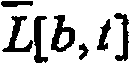
FIG. 14a shows L as a typical AGCi[t]L of a function of0[t]Idealized graph of (a). The horizontal scale is log (L)i[t]) And the vertical scale is log (L)0[t])。
FIG. 14b is a graph showing L as a representative DRCi[t]L of a function of0[t]Idealized graph of (a). The horizontal scale is log (L)i[t]) And the vertical scale is log (L)0[t])。
Fig. 15 is an idealized graph showing a typical band smoothing function for a multi-band DRC. The horizontal scale is the band number and the vertical scale is the gain output of band b.
FIG. 16 is a schematic functional block diagram or schematic flow diagram showing an overview of aspects of the present invention.
FIG. 17 is a schematic functional block diagram or schematic flow diagram similar to FIG. 1, further including compensating for noise in the playback environment.
Detailed Description
Fig. 1 through 4 are functional block diagrams illustrating examples of possible feedforward, feedback, and two-version hybrid feedforward/feedback implementations in accordance with aspects of the present invention.
Referring to the example of the feed forward topology in fig. 1, the audio signal is applied to two channels: (1) a signal channel having a process or device 2 capable of modifying audio in response to modification parameters ("modifying audio signal"), and (2) a control channel having a process or device 4 capable of generating these modification parameters ("generating modification parameters"). The modification of the audio signal 2 in the example of the feed-forward topology in fig. 1 and in each of the examples of fig. 2-4 may be a device or process that modifies the audio signal, e.g. its amplitude, in a frequency and/or time varying manner in accordance with a modification parameter M received from the generating modification parameter 4 (or from the corresponding processes or devices 4 ', 4 ", and 4"' in each of the examples of fig. 2-4, respectively). Each of the generation modification parameters 4 and their counterparts in fig. 2-4 operates at least in part in the perceptual loudness domain. The modified audio signal 2 operates in the electrical signal domain and produces a modified audio signal in each of the examples of fig. 1-4. Also in each of the examples of fig. 1-4, modifying the audio signal 2 and generating the modification parameter 4 (or its counterpart) modifies the audio signal to reduce the difference between its specific loudness and the target specific loudness.
In the feed forward example of FIG. 1, process or apparatus 4 may include several processes and/or apparatuses: a calculate target specific loudness "process or device 6 that calculates a target specific loudness of the audio signal in response to a measure of the audio signal or audio signal, a calculate specific loudness" process or device 8 that calculates the specific loudness of the audio signal in response to a measure of the audio signal or audio signal, such as its excitation, and a calculate modification parameter process or device 10 that calculates a modification parameter in response to the specific loudness and the target specific loudness. Calculating the target specific loudness 6 may perform one or more functions "F", each of which may have function parameters. For example, it may calculate the specific loudness of the audio signal and then apply one or more functions F to it to provide the target specific loudness. This is schematically indicated in fig. 1 as the "selection function F and function parameter" input of the process or device 6. Instead of being calculated by the device or process 6, the target specific loudness may be provided by a stored process or device (schematically shown as a "stored" input to the process or device 10) included in or associated with the production modification parameter 4, or by an external source to the overall process or device (schematically shown as an "external" input to the process or device 10). Thus, the modification parameters are based at least in part on calculations in the perceptual (psychoacoustic) loudness domain (i.e., at least specific loudness and, in some cases, on target specific loudness calculations).
The calculations performed by the processes or devices 6, 8 and 10 (as well as the processes or devices 12, 14, 10 ' in the example of fig. 2, 6, 14, 10 ' in the example of fig. 3, 8, 12, 10 "' in the example of fig. 4) may be performed explicitly and/or implicitly. Examples of explicit executions include (1) look-up tables whose entries are based in whole or in part on specific loudness and/or target specific loudness and/or modification parameters calculations, and (2) closed mathematical expressions which are essentially based in whole or in part on specific loudness and/or target specific loudness and/or modification parameters.
Although the computing processes or devices 6, 8, and 10 of the example of fig. 1 (and processes or devices 12, 14, 10 ' in the example of fig. 2, 6, 14, 10 ' in the example of fig. 3, and 8, 12, 10 "' in the example of fig. 4) are shown schematically and described separately, this is for illustrative purposes only. It will be appreciated that some or all of these processes or devices may be combined into a single process or device or combined in different ways into multiple processes or devices. For example, in the following structure of fig. 9, such as the feed-forward topology in the example of fig. 1, the process or device that calculates the modification parameters does so in response to a smooth excitation derived from the audio signal and the target specific loudness. In the example of fig. 9, the device or process that explicitly calculates the modification parameter calculates the specific loudness of the audio signal.
As one aspect of the present invention, in the example of FIG. 1 and in other examples of embodiments of the present invention herein, the specific loudness Nb, t is scaled by using one or more scaling factors]The target specific loudness can be calculated
Figure G05836760720070428D000131
This scaling may be a scaling factor xi [ b, t ] that scales the time and frequency variations of the specific loudness as follows]:
<math><mrow><mover><mi>N</mi><mo>^</mo></mover><mo>[</mo><mi>b</mi><mo>,</mo><mi>t</mi><mo>]</mo><mo>=</mo><mi>&Xi;</mi><mo>[</mo><mi>b</mi><mo>,</mo><mi>t</mi><mo>]</mo><mi>N</mi><mo>[</mo><mi>b</mi><mo>,</mo><mi>t</mi><mo>]</mo><mo>,</mo></mrow></math>
Scaling factor phi [ t ] that is constant in frequency, for time-varying specific loudness, in the following relationship:
<math><mrow><mover><mi>N</mi><mo>^</mo></mover><mo>[</mo><mi>b</mi><mo>,</mo><mi>t</mi><mo>]</mo><mo>=</mo><mi>&Phi;</mi><mo>[</mo><mi>t</mi><mo>]</mo><mi>N</mi><mo>[</mo><mi>b</mi><mo>,</mo><mi>t</mi><mo>]</mo><mo>,</mo></mrow></math>
the time-constant, frequency-varying scaling factor Θ [ b ] of specific loudness is scaled in the following relation:
<math><mrow><mover><mi>N</mi><mo>^</mo></mover><mo>[</mo><mi>b</mi><mo>,</mo><mi>t</mi><mo>]</mo><mo>=</mo><mi>&Theta;</mi><mo>[</mo><mi>b</mi><mo>]</mo><mi>N</mi><mo>[</mo><mi>b</mi><mo>,</mo><mi>t</mi><mo>]</mo><mo>,</mo></mrow></math> or
Scaling factor α for the specific loudness of an audio signal is scaled by the following relation:
<math><mrow><mover><mi>N</mi><mo>^</mo></mover><mo>[</mo><mi>b</mi><mo>,</mo><mi>t</mi><mo>]</mo><mo>=</mo><mi>&alpha;N</mi><mo>[</mo><mi>b</mi><mo>,</mo><mi>t</mi><mo>]</mo><mo>,</mo></mrow></math>
where b is a measure of frequency (e.g., a band number) and t is a measure of time (e.g., a block number). Multiple scales may also be applied using multiple instances of a particular scale and/or a combination of particular scales. Examples of these multiple scaling are given below. In some cases, the scaling may be a function of the audio signal or audio signal metric, as further described below. In other cases, the scaling may be determined or provided as well, as described further below, when the scaling is not a function of the audio signal metric. For example, the user can select or apply a time and frequency constant scaling factor α or a time constant, frequency varying scaling factor Θ [ b ] scaling.
Thus, the target specific loudness may be expressed as one or more functions F of the audio signal or audio signal measure (specific loudness is one possible measure of the audio signal):
N ^ [ b , t ] = F ( N [ b , t ] ) .
specific loudness (N [ b, t) of an unmodified audio signal if the function F is reversible]) Can be calculated as the target specific loudness
Figure G05836760720070428D000142
Is inverse function or function F-1
N [ b , t ] = F - 1 ( N ^ [ b , t ] ) .
As will be seen below, the inverse function or function F is calculated in the feedback and hybrid feedforward/feedback examples of FIGS. 2 and 4-1
The "selection function and function parameters" input for calculating the target specific loudness 6 is shown to indicate that the device or process 6 may calculate the target specific loudness by applying one or more functions according to one or more function parameters. For example, calculating the target specific loudness 8 may calculate a function "F" of the specific loudness of the audio signal in order to define the target specific loudness. For example, a "select function parameters" input may select one or more particular functions that fall within one or more of the above-described types of scaling, as well as one or more function parameters such as constants (e.g., scaling factors) for the functions.
As indicated above, said scaling factor related to scaling may be used as a representation of the target specific loudness in that the target specific loudness may be calculated a scaling of the specific loudness. Thus, in the following description and the fig. 9 example described above, the look-up table may be indexed by a scaling factor and excitation such that the computation of specific loudness and target specific loudness is inherently in the table.
Whether applying look-up tables, closed mathematical expressions, or other techniques, the operation of generating the modification parameters 4 (and their corresponding processes or devices 4 ', 4 ", and 4"' in each of the examples of fig. 2-4) is such that the calculation is based on the perceptual (psychoacoustic) loudness domain even though specific loudness and target specific loudness may not be calculated explicitly. There is explicit specific loudness or there is abstract implicit specific loudness. Similarly, there is an explicit target specific loudness or there is an abstract implicit target specific loudness. In any case, the calculation of the modification parameter is intended to produce a modification parameter that modifies the audio signal to reduce the difference between specific loudness and the target specific loudness.
In a playback environment with a secondary interfering audio signal, such as noise, the calculation modification parameter 10 (and its corresponding processing or device 10 ', 10 ", and 10"' in each of the examples of fig. 2-4, respectively) may also receive a measure of such a secondary interfering audio signal as an optional input or the secondary interfering signal itself as one of its inputs. Such alternative inputs are shown in fig. 1 (and fig. 2-4) as dashed leads. The metric of the secondary interference signal may be its excitation such as in the fig. 17 example described below. Applying the interfering signal metric or the signal itself (assuming that the interfering signal is solely available for processing) to the computational modification parameter process or device 10 in fig. 1 (and its corresponding processes or devices 10 ', 10 ", and 10"' in the fig. 2-4 examples, respectively) allows a suitably configured such process or device to compute the modification parameters that take into account the interfering signal under the heading "noise compensation" as further described below. In the example of fig. 2-4, the calculation of partial specific loudness assumes that an appropriate measure of the interfering signal is applied not only to the respective calculation modification parameter 10 ', 10 ", or 10'", but also to a "calculate approximation of specific loudness of unmodified audio" process or device 12 and/or a "calculate approximation of target specific loudness" process or device 14 to facilitate the calculation of partial specific loudness by the function or device. In the feed-forward example of fig. 1, the partial specific loudness is not explicitly calculated-the calculation modification parameter 10 of fig. 1 calculates an appropriate modification parameter to cause the partial specific loudness of the modified audio to approximate the target specific loudness. This is further explained under the heading "noise compensation" below.
As described above, in each of the examples of fig. 1-4, when the modification parameter M is applied to the audio signal by the audio signal modifier 2, the parameter reduces the difference between the specific loudness or partial specific loudness of the resulting modified audio signal and the target specific loudness. In an ideal case, the specific loudness of the modified audio signal is closely approximated or the same as the target specific loudness. The modification parameter M may for example take the form of a time varying gain factor or a time varying filter coefficient applied to a frequency band derived from a filter bank. Thus, in all the fig. 1-4 examples, the modified audio signal 2 may be implemented, for example, as a plurality of amplitude scalers, each of which operates in a frequency band, or as a time-varying filter (e.g., a multi-tap FIR filter or a multi-pole IIR filter).
Here or elsewhere herein, the use of the same reference numeral indicates that the device or process may be substantially the same as another or other device or process having the same reference numeral. A reference numeral with an apostrophe (e.g., 10') indicates a modification of that device or process that is similar in structure or function but may be another or other device or process with the same base reference numeral or primed version thereof.
Under certain constraints, a nearly equivalent feedback structure for the feed forward example of fig. 1 can be achieved. Fig. 2 depicts such an example where the audio signal is also applied in a single channel to modify the audio signal processing or device 2. The process or device 2 also receives modification parameters M from the control channel in which the produce modification parameters process or device 4' receives as its input the modified audio signal from the output of the modified audio signal 2. Thus, in the example of fig. 2, modified audio is applied to the control channel instead of unmodified audio. The modifying audio signal process or device 2 and the generating modifying parameter process or device 4' modify the audio signal to reduce the difference between its specific loudness and the target specific loudness. The process or device 4' may include several functions or devices: a "calculate approximation of unmodified audio specific loudness" process or device 12, a "calculate approximation of target specific loudness" process or device 14, and a "calculate modification parameters" process or device 10' that calculates modification parameters.
By using constraints of which the function F is invertible, the process or the apparatus 12 by applying the inverse function F-1The specific loudness of the unmodified audio signal is estimated for the specific loudness or partial specific loudness of the modified audio signal. As described above, device or process 12 may calculate the inverse function F-1. This is schematically indicated in fig. 2 as the "inverse function of choice F of the process or device 12-1And function parameter "inputs. The "calculating an approximation of the target specific loudness" 14 operates by calculating the specific loudness or partial specific loudness of the modified audio signal. This specific loudness or partial specific loudness is an approximation of the target specific loudness. The approximation of the specific loudness of the unmodified audio signal and the approximation of the target specific loudness are used by the calculated modification parameter 10' to derive the modification parameter M which, if applied to the audio signal by the modified audio signal 2, will reduce the difference between the specific loudness or partial specific loudness of the modified audio signal and said target specific loudness. As mentioned above, these modification parameters M may for example take the form of time varying gains or coefficients of time varying filters applied to the filter bank frequency bands. In a practical embodiment where the modification parameter 10 "is calculated, the feedback loop may introduce a delay between the calculation and the application of the modification parameter M.
As described above, in a playback environment with a secondary interfering audio signal, such as noise, the computation of the modification parameters 10, the computation of the approximation of the unmodified audio specific loudness 12, and the computation of the approximation of the target specific loudness 14 may each receive a measure of such a secondary interfering audio signal as an optional input or the secondary interfering signal itself as one of its inputs and the process or device 12 and the process or device 14 may each compute the partial specific loudness of the modified audio signal. This optional input is shown in fig. 2 using dashed lead lines.
As noted above, hybrid feedforward/feedback implementation examples of aspects of the invention are also possible. Fig. 3 and 4 show two examples of these implementations. As in the examples of fig. 1 and 2, in the examples of fig. 3 and 4, the audio signal is also applied in the signal channel to modify the audio signal processing or device 2, but the generation modification parameters (4 "in fig. 3 and 4"') each receive an unmodified audio signal and a modified audio signal in the respective control channel. In the examples of fig. 3 and 4, modifying the audio signal 2 and generating modification parameters (4 "and 4"', respectively) modify the audio signal to reduce the difference between its possibly implicit specific loudness and also the target specific loudness, which may be implicit.
In the example of fig. 3, the produce modified parameters process or device 4' may include several functions and or devices: a calculated target specific loudness 6 as in the example of fig. 1, an approximation 14 of the calculated target specific loudness as in the feedback example of fig. 2, and a "calculate modification parameters" process or device 10 as in the example of fig. 1. As in the example of fig. 1, in the feedforward portion of such a hybrid feedforward/feedback example, calculating the target specific loudness 6 may perform one or more functions "F", where each function may have function parameters. This is schematically indicated in fig. 3 as the "selection function F and function parameter" input of the process or device 6. In the feedback portion of such a hybrid feedforward/feedback example, the modified audio signal is applied to calculate an approximation of the target specific loudness 14, as in the feedback example of fig. 2. The device or process 14 operates in the example of fig. 3 by calculating the specific loudness or partial specific loudness of the modified audio signal as in the example of fig. 2. This specific loudness or partial specific loudness is an approximation of the target specific loudness. The target specific loudness (from the process or device 6) and an approximation of the target specific loudness (from the process or device 14) are applied to calculate a modification parameter 10 "to derive a modification parameter M that, if applied to the audio signal by the modified audio signal 2, will reduce the difference between the specific loudness of the unmodified audio signal and the target specific loudness. As mentioned above, these modification parameters M may for example take the form of time varying gains or time varying filter coefficients applied to the filter bank bands. In a practical implementation, the feedback loop may introduce a delay between the calculation and the application of the modification parameter M. As described above, in a playback environment with a secondary interfering audio signal, such as noise, each of the calculation of the modification parameters 10 "and the calculation of the approximation of the target specific loudness 14 may also receive a measure of such a secondary interfering audio signal as an optional input or the secondary interfering signal itself as one of its inputs and the processing or device 14 may calculate the partial specific loudness of the modified audio signal. The optional inputs are shown in fig. 3 using dashed lead lines.
The calculation modification parameter 10 "may apply an error detection device or function such that the difference between its target specific loudness and the target specific loudness approximation input adjusts the modification parameter to reduce the difference between the approximation of the target specific loudness and the" actual "target specific loudness. These adjustments reduce the difference between the specific loudness of the unmodified audio signal and the target specific loudness, which may be implicit. Thus, the modification parameter M may be updated based on the error between the target specific loudness calculated in the feed-forward channel from the specific loudness of the original audio using the function F and the target specific loudness approximation calculated in the feedback channel from the specific loudness or partial specific loudness of the modified audio.
In the example of fig. 4, an alternative feed forward/feedback example is shown. This alternative differs from the example of fig. 3 in that the inverse function or function F is calculated in the feedback path-1Rather than computing the function F in the feed-forward channel. In the example of fig. 4, the produce modified parameters process or device 4' may include several functions and or devices: calculating specific loudness 8 as in the feed-forward example of fig. 1, calculating an approximation of the specific loudness of the unmodified audio signal 12 as in the feedback example of fig. 2, and calculating modification parameters 10 "'. The calculated specific loudness 8 as in the feed forward example of fig. 1 provides the specific loudness of the unmodified audio signal as an input to the calculated modification parameter 10 "'. As in the feedback example of FIG. 2, the constraint is that the function F is invertible, and the process or device 12 applies the inverse function F-1The specific loudness or partial specific loudness of the modified audio signal is given to estimate the specific loudness of the unmodified audio signal. As described above, the "select inverse function and inverse function parameters" input that calculates the specific loudness approximation of the unmodified audio 12 is shown to indicate that the device or process 12 may calculate the inverse function F-1. This is schematically indicated in fig. 4 as the "inverse function of choice F of the process or device 12-1And function parameter "inputs. Thus, the process or device 12 provides an approximation of the specific loudness of the unmodified audio signal as another input for calculating the modification parameter 10' ″.
As in the example of fig. 1-3, the modification parameter 10 "' is calculated to derive a modification parameter M that, if applied to the audio signal by the modified audio signal 2, will reduce the difference between the specific loudness of the unmodified audio signal and the target specific loudness implicit in the present example. As mentioned above, the modification parameter M may for example take the form of a time varying gain or time varying filter coefficient applied to the filter bank frequency bands. In a practical implementation, the feedback loop may introduce a delay between the calculation and the application of the modification parameter M. As described above, in a playback environment with secondary interfering audio signals such as noise, the computation of the modification parameters 10' "and the computation of the specific loudness approximation of the unmodified audio 12 each also receives as an optional input such a measure of the secondary interfering audio signal or the secondary interfering signal itself as one of its inputs and the processing or device 12 may compute the partial specific loudness of the modified audio signal. The optional inputs are shown in fig. 4 using dashed lead lines.
Calculating the modification parameter 10' "may apply an error detection device or function such that the difference between its target specific loudness and the target specific loudness approximation input produces an output that adjusts the modification parameter to reduce the difference between the approximation of specific loudness and the" actual "specific loudness. Since the approximation of specific loudness is derived from the specific loudness or partial specific loudness of the modified audio, which can be considered as an approximation of the target specific loudness, these adjustments will reduce the difference between the specific loudness of the modified audio signal and the target specific loudness, which is essentially at F-1A function. Thus, the modification parameter M may be based on the specific loudness calculated from the original audio in the feedforward path, and the use of the inverse function or function F in the feedback path-1The update is based on an error between the calculated specific loudness approximations of the specific loudness or partial specific loudness of the modified audio. Due to the feedback path, practical implementations may introduce a delay between the update of the modification parameters and the application.
Although the modification parameter M in the example of fig. 1-4, when applied to modify an audio signal process or device 2, reduces the difference between the specific loudness of the audio signal and the target specific loudness, in practical implementations the respective modification parameters generated in response to the same audio signal may not be identical to each other.
Although not critical or necessary for aspects of the invention, the computation of specific loudness of an audio signal or a modified audio signal, wherein the computation selects one or a combination of two or more specific loudness model functions from a set of two or more specific loudness model functions, which selection is governed by a measure of characteristics of the input audio signal, may advantageously be applied to the techniques set forth in the international patent application published under WO 2004/US 2004/016964, WO2004/111964a 2. Description of the unit loudness 104 in fig. 1 describes this structure below.
According to other aspects of the invention, the unmodified audio signal and (1) the modification parameters or (2) the target specific loudness or a representation of the target specific loudness (e.g., a scaling factor usable in explicitly or implicitly calculating the target specific loudness) may be stored or transmitted in a device or process for, for example, temporal and/or spatial separation. The modification parameter, target specific loudness, or representation of target specific loudness may be determined in any suitable manner, such as in one of the feed-forward, feedback, and hybrid feed-forward feedback structure examples of fig. 1-4 described above. In practice, a feed forward structure such as in the example of fig. 1 is the least complex and fastest because it avoids calculations based on the modified audio signal. An example of transmitting or storing unmodified audio and the modified parameters is shown in fig. 5, while an example of transmitting or storing unmodified audio and the target specific loudness or target specific loudness representation is shown in fig. 6.
A structure such as in the example of fig. 5 may be used to temporally and/or spatially separate the application of modification parameters to the audio signal from the generation of these modification parameters. A structure such as in the example of fig. 6 may be used to temporally and/or spatially separate the generation of the modification generation and the application from the generation of the target specific loudness or target specific loudness representation. Both types of architecture make it possible to produce a simple low cost playback or reception architecture that avoids the complexity of producing modifications to produce or produce the target specific loudness. Although the structure of the type of fig. 5 is simpler than the structure of the type of fig. 6, the structure of fig. 6 has the advantage that less information may be required for storage or transmission, in particular when storing or transmitting a representation of the target specific loudness, such as one or more scaling factors. This reduction in information storage or transmission is particularly useful in low bit rate audio environments.
Accordingly, other aspects of the present invention provide a device or process that (1) receives or replays modification parameters M from a storage or transmission device or process and applies them to an audio signal that is also received or (2) receives or replays a representation of a target specific loudness or target specific loudness from a storage or transmission device or process, generates modification parameters M by applying the target specific loudness or target specific loudness representation to said audio signal that is also received (or a measure of an audio signal such as its specific loudness, which measure may be derived from the audio signal), and applies the modification parameters M to the received audio signal. These devices or processes may be characterized as decoding processes or decoders; and the device or process required to produce the stored or transmitted information may be characterized as an encoding process or encoder. These encoding processes or encoders are those portions of the fig. 1-4 example structures that can be used to generate the desired information by the corresponding decoding process or decoder. These decoding processors or decoders may be associated with or operate in conjunction with virtually any type of process or device that processes and/or reproduces sound.
In one aspect of the invention, as in the example of fig. 5, the unmodified audio signal and the modification parameter M, e.g., generated by a modification parameter generation process or generator, such as the generation of the modification parameter 4 of fig. 1, 4 ' of fig. 2, 4 ' of fig. 3, or 4 ' ″ of fig. 4, may be applied to any suitable storage or transmission device or function ("storage or transmission") 16. In case the feed forward example in fig. 1 is used as an encoding process or encoder, the modified audio signal 2 will not need to be used for generating the modified audio and it can be omitted if the modified audio does not need to be provided at a temporal or spatial position of the encoder or encoding process. The storage or transmission 16 may comprise, for example, any suitable magnetic, optical or solid state storage and playback device or any suitable wired or wireless transmission and reception device, the choice of which is not critical to the invention. The reproduced or received modification parameters may then be applied to a modified audio signal 2 of the type applied in the examples of fig. 1-4 to modify the reproduced or received audio signal such that its specific loudness approximates the target specific loudness or is essentially located in the structure from which the modification parameters were derived. The modification parameters may be stored or transmitted in any of a variety of ways. For example, they may be stored or transmitted as metadata accompanying the audio signal, they may be transmitted in separate channels or channels, they may be cryptographically encoded in the audio, they may be multiplexed, and so forth. The modification of the audio signal using the modification parameters may be optional, if optional, as well as their use, for example, selectable by a user. For example, if a modification parameter is applied to an audio signal, the modification parameter may reduce the dynamic range of the audio signal. Whether or not to apply such a dynamic range reduction is selectable by the user.
In another aspect of the invention, as in the example of fig. 6, the unmodified audio signal and the target specific loudness or target specific loudness representation may be applied to any suitable storage or transmission device or function ("storage or transmission") 16. In the case of using a feed forward structure as an encoding process or encoder, such as the example of fig. 1, neither a process or device of the type that calculates the modification parameters 10 nor a process or device of the type that modifies the audio signal 2 is required and they can be omitted if it is not required to provide the modification parameters of the modified audio at a temporal or spatial position of the encoder or encoding process. As in the case of the fig. 5 example, the storage or transmission 16 may comprise, for example, any suitable magnetic, optical or solid-state storage and playback device or any suitable wired or wireless transmission and reception device, the selection of which is not critical to the invention. The target specific loudness or target specific loudness representation of the playback or reception may then be applied, together with the unmodified audio, to a calculated modification parameter 10 of the type applied in the example of fig. 1, or to a calculated modification parameter 10 "of the type applied in the example of fig. 3, to provide any modification parameter M applied to a modified audio signal 2 of the type applied in the examples of fig. 1-4, to modify the playback or received audio signal so that its specific loudness approximates the target specific loudness or lies essentially in the structure from which the modification parameter was derived. Although a target specific loudness or target specific loudness representation may be most easily obtained in an encoding process or encoder of the type illustrated in the example of fig. 1, an approximation of the target specific loudness or target specific loudness representation or target specific loudness representation may also be obtained in encoding processes or encoders of the type illustrated in fig. 2 through 4 (the approximation being calculated in process or device 14 of fig. 2 and 3 and in process or device 12 of fig. 4). The target specific loudness or target specific loudness representation may be stored or transmitted in any of a variety of ways. For example, it may be stored or transmitted as metadata accompanying the audio signal, it may be transmitted in a separate channel or channel, it may be cryptographically encoded in the audio, it may be multiplexed, and so forth. Modifying the audio signal using modification parameters derived from the stored or transmitted target specific loudness or representation may be optional, and if optional, their use may be selectable, for example, by a user. For example, if a modification parameter is applied to an audio signal, the parameter may reduce the dynamic range of the audio signal. Whether or not to apply such a dynamic range reduction is selectable by the user.
The feed forward architecture is most practical when implementing the disclosed invention as a digital system, so examples of these architectures will be described in detail below, with the understanding that the scope of the invention is not so limited.
Throughout this application, terms such as "filter" or "filter bank" are used herein to include essentially any form of recursive and non-recursive filtering such as IIR filters or transforms, and the "filtered" information is the result of applying these filters. The embodiments described below apply a filter bank implemented by a transform.
FIG. 7 depicts further details of an exemplary embodiment of an aspect of the present invention implemented in a feed-forward configuration. The audio first passes through an analysis filterbank function or device ("analysis filterbank") 100 that separates the audio signal into multiple frequency bands (thus, fig. 5 shows multiple outputs from the analysis filterbank 100, each representing a frequency band, to a synthesis filterbank that sums the frequency bands into a combined wideband signal, as further described below). The response of the filter associated with each frequency band in the analysis filter bank 100 is designed to mimic the response at a particular location of the basilar membrane of the inner ear. The output of each filter in the analysis filter bank 100 is then passed into a transmission filter or transmission filter function ("transmission filter") 101 that simulates the filter effect of audio transmission through the outer and middle ear. The transmission filter can be applied before the analysis filter bank if only the loudness of the audio is to be measured, but since the analysis filter bank output is used to synthesize the modified audio, it is advantageous to apply the transmission filter after the filter bank. The output of the transmission filter 101 is then passed to an excitation function or device ("excitation") 102, the output of which simulates the energy distribution along the basement membrane. The excitation energy values may be smoothed over time by a smoothing function or device ("smoothing") 103. The time constant of the smoothing function is set according to the requirements of the intended application. The smoothed excitation signal is then converted to specific loudness in a specific loudness function or device ("Specific Loudness (SL)") 104. Specific loudness is expressed in units of sones per unit frequency. The specific loudness components associated with each frequency band are passed into a specific loudness modification function or device ("SL modification") 105. The SL modification 105 takes as its input the original specific loudness and then outputs the desired or "target" specific loudness, which, according to one aspect of the invention, is preferably a function of the original specific loudness (see next title below, entitled "target specific loudness"). The SL modification 105 may operate independently on each band or, depending on the desired effect, there may be interdependencies between bands (frequency smoothing suggested by cross-connect lines in fig. 7). Taking as its inputs the smoothed excitation band components from the excitation 102 and the target specific loudness from the SL modification 105, a gain solver function or device ("gain solver") 106 determines the gain that needs to be applied to each band of the analysis filter bank 100 outputs in order to transform the measured specific loudness into the target specific loudness. The gain solver may be implemented in various ways. For example, the gain solver may include an iterative process such as that disclosed in the international patent application published under number PCT/US2004/016964, WO2004/111964A2 or alternatively a table look-up. Although each band gain produced by the gain solver 106 may be further smoothed over time by an optional smoothing function or device ("smoothing") 107 to minimize the perceived result, it is preferable to apply temporal smoothing elsewhere in the overall process or device, as described elsewhere. Finally, the gain is applied to the respective frequency bands of the analysis filterbank 100 by respective multiplicative combining functions or combiners 108, and the processed or "modified" audio is synthesized in a synthesis filterbank function or device ("synthesis filterbank") 110 according to the gain-modified frequency bands. In addition, the output from the analysis filter bank may be delayed by a delay function or device ("delay") 109 before applying the gain in order to compensate for any latency associated with the gain calculation. Alternatively, instead of calculating the gain for use in applying the gain modification in the frequency band, the gain solver 106 may calculate filter coefficients that control a time-varying filter such as a multi-tap FIR filter or a multi-pole IIR filter. For simplicity of illustration, the aspects of the invention are described primarily as applying gain factors applied to frequency bands, it being understood that filter coefficients and time varying filters may also be applied in practical embodiments.
In a practical embodiment, the processing of the audio may be performed in the digital domain. Correspondingly, the audio input signal passes through a discrete time sequence x [ n ]]Indicating that the time series has been at a certain sampling frequency fsSampling is performed from an audio source. Hypothetical sequence x [ n ]]X n, which has been appropriately scaled so as to be given in decibels by the following equation]Root mean square (rms) power of
<math><mrow><msub><mi>RMS</mi><mi>dB</mi></msub><mo>=</mo><mn>10</mn><msub><mi>log</mi><mn>10</mn></msub><mrow><mo>(</mo><mfrac><mn>1</mn><mi>L</mi></mfrac><munderover><mi>&Sigma;</mi><mrow><mi>n</mi><mo>=</mo><mn>0</mn></mrow><mi>L</mi></munderover><msup><mi>x</mi><mn>2</mn></msup><mo>[</mo><mi>n</mi><mo>]</mo><mo>)</mo></mrow></mrow></math>
A sound pressure level equal to the unit in dB at which the listener is listening. In addition, it is assumed that the audio signal is monophonic for simplicity of explanation.
The analysis filter bank 100, the transmission filter 101, the excitation 102, the specific loudness 104, the specific loudness modification 105, the gain solver 106, and the synthesis filter bank 110 are described in more detail below.
Analysis filterbank 100
The audio input signal is applied to an analysis filterbank or filterbank function ("analysis filterbank") 100. Each filter in the analysis filter bank 100 is designed to simulate a frequency response at a particular location along the basilar membrane of the inner ear. The filter bank 100 may include a set of linear filters whose bandwidths and spacings are constant on an Equivalent Rectangular Bandwidth (ERB) frequency scale, as defined by Moore, Glasberg, and Baer (b.c.j.moore, b.glasberg, t.baer, "a Model for the Prediction of Thresholds, Loudness, and Partial Loudness,").
While the ERB frequency scale more closely matches human perception and shows improved performance in producing an objective loudness metric that matches subjective loudness results, the Bark frequency scale may be applied with reduced performance.
For a center frequency f in Hz, the bandwidth of the ERB band in Hz can be approximated as:
ERB(f)=24.7(4.37f/1000+1) (1)
the frequency scale of the meander is defined according to this relationship, i.e. at any point along the meander scale the corresponding ERB in units of the meander scale is equal to one. The function for converting from a linear frequency in Hz to such an ERB frequency scale is obtained by integrating the inverse of equation 1:
<math><mrow><mi>HzToERB</mi><mrow><mo>(</mo><mi>f</mi><mo>)</mo></mrow><mo>=</mo><mo>&Integral;</mo><mfrac><mn>1</mn><mrow><mn>24.7</mn><mrow><mo>(</mo><mn>4.37</mn><mi>f</mi><mo>/</mo><mn>1000</mn><mo>+</mo><mn>1</mn><mo>)</mo></mrow></mrow></mfrac><mi>df</mi><mo>=</mo><mn>21.4</mn><msub><mi>log</mi><mn>10</mn></msub><mrow><mo>(</mo><mn>4.37</mn><mi>f</mi><mo>/</mo><mn>1000</mn><mo>+</mo><mn>1</mn><mo>)</mo></mrow><mo>-</mo><mo>-</mo><mo>-</mo><mrow><mo>(</mo><mn>2</mn><mi>a</mi><mo>)</mo></mrow></mrow></math>
it is also useful to solve for f by solving equation 2a to express that the linear frequency scale is transformed back from the ERB scale:
ERBToHz ( e ) = f = 1000 4.37 10 ( e / 21.4 - 1 ) , - - - ( 2 b )
where e is in units of the ERB scale. Fig. 9 shows the relationship between the ERB scale and frequency in Hz.
The analysis filterbank 100 may include center frequencies f located at uniform intervals along the ERB scalec[1]...fc[B]Is referred to as a band B hearing filter. More specifically, the present invention is to provide a novel,
fc[1]=fmin (3a)
fc[b]=fc[b-1]+ERBToHz(HzToERB(fc[b-1])+Δ)b=2...B (3b)
fc[B]<fmax, (3c)
where Δ is the desired ERB interval of the analysis filter bank 100, and fminAnd fmaxRespectively, the desired minimum and maximum center frequencies. Δ ═ 1 can be chosen and f can be set taking into account the frequency range in which the human ear is sensitivemin50Hz and fmax20000 Hz. Using these parameters, for example, applying equations 3a-c yields an auditory filter with B-40.
The amplitude frequency response of each auditory filter is characterized by a rounding index function as proposed by Moore and Glasberg. In particular, having a center frequency fc[b]The magnitude response of the filter of (a) can be calculated as:
Hb(f)=(1+pg)e-pg (4a)
here, the
g = | f - f c [ b ] f c [ b ] | , - - - ( 4 b )
p = 4 f c [ b ] ERB ( f c [ b ] ) - - - ( 4 c )
The magnitude response of these B auditory filters, approximating the critical band on the ERB scale, is shown in fig. 10.
The filtering operation of the filter bank 100 can be sufficiently approximated using a finite length discrete cosine transform, which is commonly referred to as a Short Time Discrete Fourier Transform (STDFT), since what is referred to as a full rate implementation, i.e., an implementation that runs the filter at the sample rate of the audio signal, is believed to provide a higher temporal resolution than is necessary for accurate loudness measurement. By using STDFT instead of full rate implementation, increased efficiency and reduced computational complexity may be achieved.
The STDFT of the input audio signal x [ n ] is defined as follows:
<math><mrow><mi>X</mi><mo>[</mo><mi>k</mi><mo>,</mo><mi>t</mi><mo>]</mo><mo>=</mo><munderover><mi>&Sigma;</mi><mrow><mi>n</mi><mo>=</mo><mn>0</mn></mrow><mrow><mi>N</mi><mo>-</mo><mn>1</mn></mrow></munderover><mi>w</mi><mo>[</mo><mi>n</mi><mo>]</mo><mi>x</mi><mo>[</mo><mi>n</mi><mo>+</mo><mi>tT</mi><mo>]</mo><msup><mi>e</mi><mrow><mo>-</mo><mi>j</mi><mfrac><mrow><mn>2</mn><mi>&pi;k</mi></mrow><mi>N</mi></mfrac></mrow></msup><mo>,</mo><mo>-</mo><mo>-</mo><mo>-</mo><mrow><mo>(</mo><mn>5</mn><mi>a</mi><mo>)</mo></mrow></mrow></math>
where k is the frequency index, T is the time block index, N is the DFT size, T is the hop size, and w [ N ] is a normalized window of length N such that
<math><mrow><munderover><mi>&Sigma;</mi><mrow><mi>n</mi><mo>=</mo><mn>0</mn></mrow><mrow><mi>N</mi><mo>-</mo><mn>1</mn></mrow></munderover><msup><mi>w</mi><mn>2</mn></msup><mo>[</mo><mi>n</mi><mo>]</mo><mo>=</mo><mn>1</mn><mo>-</mo><mo>-</mo><mo>-</mo><mrow><mo>(</mo><mn>5</mn><mi>b</mi><mo>)</mo></mrow></mrow></math>
It should be noted that the variable t in equation 5a is a discrete index representing the STDFT time block versus the time metric in seconds. Each increment in tRepresenting edge signals x n]Is sampled by T samples. This definition is assumed next with reference to the index t. Although different parameter settings and window shapes may be used depending on implementation details, for fs44100Hz, N2048, T1024, and let w N]It is the hanning window that provides a sufficient balance of time and frequency resolution. The above STDFT may be more efficient using a Fast Fourier Transform (FFT).
Instead of STDFT, the analysis filter bank may be implemented using Modified Discrete Cosine Transform (MDCT). MDCT is a transform commonly used in perceptual audio coders such as Dolby AC-3. If the system of the present disclosure is implemented with such perceptually encoded audio, the loudness measurement and modification of the present disclosure can be more efficiently implemented by processing the MDCT coefficients of the existing encoded audio and thus eliminating the need to perform an analysis filterbank transform. The MDCT of the input audio signal x [ n ] is given by the following equation:
<math><mrow><mi>X</mi><mo>[</mo><mi>k</mi><mo>,</mo><mi>t</mi><mo>]</mo><mo>=</mo><munderover><mi>&Sigma;</mi><mrow><mi>n</mi><mo>=</mo><mn>0</mn></mrow><mrow><mi>N</mi><mo>-</mo><mn>1</mn></mrow></munderover><mi>w</mi><mo>[</mo><mi>n</mi><mo>]</mo><mi>x</mi><mo>[</mo><mi>n</mi><mo>+</mo><mi>tT</mi><mo>]</mo><mi>cos</mi><mrow><mo>(</mo><mrow><mo>(</mo><mn>2</mn><mi>&pi;</mi><mo>/</mo><mi>N</mi><mo>)</mo></mrow><mrow><mo>(</mo><mi>k</mi><mo>+</mo><mn>1</mn><mo>/</mo><mn>2</mn><mo>)</mo></mrow><mrow><mo>(</mo><mi>n</mi><mo>+</mo><msub><mi>n</mi><mn>0</mn></msub><mo>)</mo></mrow><mo>)</mo></mrow><mo>,</mo></mrow></math>
wherein n 0 = ( N / 2 ) + 1 2 - - - ( 6 )
Typically, the transform length N is chosen with a jump size T of exactly half in order to make it possible to reconstruct the signal x N completely.
Transmission filter 101
The output of the analysis filter bank 100 is applied to a transmission filter or transmission filter function ("transmission filter") 101 according to each frequency band of the audio transmission filter bank passing through the outer and middle ear. Fig. 8 depicts a suitable amplitude frequency response p (f) of the transmission filter over the audible frequency range. The response is uniformly below 1kHz and above 1kHz, following the inverse of the hearing threshold specified in the ISO226 standard, which is normalized to equal 1 at 1 kHz.
Stimulus 102
In order to calculate the loudness of the input audio signal, a measure of the short-time energy of the audio signal in each filter of the analysis filter bank 100 is required after the application of the transmission filter 101. This measure of time and frequency variation is called excitation. The short-time energy output of each filter in the filter bank 100 can be approximately analyzed by multiplying the filter response in the frequency domain with the power spectrum of the input signal in the excitation function 102:
<math><mrow><mi>E</mi><mo>[</mo><mi>b</mi><mo>,</mo><mi>t</mi><mo>]</mo><mo>=</mo><mfrac><mn>1</mn><mi>N</mi></mfrac><munderover><mi>&Sigma;</mi><mrow><mi>k</mi><mo>=</mo><mn>0</mn></mrow><mrow><mi>N</mi><mo>-</mo><mn>1</mn></mrow></munderover><msup><mrow><mo>|</mo><msub><mi>H</mi><mi>b</mi></msub><mo>[</mo><mi>k</mi><mo>]</mo><mo>|</mo></mrow><mn>2</mn></msup><msup><mrow><mo>|</mo><mi>P</mi><mo>[</mo><mi>k</mi><mo>]</mo><mo>|</mo></mrow><mn>2</mn></msup><msup><mrow><mo>|</mo><mi>X</mi><mo>[</mo><mi>k</mi><mo>,</mo><mi>t</mi><mo>]</mo><mo>|</mo></mrow><mn>2</mn></msup><mo>,</mo><mo>-</mo><mo>-</mo><mo>-</mo><mrow><mo>(</mo><mn>7</mn><mo>)</mo></mrow></mrow></math>
where b is the band number, t is the block number, and Hb[k]And P [ k ]]The frequency responses of the auditory filter and the transmission filter, respectively, the input signal being sampled at a frequency corresponding to the STDFT or MDCT binary index k. It should be noted that forms of auditory filter magnitude responses other than those specified in equations 4a-c may be used in equation 7 to achieve similar results. For example, the international application PCT/US2004/016964, published as WO2004/111964A2, describes two alternatives: an auditory filter characterized by a 12 th order IIR transfer function, and a low-cost "brick-wall" band-pass approximation.
In summary, the output of the excitation function 102 is a frequency domain representation of the energy E in the respective ERB band b per time period t.
Time averaging ("smoothing") 103
As described below, for certain applications of the disclosed invention, it may be desirable to smooth the excitation E b, t before it is transformed to specific loudness. For example, smoothing may be performed recursively in the smoothing function 103 according to the following equation:
E[b,t]=λbE[b,t]+(1-λb)E[b,t], (8)
wherein the time constant λ at each frequency band b is selected according to the desired applicationb. The time constant can in most cases advantageously be chosen to be proportional to the integration time of the human loudness perception in frequency band b. Experiments conducted by Watson and Gengel have shown that this integration time is in the range of 150-175ms at low frequencies (125-200Hz) and in the range of 40-60ms at high frequencies (Charles S.Watson and Roy W.Gengel, "Signal Duration and Signal Frequency in relationship to Audio Sensitivity", Journal of the environmental Sensitivity of America, Vol.46, No.4(Part 2), 1969, p.989-997).
Specific loudness 104
Each frequency band of the excitation is converted to a component value of specific loudness measured in units of per ERB song in a specific loudness converter or conversion function ("specific loudness") 104.
Initially, in calculating specific loudness, the excitation level E [ b, t ] in each band may be transformed to an equivalent excitation level at 1kHz (fig. 12) normalized by the transmission filter p (z) as specified by the ISO226 equal loudness contour (fig. 11):
E1kHz[b,t]=T1kHz(E[b,t],fc[b]), (9)
wherein, T1kHz(E.f) is a function that produces a level at 1Kz that is as loud as level E at frequency f. In fact, will T1kHz(E, f) is implemented as an interpolation of the equal loudness contour look-up table normalized by the transmission filter. Conversion to an equivalent level at 1kHz simplifies the following specific loudness calculation.
Next, the specific loudness in each band can be calculated as:
N[b,t]=α[b,t]NNB[b,t]+(1-α[b,t])NWB[b,t], (10)
wherein N isNB[b,t]And NWB[b,t]Unit loudness values based on narrowband and wideband signal models, respectively. The value of alpha b, t]Is an interpolation factor between 0 and 1 calculated from the audio signal. PCT/US2004/016964, published as WO2004/111964A2, describes a calculation of α b, t from spectral flatness of excitation]The technique of (1). It also describes the "narrowband" and "wideband" signal models in more detail.
The unit loudness values N of the narrow band and the wide bandNB[b,t]And NWB[b,t]The estimation can be done from the transformed excitation using an exponential function:
<math><mrow><msub><mi>N</mi><mi>NB</mi></msub><mo>[</mo><mi>b</mi><mo>,</mo><mi>t</mi><mo>]</mo><mo>=</mo><mfenced open='{' close=''><mtable><mtr><mtd><msub><mi>G</mi><mi>NB</mi></msub><mrow><mo>(</mo><msup><mrow><mo>(</mo><mfrac><mrow><msub><mover><mi>E</mi><mo>&OverBar;</mo></mover><mrow><mn>1</mn><mi>kHz</mi></mrow></msub><mo>[</mo><mi>b</mi><mo>,</mo><mi>t</mi><mo>]</mo></mrow><msub><mi>TQ</mi><mrow><mn>1</mn><mi>kHz</mi></mrow></msub></mfrac><mo>)</mo></mrow><msub><mi>&beta;</mi><mi>NB</mi></msub></msup><mo>-</mo><mn>1</mn><mo>)</mo></mrow><mo>,</mo></mtd><mtd><msub><mover><mi>E</mi><mo>&OverBar;</mo></mover><mrow><mn>1</mn><mi>kHz</mi></mrow></msub><mo>[</mo><mi>b</mi><mo>,</mo><mi>t</mi><mo>]</mo><mo>></mo><msub><mi>TQ</mi><mrow><mn>11</mn><mi>kHz</mi></mrow></msub></mtd></mtr><mtr><mtd><mn>0</mn><mo>,</mo></mtd><mtd><mi>otherwise</mi></mtd></mtr></mtable></mfenced><mo>-</mo><mo>-</mo><mo>-</mo><mrow><mo>(</mo><mn>11</mn><mi>a</mi><mo>)</mo></mrow></mrow></math>
<math><mrow><msub><mi>N</mi><mi>WB</mi></msub><mo>[</mo><mi>m</mi><mo>,</mo><mi>t</mi><mo>]</mo><mo>=</mo><mfenced open='{' close=''><mtable><mtr><mtd><msub><mi>G</mi><mi>WB</mi></msub><mrow><mo>(</mo><msup><mrow><mo>(</mo><mfrac><mrow><msub><mover><mi>E</mi><mo>&OverBar;</mo></mover><mrow><mn>1</mn><mi>kHz</mi></mrow></msub><mo>[</mo><mi>b</mi><mo>,</mo><mi>t</mi><mo>]</mo></mrow><msub><mi>TQ</mi><mrow><mn>1</mn><mi>kHz</mi></mrow></msub></mfrac><mo>)</mo></mrow><msub><mi>&beta;</mi><mi>WB</mi></msub></msup><mo>-</mo><mn>1</mn><mo>)</mo></mrow><mo>,</mo></mtd><mtd><msub><mover><mi>E</mi><mo>&OverBar;</mo></mover><mrow><mn>1</mn><mi>kHz</mi></mrow></msub><mo>[</mo><mi>b</mi><mo>,</mo><mi>t</mi><mo>]</mo><mo>></mo><msub><mi>TQ</mi><mrow><mn>1</mn><mi>kHz</mi></mrow></msub></mtd></mtr><mtr><mtd><mn>0</mn><mo>,</mo></mtd><mtd><mi>otherwise</mi></mtd></mtr></mtable></mfenced><mo>,</mo><mo>-</mo><mo>-</mo><mo>-</mo><mrow><mo>(</mo><mn>11</mn><mi>b</mi><mo>)</mo></mrow></mrow></math>
wherein, TQ1kHzIs the excitation level at the silence threshold for a 1KHz sony. TQ from equal loudness contours (FIGS. 11 and 12)1kHzEqual to 4.2 dB. Note that these specific loudness functions are all equal to zero when the excitation is equal to the silence threshold. For excitations above the silence threshold, the two functions increase monotonically with a power law according to the Stevens's level perception law. The exponent of the narrow band function is selected to be greater than the exponent of the wide band function so that the narrow band function increases more rapidly relative to the wide band function. The specifically selected exponents β and gains G for the narrowband and wideband cases are selected to match the experimental data as the loudness of the tones and noise increases.
Moore and Glasberg suggest that specific loudness should be equal to some small value instead of zero when the excitation is at the auditory threshold. The specific loudness should then decrease monotonically to zero as the excitation decreases to zero. The reason is that the hearing threshold is a threshold of plausibility (50% of the time a tone is detected in this regard), and the presence of a large number of tones each at the threshold together can add up to a sound that is more audible than any individual tone. In the application of the present disclosure, increasing the specific loudness function with this characteristic already has the added benefit of making the gain solver discussed below behave more correctly when the excitation is close to the threshold. If the specific loudness is defined to be zero when the excitation is at or below a threshold, then the only solution for the gain solver does not exist for excitations at or below the threshold. On the other hand, if specific loudness is defined to increase monotonically for all excitation values greater than or equal to zero, as suggested by Moore and Glasberg, then a unique solution exists. Loudness scaling greater than unity will always result in a gain greater than unity and vice versa. The specific loudness functions in equations 11a and 11b may be modified to have desired characteristics according to the following formulas:
<math><mrow><msub><mi>N</mi><mi>NB</mi></msub><mo>[</mo><mi>b</mi><mo>,</mo><mi>t</mi><mo>]</mo><mo>=</mo><mfenced open='{' close=''><mtable><mtr><mtd><msub><mi>G</mi><mi>NB</mi></msub><mrow><mo>(</mo><msup><mrow><mo>(</mo><mfrac><mrow><msub><mover><mi>E</mi><mo>&OverBar;</mo></mover><mrow><mn>1</mn><mi>kHz</mi></mrow></msub><mo>[</mo><mi>b</mi><mo>,</mo><mi>t</mi><mo>]</mo></mrow><msub><mi>TQ</mi><mrow><mn>1</mn><mi>kHz</mi></mrow></msub></mfrac><mo>)</mo></mrow><msub><mi>&beta;</mi><mi>NB</mi></msub></msup><mo>-</mo><mn>1</mn><mo>)</mo></mrow><mo>,</mo></mtd><mtd><msub><mover><mi>E</mi><mo>&OverBar;</mo></mover><mrow><mn>1</mn><mi>kHz</mi></mrow></msub><mo>[</mo><mi>b</mi><mo>,</mo><mi>t</mi><mo>]</mo><mo>></mo><mi>&lambda;</mi><msub><mi>TQ</mi><mrow><mn>11</mn><mi>kHz</mi></mrow></msub></mtd></mtr><mtr><mtd><mi>exp</mi><mfenced open='{' close='}' separators=''><mtable><mtr><mtd><msub><mi>K</mi><mi>NB</mi></msub></mtd></mtr></mtable><msup><mrow><mo>(</mo><mo>-</mo><mi>log</mi><mrow><mo>(</mo><mfrac><mrow><msub><mover><mi>E</mi><mo>&OverBar;</mo></mover><mrow><mn>1</mn><mi>kHz</mi></mrow></msub><mo>[</mo><mi>b</mi><mo>,</mo><mi>t</mi><mo>]</mo></mrow><msub><mi>TQ</mi><mrow><mn>1</mn><mi>kHz</mi></mrow></msub></mfrac><mo>)</mo></mrow><mo>+</mo><msub><mi>C</mi><mi>NB</mi></msub><mo>)</mo></mrow><msub><mi>&eta;</mi><mi>NB</mi></msub></msup></mfenced><mo>,</mo></mtd><mtd><mi>otherwise</mi></mtd></mtr></mtable></mfenced><mo>-</mo><mo>-</mo><mo>-</mo><mrow><mo>(</mo><mn>11</mn><mi>c</mi><mo>)</mo></mrow></mrow></math>
<math><mrow><msub><mi>N</mi><mi>WB</mi></msub><mo>[</mo><mi>m</mi><mo>,</mo><mi>t</mi><mo>]</mo><mo>=</mo><mfenced open='{' close=''><mtable><mtr><mtd><msub><mi>G</mi><mi>WB</mi></msub><mrow><mo>(</mo><msup><mrow><mo>(</mo><mfrac><mrow><msub><mover><mi>E</mi><mo>&OverBar;</mo></mover><mrow><mn>1</mn><mi>kHz</mi></mrow></msub><mo>[</mo><mi>b</mi><mo>,</mo><mi>t</mi><mo>]</mo></mrow><msub><mi>TQ</mi><mrow><mn>1</mn><mi>kHz</mi></mrow></msub></mfrac><mo>)</mo></mrow><msub><mi>&beta;</mi><mi>WB</mi></msub></msup><mo>-</mo><mn>1</mn><mo>)</mo></mrow><mo>,</mo></mtd><mtd><msub><mover><mi>E</mi><mo>&OverBar;</mo></mover><mrow><mn>1</mn><mi>kHz</mi></mrow></msub><mo>[</mo><mi>b</mi><mo>,</mo><mi>t</mi><mo>]</mo><mo>></mo><mi>&lambda;</mi><msub><mi>TQ</mi><mrow><mn>1</mn><mi>kHz</mi></mrow></msub></mtd></mtr><mtr><mtd><mi>exp</mi><mfenced open='{' close='}' separators=''><mtable><mtr><mtd><msub><mi>K</mi><mi>WB</mi></msub></mtd></mtr></mtable><msup><mrow><mo>(</mo><mo>-</mo><mi>log</mi><mrow><mo>(</mo><mfrac><mrow><msub><mover><mi>E</mi><mo>&OverBar;</mo></mover><mrow><mn>1</mn><mi>kHz</mi></mrow></msub><mo>[</mo><mi>b</mi><mo>,</mo><mi>t</mi><mo>]</mo></mrow><msub><mi>TQ</mi><mrow><mn>1</mn><mi>kHz</mi></mrow></msub></mfrac><mo>)</mo></mrow><mo>+</mo><msub><mi>C</mi><mi>WB</mi></msub><mo>)</mo></mrow><msub><mi>&eta;</mi><mi>WB</mi></msub></msup></mfenced><mo>,</mo></mtd><mtd><mi>otherwise</mi></mtd></mtr></mtable></mfenced><mo>,</mo><mo>-</mo><mo>-</mo><mo>-</mo><mrow><mo>(</mo><mn>11</mn><mi>d</mi><mo>)</mo></mrow></mrow></math>
wherein the constant λ is greater than 1, the η exponent is less than 1, and the constants K and C are selected such that the specific loudness function and its first derivative are at point E1kHz[b,t]=λTQ1kHzIs continuous.
According to specific loudness, the total or "total" loudness L [ t ] is given by the summation of specific loudness over all frequency bands b:
<math><mrow><mi>L</mi><mo>[</mo><mi>t</mi><mo>]</mo><mo>=</mo><munder><mi>&Sigma;</mi><mi>b</mi></munder><mi>N</mi><mo>[</mo><mi>b</mi><mo>,</mo><mi>t</mi><mo>]</mo><mo>-</mo><mo>-</mo><mo>-</mo><mrow><mo>(</mo><mn>12</mn><mo>)</mo></mrow></mrow></math>
specific loudness modification 105
In the specific loudness modification function ("specific loudness modification") 105, it is referred to asThe target specific loudness of (c) may be calculated from the specific loudness of the SL104 (fig. 7) in various ways depending on the desired application of the overall device or process. As described in more detail below, for example, in the case of volume control, the target specific loudness may be calculated using a scaling factor α. See equation 16 below and its associated description. In the case of Automatic Gain Control (AGC) and Dynamic Range Control (DRC), the target specific loudness may be calculated using the ratio of the desired output loudness and the input loudness. See equations 17 and 18 below and their associated description. In the case of dynamic equalization, the target specific loudness may be calculated using the relationships set forth in equation 23 and its associated description.
Gain solver 106
In the present example, the gain solver 106 assumes a smooth excitation E b, t for each frequency band b and for each time interval t]And target specific loudnessAs its input and produces a gain G b, t that is then used to modify the audio]. Let the function Ψ {. - } represent a non-linear transformation leading to specific loudness from the excitation such that
N[b,t]=Ψ{E[b,t]}, (13)
The gain solver obtains G [ b, t ], thus
<math><mrow><mover><mi>N</mi><mo>^</mo></mover><mo>[</mo><mi>b</mi><mo>,</mo><mi>t</mi><mo>]</mo><mo>=</mo><mi>&Psi;</mi><mo>{</mo><msup><mi>G</mi><mn>2</mn></msup><mo>[</mo><mi>b</mi><mo>,</mo><mi>t</mi><mo>]</mo><mover><mi>E</mi><mo>&OverBar;</mo></mover><mo>[</mo><mi>b</mi><mo>,</mo><mi>t</mi><mo>]</mo><mo>}</mo><mo>.</mo><mo>-</mo><mo>-</mo><mo>-</mo><mrow><mo>(</mo><mn>14</mn><mi>a</mi><mo>)</mo></mrow></mrow></math>
The gain solver 106 determines a frequency and time varying gain that, when applied to the original excitation, produces a specific loudness that is ideally equal to the desired target specific loudness. In practice, the gain solver determines a frequency-and time-varying gain that, when applied to a frequency domain version of an audio signal, results in modifying the audio signal so as to reduce the difference between its specific loudness and a target specific loudness. Ideally, the modification is such that the modified audio signal has a specific loudness that closely approximates the target specific loudness. The solution of equation 14a can be implemented in a number of ways. For example, if passing Ψ-1The mathematical expression for the closed form of inverse specific loudness, expressed by {. exists, then the gain can be calculated directly by rearranging equation 14 a:
<math><mrow><mi>G</mi><mo>[</mo><mi>b</mi><mo>,</mo><mi>t</mi><mo>]</mo><mo>=</mo><msqrt><mfrac><mrow><msup><mi>&Psi;</mi><mrow><mo>-</mo><mn>1</mn></mrow></msup><mrow><mo>(</mo><mover><mi>N</mi><mo>^</mo></mover><mo>[</mo><mi>b</mi><mo>,</mo><mi>t</mi><mo>]</mo><mo>)</mo></mrow></mrow><mrow><mover><mi>E</mi><mo>&OverBar;</mo></mover><mo>[</mo><mi>b</mi><mo>,</mo><mi>t</mi><mo>]</mo></mrow></mfrac></msqrt><mo>-</mo><mo>-</mo><mo>-</mo><mrow><mo>(</mo><mn>14</mn><mi>b</mi><mo>)</mo></mrow></mrow></math>
alternatively, if used for Ψ-1The closed-form solution of {. cndot. } does not exist, an iterative approach can be applied, where equation 14a is evaluated for each iteration using the current estimate of the gain. The resulting specific loudness is compared to a desired target specific loudness and the gain is updated based on the error. If the gain is correctly updatedThey will converge to the desired solution. Another method involves pre-computing the function Ψ { · } for the excitation range in each band to create a look-up table. Obtaining the inverse function Ψ according to the look-up table-1An approximation of {. cndot.) and then the gain can be calculated according to equation 14 b. As previously mentioned, the target specific loudness may be represented by a scaling of specific loudness:
<math><mrow><mover><mi>N</mi><mo>^</mo></mover><mo>[</mo><mi>b</mi><mo>,</mo><mi>t</mi><mo>]</mo><mo>=</mo><mi>&Xi;</mi><mo>[</mo><mi>b</mi><mo>,</mo><mi>t</mi><mo>]</mo><mi>N</mi><mo>[</mo><mi>b</mi><mo>,</mo><mi>t</mi><mo>]</mo><mo>-</mo><mo>-</mo><mo>-</mo><mrow><mo>(</mo><mn>14</mn><mi>c</mi><mo>)</mo></mrow></mrow></math>
substituting equation 13 into 14c and then 14c into 14b yields a substitution expression for the gain:
<math><mrow><mi>G</mi><mo>[</mo><mi>b</mi><mo>,</mo><mi>t</mi><mo>]</mo><mo>=</mo><msqrt><mfrac><mrow><msup><mi>&Psi;</mi><mrow><mo>-</mo><mn>1</mn></mrow></msup><mrow><mo>(</mo><mi>&Xi;</mi><mo>[</mo><mi>b</mi><mo>,</mo><mi>t</mi><mo>]</mo><mi>&Psi;</mi><mrow><mo>(</mo><mover><mi>E</mi><mo>&OverBar;</mo></mover><mo>[</mo><mi>b</mi><mo>,</mo><mi>t</mi><mo>]</mo><mo>)</mo></mrow><mo>)</mo></mrow></mrow><mrow><mover><mi>E</mi><mo>&OverBar;</mo></mover><mo>[</mo><mi>b</mi><mo>,</mo><mi>t</mi><mo>]</mo></mrow></mfrac></msqrt><mo>-</mo><mo>-</mo><mo>-</mo><mrow><mo>(</mo><mn>14</mn><mi>d</mi><mo>)</mo></mrow></mrow></math>
we see that the gain can be accurately expressed as a function of the excitation E [ b, t ] and the loudness scaling xi [ b, t ]. Therefore, the gain can be calculated by 14d equation or equivalent look-up table without explicitly calculating specific loudness or target specific loudness as an intermediate value. However, these values are implicitly calculated through the use of equation 14 d. Other equivalent methods for calculating the modification parameter by explicitly or implicitly calculating specific loudness or target specific loudness may be devised, and the present invention is intended to cover all such methods.
Synthesis filter bank 110
As described above, the analysis filter bank 100 may be effectively implemented by using a short-time discrete fourier transform (STDFT) or a modified discrete cosine transform, and the synthesis filter bank 110 may be similarly implemented using an STDFT or MDCT. In particular, as previously described, letting X [ k, t ] represent the STDFT or MDCT of the input audio, the processed (modified) audio STDFT or MDCT may be computed at the synthesis filter bank 110 as:
<math><mrow><mover><mi>X</mi><mo>^</mo></mover><mo>[</mo><mi>k</mi><mo>,</mo><mi>t</mi><mo>]</mo><mo>=</mo><mrow><munder><mi>&Sigma;</mi><mi>b</mi></munder><mi>G</mi><mo>[</mo><mi>b</mi><mo>,</mo><mi>t</mi><mo>]</mo></mrow><msub><mi>S</mi><mi>b</mi></msub><mo>[</mo><mi>k</mi><mo>]</mo><mi>X</mi><mo>[</mo><mi>k</mi><mo>,</mo><mi>t</mi><mo>-</mo><mi>d</mi><mo>]</mo><mo>,</mo><mo>-</mo><mo>-</mo><mo>-</mo><mrow><mo>(</mo><mn>15</mn><mo>)</mo></mrow></mrow></math>
wherein S isb[k]Is the response of the synthesis filter associated with band b and d is the delay associated with delay block 109 in fig. 7. The shape S of the synthesis filter can be selectedb[k]Filter H for use in analysis filter bankb[k]The same, or they may be modified to lack any gain modification (i.e., when G [ b, t)]1) provides a complete reconstruction. And then, as is well known to those of ordinary skill in the art, by
Figure G05836760720070428D000322
The inverse fourier or modified cosine transform and the additive synthesis of superposition may produce the final processed audio.
Target specific loudness
The behavior of structures embodying these aspects of the invention, such as the examples of fig. 1-7, is primarily through the calculation of target specific loudness
Figure G05836760720070428D000323
Indicating the manner of (a). Although the invention is not limited to any particular function or inverse function for calculating the target specific loudness, several of these functions and suitable applications for them will now be described.
Time-constant and frequency-constant functions suitable for volume control
The standard volume control adjusts the loudness of the audio signal by applying a wideband signal to the audio. Typically, the gain is coupled to a knob or slider that is adjusted by the user until the loudness of the audio is at the desired level. One aspect of the present invention contemplates a more psychoacoustically consistent manner for achieving such control. According to this aspect of the invention, rather than having a wideband gain coupled to a volume control that produces a change in gain by the same amount over all frequency bands, which may result in a change in the perceptual spectrum, the unit scaling loudness factor is instead correlated with the volume control adjustments to change the gain in each of the multiple frequency bands by taking into account the amount of the human auditory model so that ideally there is no change in the perceptual spectrum. In the context of this aspect of the invention and its illustrative application, "constant" or "time-constant" is intended to take into account changes in the setting of the volume control scaling factor, for example, from time to time by the user. Such "time constancy" is sometimes referred to as "punctual time constancy", "quasi-stationarity", "piecewise time constancy", "piecewise stationarity", "stepwise time constancy", and "stepwise stationarity". Given such a scaling factor α, the target specific loudness may be calculated as the specific loudness by a multiplied measure of α:
<math><mrow><mover><mi>N</mi><mo>^</mo></mover><mo>[</mo><mi>b</mi><mo>,</mo><mi>t</mi><mo>]</mo><mo>=</mo><mi>&alpha;N</mi><mo>[</mo><mi>b</mi><mo>,</mo><mi>t</mi><mo>]</mo><mo>.</mo><mo>-</mo><mo>-</mo><mo>-</mo><mrow><mo>(</mo><mn>16</mn><mo>)</mo></mrow></mrow></math>
since the total loudness L t is the sum of the specific loudness N b, t over all bands b, the above modification also scales the total loudness by a factor a, but it does so in such a way as to preserve the same perceptual spectrum of the volume at a particular time as for control adjustment changes. In other words, at any particular time, a change in the volume control adjustment results in a change in the perceived loudness but the ratio of the perceived spectrum of the modified audio to the perceived spectrum of the unmodified audio does not change. Fig. 13a depicts the multiband gain G [ b, t ] produced over the band "b" at a certain time "t" when α is 0.25 for an audio signal composed of soft speech. For comparison, the wideband gain (horizontal line) required to scale the original overall loudness by 0.25 is also plotted, as in standard volume control. The multi-band gain G b, t is increased in the low and high bands compared to the mid band. This is consistent with an equal loudness profile indicating that the human ear is less sensitive at low and high frequencies.
Fig. 13b depicts specific loudness for an original audio signal, a wideband gain modification signal as modified according to a prior art volume control, and a multiband gain modification signal as modified according to the present aspect of the invention. The specific loudness of the multiband gain modification signal is the specific loudness of the original signal scaled by 0.25. The specific loudness of the wideband gain-modified signal has changed its spectral shape relative to the original unmodified signal. In this case, specific loudness has lost loudness at low and high frequencies in a relative sense. This is perceived as a lack of fullness of the audio as its volume decreases, a problem does not occur with a multiband modifying signal whose loudness is controlled by the gain derived in the perceptual loudness domain.
Distortion in conjunction with the perceptual spectral balance associated with conventional volume controlThere is a second problem. The characteristic of the loudness sensation reflected in the loudness models represented by equations 11a-11d is that the loudness of a signal at any frequency decreases more rapidly as the signal level approaches the threshold of hearing. As a result, the electronic attenuation that gives the same loudness attenuation for softer signals is less than the attenuation required for louder signals. Conventional volume control gives a constant attenuation regardless of the signal level, so a soft signal becomes "too soft" as the volume decreases relative to a louder signal. In many cases this results in a loss of audio detail. Consider the recording of a soundboard in a reverberant room. In this recording the main "hit" of the soundboard is fairly loud compared to the reverberant echo, but it is the reverberant echo that conveys the size of the room. When the volume is reduced using conventional volume control, the reverberant echo becomes softer relative to the main stroke and eventually disappears below the threshold of hearing, leaving a "dry" sounding soundboard. Loudness-based volume control prevents softer recorded portions from disappearing by enhancing the softer reverberant portions of the recording relative to the louder main hits so that the relative loudness between these portions remains constant. To achieve this effect, the multiband gain G [ b, t [ ]]Must vary over time at a rate commensurate with the human loudness perception time resolution. Due to the multi-band gain G [ b, t ]]Is calculated as a smooth excitation E [ b, t ]]As a function of the time constant λ in equation 8bIndicates how rapidly the gain may vary in time in each band b. As previously mentioned, these time constants may be selected to be proportional integration times of human loudness perception in frequency band b, and thus produce G [ b, t ] over time]With appropriate modification. It should be noted that if these time constants are incorrectly selected (too fast or too slow), then a perceptible objective result may be introduced in the processed audio.
Time constant and frequency varying function suitable for fixed equalization
In some applications it may be desirable to apply a fixed-perceptual equalization to the audio, in which case the target specific loudness may be calculated by applying a time-constant but frequency-varying scaling factor Θ [ b ] as in the following relationship:
<math><mrow><mrow><mover><mi>N</mi><mo>^</mo></mover><mo>[</mo><mi>b</mi><mo>,</mo><mi>t</mi><mo>]</mo><mo>=</mo><mi>&Theta;</mi><mo>[</mo><mi>b</mi><mo>]</mo><mi>N</mi><mo>[</mo><mi>b</mi><mo>,</mo><mi>t</mi><mo>]</mo></mrow><mo>,</mo></mrow></math>
wherein,
Figure G05836760720070428D000342
is the target specific loudness, Nb, t]Is the specific loudness of the audio signal, b is a measure of frequency, and t is a measure of time. In this case, the scaling may vary from band to band. Such an application is useful for emphasizing, for example, the portion of the spectrum dominated by speech frequencies in order to enhance intelligibility.
Constant frequency and time varying function suitable for automatic gain and dynamic range control
Techniques for automatic gain and dynamic range control (AGC and DRC) are well known in the audio processing arts. In an abstract sense, two techniques measure the level of an audio signal in some way and then gain modify the audio signal by an amount that is a function of the measured level. For the case of AGC, the gain modifies the signal so that its measured level is closer to the reference level selected by the user. For DRC, the gain modifies the signal to transform the range of metric levels of the signal to some desired range. For example, it may be desirable to make silent portions of audio louder and loud portions quieter. Robinson and guide (Charles Robinson and Kenneth guide, "Dynamic Range Control Via Metadata", 107thConvention of the AES, Preprint 5028, 9/month 24-27/1999, New York) describes such a system. Conventional implementations of AGC and DRC typically use simple measures of the audio signal level, such as a smoothed peak or root mean square (rms) amplitude to drive gain modification. These simple measures are related to some degree of audio perceptual loudness, but the invention does soAspects of (1) allow for more perceptually relevant AGC and DRC by driving the gain modification with a measure of loudness based on a psychoacoustic model. Moreover, many conventional AGC and DRC systems apply gain modifications with a wide-band gain, resulting in the above-mentioned tonal (spectral) distortions in the processed audio. In another aspect, the aspects of the present invention use multiband gain to shape the specific loudness in a manner that reduces or minimizes these distortions.
AGC and DRC applications applying these aspects of the invention are characterized by a function that will input a wideband loudness Li[t]Transforming or mapping to a desired output wideband loudness Lo[t]Where the loudness is measured in units of perceptual loudness, such as sones. Input wideband loudness Li[t]Is the specific loudness of the input audio signal Nb, t]As a function of (c). Although it may be the same as the overall loudness of the input audio signal, it may be a time-smoothed version of the overall loudness of the audio signal.
Fig. 14a and 14b depict examples of mapping functions that are typical for AGC and DRC, respectively. Given Lo[t]Is Li[t]The target specific loudness may be calculated as:
N ^ [ b , t ] = L o [ t ] L i [ t ] N [ b , t ] . - - - ( 17 )
original specific loudness Nb, t of audio signal]Simply scaling by the ratio of the desired output wideband loudness and the input wideband loudness to produce the output specific loudnessFor AGC systems, the input wideband loudness Li[t]Should generally be a measure of the long-term overall loudness of the audio. This can be achieved by smoothing the total loudness L t over time]Generation of Li[t]And then the implementation is realized.
Compared with AGC, DRC systems counteract shorter term changes in signal loudness, so L can be madei[t]Simply equal to L [ t ]]. As a result, through Lo[t]/Li[t]The scale of the given specific loudness may fluctuate rapidly, which leads to unwanted artifacts in the processed audio. A typical result is an audio modulation of a portion of the spectrum by some other relatively uncorrelated portion of the spectrum. For example, a classical music selection may contain high frequencies dominated by sustained string sounds, while low frequencies contain loud, sharp drums. Total loudness L whenever timpani is strucki[t]Will increase and the DRC system applies attenuation to the entire specific loudness. The string is then heard "surge" up and down in loudness with the timpani. This sharp fluctuation of the crossover in the spectrum is a problem with conventional wideband DRC systems, and typical solutions involve applying DRCs independently to different frequency bands. Since the system disclosed herein is multi-band in nature due to the filter bank and specific loudness calculations that apply the perceptual loudness model, it is relatively straightforward and next described to modify the DRC system to operate in a multi-band manner in accordance with aspects of the present invention.
Function of frequency variation and time variation suitable for dynamic range control
DRC systems can be extended to operate in a multi-band or frequency-varying manner by allowing the input and output loudness to vary independently of band b. These multi-band loudness values are denoted Li[b,t]And Lo[b,t]The target specific loudness may then be given by the following formula:
N ^ [ b , t ] = L o [ b , t ] L i [ b , t ] N [ b , t ] , - - - ( 18 )
therein, as illustrated in FIG. 14b, already according to Li[b,t]Calculating or mapping L from ito[b,t]But independent for each band b. Input multiband loudness Li[b,t]Is the specific loudness of the input audio signal Nb, t]As a function of (c). Although it may be the same as the specific loudness of the input audio signal, it may be a time-smoothed and/or frequency-smoothed version of the specific loudness of the audio signal.
Calculating Li[b,t]Is to set it equal to specific loudness N b, t]. In this case, DRC is performed independently on each frequency band in the auditory filter bank of the perceptual loudness model rather than according to the same input-to-output loudness ratio for all frequency bands under the heading "frequency-constant and time-varying function adapted for automatic gain and dynamic range control" described above. In practical embodiments employing 40 frequency bands, the spacing of these frequency bands along the frequency axis is relatively fine in order to provide an accurate measure of loudness. However, applying DRC scaling factors independently for each frequency band may cause the processed audio to sound "bad". To avoid this problem, one may choose to smooth the specific loudness N [ b, t over the frequency band]So that the DRC amount applied from one band to the next does not vary drastically to calculate Li[b,t]. This can be achieved by defining a band smoothing filter q (b) and then smoothing the specific loudness across all bands c according to a standard convolution sum:
<math><mrow><msub><mi>L</mi><mi>i</mi></msub><mo>[</mo><mi>b</mi><mo>,</mo><mi>t</mi><mo>]</mo><mo>=</mo><munder><mi>&Sigma;</mi><mi>c</mi></munder><mi>Q</mi><mrow><mo>(</mo><mi>b</mi><mo>-</mo><mi>c</mi><mo>)</mo></mrow><mi>N</mi><mo>[</mo><mi>c</mi><mo>,</mo><mi>t</mi><mo>]</mo><mo>.</mo><mo>-</mo><mo>-</mo><mo>-</mo><mrow><mo>(</mo><mn>19</mn><mo>)</mo></mrow></mrow></math>
where N [ c, t ] is the specific loudness of the audio signal and Q (b-c) is the band shift response of the smoothing filter. An example of such a band smoothing filter is depicted in fig. 15.
If calculated as Lo[b,t]L of a function ofi[b,t]Is fixed for each band b, then specific loudness N b, t]Will vary according to the frequency spectrum of the audio being processed, even if the overall loudness of the signal remains the same. For example, an audio signal with loud bass and silent treble may have bass cut and treble enhanced. The opposite may occur for an audio signal with a silent bass and a loud treble. The actual effect is a change in the timbre or perceptual spectrum of the audio, and this may be desirable in certain applications.
However, it may be desirable to perform multi-band DRC without modifying the average perceptual spectrum of the audio. It may be desirable to average the modifications in each band to be approximately the same while still allowing the short term variations of the modifications to operate independently from band to band and within the bands. The desired effect can be achieved by forcing the average behavior of DRC in each band to be the same as some reference behavior. This reference behavior may be selected as L for wideband input loudnessi[t]The desired DRC. Let function Lo[t]=DRC{Li[t]Denotes the desired DRC mapping for wideband loudness. Then let Li[t]Representing a time-averaged version of the loudness of the wideband input, and let Li[b,t]Representing multi-band input loudness Li[b,t]Time-averaged version of (a). The multi-band output loudness may then be calculated as:
<math><mrow><msub><mi>L</mi><mi>o</mi></msub><mo>[</mo><mi>b</mi><mo>,</mo><mi>t</mi><mo>]</mo><mo>=</mo><mfrac><mrow><msub><mover><mi>L</mi><mo>&OverBar;</mo></mover><mi>i</mi></msub><mo>[</mo><mi>b</mi><mo>,</mo><mi>t</mi><mo>]</mo></mrow><mrow><msub><mover><mi>L</mi><mo>&OverBar;</mo></mover><mi>i</mi></msub><mo>[</mo><mi>t</mi><mo>]</mo></mrow></mfrac><mi>DRC</mi><mo>{</mo><mfrac><mrow><msub><mover><mi>L</mi><mo>&OverBar;</mo></mover><mi>i</mi></msub><mo>[</mo><mi>t</mi><mo>]</mo></mrow><mrow><msub><mover><mi>L</mi><mo>&OverBar;</mo></mover><mi>i</mi></msub><mo>[</mo><mi>b</mi><mo>,</mo><mi>t</mi><mo>]</mo></mrow></mfrac><msub><mi>L</mi><mi>i</mi></msub><mo>[</mo><mi>b</mi><mo>,</mo><mi>t</mi><mo>]</mo><mo>}</mo><mo>.</mo><mo>-</mo><mo>-</mo><mo>-</mo><mrow><mo>(</mo><mn>20</mn><mo>)</mo></mrow></mrow></math>
it is worth noting that the multiband input loudness scaling is first located within the same average range as the wideband input loudness. The DRC function designed for wideband loudness is then applied. Finally, the result is scaled back down to the average range of multiband loudness. With this representation of multi-band DRC, the benefit of reducing spectral dips is maintained while at the same time preserving the average perceptual spectrum of the audio.
Frequency variation and time variation function suitable for dynamic equalization
Another application of aspects of the invention is the intentional transformation of a time-varying perceptual spectrum of audio into a target time-constant perceptual spectrum while still preserving the original dynamic range of the audio. This process may be referred to as Dynamic Equalization (DEQ). With conventional static equalization, a simple fixed filter is applied to the audio to change its spectrum. For example, fixed bass or treble enhancement may be applied. This process does not take into account the current spectrum of the audio and is therefore inadequate for certain signals, i.e. signals that already contain a relatively large amount of bass or treble. With the DEQ, the spectrum of the signal is measured and then the signal is dynamically modified to transform the measured spectrum into a substantially static desired shape. For aspects of the invention, this desired shape is specified over the frequency bands in the filter bank and is referred to as EQ [ b ]. In a practical embodiment, the measured spectrum should represent the average spectral shape of the audio produced by smoothing the specific loudness nb, t over time. The smoothed specific loudness can be said to be Nb, t. When using a multi-band DRC, EDQ modifications may not be wanted to change drastically from one band to the next, so a band smoothing function may be applied to produce a band-smoothed spectrum L [ b, t ]:
<math><mrow><mover><mi>L</mi><mo>&OverBar;</mo></mover><mo>[</mo><mo>,</mo><mi>b</mi><mo>,</mo><mi>t</mi><mo>]</mo><mo>=</mo><munder><mi>&Sigma;</mi><mi>c</mi></munder><mi>Q</mi><mrow><mo>(</mo><mi>b</mi><mo>-</mo><mi>c</mi><mo>)</mo></mrow><mover><mi>N</mi><mo>&OverBar;</mo></mover><mo>[</mo><mi>c</mi><mo>,</mo><mi>t</mi><mo>]</mo><mo>.</mo><mo>-</mo><mo>-</mo><mo>-</mo><mrow><mo>(</mo><mn>21</mn><mo>)</mo></mrow></mrow></math>
to preserve the original dynamic range of the audio, the desired spectral EQ [ b ] should be normalized]To have the same total loudness, e.g. by L b, t]The spectral shape of the given metric. This normalized spectral shape can be said to be LEQ[b,t]:
<math><mrow><msub><mover><mi>L</mi><mo>&OverBar;</mo></mover><mi>EQ</mi></msub><mo>[</mo><mi>b</mi><mo>,</mo><mi>t</mi><mo>]</mo><mo>=</mo><mrow><mo>(</mo><mfrac><mrow><munder><mi>&Sigma;</mi><mi>c</mi></munder><mover><mi>L</mi><mo>&OverBar;</mo></mover><mo>[</mo><mo></mo><mi>c</mi><mo>,</mo><mi>t</mi><mo>]</mo></mrow><mrow><munder><mi>&Sigma;</mi><mi>c</mi></munder><mi>EQ</mi><mo>[</mo><mi>c</mi><mo>]</mo></mrow></mfrac><mo>)</mo></mrow><mi>EQ</mi><mo>[</mo><mi>b</mi><mo>]</mo><mo>.</mo><mo>-</mo><mo>-</mo><mo>-</mo><mrow><mo>(</mo><mn>22</mn><mo>)</mo></mrow></mrow></math>
Finally, the target specific loudness is calculated as:
<math><mrow><mover><mi>N</mi><mo>^</mo></mover><mo>[</mo><mi>b</mi><mo>,</mo><mi>t</mi><mo>]</mo><mo>=</mo><msup><mrow><mo>(</mo><mfrac><mrow><mover><mi>L</mi><mo>&OverBar;</mo></mover><mo>[</mo><mi>b</mi><mo>,</mo><mi>t</mi><mo>]</mo></mrow><mrow><msub><mover><mi>L</mi><mo>&OverBar;</mo></mover><mi>EQ</mi></msub><mo>[</mo><mi>b</mi><mo>,</mo><mi>t</mi><mo>]</mo></mrow></mfrac><mo>)</mo></mrow><mrow><mn>1</mn><mo>-</mo><mi>&beta;</mi></mrow></msup><mfrac><mrow><msub><mover><mi>L</mi><mo>&OverBar;</mo></mover><mi>EQ</mi></msub><mo>[</mo><mi>b</mi><mo>,</mo><mi>t</mi><mo>]</mo></mrow><mrow><mover><mi>L</mi><mo>&OverBar;</mo></mover><mo>[</mo><mi>b</mi><mo>,</mo><mi>t</mi><mo>]</mo></mrow></mfrac><mi>N</mi><mo>[</mo><mi>b</mi><mo>,</mo><mi>t</mi><mo>]</mo><mo>,</mo><mo>-</mo><mo>-</mo><mo>-</mo><mrow><mo>(</mo><mn>23</mn><mo>)</mo></mrow></mrow></math>
where β is a user specific parameter ranging from zero to one, which indicates the degree of DEQ to be applied. Referring to equation 23, note that when β is 0, the original specific loudness is not modified, and when β is 1, the specific loudness is scaled by the ratio of the desired spectral shape and the measured spectral shape.
One convenient way to produce the desired spectral shape EQ [ b ] is for the user to set it equal to L [ b, t ] as measured for certain segments of audio for which the user finds the spectral balance pleasing. In a practical embodiment, such as shown in fig. 16, the user may be provided with a button or other suitable actuator 507 which, when actuated, results in capturing a current measure of the spectral shape L b, t of the audio, which is then stored as a preset (in a target specific loudness preset capture and storage 506) that may later be loaded into EQ [ b ] when DEQ is initiated (as by preset selection 508). Fig. 16 is a simplified version of fig. 7, in which only a single line is shown to represent a plurality of frequency bands from the analysis filter bank 100 to the synthesis filter bank 110. The example of fig. 17 also provides a dynamic EQ Specific Loudness (SL) modification 505 that provides a modification to the specific loudness as measured by function or device 104 according to dynamic equalization as described above.
Merging process
It may be desirable to incorporate all of the previously described processing, including Volume Control (VC), AGC, DRC, and DEQ, into a single system. Since each of these processes can be expressed as a scaling of specific loudness, they are all easily combined as follows:
<math><mrow><mover><mi>N</mi><mo>^</mo></mover><mo>[</mo><mi>b</mi><mo>,</mo><mi>t</mi><mo>]</mo><mo>=</mo><mo>(</mo><mrow><mo></mo><msub><mi>&Xi;</mi><mi>VC</mi></msub><mo>[</mo><mi>b</mi><mo>,</mo><mi>t</mi><mo>]</mo></mrow><msub><mi>&Xi;</mi><mi>AGC</mi></msub><mo>[</mo><mi>b</mi><mo>,</mo><mi>t</mi><mo>]</mo><msub><mi>&Xi;</mi><mi>DRC</mi></msub><mo>[</mo><mi>b</mi><mo>,</mo><mi>t</mi><mo>]</mo><msub><mi>&Xi;</mi><mi>DEQ</mi></msub><mo>[</mo><mi>b</mi><mo>,</mo><mi>t</mi><mo>]</mo><mo>)</mo><mi>N</mi><mo>[</mo><mi>b</mi><mo>,</mo><mi>t</mi><mo>]</mo><mo>,</mo><mo>-</mo><mo>-</mo><mo>-</mo><mrow><mo>(</mo><mn>24</mn><mo>)</mo></mrow></mrow></math>
wherein xi [ b, t ] denotes scaling factors associated with the treatment "ao". A single set of gains G b, t may then be calculated for the target specific loudness representing the combining process.
In some cases, the scaling factor of one or a combination of loudness modification processes may fluctuate rapidly over time and produce artifacts in the resulting processed audio. It may be desirable to smooth some subset of these scaling factors. Typically, the scaling factors from VC and DEQ vary smoothly in time, but a combination of smooth AGC and DRC scaling factors may be required. Let the combination of these scaling factors be represented by:
ΞC[b,t]=ΞAGC[b,t]ΞDRC[b,t] (25)
the basic idea behind smoothing is that the combined scaling factor should react quickly when the specific loudness increases and the scaling factor should be smoothed more slowly when the specific loudness decreases. This concept corresponds to the well-known practice of using fast attack and slow release in the design of audio processors. The appropriate time constant for smoothing the scale factor may be calculated by smoothing a band-smoothed version of the specific loudness in time. First a band-smoothed version of specific loudness is calculated:
<math><mrow><mi>L</mi><mo>[</mo><mi>b</mi><mo>,</mo><mi>t</mi><mo>]</mo><mo>=</mo><munder><mi>&Sigma;</mi><mi>c</mi></munder><mi>Q</mi><mrow><mo>(</mo><mi>b</mi><mo>-</mo><mi>c</mi><mo>)</mo></mrow><mi>N</mi><mo>[</mo><mi>c</mi><mo>,</mo><mi>t</mi><mo>]</mo><mo>-</mo><mo>-</mo><mo>-</mo><mrow><mo>(</mo><mn>26</mn><mo>)</mo></mrow></mrow></math>
where N [ c, t ] is the specific loudness of the audio signal and Q (b-c) is the band shift response of the smoothing filter as in equation 19 above.
This time-smoothed version of band-smoothed specific loudness is then calculated as:
L[b,t]=λ[b,t]L[b,t](1-λ[b,t])L[b,t-1] (27)
wherein the band-dependent smoothing factor λ [ b, t ] is given by:
<math><mrow><mi>&lambda;</mi><mo>[</mo><mi>b</mi><mo>,</mo><mi>t</mi><mo>]</mo><mo>=</mo><mfenced open='{' close=''><mtable><mtr><mtd><msub><mi>&lambda;</mi><mrow><mi>fast</mi><mo>.</mo></mrow></msub></mtd><mtd><mi>L</mi><mo>[</mo><mi>b</mi><mo>,</mo><mi>t</mi><mo>]</mo><mo>></mo><mover><mi>L</mi><mo>&OverBar;</mo></mover><mo>[</mo><mi>b</mi><mo>,</mo><mi>t</mi><mo>]</mo></mtd></mtr><mtr><mtd><msub><mi>&lambda;</mi><mi>slow</mi></msub></mtd><mtd><mi>L</mi><mo>[</mo><mi>b</mi><mo>,</mo><mi>t</mi><mo>]</mo><mo>&le;</mo><mover><mi>L</mi><mo>&OverBar;</mo></mover><mo>[</mo><mi>b</mi><mo>,</mo><mi>t</mi><mo>]</mo></mtd></mtr></mtable></mfenced><mo>-</mo><mo>-</mo><mo>-</mo><mrow><mo>(</mo><mn>28</mn><mo>)</mo></mrow></mrow></math>
the smoothed combined scaling factor is then calculated as:
ΞC[b,t]=λM[b,t]ΞC[b,t]+(1-λM[b,t])ΞC[b,t-1] (29)
wherein λ isM[b,t]Is λ [ b, t ]]Band smoothing pattern of (1):
<math><mrow><msub><mi>&lambda;</mi><mi>M</mi></msub><mo>[</mo><mi>b</mi><mo>,</mo><mi>t</mi><mo>]</mo><mo>=</mo><mrow><mo>(</mo><mfrac><mn>1</mn><mrow><munder><mi>&Sigma;</mi><mi>c</mi></munder><mi>Q</mi><mrow><mo>(</mo><mi>c</mi><mo>)</mo></mrow></mrow></mfrac><mo>)</mo></mrow><munder><mi>&Sigma;</mi><mi>c</mi></munder><mi>Q</mi><mrow><mo>(</mo><mi>b</mi><mo>-</mo><mi>c</mi><mo>)</mo></mrow><mi>&lambda;</mi><mo>[</mo><mi>b</mi><mo>,</mo><mi>t</mi><mo>]</mo><mo>.</mo><mo>-</mo><mo>-</mo><mo>-</mo><mrow><mo>(</mo><mn>30</mn><mo>)</mo></mrow></mrow></math>
the band smoothing of the smoothing coefficient prevents the scale factor of the time smoothing from varying sharply over the frequency band. The scale factor time and band smoothing produces processed audio that contains less objective perceptual artifacts.
Noise compensation
Background noise is present in many audio playback environments that interferes with the audio that a listener wishes to hear. For example, a listener in a driving automobile may play music on an installed stereo and noise from engines and roads may severely alter the perception of the music. In particular, the perceived loudness of the music is reduced for those portions of the spectrum where the noise energy is significant relative to the music energy. If the noise level is large enough, the music is completely masked. In connection with one aspect of the invention, it is desirable to select the gain G [ b, t ]]Such that the specific loudness of the processed audio equals the target specific loudness in the presence of the interfering noise
Figure G05836760720070428D000402
To achieve this effect, the concept of partial loudness as defined above by Moore and Glasberg may be utilized. It is assumed that a measure of noise can be obtained separately and a measure of audio separately. Let EN[b,t]Representing excitation from noise and letting EA[b,t]Representing the stimulus from the audio. The combined specific loudness of audio and noise is then given by the following equation:
NTOT[b,t]=Ψ{EA[b,t]+EN[b,t]},(31)
where Ψ {. cndot } still represents the non-linear transformation from excitation to specific loudness. It may be assumed that the hearing of the listener distinguishes the combined specific loudness between the partial specific loudness of audio and the partial specific loudness of noise in a way that preserves the combined specific loudness:
NTOT[b,t]=NA[b,t]+NN[b,t]. (32)
partial specific loudness N of audioA[b,t]Is a value that is desired to be controlled, so the value must be solved for. The partial specific loudness of noise can be approximated as:
<math><mrow><msub><mi>N</mi><mi>N</mi></msub><mo>[</mo><mi>b</mi><mo>,</mo><mi>t</mi><mo>]</mo><mo>=</mo><msup><mrow><mo>(</mo><mfrac><mrow><msub><mi>E</mi><mi>TN</mi></msub><mo>[</mo><mi>b</mi><mo>,</mo><mi>t</mi><mo>]</mo></mrow><mrow><msub><mi>E</mi><mi>A</mi></msub><mo>[</mo><mi>b</mi><mo>,</mo><mi>t</mi><mo>]</mo></mrow></mfrac><mo>)</mo></mrow><mi>&kappa;</mi></msup><mrow><mo>(</mo><mi>&Psi;</mi><mo>{</mo><msub><mi>E</mi><mi>N</mi></msub><mo>[</mo><mi>b</mi><mo>,</mo><mi>t</mi><mo>]</mo><mo>+</mo><msub><mi>E</mi><mi>TN</mi></msub><mo>[</mo><mi>b</mi><mo>,</mo><mi>t</mi><mo>]</mo><mo>}</mo><mo>-</mo><mi>&Psi;</mi><mo>{</mo><msub><mi>E</mi><mi>TQ</mi></msub><mo>[</mo><mi>b</mi><mo>]</mo><mo>}</mo><mo>)</mo></mrow><mo>-</mo><mo>-</mo><mo>-</mo><mrow><mo>(</mo><mn>33</mn><mo>)</mo></mrow></mrow></math>
wherein E isTN[b,t]Is the masking threshold in the presence of noise, ETQ[b]Is the threshold of hearing at frequency band b at silence and κ is an index between 0 and 1. Combining equations 31-33 may result in an expression for partial specific loudness of audio:
<math><mrow><msub><mi>N</mi><mi>A</mi></msub><mo>[</mo><mi>b</mi><mo>,</mo><mi>t</mi><mo>]</mo><mo>=</mo><mi>&Psi;</mi><mo>{</mo><msub><mi>E</mi><mi>A</mi></msub><mo>[</mo><mi>b</mi><mo>,</mo><mi>t</mi><mo>]</mo><mo>+</mo><msub><mi>E</mi><mi>N</mi></msub><mo>[</mo><mi>b</mi><mo>,</mo><mi>t</mi><mo>]</mo><mo>}</mo><mo>-</mo><msup><mrow><mo>(</mo><mfrac><mrow><msub><mi>E</mi><mi>TN</mi></msub><mo>[</mo><mi>b</mi><mo>,</mo><mi>t</mi><mo>]</mo></mrow><mrow><msub><mi>E</mi><mi>A</mi></msub><mo>[</mo><mi>b</mi><mo>,</mo><mi>t</mi><mo>]</mo></mrow></mfrac><mo>)</mo></mrow><mi>&kappa;</mi></msup><mrow><mo>(</mo><mi>&Psi;</mi><mo>{</mo><msub><mi>E</mi><mi>N</mi></msub><mo>[</mo><mi>b</mi><mo>,</mo><mi>t</mi><mo>]</mo><mo>+</mo><msub><mi>E</mi><mi>TN</mi></msub><mo>[</mo><mi>b</mi><mo>,</mo><mi>t</mi><mo>]</mo><mo>}</mo><mo>-</mo><mi>&Psi;</mi><mo>{</mo><msub><mi>E</mi><mi>TQ</mi></msub><mo>[</mo><mi>b</mi><mo>]</mo><mo>}</mo><mo>)</mo></mrow><mo>-</mo><mo>-</mo><mo>-</mo><mrow><mo>(</mo><mn>34</mn><mo>)</mo></mrow></mrow></math>
note that when the excitation of the audio is equal to the masking threshold of the noise (E)A[b,t]ETN[b,t]) The partial specific loudness of the audio is equal to the loudness of the signal at the silence threshold, which is the desired result. When the excitation of the audio is very much larger than the excitation of the noise, the second term in equation 34 goes to zero and the specific loudness of the audio is approximately equal to its actual value if no noise is present. In other words, if the audio becomes louder than the noise, the noise is masked by the audio. The index κ is empirically chosen to give the data the best fit over the loudness of the tones in the noise as a function of the signal-to-noise ratio. Moore and Glasberg have found that a value of k 0.3 is suitable. The masking threshold of the noise can be approximated as a function of the noise excitation itself:
ETN[b,t]=K[b]EN[b,t]+ETQ[b] (35)
where K b is a constant added at the lower band. Thus, the partial specific loudness of audio given by equation 34 can be abstractly expressed as a function of the audio excitation and the noise excitation:
NA[b,t]=Φ{EA[b,t],EN[b,t]}. (36)
the modified gain solver can then be used to calculate the gain G [ b, t ] so that the partial specific loudness of the processed audio in the presence of noise is equal to the target specific loudness:
<math><mrow><mover><mi>N</mi><mo>^</mo></mover><mo>[</mo><mi>b</mi><mo>,</mo><mi>t</mi><mo>]</mo><mo>=</mo><mi>&Phi;</mi><mo>{</mo><msup><mi>G</mi><mn>2</mn></msup><mo>[</mo><mi>b</mi><mo>,</mo><mi>t</mi><mo>]</mo><msub><mi>E</mi><mi>A</mi></msub><mo>[</mo><mi>b</mi><mo>,</mo><mi>t</mi><mo>]</mo><mo>,</mo><msub><mi>E</mi><mi>N</mi></msub><mo>[</mo><mi>b</mi><mo>,</mo><mi>t</mi><mo>]</mo><mo>}</mo><mo>-</mo><mo>-</mo><mo>-</mo><mrow><mo>(</mo><mn>37</mn><mo>)</mo></mrow></mrow></math>
fig. 17 depicts the system of fig. 7 with the original gain solver 106 replaced by the noise compensation gain solver 206 (note that the vertical lines between blocks representing multiple bands of the filter bank have been replaced by a single line to simplify the figure). In addition, the figure depicts a measure of the noise excitation (in a manner corresponding to the operation of blocks 100, 101, 102 and 103 by analysis filterbank 200, transmission filter 201, excitation 202 and smoothing 203) fed into the new gain solver 206 with the audio excitation (from smoothing 103) and the target specific loudness (from SL modification 105).
In its most basic mode of operation, the SL modification 105 in fig. 17 may simply set the target specific loudnessEqual to the original specific loudness of the audio Nb, t]. In other words, the SL modification provides a frequency-constant scaling factor α for specific loudness scaling of the audio signal, where α ═ 1. With a structure such as that in fig. 17, the gain is calculated so that the perceived loudness spectrum of the processed audio in the presence of noise is equal to the loudness spectrum of the audio in the absence of noise. Additionally, any one or combination of the above techniques for calculating the target specific loudness as a function of the original audio, including VC, AGC, DRC, and DEQ, may be used in conjunction with the noise-compensating loudness modification system.
In a practical embodiment, a measure of noise may be obtained from a microphone placed in or near the environment where audio will be played. Alternatively, a predetermined set of template noise excitations approximating the expected noise spectrum under various conditions may be used. For example, noise in an automobile cabin may be analyzed in advance at various driving speeds and then stored as a look-up table of noise excitations versus speed. The noise excitation, which may then be fed into the gain solver 206 of fig. 17 according to this look-up table approximately as the vehicle speed changes.
Implementation of
The invention may be implemented in hardware or software, or a combination of both (e.g., a programmable logic array). Unless specifically stated otherwise, the algorithms included as part of the invention are essentially independent of any particular computer or other apparatus. In particular, various general-purpose machines may be used with programs written in accordance with the teachings herein, or it may be more convenient to construct a more specialized apparatus (e.g., an integrated circuit) to perform the required method steps. Thus, the invention may be implemented in one or more computer programs executing on one or more programmable computer systems each comprising at least one processor, at least one data storage system (including volatile and non-volatile memory and/or storage elements), at least one input device or port, and at least one output device or port. Program code is applied to input data to perform the functions described herein and generate output information. The output information is applied to one or more output devices in a known manner.
Each such program may be implemented in any desired computer language (including machine, assembly, or high level procedural, logical, or object oriented programming languages) to communicate with a computer system. In any case, the language may be a compiled or interpreted language.
Each such computer program is preferably stored on or downloaded to a storage media or device (e.g., solid state memory or media, magnetic or optical media) readable by a general or special purpose programmable computer, for configuring and operating the computer when the storage media or device is read by the computer system to perform the procedures described herein. The inventive system may also be considered to be implemented as a computer-readable storage medium, configured with a computer program, where the storage medium so configured causes a computer system to operate in a specific and predefined manner to perform the functions described herein.
Various embodiments of the present invention have been described. Nevertheless, it will be understood that various modifications may be made without departing from the spirit and scope of the invention. For example, certain steps described herein may be order independent, and thus may be performed in an order different than described herein.

Claims (126)

1.一种用于导出可用于控制音频信号的单位响度的信息的方法,其中单位响度是作为频率和时间的函数的感觉响度的度量,该方法包括:1. A method for deriving information useful for controlling the specific loudness of an audio signal, wherein specific loudness is a measure of perceived loudness as a function of frequency and time, the method comprising: 导出可用于修改音频信号以便减小它的单位响度和目标单位响度之间差值的修改参数。Modification parameters that can be used to modify the audio signal so as to reduce the difference between its specific loudness and a target specific loudness are derived. 2.一种用于导出可用于控制音频信号的部分单位响度的信息的方法,其中单位响度是作为频率和时间的函数的感觉响度的度量以及信号的部分单位响度是作为频率和时间的函数的在存在次干扰信号时该信号的感觉响度的度量,该方法包括:2. A method for deriving information that can be used to control the fractional loudness of an audio signal, wherein the fractional loudness is a measure of perceived loudness as a function of frequency and time and the fractional loudness of a signal is a function of frequency and time A measure of the perceived loudness of a signal in the presence of a secondary interfering signal, the method comprising: 导出可用于修改音频信号以便减小它的部分单位响度和目标单位响度之间差值的修改参数。Modification parameters that can be used to modify the audio signal so as to reduce the difference between its partial unit loudness and a target unit loudness are derived. 3.一种用于控制音频信号的单位响度的方法,其中单位响度是作为频率和时间的函数的感觉响度的度量,该方法包括:3. A method for controlling the specific loudness of an audio signal, wherein specific loudness is a measure of perceived loudness as a function of frequency and time, the method comprising: 修改所述音频信号以便减小它的单位响度和目标单位响度之间的差值,其中所述修改从传输接收或从存储媒体再现音频和目标单位响度或目标单位响度的表示。The audio signal is modified to reduce a difference between its specific loudness and a target specific loudness, wherein the modification is received from transmission or reproduced from a storage medium and the target specific loudness or a representation of the target specific loudness. 4.一种用于控制音频信号的部分单位响度的方法,其中单位响度是作为频率和时间的函数的感觉响度的度量以及信号的部分单位响度是作为频率和时间的函数的在存在次干扰信号时该信号的感觉响度的度量,该方法包括:4. A method for controlling the partial unit loudness of an audio signal, wherein the unit loudness is a measure of perceived loudness as a function of frequency and time and the partial unit loudness of a signal is a function of frequency and time in the presence of a secondary interfering signal A measure of the perceived loudness of the signal when the method includes: 修改所述音频信号以便减小它的部分单位响度和目标单位响度之间的差值。The audio signal is modified so as to reduce the difference between its partial unit loudness and the target unit loudness. 5.根据权利要求1或2所述的方法,其中所述导出从传输接收或从存储媒体再现音频和目标单位响度或目标单位响度的表示。5. A method as claimed in claim 1 or 2, wherein said deriving receives audio from transmission or reproduces audio from a storage medium and target unit loudness or a representation of target unit loudness. 6.根据权利要求4所述的方法,其中所述修改从传输接收或从存储媒体再现音频和目标单位响度或目标单位响度的表示。6. The method of claim 4, wherein the modifying receives from transmission or reproduces audio from a storage medium and the target unit loudness or a representation of the target unit loudness. 7.根据权利要求3或4所述的方法,其中所述修改根据修改参数修改所述音频信号以提供经修改的音频信号以及所述修改从传输接收或从存储媒体再现音频和修改参数。7. A method according to claim 3 or 4, wherein said modifying modifies said audio signal according to modified parameters to provide a modified audio signal and said modifying receives audio from transmission or reproduces audio from a storage medium and modifies parameters. 8.根据权利要求3或4所述的方法,其中所述修改包括产生修改参数。8. A method according to claim 3 or 4, wherein said modifying comprises generating modification parameters. 9.根据权利要求1所述的方法,其中所述目标单位响度不是音频信号的函数。9. The method of claim 1, wherein the target specific loudness is not a function of the audio signal. 10.根据权利要求9所述的方法,其中所述导出包括存储目标单位响度。10. The method of claim 9, wherein said deriving includes storing a target unit loudness. 11.根据权利要求9所述的方法,其中所述导出包括从本方法的外部来源接收目标单位响度。11. The method of claim 9, wherein said deriving comprises receiving a target unit loudness from a source external to the method. 12.根据权利要求9所述的方法,其中所述导出包括显式计算单位响度的处理。12. The method of claim 9, wherein said deriving includes the process of explicitly calculating unit loudness. 13.根据权利要求9所述的方法,其中所述导出包括隐式计算单位响度的处理。13. The method of claim 9, wherein said deriving includes an implicit calculation of unit loudness. 14.根据权利要求13所述的方法,其中所述处理应用查询表以便该处理固有地确定单位响度。14. The method of claim 13, wherein the processing applies a look-up table such that the processing inherently determines unit loudness. 15.根据权利要求13所述的方法,其中以所述处理应用的封闭式数学表达式固有地确定单位响度。15. The method of claim 13, wherein unit loudness is inherently determined in a closed-form mathematical expression applied by the processing. 16.根据权利要求9所述的方法,其中所述目标单位响度是时间和频率恒定的。16. The method of claim 9, wherein the target specific loudness is time and frequency constant. 17.根据权利要求9所述的方法,其中所述目标单位响度是时间恒定的。17. The method of claim 9, wherein the target specific loudness is time constant. 18.根据权利要求1所述的方法,其中所述目标单位响度是音频信号或音频信号度量的函数。18. The method of claim 1, wherein the target specific loudness is a function of an audio signal or an audio signal metric. 19.根据权利要求18所述的方法,其中所述音频信号的度量是音频信号的单位响度。19. The method of claim 18, wherein the measure of the audio signal is the unit loudness of the audio signal. 20.根据权利要求18所述的方法,其中音频信号或音频信号度量的函数是音频信号或音频信号度量的一个或更多定标。20. The method of claim 18, wherein the function of the audio signal or audio signal metric is one or more scalings of the audio signal or audio signal metric. 21.根据权利要求20所述的方法,其中所述一个或更多定标包括如在以下关系中定标单位响度的时间和频率变化的定标因子Ξ[b,t]:21. The method of claim 20, wherein the one or more scalings include a scaling factor Ξ[b,t] that scales the time and frequency variation of unit loudness as in the following relationship: NN ^^ [[ bb ,, tt ]] == &Xi;&xi; [[ bb ,, tt ]] NN [[ bb ,, tt ]] ,, 其中,是目标单位响度,N[b,t]是音频信号的单位响度,b是频率的度量,以及t是时间的度量。in, is the target unit loudness, N[b,t] is the unit loudness of the audio signal, b is a measure of frequency, and t is a measure of time. 22.根据权利要求21所述的方法,其中至少部分地通过想要的多频带响度和音频信号的多频带响度之比确定所述定标。22. The method of claim 21, wherein the scaling is determined at least in part by a ratio of a desired multiband loudness to a multiband loudness of the audio signal. 23.根据权利要求22所述的方法,其中所述定标可以如在以下关系中被表示为Lo[b,t]/Li[b,t]:23. The method of claim 22, wherein the scaling can be expressed as L o [b, t]/L i [b, t] as in the following relation: NN ^^ [[ bb ,, tt ]] == LL oo [[ bb ,, tt ]] LL ii [[ bb ,, tt ]] NN [[ bb ,, tt ]] ,, 其中,N[b,t]是音频信号的单位响度,Lo[b,t]是想要的多频带响度,Li[b,t]是音频信号的多频带响度,以及
Figure FSB00000189249800034
是目标单位响度。
where N[b,t] is the unit loudness of the audio signal, L o [b,t] is the desired multiband loudness, Li[ b ,t] is the multiband loudness of the audio signal, and
Figure FSB00000189249800034
is the target unit loudness.
24.根据权利要求23所述的方法,其中Lo[b,t]是Li[b,t]的函数。24. The method of claim 23, wherein L o [b, t] is a function of Li [b, t]. 25.根据权利要求24所述的方法,其中作为Li[b,t]的函数的Lo[b,t]可以被表示为25. The method of claim 24, wherein L o [b, t] as a function of L i [b, t] can be expressed as Lo[b,t]=DRC{Li[b,t]},L o [b, t] = DRC{L i [b, t]}, 其中,DRC{}指示将Li[b,t]映射到Lo[b,t]的动态范围函数。where DRC{} indicates the dynamic range function that maps L i [b, t] to L o [b, t]. 26.根据权利要求23所述的方法,其中Li[b,t]是音频信号的单位响度的时间平滑和/或频率平滑的型式。26. The method of claim 23, wherein Li [b,t] is a time-smoothed and/or frequency-smoothed version of the unit loudness of the audio signal. 27.根据权利要求22所述的方法,其中该方法可用作动态范围控制,在该控制中所述修改或所述修改参数的应用产生或所述目标单位响度对应于一个音频信号,在该音频信号中对于单位响度定标的不同值来说感觉的音频频谱或在存在干扰信号时所述感觉的音频频谱是不同的。27. The method according to claim 22, wherein the method is usable as a dynamic range control in which said modification or application of said modification parameter produces or said target unit loudness corresponds to an audio signal in which The perceived audio frequency spectrum in the audio signal or in the presence of interfering signals is different for different values of the unit loudness scale. 28.根据权利要求27所述的方法,其中所述动态范围函数控制每个频带中的响度从而应用于每个频带的短期变化在频带之间独立地变化,而应用于每个频带的平均变化对于所有频带是相同的。28. The method of claim 27, wherein the dynamic range function controls loudness in each frequency band such that the short-term variation applied to each frequency band varies independently between frequency bands, while the average variation applied to each frequency band is the same for all frequency bands. 29.根据权利要求28所述的方法,其中作为Li[b,t]的函数的Lo[b,t]可以被表示为29. The method of claim 28, wherein L o [b, t] as a function of L i [b, t] can be expressed as LL oo [[ bb ,, tt ]] == LL &OverBar;&OverBar; ii [[ bb ,, tt ]] LL &OverBar;&OverBar; ii [[ tt ]] DRCDRC {{ LL &OverBar;&OverBar; ii [[ tt ]] LL &OverBar;&OverBar; ii [[ bb ,, tt ]] LL ii [[ bb ,, tt ]] }} 其中,Lo[t]=DRC{Li[t]}表示音频信号总响度到想要的总响度的映射,
Figure FSB00000189249800041
表示音频信号宽带响度Li[t]的时间平均型式,以及
Figure FSB00000189249800042
表示音频信号的多频带响度Li[b,t]的时间平均型式。
Among them, L o [t]=DRC{L i [t]} represents the mapping from the total loudness of the audio signal to the desired total loudness,
Figure FSB00000189249800041
represents the time-averaged version of the wideband loudness L i [t] of the audio signal, and
Figure FSB00000189249800042
Represents the time-averaged version of the multiband loudness L i [b,t] of an audio signal.
30.根据权利要求28所述的方法,其中该方法可用作动态范围控制,在该控制中所述修改或所述修改参数的应用产生或所述目标单位响度对应于一个音频信号,在该音频信号中对于单位响度定标的不同值来说,感觉的音频频谱或在干扰信号存在时感觉的音频频谱和所述音频信号的感觉音频频谱保持相同。30. The method according to claim 28, wherein the method is usable as a dynamic range control in which said modification or application of said modification parameter produces or said target unit loudness corresponds to an audio signal in which For different values of the unit loudness scale in the audio signal, the perceived audio spectrum, or the perceived audio spectrum in the presence of interfering signals, remains the same as the perceived audio spectrum of the audio signal. 31.根据权利要求21所述的方法,其中通过想要的频谱形状和音频信号的频谱形状的度量之比定标所述单位响度。31. The method of claim 21, wherein the unit loudness is scaled by a ratio of a desired spectral shape and a measure of the spectral shape of the audio signal. 32.根据权利要求31所述的方法,其中该方法将音频信号的感觉频谱从时间变化的感觉频谱变换成时间恒定的感觉频谱。32. The method of claim 31, wherein the method transforms the perceptual spectrum of the audio signal from a time-varying perceptual spectrum to a time-constant perceptual spectrum. 33.根据权利要求31所述的方法,其中所述定标可以在以下关系中被表示为
Figure FSB00000189249800043
33. The method of claim 31 , wherein the scaling can be expressed in the relation
Figure FSB00000189249800043
NN ^^ [[ bb ,, tt ]] == (( LL &OverBar;&OverBar; [[ bb ,, tt ]] LL &OverBar;&OverBar; EQEQ [[ bb ,, tt ]] )) 11 -- &beta;&beta; LL &OverBar;&OverBar; EQEQ [[ bb ,, tt ]] LL &OverBar;&OverBar; [[ bb ,, tt ]] NN [[ bb ,, tt ]] ,, 以及其中,
Figure FSB00000189249800045
是音频信号的时间平滑的多频带响度,
Figure FSB00000189249800046
是想要的频谱EQ[b],其被规格化成和多频带响度具有相同的宽带响度,从而可以将
Figure FSB00000189249800048
表示为:
and among them,
Figure FSB00000189249800045
is the time-smoothed multiband loudness of the audio signal,
Figure FSB00000189249800046
is the desired spectral EQ[b], normalized to and multiband loudness have the same broadband loudness, allowing the
Figure FSB00000189249800048
Expressed as:
LL &OverBar;&OverBar; EQEQ [[ bb ,, tt ]] == (( &Sigma;&Sigma; cc LL &OverBar;&OverBar; [[ cc ,, tt ]] &Sigma;&Sigma; cc EQEQ [[ cc ]] )) EQEQ [[ bb ]] 其中,N[b,t]是音频信号的单位响度,
Figure FSB000001892498000410
是目标单位响度,以及β是具有以零和一为界并包括零和一的范围的参数,所述参数控制定标的等级。
where N[b,t] is the unit loudness of the audio signal,
Figure FSB000001892498000410
is the target unit loudness, and β is a parameter with a range bounded and inclusive by zero and one that controls the level of scaling.
34.根据权利要求33所述的方法,其中通过本方法的外部来源选择或控制参数β。34. A method according to claim 33, wherein the parameter β is selected or controlled by a source external to the method. 35.根据权利要求34所述的方法,其中所述来源是本方法的用户。35. The method of claim 34, wherein the source is a user of the method. 36.根据权利要求31所述的方法,其中该方法可用作动态均衡器,在该均衡器中所述修改或所述修改参数的应用产生或所述目标单位响度对应于一个音频信号,在该音频信号中对于单位响度定标的不同值来说感觉的音频频谱或在干扰信号存在时感觉的音频频谱可以是不同的。36. The method according to claim 31 , wherein the method is operable as a dynamic equalizer in which said modification or application of said modification parameters produces or said target unit loudness corresponds to an audio signal, at The perceived audio spectrum in the audio signal may be different for different values of the unit loudness scale or in the presence of interfering signals. 37.根据权利要求21所述的方法,其中通过将音频划分成临界频带以及在临界频带之一上进行频率平滑来近似音频信号的多频带响度。37. The method of claim 21, wherein the multiband loudness of the audio signal is approximated by dividing the audio into critical frequency bands and performing frequency smoothing on one of the critical frequency bands. 38.根据权利要求37所述的方法,其中在特定的频带b,多频带响度的频带平滑型式L[b,t]可以表示为在所有频带c上的卷积和38. The method of claim 37, wherein at a particular frequency band b, the band-smoothed version L[b,t] of the multiband loudness can be expressed as the convolution sum over all frequency bands c LL [[ bb ,, tt ]] == &Sigma;&Sigma; cc QQ (( bb -- cc )) NN [[ cc ,, tt ]] ,, 其中,N[c,t]是音频信号的单位响度以及Q(b-c)是平滑滤波器的频带位移响应。where N[c,t] is the unit loudness of the audio signal and Q(b-c) is the band shift response of the smoothing filter. 39.根据权利要求20所述的方法,其中一个或更多定标包括如在以下关系中定标单位响度的时间变化、频率恒定的定标因子Φ[t]:39. The method of claim 20, wherein the one or more scalings comprise a time-varying, frequency-constant scaling factor Φ[t] of unit loudness as in the relationship: NN ^^ [[ bb ,, tt ]] == &Phi;&Phi; [[ tt ]] NN [[ bb ,, tt ]] ,, 其中,
Figure FSB00000189249800053
是目标单位响度,N[b,t]是音频信号的单位响度,b是频率的度量,以及t是时间的度量。
in,
Figure FSB00000189249800053
is the target unit loudness, N[b,t] is the unit loudness of the audio signal, b is a measure of frequency, and t is a measure of time.
40.根据权利要求39所述的方法,其中至少部分地通过想要的宽带响度和音频信号的宽带响度之比确定所述定标。40. The method of claim 39, wherein the scaling is determined at least in part by a ratio of a desired wideband loudness to a wideband loudness of the audio signal. 41.根据权利要求39或40所述的方法,其中音频信号的单位响度函数中的所述定标可以如在以下关系中被表示为Lo[t]/Li[t]:41. A method according to claim 39 or 40, wherein said scaling in the unit loudness function of the audio signal can be expressed as L o [t]/L i [t] as in the following relation: NN ^^ [[ bb ,, tt ]] == LL oo [[ tt ]] LL ii [[ tt ]] NN [[ bb ,, tt ]] ,, 其中,N[b,t]是音频信号的单位响度,Lo[t]是想要的宽带响度,Li[t]是音频信号的宽带响度,以及
Figure FSB00000189249800055
是目标单位响度。
where N[b,t] is the unit loudness of the audio signal, L o [t] is the desired broadband loudness, L i [t] is the broadband loudness of the audio signal, and
Figure FSB00000189249800055
is the target unit loudness.
42.根据权利要求41所述的方法,其中Lo[t]是Li[t]的函数。42. The method of claim 41, wherein L o [t] is a function of L i [t]. 43.根据权利要求42所述的方法,其中作为Li[t]的函数的Lo[t]可以被表示为43. The method of claim 42, wherein L o [t] as a function of L i [t] can be expressed as Lo[t]=DRC{Li[t]}L o [t]=DRC{L i [t]} 其中,DRC{}指示将Li[t]映射到Lo[t]的动态范围函数。where DRC{} indicates the dynamic range function that maps L i [t] to L o [t]. 44.根据权利要求41所述的方法,其中Li[t]是音频信号总响度的时间平滑型式。44. The method of claim 41, wherein Li [t] is a time-smoothed version of the total loudness of the audio signal. 45.根据权利要求41所述的方法,其中Li[t]是音频信号的长期响度的度量。45. The method of claim 41, wherein Li [t] is a measure of the long-term loudness of the audio signal. 46.根据权利要求41所述的方法,其中Li[t]是音频信号的短期响度的度量。46. The method of claim 41, wherein Li [t] is a measure of the short-term loudness of the audio signal. 47.根据权利要求39所述的方法,其中该方法可用作自动增益控制或动态范围控制,在该控制中所述修改或所述修改参数的应用产生或所述目标单位响度对应于一个音频信号,在该音频信号中对于单位响度定标的不同值来说,感觉的音频频谱或在干扰信号存在时感觉的音频频谱和音频信号的感觉音频频谱保持相同。47. The method according to claim 39, wherein the method is usable as an automatic gain control or a dynamic range control in which said modification or application of said modification parameter produces or said target unit loudness corresponds to an audio Signals in which the perceived audio spectrum, or the perceived audio spectrum in the presence of interfering signals, and the perceived audio spectrum of the audio signal remain the same for different values of the unit loudness scale. 48.根据权利要求21所述的方法,其中所述定标因子是音频信号或音频信号度量的函数。48. The method of claim 21, wherein the scaling factor is a function of the audio signal or an audio signal metric. 49.根据权利要求20所述的方法,其中一个或更多定标包括如在以下关系中定标单位响度的时间恒定、频率变化的定标因子Θ[b]:49. The method of claim 20, wherein the one or more scalings comprise a time-constant, frequency-varying scaling factor Θ[b] of unit loudness as in the following relationship: NN ^^ [[ bb ,, tt ]] == &Theta;&Theta; [[ bb ]] NN [[ bb ,, tt ]] ,, 其中,是目标单位响度,N[b,t]是音频信号的单位响度,b是频率的度量,以及t是时间的度量。in, is the target unit loudness, N[b,t] is the unit loudness of the audio signal, b is a measure of frequency, and t is a measure of time. 50.根据权利要求49所述的方法,其中所述导出包括存储定标因子Θ[b]。50. The method of claim 49, wherein said deriving includes storing a scaling factor Θ[b]. 51.根据权利要求49所述的方法,其中从本方法的外部来源接收定标因子Θ[b]。51. The method of claim 49, wherein the scaling factor Θ[b] is received from a source external to the method. 52.根据权利要求20所述的方法,其中所述一个或更多定标包括如在以下关系中定标音频信号的单位响度的时间恒定、频率恒定的定标因子α:52. The method of claim 20, wherein the one or more scalings include a time-constant, frequency-constant scaling factor α that scales unit loudness of the audio signal as in the following relationship: NN ^^ [[ bb ,, tt ]] == &alpha;N&alpha;N [[ bb ,, tt ]] ,, 其中,
Figure FSB00000189249800064
是目标单位响度,N[b,t]是音频信号的单位响度,b是频率的度量,以及t是时间的度量。
in,
Figure FSB00000189249800064
is the target unit loudness, N[b,t] is the unit loudness of the audio signal, b is a measure of frequency, and t is a measure of time.
53.根据权利要求52所述的方法,其中所述导出包括存储定标因子α。53. The method of claim 52, wherein said deriving includes storing a scaling factor a. 54.根据权利要求52所述的方法,其中从本方法的外部来源接收所述定标因子α。54. The method of claim 52, wherein the scaling factor a is received from a source external to the method. 55.根据权利要求49所述的方法,其中该方法可用作音量控制,在该控制中所述修改或所述修改参数的应用产生或所述目标单位响度对应于一个音频信号,在该音频信号中对于单位响度定标的不同值,感觉的音频频谱或在存在干扰信号时感觉的音频频谱与音频信号的感觉音频频谱保持相同。55. A method according to claim 49, wherein the method is operable as a volume control in which said modification or application of said modification parameter produces or said target unit loudness corresponds to an audio signal in which For different values of unit loudness scaling in the signal, the perceived audio spectrum, or the perceived audio spectrum in the presence of an interfering signal, remains the same as that of the audio signal. 56.根据权利要求49所述的方法,其中所述定标因子不是音频信号或音频信号度量的函数。56. The method of claim 49, wherein the scaling factor is not a function of the audio signal or an audio signal metric. 57.根据权利要求1所述的方法,其中所述导出显式地计算(1)单位响度,和/或(2)目标单位响度。57. The method of claim 1, wherein the deriving explicitly calculates (1) specific loudness, and/or (2) target specific loudness. 58.根据权利要求3所述的方法,其中所述修改显式地计算(1)单位响度,和/或(2)目标单位响度。58. The method of claim 3, wherein the modifying explicitly calculates (1) specific loudness, and/or (2) target specific loudness. 59.根据权利要求1所述的方法,其中所述导出隐式地计算(1)单位响度,和/或(2)目标单位响度。59. The method of claim 1, wherein said deriving implicitly calculates (1) specific loudness, and/or (2) target specific loudness. 60.根据权利要求3所述的方法,其中所述修改隐式地计算(1)单位响度,和/或(2)目标单位响度。60. The method of claim 3, wherein the modifying implicitly calculates (1) specific loudness, and/or (2) target specific loudness. 61.根据权利要求59所述的方法,其中所述导出应用查询表,该查询表固有地确定(1)单位响度,和/或(2)目标单位响度。61. The method of claim 59, wherein said deriving applies a lookup table that inherently determines (1) specific loudness, and/or (2) target specific loudness. 62.根据权利要求60所述的方法,其中所述修改应用查询表,该查询表固有地确定(1)单位响度,和/或(2)目标单位响度。62. The method of claim 60, wherein said modifying applies a lookup table that inherently determines (1) specific loudness, and/or (2) target specific loudness. 63.根据权利要求59所述的方法,其中所述导出应用封闭式数学表达式,该表达式固有地确定(1)单位响度,和/或(2)目标单位响度。63. The method of claim 59, wherein said deriving applies a closed-form mathematical expression that inherently determines (1) unit loudness, and/or (2) target unit loudness. 64.根据权利要求60所述的方法,其中所述修改应用封闭式数学表达式,该表达式固有地确定(1)单位响度,和/或(2)目标单位响度。64. The method of claim 60, wherein said modifying applies a closed-form mathematical expression that inherently determines (1) unit loudness, and/or (2) target unit loudness. 65.根据权利要求1或2所述的方法,其中所述导出(1)发送和接收或(2)存储和再现音频信号和修改参数。65. The method according to claim 1 or 2, wherein said deriving (1) transmits and receives or (2) stores and reproduces audio signals and modifies parameters. 66.根据权利要求1或2所述的方法,其中时间平滑所述修改参数。66. The method of claim 1 or 2, wherein the modified parameters are temporally smoothed. 67.根据权利要求66所述的方法,其中所述修改参数包括多个与音频信号的频带相关的幅度定标因子。67. The method of claim 66, wherein the modifying parameters include a plurality of amplitude scaling factors related to frequency bands of the audio signal. 68.根据权利要求67所述的方法,其中多个幅度定标因子的至少一部分是时间变化的。68. The method of claim 67, wherein at least a portion of the plurality of amplitude scaling factors is time varying. 69.根据权利要求66所述的方法,其中所述修改参数包括用于控制一个或更多滤波器的多个滤波器系数。69. The method of claim 66, wherein the modification parameters include a plurality of filter coefficients for controlling one or more filters. 70.根据权利要求69所述的方法,其中一个或更多滤波器中的至少一部分和所述滤波器系数中的至少一部分是时间变化的。70. The method of claim 69, wherein at least a portion of one or more filters and at least a portion of the filter coefficients are time-varying. 71.根据权利要求1所述的方法,其中所述导出取决于下列各项中的一项或多项:71. The method of claim 1, wherein the derivation is dependent on one or more of: 干扰音频信号的度量,A measure of interfering audio signals, 目标单位响度,target unit loudness, 根据经修改音频信号的单位响度导出的未经修改音频信号的单位响度的估计,an estimate of the unit loudness of the unmodified audio signal derived from the unit loudness of the modified audio signal, 未经修改音频信号的单位响度,和the unit loudness of the unmodified audio signal, and 根据经修改音频信号的单位响度导出的目标单位响度的近似。An approximation of the target specific loudness derived from the specific loudness of the modified audio signal. 72.根据权利要求3所述的方法,其中所述修改取决于下列各项中的一项或多项:72. The method of claim 3, wherein the modification is dependent on one or more of the following: 干扰音频信号的度量,A measure of interfering audio signals, 目标单位响度,target unit loudness, 根据经修改音频信号的单位响度导出的未经修改音频信号的单位响度的估计,an estimate of the unit loudness of the unmodified audio signal derived from the unit loudness of the modified audio signal, 未经修改音频信号的单位响度,和the unit loudness of the unmodified audio signal, and 根据经修改音频信号的单位响度导出的目标单位响度的近似。An approximation of the target specific loudness derived from the specific loudness of the modified audio signal. 73.根据权利要求1所述的方法,其中所述导出至少部分根据下列各项中的一项或多项导出修改参数:73. The method of claim 1, wherein said deriving derives modification parameters based at least in part on one or more of the following: 干扰音频信号的度量,A measure of interfering audio signals, 目标单位响度,target unit loudness, 根据经修改音频信号的单位响度导出的未经修改音频信号的单位响度的估计,an estimate of the unit loudness of the unmodified audio signal derived from the unit loudness of the modified audio signal, 未经修改音频信号的单位响度,和the unit loudness of the unmodified audio signal, and 根据经修改音频信号的单位响度导出的目标单位响度的近似。An approximation of the target specific loudness derived from the specific loudness of the modified audio signal. 74.根据权利要求3所述的方法,其中所述修改至少部分根据下列各项中的一项或多项导出修改参数:74. The method of claim 3, wherein said modifying derives modification parameters based at least in part on one or more of the following: 干扰音频信号的度量,A measure of interfering audio signals, 目标单位响度,target unit loudness, 根据经修改音频信号的单位响度导出的未经修改音频信号的单位响度的估计,an estimate of the unit loudness of the unmodified audio signal derived from the unit loudness of the modified audio signal, 未经修改音频信号的单位响度,和the unit loudness of the unmodified audio signal, and 根据经修改音频信号的单位响度导出的目标单位响度的近似。An approximation of the target specific loudness derived from the specific loudness of the modified audio signal. 75.根据权利要求73所述的方法,其中所述导出至少部分根据以下导出修改参数:75. The method of claim 73, wherein said deriving modifies parameters based at least in part on deriving: (1)目标单位响度和根据经修改音频信号的单位响度导出的未经修改音频信号的单位响度的估计之一,以及(1) one of a target specific loudness and an estimate of the specific loudness of the unmodified audio signal derived from the specific loudness of the modified audio signal, and (2)未经修改音频信号的单位响度和根据经修改音频信号的单位响度导出的目标单位响度的近似之一。(2) One of the approximations of the unit loudness of the unmodified audio signal and the target unit loudness derived from the unit loudness of the modified audio signal. 76.根据权利要求74所述的方法,其中所述修改至少部分根据以下导出修改参数:76. The method of claim 74, wherein said modifying is derived at least in part from modifying parameters of: (1)目标单位响度和根据经修改音频信号的单位响度导出的未经修改音频信号的单位响度的估计之一,以及(1) one of a target specific loudness and an estimate of the specific loudness of the unmodified audio signal derived from the specific loudness of the modified audio signal, and (2)未经修改音频信号的单位响度和根据经修改音频信号的单位响度导出的目标单位响度的近似之一。(2) One of the approximations of the unit loudness of the unmodified audio signal and the target unit loudness derived from the unit loudness of the modified audio signal. 77.根据权利要求73所述的方法,其中所述导出至少部分根据以下导出修改参数:77. The method of claim 73, wherein said deriving modifies parameters based at least in part on deriving: (1)干扰音频信号的度量,(1) A measure of the interfering audio signal, (2)目标单位响度,以及(2) target unit loudness, and (3)未经修改音频信号的单位响度。(3) Unit loudness of the unmodified audio signal. 78.根据权利要求74所述的方法,其中所述修改至少部分根据以下导出修改参数:78. The method of claim 74, wherein said modifying is derived at least in part from modifying parameters of: (1)干扰音频信号的度量,(1) A measure of the interfering audio signal, (2)目标单位响度,以及(2) target unit loudness, and (3)未经修改音频信号的单位响度。(3) Unit loudness of the unmodified audio signal. 79.根据权利要求75或77所述的方法,其中该方法应用前馈结构,其中根据音频信号导出单位响度以及从本方法的外部来源或当所述导出包括存储目标单位响度时从存储接收目标单位响度。79. A method according to claim 75 or 77, wherein the method applies a feed-forward structure in which the unit loudness is derived from the audio signal and the target unit loudness is received from a source external to the method or when said derivation includes storing the target unit loudness unit loudness. 80.根据权利要求76或78所述的方法,其中该方法应用前馈结构,其中根据音频信号导出单位响度以及从本方法的外部来源或当所述修改包括存储目标单位响度时从存储接收目标单位响度。80. A method according to claim 76 or 78, wherein the method applies a feed-forward structure in which the unit loudness is derived from the audio signal and the target unit loudness is received from a source external to the method or when said modifying includes storing the target unit loudness unit loudness. 81.根据权利要求75或77所述的方法,其中该方法应用混合前馈/反馈结构,其中根据经修改的音频信号导出目标单位响度的近似以及从本方法的外部来源或者当所述导出包括存储目标单位响度时从存储接收目标单位响度。81. A method according to claim 75 or 77, wherein the method applies a hybrid feedforward/feedback structure, wherein an approximation of the target unit loudness is derived from the modified audio signal and derived from a source external to the method or when said derivation includes The target unit loudness is received from storage when the target unit loudness is stored. 82.根据权利要求76或78所述的方法,其中该方法应用混合前馈/反馈结构,其中根据经修改的音频信号导出目标单位响度的近似以及从本方法的外部来源或者当所述修改包括存储目标单位响度时从存储接收目标单位响度。82. A method as claimed in claim 76 or 78, wherein the method applies a hybrid feedforward/feedback structure, wherein an approximation of the target specific loudness is derived from the modified audio signal and from sources external to the method or when said modification includes The target unit loudness is received from storage when the target unit loudness is stored. 83.根据权利要求75所述的方法,其中所述导出包括显式或隐式地获得目标单位响度的一个或更多处理,其中的一个或更多处理显式或隐式地计算音频信号或音频信号度量的所述函数。83. The method of claim 75, wherein said deriving includes one or more processes that explicitly or implicitly obtain target unit loudness, wherein one or more processes explicitly or implicitly calculate the audio signal or The described function of the audio signal metric. 84.根据权利要求76所述的方法,其中所述修改包括显式或隐式地获得目标单位响度的一个或更多处理,其中的一个或更多处理显式或隐式地计算音频信号或音频信号度量的所述函数。84. The method of claim 76, wherein said modifying includes one or more processes to explicitly or implicitly obtain a target unit loudness, wherein one or more processes explicitly or implicitly calculate the audio signal or The described function of the audio signal metric. 85.根据权利要求83所述的方法,其中该方法应用前馈结构,其中根据音频信号导出单位响度和目标单位响度,目标单位响度的导出应用音频信号或音频信号度量的所述函数。85. A method according to claim 83, wherein the method applies a feed-forward structure, wherein the unit loudness and the target unit loudness are derived from the audio signal, the derivation of the target unit loudness applying said function of the audio signal or audio signal measure. 86.根据权利要求84所述的方法,其中该方法应用前馈结构,其中根据音频信号导出单位响度和目标单位响度,目标单位响度的导出应用音频信号或音频信号度量的所述函数。86. A method according to claim 84, wherein the method applies a feed-forward structure, wherein the unit loudness and the target unit loudness are derived from the audio signal, the derivation of the target unit loudness applying said function of the audio signal or audio signal measure. 87.根据权利要求83所述的方法,其中该方法应用混合前馈/反馈结构,其中根据经修改的音频信号导出目标单位响度的近似以及根据音频信号导出目标单位响度,目标单位响度的导出应用音频信号或音频信号度量的所述函数。87. A method according to claim 83, wherein the method applies a hybrid feedforward/feedback structure, wherein an approximation of the target unit loudness is derived from the modified audio signal and the target unit loudness is derived from the audio signal, the derivation of the target unit loudness applying Said function of an audio signal or an audio signal metric. 88.根据权利要求84所述的方法,其中该方法应用混合前馈/反馈结构,其中根据经修改的音频信号导出目标单位响度的近似以及根据音频信号导出目标单位响度,目标单位响度的导出应用音频信号或音频信号度量的所述函数。88. The method of claim 84, wherein the method applies a hybrid feed-forward/feedback structure, wherein an approximation of the target unit loudness is derived from the modified audio signal and the target unit loudness is derived from the audio signal, the derivation of the target unit loudness applying Said function of an audio signal or an audio signal metric. 89.根据权利要求75或77所述的方法,其中所述导出包括响应于经修改的音频信号显式或隐式地获得未经修改音频信号的单位响度估计的一个或更多处理,其中的一个或更多处理显式或隐式地计算音频信号或音频信号度量的所述函数的反函数。89. A method according to claim 75 or 77, wherein said deriving comprises one or more processes of obtaining, explicitly or implicitly, an estimate of the unit loudness of the unmodified audio signal in response to the modified audio signal, wherein The one or more processes explicitly or implicitly compute an inverse function of said function for the audio signal or audio signal metric. 90.根据权利要求76或78所述的方法,其中所述修改包括响应于经修改的音频信号显式或隐式地获得未经修改音频信号的单位响度估计的一个或更多处理,其中的一个或更多处理显式或隐式地计算音频信号或音频信号度量的所述函数的反函数。90. The method of claim 76 or 78, wherein the modifying comprises one or more processes of obtaining, explicitly or implicitly, an estimate of the unit loudness of the unmodified audio signal in response to the modified audio signal, wherein The one or more processes explicitly or implicitly compute an inverse function of said function for the audio signal or audio signal metric. 91.根据权利要求89所述的方法,其中该方法应用反馈结构,其中根据经修改的音频信号导出未经修改音频信号的单位响度的估计以及目标单位响度的近似,使用所述音频信号或音频信号度量的所述函数的反函数计算单位响度的估计。91. A method according to claim 89, wherein the method applies a feedback structure in which an estimate of the specific loudness of the unmodified audio signal and an approximation of the target specific loudness of the unmodified audio signal are derived from the modified audio signal, using the audio signal or audio The inverse of said function of the signal metric computes an estimate of unit loudness. 92.根据权利要求90所述的方法,其中该方法应用反馈结构,其中根据经修改的音频信号导出未经修改音频信号的单位响度的估计以及目标单位响度的近似,使用所述音频信号或音频信号度量的所述函数的反函数计算单位响度的估计。92. A method according to claim 90, wherein the method applies a feedback structure in which an estimate of the specific loudness of the unmodified audio signal and an approximation of the target specific loudness of the unmodified audio signal are derived from the modified audio signal, using the audio signal or audio The inverse of said function of the signal metric computes an estimate of unit loudness. 93.根据权利要求89所述的方法,其中该方法应用混合前馈/反馈结构,其中根据音频信号导出单位响度以及根据经修改的音频信号导出未经修改音频信号的单位响度估计,使用音频信号或音频信号度量的所述函数的反函数计算所述估计的导出。93. A method according to claim 89, wherein the method applies a hybrid feedforward/feedback structure in which unit loudness is derived from the audio signal and an estimate of unit loudness of the unmodified audio signal is derived from the modified audio signal, using the audio signal or an inverse function of said function of the audio signal metric to compute the derivation of said estimate. 94.根据权利要求90所述的方法,其中该方法应用混合前馈/反馈结构,其中根据音频信号导出单位响度以及根据经修改的音频信号导出未经修改音频信号的单位响度估计,使用音频信号或音频信号度量的所述函数的反函数计算所述估计的导出。94. A method according to claim 90, wherein the method applies a hybrid feedforward/feedback structure in which the unit loudness is derived from the audio signal and the unit loudness estimate of the unmodified audio signal is derived from the modified audio signal, using the audio signal or an inverse function of said function of the audio signal metric to compute the derivation of said estimate. 95.根据权利要求1或2所述的方法,其中所述导出(1)发送和接收或(2)存储和再现音频信号和目标单位响度或目标单位响度的表示。95. The method of claim 1 or 2, wherein said deriving (1) transmits and receives or (2) stores and reproduces an audio signal and a target unit loudness or a representation of the target unit loudness. 96.根据权利要求3或4所述的方法,其中所述修改(1)发送和接收或(2)存储和再现音频信号和目标单位响度或目标单位响度的表示。96. The method of claim 3 or 4, wherein said modifying (1) sending and receiving or (2) storing and reproducing the audio signal and target unit loudness or a representation of target unit loudness. 97.根据权利要求95所述的方法,其中目标单位响度的表示是定标音频信号或音频信号度量的一个或更多定标因子。97. The method of claim 95, wherein the representation of the target unit loudness is one or more scaling factors that scale the audio signal or audio signal measure. 98.根据权利要求96所述的方法,其中目标单位响度的表示是定标音频信号或音频信号度量的一个或更多定标因子。98. The method of claim 96, wherein the representation of the target unit loudness is one or more scaling factors that scale the audio signal or audio signal measure. 99.根据权利要求1或2所述的方法,还包括应用所述修改参数于音频信号以产生经修改的音频信号。99. The method of claim 1 or 2, further comprising applying the modifying parameters to an audio signal to generate a modified audio signal. 100.根据权利要求1-4中任何一个所述的方法,还包括发送或存储音频信号和目标单位响度或目标单位响度的表示。100. The method of any one of claims 1-4, further comprising transmitting or storing the audio signal and the target unit loudness or a representation of the target unit loudness. 101.根据权利要求100所述的方法,还包括接收或再现发送的或存储的音频信号和目标单位响度或目标单位响度的表示。101. The method of claim 100, further comprising receiving or reproducing the transmitted or stored audio signal and the target unit loudness or a representation of the target unit loudness. 102.根据权利要求101所述的方法,还包括响应于音频信号和目标单位响度或它的表示修改所述音频信号,以便减小音频信号的单位响度和所述目标单位响度之间的差值。102. The method of claim 101 , further comprising modifying the audio signal in response to the audio signal and a target specific loudness or a representation thereof, so as to reduce the difference between the specific loudness of the audio signal and the target specific loudness . 103.根据权利要求1或2所述的方法,还包括发送或存储音频信号和修改参数。103. The method of claim 1 or 2, further comprising transmitting or storing audio signals and modifying parameters. 104.根据权利要求103所述的方法,还包括接收或再现发送的或存储的音频信号和修改参数。104. The method of claim 103, further comprising receiving or reproducing transmitted or stored audio signals and modifying parameters. 105.根据权利要求104所述的方法,还包括响应于所述修改参数修改音频信号。105. The method of claim 104, further comprising modifying the audio signal in response to the modification parameter. 106.根据权利要求2所述的方法,其中所述导出显式地计算(1)单位响度,和/或(2)部分单位响度,和/或(3)目标单位响度。106. The method of claim 2, wherein said deriving explicitly calculates (1) unit loudness, and/or (2) partial unit loudness, and/or (3) target unit loudness. 107.根据权利要求4所述的方法,其中所述修改显式地计算(1)单位响度,和/或(2)部分单位响度,和/或(3)目标单位响度。107. The method of claim 4, wherein the modifying explicitly calculates (1) unit loudness, and/or (2) partial unit loudness, and/or (3) target unit loudness. 108.根据权利要求2所述的方法,其中所述导出隐式地计算(1)单位响度,和/或(2)部分单位响度,和/或(3)目标单位响度。108. The method of claim 2, wherein said deriving implicitly calculates (1) unit loudness, and/or (2) partial unit loudness, and/or (3) target unit loudness. 109.根据权利要求4所述的方法,其中所述修改隐式地计算(1)单位响度,和/或(2)部分单位响度,和/或(3)目标单位响度。109. The method of claim 4, wherein the modifying implicitly calculates (1) unit loudness, and/or (2) partial unit loudness, and/or (3) target unit loudness. 110.根据权利要求108所述的方法,其中所述导出应用查询表,该查询表固有地确定(1)单位响度,和/或(2)部分单位响度,和/或(3)目标单位响度。110. The method of claim 108, wherein said deriving applies a lookup table that inherently determines (1) unit loudness, and/or (2) partial unit loudness, and/or (3) target unit loudness . 111.根据权利要求109所述的方法,其中所述修改应用查询表,该查询表固有地确定(1)单位响度,和/或(2)部分单位响度,和/或(3)目标单位响度。111. The method of claim 109, wherein said modifying applies a lookup table that inherently determines (1) unit loudness, and/or (2) partial unit loudness, and/or (3) target unit loudness . 112.根据权利要求108所述的方法,其中所述导出应用封闭式数学表达式,该表达式固有地确定(1)单位响度,和/或(2)部分单位响度,和/或(3)目标单位响度。112. The method of claim 108, wherein said deriving applies a closed-form mathematical expression that inherently determines (1) unit loudness, and/or (2) partial unit loudness, and/or (3) Target unit loudness. 113.根据权利要求109所述的方法,其中所述修改应用封闭式数学表达式,该表达式固有地确定(1)单位响度,和/或(2)部分单位响度,和/或(3)目标单位响度。113. The method of claim 109, wherein said modifying applies a closed-form mathematical expression that inherently determines (1) unit loudness, and/or (2) partial unit loudness, and/or (3) Target unit loudness. 114.根据权利要求2所述的方法,其中所述导出取决于下列各项中的一项或多项:114. The method of claim 2, wherein the deriving is dependent on one or more of: 干扰音频信号的度量,A measure of interfering audio signals, 目标单位响度,target unit loudness, 根据经修改音频信号的单位响度或部分单位响度导出的未经修改音频信号的单位响度的估计,an estimate of the unit loudness of an unmodified audio signal derived from the unit loudness or a portion of the unit loudness of the modified audio signal, 未经修改音频信号的单位响度,和the unit loudness of the unmodified audio signal, and 根据经修改音频信号的单位响度或部分单位响度导出的目标单位响度的近似。An approximation of the target unit loudness derived from the unit loudness or part of the unit loudness of the modified audio signal. 115.根据权利要求4所述的方法,其中所述修改取决于下列各项中的一项或多项:115. The method of claim 4, wherein the modification is dependent on one or more of: 干扰音频信号的度量,A measure of interfering audio signals, 目标单位响度,target unit loudness, 根据经修改音频信号的单位响度或部分单位响度导出的未经修改音频信号的单位响度的估计,an estimate of the unit loudness of an unmodified audio signal derived from the unit loudness or a portion of the unit loudness of the modified audio signal, 未经修改音频信号的单位响度,和the unit loudness of the unmodified audio signal, and 根据经修改音频信号的单位响度或部分单位响度导出的目标单位响度的近似。An approximation of the target unit loudness derived from the unit loudness or part of the unit loudness of the modified audio signal. 116.根据权利要求2所述的方法,其中所述导出至少部分根据下列各项中的一项或多项导出修改参数:116. The method of claim 2, wherein said deriving derives modification parameters based at least in part on one or more of: 干扰音频信号的度量,A measure of interfering audio signals, 目标单位响度,target unit loudness, 根据经修改音频信号的单位响度或部分单位响度导出的未经修改音频信号的单位响度的估计,an estimate of the unit loudness of an unmodified audio signal derived from the unit loudness or a portion of the unit loudness of the modified audio signal, 未经修改音频信号的单位响度,和the unit loudness of the unmodified audio signal, and 根据经修改音频信号的单位响度或部分单位响度导出的目标单位响度的近似。An approximation of the target unit loudness derived from the unit loudness or part of the unit loudness of the modified audio signal. 117.根据权利要求4所述的方法,其中所述修改至少部分根据下列各项中的一项或多项导出修改参数:117. The method of claim 4, wherein the modifying derives modification parameters based at least in part on one or more of: 干扰音频信号的度量,A measure of interfering audio signals, 目标单位响度,target unit loudness, 根据经修改音频信号的单位响度或部分单位响度导出的未经修改音频信号的单位响度的估计,an estimate of the unit loudness of an unmodified audio signal derived from the unit loudness or a portion of the unit loudness of the modified audio signal, 未经修改音频信号的单位响度,和the unit loudness of the unmodified audio signal, and 根据经修改音频信号的单位响度或部分单位响度导出的目标单位响度的近似。An approximation of the target unit loudness derived from the unit loudness or part of the unit loudness of the modified audio signal. 118.根据权利要求116所述的方法,其中所述导出至少部分根据以下导出修改参数:118. The method of claim 116, wherein said deriving modifies parameters based at least in part on deriving: (1)干扰音频信号的度量,(1) A measure of the interfering audio signal, (2)目标单位响度和根据经修改音频信号的部分单位响度导出的未经修改音频信号的单位响度的估计之一,以及(2) one of a target specific loudness and an estimate of the specific loudness of the unmodified audio signal derived from the partial specific loudness of the modified audio signal, and (3)未经修改音频信号的单位响度和根据经修改音频信号的部分单位响度导出的目标单位响度的近似之一。(3) One of the approximations of the unit loudness of the unmodified audio signal and the target unit loudness derived from the partial unit loudness of the modified audio signal. 119.根据权利要求117所述的方法,其中所述修改至少部分根据以下导出修改参数:119. The method of claim 117, wherein said modifying is derived at least in part from modifying parameters of: (1)干扰音频信号的度量,(1) A measure of the interfering audio signal, (2)目标单位响度和根据经修改音频信号的部分单位响度导出的未经修改音频信号的单位响度的估计之一,以及(2) one of a target specific loudness and an estimate of the specific loudness of the unmodified audio signal derived from the partial specific loudness of the modified audio signal, and (3)未经修改音频信号的单位响度和根据经修改音频信号的部分单位响度导出的目标单位响度的近似之一。(3) One of the approximations of the unit loudness of the unmodified audio signal and the target unit loudness derived from the partial unit loudness of the modified audio signal. 120.根据权利要求118所述的方法,其中该方法应用前馈结构,其中根据音频信号导出单位响度以及从本方法的外部来源或当所述导出包括存储目标单位响度时从存储接收目标单位响度。120. A method according to claim 118, wherein the method applies a feed-forward structure in which the unit loudness is derived from the audio signal and the target unit loudness is received from a source external to the method or when said deriving includes storing the target unit loudness . 121.根据权利要求119所述的方法,其中该方法应用前馈结构,其中根据音频信号导出单位响度以及从本方法的外部来源或当所述修改包括存储目标单位响度时从存储接收目标单位响度。121. A method according to claim 119, wherein the method applies a feed-forward structure wherein the unit loudness is derived from the audio signal and the target unit loudness is received from a source external to the method or when said modifying comprises storing the target unit loudness . 122.根据权利要求118所述的方法,其中该方法应用混合前馈/反馈结构,其中根据经修改的音频信号导出目标单位响度的近似以及从本方法的外部来源或者当所述导出包括存储目标单位响度时从存储接收目标单位响度。122. The method of claim 118, wherein the method applies a hybrid feedforward/feedback structure, wherein an approximation of the target unit loudness is derived from the modified audio signal and derived from a source external to the method or when said derivation includes storing the target Receives target unit loudness from storage when unit loudness. 123.根据权利要求119所述的方法,其中该方法应用混合前馈/反馈结构,其中根据经修改的音频信号导出目标单位响度的近似以及从本方法的外部来源或者当所述修改包括存储目标单位响度时从存储接收目标单位响度。123. A method according to claim 119, wherein the method applies a hybrid feed-forward/feedback structure, wherein an approximation of the target unit loudness is derived from the modified audio signal and from a source external to the method or when said modification includes storing the target Receives target unit loudness from storage when unit loudness. 124.根据权利要求118所述的方法,其中所述导出包括响应于经修改的音频信号显式或隐式地获得未经修改音频信号的单位响度估计的一个或更多处理,其中的一个或更多处理显式或隐式地计算音频信号或音频信号度量的所述函数的反函数。124. The method of claim 118, wherein said deriving comprises one or more processes of obtaining, explicitly or implicitly, an estimate of unit loudness of an unmodified audio signal in response to a modified audio signal, one or More deals with inverse functions of said functions that explicitly or implicitly compute audio signals or audio signal metrics. 125.根据权利要求119所述的方法,其中所述修改包括响应于经修改的音频信号显式或隐式地获得未经修改音频信号的单位响度估计的一个或更多处理,其中的一个或更多处理显式或隐式地计算音频信号或音频信号度量的所述函数的反函数。125. The method of claim 119, wherein the modifying comprises one or more processes of obtaining an estimate of unit loudness of the unmodified audio signal, either explicitly or implicitly, in response to the modified audio signal, one or More deals with inverse functions of said functions that explicitly or implicitly compute audio signals or audio signal metrics. 126.一种适于执行以上权利要求中任何一个所述的方法的设备。126. An apparatus adapted to perform the method of any one of the preceding claims.
CN2005800367607A 2004-10-26 2005-10-25 Method and apparatus for controlling unit loudness or partial unit loudness of an audio signal Expired - Lifetime CN101048935B (en)

Applications Claiming Priority (5)

Application Number Priority Date Filing Date Title
US62245804P 2004-10-26 2004-10-26
US60/622,458 2004-10-26
US63860704P 2004-12-21 2004-12-21
US60/638,607 2004-12-21
PCT/US2005/038579 WO2006047600A1 (en) 2004-10-26 2005-10-25 Calculating and adjusting the perceived loudness and/or the perceived spectral balance of an audio signal

Publications (2)

Publication Number Publication Date
CN101048935A CN101048935A (en) 2007-10-03
CN101048935B true CN101048935B (en) 2011-03-23

Family

ID=35788286

Family Applications (1)

Application Number Title Priority Date Filing Date
CN2005800367607A Expired - Lifetime CN101048935B (en) 2004-10-26 2005-10-25 Method and apparatus for controlling unit loudness or partial unit loudness of an audio signal

Country Status (11)

Country Link
US (23) US8090120B2 (en)
EP (2) EP1805891B1 (en)
JP (1) JP5101292B2 (en)
KR (1) KR101261212B1 (en)
CN (1) CN101048935B (en)
AU (1) AU2005299410B2 (en)
BR (1) BRPI0518278B1 (en)
CA (1) CA2581810C (en)
IL (1) IL182097A (en)
MX (1) MX2007005027A (en)
WO (1) WO2006047600A1 (en)

Cited By (2)

* Cited by examiner, † Cited by third party
Publication number Priority date Publication date Assignee Title
CN103580632A (en) * 2012-08-01 2014-02-12 哈曼贝克自动系统股份有限公司 Automatic loudness control
US11875805B2 (en) 2013-04-05 2024-01-16 Dolby International Ab Audio encoder and decoder for interleaved waveform coding

Families Citing this family (209)

* Cited by examiner, † Cited by third party
Publication number Priority date Publication date Assignee Title
US7928310B2 (en) * 2002-11-12 2011-04-19 MediaLab Solutions Inc. Systems and methods for portable audio synthesis
JP2004320628A (en) * 2003-04-18 2004-11-11 Mitsubishi Electric Corp Sound equipment
WO2004111994A2 (en) 2003-05-28 2004-12-23 Dolby Laboratories Licensing Corporation Method, apparatus and computer program for calculating and adjusting the perceived loudness of an audio signal
US8199933B2 (en) 2004-10-26 2012-06-12 Dolby Laboratories Licensing Corporation Calculating and adjusting the perceived loudness and/or the perceived spectral balance of an audio signal
EP1805891B1 (en) 2004-10-26 2012-05-16 Dolby Laboratories Licensing Corporation Calculating and adjusting the perceived loudness and/or the perceived spectral balance of an audio signal
EP1816891A1 (en) * 2004-11-10 2007-08-08 Hiroshi Sekiguchi Sound electronic circuit and method for adjusting sound level thereof
US7653447B2 (en) 2004-12-30 2010-01-26 Mondo Systems, Inc. Integrated audio video signal processing system using centralized processing of signals
US8015590B2 (en) * 2004-12-30 2011-09-06 Mondo Systems, Inc. Integrated multimedia signal processing system using centralized processing of signals
US8880205B2 (en) * 2004-12-30 2014-11-04 Mondo Systems, Inc. Integrated multimedia signal processing system using centralized processing of signals
KR100640477B1 (en) * 2005-06-29 2006-10-30 삼성전자주식회사 Audio signal output method and device according to digital multimedia broadcasting channel
CN1928807B (en) * 2005-09-05 2010-09-29 鸿富锦精密工业(深圳)有限公司 Sound output system and method
TW200710714A (en) * 2005-09-09 2007-03-16 Hon Hai Prec Ind Co Ltd Sound outputting system and method
CN1936829B (en) * 2005-09-23 2010-05-26 鸿富锦精密工业(深圳)有限公司 Sound output system and method
TWI316202B (en) * 2005-09-23 2009-10-21 Hon Hai Prec Ind Co Ltd Sound outputting system and method
US8385864B2 (en) * 2006-02-21 2013-02-26 Wolfson Dynamic Hearing Pty Ltd Method and device for low delay processing
US20110311065A1 (en) * 2006-03-14 2011-12-22 Harman International Industries, Incorporated Extraction of channels from multichannel signals utilizing stimulus
WO2007120452A1 (en) * 2006-04-04 2007-10-25 Dolby Laboratories Licensing Corporation Audio signal loudness measurement and modification in the mdct domain
PL2002429T3 (en) * 2006-04-04 2013-03-29 Dolby Laboratories Licensing Corp Controlling a perceived loudness characteristic of an audio signal
TWI517562B (en) 2006-04-04 2016-01-11 杜比實驗室特許公司 Method, apparatus, and computer program for scaling the overall perceived loudness of a multichannel audio signal by a desired amount
ATE493794T1 (en) 2006-04-27 2011-01-15 Dolby Lab Licensing Corp SOUND GAIN CONTROL WITH CAPTURE OF AUDIENCE EVENTS BASED ON SPECIFIC VOLUME
US7760893B1 (en) * 2006-07-26 2010-07-20 Starmark, Inc. Automatic volume control to compensate for speech interference noise
UA94968C2 (en) 2006-10-20 2011-06-25 Долби Леборетериз Лайсенсинг Корпорейшн Audio dynamics processing using a reset
US8521314B2 (en) 2006-11-01 2013-08-27 Dolby Laboratories Licensing Corporation Hierarchical control path with constraints for audio dynamics processing
WO2008073465A1 (en) * 2006-12-11 2008-06-19 Thx, Ltd. Constant balance volume control
EP2092789A4 (en) 2006-12-12 2009-12-23 Thx Ltd Dynamic surround channel volume control
WO2008085330A1 (en) * 2007-01-03 2008-07-17 Dolby Laboratories Licensing Corporation Hybrid digital/analog loudness-compensating volume control
KR101356206B1 (en) * 2007-02-01 2014-01-28 삼성전자주식회사 Method and apparatus for reproducing audio having auto volume controlling function
US8275153B2 (en) * 2007-04-16 2012-09-25 Evertz Microsystems Ltd. System and method for generating an audio gain control signal
US8103008B2 (en) 2007-04-26 2012-01-24 Microsoft Corporation Loudness-based compensation for background noise
UA95341C2 (en) 2007-06-19 2011-07-25 Долби Леборетериз Лайсенсинг Корпорейшн Loudness measurement by spectral modifications
JP5192544B2 (en) * 2007-07-13 2013-05-08 ドルビー ラボラトリーズ ライセンシング コーポレイション Acoustic processing using auditory scene analysis and spectral distortion
US20090074209A1 (en) * 2007-08-16 2009-03-19 Jeffrey Thompson Audio Processing for Compressed Digital Television
TWI350653B (en) 2007-10-19 2011-10-11 Realtek Semiconductor Corp Automatic gain control device and method
US8351619B2 (en) * 2007-10-30 2013-01-08 Clarion Co., Ltd. Auditory sense correction device
US8300849B2 (en) * 2007-11-06 2012-10-30 Microsoft Corporation Perceptually weighted digital audio level compression
KR101439205B1 (en) * 2007-12-21 2014-09-11 삼성전자주식회사 METHOD AND APPARATUS FOR ENCODING AND DECODING AUDIO MATRIX
WO2009086174A1 (en) 2007-12-21 2009-07-09 Srs Labs, Inc. System for adjusting perceived loudness of audio signals
KR100888049B1 (en) * 2008-01-25 2009-03-10 재단법인서울대학교산학협력재단 Voice reinforcement method with partial masking effect
KR101459319B1 (en) 2008-01-29 2014-11-07 삼성전자주식회사 Method and apparatus for controlling audio volume
TWI429301B (en) * 2008-05-05 2014-03-01 Mstar Semiconductor Inc Volume control device and method
JP5295238B2 (en) * 2008-07-11 2013-09-18 クラリオン株式会社 Sound processor
WO2010013943A2 (en) * 2008-07-29 2010-02-04 Lg Electronics Inc. A method and an apparatus for processing an audio signal
US20100054486A1 (en) * 2008-08-26 2010-03-04 Nelson Sollenberger Method and system for output device protection in an audio codec
CN102160115A (en) 2008-09-19 2011-08-17 杜比实验室特许公司 Upstream quality enhancement signal processing for resource constrained client devices
ATE552690T1 (en) * 2008-09-19 2012-04-15 Dolby Lab Licensing Corp UPSTREAM SIGNAL PROCESSING FOR CLIENT DEVICES IN A WIRELESS SMALL CELL NETWORK
CN102257728B (en) * 2008-10-17 2014-11-26 夏普株式会社 Audio signal adjustment device and audio signal adjustment method
US9380385B1 (en) 2008-11-14 2016-06-28 That Corporation Compressor based dynamic bass enhancement with EQ
WO2010057133A1 (en) * 2008-11-14 2010-05-20 That Corporation Dynamic volume control and multi-spatial processing protection
ATE552651T1 (en) 2008-12-24 2012-04-15 Dolby Lab Licensing Corp AUDIO SIGNAL AUTUTITY DETERMINATION AND MODIFICATION IN THE FREQUENCY DOMAIN
JP5267115B2 (en) * 2008-12-26 2013-08-21 ソニー株式会社 Signal processing apparatus, processing method thereof, and program
EP2391321B1 (en) * 2009-01-30 2017-03-15 Sonova AG System and method for providing active hearing protection to a user
US8068185B2 (en) * 2009-02-03 2011-11-29 Ali Corporation Volume adjusting method for channel switching of digital television
EP2401872A4 (en) * 2009-02-25 2012-05-23 Conexant Systems Inc Speaker distortion reduction system and method
EP2237269B1 (en) * 2009-04-01 2013-02-20 Motorola Mobility LLC Apparatus and method for processing an encoded audio data signal
WO2010126709A1 (en) 2009-04-30 2010-11-04 Dolby Laboratories Licensing Corporation Low complexity auditory event boundary detection
US8761415B2 (en) 2009-04-30 2014-06-24 Dolby Laboratories Corporation Controlling the loudness of an audio signal in response to spectral localization
TWI503816B (en) 2009-05-06 2015-10-11 Dolby Lab Licensing Corp Adjusting the loudness of an audio signal with perceived spectral balance preservation
WO2010138309A1 (en) 2009-05-26 2010-12-02 Dolby Laboratories Licensing Corporation Audio signal dynamic equalization processing control
WO2010138311A1 (en) * 2009-05-26 2010-12-02 Dolby Laboratories Licensing Corporation Equalization profiles for dynamic equalization of audio data
CN102461208B (en) * 2009-06-19 2015-09-23 杜比实验室特许公司 User-specific features for upgradeable media kernels and engines
US9084070B2 (en) * 2009-07-22 2015-07-14 Dolby Laboratories Licensing Corporation System and method for automatic selection of audio configuration settings
WO2011015237A1 (en) * 2009-08-04 2011-02-10 Nokia Corporation Method and apparatus for audio signal classification
US8538042B2 (en) 2009-08-11 2013-09-17 Dts Llc System for increasing perceived loudness of speakers
ES2531556T3 (en) * 2009-08-14 2015-03-17 Koninklijke Kpn N.V. Method, product of computer program and system to determine a perceived quality of an audio system
US9117458B2 (en) * 2009-11-12 2015-08-25 Lg Electronics Inc. Apparatus for processing an audio signal and method thereof
KR101591704B1 (en) * 2009-12-04 2016-02-04 삼성전자주식회사 Method and apparatus for removing a vocal signal from a stereo signal
KR20110089020A (en) * 2010-01-29 2011-08-04 주식회사 팬택 Control method of voice output through a wireless headset of a portable terminal and a portable terminal implementing the method
NL2004294C2 (en) * 2010-02-24 2011-08-25 Ru Jacob Alexander De Hearing instrument.
EP2367286B1 (en) * 2010-03-12 2013-02-20 Harman Becker Automotive Systems GmbH Automatic correction of loudness level in audio signals
CN101783656A (en) * 2010-03-17 2010-07-21 北京爱德发科技有限公司 Loudness control method, module and device of stereo system
WO2011141772A1 (en) 2010-05-12 2011-11-17 Nokia Corporation Method and apparatus for processing an audio signal based on an estimated loudness
US8457321B2 (en) * 2010-06-10 2013-06-04 Nxp B.V. Adaptive audio output
TWI759223B (en) 2010-12-03 2022-03-21 美商杜比實驗室特許公司 Audio decoding device, audio decoding method, and audio encoding method
JP5304860B2 (en) * 2010-12-03 2013-10-02 ヤマハ株式会社 Content reproduction apparatus and content processing method
JP5585432B2 (en) * 2010-12-16 2014-09-10 ソニー株式会社 Acoustic signal processing apparatus and method, and program
US8855322B2 (en) * 2011-01-12 2014-10-07 Qualcomm Incorporated Loudness maximization with constrained loudspeaker excursion
JP5707963B2 (en) * 2011-01-20 2015-04-30 ヤマハ株式会社 Audio amplifier
US9191768B2 (en) * 2011-02-24 2015-11-17 Panasonic Intellectual Property Management Co., Ltd. Diffracted sound reduction device, diffracted sound reduction method, and filter coefficient determination method
US8965756B2 (en) * 2011-03-14 2015-02-24 Adobe Systems Incorporated Automatic equalization of coloration in speech recordings
JP5106651B2 (en) * 2011-03-31 2012-12-26 株式会社東芝 Signal processing apparatus and signal processing method
JP6185457B2 (en) * 2011-04-28 2017-08-23 ドルビー・インターナショナル・アーベー Efficient content classification and loudness estimation
US20120294457A1 (en) * 2011-05-17 2012-11-22 Fender Musical Instruments Corporation Audio System and Method of Using Adaptive Intelligence to Distinguish Information Content of Audio Signals and Control Signal Processing Function
US20120294459A1 (en) * 2011-05-17 2012-11-22 Fender Musical Instruments Corporation Audio System and Method of Using Adaptive Intelligence to Distinguish Information Content of Audio Signals in Consumer Audio and Control Signal Processing Function
US9509267B2 (en) 2011-11-08 2016-11-29 Nokia Technologies Oy Method and an apparatus for automatic volume leveling of audio signals
US9712127B2 (en) 2012-01-11 2017-07-18 Richard Aylward Intelligent method and apparatus for spectral expansion of an input signal
EP2624449B1 (en) 2012-02-01 2016-12-07 Harman Becker Automotive Systems GmbH Peak detection when adapting a signal gain based on signal loudness
JP5832925B2 (en) * 2012-02-15 2015-12-16 株式会社タムラ製作所 Program loudness automatic management system and automatic management method thereof
US9437213B2 (en) * 2012-03-05 2016-09-06 Malaspina Labs (Barbados) Inc. Voice signal enhancement
JP5827442B2 (en) 2012-04-12 2015-12-02 ドルビー ラボラトリーズ ライセンシング コーポレイション System and method for leveling loudness changes in an audio signal
US9312829B2 (en) 2012-04-12 2016-04-12 Dts Llc System for adjusting loudness of audio signals in real time
CN107591158B (en) * 2012-05-18 2020-10-27 杜比实验室特许公司 System for maintaining reversible dynamic range control information associated with a parametric audio encoder
US8831935B2 (en) * 2012-06-20 2014-09-09 Broadcom Corporation Noise feedback coding for delta modulation and other codecs
US9685921B2 (en) * 2012-07-12 2017-06-20 Dts, Inc. Loudness control with noise detection and loudness drop detection
EP2693637A1 (en) * 2012-08-01 2014-02-05 Harman Becker Automotive Systems GmbH Automatic loudness control
EP2693635A1 (en) * 2012-08-01 2014-02-05 Harman Becker Automotive Systems GmbH Automatic loudness control
US9735746B2 (en) 2012-08-01 2017-08-15 Harman Becker Automotive Systems Gmbh Automatic loudness control
CN103796136B (en) * 2012-10-30 2017-02-08 广州三星通信技术研究有限公司 Equipment and method for ensuring output loudness and tone quality of different sound effect modes
US10043535B2 (en) 2013-01-15 2018-08-07 Staton Techiya, Llc Method and device for spectral expansion for an audio signal
US9841941B2 (en) 2013-01-21 2017-12-12 Dolby Laboratories Licensing Corporation System and method for optimizing loudness and dynamic range across different playback devices
US9451230B1 (en) * 2013-03-15 2016-09-20 Google Inc. Playback adjustments for digital media items
WO2014148845A1 (en) * 2013-03-21 2014-09-25 인텔렉추얼디스커버리 주식회사 Audio signal size control method and device
WO2014148848A2 (en) * 2013-03-21 2014-09-25 인텔렉추얼디스커버리 주식회사 Audio signal size control method and device
CN104078050A (en) * 2013-03-26 2014-10-01 杜比实验室特许公司 Device and method for audio classification and audio processing
CN104080024B (en) * 2013-03-26 2019-02-19 杜比实验室特许公司 Volume leveler controller and control method and audio classifier
US9559651B2 (en) 2013-03-29 2017-01-31 Apple Inc. Metadata for loudness and dynamic range control
CN108269584B (en) * 2013-04-05 2022-03-25 杜比实验室特许公司 Companding apparatus and method for reducing quantization noise using advanced spectral continuation
US9253586B2 (en) 2013-04-26 2016-02-02 Sony Corporation Devices, methods and computer program products for controlling loudness
JP5969727B2 (en) 2013-04-29 2016-08-17 ドルビー ラボラトリーズ ライセンシング コーポレイション Frequency band compression using dynamic threshold
EP2802122A1 (en) * 2013-05-07 2014-11-12 Nagravision S.A. A Media Player for Receiving Media Content from a Remote Server
TWM487509U (en) 2013-06-19 2014-10-01 杜比實驗室特許公司 Audio processing apparatus and electrical device
JP6216553B2 (en) * 2013-06-27 2017-10-18 クラリオン株式会社 Propagation delay correction apparatus and propagation delay correction method
JP6201460B2 (en) * 2013-07-02 2017-09-27 ヤマハ株式会社 Mixing management device
WO2015019190A2 (en) * 2013-08-06 2015-02-12 Marvell World Trade Ltd. Systems and methods for noise reduction
EP4379715A3 (en) 2013-09-12 2024-08-21 Dolby Laboratories Licensing Corporation Loudness adjustment for downmixed audio content
WO2015038475A1 (en) * 2013-09-12 2015-03-19 Dolby Laboratories Licensing Corporation Dynamic range control for a wide variety of playback environments
JP6151619B2 (en) * 2013-10-07 2017-06-21 クラリオン株式会社 Sound field measuring device, sound field measuring method, and sound field measuring program
US10045135B2 (en) 2013-10-24 2018-08-07 Staton Techiya, Llc Method and device for recognition and arbitration of an input connection
US9391575B1 (en) * 2013-12-13 2016-07-12 Amazon Technologies, Inc. Adaptive loudness control
US10043534B2 (en) 2013-12-23 2018-08-07 Staton Techiya, Llc Method and device for spectral expansion for an audio signal
US9608588B2 (en) * 2014-01-22 2017-03-28 Apple Inc. Dynamic range control with large look-ahead
MX356305B (en) * 2014-01-30 2018-05-23 Huawei Tech Co Ltd A digital compressor for compressing an audio signal.
WO2015113601A1 (en) * 2014-01-30 2015-08-06 Huawei Technologies Co., Ltd. An audio compression system for compressing an audio signal
WO2015124598A1 (en) 2014-02-18 2015-08-27 Dolby International Ab Device and method for tuning a frequency-dependent attenuation stage
US9503803B2 (en) 2014-03-26 2016-11-22 Bose Corporation Collaboratively processing audio between headset and source to mask distracting noise
US20150281830A1 (en) 2014-03-26 2015-10-01 Bose Corporation Collaboratively Processing Audio between Headset and Source
GB201406574D0 (en) * 2014-04-11 2014-05-28 Microsoft Corp Audio Signal Processing
CN105336341A (en) 2014-05-26 2016-02-17 杜比实验室特许公司 Method for enhancing intelligibility of voice content in audio signals
CN110808723B (en) * 2014-05-26 2024-09-17 杜比实验室特许公司 Audio signal loudness control
WO2016007947A1 (en) 2014-07-11 2016-01-14 Arizona Board Of Regents On Behalf Of Arizona State University Fast computation of excitation pattern, auditory pattern and loudness
US9661435B2 (en) * 2014-08-29 2017-05-23 MUSIC Group IP Ltd. Loudness meter and loudness metering method
US10842418B2 (en) 2014-09-29 2020-11-24 Starkey Laboratories, Inc. Method and apparatus for tinnitus evaluation with test sound automatically adjusted for loudness
WO2016133988A1 (en) * 2015-02-19 2016-08-25 Dolby Laboratories Licensing Corporation Loudspeaker-room equalization with perceptual correction of spectral dips
US20170078793A1 (en) * 2015-03-23 2017-03-16 Eric Jay Alexander Inversion Speaker and Headphone for Music Production
WO2016172111A1 (en) 2015-04-20 2016-10-27 Dolby Laboratories Licensing Corporation Processing audio data to compensate for partial hearing loss or an adverse hearing environment
CA2987702C (en) * 2015-05-29 2022-06-21 Fraunhofer-Gesellschaft Zur Foerderung Der Angewandten Forschung E.V. Device and method for volume control
CA2988645C (en) 2015-06-17 2021-11-16 Fraunhofer-Gesellschaft Zur Foerderung Der Angewandten Forschung E.V. Loudness control for user interactivity in audio coding systems
US9837086B2 (en) 2015-07-31 2017-12-05 Apple Inc. Encoded audio extended metadata-based dynamic range control
US10530319B2 (en) 2015-08-24 2020-01-07 Dolby Laboratories Licensing Corporation Volume-levelling processing
US9590580B1 (en) 2015-09-13 2017-03-07 Guoguang Electric Company Limited Loudness-based audio-signal compensation
DE102015217565A1 (en) 2015-09-15 2017-03-16 Ford Global Technologies, Llc Method and device for processing audio signals
US10341770B2 (en) * 2015-09-30 2019-07-02 Apple Inc. Encoded audio metadata-based loudness equalization and dynamic equalization during DRC
WO2017147428A1 (en) * 2016-02-25 2017-08-31 Dolby Laboratories Licensing Corporation Capture and extraction of own voice signal
US10142731B2 (en) 2016-03-30 2018-11-27 Dolby Laboratories Licensing Corporation Dynamic suppression of non-linear distortion
CN105845151B (en) * 2016-05-30 2019-05-31 百度在线网络技术(北京)有限公司 Audio gain method of adjustment and device applied to speech recognition front-ends
CN109310525B (en) 2016-06-14 2021-12-28 杜比实验室特许公司 Media compensation pass-through and mode switching
US10374566B2 (en) * 2016-07-29 2019-08-06 Maxim Integrated Products, Inc. Perceptual power reduction system and method
WO2018066383A1 (en) 2016-10-07 2018-04-12 ソニー株式会社 Information processing device and method, and program
TWI590236B (en) * 2016-12-09 2017-07-01 宏碁股份有限公司 Speech signal processing device and speech signal processing method
US11388533B2 (en) * 2016-12-13 2022-07-12 QSIC Pty Ltd Sound management method and system
KR102583931B1 (en) 2017-01-25 2023-10-04 삼성전자주식회사 Sound output apparatus and control method thereof
WO2018144367A1 (en) * 2017-02-03 2018-08-09 iZotope, Inc. Audio control system and related methods
US20180268840A1 (en) * 2017-03-15 2018-09-20 Guardian Glass, LLC Speech privacy system and/or associated method
US10726855B2 (en) 2017-03-15 2020-07-28 Guardian Glass, Llc. Speech privacy system and/or associated method
US10339947B2 (en) 2017-03-22 2019-07-02 Immersion Networks, Inc. System and method for processing audio data
EP3389183A1 (en) 2017-04-13 2018-10-17 Fraunhofer-Gesellschaft zur Förderung der angewandten Forschung e.V. Apparatus for processing an input audio signal and corresponding method
US10374564B2 (en) * 2017-04-20 2019-08-06 Dts, Inc. Loudness control with noise detection and loudness drop detection
US10965265B2 (en) * 2017-05-04 2021-03-30 Harman International Industries, Incorporated Method and device for adjusting audio signal, and audio system
WO2018226418A1 (en) 2017-06-07 2018-12-13 iZotope, Inc. Systems and methods for identifying and remediating sound masking
KR102302683B1 (en) 2017-07-07 2021-09-16 삼성전자주식회사 Sound output apparatus and signal processing method thereof
AT520106B1 (en) * 2017-07-10 2019-07-15 Isuniye Llc Method for modifying an input signal
AT520176B1 (en) * 2017-07-10 2019-02-15 Isuniye Llc Method for modifying an audio signal
KR102565447B1 (en) * 2017-07-26 2023-08-08 삼성전자주식회사 Electronic device and method for adjusting gain of digital audio signal based on hearing recognition characteristics
EP3671430A4 (en) * 2017-08-18 2020-08-26 Guangdong Oppo Mobile Telecommunications Corp., Ltd. METHOD AND DEVICE FOR VOLUME ADJUSTMENT, TERMINAL DEVICE AND STORAGE MEDIUM
US11594241B2 (en) * 2017-09-26 2023-02-28 Sony Europe B.V. Method and electronic device for formant attenuation/amplification
EP3688756B1 (en) * 2017-09-28 2022-11-09 Sony Europe B.V. Method and electronic device
KR101992019B1 (en) * 2017-09-29 2019-06-21 경성대학교 산학협력단 Apparatus and method for controlling output of sound
US10389323B2 (en) 2017-12-18 2019-08-20 Tls Corp. Context-aware loudness control
JP7323533B2 (en) 2018-01-09 2023-08-08 ドルビー ラボラトリーズ ライセンシング コーポレイション Reduction of unwanted sound transmission
WO2019178809A1 (en) * 2018-03-22 2019-09-26 华为技术有限公司 Method for adjusting volume, and electronic device
US11232807B2 (en) 2018-04-27 2022-01-25 Dolby Laboratories Licensing Corporation Background noise estimation using gap confidence
KR101942044B1 (en) * 2018-05-25 2019-01-24 (주)유비아이사운드 Apparatus and method for processing signal of dynamic boost audio
US11616482B2 (en) 2018-06-22 2023-03-28 Dolby Laboratories Licensing Corporation Multichannel audio enhancement, decoding, and rendering in response to feedback
CN112585868B (en) * 2018-06-22 2023-12-05 杜比实验室特许公司 Audio enhancement in response to compression feedback
US11011180B2 (en) * 2018-06-29 2021-05-18 Guoguang Electric Company Limited Audio signal dynamic range compression
US11363380B2 (en) 2018-07-31 2022-06-14 Hewlett-Packard Development Company, L.P. Stereophonic devices
EP3609197B1 (en) 2018-08-06 2021-04-14 SONY Corporation Method of reproducing audio, computer software, non-transitory machine-readable medium, and audio processing apparatus
KR102106707B1 (en) * 2018-09-18 2020-05-04 전자부품연구원 Audio Loudness Control Method and Apparatus
JP7031543B2 (en) * 2018-09-21 2022-03-08 株式会社Jvcケンウッド Processing equipment, processing method, reproduction method, and program
EP3629475A1 (en) * 2018-09-25 2020-04-01 InterDigital CE Patent Holdings Audio device with learning and adaptive quiet mode capabilities
US10679602B2 (en) * 2018-10-26 2020-06-09 Facebook Technologies, Llc Adaptive ANC based on environmental triggers
WO2020111676A1 (en) * 2018-11-28 2020-06-04 삼성전자 주식회사 Voice recognition device and method
WO2020153736A1 (en) 2019-01-23 2020-07-30 Samsung Electronics Co., Ltd. Method and device for speech recognition
CN109817193B (en) * 2019-02-21 2022-11-22 深圳市魔耳乐器有限公司 Timbre fitting system based on time-varying multi-segment frequency spectrum
CN109889170B (en) * 2019-02-25 2021-06-04 珠海格力电器股份有限公司 Audio signal control method and device
US10674265B1 (en) * 2019-04-26 2020-06-02 Google Llc Background level dependent dynamic volume levels
EP3888084B1 (en) * 2019-05-16 2025-03-19 Samsung Electronics Co., Ltd. Method and device for providing voice recognition service
CN110191396B (en) * 2019-05-24 2022-05-27 腾讯音乐娱乐科技(深圳)有限公司 Audio processing method, device, terminal and computer readable storage medium
CN112243151A (en) * 2019-07-16 2021-01-19 腾讯科技(深圳)有限公司 Audio playing control method, device, equipment and medium
EP3771202B1 (en) * 2019-07-23 2023-08-30 Top Victory Investments Limited Method and system for automatically controlling audio output of a television device based on ambient noise
CN114503432A (en) * 2019-09-13 2022-05-13 杜比实验室特许公司 Dynamic range compression with reduced artifacts
SE543749C2 (en) 2019-11-15 2021-07-13 Hearezanz Ab Volume dependent audio compensation
US11817114B2 (en) 2019-12-09 2023-11-14 Dolby Laboratories Licensing Corporation Content and environmentally aware environmental noise compensation
US11032642B1 (en) 2020-03-10 2021-06-08 Nuvoton Technology Corporation Combined frequency response and dynamic range correction for loudspeakers
US12160214B2 (en) * 2020-03-13 2024-12-03 Immersion Networks, Inc. Loudness equalization system
US11288036B2 (en) 2020-06-03 2022-03-29 Microsoft Technology Licensing, Llc Adaptive modulation of audio content based on background noise
US11317203B2 (en) 2020-08-04 2022-04-26 Nuvoton Technology Corporation System for preventing distortion of original input signal
US11202149B1 (en) 2020-09-11 2021-12-14 Ford Global Technologies, Llc Vehicle audio control
US11157114B1 (en) 2020-09-17 2021-10-26 Ford Global Technologies, Llc Vehicle surface deformation identification
SE545513C2 (en) * 2021-05-12 2023-10-03 Audiodo Ab Publ Voice optimization in noisy environments
US11387800B1 (en) * 2021-05-12 2022-07-12 Elite Semiconductor Microelectronics Technology Inc. Method for dynamically adjusting weighting values to equalize input signal to generate equalizer output signal and associated parametric equalizer
US11757420B2 (en) * 2021-05-19 2023-09-12 Elite Semiconductor Microelectronics Technology Inc. Method for dynamically adjusting adjustable gain value to equalize input signal to generate equalizer output signal and associated leveling equalizer
TWI781714B (en) * 2021-08-05 2022-10-21 晶豪科技股份有限公司 Method for equalizing input signal to generate equalizer output signal and parametric equalizer
EP4445619A2 (en) 2021-12-07 2024-10-16 Bose Corporation Audio device having aware mode auto-leveler
CN114486286B (en) * 2022-01-12 2024-05-17 中国重汽集团济南动力有限公司 Method and equipment for evaluating quality of door closing sound of vehicle
WO2023249939A1 (en) * 2022-06-21 2023-12-28 Immersion Networks, Inc. System and method for digital signal processing using adaptive soft clipping with lookahead
DE102023209048A1 (en) * 2022-09-22 2024-03-28 Apple Inc. METHOD AND SYSTEM FOR SHIPPING VOLUME ADJUSTMENTS OF AUDIO COMPONENTS
US12207063B2 (en) * 2022-09-26 2025-01-21 Zoom Video Communications, Inc. Automatic audio equalization for online conferences
KR20240098312A (en) 2022-12-21 2024-06-28 서동민 Volume Compressor Using Variable Gain Amplifier
CN117354676B (en) * 2023-10-30 2024-03-05 广州特美声电器有限公司 Sound superposition amplifying method based on long distance

Citations (4)

* Cited by examiner, † Cited by third party
Publication number Priority date Publication date Assignee Title
US5615270A (en) * 1993-04-08 1997-03-25 International Jensen Incorporated Method and apparatus for dynamic sound optimization
CN1238652A (en) * 1998-02-20 1999-12-15 日本电气株式会社 mobile wireless communication equipment
US20020076072A1 (en) * 1999-04-26 2002-06-20 Cornelisse Leonard E. Software implemented loudness normalization for a digital hearing aid
US20040190740A1 (en) * 2003-02-26 2004-09-30 Josef Chalupper Method for automatic amplification adjustment in a hearing aid device, as well as a hearing aid device

Family Cites Families (199)

* Cited by examiner, † Cited by third party
Publication number Priority date Publication date Assignee Title
US34961A (en) 1862-04-15 Improvement in the manufacture of gun-barrels
US2808475A (en) 1954-10-05 1957-10-01 Bell Telephone Labor Inc Loudness indicator
US4281218A (en) 1979-10-26 1981-07-28 Bell Telephone Laboratories, Incorporated Speech-nonspeech detector-classifier
DE3314570A1 (en) 1983-04-22 1984-10-25 Philips Patentverwaltung Gmbh, 2000 Hamburg METHOD AND ARRANGEMENT FOR ADJUSTING THE REINFORCEMENT
US4739514A (en) 1986-12-22 1988-04-19 Bose Corporation Automatic dynamic equalizing
US4887299A (en) 1987-11-12 1989-12-12 Nicolet Instrument Corporation Adaptive, programmable signal processing hearing aid
US4953112A (en) 1988-05-10 1990-08-28 Minnesota Mining And Manufacturing Company Method and apparatus for determining acoustic parameters of an auditory prosthesis using software model
US5027410A (en) 1988-11-10 1991-06-25 Wisconsin Alumni Research Foundation Adaptive, programmable signal processing and filtering for hearing aids
RU2012994C1 (en) 1989-03-01 1994-05-15 Белорусский государственный университет Device for automatic control of level of signal
JPH02118322U (en) 1989-03-08 1990-09-21
US5097510A (en) 1989-11-07 1992-03-17 Gs Systems, Inc. Artificial intelligence pattern-recognition-based noise reduction system for speech processing
US5369711A (en) 1990-08-31 1994-11-29 Bellsouth Corporation Automatic gain control for a headset
US5632005A (en) 1991-01-08 1997-05-20 Ray Milton Dolby Encoder/decoder for multidimensional sound fields
ES2087522T3 (en) 1991-01-08 1996-07-16 Dolby Lab Licensing Corp DECODING / CODING FOR MULTIDIMENSIONAL SOUND FIELDS.
EP0517233B1 (en) 1991-06-06 1996-10-30 Matsushita Electric Industrial Co., Ltd. Music/voice discriminating apparatus
US5278912A (en) 1991-06-28 1994-01-11 Resound Corporation Multiband programmable compression system
US5263188A (en) 1991-08-16 1993-11-16 Delco Electronics Corporation Fade compensated tone control method and apparatus
JP2541062B2 (en) * 1991-11-28 1996-10-09 ヤマハ株式会社 Sound reproduction device
US5363147A (en) 1992-06-01 1994-11-08 North American Philips Corporation Automatic volume leveler
DE4335739A1 (en) 1992-11-17 1994-05-19 Rudolf Prof Dr Bisping Automatically controlling signal=to=noise ratio of noisy recordings
GB2272615A (en) 1992-11-17 1994-05-18 Rudolf Bisping Controlling signal-to-noise ratio in noisy recordings
US5548638A (en) 1992-12-21 1996-08-20 Iwatsu Electric Co., Ltd. Audio teleconferencing apparatus
US5457769A (en) 1993-03-30 1995-10-10 Earmark, Inc. Method and apparatus for detecting the presence of human voice signals in audio signals
US5706352A (en) 1993-04-07 1998-01-06 K/S Himpp Adaptive gain and filtering circuit for a sound reproduction system
BE1007355A3 (en) 1993-07-26 1995-05-23 Philips Electronics Nv Voice signal circuit discrimination and an audio device with such circuit.
IN184794B (en) 1993-09-14 2000-09-30 British Telecomm
JP2986345B2 (en) 1993-10-18 1999-12-06 インターナショナル・ビジネス・マシーンズ・コーポレイション Voice recording indexing apparatus and method
TW247390B (en) 1994-04-29 1995-05-11 Audio Products Int Corp Apparatus and method for adjusting levels between channels of a sound system
US5500902A (en) 1994-07-08 1996-03-19 Stockham, Jr.; Thomas G. Hearing aid device incorporating signal processing techniques
GB9419388D0 (en) 1994-09-26 1994-11-09 Canon Kk Speech analysis
US5548538A (en) * 1994-12-07 1996-08-20 Wiltron Company Internal automatic calibrator for vector network analyzers
US5682463A (en) 1995-02-06 1997-10-28 Lucent Technologies Inc. Perceptual audio compression based on loudness uncertainty
CA2167748A1 (en) 1995-02-09 1996-08-10 Yoav Freund Apparatus and methods for machine learning hypotheses
EP1207718A3 (en) 1995-03-13 2003-02-05 Phonak Ag Method for the fitting of hearing aids, device therefor and hearing aid
US5727119A (en) 1995-03-27 1998-03-10 Dolby Laboratories Licensing Corporation Method and apparatus for efficient implementation of single-sideband filter banks providing accurate measures of spectral magnitude and phase
US6301555B2 (en) 1995-04-10 2001-10-09 Corporate Computer Systems Adjustable psycho-acoustic parameters
WO1996032710A1 (en) 1995-04-10 1996-10-17 Corporate Computer Systems, Inc. System for compression and decompression of audio signals for digital transmission
US5601617A (en) 1995-04-26 1997-02-11 Advanced Bionics Corporation Multichannel cochlear prosthesis with flexible control of stimulus waveforms
JPH08328599A (en) 1995-06-01 1996-12-13 Mitsubishi Electric Corp MPEG audio decoder
US5663727A (en) 1995-06-23 1997-09-02 Hearing Innovations Incorporated Frequency response analyzer and shaping apparatus and digital hearing enhancement apparatus and method utilizing the same
US5712954A (en) 1995-08-23 1998-01-27 Rockwell International Corp. System and method for monitoring audio power level of agent speech in a telephonic switch
US6002776A (en) 1995-09-18 1999-12-14 Interval Research Corporation Directional acoustic signal processor and method therefor
US5907622A (en) 1995-09-21 1999-05-25 Dougherty; A. Michael Automatic noise compensation system for audio reproduction equipment
US6108431A (en) 1996-05-01 2000-08-22 Phonak Ag Loudness limiter
US6327366B1 (en) 1996-05-01 2001-12-04 Phonak Ag Method for the adjustment of a hearing device, apparatus to do it and a hearing device
US6430533B1 (en) 1996-05-03 2002-08-06 Lsi Logic Corporation Audio decoder core MPEG-1/MPEG-2/AC-3 functional algorithm partitioning and implementation
JPH09312540A (en) 1996-05-23 1997-12-02 Pioneer Electron Corp Loudness volume controller
JP3765622B2 (en) 1996-07-09 2006-04-12 ユナイテッド・モジュール・コーポレーション Audio encoding / decoding system
EP0820212B1 (en) 1996-07-19 2010-04-21 Bernafon AG Acoustic signal processing based on loudness control
JP2953397B2 (en) 1996-09-13 1999-09-27 日本電気株式会社 Hearing compensation processing method for digital hearing aid and digital hearing aid
JPH10124092A (en) 1996-10-23 1998-05-15 Sony Corp Method and device for encoding speech and method and device for encoding audible signal
US6570991B1 (en) 1996-12-18 2003-05-27 Interval Research Corporation Multi-feature speech/music discrimination system
US5862228A (en) 1997-02-21 1999-01-19 Dolby Laboratories Licensing Corporation Audio matrix encoding
EP0985328B1 (en) 1997-04-16 2006-03-08 Emma Mixed Signal C.V. Filterbank structure and method for filtering and separating an information signal into different bands, particularly for audio signals in hearing aids
US6125343A (en) 1997-05-29 2000-09-26 3Com Corporation System and method for selecting a loudest speaker by comparing average frame gains
JPH10341123A (en) * 1997-06-06 1998-12-22 Matsushita Electric Ind Co Ltd Acoustic reproduction device
US6272360B1 (en) 1997-07-03 2001-08-07 Pan Communications, Inc. Remotely installed transmitter and a hands-free two-way voice terminal device using same
US6185309B1 (en) 1997-07-11 2001-02-06 The Regents Of The University Of California Method and apparatus for blind separation of mixed and convolved sources
KR100261904B1 (en) 1997-08-29 2000-07-15 윤종용 Headphone sound output device
US6088461A (en) 1997-09-26 2000-07-11 Crystal Semiconductor Corporation Dynamic volume control system
US6233554B1 (en) 1997-12-12 2001-05-15 Qualcomm Incorporated Audio CODEC with AGC controlled by a VOCODER
TW358925B (en) 1997-12-31 1999-05-21 Ind Tech Res Inst Improvement of oscillation encoding of a low bit rate sine conversion language encoder
US6298139B1 (en) 1997-12-31 2001-10-02 Transcrypt International, Inc. Apparatus and method for maintaining a constant speech envelope using variable coefficient automatic gain control
US6182033B1 (en) 1998-01-09 2001-01-30 At&T Corp. Modular approach to speech enhancement with an application to speech coding
JPH11225398A (en) * 1998-02-05 1999-08-17 Matsushita Electric Ind Co Ltd Loudness adjustment method and hearing aid
US6353671B1 (en) 1998-02-05 2002-03-05 Bioinstco Corp. Signal processing circuit and method for increasing speech intelligibility
US6311155B1 (en) 2000-02-04 2001-10-30 Hearing Enhancement Company Llc Use of voice-to-remaining audio (VRA) in consumer applications
EP1076928B1 (en) * 1998-04-14 2010-06-23 Hearing Enhancement Company, Llc. User adjustable volume control that accommodates hearing
US6498855B1 (en) 1998-04-17 2002-12-24 International Business Machines Corporation Method and system for selectively and variably attenuating audio data
WO1999065276A1 (en) 1998-06-08 1999-12-16 Cochlear Limited Hearing instrument
EP0980064A1 (en) 1998-06-26 2000-02-16 Ascom AG Method for carrying an automatic judgement of the transmission quality of audio signals
GB2340351B (en) 1998-07-29 2004-06-09 British Broadcasting Corp Data transmission
US6351731B1 (en) 1998-08-21 2002-02-26 Polycom, Inc. Adaptive filter featuring spectral gain smoothing and variable noise multiplier for noise reduction, and method therefor
US6823303B1 (en) 1998-08-24 2004-11-23 Conexant Systems, Inc. Speech encoder using voice activity detection in coding noise
US6411927B1 (en) 1998-09-04 2002-06-25 Matsushita Electric Corporation Of America Robust preprocessing signal equalization system and method for normalizing to a target environment
FI113935B (en) 1998-09-25 2004-06-30 Nokia Corp Method for Calibrating the Sound Level in a Multichannel Audio System and a Multichannel Audio System
DE19848491A1 (en) 1998-10-21 2000-04-27 Bosch Gmbh Robert Radio receiver with audio data system has control unit to allocate sound characteristic according to transferred program type identification adjusted in receiving section
US6314396B1 (en) 1998-11-06 2001-11-06 International Business Machines Corporation Automatic gain control in a speech recognition system
DE69933929T2 (en) 1999-04-09 2007-06-06 Texas Instruments Inc., Dallas Providing digital audio and video products
US6263371B1 (en) 1999-06-10 2001-07-17 Cacheflow, Inc. Method and apparatus for seaming of streaming content
US6442278B1 (en) 1999-06-15 2002-08-27 Hearing Enhancement Company, Llc Voice-to-remaining audio (VRA) interactive center channel downmix
US6985594B1 (en) 1999-06-15 2006-01-10 Hearing Enhancement Co., Llc. Voice-to-remaining audio (VRA) interactive hearing aid and auxiliary equipment
US6481496B1 (en) 1999-06-17 2002-11-19 Schlumberger Technology Corporation Well packer and method
US6675125B2 (en) 1999-11-29 2004-01-06 Syfx Statistics generator system and method
FR2802329B1 (en) 1999-12-08 2003-03-28 France Telecom PROCESS FOR PROCESSING AT LEAST ONE AUDIO CODE BINARY FLOW ORGANIZED IN THE FORM OF FRAMES
US6351733B1 (en) 2000-03-02 2002-02-26 Hearing Enhancement Company, Llc Method and apparatus for accommodating primary content audio and secondary content remaining audio capability in the digital audio production process
DE10018666A1 (en) 2000-04-14 2001-10-18 Harman Audio Electronic Sys Dynamic sound optimization in the interior of a motor vehicle or similar noisy environment, a monitoring signal is split into desired-signal and noise-signal components which are used for signal adjustment
US6889186B1 (en) 2000-06-01 2005-05-03 Avaya Technology Corp. Method and apparatus for improving the intelligibility of digitally compressed speech
AUPQ952700A0 (en) 2000-08-21 2000-09-14 University Of Melbourne, The Sound-processing strategy for cochlear implants
JP3448586B2 (en) * 2000-08-29 2003-09-22 独立行政法人産業技術総合研究所 Sound measurement method and system considering hearing impairment
US6625433B1 (en) 2000-09-29 2003-09-23 Agere Systems Inc. Constant compression automatic gain control circuit
US6807525B1 (en) 2000-10-31 2004-10-19 Telogy Networks, Inc. SID frame detection with human auditory perception compensation
DK1206104T3 (en) 2000-11-09 2006-10-30 Koninkl Kpn Nv Measuring a call quality of a telephone connection in a telecommunications network
US7457422B2 (en) 2000-11-29 2008-11-25 Ford Global Technologies, Llc Method and implementation for detecting and characterizing audible transients in noise
FR2820573B1 (en) 2001-02-02 2003-03-28 France Telecom METHOD AND DEVICE FOR PROCESSING A PLURALITY OF AUDIO BIT STREAMS
WO2004019656A2 (en) 2001-02-07 2004-03-04 Dolby Laboratories Licensing Corporation Audio channel spatial translation
DE10107385A1 (en) 2001-02-16 2002-09-05 Harman Audio Electronic Sys Device for adjusting the volume depending on noise
US6915264B2 (en) 2001-02-22 2005-07-05 Lucent Technologies Inc. Cochlear filter bank structure for determining masked thresholds for use in perceptual audio coding
RU2206174C2 (en) 2001-03-05 2003-06-10 Журин Дмитрий Вячеславович Method and device for controlling sound reproduction volume
GB2373975B (en) 2001-03-30 2005-04-13 Sony Uk Ltd Digital audio signal processing
AU2001244029A1 (en) 2001-04-10 2001-07-09 Phonak Ag Method for adjustment of a hearing aid to suit an individual
US7283954B2 (en) 2001-04-13 2007-10-16 Dolby Laboratories Licensing Corporation Comparing audio using characterizations based on auditory events
US7461002B2 (en) 2001-04-13 2008-12-02 Dolby Laboratories Licensing Corporation Method for time aligning audio signals using characterizations based on auditory events
US7711123B2 (en) 2001-04-13 2010-05-04 Dolby Laboratories Licensing Corporation Segmenting audio signals into auditory events
US7610205B2 (en) 2002-02-12 2009-10-27 Dolby Laboratories Licensing Corporation High quality time-scaling and pitch-scaling of audio signals
ES2258575T3 (en) 2001-04-18 2006-09-01 Gennum Corporation MULTIPLE CHANNEL HEARING INSTRUMENT WITH COMMUNICATION BETWEEN CHANNELS.
CA2354755A1 (en) 2001-08-07 2003-02-07 Dspfactory Ltd. Sound intelligibilty enhancement using a psychoacoustic model and an oversampled filterbank
US7242784B2 (en) * 2001-09-04 2007-07-10 Motorola Inc. Dynamic gain control of audio in a communication device
US7177803B2 (en) 2001-10-22 2007-02-13 Motorola, Inc. Method and apparatus for enhancing loudness of an audio signal
SE520466C2 (en) * 2001-11-12 2003-07-15 Ericsson Telefon Ab L M Method and apparatus for a digital linearization connection
US20040037421A1 (en) 2001-12-17 2004-02-26 Truman Michael Mead Parital encryption of assembled bitstreams
US7068723B2 (en) 2002-02-28 2006-06-27 Fuji Xerox Co., Ltd. Method for automatically producing optimal summaries of linear media
GB2401736B (en) * 2002-03-01 2005-07-27 Andrew Corp Reducing peak-to-average signal power ratio
JP3784734B2 (en) * 2002-03-07 2006-06-14 松下電器産業株式会社 Acoustic processing apparatus, acoustic processing method, and program
KR100978018B1 (en) 2002-04-22 2010-08-25 코닌클리케 필립스 일렉트로닉스 엔.브이. Parametric Representation of Spatial Audio
US7155385B2 (en) 2002-05-16 2006-12-26 Comerica Bank, As Administrative Agent Automatic gain control for adjusting gain during non-speech portions
US7447631B2 (en) 2002-06-17 2008-11-04 Dolby Laboratories Licensing Corporation Audio coding system using spectral hole filling
US7072477B1 (en) 2002-07-09 2006-07-04 Apple Computer, Inc. Method and apparatus for automatically normalizing a perceived volume level in a digitally encoded file
JP4257079B2 (en) 2002-07-19 2009-04-22 パイオニア株式会社 Frequency characteristic adjusting device and frequency characteristic adjusting method
KR100467020B1 (en) 2002-07-26 2005-01-24 삼성전자주식회사 Semiconductor Device With Self-Aligned Junction Contact Hole And Method Of Fabricating The Same
JP4434951B2 (en) 2002-08-07 2010-03-17 ドルビー・ラボラトリーズ・ライセンシング・コーポレーション Spatial conversion of audio channels
DE10236694A1 (en) 2002-08-09 2004-02-26 Fraunhofer-Gesellschaft zur Förderung der angewandten Forschung e.V. Equipment for scalable coding and decoding of spectral values of signal containing audio and/or video information by splitting signal binary spectral values into two partial scaling layers
US7454331B2 (en) 2002-08-30 2008-11-18 Dolby Laboratories Licensing Corporation Controlling loudness of speech in signals that contain speech and other types of audio material
PL377355A1 (en) 2003-02-06 2006-02-06 Dolby Laboratories Licensing Corporation Continuous backup audio
US7551745B2 (en) 2003-04-24 2009-06-23 Dolby Laboratories Licensing Corporation Volume and compression control in movie theaters
WO2004111994A2 (en) 2003-05-28 2004-12-23 Dolby Laboratories Licensing Corporation Method, apparatus and computer program for calculating and adjusting the perceived loudness of an audio signal
GB0313649D0 (en) 2003-06-13 2003-07-16 Signature Ind Ltd Activation mechanism for a personal locator beacon
ATE356405T1 (en) * 2003-07-07 2007-03-15 Koninkl Philips Electronics Nv SYSTEM AND METHOD FOR SIGNAL PROCESSING
TWI233090B (en) 2003-07-24 2005-05-21 Inventec Multimedia & Telecom System and method of language translation for multimedia data
US20050069153A1 (en) 2003-09-26 2005-03-31 Hall David S. Adjustable speaker systems and methods
CA2556575C (en) 2004-03-01 2013-07-02 Dolby Laboratories Licensing Corporation Multichannel audio coding
RU2260174C1 (en) 2004-03-16 2005-09-10 Тульский государственный университет (ТулГУ) Optical-electronic device for controlling angular dimensions
GB2413906A (en) 2004-04-21 2005-11-09 Imagination Tech Ltd Radio volume control system
US7454332B2 (en) * 2004-06-15 2008-11-18 Microsoft Corporation Gain constrained noise suppression
US7617109B2 (en) 2004-07-01 2009-11-10 Dolby Laboratories Licensing Corporation Method for correcting metadata affecting the playback loudness and dynamic range of audio information
US7508947B2 (en) 2004-08-03 2009-03-24 Dolby Laboratories Licensing Corporation Method for combining audio signals using auditory scene analysis
US8199933B2 (en) * 2004-10-26 2012-06-12 Dolby Laboratories Licensing Corporation Calculating and adjusting the perceived loudness and/or the perceived spectral balance of an audio signal
EP1805891B1 (en) 2004-10-26 2012-05-16 Dolby Laboratories Licensing Corporation Calculating and adjusting the perceived loudness and/or the perceived spectral balance of an audio signal
US7729673B2 (en) 2004-12-30 2010-06-01 Sony Ericsson Mobile Communications Ab Method and apparatus for multichannel signal limiting
US8265295B2 (en) 2005-03-11 2012-09-11 Rane Corporation Method and apparatus for identifying feedback in a circuit
TWI397903B (en) 2005-04-13 2013-06-01 Dolby Lab Licensing Corp Economical loudness measurement of coded audio
US8280730B2 (en) * 2005-05-25 2012-10-02 Motorola Mobility Llc Method and apparatus of increasing speech intelligibility in noisy environments
US20070121966A1 (en) * 2005-11-30 2007-05-31 Microsoft Corporation Volume normalization device
US20090131384A1 (en) 2006-03-22 2009-05-21 Syndexa Pharmaceuticals Corporation Compounds and methods for treatment of disorders associated with er stress
TWI517562B (en) 2006-04-04 2016-01-11 杜比實驗室特許公司 Method, apparatus, and computer program for scaling the overall perceived loudness of a multichannel audio signal by a desired amount
PL2002429T3 (en) 2006-04-04 2013-03-29 Dolby Laboratories Licensing Corp Controlling a perceived loudness characteristic of an audio signal
WO2007120452A1 (en) 2006-04-04 2007-10-25 Dolby Laboratories Licensing Corporation Audio signal loudness measurement and modification in the mdct domain
ATE493794T1 (en) 2006-04-27 2011-01-15 Dolby Lab Licensing Corp SOUND GAIN CONTROL WITH CAPTURE OF AUDIENCE EVENTS BASED ON SPECIFIC VOLUME
DE602006007685D1 (en) * 2006-05-10 2009-08-20 Harman Becker Automotive Sys Compensation of multi-channel echoes by decorrelation
US20080025530A1 (en) 2006-07-26 2008-01-31 Sony Ericsson Mobile Communications Ab Method and apparatus for normalizing sound playback loudness
JP4952125B2 (en) * 2006-08-04 2012-06-13 富士通株式会社 Load balancer
UA94968C2 (en) 2006-10-20 2011-06-25 Долби Леборетериз Лайсенсинг Корпорейшн Audio dynamics processing using a reset
US8521314B2 (en) 2006-11-01 2013-08-27 Dolby Laboratories Licensing Corporation Hierarchical control path with constraints for audio dynamics processing
WO2008085330A1 (en) 2007-01-03 2008-07-17 Dolby Laboratories Licensing Corporation Hybrid digital/analog loudness-compensating volume control
CN101636648B (en) 2007-03-19 2012-12-05 杜比实验室特许公司 Speech enhancement employing a perceptual model
UA95341C2 (en) 2007-06-19 2011-07-25 Долби Леборетериз Лайсенсинг Корпорейшн Loudness measurement by spectral modifications
US8300849B2 (en) * 2007-11-06 2012-10-30 Microsoft Corporation Perceptually weighted digital audio level compression
US20090253457A1 (en) 2008-04-04 2009-10-08 Apple Inc. Audio signal processing for certification enhancement in a handheld wireless communications device
US8315396B2 (en) 2008-07-17 2012-11-20 Fraunhofer-Gesellschaft Zur Foerderung Der Angewandten Forschung E.V. Apparatus and method for generating audio output signals using object based metadata
JP2010135906A (en) 2008-12-02 2010-06-17 Sony Corp Clipping prevention device and clipping prevention method
US8422699B2 (en) * 2009-04-17 2013-04-16 Linear Acoustic, Inc. Loudness consistency at program boundaries
WO2010138309A1 (en) * 2009-05-26 2010-12-02 Dolby Laboratories Licensing Corporation Audio signal dynamic equalization processing control
US9071214B2 (en) * 2009-06-11 2015-06-30 Invensense, Inc. Audio signal controller
EP2381574B1 (en) 2010-04-22 2014-12-03 Fraunhofer-Gesellschaft zur Förderung der Angewandten Forschung e.V. Apparatus and method for modifying an input audio signal
JP5903758B2 (en) 2010-09-08 2016-04-13 ソニー株式会社 Signal processing apparatus and method, program, and data recording medium
US8989884B2 (en) 2011-01-11 2015-03-24 Apple Inc. Automatic audio configuration based on an audio output device
JP2012235310A (en) 2011-04-28 2012-11-29 Sony Corp Signal processing apparatus and method, program, and data recording medium
US8965774B2 (en) 2011-08-23 2015-02-24 Apple Inc. Automatic detection of audio compression parameters
JP5845760B2 (en) 2011-09-15 2016-01-20 ソニー株式会社 Audio processing apparatus and method, and program
JP2013102411A (en) 2011-10-14 2013-05-23 Sony Corp Audio signal processing apparatus, audio signal processing method, and program
EP2791938B8 (en) 2011-12-15 2016-05-04 Fraunhofer Gesellschaft zur Förderung der angewandten Forschung e.V. Apparatus, method and computer programm for avoiding clipping artefacts
TWI517142B (en) 2012-07-02 2016-01-11 Sony Corp Audio decoding apparatus and method, audio coding apparatus and method, and program
EP2757558A1 (en) 2013-01-18 2014-07-23 Fraunhofer-Gesellschaft zur Förderung der angewandten Forschung e.V. Time domain level adjustment for audio signal decoding or encoding
KR101849612B1 (en) 2013-01-28 2018-04-18 프라운호퍼 게젤샤프트 쭈르 푀르데룽 데어 안겐반텐 포르슝 에. 베. Method and apparatus for normalized audio playback of media with and without embedded loudness metadata on new media devices
US9607624B2 (en) 2013-03-29 2017-03-28 Apple Inc. Metadata driven dynamic range control
US9559651B2 (en) 2013-03-29 2017-01-31 Apple Inc. Metadata for loudness and dynamic range control
US9253586B2 (en) * 2013-04-26 2016-02-02 Sony Corporation Devices, methods and computer program products for controlling loudness
JP2015050685A (en) 2013-09-03 2015-03-16 ソニー株式会社 Audio signal processing apparatus and method, and program
WO2015038475A1 (en) * 2013-09-12 2015-03-19 Dolby Laboratories Licensing Corporation Dynamic range control for a wide variety of playback environments
CN105531762B (en) 2013-09-19 2019-10-01 索尼公司 Encoding device and method, decoding device and method, and program
US9300268B2 (en) 2013-10-18 2016-03-29 Apple Inc. Content aware audio ducking
CA3262112A1 (en) 2013-10-22 2025-02-28 Fraunhofer-Gesellschaft Zur Foerderung Der Angewandten Forschung E.V. Concept for combined dynamic range compression and guided clipping prevention for audio devices
US9240763B2 (en) 2013-11-25 2016-01-19 Apple Inc. Loudness normalization based on user feedback
US9276544B2 (en) 2013-12-10 2016-03-01 Apple Inc. Dynamic range control gain encoding
MX2016008172A (en) 2013-12-27 2016-10-21 Sony Corp Decoding device, method, and program.
US9608588B2 (en) 2014-01-22 2017-03-28 Apple Inc. Dynamic range control with large look-ahead
US9654076B2 (en) 2014-03-25 2017-05-16 Apple Inc. Metadata for ducking control
CN106165014B (en) 2014-03-25 2020-01-24 弗朗霍夫应用科学研究促进协会 Audio encoder device, audio decoder device, and method of operation thereof
PT3149955T (en) 2014-05-28 2019-08-05 Fraunhofer Ges Forschung Data processor and transport of user control data to audio decoders and renderers
CN114242082B (en) 2014-05-30 2025-11-04 索尼公司 Information processing device and information processing method
KR20240065194A (en) 2014-06-30 2024-05-14 소니그룹주식회사 Information processor and information-processing method
TWI631835B (en) 2014-11-12 2018-08-01 弗勞恩霍夫爾協會 Decoder for decoding a media signal and encoder for encoding secondary media data comprising metadata or control data for primary media data
US20160315722A1 (en) 2015-04-22 2016-10-27 Apple Inc. Audio stem delivery and control
US10109288B2 (en) 2015-05-27 2018-10-23 Apple Inc. Dynamic range and peak control in audio using nonlinear filters
CA2987702C (en) 2015-05-29 2022-06-21 Fraunhofer-Gesellschaft Zur Foerderung Der Angewandten Forschung E.V. Device and method for volume control
CA2988645C (en) 2015-06-17 2021-11-16 Fraunhofer-Gesellschaft Zur Foerderung Der Angewandten Forschung E.V. Loudness control for user interactivity in audio coding systems
US9837086B2 (en) 2015-07-31 2017-12-05 Apple Inc. Encoded audio extended metadata-based dynamic range control
US9934790B2 (en) * 2015-07-31 2018-04-03 Apple Inc. Encoded audio metadata-based equalization
US10341770B2 (en) 2015-09-30 2019-07-02 Apple Inc. Encoded audio metadata-based loudness equalization and dynamic equalization during DRC

Patent Citations (4)

* Cited by examiner, † Cited by third party
Publication number Priority date Publication date Assignee Title
US5615270A (en) * 1993-04-08 1997-03-25 International Jensen Incorporated Method and apparatus for dynamic sound optimization
CN1238652A (en) * 1998-02-20 1999-12-15 日本电气株式会社 mobile wireless communication equipment
US20020076072A1 (en) * 1999-04-26 2002-06-20 Cornelisse Leonard E. Software implemented loudness normalization for a digital hearing aid
US20040190740A1 (en) * 2003-02-26 2004-09-30 Josef Chalupper Method for automatic amplification adjustment in a hearing aid device, as well as a hearing aid device

Cited By (4)

* Cited by examiner, † Cited by third party
Publication number Priority date Publication date Assignee Title
CN103580632A (en) * 2012-08-01 2014-02-12 哈曼贝克自动系统股份有限公司 Automatic loudness control
CN103580632B (en) * 2012-08-01 2019-01-04 哈曼贝克自动系统股份有限公司 automatic loudness control system and method
US11875805B2 (en) 2013-04-05 2024-01-16 Dolby International Ab Audio encoder and decoder for interleaved waveform coding
US12456473B2 (en) 2013-04-05 2025-10-28 Dolby Interntional Ab Audio encoder and decoder for interleaved waveform coding

Also Published As

Publication number Publication date
US20190115887A1 (en) 2019-04-18
US10361671B2 (en) 2019-07-23
US20200067473A1 (en) 2020-02-27
IL182097A (en) 2012-10-31
BRPI0518278B1 (en) 2018-04-24
US20190115896A1 (en) 2019-04-18
IL182097A0 (en) 2007-07-24
US9979366B2 (en) 2018-05-22
US9608584B2 (en) 2017-03-28
US20170201221A1 (en) 2017-07-13
US10396738B2 (en) 2019-08-27
US20070291959A1 (en) 2007-12-20
CA2581810C (en) 2013-12-17
US20170338786A1 (en) 2017-11-23
US20190115889A1 (en) 2019-04-18
EP2262108A1 (en) 2010-12-15
US10411668B2 (en) 2019-09-10
EP1805891A1 (en) 2007-07-11
US20190115890A1 (en) 2019-04-18
AU2005299410A1 (en) 2006-05-04
US20210021247A1 (en) 2021-01-21
US20170338784A1 (en) 2017-11-23
US20130279708A1 (en) 2013-10-24
US10374565B2 (en) 2019-08-06
WO2006047600A1 (en) 2006-05-04
US10720898B2 (en) 2020-07-21
US20190115892A1 (en) 2019-04-18
US20190115893A1 (en) 2019-04-18
HK1103936A1 (en) 2007-12-28
US20160248393A1 (en) 2016-08-25
US10389319B2 (en) 2019-08-20
US20170155368A1 (en) 2017-06-01
US20170338785A1 (en) 2017-11-23
US20190115894A1 (en) 2019-04-18
CN101048935A (en) 2007-10-03
US10396739B2 (en) 2019-08-27
MX2007005027A (en) 2007-06-19
US20120163629A1 (en) 2012-06-28
KR20070068379A (en) 2007-06-29
US8488809B2 (en) 2013-07-16
EP1805891B1 (en) 2012-05-16
US20170346460A1 (en) 2017-11-30
US10389320B2 (en) 2019-08-20
US20170359045A1 (en) 2017-12-14
US9350311B2 (en) 2016-05-24
US8090120B2 (en) 2012-01-03
US9705461B1 (en) 2017-07-11
BRPI0518278A2 (en) 2008-11-11
US20190115891A1 (en) 2019-04-18
US20190115895A1 (en) 2019-04-18
US10340869B2 (en) 2019-07-02
AU2005299410B2 (en) 2011-04-07
US9954506B2 (en) 2018-04-24
US9768748B2 (en) 2017-09-19
US10476459B2 (en) 2019-11-12
US10454439B2 (en) 2019-10-22
JP5101292B2 (en) 2012-12-19
US10389321B2 (en) 2019-08-20
KR101261212B1 (en) 2013-05-07
CA2581810A1 (en) 2006-05-04
US9966916B2 (en) 2018-05-08
JP2008518565A (en) 2008-05-29
US11296668B2 (en) 2022-04-05
US9960743B2 (en) 2018-05-01
EP2262108B1 (en) 2017-03-01
US20190115888A1 (en) 2019-04-18

Similar Documents

Publication Publication Date Title
CN101048935B (en) Method and apparatus for controlling unit loudness or partial unit loudness of an audio signal
US8199933B2 (en) Calculating and adjusting the perceived loudness and/or the perceived spectral balance of an audio signal
EP2002429B1 (en) Controlling a perceived loudness characteristic of an audio signal

Legal Events

Date Code Title Description
C06 Publication
PB01 Publication
C10 Entry into substantive examination
SE01 Entry into force of request for substantive examination
C14 Grant of patent or utility model
GR01 Patent grant
EE01 Entry into force of recordation of patent licensing contract

Application publication date: 20071003

Assignee: Lenovo (Beijing) Co.,Ltd.

Assignor: DOLBY LABORATORIES LICENSING Corp.

Contract record no.: 2012990000553

Denomination of invention: Method and device for controlling the perceived loudness and/or the perceived spectral balance of an audio signal

Granted publication date: 20110323

License type: Common License

Record date: 20120731

EE01 Entry into force of recordation of patent licensing contract

Application publication date: 20071003

Assignee: Lenovo (Beijing) Co.,Ltd.

Assignor: DOLBY LABORATORIES LICENSING Corp.

Contract record no.: 2012990000553

Denomination of invention: Method and device for controlling the perceived loudness and/or the perceived spectral balance of an audio signal

Granted publication date: 20110323

License type: Common License

Record date: 20120731

LICC Enforcement, change and cancellation of record of contracts on the licence for exploitation of a patent or utility model
CX01 Expiry of patent term

Granted publication date: 20110323