CN101047851A - Method of adaptive motion compensation time-domain filter - Google Patents
Method of adaptive motion compensation time-domain filter Download PDFInfo
- Publication number
- CN101047851A CN101047851A CN 200710017715 CN200710017715A CN101047851A CN 101047851 A CN101047851 A CN 101047851A CN 200710017715 CN200710017715 CN 200710017715 CN 200710017715 A CN200710017715 A CN 200710017715A CN 101047851 A CN101047851 A CN 101047851A
- Authority
- CN
- China
- Prior art keywords
- motion vector
- time
- block
- adaptive
- motion
- Prior art date
- Legal status (The legal status is an assumption and is not a legal conclusion. Google has not performed a legal analysis and makes no representation as to the accuracy of the status listed.)
- Granted
Links
Images


Landscapes
- Compression Or Coding Systems Of Tv Signals (AREA)
Abstract
本发明公开了自适应运动补偿时域滤波的方法,采用运动矢量树归并实现前、后向运动矢量树的有效编码,为自适应时域滤波提供当前帧有效的块划分,同时为运动矢量的可分级编码提供一个有效的划分结构;采用块映射选择技术,确定块的时域关联性;采用自适应选择滤波器技术,提高运动补偿时域滤波的去冗余能力。本发明的自适应性的运动补偿时域滤波的方案,通过结合运动矢量树归并技术,块映射选择技术以及自适应选择滤波器技术,使得运动补偿时域滤波在具有良好的自适应性的基础上,能更好的去除视频序列的时域冗余。

The invention discloses a method for adaptive motion compensation time-domain filtering, which adopts motion vector tree merging to realize effective encoding of forward and backward motion vector trees, provides effective block division of the current frame for adaptive time-domain filtering, and provides effective block division for motion vectors at the same time. Scalable coding provides an effective partition structure; block mapping selection technology is used to determine the time-domain correlation of blocks; adaptive selection filter technology is used to improve the de-redundancy ability of motion compensation time-domain filtering. The adaptive motion compensation time domain filtering scheme of the present invention, by combining motion vector tree merging technology, block mapping selection technology and adaptive selection filter technology, makes motion compensation time domain filtering based on good adaptability On the other hand, it can better remove the temporal redundancy of the video sequence.
Description
技术领域Technical field
本发明属于视频编码领域。具体涉及到可伸缩的视频编解码体系结构中高性能的一种自适应运动补偿时域滤波的方法。The invention belongs to the field of video coding. It specifically relates to a high-performance adaptive motion compensation time-domain filtering method in a scalable video codec architecture.
背景技术 Background technique
相对于传统分块DCT技术以及运动补偿DPCM闭环架构的数字视频编解码体系(H.26x和MPEG系列),基于小波核的视频编码体系结构因具有自适应的空域、时域以及质量可伸缩性,而能满足视频传输网络的异构性(Heterogeneous),网络带宽的波动性以及用户视频接收终端的多样性,从而满足现代信息社会的发展和用户的需求。对于现有的基于小波核的视频编码体系结构而言,运动补偿时域滤波(Motion Compensated TemporalFiltering)是非常重要的一个组成部分。然而,现有的运动补偿时域滤波都基于固定拍长的小波滤波器,这使得运动补偿时域滤波的时域去冗余能力受到了限制,影响了基于小波核的视频编码体系的整体性能。Compared with the traditional block DCT technology and the digital video codec system (H.26x and MPEG series) of the motion compensation DPCM closed-loop architecture, the video coding system structure based on the wavelet kernel has adaptive spatial, temporal and quality scalability , and can meet the heterogeneous video transmission network (Heterogeneous), the fluctuation of network bandwidth and the diversity of user video receiving terminals, so as to meet the development of modern information society and the needs of users. For the existing wavelet kernel-based video coding architecture, motion compensated temporal filtering (Motion Compensated Temporal Filtering) is a very important component. However, the existing motion-compensated time-domain filters are all based on wavelet filters with fixed beat lengths, which limits the time-domain de-redundancy capability of motion-compensated time-domain filters and affects the overall performance of video coding systems based on wavelet kernels. .
发明内容Contents of invention
根据上述背景技术中存在的缺陷或不足,本发明的目的在于,提供一种自适应的运动补偿时域滤波方法,该方法通过自适应的选择不同拍长的小波滤波器,以更好的利用时域冗余。According to the defects or deficiencies in the above-mentioned background technology, the object of the present invention is to provide an adaptive motion compensation time-domain filtering method, which can better utilize wavelet filters with different beat lengths by adaptively selecting Time Domain Redundancy.
为了实现上述任务。本发明采用如下的解决方案:In order to achieve the above tasks. The present invention adopts following solution:
一种自适应性的运动补偿时域滤波的方法,其特征在于,包括下列步骤:A method for adaptive motion compensation temporal filtering, characterized in that it comprises the following steps:
1)以运动矢量树归并方法实现前、后向运动矢量树的有效编码,为自适应时域滤波提供当前帧有效的块划分,同时为运动矢量的可分级编码提供一个有效的划分结构;1) Realize effective encoding of forward and backward motion vector trees by means of motion vector tree merging, provide effective block division of the current frame for adaptive time-domain filtering, and provide an effective division structure for scalable encoding of motion vectors;
2)以块映射选择方法确定块的时域关联性;2) Determining the time-domain relevance of the block with a block mapping selection method;
3)以自适应选择滤波器方法,提高运动补偿时域滤波的去冗余能力;3) Improve the de-redundancy capability of motion-compensated time-domain filtering with an adaptive filter selection method;
所述的运动矢量树归并方法是:The described motion vector tree merging method is:
由于当前帧需要进行前向和后向的可变块运动估计,对于当前帧的同一宏块(一般为64×64大小的块)会产生两棵运动矢量树,一般而言,这两棵运动矢量树的结构是不相同的。为了对时域滤波提供有效的块划分,同时为了给运动矢量的可分级编码提供一个有效的划分结构,通过以下的方式对两棵运动矢量树进行归并。如果前、后向运动矢量树对宏块的某一部分同时都进行了划分,归并后的运动矢量树将作同样的划分;如果前向运动矢量树对宏块的某一部分进行了划分而后向运动矢量树没有进行相应的划分,归并后的运动矢量树按照前向运动矢量树的划分结构进行划分;如果后向运动矢量树对宏块的某一部分进行了划分而前向运动矢量树没有进行相应的划分,归并后的运动矢量树按照后向运动矢量树的划分结构进行划分。Since the current frame needs to perform forward and backward variable block motion estimation, two motion vector trees will be generated for the same macroblock (generally a block with a size of 64×64) in the current frame. The structure of vector trees is different. In order to provide effective block division for time-domain filtering and provide an effective division structure for scalable coding of motion vectors, the two motion vector trees are merged in the following manner. If the forward and backward motion vector trees divide a certain part of the macroblock at the same time, the merged motion vector tree will make the same division; if the forward motion vector tree divides a certain part of the macroblock and the backward motion The vector tree is not divided accordingly, and the merged motion vector tree is divided according to the division structure of the forward motion vector tree; if the backward motion vector tree divides a part of the macroblock and the forward motion vector tree does not perform The division of the motion vector tree after merging is divided according to the division structure of the backward motion vector tree.
所述的块映射选择方法是:The block mapping selection method described is:
通过把归并后的运动矢量从当前帧映射到参考帧,再在视频序列的下一个当前帧中寻找对应的匹配块。By mapping the merged motion vector from the current frame to the reference frame, the corresponding matching block is found in the next current frame of the video sequence.
所述的自适应选择滤波器方法是:Described adaptive selection filter method is:
在前述块划分的基础上,对关联性比较好的块在一组小波滤波器中选择一个进行时域滤波,如果某个滤波器使得滤波后的高频分量绝对值之和最小,或者在高频分量的绝对值之和相同的基础上使得其方差最小,则选择该滤波器。On the basis of the aforementioned block division, select one of the group of wavelet filters for time-domain filtering for blocks with better correlation. If a certain filter minimizes the sum of the absolute values of high-frequency components after filtering, or If the sum of the absolute values of the frequency components is the same to minimize the variance, then the filter is selected.
将选择好的滤波器类型作为副信息和运动矢量信息一起编码,编码的滤波器类型信息最终传递给视频解码器以正确解码。The selected filter type is encoded together with the motion vector information as side information, and the encoded filter type information is finally passed to the video decoder for correct decoding.
本发明的具有自适应性的运动补偿时域滤波的方法,通过前、后向运动矢量树的合并,块映射选择和自适应的时域滤波,实现了高效的运动补偿时域滤波,更好的去除了时域冗余。The adaptive motion compensation time domain filtering method of the present invention realizes efficient motion compensation time domain filtering through the combination of forward and backward motion vector trees, block mapping selection and adaptive time domain filtering, and is better The time-domain redundancy is removed.
附图说明Description of drawings
图1是本发明的运动矢量树归并后当前帧块类型划分的示意图。Fig. 1 is a schematic diagram of the block type division of the current frame after the motion vector tree is merged according to the present invention.
图2是本发明的宏块对应的前、后向运动矢量树归并形成归并运动矢量树和归并运动矢量树的分层示意图。Fig. 2 is a schematic diagram of merging forward and backward motion vector trees corresponding to macroblocks in the present invention to form a merged motion vector tree and a merged motion vector tree.
图3是本发明的块映射关系示意图。Fig. 3 is a schematic diagram of the block mapping relationship in the present invention.
图4是本发明的基于5/3小波的运动补偿时域滤波的提升实现示意图。Fig. 4 is a schematic diagram showing the improvement of the motion compensation time domain filter based on the 5/3 wavelet of the present invention.
图5是本发明的基于7/5小波的运动补偿时域滤波的提升实现示意图。Fig. 5 is a schematic diagram of the implementation of the improvement of the motion compensation time-domain filtering based on 7/5 wavelet of the present invention.
图6是本发明的基于9/7小波的运动补偿时域滤波的提升实现示意图。FIG. 6 is a schematic diagram of an improved implementation of motion compensation time-domain filtering based on 9/7 wavelets in the present invention.
下面结合附图和发明人给出的实施例对本发明进一步详细说明,但本发明不限于这些实施例。The present invention will be described in further detail below in conjunction with the accompanying drawings and the embodiments given by the inventor, but the present invention is not limited to these embodiments.
具体实施方式 Detailed ways
按照本发明的技术方案,发明人给出了本发明的一个实施例。在本实施例中使用的时域滤波器是在harr、5/3、7/5和9/7滤波器中进行优化选择后得出的。According to the technical solution of the present invention, the inventor provides an embodiment of the present invention. The time domain filter used in this embodiment is obtained after optimal selection among the harr, 5/3, 7/5 and 9/7 filters.
在图1中,给出了进行前、后向运动估计并且进行运动矢量树归并后,当前帧中块类型的划分,在图2中,给出了运动矢量树的具体合并策略和分层结构,在图1和图2的基础上,对于发明实施例的具体实施描述如下。In Figure 1, the division of block types in the current frame after performing forward and backward motion estimation and merging the motion vector trees is given. In Figure 2, the specific merging strategy and hierarchical structure of the motion vector trees are given , on the basis of FIG. 1 and FIG. 2, the specific implementation of the embodiment of the invention is described as follows.
假设∈{Harr,LG5/3,BT7/5,CDF9/7},给出具体的优化准则如下。Assuming ∈{Harr, LG5/3, BT7/5, CDF9/7}, the specific optimization criteria are given as follows.
优化准则:设块I的大小为(M,N),H表示块的高通滤波结果,定义如下的量度公式:Optimization criteria: set the size of block I as (M, N), H represents the high-pass filtering result of the block, and define the following measurement formula:
取MAV(Mean Absolute Value)为块的高通滤波结果能量的量度。Take MAV (Mean Absolute Value) as the measure of the energy of the high-pass filtering result of the block.
取VAR(Variance)为块的高通滤波结果能量分布波动的量度。Take VAR (Variance) as a measure of the fluctuation of the energy distribution of the high-pass filtering result of the block.
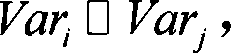
假设使用了两个不同的小波滤波器i和j对块I分别进行了滤波处理。按照如下的规则判断i是否优于j。Assume that two different wavelet filters i and j are used to filter block I respectively. Judge whether i is better than j according to the following rules.
如果MAVi>MAVj,则认为小波滤波器j优于i。如果MAVi<MAVj,则认为小波滤波器i优于j。如果 则比较Vari和Varj。If MAV i >MAV j , wavelet filter j is considered better than i. If MAV i < MAV j , then wavelet filter i is considered better than j. if Var i and Var j are then compared.
如果Vari>Varj,则认为小波滤波器j优于i。If Var i >Var j , then wavelet filter j is considered better than i.
如果Vari<Varj,则认为小波滤波器i优于j。如果
给出上述优化准则后,针对不同的块进行如下的处理:After the above optimization criteria are given, the following processing is performed for different blocks:
1)BIINTRA块1) BIINTRA block
直接使用H.264/AVC中的帧内预测模式。Directly use the intra prediction mode in H.264/AVC.
2)ILDEFAULT,IRDEFAULT块2) ILDEFAULT, IRDEFAULT block
直接使用Harr小波滤波器。Use the Harr wavelet filter directly.
3)IPRBLOCK,IPLBLOCK块3) IPRBLOCK, IPLBLOCK block
使用Harr小波滤波得到高频帧,计算高频帧的MAVHarr和VARHarr使用H.264/AVC的帧内预测模式得到预测残差场。计算残差场的MAVDFD和VARDFD。Use Harr wavelet filter to obtain high-frequency frames, calculate MAV Harr and VAR of high-frequency frames Harr uses H.264/AVC intra-frame prediction mode to obtain prediction residual field. Computes the MAV DFD and VAR DFD of the residual field.
比较MAVHarr和MAVDFD:Compare MAV Harr and MAV DFD :
如果MAVharr<MAVDFD,采用Harr小波滤波。If MAV harr <MAV DFD , use Harr wavelet filtering.
如果MAVharr>MAVDFD,采用BIINTRA块的处理方式,并且把块类型设置为BIINTRA。If MAV harr > MAV DFD , use the BIINTRA block processing method, and set the block type to BIINTRA.
如果

4)BIDEFAULT,PRDEFAULT,PLDEFAULT块4) BIDEFAULT, PRDEFAULT, PLDEFAULT blocks
在对这些块的处理进行说明以前,首先回顾基于LG5/3、BT7/5和CDF9/7小波的运动补偿时域滤波的提升实现。基于LG5/3、BT7/5和CDF9/7小波的运动补偿时域滤波的提升实现依次如图4、图5和图6所示。图中的MCP(Motion Compensated Predict)表示沿运动轨迹方向进行提升中的预测步骤,MCU(Motion Compensated Update)表示沿运动轨迹方向进行提升中的更新步骤。Before describing the processing of these blocks, we first review the lifting implementation of motion-compensated temporal filtering based on LG5/3, BT7/5 and CDF9/7 wavelets. The improvement of motion compensation time domain filtering based on LG5/3, BT7/5 and CDF9/7 wavelet is shown in Figure 4, Figure 5 and Figure 6 in sequence. MCP (Motion Compensated Predict) in the figure represents the prediction step in the promotion along the motion trajectory direction, and MCU (Motion Compensated Update) represents the update step in the promotion along the motion trajectory direction.
由图4~图6不难看出,基于LG5/3、BT7/5和CDF9/7小波的运动补偿时域滤波分别用到了3帧、5帧和7帧进行滤波以得到时域高频子带,如各图中斜线标记的原始视频帧所示。在这里,对于视频序列的开始处、一个组帧的结尾处的帧和视频序列结尾处的帧采用对称延拓的方式进行处理,延拓的帧数视采用的滤波器而定。由图4~图6可知,基于LG5/3小波的运动补偿时域滤波仅仅需要B1帧的前向和后向运动矢量场,基于BT7/5小波的运动补偿时域滤波需要B0帧的后向运动矢量场,B1帧的前向和后向运动矢量场以及B2帧的前向运动矢量场。基于CDF9/7小波的运动补偿时域滤波则需要B0、B1和B2帧的前向和后向运动矢量场。It is not difficult to see from Figures 4 to 6 that the motion-compensated temporal filtering based on LG5/3, BT7/5, and CDF9/7 wavelets uses 3 frames, 5 frames, and 7 frames for filtering to obtain high-frequency subbands in the time domain. , as shown in the original video frames marked with slashes in each figure. Here, the frame at the beginning of the video sequence, the frame at the end of a group of frames and the frame at the end of the video sequence are processed in a symmetrical extension manner, and the number of extended frames depends on the filter used. From Fig. 4 to Fig. 6, we can see that the motion compensation temporal filtering based on LG5/3 wavelet only needs the forward and backward motion vector field of B1 frame, and the motion compensation temporal filtering based on BT7/5 wavelet needs B0 frame The backward motion vector field, the forward and backward motion vector fields for B 1 frame and the forward motion vector field for B 2 frame. Motion-compensated time-domain filtering based on CDF9/7 wavelet requires the forward and backward motion vector fields of B 0 , B 1 and B 2 frames.
以图4~图6中B1帧中的块I为例。假设块I是这三种类型的块之一,给出如下的算法以得到最优的滤波器。Take block I in frame B1 in Fig. 4 to Fig. 6 as an example. Assuming that block I is one of these three types of blocks, the following algorithm is given to obtain the optimal filter.
a)对I块进行LG5/3滤波得到高频块HLG5/3,计算得到该块的MAVLG5/3和VARLG5/3。a) Perform LG5/3 filtering on block I to obtain high-frequency block H LG5/3 , and calculate MAV LG5/3 and VAR LG5/3 of this block.
b)寻找I块在B0帧和B2帧中的匹配块IB0和IB1,以寻找B0帧中的匹配块IB0为例,如图3所示,I块在A1中有匹配块IA1。由于B0帧和A1帧进行运动估计时是以A1帧为参考帧,从而IA1块在B0帧中的匹配情况可以分为3种:找到了分散的匹配块,如图中实线连结的块;没有找到匹配块,如图中虚线所示;找到了大小一致的匹配块,如图中点划线连结的块。b) Find the matching blocks IB 0 and IB 1 of the I block in the B 0 frame and the B 2 frame, take the matching block IB 0 in the B 0 frame as an example, as shown in Figure 3, the I block has in A 1 Match block IA 1 . Since frame B 0 and frame A 1 use frame A 1 as the reference frame for motion estimation, the matching situation of block IA 1 in frame B 0 can be divided into three types: scattered matching blocks are found, as shown in the figure Blocks connected by lines; no matching blocks were found, as shown by the dashed lines in the figure; matching blocks of the same size were found, as shown in the blocks connected by dotted lines in the figure.
这几种情况可判断如下:首先判断IA1块中的像素在B0帧中找到的匹配像素的个数K,如果K小于IA1块中像素总个数的λ(0<λ≤1)倍,则认为没有匹配块。否则,判断这些像素的运动矢量方向是否一致,如果其中有γK(0<γ≤1)个运动矢量方向一致,则认为找到了大小一致的匹配块。除这两种情况外,其他的都属于找到了分散匹配块的情况。These several situations can be judged as follows: first judge the number K of matching pixels found in the B 0 frame of the pixels in the IA 1 block, if K is less than λ of the total number of pixels in the IA 1 block (0<λ≤1) times, it is considered that there is no matching block. Otherwise, it is judged whether the directions of the motion vectors of these pixels are consistent, and if there are γK (0<γ≤1) motion vectors in the same directions, it is considered that a matching block with the same size has been found. Except for these two cases, the others belong to the case of finding a scattered matching block.
同理,在B2帧中可以找到匹配块IB1。Similarly, the matching block IB 1 can be found in the B 2 frame.
如果B0帧和B2帧中有一个或全部没有找到I块对应的匹配块。则认为I块对应的最优滤波器为LG5/3,跳到步骤h)。否则,顺序进行下一步骤。If one or both of the B 0 frame and the B 2 frame do not find a matching block corresponding to the I block. Then consider that the optimal filter corresponding to block I is LG5/3, and skip to step h). Otherwise, proceed to the next step sequentially.
c)进行BT7/5滤波,注意滤波涉及到5帧中的所有对应块。计算得到该块的MAVBT7/5和VARBT7/5。c) Perform BT7/5 filtering, and note that filtering involves all corresponding blocks in 5 frames. Calculate MAV BT7/5 and VAR BT7/5 for this block.
d)基于优化准则判断LG5/3和BT7/5哪个小波基更优,如果是LG5/3,确定它为最优,跳到步骤h)。否则,顺序进行下一步骤。d) Determine which wavelet base LG5/3 or BT7/5 is better based on the optimization criterion, if it is LG5/3, determine it is the best, and skip to step h). Otherwise, proceed to the next step sequentially.
e)找出步骤b)中块IB0和IB1的块类型。如果块类型显示了在前向运动估计(B0帧)或后向运动估计(B2帧)中存在INTRA块,那么确定BT7/5最优,跳到步骤h)。否则,顺序进行下一步骤。e) Find out the block types of blocks IB 0 and IB 1 in step b). If the block type shows the presence of an INTRA block in forward motion estimation (B 0 frame) or backward motion estimation (B 2 frame), then determine BT7/5 as optimal and skip to step h). Otherwise, proceed to the next step sequentially.
f)进行CDF9/7滤波,注意涉及到7帧中的所有对应块。计算得到该块的MAVCDF9/7和VARCDF9/7。f) Perform CDF9/7 filtering, and note that all corresponding blocks in 7 frames are involved. Calculate the MAV CDF9/7 and VAR CDF9/7 of the block.
g)基于优化准则判断BT7/5和CDF9/7哪个小波基更优,确定它为最优。g) Determine which wavelet base is better, BT7/5 or CDF9/7, based on the optimization criterion, and determine it to be optimal.
h)结束。h) end.
5)BIPBLOCK块5) BIPBLOCK block
同4)中的处理,不同的是只在LG5/3和BT7/5中寻找哪个最优。The same as the processing in 4), the difference is only to find which is the best among LG5/3 and BT7/5.
对于帧类型,这里只考虑区分是否需要帧内编码,所以把帧分为两种类型:帧内编码帧、非帧内编码帧。如果一个帧中的BIINTRA块很多,使得其中的像素是整个帧像素总个数的μ(0<μ≤1)倍,就认为该帧为帧内编码帧,否则为非帧内编码帧。For the frame type, here only considers whether intra-frame coding is required, so the frame is divided into two types: intra-frame coded frame and non-intra-frame coded frame. If there are so many BIINTRA blocks in a frame that the number of pixels in it is μ (0<μ≤1) times the total number of pixels in the entire frame, the frame is considered to be an intra-coded frame, otherwise it is a non-intra-coded frame.
Claims (4)
Priority Applications (1)
| Application Number | Priority Date | Filing Date | Title |
|---|---|---|---|
| CN 200710017715 CN100512442C (en) | 2007-04-20 | 2007-04-20 | Method of adaptive motion compensation time-domain filter |
Applications Claiming Priority (1)
| Application Number | Priority Date | Filing Date | Title |
|---|---|---|---|
| CN 200710017715 CN100512442C (en) | 2007-04-20 | 2007-04-20 | Method of adaptive motion compensation time-domain filter |
Publications (2)
| Publication Number | Publication Date |
|---|---|
| CN101047851A true CN101047851A (en) | 2007-10-03 |
| CN100512442C CN100512442C (en) | 2009-07-08 |
Family
ID=38772006
Family Applications (1)
| Application Number | Title | Priority Date | Filing Date |
|---|---|---|---|
| CN 200710017715 Expired - Fee Related CN100512442C (en) | 2007-04-20 | 2007-04-20 | Method of adaptive motion compensation time-domain filter |
Country Status (1)
| Country | Link |
|---|---|
| CN (1) | CN100512442C (en) |
Cited By (6)
| Publication number | Priority date | Publication date | Assignee | Title |
|---|---|---|---|---|
| CN101990099A (en) * | 2009-07-31 | 2011-03-23 | 索尼公司 | Image processing apparatus and method |
| CN101662678B (en) * | 2008-08-29 | 2011-08-24 | 华为技术有限公司 | Method and device for motion compensated temporal filter |
| CN105872538A (en) * | 2016-04-18 | 2016-08-17 | 广东中星电子有限公司 | Time-domain filtering method and time-domain filtering device |
| CN106612440A (en) * | 2015-10-26 | 2017-05-03 | 展讯通信(上海)有限公司 | Image generating method and device |
| US9788015B2 (en) | 2008-10-03 | 2017-10-10 | Velos Media, Llc | Video coding with large macroblocks |
| CN113923453A (en) * | 2021-11-18 | 2022-01-11 | 北京达佳互联信息技术有限公司 | Video time domain filtering method and device, electronic equipment and storage medium |
-
2007
- 2007-04-20 CN CN 200710017715 patent/CN100512442C/en not_active Expired - Fee Related
Cited By (14)
| Publication number | Priority date | Publication date | Assignee | Title |
|---|---|---|---|---|
| CN101662678B (en) * | 2008-08-29 | 2011-08-24 | 华为技术有限公司 | Method and device for motion compensated temporal filter |
| US11039171B2 (en) | 2008-10-03 | 2021-06-15 | Velos Media, Llc | Device and method for video decoding video blocks |
| US9788015B2 (en) | 2008-10-03 | 2017-10-10 | Velos Media, Llc | Video coding with large macroblocks |
| US9930365B2 (en) | 2008-10-03 | 2018-03-27 | Velos Media, Llc | Video coding with large macroblocks |
| US10225581B2 (en) | 2008-10-03 | 2019-03-05 | Velos Media, Llc | Video coding with large macroblocks |
| US11758194B2 (en) | 2008-10-03 | 2023-09-12 | Qualcomm Incorporated | Device and method for video decoding video blocks |
| US12389043B2 (en) | 2008-10-03 | 2025-08-12 | Qualcomm Incorporated | Video coding with large macroblocks |
| CN101990099A (en) * | 2009-07-31 | 2011-03-23 | 索尼公司 | Image processing apparatus and method |
| CN106612440A (en) * | 2015-10-26 | 2017-05-03 | 展讯通信(上海)有限公司 | Image generating method and device |
| CN106612440B (en) * | 2015-10-26 | 2019-04-30 | 展讯通信(上海)有限公司 | Image generating method and device |
| CN105872538A (en) * | 2016-04-18 | 2016-08-17 | 广东中星电子有限公司 | Time-domain filtering method and time-domain filtering device |
| CN105872538B (en) * | 2016-04-18 | 2020-12-29 | 广东中星微电子有限公司 | Time domain filtering method and time domain filtering device |
| CN113923453A (en) * | 2021-11-18 | 2022-01-11 | 北京达佳互联信息技术有限公司 | Video time domain filtering method and device, electronic equipment and storage medium |
| CN113923453B (en) * | 2021-11-18 | 2024-01-23 | 北京达佳互联信息技术有限公司 | Time domain filtering method and device for video, electronic equipment and storage medium |
Also Published As
| Publication number | Publication date |
|---|---|
| CN100512442C (en) | 2009-07-08 |
Similar Documents
| Publication | Publication Date | Title |
|---|---|---|
| CN1933601A (en) | Method of and apparatus for lossless video encoding and decoding | |
| CN1674680A (en) | An enhanced in-frame predictive mode coding method | |
| CN1723706A (en) | Mixed inter/intra video coding of macroblock partitions | |
| CN1525762A (en) | A Encoder/Decoder Bidirectional Prediction Method for Video Coding | |
| CN101069429A (en) | Method and apparatus for multi-layered video encoding and decoding | |
| CN102932642B (en) | Interframe coding quick mode selection method | |
| JP2010509850A (en) | Apparatus and method for reducing reference frame search in video coding | |
| CN1585495A (en) | Quick selection of prediction modes in H.264/AVC frame | |
| CN110351552B (en) | A Fast Coding Method in Video Coding | |
| CN101783957A (en) | Method and device for predictive encoding of video | |
| CN1650634A (en) | Scalable wavelet based coding using motion compensated temporal filtering based on multiple reference frames | |
| CN1777283A (en) | Microblock based video signal coding/decoding method | |
| CN101047851A (en) | Method of adaptive motion compensation time-domain filter | |
| CN1275469C (en) | Method for pridicting sortable complex in frame | |
| CN1823328A (en) | Motion Estimation Using Fast Search Block Matching | |
| CN1276664C (en) | Video encoding method | |
| CN1209928C (en) | Inframe coding frame coding method using inframe prediction based on prediction blockgroup | |
| CN1909662A (en) | Video compression code ratio control method using uneven distribution of frame target bit number | |
| CN1682540A (en) | Video coding method and device | |
| CN1708134A (en) | Method and apparatus for estimating motion | |
| CN1756363A (en) | Method and device for coding a sequence of source images | |
| CN1194544C (en) | Video Coding Method Based on Time-Space Domain Correlation Motion Vector Prediction | |
| CN1685731A (en) | Scalable Video Coding | |
| CN1612613A (en) | Method and apparatus for motion estimation | |
| CN1794818A (en) | Control method of high performance three-dimensional code rate in flexible video coding |
Legal Events
| Date | Code | Title | Description |
|---|---|---|---|
| C06 | Publication | ||
| PB01 | Publication | ||
| C10 | Entry into substantive examination | ||
| SE01 | Entry into force of request for substantive examination | ||
| C14 | Grant of patent or utility model | ||
| GR01 | Patent grant | ||
| C17 | Cessation of patent right | ||
| CF01 | Termination of patent right due to non-payment of annual fee |
Granted publication date: 20090708 Termination date: 20130420 |