CN101046831B - Construction and Calculation Method of Mathematical Model of Multi-component Pharmacokinetics and Pharmacodynamics of Traditional Chinese Medicine - Google Patents
Construction and Calculation Method of Mathematical Model of Multi-component Pharmacokinetics and Pharmacodynamics of Traditional Chinese Medicine Download PDFInfo
- Publication number
- CN101046831B CN101046831B CN2006100253585A CN200610025358A CN101046831B CN 101046831 B CN101046831 B CN 101046831B CN 2006100253585 A CN2006100253585 A CN 2006100253585A CN 200610025358 A CN200610025358 A CN 200610025358A CN 101046831 B CN101046831 B CN 101046831B
- Authority
- CN
- China
- Prior art keywords
- component
- effect
- model
- chinese medicine
- pharmacokinetic
- Prior art date
- Legal status (The legal status is an assumption and is not a legal conclusion. Google has not performed a legal analysis and makes no representation as to the accuracy of the status listed.)
- Expired - Fee Related
Links
- 239000003814 drug Substances 0.000 title claims abstract description 96
- 238000013178 mathematical model Methods 0.000 title claims abstract description 25
- 229940079593 drug Drugs 0.000 title claims description 49
- 230000003285 pharmacodynamic effect Effects 0.000 title claims description 30
- 238000004364 calculation method Methods 0.000 title claims description 28
- 238000010276 construction Methods 0.000 title claims description 21
- 230000000694 effects Effects 0.000 claims abstract description 49
- 239000004480 active ingredient Substances 0.000 claims abstract description 19
- 230000032683 aging Effects 0.000 claims description 14
- 238000004458 analytical method Methods 0.000 claims description 14
- 230000014509 gene expression Effects 0.000 claims description 8
- 230000008030 elimination Effects 0.000 claims description 6
- 238000003379 elimination reaction Methods 0.000 claims description 6
- 238000000034 method Methods 0.000 abstract description 36
- 238000005259 measurement Methods 0.000 abstract description 2
- 229940000406 drug candidate Drugs 0.000 abstract 1
- 239000003777 experimental drug Substances 0.000 abstract 1
- 230000000875 corresponding effect Effects 0.000 description 17
- 239000008280 blood Substances 0.000 description 12
- 210000004369 blood Anatomy 0.000 description 12
- 150000001875 compounds Chemical class 0.000 description 6
- 230000000857 drug effect Effects 0.000 description 6
- 230000006870 function Effects 0.000 description 6
- 238000001727 in vivo Methods 0.000 description 5
- 238000011161 development Methods 0.000 description 4
- 230000018109 developmental process Effects 0.000 description 4
- 238000010253 intravenous injection Methods 0.000 description 4
- 238000011160 research Methods 0.000 description 4
- 238000010586 diagram Methods 0.000 description 3
- 238000005516 engineering process Methods 0.000 description 3
- 239000000243 solution Substances 0.000 description 3
- 230000002195 synergetic effect Effects 0.000 description 3
- 241001465754 Metazoa Species 0.000 description 2
- 241000700159 Rattus Species 0.000 description 2
- 238000010521 absorption reaction Methods 0.000 description 2
- 229940126678 chinese medicines Drugs 0.000 description 2
- 238000012937 correction Methods 0.000 description 2
- 239000012636 effector Substances 0.000 description 2
- 238000002474 experimental method Methods 0.000 description 2
- 238000004949 mass spectrometry Methods 0.000 description 2
- 229940126701 oral medication Drugs 0.000 description 2
- 238000007639 printing Methods 0.000 description 2
- 230000000007 visual effect Effects 0.000 description 2
- 229940126673 western medicines Drugs 0.000 description 2
- 238000010171 animal model Methods 0.000 description 1
- 238000007068 beta-elimination reaction Methods 0.000 description 1
- 230000008094 contradictory effect Effects 0.000 description 1
- 238000007405 data analysis Methods 0.000 description 1
- 238000013461 design Methods 0.000 description 1
- 239000002552 dosage form Substances 0.000 description 1
- 238000012067 mathematical method Methods 0.000 description 1
- 230000004060 metabolic process Effects 0.000 description 1
- 239000000203 mixture Substances 0.000 description 1
- 238000012821 model calculation Methods 0.000 description 1
- 210000000214 mouth Anatomy 0.000 description 1
- 230000002093 peripheral effect Effects 0.000 description 1
- 230000001766 physiological effect Effects 0.000 description 1
- 239000006187 pill Substances 0.000 description 1
- 238000003672 processing method Methods 0.000 description 1
- 238000001303 quality assessment method Methods 0.000 description 1
- 239000009960 shexiang baoxin Substances 0.000 description 1
Images




Landscapes
- Medical Treatment And Welfare Office Work (AREA)
Abstract
本发明公开了一种计算中药多组分药动-药效结合数学模型(PK-PD模型)的构建和计算方法。模型首先应用加速单纯形法非线性拟合实验药物中各有效成分的药动学参数及效时曲线方程,计算效时曲线面积及各组分相应指标的权重系数,进而求出各组分的合并综合药动学参数。选用Emax效应模型拟合各效应指标的PK-PD模型参数。本发明为中药的药动-药效结合模型的研究提供了一种无须事先测得各组分的生物利用度的新的途径。
The invention discloses a method for constructing and calculating a traditional Chinese medicine multi-component pharmacokinetic-pharmaceutical combination mathematical model (PK-PD model). The model first uses the accelerated simplex method to nonlinearly fit the pharmacokinetic parameters and the effect-time curve equation of each active ingredient in the experimental drug, calculates the area of the effect-time curve and the weight coefficient of the corresponding index of each component, and then calculates the weight coefficient of each component. Combined comprehensive pharmacokinetic parameters. The E max effect model was selected to fit the PK-PD model parameters of each effect index. The invention provides a new way for the study of the pharmacokinetic-pharmaceutical combination model of the traditional Chinese medicine without prior measurement of the bioavailability of each component.
Description
技术领域technical field
本发明涉及一种数学模型的构建、计算方法、及软件拟合的领域,尤其涉及一种中药多组分药动-药效结合数学模型的构建和计算方法。The invention relates to the field of mathematical model construction, calculation method and software fitting, and in particular to a construction and calculation method of a traditional Chinese medicine multi-component pharmacokinetic-drug effect combination mathematical model.
背景技术Background technique
目前中药的药物动力学通过20多年的迅速发展,已经取得了许多新成果。在中医药理论的指导下,利用动力学的原理与数学处理方法,可以定量描述中药的有效成分、单味中药和中药复方通过各种途径进入机体后的吸收、分布、代谢等过程的动态变化规律。中药体内过程的研究,尤其是各有效成分的体内药物动力学和药效动力学过程的研究,对阐述中药方剂的组方原理,工艺设计,剂型改革,质量评定,指导临床合理用药都具有重要意义。由于中药复方成分复杂,在口服给药条件下各有效成分的吸收,分布,清除差别很大。各组分的生物利用度无法一一测得,无法计算出相应的药动药效结合模型参数。本发明就是为解决长期以来困扰药动药效结合模型研究的这一难题而设计。At present, the pharmacokinetics of traditional Chinese medicine has achieved many new achievements through the rapid development of more than 20 years. Under the guidance of the theory of traditional Chinese medicine, using the principle of kinetics and mathematical processing methods, it is possible to quantitatively describe the dynamic changes of the absorption, distribution, metabolism and other processes of the active ingredients of traditional Chinese medicine, single Chinese medicine and traditional Chinese medicine compound after entering the body through various channels law. The study of the in vivo process of traditional Chinese medicine, especially the study of the in vivo pharmacokinetics and pharmacodynamics of each active ingredient, is of great importance for the elaboration of the principle of formulating traditional Chinese medicine prescriptions, process design, dosage form reform, quality assessment, and guidance for clinical rational drug use. significance. Due to the complex composition of traditional Chinese medicine, the absorption, distribution and clearance of each active ingredient vary greatly under the condition of oral administration. The bioavailability of each component cannot be measured one by one, and the corresponding pharmacokinetic and pharmacodynamic combination model parameters cannot be calculated. The present invention is designed to solve the problem that has plagued the study of pharmacokinetic and pharmacodynamic combination models for a long time.
同时,随着计算机技术的迅速发展,国内外编制了不少计算程序用于药物动力学和药效学研究。如中国药理学专业委员会编写的3P87和3P97实用药物动力学计算程序,南京军区总医院编写的PKBP程序、以及中国药科大学编写的药物动力学以及药效学结合模型计算程序等等。以上程序大都编写于80-90年代,鉴于当时的计算机水平,大都采用FORTRAN语言或BASIC语言编制,基本是基于DOS操作系统,是属于命令行的操作方式,操作界面不够友好和方便。仅适用于单组分中西药的药物动力学参数计算。90年代以后,随着计算机的发展DOS系统已经被图形化和窗口化的桌面操作系统取代,中药药物动力学的研究也更多的转向了中药复方和中成药,提出了不少新理论和新方法。但是辅助中药的药物动力学-药效学研究的数学方法和计算机软件并没有随着计算机技术的飞速发展而得到不断更新。利用原有的软件对中药的药物动力学和药效学参数计算操作比较繁琐,也有较大的困难。At the same time, with the rapid development of computer technology, many calculation programs have been compiled at home and abroad for pharmacokinetics and pharmacodynamics research. For example, the 3P87 and 3P97 practical pharmacokinetic calculation programs compiled by the Chinese Pharmacology Professional Committee, the PKBP program compiled by the Nanjing Military General Hospital, and the pharmacokinetic and pharmacodynamic combination model calculation programs compiled by China Pharmaceutical University, etc. Most of the above programs were written in the 1980s and 1990s. In view of the computer level at that time, most of them were compiled in FORTRAN or BASIC language. They were basically based on the DOS operating system and belonged to the command line operation mode. The operation interface was not friendly and convenient enough. It is only applicable to the calculation of pharmacokinetic parameters of single-component Chinese and Western medicines. After the 1990s, with the development of computers, the DOS system has been replaced by graphical and windowed desktop operating systems. The research on the pharmacokinetics of traditional Chinese medicine has also turned to traditional Chinese medicine compound and Chinese patent medicines, and many new theories and new methods have been proposed. method. However, the mathematical methods and computer software that assist the pharmacokinetics-pharmacodynamics research of traditional Chinese medicine have not been continuously updated with the rapid development of computer technology. Using the original software to calculate the pharmacokinetic and pharmacodynamic parameters of traditional Chinese medicine is cumbersome and difficult.
为了更好的将本发明的数学模型结合计算机技术进行软件模拟,并将他们应用于药物动力学和药效学的研究,使医药工作者能够更加快速准确的进行PKPD模型的拟合及参数计算,编制了应用软件。本软件采用面向对象的编程语言,基于WINDOWS桌面操作系统开发。可运行于WINDOWS XP和WINDOWS2000,2003等操作系统下。全中文的窗口化操作界面,便于使用者学习和使用。他的创新之处在于更加适合中药复方或中成药的多组分药物动力学和药效学参数计算。中药复方或中成药是由多种有效成分组成的,实验可同时测得多种有效成分的药动药效数据。本软件设计时充分考虑了多种有效成分实验数据的分析比较功能。可同时读取多组数据进行分析。并第一次给出了计算中药综合药动参数的概念。第一次提出了根据效时曲线面积来综合考虑复方药物中各有效成分对综合药效的贡献关系。从通用性角度,本软件也适合单组分中西药的药物动力学和药效学的结合模型。In order to better combine the mathematical model of the present invention with computer technology for software simulation, and apply them to the research of pharmacokinetics and pharmacodynamics, so that medical workers can more quickly and accurately perform the fitting and parameter calculation of the PKPD model , compiled the application software. This software adopts object-oriented programming language and is developed based on WINDOWS desktop operating system. Can run under WINDOWS XP and WINDOWS2000, 2003 and other operating systems. The windowed operation interface in Chinese is easy for users to learn and use. His innovation lies in the calculation of multi-component pharmacokinetic and pharmacodynamic parameters that are more suitable for traditional Chinese medicine compound or Chinese patent medicine. Traditional Chinese medicine compound or Chinese patent medicine is composed of multiple active ingredients, and the experiment can simultaneously measure the pharmacokinetic and pharmacodynamic data of multiple active ingredients. The software design fully considers the analysis and comparison function of the experimental data of various active ingredients. Multiple sets of data can be read simultaneously for analysis. And the concept of calculating the comprehensive pharmacokinetic parameters of traditional Chinese medicine is given for the first time. For the first time, it is proposed to comprehensively consider the contribution relationship of each active ingredient in the compound drug to the comprehensive drug effect according to the area of the effect-time curve. From the perspective of versatility, this software is also suitable for the combined model of pharmacokinetics and pharmacodynamics of single-component Chinese and Western medicines.
发明内容Contents of the invention
本发明要解决的技术问题是提供无须事先测得生物利用度的一种中药多组分药动-药效结合数学模型的构建和计算方法。The technical problem to be solved by the present invention is to provide a method for constructing and calculating a multi-component pharmacokinetic-pharmacodynamic mathematical model of traditional Chinese medicine without prior measurement of bioavailability.
为解决上述技术问题,本发明的中药多组分药动-药效结合的数学模型的构建和计算方法,包括以下步骤:In order to solve the above-mentioned technical problems, the construction and calculation method of the mathematical model of the combination of Chinese medicine multi-component pharmacokinetics and drug effects of the present invention comprises the following steps:
一.拟合效时曲线,效时曲线方程E(T)的表达式为:One. Fitting the aging curve, the expression of the aging curve equation E (T) is:
二.计算所述效时曲线方程E(T)的效时曲线下面积AU,计算方程为:Two. calculate the area under the aging curve AU of described aging curve equation E (T) , calculation equation is:
三.计算权重系数Wi (j),权重系数的计算方程为:3. Calculate the weight coefficient W i (j) , the calculation equation of the weight coefficient is:
四.根据各有效成分的药动参数,计算各有效成分的综合药动学参数,综合药动学参数的计算方程为:4. According to the pharmacokinetic parameters of each active ingredient, calculate the comprehensive pharmacokinetic parameters of each active ingredient, the calculation equation of the comprehensive pharmacokinetic parameters is:
其中j=1,2……,M; Where j = 1, 2..., M;
五.根据目标函数
所述目标函数中效应室药物浓度Ce的表达式为:The expression of the drug concentration Ce in the effect compartment in the objective function is:
对于口服一室模型,For an oral one-compartment model,
keo≠K且keo≠Ka;k eo ≠K and k eo ≠K a ;
或者,对口服二室模型,Alternatively, for an oral two-compartment model,
keo≠α且keo≠Ka且keo≠β。k eo ≠α and k eo ≠K a and k eo ≠β.
本发明由于提供一种可应用于分析多组分或单组分的中药药动-药效结合数学模型的构建和计算方法,使得无须事先测定各组分的生物利用度即可计算出相应的药动药效结合模型参数,并对其进行软件拟合使得界面更加友好,易于操作。Because the present invention provides a kind of construction and calculation method of Chinese medicine pharmacokinetics-pharmaceutical effect combination mathematical model applicable to the analysis of multi-component or single-component, the corresponding bioavailability can be calculated without prior determination of the bioavailability of each component. Combining pharmacokinetics and pharmacodynamics with model parameters and fitting them with software makes the interface more friendly and easy to operate.
附图说明Description of drawings
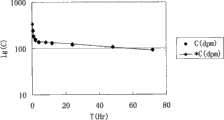
图1是本发明中药多组分药动-药效结合数学模型的构建、及计算软件拟合的表9中组分1时间对应血药浓度的拟合结果图;Fig. 1 is the construction of Chinese medicine multi-component pharmacokinetic-medicine effect combination mathematical model of the present invention, and the fitting result figure of
图2是本发明中药多组分药动-药效结合数学模型的构建、及计算软件拟合的表9中组分2时间对应血药浓度的拟合结果图;Fig. 2 is the construction of Chinese medicine multi-component pharmacokinetic-medicine effect combination mathematical model of the present invention, and the fitting result diagram of
图3是本发明中药多组分药动-药效结合数学模型的构建、及计算软件拟合的表9中组分3时间对应血药浓度的拟合结果图;Fig. 3 is the construction of Chinese medicine multi-component pharmacokinetics-pharmaceutical effect combination mathematical model of the present invention, and the fitting result figure of
图4是本发明中药多组分药动-药效结合数学模型的构建、及计算软件拟合的表9中组分4时间对应血药浓度的拟合结果图;Fig. 4 is the construction of Chinese medicine multi-component pharmacokinetics-pharmaceutical effect combination mathematical model of the present invention, and the fitting result figure of
图5是本发明中药多组分药动-药效结合数学模型的构建、及计算软件拟合的表9中组分5时间对应血药浓度的拟合结果图;Fig. 5 is the construction of Chinese medicine multi-component pharmacokinetics-pharmaceutical effect combination mathematical model of the present invention, and the fitting result figure of
图6是本发明中药多组分药动-药效结合数学模型的构建、及计算软件拟合的表10中指标I、药效指标I估算值与效应室浓度的血药浓度对应效应指标的拟合结果图;Fig. 6 is the construction of Chinese medicine multi-component pharmacokinetic-medicine effect combination mathematical model of the present invention, and the index I in the table 10 of calculation software fitting, the estimated value of drug effect index I and the blood drug concentration corresponding effect index of effect chamber concentration Fitting result graph;
图7是本发明中药多组分药动-药效结合数学模型的构建、及计算软件拟合的表11中指标II、药效指标II估算值与效应室浓度的血药浓度对应效应指标的拟合结果图;Fig. 7 is the construction of Chinese medicine multi-component pharmacokinetic-medicine effect combination mathematical model of the present invention, and the index II in the table 11 of calculation software fitting, the estimated value of drug effect index II and the corresponding effect index of blood drug concentration of effect chamber concentration Fitting result graph;
图8是本发明中药多组分药动-药效结合数学模型的构建、及计算软件拟合的表13中效应室药物浓度及其估算值的时间对应血药浓度的拟合结果图;Fig. 8 is the construction of the Chinese medicine multi-component pharmacokinetic-drug effect combination mathematical model of the present invention, and the fitting result diagram of the time-corresponding blood drug concentration of the drug concentration in the effect chamber and its estimated value in Table 13;
图9是本发明中药多组分药动-药效结合数学模型的构建、及计算软件拟合的表14中效应室药物浓度及其估算值的时间对应血药浓度的拟合结果图;Fig. 9 is the construction of the Chinese medicine multi-component pharmacokinetics-pharmaceutical effect combination mathematical model of the present invention, and the fitting result diagram of the time-corresponding blood drug concentration of the drug concentration in the effect chamber and its estimated value in Table 14 fitted by the calculation software;
图10是本发明中药多组分药动-药效结合数学模型的构建、及计算软件拟合的表15中药东药效结合分析结果图;Fig. 10 is the construction of the Chinese medicine multi-component pharmacokinetics-drug effect combination mathematical model of the present invention, and the table 15 Chinese medicine east drug effect combination analysis result figure of calculation software fitting;
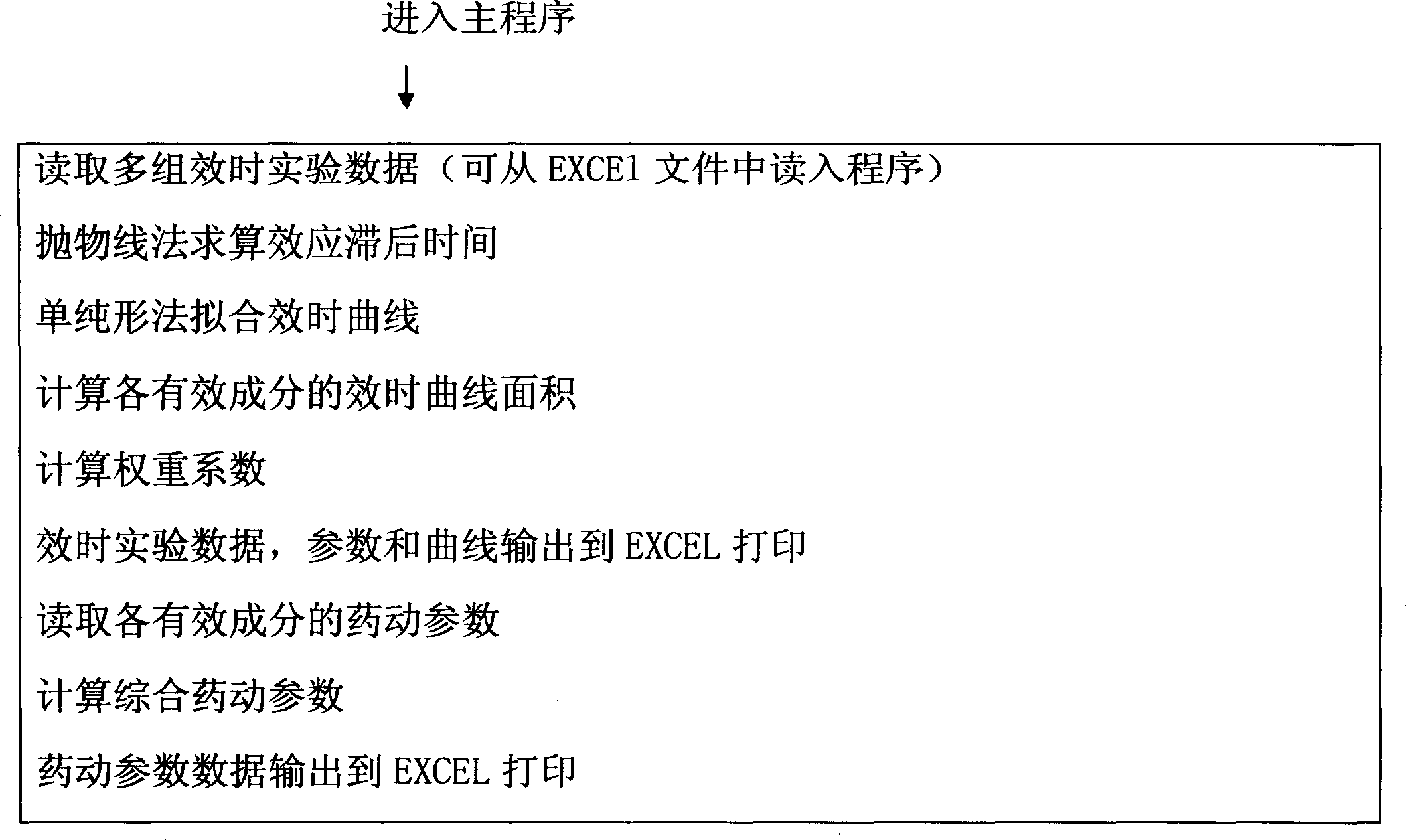
图11是本发明中药多组分药动-药效结合数学模型的构建、及计算软件拟合的T-PD2000主程序图示,同时计算5个有效组分的效时曲线面积和权重系数;Fig. 11 is an illustration of the T-PD2000 main program of the construction of the multi-component pharmacokinetic-efficacy combination mathematical model of traditional Chinese medicine of the present invention and the T-PD2000 main program fitted by the calculation software, and simultaneously calculates the area of the effect-time curve and the weight coefficient of the five effective components;
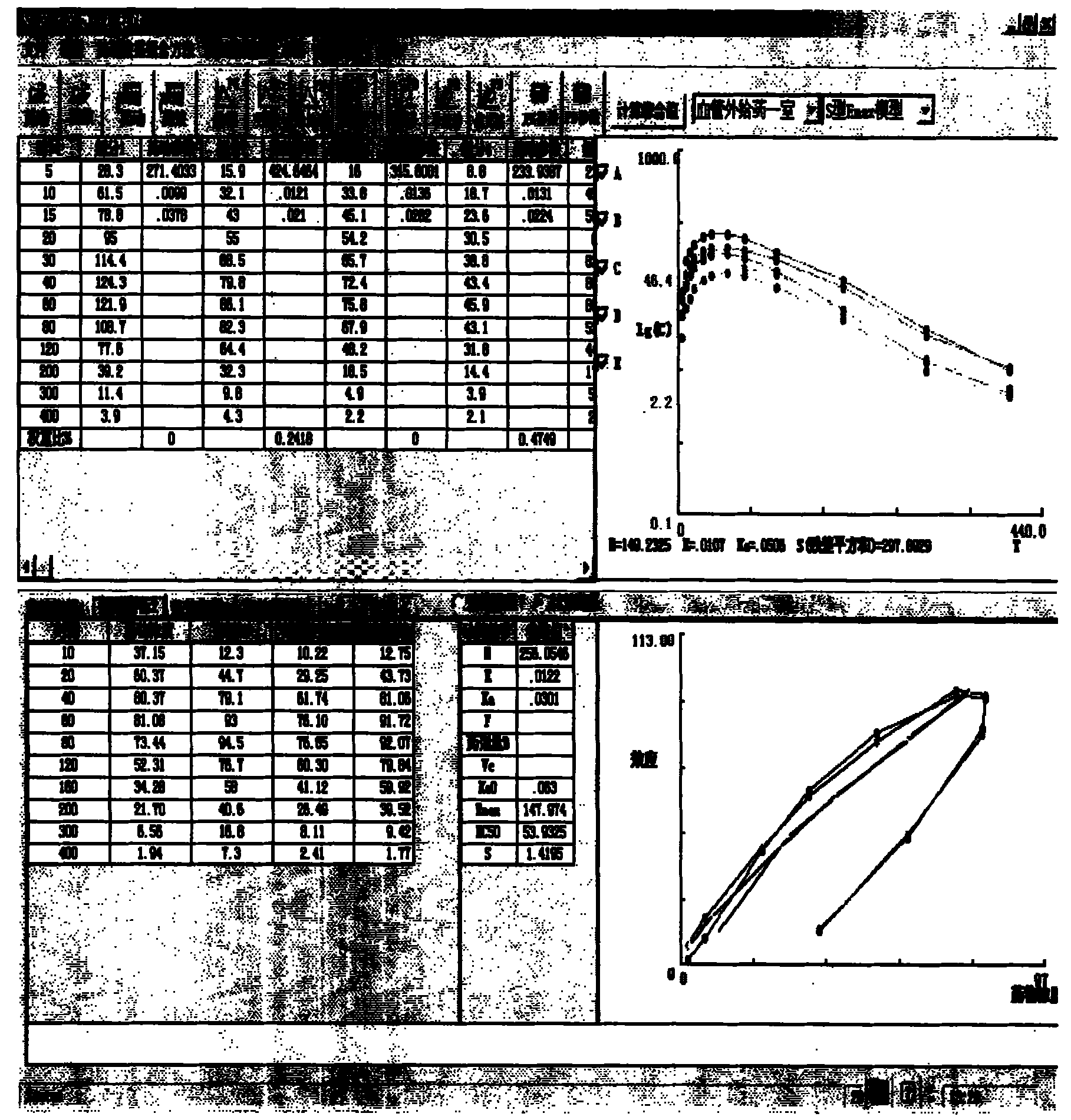
图12是本发明中药多组分药动-药效结合数学模型的构建、及计算软件拟合的PK-PD2000主程序图示,对多种有效成分和多指标PKPD拟合以及参数计算。Fig. 12 is an illustration of the PK-PD2000 main program for the construction of the multi-component pharmacokinetic-efficacy combination mathematical model of traditional Chinese medicine of the present invention, and the PK-PD2000 main program for calculation software fitting, for multiple active ingredients and multi-index PKPD fitting and parameter calculation.
具体实施方式Detailed ways
下面结合附图对本发明作进一步详细的说明。The present invention will be described in further detail below in conjunction with the accompanying drawings.
本发明的实施包含以下步骤:Implementation of the present invention comprises the following steps:
1、首先应用色质联用技术分析测定中药复方(按给药剂量)中各有效成分(简称组分)的含量。计算出各组分的给药剂量。1. First, the content of each active ingredient (abbreviated as component) in the compound Chinese medicine (according to dosage) is analyzed and determined by chromatography-mass spectrometry. Calculate the dosage of each component.
2、用色质联用技术测定实验动物口服药物后各时段的血药浓度。用加速单纯形法拟合各组分的最佳药动学房室模型参数。2. Use chromatogram-mass spectrometry to measure the blood drug concentration of experimental animals at various time intervals after oral administration of the drug. The optimal pharmacokinetic compartment model parameters of each component were fitted by the accelerated simplex method.
3、测定动物口服一定剂量药物后的药效指标(根据要求选取若干指标)。3. Determining the drug efficacy index after oral administration of a certain dose of medicine to animals (select several indexes according to requirements).
4、进行效应时间曲线方程的拟合及权重系数的计算,包括以下步骤:4. Carry out the fitting of the effect-time curve equation and the calculation of the weight coefficient, including the following steps:
a.按步骤1算得各组分的剂量分别做相同的动物口服药效实验,测定各相应效应指标。a. Calculate the doses of each component according to
b.效时曲线方程。药物由中央室进入效应室及效应室药物浓度的清除同属一级动力学过程,可用双指数方程描述,表达式为b. The aging curve equation. The drug enters the effect chamber from the central chamber and the elimination of the drug concentration in the effect chamber belongs to the first-order kinetic process, which can be described by a double exponential equation, and the expression is
c.效应滞后时间。药物进入体内到产生生理效应有时间滞后,滞后时间用TL表示。TL可用抛物法求得。对T进行校正即t=T-TL。c. Effect lag time. There is a time lag between the drug entering the body and producing physiological effects, and the lag time is represented by TL. TL can be obtained by parabolic method. T is corrected, that is, t=TT L .
d.协同效应校正因子。当组分间发生协同效应时,应先求出协同效应校正因子,对相应组分的效应面积进行校正。d. Synergy correction factor. When a synergistic effect occurs between components, the synergistic effect correction factor should be obtained first, and the effect area of the corresponding component should be corrected.
e.用加速单纯形法对E~t数据进非线性拟合。求出各组分与对应效应指标的效时曲线方程。e. Use the accelerated simplex method to perform nonlinear fitting on the E~t data. Calculate the aging curve equation of each component and corresponding effect index.
效时曲线下面积(AU)的计算:Calculation of the area under the aging curve (AU):
g.权重系数的计算g. Calculation of weight coefficient
(j=1,2……,M)(j=1, 2..., M)
式中Wi (j)表示组分i对应指标j的权重系数。In the formula, W i (j) represents the weight coefficient of component i corresponding to index j.
5、综合药动学参数的计算。5. Calculation of comprehensive pharmacokinetic parameters.
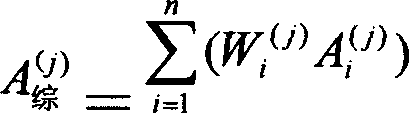
(j=1,2……,M)(j=1, 2..., M)
6、PK-PD结合模型参数的计算。6. Calculation of PK-PD combination model parameters.
a)效应室药物浓(Ce)表达式a) Effect compartment drug concentration (C e ) expression
Emax效应室模型将效应室作为与中央室相连的一个独立房室,药物进入效应室及效应室药物的清除为一级动力学过程。In the Emax effect compartment model, the effect compartment is regarded as an independent compartment connected with the central compartment, and the entry of drug into the effect compartment and the removal of drug from the effect compartment are first-order kinetic processes.
药物在体内达到动态平衡时中央室向效应室的清除率应等于效应室向外的清除率。由此可得下面的方程组。When the drug reaches a dynamic equilibrium in the body, the clearance rate from the central compartment to the effector compartment should be equal to the clearance rate from the effector compartment to the outside. From this the following equations can be obtained.
kleVd=keoVd k le V d = k eo V d
式中,C选常用的二种口服房式模型。In the formula, C chooses two commonly used oral cavity models.
(1)口服一室模型(1) Oral one-compartment model
(2)口服二室模型(2) Oral two-compartment model
运用拉普拉斯变换和逆变换解微分方程得二个表达式。Use Laplace transform and inverse transform to solve differential equation to get two expressions.
对应(1)式为Corresponding to formula (1) is
要求keo≠K且keo≠Ka It is required that k eo ≠ K and k eo ≠ K a
对应(2)式为Corresponding to formula (2) is
要求keo≠α且keo≠Ka且keo≠βIt is required that k eo ≠α and k eo ≠K a and k eo ≠β
b)Emax模型参数求解b) E max model parameter solution
目标函数为The objective function is
口服一室模型Oral one-compartment model
对口服二室模型Oral two-compartment model
目标函数是一矛盾的方程组,当目标函数取极小值,可得keo,Emax,EC50,S的最优解。本发明用加速单纯形法求解。The objective function is a contradictory equation system. When the objective function takes the minimum value, the optimal solution of k eo , E max , EC 50 , and S can be obtained. The present invention uses accelerated simplex method to solve.
Ce表达式中,A,B项中含有剂量(D0),生物利用度(F)和表观分布容积(Vd),因此求解模型效应参数过程无需预先测定各组分的生物利用度。In the C e expression, the A and B items contain dose (D0), bioavailability (F) and apparent volume of distribution (Vd), so the process of solving the model effect parameters does not need to determine the bioavailability of each component in advance.
中药多组分药动-药效结合数学模型的构建和计算方法的软件拟合方式包含以下步骤:The construction of the multi-component pharmacokinetic-pharmacodynamic mathematical model of traditional Chinese medicine and the software fitting method of the calculation method include the following steps:
1. PK_PD 2000药动药效结合模型计算程序编程方法简介1. Introduction to the programming method of PK_PD 2000 pharmacokinetic and pharmacodynamic combination model calculation program
编程工具:Visual Basic 6.0Programming tools: Visual Basic 6.0
运行环境:WindowsXP/2000/2003/98/MEOperating environment: WindowsXP/2000/2003/98/ME
药动学模型:血管外给药一室,血管外给药二室,静脉注射一室,静脉注射二室。Pharmacokinetic model: one compartment for extravascular administration, two compartments for extravascular administration, one compartment for intravenous injection, and two compartments for intravenous injection.
药效学模型:S型Emax模型Pharmacodynamic model: S-type Emax model
模型拟合方法:残数法,单纯形法,模式搜索法Model fitting methods: residual method, simplex method, pattern search method
程序运行分两个功能主模块:药动参数计算模块,药效学参数计算模块。The program operation is divided into two functional main modules: pharmacokinetic parameter calculation module and pharmacodynamic parameter calculation module.
2.PK_PD 2000药动药效结合模型计算程序操作步骤简介2. Introduction to the operation steps of PK_PD 2000 pharmacokinetic and pharmacodynamic combination model calculation program
2.T_PD 2000效时曲线拟合程序编程方法简介2. Introduction to programming method of T_PD 2000 aging curve fitting program
编程工具:Visual Basic 6.0Programming tools: Visual Basic 6.0
运行环境:WindowsXP/2000/2003/98/MEOperating environment: WindowsXP/2000/2003/98/ME
效时曲线模型:双指数数学模型
模型拟合方法:加速单纯形法Model Fitting Method: Accelerated Simplex Method
程序运行分功能主模块:效时曲线拟合,综合药动参数计算。Program operation sub-function main module: effect-time curve fitting, comprehensive pharmacokinetic parameter calculation.
3.T_PD 2000效时曲线拟合程序操作步骤简介3. Brief introduction to the operation steps of T_PD 2000 aging curve fitting program
实施例1Example 1
将本软件应用于中成药的多组分体内动力学过程和和药效学的研究。Apply this software to the study of multi-component in vivo kinetic process and pharmacodynamics of Chinese patent medicine.
表1大鼠口服药物时数据 浓度单位:ng/mlTable 1 Data when rats take drugs orally Concentration unit: ng/ml
表2大鼠口服药物对效应指标的影响Table 2 Effects of Oral Drugs in Rats on Effect Indexes
表3单组分药物对效应指标I的影响Table 3 The impact of single-component drugs on effect index I
表4单组分药物对效应指标II的影响Table 4 The impact of single-component drugs on effect index II
[0101][0101]
操作步骤和分析结果如下:The operation steps and analysis results are as follows:
先运行T_PD2000程序Run the T_PD2000 program first
1.首先打开T_PD2000程序,1. First open the T_PD2000 program,
2.从EXCEL文件中读取麝香保心丸中各有效成分单独用药(按给定剂量)的效时曲线数据2. Read the effect-time curve data of each active ingredient in Shexiang Baoxin pills administered alone (according to a given dose) from the EXCEL file
3.考虑存在效应滞后和实验误差,用抛物线法先计算滞后时间,并对时间进行校正。3. Considering the effect lag and experimental error, first calculate the lag time with the parabola method, and correct the time.
4.进行双指数曲线拟合并求得曲线下面积4. Perform double exponential curve fitting and obtain the area under the curve
5.各组分效时曲线面积得到以后,按面积值大小求算权重系数。5. After obtaining the area of the effect-time curve of each component, calculate the weight coefficient according to the area value.
6.结果输出到EXCEL中进行打印保存6. Output the results to EXCEL for printing and saving
7.重复上面的过程读取不同药效指标的实验数据进行拟合计算。7. Repeat the above process to read the experimental data of different efficacy indexes for fitting calculation.
表5单组分药物对效应指标I的影响Table 5 The impact of single-component drugs on effect index I
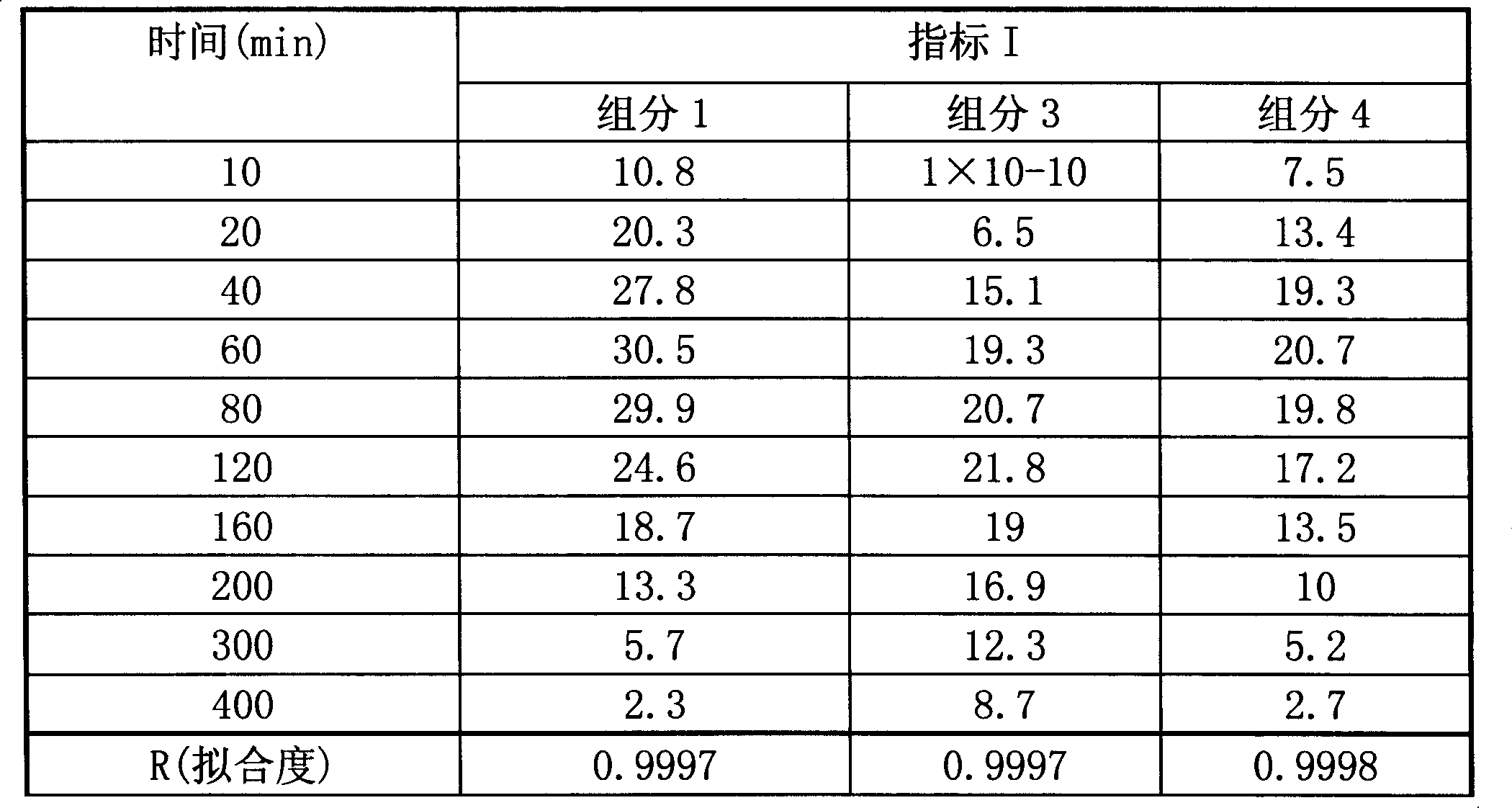
表6组分间药物协同效应的结果The result of drug synergistic effect between the table 6 components
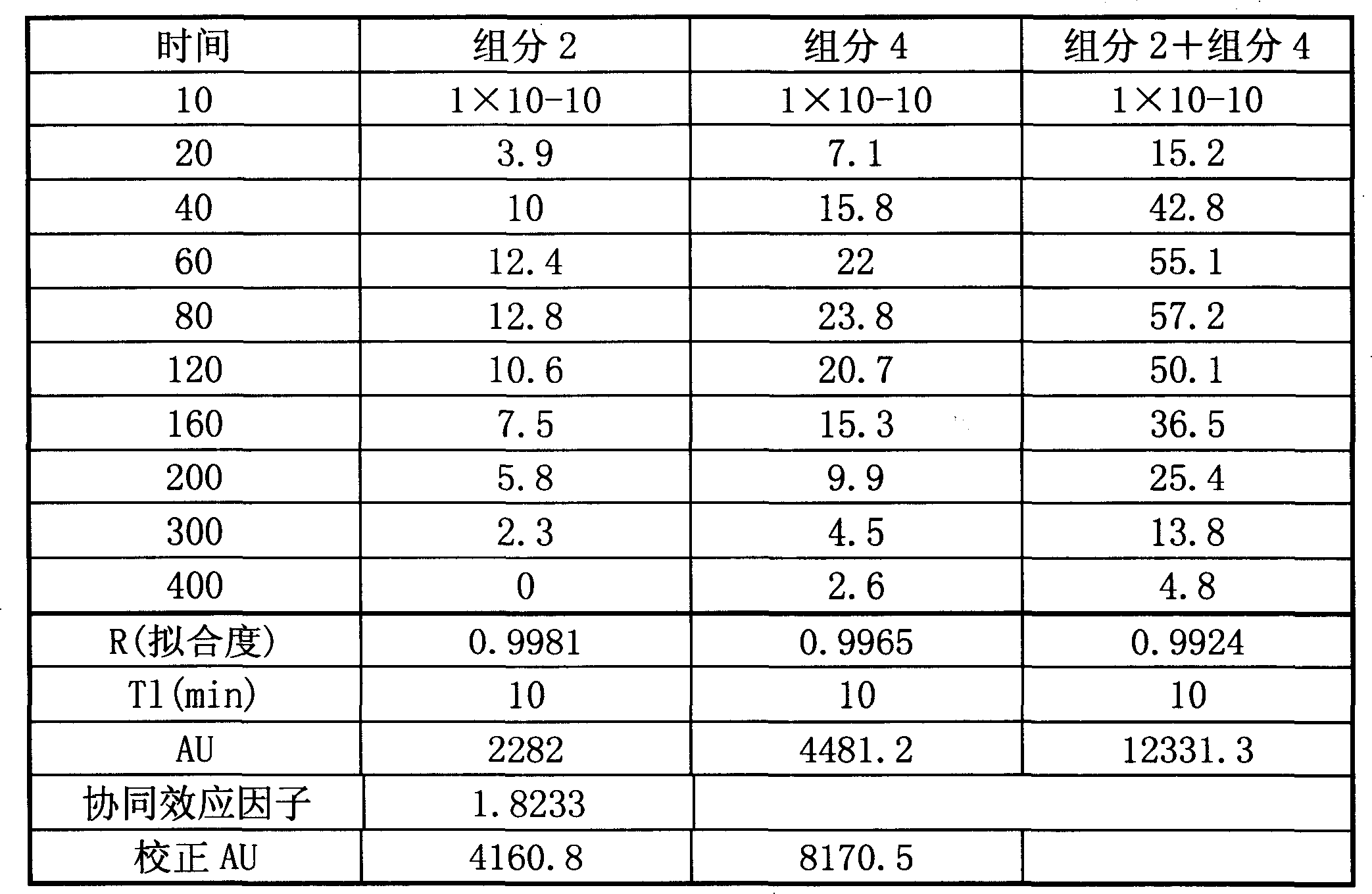
表7单组分药物对效应指标II的影响Table 7 The impact of single-component drugs on effect index II

运行PKPD2000程序Run the PKPD2000 program
1.打开PKPD2000程序1. Open the PKPD2000 program
2.从EXCEL文件中读取用药后测得的多各有效成分的时间和血药浓度数据2. Read the time and blood concentration data of various active ingredients measured after medication from the EXCEL file
3.选择药动模型3. Select pharmacokinetic model
4.选择拟合方法进行数据拟合,计算药动参数4. Select the fitting method to fit the data and calculate the pharmacokinetic parameters
5.得到各有效成分的药动参数以后,输入权重系数,计算综合药动参数5. After obtaining the pharmacokinetic parameters of each active ingredient, input the weight coefficient to calculate the comprehensive pharmacokinetic parameters
6.从EXCEL文件中读取用药后测得的时间药效数据6. Read the time drug efficacy data measured after medication from the EXCEL file
7.系统自动根据综合药动参数计算综合效应所对应的效应估算值、效应室浓度,并拟合计算出药效学参数7. The system automatically calculates the estimated value of the effect corresponding to the comprehensive effect and the concentration of the effect chamber according to the comprehensive pharmacokinetic parameters, and fits and calculates the pharmacodynamic parameters
8.结果输出到EXCEL中进行打印保存8. Output the results to EXCEL for printing and saving
上例数据分析采用如下模型方法The above example data analysis uses the following model method
药动模型:口服一室模型;药效模型:S型Emax模型。Pharmacokinetic model: oral one-compartment model; pharmacodynamic model: S-type Emax model.
拟合方法:加速单纯形法Fitting method: accelerated simplex method
拟合结果如下:The fitting results are as follows:
表8各组分的血药浓度实测数据和拟合得到的估算值Table 8 The blood drug concentration measured data and the estimated value obtained by fitting of each component
表9各组的药动参数值(如图1~图5所示)The pharmacokinetic parameter value of each group of table 9 (as shown in Figure 1 ~ Figure 5)
[0137]表10指标I药动药效结合分析结果(如图6所示) Table 10
表11指标II药动药效结合分析结果(如图7所示)Table 11 Index II pharmacokinetic and pharmacodynamic analysis results (as shown in Figure 7)
[0141][0141]
实验例2Experimental example 2
将本软件应用于单组分药物体内动力学研究。Apply this software to the study of single-component drug kinetics in vivo.
药动模型:静脉注射二室Pharmacokinetic model: two-chamber intravenous injection
拟合方法:模式搜索法Fitting method: pattern search method
实验数据和分析结果如下:The experimental data and analysis results are as follows:
表12药动分析结果Table 12 Pharmacokinetic analysis results
注:*C:浓度估算值Note: *C: Estimated value of concentration
药动参数列元素顺序(A,α,B,β)TPharmacokinetic parameter column element sequence (A, α, B, β)T
表13药动参数和文献值比较(如图8所示)Table 13 Comparison of pharmacokinetic parameters and literature values (as shown in Figure 8)

实验例3Experimental example 3
将本软件应用于单组分药物体内药动药效结合模型研究。Apply this software to the study of pharmacokinetic and pharmacodynamic combination models of single-component drugs in vivo.
药动模型:静脉注射二室Pharmacokinetic model: two-chamber intravenous injection
拟合方法:加速单纯形法Fitting method: accelerated simplex method
实验数据和分析结果如下:The experimental data and analysis results are as follows:
表14药动分析结果(如图9所示)Table 14 pharmacokinetic analysis results (as shown in Figure 9)
注:*C:浓度估算值Note: *C: Estimated value of concentration
药动参数列元素顺序(A,α,B,β)TPharmacokinetic parameter column element sequence (A, α, B, β)T
表15药动药效结合分析结果(如图10所示)Table 15 Pharmacokinetic and pharmacodynamic combination analysis results (as shown in Figure 10)
Claims (1)


Priority Applications (1)
| Application Number | Priority Date | Filing Date | Title |
|---|---|---|---|
| CN2006100253585A CN101046831B (en) | 2006-03-31 | 2006-03-31 | Construction and Calculation Method of Mathematical Model of Multi-component Pharmacokinetics and Pharmacodynamics of Traditional Chinese Medicine |
Applications Claiming Priority (1)
| Application Number | Priority Date | Filing Date | Title |
|---|---|---|---|
| CN2006100253585A CN101046831B (en) | 2006-03-31 | 2006-03-31 | Construction and Calculation Method of Mathematical Model of Multi-component Pharmacokinetics and Pharmacodynamics of Traditional Chinese Medicine |
Publications (2)
| Publication Number | Publication Date |
|---|---|
| CN101046831A CN101046831A (en) | 2007-10-03 |
| CN101046831B true CN101046831B (en) | 2010-09-08 |
Family
ID=38771436
Family Applications (1)
| Application Number | Title | Priority Date | Filing Date |
|---|---|---|---|
| CN2006100253585A Expired - Fee Related CN101046831B (en) | 2006-03-31 | 2006-03-31 | Construction and Calculation Method of Mathematical Model of Multi-component Pharmacokinetics and Pharmacodynamics of Traditional Chinese Medicine |
Country Status (1)
| Country | Link |
|---|---|
| CN (1) | CN101046831B (en) |
Families Citing this family (7)
| Publication number | Priority date | Publication date | Assignee | Title |
|---|---|---|---|---|
| CN103077296B (en) * | 2011-10-25 | 2015-11-18 | 复旦大学附属华山医院 | Based on the in-vitro simulated method of the intravenous injection pharmacokinetic model of velocity of flow adjust |
| CN105224799B (en) * | 2015-09-30 | 2018-03-02 | 中国人民解放军军事医学科学院放射与辐射医学研究所 | It is combined the processing method and processing unit of medicine drug effect |
| RU2713972C1 (en) * | 2016-05-02 | 2020-02-11 | Фрезениус Виаль Сас | Control device for administering propofol for patient |
| CN107064480B (en) * | 2016-08-12 | 2019-05-03 | 株洲千金药业股份有限公司 | Chinese medicinal ingredients promote evaluation method to azithromycin effect baseline and evaluate the application of gynaecology's prescriptions worth thousand gold |
| CN106682396A (en) * | 2016-12-09 | 2017-05-17 | 贵州医科大学 | Method for establishing PK-PD combination model of four representative components in traditional Chinese medicine formula |
| CN113611372B (en) * | 2021-09-01 | 2024-07-19 | 天津仁雨生物科技有限公司 | Method and system for predicting drug effect fitting of effective components of traditional Chinese medicine prescription |
| CN116434857B (en) * | 2023-03-24 | 2024-03-15 | 青岛思普润水处理股份有限公司 | Intelligent dosing setting method of sewage treatment system |
Citations (1)
| Publication number | Priority date | Publication date | Assignee | Title |
|---|---|---|---|---|
| CN1367701A (en) * | 1999-05-11 | 2002-09-04 | 奥索-麦克尼尔药物公司 | Pharmacokinetic and pharmacodynamic models of erythropoietin administration |
-
2006
- 2006-03-31 CN CN2006100253585A patent/CN101046831B/en not_active Expired - Fee Related
Patent Citations (1)
| Publication number | Priority date | Publication date | Assignee | Title |
|---|---|---|---|---|
| CN1367701A (en) * | 1999-05-11 | 2002-09-04 | 奥索-麦克尼尔药物公司 | Pharmacokinetic and pharmacodynamic models of erythropoietin administration |
Non-Patent Citations (2)
| Title |
|---|
| 赵刚,田长青,李静.药动学-药效学结合模型的研究进展.中国临床药理学与治疗学10 4.2005,10(4),361-366. * |
| 黄晓晖,谢海棠,孙瑞元.拉普拉斯变换及其在药代动力学中的应用.中国临床药理学与治疗学6 1.2001,6(1),59-63. * |
Also Published As
| Publication number | Publication date |
|---|---|
| CN101046831A (en) | 2007-10-03 |
Similar Documents
| Publication | Publication Date | Title |
|---|---|---|
| Jambhekar et al. | Basic pharmacokinetics | |
| Proost et al. | MW/Pharm, an integrated software package for drug dosage regimen calculation and therapeutic drug monitoring | |
| Boak et al. | Clinical population pharmacokinetics and toxicodynamics of linezolid | |
| Upton et al. | A physiological model of induction of anaesthesia with propofol in sheep. 1. Structure and estimation of variables | |
| CN101046831B (en) | Construction and Calculation Method of Mathematical Model of Multi-component Pharmacokinetics and Pharmacodynamics of Traditional Chinese Medicine | |
| Abbiati et al. | A modeling tool for the personalization of pharmacokinetic predictions | |
| US20190121935A1 (en) | Phenotypic personalized medicine: adaptive optimization of patient-specific combination therapy | |
| Williams et al. | Population pharmacokinetics of valproic acid in pediatric patients with epilepsy: considerations for dosing spinal muscular atrophy patients | |
| Henthorn et al. | Combined recirculatory-compartmental population pharmacokinetic modeling of arterial and venous plasma S (+) and R (–) ketamine concentrations | |
| CN103294908B (en) | Based on the method that the concurrent chemoradiotherapy of malignant tumor regulation enforcement degree of cloud computing is assessed | |
| CN101339584A (en) | Pharmacokinetic and pharmacodynamic analysis method of active ingredients of compound medicine | |
| Atkinson Jr | Compartmental analysis of drug distribution | |
| van Warmerdam et al. | Validation of a limited sampling model for carboplatin in a high-dose chemotherapy combination | |
| Sama et al. | Real-world comparison of survival outcomes with cisplatin versus carboplatin in patients with limited-stage small-cell lung cancer | |
| Ilyin et al. | Analysis of ill-posedness and numerical methods of solving a nonlinear inverse problem in pharmacokinetics for the two-compartmental model with extravascular drug administration. | |
| Liu et al. | An optimization‐based stochastic model of the two‐compartment pharmacokinetics | |
| Kim et al. | Pharmacokinetics of lacosamide in healthy Korean male volunteers | |
| CN103336902B (en) | A kind of medicine absolute bioavailability detection method based on simulation distribution balance blood concentration | |
| Edwards et al. | Modeling and simulation approaches to evaluate pharmacokinetic sampling contamination from central venous catheters in pediatric pharmacokinetic studies of actinomycin-D: a report from the children’s oncology group | |
| Zhu et al. | Physiologically based pharmacokinetic modeling of lacosamide in patients with hepatic and renal impairment and pediatric populations to support pediatric dosing optimization | |
| Pitsiu et al. | Modeling nicotine arterial–venous differences to predict arterial concentrations and input based on venous measurements: application to smokeless tobacco and nicotine gum | |
| Fadil et al. | Investigating Drug Diffusion Using Multi-Compartment Model | |
| CN103077295B (en) | The in-vitro simulated method of oral administration pharmacokinetic model based on flow rate regulation | |
| Cao et al. | Population pharmacokinetics of levornidazole in healthy subjects and patients, and sequential dosing regimen proposal using pharmacokinetic/pharmacodynamic analysis | |
| KR20100011536U (en) | Drug concentration simulation program |
Legal Events
| Date | Code | Title | Description |
|---|---|---|---|
| C06 | Publication | ||
| PB01 | Publication | ||
| C10 | Entry into substantive examination | ||
| SE01 | Entry into force of request for substantive examination | ||
| C14 | Grant of patent or utility model | ||
| GR01 | Patent grant | ||
| C17 | Cessation of patent right | ||
| CF01 | Termination of patent right due to non-payment of annual fee |
Granted publication date: 20100908 Termination date: 20130331 |