CN101005624A - Moving picture decoding device and method - Google Patents
Moving picture decoding device and method Download PDFInfo
- Publication number
- CN101005624A CN101005624A CNA2006101007963A CN200610100796A CN101005624A CN 101005624 A CN101005624 A CN 101005624A CN A2006101007963 A CNA2006101007963 A CN A2006101007963A CN 200610100796 A CN200610100796 A CN 200610100796A CN 101005624 A CN101005624 A CN 101005624A
- Authority
- CN
- China
- Prior art keywords
- image
- memory
- predicted
- prediction
- dynamic
- Prior art date
- Legal status (The legal status is an assumption and is not a legal conclusion. Google has not performed a legal analysis and makes no representation as to the accuracy of the status listed.)
- Granted
Links
Images


Classifications
-
- H—ELECTRICITY
- H04—ELECTRIC COMMUNICATION TECHNIQUE
- H04N—PICTORIAL COMMUNICATION, e.g. TELEVISION
- H04N7/00—Television systems
- H04N7/24—Systems for the transmission of television signals using pulse code modulation
-
- H—ELECTRICITY
- H04—ELECTRIC COMMUNICATION TECHNIQUE
- H04N—PICTORIAL COMMUNICATION, e.g. TELEVISION
- H04N19/00—Methods or arrangements for coding, decoding, compressing or decompressing digital video signals
- H04N19/50—Methods or arrangements for coding, decoding, compressing or decompressing digital video signals using predictive coding
- H04N19/503—Methods or arrangements for coding, decoding, compressing or decompressing digital video signals using predictive coding involving temporal prediction
- H04N19/51—Motion estimation or motion compensation
- H04N19/573—Motion compensation with multiple frame prediction using two or more reference frames in a given prediction direction
-
- H—ELECTRICITY
- H04—ELECTRIC COMMUNICATION TECHNIQUE
- H04N—PICTORIAL COMMUNICATION, e.g. TELEVISION
- H04N19/00—Methods or arrangements for coding, decoding, compressing or decompressing digital video signals
- H04N19/10—Methods or arrangements for coding, decoding, compressing or decompressing digital video signals using adaptive coding
- H04N19/102—Methods or arrangements for coding, decoding, compressing or decompressing digital video signals using adaptive coding characterised by the element, parameter or selection affected or controlled by the adaptive coding
- H04N19/103—Selection of coding mode or of prediction mode
- H04N19/105—Selection of the reference unit for prediction within a chosen coding or prediction mode, e.g. adaptive choice of position and number of pixels used for prediction
-
- H—ELECTRICITY
- H04—ELECTRIC COMMUNICATION TECHNIQUE
- H04N—PICTORIAL COMMUNICATION, e.g. TELEVISION
- H04N19/00—Methods or arrangements for coding, decoding, compressing or decompressing digital video signals
- H04N19/10—Methods or arrangements for coding, decoding, compressing or decompressing digital video signals using adaptive coding
- H04N19/102—Methods or arrangements for coding, decoding, compressing or decompressing digital video signals using adaptive coding characterised by the element, parameter or selection affected or controlled by the adaptive coding
- H04N19/127—Prioritisation of hardware or computational resources
-
- H—ELECTRICITY
- H04—ELECTRIC COMMUNICATION TECHNIQUE
- H04N—PICTORIAL COMMUNICATION, e.g. TELEVISION
- H04N19/00—Methods or arrangements for coding, decoding, compressing or decompressing digital video signals
- H04N19/10—Methods or arrangements for coding, decoding, compressing or decompressing digital video signals using adaptive coding
- H04N19/134—Methods or arrangements for coding, decoding, compressing or decompressing digital video signals using adaptive coding characterised by the element, parameter or criterion affecting or controlling the adaptive coding
- H04N19/136—Incoming video signal characteristics or properties
- H04N19/137—Motion inside a coding unit, e.g. average field, frame or block difference
-
- H—ELECTRICITY
- H04—ELECTRIC COMMUNICATION TECHNIQUE
- H04N—PICTORIAL COMMUNICATION, e.g. TELEVISION
- H04N19/00—Methods or arrangements for coding, decoding, compressing or decompressing digital video signals
- H04N19/10—Methods or arrangements for coding, decoding, compressing or decompressing digital video signals using adaptive coding
- H04N19/134—Methods or arrangements for coding, decoding, compressing or decompressing digital video signals using adaptive coding characterised by the element, parameter or criterion affecting or controlling the adaptive coding
- H04N19/142—Detection of scene cut or scene change
-
- H—ELECTRICITY
- H04—ELECTRIC COMMUNICATION TECHNIQUE
- H04N—PICTORIAL COMMUNICATION, e.g. TELEVISION
- H04N19/00—Methods or arrangements for coding, decoding, compressing or decompressing digital video signals
- H04N19/10—Methods or arrangements for coding, decoding, compressing or decompressing digital video signals using adaptive coding
- H04N19/169—Methods or arrangements for coding, decoding, compressing or decompressing digital video signals using adaptive coding characterised by the coding unit, i.e. the structural portion or semantic portion of the video signal being the object or the subject of the adaptive coding
- H04N19/179—Methods or arrangements for coding, decoding, compressing or decompressing digital video signals using adaptive coding characterised by the coding unit, i.e. the structural portion or semantic portion of the video signal being the object or the subject of the adaptive coding the unit being a scene or a shot
-
- H—ELECTRICITY
- H04—ELECTRIC COMMUNICATION TECHNIQUE
- H04N—PICTORIAL COMMUNICATION, e.g. TELEVISION
- H04N19/00—Methods or arrangements for coding, decoding, compressing or decompressing digital video signals
- H04N19/10—Methods or arrangements for coding, decoding, compressing or decompressing digital video signals using adaptive coding
- H04N19/169—Methods or arrangements for coding, decoding, compressing or decompressing digital video signals using adaptive coding characterised by the coding unit, i.e. the structural portion or semantic portion of the video signal being the object or the subject of the adaptive coding
- H04N19/186—Methods or arrangements for coding, decoding, compressing or decompressing digital video signals using adaptive coding characterised by the coding unit, i.e. the structural portion or semantic portion of the video signal being the object or the subject of the adaptive coding the unit being a colour or a chrominance component
-
- H—ELECTRICITY
- H04—ELECTRIC COMMUNICATION TECHNIQUE
- H04N—PICTORIAL COMMUNICATION, e.g. TELEVISION
- H04N19/00—Methods or arrangements for coding, decoding, compressing or decompressing digital video signals
- H04N19/10—Methods or arrangements for coding, decoding, compressing or decompressing digital video signals using adaptive coding
- H04N19/189—Methods or arrangements for coding, decoding, compressing or decompressing digital video signals using adaptive coding characterised by the adaptation method, adaptation tool or adaptation type used for the adaptive coding
- H04N19/196—Methods or arrangements for coding, decoding, compressing or decompressing digital video signals using adaptive coding characterised by the adaptation method, adaptation tool or adaptation type used for the adaptive coding being specially adapted for the computation of encoding parameters, e.g. by averaging previously computed encoding parameters
-
- H—ELECTRICITY
- H04—ELECTRIC COMMUNICATION TECHNIQUE
- H04N—PICTORIAL COMMUNICATION, e.g. TELEVISION
- H04N19/00—Methods or arrangements for coding, decoding, compressing or decompressing digital video signals
- H04N19/20—Methods or arrangements for coding, decoding, compressing or decompressing digital video signals using video object coding
- H04N19/23—Methods or arrangements for coding, decoding, compressing or decompressing digital video signals using video object coding with coding of regions that are present throughout a whole video segment, e.g. sprites, background or mosaic
-
- H—ELECTRICITY
- H04—ELECTRIC COMMUNICATION TECHNIQUE
- H04N—PICTORIAL COMMUNICATION, e.g. TELEVISION
- H04N19/00—Methods or arrangements for coding, decoding, compressing or decompressing digital video signals
- H04N19/42—Methods or arrangements for coding, decoding, compressing or decompressing digital video signals characterised by implementation details or hardware specially adapted for video compression or decompression, e.g. dedicated software implementation
- H04N19/423—Methods or arrangements for coding, decoding, compressing or decompressing digital video signals characterised by implementation details or hardware specially adapted for video compression or decompression, e.g. dedicated software implementation characterised by memory arrangements
-
- H—ELECTRICITY
- H04—ELECTRIC COMMUNICATION TECHNIQUE
- H04N—PICTORIAL COMMUNICATION, e.g. TELEVISION
- H04N19/00—Methods or arrangements for coding, decoding, compressing or decompressing digital video signals
- H04N19/44—Decoders specially adapted therefor, e.g. video decoders which are asymmetric with respect to the encoder
-
- H—ELECTRICITY
- H04—ELECTRIC COMMUNICATION TECHNIQUE
- H04N—PICTORIAL COMMUNICATION, e.g. TELEVISION
- H04N19/00—Methods or arrangements for coding, decoding, compressing or decompressing digital video signals
- H04N19/46—Embedding additional information in the video signal during the compression process
-
- H—ELECTRICITY
- H04—ELECTRIC COMMUNICATION TECHNIQUE
- H04N—PICTORIAL COMMUNICATION, e.g. TELEVISION
- H04N19/00—Methods or arrangements for coding, decoding, compressing or decompressing digital video signals
- H04N19/46—Embedding additional information in the video signal during the compression process
- H04N19/463—Embedding additional information in the video signal during the compression process by compressing encoding parameters before transmission
-
- H—ELECTRICITY
- H04—ELECTRIC COMMUNICATION TECHNIQUE
- H04N—PICTORIAL COMMUNICATION, e.g. TELEVISION
- H04N19/00—Methods or arrangements for coding, decoding, compressing or decompressing digital video signals
- H04N19/50—Methods or arrangements for coding, decoding, compressing or decompressing digital video signals using predictive coding
- H04N19/503—Methods or arrangements for coding, decoding, compressing or decompressing digital video signals using predictive coding involving temporal prediction
-
- H—ELECTRICITY
- H04—ELECTRIC COMMUNICATION TECHNIQUE
- H04N—PICTORIAL COMMUNICATION, e.g. TELEVISION
- H04N19/00—Methods or arrangements for coding, decoding, compressing or decompressing digital video signals
- H04N19/50—Methods or arrangements for coding, decoding, compressing or decompressing digital video signals using predictive coding
- H04N19/503—Methods or arrangements for coding, decoding, compressing or decompressing digital video signals using predictive coding involving temporal prediction
- H04N19/51—Motion estimation or motion compensation
- H04N19/537—Motion estimation other than block-based
-
- H—ELECTRICITY
- H04—ELECTRIC COMMUNICATION TECHNIQUE
- H04N—PICTORIAL COMMUNICATION, e.g. TELEVISION
- H04N19/00—Methods or arrangements for coding, decoding, compressing or decompressing digital video signals
- H04N19/50—Methods or arrangements for coding, decoding, compressing or decompressing digital video signals using predictive coding
- H04N19/503—Methods or arrangements for coding, decoding, compressing or decompressing digital video signals using predictive coding involving temporal prediction
- H04N19/51—Motion estimation or motion compensation
- H04N19/58—Motion compensation with long-term prediction, i.e. the reference frame for a current frame not being the temporally closest one
-
- H—ELECTRICITY
- H04—ELECTRIC COMMUNICATION TECHNIQUE
- H04N—PICTORIAL COMMUNICATION, e.g. TELEVISION
- H04N19/00—Methods or arrangements for coding, decoding, compressing or decompressing digital video signals
- H04N19/60—Methods or arrangements for coding, decoding, compressing or decompressing digital video signals using transform coding
- H04N19/61—Methods or arrangements for coding, decoding, compressing or decompressing digital video signals using transform coding in combination with predictive coding
-
- H—ELECTRICITY
- H04—ELECTRIC COMMUNICATION TECHNIQUE
- H04N—PICTORIAL COMMUNICATION, e.g. TELEVISION
- H04N19/00—Methods or arrangements for coding, decoding, compressing or decompressing digital video signals
- H04N19/85—Methods or arrangements for coding, decoding, compressing or decompressing digital video signals using pre-processing or post-processing specially adapted for video compression
- H04N19/87—Methods or arrangements for coding, decoding, compressing or decompressing digital video signals using pre-processing or post-processing specially adapted for video compression involving scene cut or scene change detection in combination with video compression
Landscapes
- Engineering & Computer Science (AREA)
- Multimedia (AREA)
- Signal Processing (AREA)
- Computing Systems (AREA)
- Theoretical Computer Science (AREA)
- Compression Or Coding Systems Of Tv Signals (AREA)
- Compression, Expansion, Code Conversion, And Decoders (AREA)
Abstract
获得一种根据动态图像的场面内容和重要程度、移动的性质等,进行高精度的预测的动态图像编码方式。备有:存储参照用图像的多个存储区;能与表现被预测图像区的移动的任意的变形参数对应,根据该变形参数,利用上述多个存储区上的任意数据生成预测图像的移动补偿装置;以及能在任意时间间隔内更新上述多个存储区中1个以上的存储区的内容的存储器更新控制装置。

A moving picture encoding method is obtained that performs high-precision prediction based on the scene content and importance of the moving picture, the nature of movement, and the like. Equipped with: a plurality of storage areas for storing reference images; corresponding to arbitrary deformation parameters representing the movement of the predicted image area, and based on the deformation parameters, motion compensation for generating a predicted image using arbitrary data on the above-mentioned plurality of storage areas device; and a memory update control device capable of updating the contents of more than one storage area among the plurality of storage areas within an arbitrary time interval.
Description
本申请是申请人三菱电机株式会社于1998年1月22日提交的发明名称为“动态图象译码装置和方法”的中国专利申请200310124564.8的分案申请。This application is a divisional application of the Chinese patent application 200310124564.8 filed by the applicant Mitsubishi Electric Corporation on January 22, 1998, entitled "Dynamic Image Decoding Device and Method".
技术领域technical field
本发明涉及例如电视电话、电视会议等中用于图象通信的便携式及固定式图象通信装置、数字VTR、视频服务器等的图象存储、记录装置等中用的动态图象编码/译码装置,以单独软件或DSP固件形式安装的动态图象编码/译码程序等中用的动态图象的预测编码方式。The present invention relates to dynamic image coding/decoding used in portable and fixed image communication devices, digital VTRs, video servers, etc. for image storage and recording devices, such as video telephones and video conferencing, etc. The device is a predictive encoding method for moving images used in a moving image encoding/decoding program installed in the form of independent software or DSP firmware.
背景技术Background technique
作为现有的动态图象编码方式中的预测编码例可以举出ISO/IECJTC1/SC29/WG11中进行标准化作业的MPEG-4(Moving PictureExperts Group Phase-4)的视频编码参照方式(Verification Model,以下称VM)。VM伴随MPEG-4的标准化作业的进行,方式的内容发生变化,但这里设想VM Version5.0,以下只表为VM。As an example of predictive coding in the existing video coding method, the video coding reference method (Verification Model) of MPEG-4 (Moving Picture Experts Group Phase-4) that is standardized in ISO/IECJTC1/SC29/WG11 (Verification Model, below called VM). The content of the method has changed with the progress of the standardization work of MPEG-4, but VM Version 5.0 is assumed here, and only VM is shown below.
VM是将动态图象顺序取作在时间/空间上取任意形状的图象目标的集合体,以各图象目标为单元进行编码的方式。图16中示出了VM中的视频数据结构。在VM中,将包含时间轴的动态图象目标称为VideoObjedt(VO),将表示VO在各时刻的状态、成为编码单元的图象数据称为Video Objedt Plane(VOP)。当VO在时间/空间上具有层次性时,在VO和VOP之间特别设有称为Video Objedt Layer(VOL)的单元,表现VO内的层次结构。各VOP被分离为形状信息和结构信息。但是,在动态图象顺序中当VO为1个时,各VOP便与帧同义。这时,不存在形状信息,只进行结构信息的编码。VM is a method in which dynamic images are sequenced as an aggregate of image objects of arbitrary shape in time/space, and encoding is performed in units of each image object. The video data structure in the VM is shown in FIG. 16 . In the VM, the moving image object including the time axis is called Video Objedt (VO), and the image data representing the state of VO at each time, which becomes a coding unit, is called Video Objedt Plane (VOP). When VO is hierarchical in time/space, a unit called Video Objedt Layer (VOL) is specially set between VO and VOP to express the hierarchical structure in VO. Each VOP is separated into shape information and structure information. However, when there is one VO in the video sequence, each VOP is synonymous with a frame. In this case, shape information does not exist, and only structure information is encoded.
如图17所示,VOP具有表现形状信息的由初始数据和结构数据构成的结构。各数据被分别定义为由16×16个样本构成的块(初始块、宏决)的集合体。初始块内的各样本用8位表现。宏块伴随16×16个样本的辉度信号,包含与其对应的色差信号。根据动态图象顺序制作VOP数据的处理是在本编码装置以外进行的。As shown in FIG. 17, a VOP has a structure composed of initial data and structure data representing shape information. Each piece of data is defined as an aggregate of blocks (primary blocks, macroblocks) composed of 16×16 samples. Each sample in the initial block is represented by 8 bits. A macroblock is accompanied by a luminance signal of 16×16 samples, including a corresponding color-difference signal. The process of creating VOP data according to the sequence of moving pictures is performed outside the coding apparatus.
图18表示采用VM编码方式的VOP编码装置的结构。该图中,P1是输入的原VOP数据,P2是表现VOP的形状信息的初始块,P3是传送输入的VOP的形状信息的有无所用的开关,P4是对初始平面进行压缩编码的形状编码部,P5是压缩的初始块数据,P6是局部译码初始块,P7是结构数据(宏块),P8是移动检测部,P9是变形参数,P10是移动补偿部,P11是预测图象候选,P12是预测方式选择部,P13是预测方式信息,P14是最后预测图象,P15是预测误差信号,P16是结构编码部,P17是结构编码信息,P18是局部译码预测误差信号,P19是局部译码宏块,P20是子画面存储器更新部,P21是VOP存储器,P22是子画面存储器,P23是长度可变编码·多路复用部,P24是缓冲器,P25是编码位流。Fig. 18 shows the configuration of a VOP encoding apparatus employing the VM encoding method. In this figure, P1 is the input original VOP data, P2 is the initial block representing the shape information of the VOP, P3 is a switch for transmitting the presence or absence of the shape information of the input VOP, and P4 is a shape code for compressing and coding the initial plane. P5 is the compressed initial block data, P6 is the local decoding initial block, P7 is the structural data (macroblock), P8 is the motion detection part, P9 is the deformation parameter, P10 is the motion compensation part, and P11 is the predicted image candidate , P12 is the prediction method selection part, P13 is the prediction method information, P14 is the last predicted image, P15 is the prediction error signal, P16 is the structure coding part, P17 is the structure coding information, P18 is the local decoding prediction error signal, and P19 is For local decoding macroblocks, P20 is a sub-picture memory update unit, P21 is a VOP memory, P22 is a sub-picture memory, P23 is a variable-length coding/multiplexing unit, P24 is a buffer, and P25 is a coded bit stream.
另外,图19示出了简要说明该编码装置的工作的流程。In addition, FIG. 19 shows a flow briefly explaining the operation of the encoding device.
在图18所示的编码装置中,首先,原VOP输入P1被分成初始块P2和宏块P7(步PS2、步PS3),初始块P2被送到形状编码部P4,宏块P7被送到移动检测部8。形状编码部P4是进行初始块P2的数据压缩的处理块(步PS4),本发明不是关于形状信息的压缩方法,所以该处理的详细说明从略。。In the encoding device shown in FIG. 18, first, the original VOP input P1 is divided into initial block P2 and macroblock P7 (step PS2, step PS3), initial block P2 is sent to shape coding part P4, and macroblock P7 is sent to
形状编码部P4的输出是压缩初始数据P5和局部译码初始块P6,前者被送给长度可变编码·多路复用部P23,后者被分别送给移动检测部8、移动补偿部P10、预测方式选择部P12和结构编码部P16。The output of the shape coding unit P4 is the compressed initial data P5 and the locally decoded initial block P6. The former is sent to the variable length coding and multiplexing unit P23, and the latter is sent to the
移动检测部P8(步PS5)接收宏块P7,利用VOP存储器P21中存储的参照图象数据和局部译码初始块P6,检测每个宏块局部的移动矢量。已经编码的VOP的局部译码图象被存入VOP存储器P21。每次宏块的编码结束后,便依次用该局部译码图象更新VOP存储器P21的内容。移动检测部P8同时还具有接收全部原VOP的结构数据,利用子画面存储器P22中存储的参照图象数据和局部译码初始平面,检测全局的弯曲参数的功能。后文将详细说明子画面存储器P22。The motion detection unit P8 (step PS5) receives the macroblock P7, and detects a local motion vector for each macroblock using the reference image data stored in the VOP memory P21 and the locally decoded initial block P6. Partially decoded pictures of the VOP that have been coded are stored in the VOP memory P21. Each time after the coding of a macroblock is completed, the contents of the VOP memory P21 are updated sequentially with the local decoded image. The motion detection unit P8 also has the function of receiving all the original VOP structure data, using the reference image data stored in the sub-picture memory P22 and the local decoding initial plane, to detect the global bending parameters. The details of the sprite memory P22 will be described later.
移动补偿部P10(步PS6)利用由移动检测部P8检测的移动参数P9和局部译码初始块P6,生成预测图象候选P11。其次,在预测方式选择部P12中,用预测误差信号电力和原信号电力,确定该宏块最后的预测方式P13及预测图象P14(步PS7)。这里还包括内部/在内判断。The motion compensation unit P10 (step PS6) uses the motion parameter P9 detected by the motion detection unit P8 and the local decoded initial block P6 to generate a predicted image candidate P11. Next, in the prediction method selection unit P12, the final prediction method P13 and predicted image P14 of the macroblock are determined using the prediction error signal power and the original signal power (step PS7). This also includes internal/internal judgments.
在结构编码部P16中,根据预测方式P13,预测DCT、量子化、得到的量子化DCT系数后,或直接将预测误差或原宏块本身送给长度可变编码·多路复用部P23,进行编码(步PS8、步PS9)。长度可变编码·多路复用部P23根据预定的语法和长度可变编码代码,将接收的数据变换成位流,进行多路复用(步PS10)。量子化DCT系数经过逆量子化、逆DCT,变成局部译码预测误差信号P18后,得到与预测图象P14相加后的局部译码图象P19(步PS11)。局部译码图象P19被写入VOP存储器P21及子画面存储器P22,用于以后的VOP的预测(步PS12)。In the structure encoding unit P16, after predicting DCT, quantization, and obtained quantized DCT coefficients according to the prediction method P13, or directly sending the prediction error or the original macroblock itself to the variable-length encoding and multiplexing unit P23, Encoding is performed (step PS8, step PS9). The variable length encoding/multiplexing unit P23 converts the received data into a bit stream based on a predetermined syntax and variable length encoding code, and multiplexes it (step PS10). After inverse quantization and inverse DCT, the quantized DCT coefficients become local decoded prediction error signal P18, and then local decoded image P19 added to predicted image P14 is obtained (step PS11). The partial decoded picture P19 is written into the VOP memory P21 and the sprite memory P22, and is used for future VOP prediction (step PS12).
以下,详细说明进行预测的部分、特别是预测方式和移动补偿部、子画面存储器P22及VOP存储器P21的更新控制。Hereinafter, the part which performs prediction, especially the update control of the prediction method and motion compensation part, the sprite memory P22, and the VOP memory P21 is explained in detail.
(1)VM中的预测方式(1) Prediction method in VM
如图20所示,在VM中通常有4种VOP编码类型,能对每一宏块选择各类型中用○表示的预测方式。用I-VOP时完全不进行预测,全部进行内部编码。P-VOP能进行从过去的VOP开始的预测。B-VOP在预测中能使用过去及未来的VOP。As shown in FIG. 20, there are generally four types of VOP coding in VM, and the prediction method indicated by ○ in each type can be selected for each macroblock. When I-VOP is used, no prediction is performed at all, and all intra-coding is performed. P-VOP enables prediction from past VOPs. B-VOP can use past and future VOPs for prediction.
以上的预测是全部由移动矢量进行的预测。另一方面,Sprite-VOP是可以使用内部存储器的预测。所谓内部是指在VOP单元中检测下式所示的弯曲参数集The above predictions are all predictions based on motion vectors. On the other hand, Sprite-VOP is a projection that can use internal memory. The so-called internal means that the bending parameter set shown in the following formula is detected in the VOP unit
[式1][Formula 1]
以此为根据,通过依次混合VOP而生成的图象空间,并被存入子画面存储器P22。Based on this, the image space generated by sequentially mixing VOPs is stored in the sprite memory P22.
x’=(ax+by+c)/(gx+by+1)x'=(ax+by+c)/(gx+by+1)
y’=(dx+ey+f)/(gx+hy+1)y'=(dx+ey+f)/(gx+hy+1)
这里,(x,y)是原VOP的象素位置,(x’,y’)是根据弯曲参数而与(x,y)对应的子画面存储器中的象素位置。在Sprite-VOP的各宏块中,统一地使用该弯曲参数集,确定子画面存储器中的(x’,y’),能生成预测图象进行预测。严格地说,子画面中预测用的″动态子画面″和不用预测而在译码侧以近似地合成VOP为目的用的″静态子画面″是有区别的。但以下根据用于预测的目的,按″子画面″的意义使用动态子画面。Here, (x, y) is the pixel position of the original VOP, and (x', y') is the pixel position in the sprite memory corresponding to (x, y) according to the warp parameter. In each macroblock of the Sprite-VOP, this warping parameter set is collectively used to determine (x', y') in the sprite memory, and a prediction image can be generated and predicted. Strictly speaking, there is a distinction between "dynamic sub-pictures" for prediction among sub-pictures and "static sub-pictures" for the purpose of approximately synthesizing VOPs on the decoding side without prediction. In the following, however, dynamic sprites are used in the sense of "sprites" for prediction purposes.
用移动检测部P8 检测以上用于预测的移动矢量及弯曲参数。将它们统称为移动信息P9。The movement vector and bending parameters used for prediction are detected by the movement detection unit P8. These are collectively referred to as mobile information P9.
(2)移动补偿部(2) Movement Compensation Department
移动补偿部P10例如取图21所示的内部结构。在该图中,P26是弯曲参数,P27是移动矢量,P28是全局移动补偿部,P29是局部移动补偿部,P30是由弯曲参数决定的预测图象候选,P31是由移动矢量决定的预测图象候选。预测图象P11是P30及P31的总称。The motion compensator P10 has, for example, the internal structure shown in FIG. 21 . In this figure, P26 is a warp parameter, P27 is a motion vector, P28 is a global motion compensation part, P29 is a local motion compensation part, P30 is a predicted image candidate determined by the warp parameter, and P31 is a predicted image determined by the motion vector like candidates. The predicted picture P11 is a generic term for P30 and P31.
图22中简要地示出了移动补偿部P10的工作情况(步PS14至步PS21)的流程。FIG. 22 schematically shows the flow of operations (step PS14 to step PS21) of the motion compensation unit P10.
在移动补偿部P10中,利用由移动检测部P8对每个宏块P7检测的VOP总体的弯曲参数P26或宏块单元的移动矢量P27,生成预测图象P11。在全局移动补偿部P28中进行使用弯曲参数P26的移动补偿,在局部移动补偿部P29中进行使用移动矢量P27的移动补偿。In the motion compensating unit P10, the prediction image P11 is generated using the overall VOP warp parameter P26 or the motion vector P27 in macroblock units detected by the motion detecting unit P8 for each macroblock P7. Motion compensation using the warp parameter P26 is performed in the global motion compensating unit P28, and motion compensation using the motion vector P27 is performed in the local motion compensating unit P29.
在I-VOP的情况下,移动补偿部P10不工作(步PS14至步PS21)。其次,局部移动补偿部P29工作,利用移动矢量P27,从VOP存储器P21内的过去的VOP局部译码图象只取出预测图象(PR1)(步PS15)。在I-VOP的情况下,只使用该预测图象(PR1)。In the case of I-VOP, the motion compensator P10 does not operate (step PS14 to step PS21). Next, the local motion compensator P29 operates to extract only the predicted image (PR1) from the past VOP local decoded image in the VOP memory P21 using the motion vector P27 (step PS15). In the case of I-VOP, only the predicted picture (PR1) is used.
在步PS16中,在B-VOP的情况下,再在局部移动补偿部P29中,利用移动矢量P27从VOP存储器P21内的未来的VOP局部译码图象取出预测图象的候选(PR2)(步PS17),同时将从过去及未来的VOP局部译码图象得到的预测图象相加后取平均(PR3)(步PS18)。In step PS16, under the situation of B-VOP, in the local motion compensating part P29 again, utilize motion vector P27 to take out the candidate (PR2) of predictive image from the future VOP local decoding image in VOP memory P21 ( Step PS17), at the same time, the prediction images obtained from the past and future VOP partial decoding images are added and averaged (PR3) (step PS18).
另外,即使是直接预测(根据相当于ITU-T劝告H.263编码方式中的B帧的预测方式的预测。根据成为组的P-VOP的矢量作成B帧用的矢量。在此详述说明从略),也同样生成预测图象(PR4)(步PS19)。在图21中,由移动矢量决定的预测图象候选P31也是从上述PR1至PR4的一部分或全部的总称。In addition, even direct prediction (prediction based on the prediction method corresponding to the B frame in the ITU-T recommendation H.263 encoding method. The vector for the B frame is created from the vector of the P-VOP that constitutes the group. The detailed description will be given here. (omitted), similarly generate a predicted image (PR4) (step PS19). In FIG. 21, the predicted picture candidate P31 determined by the motion vector is also a generic term for some or all of PR1 to PR4 described above.
当既不是I-VOP,也不是B-VOP,而是Sprite-VOP时,与P-VOP相同,利用移动矢量从VOP存储器取出预测图象(PR1),同时在步PS20中,在全局移动补偿部P28中用弯曲参数P26,从子画面存储器P22取出预测图象P30。When it is neither I-VOP nor B-VOP but Sprite-VOP, it is the same as P-VOP, utilizes the motion vector to take out the predicted image (PR1) from the VOP memory, and simultaneously in step PS20, in the global motion compensation The warp parameter P26 is used in the part P28 to fetch the predicted image P30 from the sprite memory P22.
全局移动补偿部P28根据弯曲参数P26,计算子画面存储器P22中的预测图象存在的地址,根据该地址从子画面存储器P22中取出并输出预测图象P30。局部移动补偿部P29根据移动矢量P27,计算VOP存储器P21中的预测图象存在的地址,根据该地址从VOP存储器P21中取出并输出预测图象P31。The global motion compensator P28 calculates the address where the predicted image in the sprite memory P22 exists based on the warp parameter P26, and fetches and outputs the predicted image P30 from the sprite memory P22 based on the address. The local motion compensator P29 calculates the address where the predicted image in the VOP memory P21 exists based on the motion vector P27, fetches and outputs the predicted image P31 from the VOP memory P21 based on the address.
在预测方式选择部P12中,对这些预测图象候选P11并包括内部信号P7进行评价,选择预测误差信号电力最小的预测图象候选P11。The prediction method selection unit P12 evaluates these predicted image candidates P11 including the internal signal P7, and selects the predicted image candidate P11 with the smallest prediction error signal power.
(3)存储器更新(3) Memory update
由存储器更新部P20进行存储器更新控制(步PS12),进行VOP存储器P21及子画面存储器P22的更新。这些存储器内容的更新与在宏块单元中选择的预测方式P13无关地进行。The memory update control is performed by the memory update unit P20 (step PS12), and the VOP memory P21 and the sub-picture memory P22 are updated. These memory contents are updated regardless of the prediction method P13 selected in macroblock units.
存储器更新部P20的内部结构示于图23,表示存储器更新部P20的工作(步PS22至步PS28)的流程示于图24。FIG. 23 shows the internal structure of the memory update unit P20, and FIG. 24 shows a flow showing the operation of the memory update unit P20 (step PS22 to step PS28).
在图23中,P32是VOP编码类型,P33是子画面预测识别符,P34是子画面布莱特(brend)系数,P35是开关,P36是开关,P37是子画面合成部,P38是子画面变形处理部,P39是VOP存储器更新信号,P40子画面更新信号。In FIG. 23, P32 is a VOP encoding type, P33 is a sub-picture prediction identifier, P34 is a sub-picture brend coefficient, P35 is a switch, P36 is a switch, P37 is a sub-picture synthesis unit, and P38 is a sub-picture deformation. In the processing section, P39 is a VOP memory update signal, and P40 is a sub-picture update signal.
首先,利用子画面预测识别符检查是否指定在该VO或VOL中使用子画面(步PS22),不使用子画面时,检查B-VOP(步PS27),如果是B-VOP,完全不进行存储器的更新。在I-VOP或P-VOP的情况下,对每一宏块将局部译码图象P14写入VOP存储器21(步PS28)。At first, utilize the sub-picture prediction identifier to check whether to designate to use sub-picture (step PS22) in this VO or VOL, when not using sub-picture, check B-VOP (step PS27), if be B-VOP, do not carry out storage at all update. In the case of I-VOP or P-VOP, the partial decoded picture P14 is written into the
另一方面,在步PS22的检查中,当使用子画面时,首先进行与上述同样的VOP存储器的更新后(步PS23,步PS24),按照以下的顺序进行子画面存储器P22的更新。On the other hand, in the check of step PS22, when sub-pictures are used, first update the VOP memory similar to the above (step PS23, step PS24), and then update the sub-picture memory P22 in the following order.
a)子画面的弯曲(步PS25)a) Bending of sprite (step PS25)
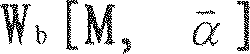
首先,在子画面变形处理部P38中,利用[式3]所示的弯曲参数,使子画面存储器的由[式2]所示的区域(该VOP的时刻为t时,与将子画面存储器上的位置作为原点的VOP面积相同的区域)变形。First, in the sub-screen transformation processing unit P38, using the warp parameter shown in [Formula 3], the area shown in [Formula 2] of the sprite memory (when the time of this VOP is t, is compared with the sub-screen memory The location on the deformation is the same area as the VOP area of the origin).
[式2][Formula 2]
[式3][Formula 3]
b)子画面的布莱特系数(步PS26)b) Bright coefficient of sub-picture (step PS26)
利用上述a)的结果得到的弯曲图象,在子画面合成部P37中,根据下式求出新的子画面存储区。Using the curved image obtained as a result of the above a), in the sprite synthesis unit P37, a new sprite storage area is obtained according to the following formula.
[式4][Formula 4]
式中各量的意义如下式所示。The meaning of each quantity in the formula is shown in the following formula.
[式5][Formula 5]
α:布莱特系数P34α: Bright coefficient P34


[式6][Formula 6]
VO(ρ,t)=0VO(ρ,t)=0
布莱特系数α是以VOP单元给出的,所以局部译码VOP不管VOP区的内容如何,根据α且按比重,一并在子画面存储器中合成。The Bright coefficient α is given in VOP unit, so the local decoding VOP is combined in the sub-picture memory according to α and according to the proportion regardless of the content of the VOP area.
在以上这种现有的编码方式中的预测方式中,进行动态图象目标的预测时,由于最大只能一面一面地使用只进行动矢量检测的存储器和只进行弯曲参数检测的存储器,所以只能将能用于预测的参照图象作为极其有限的方法使用,不能获得满意的预测效率。In the prediction method in the above existing encoding method, when the prediction of the moving image target is carried out, because the memory that only detects the motion vector and the memory that only detects the bending parameter can be used side by side at the most, so only The reference images that can be used for prediction can be used as an extremely limited method, and satisfactory prediction efficiency cannot be obtained.
另外,在同时对多个动态图象目标进行编码的系统中,由于在这些存储器中只包含表示预测的动态图象目标本身的历史的参照图象,所以限定了参照图象的变化,同时不能利用动态图象目标之间的相关关系进行预测。In addition, in a system that encodes multiple dynamic image objects at the same time, since only the reference images representing the history of the predicted dynamic image object itself are included in these memories, the changes of the reference images are limited, and cannot Prediction is made by using the correlation relationship between dynamic image objects.
再者,即使进行存储器的更新时,由于与动态图象目标的内部结构、性质及历史等无关地改写存储器的内容,所以不能将对于预测动态图象目标有用的重要知识充分地存入存储器,存在不能谋求提高预测效率的问题。Furthermore, even when the memory is updated, since the contents of the memory are rewritten regardless of the internal structure, properties and history of the dynamic image object, important knowledge useful for predicting the dynamic image object cannot be fully stored in the memory. There is a problem that improvement of prediction efficiency cannot be sought.
发明内容Contents of the invention
本发明就是为了解决上述问题而完成的,其目的在于提供这样一种灵活的预测方式,即设置多个存储器,考虑动态图象顺序的内部结构、性质等,将动态图象顺序的历史有效地存入多个存储器中,提高预测及编码效率,同时能在多个动态图象目标之间进行预测。The present invention is completed in order to solve the above-mentioned problems, and its purpose is to provide such a kind of flexible forecasting mode, promptly arrange a plurality of memory storages, consider the internal structure, property etc. of dynamic image sequence, the history of dynamic image sequence is effectively It is stored in multiple memories to improve prediction and coding efficiency, and at the same time, it can perform prediction among multiple dynamic image objects.
本发明的动态图象预测方式备有:移动补偿装置,它使用多个存储动态图象顺序的编码及译码时参照的图象的存储区,根据表现被预测图象区的移动的参数,利用上述多个存储区上的任意数据生成预测图象;以及存储器更新控制装置,它能在任意时刻更新上述多个存储区中1个以上的存储区的内容。The motion picture prediction method of the present invention is equipped with: motion compensating device, and it uses the storage area of the image that a plurality of storage motion picture sequence is coded and decodes reference, according to the parameter that represents the movement of the image area to be predicted, A predictive image is generated using arbitrary data in the plurality of storage areas; and a memory update control device capable of updating the contents of more than one storage area among the plurality of storage areas at any time.
另外,本发明的动态图象预测方式是:个别的参数有效值范围分别对应于上述多个存储区,特定包含表现被预测图象区的移动的参数值的上述参数有效值范围所对应的存储区作为预测图象生成元的存储区,利用该特定的存储区上的数据生成预测图象。In addition, the dynamic image prediction method of the present invention is: the individual parameter effective value ranges correspond to the above-mentioned multiple storage areas respectively, and specify the storage area corresponding to the above-mentioned parameter effective value ranges that contain the parameter values that represent the movement of the predicted image area. The area is used as the storage area of the predicted image generator, and the predicted image is generated by using the data in the specific storage area.
另外,本发明的动态图象预测方式是:个别的变形方法分别对应于上述多个存储区,对应于指定表现被预测图象区的移动的参数值的存储区,根据与上述存储区对应的变形方法,利用该存储区上的数据生成预测图象。In addition, the dynamic image prediction method of the present invention is: the individual deformation methods correspond to the above-mentioned plurality of storage areas, corresponding to the storage areas specifying the parameter values representing the movement of the predicted image area, and according to the storage areas corresponding to the above-mentioned storage areas. The deformation method uses the data on the storage area to generate a predicted image.
另外,本发明的动态图象预测方式是:上述多个存储区使用在对应的特定动态图象目标预测中用的存储区进行预测时,识别被预测动态图象目标能单独译码再生,使用在对应的特定动态图象目标预测中用的存储区以外的存储区进行预测时,识别被预测动态图象目标不能单独译码再生,以便确定参照的存储区。In addition, the dynamic image prediction method of the present invention is: when the above-mentioned multiple storage areas use the storage area used in the prediction of the corresponding specific dynamic image object for prediction, it is recognized that the predicted dynamic image object can be independently decoded and reproduced, using When predicting a storage area other than the storage area used in the prediction of the corresponding specific dynamic image object, it is recognized that the predicted dynamic image object cannot be independently decoded and reproduced, so as to determine the storage area to be referred to.
另外,本发明的动态图象预测方式备有:根据表现上述被预测图象区的移动的参数,利用上述多个存储区上的任意数据生成预测图象的移动补偿装置;以及根据动态图象顺序或动态图象顺序在各时刻的变化状态,一边增减上述多个存储区的数量或容量,一边更新内容的存储器更新控制装置。In addition, the dynamic image prediction method of the present invention is equipped with: according to the parameter representing the movement of the above-mentioned predicted image area, a motion compensation device for generating a predicted image using arbitrary data on the above-mentioned plurality of storage areas; A memory update control device for updating content while increasing or decreasing the number or capacity of the above-mentioned plurality of storage areas according to the changing state of the sequence or the dynamic image sequence at each time.
另外,本发明的动态图象预测方式是:限定预测各上述动态图象目标或该动态图象目标在各时刻的图象时使用的存储区,进行预测。In addition, the moving image prediction method of the present invention is to limit the storage area used for predicting each of the above-mentioned moving image objects or the image of the moving image object at each time, and perform prediction.
另外,本发明的动态图象预测方式是:上述移动补偿装置通过计算从多个存储区得到的多个预测图象,生成最后的预测图象。In addition, in the moving image prediction method of the present invention, the motion compensation means generates the final predicted image by calculating a plurality of predicted images obtained from a plurality of storage areas.
另外,本发明的动态图象预测方式是:检测每个被预测图象区中设定的参数,根据该参数选择预测方式、参照存储区及存储器更新方法,进行预测。In addition, the dynamic image prediction method of the present invention is to detect the parameters set in each predicted image area, select the prediction method, refer to the storage area and the memory update method according to the parameters, and perform prediction.
另外,本发明的动态图象预测方式是:预先根据动态图象顺序,预先检测表示可利用的码的数量、顺序变化量、被预测图象区的特征量和重要程度等的参数,根据该参数选择预测方式、参照存储区及存储器更新方法,进行预测。In addition, the dynamic image prediction method of the present invention is: according to the sequence of the dynamic image, detect in advance the parameters representing the number of available codes, the amount of sequence change, the feature quantity and importance of the predicted image area, etc., according to the sequence of the dynamic image Parameter selection prediction method, reference storage area and memory update method to perform prediction.
另外,本发明的动态图象预测方式是:在进行由多个动态图象目标构成的动态图象顺序的编码时,利用存储了参照用的图象的多个存储区进行预测时,预先根据动态图象顺序或各动态图象目标检测表示所给出的码的数量、各动态图象目标的变化量、被预测动态图象目标的特征量和重要程度等的参数,根据该参数选择预测方式、参照存储区及存储器更新方法,进行预测。In addition, the dynamic image prediction method of the present invention is: when performing sequential encoding of a dynamic image composed of a plurality of dynamic image objects, when prediction is performed using a plurality of storage areas storing images for reference, the The sequence of dynamic images or the detection of each dynamic image object indicates the number of given codes, the variation of each dynamic image object, the feature quantity and importance of the predicted dynamic image object, etc., and the prediction is selected according to the parameters Method, reference storage area and memory update method to perform prediction.
另外,本发明的动态图象预测方式是:备有利用多个存储区中存储的参照图象,生成预测图象的移动补偿装置;根据动态图象顺序或动态图象目标的内容,在任意时刻更新上述多个存储区内容的存储器更新装置;以及对预测的信息进行编码的预测信息编码装置,上述存储器更新装置在进行动态图象顺序或动态图象目标的编码时,根据预测时使用的频度,确定各存储区的等级,上述预测信息编码装置根据预测时使用的存储区的等级,进行与预测有关的信息的码分配。In addition, the dynamic image prediction method of the present invention is: equipped with a motion compensation device that utilizes reference images stored in a plurality of storage areas to generate predicted images; A memory update device for updating the content of the above-mentioned multiple storage areas at all times; and a predictive information encoding device for encoding predicted information, when the above-mentioned memory update device encodes a dynamic image sequence or a dynamic image object, according to the The frequency determines the level of each storage area, and the predictive information encoding device performs code allocation of prediction-related information based on the level of the storage area used for prediction.
附图说明Description of drawings
图1是表示本发明的实施例中的动态图象编码装置的结构图。FIG. 1 is a block diagram showing a moving picture coding apparatus in an embodiment of the present invention.
图2是表示本发明的实施例中的动态图象编码装置的工作流程图。Fig. 2 is a flow chart showing the operation of the video encoding device in the embodiment of the present invention.
图3是表示本发明的实施例中的动态图象编码装置的移动补偿部的结构图。Fig. 3 is a diagram showing a configuration of a motion compensation unit of the video encoding device in the embodiment of the present invention.
图4是表示移动补偿部的工作流程图。Fig. 4 is a flow chart showing the operation of the motion compensation unit.
图5是表示本发明的实施例中的动态图象编码装置的存储器更新部的结构图。Fig. 5 is a diagram showing a configuration of a memory update unit of the video encoding device in the embodiment of the present invention.
图6是表示存储器更新部的工作流程图。Fig. 6 is a flow chart showing the operation of the memory update unit.
图7是表示本发明的实施例中的动态图象编码装置的移动补偿部的结构图。Fig. 7 is a diagram showing a configuration of a motion compensation unit of the moving picture encoding device in the embodiment of the present invention.
图8是表示图7中的移动补偿部的工作流程图。Fig. 8 is a flow chart showing the operation of the motion compensation unit in Fig. 7 .
图9是表示本发明的实施例中的动态图象编码装置的移动补偿部的结构图。Fig. 9 is a diagram showing a configuration of a motion compensation unit of the video encoding device in the embodiment of the present invention.
图10是表示图9中的移动补偿部的工作流程图。Fig. 10 is a flow chart showing the operation of the motion compensation unit in Fig. 9 .
图11是表示本发明的实施例中的动态图象编码装置的结构图。Fig. 11 is a block diagram showing a moving picture coding apparatus in an embodiment of the present invention.
图12是表示本发明的实施例中的动态图象编码装置的移动补偿部的结构图。Fig. 12 is a diagram showing a configuration of a motion compensation unit of the moving picture encoding device in the embodiment of the present invention.
图13是表示图12中的移动补偿部的工作流程图。Fig. 13 is a flow chart showing the operation of the motion compensation unit in Fig. 12 .
图14是表示本发明的实施例中的动态图象编码装置的存储器更新部的结构图。Fig. 14 is a diagram showing a configuration of a memory update unit of the video encoding device in the embodiment of the present invention.
图15是表示图14中的存储器更新部的工作流程图。Fig. 15 is a flow chart showing the operation of the memory update unit in Fig. 14 .
图16是表示VM编码方式中的视频数据结构的说明图。Fig. 16 is an explanatory diagram showing the structure of video data in the VM encoding method.
图17是表示VOP数据结构的说明图。Fig. 17 is an explanatory diagram showing a VOP data structure.
图18是VM编码装置的结构图。Fig. 18 is a structural diagram of a VM encoding device.
图19是表示图18中的编码装置的工作流程图。FIG. 19 is a flow chart showing the operation of the encoding device in FIG. 18. FIG.
图20是表示与VOP类型对应的预测种类的说明图。Fig. 20 is an explanatory diagram showing prediction types corresponding to VOP types.
图21是表示图18所示的编码装置中的移动补偿部的结构图。FIG. 21 is a diagram showing a configuration of a motion compensation unit in the encoding device shown in FIG. 18 .
图22是表示图21中的移动补偿部的工作流程图。Fig. 22 is a flow chart showing the operation of the movement compensation unit in Fig. 21 .
图23是表示图18所示的编码装置中的存储器更新部的结构图。Fig. 23 is a diagram showing a configuration of a memory update unit in the encoding device shown in Fig. 18 .
图24是表示图23中的存储器更新部的工作流程图。Fig. 24 is a flow chart showing the operation of the memory update unit in Fig. 23 .
图25是表示本发明的实施形态中的动态图象译码装置的移动补偿部的结构图。Fig. 25 is a block diagram showing the motion compensation unit of the video decoding device according to the embodiment of the present invention.
图26是表示移动补偿部的工作流程图。Fig. 26 is a flow chart showing the operation of the motion compensation unit.
图27是说明内插处理的说明图。Fig. 27 is an explanatory diagram for explaining interpolation processing.
图28是表示本发明的实施形态中的动态图象译码装置的存储器更新部的工作流程图。Fig. 28 is a flow chart showing the operation of the memory update unit of the video decoding device according to the embodiment of the present invention.
图29是表示VM编码方式中的视频数据结构的说明图。Fig. 29 is an explanatory diagram showing the structure of video data in the VM encoding method.
图30是表示VOP数据结构的说明图。Fig. 30 is an explanatory diagram showing a VOP data structure.
图31是表示VM编码装置的结构的结构图。Fig. 31 is a configuration diagram showing the configuration of a VM encoding device.
图32是表示图31中的编码装置的工作流程图。Fig. 32 is a flow chart showing the operation of the encoding device in Fig. 31.
图33是表示与VOP编码类型对应的预测种类的说明图。Fig. 33 is an explanatory diagram showing prediction types corresponding to VOP encoding types.
图34是表示图31所示的编码装置中的移动补偿部的结构图。Fig. 34 is a diagram showing a configuration of a motion compensation unit in the encoding device shown in Fig. 31 .
图35是表示图34中的移动补偿部的工作流程图。Fig. 35 is a flow chart showing the operation of the movement compensation unit in Fig. 34 .
图36是表示图31所示的编码装置中的存储器更新部的结构图。Fig. 36 is a diagram showing a configuration of a memory update unit in the encoding device shown in Fig. 31 .
图37是表示图36中的存储器更新部的工作流程图。Fig. 37 is a flow chart showing the operation of the memory update unit in Fig. 36 .
具体实施方式Detailed ways
实施例1Example 1
图1是表示实施例1的动态图象编码装置的结构框图。该图中,1是输入动态图象信号,2是结构数据,3是移动检测部,4是移动参数,5是移动补偿部,6是预测图象候选,7是预测方式选择部,8是预测方式,9是预测图象,10是预测误差图象,11是结构编码部,12是量子化DCT系数,13是局部译码的预测误差图象,14是局部译码图象,15是存储器更新部,16是存储器a,17是存储器b,18是存储器c,19是长度可变编码·多路复用部,20是发信缓冲器,21是位流。这样的移动补偿部5、存储器更新部15用来实现预测方式。图2是表示该编码装置的工作流程的流程图。Fig. 1 is a block diagram showing the structure of a moving picture coding apparatus according to the first embodiment. In the figure, 1 is an input video signal, 2 is a structure data, 3 is a motion detection part, 4 is a motion parameter, 5 is a motion compensation part, 6 is a predicted image candidate, 7 is a prediction method selection part, and 8 is a Prediction mode, 9 is a prediction image, 10 is a prediction error image, 11 is a structural coding part, 12 is a quantized DCT coefficient, 13 is a prediction error image of local decoding, 14 is a local decoding image, and 15 is 16 is memory a, 17 is memory b, 18 is memory c, 19 is variable-length encoding/multiplexing unit, 20 is a transmission buffer, and 21 is a bit stream. Such
在该实施例中,根据输入动态图象的重要程度,分别使用3个存储器,而且设有以任意时间间隔更新存储器a的内容的结构。另外,动态图象顺序是输入帧单元的顺序。In this embodiment, three memories are used according to the importance of the input video, and a structure is provided to update the contents of the memory a at arbitrary time intervals. In addition, the order of moving pictures is the order of input frame units.
(1)输入信号(1) Input signal
如上所述,将动态图象顺序中的表示各时刻的图象的帧输入单元中,帧被分割成成为编码单元的宏块(步S1)。As described above, the frame representing the image at each time point in the moving image sequence is inputted into the unit, and the frame is divided into macroblocks which are coding units (step S1).
(2)分别使用存储器的方法(2) Method of using memory separately
过去译过码的图象或预先固定给出的图象被存入存储器中,但在该实施例中,根据帧中的部分区的重要程度,如下分别使用3个存储器。Images decoded in the past or images fixed in advance are stored in the memory, but in this embodiment, 3 memories are respectively used as follows according to the importance of partial areas in the frame.
存储器a:存储重要程度小的区(=静止或均匀移动,而且结构均匀的背景区)。Memory a: Stores areas of low importance (=stationary or uniformly moving, and uniformly structured background areas).
存储器b:存储重要程度中等的区(=被摄物体移动,移动较小的区)。Memory b: Stores an area of medium importance (=subject movement, area with less movement).
存储器c:存储重要程度大的区(=被摄物体移动,移动大的区)。Memory c: Stores areas with a high degree of importance (=subject movement, areas with large movements).
存储器a中存储的可以考虑电视会议的场面等中出现的背景区。A background area that can be considered to appear in a videoconference scene or the like is stored in the memory a.
另外,包括伴随某种微小移动的被摄物体,也相当于包括通过操作摄象机使画面整体均匀移动的场面中的背景区。如果代替这些移动,预先从称为宏块的小单元求出帧全体的移动,将其作为宏块的移动,则是有效的。这可以这样做,即通过求出相当于在现有例中说明过的子画面中的弯曲参数的变形参数,将其看作宏块的移动参数。变形参数可以只是平行移动参数(=与移动矢量同义),也可以是包含变形的仿射参数、远近法移动参数等。In addition, including a subject accompanied by some kind of slight movement is also equivalent to including a background area in a scene where the entire screen moves uniformly by operating the camera. Instead of these shifts, it is effective to obtain the shift of the entire frame from a small unit called a macroblock in advance and use it as the shift of the macroblock. This can be done by obtaining a deformation parameter equivalent to the warping parameter in the sub-picture described in the conventional example, and treating it as a movement parameter of the macroblock. The deformation parameter may be only a parallel movement parameter (=synonymous with movement vector), or may be an affine parameter including deformation, a far-near method movement parameter, or the like.
存储器b中存储的可以考虑例如电视会议的场面中不发言、只是身体移动的人物区,画面中注意程度低的被摄物体区。存储器c中存储的可以考虑例如电视会议的场面中的发言者等注意程度最高的被摄物体区。Stored in the memory b can be considered, for example, a character area in which no speech is made but body movement in a video conference scene, and an object area in a picture with a low degree of attention. Stored in the memory c may be the subject area with the highest degree of attention, such as the speaker in the scene of the video conference.
存储器b、c中存储的区由于具有被摄物体本身的动作,所以当然要考虑每个宏块中具有不同的移动参数。这时的移动参数可以只是平行移动参数(=与移动矢量同义),也可以是包含变形的仿射参数、远近法移动参数等。Since the areas stored in the memories b and c have the movement of the subject itself, it is of course necessary to consider that each macroblock has different motion parameters. The movement parameter at this time may be only a parallel movement parameter (=synonymous with movement vector), or may be an affine parameter including deformation, a far-near method movement parameter, or the like.
(3)移动检测(步S2)(3) Movement detection (step S2)
本实施例中的移动检测部3去掉现有例中的那种移动矢量和弯曲参数的区别,能在宏块单元中检测全部3个存储器的任意的变形参数。另外,备有用存储器a检测帧全体的变形参数的全局移动参数检测功能,以及用存储器a至c检测每个宏决的变形参数的局部移动参数检测功能。The
(4)移动补偿(步S3)(4) Movement compensation (step S3)
本实施例中的移动补偿部5的内部结构示于图3。在该图中,22是预测图象存储器地址计算部,23是预测图象存储器地址,24是存储器读出部,25是参照存储器指示信号。记述其移动补偿工作(步S11至步S16)的流程示于图4。The internal structure of the
首先,如果是I(内部)-帧,不进行移动补偿(步S11)。如果不是I-帧,则将由移动检测部3检测的全局移动参数和来自各存储器的局部移动参数一起生成预测图象(步S12至步S15)。具体地说,预测图象存储器地址计算部22中根据移动参数4,计算由参照存储器指示信号25指示的存储器中的预测图象存在的地址23,根据地址23,从存储器读出部24对应的存储区取出并输出预测图象6。First, if it is an I (intra)-frame, motion compensation is not performed (step S11). If it is not an I-frame, the global motion parameters detected by the
在该实施例中,由于全局移动参数或是局部移动参数都是基于同一变形方式,所以生成任何预测图象都能共同使用图3所示的结构。另外,用全局移动参数取出时(步S15),经常将存储器α作为参照存储器用。In this embodiment, since the global motion parameters and the local motion parameters are based on the same deformation method, the structure shown in FIG. 3 can be commonly used to generate any predicted image. Also, when fetching by global motion parameters (step S15), the memory α is always used as a reference memory.
(5)预测方式的选择(步S4)(5) Selection of prediction method (step S4)
该实施例中的预测方式选择部7可以这样构成,如现有例所示,包括由移动补偿部5生成的全部预测图象6和内部信号2,选择预测误差信号电力最小的预测图象。The prediction
(6)存储器的更新(6) Memory update
存储器的更新由存储器更新部15进行控制。该实施例中的存储器更新部15的内部结构示于图5。在该图中,26是存储器a更新时用的活动性,27是存储器a更新判断部,28是更新存储器选择部,29、30是开关,31是更新存储器a的图象数据,32是更新存储器b的图象数据,33是更新存储器c的图象数据,34是更新存储器a的全局预测图象数据。另外,将存储器更新的工作流程示于图6。The update of the memory is controlled by the
该实施例中的存储器更新程序按以下顺序进行。The memory update procedure in this embodiment is performed in the following order.
(1)帧单元的逐次更新(步S17至步S21)(1) Successive updating of frame units (step S17 to step S21)
首先,根据预测方式信息8,将局部译码图象14写入预测用存储器。First, based on the
(2)存储器a的更新(步S22、步S23)(2) Update of memory a (step S22, step S23)
存储器a的内容可以说是背景图象等的不随时间变化的图象区的历史,除非区域的内容随着场面的变化或画面全体大的移动等而发生很大的变化,否则存储器的内容就没有必要更新。当然,如果备有使被摄物体等的活动区以帧为单元逐次更新,而存储器a的内容以更长的时间间隔进行更新的结构,则能有效地根据被摄物体的移动,预测影影绰绰的背景图象。The content of memory a can be said to be the history of the image area that does not change with time, such as the background image. Unless the content of the area changes greatly with the change of the scene or the large movement of the whole picture, the content of the memory There is no need to update. Of course, if there is a structure in which the active area of the subject, etc., is updated frame by frame, and the content of the memory a is updated at a longer time interval, then it can be effectively predicted according to the movement of the subject. background image.
在该实施例中,根据以上观点,设有以任意的时间间隔进行存储器a的更新的结构。具体地说,例如如下考虑:In this embodiment, a configuration is provided in which memory a is updated at arbitrary time intervals from the above point of view. Specifically, consider for example the following:
a.根据全局移动参数的大小,当移动大时将内容一起更新,移动小时在该时刻不更新内容的方法a. According to the size of the global movement parameter, when the movement is large, the content is updated together, and the method of not updating the content at this moment when the movement is small
b.不受帧之间的时间间隔的限定,按某一定的时间间隔一起更新内容的方法b. Not limited by the time interval between frames, the method of updating the content together at a certain time interval
c.检测场面的变化,以场面变化后的帧一起更新的方法等。c. Detecting the change of the scene, the method of updating the frames after the scene change together, etc.
在该实施例中,将成为以上这样的更新判断基准的数据统称为存储器a更新用的活动性26。首先,存储器a更新判断部27用活动性26判断是否更新存储器a的内容(步S22)。在上述a的情况下,全局移动参数值变成活动性,在上述b的情况下,该帧的计时标记相当于活动性,在上述c的情况下,通知场面变化检测的标记相当于活动性。In this embodiment, the data serving as the update determination criteria as described above are collectively referred to as the
在断定了要更新存储器a的内容时,局部译码图象14的内容被作为全局预测图象数据34输出,改写存储器a的内容(步S23)。在未断定更新存储器a的内容时,不进行存储器a的更新。When it is determined that the content of the memory a is to be updated, the content of the local decoded
另外,该帧中的存储器a更新判断结果被多路化在位流中,送给译码侧,能在译码侧进行同样的更新。In addition, the memory a update judgment result in this frame is multiplexed in the bit stream and sent to the decoding side, so that the same update can be performed on the decoding side.
利用上述编码装置,根据动态图象顺序的内容,供给有效地分别使用多个存储器的结构,能提高预测效率。According to the encoding device described above, a configuration is provided in which a plurality of memories are efficiently used respectively according to the sequential contents of moving pictures, and prediction efficiency can be improved.
即,进行动态图象顺序的预测时,根据动态图象顺序的内容或性质,分别使用多个存储区,进行以任意的变形参数为依据的预测,所以即使包括复杂的移动,也能进行与局部图象性质相符的有效的预测,能提高预测效率,能构成既能保持编码图象的品质,又能减少编码数据的发送量的编码装置。另外,在根据本发明的预测方式对编码后的位流进行译码的译码装置中,也能用同样的预测方式构成。That is, when predicting the sequence of moving pictures, a plurality of memory areas are used respectively according to the contents or properties of the moving picture sequence, and prediction based on arbitrary deformation parameters is performed, so even if complicated movements are included, it is possible to perform the same Efficient prediction with consistent local image properties can improve prediction efficiency, and can constitute an encoding device that can reduce the amount of encoded data transmission while maintaining the quality of the encoded image. In addition, the same prediction method can also be used in a decoding device for decoding a coded bit stream according to the prediction method of the present invention.
在该实施例中,说明了对每个帧进行编码的装置,但即使是对具有任意形状的动态图象目标(VOP)进行编码的装置,也能获得同样的效果。In this embodiment, an apparatus for encoding each frame is described, but even an apparatus for encoding a moving picture object (VOP) having an arbitrary shape can obtain the same effect.
另外,在该实施例中,说明了以宏块为单元的编码装置,但即使是按照由具有任意形状的局部图象或多个固定尺寸块的组合构成的形状可变的块区等单元进行编码的装置,也能获得同样的效果。In addition, in this embodiment, an encoding device using a macroblock as a unit is described, but even if it is performed in a unit such as a partial image having an arbitrary shape or a variable-shape block composed of a combination of a plurality of blocks of a fixed size, Encoded devices can also achieve the same effect.
另外,在该实施例中,使用了利用存储器a的全局移动参数检测,但当然也可以不用它,即使是只使用局部移动检测的结构,也能适用。在不进行全局移动检测时,作为预测方式,不需要传送全局/局部预测的判断信息。In addition, in this embodiment, the global motion parameter detection using the memory a is used, but of course it may not be used, and even a configuration using only local motion detection is applicable. When global motion detection is not performed, it is not necessary to transmit global/local prediction determination information as a prediction method.
另外,在该实施例中,还可以这样构成,即设置在对预先根据动态图象顺序的内容生成的参照图象数据进行存储、编码过程中不进行更新的存储器,将其用于预测。In addition, in this embodiment, it is also possible to provide a memory which stores reference image data generated in advance based on the content of the sequence of moving images and which is not updated during encoding, and use it for prediction.
另外,还可以使用与在该实施例中说明的移动补偿部5、与存储器更新部15完全相同的构件构成译码装置。在用于译码装置的情况下,移动补偿部5只生成与译码过的移动参数有关的预测图象即可。In addition, it is also possible to constitute a decoding device using components exactly the same as those of the
实施例2Example 2
其次,示出在图1所示构成的编码装置中,只使移动补偿部5的结构不同而构成译码装置的实施例,并说明移动补偿部5的结构和工作情况。Next, an example in which a decoding device is constructed by changing only the configuration of the
将该实施例的移动补偿部5的内部结构示于图7。在该图中,35是参照存储器选择部。另外,将记述其移动补偿的详细工作情况的流程示于图8。The internal structure of the
首先,如果是I-帧,则不进行移动补偿(步S24)。如果不是I-帧,则根据移动参数4的值,确定参照存储器(步S25)。该处理是在参照存储器确定部35中进行的。参照存储器确定部35保持着分配给各存储器的有效移动参数值范围,通过与移动参数4进行比较,判断该移动参数4指的是哪个存储区,输出参照存储器编号25。First, if it is an I-frame, motion compensation is not performed (step S24). If it is not an I-frame, the reference memory is determined based on the value of the motion parameter 4 (step S25). This processing is performed in the reference
所谓有效移动参数值范围,例如在检测移动矢量时,其探索范围为±15个象素,意味着各存储器的有效探索范围为:±0至3个象素范围用于存储器a的预测,±4至8个象素范围用于存储器b的预测,±9至15个象素范围用于存储器c的预测。但是,在用全局移动参数生成预测图象时,参照存储器认定为存储器a,所以在只使用局部移动参数时,才起动存储器确定部35。The so-called valid motion parameter value range, for example, when detecting the motion vector, its search range is ±15 pixels, which means that the effective search range of each memory is: ±0 to 3 pixel ranges are used for the prediction of memory a, ± A range of 4 to 8 pixels is used for prediction in memory b, and a range of ±9 to 15 pixels is used for prediction in memory c. However, when the global motion parameters are used to generate the predicted image, the reference memory is assumed to be the memory a, so the
其次,随着所选择的参照存储器编号25,生成预测图象(步S26至步S30)。具体地说,在预测图象存储器地址计算部22中根据移动参数4,计算由参照存储器编号25指示的存储器中的预测图象存在的地址23,根据地址23,存储器读出部24从对应的存储区取出并输出预测图象6。Next, with the selected
在该实施例中,由于全局移动参数或是局部移动参数都是基于同一变形方式,所以生成任何预测图象都能共同使用图7所示的结构。另外,用全局移动参数取出时(步S31),经常将存储器a作为参照存储器用。In this embodiment, since the global movement parameters and the local movement parameters are based on the same deformation method, the structure shown in FIG. 7 can be commonly used to generate any predicted image. Also, when fetching by global movement parameters (step S31), the memory a is always used as a reference memory.
另外,该帧中的各存储器的有效移动参数值范围被多路化在位流中,送给译码侧,能在译码侧进行同样的存储器选择。In addition, the effective motion parameter value range of each memory in the frame is multiplexed in the bit stream and sent to the decoding side, so that the same memory selection can be performed on the decoding side.
利用上述的具有移动补偿部5的结构的编码装置,根据帧的局部移动程度,供给有效地分别使用多个存储器的结构,能提高预测效率。According to the encoding device having the above-mentioned configuration of the
在该实施例中,说明了对每个帧进行编码的装置,但即使是对具有任意形状的动态图象目标(VOP)进行编码的装置,也能获得同样的效果。In this embodiment, an apparatus for encoding each frame is described, but even an apparatus for encoding a moving picture object (VOP) having an arbitrary shape can obtain the same effect.
另外,在该实施例中,说明了以宏块为单元的编码装置,但即使是按照由具有任意形状的局部图象或多个固定尺寸块的组合构成的形状可变的块区等单元进行编码的装置,也能获得同样的效果。In addition, in this embodiment, an encoding device using a macroblock as a unit is described, but even if it is performed in a unit such as a partial image having an arbitrary shape or a variable-shape block composed of a combination of a plurality of blocks of a fixed size, Encoded devices can also achieve the same effect.
另外,在该实施例中,使用了利用存储器a的全局移动参数检测,但当然也可以不用它,即使是只使用局部移动检测的结构,也能适用。在不进行全局移动检测时,作为预测方式,不需要传送全局/局部预测的判断信息。In addition, in this embodiment, the global motion parameter detection using the memory a is used, but of course it may not be used, and even a configuration using only local motion detection is applicable. When global motion detection is not performed, it is not necessary to transmit global/local prediction determination information as a prediction method.
另外,还可以使用与在该实施例中说明的移动补偿部5完全相同的构件构成译码装置。在用于译码装置的情况下,移动补偿部5只生成与译码过的移动参数有关的预测图象即可。In addition, it is also possible to configure the decoding device using the same components as those of the
实施例3Example 3
其次,示出在图1所示结构的编码装置中,只使移动补偿部5的结构不同而构成编码装置的实施例,并说明移动补偿部5的结构和工作情况。Next, an example is shown in which the encoding device configured as shown in FIG. 1 is configured only by changing the structure of the
将该实施例的移动补偿部5的内部结构示于图9。在该图中,36是平行移动量(=移动矢量),37是仿射参数,38是远近法参数,39是基于平行移动量的预测图象存储器地址计算部,40是基于仿射参数的预测图象存储器地址计算部,41基于远近法参数的预测图象存储器地址计算部。另外,将记述其移动补偿的详细工作情况的流程示于图10。The internal structure of the
首先,如果是I-帧,则不进行移动补偿(步S33)。如果不是I-帧,则根据移动参数4的值和参照存储器编号25,计算预测图象地址(步S34)。该处理是在预测图象存储器地址计算部39至41中进行的。First, if it is an I-frame, motion compensation is not performed (step S33). If it is not an I-frame, the predicted image address is calculated based on the value of the
各存储器地址计算部根据分配给对应的各存储器的图象变形方式进行地址计算。在该实施例中,将平行移动用于存储器a,将伴随某种程度的旋转或放大、缩小等单纯的变形的仿射参数用于存储器b,将伴随3维复杂的移动的远近法参数用于存储器c。这些变形方式用下列变换式表示。Each memory address calculation unit performs address calculation according to the image transformation method assigned to each corresponding memory. In this embodiment, parallel translation is used in memory a, affine parameters associated with simple deformations such as rotation to a certain degree or enlargement and reduction are used in memory b, and distance parameters associated with three-dimensional complex movements are used in memory b. in memory c. These deformation modes are represented by the following transformation formulas.
[平行移动][parallel movement]
平行移动量(a,b):Parallel movement (a, b):
x’=x+ax'=x+a
y’=y+by'=y+b
[仿射变换][affine transformation]
仿射参数(a,b,c,θ):Affine parameters (a, b, c, θ):
x’=a(cosθ)x+a(sinθ)y+bx'=a(cosθ)x+a(sinθ)y+b
y’=a(-sinθ)x+a(cosθ)y+cy'=a(-sinθ)x+a(cosθ)y+c
[远近法变换][Far-Near Transformation]
远近法参数(a,b,c,d,e,f):Far and near method parameters (a, b, c, d, e, f):
x’=(ax+by+c)/(gx+hy+1)x'=(ax+by+c)/(gx+hy+1)
y’=(dx+ey+f)/(gx+hy+1)y'=(dx+ey+f)/(gx+hy+1)
式中,(x,y)是原宏块的象素位置,(x’,y’)是根据各参数而与(x,y)对应的存储器中的象素位置。即,根据这些参数,计算(x’,y’)在存储器上的位置。利用该结构,能根据各宏块中移动的性质都能适合的存储器,进行预测。利用根据各移动参数36至38计算的存储器地址23,存储器读出部24从对应的存储区取出并输出预测图象6(步35至步39)。In the formula, (x, y) is the pixel position of the original macroblock, and (x', y') is the pixel position in the memory corresponding to (x, y) according to each parameter. That is, based on these parameters, the location of (x', y') on the memory is calculated. With this configuration, prediction can be performed from a memory that can accommodate the nature of movement in each macroblock. Using the
另外,该帧中的各存储器的变形方式的类型被在位流中多路化,并送给译码侧,能在译码侧进行同样的移动补偿。Also, the type of deformation method of each memory in the frame is multiplexed in the bit stream and sent to the decoding side, so that similar motion compensation can be performed on the decoding side.
利用上述的具有移动补偿部5的结构的编码装置,根据帧的局部移动性质,供给有效地分别使用多个存储器的结构,能提高预测效率。According to the encoding device having the above-mentioned configuration of the
在该实施例中,说明了对每个帧进行编码的装置,但即使是对具有任意形状的动态图象目标(VOP)进行编码的装置,也能获得同样的效果。In this embodiment, an apparatus for encoding each frame is described, but even an apparatus for encoding a moving picture object (VOP) having an arbitrary shape can obtain the same effect.
另外,在该实施例中,说明了以宏块为单元的编码装置,但即使是按照由具有任意形状的局部图象或多个固定尺寸块的组合构成的形状可变的块区等单元进行编码的装置,也能获得同样的效果。In addition, in this embodiment, an encoding device using a macroblock as a unit is described, but even if it is performed in a unit such as a partial image having an arbitrary shape or a variable-shape block composed of a combination of a plurality of blocks of a fixed size, Encoded devices can also achieve the same effect.
另外,在该实施例中,使用了利用存储器a的全局移动参数检测,但当然也可以不用它,即使是只使用局部移动检测的结构,也能适用。在不进行全局移动检测时,作为预测方式,不需要传送全局/局部预测的判断信息。In addition, in this embodiment, the global motion parameter detection using the memory a is used, but of course it may not be used, and even a configuration using only local motion detection is applicable. When global motion detection is not performed, it is not necessary to transmit global/local prediction determination information as a prediction method.
另外,还可以使用与在该实施例中说明的移动补偿部5完全相同的构件构成译码装置。在用于译码装置的情况下,移动补偿部5只生成与译码过的移动参数有关的预测图象即可。In addition, it is also possible to configure the decoding device using the same components as those of the
实施例4Example 4
其次,说明以具有形状信息的2个不同的动态图象目标混合存在的动态图象顺序为对象,对这些动态图象目标一并进行编码的装置的实施例。图11示出了该实施例中的编码装置的结构。Next, an embodiment of an apparatus for collectively encoding two different moving picture objects having shape information will be described, targeting at a moving picture sequence in which two different moving picture objects having shape information are mixed. Fig. 11 shows the structure of the encoding device in this embodiment.
该图中,42是输入图象帧,43是目标分离部,44a、44b是目标数据,45a、45b是形状块,46a、46b是开关,47a、47b是形状编码部,48a、48b是压缩形状块数据,49a、49b是局部译码形状块,50a、50b是结构数据(宏决),51a、51b是移动检测部,52a、52b是移动参数,53a、53b是移动补偿部,54a、54b是预测图象候选,55a、55b是预测方式选择部,56a、56b是预测方式信息,57a、57b是最后预测图象,58a、58b是预测误差信号,59a、59b是结构编码部,60a、60b是压缩结构数据,61a、61b是局部译码预测误差信号,62a、62b是局部译码宏块,63是存储器更新部,64是存储器a,65是存储器b,66是存储器c,67是存储器d,68是存储器e,69是存储器f,70a、70b是长度可变编码部,71是多路复用部,72缓冲器,73位流。In this figure, 42 is an input image frame, 43 is an object separation part, 44a, 44b are object data, 45a, 45b are shape blocks, 46a, 46b are switches, 47a, 47b are shape coding parts, 48a, 48b are compression Shape block data, 49a, 49b are local decoding shape blocks, 50a, 50b are structural data (macroblock), 51a, 51b are motion detection parts, 52a, 52b are motion parameters, 53a, 53b are motion compensation parts, 54a, 54b is a predicted image candidate, 55a, 55b are prediction method selection units, 56a, 56b are prediction method information, 57a, 57b are final prediction images, 58a, 58b are prediction error signals, 59a, 59b are structure coding units, 60a , 60b are compressed structure data, 61a, 61b are locally decoded prediction error signals, 62a, 62b are locally decoded macroblocks, 63 is a memory update unit, 64 is memory a, 65 is memory b, 66 is memory c, 67 68 is a memory e, 69 is a memory f, 70a and 70b are variable-length encoding units, 71 is a multiplexing unit, 72 is a buffer, and 73 is a bit stream.
送给该编码装置的输入42是图象帧,它在目标分离部43中被分成编码单元的目标。目标分离部43的处理可以采用任意的方法。The
目标形状信息以形状块45a、45b的形式被送给形状编码部47a、47b进行编码,作为压缩形状块数据48a、48b送给长度可变编码部70a、70b。The target shape information is sent to the
移动检测部51a、51b与VM编码方式一样,考虑局部译码形状块49a、49b,进行移动参数检测。移动参数检测可以用全部存储器a至f,在宏块单元中进行。The
但是,作为原则,对于在目标分离部43的前级的编码处理部分(图中带符号a的部件)中进行编码的目标来说,使用存储器a至c,对于在后级的编码处理部分(图中带符号b的部件)中进行编码的目标来说,使用存储器d至f。However, as a principle, for an object to be encoded in an encoding processing section (a component in the figure) at a previous stage of the
另外,作为移动的种类,去掉移动矢量和弯曲参数的区别,对于所有的存储器都能在宏块单元中检测任意的变形参数。In addition, as the type of movement, the distinction between the movement vector and the warp parameter can be eliminated, and any deformation parameter can be detected in units of macroblocks for all memories.
在移动补偿部53中根据移动参数52,生成全部预测图象候选54后,在预测方式选择部55中获得最后的预测图象57和预测方式信息56。取原信号50和预测图象57的差分,获得预测误差信号58,它在结构编码部59中编码后,被送给长度可变译码部70。另外,进行过局部译码的预测误差信号61与预测图象57相加,成为局部译码图象62,根据存储器更新部的指示,被写入存储器a至f。After all the predicted image candidates 54 are generated based on the motion parameters 52 in the motion compensation unit 53 , the final predicted image 57 and prediction method information 56 are obtained in the prediction method selection unit 55 . The difference between the original signal 50 and the predicted image 57 is taken to obtain a prediction error signal 58 , which is encoded in the structure encoding unit 59 and then sent to the variable-length decoding unit 70 . In addition, the locally decoded prediction error signal 61 is added to the predicted image 57 to form a locally decoded image 62, which is written in the memories a to f according to instructions from the memory update unit.
在上述前、后级编码部中,被编码的目标数据在多路复用部中被在1个位流中多路复用化,通过缓冲器72进行输送。The target data to be coded in the preceding and succeeding encoding sections are multiplexed into one bit stream in the multiplexing section and sent through the
以下以进行主要工作的移动补偿部53为中心,说明预测。Hereinafter, prediction will be described centering on the motion compensation unit 53 that performs main operations.
该实施例中的移动补偿部53a、53b根据由移动检测部51a、51b检测的移动参数52a、52b,生成预测图象。移动补偿部53a、53b的内部结构示于图12。另外,工作流程示于图13。(但,工作流程就是前级编码部中的移动补偿部的工作情况)。The
在图12中,74是另一目标参照判断部,75是另一目标参照指示标记。In FIG. 12 , 74 is another object reference judgment unit, and 75 is another object reference indication mark.
这里,移动参数52还包括检测用的存储器编号。与实施例1一样,根据参数值并利用存储器地址计算部22、存储器读出部24,生成预测图象(步S44至步S49)。另外,根据移动参数52中的参照用的存储器编号,决定是否使用该宏块预测中另一目标用的存储器(步S43)。Here, the movement parameter 52 also includes a memory number for detection. As in the first embodiment, a predictive image is generated by using the memory
该判断由另一目标参照判断部74进行,判断结果被作为另一目标参照指示75输出,用于判断在译码侧该目标是否能单独再生,所以被多路复用化在位流中,送给译码侧。编码时可以进行限制,以便能经常在译码侧单独再生,检测移动参数时,也可以进行限制,以便只使用本身预测用的存储器。This judgment is performed by another object reference judging section 74, and the judgment result is output as another object reference indication 75 for judging whether the object can be reproduced independently on the decoding side, so it is multiplexed in the bit stream, sent to the decoding side. When encoding, it is possible to restrict so that it can always be reproduced independently on the decoding side, and when detecting motion parameters, it is also possible to restrict so that only the memory for its own prediction is used.
利用具有上述移动补偿部53的结构的编码装置,根据帧的局部移动性质,供给有效地分别使用多个存储器的结构,能提高预测效率。According to the encoding device having the above-mentioned configuration of the motion compensating unit 53, it is possible to provide a configuration that efficiently uses a plurality of memories according to the local motion properties of the frame, thereby improving prediction efficiency.
另外,在该实施例中,说明了在宏块单元中对目标进行编码的装置,但即使是按照由具有任意形状的局部图象或多个固定尺寸块的组合构成的形状可变的块区等单元进行编码的装置,也能获得同样的效果。In addition, in this embodiment, an apparatus for encoding objects in units of macroblocks is described, but even in a variable-shape block composed of a partial image having an arbitrary shape or a combination of a plurality of fixed-size blocks The same effect can also be obtained by a device that performs encoding in equal units.
另外,还可以使用与在该实施例中说明的移动补偿部53完全相同的构件构成译码装置。在用于译码装置的情况下,移动补偿部53只生成与译码过的移动参数有关的预测图象即可。另外,如果这样构成,即根据位流,对相当于另一目标参照指示75的位进行译码,并能识别译码中的目标是否能单独再生,这样就能无误地对目标数据进行译码再生。In addition, it is also possible to configure the decoding device using the same components as those of the motion compensating unit 53 described in this embodiment. When used in a decoding device, the motion compensation unit 53 only needs to generate a predicted image related to the decoded motion parameters. Also, if it is configured such that the bit corresponding to another object reference indicator 75 is decoded based on the bit stream, and whether or not the object being decoded can be reproduced independently can be identified, the object data can be decoded without error. regeneration.
实施例5Example 5
其次,说明采用对应于动态图象目标随时间的变化,能使存储器的数量及容量自动地变化的结构时的实施例。说明工作情况时,考虑将图1所示结构的编码装置中的存储器更新部15的结构更换后的编码装置。Next, an embodiment in which the number and capacity of memories can be automatically changed in response to changes in moving image objects over time will be described. When describing the operation, consider an encoding device in which the configuration of the
图14示出了该实施例中的存储器更新部15的内部结构。在该图中,76是存储器展开判断部,77是存储器展开指示信号,78是存储器退缩判断部,79是存储器退缩指示信号。工作流程(步S51至步S63)示于图15。FIG. 14 shows the internal structure of the
当由于场面变化等而出现与存储器中存储的动态图象顺序的历史显著不同的图象时,在场面变化后的预测中,原有的存储器中含有的参照图象的预测效率往往下降。在这种情况下,如果能检测场面的变化,对场面变化后的帧进行内部编码等,并将其作为心的参照图象追加存入存储器中,则能提高以后的预测效率。When a picture that is significantly different from the history of the sequence of moving pictures stored in the memory appears due to a scene change, etc., the prediction efficiency of the reference picture contained in the original memory tends to decrease in the prediction after the scene change. In this case, if it is possible to detect a scene change, perform intra-coding on the frame after the scene change, and store it in the memory as an additional reference image, then the prediction efficiency in the future can be improved.
另外,由于能追加的存储器的容量有物理性的极限,所以具有能使存储器上的参照图象中预测时几乎不使用的部分逐渐退缩的结构。根据预测方式信息,由存储器更新部测量预测时使用的频度,使之具有在存储器更新部中将频度小的存储部分从使用区展开的结构。如果采用该实施例,例如在用软件构成编码装置时,能有效地利用有限的RAM资源。Also, since there is a physical limit to the capacity of the memory that can be added, it is possible to gradually shrink the portion of the reference image on the memory that is hardly used for prediction. Based on the prediction method information, the frequency of use in prediction is measured by the memory update unit, and the memory update unit has a configuration in which less frequent storage is expanded from the use area. According to this embodiment, limited RAM resources can be effectively used, for example, when an encoding device is configured by software.
根据上述观点,该实施例中的存储器更新部15具有根据动态图象顺序随时间变化的状态,或使存储区增加,或使含有预测时不大使用的参照图象的存储区退缩的功能。From the above point of view, the
存储器a与实施例1相同,在存储器a更新判断部27中确定是否可以更新,更新时将局部译码图象14写入存储器a(步S56,步S57)。另外,根据预测方式信息8,将局部译码图象14写入各存储器(步S51至步S55)。The memory a is the same as that in
这些存储器内容的更新是根据存储器展开/退缩的判断进行的。在存储器展开判断部76中,根据存储器a更新时使用的活动性26,判断是否增加存储器a(或存储器b、c)的容量(步S58至步S60)。如果由于场面变化等而断定可以增加容量,便用存储器展开指示信号77指示存储器展开。另外,在存储器退缩判断部78中,根据预测方式信息8,进行预测时用的存储区的计数,只对规定次数以下的预测时用的存储区,用存储器退缩指示信号79指示存储器的退缩(步S61至步S63)。These memory contents are updated based on memory expansion/contraction judgments. In the memory
利用具有上述存储器更新部15的结构的编码装置,能随着动态图象顺序随时间变化而有效地进行预测,同时供给将预测时所必要的存储区按时间分配的结构,能提高预测效率,同时能有效地利用存储器资源。Utilize the coding apparatus that has the structure of above-mentioned
另外,在该实施例中,说明了对每个帧进行编码的装置,但即使是对具有任意形状的动态图象目标(VOP)进行编码的装置,也能获得同样的效果。In addition, in this embodiment, an apparatus for encoding each frame is described, but even an apparatus for encoding a moving picture object (VOP) having an arbitrary shape can obtain the same effect.
另外,在该实施例中,说明了在宏块单元中对帧进行编码的装置,但即使是按照由具有任意形状的局部图象或多个固定尺寸块的组合构成的形状可变的块区等单元进行编码的装置,也能获得同样的效果。In addition, in this embodiment, an apparatus for encoding a frame in units of macroblocks is described, but even in a variable-shape block composed of a partial image having an arbitrary shape or a combination of a plurality of fixed-size blocks The same effect can also be obtained by a device that performs encoding in equal units.
另外,还可以使用与在该实施例中说明的存储器更新部15完全相同的构件构成译码装置。In addition, it is also possible to constitute a decoding device using exactly the same components as those of the
实施例6Example 6
在上述各实施例中,还能这样构成,即在帧或动态图象目标单元中预先限定预测时使用的存储器,进行预测。因此,不需要对应与以帧或动态图象目标单元编码的存储器相关的信息及应以宏块单元编码的存储器选择信息(包括预测方式信息)进行编码,能有效地进行编码。另外,能构成对如上编码后的位流进行译码,使帧或动态图象目标再生的译码装置。In each of the above-mentioned embodiments, it is also possible to configure the memory used for prediction in advance in units of frames or moving image objects, and perform prediction. Therefore, there is no need to encode information related to memory to be coded in units of frames or video objects, and memory selection information (including prediction method information) to be coded in units of macroblocks, and efficient coding can be performed. Also, it is possible to configure a decoding device that decodes the bit stream encoded as described above to reproduce a frame or a moving image object.
实施例7Example 7
在上述各实施例中,还能这样构成,即将从多个存储器中的任意的2个存储器取出的预测图象相加,并将平均后的图象作为最后的预测图象用。另外,能构成对如上编码后的位流进行译码,使帧或动态图象目标再生的译码装置。In each of the above-mentioned embodiments, it is also possible to configure such that the predicted images taken out from any two memories among the plurality of memories are added, and the averaged image is used as the final predicted image. Also, it is possible to configure a decoding device that decodes the bit stream encoded as described above to reproduce a frame or a moving image object.
实施例8Example 8
在上述各实施例所示的编码装置中,还能这样构成,即对规定成为进行预测的单元的图象区的空间的复杂性、注视程度、移动的复杂性等的特征量参数,预先进行检测,将它们用作存储器更新时的判断尺度。In the coding apparatus shown in each of the above-mentioned embodiments, it is also possible to configure such a configuration that the feature quantity parameters defining the spatial complexity, degree of attention, and complexity of movement of the image area serving as the unit for prediction are calculated in advance. detection, and use them as a criterion for judging when the memory is updated.
例如,可以考虑进行这样处理的装置,即,当由图象的性质给出的编码量中对全体进行编码有困难时,利用上述的特征量等,对于注视程度低的区不进行预测及编码,能省去存储器的更新,反之,对于注视程度高的区,根据移动的性质将其写入适当的存储区中,以便在以后的预测中能充分地利用。For example, it is conceivable to consider a device that performs such a process that, when it is difficult to encode the entirety of the encoding amount given by the nature of the image, the above-mentioned feature value and the like are used to not perform prediction and encoding for the area with a low degree of attention. , can save the update of the memory, on the contrary, for the area with a high degree of attention, write it into the appropriate storage area according to the nature of the movement, so that it can be fully utilized in the future prediction.
实施例9Example 9
在利用多个存储器,对动态图象顺序进行预测编码的装置中能这样构成,即在动态图象顺序的各时刻,检测可使用的码的数量、或该时刻的场面变化量(场面变化检测等)、实施例8中所述的被预测图象区的特征量或重要程度等的参数,将这些值用作选择能在该时刻预测图象用的预测方式或参照存储区时的判断尺度。Utilize a plurality of memorizers, can structure like this in the device that predictive coding is carried out to moving picture sequence, promptly at each moment of moving picture sequence, detect the quantity of code that can be used or the scene change amount at this moment (scene change detection etc.), the parameters of the feature quantity or importance degree of the predicted image area described in
例如,可以考虑这样的装置,即在通过发信缓冲器等的制约,预先规定能使用的码的数量的情况下,利用全部可能利用的预测方式和参照存储区,最大限度地提高预测效率,或者在不特定能使用的码的数量的情况下,限制预测方式和参照存储区,简化编码处理,减少处理量。For example, it is conceivable to consider such a device, that is, when the number of codes that can be used is predetermined through the constraints of the transmission buffer, etc., using all possible prediction methods and reference storage areas to maximize the prediction efficiency, Or, without specifying the number of codes that can be used, the prediction method and the reference storage area are limited, the encoding process is simplified, and the processing amount is reduced.
另外,可以考虑在场面变化检测时,不进行预测,全部进行内部编码的装置。另外,还可以考虑预先检测表示被预测图象区的移动性质的参数,根据其性质选择进行恰当的预测的预测方式和参照存储器的装置。In addition, it is conceivable to consider a device that does not perform prediction but performs all intra-coding at the time of scene change detection. In addition, it is also conceivable to detect in advance the parameter representing the movement property of the predicted image area, and select the prediction method and the means for referring to the memory for proper prediction according to the property.
实施例10Example 10
在用多个存储器对由多个动态图象目标构成的动态图象顺序进行预测、编码的装置中,可以这样构成,即检测能作为顺序使用的总码数量、能在各动态图象目标的各个时刻使用的码的数量、或在该时刻的动态图象目标的变化量(目标的出现、隐蔽等)、各动态图象目标在场面中的重要程度/注视程度的等级、实施例8或9所述的被预测图象区的特征量或重要程度等的参数,将这些值用作选择能在该时刻预测动态图象目标用的预测方式或参照存储区时的判断尺度。In the device that predicts and encodes the dynamic image sequence composed of a plurality of dynamic image objects with a plurality of memory devices, it can be configured such that the total number of codes that can be used as a sequence and the number of codes that can be used in each dynamic image object are detected. The quantity of codes used at each moment, or the amount of change (appearance, concealment, etc.) of the dynamic image object at this moment, the importance/degree of attention of each dynamic image object in the scene,
例如,可以考虑这样的编码装置,即设置与各目标对应的压缩数据缓冲器,,在通过发信缓冲器等的制约,预先规定能使用的码的总数的情况下,根据表示各目标的缓冲器的状态和各目标的变化量或重要程度的等级等的参数,选择预测方式和参照存储区,以便进行与各目标的状态和重要程度对应的最佳预测,既保证高的图象质量,又能集中在总体规定的总码量中进行处理。For example, it is conceivable that a coding device is provided with a compressed data buffer corresponding to each object, and when the total number of codes that can be used is predetermined by restrictions such as a transmission buffer, the data can be calculated based on the buffer representing each object. Parameters such as the state of the sensor and the change amount of each target or the level of importance, etc., select the prediction method and refer to the storage area, so as to perform the best prediction corresponding to the state and importance of each target, which not only ensures high image quality, It can also be processed in the total code amount specified in the overall regulations.
另外,可以考虑根据反映目标的出现或隐蔽等的状况的参数,在目标本身的变化量非常大的情况下,不进行预测,全部进行内部编码的装置。In addition, it is conceivable to consider a device that does not perform prediction but performs all intra-coding when the amount of change in the object itself is very large based on parameters reflecting the appearance or concealment of the object.
另外,还可以考虑预先检测目标中的表示被预测图象区的移动性质的参数,根据其性质选择进行恰当的预测的预测方式和参照存储器的装置。In addition, it is also possible to consider the parameter indicating the movement property of the predicted image area in the pre-detected object, and select the prediction method and the means for referring to the memory for proper prediction according to the property.
实施例11Example 11
另外,有时设置进行有关预测的编码信息(参照存储器编号等)的码分配(编码)的预测信息编码装置。In addition, a prediction information encoding device that performs code assignment (encoding) of encoding information (refer to memory numbers, etc.) related to prediction is provided in some cases.
在用多个存储器对动态图象顺序或动态图象目标进行预测、编码的装置中,可以这样构成,即根据预测时使用的频度,给存储区加上等级,而且在编码过程中所加的等级能动态地变更,根据预测时用的存储区的等级,进行上述预测信息编码装置中的有关预测的编码信息(参照存储器编号等)的码分配。In a device for predicting and encoding dynamic image sequences or dynamic image objects with a plurality of memories, it can be constructed such that the storage areas are graded according to the frequency of use during prediction, and the values added during the encoding process The level of the prediction can be changed dynamically, and the coding information (refer to the memory number, etc.) related to the prediction in the above-mentioned prediction information encoding device is allocated according to the level of the storage area used for prediction.
例如在图1所示的编码装置中,在存储器更新部15中设置分别计数存储器a~c在预测时被使用的频度的计数器,根据该计数值,给存储器a~c加上等级。该等级的施加可以例如以1帧或动态图象目标在某时刻的图象(VOP)为单元进行,也可以在更细的单元即在每一被预测图象区(宏决、任意形状区、任意形状块等)中进行。For example, in the encoding device shown in FIG. 1 , the
因此,能知道哪个存储器在预测中以怎样的频度被使用。预测中频繁使用的存储区是进行预测时重要程度高的存储区,参照频度越高,等级也越高。Therefore, it is possible to know which memory is used in prediction and how often. The buckets that are frequently used in forecasting are buckets with high importance in forecasting, and the higher the frequency of reference, the higher the level.
这样一来,在各被预测图象区单元中对预测时使用的存储区编号进行编码时,将短的码分配给频繁参照的存储器(=等级高的存储器)的编号,这样能提高编码效率。In this way, when encoding the number of the storage area used for prediction in each predicted image area unit, a short code is assigned to the number of the memory (= high-level memory) that is frequently referred to, which can improve the coding efficiency. .
另外,在被预测图象区单元中检测的移动参数如果也能分配到与参照的存储器的等级对应的码长,则能将短码分配给频繁发生的移动参数值,能有效地进行预测信息的编码。这些结构能这样实现,即长度可变编码·多路复用部从存储器更新部接收各存储器的等级,根据该等级信息改变码长度,进行预测信息的编码。In addition, if the motion parameters detected in the predicted image area unit can also be assigned to the code length corresponding to the level of the referenced memory, short codes can be assigned to frequently occurring motion parameter values, and the prediction information can be efficiently obtained. encoding. These configurations can be realized in such a way that the variable-length encoding/multiplexing unit receives the class of each memory from the memory updating unit, changes the code length based on the class information, and encodes prediction information.
如上所述,如果采用本发明,由于具有多个存储参照用图象的存储区,所以能根据动态图象顺序的性质,分配存入存储器,另外,由于能在任意时刻更新多个存储区中的1个以上的存储区的内容,所以背景图象等不随时间变化的图象内容长时间内不进行内容的更新,从而能进行局部变化的图象区频繁地更新存储器内容等的控制,能进行有效地利用动态图象顺序的历史的预测。As mentioned above, if the present invention is adopted, since there are multiple storage areas for storing reference images, it can be allocated and stored in memory according to the nature of the sequence of dynamic images. In addition, since multiple storage areas can be updated at any time, The content of more than one storage area, so the background image and other image content that does not change with time will not be updated for a long time, so that the image area that changes locally can be controlled frequently to update the memory content, etc. Prediction is performed efficiently using the history of the dynamic image sequence.
另外,由于对多个存储区分别设定使各存储区成为有效的变形参数值范围,根据被预测图象区的变形参数值,预测时切换使用存储区,所以能根据动态图象顺序的局部的/大范围的移动的大小,进行有效的预测。同时每个被预测图象区的应编码的移动参数能在参照存储区的有效移动参数值范围内有效地进行编码。In addition, since multiple storage areas are respectively set to make each storage area an effective deformation parameter value range, according to the deformation parameter value of the image area to be predicted, the storage area is switched during prediction, so it can be determined according to the local dynamic image sequence. A large/wide range of moving sizes is available for efficient prediction. At the same time, the motion parameters to be coded for each predicted image area can be effectively coded within the range of valid motion parameter values in the reference storage area.
另外,由于对多个存储区分别设定使各存储区成为有效的变形方法,根据被预测图象区的变形参数的种类,能切换并预测存储器,所以能根据动态图象顺序的局部的/大范围的移动的复杂性,有效地进行预测。同时能适当地选择与被预测图象区的移动性质一致的变形方法,能有效地对移动参数进行编码。In addition, since a plurality of storage areas are respectively set to make each storage area an effective deformation method, according to the type of deformation parameter of the predicted image area, the memory can be switched and predicted, so it can be determined according to the local / dynamic image sequence. A large range of moving complexities is efficiently predicted. At the same time, the deformation method consistent with the motion property of the predicted image area can be properly selected, and the motion parameters can be encoded effectively.
另外,由于预测由多个动态图象目标构成的动态图象顺序时,不仅能对被预测动态图象目标使用多个存储区,而且能用本身应使用的存储区以外的存储区进行预测,所以能进行有效的预测。另外,由于断定用本身应使用的存储区以外的存储区进行预测时,该动态图象目标不能单独译码再生,而用本身应使用的存储区进行预测时,该动态图象目标能单独译码再生,所以能对各个动态图象目标进行稳定的译码。In addition, when predicting the sequence of dynamic images composed of multiple dynamic image objects, not only can a plurality of storage areas be used for the predicted dynamic image objects, but also storage areas other than the storage areas that should be used can be used for prediction. Therefore, effective predictions can be made. In addition, since it is judged that when prediction is performed with a storage area other than the storage area that should be used, the dynamic image object cannot be independently decoded and reproduced, but when prediction is performed with the storage area that should be used, the dynamic image object can be decoded independently. Since the code is reproduced, it is possible to perform stable decoding of each moving image object.
另外,由于根据动态图象顺序在各个时刻的变化状况及参照用的频度等,一边增减预测时使用的多个存储区的数量及容量,一边更新内容,所以能将动态图象顺序的历史瞬间反映在存储内容中,能有效地利用有限的存储器资源进行预测。In addition, since the content is updated while increasing or decreasing the number and capacity of multiple storage areas used in prediction according to the change status of the video sequence at each time and the frequency of reference, etc., it is possible to update the content of the video sequence. The history is instantly reflected in the storage content, which can effectively use limited memory resources for prediction.
另外,由于预测由多个动态图象目标构成的动态图象顺序时,限定预测时能使用的多个存储区中对动态图象目标或动态图象目标在各个时刻的图象预测时用的存储区数量或容量,进行预测,所以既能保持预测效率,又能对与预测有关的信息有效地进行编码。In addition, when predicting the sequence of dynamic images composed of multiple dynamic image objects, the number of storage areas that can be used during prediction is limited to the dynamic image objects or the image predictions of dynamic image objects at various times. The number or capacity of the storage area is predicted, so the prediction efficiency can be maintained, and the information related to the prediction can be efficiently encoded.
另外,由于通过计算从多个存储区得到的多个预测图象,生成最后的预测图象,所以能进行更有效的预测。In addition, since the final predicted image is generated by calculating a plurality of predicted images obtained from a plurality of storage areas, more efficient prediction can be performed.
另外,由于进行动态图象顺序的编码时,检测表示与被预测图象区单元对应的特征量或重要程度的参数,根据该参数选择预测方式、参照存储区及存储器更新方法,进行预测,所以能利用与被预测图象区对应的前馈信息,进行有效的预测。In addition, when encoding the sequence of moving pictures, the parameter representing the feature quantity or importance degree corresponding to the predicted picture area unit is detected, and the prediction method is selected according to the parameter, and the reference storage area and the memory update method are used for prediction. Effective prediction can be performed by using the feed-forward information corresponding to the image area to be predicted.
另外,由于进行动态图象顺序的编码时,预先检测表示对应于动态图象顺序在各个时刻的可能利用的码的数量或变化量等的参数,根据该参数选择预测方式、参照存储区及存储器更新方法,进行预测,所以能利用较大范围的单元的前馈信息,进行有效的预测。In addition, when encoding the sequence of dynamic images, parameters such as the number or variation of codes that can be used at each moment corresponding to the sequence of dynamic images are detected in advance, and the prediction method, reference storage area, and memory are selected according to the parameters. The update method is used for prediction, so the feed-forward information of a larger range of units can be used for effective prediction.
另外,由于进行由多个动态图象目标构成的动态图象顺序的编码时,预先检测表示对应于全部动态图象顺序或各动态图象目标的可能利用的码的数量、变化量等的参数,根据该参数选择预测方式、参照存储区及存储器更新方法,进行预测,所以能进行考虑了动态图象目标之间的重要程度的差别等的有效的预测。In addition, when encoding a dynamic image sequence composed of a plurality of dynamic image objects, it is necessary to detect in advance the parameters representing the number of codes that can be used corresponding to the entire dynamic image sequence or each dynamic image object, the amount of change, etc. According to the parameters, the prediction method is selected, the reference storage area and the memory update method are used for prediction, so it is possible to perform effective prediction taking into account the difference in the importance of moving image objects and the like.
另外,由于在动态图象顺序或动态图象目标的编码过程中,根据预测时使用的频度,给存储区加上等级,根据等级对与预测有关的信息进行编码,所以能有效地对与预测有关的信息进行编码。In addition, since in the coding process of the dynamic image sequence or the dynamic image object, the storage area is graded according to the frequency used for prediction, and the information related to the prediction is encoded according to the grade, so it can effectively Encode information about predictions.
Claims (18)
Applications Claiming Priority (2)
| Application Number | Priority Date | Filing Date | Title |
|---|---|---|---|
| JP28862/1997 | 1997-02-13 | ||
| JP2886297 | 1997-02-13 |
Related Parent Applications (2)
| Application Number | Title | Priority Date | Filing Date |
|---|---|---|---|
| CN199898800131A Division CN1217852A (en) | 1997-02-13 | 1998-01-22 | Dynamic Image Prediction Method |
| CNB2003101245648A Division CN1284376C (en) | 1997-02-13 | 1998-01-22 | Motion picture decoding device and method |
Publications (2)
| Publication Number | Publication Date |
|---|---|
| CN101005624A true CN101005624A (en) | 2007-07-25 |
| CN101005624B CN101005624B (en) | 2011-11-16 |
Family
ID=12260195
Family Applications (5)
| Application Number | Title | Priority Date | Filing Date |
|---|---|---|---|
| CN199898800131A Pending CN1217852A (en) | 1997-02-13 | 1998-01-22 | Dynamic Image Prediction Method |
| CN2006101007963A Expired - Lifetime CN101005624B (en) | 1997-02-13 | 1998-01-22 | Moving picture decoding device and method |
| CN200610103004.8A Expired - Lifetime CN101026762B (en) | 1997-02-13 | 1998-01-22 | Moving image prediction unit and method |
| CN2006101018347A Expired - Lifetime CN1992900B (en) | 1997-02-13 | 1998-01-22 | Dynamic image decoding device and method |
| CNB2003101245648A Expired - Lifetime CN1284376C (en) | 1997-02-13 | 1998-01-22 | Motion picture decoding device and method |
Family Applications Before (1)
| Application Number | Title | Priority Date | Filing Date |
|---|---|---|---|
| CN199898800131A Pending CN1217852A (en) | 1997-02-13 | 1998-01-22 | Dynamic Image Prediction Method |
Family Applications After (3)
| Application Number | Title | Priority Date | Filing Date |
|---|---|---|---|
| CN200610103004.8A Expired - Lifetime CN101026762B (en) | 1997-02-13 | 1998-01-22 | Moving image prediction unit and method |
| CN2006101018347A Expired - Lifetime CN1992900B (en) | 1997-02-13 | 1998-01-22 | Dynamic image decoding device and method |
| CNB2003101245648A Expired - Lifetime CN1284376C (en) | 1997-02-13 | 1998-01-22 | Motion picture decoding device and method |
Country Status (7)
| Country | Link |
|---|---|
| US (7) | US6775326B2 (en) |
| EP (12) | EP2352300A1 (en) |
| JP (10) | JP3748895B2 (en) |
| KR (1) | KR100309086B1 (en) |
| CN (5) | CN1217852A (en) |
| TW (1) | TW376650B (en) |
| WO (1) | WO1998036576A1 (en) |
Families Citing this family (125)
| Publication number | Priority date | Publication date | Assignee | Title |
|---|---|---|---|---|
| EP2352300A1 (en) * | 1997-02-13 | 2011-08-03 | Mitsubishi Denki Kabushiki Kaisha | Moving picture prediction system |
| US6499060B1 (en) | 1999-03-12 | 2002-12-24 | Microsoft Corporation | Media coding for loss recovery with remotely predicted data units |
| EP1279291B1 (en) * | 2000-04-14 | 2004-10-06 | Siemens Aktiengesellschaft | Method and device for storing and processing image information of temporally successive images |
| EP1156678A3 (en) * | 2000-05-15 | 2007-07-11 | Matsushita Electric Industrial Co., Ltd. | Video decoding method, video decoding apparatus, and video decoding program storage medium |
| KR20030042115A (en) * | 2001-11-21 | 2003-05-28 | 정한승 | Video coding method based on multiple reference frame |
| JP3936335B2 (en) * | 2001-11-30 | 2007-06-27 | 株式会社エヌ・ティ・ティ・ドコモ | Moving picture encoding apparatus, moving picture decoding apparatus, moving picture encoding method, moving picture decoding method, program, and computer-readable recording medium storing program |
| FI114527B (en) | 2002-01-23 | 2004-10-29 | Nokia Corp | Grouping of picture frames during video coding |
| US7130472B2 (en) * | 2002-01-21 | 2006-10-31 | Canon Kabushiki Kaisha | Image distribution apparatus, communication terminal apparatus, and control method thereof |
| EP1670259A3 (en) | 2002-01-23 | 2010-03-03 | Nokia Corporation | Grouping of image frames in video coding |
| KR100508798B1 (en) * | 2002-04-09 | 2005-08-19 | 엘지전자 주식회사 | Method for predicting bi-predictive block |
| KR100491530B1 (en) * | 2002-05-03 | 2005-05-27 | 엘지전자 주식회사 | Method of determining motion vector |
| US7119837B2 (en) * | 2002-06-28 | 2006-10-10 | Microsoft Corporation | Video processing system and method for automatic enhancement of digital video |
| US7421129B2 (en) * | 2002-09-04 | 2008-09-02 | Microsoft Corporation | Image compression and synthesis for video effects |
| JP4007594B2 (en) * | 2002-09-26 | 2007-11-14 | 株式会社東芝 | Moving picture coding apparatus and method, moving picture coding system conversion apparatus and method |
| RU2338332C2 (en) * | 2002-11-21 | 2008-11-10 | Эл Джи Электроникс Инк. | Method for block prediction using advanced direct prediction mode |
| EP1614297A1 (en) * | 2003-04-04 | 2006-01-11 | Koninklijke Philips Electronics N.V. | Video encoding and decoding methods and corresponding devices |
| JP2006525722A (en) * | 2003-05-06 | 2006-11-09 | コーニンクレッカ フィリップス エレクトロニクス エヌ ヴィ | Video encoding and decoding method and corresponding encoding and decoding apparatus |
| US7408986B2 (en) * | 2003-06-13 | 2008-08-05 | Microsoft Corporation | Increasing motion smoothness using frame interpolation with motion analysis |
| US7558320B2 (en) * | 2003-06-13 | 2009-07-07 | Microsoft Corporation | Quality control in frame interpolation with motion analysis |
| US20050105621A1 (en) * | 2003-11-04 | 2005-05-19 | Ju Chi-Cheng | Apparatus capable of performing both block-matching motion compensation and global motion compensation and method thereof |
| US7521174B2 (en) * | 2003-12-05 | 2009-04-21 | Albert Einstein College Of Medicine Of Yeshiva University | Universal red blood cells, methods of preparing same, and uses thereof |
| US7835438B2 (en) * | 2003-12-22 | 2010-11-16 | Nec Corporation | Method and device for encoding moving picture using reference frequency of reference frame |
| EP1719346A1 (en) * | 2004-02-20 | 2006-11-08 | Koninklijke Philips Electronics N.V. | Method of video decoding |
| KR100994773B1 (en) | 2004-03-29 | 2010-11-16 | 삼성전자주식회사 | Method and apparatus for generating motion vector in hierarchical motion estimation |
| JP4414904B2 (en) | 2004-04-16 | 2010-02-17 | 株式会社エヌ・ティ・ティ・ドコモ | Moving picture encoding apparatus, moving picture encoding method, moving picture encoding program, moving picture decoding apparatus, moving picture decoding method, and moving picture decoding program |
| US9532069B2 (en) | 2004-07-30 | 2016-12-27 | Euclid Discoveries, Llc | Video compression repository and model reuse |
| US8902971B2 (en) * | 2004-07-30 | 2014-12-02 | Euclid Discoveries, Llc | Video compression repository and model reuse |
| US9578345B2 (en) | 2005-03-31 | 2017-02-21 | Euclid Discoveries, Llc | Model-based video encoding and decoding |
| US9743078B2 (en) | 2004-07-30 | 2017-08-22 | Euclid Discoveries, Llc | Standards-compliant model-based video encoding and decoding |
| DE102004049156B4 (en) | 2004-10-08 | 2006-07-13 | Fraunhofer-Gesellschaft zur Förderung der angewandten Forschung e.V. | Coding scheme for a temporally variable graphic model representing data stream |
| US8948266B2 (en) * | 2004-10-12 | 2015-02-03 | Qualcomm Incorporated | Adaptive intra-refresh for digital video encoding |
| JP4257655B2 (en) * | 2004-11-04 | 2009-04-22 | 日本ビクター株式会社 | Video encoding device |
| JP4501676B2 (en) * | 2004-12-22 | 2010-07-14 | 日本電気株式会社 | Video compression encoding method, video compression encoding apparatus, and program |
| US8634413B2 (en) | 2004-12-30 | 2014-01-21 | Microsoft Corporation | Use of frame caching to improve packet loss recovery |
| JP4480156B2 (en) * | 2005-02-02 | 2010-06-16 | キヤノン株式会社 | Image processing apparatus and method |
| US7822121B2 (en) * | 2005-03-17 | 2010-10-26 | Lsi Corporation | Method and/or apparatus for implementing global motion compensation in a video system |
| US20060215036A1 (en) * | 2005-03-25 | 2006-09-28 | Multivision Intelligent Surveillance (Hk) Ltd. | Method and apparatus for video stabilization |
| US7769274B2 (en) * | 2005-05-06 | 2010-08-03 | Mediatek, Inc. | Video processing and optical recording using a shared memory |
| US8488889B2 (en) * | 2005-07-22 | 2013-07-16 | Mitsubishi Electric Corporation | Image encoder and image decoder, image encoding method and image decoding method, image encoding program and image decoding program, and computer readable recording medium recorded with image encoding program and computer readable recording medium recorded with image decoding program |
| US8509551B2 (en) * | 2005-07-22 | 2013-08-13 | Mitsubishi Electric Corporation | Image encoder and image decoder, image encoding method and image decoding method, image encoding program and image decoding program, and computer readable recording medium recording with image encoding program and computer readable recording medium recorded with image decoding program |
| BRPI0611672A2 (en) * | 2005-07-22 | 2009-01-13 | Mitsubishi Electric Corp | image encoder and decoder, image encoding method, image encoding program, computer readable recording medium, image decoding method, image decoding program, and image encoded bit stream |
| JP4514666B2 (en) * | 2005-07-25 | 2010-07-28 | シャープ株式会社 | Video encoding device |
| US20070064805A1 (en) * | 2005-09-16 | 2007-03-22 | Sony Corporation | Motion vector selection |
| US8165205B2 (en) * | 2005-09-16 | 2012-04-24 | Sony Corporation | Natural shaped regions for motion compensation |
| US8059719B2 (en) * | 2005-09-16 | 2011-11-15 | Sony Corporation | Adaptive area of influence filter |
| US8107748B2 (en) * | 2005-09-16 | 2012-01-31 | Sony Corporation | Adaptive motion search range |
| US7885335B2 (en) * | 2005-09-16 | 2011-02-08 | Sont Corporation | Variable shape motion estimation in video sequence |
| US8005308B2 (en) * | 2005-09-16 | 2011-08-23 | Sony Corporation | Adaptive motion estimation for temporal prediction filter over irregular motion vector samples |
| US7620108B2 (en) * | 2005-09-16 | 2009-11-17 | Sony Corporation | Integrated spatial-temporal prediction |
| US7596243B2 (en) | 2005-09-16 | 2009-09-29 | Sony Corporation | Extracting a moving object boundary |
| US7894522B2 (en) * | 2005-09-16 | 2011-02-22 | Sony Corporation | Classified filtering for temporal prediction |
| US7894527B2 (en) * | 2005-09-16 | 2011-02-22 | Sony Corporation | Multi-stage linked process for adaptive motion vector sampling in video compression |
| US7957466B2 (en) * | 2005-09-16 | 2011-06-07 | Sony Corporation | Adaptive area of influence filter for moving object boundaries |
| US7924914B2 (en) * | 2005-09-20 | 2011-04-12 | Intel Corporation | Dynamically configuring a video decoder cache for motion compensation |
| JP4666255B2 (en) * | 2005-12-27 | 2011-04-06 | 日本電気株式会社 | Encoded data selection, encoded data setting, re-encoded data generation and re-encoding method and apparatus |
| CN101496387B (en) | 2006-03-06 | 2012-09-05 | 思科技术公司 | System and method for access authentication in a mobile wireless network |
| WO2008008331A2 (en) | 2006-07-11 | 2008-01-17 | Thomson Licensing | Methods and apparatus using virtual reference pictures |
| US7957601B2 (en) * | 2006-08-30 | 2011-06-07 | Siemens Medical Solutions Usa, Inc. | Systems and methods of inter-frame compression |
| KR100678410B1 (en) * | 2006-11-13 | 2007-02-02 | (주)아이팝엔지니어링종합건축사사무소 | Prefabricated stairs installation structure for apartment houses |
| CA2676219C (en) | 2007-01-23 | 2017-10-24 | Euclid Discoveries, Llc | Computer method and apparatus for processing image data |
| JP4875007B2 (en) * | 2007-02-09 | 2012-02-15 | パナソニック株式会社 | Moving picture coding apparatus, moving picture coding method, and moving picture decoding apparatus |
| EP2059023B1 (en) * | 2007-02-20 | 2015-11-04 | Sony Corporation | Image display device, video signal processing device, and video signal processing method |
| US8634462B2 (en) * | 2007-03-13 | 2014-01-21 | Matthias Narroschke | Quantization for hybrid video coding |
| US20080225947A1 (en) | 2007-03-13 | 2008-09-18 | Matthias Narroschke | Quantization for hybrid video coding |
| US20090003449A1 (en) * | 2007-06-28 | 2009-01-01 | Mitsubishi Electric Corporation | Image encoding device, image decoding device, image encoding method and image decoding method |
| US8797377B2 (en) | 2008-02-14 | 2014-08-05 | Cisco Technology, Inc. | Method and system for videoconference configuration |
| JP5281839B2 (en) * | 2008-07-23 | 2013-09-04 | パナソニック株式会社 | Image composition coding method, image composition coding apparatus, and imaging system |
| JPWO2010021153A1 (en) * | 2008-08-21 | 2012-01-26 | パナソニック株式会社 | Motion detection device |
| US8694658B2 (en) | 2008-09-19 | 2014-04-08 | Cisco Technology, Inc. | System and method for enabling communication sessions in a network environment |
| TW201016016A (en) | 2008-10-07 | 2010-04-16 | Euclid Discoveries Llc | Feature-based video compression |
| US9253496B2 (en) | 2008-12-12 | 2016-02-02 | Qualcomm Incorporated | Intelligent decoded picture buffering |
| JP2012080151A (en) * | 2009-02-09 | 2012-04-19 | Toshiba Corp | Method and apparatus for moving image encoding and moving image decoding using geometry-transformed/motion-compensated prediction |
| US8659637B2 (en) | 2009-03-09 | 2014-02-25 | Cisco Technology, Inc. | System and method for providing three dimensional video conferencing in a network environment |
| US8659639B2 (en) | 2009-05-29 | 2014-02-25 | Cisco Technology, Inc. | System and method for extending communications between participants in a conferencing environment |
| WO2011011074A1 (en) * | 2009-07-23 | 2011-01-27 | Thomson Licensing | Methods and apparatus for adaptive transform selection for video encoding and decoding |
| US9082297B2 (en) | 2009-08-11 | 2015-07-14 | Cisco Technology, Inc. | System and method for verifying parameters in an audiovisual environment |
| CN102197652B (en) * | 2009-10-19 | 2013-09-11 | 松下电器产业株式会社 | Decoding device, decoding method, program and integrated circuit |
| CN101783958B (en) * | 2010-02-10 | 2011-10-05 | 中国科学院计算技术研究所 | Calculation method and device of temporal direct mode motion vector in AVS video standard |
| JP5583439B2 (en) * | 2010-03-17 | 2014-09-03 | パナソニック株式会社 | Image encoding apparatus and camera system |
| US9225916B2 (en) | 2010-03-18 | 2015-12-29 | Cisco Technology, Inc. | System and method for enhancing video images in a conferencing environment |
| US9313452B2 (en) | 2010-05-17 | 2016-04-12 | Cisco Technology, Inc. | System and method for providing retracting optics in a video conferencing environment |
| CN102959587A (en) * | 2010-06-29 | 2013-03-06 | 富士胶片株式会社 | Representative image determination device, image compression device, and method for controlling operation of same and program therefor |
| US8896655B2 (en) | 2010-08-31 | 2014-11-25 | Cisco Technology, Inc. | System and method for providing depth adaptive video conferencing |
| US8599934B2 (en) * | 2010-09-08 | 2013-12-03 | Cisco Technology, Inc. | System and method for skip coding during video conferencing in a network environment |
| US10165276B2 (en) * | 2010-09-30 | 2018-12-25 | Texas Instruments Incorporated | Method and apparatus for frame coding in vertical raster scan order for HEVC |
| US9532059B2 (en) | 2010-10-05 | 2016-12-27 | Google Technology Holdings LLC | Method and apparatus for spatial scalability for video coding |
| US8599865B2 (en) | 2010-10-26 | 2013-12-03 | Cisco Technology, Inc. | System and method for provisioning flows in a mobile network environment |
| US8699457B2 (en) | 2010-11-03 | 2014-04-15 | Cisco Technology, Inc. | System and method for managing flows in a mobile network environment |
| US8902244B2 (en) | 2010-11-15 | 2014-12-02 | Cisco Technology, Inc. | System and method for providing enhanced graphics in a video environment |
| US8730297B2 (en) | 2010-11-15 | 2014-05-20 | Cisco Technology, Inc. | System and method for providing camera functions in a video environment |
| US9338394B2 (en) | 2010-11-15 | 2016-05-10 | Cisco Technology, Inc. | System and method for providing enhanced audio in a video environment |
| US9143725B2 (en) | 2010-11-15 | 2015-09-22 | Cisco Technology, Inc. | System and method for providing enhanced graphics in a video environment |
| US8723914B2 (en) | 2010-11-19 | 2014-05-13 | Cisco Technology, Inc. | System and method for providing enhanced video processing in a network environment |
| US9111138B2 (en) | 2010-11-30 | 2015-08-18 | Cisco Technology, Inc. | System and method for gesture interface control |
| US8692862B2 (en) | 2011-02-28 | 2014-04-08 | Cisco Technology, Inc. | System and method for selection of video data in a video conference environment |
| US8670019B2 (en) | 2011-04-28 | 2014-03-11 | Cisco Technology, Inc. | System and method for providing enhanced eye gaze in a video conferencing environment |
| US8786631B1 (en) | 2011-04-30 | 2014-07-22 | Cisco Technology, Inc. | System and method for transferring transparency information in a video environment |
| US8934026B2 (en) | 2011-05-12 | 2015-01-13 | Cisco Technology, Inc. | System and method for video coding in a dynamic environment |
| JP2012244437A (en) * | 2011-05-19 | 2012-12-10 | Canon Inc | Image processing apparatus and image processing method |
| US8989256B2 (en) * | 2011-05-25 | 2015-03-24 | Google Inc. | Method and apparatus for using segmentation-based coding of prediction information |
| US9237356B2 (en) | 2011-09-23 | 2016-01-12 | Qualcomm Incorporated | Reference picture list construction for video coding |
| JP5729825B2 (en) * | 2011-09-26 | 2015-06-03 | 日本電信電話株式会社 | Image encoding method, image decoding method, image encoding device, image decoding device, image encoding program, and image decoding program |
| JP5898924B2 (en) * | 2011-11-10 | 2016-04-06 | 株式会社Nttドコモ | Video predictive encoding method, video predictive encoding device, video predictive encoding program, video predictive decoding method, video predictive decoding device, and video predictive decode program |
| US8947493B2 (en) | 2011-11-16 | 2015-02-03 | Cisco Technology, Inc. | System and method for alerting a participant in a video conference |
| US9247257B1 (en) | 2011-11-30 | 2016-01-26 | Google Inc. | Segmentation based entropy encoding and decoding |
| US8682087B2 (en) | 2011-12-19 | 2014-03-25 | Cisco Technology, Inc. | System and method for depth-guided image filtering in a video conference environment |
| US9094681B1 (en) | 2012-02-28 | 2015-07-28 | Google Inc. | Adaptive segmentation |
| KR20130108949A (en) * | 2012-03-26 | 2013-10-07 | 한국전자통신연구원 | A method of video frame encoding using the dual object extraction and object trajectory information on the encoding and decoding process |
| US9332276B1 (en) | 2012-08-09 | 2016-05-03 | Google Inc. | Variable-sized super block based direct prediction mode |
| US9380298B1 (en) | 2012-08-10 | 2016-06-28 | Google Inc. | Object-based intra-prediction |
| US9681154B2 (en) | 2012-12-06 | 2017-06-13 | Patent Capital Group | System and method for depth-guided filtering in a video conference environment |
| KR102121558B1 (en) * | 2013-03-15 | 2020-06-10 | 삼성전자주식회사 | Method of stabilizing video image, post-processing device and video encoder including the same |
| US9843621B2 (en) | 2013-05-17 | 2017-12-12 | Cisco Technology, Inc. | Calendaring activities based on communication processing |
| JP2015002462A (en) * | 2013-06-17 | 2015-01-05 | ソニー株式会社 | Image compression circuit, image compression method, and transmission system |
| JP6614472B2 (en) * | 2013-09-30 | 2019-12-04 | サン パテント トラスト | Image encoding method, image decoding method, image encoding device, and image decoding device |
| CA2942336A1 (en) | 2014-03-10 | 2015-09-17 | Euclid Discoveries, Llc | Continuous block tracking for temporal prediction in video encoding |
| US10091507B2 (en) | 2014-03-10 | 2018-10-02 | Euclid Discoveries, Llc | Perceptual optimization for model-based video encoding |
| US10097851B2 (en) | 2014-03-10 | 2018-10-09 | Euclid Discoveries, Llc | Perceptual optimization for model-based video encoding |
| JP2017126896A (en) * | 2016-01-14 | 2017-07-20 | 株式会社東芝 | Monitoring system, monitoring device, and reproducer |
| US10448010B2 (en) * | 2016-10-05 | 2019-10-15 | Qualcomm Incorporated | Motion vector prediction for affine motion models in video coding |
| US20190045213A1 (en) * | 2017-08-03 | 2019-02-07 | Intel Corporation | Reference frame reprojection for improved video coding |
| JP7315821B2 (en) | 2019-04-01 | 2023-07-27 | 日本電信電話株式会社 | Image generation device, image generation method, and program |
| US11095901B2 (en) * | 2019-09-23 | 2021-08-17 | International Business Machines Corporation | Object manipulation video conference compression |
| JP7397360B2 (en) * | 2019-11-15 | 2023-12-13 | 日本電信電話株式会社 | Video encoding method, video encoding device and computer program |
| US20240089460A1 (en) * | 2022-09-13 | 2024-03-14 | Ati Technologies Ulc | Scene-change detection at server for triggering client-side temporal frame buffer reset |
Family Cites Families (91)
| Publication number | Priority date | Publication date | Assignee | Title |
|---|---|---|---|---|
| US5886A (en) * | 1848-10-31 | Shihgle-machine | ||
| US4218704A (en) | 1979-03-16 | 1980-08-19 | Bell Telephone Laboratories, Incorporated | Method and apparatus for video signal encoding with motion compensation |
| US4460923A (en) | 1981-06-01 | 1984-07-17 | Nippon Electric Co., Ltd. | Predictive coding system for television signals |
| JPS58127488A (en) * | 1982-01-25 | 1983-07-29 | Kokusai Denshin Denwa Co Ltd <Kdd> | Adaptive predictive coding method for television signals |
| GB8724789D0 (en) | 1987-10-19 | 1987-11-25 | British Telecomm | Signal coding |
| JP2810052B2 (en) * | 1987-11-18 | 1998-10-15 | 株式会社日立製作所 | Transmission equipment |
| FR2623955B1 (en) * | 1987-11-27 | 1990-04-27 | Labo Electronique Physique | METHOD AND DEVICE FOR ESTIMATING AND COMPENSATING MOTION IN AN IMAGE SEQUENCE AND THEIR APPLICATION IN A HIGH DEFINITION TELEVISION IMAGE TRANSMISSION SYSTEM |
| JPH02171093A (en) | 1988-12-23 | 1990-07-02 | Nec Corp | Prediction coding system for moving picture |
| DE4031637C2 (en) * | 1989-10-06 | 1997-04-10 | Toshiba Kawasaki Kk | Arrangement for measuring a displacement between two objects |
| JPH04127689A (en) | 1990-09-19 | 1992-04-28 | Hitachi Ltd | Video predictive coding method |
| US5205177A (en) * | 1991-01-23 | 1993-04-27 | Research-Cottrell, Inc. | Method and apparatus for gas monitoring |
| US5353062A (en) * | 1991-04-25 | 1994-10-04 | Canon Kabushiki Kaisha | Method and apparatus for decoding moving images encoded by inter-frame prediction and displaying it |
| US5185819A (en) * | 1991-04-29 | 1993-02-09 | General Electric Company | Video signal compression apparatus for independently compressing odd and even fields |
| US5151784A (en) * | 1991-04-30 | 1992-09-29 | At&T Bell Laboratories | Multiple frame motion estimation |
| US5647049A (en) * | 1991-05-31 | 1997-07-08 | Kabushiki Kaisha Toshiba | Video recording/reproducing apparatus which uses a differential motion vector determined using two other motion vectors |
| US5428396A (en) * | 1991-08-03 | 1995-06-27 | Sony Corporation | Variable length coding/decoding method for motion vectors |
| US5231384A (en) * | 1991-08-26 | 1993-07-27 | General Electric Company | Apparatus for splitting video signal between two channels |
| US5420635A (en) * | 1991-08-30 | 1995-05-30 | Fuji Photo Film Co., Ltd. | Video camera, imaging method using video camera, method of operating video camera, image processing apparatus and method, and solid-state electronic imaging device |
| US5488482A (en) | 1992-01-29 | 1996-01-30 | Mitsubishi Denki Kabushiki Kaisha | High-efficiency encoder and video information recording/reproducing apparatus |
| US5247363A (en) * | 1992-03-02 | 1993-09-21 | Rca Thomson Licensing Corporation | Error concealment apparatus for hdtv receivers |
| JP2636622B2 (en) * | 1992-03-13 | 1997-07-30 | 松下電器産業株式会社 | Video signal encoding method and decoding method, and video signal encoding apparatus and decoding apparatus |
| US5420638A (en) * | 1992-04-14 | 1995-05-30 | U.S. Philips Corporation | Subassembly for coding images with refresh correction of the data to be coded, and subassembly for decording signals representing these images and previously coded by means of a subassembly of the former kind |
| JPH05344493A (en) * | 1992-06-10 | 1993-12-24 | Victor Co Of Japan Ltd | Dynamic image coder |
| JP3245977B2 (en) * | 1992-06-30 | 2002-01-15 | ソニー株式会社 | Digital image signal transmission equipment |
| JP3358835B2 (en) * | 1992-12-14 | 2002-12-24 | ソニー株式会社 | Image coding method and apparatus |
| WO1994018799A1 (en) | 1993-02-03 | 1994-08-18 | Qualcomm Incorporated | Interframe video encoding and decoding system |
| TW224553B (en) * | 1993-03-01 | 1994-06-01 | Sony Co Ltd | Method and apparatus for inverse discrete consine transform and coding/decoding of moving picture |
| US5592228A (en) * | 1993-03-04 | 1997-01-07 | Kabushiki Kaisha Toshiba | Video encoder using global motion estimation and polygonal patch motion estimation |
| US5515388A (en) * | 1993-03-19 | 1996-05-07 | Sony Corporation | Apparatus and method for preventing repetitive random errors in transform coefficients representing a motion picture signal |
| US5815646A (en) * | 1993-04-13 | 1998-09-29 | C-Cube Microsystems | Decompression processor for video applications |
| BE1007252A3 (en) * | 1993-06-29 | 1995-05-02 | Philips Electronics Nv | Motion compensator. |
| US5329365A (en) * | 1993-07-07 | 1994-07-12 | Rca Thomson Licensing Corporation | Method and apparatus for providing compressed non-interlaced scanned video signal |
| DE69430617T2 (en) * | 1993-07-12 | 2002-12-05 | Sony Corp., Tokio/Tokyo | DECODER AND DECODING METHOD |
| DE69428308T2 (en) | 1993-07-12 | 2002-05-08 | Sony Corp., Tokio/Tokyo | Processing of digital image data |
| JPH0799658A (en) * | 1993-08-03 | 1995-04-11 | Sony Corp | Motion vector detector |
| KR0122745B1 (en) * | 1993-10-28 | 1997-11-17 | 배순훈 | Moving picture decoding system having improved memory architecture |
| US5625656A (en) * | 1993-10-29 | 1997-04-29 | General Electric Company | Method for monitoring noble metal distribution in reactor circuit during plant application |
| JP3031152B2 (en) * | 1993-12-24 | 2000-04-10 | 日本電気株式会社 | Motion prediction processor and motion prediction device |
| JPH07184206A (en) | 1993-12-24 | 1995-07-21 | Mitsubishi Electric Corp | Image coding device |
| KR950024600A (en) * | 1994-01-31 | 1995-08-21 | 김광호 | Luminance signal adaptive motion evaluation method |
| JPH07226917A (en) * | 1994-02-14 | 1995-08-22 | Toshiba Corp | Image reproduction system and device |
| US5576765A (en) * | 1994-03-17 | 1996-11-19 | International Business Machines, Corporation | Video decoder |
| JPH07336461A (en) | 1994-06-03 | 1995-12-22 | Canon Inc | Image communication device |
| KR0134483B1 (en) * | 1994-06-14 | 1998-05-15 | 배순훈 | ADDRESS CORRECTION CIRCUIT OF THE DECODER |
| KR0148154B1 (en) * | 1994-06-15 | 1998-09-15 | 김광호 | Method and apparatus for encoding video data according to motion size |
| US5684538A (en) * | 1994-08-18 | 1997-11-04 | Hitachi, Ltd. | System and method for performing video coding/decoding using motion compensation |
| US5768438A (en) * | 1994-10-19 | 1998-06-16 | Matsushita Electric Industrial Co., Ltd. | Image encoding/decoding device |
| KR100396971B1 (en) * | 1994-11-29 | 2003-11-03 | 산요덴키가부시키가이샤 | Video decoder having error detection and processing function of encoded vided data |
| JP3334384B2 (en) * | 1994-12-20 | 2002-10-15 | 松下電器産業株式会社 | Picture prediction coding method |
| EP1271957B1 (en) * | 1994-12-20 | 2006-05-24 | Matsushita Electric Industrial Co., Ltd. | Object-based digital image predictive coding and transfer method and apparatus, and decoding apparatus |
| KR100235343B1 (en) * | 1994-12-29 | 1999-12-15 | 전주범 | Apparatus for calculating motion vector in encoder using segmentation method |
| EP0721286A3 (en) * | 1995-01-09 | 2000-07-26 | Matsushita Electric Industrial Co., Ltd. | Video signal decoding apparatus with artifact reduction |
| JP3694912B2 (en) * | 1995-02-23 | 2005-09-14 | 株式会社日立製作所 | Memory control method and image decoding apparatus |
| US6064803A (en) * | 1995-03-01 | 2000-05-16 | Matsushita Electric Industrial Co., Ltd. | Image information decoder with a reduced capacity frame memory |
| JP3086396B2 (en) * | 1995-03-10 | 2000-09-11 | シャープ株式会社 | Image encoding device and image decoding device |
| KR0171118B1 (en) * | 1995-03-20 | 1999-03-20 | 배순훈 | Apparatus for encoding video signal |
| JP3803122B2 (en) * | 1995-05-02 | 2006-08-02 | 松下電器産業株式会社 | Image memory device and motion vector detection circuit |
| JP4223571B2 (en) * | 1995-05-02 | 2009-02-12 | ソニー株式会社 | Image coding method and apparatus |
| JP3824678B2 (en) * | 1995-05-09 | 2006-09-20 | 株式会社ルネサステクノロジ | Image decoding display device |
| KR100203243B1 (en) | 1995-07-31 | 1999-06-15 | 윤종용 | How to record video signal of frame on SDRAM |
| JPH0955941A (en) * | 1995-08-16 | 1997-02-25 | Sony Corp | Image encoding method, image encoding device, and image encoded data recording device |
| EP1274252A3 (en) * | 1995-08-29 | 2005-10-05 | Sharp Kabushiki Kaisha | Video coding device and video decoding device with a motion compensated interframe prediction |
| JPH10509008A (en) * | 1995-09-06 | 1998-09-02 | フィリップス エレクトロニクス ネムローゼ フェンノートシャップ | Method and system for encoding a sequence of segmented images corresponding to an encoded signal, storage medium, and method and system for decoding such an encoded signal |
| JP3068002B2 (en) * | 1995-09-18 | 2000-07-24 | 沖電気工業株式会社 | Image encoding device, image decoding device, and image transmission system |
| JPH0998425A (en) * | 1995-09-29 | 1997-04-08 | Toshiba Corp | Image encoding device and image decoding device |
| JPH0997425A (en) * | 1995-09-29 | 1997-04-08 | Kao Corp | Manufacturing method of magnetic recording medium |
| US5959672A (en) * | 1995-09-29 | 1999-09-28 | Nippondenso Co., Ltd. | Picture signal encoding system, picture signal decoding system and picture recognition system |
| JPH09121358A (en) | 1995-10-25 | 1997-05-06 | Matsushita Electric Ind Co Ltd | Image coding and decoding apparatus and method |
| JP2000511366A (en) * | 1995-10-25 | 2000-08-29 | サーノフ コーポレイション | Apparatus and method for variable block size motion estimation based on quadrant tree |
| JP3347954B2 (en) * | 1995-11-02 | 2002-11-20 | 三菱電機株式会社 | Video encoding device and video decoding device |
| IL116060A (en) * | 1995-11-19 | 2000-02-17 | Israel State | Method for compression and decompression of a video signal |
| US5963673A (en) * | 1995-12-20 | 1999-10-05 | Sanyo Electric Co., Ltd. | Method and apparatus for adaptively selecting a coding mode for video encoding |
| US5692063A (en) * | 1996-01-19 | 1997-11-25 | Microsoft Corporation | Method and system for unrestricted motion estimation for video |
| EP1229740A3 (en) * | 1996-01-22 | 2005-02-09 | Matsushita Electric Industrial Co., Ltd. | Method and device for digital image encoding and decoding |
| US5764553A (en) * | 1996-02-28 | 1998-06-09 | Lsi Logic Corporation | Generalized data processing path for performing transformation and quantization functions for video encoder systems |
| US5668599A (en) * | 1996-03-19 | 1997-09-16 | International Business Machines Corporation | Memory management for an MPEG2 compliant decoder |
| US5719966A (en) * | 1996-03-29 | 1998-02-17 | David Sarnoff Research Center, Inc. | Apparatus for assessing the visiblity of differences between two image sequences |
| JP3628810B2 (en) * | 1996-06-28 | 2005-03-16 | 三菱電機株式会社 | Image encoding device |
| US6084912A (en) | 1996-06-28 | 2000-07-04 | Sarnoff Corporation | Very low bit rate video coding/decoding method and apparatus |
| JP3426092B2 (en) * | 1996-09-12 | 2003-07-14 | シャープ株式会社 | Motion compensated inter-frame prediction method in video coding device |
| US6205178B1 (en) * | 1996-09-20 | 2001-03-20 | Hitachi, Ltd. | Method and synthesizing a predicted image, video coding device and video coding method |
| US5870087A (en) | 1996-11-13 | 1999-02-09 | Lsi Logic Corporation | MPEG decoder system and method having a unified memory for transport decode and system controller functions |
| EP2352300A1 (en) * | 1997-02-13 | 2011-08-03 | Mitsubishi Denki Kabushiki Kaisha | Moving picture prediction system |
| US6175592B1 (en) * | 1997-03-12 | 2001-01-16 | Matsushita Electric Industrial Co., Ltd. | Frequency domain filtering for down conversion of a DCT encoded picture |
| US6404813B1 (en) * | 1997-03-27 | 2002-06-11 | At&T Corp. | Bidirectionally predicted pictures or video object planes for efficient and flexible video coding |
| SG65064A1 (en) * | 1997-04-09 | 1999-05-25 | Matsushita Electric Industrial Co Ltd | Image predictive decoding method image predictive decoding apparatus image predictive coding method image predictive coding apparatus and data storage media |
| JP3094944B2 (en) * | 1997-04-25 | 2000-10-03 | 日本電気株式会社 | Arbitration method and device |
| US6249318B1 (en) * | 1997-09-12 | 2001-06-19 | 8×8, Inc. | Video coding/decoding arrangement and method therefor |
| US5946043A (en) * | 1997-12-31 | 1999-08-31 | Microsoft Corporation | Video coding using adaptive coding of block parameters for coded/uncoded blocks |
| US6425056B2 (en) * | 1998-10-26 | 2002-07-23 | Micron Technology, Inc. | Method for controlling a direct mapped or two way set associative cache memory in a computer system |
| SG75189A1 (en) * | 1998-12-04 | 2000-09-19 | Canon Kk | Image processing apparatus method therefor and recording medium storing image processing program |
-
1998
- 1998-01-22 EP EP20100010363 patent/EP2352300A1/en not_active Withdrawn
- 1998-01-22 CN CN199898800131A patent/CN1217852A/en active Pending
- 1998-01-22 KR KR1019980708155A patent/KR100309086B1/en not_active Expired - Fee Related
- 1998-01-22 EP EP20100010361 patent/EP2352298A1/en not_active Ceased
- 1998-01-22 EP EP20100010362 patent/EP2352299A1/en not_active Withdrawn
- 1998-01-22 EP EP98900693A patent/EP0898427A4/en not_active Ceased
- 1998-01-22 US US09/142,577 patent/US6775326B2/en not_active Expired - Fee Related
- 1998-01-22 WO PCT/JP1998/000232 patent/WO1998036576A1/en not_active Ceased
- 1998-01-22 EP EP20100010364 patent/EP2357829A1/en not_active Ceased
- 1998-01-22 EP EP20100010360 patent/EP2320664A1/en not_active Withdrawn
- 1998-01-22 CN CN2006101007963A patent/CN101005624B/en not_active Expired - Lifetime
- 1998-01-22 CN CN200610103004.8A patent/CN101026762B/en not_active Expired - Lifetime
- 1998-01-22 CN CN2006101018347A patent/CN1992900B/en not_active Expired - Lifetime
- 1998-01-22 EP EP20100010611 patent/EP2364024A1/en not_active Withdrawn
- 1998-01-22 CN CNB2003101245648A patent/CN1284376C/en not_active Expired - Lifetime
- 1998-01-22 EP EP20090075539 patent/EP2173103A3/en not_active Withdrawn
- 1998-01-22 EP EP10010359.7A patent/EP2352297B1/en not_active Expired - Lifetime
- 1998-01-22 EP EP10010358.9A patent/EP2369847B1/en not_active Expired - Lifetime
- 1998-01-22 EP EP20040026174 patent/EP1511325A3/en not_active Withdrawn
- 1998-01-22 EP EP20070022122 patent/EP1887806B1/en not_active Expired - Lifetime
- 1998-01-22 JP JP53555298A patent/JP3748895B2/en not_active Expired - Fee Related
- 1998-02-10 TW TW087101885A patent/TW376650B/en not_active IP Right Cessation
-
2003
- 2003-08-18 US US10/642,508 patent/US20050100092A1/en not_active Abandoned
- 2003-10-09 JP JP2003350911A patent/JP3836827B2/en not_active Expired - Lifetime
-
2004
- 2004-01-20 US US10/759,298 patent/US8553772B2/en not_active Expired - Fee Related
-
2005
- 2005-09-01 JP JP2005253043A patent/JP4260786B2/en not_active Expired - Lifetime
-
2006
- 2006-05-26 JP JP2006146066A patent/JP2006262528A/en active Pending
-
2007
- 2007-10-31 US US11/932,623 patent/US9232198B2/en not_active Expired - Fee Related
- 2007-10-31 US US11/980,497 patent/US20080144719A1/en not_active Abandoned
- 2007-10-31 US US11/932,735 patent/US9225945B2/en not_active Expired - Fee Related
- 2007-10-31 US US11/980,474 patent/US20080152007A1/en not_active Abandoned
-
2008
- 2008-12-26 JP JP2008332878A patent/JP4963496B2/en not_active Expired - Lifetime
- 2008-12-26 JP JP2008332877A patent/JP4755242B2/en not_active Expired - Lifetime
- 2008-12-26 JP JP2008332876A patent/JP4819865B2/en not_active Expired - Lifetime
-
2011
- 2011-08-09 JP JP2011173787A patent/JP4963520B2/en not_active Expired - Lifetime
-
2012
- 2012-02-13 JP JP2012028853A patent/JP5258991B2/en not_active Expired - Lifetime
- 2012-02-13 JP JP2012028852A patent/JP4963526B2/en not_active Expired - Lifetime
Also Published As
Similar Documents
| Publication | Publication Date | Title |
|---|---|---|
| CN101005624A (en) | Moving picture decoding device and method | |
| JP2009071878A5 (en) | ||
| JPWO1998036576A1 (en) | Video prediction method | |
| CN113163204A (en) | Encoding and decoding method, device and equipment | |
| HK1109001B (en) | Moving image estimating system | |
| HK1109278B (en) | Moving image estimating system | |
| HK1109687B (en) | Moving image estimating system |
Legal Events
| Date | Code | Title | Description |
|---|---|---|---|
| C06 | Publication | ||
| PB01 | Publication | ||
| C10 | Entry into substantive examination | ||
| SE01 | Entry into force of request for substantive examination | ||
| REG | Reference to a national code |
Ref country code: HK Ref legal event code: DE Ref document number: 1109278 Country of ref document: HK |
|
| C14 | Grant of patent or utility model | ||
| GR01 | Patent grant | ||
| REG | Reference to a national code |
Ref country code: HK Ref legal event code: GR Ref document number: 1109278 Country of ref document: HK |
|
| CX01 | Expiry of patent term | ||
| CX01 | Expiry of patent term |
Granted publication date: 20111116 |