CN100528357C - supported catalyst system - Google Patents
supported catalyst system Download PDFInfo
- Publication number
- CN100528357C CN100528357C CNB2004800088835A CN200480008883A CN100528357C CN 100528357 C CN100528357 C CN 100528357C CN B2004800088835 A CNB2004800088835 A CN B2004800088835A CN 200480008883 A CN200480008883 A CN 200480008883A CN 100528357 C CN100528357 C CN 100528357C
- Authority
- CN
- China
- Prior art keywords
- group
- support
- catalyst system
- supported catalyst
- silica
- Prior art date
- Legal status (The legal status is an assumption and is not a legal conclusion. Google has not performed a legal analysis and makes no representation as to the accuracy of the status listed.)
- Expired - Fee Related
Links
Images


Classifications
-
- B—PERFORMING OPERATIONS; TRANSPORTING
- B01—PHYSICAL OR CHEMICAL PROCESSES OR APPARATUS IN GENERAL
- B01J—CHEMICAL OR PHYSICAL PROCESSES, e.g. CATALYSIS OR COLLOID CHEMISTRY; THEIR RELEVANT APPARATUS
- B01J31/00—Catalysts comprising hydrides, coordination complexes or organic compounds
- B01J31/003—Catalysts comprising hydrides, coordination complexes or organic compounds containing enzymes
-
- B—PERFORMING OPERATIONS; TRANSPORTING
- B01—PHYSICAL OR CHEMICAL PROCESSES OR APPARATUS IN GENERAL
- B01J—CHEMICAL OR PHYSICAL PROCESSES, e.g. CATALYSIS OR COLLOID CHEMISTRY; THEIR RELEVANT APPARATUS
- B01J31/00—Catalysts comprising hydrides, coordination complexes or organic compounds
-
- B—PERFORMING OPERATIONS; TRANSPORTING
- B01—PHYSICAL OR CHEMICAL PROCESSES OR APPARATUS IN GENERAL
- B01J—CHEMICAL OR PHYSICAL PROCESSES, e.g. CATALYSIS OR COLLOID CHEMISTRY; THEIR RELEVANT APPARATUS
- B01J20/00—Solid sorbent compositions or filter aid compositions; Sorbents for chromatography; Processes for preparing, regenerating or reactivating thereof
- B01J20/30—Processes for preparing, regenerating, or reactivating
-
- B—PERFORMING OPERATIONS; TRANSPORTING
- B01—PHYSICAL OR CHEMICAL PROCESSES OR APPARATUS IN GENERAL
- B01J—CHEMICAL OR PHYSICAL PROCESSES, e.g. CATALYSIS OR COLLOID CHEMISTRY; THEIR RELEVANT APPARATUS
- B01J31/00—Catalysts comprising hydrides, coordination complexes or organic compounds
- B01J31/02—Catalysts comprising hydrides, coordination complexes or organic compounds containing organic compounds or metal hydrides
- B01J31/0234—Nitrogen-, phosphorus-, arsenic- or antimony-containing compounds
- B01J31/0235—Nitrogen containing compounds
- B01J31/0254—Nitrogen containing compounds on mineral substrates
-
- B—PERFORMING OPERATIONS; TRANSPORTING
- B01—PHYSICAL OR CHEMICAL PROCESSES OR APPARATUS IN GENERAL
- B01J—CHEMICAL OR PHYSICAL PROCESSES, e.g. CATALYSIS OR COLLOID CHEMISTRY; THEIR RELEVANT APPARATUS
- B01J31/00—Catalysts comprising hydrides, coordination complexes or organic compounds
- B01J31/16—Catalysts comprising hydrides, coordination complexes or organic compounds containing coordination complexes
- B01J31/1616—Coordination complexes, e.g. organometallic complexes, immobilised on an inorganic support, e.g. ship-in-a-bottle type catalysts
- B01J31/1625—Coordination complexes, e.g. organometallic complexes, immobilised on an inorganic support, e.g. ship-in-a-bottle type catalysts immobilised by covalent linkages, i.e. pendant complexes with optional linking groups
- B01J31/1633—Coordination complexes, e.g. organometallic complexes, immobilised on an inorganic support, e.g. ship-in-a-bottle type catalysts immobilised by covalent linkages, i.e. pendant complexes with optional linking groups covalent linkages via silicon containing groups
-
- C—CHEMISTRY; METALLURGY
- C12—BIOCHEMISTRY; BEER; SPIRITS; WINE; VINEGAR; MICROBIOLOGY; ENZYMOLOGY; MUTATION OR GENETIC ENGINEERING
- C12N—MICROORGANISMS OR ENZYMES; COMPOSITIONS THEREOF; PROPAGATING, PRESERVING, OR MAINTAINING MICROORGANISMS; MUTATION OR GENETIC ENGINEERING; CULTURE MEDIA
- C12N11/00—Carrier-bound or immobilised enzymes; Carrier-bound or immobilised microbial cells; Preparation thereof
- C12N11/14—Enzymes or microbial cells immobilised on or in an inorganic carrier
-
- C—CHEMISTRY; METALLURGY
- C12—BIOCHEMISTRY; BEER; SPIRITS; WINE; VINEGAR; MICROBIOLOGY; ENZYMOLOGY; MUTATION OR GENETIC ENGINEERING
- C12P—FERMENTATION OR ENZYME-USING PROCESSES TO SYNTHESISE A DESIRED CHEMICAL COMPOUND OR COMPOSITION OR TO SEPARATE OPTICAL ISOMERS FROM A RACEMIC MIXTURE
- C12P13/00—Preparation of nitrogen-containing organic compounds
- C12P13/04—Alpha- or beta- amino acids
- C12P13/22—Tryptophan; Tyrosine; Phenylalanine; 3,4-Dihydroxyphenylalanine
- C12P13/222—Phenylalanine
-
- C—CHEMISTRY; METALLURGY
- C12—BIOCHEMISTRY; BEER; SPIRITS; WINE; VINEGAR; MICROBIOLOGY; ENZYMOLOGY; MUTATION OR GENETIC ENGINEERING
- C12P—FERMENTATION OR ENZYME-USING PROCESSES TO SYNTHESISE A DESIRED CHEMICAL COMPOUND OR COMPOSITION OR TO SEPARATE OPTICAL ISOMERS FROM A RACEMIC MIXTURE
- C12P21/00—Preparation of peptides or proteins
- C12P21/06—Preparation of peptides or proteins produced by the hydrolysis of a peptide bond, e.g. hydrolysate products
-
- B—PERFORMING OPERATIONS; TRANSPORTING
- B01—PHYSICAL OR CHEMICAL PROCESSES OR APPARATUS IN GENERAL
- B01J—CHEMICAL OR PHYSICAL PROCESSES, e.g. CATALYSIS OR COLLOID CHEMISTRY; THEIR RELEVANT APPARATUS
- B01J2219/00—Chemical, physical or physico-chemical processes in general; Their relevant apparatus
- B01J2219/00274—Sequential or parallel reactions; Apparatus and devices for combinatorial chemistry or for making arrays; Chemical library technology
- B01J2219/00583—Features relative to the processes being carried out
- B01J2219/00603—Making arrays on substantially continuous surfaces
- B01J2219/00605—Making arrays on substantially continuous surfaces the compounds being directly bound or immobilised to solid supports
-
- B—PERFORMING OPERATIONS; TRANSPORTING
- B01—PHYSICAL OR CHEMICAL PROCESSES OR APPARATUS IN GENERAL
- B01J—CHEMICAL OR PHYSICAL PROCESSES, e.g. CATALYSIS OR COLLOID CHEMISTRY; THEIR RELEVANT APPARATUS
- B01J2219/00—Chemical, physical or physico-chemical processes in general; Their relevant apparatus
- B01J2219/00274—Sequential or parallel reactions; Apparatus and devices for combinatorial chemistry or for making arrays; Chemical library technology
- B01J2219/00583—Features relative to the processes being carried out
- B01J2219/00603—Making arrays on substantially continuous surfaces
- B01J2219/00605—Making arrays on substantially continuous surfaces the compounds being directly bound or immobilised to solid supports
- B01J2219/00612—Making arrays on substantially continuous surfaces the compounds being directly bound or immobilised to solid supports the surface being inorganic
-
- B—PERFORMING OPERATIONS; TRANSPORTING
- B01—PHYSICAL OR CHEMICAL PROCESSES OR APPARATUS IN GENERAL
- B01J—CHEMICAL OR PHYSICAL PROCESSES, e.g. CATALYSIS OR COLLOID CHEMISTRY; THEIR RELEVANT APPARATUS
- B01J2219/00—Chemical, physical or physico-chemical processes in general; Their relevant apparatus
- B01J2219/00274—Sequential or parallel reactions; Apparatus and devices for combinatorial chemistry or for making arrays; Chemical library technology
- B01J2219/00583—Features relative to the processes being carried out
- B01J2219/00603—Making arrays on substantially continuous surfaces
- B01J2219/00605—Making arrays on substantially continuous surfaces the compounds being directly bound or immobilised to solid supports
- B01J2219/00623—Immobilisation or binding
- B01J2219/00626—Covalent
-
- B—PERFORMING OPERATIONS; TRANSPORTING
- B01—PHYSICAL OR CHEMICAL PROCESSES OR APPARATUS IN GENERAL
- B01J—CHEMICAL OR PHYSICAL PROCESSES, e.g. CATALYSIS OR COLLOID CHEMISTRY; THEIR RELEVANT APPARATUS
- B01J2219/00—Chemical, physical or physico-chemical processes in general; Their relevant apparatus
- B01J2219/00274—Sequential or parallel reactions; Apparatus and devices for combinatorial chemistry or for making arrays; Chemical library technology
- B01J2219/00583—Features relative to the processes being carried out
- B01J2219/00603—Making arrays on substantially continuous surfaces
- B01J2219/00605—Making arrays on substantially continuous surfaces the compounds being directly bound or immobilised to solid supports
- B01J2219/00632—Introduction of reactive groups to the surface
- B01J2219/00637—Introduction of reactive groups to the surface by coating it with another layer
-
- B—PERFORMING OPERATIONS; TRANSPORTING
- B01—PHYSICAL OR CHEMICAL PROCESSES OR APPARATUS IN GENERAL
- B01J—CHEMICAL OR PHYSICAL PROCESSES, e.g. CATALYSIS OR COLLOID CHEMISTRY; THEIR RELEVANT APPARATUS
- B01J2219/00—Chemical, physical or physico-chemical processes in general; Their relevant apparatus
- B01J2219/00274—Sequential or parallel reactions; Apparatus and devices for combinatorial chemistry or for making arrays; Chemical library technology
- B01J2219/00583—Features relative to the processes being carried out
- B01J2219/00603—Making arrays on substantially continuous surfaces
- B01J2219/00639—Making arrays on substantially continuous surfaces the compounds being trapped in or bound to a porous medium
- B01J2219/00641—Making arrays on substantially continuous surfaces the compounds being trapped in or bound to a porous medium the porous medium being continuous, e.g. porous oxide substrates
-
- B—PERFORMING OPERATIONS; TRANSPORTING
- B01—PHYSICAL OR CHEMICAL PROCESSES OR APPARATUS IN GENERAL
- B01J—CHEMICAL OR PHYSICAL PROCESSES, e.g. CATALYSIS OR COLLOID CHEMISTRY; THEIR RELEVANT APPARATUS
- B01J2219/00—Chemical, physical or physico-chemical processes in general; Their relevant apparatus
- B01J2219/00274—Sequential or parallel reactions; Apparatus and devices for combinatorial chemistry or for making arrays; Chemical library technology
- B01J2219/00583—Features relative to the processes being carried out
- B01J2219/00603—Making arrays on substantially continuous surfaces
- B01J2219/00639—Making arrays on substantially continuous surfaces the compounds being trapped in or bound to a porous medium
- B01J2219/00644—Making arrays on substantially continuous surfaces the compounds being trapped in or bound to a porous medium the porous medium being present in discrete locations, e.g. gel pads
-
- B—PERFORMING OPERATIONS; TRANSPORTING
- B01—PHYSICAL OR CHEMICAL PROCESSES OR APPARATUS IN GENERAL
- B01J—CHEMICAL OR PHYSICAL PROCESSES, e.g. CATALYSIS OR COLLOID CHEMISTRY; THEIR RELEVANT APPARATUS
- B01J2220/00—Aspects relating to sorbent materials
- B01J2220/50—Aspects relating to the use of sorbent or filter aid materials
- B01J2220/54—Sorbents specially adapted for analytical or investigative chromatography
-
- B—PERFORMING OPERATIONS; TRANSPORTING
- B01—PHYSICAL OR CHEMICAL PROCESSES OR APPARATUS IN GENERAL
- B01J—CHEMICAL OR PHYSICAL PROCESSES, e.g. CATALYSIS OR COLLOID CHEMISTRY; THEIR RELEVANT APPARATUS
- B01J2231/00—Catalytic reactions performed with catalysts classified in B01J31/00
- B01J2231/40—Substitution reactions at carbon centres, e.g. C-C or C-X, i.e. carbon-hetero atom, cross-coupling, C-H activation or ring-opening reactions
-
- B—PERFORMING OPERATIONS; TRANSPORTING
- B01—PHYSICAL OR CHEMICAL PROCESSES OR APPARATUS IN GENERAL
- B01J—CHEMICAL OR PHYSICAL PROCESSES, e.g. CATALYSIS OR COLLOID CHEMISTRY; THEIR RELEVANT APPARATUS
- B01J2231/00—Catalytic reactions performed with catalysts classified in B01J31/00
- B01J2231/40—Substitution reactions at carbon centres, e.g. C-C or C-X, i.e. carbon-hetero atom, cross-coupling, C-H activation or ring-opening reactions
- B01J2231/42—Catalytic cross-coupling, i.e. connection of previously not connected C-atoms or C- and X-atoms without rearrangement
- B01J2231/4205—C-C cross-coupling, e.g. metal catalyzed or Friedel-Crafts type
- B01J2231/4211—Suzuki-type, i.e. RY + R'B(OR)2, in which R, R' are optionally substituted alkyl, alkenyl, aryl, acyl and Y is the leaving group
-
- B—PERFORMING OPERATIONS; TRANSPORTING
- B01—PHYSICAL OR CHEMICAL PROCESSES OR APPARATUS IN GENERAL
- B01J—CHEMICAL OR PHYSICAL PROCESSES, e.g. CATALYSIS OR COLLOID CHEMISTRY; THEIR RELEVANT APPARATUS
- B01J2231/00—Catalytic reactions performed with catalysts classified in B01J31/00
- B01J2231/40—Substitution reactions at carbon centres, e.g. C-C or C-X, i.e. carbon-hetero atom, cross-coupling, C-H activation or ring-opening reactions
- B01J2231/42—Catalytic cross-coupling, i.e. connection of previously not connected C-atoms or C- and X-atoms without rearrangement
- B01J2231/4205—C-C cross-coupling, e.g. metal catalyzed or Friedel-Crafts type
- B01J2231/4261—Heck-type, i.e. RY + C=C, in which R is aryl
-
- G—PHYSICS
- G01—MEASURING; TESTING
- G01N—INVESTIGATING OR ANALYSING MATERIALS BY DETERMINING THEIR CHEMICAL OR PHYSICAL PROPERTIES
- G01N30/00—Investigating or analysing materials by separation into components using adsorption, absorption or similar phenomena or using ion-exchange, e.g. chromatography or field flow fractionation
- G01N30/02—Column chromatography
-
- Y—GENERAL TAGGING OF NEW TECHNOLOGICAL DEVELOPMENTS; GENERAL TAGGING OF CROSS-SECTIONAL TECHNOLOGIES SPANNING OVER SEVERAL SECTIONS OF THE IPC; TECHNICAL SUBJECTS COVERED BY FORMER USPC CROSS-REFERENCE ART COLLECTIONS [XRACs] AND DIGESTS
- Y02—TECHNOLOGIES OR APPLICATIONS FOR MITIGATION OR ADAPTATION AGAINST CLIMATE CHANGE
- Y02P—CLIMATE CHANGE MITIGATION TECHNOLOGIES IN THE PRODUCTION OR PROCESSING OF GOODS
- Y02P20/00—Technologies relating to chemical industry
- Y02P20/50—Improvements relating to the production of bulk chemicals
-
- Y—GENERAL TAGGING OF NEW TECHNOLOGICAL DEVELOPMENTS; GENERAL TAGGING OF CROSS-SECTIONAL TECHNOLOGIES SPANNING OVER SEVERAL SECTIONS OF THE IPC; TECHNICAL SUBJECTS COVERED BY FORMER USPC CROSS-REFERENCE ART COLLECTIONS [XRACs] AND DIGESTS
- Y10—TECHNICAL SUBJECTS COVERED BY FORMER USPC
- Y10S—TECHNICAL SUBJECTS COVERED BY FORMER USPC CROSS-REFERENCE ART COLLECTIONS [XRACs] AND DIGESTS
- Y10S502/00—Catalyst, solid sorbent, or support therefor: product or process of making
- Y10S502/523—Miscellaneous specific techniques of general applicability
Landscapes
- Chemical & Material Sciences (AREA)
- Organic Chemistry (AREA)
- Engineering & Computer Science (AREA)
- Life Sciences & Earth Sciences (AREA)
- Wood Science & Technology (AREA)
- Zoology (AREA)
- Health & Medical Sciences (AREA)
- Chemical Kinetics & Catalysis (AREA)
- Bioinformatics & Cheminformatics (AREA)
- Genetics & Genomics (AREA)
- Materials Engineering (AREA)
- Biochemistry (AREA)
- General Engineering & Computer Science (AREA)
- General Health & Medical Sciences (AREA)
- Biotechnology (AREA)
- Microbiology (AREA)
- Inorganic Chemistry (AREA)
- General Chemical & Material Sciences (AREA)
- Biomedical Technology (AREA)
- Molecular Biology (AREA)
- Analytical Chemistry (AREA)
- Catalysts (AREA)
- Immobilizing And Processing Of Enzymes And Microorganisms (AREA)
- Exhaust Gas Treatment By Means Of Catalyst (AREA)
- Organic Low-Molecular-Weight Compounds And Preparation Thereof (AREA)
- Transition And Organic Metals Composition Catalysts For Addition Polymerization (AREA)
Abstract
Description
相关申请related application
本申请为于2001年8月14日提交的美国申请序列第09/929,621号的部分继续神情,该申请的内容通过引用而结合至本文。This application is a continuation-in-part of US Application Serial No. 09/929,621, filed August 14, 2001, the contents of which are hereby incorporated by reference.
发明领域 field of invention
本发明涉及新型的催化剂系统,以及其在催化中的用途。更具体地讲,本发明涉及使至少一种催化性物质如酶或有机金属络合物固定或连接至载体至少一个表面上的载体上的催化剂(supported catalyst)系统,该表面已改性以防止催化性物质对载体的非特异性结合。该催化剂系统表现出高催化活性且使催化性物质易于分离并回收再使用。The present invention relates to novel catalyst systems and their use in catalysis. More specifically, the present invention relates to supported catalyst systems in which at least one catalytic substance, such as an enzyme or an organometallic complex, is immobilized or attached to at least one surface of the support that has been modified to prevent Non-specific binding of a catalytic substance to a support. The catalyst system exhibits high catalytic activity and enables easy separation and recycling of catalytic species for reuse.
发明背景Background of the invention
精细化学品和药物的合成已经变得越来越复杂,常常需要涉及到复杂催化剂系统例如昂贵的酶和基于有机金属的催化剂系统的多步骤反应。结果,越来越强调开发新的和改进的催化剂系统,其具有高活性和选择性,易于自反应溶液中回收接着再使用,且在所需的反应条件下在相对较长的一段时间内将维持它们的催化活性。The synthesis of fine chemicals and pharmaceuticals has become increasingly complex, often requiring multi-step reactions involving complex catalyst systems such as expensive enzymes and organometallic-based catalyst systems. As a result, there is an increasing emphasis on the development of new and improved catalyst systems that are highly active and selective, readily recoverable from the reaction solution for subsequent reuse, and decompose over a relatively long period of time under the desired reaction conditions. maintain their catalytic activity.
一种在生物催化领域显示出较大工业潜力的这样的催化剂系统为例如基于酶的催化剂系统。酶为蛋白质催化物质,常常表现出于相对温和的条件下以较高化学特异性催化困难或复杂反应的优点。One such catalyst system which shows great industrial potential in the field of biocatalysis is, for example, enzyme-based catalyst systems. Enzymes are proteins that catalyze substances that often exhibit the advantage of catalyzing difficult or complex reactions with high chemical specificity under relatively mild conditions.
酶通常可溶,使得酶的回收再使用即使可能,也变得困难。一些情况下,加工条件可能破坏酶。如酶没被破坏,也需要破坏它,如在一些食品情形中,连续活性将有不需要的结果。为了避免这些问题,开发了固定或固定化酶系统,这些系统中酶结合到无机载体或载体的表面上。示例性固定化酶系统,以及它们的制备方法,于美国专利第4,384,045;4,258,133;5,998,183;和5,405,766号中公开。Enzymes are often soluble, making their recovery and reuse difficult, if not impossible. In some cases, processing conditions may destroy the enzyme. If the enzyme is not destroyed, it also needs to be destroyed, as in some food situations, continuous activity will have unwanted consequences. In order to avoid these problems, immobilized or immobilized enzyme systems have been developed in which the enzyme is bound to the inorganic support or the surface of the support. Exemplary immobilized enzyme systems, and methods for their preparation, are disclosed in US Patent Nos. 4,384,045; 4,258,133; 5,998,183; and 5,405,766.
其它目标催化剂包括有机金属络合物,其广泛应用于精细化学品和药物的合成。有机金属络合物催化许多重要反应,例如Heck-型反应、Suzuki偶联反应、芳族卤化物的胺化反应和Grignard反应。在大部分应用中,有机金属络合物催化以均相方式进行,这些应用中催化剂的分离和再使用是困难的。通常有机金属络合物非常昂贵,因此再使用和回收非常需要。相当多的研究针对“多相化”均相有机金属络合物催化剂,以便简化催化剂的回收。见,如Cornils等,AppliedHomogenous Catalysis with Organometallic Compounds(卷3)(Wiley-VHC,2002);和D.E.DeVos等,Chiral Catalyst Immobilization andRecycling(Wiley-VC,2002)。Other target catalysts include organometallic complexes, which are widely used in the synthesis of fine chemicals and pharmaceuticals. Organometallic complexes catalyze many important reactions, such as Heck-type reactions, Suzuki coupling reactions, amination reactions of aromatic halides, and Grignard reactions. In most applications, organometallic complex catalysis proceeds in a homogeneous manner, and separation and reuse of the catalysts in these applications is difficult. Usually organometallic complexes are very expensive, so reuse and recycling are highly desirable. Considerable research has been directed at "heterogenizing" homogeneous organometallic complex catalysts in order to simplify catalyst recovery. See, eg, Cornils et al., Applied Homogenous Catalysis with Organometallic Compounds (Vol. 3) (Wiley-VHC, 2002); and D.E. DeVos et al., Chiral Catalyst Immobilization and Recycling (Wiley-VC, 2002).
众所周知许多催化性物质如蛋白质,对某些载体物质特别是基于无机氧化物的物质结合非常强,且有时不可逆和非选择性。此外,无机氧化物载体含有官能团例如羟基、特别是酸性羟基时,载体可遭受甚至更高程度的催化性物质非选择性结合。也就是说,催化性物质如酶,可以以非选择性方式结合到载体表面从而降低催化活性。因而,当表面的催化性官能团对所需催化作用非常有选择性时,表面的未使用区域通常非选择性。净结果是降低了催化剂组合物的活性。It is well known that many catalytic substances, such as proteins, bind very strongly, sometimes irreversibly and nonselectively, to certain support substances, especially those based on inorganic oxides. Furthermore, where the inorganic oxide support contains functional groups such as hydroxyl groups, especially acidic hydroxyl groups, the support can suffer from an even higher degree of non-selective incorporation of catalytic species. That is, catalytic substances, such as enzymes, can bind to the support surface in a non-selective manner to reduce catalytic activity. Thus, while the catalytic functional groups on the surface are very selective for the desired catalysis, unused regions of the surface are generally not selective. The net result is reduced activity of the catalyst composition.
因此,对于改进的载体上的催化剂系统存在需求,其防止或使已知与载体上的催化剂系统相关的非特异性结合问题降到最低,使自反应溶液中回收催化剂系统比较容易,接着可再使用且在较长的一段时间内维持高催化活性。Therefore, there is a need for an improved supported catalyst system that prevents or minimizes the non-specific binding problems known to be associated with supported catalyst systems, allows relatively easy recovery of the catalyst system from the reaction solution, and can then be reused And maintain high catalytic activity for a long period of time.
发明简述Brief description of the invention
现在已经开发了新型载体上的催化剂系统,其防止或降低非特异性结合到包含催化剂系统的载体,特别是在它的至少一个表面具有酸性羟基的无机氧化物载体。本发明催化剂系统的开发基于以下发现,即载体表面的修饰使表面疏水作用降到最低并在有催化性物质与之连接的载体区域提供零或低表面电荷,降低对载体的非特异性结合或使之最小化。Novel supported catalyst systems have now been developed which prevent or reduce non-specific binding to the support comprising the catalyst system, in particular an inorganic oxide support having acidic hydroxyl groups on at least one of its surfaces. The development of the catalyst system of the present invention is based on the discovery that the modification of the support surface minimizes surface hydrophobicity and provides zero or low surface charge in regions of the support to which catalytic species are attached, reducing non-specific binding to the support or making to minimize.
依照本发明,载体上的催化剂系统包含催化性物质,如酶或其它催化性物质,在其中载体表面已被修饰以提供许多R10基团的区域,通过连接至载体至少一个表面的至少一个连接体(linker)固定或结合到载体的至少一个表面。优选,R10基团选自:-CH2OH、-CH(OH)2、-CH(OH)CH3、-CH2CH2OH、-CH(OH)2CH3、-CH2CH(OH)2、-CH(OH)CH2(OH)及其混合物。当连接体以允许催化性物质的催化活性自由使用的方式将催化性物质结合到载体表面时,载体表面R10基团的存在防止或降低了所有或基本上所有表面相互作用,尤其是来自更高极性溶剂例如水的反应。According to the present invention, supported catalyst systems comprise catalytic substances, such as enzymes or other catalytic substances, in which the surface of the support has been modified to provide regions of a plurality of R10 groups via at least one link to at least one surface of the support. A linker is immobilized or bonded to at least one surface of the carrier. Preferably, the R 10 group is selected from: -CH 2 OH, -CH(OH) 2 , -CH(OH)CH 3 , -CH 2 CH 2 OH, -CH(OH) 2 CH 3 , -CH 2 CH( OH) 2 , -CH(OH)CH 2 (OH) and mixtures thereof. When the linker binds the catalytic species to the support surface in a manner that allows free use of the catalytic activity of the catalytic species, the presence of the R10 group on the support surface prevents or reduces all or substantially all surface interactions, especially from more Reaction with highly polar solvents such as water.
本发明载体上的催化剂系统在所需反应条件下、在较长一段时间内表现出高催化活性,并提供催化性物质易于自反应物中回收再使用。The supported catalyst system of the present invention exhibits high catalytic activity over a prolonged period of time under the desired reaction conditions and provides for easy recovery of the catalytic species from the reactants for reuse.
不受任何特别理论的束缚,可相信,为了避免非选择性结合到载体表面,载体的表面电荷应为零或非常低。而且,表面电荷的避免可减少或防止强静电吸引力,这可使某些催化性物质例如酶或有机金属络合物变性,使得它们没有催化活性。除了避免表面电荷以外,表面疏水作用应降到最低或消除以减少非选择性结合。疏水作用通常比静电或偶极相互作用要弱,当蛋白质混合物例如含酶混合物的溶剂中盐浓度相对较高时,疏水作用可变成占优势的作用。盐离子与带电荷的载体表面相互作用,因而蛋白质通过双电层“屏蔽电荷”。结果高盐浓度使得疏水作用变得更占优势。应避免这样的疏水性载体表面以消除疏水作用或使之最小化。Without being bound by any particular theory, it is believed that the surface charge of the support should be zero or very low in order to avoid non-selective binding to the support surface. Furthermore, avoidance of surface charge can reduce or prevent strong electrostatic attractions, which can denature certain catalytic substances, such as enzymes or organometallic complexes, rendering them catalytically inactive. In addition to avoiding surface charges, surface hydrophobic interactions should be minimized or eliminated to reduce non-selective binding. Hydrophobic interactions are generally weaker than electrostatic or dipolar interactions, and can become the dominant interaction when the salt concentration in the solvent of the protein mixture, such as the enzyme mixture, is relatively high. Salt ions interact with the charged carrier surface so that the protein is "shielded" by the electric double layer. As a result, hydrophobic interactions become more dominant at high salt concentrations. Such hydrophobic support surfaces should be avoided to eliminate or minimize hydrophobic interactions.
偶极相互作用如氢键,也被认为在非选择性结合中起作用,因而也应加以考虑。例如,如果溶剂是水,那么由于熵的原因使溶剂间偶极相互作用多于载体表面。更具体地讲,将溶液中组分结合到载体表面涉及由于表面上组分定位而引起熵的降低。即,如果蛋白质例如酶,对通过氢键结合到表面或保留在溶液中可以选择,后者因为其更高的熵态而更有利。Dipolar interactions, such as hydrogen bonding, are also thought to play a role in non-selective binding and should therefore also be considered. For example, if the solvent is water, there will be more dipole interactions between the solvent than the support surface due to entropy. More specifically, the incorporation of a component in solution to a support surface involves a decrease in entropy due to localization of the component on the surface. That is, if a protein, such as an enzyme, has a choice between binding to a surface via hydrogen bonding or remaining in solution, the latter is more favorable because of its higher entropy state.
为完全从溶液发生吸附,吸附分子与表面的相互作用能、吸附焓必须超过溶液更高的熵。自溶液吸咐或非选择性结合至表面总是表现熵的降低。由于存在这种降低,吸附焓必须足够高以克服熵的改变。即静电和疏水作用都应避免,亦即保持低的吸附焓。For adsorption to occur completely from solution, the interaction energy of the adsorbed molecules with the surface, the enthalpy of adsorption, must exceed the higher entropy of the solution. Adsorption from solution or non-selective binding to a surface always exhibits a decrease in entropy. Because of this decrease, the enthalpy of adsorption must be high enough to overcome the change in entropy. That is, both electrostatic and hydrophobic interactions should be avoided, ie the enthalpy of adsorption should be kept low.
因此,本发明的一个优点是提供改进的载体上的催化剂系统,其中载体对于非特异性结合至不需要的非催化物质具有减弱的能力。It is therefore an advantage of the present invention to provide improved supported catalyst systems in which the support has a reduced ability to non-specifically bind to unwanted non-catalytic species.
本发明的另一个优点是提供载体上的催化剂系统,其中载体在吸附操作pH下没有或基本没有表面电荷且性质上是亲水的。Another advantage of the present invention is the provision of supported catalyst systems wherein the support has no or substantially no surface charge and is hydrophilic in nature at the pH of the adsorption operation.
本发明还另一个优点是提供载体上的催化剂系统,其中载体对于疏水作用具有减弱的能力。Yet another advantage of the present invention is the provision of supported catalyst systems wherein the support has a reduced capacity for hydrophobic interactions.
本发明另一个优点是提供载体上的催化剂系统,其中载体具有减弱的静电相互作用能力。Another advantage of the present invention is the provision of supported catalyst systems wherein the support has reduced electrostatic interaction capabilities.
本发明另一个优点是提供载体上的催化剂系统,其中载体对静电和疏水作用均具有减弱的能力,从而维持低吸附焓(enthapy)。Another advantage of the present invention is the provision of supported catalyst systems in which the support has reduced capacity for both electrostatic and hydrophobic interactions, thereby maintaining a low enthapy of adsorption.
本发明另一个优点是提供无机氧化物载体上的催化剂系统,其抗非特异性结合。Another advantage of the present invention is to provide catalyst systems on inorganic oxide supports which are resistant to non-specific binding.
本发明再另一个优点是提供改进的基于酶的载体上的催化剂系统,其表现出高酶活力,并使催化剂易于回收再使用。Still another advantage of the present invention is to provide an improved enzyme-based supported catalyst system that exhibits high enzyme activity and allows easy recovery of the catalyst for reuse.
本发明的也一个优点是提供改进的基于有机金属的载体上的催化剂系统,其表现出高催化活性并使催化剂易于回收再使用。It is also an advantage of the present invention to provide improved organometallic-based supported catalyst systems that exhibit high catalytic activity and allow easy catalyst recovery for reuse.
本发明的也一个优点是提供减少或防止非催化性物质对包含在载体上的催化剂系统的载体的不需要非特异性结合的方法。It is also an advantage of the present invention to provide a method of reducing or preventing unwanted non-specific binding of non-catalytic species to the support of the catalyst system contained on the support.
本发明的这些和其它方面将于下面进一步详细描述。These and other aspects of the invention are described in further detail below.
附图简述Brief description of the drawings
图1图示固定化酶系统,其中酶通过连接体连接至无机氧化物载体例如二氧化硅的表面,无本发明催化剂的表面修饰。Figure 1 illustrates an immobilized enzyme system in which the enzyme is attached to the surface of an inorganic oxide support such as silica via a linker without surface modification of the catalyst of the present invention.
图2图示一个本发明载体上的催化剂系统实施方案,该系统包含无机载体、R10基团、连接体和催化性物质即酶。Figure 2 illustrates an embodiment of a supported catalyst system of the present invention comprising an inorganic support, an R10 group, a linker and a catalytic substance, ie an enzyme.
图3显示实施例1和2的pH 3-9等电聚焦凝胶电泳的结果,泳道2和7表示Pharmacia 3.6-9.3宽pI标准,泳道3和4表示实施例1的载体,泳道5和6表示实施例2的载体。该图举例说明未处理的常规无机氧化物载体的非特异性结合。Fig. 3 shows the result of the pH 3-9 isoelectric focusing gel electrophoresis of
图4显示实施例3-5的pH 3-9等电聚焦凝胶电泳的结果,泳道1和8表示标准蛋白混合物,泳道2和3表示实施例3的载体,泳道4和5表示实施例4的载体,泳道6和7表示实施例5的载体。Fig. 4 shows the result of pH 3-9 isoelectric focusing gel electrophoresis of embodiment 3-5,
图5显示实施例6-8的pH 3-9等电聚焦凝胶电泳的结果,泳道1和8表示标准蛋白混合物,泳道2表示实施例7(高盐)的载体,泳道3表示实施例8(高盐)的载体,泳道6表示实施例7(低盐)的载体,泳道7表示实施例8(低盐)的载体。Fig. 5 shows the result of pH 3-9 isoelectric focusing gel electrophoresis of embodiment 6-8, and
图6显示实施例8载体的漫反射红外光谱。Figure 6 shows the diffuse reflectance infrared spectrum of the carrier of Example 8.
图7显示经载体修饰含有R10前体的实施例7载体的漫反射红外光谱。Fig. 7 shows the diffuse reflectance infrared spectrum of the carrier of Example 7 modified by the carrier to contain the R 10 precursor.
图8显示经载体修饰含有R10基团的实施例8载体的MAS Si29NMR波谱。Fig. 8 shows the MAS Si 29 NMR spectrum of the carrier of Example 8 modified with the R 10 group.
图9显示经载体修饰含有R10基团的实施例8载体的X-射线光电子能谱(XPS)。Fig. 9 shows the X-ray photoelectron spectrum (XPS) of the carrier of Example 8 modified by the carrier to contain the R 10 group.
图10显示经载体修饰含有R10前体的实施例7载体的XPS能谱。Figure 10 shows the XPS spectrum of the carrier of Example 7 modified by the carrier to contain the R 10 precursor.
图11显示当实施例9和实施例10载体上酶载量不同时,由α-糜蛋白酶(CT)催化的四肽水解绝对速率的比较。Figure 11 shows the comparison of the absolute rates of tetrapeptide hydrolysis catalyzed by α-chymotrypsin (CT) when the enzyme loads on the carriers of Example 9 and Example 10 are different.
图12显示比活性(每mM酶)对实施例9和10载体的载量的图。Figure 12 shows a graph of specific activity (per mM enzyme) versus loading of the Example 9 and 10 vectors.
图13显示转化率对α-糜蛋白酶(CT)固定在实施例9(141mg CT/g)和实施例10(138mg CT/g)载体上所用时间的图。Figure 13 shows a graph of conversion versus time taken for α-chymotrypsin (CT) immobilization on the carriers of Example 9 (141 mg CT/g) and Example 10 (138 mg CT/g).
图14显示当实施例9和实施例10载体上酶载量不同时,由β-脂肪酶催化的甘油三丁酸酯水解绝对速率的比较。Figure 14 shows the comparison of the absolute rates of tributyrin hydrolysis catalyzed by β-lipase when the enzyme loads on the carriers of Example 9 and Example 10 are different.
图15显示当实施例9和实施例10载体上酶载量不同时,由β-脂肪酶催化的酯交换绝对速率的比较。Figure 15 shows the comparison of the absolute rates of transesterification catalyzed by β-lipase when the enzyme loads on the carriers of Example 9 and Example 10 are different.
图16描述由图17中举例说明的反应制备产生-CH2OH作为R10的涂覆剂。FIG. 16 depicts the preparation of a coating agent producing -CH 2 OH as R 10 from the reaction illustrated in FIG. 17 .
图17图示具有R10的二氧化硅的制备,R10通过不是二氧化硅一部分的硅原子连接,其中R10为-CH2OH,以便-Si-CH2OH直接连接至表面(SiOH表示表面上的甲硅烷醇基)。Figure 17 illustrates the preparation of silica with R 10 attached through a silicon atom that is not part of the silica, where R 10 is -CH 2 OH so that -Si-CH 2 OH is directly attached to the surface (SiOH represents silanol groups on the surface).
图18描述由图19中举例说明的反应制备产生-CH(OH)2作为R10的涂覆剂。Figure 18 depicts the preparation of a coating agent yielding -CH(OH) 2 as R10 from the reaction illustrated in Figure 19.
图19显示具有R10的二氧化硅的制备,R10通过不是二氧化硅一部分的硅原子间接连接,其中R10为-CH(OH)2,以便-Si-CH(OH)2直接连接至表面(SiOH表示表面上的甲硅烷醇基)。Figure 19 shows the preparation of silica with R 10 attached indirectly through a silicon atom that is not part of the silica, where R 10 is -CH(OH) 2 so that -Si-CH(OH) 2 is directly attached to surface (SiOH means silanol groups on the surface).
图20显示由与图17和19中举例说明流程类似的反应流程制备产生羟乙基作为R10的涂覆剂。Figure 20 shows the preparation of a coating agent producing hydroxyethyl as R10 by a reaction scheme similar to the scheme illustrated in Figures 17 and 19.
图21显示一种制备催化剂的方法,该催化剂包含二氧化硅和连接至表面的-Si-R10基团,其中R10通过不是二氧化硅一部分的硅原子间接连接至表面。R10为1,2-二羟基乙基。Figure 21 shows a method for preparing a catalyst comprising silica and a -Si- R10 group attached to a surface, where R10 is indirectly attached to the surface through a silicon atom that is not part of the silica. R 10 is 1,2-dihydroxyethyl.
图22显示制备固体的另一种方法,该固体包含二氧化硅和连接至表面的-Si-R10基团,其中R10通过不是二氧化硅一部分的硅原子间接连接至表面。R10为1,2-二羟基乙基。Figure 22 shows another method of preparing a solid comprising silica and a -Si- R10 group attached to a surface, where R10 is indirectly attached to the surface through a silicon atom that is not part of the silica. R 10 is 1,2-dihydroxyethyl.
图23显示本发明的一个实施方案,其中-Si-R10基团当连接至二氧化硅表面时为交联。R10为羟甲基(SiOH表示表面上的甲硅烷醇基)。Figure 23 shows an embodiment of the invention wherein the -Si-R 10 group is crosslinked when attached to the silica surface. R 10 is a hydroxymethyl group (SiOH represents a silanol group on the surface).
图24显示涂覆剂的制备,该涂覆剂产生在一点连接至二氧化硅表面的-Si-R10基团。R10为羟甲基,由图25中举例说明的反应获得。Figure 24 shows the preparation of a coating agent that results in -Si-R 10 groups attached to the silica surface at one point. R 10 is hydroxymethyl, obtained from the reaction illustrated in FIG. 25 .
图25显示本发明的一个实施方案,其中-Si-R10基团于一点连接至二氧化硅表面。R10为羟甲基(SiOH表示表面上的甲硅烷醇基)。Figure 25 shows an embodiment of the invention wherein the -Si-R 10 group is attached to the silica surface at one point. R 10 is a hydroxymethyl group (SiOH represents a silanol group on the surface).
发明详述Detailed description of the invention
整个本申请应用以下定义:Throughout this application the following definitions apply:
本文使用的短语“催化性物质”表示能影响化学反应速率而自身没被消耗或经历化学改变的任何分子或分子片段。As used herein, the phrase "catalytic substance" means any molecule or molecule fragment capable of affecting the rate of a chemical reaction without itself being consumed or undergoing chemical alteration.
本文使用的术语“底物”是指参与催化反应的反应物分子。As used herein, the term "substrate" refers to a reactant molecule that participates in a catalytic reaction.
本文使用的术语“产物”是指在催化反应过程中由反应物分子反应生成的分子。As used herein, the term "product" refers to a molecule formed from the reaction of reactant molecules during a catalytic reaction.
本文使用的术语“连接体”将包括至少一种连接体,本领域中也称为配体、间隔、间隔臂、侧链或链(leash)。使用各种连接体混合物也在本发明范围内。在使用多个具有不同结合亲合力的连接体情况中,使用超过一种类型的连接体是期望同时或分别结合超过一种类型的催化性物质。As used herein, the term "linker" shall include at least one linker, also known in the art as a ligand, spacer, spacer, side chain or leash. It is also within the scope of the invention to use mixtures of various linkers. Where multiple linkers with different binding affinities are used, the use of more than one type of linker is intended to bind more than one type of catalytic species simultaneously or separately.
短语“R10基团”(也称为“R10部分”),更详细地如下定义,将保护至少一种R10基团。本发明包括R10基团混合物的使用。The phrase "R 10 group" (also referred to as "R 10 moiety"), defined in more detail below, will protect at least one R 10 group. The present invention includes the use of mixtures of R10 groups.
术语“表面”是指载体的单个表面或多个表面。The term "surface" refers to a single surface or multiple surfaces of a support.
短语“载体上的催化剂系统”是指具有R10基团和连接体的改进载体与通过连接体连接至载体的催化性物质的总组合物。The phrase "supported catalyst system" refers to the total composition of a modified support having an R10 group and a linker and a catalytic species attached to the support through the linker.
本文使用的短语“非特异性结合”指底物、产物、催化性物质、或其它实体或分子不需要的表面吸附,其方式减少或降低催化活性。As used herein, the phrase "non-specific binding" refers to unwanted surface adsorption of substrates, products, catalytic species, or other entities or molecules in a manner that reduces or reduces catalytic activity.
本文使用的术语“亲水性”是指对水和极性分子具有亲合力的特性。As used herein, the term "hydrophilicity" refers to the property of having an affinity for water and polar molecules.
根据本发明,载体上的催化剂系统包含载体,优选基于无机物质的载体,通过在至少一个表面上结合至少一种R10基团和至少一种连接体来修饰。优选R10基团选自:-CH2OH、-CH(OH)2、-CH(OH)CH3、-CH2CH2OH、-CH(OH)2CH3、-CH2CH(OH)2、-CH(OH)CH2(OH)及其混合物。连接体将至少一种催化性物质如酶或其它催化性物质连接至载体表面。因此,载体表面被修饰成在同一区域内含有R10基团和至少一种连接体,R10基团完全防止催化性物质、底物或与载体表面非选择性相互作用的产物,连接体选择性结合所需的催化性物质。以这种方式,催化性物质通过连接体连接至载体表面,因此提供固定化催化剂的已知优点,且同时保持游离且不受拘束使活性损失非常小。所改进的载体可“按现状”(没有催化性物质与之连接)提供给载体上的催化剂系统使用者,然后使用者可将所需要的催化性物质如酶、有机金属络合物或其它催化性物质和连接体进行反应。连接体可任选加帽(capped)或以前体形式提供,其在与催化性物质反应前将需要进一步化学处理。According to the invention, the supported catalyst system comprises a support, preferably a support based on inorganic substances, modified by incorporation on at least one surface of at least one R10 group and at least one linker. Preferably the R 10 group is selected from: -CH 2 OH, -CH(OH) 2 , -CH(OH)CH 3 , -CH 2 CH 2 OH, -CH(OH) 2 CH 3 , -CH 2 CH(OH ) 2 , -CH(OH)CH 2 (OH) and mixtures thereof. The linker attaches at least one catalytic substance, such as an enzyme or other catalytic substance, to the surface of the support. Therefore, the carrier surface is modified to contain R 10 groups and at least one linker in the same region, the R 10 group completely prevents catalytic substances, substrates or products of non-selective interaction with the carrier surface, linker selection Catalytic substance required for sexual union. In this way, the catalytic species is attached to the support surface via a linker, thus providing the known advantages of immobilized catalysts while remaining free and untethered with very little loss of activity. The improved support can be provided "as is" (no catalytic substance attached to it) to the user of the catalyst system on the support, and the user can then add the desired catalytic substance such as enzyme, organometallic complex or other catalytic Sexual substances and linkers react. The linker may optionally be capped or provided in a precursor form which will require further chemical treatment prior to reaction with the catalytic species.
载体上的催化剂系统的组分Components of supported catalyst systems
如上所讨论,本发明载体上的催化剂系统包含载体,优选无机物质为基础的载体,最优选无机氧化物载体,至少一个R10基团(如下定义)和至少一个连接体位于载体至少一个表面,其中连接体能连接或被连接至催化性物质例如酶。见,如图2。As discussed above, the supported catalyst system of the present invention comprises a support, preferably an inorganic material based support, most preferably an inorganic oxide support, at least one R group (defined below) and at least one linker on at least one surface of the support, Wherein the linker is capable of linking or being linked to a catalytic substance such as an enzyme. See, Figure 2.
无机载体Inorganic carrier
优选的载体物质为具有高表面面积从而提供高结合催化性物质能力的无机物质。也优选无机物质物理上坚固以处理高压负荷并能处理高流速和高压。Preferred support materials are inorganic materials with a high surface area providing a high ability to bind catalytic materials. It is also preferred that the inorganic material is physically strong to handle high pressure loads and capable of handling high flow rates and high pressures.
可具有高表面面积的无机物质包括但不限于硅胶、二氧化硅、氧化铝和氧化锆。硅胶情况中,表面面积范围可自非常低如约1m2/g,至非常高如超过约800m2/g,孔径类型自非常低如小于约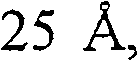

优选的无机物质为无机氧化物。合适的无机氧化物包括但不限于那些每nm2具有约1至约10个羟基的无机氧化物。更优选无机氧化物为金属氧化物、硅酸盐或硅铝酸盐例如沸石。最优选的无机物质为无机金属氧化物例如二氧化硅和钠二氧化硅(sodium silica),其可以为例如色谱级二氧化硅或硅胶形式。另外优选的金属氧化物包括但不限于氧化铝、二氧化硅-氧化铝、氧化锆、锆酸盐、可控孔径玻璃和二氧化钛。有磁性反应的无机金属氧化物例如在美国专利第6,447,911号(公开内容通过引用而整体结合至本文)中公开的含硅氧化物涂覆的磁性颗粒也适合作为底物材料。也可以使用混合的无机金属氧化物,如二氧化硅和氧化铝的共凝胶或共沉淀物。Preferred inorganic substances are inorganic oxides. Suitable inorganic oxides include, but are not limited to, those having from about 1 to about 10 hydroxyl groups per nm2 . More preferably the inorganic oxides are metal oxides, silicates or aluminosilicates such as zeolites. The most preferred inorganic materials are inorganic metal oxides such as silica and sodium silica, which may be in the form of, for example, chromatography grade silica or silica gel. Additional preferred metal oxides include, but are not limited to, alumina, silica-alumina, zirconia, zirconates, controlled pore glass, and titania. Magnetically reactive inorganic metal oxides such as the silicon-containing oxide-coated magnetic particles disclosed in US Patent No. 6,447,911 (the disclosure of which is hereby incorporated by reference in its entirety) are also suitable as substrate materials. Mixed inorganic metal oxides such as co-gels or co-precipitates of silica and alumina may also be used.
载体可以为适合与反应器条件的形状和/或大小匹配的任何形式,因此,载体可以为任何物理形式例如颗粒、纤维或板,使用本领域已知方法制备。(见Sie,S.T.,The Chemical EngineeringJournal,Vol.3(1993))。例如可制成球用于间歇式反应器且易于过滤和回收,且可制成挤出物用于连续填充柱应用。二氧化硅可形成用于不同应用的许多不同形状。The support may be in any form suitable for matching the shape and/or size to the reactor conditions, thus, the support may be in any physical form such as particles, fibers or plates, prepared using methods known in the art. (See Sie, S.T., The Chemical Engineering Journal, Vol. 3 (1993)). For example, pellets can be made for batch reactors with ease of filtration and recovery, and extrudates can be made for continuous packed column applications. Silica can be formed into many different shapes for different applications.
R10基团R 10 group
R10基团用于修饰载体以提供减少或防止催化性物质直接对载体表面非特异性结合的特殊性质,包括非酸性有机基团或部分,与载体上任何羟基比较,含羟基基团基本上在溶液中没有电荷。适合作为R10基团的有机基团具有亲水性和非酸性或非常弱的酸性的共同特性,即具有约14和更大的pKa值。优选有机基团含有约1至约3个碳原子。当具有能形成所需产物的反应物分子的反应混合物与载体接触,且载体具有至少一个R10基团修饰的表面时,电荷相互作用和疏水作用最小化且偶极相互作用增强。The R 10 group is used to modify the support to provide special properties that reduce or prevent the direct non-specific binding of catalytic substances to the surface of the support, including non-acidic organic groups or moieties, compared with any hydroxyl groups on the support, the hydroxyl group is basically in the There is no charge in solution. Organic groups suitable as R10 groups have the common characteristics of being hydrophilic and non-acidic or very weakly acidic, ie having a pKa value of about 14 and greater. Preferred organic groups contain from about 1 to about 3 carbon atoms. When a reaction mixture with reactant molecules capable of forming the desired product is contacted with a support with a surface modified by at least one R10 group, charge and hydrophobic interactions are minimized and dipolar interactions are enhanced.
在本发明一个优选的实施方案中,R10基团为选自以下的实体:-CH2OH、-CH(OH)2、-CH(OH)CH3、-CH2CH2OH、-C(OH)2CH3、-CH2CH(OH)2、-CH(OH)CH2(OH)及其混合物,且特别是-CH2OH。更优选R10选自-CH2OH、-CH(OH)CH3、-CH2CH2OH和-CH(OH)CH2(OH)。甚至更优选R10选自:-CH2OH、-CH(OH)CH3和-CH2CH2OH。最优选R10为-CH2OH。In a preferred embodiment of the invention, the R 10 group is an entity selected from -CH 2 OH, -CH(OH) 2 , -CH(OH)CH 3 , -CH 2 CH 2 OH, -C (OH) 2CH3 , -CH2CH (OH) 2 , -CH(OH) CH2 (OH) and mixtures thereof, and especially -CH2OH . More preferably R10 is selected from -CH2OH , -CH(OH) CH3 , -CH2CH2OH and -CH( OH ) CH2 (OH). Even more preferably R10 is selected from: -CH2OH , -CH(OH) CH3 and -CH2CH2OH . Most preferably R10 is -CH2OH .
R10部分位于载体的至少一个表面。“位于”是指R10可直接连接至载体物质的表面。The R 10 moiety is located on at least one surface of the carrier. "Located" means that R 10 can be directly attached to the surface of the carrier substance.
R10可位于无机载体周围存在的表面区域,或位于在孔中存在的表面区域,其穿透进入载体的内部。R 10 may be located in surface regions present around the inorganic support, or in surface regions present in pores that penetrate into the interior of the support.
R10也可以通过二价部分或原子(-X-)连接至至少一个载体表面从而“位于”载体表面上,以形成具有式-X-R10的基团。二价部分或原子可来自用于生成R10的反应物,如残余金属原子,例如来自硅烷反应物的硅、来自烷氧基铝的铝或来自烷氧基锆的锆。二价部分或原子可以直接连接至载体,优选通过载体表面的羟基。选择的载体物质可以决定-X-及其相关反应物的选择。然而一般而言,任何含有-X-的反应物将为可与载体上的活性官能团如羟基反应的反应物。在无机氧化物情况中,合适的反应物典型地包括能够与羟基反应的氧化物。例如包含位于至少一个表面的R10基团的载体可用具有R10基团的反应物例如烷氧基硅烷、二烷氧基硅烷或三烷氧基硅烷来制备。例如,乙酰氧基甲基可为R10基团羟甲基的前体基团。使用涂覆剂或反应物将R10基团连接至至少一个载体表面的方法包括以下步骤:首先使涂覆剂与载体表面反应,然后水解涂覆剂中前体基团以产生R10基团连接体的载体。反应化合物如那些能通过与无机物质反应生成R10基团的化合物的化学为本领域所熟知。见,如Smith,Organic Synthesis(John Wiley&Sons,1994);March,Advanced Organic Chemistry(第4版)(John Wiley&Sons,1992);Larock,Comprehensive Organic Transformations(第2版)(John Wiley&Sons,1999);Greene等,Protective Groups in OrganicSynthesis(第3版)(John Wiley&Sons,1999);Brook,Silicon in Organic,Organometallic,and Polymer Chemistry(John Wiley&Sons,2000);Hermanson,G.T.等,Immobilized Affinity Ligand Techniques(AcademicPress,Inc.,San Diego,CA,1992);Weetall,Covalent Coupling Methodsfor Inorganic Support Materials,Methods in Enzymology,vol.XLIV,Mosbach,K.编辑(1976);美国专利第4,298,500号;和美国专利第5,371,262号;它们的公开内容通过引用而结合至本文。R 10 may also be "on" a support surface via a divalent moiety or atom (-X-) attached to at least one support surface to form a group of formula -XR 10 . The divalent moiety or atom may come from the reactant used to generate R10 , such as a residual metal atom, eg silicon from a silane reactant, aluminum from an aluminum alkoxide or zirconium from a zirconium alkoxide. Divalent moieties or atoms may be attached directly to the support, preferably through hydroxyl groups on the surface of the support. The choice of carrier material can determine the choice of -X- and its associated reactants. In general, however, any reactant containing -X- will be a reactant that can react with a reactive functional group on the support, such as a hydroxyl group. In the case of inorganic oxides, suitable reactants typically include oxides capable of reacting with hydroxyl groups. For example, supports comprising R10 groups located on at least one surface can be prepared with reactants having R10 groups such as alkoxysilanes, dialkoxysilanes or trialkoxysilanes. For example, acetoxymethyl may be a precursor group for the R group hydroxymethyl. The method of attaching the R10 group to at least one support surface using a coating agent or reactant comprises the steps of first reacting the coating agent with the support surface and then hydrolyzing the precursor group in the coating agent to produce the R10 group The carrier of the linker. The chemistry of reactive compounds such as those capable of forming R10 groups by reaction with inorganic materials is well known in the art. See, eg, Smith, Organic Synthesis (John Wiley & Sons, 1994); March, Advanced Organic Chemistry (4th Edition) (John Wiley & Sons, 1992); Larock, Comprehensive Organic Transformations (2nd Edition) (John Wiley & Sons, 1999); Greene et al. , Protective Groups in Organic Synthesis (3rd Edition) (John Wiley&Sons, 1999); Brook, Silicon in Organic, Organometallic, and Polymer Chemistry (John Wiley&Sons, 2000); Hermanson, GT, etc., Immobilized Affinity Ligand Techniques (Academic Press, Inc., San Diego, CA, 1992); Weetall, Covalent Coupling Methods for Inorganic Support Materials, Methods in Enzymology , vol. XLIV, edited by Mosbach, K. (1976); U.S. Patent No. 4,298,500; and U.S. Patent No. 5,371,262; their disclosure The contents are incorporated herein by reference.
将R10基团通过残余金属如来自硅烷反应物的Si连接至载体至少一个表面也在本发明范围之内,其中各所得Si-R10基团通过三个共价键连接至载体。见,例如图17、19、21和22反应流程中由具有三个甲硅烷醇基的涂覆剂反应产生的最终产物。It is also within the scope of the invention to attach R10 groups to at least one surface of the support via residual metal such as Si from silane reactants, wherein each resulting Si- R10 group is attached to the support via three covalent bonds. See, eg, the reaction schemes of Figures 17, 19, 21 and 22 for the final product resulting from the reaction of a coating agent having three silanol groups.
如图23-25所说明,可以选择涂覆剂以使R10基团可通过一个或两个共价键、或通过Si原子交联连接到载体物质。这样的交联可以是Si-O-Si连接体或另外的连接体例如Si-O-C(O)-O-Si、Si-O-亚烷基-O-Si或Si-O-C(O)-亚烷基-O-Si。图25反应流程的最终产物即化合物(20)举例说明了本发明催化剂系统的一个实施方案,其中Si-R10基团具有连接至二氧化硅表面的一点。该实施方案由二氧化硅和单乙氧基硅烷反应制备。参见图24单乙氧基硅烷涂覆剂的制备。As illustrated in Figures 23-25, the coating agent can be chosen so that the R10 group can be attached to the support material through one or two covalent bonds, or through Si atom crosslinks. Such crosslinks may be Si-O-Si linkers or other linkers such as Si-OC(O)-O-Si, Si-O-alkylene-O-Si or Si-OC(O)-alkylene Alkyl-O-Si. Compound (20), the final product of the reaction scheme in Figure 25, exemplifies an embodiment of the catalyst system of the present invention in which the Si- R10 group has one point of attachment to the silica surface. This embodiment is prepared by reacting silica and monoethoxysilane. See Figure 24 for the preparation of a monoethoxysilane coating agent.
连接体Connector
连接体为结合至载体和催化性物质两者的低分子量分子且其用作将催化性物质结合至载体的固定化基团。因此,合适连接体的选择将取决于载体物质和催化性物质。连接体可以是任选取代的二价化学基团。该任选取代的二价化学基团可包含Rn基团,n为R基团的数目且为至少为1的整数,优选不大于30,且更优选不大于15。一般而言,以自催化性物质至载体表面测量的长度计,二价化学基团为约1个至约30个原子,优选约1个至约20个原子,且更优选约5个至约15个原子。A linker is a low molecular weight molecule that binds to both the support and the catalytic substance and it serves as an immobilization group that binds the catalytic substance to the support. Thus, the selection of a suitable linker will depend on the carrier material and the catalytic material. A linker can be an optionally substituted divalent chemical group. The optionally substituted divalent chemical group may comprise R n groups, n being the number of R groups and being an integer of at least 1, preferably not greater than 30, and more preferably not greater than 15. Generally, the divalent chemical group is from about 1 to about 30 atoms, preferably from about 1 to about 20 atoms, and more preferably from about 5 to about 20 atoms, as measured from the catalytic material to the surface of the support. 15 atoms.
连接体可选自:-C(R1)H-、-C(R2)=C(R3)-和-C≡C-,其中R1、R2和R3独立为氢、烷基、取代烷基、环烷基、取代环烷基、烯基、取代烯基、环烯基、取代环烯基、炔基、取代炔基、环炔基、取代环炔基、芳基、取代芳基、芳烷基或取代芳烷基。上述R基团可任选被以下基团替换:-O-、-S-、羰基、硫代羰基、-OC(O)-、-C(O)O-、-SC(O)-、-C(O)S-、-OC(S)-、-C(S)O-、-C(S)S-、-SC(S)-、-N(R4)-、-N(R4)C(O)-、-C(O)N(R4)-、-C(R5)=N-、-N=C(R5)-、-C(R5)=NO-、-ON=C(R5)-、-P-、-P(OH)O-、亚芳基、取代亚芳基、亚环烷基、取代亚环烷基、亚环烯基、取代亚环烯基、二价杂环基或二价取代杂环基,其中R4和R5独立为氢、烷基、取代烷基、环烷基、取代环烷基、烯基、取代烯基、环烯基、取代环烯基、炔基、取代炔基、环炔基、取代环炔基、芳基、取代芳基、芳烷基或取代芳烷基。例证性连接体为包含Rn基团的烃基,其中n如上所描述,且至少一种R基团为-CH2-,和(n-1)-R-基团任选被上述R基团如-O-、-S-等替换。The linker can be selected from: -C(R 1 )H-, -C(R 2 )=C(R 3 )- and -C≡C-, wherein R 1 , R 2 and R 3 are independently hydrogen, alkyl , substituted alkyl, cycloalkyl, substituted cycloalkyl, alkenyl, substituted alkenyl, cycloalkenyl, substituted cycloalkenyl, alkynyl, substituted alkynyl, cycloalkynyl, substituted cycloalkynyl, aryl, substituted Aryl, aralkyl or substituted aralkyl. The R group above can be optionally replaced by the following groups: -O-, -S-, carbonyl, thiocarbonyl, -OC(O)-, -C(O)O-, -SC(O)-, - C(O)S-, -OC(S)-, -C(S)O-, -C(S)S-, -SC(S)-, -N(R 4 )-, -N(R 4 )C(O)-, -C(O)N(R 4 )-, -C(R 5 )=N-, -N=C(R 5 )-, -C(R 5 )=NO-, - ON=C(R 5 )-, -P-, -P(OH)O-, arylene, substituted arylene, cycloalkylene, substituted cycloalkylene, cycloalkenylene, substituted cycloalkenene radical, divalent heterocyclic group or divalent substituted heterocyclic group, wherein R4 and R5 are independently hydrogen, alkyl, substituted alkyl, cycloalkyl, substituted cycloalkyl, alkenyl, substituted alkenyl, cycloalkene radical, substituted cycloalkenyl, alkynyl, substituted alkynyl, cycloalkynyl, substituted cycloalkynyl, aryl, substituted aryl, aralkyl, or substituted aralkyl. Exemplary linkers are hydrocarbyl groups comprising Rn groups, wherein n is as described above, and at least one R group is -CH2- , and the (n-1)-R- group is optionally replaced by the above R groups Such as -O-, -S-, etc. replacement.
本文所用术语“取代”指不改变取代R基团主要化学性质的含侧链取代基,如烃基的碳氢化合物性质。The term "substituted" as used herein refers to side chain-containing substituents which do not alter the primary chemical nature of the substituting R group, such as the hydrocarbon nature of a hydrocarbyl group.
术语“烷基”是指饱和支链或非支链烃基,优选那些约1个至约30个碳原子的烃基,更优选那些有约1个至约20个碳原子的烃基,且甚至更优选那些有约1个至约6个碳原子的烃基。“烷基”实例包括但不限于甲基、乙基、正丙基、异丙基、正丁基、仲丁基、异丁基、叔丁基、正戊基、1-甲基丁基、2-甲基丁基、异戊基、新戊基、1,1-二甲基丙基、正己基、1-甲基戊基、2-甲基戊基、3-甲基戊基、1,1-二甲基丁基、2,2-二甲基丁基、异己基和新己基。The term "alkyl" refers to saturated branched or unbranched hydrocarbon groups, preferably those having from about 1 to about 30 carbon atoms, more preferably those having from about 1 to about 20 carbon atoms, and even more preferably Those hydrocarbyl groups having from about 1 to about 6 carbon atoms. Examples of "alkyl" include, but are not limited to, methyl, ethyl, n-propyl, isopropyl, n-butyl, sec-butyl, isobutyl, tert-butyl, n-pentyl, 1-methylbutyl, 2-methylbutyl, isopentyl, neopentyl, 1,1-dimethylpropyl, n-hexyl, 1-methylpentyl, 2-methylpentyl, 3-methylpentyl, 1 , 1-dimethylbutyl, 2,2-dimethylbutyl, isohexyl and neohexyl.
术语“环烷基”是指饱和环状烃基,优选具有约3个至约10个碳原子,且更优选具有约3个至约6个碳原子。“环烷基”实例包括但不限于环丙基、环丁基、环戊基、环己基、二环庚基和萘烷基。The term "cycloalkyl" refers to a saturated cyclic hydrocarbon group, preferably having from about 3 to about 10 carbon atoms, and more preferably having from about 3 to about 6 carbon atoms. Examples of "cycloalkyl" include, but are not limited to, cyclopropyl, cyclobutyl, cyclopentyl, cyclohexyl, dicycloheptyl, and decalinyl.
术语“烯基”是指具有至少一个C=C键的支链或非支链烃基,其中烃基优选约2个至约30个碳原子,更优选约2个至约20个碳原子,甚至更优选约2个至约6个碳原子。“烯基”实例包括但不限于乙烯基、烯丙基、1-丙烯基、异丙烯基、2-丁烯基、1,3-丁二烯基、3-戊烯基和2-己烯基。The term "alkenyl" refers to a branched or unbranched hydrocarbon group having at least one C=C bond, wherein the hydrocarbon group preferably has from about 2 to about 30 carbon atoms, more preferably from about 2 to about 20 carbon atoms, and even more From about 2 to about 6 carbon atoms are preferred. Examples of "alkenyl" include, but are not limited to, vinyl, allyl, 1-propenyl, isopropenyl, 2-butenyl, 1,3-butadienyl, 3-pentenyl, and 2-hexene base.
术语“环烯基”是指具有至少一个C=C键的环状烃基,优选有约3个至约10个碳原子,更优选有约3个至约6个碳原子。The term "cycloalkenyl" refers to a cyclic hydrocarbon group having at least one C=C bond, preferably having about 3 to about 10 carbon atoms, more preferably about 3 to about 6 carbon atoms.
术语“炔基”是指具有至少一个C≡C键的支链或非支链烃基,优选具有约2个至约30个碳原子,更优选具有约2个至约20个碳原子,且甚至更优选具有约2个至约6个碳原子。“炔基”实例包括但不限于乙炔基、1-丙炔基、2-丙炔基、2-丁炔基、3-丁炔基和2-戊烯-4-炔基。The term "alkynyl" refers to a branched or unbranched hydrocarbon group having at least one C≡C bond, preferably having from about 2 to about 30 carbon atoms, more preferably from about 2 to about 20 carbon atoms, and even More preferably have from about 2 to about 6 carbon atoms. Examples of "alkynyl" include, but are not limited to, ethynyl, 1-propynyl, 2-propynyl, 2-butynyl, 3-butynyl, and 2-penten-4-ynyl.
术语“环炔基”是指具有至少一个C≡C键的环状烃基,优选具有约3个至约10个碳原子,且更优选具有约3个至约6个碳原子。“环炔基”实例包括但不限于环戊炔基(pentynyl)和环己炔基(hexynyl)。The term "cycloalkynyl" refers to a cyclic hydrocarbon group having at least one C≡C bond, preferably having from about 3 to about 10 carbon atoms, and more preferably having from about 3 to about 6 carbon atoms. Examples of "cycloalkynyl" include, but are not limited to, cyclopentynyl and cyclohexynyl.
术语“芳基”是指芳族环状烃基,优选具有约6个至约14个碳原子。“芳基”实例包括但不限于苯基、萘基、蒽基(anthracyl)和菲基,苯基为优选的芳基。The term "aryl" refers to an aromatic cyclic hydrocarbon group, preferably having from about 6 to about 14 carbon atoms. Examples of "aryl" include, but are not limited to, phenyl, naphthyl, anthracyl, and phenanthrenyl, with phenyl being the preferred aryl.
术语“芳烷基”是指被一个或多个芳基取代的烷基。“芳烷基”实例包括但不限于苄基、苯乙基、二苯甲基和三苯甲基,苄基为优选的芳烷基。The term "aralkyl" refers to an alkyl group substituted with one or more aryl groups. Examples of "aralkyl" include, but are not limited to, benzyl, phenethyl, benzhydryl and trityl, with benzyl being the preferred aralkyl.
短语“二价杂环基”是指二价环状基团,典型地具有约3个至约10个环原子,优选约3个至约7个环原子,且更优选约4个至约6个环原子,其中约1个至约4个环原子为O、S或N原子,或O、S和/或N原子的混合物。二价杂环基实例包括但不限于以下二价基团:硫杂丙烯环、环氧乙烷、氮丙啶、1H-吖丙因、2H-吖丙因、2H-硫杂环丁二烯(thiete)、硫杂丁环、2H-氧杂环丁二烯(oxete)、氧杂丁环、氮杂环丁二烯、氮杂环丁烷、1,2-氧杂氮杂环丁烷、噻吩、呋喃、吡咯、咪唑、唑、异唑、噻唑、异噻唑、吡唑、1,3-二氧戊烷、1,2,3-噻二唑、1,3,4-噻二唑、1,2,4-噻二唑、1,2,3-二唑、1,2,4-二唑、1,3,4-二唑、1,2,5-二唑、1,2,3-三唑、1,2,4-三唑、四唑、二唑、吡啶、喹啉、异喹啉、喹嗪、喹唑啉、蝶啶、咔唑、苯并唑、1,3-嗪、2H-1,3-嗪、吩嗪、吩噻嗪、哒嗪、嘧啶、吡嗪、苯并[b]呋喃、苯并[b]噻吩、吲哚、异吲哚、吲唑、嘌呤、异苯并呋喃、四氢呋喃、1,4-二烷、吡咯烷、四氢吡喃、1,2-二氢吡啶、1,4-二氢吡啶、哌啶、哌嗪、吗啉、硫吗啉、苯并二氢吡喃、异苯并二氢吡喃、苯并吡喃、1H-氮杂


术语“杂芳基”是指芳族杂环基团。The term "heteroaryl" refers to an aromatic heterocyclic group.
术语“亚烷基”、“亚烯基”、“亚炔基”、“亚环烷基”、“亚环烯基”和“亚芳基”分别为烷基、烯基、炔基、环烷基、环烯基和芳基的二价等价物。The terms "alkylene", "alkenylene", "alkynylene", "cycloalkylene", "cycloalkenylene" and "arylene" are alkyl, alkenyl, alkynyl, cyclic Divalent equivalents of alkyl, cycloalkenyl and aryl.
短语“取代烷基”是指被约1个至约5个、优选约1个至约3个选自以下的取代基取代的烷基:羟基、巯基、烷氧基、烷硫基、氨基、烷基氨基、二烷基氨基、芳基氨基、N,N-芳基烷基氨基、二芳基氨基、叠氮基、脒基、脲基、氟、氯、溴、碘、硝基、氰基、酰基(优选乙酰基和苯甲酰基)、硫代酰基、烷基亚磺酰基、烷基磺酰基、烷基磺酰氨基、烷基氨磺酰基、羧基、烷基羰氧基(优选乙酰氧基)、芳基羰氧基(优选苯甲酰氧基)、烷氧基羰氧基、芳氧基羰氧基、氨基甲酰基、芳基(优选苯基)、苯乙烯基、环烷基、环烯基和杂环基(优选杂芳基)。The phrase "substituted alkyl" refers to an alkyl group substituted with about 1 to about 5, preferably about 1 to about 3, substituents selected from the group consisting of hydroxy, mercapto, alkoxy, alkylthio, amino, Alkylamino, dialkylamino, arylamino, N,N-arylalkylamino, diarylamino, azido, amidino, ureido, fluorine, chlorine, bromine, iodine, nitro, cyano radical, acyl (preferably acetyl and benzoyl), thioacyl, alkylsulfinyl, alkylsulfonyl, alkylsulfonylamino, alkylsulfamoyl, carboxyl, alkylcarbonyloxy (preferably acetyl oxy), arylcarbonyloxy (preferably benzoyloxy), alkoxycarbonyloxy, aryloxycarbonyloxy, carbamoyl, aryl (preferably phenyl), styryl, cycloalkane radical, cycloalkenyl and heterocyclyl (preferably heteroaryl).
短语“取代烯基”是指被约1个至约5个、优选约1个至约3个选自以下的取代基取代的烯基:羟基、巯基、烷氧基、烷硫基、氨基、烷基氨基、二烷基氨基、芳基氨基、N,N-芳基烷基氨基、二芳基氨基、叠氮基、脒基、脲基、氟、氯、溴、碘、硝基、氰基、酰基(优选乙酰基和苯甲酰基)、硫代酰基、烷基亚磺酰基、烷基磺酰基、烷基磺酰氨基、烷基氨磺酰基、羧基、烷基羰氧基(优选乙酰氧基)、芳基羰氧基(优选苯甲酰氧基)、烷氧基羰氧基、芳氧基羰氧基、氨基甲酰基、芳基(优选苯基)、苯乙烯基、环烷基、环烯基和杂环基(优选杂芳基)。The phrase "substituted alkenyl" refers to an alkenyl group substituted with about 1 to about 5, preferably about 1 to about 3, substituents selected from the group consisting of hydroxy, mercapto, alkoxy, alkylthio, amino, Alkylamino, dialkylamino, arylamino, N,N-arylalkylamino, diarylamino, azido, amidino, ureido, fluorine, chlorine, bromine, iodine, nitro, cyano radical, acyl (preferably acetyl and benzoyl), thioacyl, alkylsulfinyl, alkylsulfonyl, alkylsulfonylamino, alkylsulfamoyl, carboxyl, alkylcarbonyloxy (preferably acetyl oxy), arylcarbonyloxy (preferably benzoyloxy), alkoxycarbonyloxy, aryloxycarbonyloxy, carbamoyl, aryl (preferably phenyl), styryl, cycloalkane radical, cycloalkenyl and heterocyclyl (preferably heteroaryl).
短语“取代炔基”是指被约1个至约5个、优选约1个至约3个选自以下的取代基取代的炔基:羟基、巯基、烷氧基、烷硫基、氨基、烷基氨基、二烷基氨基、芳基氨基、N,N-芳基烷基氨基、二芳基氨基、叠氮基、脒基、脲基、氟、氯、溴、碘、硝基、氰基、酰基(优选乙酰基和苯甲酰基)、硫代酰基、烷基亚磺酰基、烷基磺酰基、烷基磺酰氨基、烷基氨磺酰基、羧基、烷基羰氧基(优选乙酰氧基)、芳基羰氧基(优选苯甲酰氧基)、烷氧基羰氧基、芳氧基羰氧基、氨基甲酰基、芳基(优选苯基)、苯乙烯基、环烷基、环烯基和杂环基(优选杂芳基)。The phrase "substituted alkynyl" refers to an alkynyl group substituted with about 1 to about 5, preferably about 1 to about 3, substituents selected from the group consisting of hydroxy, mercapto, alkoxy, alkylthio, amino, Alkylamino, dialkylamino, arylamino, N,N-arylalkylamino, diarylamino, azido, amidino, ureido, fluorine, chlorine, bromine, iodine, nitro, cyano radical, acyl (preferably acetyl and benzoyl), thioacyl, alkylsulfinyl, alkylsulfonyl, alkylsulfonylamino, alkylsulfamoyl, carboxyl, alkylcarbonyloxy (preferably acetyl oxy), arylcarbonyloxy (preferably benzoyloxy), alkoxycarbonyloxy, aryloxycarbonyloxy, carbamoyl, aryl (preferably phenyl), styryl, cycloalkane radical, cycloalkenyl and heterocyclyl (preferably heteroaryl).
短语“取代环烷基”是指被约1个至约5个、优选约1个至约3个选自以下的取代基取代的环烷基:烷基、烯基、炔基、芳烷基、羟基、巯基、烷氧基、烷硫基、氨基、烷基氨基、二烷基氨基、芳基氨基、N,N-芳基烷基氨基、二芳基氨基、叠氮基、脒基、脲基、氟、氯、溴、碘、硝基、氰基、酰基(优选乙酰基和苯甲酰基)、硫代酰基、烷基亚磺酰基、烷基磺酰基、烷基磺酰氨基、烷基氨磺酰基、羧基、烷基羰氧基(优选乙酰氧基)、芳基羰氧基(优选苯甲酰氧基)、烷氧基羰氧基、芳氧基羰氧基、氨基甲酰基、芳基(优选苯基)、苯乙烯基、环烷基、环烯基和杂环基(优选杂芳基)。The phrase "substituted cycloalkyl" means a cycloalkyl group substituted with about 1 to about 5, preferably about 1 to about 3, substituents selected from the group consisting of alkyl, alkenyl, alkynyl, aralkyl , hydroxy, mercapto, alkoxy, alkylthio, amino, alkylamino, dialkylamino, arylamino, N, N-arylalkylamino, diarylamino, azido, amidino, Urea, fluorine, chlorine, bromine, iodine, nitro, cyano, acyl (preferably acetyl and benzoyl), thioacyl, alkylsulfinyl, alkylsulfonyl, alkylsulfonylamino, alkyl Amylsulfamoyl, carboxyl, alkylcarbonyloxy (preferably acetoxy), arylcarbonyloxy (preferably benzoyloxy), alkoxycarbonyloxy, aryloxycarbonyloxy, carbamoyl , aryl (preferably phenyl), styryl, cycloalkyl, cycloalkenyl and heterocyclyl (preferably heteroaryl).
短语“取代环烯基”是指被约1个至约5个、优选约1个至约3个选自以下的取代基取代的环烯基:烷基、烯基、炔基、芳烷基、羟基、巯基、烷氧基、烷硫基、氨基、烷基氨基、二烷基氨基、芳基氨基、N,N-芳基烷基氨基、二芳基氨基、叠氮基、脒基、脲基、氟、氯、溴、碘、硝基、氰基、酰基(优选乙酰基和苯甲酰基)、硫代酰基、烷基亚磺酰基、烷基磺酰基、烷基磺酰氨基、烷基氨磺酰基、羧基、烷基羰氧基(优选乙酰氧基)、芳基羰氧基(优选苯甲酰氧基)、烷氧基羰氧基、芳氧基羰氧基、氨基甲酰基、芳基(优选苯基)、苯乙烯基、环烷基、环烯基和杂环基(优选杂芳基)。The phrase "substituted cycloalkenyl" refers to a cycloalkenyl group substituted with about 1 to about 5, preferably about 1 to about 3, substituents selected from the group consisting of alkyl, alkenyl, alkynyl, aralkyl , hydroxy, mercapto, alkoxy, alkylthio, amino, alkylamino, dialkylamino, arylamino, N, N-arylalkylamino, diarylamino, azido, amidino, Urea, fluorine, chlorine, bromine, iodine, nitro, cyano, acyl (preferably acetyl and benzoyl), thioacyl, alkylsulfinyl, alkylsulfonyl, alkylsulfonylamino, alkyl Amylsulfamoyl, carboxyl, alkylcarbonyloxy (preferably acetoxy), arylcarbonyloxy (preferably benzoyloxy), alkoxycarbonyloxy, aryloxycarbonyloxy, carbamoyl , aryl (preferably phenyl), styryl, cycloalkyl, cycloalkenyl and heterocyclyl (preferably heteroaryl).
短语“取代环炔基”是指被约1个至约5个、优选约1个至约3个选自以下的取代基取代的环炔基:烷基、烯基、炔基、芳烷基、羟基、巯基、烷氧基、烷硫基、氨基、烷基氨基、二烷基氨基、芳基氨基、N,N-芳基烷基氨基、二芳基氨基、叠氮基、脒基、脲基、氟、氯、溴、碘、硝基、氰基、酰基(优选乙酰基和苯甲酰基)、硫代酰基、烷基亚磺酰基、烷基磺酰基、烷基磺酰氨基、烷基氨磺酰基、羧基、烷基羰氧基(优选乙酰氧基)、芳基羰氧基(优选苯甲酰氧基)、烷氧基羰氧基、芳氧基羰氧基、氨基甲酰基、芳基(优选苯基)、苯乙烯基、环烷基、环烯基和杂环基(优选杂芳基)。The phrase "substituted cycloalkynyl" refers to a cycloalkynyl group substituted with about 1 to about 5, preferably about 1 to about 3, substituents selected from the group consisting of alkyl, alkenyl, alkynyl, aralkyl , hydroxy, mercapto, alkoxy, alkylthio, amino, alkylamino, dialkylamino, arylamino, N, N-arylalkylamino, diarylamino, azido, amidino, Urea, fluorine, chlorine, bromine, iodine, nitro, cyano, acyl (preferably acetyl and benzoyl), thioacyl, alkylsulfinyl, alkylsulfonyl, alkylsulfonylamino, alkyl Amylsulfamoyl, carboxyl, alkylcarbonyloxy (preferably acetoxy), arylcarbonyloxy (preferably benzoyloxy), alkoxycarbonyloxy, aryloxycarbonyloxy, carbamoyl , aryl (preferably phenyl), styryl, cycloalkyl, cycloalkenyl and heterocyclyl (preferably heteroaryl).
短语“取代芳基”是指被约1个至约5个、优选约1个至约3个选自以下的取代基取代的芳基:烷基、烯基、炔基、芳烷基、羟基、巯基、烷氧基、烷硫基、氨基、烷基氨基、二烷基氨基、芳基氨基、N,N-芳基烷基氨基、二芳基氨基、叠氮基、脒基、脲基、氟、氯、溴、碘、硝基、氰基、酰基(优选乙酰基和苯甲酰基)、硫代酰基、烷基亚磺酰基、烷基磺酰基、烷基磺酰氨基、烷基氨磺酰基、羧基、烷基羰氧基(优选乙酰氧基)、芳基羰氧基(优选苯甲酰氧基)、烷氧基羰氧基、芳氧基羰氧基、氨基甲酰基、苯乙烯基、环烷基、环烯基、芳基(优选苯基)和杂环基(优选杂芳基)。The phrase "substituted aryl" refers to an aryl group substituted with about 1 to about 5, preferably about 1 to about 3, substituents selected from the group consisting of alkyl, alkenyl, alkynyl, aralkyl, hydroxy , mercapto, alkoxy, alkylthio, amino, alkylamino, dialkylamino, arylamino, N,N-arylalkylamino, diarylamino, azido, amidino, ureido , fluorine, chlorine, bromine, iodine, nitro, cyano, acyl (preferably acetyl and benzoyl), thioacyl, alkylsulfinyl, alkylsulfonyl, alkylsulfonylamino, alkylamine Sulfonyl, carboxyl, alkylcarbonyloxy (preferably acetoxy), arylcarbonyloxy (preferably benzoyloxy), alkoxycarbonyloxy, aryloxycarbonyloxy, carbamoyl, benzene Vinyl, cycloalkyl, cycloalkenyl, aryl (preferably phenyl) and heterocyclyl (preferably heteroaryl).
短语“取代杂环基”是指被约1个至约5个、优选约1个至约3个选自以下的取代基取代的杂环基:烷基、烯基、炔基、芳烷基、羟基、巯基、烷氧基、烷硫基、氨基、烷基氨基、二烷基氨基、芳基氨基、N,N-芳基烷基氨基、二芳基氨基、叠氮基、脒基、脲基、氟、氯、溴、碘、硝基、氰基、酰基(优选乙酰基和苯甲酰基)、硫代酰基、烷基亚磺酰基、烷基磺酰基、烷基磺酰氨基、烷基氨磺酰基、羧基、烷基羰氧基(优选乙酰氧基)、芳基羰氧基(优选苯甲酰氧基)、烷氧基羰氧基、芳氧基羰氧基、氨基甲酰基、芳基(优选苯基)、苯乙烯基、环烷基、环烯基和杂环基(优选杂芳基)。The phrase "substituted heterocyclyl" means a heterocyclyl substituted with about 1 to about 5, preferably about 1 to about 3, substituents selected from the group consisting of alkyl, alkenyl, alkynyl, aralkyl , hydroxy, mercapto, alkoxy, alkylthio, amino, alkylamino, dialkylamino, arylamino, N, N-arylalkylamino, diarylamino, azido, amidino, Urea, fluorine, chlorine, bromine, iodine, nitro, cyano, acyl (preferably acetyl and benzoyl), thioacyl, alkylsulfinyl, alkylsulfonyl, alkylsulfonylamino, alkyl Amylsulfamoyl, carboxyl, alkylcarbonyloxy (preferably acetoxy), arylcarbonyloxy (preferably benzoyloxy), alkoxycarbonyloxy, aryloxycarbonyloxy, carbamoyl , aryl (preferably phenyl), styryl, cycloalkyl, cycloalkenyl and heterocyclyl (preferably heteroaryl).
短语“取代亚芳基”、“取代亚环烷基”、“取代亚环烯基”和“取代二价杂环基”分别是指取代芳基、取代环烷基、取代环烯基和取代杂环基的二价等价物。The phrases "substituted arylene", "substituted cycloalkylene", "substituted cycloalkenylene" and "substituted divalent heterocyclyl" refer to substituted aryl, substituted cycloalkyl, substituted cycloalkenyl and substituted Divalent equivalent of heterocyclyl.
将连接体连接至载体表面的键取决于使连接体和无机物质反应所采用的化学。该键可为醚、硫醚、酯、硫酯、碳酸酯、氨基甲酸酯、磷酸酯(盐)、膦酸酯(盐)、磷酸酯、氨基磷酸酯、胺、酰胺、酰亚胺、脲、硫脲、磺酰胺、亚砜、砜、二硫化物、肟、O-酰基肟、O-氨基甲酰基肟、O-酰氧基烷基肟、O-酰氧基烷氧基肟、O-肟基磷酸酯(盐)、O-肟基膦酸酯(盐)、O-肟基氨基磷酸酯或C=C键。连接体连接和催化性物质如酶的键也可以是上述键中的一种。The bond that attaches the linker to the surface of the support depends on the chemistry employed to react the linker and the inorganic species. The linkage can be ether, thioether, ester, thioester, carbonate, carbamate, phosphate (salt), phosphonate (salt), phosphate, phosphoramidate, amine, amide, imide, Urea, thiourea, sulfonamide, sulfoxide, sulfone, disulfide, oxime, O-acyl oxime, O-carbamoyl oxime, O-acyloxyalkyloxime, O-acyloxyalkoxyoxime, O-oximino phosphate (salt), O-oximino phosphonate (salt), O-oximino phosphoramidate or C═C bond. The linkage between a linker and a catalytic substance such as an enzyme may also be one of the above-mentioned linkages.
将连接体与载体表面反应的化学在文献中有详尽的描述。见,如Hermanson,G.T.等,Immobilized Affinity Ligand Techniques(AcademicPress,Inc.,San Diego,CA,1992);Weetall,Covalent Coupling Methodsfor Inorganic Support Materials,Methods in Enzymology,vol.XLIV,Mosbach,K.编辑(1976)。将连接体与载体表面反应的特殊化学显然取决于所使用的特别载体物质和连接体。同样,将连接体与催化性物质反应的化学取决于采用的特别连接体和催化性物质。合适连接体/催化性物质偶合化学的具体实例如表1所示。根据表1,催化性物质可通过催化性物质上的氨基、巯基、羰基或羟基或活性氢原子偶合至连接体。The chemistry for reacting linkers with support surfaces is well described in the literature. See, eg, Hermanson, GT et al., Immobilized Affinity Ligand Techniques (Academic Press, Inc., San Diego, CA, 1992); Weetall, Covalent Coupling Methods for Inorganic Support Materials, Methods in Enzymology , vol. XLIV, edited by Mosbach, K. (1976 ). The particular chemistry for reacting the linker with the carrier surface will obviously depend on the particular carrier material and linker used. Likewise, the chemistry for reacting the linker with the catalytic species will depend on the particular linker and catalytic species employed. Specific examples of suitable linker/catalytic species coupling chemistries are shown in Table 1. According to Table 1, the catalytic species can be coupled to the linker via amino, mercapto, carbonyl or hydroxyl groups or active hydrogen atoms on the catalytic species.
表1-常规连接体/结合部分偶合化学实例Table 1 - Examples of conventional linker/binding moiety coupling chemistries
由以下形成的连接体 催化部分偶合基团 The linker catalytic moiety coupling group formed by
溴化氰(CNBr) 氨基Cyanogen Bromide (CNBr) Amino
N-羟基琥珀酰亚胺酯 氨基N-Hydroxysuccinimide Ester Amino
羰基二咪唑 氨基Carbonyldiimidazole Amino
还原胺化 氨基Reductive Amination Amino
FMP活化* 氨基FMP Activation * Amino
EDC-介导的酰胺键形成** 氨基EDC-mediated amide bond formation ** amino group
有机磺酰氯:甲苯磺酰氯和三氟乙磺酰(tresyl)氯 氨基Organic sulfonyl chlorides: toluenesulfonyl chloride and trifluoroethanesulfonyl (tresyl) chloride Amino
二乙烯基砜 氨基Divinylsulfone Amino
吖内酯 氨基Azlactone Amino
氰尿酰氯(三氯-s-三嗪) 氨基Cyanuric chloride (trichloro-s-triazine) Amino
碘代乙酰基或溴代乙酰基活化方法 巯基Iodoacetyl or Bromoacetyl Activation Method Sulfhydryl
马来酰亚胺 巯基Maleimide Mercapto
吡啶基二硫化物 巯基Pyridyl Disulfide Mercapto
二乙烯基砜 巯基Divinylsulfone Mercapto
环氧 巯基Epoxy Mercapto
TNB-硫醇*** 巯基TNB-Thiol *** Thiol
酰肼 羰基Hydrazide Carbonyl
还原胺化 羰基Reductive Amination Carbonyl
环氧(双环氧乙烷) 羟基Epoxy (Dioxirane) Hydroxyl
二乙烯基砜 羟基Divinylsulfone Hydroxyl
氰尿酰氯 羟基Cyanuric Chloride Hydroxyl
重氮化合物 活性氢Diazonium Compounds Active Hydrogen
Mannich缩合 活性氢Mannich condensation Active hydrogen
*FMP指甲苯-4-磺酸2-氟-1-甲基-吡啶 * FMP toluene-4-sulfonic acid 2-fluoro-1-methyl-pyridinium
**EDC指1-乙基-3-(3-二甲氨基丙基)碳二亚胺 ** EDC refers to 1-ethyl-3-(3-dimethylaminopropyl)carbodiimide
***TNB-硫醇指2-亚氨基硫代戊环(thiolane)5,5-二硫代-双-(2-硝基苯甲酸) *** TNB-thiol refers to 2-iminothiolane (thiolane) 5,5-dithio-bis-(2-nitrobenzoic acid)
催化性物质Catalytic substance
本发明催化剂系统还包含至少一种催化性物质,其连接至位于载体至少一个表面上的连接体。催化性物质为能影响化学反应速率而自身未被消耗或没有经历化学改变的任何分子或分子片段。催化性物质必须能连接至连接体。这样的催化性物质包括但不限于酶、有机金属络合物或其它适用于催化目标反应的有机物质。The catalyst system according to the invention also comprises at least one catalytic substance attached to a linker on at least one surface of the support. A catalytic substance is any molecule or molecule fragment capable of affecting the rate of a chemical reaction without itself being consumed or undergoing chemical alteration. The catalytic substance must be able to attach to the linker. Such catalytic substances include, but are not limited to, enzymes, organometallic complexes, or other organic substances suitable for catalyzing the reaction of interest.
在本发明一个优选的实施方案中,催化性物质为酶。合适的酶包括但不限于选自以下酶家族的酶:包括但不限于氧化还原酶、转移酶、水解酶、裂合酶、异构酶和连接酶。氧化还原酶家族的示例性酶包括但不限于P450酶、还原酶、过氧化物酶、氢化酶、脱氢酶和催化。转移酶家族的示例性酶包括但不限于糖基转移酶(glycosyltranserases)和甘露糖基转移酶。水解酶家族的示例性酶包括但不限于酯酶、葡糖淀粉酶、转氨甲酰酶、核酸酶、核糖核酸酶、ATP酶、肽酶、蛋白酶和磷酸二酯酶。裂合酶家族的示例性酶包括但不限于多糖裂合酶。异构酶家族的示例性酶包括但不限于拓扑异构酶。连接酶家族的示例性酶包括但不限于合成酶。另外的酶包括但不限于激酶、磷蛋白质和增变基因转座子。In a preferred embodiment of the invention the catalytic substance is an enzyme. Suitable enzymes include, but are not limited to, enzymes selected from enzyme families including, but not limited to, oxidoreductases, transferases, hydrolases, lyases, isomerases, and ligases. Exemplary enzymes of the oxidoreductase family include, but are not limited to, P450 enzymes, reductases, peroxidases, hydrogenases, dehydrogenases, and catalyzes. Exemplary enzymes of the transferase family include, but are not limited to, glycosyltranserases and mannosyltranserases. Exemplary enzymes of the hydrolase family include, but are not limited to, esterases, glucoamylases, transcarbamylases, nucleases, ribonucleases, ATPases, peptidases, proteases, and phosphodiesterases. Exemplary enzymes of the lyase family include, but are not limited to, polysaccharide lyases. Exemplary enzymes of the isomerase family include, but are not limited to, topoisomerases. Exemplary enzymes of the ligase family include, but are not limited to, synthetases. Additional enzymes include, but are not limited to, kinases, phosphoproteins, and mutator transposons.
起催化性物质作用的酶可为天然存在或合成和以非修饰或修饰形式。修饰包括但不限于天然存在的修饰和非天然存在的修饰,例如那些由DNA改组创建的修饰,如在美国专利第5,605,793号、5,811,238号、5,830,721号、6,117,679号、6,132,970号、6,165,793号、6,180,406号、6,238,884号和5,965,408号中所描述。酶的纯度水平将取决于涉及到的特别催化。天然和合成以及修饰和非修饰的酶纯化方法均为本领域所熟知。Enzymes acting as catalytic substances may be naturally occurring or synthetic and in unmodified or modified form. Modifications include, but are not limited to, naturally occurring modifications and non-naturally occurring modifications, such as those created by DNA shuffling, as described in U.S. Pat. , Nos. 6,238,884 and 5,965,408. The level of purity of the enzyme will depend on the particular catalysis involved. Methods of purification of enzymes, both natural and synthetic and modified and unmodified, are well known in the art.
预计用于本发明的其它催化性物质包括有机金属络合物。有机金属络合物在精细化学品和药物合成中作为催化剂广泛使用。任何可修饰成与合适连接体反应并连接至载体的有机金属络合物,可以用于实现本发明益处。合适的有机金属络合物包括但不限于用于Heck芳基化的四(三苯基膦)合钯(0)、(-)-1,2-双((2R,5R)-2,5-二甲基-磷杂环戊烷-1-基(phospholano))苯、用于不对称氢化的[DUPHOS]Rh(COD)+、用于Suzuki偶合和由芳基卤化物合成芳胺的2-(二-叔丁基膦基)二苯基合钯等。Other catalytic materials contemplated for use in the present invention include organometallic complexes. Organometallic complexes are widely used as catalysts in the synthesis of fine chemicals and pharmaceuticals. Any organometallic complex that can be modified to react with a suitable linker and attach to a support can be used to achieve the benefits of the present invention. Suitable organometallic complexes include, but are not limited to, tetrakis(triphenylphosphine)palladium(0), (-)-1,2-bis((2R,5R)-2,5 -Dimethyl-phospholan-1-yl (phospholano))benzene, [DUPHOS]Rh(COD) + for asymmetric hydrogenation, 2 for Suzuki coupling and synthesis of aromatic amines from aryl halides -(di-tert-butylphosphino)diphenylpalladium and the like.
还有,预计用于本发明的其它催化性物质包括基于有机的物质,如有机络合物或片断。例如有机酸在酸催化水解反应中用作催化剂。合适的基于有机的催化性物质包括但不限于甲酸、羧酸、基于硼的Lewis酸,和Lewis碱例如吡啶等。Also, other catalytic materials contemplated for use in the present invention include organic based materials such as organic complexes or moieties. For example organic acids are used as catalysts in acid catalyzed hydrolysis reactions. Suitable organic-based catalytic species include, but are not limited to, formic acid, carboxylic acid, boron-based Lewis acids, and Lewis bases such as pyridine, and the like.
组分浓度Component concentration
决定R10基团和催化性物质浓度的因素包括但不限于R10基团和催化性物质的特性和活性部位即载体表面上连接体的浓度。Factors determining the concentration of the R 10 group and catalytic species include, but are not limited to, the identity of the R 10 group and catalytic species and the concentration of the linker on the active site, ie, the surface of the support.
一般而言,R10基团以足量存在于载体至少一个表面上,以便当表面与包含酶的组合物接触时,例如可减少或防止酶与载体的非特异性结合。在本发明一个实施方案中,R10基团的浓度为足以保证载体表面低表面电荷如小于约0.16C/m2的量。优选R10基团的浓度可为每平方纳米(nm2)载体表面面积约1个至约10个基团。Generally, the R10 group is present on at least one surface of the support in a sufficient amount such that, for example, non-specific binding of the enzyme to the support is reduced or prevented when the surface is contacted with a composition comprising the enzyme. In one embodiment of the invention, the concentration of R 10 groups is an amount sufficient to ensure a low surface charge on the support surface, such as less than about 0.16 C/m 2 . Preferably, the concentration of R 10 groups may range from about 1 to about 10 groups per square nanometer (nm 2 ) of support surface area.
催化性物质浓度主要取决于使用的具体催化性物质。例如具有约5nm流体动力半径的酶通常“遮蔽”约100nm2表面面积。酶不总是以一比一的化学计量连接至单个连接体上,而可能通过几个连接基团连接,如当酶为大分子时。在采用比较小的酶的实施方案中,可使用少于化学计量量的酶且任何未反应的连接基团可“加帽”以避免催化过程的干扰并任选酶分离。The concentration of catalytic species depends largely on the specific catalytic species used. For example, an enzyme with a hydrodynamic radius of about 5 nm typically "shades" about 100 nm of surface area. Enzymes are not always attached to a single linker in a one-to-one stoichiometry, but may be attached through several linking groups, such as when the enzyme is a macromolecule. In embodiments employing relatively small enzymes, less than stoichiometric amounts of enzyme can be used and any unreacted linking groups can be "capped" to avoid interference with the catalytic process and optionally enzyme isolation.
或者,R10基团和催化性物质的浓度可以在载体表面上有多少官能团反应或被R10基团和催化性物质“覆盖”(优选通过连接体)来表述。例如,载体物质约50%至约99%的表面羟基可被R10基团覆盖和约1%至约50%的表面羟基可被通过连接体连接至表面的催化性物质覆盖。本发明催化剂系统的某些实施方案中,载体物质上约75%至约99%的表面羟基被R10基团覆盖和约1%至约25%的表面羟基被通过连接体连接至表面的催化性物质覆盖。Alternatively, the concentration of R 10 groups and catalytic species can be expressed in terms of how many functional groups on the surface of the support react or are "covered" (preferably by linkers) with R 10 groups and catalytic species. For example, from about 50% to about 99% of the surface hydroxyl groups of the support material may be covered by R10 groups and from about 1% to about 50% of the surface hydroxyl groups may be covered by a catalytic material attached to the surface via a linker. In certain embodiments of the catalyst system of the present invention, about 75% to about 99% of the surface hydroxyl groups on the support material are covered by R10 groups and about 1% to about 25% of the surface hydroxyl groups are attached to the surface by linkers. Substance covered.
载体表面上连接基团的浓度可变。在本发明某些实施方案中,如上所述,如果催化性物质是大的部分,催化性物质如酶可“遮蔽”载体表面面积的大区域。结果,载体上连接体的浓度不需要相对高。没有被连接体涂覆的载体表面面积基本上用R10基团涂覆以防止催化性物质结合至载体表面。在一个优选的实施方案中,大部分的载体表面由R10基团覆盖,如载体表面上以每nm2约1个至约10个基团的浓度,其余的由连接体覆盖。通常,连接体浓度将为足以提供足够的催化性物质以催化所需反应的量。典型地,在载体表面上连接体浓度为约0.1至约5.0nm2连接体。The concentration of linking groups on the surface of the support can vary. In certain embodiments of the invention, a catalytic species, such as an enzyme, may "mask" a large area of the surface area of the support if the catalytic species is a large fraction, as described above. As a result, the concentration of the linker on the support need not be relatively high. The surface area of the support not coated by the linker is substantially coated with R10 groups to prevent binding of catalytic species to the support surface. In a preferred embodiment, a majority of the support surface is covered by R10 groups, such as at a concentration of about 1 to about 10 groups per nm2 on the support surface, with the remainder covered by linkers. Typically, the linker concentration will be an amount sufficient to provide sufficient catalytic species to catalyze the desired reaction. Typically, the linker concentration on the support surface is from about 0.1 to about 5.0 nm2 linker.
连接基团、R10基团和催化性物质的浓度取决于具体的反应参数且可由熟练的技术人员容易地决定。The concentrations of linking groups, R10 groups and catalytic species depend on the specific reaction parameters and can be readily determined by the skilled artisan.
制备载体上的催化剂系统Preparation of Supported Catalyst Systems
通常,本发明载体上的催化剂系统通过以下方法制备:修饰载体至少一个表面以将至少一种R10基团和连接体直接或间接连接至载体的至少一个表面,然后使连接体反应形成结合至连接体的催化性物质。将连接体加到载体表面和将R10基团加到载体表面的顺序是可以变化的。在载体表面上R10基团可于与连接体连接后创建或于与连接体连接前创建。或者,可创建R10基团或连接体或二者的前体和/或首先连接和然后,反应以产生最终R10基团和/或连接体。一旦连接体/R10基团顺序确定,连接体使用合适的偶合技术化学连接至载体表面,接着用第二次偶合过程连接至催化性物质。Typically, the supported catalyst systems of the present invention are prepared by modifying at least one surface of the support to attach at least one R group and a linker directly or indirectly to at least one surface of the support, and then reacting the linker to form a bonded to at least one surface of the support. The catalytic substance of the linker. The order of adding the linker to the support surface and adding the R10 group to the support surface can be varied. The R10 group on the surface of the carrier can be created after attachment of the linker or before attachment of the linker. Alternatively, a precursor to the R10 group or linker or both can be created and/or first attached and then reacted to produce the final R10 group and/or linker. Once the linker/R 10 group sequence is determined, the linker is chemically attached to the support surface using an appropriate coupling technique, followed by a second coupling process to the catalytic species.
优选本发明载体上的催化剂系统通过以下方法制备:以足以将连接体至少一个末端连接至载体至少一个表面的方式,使无机载体物质与具有至少两个末端的连接体反应,然后使载体表面上至少一个官能团与R10基团或能形成R10基团的反应物反应,以在载体至少一个表面上创建至少一种R10基团。然后将所需催化性物质与连接体反应,以使催化性物质连接至载体修饰过的表面,但同时如上所述为游离并不受拘束。Preferably, the supported catalyst system of the present invention is prepared by reacting an inorganic support material with a linker having at least two ends in a manner sufficient to attach at least one end of the linker to at least one surface of the support, and then allowing the At least one functional group is reacted with an R 10 group or a reactant capable of forming an R 10 group to create at least one R 10 group on at least one surface of the support. The desired catalytic species is then reacted with a linker such that the catalytic species is attached to the support-modified surface, but at the same time free and untethered as described above.
在本发明一个更优选的实施方案中,制备本发明载体上的催化剂系统的方法包括以下步骤:(1)以合适的表面浓度,使具有能非选择性结合的活性表面位点的无机载体接触连接体或连接体前体,以提供其部分活性表面位点连接至连接体或连接体前体的修饰的载体;(2)使修饰的载体接触足量的R10基团前体以覆盖载体上剩余的活性表面位点;(3)将R10基团前体转化为R10基团;(4)任选将连接体前体转化为连接体;和(5)将催化性物质固定至连接体。使用这种方法,载体表面被修饰以便其具有结合催化性物质的连接体,而余下的表面用R10基团覆盖以消除非选择性结合。上述步骤(1)和(2)用硅烷化剂最方便进行,其中在合适的溶剂例如甲苯中于回流条件下,合适的三乙氧基硅烷与无机载体的表面羟基反应,例如二氧化硅载体的甲硅烷醇基团。硅烷化化学为本领域技术人员所熟知。In a more preferred embodiment of the present invention, the method for preparing the supported catalyst system of the present invention comprises the following steps: (1) contacting an inorganic support having active surface sites capable of non-selective binding at a suitable surface concentration Linker or linker precursor, to provide part of its active surface site to link to the carrier of the modification of linker or linker precursor; (2) make the carrier of modification contact enough R 10 group precursor to cover the carrier (3) convert R 10 group precursors to R 10 groups; (4) optionally convert linker precursors to linkers; and (5) immobilize catalytic species to Connector. Using this approach, the surface of the support is modified so that it has a linker for binding catalytic species, while the remaining surface is covered with R10 groups to eliminate non-selective binding. The above steps (1) and (2) are most conveniently carried out with a silylating agent, wherein a suitable triethoxysilane reacts with the surface hydroxyl groups of an inorganic support, such as a silica support, in a suitable solvent such as toluene under reflux conditions of silanol groups. The chemistry of silylation is well known to those skilled in the art.
示例性连接体前体为氨基丙基三乙氧基硅烷,其可于硅烷与无机载体表面反应后与戊二醛反应形成连接体。如上讨论,氨基醛反应形成连接体为本领域技术人员所熟知。An exemplary linker precursor is aminopropyltriethoxysilane, which can be reacted with glutaraldehyde to form a linker after the silane has reacted with the surface of the inorganic support. As discussed above, the reaction of aminoaldehydes to form linkers is well known to those skilled in the art.
示例性R10前体为乙酰氧基甲基三乙氧基硅烷,其以后可通过乙酰氧基水解转化为R10基团-CH2OH,见图17。An exemplary R 10 precursor is acetoxymethyltriethoxysilane, which can later be converted to the R 10 group —CH 2 OH by acetoxy hydrolysis, see FIG. 17 .
一种制备具有-CH2OH作为R10基团位于二氧化硅表面上的二氧化硅载体的具体方法如图16和17所示。图16描述了涂覆剂乙酰氧基甲基三乙氧基硅烷(化合物(2))的制备,其用于将羟甲基(R10基团)引入到二氧化硅表面的甲硅烷醇基。见图17所示反应,其中化合物(5)为羟甲基(R10基团)直接连接至表面的二氧化硅。A specific method for preparing a silica support having -CH 2 OH as the R 10 group on the silica surface is shown in FIGS. 16 and 17 . Figure 16 depicts the preparation of the coating agent acetoxymethyltriethoxysilane (compound (2)), which is used to introduce methylol groups (R 10 groups) to silanol groups on the silica surface . See the reaction shown in Figure 17, where compound (5) is silica with a methylol group (R 10 group) attached directly to the surface.
一种制备表面包含R10基团-CH(OH)2的二氧化硅的方法如图18和19所示。图18描述了涂覆剂二乙酰氧基甲基三乙氧基硅烷(化合物(7))的制备,用于将-CH(OH)2作为R10基团引入到二氧化硅表面。见图19所示反应和化合物(9)。A method for preparing silica containing the R 10 group —CH(OH) 2 on the surface is shown in FIGS. 18 and 19 . Figure 18 depicts the preparation of the coating agent diacetoxymethyltriethoxysilane (compound (7)) for the introduction of -CH(OH) 2 as R10 group to the silica surface. See the reaction and compound (9) shown in Figure 19.
图23所示为制备涂覆剂乙酰氧基乙基三乙氧基硅烷(化合物(11))的方法,该方法用于将R10基团2-羟乙基引入到二氧化硅表面。Figure 23 shows the method for preparing the coating agent acetoxyethyltriethoxysilane (compound (11)), which is used to introduce the R 10 group 2-hydroxyethyl to the surface of silica.
两种制备包含二氧化硅和1,2-二羟基乙基作为R10基团的载体的方法如图24和25所示。Two methods for the preparation of supports comprising silica and 1,2-dihydroxyethyl as the R group are shown in Figures 24 and 25.
一旦载体表面被修饰成连接合适的连接体和R10基团,足量选择的催化性物质可与连接体反应。如果催化性物质为酶,可以使用常规蛋白质固定化方法。见,例如G.T.Hermanson等,Immobilized AffinityLigand Techniques,(Academic出版社)。其它催化性物质例如有机金属络合物或有机络合物,可能需要不同的化学途经来固定化。例如有机金属络合物可以使其连接的侧基终接至α烯烃。该烯烃然后可通过硅氢化反应与氢化三乙氧基硅烷反应。所得有机金属-侧链-三乙氧基硅烷然后可与载体反应,从而将有机金属连接至载体。见,如Cornils等,Applied Homogenous Catalysis with Organometallic Compounds(卷3)(Wiley-VHC,2002);和DeVos,D.E.等,Chiral Catalyst Immobilizationand Recycling(Wiley-VC,2002)。Once the support surface is modified to attach the appropriate linker and R10 group, a sufficient amount of the selected catalytic species can react with the linker. If the catalytic substance is an enzyme, conventional protein immobilization methods can be used. See, eg, GT Hermanson et al., Immobilized Affinity Ligand Techniques, (Academic Press). Other catalytic species, such as organometallic or organic complexes, may require different chemical routes for immobilization. For example an organometallic complex may have its attached pendant group terminated to an alpha olefin. The olefin can then be reacted with hydrotriethoxysilane via a hydrosilylation reaction. The resulting organometallic-side chain-triethoxysilane can then be reacted with the support, thereby linking the organometallic to the support. See, eg, Cornils et al., Applied Homogenous Catalysis with Organometallic Compounds (Volume 3) (Wiley-VHC, 2002); and DeVos, DE et al., Chiral Catalyst Immobilization and Recycling (Wiley-VC, 2002).
上述方法为通用方法。所采用具体方法的参数和步骤将取决于特定的载体物质、催化性物质、R10基团、连接体和反应物分子。本文描述的一般步骤可通过本领域已知方法改变、重复或如果发现不需要可以删除。The above methods are general methods. The parameters and steps of the particular method employed will depend on the particular support material, catalytic material, R10 group, linker and reactant molecule. The general steps described herein can be altered, repeated or deleted if found unnecessary by methods known in the art.
本发明载体上的催化剂系统可用作催化剂来催化通常本领域已知的由相应游离催化性物质催化的反应。例如催化性物质为酶时,载体上的催化剂系统可用于催化各种反应,包括但不限于氧化/还原反应;原子团的转移,如氨基、乙酰基、磷酰基和糖基;键的水解分裂;例如C-C、C-O或C-N键的非水解分裂;异构化和转移反应;两个分子偶合的共价连接体以及ATP或类似三磷酸酯中高能键的水解;等。当催化性物质为有机金属络合物时,载体上的催化剂系统可用于催化的反应包括但不限于Heck芳基化;Suzuki偶联反应;由芳基卤化物合成芳胺;等等。The supported catalyst systems of the present invention can be used as catalysts to catalyze reactions generally known in the art to be catalyzed by the corresponding free catalytic species. For example, when the catalytic substance is an enzyme, the catalyst system on the carrier can be used to catalyze various reactions, including but not limited to oxidation/reduction reactions; transfer of atomic groups, such as amino groups, acetyl groups, phosphoryl groups and sugar groups; hydrolytic splitting of bonds; Examples include non-hydrolytic cleavage of C-C, C-O, or C-N bonds; isomerization and transfer reactions; covalent linkers for the coupling of two molecules and hydrolysis of high-energy bonds in ATP or similar triphosphates; etc. When the catalytic substance is an organometallic complex, the supported catalyst system can be used to catalyze reactions including, but not limited to, Heck arylation; Suzuki coupling reaction; synthesis of aromatic amines from aryl halides; and the like.
本发明载体上的催化剂系统的主要优点是在混合物中反应物反应得到所需产物后,催化剂系统易于从反应混合物中回收。在反应中溶解的催化性物质例如酶或有机金属络合物典型地非常难分离和回收。然而,本发明载体上的催化剂系统很容易用常规固液分离技术例如过滤或离心分离,以便回收并再使用。A major advantage of the supported catalyst system of the present invention is the ease of recovery of the catalyst system from the reaction mixture after the reactants in the mixture have reacted to obtain the desired product. Catalytic species such as enzymes or organometallic complexes dissolved in the reaction are typically very difficult to separate and recover. However, the supported catalyst system of the present invention is readily recovered and reused by conventional solid-liquid separation techniques such as filtration or centrifugation.
本发明载体上的催化剂系统可用于常规反应器例如固定(柱)或流化床反应器催化反应。催化剂可以连续或分批方式使用。The supported catalyst system of the present invention can be used to catalyze reactions in conventional reactors such as fixed (column) or fluidized bed reactors. Catalysts can be used in continuous or batch mode.
为了进一步说明本发明及其优点,给出以下具体实施例。这些实施例作为要求保护的本发明的具体例证而给出。然而,应理解本发明并不限于实施例中描述的具体内容。In order to further illustrate the present invention and its advantages, the following specific examples are given. These examples are presented as specific illustrations of the invention as claimed. However, it should be understood that the present invention is not limited to the specific contents described in the examples.
实施例以及说明书剩余部分中所有份和百分比除非另外说明否则均按重量计。All parts and percentages in the examples and in the remainder of the specification are by weight unless otherwise indicated.
此外,本说明书或权利要求书中引用的数字范围,例如代表性质、测量单位、条件、物理状态或百分比的特殊集合,或者落在这类范围内的任何数字,包括所引用任何范围内数字的任何子集及其任何显而易见的改变,均将通过引用按字面表达结合至本文。Furthermore, numerical ranges cited in the specification or claims, for example, represent a particular collection of properties, units of measurement, condition, physical state, or percentage, or any number falling within such ranges, including any reference to any number within a range. Any subset, and any obvious alterations thereof, are hereby expressly incorporated by reference.
实施例 Example
实施例1和2-常规二氧化硅介质上的非特异性结合Examples 1 and 2 - Non-specific binding on conventional silica media
这些实施例表明先有技术中未涂覆、带电荷的二氧化硅净表面主要基于等电点和二氧化硅表面面积强力吸附蛋白质。测试两种类型的二氧化硅:实施例1和2。These examples demonstrate that prior art uncoated, charged silica net surfaces strongly adsorb proteins primarily based on isoelectric point and silica surface area. Two types of silica were tested: Examples 1 and 2.
实施例1为低表面面积的硅胶,于150℃加热处理4小时后具有表面面积=161m2/g(微孔=73m2/g;中孔=88m2/g;孔体积=0.373cc/g;)。Example 1 is silica gel with low surface area, which has surface area = 161m 2 /g (micropore = 73m 2 /g; mesopore = 88m 2 /g; pore volume = 0.373cc/g) after heat treatment at 150°C for 4 hours ; ).
实施例2为更高表面面积/孔体积的硅胶,于150℃加热处理4小时后表面面积=253m2/g(微孔=35m2/g;中孔=218m2/g;孔体积=2.445cc/g;
以下实施例描述了方法,其中实施例1和2的净二氧化硅样品在水溶液中与蛋白质的络合物混合物接触。然后所得上清液用等电聚焦凝胶电泳来分析蛋白质的吸附。The following examples describe methods in which neat silica samples of Examples 1 and 2 are contacted with a complex mixture of proteins in aqueous solution. The resulting supernatants were then analyzed for protein adsorption by isoelectric focusing gel electrophoresis.
将Pharmacia 3.6-9.3宽pI校准试剂盒(目录#17-0471-01)管形瓶(325μg蛋白质/瓶)在eppendorf管中溶于200μl DI H2O。加入0.005g实施例1的硅胶。在另一个eppendorf管中,将Pharmacia 3.6-9.3宽pI校准试剂盒(目录#17-0471-01)管形瓶(325μg蛋白质/瓶)溶于200μl DI H2O中,然后加入0.005g实施例2的硅胶。两个样品滚动(endover end)搅拌1小时。这些样品在Pharmacia快速凝胶(PhastGel)装置上进行3-9等电聚焦凝胶电泳。结果如图3所示。Pharmacia 3.6-9.3 Broad pi Calibration Kit (Catalog #17-0471-01) vial (325 μg protein/vial) was dissolved in 200 μl DI H2O in an eppendorf tube. 0.005 g of the silica gel of Example 1 was added. In another eppendorf tube, dissolve the Pharmacia 3.6-9.3 Broad pI Calibration Kit (Catalog #17-0471-01) vial (325 μg protein/vial) in 200 μl DI H2O , then add 0.005 g of Example 2 pieces of silicone. Both samples were stirred endover end for 1 hour. These samples were subjected to 3-9 isoelectric focusing gel electrophoresis on a Pharmacia Fast Gel (PhastGel) apparatus. The result is shown in Figure 3.
泳道 描述 Lane description
2,7 Pharmacia 3.6-9.3宽pI标准品2, 7 Pharmacia 3.6-9.3 wide pI standard
3,4 实施例1硅胶3, 4 Example 1 Silica gel
5,6 实施例2硅胶5, 6 Example 2 Silica gel
图3表明与实施例1和2硅胶载体接触的样品的带(蛋白质)消失,这表示蛋白质被吸附到硅胶表面。高表面面积二氧化硅实施例2吸附所有等电点大于5.9的蛋白质,而较低表面二氧化硅实施例1仅吸附更高pI的蛋白质。数据清晰表明未涂覆二氧化硅结合蛋白质主要通过强静电相互作用,且表面在该pH(假定约为5.5)带负电荷。Figure 3 shows that the bands (proteins) of the samples contacted with the silica gel supports of Examples 1 and 2 disappeared, indicating that the proteins were adsorbed to the silica gel surface. High surface area silica Example 2 adsorbed all proteins with an isoelectric point greater than 5.9, while lower surface silica Example 1 only adsorbed proteins with a higher pi. The data clearly show that uncoated silica binds proteins primarily through strong electrostatic interactions and that the surface is negatively charged at this pH (assumed to be around 5.5).
实施例3-5-疏水载体上非选择性结合Non-selective binding on embodiment 3-5-hydrophobic carrier
这些实施例表明当二氧化硅用疏水基团或甲基或辛基涂覆时存在强吸附,尤其是在适度的溶剂离子强度时(约0.1M NaCl)。These examples show that strong adsorption exists when silica is coated with hydrophobic groups or methyl or octyl groups, especially at moderate solvent ionic strengths (about 0.1 M NaCl).
实施例3的载体为来自W.R.Grace&Co.的未涂覆纯商品宽孔二氧化硅XWP-凝胶P 005,SA=72m2/g,具有50nm孔中值,其于150℃已活化2小时。The support for example 3 was uncoated pure commercial wide pore silica XWP-gel P 005 from WR Grace & Co., SA = 72 m 2 /g, with a median pore size of 50 nm, which had been activated at 150° C. for 2 hours.
实施例4的载体为如下所述用甲基涂覆的实施例3二氧化硅。The support for Example 4 was the silica of Example 3 coated with methyl groups as described below.
实施例5载体为如下所述用辛基涂覆的实施例3二氧化硅。The Example 5 support was Example 3 silica coated with octyl as described below.
实施例4的载体按如下方法制备:在250ml的圆底烧瓶中,加入50ml甲苯和6.16g甲基三乙氧基硅烷。然后将10.1g实施例3的二氧化硅加入到甲苯/甲基三乙氧基硅烷溶液中。通5分钟N2以除去空气并于整个反应过程中连续通气。将样品回流并于110℃搅拌4小时。将样品过滤并用50ml甲苯洗涤3次。将样品再打浆至50ml甲苯中,然后过滤并用50ml甲苯洗涤3次。然后将样品再打浆至50ml甲苯中,过滤并用50ml甲苯洗涤3次。将样品于110℃干燥并于150℃煅烧4小时。The carrier of Example 4 was prepared as follows: In a 250 ml round bottom flask, 50 ml of toluene and 6.16 g of methyltriethoxysilane were added. 10.1 g of the silica of Example 3 were then added to the toluene/methyltriethoxysilane solution. Air was removed by bubbling N2 for 5 min and was continued throughout the reaction. The sample was refluxed and stirred at 110°C for 4 hours. The sample was filtered and washed 3 times with 50 ml of toluene. The sample was reslurried into 50 ml toluene, then filtered and washed 3 times with 50 ml toluene. The sample was then reslurried into 50 ml toluene, filtered and washed 3 times with 50 ml toluene. The samples were dried at 110°C and calcined at 150°C for 4 hours.
实施例5的载体按如下方法制备:以0.53g辛基三乙氧基硅烷溶于13.25g甲苯的溶液作为溶剂,将10.1g实施例3的二氧化硅浸渍到初湿。然后将样品在通风橱中风干2小时,于110℃干燥一小时并于150℃煅烧4小时。The carrier of Example 5 was prepared as follows: 10.1 g of the silica of Example 3 was impregnated to incipient wetness with a solution of 0.53 g of octyltriethoxysilane dissolved in 13.25 g of toluene as a solvent. The samples were then air dried in a fume hood for 2 hours, dried at 110°C for one hour and calcined at 150°C for 4 hours.
在0.1M NaCl中的蛋白吸附测定如下:由于实施例4和5的载体的表面疏水,需要有润湿过程以确保与蛋白质溶液良好接触。因此,向eppendorf管中加入0.014g实施例3的二氧化硅作为对照。然后,加入1.0ml乙醇,搅拌并离心,将上清液除去。加入0.5ml乙醇和0.5ml DI H2O,搅拌并离心,将上清液除去。加入0.25ml乙醇和0.75ml DIH2O,搅拌并离心,将上清液除去。加入1ml DI H2O,搅拌并离心,将上清液除去。再重复四次DI H2O洗涤过程。加入1.0ml 0.1M NaCl+0.02M PBS(pH 7.4),搅拌并离心,将上清液除去。再重复四次用0.1M NaCl+0.02M PBS洗涤的过程。将两管形瓶Sigma IEF Mix 3.6-9.3等电聚焦标记(目录#I-3018)溶于500μl 0.1M NaCl+0.02M PBS(pH7.4)中。将溶解的IEF Mix置于eppendorf管中。Protein adsorption in 0.1M NaCl was determined as follows: Due to the surface hydrophobicity of the supports of Examples 4 and 5, a wetting process was required to ensure good contact with the protein solution. Therefore, 0.014 g of the silica of Example 3 was added to the eppendorf tube as a control. Then, 1.0 ml of ethanol was added, stirred and centrifuged, and the supernatant was removed. Add 0.5ml ethanol and 0.5ml DI H 2 O, stir and centrifuge, and remove the supernatant. Add 0.25ml ethanol and 0.75ml DIH 2 O, stir and centrifuge, and remove the supernatant. Add 1 ml DI H 2 O, stir and centrifuge, and remove the supernatant. Repeat the DI H 2 O wash process four more times. Add 1.0ml 0.1M NaCl+0.02M PBS (pH 7.4), stir and centrifuge, and remove the supernatant. The process of washing with 0.1M NaCl+0.02M PBS was repeated four more times. Two vials of Sigma IEF Mix 3.6-9.3 Isoelectric Focusing Label (Catalog #I-3018) were dissolved in 500 μl 0.1M NaCl + 0.02M PBS, pH 7.4. Place the dissolved IEF Mix in an eppendorf tube.
向另一个eppendorf管中加入0.014g实施例4的载体。实施例4进行与实施例3相同的润湿过程和蛋白质加入。To another eppendorf tube was added 0.014 g of the vector of example 4. Example 4 followed the same wetting process and protein addition as Example 3.
向第三个eppendorf管中加入0.014g实施例5的载体。实施例5进行与实施例3相同的润湿过程和蛋白质加入。To the third eppendorf tube was added 0.014 g of the vector of Example 5. Example 5 followed the same wetting process and protein addition as Example 3.
将一管形瓶Sigma IEF Mix 3.6-9.3等电聚焦标记(目录#I-3018)溶于250μl 0.1M NaCl+0.02M PBS(pH 7.4)。这为标准的未处理蛋白混合物。Dissolve one vial of Sigma IEF Mix 3.6-9.3 Isoelectric Focusing Label (Catalog #I-3018) in 250 μl 0.1M NaCl+0.02M PBS (pH 7.4). This is a standard untreated protein mix.
所有样品滚动搅拌1小时。将样品在Pharmacia快速凝胶装置上进行3-9等电聚焦凝胶电泳。结果如图4所示。All samples were tumbled for 1 hour. Samples were subjected to 3-9 isoelectric focusing gel electrophoresis on a Pharmacia fast gel apparatus. The result is shown in Figure 4.
泳道 描述 Lane description
1,8 标准蛋白混合物1,8 standard protein mixture
2,3 实施例3二氧化硅2,3 Example 3 Silica
4,5 实施例4载体4,5 Example 4 carrier
6,7 实施例5载体6, 7 Example 5 Carrier
如图4中所见,当二氧化硅的表面电荷被溶解的盐、0.1M NaCl“屏蔽”,且没有蛋白结合存在时,甲基、尤其是辛基的疏水作用非常强且许多带消失。数据清晰表明疏水表面组合物可导致非选择性结合。As seen in Figure 4, when the surface charge of the silica is "shielded" by dissolved salt, 0.1M NaCl, and no protein binding is present, the hydrophobic interaction of the methyl group, especially the octyl group, is very strong and many bands disappear. The data clearly show that the hydrophobic surface composition can lead to non-selective binding.
实施例6-8-使用R10基团减少非选择性结合Examples 6-8 - Use of R10 groups to reduce non-selective binding
实施例6-8显示采用本发明R10基团减少蛋白质非选择性结合至二氧化硅表面的优点。Examples 6-8 demonstrate the advantage of using the R10 group of the invention to reduce the non-selective binding of proteins to silica surfaces.
除二氧化硅于200℃活化2小时外,实施例6的载体与实施例3的二氧化硅相同。The carrier of Example 6 is the same as the silica of Example 3 except that the silica is activated at 200° C. for 2 hours.
实施例7的载体为中间体表面组合物,二氧化硅表面具有Si-R基团连接体,其中R为乙酰氧基甲基。The carrier in Example 7 is an intermediate surface composition, and the silica surface has Si-R group linkers, wherein R is acetoxymethyl.
实施例8的载体为本发明表面组合物的实例,二氧化硅表面具有Si-R10基团连接体,其中R10基团为甲基羟基。也显示实施例8的载体表面与高和低离子强度溶剂的优点。The carrier of Example 8 is an example of the surface composition of the present invention, and the silica surface has a Si-R 10 group linker, wherein the R 10 group is a methyl hydroxyl group. The advantages of the support surface of Example 8 with high and low ionic strength solvents are also shown.
实施例7的载体按如下方法制备:在250ml圆底烧瓶中,加入50ml甲苯和20.42g乙酰氧基甲基三乙氧基硅烷。将15.05g实施例6的载体加入到甲苯/乙酰氧基甲基三乙氧基硅烷溶液中。通5分钟N2以除去空气并于整个反应过程连续通气。将样品回流并于110℃搅拌16小时。然后,将样品过滤并用50ml甲苯洗涤3次。将样品再打浆至50ml甲苯中,过滤并用50ml甲苯洗涤5次。然后将样品再打浆至50ml甲苯中,过滤并用50ml甲苯洗涤5次。将其于110℃干燥并于150℃煅烧4小时。The support of Example 7 was prepared as follows: In a 250 ml round bottom flask, 50 ml of toluene and 20.42 g of acetoxymethyltriethoxysilane were added. 15.05 g of the support of Example 6 were added to the toluene/acetoxymethyltriethoxysilane solution. Air was removed by sparging with N2 for 5 min and sparging was continued throughout the reaction. The sample was refluxed and stirred at 110°C for 16 hours. Then, the sample was filtered and washed 3 times with 50 ml of toluene. The sample was reslurried into 50ml toluene, filtered and washed 5 times with 50ml toluene. The sample was then reslurried into 50 ml toluene, filtered and washed 5 times with 50 ml toluene. It was dried at 110°C and calcined at 150°C for 4 hours.
实施例8的载体按如下方法制备:在250ml圆底烧瓶中,加入10g实施例7的载体和100ml 0.01M H2SO4。通5分钟N2以除去空气并于整个反应过程连续通气。将样品回流并于100℃搅拌18小时。然后,将样品过滤并用100ml(80℃)DI H2O洗涤2次。将样品再打浆至100ml(80℃)DI H2O中,过滤并用100ml(80℃)DI H2O洗涤2次,于110℃干燥并于150℃煅烧4小时。The support of Example 8 was prepared as follows: In a 250 ml round bottom flask, 10 g of the support of Example 7 and 100 ml of 0.01M H 2 SO 4 were added. Air was removed by sparging with N2 for 5 min and sparging was continued throughout the reaction. The sample was refluxed and stirred at 100°C for 18 hours. Then, the sample was filtered and washed 2 times with 100 ml (80° C.) DI H 2 O. The sample was reslurried into 100ml (80°C) DI H2O , filtered and washed twice with 100ml (80°C) DI H2O , dried at 110°C and calcined at 150°C for 4 hours.
向eppendorf管中加入0.007g实施例7的载体。将一管形瓶SigmaIEF Mix 3.6-9.3等电聚焦标记(目录#I-3018)溶于250μl 0.14M NaCl+0.02M PBS(pH 7.2)中,然后加入到eppendorf管中。将样品标记为实施例7高盐。0.007 g of the vector of Example 7 was added to the eppendorf tube. One vial of SigmaIEF Mix 3.6-9.3 Isoelectric Focusing Labeling (Catalog #I-3018) was dissolved in 250 μl of 0.14M NaCl + 0.02M PBS (pH 7.2) and added to an eppendorf tube. Label the sample as Example 7 High Salt.
向第二个eppendorf管中加入0.007g实施例8的载体。将一管形瓶Sigma IEF Mix 3.6-9.3等电聚焦标记(目录#I-3018)溶于250μl 0.14M NaCl+0.02M PBS(pH 7.2)中,然后加入到eppendorf管中。将该样品标记为实施例8高盐。To the second eppendorf tube was added 0.007 g of the vector of Example 8. A vial of Sigma IEF Mix 3.6-9.3 Isoelectric Focusing Labeling (Catalog #I-3018) was dissolved in 250 μl of 0.14M NaCl + 0.02M PBS (pH 7.2) and added to an eppendorf tube. Label this sample as Example 8 High Salt.
向第三个eppendorf管中加入0.007g实施例7的载体。将一管形瓶Sigma IEF Mix 3.6-9.3等电聚焦标记(目录#I-3018)溶于250μl0.02M PBS(pH 7.4)中,然后加入到eppendorf管中。将样品标记为实施例7低盐。To the third eppendorf tube was added 0.007 g of the vector of Example 7. One vial of Sigma IEF Mix 3.6-9.3 Isoelectric Focusing Label (Catalog #I-3018) was dissolved in 250 μl of 0.02M PBS (pH 7.4) and added to an eppendorf tube. Label the sample as Example 7 Low Salt.
向第四个eppendorf管中加入0.007g实施例8的载体。将一管形瓶Sigma IEF Mix 3.6-9.3等电聚焦标记(目录#I-3018)溶于250μl 0.02M PBS(pH 7.4)中,然后加入到eppendorf管中。将样品标记为实施例8低盐。To the fourth eppendorf tube was added 0.007 g of the vector of example 8. One vial of Sigma IEF Mix 3.6-9.3 Isoelectric Focusing Label (Catalog #I-3018) was dissolved in 250 μl of 0.02M PBS (pH 7.4) and added to an eppendorf tube. Label the sample as Example 8 Low Salt.
在第五个eppendorf管中,将一管形瓶Sigma IEF Mix 3.6-9.3等电聚焦标记(目录#I-3018)溶于250μl DI H2O中。该样品标记为蛋白混合物标准品。In a fifth eppendorf tube, one vial of Sigma IEF Mix 3.6-9.3 isoelectric focusing marker (catalog #I-3018) was dissolved in 250 [mu]l DI H2O . This sample is labeled as Protein Mix Standard.
所有样品滚动搅拌1小时。然后将所有样品在Pharmacia快速凝胶装置上进行3-9等电聚焦凝胶电泳。结果如图5所示。All samples were tumbled for 1 hour. All samples were then subjected to 3-9 isoelectric focusing gel electrophoresis on a Pharmacia fast gel apparatus. The result is shown in Figure 5.
泳道 描述 Lane description
1,8 蛋白混合物标准品1,8 protein mixture standard
2 实施例7高盐2 Example 7 High Salt
3 实施例8高盐3 Example 8 High Salt
6 实施例7低盐6 Example 7 Low Salt
7 实施例8低盐7 Example 8 Low Salt
这个试验的结果清晰地表明实施例8的载体防止非特异性吸附到二氧化硅表面的能力,其中所有的蛋白带都存在。The results of this test clearly demonstrate the ability of the carrier of Example 8 to prevent non-specific adsorption to the silica surface, where all protein bands are present.
实施例8的表征Characterization of Example 8
实施例8的载体表面组合物通过下述分析来表征:The carrier surface composition of Example 8 was characterized by the following analysis:
图6显示实施例8载体的1400-4000cm-1漫反射红外光谱,其具有包含-CH2OH基团的表面组合物。红外数据是通过Nicolet Magna 550使用Spectra-Tech漫反射辅助设备获得。样品以1∶20用KBr稀释,并于4cm-1分辨率累积512次扫描。2937cm-1和2897cm-1的峰清晰表明-CH2基团的存在。-OH共振带掩埋在3483cm-1的宽峰中。为了比较,图7显示实施例7的载体的光谱,具有包含-CH2OCOCH3基团的表面组合物。新的共振出现在1726、1421和1374cm-1,其为与乙酰氧基有关的特征共振。Figure 6 shows the 1400-4000 cm -1 diffuse reflectance infrared spectrum of the carrier of Example 8, which has a surface composition comprising -CH2OH groups. Infrared data were acquired with a Nicolet Magna 550 using a Spectra-Tech diffuse reflectance aid. Samples were diluted 1:20 with KBr and 512 scans were accumulated at 4 cm -1 resolution. The peaks at 2937cm -1 and 2897cm -1 clearly indicated the presence of -CH2 groups. The -OH resonance band is buried in a broad peak at 3483 cm . For comparison, Figure 7 shows the spectrum of the support of Example 7, with a surface composition comprising -CH2OCOCH3 groups. New resonances appear at 1726, 1421 and 1374 cm -1 , which are characteristic resonances associated with acetoxy groups.
图8显示实施例8的载体的MAS Si29 NMR波谱。单脉冲29Si核磁共振试验在Chemagnetics CMX 200上进行,以共振频率39.76MHz操作。将样品装在14mm的铅笔-类型转子中。利用对应于22度脉冲的4μs脉冲长度,以及60秒的驰豫延迟。于-62ppm的明显共振被鉴别为O3Si-CHx(Vicic,D.等,J.Am.Chem.Soc.105:3767-3776(1983))。FIG. 8 shows the MAS Si 29 NMR spectrum of the support of Example 8. FIG. Single-pulse 29 Si NMR experiments were performed on a
图9显示实施例8的载体的X射线光电子能谱。将样品装在有双面带的样品短管(stub)上并进行2小时的碳、氧和硅扫描。图谱拟合成两个峰,其被鉴别为污染物C,284.7eV,和醇C原子,286.7eV。见,如Moulder,J.F.等,Hahdbook of X-ray Photoelectron Spectroscopy,Perkin-Elmer Corp.,Eden Prairie,MN(1992)。为了比较,实施例7的载体的XPS能谱于图10中显示。这种情况中,在289eV也观察到与羧基碳有关的峰。这些研究表明实施例8载体的表面组合物包含甲基羟基,即-CH2OH。FIG. 9 shows the X-ray photoelectron spectrum of the carrier of Example 8. FIG. Samples were mounted on sample stubs with double sided tape and scanned for carbon, oxygen and silicon for 2 hours. The spectrum was fitted to two peaks, which were identified as Contaminant C, 284.7 eV, and Alcohol C atom, 286.7 eV. See, eg, Moulder, JF et al., Hahdbook of X-ray Photoelectron Spectroscopy, Perkin-Elmer Corp., Eden Prairie, MN (1992). For comparison, the XPS spectrum of the carrier of Example 7 is shown in FIG. 10 . In this case, a peak related to the carboxyl carbon was also observed at 289 eV. These studies indicate that the surface composition of the Example 8 support contains methyl hydroxyl groups, ie -CH2OH .
实施例8载体上R10基团(-CH2OH)的浓度为2.01个基团/nm2,且由二氧化硅载体的表面面积(72m2/g)和最终产物的碳含量(1.907%)计算。表面面积使用常规BET表面面积方法测定,碳含量(%重量)用型号C-144LECO碳分析器测定。Example 8 The concentration of R 10 groups (-CH 2 OH) on the support is 2.01 groups/nm 2 , and the surface area of the silica support (72m 2 /g) and the carbon content of the final product (1.907% )calculate. Surface area was determined using the conventional BET surface area method and carbon content (% by weight) was determined using a model C-144 LECO carbon analyzer.
实施例9和10-未修饰的(实施例9)和修饰的(实施例10)载体表面Examples 9 and 10 - Unmodified (Example 9) and Modified (Example 10) Carrier Surfaces
将850g甲苯和13.37g 3-氨基丙基三乙氧基硅烷加入到2000ml圆底烧瓶中。然后,将200g二氧化硅(Grace Davison硅胶#2408,于100℃老化40小时,于200℃煅烧2小时)加入到圆底烧瓶,接着加入15颗沸石(boiling chips)。将圆底烧瓶置于加热夹套中并装上冷凝器。将加热夹套连接至以115rpm的速度运转的定轨摇床顶部。在整个反应过程中N2通过圆底烧瓶和冷凝器以除去空气。将样品回流4小时,然后过滤并用2×1000ml甲苯洗涤,于115℃干燥并于150℃煅烧2小时。该样品标记为中间体A2。850 g of toluene and 13.37 g of 3-aminopropyltriethoxysilane were added to a 2000 ml round bottom flask. Then, 200 g of silica (Grace Davison silica gel #2408, aged at 100° C. for 40 hours, calcined at 200° C. for 2 hours) was added to the round bottom flask, followed by 15 boiling chips. The round bottom flask was placed in a heating jacket and fitted with a condenser. The heating jacket was attached to the top of an orbital shaker running at 115 rpm. N2 was passed through the round bottom flask and condenser to remove air throughout the reaction. The sample was refluxed for 4 hours, then filtered and washed with 2 x 1000 ml of toluene, dried at 115°C and calcined at 150°C for 2 hours. This sample was labeled Intermediate A2.
将206g中间体A2和500ml偶合缓冲液(0.1M Na2PO4+0.15MNaCl(pH 7.0))在4000ml烧杯中混合并搅拌。在1000ml烧杯中,将500ml偶合缓冲液、7.88cc 50wt.%戊二醛和30.96g NaCNBH3一起搅拌直至溶解。然后将含有戊二醛的混合物加入到二氧化硅浆状物(含有中间体A2的浆状物)中并搅拌4小时,过滤,用1000ml偶合缓冲液洗涤并于2000ml偶合缓冲液中再打浆。再将这个过滤/洗涤/再打浆步骤重复两次。最终产物为实施例9并保存于20%EtOH中。206 g of Intermediate A2 and 500 ml of coupling buffer (0.1M Na 2 PO 4 +0.15M NaCl (pH 7.0)) were mixed and stirred in a 4000 ml beaker. In a 1000ml beaker, 500ml of coupling buffer, 7.88cc of 50wt.% glutaraldehyde and 30.96g of NaCNBH3 were stirred together until dissolved. The glutaraldehyde-containing mixture was then added to the silica slurry (the slurry containing Intermediate A2) and stirred for 4 hours, filtered, washed with 1000 ml of coupling buffer and reslurried in 2000 ml of coupling buffer. This filtering/washing/repulping step was repeated two more times. The final product was Example 9 and was kept in 20% EtOH.
将850g甲苯和13.37g 3-氨基丙基三乙氧基硅烷加入到2000ml圆底烧瓶中。然后,将200g二氧化硅(Grace Davison硅胶#2408,于100℃老化40小时,于200℃煅烧2小时)加入到圆底烧瓶中,接着加入15颗沸石。将圆底烧瓶置于加热夹套中并装上冷凝器。加热夹套连接至以115rpm的速度运转的定轨摇床顶部。在整个反应过程中N2通过圆底烧瓶和冷凝器以除去空气。将样品回流4小时,然后过滤并用2×1000ml甲苯洗涤,于115℃干燥并于150℃煅烧2小时。该样品标记为中间体A3。850 g of toluene and 13.37 g of 3-aminopropyltriethoxysilane were added to a 2000 ml round bottom flask. Then, 200 g of silica (Grace Davison silica gel #2408, aged at 100° C. for 40 hours, calcined at 200° C. for 2 hours) was added to the round bottom flask, followed by 15 zeolites. The round bottom flask was placed in a heating jacket and fitted with a condenser. The heating jacket was attached to the top of an orbital shaker running at 115 rpm. N2 was passed through the round bottom flask and condenser to remove air throughout the reaction. The sample was refluxed for 4 hours, then filtered and washed with 2 x 1000 ml of toluene, dried at 115°C and calcined at 150°C for 2 hours. This sample was labeled Intermediate A3.
将1600ml 1.0M NaCl与215g中间体A3在2000ml烧杯中混合并用磁力搅拌器搅拌。初始pH为8.66。滴加1.0M HCl直至pH变为2.0。pH在2.0维持15分钟。将样品过滤并用5×1000ml DI H2O洗涤,于115℃干燥并于200℃煅烧2小时。该样品标记为中间体B3。1600ml of 1.0M NaCl was mixed with 215g of Intermediate A3 in a 2000ml beaker and stirred with a magnetic stirrer. The initial pH was 8.66. 1.0M HCl was added dropwise until the pH became 2.0. The pH was maintained at 2.0 for 15 minutes. The sample was filtered and washed with 5 x 1000ml DI H2O , dried at 115°C and calcined at 200°C for 2 hours. This sample was labeled Intermediate B3.
将680g甲苯和441.68g乙酰氧基甲基三乙氧基硅烷在2000ml圆底烧瓶中混合。然后将206g中间体B3与15颗沸石一起加入。将圆底烧瓶置于加热夹套中并装上冷凝器。将加热夹套连接至以115rpm的速度运转的定轨摇床顶部。在整个反应过程中N2通过圆底烧瓶和冷凝器以除去空气。将样品回流过夜(约16小时),过滤,用3×1000ml甲苯洗涤,于115℃干燥并于150℃煅烧2小时。该样品标记为中间体C3。680 g of toluene and 441.68 g of acetoxymethyltriethoxysilane were mixed in a 2000 ml round bottom flask. Then 206 g of intermediate B3 were added together with 15 zeolites. The round bottom flask was placed in a heating jacket and fitted with a condenser. The heating jacket was attached to the top of an orbital shaker running at 115 rpm. N2 was passed through the round bottom flask and condenser to remove air throughout the reaction. The sample was refluxed overnight (about 16 hours), filtered, washed with 3 x 1000 ml toluene, dried at 115°C and calcined at 150°C for 2 hours. This sample was labeled Intermediate C3.
将1000ml 0.1M HCl与212g中间体C3一起加入到2000ml圆底烧瓶中。将15颗沸石置于圆底烧瓶中,将圆底烧瓶置于加热夹套中并装上冷凝器。将加热夹套连接至以115rpm的速度运转的定轨摇床顶部。在整个反应过程中N2通过圆底烧瓶和冷凝器以除去空气。将样品回流4小时,过滤,用3×1000ml DI H2O洗涤,于115℃干燥并于150℃煅烧2小时。该样品标记为中间体D3。1000ml of 0.1M HCl was added to a 2000ml round bottom flask along with 212g of intermediate C3. 15 zeolites were placed in a round bottom flask which was placed in a heating jacket and fitted with a condenser. The heating jacket was attached to the top of an orbital shaker running at 115 rpm. N2 was passed through the round bottom flask and condenser to remove air throughout the reaction. The sample was refluxed for 4 hours, filtered, washed with 3 x 1000 ml DI H2O , dried at 115°C and calcined at 150°C for 2 hours. This sample is labeled Intermediate D3.
将208g中间体D3和500ml偶合缓冲液(0.1M Na2PO4+0.15MNaCl(pH 7.0))在4000ml烧杯中混合并搅拌。将500ml偶合剂与7.88cc50wt.%戊二醛和30.96g NaCNBH3一起加入到1000ml烧杯中。将混合物搅拌至溶解,然后加入到浆状中间体D3中。将所得混合物搅拌4小时,过滤,用1000ml偶合缓冲液洗涤并于2000ml偶合缓冲液中再打浆。将过滤/洗涤/再打浆的步骤再重复两次。将再洗涤和再打浆的样品过滤,然后用1000ml 20%EtOH洗涤。将这个过滤/洗涤的步骤再重复两次。最终产物为实施例10产物并保存在20%EtOH中。208 g of intermediate D3 and 500 ml of coupling buffer (0.1M Na 2 PO 4 +0.15M NaCl (pH 7.0)) were mixed and stirred in a 4000 ml beaker. Add 500ml of coupling agent together with 7.88cc of 50wt.% glutaraldehyde and 30.96g of NaCNBH 3 into a 1000ml beaker. The mixture was stirred until dissolved, then added to the syrupy intermediate D3. The resulting mixture was stirred for 4 hours, filtered, washed with 1000 ml coupling buffer and reslurried in 2000 ml coupling buffer. The steps of filtering/washing/repulping were repeated two more times. The rewashed and reslurried sample was filtered and then washed with 1000ml 20% EtOH. This filtration/washing step was repeated two more times. The final product was the product of Example 10 and was kept in 20% EtOH.
实施例11-固定化方法Example 11 - Immobilization method
称出适量选择的酶,以在100ml偶合缓冲液(100mM Na2PO4+150mM NaCl(pH 7.0))中产生所需浓度(0.05-1.0mg蛋白/ml)。将1g(二氧化硅基础)实施例9或实施例10的最终产物与126mg NaCNBH3一起加入到酶中。将反应物在台式摇床上于室温以150rpm振摇2小时。然后将反应物过滤并用BCA测定试剂盒测定滤液中剩余的蛋白含量。样品用100ml偶合缓冲液至少洗涤两次,或直到滤液中发现不到有蛋白活性(通过四肽活性来测量)。然后,将样品与126mg NaCNBH3一起再次置于100ml偶合缓冲液中,并于室温以150rpm振摇2小时。将样品过滤,用100ml偶合缓冲液至少洗涤两次,于抽滤下风干。然后将样品在40℃恒温箱中干燥20分钟。将样品保存在PTFE-封盖的玻璃管形瓶中。An appropriate amount of selected enzyme was weighed out to yield the desired concentration (0.05-1.0 mg protein/ml) in 100 ml coupling buffer (100 mM Na2PO4 + 150 mM NaCl (pH 7.0)). 1 g (silica basis) of the final product of Example 9 or Example 10 was added to the enzyme along with 126 mg of NaCNBH3 . The reaction was shaken on a tabletop shaker at 150 rpm for 2 hours at room temperature. The reaction was then filtered and the remaining protein content in the filtrate was determined using a BCA assay kit. Samples were washed at least twice with 100 ml of coupling buffer, or until no protein activity (as measured by tetrapeptide activity) was found in the filtrate. Then, the sample was placed again in 100 ml of coupling buffer together with 126 mg of NaCNBH 3 and shaken at 150 rpm for 2 hours at room temperature. The samples were filtered, washed at least twice with 100 ml of coupling buffer, and air-dried under suction. The samples were then dried in a 40 °C thermostat for 20 minutes. Samples were stored in PTFE-capped glass vials.
实施例12-催化:α-糜蛋白酶水解反应-四肽水解Example 12 - Catalysis: α-chymotrypsin hydrolysis reaction - tetrapeptide hydrolysis
将适量的固定在选择的载体(实施例9或10)上的α-糜蛋白酶(CT)置于20ml玻璃闪烁瓶中(对于大多数反应使用2mg制剂)。加入10ml反应缓冲液并将样品平衡2分钟。将水解的底物四肽N-琥珀酰基-α-α-脯氨酸苯丙氨酸对硝基酰基苯胺(Sigma#S-7388)(反应物分子)转入到反应容器的200μl DMF中使最终四肽浓度为0.1mM(最终DMF浓度2%v/v)。将反应在台式摇床上于室温以150rpm进行。以适当的时间间隔取1.5ml等分试样且由于对硝基酰基苯胺的释放于410nm处测量所得吸收值增加,期间总转化率保持低于10%。将等分试样返回反应容器中并继续反应。这种方法确保计算的起始速率基于线性反应时间。Appropriate amounts of alpha-chymotrypsin (CT) immobilized on the carrier of choice (Example 9 or 10) were placed in 20 ml glass scintillation vials (use 2 mg preparation for most reactions). Add 10 ml of reaction buffer and equilibrate the sample for 2 minutes. The hydrolyzed substrate tetrapeptide N-succinyl-α-α-proline phenylalanine p-nitroanilide (Sigma#S-7388) (reactant molecule) was transferred to 200 μl DMF in the reaction vessel to make The final tetrapeptide concentration was 0.1 mM (
图11显示当实施例9或实施例10载体上的酶载量不同时CT催化四肽水解绝对速率的比较。结果清晰表明当酶载于实施例10载体钝化的表面时,有较大的速率促进作用。也注意到随着载量的增加,绝对速率稳定,这表明对该酶有最佳的载量和最佳的二氧化硅孔径分布,如本应该的那样。这如图12所示,图12举例说明比活性(每mM酶)对两实施例载体载量的图。再者,实施例10载体的比活性比实施例9载体的比活性高得多。Figure 11 shows the comparison of the absolute rates of tetrapeptide hydrolysis catalyzed by CT when the enzyme loads on the carriers of Example 9 or Example 10 are different. The results clearly show a greater rate enhancement when the enzyme is supported on the passivated surface of the carrier of Example 10. Also note that the absolute rate stabilizes with increasing loading, indicating an optimal loading and optimal silica pore size distribution for this enzyme, as it should be. This is shown in Figure 12, which illustrates a plot of specific activity (per mM enzyme) versus vector loading for the two examples. Furthermore, the specific activity of the carrier of Example 10 is much higher than that of the carrier of Example 9.
实施例13-催化:α-糜蛋白酶有机反应-甲基酯到丙基酯的酯交换Example 13 - Catalysis: Alpha-Chymotrypsin Organic Reaction - Transesterification of Methyl to Propyl Ester
将适量的固定化CT置于20ml玻璃闪烁瓶(对于大多数反应使用15mg制剂)。将5ml含有1.0M丙醇和25mM n-乙酰基-L-苯丙氨酸的反应混合物加入到闪烁瓶中以引发反应。将反应以45°角在30℃温育摇床上(200rpm)进行。期间以适当的时间间隔取等分试样,期间总转化率保持低于10%。这确保计算的起始速率基于线性反应时间。将等分试样在1.5ml eppendorf离心管中离心以除去固定化酶。上清液通过GC分析。图13显示当CT载于实施例9的载体(141mg CT/g)或实施例10的载体(138mg CT/g)时转化率对时间的图。再者,在这个有机的情况,实施例10的载体比实施例9的载体有较大的速率促进作用,这表明表面钝化防止非选择性结合并给出较大活性的优点。An appropriate amount of immobilized CT was placed in a 20ml glass scintillation vial (15mg preparation was used for most reactions). Add 5 ml of a reaction mixture containing 1.0 M propanol and 25 mM n-acetyl-L-phenylalanine to a scintillation vial to initiate the reaction. Reactions were performed on a 30°C incubator shaker (200 rpm) at a 45° angle. Aliquots were taken at appropriate time intervals during which the overall conversion was kept below 10%. This ensures that the calculated initial rate is based on a linear reaction time. Aliquots were centrifuged in 1.5 ml eppendorf centrifuge tubes to remove immobilized enzyme. Supernatants were analyzed by GC. Figure 13 shows a graph of conversion versus time when CT is loaded on the carrier of Example 9 (141 mg CT/g) or the carrier of Example 10 (138 mg CT/g). Again, in this organic case, the support of Example 10 has a greater rate enhancement than the support of Example 9, suggesting that surface passivation prevents non-selective binding and gives the advantage of greater activity.
实施例14-催化:B-脂酶水解反应-甘油三丁酸酯水解Example 14 - Catalysis: B-lipase hydrolysis reaction - tributyrin hydrolysis
在该水解中,底物甘油三丁酸酯由念珠菌(Candida anartica)B-脂酶对甘油和丁酸之间的酯键进行水解。用恒定pH(pH stat)系统通过监测随着反应的进行向溶液中加的碱量来跟踪丁酸的释放。随着反应的进行,跟踪由于丁酸释放引起的酸化并容易地计算起始速率。用纯丁酸对加入到反应范围的转化碱来作校准曲线。In this hydrolysis, the substrate tributyrin is hydrolyzed by Candida anartica B-lipase to the ester bond between glycerol and butyric acid. The release of butyric acid was followed with a constant pH (pH stat) system by monitoring the amount of base added to the solution as the reaction progressed. As the reaction progressed, the acidification due to the release of butyric acid was followed and the initial rate was easily calculated. A calibration curve was prepared using pure butyric acid versus the conversion base added to the reaction range.
将50mg载于实施例9或10的载体上的脂酶加入到恒定pH反应容器中的25ml 100mM PBS+150mM NaCl缓冲液(pH 7.0)中。所有试验均以临界搅拌速度进行,这克服了油/水界面对反应的限制。通过向反应混合物中加入730μl甘油三丁酸酯(最终浓度0.1M)来开始反应。将反应进行至少10分钟以得到碱摄取的线性速率。(理想地,所有测量于10%总转化率发生前进行)。反复试验决定读数之间的时间间隔,总时间过程对低酶载量可长至40分钟到对最高酶载量可短至10分钟。50 mg of lipase loaded on the carrier of Example 9 or 10 was added to 25 ml of 100 mM PBS+150 mM NaCl buffer (pH 7.0) in a constant pH reaction vessel. All experiments were performed at a critical stirring speed, which overcomes the limitation of the oil/water interface on the reaction. The reaction was started by adding 730 [mu]l tributyrin (final concentration 0.1 M) to the reaction mixture. The reaction was run for at least 10 minutes to obtain a linear rate of base uptake. (Ideally, all measurements are made before 10% overall conversion occurs). Time intervals between readings were determined by trial and error, with a total time course ranging from as long as 40 minutes for low enzyme loads to as short as 10 minutes for highest enzyme loads.
图14显示当实施例9或实施例10载体上的酶载量不同时由B-脂酶催化甘油三丁酸酯水解绝对速率的比较。这些结果清晰地表明当酶载于实施例10载体钝化的表面时有较大的速率促进作用。然而,当酶载于实施例9的非钝化表面时活性基本消失。Figure 14 shows the comparison of the absolute rates of tributyrin hydrolysis catalyzed by B-lipase when the enzyme loads on the carrier of Example 9 or Example 10 are different. These results clearly show a greater rate enhancement when the enzyme is supported on the passivated surface of the Example 10 support. However, when the enzyme was loaded on the non-passivated surface of Example 9, the activity was substantially lost.
实施例15-催化:B-脂酶有机反应-β-苯乙醇(Sec-Phenylethyl)的酯交换Example 15 - Catalysis: B-Lipase Organic Reaction - Transesterification of β-phenylethanol (Sec-Phenylethyl)
在这个酯交换中,底物醇(β-苯乙醇)用乙酸酯(乙酸乙烯酯)酰化。随着反应的进行,底物和产物的峰通过GC来监测。首先制备100mM用300mM乙酸乙烯酯加料的β-苯乙醇己烷储备溶液。In this transesterification, the substrate alcohol (β-phenylethyl alcohol) is acylated with acetate (vinyl acetate). As the reaction progressed, substrate and product peaks were monitored by GC. A 100 mM β-phenylethanol hexane stock solution spiked with 300 mM vinyl acetate was first prepared.
将10mg脂酶(念珠菌(Candida anartica))加入到反应容器中。用移液管向反应容器(20ml或更大的容器)中加入5.0ml储备溶液以开始反应。在测量的时间过程中反应于室温在摇床进行。随着反应进行,没有明显变化。为进行测量,用移液管将0.25ml反应混合物(包括二氧化硅载体)加入到2.0ml离心管中并离心。剩余的反应混合物继续振摇。用移液管从离心管中取出0.150ml上清液,小心操作以便不扰乱底部的二氧化硅,并置于有限体积的GC瓶中。(理想地,所有测量于10%总转化率发生前进行。)采取一些反复试验以决定测量之间的时间间隔。然而,每个反应应取最少8个时间点以决定起始速率。这里总时间过程需用300分钟。10 mg lipase (Candida anartica) was added to the reaction vessel. Initiate the reaction by pipetting 5.0 ml of the stock solution into the reaction vessel (20 ml or larger). The reactions were carried out on a shaker at room temperature during the time course of the measurements. There was no significant change as the reaction proceeded. For the measurement, 0.25 ml of the reaction mixture (including the silica support) was pipetted into a 2.0 ml centrifuge tube and centrifuged. Shaking was continued for the remaining reaction mixture. 0.150 ml of the supernatant was removed from the centrifuge tube with a pipette, being careful not to disturb the silica at the bottom, and placed in a limited volume GC vial. (Ideally, all measurements were taken before 10% total conversion occurred.) Some trial and error was taken to determine the time interval between measurements. However, a minimum of 8 time points should be taken for each reaction to determine the initial rate. The total time process here takes 300 minutes.
反应混合物的分析于带自动进样器的Shimadzu GC17A上进行。相关方法参数如下:Analysis of the reaction mixture was performed on a Shimadzu GC17A with an autosampler. The relevant method parameters are as follows:
图15显示当实施例9或实施例10载体上酶载量不同时由B-脂酶催化酯交换绝对速率的比较。这些结果清晰地表明当酶载于实施例10载体钝化的表面时有较大的速率促进作用。然而,当酶载于实施例9非钝化表面时活性基本消失。Figure 15 shows a comparison of the absolute rate of transesterification catalyzed by B-lipase when the enzyme loads of Example 9 or Example 10 are different on the carrier. These results clearly show a greater rate enhancement when the enzyme is supported on the passivated surface of the Example 10 support. However, when the enzyme was loaded on the non-passivated surface of Example 9, the activity was substantially lost.
本文引用的所有文章、书籍、专利、专利申请和专利出版物通过引用而整体结合至本文。尽管结合实施例和优选的实施方案描述了本发明,但可理解前述内容性质上是示例性和说明性的,且用于举例说明本发明及其优选的实施方案。通过常规试验,本领域技术人员将认识到可进行显而易见的修改和改变而没有背离本发明的宗旨。因此,本发明并非通过上述说明书而是通过权利要求书及其等价内容来定义。All articles, books, patents, patent applications, and patent publications cited herein are hereby incorporated by reference in their entirety. While the invention has been described in conjunction with the examples and preferred embodiments, it is to be understood that the foregoing is exemplary and explanatory in nature and serves to illustrate the invention and its preferred embodiments. Through routine experimentation, those skilled in the art will recognize that obvious modifications and changes can be made without departing from the spirit of the invention. Accordingly, the invention is defined not by the foregoing description but by the claims and their equivalents.
Claims (56)
Applications Claiming Priority (2)
| Application Number | Priority Date | Filing Date | Title |
|---|---|---|---|
| US10/357,115 US6987079B2 (en) | 2001-08-14 | 2003-02-03 | Supported catalyst systems |
| US10/357,115 | 2003-02-03 |
Publications (2)
| Publication Number | Publication Date |
|---|---|
| CN1767896A CN1767896A (en) | 2006-05-03 |
| CN100528357C true CN100528357C (en) | 2009-08-19 |
Family
ID=32849555
Family Applications (1)
| Application Number | Title | Priority Date | Filing Date |
|---|---|---|---|
| CNB2004800088835A Expired - Fee Related CN100528357C (en) | 2003-02-03 | 2004-02-03 | supported catalyst system |
Country Status (15)
| Country | Link |
|---|---|
| US (3) | US6987079B2 (en) |
| EP (1) | EP1590085B1 (en) |
| JP (1) | JP4733628B2 (en) |
| KR (1) | KR20050099987A (en) |
| CN (1) | CN100528357C (en) |
| AT (1) | ATE488297T1 (en) |
| BR (1) | BRPI0407196A (en) |
| CA (1) | CA2514983A1 (en) |
| DE (1) | DE602004030092D1 (en) |
| DK (1) | DK1590085T3 (en) |
| IL (1) | IL169997A (en) |
| MX (1) | MXPA05008234A (en) |
| NO (1) | NO20054091L (en) |
| TW (1) | TWI346000B (en) |
| WO (1) | WO2004069406A1 (en) |
Families Citing this family (27)
| Publication number | Priority date | Publication date | Assignee | Title |
|---|---|---|---|---|
| US6987079B2 (en) * | 2001-08-14 | 2006-01-17 | W.R. Grace & Co.-Conn. | Supported catalyst systems |
| US6802966B2 (en) * | 2001-08-14 | 2004-10-12 | W. R. Grace & Co. Conn. | Solid compositions for selective adsorption from complex mixtures |
| KR101051674B1 (en) * | 2002-11-25 | 2011-07-26 | 가부시키가이샤 시세이도 | How to modify the surface of the material |
| JP2005270918A (en) * | 2004-03-26 | 2005-10-06 | National Institute For Materials Science | Metal catalyst and method for producing the same |
| US8715982B2 (en) | 2005-03-08 | 2014-05-06 | Agency For Science, Technology And Research | Immobilised enzymes |
| US20060258875A1 (en) * | 2005-05-10 | 2006-11-16 | Clementine Reyes | Methods for manufacturing supported nanocatalysts and methods for using supported nanocatalysts |
| US8097229B2 (en) | 2006-01-17 | 2012-01-17 | Headwaters Technology Innovation, Llc | Methods for manufacturing functionalized inorganic oxides and polymers incorporating same |
| US7632774B2 (en) | 2006-03-30 | 2009-12-15 | Headwaters Technology Innovation, Llc | Method for manufacturing supported nanocatalysts having an acid-functionalized support |
| EP2139870A4 (en) * | 2007-03-22 | 2010-04-28 | Agency Science Tech & Res | CATALYTIC IMMOBILIZATION ON SILICOUS MESOCELLULAR FOAM THROUGH AFFINITY CHEMISTRY <I> (CLICK CHEMISTRY) </ I> |
| US7557064B2 (en) | 2007-08-13 | 2009-07-07 | Headwaters Technology Innovation, Llc | Methods for making immobilized aryl-containing ligands |
| US20100273645A1 (en) * | 2009-04-24 | 2010-10-28 | Bedard Robert L | Functional Surface Catalyst Composition |
| US8731655B2 (en) | 2009-05-12 | 2014-05-20 | Mallinckrodt Llc | Compounds containing acyclic N-N bonds for phototherapy |
| US9186349B2 (en) | 2009-05-12 | 2015-11-17 | Mallinckrodt Llc | Diaza heterocyclic compounds for phototherapy |
| US8367389B2 (en) | 2009-09-11 | 2013-02-05 | Regents Of The University Of Minnesota | Methods, compositions and devices utilizing structurally stable cyanuric acid hydrolase |
| US9382491B2 (en) | 2012-07-03 | 2016-07-05 | Sartec Corporation | Hydrocarbon synthesis methods, apparatus, and systems |
| WO2014008355A1 (en) | 2012-07-03 | 2014-01-09 | Mcneff Clayton V | Hydrocarbon synthesis methods, apparatus, and systems |
| WO2014058570A1 (en) | 2012-09-17 | 2014-04-17 | Alltech Associates, Inc. | Chromatography media and devices |
| CN103255125A (en) * | 2013-05-17 | 2013-08-21 | 同济大学 | Preparation method of block polymer immobilized enzyme |
| US10010881B2 (en) | 2013-06-24 | 2018-07-03 | Board Of Supervisors Of Louisiana State University And Agricultural And Mechanical College | Catalysts useful for biomass pyrolysis and bio-oil upgrading |
| JP6853670B2 (en) | 2014-01-16 | 2021-04-07 | ダブリュー・アール・グレース・アンド・カンパニー−コーンW R Grace & Co−Conn | Affinity Chromatography Medium and Chromatography Devices |
| US11389783B2 (en) | 2014-05-02 | 2022-07-19 | W.R. Grace & Co.-Conn. | Functionalized support material and methods of making and using functionalized support material |
| US10233437B2 (en) | 2015-03-02 | 2019-03-19 | Regents Of The University Of Minnesota | Hypochlorite resistant cyanuric acid hydrolases and methods of use thereof |
| JP2018517559A (en) | 2015-06-05 | 2018-07-05 | ダブリュー・アール・グレース・アンド・カンパニー−コーンW R Grace & Co−Conn | Adsorbing bioprocess clarifier and method for producing and using the same |
| CN106222157B (en) * | 2016-08-12 | 2019-02-22 | 南京工业大学 | Immobilized enzyme with polyamino acid modified polystyrene resin as carrier and preparation method thereof |
| US10239812B2 (en) | 2017-04-27 | 2019-03-26 | Sartec Corporation | Systems and methods for synthesis of phenolics and ketones |
| US10544381B2 (en) | 2018-02-07 | 2020-01-28 | Sartec Corporation | Methods and apparatus for producing alkyl esters from a reaction mixture containing acidified soap stock, alcohol feedstock, and acid |
| US10696923B2 (en) | 2018-02-07 | 2020-06-30 | Sartec Corporation | Methods and apparatus for producing alkyl esters from lipid feed stocks, alcohol feedstocks, and acids |
Citations (4)
| Publication number | Priority date | Publication date | Assignee | Title |
|---|---|---|---|---|
| GB1283958A (en) * | 1968-09-05 | 1972-08-02 | Corning Glass Works | Chemically coupled enzymes |
| US4298500A (en) * | 1980-05-05 | 1981-11-03 | Varian Associates, Inc. | Mixed phase chromatographic compositions |
| US4544485A (en) * | 1984-08-31 | 1985-10-01 | Purdue Research Foundation | Chromatographic method and means |
| US5998183A (en) * | 1997-07-07 | 1999-12-07 | Le Fevre; Gerard N. | Enzyme immobilization on a siliceous support with a polyaldehyde cross-linking agent |
Family Cites Families (88)
| Publication number | Priority date | Publication date | Assignee | Title |
|---|---|---|---|---|
| US3669841A (en) | 1970-02-11 | 1972-06-13 | Monsanto Co | Attachment of enzymes to siliceous materials |
| US3715278A (en) | 1970-02-11 | 1973-02-06 | Monsanto Co | Enzyme-polymer product attached to surface of siliceous materials thereof |
| US3795313A (en) * | 1970-05-22 | 1974-03-05 | Du Pont | Chromatographic packing with chemically bonded organic stationary phases |
| US3666530A (en) * | 1970-10-22 | 1972-05-30 | Research Corp | Novel silicious silicone bonded materials |
| US3714278A (en) * | 1971-11-15 | 1973-01-30 | Gen Electric | Preparation of bis(dibromoethyl)benzenes |
| US3873426A (en) | 1973-07-02 | 1975-03-25 | Miles Lab | Insoluble enzymes |
| US3983299A (en) * | 1974-03-04 | 1976-09-28 | Purdue Research Foundation | Bonded carbohydrate stationary phases for chromatography |
| FR2267992A1 (en) | 1974-04-19 | 1975-11-14 | Rhone Poulenc Ind | |
| GB1514707A (en) | 1974-06-25 | 1978-06-21 | Atomic Energy Authority Uk | Immobilization of biologically active substances |
| US3954678A (en) | 1974-07-11 | 1976-05-04 | E. I. Du Pont De Nemours And Company | Semipermeable microcapsules containing a silica gel |
| US4043905A (en) * | 1974-08-26 | 1977-08-23 | Indiana University Foundation | Chromatographic separation columns with selectively modified active surfaces and methods for their preparations |
| US4029583A (en) * | 1975-02-28 | 1977-06-14 | Purdue Research Foundation | Chromatographic supports and methods and apparatus for preparing the same |
| US3983000A (en) | 1976-04-01 | 1976-09-28 | Corning Glass Works | Bonding proteins to inorganic supports |
| DE2621974A1 (en) * | 1976-05-18 | 1977-11-24 | Max Planck Gesellschaft | PROCESS FOR PRODUCING A COVALENT BOND WITH BIOLOGICALLY ACTIVE MATERIALS |
| DE2963866D1 (en) | 1978-02-16 | 1982-11-25 | Rhone Poulenc Spec Chim | Support-enzyme complexes and method for preparing them |
| US4206259A (en) | 1978-10-16 | 1980-06-03 | Uop Inc. | Support matrices for immobilized enzymes |
| US4268423A (en) | 1979-11-16 | 1981-05-19 | Uop Inc. | Support matrices for immobilized enzymes |
| US4430496A (en) | 1980-01-17 | 1984-02-07 | Varian Associates, Inc. | Strong anion exchange composition and methods |
| JPS56115727A (en) * | 1980-02-19 | 1981-09-11 | Kuraray Co Ltd | Carrier for immobilizing physiologically active substance |
| CA1130228A (en) | 1980-05-21 | 1982-08-24 | Chiang-Chang Liao | Support matrix for amino-containing biologically active substances |
| ZA827728B (en) | 1981-11-17 | 1983-08-31 | Nestle Sa | A process for the production of enzymatically active biocatalysts and the products obtained |
| US4415663A (en) | 1982-08-25 | 1983-11-15 | Uop Inc. | Support matrix for immobilized enzymes |
| US4540486A (en) | 1983-11-25 | 1985-09-10 | J. T. Baker Chemical Company | Polyethylenimine bound chromatographic packing |
| US4469630A (en) | 1983-11-25 | 1984-09-04 | J. T. Baker Chemical Co. | Purification of monoclonal antibodies |
| DE3342870A1 (en) | 1983-11-26 | 1985-06-05 | Boehringer Mannheim Gmbh, 6800 Mannheim | DIGITALIS ANTIBODIES, METHOD FOR THE PRODUCTION THEREOF AND THEIR USE FOR THE THERAPY OF DIGITALIS INTOXICATIONS |
| US4520122A (en) | 1983-12-05 | 1985-05-28 | Uop Inc. | Immobilization of organic species on refractory inorganic oxides |
| US5110784A (en) * | 1984-04-09 | 1992-05-05 | Dow Corning Corporation | Dual surface porous material |
| US5167812A (en) * | 1984-11-28 | 1992-12-01 | Trustees Of The Univ. Of Penna. | Affinity chromatogry using dried calcium alginate-magnetite separation media in a magnetically stabilized fluidized bed |
| US4681870A (en) | 1985-01-11 | 1987-07-21 | Imre Corporation | Protein A-silica immunoadsorbent and process for its production |
| US4551245A (en) | 1985-04-22 | 1985-11-05 | J. T. Baker Chemical Co. | Acylated polyethylenimine bound chromatographic packing |
| US4606825A (en) | 1985-04-22 | 1986-08-19 | J. T. Baker Chemical Company | Purification of immunoglobulin G |
| CH663728A5 (en) | 1985-06-10 | 1988-01-15 | Battelle Memorial Institute | PROCESS FOR THE PURIFICATION OF BIOACTIVE SUBSTANCES BY BIOSPECIFIC ADSORPTION. |
| JPS62158113A (en) * | 1985-12-27 | 1987-07-14 | Kagakuhin Kensa Kyokai | Partially hydrophilized silica gel and its production |
| IL78678A0 (en) * | 1986-05-04 | 1986-08-31 | Yeda Res & Dev | Substituted silica |
| US4837348A (en) | 1986-04-30 | 1989-06-06 | Varian Associates, Inc. | Bonded phase chromatographic supports |
| US4994429A (en) | 1986-12-29 | 1991-02-19 | Aluminum Company Of America | Active material useful as adsorbent comprising metal oxide/hydroxide particles reacted with phosphorus-containing organic acid group of organic compound having unreacted acid group |
| JP2509542B2 (en) * | 1987-02-26 | 1996-06-19 | 株式会社ワイエムシィ | Carrier for solute separation |
| US6251278B1 (en) | 1987-06-08 | 2001-06-26 | Chromatochem, Inc. | Process for separating a substance from a mixture |
| US5240602A (en) | 1987-06-08 | 1993-08-31 | Chromatochem, Inc. | Chromatographic material |
| US4778600A (en) | 1987-06-17 | 1988-10-18 | Dow Corning Corporation | Liquid chromatography dual zone packing materials |
| EP0303406A3 (en) | 1987-08-14 | 1991-07-03 | Hewlett-Packard Company | An immunoaffinity substrate |
| US5118796A (en) | 1987-12-09 | 1992-06-02 | Centocor, Incorporated | Efficient large-scale purification of immunoglobulins and derivatives |
| JPH01181790A (en) | 1988-01-18 | 1989-07-19 | Toray Silicone Co Ltd | Immobilization of bilogically active substance |
| US5277813A (en) | 1988-06-17 | 1994-01-11 | S.A.C. Corporation | Shielded stationary phases |
| DE68907388T2 (en) | 1988-07-22 | 1994-01-05 | Imre Corp | Purified Protein A compositions and process for their preparation. |
| US5045190A (en) * | 1988-11-08 | 1991-09-03 | Carbonell Ruben G | Chromatography apparatus |
| US5077210A (en) | 1989-01-13 | 1991-12-31 | Eigler Frances S | Immobilization of active agents on substrates with a silane and heterobifunctional crosslinking agent |
| US5035803A (en) | 1989-02-14 | 1991-07-30 | The Regents Of The University Of California | High yield water-soluble polymer silica separation resins |
| US5043062A (en) * | 1989-02-21 | 1991-08-27 | Eastman Kodak Company | High performance affinity chromatography column comprising non-porous, nondisperse polymeric packing material |
| EP0386926A3 (en) | 1989-03-02 | 1991-12-18 | Supelco, Inc. | Silica gel supports suitable for chromatographic separations |
| US5085779A (en) | 1989-06-07 | 1992-02-04 | J. T. Baker, Inc. | Polyethyleneimine matrixes for affinity chromatography |
| US5055194A (en) * | 1989-07-28 | 1991-10-08 | University Of Pennsylvania | Support for high performance liquid chromatography in a magnetically stabilized fluidized bed |
| JPH03218458A (en) | 1989-10-02 | 1991-09-26 | Shiseido Co Ltd | Column packing material and its production |
| US5457195A (en) | 1989-12-21 | 1995-10-10 | Board Of Regents, The University Of Texas System | Sapphyrin derivatives and conjugates |
| US5403750A (en) | 1991-03-06 | 1995-04-04 | W. R. Grace & Co.-Conn. | Biocompatible, low protein adsorption affinity matrix |
| DE4121959A1 (en) | 1991-06-28 | 1993-01-07 | Zentralinstitut Fuer Organisch | Supported catalyst for acetic acid prodn. by carbonylation of methanol - with phosphonic acid deriv. contg. dissimilar chelating gps. as adhesion promoter |
| DE4130475A1 (en) * | 1991-09-13 | 1993-03-18 | Merck Patent Gmbh | MODIFIED CHROMATOGRAPHIC SUPPLY MATERIALS |
| CA2064683A1 (en) | 1992-03-26 | 1993-09-27 | Krishna Mohan Rao Kallury | Formation of thermostable enzymes with extra-ordinary heat tolerance by immobilization on phospholipid matrices |
| US5906734A (en) | 1992-06-19 | 1999-05-25 | Biosepra Inc. | Passivated porous polymer supports and methods for the preparation and use of same |
| US5374755A (en) | 1992-07-17 | 1994-12-20 | Millipore Corporation | Liquid chromatography stationary phases with reduced silanol interactions |
| US5362859A (en) | 1992-07-27 | 1994-11-08 | Sepracor, Inc. | High-capacity affinity supports and methods for the preparation and use of same |
| US5316680A (en) | 1992-10-21 | 1994-05-31 | Cornell Research Foundation, Inc. | Multimodal chromatographic separation media and process for using same |
| US5371262A (en) | 1993-03-10 | 1994-12-06 | Gelest, Inc. | Hydroxymethyltrialkoxysilanes and methods of making and using the same |
| DE4334353A1 (en) * | 1993-10-08 | 1995-04-13 | Merck Patent Gmbh | Methods and supports for gel permeation chromatography |
| US5527711A (en) | 1993-12-13 | 1996-06-18 | Hewlett Packard Company | Method and reagents for binding chemical analytes to a substrate surface, and related analytical devices and diagnostic techniques |
| US6165793A (en) | 1996-03-25 | 2000-12-26 | Maxygen, Inc. | Methods for generating polynucleotides having desired characteristics by iterative selection and recombination |
| US5605793A (en) | 1994-02-17 | 1997-02-25 | Affymax Technologies N.V. | Methods for in vitro recombination |
| US6117679A (en) | 1994-02-17 | 2000-09-12 | Maxygen, Inc. | Methods for generating polynucleotides having desired characteristics by iterative selection and recombination |
| JP3333309B2 (en) | 1994-04-08 | 2002-10-15 | 鐘淵化学工業株式会社 | Ketoamine-containing protein adsorbent |
| US5663051A (en) | 1994-08-31 | 1997-09-02 | Activated Cell Therapy, Inc. | Separation apparatus and method |
| US5652348A (en) | 1994-09-23 | 1997-07-29 | Massey University | Chromatographic resins and methods for using same |
| US6025129A (en) | 1995-04-25 | 2000-02-15 | Irori | Remotely programmable matrices with memories and uses thereof |
| CA2183723C (en) | 1995-08-21 | 2006-11-21 | Bo Liu | Ink jet recording material and producing process thereof |
| US6238884B1 (en) | 1995-12-07 | 2001-05-29 | Diversa Corporation | End selection in directed evolution |
| US5965408A (en) | 1996-07-09 | 1999-10-12 | Diversa Corporation | Method of DNA reassembly by interrupting synthesis |
| US6048964A (en) | 1995-12-12 | 2000-04-11 | Stryker Corporation | Compositions and therapeutic methods using morphogenic proteins and stimulatory factors |
| US5667674A (en) * | 1996-01-11 | 1997-09-16 | Minnesota Mining And Manufacturing Company | Adsorption medium and method of preparing same |
| DE69715960T2 (en) * | 1996-05-15 | 2003-01-30 | Matsushita Electric Industrial Co., Ltd. | Manufacturing process of a nonwoven fabric substrate for printed circuit board substrate and manufacturing process of a pre-impregnated material |
| US6013855A (en) | 1996-08-06 | 2000-01-11 | United States Surgical | Grafting of biocompatible hydrophilic polymers onto inorganic and metal surfaces |
| AU6021798A (en) | 1997-01-21 | 1998-08-07 | W.R. Grace & Co.-Conn. | Silica adsorbent on magnetic substrate |
| US5993653C1 (en) | 1997-08-11 | 2001-11-06 | Phenomenex | Composition and column used in hplc |
| DE59812924D1 (en) * | 1997-09-29 | 2005-08-18 | Merck Patent Gmbh | CHEMICAL-MODIFIED, POROUS MATERIALS WITH ELECTRONEUTRAL, HYDROPHILIC OUTER SURFACE |
| US5945920A (en) * | 1997-12-10 | 1999-08-31 | Atmel Corporation | Minimum voltage radio frequency indentification |
| FR2777355B1 (en) | 1998-04-10 | 2000-05-12 | Bio Merieux | PROCESS FOR FIXING A BIOLOGICAL MOLECULE ON THE SURFACE OF A SUPPORT CONSISTING OF SILICA OR METAL OXIDE |
| KR100333435B1 (en) * | 1999-04-28 | 2002-04-25 | 다가야 레이지 | Damping force control type hydraulic shock absorber |
| US6802966B2 (en) | 2001-08-14 | 2004-10-12 | W. R. Grace & Co. Conn. | Solid compositions for selective adsorption from complex mixtures |
| US6987079B2 (en) * | 2001-08-14 | 2006-01-17 | W.R. Grace & Co.-Conn. | Supported catalyst systems |
| US6375846B1 (en) * | 2001-11-01 | 2002-04-23 | Harry Wellington Jarrett | Cyanogen bromide-activation of hydroxyls on silica for high pressure affinity chromatography |
-
2003
- 2003-02-03 US US10/357,115 patent/US6987079B2/en not_active Expired - Fee Related
-
2004
- 2004-02-02 TW TW093102285A patent/TWI346000B/en not_active IP Right Cessation
- 2004-02-03 MX MXPA05008234A patent/MXPA05008234A/en active IP Right Grant
- 2004-02-03 JP JP2006503273A patent/JP4733628B2/en not_active Expired - Fee Related
- 2004-02-03 DK DK04707769.8T patent/DK1590085T3/en active
- 2004-02-03 EP EP04707769A patent/EP1590085B1/en not_active Expired - Lifetime
- 2004-02-03 CN CNB2004800088835A patent/CN100528357C/en not_active Expired - Fee Related
- 2004-02-03 WO PCT/US2004/003006 patent/WO2004069406A1/en not_active Ceased
- 2004-02-03 KR KR1020057014299A patent/KR20050099987A/en not_active Withdrawn
- 2004-02-03 AT AT04707769T patent/ATE488297T1/en not_active IP Right Cessation
- 2004-02-03 DE DE602004030092T patent/DE602004030092D1/en not_active Expired - Lifetime
- 2004-02-03 CA CA002514983A patent/CA2514983A1/en not_active Abandoned
- 2004-02-03 BR BRPI0407196-4A patent/BRPI0407196A/en not_active Application Discontinuation
-
2005
- 2005-05-19 US US11/132,970 patent/US7314845B2/en not_active Expired - Fee Related
- 2005-07-31 IL IL169997A patent/IL169997A/en not_active IP Right Cessation
- 2005-09-02 NO NO20054091A patent/NO20054091L/en not_active Application Discontinuation
-
2007
- 2007-11-13 US US11/983,880 patent/US7780946B2/en not_active Expired - Fee Related
Patent Citations (4)
| Publication number | Priority date | Publication date | Assignee | Title |
|---|---|---|---|---|
| GB1283958A (en) * | 1968-09-05 | 1972-08-02 | Corning Glass Works | Chemically coupled enzymes |
| US4298500A (en) * | 1980-05-05 | 1981-11-03 | Varian Associates, Inc. | Mixed phase chromatographic compositions |
| US4544485A (en) * | 1984-08-31 | 1985-10-01 | Purdue Research Foundation | Chromatographic method and means |
| US5998183A (en) * | 1997-07-07 | 1999-12-07 | Le Fevre; Gerard N. | Enzyme immobilization on a siliceous support with a polyaldehyde cross-linking agent |
Also Published As
| Publication number | Publication date |
|---|---|
| US7314845B2 (en) | 2008-01-01 |
| WO2004069406A1 (en) | 2004-08-19 |
| JP4733628B2 (en) | 2011-07-27 |
| MXPA05008234A (en) | 2005-10-05 |
| BRPI0407196A (en) | 2006-02-14 |
| TW200418569A (en) | 2004-10-01 |
| ATE488297T1 (en) | 2010-12-15 |
| US6987079B2 (en) | 2006-01-17 |
| KR20050099987A (en) | 2005-10-17 |
| CA2514983A1 (en) | 2004-08-19 |
| DK1590085T3 (en) | 2011-02-21 |
| EP1590085A1 (en) | 2005-11-02 |
| JP2006517411A (en) | 2006-07-27 |
| CN1767896A (en) | 2006-05-03 |
| NO20054091L (en) | 2005-11-03 |
| EP1590085B1 (en) | 2010-11-17 |
| IL169997A (en) | 2010-06-30 |
| US7780946B2 (en) | 2010-08-24 |
| DE602004030092D1 (en) | 2010-12-30 |
| TWI346000B (en) | 2011-08-01 |
| US20080138869A1 (en) | 2008-06-12 |
| US20030143156A1 (en) | 2003-07-31 |
| US20060000758A1 (en) | 2006-01-05 |
| NO20054091D0 (en) | 2005-09-02 |
Similar Documents
| Publication | Publication Date | Title |
|---|---|---|
| CN100528357C (en) | supported catalyst system | |
| JPS63137750A (en) | Base body having organosilane film which is protected in three dimensions,stabilized and covalent-bonded | |
| US6998042B2 (en) | Solid compositions for selective adsorption from complex mixtures | |
| EP2051803A1 (en) | Solid support | |
| AU2002355940A1 (en) | Solid compositions for selective adsorption from complex mixtures | |
| EP1859035B1 (en) | Immobilised enzymes | |
| JPS62115286A (en) | Enzym insolubilizing method, insolubilized enzyme, novel carrier for enzyme, its production and use of insolubilized enzyme | |
| Du et al. | DNA immobilization: Silanized nucleic acids and nanoprinting | |
| EP2405982B1 (en) | Methods for removing vicinal diols from lactic acid fermentation broth |
Legal Events
| Date | Code | Title | Description |
|---|---|---|---|
| C06 | Publication | ||
| PB01 | Publication | ||
| C10 | Entry into substantive examination | ||
| SE01 | Entry into force of request for substantive examination | ||
| C14 | Grant of patent or utility model | ||
| GR01 | Patent grant | ||
| CF01 | Termination of patent right due to non-payment of annual fee |
Granted publication date: 20090819 Termination date: 20150203 |
|
| EXPY | Termination of patent right or utility model |