CN100528328C - Micro capsule having carbamide resin wall - Google Patents
Micro capsule having carbamide resin wall Download PDFInfo
- Publication number
- CN100528328C CN100528328C CN01137009.2A CN01137009A CN100528328C CN 100528328 C CN100528328 C CN 100528328C CN 01137009 A CN01137009 A CN 01137009A CN 100528328 C CN100528328 C CN 100528328C
- Authority
- CN
- China
- Prior art keywords
- microcapsules
- polyisocyanates
- guanidine
- acid
- guanidine compound
- Prior art date
- Legal status (The legal status is an assumption and is not a legal conclusion. Google has not performed a legal analysis and makes no representation as to the accuracy of the status listed.)
- Expired - Fee Related
Links
- 239000003094 microcapsule Substances 0.000 title claims abstract description 74
- XSQUKJJJFZCRTK-UHFFFAOYSA-N Urea Chemical compound NC(N)=O XSQUKJJJFZCRTK-UHFFFAOYSA-N 0.000 title 1
- 239000005056 polyisocyanate Substances 0.000 claims abstract description 45
- 229920001228 polyisocyanate Polymers 0.000 claims abstract description 45
- 150000001412 amines Chemical class 0.000 claims abstract description 17
- ZFSLODLOARCGLH-UHFFFAOYSA-N isocyanuric acid Chemical compound OC1=NC(O)=NC(O)=N1 ZFSLODLOARCGLH-UHFFFAOYSA-N 0.000 claims abstract description 17
- ZRALSGWEFCBTJO-UHFFFAOYSA-N anhydrous guanidine Natural products NC(N)=N ZRALSGWEFCBTJO-UHFFFAOYSA-N 0.000 claims description 28
- -1 guanidine compound Chemical class 0.000 claims description 25
- CHJJGSNFBQVOTG-UHFFFAOYSA-N N-methyl-guanidine Natural products CNC(N)=N CHJJGSNFBQVOTG-UHFFFAOYSA-N 0.000 claims description 24
- SWSQBOPZIKWTGO-UHFFFAOYSA-N dimethylaminoamidine Natural products CN(C)C(N)=N SWSQBOPZIKWTGO-UHFFFAOYSA-N 0.000 claims description 24
- XLYOFNOQVPJJNP-UHFFFAOYSA-N water Substances O XLYOFNOQVPJJNP-UHFFFAOYSA-N 0.000 claims description 22
- 150000001875 compounds Chemical class 0.000 claims description 18
- 238000000034 method Methods 0.000 claims description 17
- 150000003839 salts Chemical class 0.000 claims description 16
- STIAPHVBRDNOAJ-UHFFFAOYSA-N carbamimidoylazanium;carbonate Chemical compound NC(N)=N.NC(N)=N.OC(O)=O STIAPHVBRDNOAJ-UHFFFAOYSA-N 0.000 claims description 11
- 239000002904 solvent Substances 0.000 claims description 11
- 125000001931 aliphatic group Chemical group 0.000 claims description 9
- 239000000839 emulsion Substances 0.000 claims description 8
- OKTJSMMVPCPJKN-UHFFFAOYSA-N Carbon Chemical compound [C] OKTJSMMVPCPJKN-UHFFFAOYSA-N 0.000 claims description 6
- VEXZGXHMUGYJMC-UHFFFAOYSA-N Hydrochloric acid Chemical compound Cl VEXZGXHMUGYJMC-UHFFFAOYSA-N 0.000 claims description 6
- NBIIXXVUZAFLBC-UHFFFAOYSA-N Phosphoric acid Chemical compound OP(O)(O)=O NBIIXXVUZAFLBC-UHFFFAOYSA-N 0.000 claims description 6
- QAOWNCQODCNURD-UHFFFAOYSA-N Sulfuric acid Chemical compound OS(O)(=O)=O QAOWNCQODCNURD-UHFFFAOYSA-N 0.000 claims description 6
- 229910052799 carbon Inorganic materials 0.000 claims description 6
- BDAGIHXWWSANSR-UHFFFAOYSA-N methanoic acid Natural products OC=O BDAGIHXWWSANSR-UHFFFAOYSA-N 0.000 claims description 6
- 239000012948 isocyanate Substances 0.000 claims description 5
- 150000002513 isocyanates Chemical class 0.000 claims description 5
- 239000002253 acid Substances 0.000 claims description 4
- 239000003431 cross linking reagent Substances 0.000 claims description 4
- 125000000467 secondary amino group Chemical group [H]N([*:1])[*:2] 0.000 claims description 4
- 239000003381 stabilizer Substances 0.000 claims description 4
- OSWFIVFLDKOXQC-UHFFFAOYSA-N 4-(3-methoxyphenyl)aniline Chemical compound COC1=CC=CC(C=2C=CC(N)=CC=2)=C1 OSWFIVFLDKOXQC-UHFFFAOYSA-N 0.000 claims description 3
- GRYLNZFGIOXLOG-UHFFFAOYSA-N Nitric acid Chemical compound O[N+]([O-])=O GRYLNZFGIOXLOG-UHFFFAOYSA-N 0.000 claims description 3
- 239000000654 additive Substances 0.000 claims description 3
- 229910000147 aluminium phosphate Inorganic materials 0.000 claims description 3
- BVKZGUZCCUSVTD-UHFFFAOYSA-N carbonic acid Chemical compound OC(O)=O BVKZGUZCCUSVTD-UHFFFAOYSA-N 0.000 claims description 3
- 235000019253 formic acid Nutrition 0.000 claims description 3
- RRAMGCGOFNQTLD-UHFFFAOYSA-N hexamethylene diisocyanate Chemical class O=C=NCCCCCCN=C=O RRAMGCGOFNQTLD-UHFFFAOYSA-N 0.000 claims description 3
- 235000011167 hydrochloric acid Nutrition 0.000 claims description 3
- 229910017604 nitric acid Inorganic materials 0.000 claims description 3
- 235000011007 phosphoric acid Nutrition 0.000 claims description 3
- RMAQACBXLXPBSY-UHFFFAOYSA-N silicic acid Chemical compound O[Si](O)(O)O RMAQACBXLXPBSY-UHFFFAOYSA-N 0.000 claims description 3
- 235000012239 silicon dioxide Nutrition 0.000 claims description 3
- QTBSBXVTEAMEQO-UHFFFAOYSA-M Acetate Chemical compound CC([O-])=O QTBSBXVTEAMEQO-UHFFFAOYSA-M 0.000 claims 1
- 230000000996 additive effect Effects 0.000 claims 1
- 238000005829 trimerization reaction Methods 0.000 claims 1
- 150000002357 guanidines Chemical class 0.000 abstract description 22
- 239000007795 chemical reaction product Substances 0.000 abstract description 3
- 239000003921 oil Substances 0.000 description 33
- 239000012071 phase Substances 0.000 description 27
- 239000000203 mixture Substances 0.000 description 26
- 239000000243 solution Substances 0.000 description 17
- 239000002775 capsule Substances 0.000 description 15
- 239000007864 aqueous solution Substances 0.000 description 11
- 239000004971 Cross linker Substances 0.000 description 10
- 239000000126 substance Substances 0.000 description 9
- 239000006185 dispersion Substances 0.000 description 8
- 238000004519 manufacturing process Methods 0.000 description 8
- IAUKWGFWINVWKS-UHFFFAOYSA-N 1,2-di(propan-2-yl)naphthalene Chemical class C1=CC=CC2=C(C(C)C)C(C(C)C)=CC=C21 IAUKWGFWINVWKS-UHFFFAOYSA-N 0.000 description 7
- 238000004945 emulsification Methods 0.000 description 7
- 239000000047 product Substances 0.000 description 7
- QTBSBXVTEAMEQO-UHFFFAOYSA-N Acetic acid Chemical class CC(O)=O QTBSBXVTEAMEQO-UHFFFAOYSA-N 0.000 description 6
- 239000004606 Fillers/Extenders Substances 0.000 description 6
- 229920002396 Polyurea Polymers 0.000 description 6
- 239000008346 aqueous phase Substances 0.000 description 6
- 150000007529 inorganic bases Chemical class 0.000 description 6
- 238000006243 chemical reaction Methods 0.000 description 5
- 238000005538 encapsulation Methods 0.000 description 5
- 239000008367 deionised water Substances 0.000 description 4
- 229910021641 deionized water Inorganic materials 0.000 description 4
- 125000002924 primary amino group Chemical group [H]N([H])* 0.000 description 4
- 230000008569 process Effects 0.000 description 4
- 238000003756 stirring Methods 0.000 description 4
- KCZQSKKNAGZQSZ-UHFFFAOYSA-N 1,3,5-tris(6-isocyanatohexyl)-1,3,5-triazin-2,4,6-trione Chemical compound O=C=NCCCCCCN1C(=O)N(CCCCCCN=C=O)C(=O)N(CCCCCCN=C=O)C1=O KCZQSKKNAGZQSZ-UHFFFAOYSA-N 0.000 description 3
- RPNUMPOLZDHAAY-UHFFFAOYSA-N Diethylenetriamine Chemical compound NCCNCCN RPNUMPOLZDHAAY-UHFFFAOYSA-N 0.000 description 3
- 239000004372 Polyvinyl alcohol Substances 0.000 description 3
- KWYUFKZDYYNOTN-UHFFFAOYSA-M Potassium hydroxide Chemical compound [OH-].[K+] KWYUFKZDYYNOTN-UHFFFAOYSA-M 0.000 description 3
- HEMHJVSKTPXQMS-UHFFFAOYSA-M Sodium hydroxide Chemical compound [OH-].[Na+] HEMHJVSKTPXQMS-UHFFFAOYSA-M 0.000 description 3
- 125000003277 amino group Chemical group 0.000 description 3
- 125000003118 aryl group Chemical group 0.000 description 3
- 239000002585 base Substances 0.000 description 3
- 239000000084 colloidal system Substances 0.000 description 3
- 239000003925 fat Substances 0.000 description 3
- 235000019197 fats Nutrition 0.000 description 3
- 238000010438 heat treatment Methods 0.000 description 3
- 238000002156 mixing Methods 0.000 description 3
- 239000003960 organic solvent Substances 0.000 description 3
- 229920002451 polyvinyl alcohol Polymers 0.000 description 3
- 230000001681 protective effect Effects 0.000 description 3
- 230000003068 static effect Effects 0.000 description 3
- AZUYLZMQTIKGSC-UHFFFAOYSA-N 1-[6-[4-(5-chloro-6-methyl-1H-indazol-4-yl)-5-methyl-3-(1-methylindazol-5-yl)pyrazol-1-yl]-2-azaspiro[3.3]heptan-2-yl]prop-2-en-1-one Chemical compound ClC=1C(=C2C=NNC2=CC=1C)C=1C(=NN(C=1C)C1CC2(CN(C2)C(C=C)=O)C1)C=1C=C2C=NN(C2=CC=1)C AZUYLZMQTIKGSC-UHFFFAOYSA-N 0.000 description 2
- BANXPJUEBPWEOT-UHFFFAOYSA-N 2-methyl-Pentadecane Chemical compound CCCCCCCCCCCCCC(C)C BANXPJUEBPWEOT-UHFFFAOYSA-N 0.000 description 2
- 244000060011 Cocos nucifera Species 0.000 description 2
- 235000013162 Cocos nucifera Nutrition 0.000 description 2
- OAKJQQAXSVQMHS-UHFFFAOYSA-N Hydrazine Chemical compound NN OAKJQQAXSVQMHS-UHFFFAOYSA-N 0.000 description 2
- 150000007513 acids Chemical class 0.000 description 2
- 230000003679 aging effect Effects 0.000 description 2
- 230000008901 benefit Effects 0.000 description 2
- 230000015572 biosynthetic process Effects 0.000 description 2
- 235000014121 butter Nutrition 0.000 description 2
- 125000005442 diisocyanate group Chemical group 0.000 description 2
- 239000003995 emulsifying agent Substances 0.000 description 2
- NAQMVNRVTILPCV-UHFFFAOYSA-N hexane-1,6-diamine Chemical compound NCCCCCCN NAQMVNRVTILPCV-UHFFFAOYSA-N 0.000 description 2
- 229930195733 hydrocarbon Natural products 0.000 description 2
- 150000002430 hydrocarbons Chemical class 0.000 description 2
- 230000002209 hydrophobic effect Effects 0.000 description 2
- 239000012442 inert solvent Substances 0.000 description 2
- 150000002500 ions Chemical class 0.000 description 2
- 238000002844 melting Methods 0.000 description 2
- 230000008018 melting Effects 0.000 description 2
- 239000007764 o/w emulsion Substances 0.000 description 2
- 239000011118 polyvinyl acetate Substances 0.000 description 2
- 229920002689 polyvinyl acetate Polymers 0.000 description 2
- 230000035945 sensitivity Effects 0.000 description 2
- 241000894007 species Species 0.000 description 2
- 238000003860 storage Methods 0.000 description 2
- 239000013638 trimer Substances 0.000 description 2
- LIZLYZVAYZQVPG-UHFFFAOYSA-N (3-bromo-2-fluorophenyl)methanol Chemical compound OCC1=CC=CC(Br)=C1F LIZLYZVAYZQVPG-UHFFFAOYSA-N 0.000 description 1
- GNPWYHFXSMINJQ-UHFFFAOYSA-N 1,2-dimethyl-3-(1-phenylethyl)benzene Chemical class C=1C=CC(C)=C(C)C=1C(C)C1=CC=CC=C1 GNPWYHFXSMINJQ-UHFFFAOYSA-N 0.000 description 1
- VILCJCGEZXAXTO-UHFFFAOYSA-N 2,2,2-tetramine Chemical compound NCCNCCNCCN VILCJCGEZXAXTO-UHFFFAOYSA-N 0.000 description 1
- 229940043268 2,2,4,4,6,8,8-heptamethylnonane Drugs 0.000 description 1
- JWTVQZQPKHXGFM-UHFFFAOYSA-N 2,5-dimethylhexane-2,5-diamine Chemical compound CC(C)(N)CCC(C)(C)N JWTVQZQPKHXGFM-UHFFFAOYSA-N 0.000 description 1
- KXGFMDJXCMQABM-UHFFFAOYSA-N 2-methoxy-6-methylphenol Chemical compound [CH]OC1=CC=CC([CH])=C1O KXGFMDJXCMQABM-UHFFFAOYSA-N 0.000 description 1
- 244000215068 Acacia senegal Species 0.000 description 1
- 229920002134 Carboxymethyl cellulose Polymers 0.000 description 1
- 206010068516 Encapsulation reaction Diseases 0.000 description 1
- PIICEJLVQHRZGT-UHFFFAOYSA-N Ethylenediamine Chemical compound NCCN PIICEJLVQHRZGT-UHFFFAOYSA-N 0.000 description 1
- 108010010803 Gelatin Proteins 0.000 description 1
- 229920000084 Gum arabic Polymers 0.000 description 1
- 239000005057 Hexamethylene diisocyanate Substances 0.000 description 1
- 229920000877 Melamine resin Polymers 0.000 description 1
- 108010009736 Protein Hydrolysates Proteins 0.000 description 1
- 239000002174 Styrene-butadiene Substances 0.000 description 1
- 239000000205 acacia gum Substances 0.000 description 1
- 235000010489 acacia gum Nutrition 0.000 description 1
- 230000002378 acidificating effect Effects 0.000 description 1
- 230000009471 action Effects 0.000 description 1
- 238000012644 addition polymerization Methods 0.000 description 1
- 239000000853 adhesive Substances 0.000 description 1
- 230000001070 adhesive effect Effects 0.000 description 1
- 230000032683 aging Effects 0.000 description 1
- 238000013019 agitation Methods 0.000 description 1
- 150000001298 alcohols Chemical class 0.000 description 1
- 229910000272 alkali metal oxide Inorganic materials 0.000 description 1
- 150000001340 alkali metals Chemical class 0.000 description 1
- 229910052784 alkaline earth metal Inorganic materials 0.000 description 1
- 229910001860 alkaline earth metal hydroxide Inorganic materials 0.000 description 1
- IMUDHTPIFIBORV-UHFFFAOYSA-N aminoethylpiperazine Chemical compound NCCN1CCNCC1 IMUDHTPIFIBORV-UHFFFAOYSA-N 0.000 description 1
- 150000001491 aromatic compounds Chemical class 0.000 description 1
- 150000005130 benzoxazines Chemical class 0.000 description 1
- 239000011230 binding agent Substances 0.000 description 1
- OTBHHUPVCYLGQO-UHFFFAOYSA-N bis(3-aminopropyl)amine Chemical compound NCCCNCCCN OTBHHUPVCYLGQO-UHFFFAOYSA-N 0.000 description 1
- 238000009835 boiling Methods 0.000 description 1
- MTAZNLWOLGHBHU-UHFFFAOYSA-N butadiene-styrene rubber Chemical compound C=CC=C.C=CC1=CC=CC=C1 MTAZNLWOLGHBHU-UHFFFAOYSA-N 0.000 description 1
- AXCZMVOFGPJBDE-UHFFFAOYSA-L calcium dihydroxide Chemical compound [OH-].[OH-].[Ca+2] AXCZMVOFGPJBDE-UHFFFAOYSA-L 0.000 description 1
- 239000000920 calcium hydroxide Substances 0.000 description 1
- 229910001861 calcium hydroxide Inorganic materials 0.000 description 1
- 239000001768 carboxy methyl cellulose Substances 0.000 description 1
- 235000010948 carboxy methyl cellulose Nutrition 0.000 description 1
- 150000001733 carboxylic acid esters Chemical class 0.000 description 1
- 239000008112 carboxymethyl-cellulose Substances 0.000 description 1
- 239000003054 catalyst Substances 0.000 description 1
- 239000001913 cellulose Substances 0.000 description 1
- 229920002678 cellulose Polymers 0.000 description 1
- 230000008859 change Effects 0.000 description 1
- 239000004927 clay Substances 0.000 description 1
- 238000004581 coalescence Methods 0.000 description 1
- 239000003086 colorant Substances 0.000 description 1
- 230000000052 comparative effect Effects 0.000 description 1
- 238000001816 cooling Methods 0.000 description 1
- 239000006184 cosolvent Substances 0.000 description 1
- 238000004132 cross linking Methods 0.000 description 1
- CZZYITDELCSZES-UHFFFAOYSA-N diphenylmethane Chemical class C=1C=CC=CC=1CC1=CC=CC=C1 CZZYITDELCSZES-UHFFFAOYSA-N 0.000 description 1
- 239000003814 drug Substances 0.000 description 1
- 229940079593 drug Drugs 0.000 description 1
- 150000002148 esters Chemical class 0.000 description 1
- MFGZXPGKKJMZIY-UHFFFAOYSA-N ethyl 5-amino-1-(4-sulfamoylphenyl)pyrazole-4-carboxylate Chemical compound NC1=C(C(=O)OCC)C=NN1C1=CC=C(S(N)(=O)=O)C=C1 MFGZXPGKKJMZIY-UHFFFAOYSA-N 0.000 description 1
- 239000012527 feed solution Substances 0.000 description 1
- IVJISJACKSSFGE-UHFFFAOYSA-N formaldehyde;1,3,5-triazine-2,4,6-triamine Chemical compound O=C.NC1=NC(N)=NC(N)=N1 IVJISJACKSSFGE-UHFFFAOYSA-N 0.000 description 1
- 238000009472 formulation Methods 0.000 description 1
- 239000003205 fragrance Substances 0.000 description 1
- 238000005227 gel permeation chromatography Methods 0.000 description 1
- 229920000159 gelatin Polymers 0.000 description 1
- 239000008273 gelatin Substances 0.000 description 1
- 235000019322 gelatine Nutrition 0.000 description 1
- 235000011852 gelatine desserts Nutrition 0.000 description 1
- 239000004009 herbicide Substances 0.000 description 1
- 125000004836 hexamethylene group Chemical group [H]C([H])([*:2])C([H])([H])C([H])([H])C([H])([H])C([H])([H])C([H])([H])[*:1] 0.000 description 1
- 238000009775 high-speed stirring Methods 0.000 description 1
- 230000007062 hydrolysis Effects 0.000 description 1
- 238000006460 hydrolysis reaction Methods 0.000 description 1
- 238000011065 in-situ storage Methods 0.000 description 1
- 239000002917 insecticide Substances 0.000 description 1
- 238000005342 ion exchange Methods 0.000 description 1
- IQPQWNKOIGAROB-UHFFFAOYSA-N isocyanate group Chemical group [N-]=C=O IQPQWNKOIGAROB-UHFFFAOYSA-N 0.000 description 1
- KUVMKLCGXIYSNH-UHFFFAOYSA-N isopentadecane Natural products CCCCCCCCCCCCC(C)C KUVMKLCGXIYSNH-UHFFFAOYSA-N 0.000 description 1
- 239000004816 latex Substances 0.000 description 1
- 229920000126 latex Polymers 0.000 description 1
- 239000007788 liquid Substances 0.000 description 1
- 239000000463 material Substances 0.000 description 1
- 230000035800 maturation Effects 0.000 description 1
- KMBPCQSCMCEPMU-UHFFFAOYSA-N n'-(3-aminopropyl)-n'-methylpropane-1,3-diamine Chemical compound NCCCN(C)CCCN KMBPCQSCMCEPMU-UHFFFAOYSA-N 0.000 description 1
- 239000012074 organic phase Substances 0.000 description 1
- 239000002245 particle Substances 0.000 description 1
- 239000002304 perfume Substances 0.000 description 1
- 239000000575 pesticide Substances 0.000 description 1
- 230000005501 phase interface Effects 0.000 description 1
- 229920001568 phenolic resin Polymers 0.000 description 1
- 239000005011 phenolic resin Substances 0.000 description 1
- 229920000768 polyamine Polymers 0.000 description 1
- 229920000582 polyisocyanurate Polymers 0.000 description 1
- 239000011495 polyisocyanurate Substances 0.000 description 1
- 239000004814 polyurethane Substances 0.000 description 1
- 229920003226 polyurethane urea Polymers 0.000 description 1
- 239000002243 precursor Substances 0.000 description 1
- 238000002360 preparation method Methods 0.000 description 1
- AOHJOMMDDJHIJH-UHFFFAOYSA-N propylenediamine Chemical compound CC(N)CN AOHJOMMDDJHIJH-UHFFFAOYSA-N 0.000 description 1
- 239000003531 protein hydrolysate Substances 0.000 description 1
- 239000002994 raw material Substances 0.000 description 1
- 238000010517 secondary reaction Methods 0.000 description 1
- 239000002002 slurry Substances 0.000 description 1
- DVQHRBFGRZHMSR-UHFFFAOYSA-N sodium methyl 2,2-dimethyl-4,6-dioxo-5-(N-prop-2-enoxy-C-propylcarbonimidoyl)cyclohexane-1-carboxylate Chemical compound [Na+].C=CCON=C(CCC)[C-]1C(=O)CC(C)(C)C(C(=O)OC)C1=O DVQHRBFGRZHMSR-UHFFFAOYSA-N 0.000 description 1
- 239000011877 solvent mixture Substances 0.000 description 1
- 125000006850 spacer group Chemical group 0.000 description 1
- 239000011115 styrene butadiene Substances 0.000 description 1
- 229920003048 styrene butadiene rubber Polymers 0.000 description 1
- FAGUFWYHJQFNRV-UHFFFAOYSA-N tetraethylenepentamine Chemical compound NCCNCCNCCNCCN FAGUFWYHJQFNRV-UHFFFAOYSA-N 0.000 description 1
- 150000004897 thiazines Chemical class 0.000 description 1
- 150000004961 triphenylmethanes Chemical class 0.000 description 1
- 235000013311 vegetables Nutrition 0.000 description 1
- 239000003799 water insoluble solvent Substances 0.000 description 1
- 239000001993 wax Substances 0.000 description 1
- 125000001834 xanthenyl group Chemical class C1=CC=CC=2OC3=CC=CC=C3C(C12)* 0.000 description 1
Classifications
-
- B—PERFORMING OPERATIONS; TRANSPORTING
- B01—PHYSICAL OR CHEMICAL PROCESSES OR APPARATUS IN GENERAL
- B01J—CHEMICAL OR PHYSICAL PROCESSES, e.g. CATALYSIS OR COLLOID CHEMISTRY; THEIR RELEVANT APPARATUS
- B01J13/00—Colloid chemistry, e.g. the production of colloidal materials or their solutions, not otherwise provided for; Making microcapsules or microballoons
- B01J13/02—Making microcapsules or microballoons
- B01J13/06—Making microcapsules or microballoons by phase separation
- B01J13/14—Polymerisation; cross-linking
-
- B—PERFORMING OPERATIONS; TRANSPORTING
- B41—PRINTING; LINING MACHINES; TYPEWRITERS; STAMPS
- B41M—PRINTING, DUPLICATING, MARKING, OR COPYING PROCESSES; COLOUR PRINTING
- B41M5/00—Duplicating or marking methods; Sheet materials for use therein
- B41M5/124—Duplicating or marking methods; Sheet materials for use therein using pressure to make a masked colour visible, e.g. to make a coloured support visible, to create an opaque or transparent pattern, or to form colour by uniting colour-forming components
- B41M5/165—Duplicating or marking methods; Sheet materials for use therein using pressure to make a masked colour visible, e.g. to make a coloured support visible, to create an opaque or transparent pattern, or to form colour by uniting colour-forming components characterised by the use of microcapsules; Special solvents for incorporating the ingredients
-
- Y—GENERAL TAGGING OF NEW TECHNOLOGICAL DEVELOPMENTS; GENERAL TAGGING OF CROSS-SECTIONAL TECHNOLOGIES SPANNING OVER SEVERAL SECTIONS OF THE IPC; TECHNICAL SUBJECTS COVERED BY FORMER USPC CROSS-REFERENCE ART COLLECTIONS [XRACs] AND DIGESTS
- Y10—TECHNICAL SUBJECTS COVERED BY FORMER USPC
- Y10T—TECHNICAL SUBJECTS COVERED BY FORMER US CLASSIFICATION
- Y10T428/00—Stock material or miscellaneous articles
- Y10T428/29—Coated or structually defined flake, particle, cell, strand, strand portion, rod, filament, macroscopic fiber or mass thereof
- Y10T428/2982—Particulate matter [e.g., sphere, flake, etc.]
- Y10T428/2984—Microcapsule with fluid core [includes liposome]
- Y10T428/2985—Solid-walled microcapsule from synthetic polymer
Landscapes
- Chemical & Material Sciences (AREA)
- Organic Chemistry (AREA)
- Dispersion Chemistry (AREA)
- Chemical Kinetics & Catalysis (AREA)
- Manufacturing Of Micro-Capsules (AREA)
- Polyurethanes Or Polyureas (AREA)
- Color Printing (AREA)
Abstract
一种微胶囊,它的壁包含多异氰酸酯类、胍化合物和任选的胺类的反应产物,其中多异氰酸酯类具有至少30wt%的异氰脲酸酯含量(基于多异氰酸酯),其特征在于该壁平均占微胶囊的总重量的9wt%以下。A microcapsule whose walls comprise the reaction product of polyisocyanates, guanidine compounds and optionally amines, wherein the polyisocyanates have an isocyanurate content (based on the polyisocyanate) of at least 30 wt%, characterized in that The walls represent on average less than 9 wt% of the total weight of the microcapsules.
Description
技术领域 technical field
本发明涉及具有包含聚脲的壁的微胶囊,该聚脲是通过多异氰酸酯类、胍化合物和任选的胺类反应获得的,涉及生产这些微胶囊的方法和从该微胶囊生产的无碳复写纸。The present invention relates to microcapsules having walls comprising polyurea obtained by reaction of polyisocyanates, guanidine compounds and optionally amines, to a process for the production of these microcapsules and to carbon-free carbon.
背景技术 Background technique
无碳复写纸是在它们的背面上涂敷了一层微胶囊。该微胶囊含有成色剂在油中的溶液,之所以称作成色剂是因为在酸性显影剂存在下它能够在几秒的时间内呈现从无色变化成有色的颜色变化。Carbonless copy paper is coated with a layer of microcapsules on their backside. The microcapsules contain a solution in oil of a coupler, so called because it is capable of undergoing a color change from colorless to colored in the presence of an acidic developer in a few seconds.
当涂有胶囊的纸在要求以胶囊直接与显影剂接触的方式被放置在显影剂打底的纸张上时,在有胶囊的纸张的背面上书写时引起胶囊在书写工具的压力下破裂并释放出成色剂,从而在显影剂一侧上出现彩色影象。Writing on the reverse side of the encapsulated paper causes the capsules to rupture and release under the pressure of the writing instrument when the encapsulated paper is placed on a developer-primed paper in such a manner that the capsules are required to be in direct contact with the developer The coupler is released so that a color image appears on the developer side.
在这一方法的一种变化形式中,涂有胶囊的纸张直接在后涂敷了显影剂层(以提供双层自含型纸张)或胶囊直接与显影剂混合并被涂敷到纸张上(提供单层自含型纸张)。对于这些SC(自含型)纸,能够通过机械压力,例如通过在上面放置一片无涂层纸并在其上书写,能够在涂层侧上直接产生图象。In a variation of this method, the capsule-coated paper is directly post-coated with a developer layer (to provide a two-layer self-contained paper) or the capsules are mixed directly with the developer and applied to the paper ( Supplied as single-ply self-contained paper). For these SC (self-contained) papers, the image can be produced directly on the coated side by mechanical pressure, for example by placing a piece of uncoated paper on top and writing on it.
无碳复写纸(copy paper)是在全世界范围内使用的,它们仅仅在所使用的微胶囊壁的性质上有显著的不同。通常是明胶,蜜胺-甲醛和聚氨酯或聚脲类胶囊。聚脲类胶囊一般是通过界面加聚方法形成的,它们的基本合成路线现在可以列出。Carbonless copy papers are used all over the world and they differ significantly only in the nature of the microcapsule walls used. Usually gelatin, melamine-formaldehyde and polyurethane or polyurea capsules. Polyurea capsules are generally formed by interfacial addition polymerization, and their basic synthetic routes can now be listed.
通常,通过加热将合适的成色剂溶于油中并添加多异氰酸酯。另外,制备保护胶体例如聚乙烯醇的水溶液。然后使用乳化装置将油相和水相转化成微细的水包油型乳液,它的粒度基本上等于所需胶囊的平均直径。Typically, a suitable coupler is dissolved in the oil and the polyisocyanate is added by heating. Additionally, aqueous solutions of protective colloids such as polyvinyl alcohol are prepared. An emulsification unit is then used to convert the oil and water phases into a fine oil-in-water emulsion having a particle size substantially equal to the average diameter of the desired capsules.
在同时或后续操作中,这一乳液与胺或胺状物质(下面称作“交联剂”)的水溶液混合。它引起油-溶解的异氰酸酯在油/水相界面发生快速的反应,形成薄的聚脲膜。这一加聚反应能够通过加热和允许反应适当的时间来几乎定量地进行。这一方法已知为界面方法。所获得的最终结果是分散在水中的无异氰酸酯的油滴,该油滴被回弹性聚脲壁包围并称为微胶囊。这一类型的典型方法和从其得到的胶囊例如描述在US-A 5,225,118、US-A 5,164,126、EP-A 780 154、US-A5,635,211、US-A 5,643,506、EP-A 0535 384中。In a simultaneous or subsequent operation, this emulsion is mixed with an aqueous solution of an amine or amine-like substance (hereinafter referred to as "crosslinker"). It causes a rapid reaction of oil-soluble isocyanate at the oil/water interface to form a thin polyurea film. This polyaddition reaction can be carried out almost quantitatively by heating and allowing an appropriate time to react. This method is known as the interface method. The end result obtained is isocyanate-free oil droplets dispersed in water, surrounded by resilient polyurea walls and called microcapsules. Typical processes of this type and capsules obtained therefrom are described, for example, in US-A 5,225,118, US-A 5,164,126, EP-A 780 154, US-A 5,635,211, US-A 5,643,506, EP-A 0535 384.
由界面方法生产具有聚脲壁的微胶囊的现有技术方法需要含有多异氰酸酯作为主要成壁物质的疏水油相。后一种胶囊壁的厚度与主要成壁物质即多异氰酸酯的分数成正比。Prior art methods of producing microcapsules with polyurea walls by the interfacial method require a hydrophobic oil phase containing polyisocyanate as the main wall-forming species. The thickness of the latter capsule wall is directly proportional to the fraction of the main wall-forming substance, polyisocyanate.
一方面,增加的壁厚在重要的物理和使用性能(例如断裂特性、对摩擦的敏感性、热稳定性等)上获得了改进。On the one hand, increased wall thickness yields improvements in important physical and performance properties such as fracture characteristics, sensitivity to friction, thermal stability, and the like.
另一方面,增加作为主要成壁物质的多异氰酸酯的分数将导致油相和后面的微胶囊变得更昂贵,因为合适的多异氰酸酯将是高附加价值的化学品和因此是高花费的项目。On the other hand, increasing the fraction of polyisocyanate as the main wall-forming species will result in the oil phase and subsequent microcapsules becoming more expensive, since suitable polyisocyanates will be high value added chemicals and thus high cost items.
诚然,使用胍化合物作为交联剂使得有可能生产出具有良好性能的胶囊,但对于含有异氰脲酸酯的多异氰酸酯而言,在油相中的分数和因此在微胶囊中的壁分数将不低于10wt%(参见EP-A-727 251的实施例10)。It is true that the use of guanidine compounds as crosslinkers makes it possible to produce capsules with good properties, but for isocyanurate-containing polyisocyanates, the fraction in the oil phase and thus the wall fraction in the microcapsules will be Not less than 10 wt% (see Example 10 of EP-A-727 251).
发明内容 Contents of the invention
本发明的目的是提供主要成壁物质(多异氰酸酯)和合适的交联剂的结合物,甚至对于在油相中低于10%的多异氰酸酯的情况,它可以得到一种微胶囊,其性能等同于现有技术产品的重要性能特征。The object of the present invention is to provide a combination of the main wall-forming substance (polyisocyanate) and a suitable cross-linking agent which, even for less than 10% polyisocyanate in the oil phase, results in a microcapsule whose properties Equivalent to important performance characteristics of prior art products.
这一目的可通过本发明实现。This object is achieved by the present invention.
因此本发明提供微胶囊,它的壁包含多异氰酸酯类、胍化合物和任选的胺类的反应产物,其中多异氰酸酯类具有至少30wt%的异氰脲酸酯含量(基于多异氰酸酯),其特征在于该壁平均占微胶囊的总重量的9wt%以下。The present invention therefore provides microcapsules whose walls comprise the reaction product of polyisocyanates, guanidine compounds and optionally amines, wherein the polyisocyanates have an isocyanurate content (based on the polyisocyanate) of at least 30% by weight, characterized in that In that the wall accounts for less than 9 wt% of the total weight of the microcapsules on average.
在一个优选实施方案中,平均壁分数占微胶囊的总重量的7wt%以下,尤其6wt%以下,特别优选5wt%或5wt%以下。In a preferred embodiment, the average wall fraction is less than 7 wt%, especially less than 6 wt%, particularly preferably 5 wt% or less, of the total weight of the microcapsules.
含有异氰脲酸酯结构的多异氰酸酯类尤其是通式(I)的三聚二异氰酸酯类:Polyisocyanates containing isocyanurate structure, especially trimeric diisocyanates of general formula (I):

其中in
R是二价脂肪族或环脂族基团,尤其C1-C10脂族基团或C6-C10环脂族基团,优选(CH2)6,R is a divalent aliphatic or cycloaliphatic group, especially a C 1 -C 10 aliphatic group or a C 6 -C 10 cycloaliphatic group, preferably (CH 2 ) 6 ,
以及它们与另外2n当量的结构式OCN-R-NCO的二异氰酸酯的反应产物,其中形成了异氰脲酸酯,下面称作含有异氰脲酸酯基团的低聚多异氰酸酯。优选n是0到10,尤其0到4。优选R是(CH2)6。And their reaction products with a further 2n equivalents of diisocyanates of the formula OCN-R-NCO, in which isocyanurates are formed, hereinafter referred to as oligomeric polyisocyanates containing isocyanurate groups. Preferably n is 0 to 10, especially 0 to 4. Preferably R is (CH 2 ) 6 .
按全部多异氰酸酯类的重量计,全部多异氰酸酯中大于50wt%,尤其大于80wt%,特别优选大于90wt%,最优选甚至大于95wt%具有异氰脲酸酯结构。Based on the weight of all polyisocyanates, more than 50 wt%, especially more than 80 wt%, particularly preferably more than 90 wt%, most preferably even more than 95 wt% of all polyisocyanates have an isocyanurate structure.
在进一步优选的实施方案中,通式I的异氰脲酸酯的分数,尤其当R=(CH2)6时,是高于30wt%,尤其高于45wt%,以多异氰酸酯为基准计。低聚多异氰酸酯的分数,尤其基于其中R=(CH2)6和n≥1和具有异氰脲酸酯结构的通式I的那些低聚多异氰酸酯,优选是(基于多异氰酸酯)高于20wt%,尤其高于30wt%。In a further preferred embodiment, the fraction of isocyanurates of the general formula I, especially when R=(CH 2 ) 6 , is higher than 30% by weight, especially higher than 45% by weight, based on the polyisocyanate. The fraction of oligomeric polyisocyanates, especially based on those oligomeric polyisocyanates of the general formula I where R=(CH 2 ) 6 and n≧1 and having an isocyanurate structure, is preferably (based on polyisocyanate) higher than 20 wt %, especially higher than 30wt%.
多异氰酸酯的三聚体分数和低聚物分数一般能够使用凝胶渗透色谱法测定。The trimer fraction and oligomer fraction of polyisocyanates can generally be determined using gel permeation chromatography.
可用于本发明中的多异氰酸酯具有不高于4500mPas、优选不高于3500mPas的粘度。它们进一步优选具有低于10wt%、优选低于15wt%、尤其低于20.0wt%的NCO含量。The polyisocyanates useful in the present invention have a viscosity of not higher than 4500 mPas, preferably not higher than 3500 mPas. They furthermore preferably have an NCO content of less than 10% by weight, preferably less than 15% by weight, especially less than 20.0% by weight.
按照本发明的微胶囊,所使用的多异氰酸酯是具有异氰脲酸酯单元的六亚甲基二异氰酸酯衍生物。According to the microcapsules of the present invention, the polyisocyanate used is a hexamethylene diisocyanate derivative having isocyanurate units.
用于生产本发明的微胶囊的有用胍化合物包括例如通式(II)的胍化合物:Useful guanidine compounds for producing microcapsules of the present invention include, for example, guanidine compounds of general formula (II):
其中in
X是HN=,

Y是H-;NC-;H2N-;HO-;Y is H-; NC-; H 2 N-; HO-;

或它与酸形成的盐。or its salts with acids.
该盐可以是例如碳酸,硝酸,硫酸,盐酸,硅酸,磷酸,甲酸和/或乙酸的盐类。通式(II)的胍化合物的盐可与无机碱结合使用,为的是可以就地从盐获得通式(II)的游离胍化合物。用于此目的的有用无机碱包括例如碱金属和/或碱土金属氢氧化物和/或碱土金属醇盐。优选这些碱的水溶液或淤浆,尤其氢氧化钠水溶液,氢氧化钾水溶液和氢氧化钙的水溶液或淤浆。也可以使用多种碱的混合物。The salts may be, for example, salts of carbonic acid, nitric acid, sulfuric acid, hydrochloric acid, silicic acid, phosphoric acid, formic acid and/or acetic acid. The salts of the guanidine compounds of the general formula (II) can be used in combination with inorganic bases, in order that the free guanidine compounds of the general formula (II) can be obtained in situ from the salts. Useful inorganic bases for this purpose include, for example, alkali metal and/or alkaline earth metal hydroxides and/or alkaline earth metal alkoxides. Aqueous solutions or slurries of these bases are preferred, especially aqueous solutions of sodium hydroxide, potassium hydroxide and calcium hydroxide. Mixtures of bases can also be used.
常常理想的是使用通式(II)的胍化合物作为盐,因为它们能够以该形式从市场上买到的而且游离的胍化合物在一些情况下微溶于水中或缺乏贮存稳定性。当使用无机碱时,它们能够以基于胍化合物的盐类而言的化学计量用量、亚化学计量或超过化学计量的用量使用。优选使用10-100当量%的无机碱(基于该胍化合物的盐)。无机碱的添加所导致的结果是,对于微囊包封,具有游离NH2基团的胍化合物在水相中可以得到,以便与油相中的多异氰酸酯反应。为了微囊包封,胍化合物的盐和碱理想地分别被加入到水相中。It is often desirable to use the guanidine compounds of general formula (II) as salts, since they are commercially available in this form and the free guanidine compounds are in some cases slightly soluble in water or lack storage stability. When inorganic bases are used, they can be used in stoichiometric, substoichiometric or superstoichiometric amounts based on the salts of guanidine compounds. It is preferable to use 10 to 100 equivalent % of the inorganic base (based on the salt of the guanidine compound). As a result of the addition of the inorganic base, for microencapsulation, guanidine compounds with free NH2 groups are available in the aqueous phase to react with the polyisocyanate in the oil phase. For microencapsulation, the salt of the guanidine compound and the base are desirably added separately to the aqueous phase.
优选使用胍或胍与碳酸、硝酸、硫酸、盐酸、硅酸、磷酸、甲酸和/或乙酸的盐。Preference is given to using guanidine or salts of guanidine with carbonic acid, nitric acid, sulfuric acid, hydrochloric acid, silicic acid, phosphoric acid, formic acid and/or acetic acid.
特别理想的是使用胍化合物与弱酸的盐。由于水解的原因,这些与水溶液中的相应游离胍化合物保持平衡。在包封过程中消耗游离的胍化合物并根据质量作用的定律而继续不断地再生。碳酸胍将这一优点体现到特别高的程度。当使用胍化合物与弱酸的盐时,不必添加无机碱来释放游离胍化合物。It is especially desirable to use salts of guanidine compounds with weak acids. Due to hydrolysis, these are in equilibrium with the corresponding free guanidine compounds in aqueous solution. The free guanidine compound is consumed during the encapsulation process and is continuously regenerated according to the law of mass action. Guanidine carbonate exhibits this advantage to a particularly high degree. When using a salt of a guanidine compound with a weak acid, it is not necessary to add an inorganic base to liberate the free guanidine compound.
本发明的通式(II)的有用胍化合物也可根据现有技术通过使用市场上可买到的碱性离子交换剂从它们的水溶液盐进行离子交换来制备。从离子交换剂中洗脱出的洗脱液能够通过与水包油型乳液混合被直接中和以形成胶囊壁。The useful guanidine compounds of the general formula (II) according to the invention can also be prepared according to the prior art by ion exchange from their aqueous salts using commercially available basic ion exchangers. The eluate eluted from the ion exchanger can be directly neutralized by mixing with an oil-in-water emulsion to form the capsule wall.
例如,可以使用足够的胍化合物,以使得0.2到4.0mol的游离NH2基团(以胍化合物的形式)被引入到或释放在水相中,相对于每mol的在油相中作为多异氰酸酯存在的NCO基团。这一用量优选是0.5到1.5mol。当胍化合物以亚化学计量的量使用时,在与多异氰酸酯反应之后留下游离的NCO基团。这些然后通常与水起反应,它常常不是关键的,因为这一反应产生了能够交联的新的游离氨基。For example, enough guanidine compound can be used so that 0.2 to 4.0 mol of free NH2 groups (in the form of guanidine compound) are introduced or released in the water phase per mol of polyisocyanate in the oil phase NCO groups present. This amount is preferably 0.5 to 1.5 mol. When the guanidine compounds are used in substoichiometric amounts, free NCO groups remain after the reaction with the polyisocyanate. These are then usually reacted with water, which is often not critical since this reaction generates new free amino groups capable of crosslinking.
该胍化合物,尤其碳酸胍,优选以水溶液形式使用。此类溶液的浓度不是关键的并且一般仅仅受胍化合物在水中的溶解度的限制。胍化合物的有用水溶液例如是1-20wt%浓度,尤其10-20wt%浓度。The guanidine compounds, especially guanidine carbonate, are preferably used in aqueous solution. The concentration of such solutions is not critical and is generally limited only by the solubility of the guanidine compound in water. Useful aqueous solutions of guanidine compounds are, for example, 1-20% by weight concentrations, especially 10-20% by weight concentrations.
有用的“交联剂”,即当在油和水的相界面处从水相扩散到油相中时将会与游离异氰酸酯基团反应的化合物,进一步包括除该胍化合物之外的具有至少两个伯和/或仲氨基的脂肪族和/或环脂族胺。Useful "crosslinkers", i.e. compounds that will react with free isocyanate groups when diffusing from the water phase into the oil phase at the oil and water phase interface, further include compounds other than the guanidine compound having at least two aliphatic and/or cycloaliphatic amines with primary and/or secondary amino groups.
胍化合物(尤其碳酸胍)在交联剂的总量中的分数优选是50wt%或50wt%以上。The fraction of the guanidine compound (especially guanidine carbonate) in the total amount of the crosslinking agent is preferably 50 wt% or more.
优选的胺类具有小于200g/mol的分子量。特别优选的胺类是:Preferred amines have a molecular weight of less than 200 g/mol. Particularly preferred amines are:
肼,乙二胺,二亚乙基三胺,三亚乙基四胺,四亚乙基五胺,氨基乙基哌嗪,丙二胺,N-甲基二亚丙基三胺,双(3-氨基丙基)胺,六亚甲基二胺以及2,5-二氨基-2,5-二甲基己烷。Hydrazine, ethylenediamine, diethylenetriamine, triethylenetetramine, tetraethylenepentamine, aminoethylpiperazine, propylenediamine, N-methyldipropylenetriamine, bis(3 -aminopropyl)amine, hexamethylenediamine and 2,5-diamino-2,5-dimethylhexane.
当胍化合物和胺类的混合物用作交联剂时,它们的伯或仲氨基的总量能够通过算术计算或分析来确定并与油相中存在的NCO基团相关来设定:When mixtures of guanidine compounds and amines are used as crosslinkers, the total amount of their primary or secondary amino groups can be determined arithmetically or analytically and set in relation to the NCO groups present in the oil phase:
对于每摩尔的在作为多异氰酸酯的油相中存在的NCO基团,能够将0.2-4.0mol的NCO-反应活性氨基(伯或仲)引入到水相中。基本原则是1个NCO基团需要1个伯或1个仲氨基来反应。不考虑二级反应。当使用胍化合物与胺类的混合物时,至少一半(50mol%)在混合物中存在的氨基应该由胍化合物提供。For each mole of NCO groups present in the oil phase as polyisocyanate, 0.2 to 4.0 mol of NCO-reactive amino groups (primary or secondary) can be introduced into the aqueous phase. The basic principle is that 1 NCO group needs 1 primary or 1 secondary amino group to react. Secondary reactions are not considered. When a mixture of guanidine compounds and amines is used, at least half (50 mol %) of the amino groups present in the mixture should be provided by the guanidine compound.
根据本发明,具有异氰脲酸酯结构的多异氰酸酯可占疏水性有机相的2-8wt%,优选3-6wt%,最优选3-5wt%。According to the present invention, the polyisocyanate having an isocyanurate structure may account for 2-8 wt%, preferably 3-6 wt%, most preferably 3-5 wt% of the hydrophobic organic phase.
为了本发明目的,在微胶囊的生产中油相的多异氰酸酯含量对应于微胶囊的后期平均壁分数。For the purposes of the present invention, the polyisocyanate content of the oil phase in the production of the microcapsules corresponds to the later mean wall fraction of the microcapsules.
为简单起见,交联剂对壁结构的贡献不予考虑。For simplicity, the contribution of the crosslinker to the wall structure is not considered.
3-5wt%的最优选范围提供了微胶囊分散体,它的最重要性能等同于现有技术中的壁分数较高的那些。在一些情况下,正如由举例性质的实施方案所说明的,在一些性能上甚至超过现有技术。令人惊奇的是,通常相信减少壁分数将导致机械灵敏度的增加。The most preferred range of 3-5 wt% provides a microcapsule dispersion whose most important properties are equivalent to those of the prior art with higher wall fractions. In some cases, some properties are even surpassed by the prior art, as illustrated by the exemplary embodiments. Surprisingly, it is generally believed that reducing the wall fraction will lead to an increase in mechanical sensitivity.
本发明的微胶囊在内部可含有溶解在有机溶剂中的所有那些成色剂,后者根据现有技术可从市场上买到以用于生产无碳复写纸(copy papers)并且已知不与异氰酸酯反应。这类化合物的例子是三苯甲烷化合物、二苯甲烷化合物、双吲哚并苯酞(bisindophthalide)化合物、双芳基咔唑基甲烷化合物、呫吨化合物、苯并噁嗪化合物、噻嗪化合物和螺吡喃化合物,尤其已知用作成色剂用于生产无碳复写纸的那些。也能够使用多种成色剂的混合物。一些有用的成色剂例如描述在EP-A 591106,EP-A 315 901,EP-A234394,DE-A 3 622262和EP-A 187 329中。The microcapsules according to the invention may contain internally all those couplers dissolved in organic solvents which are commercially available according to the prior art for the production of copy papers and which are known not to react with isocyanates . Examples of such compounds are triphenylmethane compounds, diphenylmethane compounds, bisindophthalide compounds, bisarylcarbazolylmethane compounds, xanthene compounds, benzoxazine compounds, thiazine compounds and Spiropyran compounds, especially those known as couplers for the production of carbonless copy paper. Mixtures of couplers can also be used. Some useful couplers are described, for example, in EP-A 591 106, EP-A 315 901, EP-A 234 394, DE-A 3 622 262 and EP-A 187 329.
根据本发明制备的微胶囊一般可用于包封许多化学性质不同的化合物,只要这些可溶于有机溶剂中并不与所使用的异氰酸酯或不与胺类交联剂或胍化合物起反应。例子是香水,芳香剂,粘合剂,除草剂,农药,杀虫剂,催化剂,药物以及其它类似物。Microcapsules prepared according to the invention can generally be used to encapsulate many chemically different compounds, provided these are soluble in organic solvents and do not react with the isocyanates used or with amine crosslinkers or guanidine compounds. Examples are perfumes, fragrances, adhesives, herbicides, pesticides, insecticides, catalysts, drugs and the like.
在微胶囊的生产过程中与所要包封的物质和多异氰酸酯一起构成油相的一部分的那些有机类型与水不溶混的和惰性的溶剂的例子包括芳族,脂肪族和环烷族烃,羧酸酯,氯化烷属烃,动物和植物来源的油,熔点在10℃-35℃范围内的天然脂肪,沸点高于100℃的液态油脂衍生物以及芳族和脂族醚。多种溶剂的混合物也能够使用。Examples of those organic-type water-immiscible and inert solvents which form part of the oil phase together with the substance to be encapsulated and the polyisocyanate during the production of microcapsules include aromatic, aliphatic and naphthenic hydrocarbons, carboxylic Esters, chlorinated paraffins, oils of animal and vegetable origin, natural fats with melting points in the range of 10°C to 35°C, liquid oil derivatives with boiling points above 100°C and aromatic and aliphatic ethers. Mixtures of solvents can also be used.
根据本发明的微胶囊可通过使用含有乳化剂、稳定剂和/或抗凝聚剂的水相来生产。乳化剂也可存在于油相中。此类添加剂的量例如可以在0.5-10wt%范围内,以各相为基准。Microcapsules according to the invention can be produced by using an aqueous phase containing emulsifiers, stabilizers and/or antiagglomerates. Emulsifiers may also be present in the oil phase. The amount of such additives may, for example, be in the range of 0.5-10% by weight, based on the respective phase.
本发明可通过使用烷基化的芳香化合物,氯化烷属烃,酯类,低熔点的天然脂肪和蜡,天然油以及从后者衍生的低级醇酯类型的溶剂来进行。The invention can be carried out by using solvents of the type alkylated aromatic compounds, chlorinated paraffins, esters, low melting natural fats and waxes, natural oils and lower alcohol esters derived therefrom.
优选的是选自I组的至少一种化合物和选自II组的至少一种化合物的溶剂混合物。Preference is given to solvent mixtures of at least one compound from group I and at least one compound from group II.
I组溶剂是烷基芳族化合物,如二异丙基萘类,卤化烷属烃,如氯化链烷烃,天然脂肪和油,例如,椰子脂和合成生产的脂肪族或芳族酯类。Group I solvents are alkylaromatic compounds such as diisopropylnaphthalenes, halogenated paraffins such as chlorinated paraffins, natural fats and oils such as coconut butter and synthetically produced aliphatic or aromatic esters.
II组溶剂是环烷烃(即环脂族烃)以及异链烷烃。Group II solvents are naphthenes (ie, cycloaliphatic hydrocarbons) and isoparaffins.
II组溶剂的比例优选是至少40wt%,尤其至少50wt%,特别优选至少55wt%,基于有机溶剂的总量。The proportion of group II solvents is preferably at least 40% by weight, especially at least 50% by weight, particularly preferably at least 55% by weight, based on the total amount of organic solvents.
I组溶剂的例子是下面类型的产物,它们各自也能够以它们的异构体混合物形式使用。Examples of Group I solvents are the following types of products, each of which can also be used in the form of their isomer mixtures.
二异丙基萘如Rütgers Kureha Solvents


II组的溶剂包括下面产品:Group II solvents include the following products:
异链烷烃类如Deutsche EXXON CHEMICAL GmbH的


本发明还提供了生产本发明的微胶囊的方法,其特征在于The present invention also provides a method for producing the microcapsules of the present invention, characterized in that
a)油相,它包含含异氰脲酸酯的多异氰酸酯类,对异氰酸酯惰性的与水不溶的溶剂,至少一种被包封的化合物和任选的其它添加剂,和a) an oily phase comprising isocyanurate-containing polyisocyanates, a water-insoluble solvent inert to isocyanates, at least one encapsulated compound and optionally further additives, and
b)水相,它包含水、稳定剂和任选的其它辅助剂,被转变成乳液,优选通过使用分散装置,并且向其中添加作为交联剂的胍化合物和任选的胺类。b) The aqueous phase, which contains water, stabilizers and optionally further auxiliaries, is converted into an emulsion, preferably by using a dispersing device, and the guanidine compound and optionally amines are added as crosslinkers.
优选地,在该方法中油滴的尺寸等于微胶囊的尺寸。Preferably, the size of the oil droplets is equal to the size of the microcapsules in this method.
作为这里使用的术语,稳定剂是能够防止液滴凝聚和减少油相和水相之间表面张力的一种化合物。代替一种化合物,还有可能使用多种化合物,它们各自仅仅发挥一种功能。As the term is used herein, a stabilizer is a compound that prevents coalescence of droplets and reduces the surface tension between the oil and water phases. Instead of one compound, it is also possible to use a plurality of compounds, each of which performs only one function.
现在利用实施例来描述一般的制备程序。首先描述各组分。The general preparation procedure is now described using the examples. Each component is first described.
溶液ASolution A
水含有0.5-10wt%的保护性胶体。该保护胶体可包含部分水解的聚乙酸乙烯酯,聚乙烯醇,羧甲基纤维素和它们的衍生物,阿拉伯树胶或蛋白质水解产物。优选的是使用0.5-2.0wt%浓度的大约80%水解的聚乙酸乙烯酯。合适的商购产品例如是Air Products NederlandB.V.的
溶液BSolution B
被包封的一种或多种化合物(尤其成色剂)在与水不溶混的异氰酸酯-惰性的溶剂如二异丙基萘(Rütgers Kureha Solvents GmbH的
被包封的化合物(尤其成色剂)在溶剂中的浓度优选是3-15wt%,以该溶液为基准计,这取决于染料的溶解度和所需色调深度。The concentration of encapsulated compounds (especially couplers) in the solvent is preferably 3-15% by weight, based on the solution, depending on the solubility of the dye and the desired depth of shade.
组分CComponent C
用作增量剂的助溶剂,例如环烷烃类如Deutsche Shell AG的


组分DComponent D
根据本发明使用的含异氰脲酸酯的多异氰酸酯类。这里优选的是例如NCO含量为至少15wt%和异氰脲酸酯分数为至少30wt%的六亚甲基二异氰酸酯异氰脲酸酯(也参见其中R=(CH2)6的通式I),例如BayerAG,Leverkusen的
溶液ESolution E
软化水含有溶液形式的胍化合物(尤其碳酸胍)和任选的胺类(尤其脂族多胺)。优选使用水含量为80-90wt%和交联剂含量为20-10wt%的溶液。Demineralized water contains guanidine compounds (especially guanidine carbonate) and optionally amines (especially aliphatic polyamines) in solution. Preference is given to using solutions with a water content of 80-90% by weight and a crosslinker content of 20-10% by weight.
本发明的方法能够连续地以及间歇地进行操作。The method of the invention can be operated continuously as well as batchwise.
间歇式包封优选是通过如下方法来进行:将组分D与对应量的溶液B和任选与组分C进行混合,将所形成的溶液在高速搅拌下添加到相应量的溶液A中,直至形成了粗分散的乳液为止。然后使用商购的高速分散装置来乳化(优选在低于40℃的温度下),直至形成了其液滴尺寸等于所需微胶囊的尺寸的细散乳液为止。Batch encapsulation is preferably carried out by mixing component D with a corresponding amount of solution B and optionally with component C, adding the resulting solution to a corresponding amount of solution A under high-speed stirring, until a coarsely dispersed emulsion is formed. It is then emulsified (preferably at a temperature below 40° C.) using a commercially available high-speed dispersing device until a finely divided emulsion is formed whose droplet size is equal to the size of the desired microcapsules.
然后降低乳化装置的速度和添加溶液E,优选同样在低于40℃的温度下,以开始形成胶囊壁。胶囊包封反应然后在中等搅拌下完成,优选通过升高温度至60-90℃,优选在70到80℃。The speed of the emulsification unit is then reduced and solution E is added, preferably also at a temperature below 40° C., to start the formation of the capsule walls. The encapsulation reaction is then accomplished under moderate agitation, preferably by raising the temperature to 60-90°C, preferably at 70 to 80°C.
结果是本发明的微胶囊的水分散体。该胶囊分数能够在30-65wt%,优选45-55wt%之间,这取决于所投入原料的量和比例。The result is an aqueous dispersion of the microcapsules of the invention. The capsule fraction can be between 30-65 wt%, preferably 45-55 wt%, depending on the amount and ratio of the raw materials input.
这一形式的间歇包封方法在工序上与现有技术是一致的并且不需要特殊的技术措施。This form of batch encapsulation method is identical in procedure to the prior art and does not require special technical measures.
连续包封优选通过利用合适的精确计量泵将该给进溶液或组分A、B、C和D连续加入到乳化装置中来进行,溶液B和组分D优选利用市场上可买到的静态或动态混合器进行预混,然后它们与组分C在另一静态或动态混合器中混合。这将生产均质的油相,它含有油-溶解的成色剂、多异氰酸酯和任选的增量剂。Continuous encapsulation is preferably carried out by continuously adding the feed solution or components A, B, C and D to an emulsification unit using suitable precision metering pumps, solution B and component D preferably using commercially available static or dynamic mixer for premixing, then they are mixed with component C in another static or dynamic mixer. This will produce a homogeneous oil phase containing the oil-soluble coupler, polyisocyanate and optionally extender.
这一油相然后与溶液A混合,如有必要可再一次混合,并且泵抽到乳化装置中。合适的冷却装置可用于将乳化装置中因剪切导致的温度的升高降低到可接受的程度。该温度优选以一种使得在乳化装置流出料流中保持25-40℃的温度的方式来控制。从乳化装置中流出的细散乳液然后连续与溶液E结合并混合,这同样可以使用静态或动态混合器或搅拌元件来进行。This oily phase is then mixed with solution A, if necessary again, and pumped into the emulsification unit. Suitable cooling devices can be used to reduce the temperature rise due to shear in the emulsification unit to an acceptable level. The temperature is preferably controlled in such a way that a temperature of 25-40° C. is maintained in the emulsification unit effluent. The finely dispersed emulsion emerging from the emulsification unit is then continuously combined and mixed with solution E, which likewise can be done using static or dynamic mixers or stirring elements.
随后的壁形成或包封能够选择性地在贮罐组中或在单个贮罐中完成。为这目的,在贮罐组中搅拌下将温度分阶段提高到90℃。从贮罐组的下游端流出的产物构成了成品微胶囊分散体。当在各罐中进行熟化时,必须提供满足生产量的足够数目的贮罐,以使得当后一个罐的填充已结束(摆动)时前面的第一个罐再次被排空。各罐的加热能够理想地-与贮罐组工艺一样-通过以控制方式将低压蒸汽直接输送至产物中来进行。这里,同样,纯粹的处理方面与现有技术是一致的。Subsequent wall formation or encapsulation can optionally be done in groups of tanks or in individual tanks. For this purpose, the temperature was raised in stages to 90° C. with stirring in the tank bank. The product exiting the downstream end of the tank bank constitutes the finished microcapsule dispersion. When maturation is carried out in individual tanks, a sufficient number of storage tanks for the throughput must be provided so that the first tank in front is emptied again when the filling of the latter tank has ended (swing). Heating of the individual tanks can ideally be performed - as with the tank bank process - by feeding low pressure steam directly into the product in a controlled manner. Here, too, the pure processing aspect is consistent with the prior art.
本发明进一步提供包含包封了成色剂的根据本发明的微胶囊的无碳复写纸。The invention further provides carbonless copy paper comprising the microcapsules according to the invention encapsulating a coupler.
这些复写纸优选仅仅在一侧上含有该微胶囊(CB或CFB纸)。非常特别优选地,涂有本发明的微胶囊的一侧不含显影剂。任选地,复写纸的另一侧涂有显影剂(CFB纸)。The carbon papers preferably contain the microcapsules on one side only (CB or CFB papers). Very particularly preferably, the side coated with the microcapsules according to the invention is developer-free. Optionally, the other side of the carbon paper is coated with a developer (CFB paper).
优选的显影剂例如是粘土型、酚醛树脂型和水杨酸锌型的那些。Preferred developers are, for example, those of clay type, phenolic resin type and zinc salicylate type.
本发明进一步提供涂有本发明的微胶囊的一组复写纸。这一组的优选特征在于它具有由面片(top sheet)、在下面的至多9个内片(intersheet)和底层片(bottom sheet)组成的层状结构,面片(原始)的背面涂有本发明的微胶囊,这些内片在正面涂有显影剂和再次在背面上涂有微胶囊以及底层片仅仅在正面上涂有显影剂,各片以这样一种方式排列:在每一情况下显影剂涂过的一侧紧靠着微胶囊涂敷过的一侧,这样在面片(原始)上书写或打印将导致背面的微胶囊和下面各片的微胶囊被破裂,从而释放出成色剂并与接触侧的显影剂结合而形成面片的彩色影象。The invention further provides a set of carbon papers coated with the microcapsules of the invention. A preferred feature of this group is that it has a layered structure consisting of a top sheet, at most 9 intersheets underneath and a bottom sheet, the back of the top sheet (original) being coated with Microcapsules according to the invention, the inner sheets are coated with developer on the front side and microcapsules again on the back side and the bottom sheet is coated with developer only on the front side, the sheets are arranged in such a way that in each case The developer-coated side abuts the microcapsule-coated side so that writing or printing on the face sheet (raw) will cause the microcapsules on the back and the microcapsules of the underlying sheet to be ruptured, releasing the colorants The developer combines with the developer on the contact side to form a color image of the sheeting.
该组优选包含至多7个,尤其至多4个内片。The set preferably comprises at most 7, especially at most 4, inner sheets.
本发明的微胶囊,除了具有较厚的壁的微胶囊的类似性能特征之外,还具有显著改进的老化特性的惊人优点,与相应的较厚壁的胶囊相比而言。The microcapsules of the present invention, in addition to the similar performance characteristics of thicker-walled microcapsules, also have the surprising advantage of significantly improved aging properties compared to corresponding thicker-walled capsules.
具体实施方式 Detailed ways
实施例Example
实施例1a(对比实施例) Example 1a (comparative example)
通过使用胍作为交联剂,根据US5,635,211(=EP-A-727 251)的实施例10的方法生产出了微胶囊分散体。Microcapsule dispersions were produced according to the method of example 10 of US 5,635,211 (=EP-A-727 251 ) by using guanidine as crosslinking agent.
实施例1b(本发明) Embodiment 1b (the present invention)
根据本发明的相应微胶囊是通过使用碳酸胍作为交联剂代替胍,在与实施例1a中相同的条件下生产出来的,并将两种胶囊就它们的性能进行对比(见表)。在实施例1a和1b中的NCO含量是21.6%而异氰脲酸酯含量是96.9%,以所使用的多异氰酸酯为基准。其中,六亚甲基二异氰脲酸酯三聚体占>45wt%和高级低聚物占>30wt%。Corresponding microcapsules according to the invention were produced under the same conditions as in Example 1a by using guanidine carbonate as crosslinker instead of guanidine, and the two capsules were compared with respect to their properties (see table). The NCO content in Examples 1a and 1b was 21.6% and the isocyanurate content was 96.9%, based on the polyisocyanate used. Among them, hexamethylene diisocyanurate trimer accounts for >45 wt% and higher oligomer accounts for >30 wt%.
表surface

*通过将适当老化的CB(涂敷背面)纸的复制件与作为参考的未老化CB纸的复制件对比来评价老化。该数值越高,复制件的强度越高。 * Aging was assessed by comparing a copy of a properly aged CB (coated back) paper to a copy of an unaged CB paper as a reference. The higher the number, the stronger the copy.
**对应油相中多异氰酸酯含量。 ** Corresponds to the polyisocyanate content in the oil phase.
根据本发明的微胶囊显示出比现有技术的那些好得多的老化特性,尽管有显著减少的壁分数。The microcapsules according to the invention show much better aging properties than those of the prior art, despite a significantly reduced wall fraction.
实施例2(本发明) Embodiment 2 (the present invention)
a)微胶囊分散体的生产a) Production of microcapsule dispersions
用于无碳复写纸的微胶囊是通过如下制得:首先通过将由12g结晶紫内酯组成的成色剂在120℃下溶于187.2g二异丙基萘中并将该溶液与20g实施例1的聚异氰脲酸酯在室温下混合来制备油相。添加280.8g的环烷烃属异链烷烃混合物作为增量剂。这一油相与442.3g的由聚乙烯醇水溶液(5.3g在437g的水中)组成的水相混合,该混合物被搅拌以得到粗的预制乳液,粗的预制乳液用混合汽笛(siren)(8950rpm)加以乳化8分钟而获得细乳液。所获得的细乳液在室温下与碳酸胍水溶液(7.0g在50.7g的去离子水中)混合,在搅拌下经过1小时将所获得的混合物加热至60℃并在60℃下补充性搅拌3小时以形成大约40%浓度微胶囊分散体,分散体的微胶囊具有7.8μm的平均尺寸。壁分数对应于油相的多异氰酸酯含量,4wt%。The microcapsules that are used for carbonless copy paper are obtained by following steps: first by dissolving the coupler that is made up of 12g crystal violet lactone in 187.2g diisopropylnaphthalene at 120 ℃ and this solution and 20g embodiment 1 The polyisocyanurate was mixed at room temperature to prepare the oil phase. 280.8 g of a naphthenic isoparaffin mixture were added as extender. This oil phase was mixed with 442.3 g of an aqueous phase consisting of an aqueous solution of polyvinyl alcohol (5.3 g in 437 g of water), and the mixture was stirred to obtain a coarse pre-emulsion, which was mixed with a mixing siren (8950 rpm ) were emulsified for 8 minutes to obtain a fine emulsion. The obtained miniemulsion was mixed with an aqueous solution of guanidinium carbonate (7.0 g in 50.7 g of deionized water) at room temperature, the obtained mixture was heated to 60° C. with stirring over 1 hour and supplementary stirring was carried out at 60° C. for 3 hours To form a microcapsule dispersion of approximately 40% concentration, the microcapsules of the dispersion had an average size of 7.8 μm. The wall fraction corresponds to the polyisocyanate content of the oil phase, 4% by weight.
b)CFB(涂敷正面和背面)型无碳复写纸的生产b) Production of CFB (coated front and back) type carbonless copy paper
将12.9g的根据a)所获得的微胶囊分散体、2.05g的基于纤维素的间隔剂(

实施例3(本发明) Embodiment 3 (the present invention)
重复实施例2,只是使用可提供黑色复制件的成色剂配方。Example 2 was repeated, but using a coupler formulation that provided a black copy.
所使用的油相由28.80g的成色剂混合物,20g根据实施例1的HDI异氰脲酸酯,180.48g的二异丙基萘和270.72g作为增量剂的环烷烃属异链烷烃混合物(
该成色剂混合物具有下面的组成:The coupler mixture has the following composition:
5% 
10% 
28% 
57% PSD 184(Mitsubishi Int.GmbH)57% PSD 184 (Mitsubishi Int. GmbH)
壁分数是4wt%,基于微胶囊的总重量。The wall fraction is 4 wt%, based on the total weight of the microcapsules.
实施例4(本发明) Embodiment 4 (the present invention)
重复实施例3,只是所使用的交联剂是碳酸胍和二亚乙基三胺的混合物。Example 3 was repeated except that the crosslinker used was a mixture of guanidine carbonate and diethylenetriamine.
该油相由28.5g根据实施例3的成色剂混合物、223.3g的二异丙基萘异构体混合物、25g根据实施例1的HDI异氰脲酸酯以及223.3g作为增量剂的环烷烃混合物(
该水性细乳液然后与4.67g的碳酸胍,0.89g的二亚乙基三胺和52.1g的去离子水的水溶液混合。壁分数是5wt%。The aqueous miniemulsion was then mixed with an aqueous solution of 4.67 g of guanidine carbonate, 0.89 g of diethylenetriamine and 52.1 g of deionized water. The wall fraction is 5 wt%.
实施例5(本发明) Embodiment 5 (the present invention)
用减少量的初级壁物质来重复实施例3。Example 3 was repeated with reduced amounts of primary wall material.
该油相由29.10g的实施例3的成色剂混合物、182.4g的二异丙基萘(异构体混合物)、273.5g作为增量剂的环烷烃属异链烷烃混合物(
该水性细乳液然后与5.25g碳酸胍和52.55g去离子水的水溶液混合。壁分数是3wt%。The aqueous miniemulsion was then mixed with an aqueous solution of 5.25 g guanidine carbonate and 52.55 g deionized water. The wall fraction is 3 wt%.
下面的表总结了实施例2-6的微胶囊的性能。The table below summarizes the properties of the microcapsules of Examples 2-6.
表surface

**在环境温度或室内条件下贮存。 ** Store at ambient temperature or room conditions.
***该数值越高,复制件的强度越高。 *** The higher the number, the stronger the copy.
Claims (16)

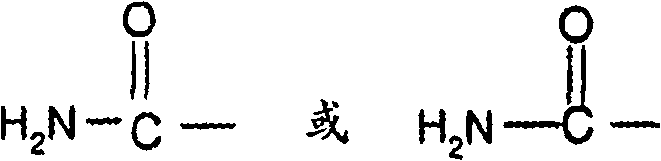

Applications Claiming Priority (2)
| Application Number | Priority Date | Filing Date | Title |
|---|---|---|---|
| DE10051194A DE10051194A1 (en) | 2000-10-16 | 2000-10-16 | Microcapsules with walls made of polyurea |
| DE10051194.5 | 2000-10-16 |
Publications (2)
| Publication Number | Publication Date |
|---|---|
| CN1348832A CN1348832A (en) | 2002-05-15 |
| CN100528328C true CN100528328C (en) | 2009-08-19 |
Family
ID=7659936
Family Applications (1)
| Application Number | Title | Priority Date | Filing Date |
|---|---|---|---|
| CN01137009.2A Expired - Fee Related CN100528328C (en) | 2000-10-16 | 2001-10-16 | Micro capsule having carbamide resin wall |
Country Status (11)
| Country | Link |
|---|---|
| US (1) | US6797670B2 (en) |
| EP (1) | EP1199100B1 (en) |
| JP (1) | JP2002233749A (en) |
| CN (1) | CN100528328C (en) |
| BR (1) | BR0104505A (en) |
| DE (2) | DE10051194A1 (en) |
| ES (1) | ES2267645T3 (en) |
| MX (1) | MXPA01010417A (en) |
| PL (1) | PL350106A1 (en) |
| TW (1) | TW574064B (en) |
| ZA (1) | ZA200107518B (en) |
Families Citing this family (30)
| Publication number | Priority date | Publication date | Assignee | Title |
|---|---|---|---|---|
| US20040026659A1 (en) * | 2002-07-08 | 2004-02-12 | China Textile Institute | Composition for fabricating phase-change-material microcapsules and a method for fabricating the microcapsules |
| US7833578B2 (en) | 2003-07-07 | 2010-11-16 | Taiwan Textile Research Institute | Composition and method for fabricating microcapsules encapsulating phase-change material |
| CN100376320C (en) * | 2005-09-06 | 2008-03-26 | 西北工业大学 | Polyurea-coated dicyclopentadiene microcapsules and preparation method thereof |
| WO2007110383A1 (en) * | 2006-03-28 | 2007-10-04 | Basf Se | Encapsulation of lipophilic active substances |
| US9687424B2 (en) * | 2009-09-18 | 2017-06-27 | International Flavors & Fragrances | Polyurea capsules prepared with aliphatic isocyanates and amines |
| US10226405B2 (en) | 2009-09-18 | 2019-03-12 | International Flavors & Fragrances Inc. | Purified polyurea capsules, methods of preparation, and products containing the same |
| US10085925B2 (en) | 2009-09-18 | 2018-10-02 | International Flavors & Fragrances Inc. | Polyurea capsule compositions |
| US11311467B2 (en) | 2009-09-18 | 2022-04-26 | International Flavors & Fragrances Inc. | Polyurea capsules prepared with a polyisocyanate and cross-linking agent |
| US9816059B2 (en) | 2009-09-18 | 2017-11-14 | International Flavors & Fragrances | Stabilized capsule compositions |
| US20120148644A1 (en) * | 2009-09-18 | 2012-06-14 | Lewis Michael Popplewell | Encapsulated Active Materials |
| BR112012024804B1 (en) | 2010-03-30 | 2020-12-15 | Unilever N.V | PROCESS FOR THE INCORPORATION OF MICROCASULES WITH ANIONIC LOAD IN A STRUCTURED CONCENTRATED LIQUID DETERGENT |
| HUE025312T2 (en) | 2010-04-01 | 2016-02-29 | Unilever Nv | Structuring detergent liquids with hydrogenated castor oil |
| EP2495300A1 (en) | 2011-03-04 | 2012-09-05 | Unilever Plc, A Company Registered In England And Wales under company no. 41424 of Unilever House | Structuring detergent liquids with hydrogenated castor oil |
| ES2561416T3 (en) | 2012-04-23 | 2016-02-26 | Unilever N.V. | Compositions of externally structured aqueous isotropic liquid detergents |
| BR112014026300A2 (en) | 2012-04-23 | 2017-06-27 | Unilever Nv | liquid, isotropic, aqueous, externally structured laundry detergent composition |
| ES2564385T3 (en) | 2012-04-23 | 2016-03-22 | Unilever N.V. | Aqueous compositions of externally structured isotropic liquid detergent |
| US20140066357A1 (en) * | 2012-08-30 | 2014-03-06 | P. H. Glatfelter Company | Heat-stable microencapsulated fragrance oils |
| EP2925843B1 (en) | 2012-11-29 | 2016-08-31 | Unilever PLC | Polymer structured aqueous detergent compositions |
| BR122019023314B1 (en) | 2013-08-15 | 2020-10-06 | International Flavors & Fragrances Inc. | POLYUREA CAPSULE COMPOSITION, METHOD FOR PREPARING A POLYUREA CAPSULE COMPOSITION, AND CONSUMER PRODUCT |
| US20170252274A1 (en) * | 2013-08-16 | 2017-09-07 | International Flavors & Fragrances Inc. | Polyurea capsules prepared with aliphatic isocyanates and amines |
| EP3390483B1 (en) | 2015-10-27 | 2022-05-18 | The Procter & Gamble Company | Encapsulation |
| MX2018009997A (en) | 2016-02-18 | 2019-02-07 | Int Flavors & Fragrances Inc | Polyurea capsule compositions. |
| US20180085291A1 (en) | 2016-09-28 | 2018-03-29 | International Flavors & Fragrances Inc. | Microcapsule compositions containing amino silicone |
| WO2018210522A1 (en) | 2017-05-15 | 2018-11-22 | Unilever Plc | Composition |
| WO2018210523A1 (en) | 2017-05-15 | 2018-11-22 | Unilever Plc | Composition |
| EP3625320A1 (en) | 2017-05-15 | 2020-03-25 | Unilever PLC | Composition |
| WO2018210524A1 (en) | 2017-05-15 | 2018-11-22 | Unilever Plc | Composition |
| CN113164896B (en) | 2018-12-03 | 2023-02-03 | 爱克发-格法特公司 | Aqueous dispersion of capsules |
| EP3897525A4 (en) | 2018-12-18 | 2023-05-10 | International Flavors & Fragrances Inc. | COMPOSITIONS OF MICROCAPSULES PREPARED FROM POLYSACCHARIDES |
| CN120694898A (en) | 2018-12-18 | 2025-09-26 | 国际香料和香精公司 | Guar gum microcapsules |
Family Cites Families (12)
| Publication number | Priority date | Publication date | Assignee | Title |
|---|---|---|---|---|
| AU5960380A (en) | 1979-08-30 | 1981-03-05 | A. Ehrenreich G.m.b.H. & Co. KG | Bellows seal and retaining ring |
| DE3605552A1 (en) | 1986-02-21 | 1987-08-27 | Bayer Ag | HIGHLY CONCENTRATED, STABLE SOLUTIONS OF COLOR IMAGES |
| DE3622262A1 (en) | 1986-07-02 | 1988-01-07 | Bayer Ag | CHROMOGENE 3,1-BENZOXAZINE |
| DE3738240A1 (en) | 1987-11-11 | 1989-05-24 | Bayer Ag | TETRAINDOLYL-HEPTAMETHINE ETHER, ALCOHOLS AND DYES |
| US5225118A (en) | 1990-08-15 | 1993-07-06 | Boise Cascade Corporation | Process for manufacturing polyurea microcapsules and product therefrom |
| US5164126A (en) | 1991-03-05 | 1992-11-17 | Appleton Papers Inc. | Process for microencapsulation |
| JP2684473B2 (en) | 1991-09-02 | 1997-12-03 | 富士写真フイルム株式会社 | Continuous production method of microcapsules |
| DE59307983D1 (en) | 1992-09-30 | 1998-02-19 | Ciba Geigy Ag | Concentrated, aqueous liquid formulations of color formers |
| DE19501479A1 (en) | 1995-01-19 | 1996-07-25 | Bayer Ag | Microcapsules with walls made from reaction products of polyisocyanates and guanidines |
| US5643506A (en) | 1995-02-03 | 1997-07-01 | The Mead Corporation | Continuous production of Emulsions and microcapsules of uniform particle size |
| DE19548025A1 (en) | 1995-12-21 | 1997-06-26 | Bayer Ag | Process for the production of degradable microcapsules |
| DE19646110A1 (en) * | 1996-11-08 | 1998-05-14 | Bayer Ag | Microcapsules using iminooxadiazinedione polyisocyanates |
-
2000
- 2000-10-16 DE DE10051194A patent/DE10051194A1/en not_active Withdrawn
-
2001
- 2001-09-12 ZA ZA200107518A patent/ZA200107518B/en unknown
- 2001-10-02 DE DE50110390T patent/DE50110390D1/en not_active Expired - Lifetime
- 2001-10-02 EP EP01123237A patent/EP1199100B1/en not_active Expired - Lifetime
- 2001-10-02 ES ES01123237T patent/ES2267645T3/en not_active Expired - Lifetime
- 2001-10-05 JP JP2001310219A patent/JP2002233749A/en active Pending
- 2001-10-11 US US09/975,787 patent/US6797670B2/en not_active Expired - Lifetime
- 2001-10-12 PL PL01350106A patent/PL350106A1/en not_active Application Discontinuation
- 2001-10-12 TW TW90125153A patent/TW574064B/en active
- 2001-10-15 BR BR0104505-9A patent/BR0104505A/en not_active Application Discontinuation
- 2001-10-15 MX MXPA01010417A patent/MXPA01010417A/en unknown
- 2001-10-16 CN CN01137009.2A patent/CN100528328C/en not_active Expired - Fee Related
Also Published As
| Publication number | Publication date |
|---|---|
| PL350106A1 (en) | 2002-04-22 |
| EP1199100A3 (en) | 2002-07-31 |
| ES2267645T3 (en) | 2007-03-16 |
| DE10051194A1 (en) | 2002-04-25 |
| ZA200107518B (en) | 2002-05-13 |
| BR0104505A (en) | 2002-05-21 |
| DE50110390D1 (en) | 2006-08-17 |
| CN1348832A (en) | 2002-05-15 |
| JP2002233749A (en) | 2002-08-20 |
| EP1199100B1 (en) | 2006-07-05 |
| US6797670B2 (en) | 2004-09-28 |
| US20020079599A1 (en) | 2002-06-27 |
| TW574064B (en) | 2004-02-01 |
| EP1199100A2 (en) | 2002-04-24 |
| MXPA01010417A (en) | 2002-06-04 |
Similar Documents
| Publication | Publication Date | Title |
|---|---|---|
| CN100528328C (en) | Micro capsule having carbamide resin wall | |
| US6586107B2 (en) | Microcapsules having polyurea walls | |
| US5324584A (en) | Process for manufacturing polyurea microcapsules and product therefrom | |
| JP3266330B2 (en) | Microcapsules prepared from isocyanates having groups containing poly (ethylene oxide) | |
| CA2167346C (en) | Microcapsules having walls made of polyisocyanate/guanidine reaction products | |
| JPH0628722B2 (en) | Continuous production method of microcapsule dispersion | |
| JPS62149333A (en) | Microencapsulation by interface heavy loading | |
| JPS63200830A (en) | Method of improving micro-capsulization by interfacial polyaddition | |
| US4209188A (en) | Microcapsules, method of making same, and carbonless copying system including said microcapsules | |
| JPS6036954B2 (en) | Carbon-free copy paper | |
| GB2055739A (en) | Production of microcapsules by interfacial polymerisation | |
| JP3913298B2 (en) | Method for producing microcapsules | |
| JP2706219B2 (en) | Microcapsule, manufacturing method thereof and carbonless copying system | |
| JPH09234360A (en) | Microcapsule having wall made of reaction product of biuret polyisocyanate and guanidine | |
| JPS6050155B2 (en) | Microcapsules for carbon-free copy paper | |
| US5204184A (en) | Microencapsulation using tertiary aliphatic isocyanate capsule wall material | |
| JPS583898A (en) | Manufacture of microcapsule for pressure-sensitive copying paper | |
| JPS5840142A (en) | Preparation of microcapsule | |
| JP3403440B2 (en) | Manufacturing method of microcapsules | |
| JPH0248039A (en) | Production of microcapsule | |
| JP3417081B2 (en) | Manufacturing method of microcapsules | |
| JPS621838B2 (en) | ||
| JP2000107590A (en) | Production of microcapsule and capsule ink | |
| JPS6333474B2 (en) | ||
| JP2007237696A (en) | Microcapsule for pressure-sensitive recording material, method for producing the same, and pressure-sensitive recording material using the same |
Legal Events
| Date | Code | Title | Description |
|---|---|---|---|
| C06 | Publication | ||
| PB01 | Publication | ||
| C10 | Entry into substantive examination | ||
| SE01 | Entry into force of request for substantive examination | ||
| ASS | Succession or assignment of patent right |
Owner name: LANXESS DEUTSCHLAND GMBH Free format text: FORMER OWNER: BAYER AG Effective date: 20071012 |
|
| C41 | Transfer of patent application or patent right or utility model | ||
| TA01 | Transfer of patent application right |
Effective date of registration: 20071012 Address after: Germany Leverkusen Applicant after: Lanxess Deutschland GmbH Address before: The Federal Republic of Germany Leverkusen Applicant before: Bayer Aktiengesellschaft |
|
| ASS | Succession or assignment of patent right |
Owner name: KEMIRA OYJ Free format text: FORMER OWNER: LANXESS DEUTSCHLAND GMBH Effective date: 20071123 |
|
| C41 | Transfer of patent application or patent right or utility model | ||
| TA01 | Transfer of patent application right |
Effective date of registration: 20071123 Address after: Helsinki Applicant after: Kemira Oyj Address before: Germany Leverkusen Applicant before: Lanxess Deutschland GmbH |
|
| C14 | Grant of patent or utility model | ||
| GR01 | Patent grant | ||
| CF01 | Termination of patent right due to non-payment of annual fee |
Granted publication date: 20090819 Termination date: 20201016 |
|
| CF01 | Termination of patent right due to non-payment of annual fee |