CN100527875C - Method for achieving media flow security and communication system - Google Patents
Method for achieving media flow security and communication system Download PDFInfo
- Publication number
- CN100527875C CN100527875C CNB2005100802501A CN200510080250A CN100527875C CN 100527875 C CN100527875 C CN 100527875C CN B2005100802501 A CNB2005100802501 A CN B2005100802501A CN 200510080250 A CN200510080250 A CN 200510080250A CN 100527875 C CN100527875 C CN 100527875C
- Authority
- CN
- China
- Prior art keywords
- security
- key
- network
- media stream
- session
- Prior art date
- Legal status (The legal status is an assumption and is not a legal conclusion. Google has not performed a legal analysis and makes no representation as to the accuracy of the status listed.)
- Expired - Fee Related
Links
Images


Landscapes
- Data Exchanges In Wide-Area Networks (AREA)
- Mobile Radio Communication Systems (AREA)
Abstract
本发明公开了一种实现媒体流安全的方法,该方法为:终端设备发起会话请求;参与所述会话的终端设备所在接入域和网络域之间的边界控制实体在会话建立过程中,确定是否为本次会话分配媒体流加密密钥或媒体流完整性保护密钥;以及边界控制实体在分配密钥后将其传送到终端设备和对应的边界转发实体,该终端设备和边界转发实体利用安全算法和所述密钥对经接入域传送的媒体流进行安全保护。本发明还同时公开了一种通信系统。
The invention discloses a method for realizing media flow security, the method is as follows: a terminal device initiates a session request; a boundary control entity between the access domain and the network domain where the terminal device participating in the session is located determines during the session establishment process Whether to allocate a media stream encryption key or a media stream integrity protection key for this session; and after the border control entity distributes the key, it transmits it to the terminal device and the corresponding border forwarding entity, and the terminal device and the border forwarding entity use The security algorithm and the key perform security protection on the media stream transmitted through the access domain. The invention also discloses a communication system at the same time.
Description
技术领域 technical field
本发明涉及通信技术领域,尤其涉及一种实现媒体流安全的方法及通信系统。The invention relates to the technical field of communication, in particular to a method and a communication system for realizing media flow security.
背景技术 Background technique
在下一代网络(NGN)中,无论是软交换网络还是未来的IP多媒体业务子系统(IMS)网络,目前对于网络安全问题更多的是考虑如何保证信令面的安全,而对媒体流的安全考虑较少,事实上,媒体流同样需要考虑安全问题,否则用户的通话在IP网上可能很容易被窃听,IP报文的篡改也很容易使得服务质量降低。In the next generation network (NGN), whether it is a softswitch network or a future IP Multimedia Service Subsystem (IMS) network, the current network security issues are more concerned with how to ensure the security of the signaling plane, while media flow There are few security considerations. In fact, media streams also need to consider security issues. Otherwise, user calls may be easily eavesdropped on the IP network, and tampering of IP packets may also easily degrade service quality.
现有的一种保护IMS网络中媒体流的方案,其基本原理如下:An existing scheme for protecting media streams in an IMS network has the following basic principles:
在IMS网络架构中引入媒体流代理RTP Proxy;通过通用引导架构(GBA,是3GPP规范中定义的一种通用的认证与密钥分配模型)方式实现用户终端(UE)和RTP Proxy的共享密钥;通过该共享密钥,UE和RTP Proxy之间实现对媒体流的机密性和完整性保护,实现媒体流在接入域的安全。Introduce the media stream proxy RTP Proxy in the IMS network architecture; realize the shared key between the user terminal (UE) and RTP Proxy through the general bootstrap architecture (GBA, which is a general authentication and key distribution model defined in the 3GPP specification) ; Through the shared key, the confidentiality and integrity protection of the media stream is realized between the UE and the RTP Proxy, and the security of the media stream in the access domain is realized.
GBA的架构模型如图1所示,GBA在媒体流密钥分配中的应用如图2所示。利用GBA机制实现UE和RTP Proxy之间的密钥分配描述如下:The architecture model of GBA is shown in Figure 1, and the application of GBA in media stream key distribution is shown in Figure 2. Using the GBA mechanism to realize the key distribution between UE and RTP Proxy is described as follows:
在图2中,将SIP Server(如3GPP IMS网络中定义的P-CSCF)和RTP Proxy看作一个整体,作为GBA中的网络应用功能(NAF),SIP Server从BSF获取NAF和SIP Client共享的密钥,SIP Server再通过其它接口Is将密钥送给RTPProxy,从而实现SIP Client和RTP Proxy之间的媒体流安全密钥共享。In Figure 2, the SIP Server (such as the P-CSCF defined in the 3GPP IMS network) and the RTP Proxy are regarded as a whole, as the network application function (NAF) in the GBA, and the SIP Server obtains the information shared by the NAF and the SIP Client from the BSF. Key, SIP Server sends the key to RTPProxy through other interface Is, thereby realizing the media stream security key sharing between SIP Client and RTP Proxy.
虽然在GBA的架构中,NAF和引导服务器功能(BSF)有Zn接口,但目前在实际应用中BSF的功能由网络中的哪个实体来完成还没有具体的方案,而且需要通过接口从BSF获取密钥也使处理流程更为复杂。另外,上述GBA模型分配的密钥的更新周期较长,而且该密钥可以用于SIP Client和P-CSCF/RTPProxy之间多次会话的媒体流的加密或完整性保护,导致密钥在多个实体之间共享,同时多次媒体流会话采用同一个密钥进行保护,也存在一定的安全隐患。Although in the architecture of GBA, NAF and Bootstrap Server Function (BSF) have Zn interface, but currently there is no specific plan for which entity in the network to complete the function of BSF in actual application, and it is necessary to obtain the password from BSF through the interface Keys also complicate the process. In addition, the update cycle of the key assigned by the above-mentioned GBA model is relatively long, and the key can be used for encryption or integrity protection of media streams in multiple sessions between the SIP Client and P-CSCF/RTPProxy, resulting in the key being used in multiple sessions. It is shared among multiple entities, and the same key is used to protect multiple media streaming sessions, which also has certain security risks.
发明内容 Contents of the invention
本发明提供一种实现媒体流安全的方法及通信系统,以解决现有技术中存在密钥分配流程处理复杂和安全性较差的问题。The invention provides a method and a communication system for realizing media stream security, so as to solve the problems of complex key distribution process processing and poor security in the prior art.
实现本发明的技术方案如下:Realize the technical scheme of the present invention as follows:
一种实现媒体流安全的方法,包括如下步骤:A method for realizing media stream security, comprising the steps of:
终端设备发起会话请求;The terminal device initiates a session request;
参与所述会话的终端设备所在接入域和网络域之间的边界控制实体在会话建立过程中,根据会话请求响应中是否需要对本次会话进行媒体流安全保护的媒体流安全保护指示,和/或参考安全策略,确定是否为本次会话分配媒体流加密密钥或媒体流完整性保护密钥,如需要则分配媒体流加密密钥或媒体流完整性保护密钥;以及During the session establishment process, the border control entity between the access domain and the network domain where the terminal equipment participating in the session is located, according to the media stream security protection indication of whether media stream security protection needs to be performed on this session according to the session request response, and /or refer to the security policy to determine whether to allocate a media stream encryption key or a media stream integrity protection key for this session, and if necessary, allocate a media stream encryption key or a media stream integrity protection key; and
边界控制实体在分配密钥后将其传送到终端设备和对应的边界转发实体,该终端设备和边界转发实体利用安全算法和所述密钥对经接入域传送的媒体流进行安全保护。After the border control entity distributes the key, it transmits it to the terminal device and the corresponding border forwarding entity. The terminal device and the border forwarding entity use the security algorithm and the key to protect the media stream transmitted through the access domain.
其中:in:
所述边界控制实体根据会话请求响应中是否需要对本次会话进行媒体流安全保护的媒体流安全保护指示,以及参考本地配置的安全策略,确定是否为本次会话分配媒体流加密密钥或媒体流安全密钥。The border control entity determines whether to allocate a media stream encryption key or a media stream encryption key or a media stream encryption key for this session according to the media stream security protection indication of whether media stream security protection needs to be performed on this session in the session request response, and referring to the locally configured security policy. stream security key.
由网络中的网络实体根据用户信息或业务信息确定是否需要对本次会话进行媒体流安全保护。A network entity in the network determines whether to perform media stream security protection for this session according to user information or service information.
通过扩展会话请求响应的消息头域或者参数来指示是否需要对媒体流进行安全保护。Indicate whether security protection of the media stream is required by extending the message header field or parameters of the session request response.
终端设备与边界转发实体之间采用的安全算法在会话消息交互过程中协商确定。The security algorithm adopted between the terminal device and the border forwarding entity is negotiated and determined during the exchange of session messages.
在会话消息交互过程中,终端设备和边界转发实体分别将支持的安全算法发送给边界控制实体,由边界控制实体选择一个双方均支持的安全算法并通知终端设备和边界转发实体;During the session message interaction process, the terminal device and the border forwarding entity respectively send the supported security algorithms to the border control entity, and the border control entity selects a security algorithm supported by both parties and notifies the terminal device and the border forwarding entity;
或者,在会话消息交互过程中,终端设备通过边界控制实体将支持的安全算法传送到边界转发实体,由边界转发实体选择一个双方均支持的算法并经边界边控制实体通知终端设备;Or, during the session message interaction process, the terminal device transmits the supported security algorithm to the border forwarding entity through the border control entity, and the border forwarding entity selects an algorithm supported by both parties and notifies the terminal device through the border border control entity;
或者,在会话消息交互过程中,边界控制实体获取边界转发实体支持的安全算法列表并发送到终端设备,由终端设备选择一个双方均支持的算法并经边界边控制实体通知边界转发实体。Or, during the session message interaction process, the border control entity obtains the security algorithm list supported by the border forwarding entity and sends it to the terminal device, and the terminal device selects an algorithm supported by both parties and notifies the border forwarding entity through the border border control entity.
一种通信系统,包括接入域和网络域,该通信系统包括:A communication system, including an access domain and a network domain, the communication system includes:
边界控制实体,设置在所述接入域和网络域之间,用于为用户终端之间的会话分配媒体流安全密钥;A border control entity, set between the access domain and the network domain, for allocating media stream security keys for sessions between user terminals;
边界转发实体,设置在所述接入域和网络域之间,利用所述安全密钥对通过接入域发往终端的媒体流进行加密,或对终端设备通过接入域传送来的媒体流进行解密。The border forwarding entity is set between the access domain and the network domain, and uses the security key to encrypt the media stream sent to the terminal through the access domain, or to encrypt the media stream transmitted by the terminal device through the access domain to decrypt.
所述边界控制实体和边界转发实体为相互独立的物理设备,或者为同一物理设备。The border control entity and the border forwarding entity are independent physical devices, or are the same physical device.
所述通信系统基于IMS网络模型、基于软交换网络模型或基于PSTN网络演进模型。The communication system is based on an IMS network model, a softswitch network model or a PSTN network evolution model.
本发明结合目前网络架构和模型,给出了一个完整的媒体流安全解决方案,包括实施策略,因而具有以下有益效果:The present invention provides a complete media stream security solution, including implementation strategies, in combination with the current network architecture and models, thus having the following beneficial effects:
1、媒体流的安全密钥在接入层生成和分发,不会影响网络的核心实体,而且实现简单。1. The security key of the media stream is generated and distributed at the access layer, which will not affect the core entities of the network, and is easy to implement.
2、本发明中媒体流安全的密钥是基于每次会话的需求动态生成,相对于现有技术而言,增强了整个网络和媒体流的安全性。2. The security key of the media stream in the present invention is dynamically generated based on the requirement of each session. Compared with the prior art, the security of the entire network and media stream is enhanced.
3、本发明中媒体流安全采用端到网络的方式,在网络域边界设备进行解密,方便电信的监管。3. In the present invention, the media flow security adopts the end-to-network method, and the decryption is performed at the edge device of the network domain, which facilitates the supervision of telecommunications.
4、媒体流安全是否保护由完整的策略控制(业务、用户、接入网络情况),尽可能的避免对媒体流进行加解密或鉴权操作,避免媒体流实施上述操作后给网络系统带来的性能压力和对服务质量的影响。4. Whether the media stream security is protected is controlled by a complete policy (business, user, and network access conditions), and it is possible to avoid encryption, decryption or authentication operations on the media stream as much as possible, so as to avoid bringing problems to the network system after the above operations are performed on the media stream. performance pressure and impact on service quality.
附图说明 Description of drawings
图1为现有的GBA模型示意图;Fig. 1 is the schematic diagram of existing GBA model;
图2为GBA在媒体流安全中的应用示意图;Fig. 2 is a schematic diagram of the application of GBA in media stream security;
图3A为IMS网络模型下的通信系统组网示意图;FIG. 3A is a schematic diagram of a communication system networking under the IMS network model;
图3B为软交换网络模型下的组网示意图;Figure 3B is a schematic diagram of networking under the softswitch network model;
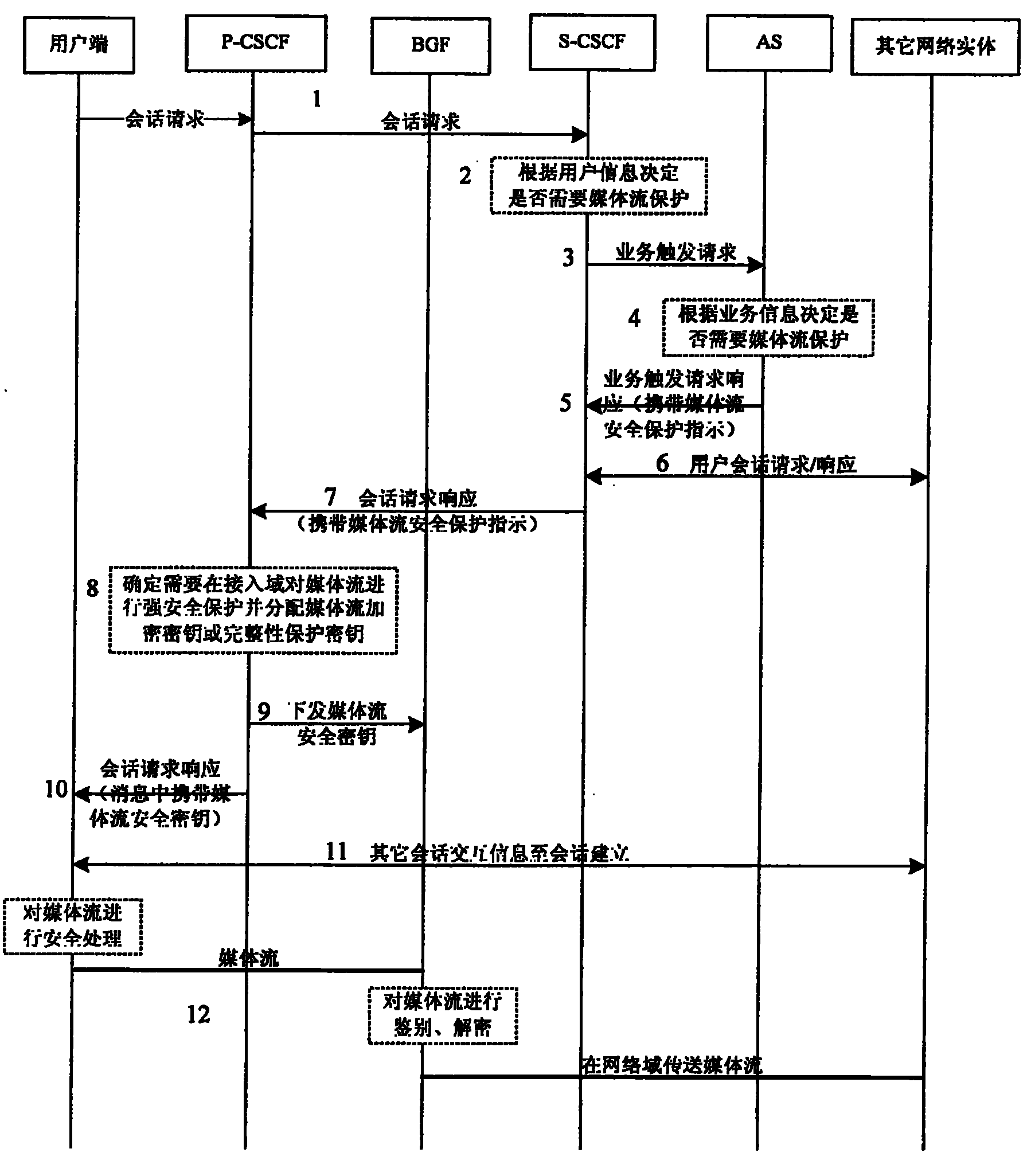
图4为本发明中IMS网络模型下实现媒体流安全的流程图;Fig. 4 is the flow chart that realizes media flow security under IMS network model among the present invention;
图5为本发明中协商安全算法的流程图;Fig. 5 is the flowchart of negotiation security algorithm in the present invention;
图6为本发明中软交换网络模型下实现媒体流安全的流程图。Fig. 6 is a flow chart of realizing media stream security under the softswitch network model in the present invention.
具体实施方式 Detailed ways
媒体流安全分为三段:主叫接入段(主叫用户-BGF/ABP/IBP)、网络段(BGF/ABP/IBP-BGF/ABP/IBP)、被叫接入段(BGF/ABP/IBP-被叫用户),主叫接入段和被叫接入段的媒体流安全在安全策略和安全方案都是相似的,因此媒体流的安全归结为接入域的安全和网络域的安全。Media stream security is divided into three sections: calling access section (calling user-BGF/ABP/IBP), network section (BGF/ABP/IBP-BGF/ABP/IBP), called access section (BGF/ABP /IBP-called user), the media flow security of the calling access segment and the called access segment are similar in terms of security policies and security solutions, so the security of the media stream comes down to the security of the access domain and the security of the network domain Safety.
网络域由于属于运营商内部,通常是可信的,可以认为是安全的,此外出于监管的原因,通常不会进行加密等安全保护,即使进行保护,由于网络设备数量是有限的,可以采取配置建立隧道或配置密钥等比较容易实施的方式来保证媒体流的安全。接入域由于是运营商不可控的,因此媒体流安全需要重点考虑接入域内安全。Since the network domain belongs to the operator's interior, it is usually trusted and can be considered safe. In addition, for regulatory reasons, security protection such as encryption is usually not implemented. Even if it is protected, due to the limited number of network devices, you can take Configure easy-to-implement methods such as establishing a tunnel or configuring keys to ensure the security of media streams. Since the access domain is uncontrollable by operators, media stream security needs to focus on the security within the access domain.
在本发明中,为了使分配媒体流安全密钥的实现更为简单,在终端设备发起会话请求后,由参与该次会话的终端设备所在接入域和网络域之间的边界控制实体确定是否为本次会话分配媒体流加密密钥或媒体流完整性保护密钥;如果需要分配安全密钥,则边界控制实体在分配密钥后将其传送到终端设备和对应的边界转发实体,终端设备和边界转发实体利用相同的安全算法和安全密钥对经接入域传送的媒体流进行安全保护。In the present invention, in order to make the distribution of media stream security keys simpler, after a terminal device initiates a session request, the boundary control entity between the access domain and the network domain where the terminal device participating in the session determines whether Assign a media stream encryption key or a media stream integrity protection key for this session; if a security key needs to be assigned, the border control entity transmits it to the terminal device and the corresponding border forwarding entity after the key is distributed, and the terminal device Use the same security algorithm and security key as the border forwarding entity to protect the media stream transmitted through the access domain.
在实际组网中,边界控制实体和边界转发实体可以是同一个物理设备,也可以是相互独立的物理设备。In actual networking, the border control entity and the border forwarding entity may be the same physical device, or may be independent physical devices.
参阅图3A所示,通信系统组网结构基于IP多媒体业务子系统(IMS)网络模型,其中,IMS网络中的代理-呼叫会话控制功能(P-CSCF)实体作为接入域和网络域之间的边界控制实体;接入域和网络域之间的边界网关功能(BGF)实体作为接入网络和核心网络之间的边界转发实体。Referring to Fig. 3A, the communication system networking structure is based on the IP Multimedia Service Subsystem (IMS) network model, wherein the proxy-call session control function (P-CSCF) entity in the IMS network acts as a link between the access domain and the network domain. The border control entity; the border gateway function (BGF) entity between the access domain and the network domain acts as a border forwarding entity between the access network and the core network.
参阅图3B所示,通信系统组网结构基于软交换网络模型,其中,软交换网络中ABP/IBP/NBP边界实体信令面作为接入域和网络域之间的边界控制实体;ABP/IBP/NBP边界实体媒体面作为接入网络和核心网络之间的边界转发实体,其中,根据软交换总体技术草案中的说明,ABP指接入边界代理(access borderproxy),IBP指互联边界代理(Inter border proxy),NBP指网间边界代理(Network border proxy)。Referring to Fig. 3B, the communication system networking structure is based on the softswitch network model, wherein the ABP/IBP/NBP boundary entity signaling plane in the softswitch network is used as the boundary control entity between the access domain and the network domain; ABP/IBP The media plane of the /NBP border entity serves as the border forwarding entity between the access network and the core network. According to the description in the softswitch general technical draft, ABP refers to the access border proxy (access border proxy), and IBP refers to the interconnection border proxy (Internet border proxy). border proxy), NBP refers to the network border proxy (Network border proxy).
在上述图3A、图3B中,省略了接入域和网络域中的其它功能实体,如在IMS网络模型中,P-CSCF实体和BGF之间会存在基于业务的策略决定功能(SPDF)实现基于策略的控制等,但其它功能实体的存在并不影响本发明的技术方案,即在其它网络实体存在的情况下,本发明的技术方案同样有效。同时网络域可能包括了多个运营商或多个管理域,跨越多个运营商和多个管理域时同样不影响本发明的方案。上述模型中实体的名称不影响本发明的方案描述(如ABP、IBP和AAA等是目前软交换总体技术要求草案中的术语)。In the above Figure 3A and Figure 3B, other functional entities in the access domain and network domain are omitted. For example, in the IMS network model, there will be a service-based policy decision function (SPDF) implementation between the P-CSCF entity and the BGF Policy-based control, etc., but the existence of other functional entities does not affect the technical solution of the present invention, that is, the technical solution of the present invention is also effective when other network entities exist. At the same time, the network domain may include multiple operators or multiple management domains, and the solution of the present invention will not be affected when the network domain spans multiple operators and multiple management domains. The titles of the entities in the above model do not affect the solution description of the present invention (for example, ABP, IBP and AAA are terms in the current softswitch general technical requirements draft).
媒体流的安全不是每次会话都必须的,需要根据每次会话中用户的安全需求、会话业务的安全需求来决定是否需要进行媒体流保护。因此,在边界控制实体上可以配置或从其它实体获取安全策略,该安全策略包括根据用户接入方式和接入网络的安全程度等因素来确定是否实施媒体流安全保护,当然也可以包括其他方式的安全策略。在需要进行媒体流保护的情况下,可以根据用户的接入网络情况来决定是否实施强媒体流安全保护措施(如对媒体流进行加密、完整性鉴别等),如对于双绞线用户的接入在进行接入认证和隔离的情况下,可能就认为其安全性已达到要求,而不再进行加密保护。The security of the media stream is not necessary for every session. It is necessary to decide whether to protect the media stream according to the security requirements of the users in each session and the security requirements of the session service. Therefore, a security policy can be configured on the border control entity or obtained from other entities. The security policy includes determining whether to implement media stream security protection according to factors such as the user access method and the security degree of the access network. Of course, other methods can also be included. security policy. In the case where media stream protection is required, it is possible to decide whether to implement strong media stream security protection measures (such as encrypting media streams, integrity authentication, etc.) according to the user's access network conditions. In the case of access authentication and isolation, it may be considered that its security has met the requirements, and encryption protection is no longer performed.
参阅图4所示(结合参阅图3A),以IMS网络模型为例,实现接入域媒体流安全的主要流程如下:Referring to FIG. 4 (see FIG. 3A in combination), taking the IMS network model as an example, the main process for realizing media stream security in the access domain is as follows:
步骤1、用户终端向IMS网络中的P-CSCF实体发起会话请求,该请求被转发到S-CSCF(Serving-call session control function,服务-呼叫/会话控制功能)实体。Step 1. The user terminal initiates a session request to the P-CSCF entity in the IMS network, and the request is forwarded to the S-CSCF (Serving-call session control function, serving-call/session control function) entity.
步骤2、S-CSCF实体根据用户签约数据判断本次会话是否需要媒体流保护,即根据用户信息来决定。
步骤3、S-CSCF实体向应用服务器(AS)发送业务触发请求。
步骤4、应用服务器根据用户签约的业务数据决定本次会话业务是否需要媒体流保护,即根据业务信息来决定。Step 4: The application server decides whether the session service needs media stream protection according to the service data signed by the user, that is, decides according to the service information.
步骤5、AS向S-CSCF实体返回业务触发请求响应消息,其中携带媒体流安全指示。Step 5. The AS returns a service trigger request response message to the S-CSCF entity, which carries a media stream security indication.
步骤6、S-CSCF实体与网络中其他网络实体进行交互。Step 6. The S-CSCF entity interacts with other network entities in the network.
步骤6、S-CSCF实体与网络中其他网络实体进行交互。Step 6. The S-CSCF entity interacts with other network entities in the network.
步骤7、S-CSCF实体向P-CSCF实体返回会话请求响应,该响应中携带媒体流安全保护指示。Step 7: The S-CSCF entity returns a session request response to the P-CSCF entity, and the response carries a media stream security protection indication.
可以通过扩展会话请求响应的消息头域或参数来指示是否需要对媒体流进行保护。Whether the media stream needs to be protected can be indicated by extending the message header field or parameter of the session request response.
步骤8、P-CSCF实体根据消息中的媒体流安全保护指示以及本地安全策略,决定是否需要在接入域对媒体流进行强安全保护,如需要则分配媒体流加密密钥或完整性保护密钥。Step 8: The P-CSCF entity decides whether to perform strong security protection on the media stream in the access domain according to the media stream security protection indication in the message and the local security policy, and assigns the media stream encryption key or integrity protection key if necessary. key.
步骤9、P-CSCF实体将分配的安全密钥下发至边界网关功能(BGF)实体。Step 9: The P-CSCF entity delivers the allocated security key to the Border Gateway Function (BGF) entity.
P-CSCF实体可以采用明文传送,也可以利用与BGF实体之间配置或协商的密钥对媒体流安全密钥加密后传送。The P-CSCF entity can transmit in plain text, or encrypt the media stream security key with the key configured or negotiated with the BGF entity before transmitting.
步骤10、P-CSCF实体向用户终端返回会话请求响应,该响应中携带媒体流安全密钥。密钥采用用户在注册过程中分配的终端和P-CSCF实体之间的加密密钥加密。Step 10, the P-CSCF entity returns a session request response to the UE, and the response carries the media stream security key. The key is encrypted with the encryption key between the terminal and the P-CSCF entity assigned by the user during the registration process.
步骤11、用户终端与其他网络实体进行会话交互并建立会话。Step 11, the user terminal performs session interaction with other network entities and establishes a session.
步骤12、用户终端和BGF利用媒体流安全密钥和安全算法对媒体流进行安全保护,即:
终端利用媒体流安全密钥和安全算法对接收以的媒体流进行解密,对发送的媒体流进行加密。BGF实体利用媒体流安全密钥和安全算法对接收到的媒体流进行解密,然后通过网络域传送;对网络域传送来的媒体流进行加密后传送到用户终端。The terminal uses the media stream security key and security algorithm to decrypt the received media stream and encrypt the sent media stream. The BGF entity uses the media stream security key and security algorithm to decrypt the received media stream, and then transmits it through the network domain; encrypts the media stream transmitted from the network domain and transmits it to the user terminal.
在上述流程中,只要根据用户信息或业务信息确定需要对媒体流进行安全保护后,S-CSCF实体均应在向P-CSCF实体携带该对媒体流进行安全保护的指示。In the above process, as long as it is determined according to the user information or service information that the media stream needs to be protected, the S-CSCF entity shall carry the instruction of the media stream security protection to the P-CSCF entity.
在对上述流程中的描述中,省略了部分不影响决定媒体流安全保护和不影响处理媒体安全密钥的会话交互步骤,对部分这类步骤未进行详细描述,但在实现时这些步骤仍然存在,其处理过程与现有技术相同。In the description of the above process, some session interaction steps that do not affect the determination of media stream security protection and the processing of media security keys are omitted, and some of these steps are not described in detail, but these steps still exist during implementation , the process of which is the same as that of the prior art.
终端和BGF实体之间的媒体流安全算法可以采用某种缺省算法,如在规范中指定终端和BGF采用某种完整性保护算法或加密保护算法;也可以通过在会话消息交互过程中协商终端和BGF之间的安全算法,参阅图5所示(该图5是图4的一种简化示意图):The media flow security algorithm between the terminal and the BGF entity can adopt a certain default algorithm, such as specifying in the specification that the terminal and the BGF adopt a certain integrity protection algorithm or encryption protection algorithm; The security algorithm between BGF and BGF is shown in Fig. 5 (this Fig. 5 is a simplified schematic diagram of Fig. 4):
步骤100、用户终端在发起会话请求时在该请求中携带支持的安全算法列表,由P-CSCF实体保存该算法列表。Step 100, when the user terminal initiates a session request, it carries a list of supported security algorithms in the request, and the P-CSCF entity stores the list of algorithms.
步骤110、P-CSCF实体与网络中其他网络实体的交互过程如图4的步骤2-7所述。
步骤120、P-CSCF实体将分配的安全密钥和终端支持的算法列表下发至边界网关功能(BGF)实体。Step 120, the P-CSCF entity sends the allocated security key and the algorithm list supported by the terminal to the border gateway function (BGF) entity.
步骤130、BGF实体根据终端支持的算法列表,选择一个双方均支持的安全算法,并在响应消息中通知P-CSCF实体。Step 130, the BGF entity selects a security algorithm supported by both parties according to the algorithm list supported by the terminal, and notifies the P-CSCF entity in a response message.
步骤140、P-CSCF实体向用户终端返回会话请求响应,该响应中携带媒体流安全密钥和BGF实体确定的安全算法。(其他处理过程与图4中相同,不再赘述)Step 140, the P-CSCF entity returns a session request response to the user terminal, and the response carries the media stream security key and the security algorithm determined by the BGF entity. (Other processes are the same as those in Fig. 4, so no more details will be given)
安全算法也可以由P-CSCF实体来决定,即在P-CSCF实体得到终端的支持的安全算法列表后,获取BGF支持的安全算法列表,P-CSCF根据终端和BGF支持的安全算法列表来选择一个双方都支持的安全算法,将最后选择的算法和密钥信息一起下发给终端和BGF。The security algorithm can also be determined by the P-CSCF entity, that is, after the P-CSCF entity obtains the security algorithm list supported by the terminal, it obtains the security algorithm list supported by the BGF, and the P-CSCF selects according to the security algorithm list supported by the terminal and BGF A security algorithm supported by both parties, and the last selected algorithm and key information are sent to the terminal and BGF together.
安全算法还可以由终端来决定(终端在会话请求中不需要携带支持的安全算法列表),即P-CSCF实体将BGF支持的安全算法列表下发到终端,由终端选择一个双方均支持的安全算法并通知BGF。The security algorithm can also be determined by the terminal (the terminal does not need to carry a list of supported security algorithms in the session request), that is, the P-CSCF entity sends the list of security algorithms supported by the BGF to the terminal, and the terminal selects a security algorithm supported by both parties. Algorithm and notify BGF.
媒体流安全协议可以采用IETF中的RFC3711(The Secure Real-timeTransport Protocol)所定义的媒体流保护格式进行处理,也可以由IMS或软交换等业务网络中的安全规范中定义一种协议格式,只须终端及BGF支持该格式即可。The media stream security protocol can be processed using the media stream protection format defined by RFC3711 (The Secure Real-timeTransport Protocol) in the IETF, or a protocol format defined in the security specifications in service networks such as IMS or softswitches. The terminal and BGF only need to support this format.
上述虽然以IMS网络进行说明,但在软交换网络中的媒体流保护实现与上述流程是一致的,可以通过功能类比来说明(IMS网络中的实体和软交换网络中的实体功能相似是指在本发明的媒体流安全方案中对媒体流保护相关的功能和处理是相似的,其它方面的功能是否一致不影响本发明的实现)。其处理流程如图6所示,其中,软交换同时有部分业务处理的功能,当本次会话业务就在软交换上提供时,软交换自身也可以根据业务信息决定是否需要进行媒体流安全保护。具体的过程参阅上述对图4的描述,不再赘述。Although the above is described with an IMS network, the implementation of media flow protection in the softswitch network is consistent with the above process, which can be explained by functional analogy (similar functions between the entities in the IMS network and the entities in the softswitch network refer to the The functions and processes related to media stream protection in the media stream security solution of the present invention are similar, and whether the functions in other aspects are consistent will not affect the realization of the present invention). Its processing flow is shown in Figure 6, where the softswitch also has some service processing functions. When the current session service is provided on the softswitch, the softswitch itself can also decide whether to perform media stream security protection according to the service information . For the specific process, refer to the above description of FIG. 4 , and details are not repeated here.
上述媒体流安全模型及方案同样可以用于其它组网模型下,如PSTN网络演进模型下的AGCF和BGF之间(此时终端可能是各种位于用户网络侧的接入GW)。其功能实体对应关系如下表:The above media stream security model and solution can also be used in other networking models, such as between AGCF and BGF in the PSTN network evolution model (at this time, the terminal may be various access GWs located on the user network side). The corresponding relationship between its functional entities is as follows:
如表中所示,在基于IMS网络模型的组网中,由P-CSCF实体负责分配媒体流安全密钥,并将安全密钥发送给用户终端设备和BGF实体;在基于软交换网络模型的组网中,由ABP边界实体信令面实体负责分配媒体流安全密钥,并将安全密钥发送给用户终端和ABP边界实体媒体面;在基于PSTN网络演进模型下的组网结构图中,由接入网关控制功能(AGCF)实体负责分配媒体流安全密钥,并将安全密钥发送给用户侧接入网关(GW)和边界转发功能实体(BGF)。上述的网络可以为固定或移动网络,在移动网络中,BGF实体可以是GGSN。As shown in the table, in the networking based on the IMS network model, the P-CSCF entity is responsible for allocating the media stream security key and sending the security key to the user terminal equipment and the BGF entity; in the network model based on the softswitch In the networking, the ABP border entity signaling plane entity is responsible for allocating the media stream security key, and sending the security key to the user terminal and the ABP border entity media plane; in the network structure diagram based on the PSTN network evolution model, The access gateway control function (AGCF) entity is responsible for allocating media stream security keys, and sending the security keys to the user-side access gateway (GW) and border forwarding function entity (BGF). The aforementioned network may be a fixed or mobile network, and in a mobile network, the BGF entity may be a GGSN.
显然,本领域的技术人员可以对本发明进行各种改动和变型而不脱离本发明的精神和范围。这样,倘若对本发明的这些修改和变型属于本发明权利要求及其等同技术的范围之内,则本发明也意图包含这些改动和变型在内。Obviously, those skilled in the art can make various changes and modifications to the present invention without departing from the spirit and scope of the present invention. Thus, if these modifications and variations of the present invention fall within the scope of the claims of the present invention and equivalent technologies, the present invention also intends to include these modifications and variations.
Claims (13)
Priority Applications (1)
| Application Number | Priority Date | Filing Date | Title |
|---|---|---|---|
| CNB2005100802501A CN100527875C (en) | 2005-06-30 | 2005-06-30 | Method for achieving media flow security and communication system |
Applications Claiming Priority (1)
| Application Number | Priority Date | Filing Date | Title |
|---|---|---|---|
| CNB2005100802501A CN100527875C (en) | 2005-06-30 | 2005-06-30 | Method for achieving media flow security and communication system |
Publications (2)
| Publication Number | Publication Date |
|---|---|
| CN1889767A CN1889767A (en) | 2007-01-03 |
| CN100527875C true CN100527875C (en) | 2009-08-12 |
Family
ID=37579025
Family Applications (1)
| Application Number | Title | Priority Date | Filing Date |
|---|---|---|---|
| CNB2005100802501A Expired - Fee Related CN100527875C (en) | 2005-06-30 | 2005-06-30 | Method for achieving media flow security and communication system |
Country Status (1)
| Country | Link |
|---|---|
| CN (1) | CN100527875C (en) |
Families Citing this family (9)
| Publication number | Priority date | Publication date | Assignee | Title |
|---|---|---|---|---|
| CN101222612A (en) * | 2007-01-12 | 2008-07-16 | 华为技术有限公司 | A method and system for securely transmitting media streams |
| CN101227272A (en) * | 2007-01-19 | 2008-07-23 | 华为技术有限公司 | A method and system for obtaining media stream protection key |
| CN101572694B (en) * | 2008-04-29 | 2012-09-05 | 华为技术有限公司 | Method for acquiring media stream key, session equipment and key management function entity |
| CN101951554A (en) | 2010-08-25 | 2011-01-19 | 中兴通讯股份有限公司 | Method and system for realizing pre-access of encrypted conference call |
| CN102821385B (en) * | 2011-06-10 | 2017-03-22 | 中兴通讯股份有限公司 | Methods and network entity for sending public warning system (PWS) key information to terminal |
| CN102594794B (en) * | 2011-12-24 | 2015-04-29 | 华为技术有限公司 | Access method and device of media encryption conference |
| WO2019174015A1 (en) | 2018-03-15 | 2019-09-19 | Oppo广东移动通信有限公司 | Data processing method, access network device, and core network device |
| TWI771518B (en) * | 2017-11-07 | 2022-07-21 | 大陸商Oppo廣東移動通信有限公司 | Method for processing data, access network device, and core network device |
| CN114827093B (en) * | 2021-01-18 | 2024-12-06 | 阿里巴巴集团控股有限公司 | A communication method, device, system and storage medium |
-
2005
- 2005-06-30 CN CNB2005100802501A patent/CN100527875C/en not_active Expired - Fee Related
Also Published As
| Publication number | Publication date |
|---|---|
| CN1889767A (en) | 2007-01-03 |
Similar Documents
| Publication | Publication Date | Title |
|---|---|---|
| US9537837B2 (en) | Method for ensuring media stream security in IP multimedia sub-system | |
| JP5763267B2 (en) | Lawful intercept based on policy routing in a communication system with end-to-end encryption | |
| CN101878631B (en) | Method and device for end-to-edge media protection in IMS system | |
| KR101297936B1 (en) | Method for security communication between mobile terminals and apparatus for thereof | |
| CN101790160A (en) | Method and device for safely consulting session key | |
| CN101222320B (en) | Method, system and device for media stream safety context negotiation | |
| WO2005112338A1 (en) | Key distribution method | |
| CN100571133C (en) | Realization method of secure transmission of media stream | |
| CN100527875C (en) | Method for achieving media flow security and communication system | |
| JP2004248169A (en) | Communication control system, communication control method, program, and communication terminal device | |
| CN1983921B (en) | A method and system for implementing end-to-end media stream security | |
| WO2011131051A1 (en) | Method and device for security communication negotiation | |
| CN101247218B (en) | Safety parameter negotiation method and device for implementing media stream safety | |
| Chen et al. | An efficient end-to-end security mechanism for IP multimedia subsystem | |
| CN100583733C (en) | Method and communication system for realizing media stream security | |
| WO2007048301A1 (en) | A encryption method for ngn service | |
| CN101207477A (en) | A cross-domain multi-gatekeeper end-to-end session key negotiation method | |
| CN100382484C (en) | Session key distribution method crossing gatekeeper management range in direct routing mode | |
| WO2012106528A2 (en) | A method of providing lawful interception of data in a secure communication system | |
| CN101207480A (en) | A cross-domain multi-gatekeeper end-to-end session key negotiation method | |
| CN101207478B (en) | A cross-domain multi-gatekeeper end-to-end session key negotiation method | |
| Liu et al. | Security considerations on pervasive real-time collaboration | |
| WO2008083620A1 (en) | A method, a system and an apparatus for media flow security context negotiation | |
| WO2006081712A1 (en) | A method for switching the level of the plaintext and cyphertext during the conversation |
Legal Events
| Date | Code | Title | Description |
|---|---|---|---|
| C06 | Publication | ||
| PB01 | Publication | ||
| C10 | Entry into substantive examination | ||
| SE01 | Entry into force of request for substantive examination | ||
| C14 | Grant of patent or utility model | ||
| GR01 | Patent grant | ||
| CF01 | Termination of patent right due to non-payment of annual fee |
Granted publication date: 20090812 Termination date: 20160630 |
|
| CF01 | Termination of patent right due to non-payment of annual fee |