CN100493001C - Automatic clustering method for multi-particle size network under G bit flow rate - Google Patents
Automatic clustering method for multi-particle size network under G bit flow rate Download PDFInfo
- Publication number
- CN100493001C CN100493001C CNB2007100646786A CN200710064678A CN100493001C CN 100493001 C CN100493001 C CN 100493001C CN B2007100646786 A CNB2007100646786 A CN B2007100646786A CN 200710064678 A CN200710064678 A CN 200710064678A CN 100493001 C CN100493001 C CN 100493001C
- Authority
- CN
- China
- Prior art keywords
- node
- capacity
- depth
- current
- value
- Prior art date
- Legal status (The legal status is an assumption and is not a legal conclusion. Google has not performed a legal analysis and makes no representation as to the accuracy of the status listed.)
- Expired - Fee Related
Links
Images



Landscapes
- Data Exchanges In Wide-Area Networks (AREA)
Abstract
G比特流率下多粒度的网络自动聚类方法属于计算机网络测量技术领域。其特征在于基于网络测量的周期性采样机制,采用了基于流量预测的启发式算法,同时通过将IP包头的不同字段看成是网络特征空间中的不同维度,提出了针对多维空间的数据进行自动分类的自适应算法。其主要步骤在于:1.设置相关参数;2.启动测量程序;3.在一个测量周期内,对于每一个到达的报文依次执行一维源地址和目的地址的聚类,源/目的地址队聚类和端口聚类;4.数据的压缩与输出;5.流量预测。实验表明,本方法能够实时运行在G比特速率的互联网之上,达到了预期发明目标。

The invention relates to a multi-granularity network automatic clustering method under a G bit flow rate, which belongs to the technical field of computer network measurement. It is characterized by a periodic sampling mechanism based on network measurement, using a heuristic algorithm based on traffic prediction, and at the same time, by considering different fields of the IP header as different dimensions in the network feature space, it proposes automatic data processing for multi-dimensional space. Adaptive algorithms for classification. The main steps are: 1. Set relevant parameters; 2. Start the measurement program; 3. Within a measurement period, perform one-dimensional source address and destination address clustering for each arriving message in sequence, and the source/destination address team Clustering and port clustering; 4. Data compression and output; 5. Traffic prediction. Experiments show that this method can run in real time on the Internet with a Gbit rate, and achieves the expected invention goal.
Description
技术领域 technical field
G比特流率下多粒度的网络自动聚类方法属于计算机网络测量技术领域。The invention relates to a multi-granularity network automatic clustering method under a G bit flow rate, which belongs to the technical field of computer network measurement.
背景技术 Background technique
互联网络已经成为当代信息社会的重要基础设施。随着互联网络技术的不断进步和网络融合趋势的不断增强,IP网络上开始承载越来越多的传统电信网和电视网上的业务;与此同时,互联网本身也不断涌现更多的新业务,尤其是对等网络P2P(peer-to-peer)的出现,改变了整个互联网络的发展方向。互联网络正在朝着超高速、移动、大容量、多业务的方向变化,如何对基于高速互连网络的应用进行精确的测量、监控成为当前急需解决的课题。The Internet has become an important infrastructure of the contemporary information society. With the continuous advancement of Internet technology and the increasing trend of network convergence, more and more services on traditional telecommunication networks and television networks have been carried on IP networks; at the same time, more and more new services are emerging on the Internet itself. In particular, the emergence of peer-to-peer network P2P (peer-to-peer) has changed the development direction of the entire Internet. The Internet is changing towards ultra-high speed, mobile, large capacity, and multi-service. How to accurately measure and monitor applications based on high-speed Internet has become an urgent problem to be solved.
网络流量的聚类分析是实现有效网络测量的关键和基础技术。传统的网络测量系统一般是对IP包头的某些特定字段进行归类。而聚类集合算法也因管理功能的不同需求而各不相同,如应用于网络安全的聚类算法根据对目的地址的聚合进行拒绝服务攻击的检测。这类聚类分析方法存在的缺点是:每一个测量系统侧重于流量聚类分析的一个方面,且不能满足现代网络管理全面掌握网络运行状态的需要。通过将IP包头的不同字段看作是网络数据的不同维度,研究并提出针对多维空间中的数据点进行自动聚类分析的自适应算法,则可克服传统网络测量技术存在的上述不足。区别于传统的基于特定网络字段匹配规则的网络聚类方法,这种方法可以通过预先设定的网络状态阈值进行动态的聚类。所谓多粒度,有如下两个含义:1)测量目标包括多种网络特征(源,目的IP地址和端口号。2)测量结果的网络地址层次有可能不同,比如说可能精确到某一个单一IP,也有可能精确到某一个子网,只要它们都满足预先设定的网络状态,比如说发送或者接收的流量都超过了某一个阈值。这种测量结果符合网络流量分布不均衡的鼠象分布特性,为网络管理员对于网络状态的诊断提供了有效的手段。Cluster analysis of network traffic is the key and basic technology to realize effective network measurement. Traditional network measurement systems generally classify some specific fields of IP headers. The clustering algorithm is also different due to different requirements of management functions. For example, the clustering algorithm applied to network security detects denial of service attacks based on the aggregation of destination addresses. The disadvantage of this kind of cluster analysis method is that each measurement system focuses on one aspect of traffic cluster analysis, and cannot meet the needs of modern network management to fully grasp the network operation status. By considering different fields of IP header as different dimensions of network data, researching and proposing an adaptive algorithm for automatic clustering analysis of data points in multi-dimensional space can overcome the above-mentioned shortcomings of traditional network measurement technology. Different from traditional network clustering methods based on specific network field matching rules, this method can perform dynamic clustering through preset network status thresholds. The so-called multi-granularity has the following two meanings: 1) The measurement target includes multiple network characteristics (source, destination IP address and port number. 2) The network address level of the measurement result may be different, for example, it may be accurate to a single IP , it is also possible to be accurate to a certain subnet, as long as they all meet the preset network status, for example, the traffic sent or received exceeds a certain threshold. This measurement result conforms to the mouse-like distribution characteristic of unbalanced network traffic distribution, and provides an effective means for network administrators to diagnose the network status.
与已有的类似离线系统研究工作相比,(Estan,C.,Savage,S.,and Varghese,G.Automatically Inferring Patterns of Resource Consumption in Network Traffic.In Proceedings ofACM SIGCOMM,Karlsruhe,Germany,2003,137-148.-该方法在下文的实验中简称为CP),本方法基于网络测量的周期性采样机制,采用了基于流量预测的启发式算法,减少了已有算法所需要的时间和空间开销,实验表明,能够实时运行在1G比特/秒的高速互联网之上,达到了预期发明目标。Compared with the existing research work on similar offline systems, (Estan, C., Savage, S., and Varghese, G. Automatically Inferring Patterns of Resource Consumption in Network Traffic. In Proceedings of ACM SIGCOMM, Karlsruhe, Germany, 2003, 137 -148.-This method is referred to as CP in the following experiments. This method is based on the periodic sampling mechanism of network measurement, and adopts a heuristic algorithm based on traffic prediction, which reduces the time and space overhead required by existing algorithms. Experiments show that it can run on the high-speed Internet of 1Gbit/s in real time, and the expected invention goal has been achieved.
发明内容 Contents of the invention
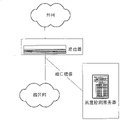
本发明的目的在于提供多粒度的网络流量高速自动聚类方法。本发明的实际部署图见图3,本测量方法属于网络测量领域的被动测量范畴,通过路由器或者高端交换机的端口镜像功能将网络报文转发到服务器上。我们的系统实际测试环境为清华大学校园网,它是一个典型的拥有近四万个IP地址的园区网络。本系统系统部署在一个校园网络的骨干出口处。在实际运用中,可以用此方法进行单向接口的测量,也可以进行双向接口的测量。The purpose of the present invention is to provide a multi-granularity network traffic high-speed automatic clustering method. The actual deployment diagram of the present invention is shown in Fig. 3. This measurement method belongs to the passive measurement category in the field of network measurement, and forwards the network message to the server through the port mirroring function of the router or high-end switch. The actual test environment of our system is the campus network of Tsinghua University, which is a typical campus network with nearly 40,000 IP addresses. The system is deployed at the backbone exit of a campus network. In practical application, this method can be used to measure the one-way interface or the two-way interface.
说明方法中用到的相关数据结构如下所示:The relevant data structures used in the description method are as follows:
IP地址树模型:如果把32比特的IP地址从高位到低位进行层次化划分,节点的深度W即为IP前缀的深度,比如说节点*.*.*.*代表最顶层的节点,(也就是说任何其他地址内容都包含在该根节点中,符号*表示为地址通配符,也就是说地址*.*.*.*可以包括任何节点),图1表示了节点1.2.3.4和节点1.2.3.5的地址树模型。树的根节点,即IP地址“*.*.*.*”,其节点深度为0。每一个树节点的孩子节点即为拥有相同前缀的下一个深度的IP地址,比如说地址树中的节点1.2.3.*所对应的孩子节点为”1.2.3.4,1.2.3.5”等等。考虑到网管实际需要,将节点的最大层次设置为4,也就是说对于任何一个地址,可以位于单一地址,子网地址,和子网所属的小区,以及顶点地址(*.*.*.*)四个层次。IP address tree model: If the 32-bit IP address is hierarchically divided from high to low, the depth W of the node is the depth of the IP prefix. For example, the node * . * . * . * represents the topmost node, (also That is to say, any other address content is included in the root node, and the symbol * represents an address wildcard, that is to say, the address * . * . * . * can include any node), and Figure 1 shows node 1.2.3.4 and node 1.2. 3.5 address tree model. The root node of the tree, that is, the IP address " * . * . * . * ", has a node depth of 0. The child node of each tree node is the IP address of the next depth with the same prefix. For example, the child node corresponding to node 1.2.3. * in the address tree is "1.2.3.4, 1.2.3.5" and so on. Considering the actual needs of the network management, set the maximum level of the node to 4, that is to say, for any address, it can be located in a single address, subnet address, and the subnet belongs to the community, and the apex address ( * . * . * . * ) Four levels.
显然,对于任意一层的树节点可以用IP地址的前缀来唯一表示。前缀的长度决定节点的深度。在节点层次按照IP地址长度均匀分成4层的情况下,节点的二进制IP地址树节点的前缀长度N和IP所处的深度W的关系为W=N/8。Obviously, any layer of tree nodes can be uniquely represented by the prefix of the IP address. The length of the prefix determines the depth of the node. In the case that the node level is evenly divided into 4 layers according to the IP address length, the relationship between the prefix length N of the binary IP address tree node of the node and the depth W of the IP is W=N/8.
一维树节点:在IP地址树模型中的每一个节点内的数据结构如下One-dimensional tree node: the data structure in each node in the IP address tree model is as follows

二维叉乘表格:如图4所示。叉乘表格H的两个维度分别是源地址与目的地址的深度。而每一个节点位置存贮在该深度下的源地址与目的地址的索引表格。在编程实现中,使用二维矩阵进行存贮,矩阵中的每一个元素为一个哈希表格,哈希表格的索引为源地址和目的地址在当前深度下的节点标识,其存贮内容为所对应于该地址深度的当前测量数值和前次测量数值,为初始设置的报文大小或报文个数。比如说:H[2][3]中存贮源地址深度为2,目的地址深度为3的所有节点集合。其中可能包括IP字段<1.2.*.*,3.4.5.*>,其表示的内容为数据报文的源地址和目的地址分别为1.2.*.*,3.4.5.*在本测量周期和前次测量周期内得到的报文大小或者报文个数。Two-dimensional cross product form: as shown in Figure 4. The two dimensions of the cross product table H are the depths of the source address and the destination address respectively. And each node position stores the index table of the source address and the destination address under the depth. In the programming implementation, a two-dimensional matrix is used for storage, and each element in the matrix is a hash table. The index of the hash table is the node identification of the source address and the destination address at the current depth, and its storage content is all The current measurement value and the previous measurement value corresponding to the address depth are the initially set packet size or number of packets. For example: H[2][3] stores all node sets whose source address depth is 2 and destination address depth is 3. It may include the IP field <1.2. * . * , 3.4.5. * >, which indicates that the source address and destination address of the data packet are 1.2. * . * , 3.4.5. * in this measurement period and the packet size or number of packets obtained in the previous measurement period.
端口哈希表格:端口哈希表格P存贮着有关端口的数据信息,其索引IP地址其存贮的内容为相应的端口-容量对。比如说表格P<1,2,3,4>中存贮的内容为{(80,125),(135,45)},在默认情况下表示在网络报文的IP地址1.2.3.4的端口80传输的数据报文大小为125字节,端口135传输的数据报文大小为45字节。Port hash table: The port hash table P stores data information about ports, and its index IP address stores the corresponding port-capacity pairs. For example, the content stored in the table P<1, 2, 3, 4> is {(80, 125), (135, 45)}, which represents the port at the IP address 1.2.3.4 of the network packet by default. The size of the data packet transmitted by port 80 is 125 bytes, and the size of the data packet transmitted by port 135 is 45 bytes.
关于节点压缩的说明:A note about node compression:
为了节省系统空间资源,系统在压缩和输出的时候,仅仅输出补偿之后的节点,所谓补偿就是指,如果某一个节点的孩子节点被标记为聚类节点(指节点当前容量和孩子容量之和大于某一个阈值的节点),那么该节点的输出标记为该节点的容量减去所有标记为聚类节点的孩子节点的容量。显然,如果不进行补偿,那么对于任何一个孩子节点未聚类的父亲节点来说,其当前容量必然包括孩子节点容量,这些数据对于网络管理者来说是无意义的。In order to save system space resources, the system only outputs nodes after compensation when compressing and outputting. The so-called compensation means that if a child node of a node is marked as a cluster node (the sum of the current capacity of the node and the child capacity is greater than A node with a certain threshold), then the output of the node is marked as the capacity of the node minus the capacity of all child nodes marked as clustering nodes. Obviously, if no compensation is made, then for any unclustered parent node of a child node, its current capacity must include the capacity of the child node, and these data are meaningless to network managers.
本发明的特征在于,所提出的方法依次含有以下步骤(其中的总体流程框图如图2所示):The present invention is characterized in that the proposed method contains the following steps successively (the overall flow chart is as shown in Figure 2):
总体步骤:Overall steps:
本程序在启动之后,即在网络中以如下方式进行工作,After the program is started, it works in the network as follows,
步骤(1).设置如下参数:Step (1). Set the following parameters:
在时间间隔T内对网络报文进行测量的测量周期,T=1分钟;The measurement period for measuring network packets within the time interval T, T=1 minute;
测量目标值,为报文大小;The measurement target value is the packet size;
聚类程度Phi=1%,Phi反映聚类结果的网络测量目标值占当前总网络的测量目标值的比值,用以反映单个网络聚类的测量值占总测量目标值1%以上的各个网络聚类;Clustering degree Phi=1%, Phi reflects the ratio of the network measurement target value of the clustering result to the current total network measurement target value, and is used to reflect the individual networks whose clustered measurement value accounts for more than 1% of the total measurement target value clustering;
测量误差允许值ε,ε=1%·Phi;Allowable value of measurement error ε, ε=1% Phi;
当前测量周期T内的总测量目标值Vcur,前次测量周期测量值Vlast和下轮测量周期预测值V为0;The total measurement target value V cur in the current measurement period T, the measurement value V last of the previous measurement period and the predicted value V of the next measurement period are 0;
启发式算法预测深度阈值Tg,默认为0.8phi=0.008,(ε<<Tg≤phi),Tg为启发式算法的性能参数;The heuristic algorithm predicts the depth threshold T g , the default is 0.8phi=0.008, (ε<<T g ≤ phi), and T g is the performance parameter of the heuristic algorithm;
滑动因子α,α=0.5;Slip factor α, α=0.5;
分裂阈值Tsplit,初始值为0;split threshold T split , the initial value is 0;
节点最大深度Wmax,即IP前缀的最大深度,Wmax=4,IP地址树模型中根节点的深度为W=0;The maximum node depth W max , that is, the maximum depth of the IP prefix, W max = 4, the depth of the root node in the IP address tree model is W = 0;
步骤(2)启动测量程序,设定当前测量总目标值Vcur=0;Step (2) Start the measurement program, and set the total target value of the current measurement V cur =0;
步骤(3)在一个测量周期T内,对于每一个到达的报文E依次执行以下步骤:Step (3) In a measurement period T, the following steps are executed sequentially for each arriving message E:
步骤(3.1)设定一维树状存贮结构内,每一个树节点的数据结构为:Step (3.1) sets the one-dimensional tree storage structure, the data structure of each tree node is:
孩子指针,是指向树节点的孩子节点指针,指向孩子节点所在内存空间,用一个指针数组表示多个孩子指针,初始值为空;The child pointer is the child node pointer pointing to the tree node, pointing to the memory space where the child node is located, using a pointer array to represent multiple child pointers, and the initial value is empty;
预测深度,是在下一个测量周期内所述节点所处的深度,初始值为0;The predicted depth is the depth of the node in the next measurement period, and the initial value is 0;
实际深度,是当前节点深度;The actual depth is the current node depth;
叶子属性,为真表示所述节点为是叶子节点,为假则否,初始值为否;Leaf attribute, if it is true, it means that the node is a leaf node, if it is false, it is false, and the initial value is false;
当前容量,树节点在当前测量周期内所包含的初始报文大小,用字节表示;Current capacity, the initial message size contained in the tree node in the current measurement period, expressed in bytes;
孩子节点容量,树节点的孩子节点所包含的初始报文大小,初始值为0;Child node capacity, the initial message size contained in the child node of the tree node, the initial value is 0;
前次容量,树节点在上一测量周期内所包含的全部报文的大小,等于上一测量周期内得到的节电当前容量和孩子节点容量之和,初始值为0;The previous capacity, the size of all the messages contained in the tree node in the previous measurement period, is equal to the sum of the power-saving current capacity obtained in the previous measurement period and the child node capacity, and the initial value is 0;
步骤(3.2)按以下步骤更新一维树状存贮结构,输入报文的源地址和E的测量目标值,返回源地址深度W1;Step (3.2) update the one-dimensional tree storage structure according to the following steps, input the source address of the message and the measurement target value of E, and return the source address depth W1;
步骤(3.2.1)设置标识为*.*.*.*的IP地址树根节点为IP地址的当前节点;Step (3.2.1) setting is marked as the current node of the IP address tree root node of * . * . * . * ;
步骤(3.2.2)满足下列三个条件中的任何一条,则所述步骤(3.2)的当前节点退出:Step (3.2.2) meets any one of the following three conditions, then the current node of the step (3.2) exits:
出现叶子节点,且其当前容量加上测量目标值小于分裂阈值Tsplit,则更新当前节点容量值为当前测量值加上当前节点容量,返回当前节点的预测深度;When a leaf node appears, and its current capacity plus the measurement target value is less than the split threshold T split , update the current node capacity value to the current measurement value plus the current node capacity, and return the predicted depth of the current node;
出现叶子节点,且其当前容量加上测量目标值不小于分裂域值Tsplit,但其当前深度已达到最大深度Wmax,则更新当前节点为孩子节点,容量为测量目标值,返回当前节点的预测深度;否则,设置叶子节点属性为假;A leaf node appears, and its current capacity plus the measurement target value is not less than the split threshold value T split , but its current depth has reached the maximum depth W max , update the current node as a child node, and its capacity is the measurement target value, and return the current node Prediction depth; otherwise, set the leaf node attribute to false;
出现非叶子节点,其当前容量加上测量目标值不小于分裂域值Tsplit,但其当前深度等于最大深度Wmax,则返回当前节点的预测深度;When a non-leaf node appears, its current capacity plus the measurement target value is not less than the split threshold value T split , but its current depth is equal to the maximum depth W max , then return the predicted depth of the current node;
如果不满足以上三条退出条件,则无论节点是否为叶子节点均更新所述当前节点的孩子节点容量为当前节点的孩子节点容量再加上测量目标值;在以上条件中,若节点容量的增长超过分裂域值Tsplit,但当前深度小于最大深度时,该节点根据输入IP地址和当前的深度分裂新的孩子节点并同时取代原有的节点成为当前节点继续执行步骤(3.2.2),直到节点处于最大深度Wmax;If the above three exit conditions are not satisfied, no matter whether the node is a leaf node or not, the child node capacity of the current node is updated to be the child node capacity of the current node plus the measurement target value; in the above conditions, if the growth of the node capacity exceeds Split domain value T split , but when the current depth is less than the maximum depth, the node splits a new child node according to the input IP address and the current depth and replaces the original node as the current node at the same time to continue the step (3.2.2) until the node at the maximum depth W max ;
步骤(3.3)按照步骤(3.2)所述方法更新—维树状存贮结构,输入的参数为报文的目的地址和E的测量目标值,返回目的地址的深度W2;Step (3.3) updates the one-dimensional tree-like storage structure according to the method described in step (3.2), and the input parameter is the destination address of the message and the measurement target value of E, and returns the depth W2 of the destination address;
步骤(3.4)根据步骤(3.2)和步骤(3.3)返回的源地址和目的地址的深度,分别执行以下步骤Step (3.4) performs the following steps respectively according to the depth of the source address and destination address returned by step (3.2) and step (3.3)
步骤(34.1)若返回的源地址深度或者目的地址深度有一个大于0,则根据源地址和目的地址得到在相应深度下的IP前缀标识,设为prefix1和prefix2,如果不存在二维叉乘表格H[W1][W2]中的哈希索引表格中,则开辟空间,初始化测量值为0;否则,更新测量值为原有测量值再加上报文E的测量目标值,所述二维叉乘表格的两个维度分别为源地址的深度[W1]和目的地址的深度[W2],而每一个节点的位置存贮在该深度下的源地址与目的地址的索引表格中,该索引表格使用二维矩阵存贮,矩阵中每一个元素为一个哈希表格,哈西表格中的索引为源地址和目的地址在当前深度下的节点标识;其存贮内容为该地址深度的当前测量目标值和上一个测量周期的测量目标值;Step (34.1) If either the depth of the source address or the depth of the destination address returned is greater than 0, then obtain the IP prefix identifier at the corresponding depth according to the source address and destination address, set prefix1 and prefix2, if there is no two-dimensional cross product table In the hash index table in H[W1][W2], open up space, and initialize the measurement value to 0; otherwise, update the measurement value to the original measurement value plus the measurement target value of message E, the two-dimensional The two dimensions of the cross-product table are the depth [W1] of the source address and the depth [W2] of the destination address, and the position of each node is stored in the index table of the source address and the destination address at the depth. The table is stored in a two-dimensional matrix. Each element in the matrix is a hash table. The index in the hash table is the node identification of the source address and the destination address at the current depth; its storage content is the current measurement of the address depth The target value and the measured target value of the previous measurement cycle;
步骤(3.4.2)如果返回的源地址或目的地址的深度为最大值Wmax,则更新端口哈希表P:当该地址索引在P中不存在时,则开辟相关的空间,初始化测量值为0;否则,更新源地址或目的地址索对应的端口测量值为原有测量值加上E的测量目标值;Step (3.4.2) If the depth of the returned source address or destination address is the maximum value W max , then update the port hash table P: when the address index does not exist in P, open up the relevant space and initialize the measured value is 0; otherwise, update the port measurement value corresponding to the source address or destination address index to the original measurement value plus the measurement target value of E;
步骤(3.5)把报文的测量目标值增加到当前测量总目标值Vcur,对下一个报文重复步骤(3.2)-(3.4);Step (3.5) increases the measurement target value of the message to the current measurement total target value V cur , and repeats steps (3.2)-(3.4) for the next message;
步骤(4)按照以下步骤分别设置所述当前节点为源地址树和目的地址树的根节点,其节点标识均为*.*.*.*,分别对这两个节点树按照步骤(4.1)进行压缩;Step (4) Set the current node as the root node of the source address tree and the destination address tree respectively according to the following steps, and its node identifiers are all * . * . * . * , and respectively follow the steps (4.1) to compress;
步骤(4.1).如果当前节点的当前容量加上当前节点的孩子节点容量小于V·Phi,那么设置当前节点的叶子属性为真,其中预测容量V根据步骤7计算得到;Step (4.1). If the current capacity of the current node plus the child node capacity of the current node is less than V Phi, then set the leaf attribute of the current node to be true, wherein the predicted capacity V is calculated according to step 7;
步骤(4.1.1)如果当前节点当前容量和孩子节点容量之和大于预测深度容量Tg·V,则更新当前节点的预测深度为当前节点的当前深度;Step (4.1.1) If the sum of the current capacity of the current node and the capacity of the child node is greater than the predicted depth capacity Tg V, then update the predicted depth of the current node to be the current depth of the current node;
步骤(4.1.2)如果当前节点当前容量和孩子节点容量之和小于Tg·V,则更新当前深度为节点深度减1,清空其所有孩子节点空间,释放相关资源;Step (4.1.2) If the sum of the current capacity of the current node and the child node capacity is less than Tg V, then update the current depth to be the node depth minus 1, clear the space of all its child nodes, and release related resources;
步骤(4.2)如果当前节点的当前容量和孩子节点容量之和超过V·Phi,则设置当前节点的预测深度为当前节点的当前深度;对于当前节点的每一个孩子节点,将其设置为当前节点按照步骤(4.1),依次进行压缩;Step (4.2) If the sum of the current capacity of the current node and the child node capacity exceeds V Phi, then set the predicted depth of the current node as the current depth of the current node; for each child node of the current node, set it as the current node According to step (4.1), compress successively;
步骤(5)对源地址和目的地址分别执行如下子步骤,输出一维源地址和目的地址的聚类结果,其示意图如图8所示;Step (5) performs the following sub-steps on the source address and the destination address respectively, and outputs the clustering results of the one-dimensional source address and the destination address, as shown in Figure 8;
步骤(5.1)设置当前节点V为地址树的根节点*.*.*.*,初始化节点队列Q空;对于节点V的孩子指针指向的每一个不为空的孩子节点,将其进入队列Q;Step (5.1) Set the current node V as the root node of the address tree * . * . * . * , and initialize the node queue Q to be empty; for each non-empty child node pointed to by the child pointer of node V, enter it into the queue Q ;
步骤(5.2)取出队列Q的第一个节点V1,将V1从队列Q中移除,将其设置为当前节点,将其补偿数值T设定为0;Step (5.2) Take out the first node V1 of the queue Q, remove V1 from the queue Q, set it as the current node, and set its compensation value T to 0;
步骤(5.3)对于当前节点V1的每一个孩子来说,分别执行以下步骤,以下以V11举例说明;Step (5.3) For each child of the current node V1, perform the following steps respectively, and V11 is used as an example to illustrate below;
步骤(5.3.1)如果孩子节点V11的当前容量和孩子节点V11的孩子节点容量大于V·Phi,则增加补偿值T为T的原有容量再加上V11的当前容量和V11的孩子节点容量,并将该孩子节点V11放入队列Q中;Step (5.3.1) If the current capacity of the child node V11 and the child node capacity of the child node V11 are greater than V Phi, then increase the compensation value T to be the original capacity of T plus the current capacity of V11 and the child node capacity of V11 , and put the child node V11 into the queue Q;
步骤(5.4)如果当前节点V1的容量加上当前节点V1的孩子节点容量减去补偿值T大于阈值V*Phi,输出当前节点V1为静态聚类节点;Step (5.4) If the capacity of the current node V1 plus the child node capacity of the current node V1 minus the compensation value T is greater than the threshold V*Phi, output the current node V1 as a static clustering node;
步骤(5.5)如果当前节点V1的当前容量加V11的孩子节点容量减去其前次容量大于阈值V*Phi的话,输出当前节点V1为动态节点;Step (5.5) If the current capacity of the current node V1 plus the child node capacity of V11 minus its previous capacity is greater than the threshold V*Phi, output the current node V1 as a dynamic node;
步骤(5.6)设定当前节点V1的前次容量为V11的当前容量加孩子节点容量,设定其当前容量为0;设定V1的孩子节点容量为0;Step (5.6) sets the previous capacity of the current node V1 to be the current capacity of V11 plus the child node capacity, and sets its current capacity to be 0; the child node capacity of V1 is set to be 0;
步骤(5.7)若队列Q不为空,返回步骤(5.2)继续,否则退出步骤(5);Step (5.7) If the queue Q is not empty, return to step (5.2) to continue, otherwise exit step (5);
步骤(6)压缩并且输出叉乘表格中的源目的地址对,即对于叉乘表中的每一个维度以及维度里面的每一个哈希索引所对应的数据项e,依次执行以下步骤Step (6) Compress and output the source-destination address pair in the cross-product table, that is, for each dimension in the cross-product table and the data item e corresponding to each hash index in the dimension, perform the following steps in turn
步骤(6.1)如果e的当前容量减去上次容量的绝对值大于阈值Vcur·Phi时,输出e为动态聚类节点;Step (6.1) If the absolute value of the current capacity of e minus the last capacity is greater than the threshold V cur Phi, output e as a dynamic clustering node;
步骤(6.2)如果e的当前容量大于Vcur·Phi,则输出节点e为静态聚类节点;Step (6.2) If the current capacity of e is greater than V cur Phi, the output node e is a static clustering node;
步骤(6.3)如果e的当前容量为0则删除该节点,继续执行步骤(6);Step (6.3) If the current capacity of e is 0, delete the node and continue to execute step (6);
步骤(6.4)设定节点的前次容量为当前容量,设定节点的当前容量为0,继续执行步骤(6);步骤(7)流量预测,采用简单的加权指数平均模型,按照如下公式进行预测下一次的流量V;Step (6.4) Set the previous capacity of the node as the current capacity, set the current capacity of the node as 0, and proceed to step (6); step (7) flow forecasting, using a simple weighted exponential average model, according to the following formula Predict the next flow V;
V=αVcur+(1-α)Vlast,________________________(1)V=αV cur +(1-α)V last ,________________________(1)
步骤(8).计算步骤3中所用的分裂阈值Tsplit;Step (8). Calculate the split threshold T split used in
Tsplit=ε·(phi)·V/W,____________________(2)T split = ε·(phi)·V/W,____________________(2)
步骤(9).返回步骤(3),进入下一个测量周期。Step (9). Return to step (3) to enter the next measurement period.
附图说明 Description of drawings
图1.地址树模型示意图;Figure 1. Schematic diagram of the address tree model;
图2.多粒度的网络流量高速自动聚类方法框架图;Figure 2. Framework diagram of multi-granularity network traffic high-speed automatic clustering method;
图3.多粒度的网络流量高速自动聚类方法部署图;Figure 3. Deployment diagram of multi-granularity network traffic high-speed automatic clustering method;
图4.叉乘表格H(Cross-product table)示意图Figure 4. Schematic diagram of cross-product table H (Cross-product table)
X-源地址深度,取值为0到W的整数X- source address depth, the value is an integer from 0 to W
Y-目的地址深度,取值为0到W的整数Y-Destination address depth, the value is an integer from 0 to W
<prefix1,prefix2>-表示在特定深度下的源地址和目的地址前缀集合。<prefix1, prefix2> - indicates the set of source and destination address prefixes at a specific depth.
图5.实验测量本发明和已有方法正确率比较;Fig. 5. experiment measures the present invention and existing method accuracy comparison;
-□-传统的CP算法,具体内容请参见背景技术-□-traditional CP algorithm, please refer to the background technology for details
-O-发明(HCP)算法在Tg=Phi条件下-O-invention (HCP) algorithm under the condition of T g =Phi
-*-发明(HCP)算法在Tg=0.6*Phi条件下- * - Invention (HCP) algorithm under the condition of T g =0.6*Phi
图6.实验测量本发明和已有方法时间比较;Fig. 6. experiment measures the present invention and existing method time comparison;
-O-发明(HCP)算法在Tg=Phi条件下-O-invention (HCP) algorithm under the condition of T g =Phi
-
图7.数据压缩和未压缩方法比较情况Figure 7. Comparison of data compression and uncompression methods

图8.输出一维地址树聚类结果示意图Figure 8. Schematic diagram of outputting one-dimensional address tree clustering results
具体实施方式 Detailed ways
本算法是在2.4GHz的CPU,内存512M的Linux工作环境中实现,全部代码利用C语言编写。下面从不同的侧面对本试验进行进一步的说明。需要说明的是,由于算法采用启发式算法,在网络报文的第一个测量周期内Tg=0因此无法正确标记网络聚类,所以实验的结果需要从第2次测量周期开始统计。This algorithm is implemented in a Linux working environment with 2.4GHz CPU and 512M memory, and all codes are written in C language. The following is a further description of this experiment from different aspects. It should be noted that because the algorithm uses a heuristic algorithm, Tg=0 in the first measurement period of network packets, so network clusters cannot be correctly marked, so the experimental results need to be counted from the second measurement period.
实际误差分析:Actual error analysis:
本试验的正确率分析如图5所示,可以看到,当通常情况下取Phi=1%时,其错误率制在2%以下,对于不同的phi值,可以通过调整门限参数Tg进行准确性与系统资源之间的平衡。时间性能分析:The correct rate analysis of this test is shown in Figure 5. It can be seen that when Phi=1% is usually taken, the error rate is kept below 2%. For different phi values, it can be performed by adjusting the threshold parameter T g Balance between accuracy and system resources. Time performance analysis:
本试验环境下的所用时间分析如图6所示,当设置测量时间间隔T为1分钟时,测量所需要时间可以控制在1分钟之内,能够达到线速处理要求。The analysis of the time used in this test environment is shown in Figure 6. When the measurement interval T is set to 1 minute, the time required for the measurement can be controlled within 1 minute, which can meet the line speed processing requirements.
空间性能分析:Space performance analysis:
本实验中,压缩与不压缩数据的空间比较如图7所示。In this experiment, the space comparison of compressed and uncompressed data is shown in Figure 7.
理论误差分析:Theoretical error analysis:
对于一维情况来说,每一个聚类的节点最大为ε·phi·V/W,所以对于底层节点的最大流量的误差为ε·phi·V,则其相对最大误差为ε·phi·V/(phi·V)=ε。For the one-dimensional case, the maximum node of each cluster is ε·phi·V/W, so the error of the maximum flow of the bottom node is ε·phi·V, and its relative maximum error is ε·phi·V /(phi·V)=ε.
本试验的错误率:Error rate for this test:
1).如果预测的深度>实际的深度,也就是说聚类过细,这种情况可以在结尾的数据压缩中进行处理,因此不会增加误差。1). If the predicted depth > the actual depth, that is to say, the clustering is too fine, this situation can be processed in the data compression at the end, so the error will not increase.
2).如果预测的深度<实际的深度,那么会出现聚类精度不够的情况,会产生误正率(FalsePositive)。在实际中,由于网络流量在短期内具有较大的相关性,因此不会对测量方法的正确率产生较大影响。(具体的实验数据请参见图5)2). If the predicted depth < the actual depth, then there will be insufficient clustering accuracy and a false positive rate (FalsePositive). In practice, because network traffic has a relatively large correlation in a short period of time, it will not have a large impact on the accuracy of the measurement method. (See Figure 5 for specific experimental data)
由此可见,本发明达到了预期目的。It can be seen that the present invention has achieved the intended purpose.
Claims (1)
Priority Applications (1)
| Application Number | Priority Date | Filing Date | Title |
|---|---|---|---|
| CNB2007100646786A CN100493001C (en) | 2007-03-23 | 2007-03-23 | Automatic clustering method for multi-particle size network under G bit flow rate |
Applications Claiming Priority (1)
| Application Number | Priority Date | Filing Date | Title |
|---|---|---|---|
| CNB2007100646786A CN100493001C (en) | 2007-03-23 | 2007-03-23 | Automatic clustering method for multi-particle size network under G bit flow rate |
Publications (2)
| Publication Number | Publication Date |
|---|---|
| CN101022370A CN101022370A (en) | 2007-08-22 |
| CN100493001C true CN100493001C (en) | 2009-05-27 |
Family
ID=38710028
Family Applications (1)
| Application Number | Title | Priority Date | Filing Date |
|---|---|---|---|
| CNB2007100646786A Expired - Fee Related CN100493001C (en) | 2007-03-23 | 2007-03-23 | Automatic clustering method for multi-particle size network under G bit flow rate |
Country Status (1)
| Country | Link |
|---|---|
| CN (1) | CN100493001C (en) |
Families Citing this family (6)
| Publication number | Priority date | Publication date | Assignee | Title |
|---|---|---|---|---|
| CN101453368B (en) * | 2007-12-03 | 2012-02-29 | 华为技术有限公司 | Method, system and equipment for Internet IP address classification and bandwidth prediction |
| CN102055620B (en) * | 2009-10-27 | 2013-01-02 | 中国移动通信集团浙江有限公司 | Method and system for monitoring user experience |
| CN102130789A (en) * | 2011-04-15 | 2011-07-20 | 北京网御星云信息技术有限公司 | Method, device and system for measuring and sampling streams based on application groups |
| CN103560963B (en) * | 2013-11-18 | 2016-08-17 | 中国科学院计算机网络信息中心 | A kind of OpenFlow flow table memory space compression method |
| US9473418B2 (en) * | 2013-12-12 | 2016-10-18 | International Business Machines Corporation | Resource over-subscription |
| CN104468211A (en) * | 2014-12-02 | 2015-03-25 | 中广核工程有限公司 | Nuclear power station numerical control system platform communication failure diagnostic system and method |
-
2007
- 2007-03-23 CN CNB2007100646786A patent/CN100493001C/en not_active Expired - Fee Related
Also Published As
| Publication number | Publication date |
|---|---|
| CN101022370A (en) | 2007-08-22 |
Similar Documents
| Publication | Publication Date | Title |
|---|---|---|
| US12455752B2 (en) | Centralized networking configuration in distributed systems | |
| JP7039685B2 (en) | Traffic measurement methods, devices, and systems | |
| US10505814B2 (en) | Centralized resource usage visualization service for large-scale network topologies | |
| WO2021227322A1 (en) | Ddos attack detection and defense method for sdn environment | |
| CN100493001C (en) | Automatic clustering method for multi-particle size network under G bit flow rate | |
| CN106209506B (en) | A kind of virtualization deep-packet detection flow analysis method and system | |
| CN100553206C (en) | Internet application traffic identification method based on packet sampling and application signature | |
| CA2762677C (en) | Multiple hypothesis tracking | |
| CN114039918A (en) | Information age optimization method and device, computer equipment and storage medium | |
| CN115102716B (en) | A network large flow detection method and system based on adaptive sampling threshold | |
| CN107018129A (en) | A kind of ddos attack detecting system based on multidimensional Renyi cross entropies | |
| Melo et al. | An overview of self-similar traffic: Its implications in the network design | |
| CN112637087B (en) | A method and system for dynamic resource allocation based on node importance | |
| CN101834763A (en) | Parallel measurement method of multi-type large flow in high-speed network environment | |
| Yan et al. | Network traffic characteristics of hyperscale data centers in the era of cloud applications | |
| CN110120836B (en) | Method for determining and positioning crosstalk attack detection node of multi-domain optical network | |
| Zheng et al. | 5G network slice configuration based on smart grid | |
| Fan et al. | Steadysketch: a high-performance algorithm for finding steady flows in data streams | |
| CN113938292B (en) | A vulnerability attack traffic detection method and detection system based on concept drift | |
| CN108366048A (en) | A kind of network inbreak detection method based on unsupervised learning | |
| Zhang et al. | Identifying heavy hitters in high-speed network monitoring | |
| CN118473736A (en) | Network intrusion detection method based on semi-asynchronous federated deep learning | |
| Zeng et al. | Research on detection and mitigation methods of adaptive flow table overflow attacks in software-defined networks | |
| CN110557427A (en) | Intelligent home security control method for balancing network performance and security | |
| CN112491801B (en) | Incidence matrix-based object-oriented network attack modeling method and device |
Legal Events
| Date | Code | Title | Description |
|---|---|---|---|
| C06 | Publication | ||
| PB01 | Publication | ||
| C10 | Entry into substantive examination | ||
| SE01 | Entry into force of request for substantive examination | ||
| C14 | Grant of patent or utility model | ||
| GR01 | Patent grant | ||
| CF01 | Termination of patent right due to non-payment of annual fee |
Granted publication date: 20090527 Termination date: 20180323 |
|
| CF01 | Termination of patent right due to non-payment of annual fee |