CN100384298C - Implementation Method of Business Priority Scheduling - Google Patents
Implementation Method of Business Priority Scheduling Download PDFInfo
- Publication number
- CN100384298C CN100384298C CNB2005100018415A CN200510001841A CN100384298C CN 100384298 C CN100384298 C CN 100384298C CN B2005100018415 A CNB2005100018415 A CN B2005100018415A CN 200510001841 A CN200510001841 A CN 200510001841A CN 100384298 C CN100384298 C CN 100384298C
- Authority
- CN
- China
- Prior art keywords
- service
- priority
- real
- services
- time
- Prior art date
- Legal status (The legal status is an assumption and is not a legal conclusion. Google has not performed a legal analysis and makes no representation as to the accuracy of the status listed.)
- Expired - Lifetime
Links
Images

Landscapes
- Data Exchanges In Wide-Area Networks (AREA)
Abstract
本发明公开了一种业务优先级调度实现方法,包括设置各类业务和信令的优先级调度顺序;根据各类业务和信令所需的总传输速率及各类业务和信令分别需要的传输速率,分别于每个传输时间间隔内在传输格式组合集合中选取对应的传输格式组合;根据所述选取的传输格式组合中各个专用信道所对应的传输格式,将具有高优先级调度顺序的各类业务和信令优先调度到对应的专用信道上传输。本发明可以使3G通信网络系统中专用信道上的业务优先级调度过程切实可行,实现专用信道的业务优先级调度功能。
The invention discloses a method for realizing service priority scheduling, which includes setting the priority scheduling order of various services and signaling; according to the total transmission rate required by various services and signaling and the respective required The transmission rate is to select the corresponding transmission format combination in the transmission format combination set in each transmission time interval; according to the transmission format corresponding to each dedicated channel in the selected transmission format combination, each channel with a high priority scheduling order Class services and signaling are preferentially scheduled and transmitted on corresponding dedicated channels. The invention can make the service priority scheduling process on the special channel in the 3G communication network system feasible, and realize the service priority scheduling function of the special channel.
Description
技术领域 technical field
本发明涉及第三代移动通信技术领域,尤其涉及一种业务优先级调度实现方法。The invention relates to the technical field of the third generation mobile communication, in particular to a method for realizing service priority scheduling.
背景技术 Background technique
在3GPP制定的3G标准中,规定了在用户的专用信道(DCH,DedicateChannel)中应该具有业务优先级调度功能,其中业务优先级调度具体是指当用户同时具有多个业务需要进行传输调度时,根据各个业务的优先级顺序来决定在何时且以何种速率来传输相应各业务。一般情况下,在用户的DCH中,高优先级业务相对于低优先级业务而言能够得到更大的传输带宽,且能够被优先传输。如:若一个用户同时激活了两个分组域业务(PS,Packet domainService),其中一个为视频点播,另一个为网页浏览,如果视频点播业务的优先级高于网页浏览业务的优先级,则视频点播业务会在该用户的DCH上被优先进行传输。其中在3G标准中,之所以在用户的DCH上设置业务优先级调度功能的目的在于减小高优先级业务的传输时延,以最大程度的保证高优先级业务的优先传输。In the 3G standard formulated by 3GPP, it is stipulated that the user's dedicated channel (DCH, DedicateChannel) should have a service priority scheduling function, wherein the service priority scheduling specifically refers to when the user has multiple services at the same time and needs to perform transmission scheduling. When and at what rate to transmit the corresponding services are determined according to the priority order of the services. Generally, in the user's DCH, high-priority services can obtain a larger transmission bandwidth than low-priority services, and can be transmitted preferentially. For example: if a user activates two packet domain services (PS, Packet domainService) at the same time, one of which is video on demand and the other is web browsing, if the priority of the video on demand service is higher than that of the web browsing service, the video The on-demand service will be transmitted preferentially on the user's DCH. Among them, in the 3G standard, the purpose of setting the service priority scheduling function on the user's DCH is to reduce the transmission delay of high-priority services, so as to ensure the priority transmission of high-priority services to the greatest extent.
其中3G标准中规定用户DCH中的业务优先级调度功能要在网络的无线接口层的媒体访问控制(MAC,Media Access Control)子层中完成,其移动通信网络中的无线接口层主要由4个子层组成,其中MAC子层的主要功能是:Among them, the 3G standard stipulates that the service priority scheduling function in the user DCH should be completed in the Media Access Control (MAC, Media Access Control) sublayer of the wireless interface layer of the network, and the wireless interface layer in the mobile communication network is mainly composed of 4 sublayers. The main functions of the MAC sublayer are:
完成业务数据在传输过程中由逻辑信道到传输信道的映射,并在控制面的指示下完成部分无线资源的重新配置和测量等任务。Complete the mapping of business data from logical channels to transmission channels during the transmission process, and complete the reconfiguration and measurement of some wireless resources under the instructions of the control plane.
MAC子层具体又包括媒体访问控制公共部分(MACC,Media AccessControl Common)和媒体访问控制专用部分(MACD,Media Access ControlDedicate)两部分,其中MACC主要负责公共信道(CCH,Common Channel)的业务数据传输,MACD主要负责用户DCH的业务数据传输。并MACC和移动通信网络中的小区(Cell)对应,即一个Cell对应一个MACC实例;MACD和移动通信网络中的移动终端(UE,User Equipment)对应,即一个UE对应一个MACD实例。The MAC sublayer specifically includes two parts: a media access control common part (MACC, Media Access Control Common) and a media access control dedicated part (MACD, Media Access Control Dedicate). Among them, MACC is mainly responsible for the business data transmission of the common channel (CCH, Common Channel). , the MACD is mainly responsible for the service data transmission of the user DCH. And MACC corresponds to a cell (Cell) in the mobile communication network, that is, one Cell corresponds to one MACC instance; MACD corresponds to a mobile terminal (UE, User Equipment) in the mobile communication network, that is, one UE corresponds to one MACD instance.
其中在3GPP TS 25.321协议中明确规定用户DCH上的业务优先级调度功能要由MAC子层中的MACD来完成,其中由MACD完成用户DCH上的业务优先级调用功能的主要过程如下:Among them, in the 3GPP TS 25.321 agreement, it is clearly stipulated that the service priority scheduling function on the user DCH should be completed by the MACD in the MAC sublayer, and the main process for the MACD to complete the service priority call function on the user DCH is as follows:
由移动通信网络系统中的业务GPRS支持节点(SGSN,Service GPRSSupport Node)发送一个携带有业务处理优先级信元(Traffic Handling Priority)的无线接入承载指配请求(RAB Assignment Request)消息到无线网络控制器(RNC,Radio Network Controller),其中RAB Assignment Request消息中携带的Traffic Handling Priority信元是专门针对交互式(Interactive)业务而设置的,Traffic Handling Priority信元的取值范围是0~15,其中1至14代表降序优先级,即“1”代表的Interactive业务优先级最高,“14”代表的Interactive业务优先级最低,“0”代表逻辑错误,“15”代表Interactive业务没有优先级;RNC根据接收到的Traffic Handling Priority信元的取值情况,来决定何时以何种发送带宽来传输相应的Interactive业务。在3GPP制定的3G标准中,之所以Traffic Handling Priority信元是专门针对Interactive业务而设置的,是由于各种Interactive业务对服务质量(QoS,Quality of Service)和传输时延的要求各不相同,所以各个Interactive业务之间在传输过程中要有不同的优先级调用顺序。The Service GPRS Support Node (SGSN, Service GPRSSupport Node) in the mobile communication network system sends a Radio Access Bearer Assignment Request (RAB Assignment Request) message carrying a Traffic Handling Priority cell (Traffic Handling Priority) to the wireless network Controller (RNC, Radio Network Controller), wherein the Traffic Handling Priority information element carried in the RAB Assignment Request message is specially set for interactive (Interactive) services, and the value range of the Traffic Handling Priority information element is 0 to 15, Among them, 1 to 14 represent descending priorities, that is, "1" represents the highest priority of Interactive services, "14" represents the lowest priority of Interactive services, "0" represents logic errors, and "15" represents no priority for Interactive services; RNC According to the value of the received Traffic Handling Priority cell, it is determined when and with what transmission bandwidth to transmit the corresponding Interactive service. In the 3G standard formulated by 3GPP, the reason why the Traffic Handling Priority cell is specially set for Interactive services is that various Interactive services have different requirements on service quality (QoS, Quality of Service) and transmission delay. Therefore, each Interactive service must have a different priority call sequence in the transmission process.
但是在3GPP制定的3G标准中,只是如上述描述的过程规定了用TrafficHandling Priority信元来标识不同Interactive业务的优先级调用关系,并由RNC根据Traffic Handling Priority信元的取值来进行各个Interactive业务的优先级调用处理;而对3G网络系统中如何对各种通信业务和信令进行优先级调度配置,并相应配置相应的调度参数,以使通用地面无线接入网(UTRAN,UniversalTerrestrial Radio Access Network)内部的MACD能够根据各种通信业务和信令的优先级调度配置和相应的调度参数来实现用户DCH上各种业务优先级调度的过程并没有详细描述。However, in the 3G standard formulated by 3GPP, only the process described above stipulates that the Traffic Handling Priority cell is used to identify the priority calling relationship of different Interactive services, and the RNC performs each Interactive service according to the value of the Traffic Handling Priority cell Priority call processing; how to perform priority scheduling configuration for various communication services and signaling in the 3G network system, and configure the corresponding scheduling parameters accordingly, so that the Universal Terrestrial Radio Access Network (UTRAN, Universal Terrestrial Radio Access Network) The process in which the internal MACD of the MACD can implement priority scheduling of various services on the user DCH according to priority scheduling configurations of various communication services and signaling and corresponding scheduling parameters is not described in detail.
发明内容 Contents of the invention
本发明要解决的技术问题在于提出一种业务优先级调度实现方法,以使3G通信网络系统中专用信道上的业务优先级调度过程切实可行,实现专用信道的业务优先级调度功能。The technical problem to be solved by the present invention is to propose a service priority scheduling implementation method, so as to make the service priority scheduling process on the dedicated channel in the 3G communication network system feasible and realize the service priority scheduling function of the dedicated channel.
为解决上述问题,本发明提出了一种业务优先级调度实现方法,包括步骤:In order to solve the above problems, the present invention proposes a method for implementing business priority scheduling, comprising steps:
设置各类业务和信令的优先级调度顺序;Set the priority scheduling sequence of various services and signaling;
根据各类业务和信令所需的总传输速率及各类业务和信令分别需要的传输速率,分别于每个传输时间间隔内在传输格式组合集合中选取对应的传输格式组合;According to the total transmission rate required by various services and signaling and the respective transmission rates required by various services and signaling, select the corresponding transmission format combination from the transmission format combination set in each transmission time interval;
根据所述选取的传输格式组合中各个专用信道所对应的传输格式,将具有高优先级调度顺序的各类业务和信令优先调度到对应的专用信道上传输。According to the transmission format corresponding to each dedicated channel in the selected transmission format combination, all kinds of services and signaling with high priority scheduling order are preferentially scheduled to be transmitted on the corresponding dedicated channel.
其中所述对各类业务和信令设置的优先级调度顺序为:The priority scheduling sequence for various services and signaling settings is as follows:
无线资源控制信令优先级高于各类业务的优先级;并The priority of radio resource control signaling is higher than that of various services; and
所述各类业务中的实时性业务的优先级高于非实时性业务的优先级。Among the various types of services, the priority of real-time services is higher than that of non-real-time services.
其中所述实时性业务包括会话业务和流业务,并所述会话业务的优先级高于流业务的优先级;所述非实时性业务包括交互业务和背景业务,并且所述交互业务的优先级高于背景业务的优先级。Wherein the real-time service includes conversation service and streaming service, and the priority of the conversation service is higher than that of the streaming service; the non-real-time service includes interactive service and background service, and the priority of the interactive service is Priority over background business.
其中不同交互业务具有不同的优先级,并且不同交互业务之间的优先级顺序根据无线接入承载指配请求消息中包含的业务处理优先级信元的取值来确定。Different interactive services have different priorities, and the order of priorities among different interactive services is determined according to the value of the service processing priority information element contained in the radio access bearer assignment request message.
其中根据实时性业务的优先级调度顺序,将各个实时性业务分别调度到不同的专用信道上进行传输。According to the priority scheduling order of real-time services, each real-time service is scheduled to be transmitted on different dedicated channels respectively.
再根据各类业务和信令所需的总传输速率及传输实时性业务的各个专用信道所占用的传输速率之和,得到剩余传输速率之和;Then according to the total transmission rate required by various services and signaling and the sum of the transmission rates occupied by each dedicated channel for transmitting real-time services, the sum of the remaining transmission rates is obtained;
并根据非实时性业务的优先级调度顺序,将各个非实时性业务分别调度到不同的专用信道上进行传输,并使得传输非实时性业务的各个专用信道所占用的传输速率之和小于或等于所述剩余传输速率之和。And according to the priority scheduling order of non-real-time services, each non-real-time service is scheduled to be transmitted on different dedicated channels, and the sum of the transmission rates occupied by each dedicated channel for transmitting non-real-time services is less than or equal to The sum of the remaining transmission rates.
其中在所述各个专用信道上,根据各个非实时性业务的优先级调度顺序,优先对高优先级非实时性业务选取传输格式,使高优先级非实时性业务优先在对应的专用信道上传输。Wherein on each of the dedicated channels, according to the priority scheduling order of each non-real-time business, the transmission format is preferentially selected for the high-priority non-real-time business, so that the high-priority non-real-time business is preferentially transmitted on the corresponding dedicated channel .
当所述各个非实时性业务优先级调度顺序相同时,按时间顺序依次轮回首先对每个非实时性业务选取传输格式,使每个非实时性业务按时间顺序优先在对应的专用信道上传输。When the priority scheduling sequence of each non-real-time business is the same, first select the transmission format for each non-real-time business in turn according to chronological order, so that each non-real-time business is preferentially transmitted on the corresponding dedicated channel in chronological order .
或根据各类业务和信令所需的总传输速率及传输实时性业务的各个专用信道所占用的传输速率之和,得到剩余传输速率之和;Or according to the total transmission rate required by various services and signaling and the sum of the transmission rates occupied by each dedicated channel for transmitting real-time services, the sum of the remaining transmission rates is obtained;
并根据非实时性业务的优先级调度顺序,将各个非实时性业务复用到同一专用信道上进行传输,并使得传输非实时性业务的专用信道所占用的传输速率小于或等于所述剩余传输速率之和。And according to the priority scheduling order of the non-real-time business, multiplex each non-real-time business on the same dedicated channel for transmission, and make the transmission rate occupied by the dedicated channel for transmitting the non-real-time business less than or equal to the remaining transmission rate sum of speeds.
其中在所述复用到的专用信道上,根据各个非实时性业务的优先级调度顺序,对高优先级非实时性业务到低优先级非实时性业务依次进行传输。Wherein, on the multiplexed dedicated channel, according to the priority scheduling sequence of each non-real-time service, the high-priority non-real-time service to the low-priority non-real-time service are sequentially transmitted.
当所述各个非实时性业务优先级调度顺序相同时,在所述复用到的专用信道上,按时间顺序依次轮回传输每个非实时性业务。When the priority scheduling order of the various non-real-time services is the same, on the multiplexed dedicated channel, each non-real-time service is sequentially transmitted in chronological order.
本发明业务优先级调度实现方法通过根据具有优先级调度顺序的各类业务和信令所需的总传输速率及各类业务和信令分别需要的传输速率,分别于每个传输时间间隔(TTI,Transmission Time Interval)内在传输格式组合集合(TFCS,Transport Format Combination Set)中选取对应的传输格式组合(TFC,Transport Format Combination),以根据选取的TFC中各个DCH所对应的传输格式(TF,Transport Format),将各类业务和信令调度到对应的DCH上传输,从而实现了使3G通信网络系统中DCH上的业务优先级调度过程切实可行,实现了DCH上的业务优先级调度功能。The service priority scheduling realization method of the present invention is through according to each transmission time interval (TTI) , Transmission Time Interval) selects the corresponding transmission format combination (TFC, Transport Format Combination) in the transmission format combination set (TFCS, Transport Format Combination Set), so that according to the transmission format (TF, Transport Format Combination) corresponding to each DCH in the selected TFC Format) to schedule all kinds of services and signaling to the corresponding DCH for transmission, thereby realizing the feasible scheduling process of service priority on the DCH in the 3G communication network system and realizing the service priority scheduling function on the DCH.
附图说明 Description of drawings
图1是现有移动通信网络系统中传输块在专用信道上传输的过程示意图;Fig. 1 is a schematic diagram of the process of transmitting a transport block on a dedicated channel in an existing mobile communication network system;
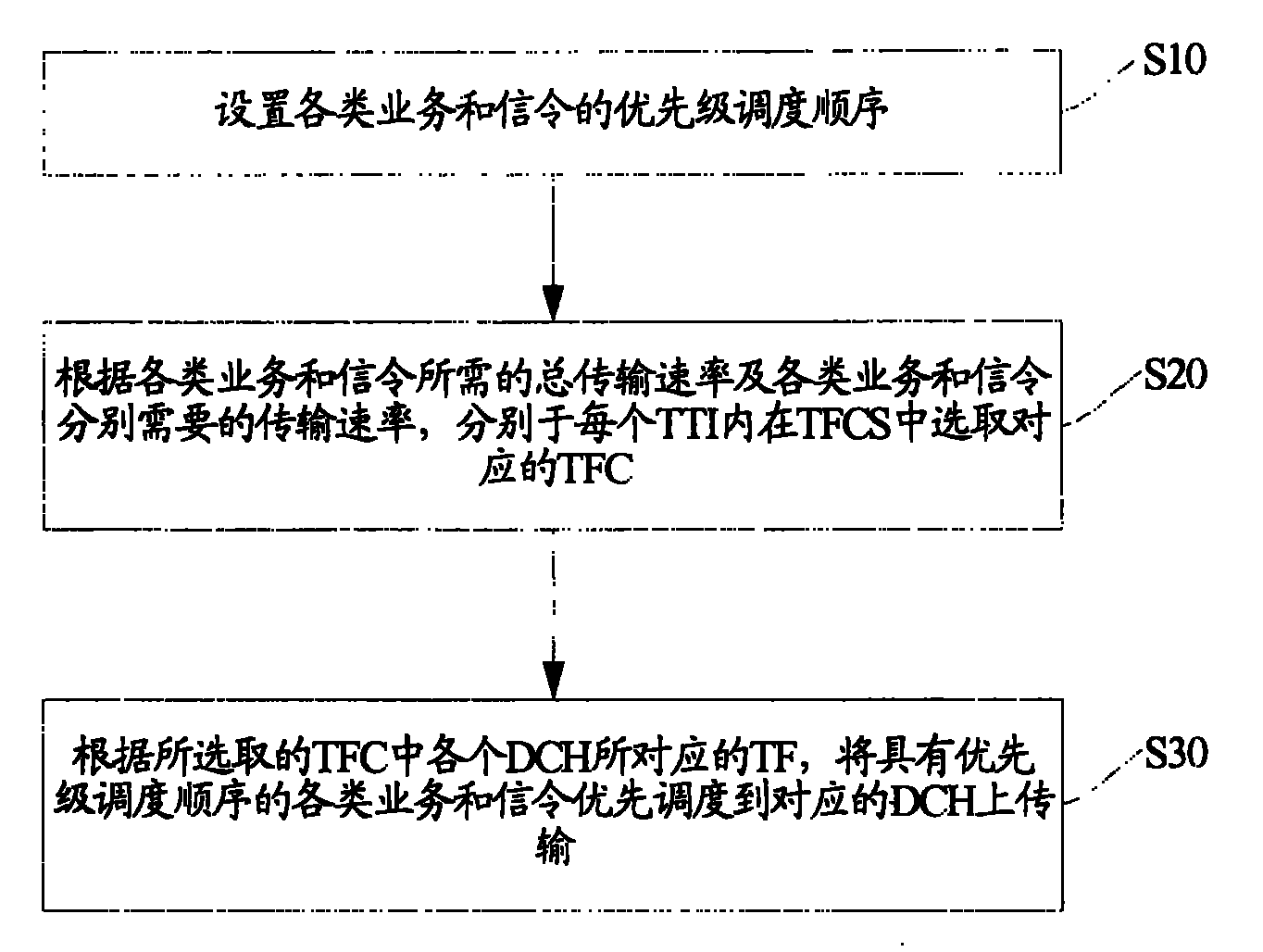
图2是本发明业务优先级调度实现方法的主要实现原理流程图。Fig. 2 is a flow chart of the main realization principles of the method for implementing service priority scheduling in the present invention.
具体实施方式 Detailed ways
本发明业务优先级调度实现方法针对现有技术中没有对DCH上的业务优先级调度过程进行具体设计,而提出根据预先设置的各类业务和信令的优先级调度顺序,结合各类业务和信令的总传输速率和各类业务和信令分别需要的传输速率在传输格式组合集合(TFCS,Transport Format Combination Set )中选取对应的传输格式组合(TFC,Transport Format Combination),以根据选取的TFC中各个DCH所对应的传输格式(TF,Transport Format),将各类业务和信令调度到对应的DCH上传输,从而实现了各类业务和信令在优先级调度顺序的基础上,共享多个DCH所提供的传输带宽,达到各个业务和信令按优先级调度顺序在各个DCH上传输的目的。The implementation method of service priority scheduling in the present invention aims at not specifically designing the process of service priority scheduling on DCH in the prior art, and proposes to combine various services and The total transmission rate of the signaling and the transmission rates required by various services and signaling are selected from the Transport Format Combination Set (TFCS, Transport Format Combination Set) corresponding to the Transport Format Combination (TFC, Transport Format Combination). The transmission format (TF, Transport Format) corresponding to each DCH in the TFC schedules various services and signaling to the corresponding DCH for transmission, thus realizing the sharing of various services and signaling on the basis of priority scheduling order The transmission bandwidth provided by multiple DCHs achieves the purpose of transmitting various services and signaling on each DCH according to the order of priority scheduling.
下面将结合各个附图对本发明业务优先级调度实现方法的具体实现过程进行详细的阐述。The specific implementation process of the service priority scheduling implementation method of the present invention will be described in detail below in conjunction with each drawing.
首先介绍在3G通信网络系统中的DCH上常用的几个概念,请参阅图1,该图是现有移动通信网络系统中传输块在专用信道上传输的过程示意图,其中在DCH上常用的几个概念如下:Firstly, several concepts commonly used on the DCH in the 3G communication network system are introduced. Please refer to Figure 1, which is a schematic diagram of the transmission process of the transmission block on the dedicated channel in the existing mobile communication network system. Among them, several concepts commonly used on the DCH The concepts are as follows:
1)传输块(TB,Transport Block):DCH上传输数据的基本单位;1) Transport Block (TB, Transport Block): the basic unit of data transmission on DCH;
2)传输块集合(TBS,Transport Block Set):在某个传输时间间隔TTI内传输的多个TB的集合;2) Transport Block Set (TBS, Transport Block Set): a set of multiple TBs transmitted within a certain transmission time interval TTI;
3)传输时间间隔(TTI,Transmission Time Interval):传输某个TBS的时间长度,其中媒体访问控制(MAC,Media Access Control)层会在每个TTI内,向物理层传输一个TBS;3) Transmission Time Interval (TTI, Transmission Time Interval): the length of time to transmit a certain TBS, in which the Media Access Control (MAC, Media Access Control) layer will transmit a TBS to the physical layer within each TTI;
4)传输格式(TF,Transport Format):对于每个DCH,在每个传输时间间隔TTI内,存在一个传输格式TF,其中TF由两个部分组成:动态部分和半静态部分,其中动态部分包括TB size(指1个TB的bit数)和TB num(指DCH上一个TTI内允许传输TB的个数);其中半静态部分包括TTI信息等;因此传输格式TF就确定了某个传输时刻的传输速率=TB size×TB num/TTI;4) Transmission format (TF, Transport Format): For each DCH, within each transmission time interval TTI, there is a transmission format TF, where TF consists of two parts: a dynamic part and a semi-static part, where the dynamic part includes TB size (refers to the number of bits of 1 TB) and TB num (refers to the number of TBs allowed to be transmitted within one TTI on the DCH); the semi-static part includes TTI information, etc.; therefore, the transmission format TF determines the number of TBs at a certain transmission moment Transmission rate = TB size × TB num/TTI;
5)传输格式集合(TFS,Transport Block Set):对于一个DCH,可以有几种TF,这些TF就构成了DCH的传输格式集合(TFS:Transport Format Set);5) Transport format set (TFS, Transport Block Set): For a DCH, there can be several TFs, and these TFs constitute the transport format set (TFS: Transport Format Set) of the DCH;
6)传输格式组合(TFC,Transport Format Combination):在物理层(L1)中将一个或若干个DCH进行复用,这样在某一TTI内,就构成了各个DCH的传输格式组合TFC;这种组合在标准中被定义为当前合理的传输格式TF准许组合,可提供给物理层L1,用于码组合传输信道(CCTrCH,Coded CompositeTransport Channel)的传输;6) Transport Format Combination (TFC, Transport Format Combination): multiplex one or several DCHs in the physical layer (L1), so that in a certain TTI, the transport format combination TFC of each DCH is formed; this The combination is defined in the standard as the current reasonable transmission format TF permission combination, which can be provided to the physical layer L1 for the transmission of the Coded Composite Transport Channel (CCTrCH, Coded CompositeTransport Channel);
7)传输格式组合集合(TFCS:Transport Format Combination Set):CCTrCH中各个TFC组成的集合就构成了传输格式组合集合TFCS。7) Transport Format Combination Set (TFCS: Transport Format Combination Set): The set of TFCs in the CCTrCH constitutes the Transport Format Combination Set TFCS.
请参阅图2,该图是本发明业务优先级调度实现方法的主要实现原理流程图,其主要实现过程如下:Please refer to Fig. 2, which is a flow chart of the main realization principle of the method for implementing service priority scheduling in the present invention, and its main realization process is as follows:
步骤S10,设置各类业务和信令的优先级调度顺序;其中设置的优先级调度顺序为无线资源控制信令(RRC,Radio Resource Control)优先级高于各类业务的优先级;并且各类业务中的实时性业务的优先级高于非实时性业务的优先级。其中实时性业务包括会话业务(Conversational)和流业务(Streaming),并且要求会话业务(Conversational)的优先级要高于流业务(Streammg)的优先级;其中非实时性业务包括交互业务(Interactive)和背景业务(Background),并且要求交互业务(Interactive)的优先级要高于背景业务(Background)的优先级。Step S10, setting the priority scheduling order of various services and signaling; wherein the set priority scheduling order is that the priority of radio resource control signaling (RRC, Radio Resource Control) is higher than the priority of various services; The priority of the real-time business in the business is higher than that of the non-real-time business. Among them, the real-time business includes conversational business (Conversational) and streaming business (Streaming), and the priority of conversational business (Conversational) is required to be higher than that of streaming business (Streammg); the non-real-time business includes interactive business (Interactive) and background business (Background), and require the priority of interactive business (Interactive) to be higher than the priority of background business (Background).
同时要求不同交互业务(Interactive)要具有不同的优先级,其中不同交互业务(Interactive)之间的优先级顺序可以根据无线接入承载指配请求(RABAssignment Request)消息中包含的业务处理优先级信元(Traffic HandlingPriority)的取值来确定。At the same time, different interactive services (Interactive) are required to have different priorities. The order of priority among different interactive services (Interactive) can be based on the service processing priority information contained in the radio access bearer assignment request (RABAssignment Request) message. It is determined by the value of Traffic HandlingPriority.
其实在现有标准中,严格说来业务处理优先级信元(Traffic HandlingPriority)只是针对交互业务(Interactiye)而言的,但是本发明这里可以将业务处理优先级概念进行扩展,如按下面的优先级调度顺序来对所有业务以及信令进行统一的配置:In fact, in the existing standards, strictly speaking, the traffic handling priority cell (Traffic HandlingPriority) is only for interactive services (Interactiye), but the present invention can expand the concept of traffic handling priority, such as according to the following priority The level scheduling sequence is used to uniformly configure all services and signaling:
1)各类业务的优先级配置:会话(Conversational)业务的优先级>流(Streaming)业务的优先级>交互(Interactive)业务的优先级>背景(Background)业务的优先级。这里对各类业务不区分是否为核心网业务类型,即分组业务域(PS,Packet domain Service)内的会话(Conversational)业务和电路业务域(CS,Circuit domain Service)内的会话(Conversational)业务的优先级是相同的。1) Priority configuration of various services: Conversational service priority > Streaming service priority > Interactive service priority > Background service priority. Here, it does not distinguish whether the various services are core network service types, that is, the conversational (Conversational) service in the packet service domain (PS, Packet domain Service) and the conversational (Conversational) service in the circuit service domain (CS, Circuit domain Service) The priority is the same.
2)并且在同一类型业务内,除交互业务(Interactive)外的其他业务类型不区分优先级顺序;交互业务(Interactive)之间,采用“Traffic Handling Priority”信元来区分不同的优先级调度顺序;2) And within the same type of business, other business types except interactive business (Interactive) do not distinguish priority order; between interactive business (Interactive), use "Traffic Handling Priority" cells to distinguish different priority scheduling orders ;
3)专用控制信道(DCCH,Dedicated Control Channel)上的信令的优先级高于专用业务信道(DTCH,Dedicated Traffic Channel)上各类业务的优先级。3) The priority of signaling on a dedicated control channel (DCCH, Dedicated Control Channel) is higher than that of various services on a dedicated traffic channel (DTCH, Dedicated Traffic Channel).
基于上述扩展的各类业务和信令的优先级调度顺序,可将配置的各类业务和信令的优先级调度顺序映射到体现服务质量(QoS)的相关用户面调度参数上,其具体优先级调度顺序如下:Based on the priority scheduling sequence of various services and signaling extended above, the configured priority scheduling sequence of various services and signaling can be mapped to the relevant user plane scheduling parameters that reflect the quality of service (QoS). The order of level scheduling is as follows:
RRC信令优先级>会话(Conversational)业务的优先级>流(Streaming)业务的优先级>交互(Interactive)业务优先级“1”>交互(Interactive)业务优先级“2”>...>交互(Interactive)业务优先级“14”>交互(Interactive)业务优先级“15”>背景(Background)业务优先级。即各类业务和信令满足的两个原则是:RRC signaling priority > Conversational service priority > Streaming service priority > Interactive service priority "1" > Interactive service priority "2" >... > Interactive (Interactive) service priority "14" > interactive (Interactive) service priority "15" > background (Background) service priority. That is, the two principles that various services and signaling satisfy are:
a.RRC信令的优先级高于各类业务的优先级;a. The priority of RRC signaling is higher than that of various services;
b.实时性业务的优先级高于非实时性业务的优先级;b. The priority of real-time business is higher than that of non-real-time business;
c.不同交互(Interactive)业务之间的优先级根据RAB指配请求消息中的“Traffic Handling Priority”信元的取值来确定。c. The priority between different interactive (Interactive) services is determined according to the value of the "Traffic Handling Priority" information element in the RAB assignment request message.
步骤S20,根据用户的各类业务和信令所需的总传输速率以及各类业务和信令分别需要的传输速率,分别于每个传输时间间隔TTI内在传输格式组合集合TFCS中选取对应的传输格式组合TFC;Step S20, according to the total transmission rate required by various services and signaling of the user and the respective transmission rates required by various services and signaling, select the corresponding transmission format combination set TFCS in each transmission time interval TTI format combination TFC;
步骤S30,根据上述所选取的传输格式组合TFC中各个专用信道DCH所对应的传输格式TF,将具有优先级调度顺序的各类业务和信令优先调度到对应的专用信道DCH上进行传输。Step S30, according to the transmission format TF corresponding to each dedicated channel DCH in the selected transmission format combination TFC, all kinds of services and signaling with priority scheduling order are preferentially scheduled to the corresponding dedicated channel DCH for transmission.
其中对于实时性业务(包括会话业务Conversational和流业务Streaming)而言,要根据各个实时性业务的优先级调度顺序,将各个实时性业务按照优先级调度顺序分别调度到不同的DCH上进行传输,即依照各个实时性业务的优先级调度顺序,优先将优先级较高的实时性业务调度到对应的DCH上传输,再依次将优先级较低的实时性业务分别调度到其他对应的DCH上传输。For real-time services (including conversational service Conversational and stream service Streaming), each real-time service should be dispatched to different DCHs for transmission according to the priority scheduling sequence of each real-time service. That is, according to the priority scheduling order of each real-time service, the real-time service with higher priority is firstly scheduled to be transmitted on the corresponding DCH, and then the real-time service with lower priority is scheduled to be transmitted on other corresponding DCHs in turn. .
而对于不同的非实时性业务(包括交互业务Interactive和背景业务Background)可以根据不同的非实时性业务的优先级调度顺序分别将多个非实时性业务调度到不同的DCH上进行传输,也可以将多个非实时性业务复用到同一DCH上进行传输。For different non-real-time services (including interactive service Interactive and background service Background), multiple non-real-time services can be scheduled to different DCHs for transmission according to the priority scheduling order of different non-real-time services, or can be Multiplex non-real-time services on the same DCH for transmission.
在分别将多个非实时性业务调度到不同的DCH上进行传输的情况下,要根据各类业务和信令所需的总传输速率及传输上述各个实时性业务的各个DCH所占用的传输速率之和,来得到对应用户的剩余传输速率之和;再进而根据不同的非实时性业务的优先级调度顺序,将各个非实时性业务分别调度到不同的DCH上进行传输,同时要保证传输非实时性业务的各个DCH所占用的传输速率之和小于等于上述得到的剩余传输速率之和。这种情况的具体解释如下:In the case of scheduling multiple non-real-time services to different DCHs for transmission, it should be based on the total transmission rate required by various services and signaling and the transmission rate occupied by each DCH transmitting the above-mentioned real-time services to obtain the sum of the remaining transmission rates of the corresponding users; and then according to the priority scheduling order of different non-real-time services, each non-real-time service is scheduled to be transmitted on different DCHs, and at the same time, the transmission of non-real-time services must be ensured. The sum of the transmission rates occupied by each DCH of the real-time service is less than or equal to the sum of the remaining transmission rates obtained above. The specific explanation of this situation is as follows:
在DCH配置时,不配置DTCH到DCH的逻辑信道复用,即一个DCH只对应传输一个业务或信令,此时对不同业务和信令的优先级调度体现在TFCS配置和TFC的选择上。其中对于会话以及流业务等实时性业务而言,业务数据传输有一定的时延要求,所以要充分保证这些业务数据能够及时得到传输。而对于交互业务和背景业务等非实时性业务而言,这些业务一般被称为尽力而为(BE,Best Effort)业务,BE业务要求只有网络还有剩余带宽时才进行传输,网络因为传输实时性业务而导致没有剩余带宽时就不用传输。由此BE业务数据速率是由UTRAN根据业务源数据速率和空中接口的负载状况进行综合考虑而决定的,这类业务的特点是业务源数据速率变化范围大,其服务质量(QoS)对传输带宽没有特殊要求。因此针对BE业务的这个特点,为了节约资源(如码资源等),当两个及两个以上的BE业务利用剩余传输速率进行传输时,可以限制其不能同时以满速率进行传输。因此在配置的TFCS中不选择全配置的TFC(全配置是指各个DCH的TFS的全排列集合),主要是为保证当一个用户存在有两个及两个以上的BE业务需要传输时,在该用户的TFCS中不能选择分别用于传输两个BE业务的DCH的最大TF组合。传输时,在该用户的TFCS中不能选择分别用于传输两个BE业务的DCH的最大TF组合。When DCH is configured, logical channel multiplexing from DTCH to DCH is not configured, that is, a DCH only corresponds to the transmission of one service or signaling. At this time, priority scheduling for different services and signaling is reflected in TFCS configuration and TFC selection. Among them, for real-time services such as session and streaming services, there is a certain delay requirement for service data transmission, so it is necessary to fully ensure that these service data can be transmitted in time. For non-real-time services such as interactive services and background services, these services are generally called Best Effort (BE, Best Effort) services. BE services require transmission only when the network has remaining bandwidth. No transmission is required when there is no remaining bandwidth due to non-specific services. Therefore, the BE service data rate is determined by UTRAN based on the comprehensive consideration of the service source data rate and the load status of the air interface. This type of service is characterized by a wide range of service source data rates, and its quality of service (QoS) has a significant impact on the transmission bandwidth. No special requirements. Therefore, in view of this characteristic of the BE service, in order to save resources (such as code resources, etc.), when two or more BE services are transmitted at the remaining transmission rate, it can be restricted that they cannot be transmitted at the full rate at the same time. Therefore, the fully configured TFC is not selected in the configured TFCS (full configuration refers to the full arrangement set of TFS of each DCH), mainly to ensure that when a user has two or more BE services that need to be transmitted, In the user's TFCS, the maximum TF combination of the DCHs used to transmit the two BE services cannot be selected. During transmission, the user's TFCS cannot select the maximum TF combination of DCHs used to transmit two BE services.
基于上述原则,对各个业务和信令的优先调度传输顺序如下:Based on the above principles, the priority scheduling transmission sequence for each service and signaling is as follows:
1)保证RRC信令和PS/CS实时性业务优先传输;1) Guarantee the priority transmission of RRC signaling and PS/CS real-time services;
2)两个BE业务分别占用不同DCH进行传输时,要保证优先级高的BE业务占用的DCH优先传输数据,同时不完全阻塞优先级低的BE业务占用的DCH进行数据传输。2) When two BE services occupy different DCHs for transmission, it is necessary to ensure that the DCH occupied by the BE service with high priority transmits data first, and at the same time, the DCH occupied by the BE service with low priority is not completely blocked for data transmission.
为清楚起见,下面举个例子,说明多个BE业务分别占用不同DCH进行传输的TFC及TFCS配置情况,即如何根据预先配置的业务优先级调度顺序,并结合TFC及TFCS配置情况,将相应业务或信令分配到对应的DCH上进行传输;为简化起见,在下面的例子中,不考虑信令和其他非BE业务,只考虑两个BE业务的组合情况:For clarity, an example is given below to illustrate the TFC and TFCS configurations in which multiple BE services occupy different DCHs for transmission, that is, how to schedule corresponding services according to the pre-configured service priority scheduling order Or signaling is assigned to the corresponding DCH for transmission; for simplicity, in the following example, signaling and other non-BE services are not considered, and only the combination of two BE services is considered:
假设某用户设备(UE,User Equipment)在某段时间内同时接入了两个BE业务,这两个BE业务的最大传输速率均为384kbp,但是对于该UE而言剩余的传输速率为445kbp。RNC给这两个BE业务各分配了1条DCH,分别记为BE1 DCH和BE2 DCH。假设设置BE1业务的优先级高于BE2业务的优先级,所以就配置BE1 DCH的优先级高于BE2 DCH的优先级。其中这两个DCH的传输格式集合TFS和传输格式组合集合TFCS的配置如下:Assuming that a user equipment (UE, User Equipment) accesses two BE services at the same time within a certain period of time, the maximum transmission rate of the two BE services is 384kbp, but the remaining transmission rate for the UE is 445kbp. The RNC allocates one DCH to each of the two BE services, which are respectively recorded as BE1 DCH and BE2 DCH. Assume that the priority of BE1 service is set higher than that of BE2 service, so configure the priority of BE1 DCH to be higher than that of BE2 DCH. The configurations of the transmission format set TFS and the transmission format combination set TFCS of the two DCHs are as follows:
(1)每条DCH的TFS均为(TF0,TF1,TF2,TF3,TF4),TTI均为10ms,TBsize为336kbp;(1) The TFS of each DCH is (TF0, TF1, TF2, TF3, TF4), the TTI is 10ms, and the TBsize is 336kbp;
其中TF0对应0×336;TB NUM×TB sizeAmong them, TF0 corresponds to 0×336; TB NUM×TB size
TF1对应1×336;TF1 corresponds to 1×336;
TF2对应2×336;TF2 corresponds to 2×336;
TF3对应8×336;TF3 corresponds to 8×336;
TF4对应12×336;TF4 corresponds to 12×336;
即上述TF0~TF4对应的TB NUM分别为0、1、2、8、12。That is, the TB NUMs corresponding to the above TF0~TF4 are 0, 1, 2, 8, and 12 respectively.
(2)则在对应该UE的配置TFCS中能够选取的TFC为:(2) The TFC that can be selected in the configuration TFCS corresponding to the UE is:
(TF0,TF0)、(TF0,TF1)、(TF0,TF2)、(TF0,TF3)、(TF0,TF4)、(TF1,TF0)、(TF1,TF1)、(TF1,TF2)、(TF1,TF3)、(TF1,TF4)、(TF2,TF0)、(TF2,TF1)、(TF2,TF2)、(TF2,TF3)、(TF3,TF0)、(TF3,TF1)、(TF3,TF2)、(TF4,TF0)、(TF4,TF1);(TF0, TF0), (TF0, TF1), (TF0, TF2), (TF0, TF3), (TF0, TF4), (TF1, TF0), (TF1, TF1), (TF1, TF2), (TF1 , TF3), (TF1, TF4), (TF2, TF0), (TF2, TF1), (TF2, TF2), (TF2, TF3), (TF3, TF0), (TF3, TF1), (TF3, TF2 ), (TF4, TF0), (TF4, TF1);
相对于TFCS全配置而言(所谓全配置,指的是两个DCH中的每个TF都可以构成一个TFC,那么全配置情况下的TFC的个数应该为5×5=25个)缺少(TF2,TF4)、(TF3,TF3)、(TF3,TF4)、(TF4,TF2)、(TF4,TF3)和(TF4,TF4)几个TFC,因为选取这几个TFC,都会导致分别传输两个BE业务的DCH的传输速率之和大于445kbp,因此都不符合要求。这样在配置的TFCS中选择相应TFC的理由是:BE业务一般都具有数据突发的特点,从一个较长时间来看,不会存在两个BE业务都下发高速率数据,在某些时间段内可能是其中一个BE业务有数据需要传输,而另一个BE业务没有数据需要传输或传输的数据量较小。因此在配置CCTrCH总带宽时,就可以配置除传输实时性业务所需带宽之外的剩余带宽小于这两个BE业务的最大速率之和,否则就可能会对传输带宽(包括Iub、Uu接口的传输带宽)造成浪费,因此这种配置是合理的,它考虑了BE业务的数据传输统计规律,从而引入了带宽共享的思想,并且由于BE业务本身是尽力而为传输的业务,没有要求保证速率,因此这样的选择是合理的。Compared with the full configuration of TFCS (the so-called full configuration means that each TF in the two DCHs can form a TFC, then the number of TFCs in the full configuration should be 5×5=25) lacks ( TF2, TF4), (TF3, TF3), (TF3, TF4), (TF4, TF2), (TF4, TF3) and (TF4, TF4) several TFCs, because the selection of these TFCs will cause the transmission of two The sum of the transmission rates of the DCHs of the BE services is greater than 445kbp, so none of them meet the requirements. The reason for selecting the corresponding TFC in the configured TFCS is that BE services generally have the characteristics of data bursts. From a long-term perspective, there will not be two BE services that deliver high-speed data. In the segment, one of the BE services may have data to be transmitted, while the other BE service has no data to be transmitted or the amount of data to be transmitted is small. Therefore, when disposing the CCTrCH total bandwidth, it is possible to configure the remaining bandwidth except the required bandwidth for transmitting real-time services to be less than the sum of the maximum rates of these two BE services; otherwise, the transmission bandwidth (including Iub, Uu interfaces) may be affected Transmission bandwidth) causes waste, so this configuration is reasonable, it considers the statistical law of data transmission of BE business, thus introduces the idea of bandwidth sharing, and because BE business itself is a best-effort transmission business, there is no requirement to guarantee the rate , so this choice is reasonable.
(3)两个BE业务的优先级调度过程:(3) The priority scheduling process of two BE services:
假设在某段时间内分别用于传输两个BE业务的两个DCH上都有较多的数据需要传输,比如两个BE业务的数据源传输速率都要大于等于384kbps,这样在某个数据传输时刻,MACD要进行优先级调度,根据优先级调度策略,先保证优先级高的BE业务进行传输,所以对BE1 DCH选择TF4,而对于传输优先级低的BE业务的BE2 DCH就只能选择TF1。即对于BE1业务可满足12×(336-16)/10=384kps的速率传输(其中式中16表示数据在由MAC层向RLC层传输时,需要删减的报头比特),而对于BE2业务可满足1×(336-16)/10=32kps的速率传输。Assume that in a certain period of time, there are a lot of data to be transmitted on the two DCHs used to transmit the two BE services respectively. For example, the data source transmission rate of the two BE services must be greater than or equal to 384kbps. At any time, MACD needs to perform priority scheduling. According to the priority scheduling strategy, the BE service with high priority is guaranteed to be transmitted first. Therefore, TF4 is selected for BE1 DCH, and only TF1 can be selected for BE2 DCH of BE service with low priority. . That is, for the BE1 service, the transmission rate of 12×(336-16)/10=384kps can be satisfied (the 16 in the formula represents the header bits that need to be deleted when the data is transmitted from the MAC layer to the RLC layer), while for the BE2 service, it can be Satisfy the rate transmission of 1*(336-16)/10=32kps.
其中在各个用于传输非实时性业务的DCH上,可以根据各个BE业务的优先级调度顺序,对高优先级BE业务优先进行TF选择,即在BE业务的传输总带宽中保证高优先级的BE业务优先得到更多的传输带宽。Among them, on each DCH used to transmit non-real-time services, according to the priority scheduling sequence of each BE service, TF selection can be performed preferentially for high-priority BE services, that is, high-priority services can be guaranteed in the total transmission bandwidth of BE services BE services are given priority to obtain more transmission bandwidth.
另外,当各个BE业务的优先级调度顺序相同时,在各个用于传输BE业务的DCH上,可以按时间顺序依次轮回首先对每个BE业务进行TF选择,以使每个BE业务都能按照时间顺序优先在对应的DCH上传输。In addition, when the priority scheduling order of each BE service is the same, on each DCH used to transmit BE services, TF selection can be performed on each BE service in turn in chronological order, so that each BE service can follow The time sequence is transmitted on the corresponding DCH first.
上述方案可使得高优先级BE业务对应的DCH具有优先选择权;并在使高优先级BE业务数据能够得到优先传输的同时,还可以保证低优先级的BE业务数据能够得到一定流量的传输,从而可以避免低优先级BE业务长时间得不到调度而引起该BE业务对应的无线链路控制协议(RLC,Radio LinkControl)层复位。即当确认低优先级BE业务有数据要发时,一定要给它分配传输带宽,该传输带宽尽可能较小,但应该能够保证RNC的RLC层和UE的RLC层之间能够及时进行状态报告消息的传送。The above scheme can make the DCH corresponding to the high-priority BE service have the priority selection right; and while enabling the high-priority BE service data to be transmitted preferentially, it can also ensure that the low-priority BE service data can be transmitted with a certain amount of traffic. Therefore, it is possible to avoid the reset of the radio link control protocol (RLC, Radio LinkControl) layer corresponding to the BE service caused by the low-priority BE service being unscheduled for a long time. That is, when it is confirmed that the low-priority BE service has data to send, the transmission bandwidth must be allocated to it. The transmission bandwidth should be as small as possible, but it should be able to ensure that the RLC layer of the RNC and the RLC layer of the UE can perform status reports in a timely manner. Delivery of messages.
另外,在分别将多个BE业务复用到同一DCH上进行传输的情况下,也要根据各类业务和信令所需的总传输速率及传输实时性业务的各个专用信道所占用的传输速率之和,来得到剩余传输速率之和;然后根据两个及两个以上不同的BE业务的优先级调度顺序,来将各个BE业务复用到同一DCH上进行传输,并使得传输BE业务的DCH所占用的传输速率小于等于上述求得的剩余传输速率之和。这种情况的具体解释如下:In addition, when multiple BE services are multiplexed on the same DCH for transmission, the total transmission rate required by various services and signaling and the transmission rate occupied by each dedicated channel for transmitting real-time services must also be considered. to obtain the sum of the remaining transmission rates; then according to the priority scheduling order of two or more different BE services, each BE service is multiplexed on the same DCH for transmission, and the DCH for transmitting BE services The occupied transmission rate is less than or equal to the sum of the remaining transmission rates obtained above. The specific explanation of this situation is as follows:
各个DCH的TFCS采用全配置,而各个BE业务必须复用到同一条DCH上进行传输,当一条DCH的传输格式TF确定后,可将该TF确定的传输速率用于传输各个BE业务。The TFCS of each DCH adopts full configuration, and each BE service must be multiplexed on the same DCH for transmission. When the transmission format TF of a DCH is determined, the transmission rate determined by the TF can be used to transmit each BE service.
其中在该复用到的DCH上,可以根据各个BE业务的优先级调度顺序,对高优先级BE业务到低优先级BE业务依次进行传输,即对于要在该DCH上传输的各个BE业务而言,对优先级较高的BE业务配以“高速率”流量,对优先级较低的BE业务配以“低速率”流量(甚至可以为0速率)。On the multiplexed DCH, according to the priority scheduling order of each BE service, the high priority BE service to the low priority BE service can be transmitted sequentially, that is, for each BE service to be transmitted on the DCH In other words, "high rate" traffic is allocated to BE services with higher priority, and "low rate" traffic (or even 0 rate) is allocated to BE services with lower priority.
下面再举个例子,说明多个BE业务复用到同一DCH上的TFC及TFCS配置情况,即如何根据预先配置的业务优先级调度顺序,并结合TFC及TFCS配置情况,将相应业务或信令分配到对应的DCH上进行传输:Here is another example to illustrate the configuration of TFC and TFCS when multiple BE services are multiplexed on the same DCH, that is, how to schedule the corresponding services or signaling Assigned to the corresponding DCH for transmission:
假设某UE在某段时间内同时接入了两个BE业务,这两个BE业务的最大传输速率均为384kbp,但是对于该UE而言剩余的传输速率为445kbp。RNC给这两个BE业务只分配了1条DCH,假设该DCH在逻辑上被分为两个专用业务信道DTCH,即这两个BE业务分别使用一条DTCH进行传输,记为BE1DTCH和BE2 DTCH,即分别用于传输这两个BE业务的两条DTCH复用在同一条DCH上。假设BE1业务的优先级高于BE2业务的优先级,所以在配置传输这两个BE业务的DTCH的优先级时,就配置BE1 DTCH的优先级高于BE2 DTCH的优先级。该条DCH的传输格式集合TFS配置如下:Assuming that a certain UE accesses two BE services at the same time within a certain period of time, the maximum transmission rate of the two BE services is 384kbp, but the remaining transmission rate for the UE is 445kbp. The RNC allocates only one DCH to the two BE services, assuming that the DCH is logically divided into two dedicated traffic channels DTCH, that is, the two BE services use a DTCH for transmission respectively, recorded as BE1DTCH and BE2 DTCH, That is, the two DTCHs respectively used to transmit the two BE services are multiplexed on the same DCH. Assume that the priority of the BE1 service is higher than that of the BE2 service, so when configuring the priority of the DTCHs transmitting the two BE services, configure the priority of the BE1 DTCH to be higher than that of the BE2 DTCH. The transmission format set TFS configuration of this DCH is as follows:
该DCH的TFS为(TF0,TF1,TF2,TF3,TF4),TTI均为10ms,TB size为336kbp;The TFS of the DCH is (TF0, TF1, TF2, TF3, TF4), the TTI is 10ms, and the TB size is 336kbp;
其中TF0对应0×336;TB NUM×TB sizeAmong them, TF0 corresponds to 0×336; TB NUM×TB size
TF1对应1×336;TF1 corresponds to 1×336;
TF2对应2×336;TF2 corresponds to 2×336;
TF3对应8×336;TF3 corresponds to 8×336;
TF4对应12×336;TF4 corresponds to 12×336;
即上述TF0~TF4对应的TB NUM分别为0、1、2、8、12。That is, the TB NUMs corresponding to the above TF0~TF4 are 0, 1, 2, 8, and 12 respectively.
假设用于传输这两个BE业务的两个DTCH都有较多的数据需要传输,比如两个BE业务的数据源传输速率都大于等于384kbps。因此在某段时间内就确定了该DCH的传输格式为TF4,即在一个TTI内可以传送12个TB块,那么需要将这12个TB块分别在两个DTCH间分配。由于BE1 DTCH的优先级高于BE2 DTCH,因此就将这12个TB块分配给BE1 DTCH,那么BE2DTCH将不能传输数据。即对于BE1业务而言可得到12×(336-16)/10=384kps的满传输速率,而对于BE2业务可得到的传输速率则只能为0kps。Assume that the two DTCHs used to transmit the two BE services have a lot of data to be transmitted, for example, the data source transmission rates of the two BE services are both greater than or equal to 384 kbps. Therefore, within a certain period of time, it is determined that the transmission format of the DCH is TF4, that is, 12 TB blocks can be transmitted in one TTI, and these 12 TB blocks need to be allocated between two DTCHs respectively. Since the priority of BE1 DTCH is higher than that of BE2 DTCH, these 12 TB blocks are allocated to BE1 DTCH, then BE2DTCH will not be able to transmit data. That is, for the BE1 service, a full transmission rate of 12*(336-16)/10=384 kps can be obtained, while for the BE2 service, the available transmission rate can only be 0 kps.
而当各个BE业务优先级调度顺序相同时,则在该复用到的DCH上,按时间顺序依次轮回传输每个BE业务,即同优先级的各个BE业务是按照时间顺序轮流被传输的,以保证同优先级的各个BE业务被分别传输的公平性,如在前一个BE业务数据发送时刻该DCH用于传输BE1业务,而后一个BE业务数据发送时刻该DCH用于传输BE2,此后再传输BE1业务、BE2业务....When the priority scheduling order of each BE service is the same, each BE service is sequentially transmitted in chronological order on the multiplexed DCH, that is, each BE service of the same priority is transmitted in turn in chronological order, To ensure the fairness of each BE service with the same priority being transmitted separately, for example, at the time when the previous BE service data is sent, the DCH is used to transmit BE1 service, and at the time when the next BE service data is sent, the DCH is used to transmit BE2, and then transmitted BE1 business, BE2 business....
但是上述方案却存在一个缺点,就是由于标准没有定义DCH中各个DTCH间的流量分配算法,UE的MACD在处理业务优先级调度时要采用如下的调度方案:高优先级的DTCH发送完BE业务数据后,才能允许低优先级的DTCH发送BE业务数据。这样就有可能导致低优先级的DTCH对应的RLC复位,这种情况出现在低优先级BE业务数据在还没有得到完全确认时,高优先级BE业务数据在此后的一段时间内一直有数据要发。However, there is a shortcoming in the above solution, that is, since the standard does not define the traffic allocation algorithm among DTCHs in DCH, the MACD of UE shall adopt the following scheduling scheme when processing service priority scheduling: the high priority DTCH sends the BE service data After that, the DTCH with low priority can be allowed to send BE service data. This may cause the RLC corresponding to the low-priority DTCH to be reset. This situation occurs when the low-priority BE service data has not been fully confirmed, and the high-priority BE service data has data for a period of time thereafter. hair.
在此还应该注意,虽然上面描述了本发明的优选实施方式,但还可以对上述公开的解决方案进行多种变换和改变,只要不偏离本发明权利要求所定义的范围,都落在本发明的保护范围内。It should also be noted here that although the preferred embodiment of the present invention has been described above, multiple transformations and changes can also be made to the above-mentioned disclosed solutions, as long as they do not depart from the scope defined by the claims of the present invention, they all fall within the scope of the present invention. within the scope of protection.
Claims (10)
Priority Applications (1)
| Application Number | Priority Date | Filing Date | Title |
|---|---|---|---|
| CNB2005100018415A CN100384298C (en) | 2005-01-13 | 2005-01-13 | Implementation Method of Business Priority Scheduling |
Applications Claiming Priority (1)
| Application Number | Priority Date | Filing Date | Title |
|---|---|---|---|
| CNB2005100018415A CN100384298C (en) | 2005-01-13 | 2005-01-13 | Implementation Method of Business Priority Scheduling |
Publications (2)
| Publication Number | Publication Date |
|---|---|
| CN1805596A CN1805596A (en) | 2006-07-19 |
| CN100384298C true CN100384298C (en) | 2008-04-23 |
Family
ID=36867374
Family Applications (1)
| Application Number | Title | Priority Date | Filing Date |
|---|---|---|---|
| CNB2005100018415A Expired - Lifetime CN100384298C (en) | 2005-01-13 | 2005-01-13 | Implementation Method of Business Priority Scheduling |
Country Status (1)
| Country | Link |
|---|---|
| CN (1) | CN100384298C (en) |
Families Citing this family (10)
| Publication number | Priority date | Publication date | Assignee | Title |
|---|---|---|---|---|
| CN101682558B (en) * | 2006-12-07 | 2013-07-17 | Lg电子株式会社 | Method for transferring data in wireless communication system |
| KR101342365B1 (en) | 2006-12-07 | 2013-12-16 | 엘지전자 주식회사 | Method of transferring data in wireless communication system |
| US8797879B2 (en) | 2006-12-07 | 2014-08-05 | Lg Electronics Inc. | Method of transmitting and receiving status report in a mobile communication system |
| WO2008084986A2 (en) | 2007-01-09 | 2008-07-17 | Lg Electronics Inc. | Method of transmitting and receiving scheduling information in a wireless communication system |
| EP2119082A4 (en) | 2007-01-09 | 2013-07-31 | Lg Electronics Inc | Method of controlling data retransmission in a wireless communication system |
| WO2008084985A2 (en) | 2007-01-09 | 2008-07-17 | Lg Electronics Inc. | Method of transmitting and receiving data in a wireless communication system |
| KR101211758B1 (en) | 2007-01-10 | 2012-12-12 | 엘지전자 주식회사 | Method for generating block data in wireless communication system |
| EP2103006B1 (en) | 2007-01-10 | 2018-03-28 | LG Electronics Inc. | Method for constructing data format in mobile communication and terminal thereof |
| US9730242B2 (en) * | 2012-12-20 | 2017-08-08 | Telecom Italia S.P.A. | Method and system for scheduling radio resources in cellular networks |
| CN111954306B (en) * | 2020-07-08 | 2024-02-27 | 北京瀚诺半导体科技有限公司 | Hybrid transmission method and system based on time slot and packet scheduling |
Citations (3)
| Publication number | Priority date | Publication date | Assignee | Title |
|---|---|---|---|---|
| WO2002091633A1 (en) * | 2001-05-04 | 2002-11-14 | Samsung Electronics Co., Ltd. | Transmission apparatus and method for multimedia service in mobile communication system |
| JP2003163667A (en) * | 2001-11-22 | 2003-06-06 | Ntt Docomo Inc | Base station, radio resource control device, terminal device, communication system and communication method |
| CN1463099A (en) * | 2003-06-18 | 2003-12-24 | 清华大学 | Scheduling method for ensuring service quality of real time operation in OFDM |
-
2005
- 2005-01-13 CN CNB2005100018415A patent/CN100384298C/en not_active Expired - Lifetime
Patent Citations (3)
| Publication number | Priority date | Publication date | Assignee | Title |
|---|---|---|---|---|
| WO2002091633A1 (en) * | 2001-05-04 | 2002-11-14 | Samsung Electronics Co., Ltd. | Transmission apparatus and method for multimedia service in mobile communication system |
| JP2003163667A (en) * | 2001-11-22 | 2003-06-06 | Ntt Docomo Inc | Base station, radio resource control device, terminal device, communication system and communication method |
| CN1463099A (en) * | 2003-06-18 | 2003-12-24 | 清华大学 | Scheduling method for ensuring service quality of real time operation in OFDM |
Also Published As
| Publication number | Publication date |
|---|---|
| CN1805596A (en) | 2006-07-19 |
Similar Documents
| Publication | Publication Date | Title |
|---|---|---|
| CN101044721B (en) | Method and system for managing radio resources in mobile communication network and related network | |
| CN102395164B (en) | Wireless transmission/receive unit and the method performed by wireless transmission/receive unit | |
| KR101059876B1 (en) | Data Transmission Volume Selection Method for Guaranteeing Service Quality of Mobile Communication System | |
| JP4087381B2 (en) | Two-threshold uplink rate control to enable uplink scheduling | |
| CN101228732B (en) | Harq process restriction and transmission of non-scheduled control data via uplink channel | |
| CN1767535B (en) | Data link layer protocol unit and related device and method | |
| CN101682558B (en) | Method for transferring data in wireless communication system | |
| US8199728B2 (en) | Method and apparatus for non-scheduled transmission for packet service in a mobile communication system | |
| CN109640395B (en) | Scheduling data transmission in a wireless communication network | |
| JP2007520131A (en) | Radio resource management method, core network service node, and radio access network control apparatus in UTRAN radio access network | |
| CN102369778A (en) | Buffer status reporting in a mobile communication system | |
| CN101346971A (en) | Method and device for solving data packet traffic congestion | |
| US20090129326A1 (en) | Apparatus and method for transmitting and receiving control information for uplink data in a mobile communication system and system thereof | |
| JP4853732B2 (en) | Mobile communication system and communication control method thereof | |
| EP1096742A1 (en) | Radio communication network | |
| CN100384298C (en) | Implementation Method of Business Priority Scheduling | |
| CN101043638B (en) | Base station scheduler, resource allocation module and scheduling control method for HSUPA | |
| CN100431362C (en) | Method for packet service scheduling in mobile communication system | |
| EP1436953A1 (en) | A method for scheduling of packet data and a packet data scheduler | |
| JP4565849B2 (en) | Service quality management method in mobile radio system | |
| EP1652342B1 (en) | Method, access point and program product for providing bandwidth and airtime fairness in wireless networks | |
| EP1096743A1 (en) | Radio communication network | |
| JP2007159105A (en) | Method for dynamically managing bandwidth for transport streams in wireless network | |
| EP1096814B1 (en) | Radio communication network | |
| CN101330698B (en) | Method and system for reporting measuring case of business volume to a leadership |
Legal Events
| Date | Code | Title | Description |
|---|---|---|---|
| C06 | Publication | ||
| PB01 | Publication | ||
| C10 | Entry into substantive examination | ||
| SE01 | Entry into force of request for substantive examination | ||
| C14 | Grant of patent or utility model | ||
| GR01 | Patent grant | ||
| TR01 | Transfer of patent right | ||
| TR01 | Transfer of patent right |
Effective date of registration: 20211221 Address after: 450046 Floor 9, building 1, Zhengshang Boya Plaza, Longzihu wisdom Island, Zhengdong New Area, Zhengzhou City, Henan Province Patentee after: xFusion Digital Technologies Co., Ltd. Address before: 518129 Bantian HUAWEI headquarters office building, Longgang District, Guangdong, Shenzhen Patentee before: HUAWEI TECHNOLOGIES Co.,Ltd. |
|
| CX01 | Expiry of patent term | ||
| CX01 | Expiry of patent term |
Granted publication date: 20080423 |