CN100358515C - Therapeutic agent for neurodegenerative and cardiovascular diseases - Google Patents
Therapeutic agent for neurodegenerative and cardiovascular diseases Download PDFInfo
- Publication number
- CN100358515C CN100358515C CNB02823183XA CN02823183A CN100358515C CN 100358515 C CN100358515 C CN 100358515C CN B02823183X A CNB02823183X A CN B02823183XA CN 02823183 A CN02823183 A CN 02823183A CN 100358515 C CN100358515 C CN 100358515C
- Authority
- CN
- China
- Prior art keywords
- carbons
- group
- disease
- use according
- neurodegenerative
- Prior art date
- Legal status (The legal status is an assumption and is not a legal conclusion. Google has not performed a legal analysis and makes no representation as to the accuracy of the status listed.)
- Expired - Fee Related
Links
Classifications
-
- A—HUMAN NECESSITIES
- A61—MEDICAL OR VETERINARY SCIENCE; HYGIENE
- A61K—PREPARATIONS FOR MEDICAL, DENTAL OR TOILETRY PURPOSES
- A61K31/00—Medicinal preparations containing organic active ingredients
- A61K31/16—Amides, e.g. hydroxamic acids
-
- A—HUMAN NECESSITIES
- A61—MEDICAL OR VETERINARY SCIENCE; HYGIENE
- A61K—PREPARATIONS FOR MEDICAL, DENTAL OR TOILETRY PURPOSES
- A61K31/00—Medicinal preparations containing organic active ingredients
- A61K31/13—Amines
-
- A—HUMAN NECESSITIES
- A61—MEDICAL OR VETERINARY SCIENCE; HYGIENE
- A61K—PREPARATIONS FOR MEDICAL, DENTAL OR TOILETRY PURPOSES
- A61K31/00—Medicinal preparations containing organic active ingredients
- A61K31/21—Esters, e.g. nitroglycerine, selenocyanates
- A61K31/215—Esters, e.g. nitroglycerine, selenocyanates of carboxylic acids
-
- A—HUMAN NECESSITIES
- A61—MEDICAL OR VETERINARY SCIENCE; HYGIENE
- A61K—PREPARATIONS FOR MEDICAL, DENTAL OR TOILETRY PURPOSES
- A61K31/00—Medicinal preparations containing organic active ingredients
- A61K31/275—Nitriles; Isonitriles
-
- A—HUMAN NECESSITIES
- A61—MEDICAL OR VETERINARY SCIENCE; HYGIENE
- A61K—PREPARATIONS FOR MEDICAL, DENTAL OR TOILETRY PURPOSES
- A61K31/00—Medicinal preparations containing organic active ingredients
- A61K31/33—Heterocyclic compounds
- A61K31/395—Heterocyclic compounds having nitrogen as a ring hetero atom, e.g. guanethidine or rifamycins
- A61K31/40—Heterocyclic compounds having nitrogen as a ring hetero atom, e.g. guanethidine or rifamycins having five-membered rings with one nitrogen as the only ring hetero atom, e.g. sulpiride, succinimide, tolmetin, buflomedil
-
- A—HUMAN NECESSITIES
- A61—MEDICAL OR VETERINARY SCIENCE; HYGIENE
- A61K—PREPARATIONS FOR MEDICAL, DENTAL OR TOILETRY PURPOSES
- A61K31/00—Medicinal preparations containing organic active ingredients
- A61K31/33—Heterocyclic compounds
- A61K31/395—Heterocyclic compounds having nitrogen as a ring hetero atom, e.g. guanethidine or rifamycins
- A61K31/435—Heterocyclic compounds having nitrogen as a ring hetero atom, e.g. guanethidine or rifamycins having six-membered rings with one nitrogen as the only ring hetero atom
- A61K31/44—Non condensed pyridines; Hydrogenated derivatives thereof
-
- A—HUMAN NECESSITIES
- A61—MEDICAL OR VETERINARY SCIENCE; HYGIENE
- A61P—SPECIFIC THERAPEUTIC ACTIVITY OF CHEMICAL COMPOUNDS OR MEDICINAL PREPARATIONS
- A61P25/00—Drugs for disorders of the nervous system
-
- A—HUMAN NECESSITIES
- A61—MEDICAL OR VETERINARY SCIENCE; HYGIENE
- A61P—SPECIFIC THERAPEUTIC ACTIVITY OF CHEMICAL COMPOUNDS OR MEDICINAL PREPARATIONS
- A61P25/00—Drugs for disorders of the nervous system
- A61P25/14—Drugs for disorders of the nervous system for treating abnormal movements, e.g. chorea, dyskinesia
- A61P25/16—Anti-Parkinson drugs
-
- A—HUMAN NECESSITIES
- A61—MEDICAL OR VETERINARY SCIENCE; HYGIENE
- A61P—SPECIFIC THERAPEUTIC ACTIVITY OF CHEMICAL COMPOUNDS OR MEDICINAL PREPARATIONS
- A61P25/00—Drugs for disorders of the nervous system
- A61P25/28—Drugs for disorders of the nervous system for treating neurodegenerative disorders of the central nervous system, e.g. nootropic agents, cognition enhancers, drugs for treating Alzheimer's disease or other forms of dementia
-
- A—HUMAN NECESSITIES
- A61—MEDICAL OR VETERINARY SCIENCE; HYGIENE
- A61P—SPECIFIC THERAPEUTIC ACTIVITY OF CHEMICAL COMPOUNDS OR MEDICINAL PREPARATIONS
- A61P9/00—Drugs for disorders of the cardiovascular system
Landscapes
- Health & Medical Sciences (AREA)
- Veterinary Medicine (AREA)
- General Health & Medical Sciences (AREA)
- Animal Behavior & Ethology (AREA)
- Public Health (AREA)
- Life Sciences & Earth Sciences (AREA)
- Chemical & Material Sciences (AREA)
- Pharmacology & Pharmacy (AREA)
- Medicinal Chemistry (AREA)
- Epidemiology (AREA)
- Bioinformatics & Cheminformatics (AREA)
- Engineering & Computer Science (AREA)
- Biomedical Technology (AREA)
- Neurology (AREA)
- Neurosurgery (AREA)
- Chemical Kinetics & Catalysis (AREA)
- Organic Chemistry (AREA)
- Nuclear Medicine, Radiotherapy & Molecular Imaging (AREA)
- General Chemical & Material Sciences (AREA)
- Emergency Medicine (AREA)
- Hospice & Palliative Care (AREA)
- Heart & Thoracic Surgery (AREA)
- Psychiatry (AREA)
- Cardiology (AREA)
- Psychology (AREA)
- Acyclic And Carbocyclic Compounds In Medicinal Compositions (AREA)
- Pharmaceuticals Containing Other Organic And Inorganic Compounds (AREA)
Abstract
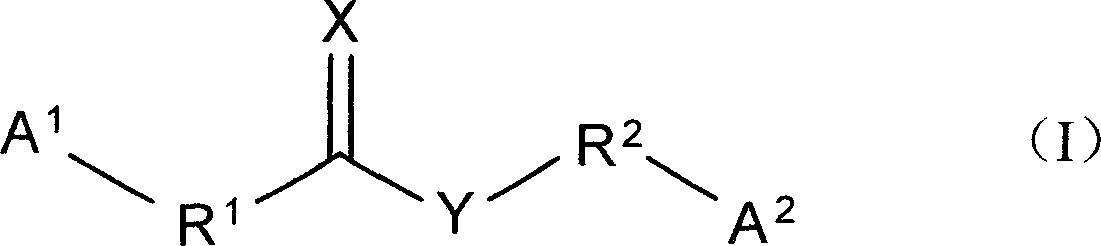
一种以如下列化学式(I)所示的化合物在制备治疗神经退行性或心血管疾病的药物中的用途:其中,该化合物中的X、Y、A1、A2、R1和R2都在说明书中定义。
A use of a compound represented by the following chemical formula (I) in the preparation of a drug for treating neurodegenerative or cardiovascular diseases: wherein X, Y, A 1 , A 2 , R 1 and R 2 in the compound are all defined in the specification.
Description
发明背景Background of the invention
由一氧化氮所引发(Nitric Oxide(NO)-induced)以及与硫胱氨酸蛋白酶1有关(caspase 1-related)的神经元丧失(neuronal loss)会导致神经退行性疾病,如:新生儿与成人的中风(neonatal and adult stroke)、帕金森氏症(Parkinson’s disease)、亨丁顿氏舞蹈症(Huntington’sdisease)、阿滋海默氏症(Alzheimer’s disease)、肌萎缩侧索硬化症(amyothrophic lateral sclerosis)、中风(stroke)、脊柱损伤(spinal injury)、移植(transplantation)、多发性硬化症(multiple sclerosis)和听力丧失(hearing loss)。目前尚无任何神经保护药物(neuroprotective drug)能有效治疗这些疾病。有一些药物藉由增加剩余神经元的功能而治疗这些疾病。然而,没有一种药物能非常成功地减缓这些疾病的恶化,有些药物甚至会产生不好的副作用,例如,帕金森氏症病人会产生运动症状波动(motor fluctuations)和乱动症(dyskinesias)(参考Quinn,et al.,Neurology,1998,51,S25-29)。此外,由一氧化氮引发及与硫胱氨酸蛋白酶1有关的心脏细胞丧失(heart cell loss)会导致心脏血管疾病,包括:心脏衰竭(heart failure)、动脉硬化(arteriosclerosis)、心肌炎(myocarditis)和心肌病(cardiomyopathy)。Nitric Oxide(NO)-induced and caspase 1-related neuronal loss can lead to neurodegenerative diseases, such as: neonatal and Neonatal and adult stroke, Parkinson's disease, Huntington's disease, Alzheimer's disease, amyotrophic lateral sclerosis lateral sclerosis, stroke, spinal injury, transplantation, multiple sclerosis, and hearing loss. Currently there are no neuroprotective drugs that can effectively treat these diseases. There are some drugs that treat these diseases by increasing the function of the remaining neurons. However, none of the drugs has been very successful in slowing down the progression of these diseases, and some drugs have even produced unwanted side effects, for example, motor fluctuations and dyskinesias in patients with Parkinson's disease ( See Quinn, et al., Neurology, 1998, 51, S25-29). In addition, heart cell loss triggered by nitric oxide and associated with cysteine proteinase 1 can lead to cardiovascular diseases, including: heart failure, arteriosclerosis, myocarditis and cardiomyopathy.
发明内容Contents of the invention
本发明是有关于一种治疗神经退行性和心血管疾病,以及其他由一氧化氮引发或与硫胱氨酸蛋白酶1有关的细胞死亡所造成的疾病的方法。上述方法包括为一个需要治疗的个体投予一个或更多的如下式所代表的化合物(I):The present invention relates to a method of treating neurodegenerative and cardiovascular diseases, and other diseases caused by nitric oxide-induced or cysteine protease 1-related cell death. The above method comprises administering one or more compounds (I) represented by the following formula to an individual in need of treatment:

其中,R1和R2分别是碳数1~8的次烷基(alkylene),碳数2~8的次烯烃基(alkenylene),或将其删除;A1和A2分别是芳基(aryl)或异芳基(heteroaryl),可以卤素(halogen),-CN、-NO2、-OH、-SH、-OR3、-SR3、-R3、-R3-OR4、-C(O)R3、-S(O)R3、-S(O)2R3、-NR4R5、-C(O)OR3、-C(O)NR4R5、-O(O)CR4、或-NR4(O)CR5任意地单一取代或多取代(例如:双取代或三取代),而X和Y分别是氧(O)、硫(S)或NR6,其中R3是碳数1~4的烷基(C1-4alkyl),R4、R5和R6则分别是氢(H)或碳数1~4的烷基。Wherein, R 1 and R 2 are respectively an alkylene group (alkylene) with 1 to 8 carbon numbers, an alkenylene group (alkenylene) with 2 to 8 carbon numbers, or it may be deleted; A 1 and A 2 are respectively an aryl group ( aryl) or heteroaryl (heteroaryl), can be halogen (halogen), -CN, -NO 2 , -OH, -SH, -OR 3 , -SR 3 , -R 3 , -R 3 -OR 4 , -C (O)R 3 , -S(O)R 3 , -S(O) 2 R 3 , -NR 4 R 5 , -C(O)OR 3 , -C(O)NR 4 R 5 , -O( O)CR 4 , or -NR 4 (O)CR 5 is arbitrarily monosubstituted or polysubstituted (for example: disubstituted or trisubstituted), and X and Y are oxygen (O), sulfur (S) or NR 6 , Wherein R 3 is an alkyl group with 1-4 carbons (C 1-4 alkyl), and R 4 , R 5 and R 6 are hydrogen (H) or an alkyl group with 1-4 carbons, respectively.
“烷基”是单价的烃基(hydrocarbon radical),该烃基为直链或分支链(例如:-CH2CH2CH3或-CH(CH3)2)。“次烷基”是双价的烃基,该烃基为直链或分支链(例如:-CH2CH2-或-CH2CH(CH3)-CH3)。“次烯烃基”是双价的烃基,该烃基为直链或分支链,并且包含一个或多个双键(例如:-CH2CH=CH-CH2-或-CH2CH(CH3)CH=CH-CH2-)。“芳基”是碳数6~12的单环(monocyclic)或多环(multicyclic)(稠合的或分离的)芳香系统(aromatic system),其中每个环上有高达4个原子会被取代。芳基族的例子包括苯基(phenyl)和萘基(naphthyl)。“异芳基(heteroaryl)”是5-8元单环,8-12元双环,或11-14元三环的芳环系统。若该系统为单环系统,则包含1-3个异原子;若为双环系统,则包含1-6个异原子;若为三环系统,则包含1-9个异原子(这些异原子包括氧、氮或硫)。异芳基族的例子包括吡啶基(pyridyl)、呋喃基(furyl)、咪唑基(imidazolyl)、苯并咪唑基(benzimidazolyl)、嘧啶基(pyrimidinyl)、喹啉基(quinolinyl)、吲哚(indolyl)或噻唑(thiazolyl)。"Alkyl" is a monovalent hydrocarbon radical, which is straight or branched (eg -CH 2 CH 2 CH 3 or -CH(CH 3 ) 2 ). "Alkylene" is a divalent hydrocarbon group, which is straight or branched (for example: -CH 2 CH 2 - or -CH 2 CH(CH 3 )-CH 3 ). "Alkenylene" is a divalent hydrocarbon group that is straight or branched and contains one or more double bonds (for example: -CH 2 CH=CH-CH 2 - or -CH 2 CH(CH 3 ) CH=CH- CH2- ). "Aryl" is a monocyclic or multicyclic (fused or separated) aromatic system having 6 to 12 carbon atoms in which up to 4 atoms in each ring are substituted . Examples of aryl groups include phenyl and naphthyl. "Heteroaryl" is a 5-8 membered monocyclic, 8-12 membered bicyclic, or 11-14 membered tricyclic aromatic ring system. If the system is a monocyclic system, it contains 1-3 heteroatoms; if it is a bicyclic system, it contains 1-6 heteroatoms; if it is a tricyclic system, it contains 1-9 heteroatoms (these heteroatoms include oxygen, nitrogen or sulfur). Examples of heteroaryl groups include pyridyl, furyl, imidazolyl, benzimidazolyl, pyrimidinyl, quinolinyl, indolyl ) or thiazolyl.
接着讨论(I)式化合物。能够用以实行本发明方法的化合物当中,其中一子集的X与Y各自为氧。另一子集中,R1是碳数2~8的次烯烃基,而R2是碳数1~8的次烷基。另一子集中,A1和A2各自为芳基(例如:苯基),并可以卤素,-CN、-OH、-SH,、OR3、-SR3、-R3、-R3-OR4、或-NR4R5任意地取代。再另一子集中,R1是碳数2~3的次烯烃基(例如:-CH=CH-),而R2是碳数1~3的次烷基(例如:-CH2-CH2-)。该等化合物的其中一例为咖啡酸苯乙酯(caffeic acid phenethyl ester):The compounds of formula (I) are discussed next. Among the compounds that can be used to practice the methods of the invention, a subset wherein X and Y are each oxygen. In another subset, R1 is an alkenylene group having 2 to 8 carbons, and R2 is an alkylene group having 1 to 8 carbons. In another subset, A 1 and A 2 are each aryl (eg: phenyl), and may be halogen, -CN, -OH, -SH, OR 3 , -SR 3 , -R 3 , -R 3 - OR 4 , or -NR 4 R 5 is optionally substituted. In yet another subset, R 1 is an alkylene group having 2 to 3 carbons (for example: -CH=CH-), and R 2 is an alkylene group having 1 to 3 carbons (for example: -CH 2 -CH 2 -). An example of such compounds is caffeic acid phenethyl ester:

可用本发明方法治疗神经退行性及心血管疾病的起因是由一氧化氮引发或与硫胱氨酸蛋白酶1有关的细胞丧失(cell loss),以及多巴胺(dopamine)或多巴胺能神经细胞(dopaminergic neurons)的数量减少。此类疾病与一些疾病有关联,例如:新生儿与成人的中风、帕金森氏症、亨丁顿氏舞蹈症、阿滋海默氏症、肌萎缩侧索硬化症、中风、脊柱损伤、移植、多发性硬化症、听力丧失、心脏衰竭、动脉硬化、心肌炎、心肌病和糖尿病。因此,在本发明的范围内,可利用一个或更多上述化合物作为治疗这些疾病的药物。Neurodegenerative and cardiovascular diseases that can be treated with the methods of the present invention are caused by nitric oxide-induced or associated cell loss of cysteine protease 1, and dopamine or dopaminergic neurons. ) decreases in number. These disorders have been linked to conditions such as: stroke in newborns and adults, Parkinson's disease, Huntington's disease, Alzheimer's disease, amyotrophic lateral sclerosis, stroke, spinal injury, transplantation , multiple sclerosis, hearing loss, heart failure, arteriosclerosis, myocarditis, cardiomyopathy, and diabetes. Therefore, it is within the scope of the present invention to utilize one or more of the compounds described above as a medicament for the treatment of these diseases.
在为一个需要治疗神经退行性或心血管疾病的病人投予一个或更多上述化合物之前,需先将该化合物配制成药学组合物(pharmaceuticalcomposition)。因此,本发明也有关于一药学组合物,该药学组合物包含药学上可接受的载体以及一有效量的上述一个或更多用以治疗神经退行性或心血管疾病的化合物。另一方面,进一步讲,本发明是有关于一种制品,该制品包括:I)容器;II)药学组合物,该药学组合物包含了药学上可接受的载体以及一有效量的一个或更多上述化合物;III)标签,该标签配置于容器上,并且标示用以治疗神经退行性或心血管疾病的药学组合物的用法说明。该用法说明可以提供病人药学组合物的使用指示,例如:硬膜(epidural)注射、鞘内(intrathecal)注射、非口服给药(parenteral),或局部用药。Prior to administering one or more of the above compounds to a patient in need of treatment for neurodegenerative or cardiovascular disease, the compounds need to be formulated into a pharmaceutical composition. Accordingly, the present invention also relates to a pharmaceutical composition comprising a pharmaceutically acceptable carrier and an effective amount of one or more of the above compounds for the treatment of neurodegenerative or cardiovascular diseases. In another aspect, the present invention further relates to a product comprising: I) a container; II) a pharmaceutical composition comprising a pharmaceutically acceptable carrier and an effective amount of one or more more than the above compound; III) a label, which is arranged on the container and indicates the instructions for use of the pharmaceutical composition for treating neurodegenerative or cardiovascular diseases. The instructions can provide the patient with directions for use of the pharmaceutical composition, eg, epidural injection, intrathecal injection, parenteral administration, or topical administration.
同时,在本发明范畴之内,也包括使用一个或以上的上述化合物的药剂制品,用于治疗上述神经退行性及心血管疾病。At the same time, within the scope of the present invention, pharmaceutical preparations using one or more of the above-mentioned compounds are also included for treating the above-mentioned neurodegenerative and cardiovascular diseases.
在适当情况下,上述化合物也包括其盐类及前驱药物(prodrug)。举例来说,该盐类可经由上述化合物中的正价取代基(例如:胺基(amino))与阴离子(anion)结合而成。适当的阴离子包括:氯化物(chloride)、溴化物(bromide)、碘化物(iodide)、硫酸盐(sulfate)、硝酸盐(nitrate)、磷酸盐(phosphate)、柠檬酸盐(citrate)、甲磺酸(methanesulfonate)、三氟乙酯(trifluoroacetate)、和乙酯(acetate),但不只限于此。同样地,上述化合物中的负价取代基(例如:羧酸盐(carboxylate))可以和阳离子(cation)形成盐类。适当的阳离子包括:钠离子、钾离子、镁离子、钙离子和阳离子铵(ammonium cation)(例如:四甲基铵离子(tetramethylammonium ion))。前驱药物的例子包括:酯类(esters)和其他药学上可接受的衍生物。在为病人投予药物的过程中,该前驱药物能供给上述化合物。Where appropriate, the above compounds also include their salts and prodrugs. For example, the salts can be formed by combining positive substituents (eg amino) in the above compounds with anions. Suitable anions include: chloride, bromide, iodide, sulfate, nitrate, phosphate, citrate, methanesulfonate Acid (methanesulfonate), trifluoroethyl ester (trifluoroacetate), and ethyl ester (acetate), but not limited thereto. Likewise, the negative substituents (eg carboxylate) in the above compounds can form salts with cations. Suitable cations include: sodium ions, potassium ions, magnesium ions, calcium ions and cationic ammonium cations (eg tetramethylammonium ion). Examples of prodrugs include: esters and other pharmaceutically acceptable derivatives. The prodrug is capable of delivering the above compound during administration of the drug to a patient.
本发明的详细实施例会在下列实施方式中提及。本发明的其他特色、目的和优点将列于实施方式与申请专利范围之中。Detailed examples of the present invention will be mentioned in the following embodiments. Other features, purposes and advantages of the present invention will be listed in the implementation and patent claims.
发明详述Detailed description of the invention
本发明是有关于一种治疗神经退行性和心血管疾病,以及其他由一氧化氮引发或与硫胱氨酸蛋白酶1有关的细胞死亡所造成的疾病的方法。该方法是使用一个或以上的下式化合物:The present invention relates to a method of treating neurodegenerative and cardiovascular diseases, and other diseases caused by nitric oxide-induced or cysteine protease 1-related cell death. The method is to use one or more compounds of the following formula:
其中,A1、A2、R1、R2、X和Y已于先前定义。Wherein, A 1 , A 2 , R 1 , R 2 , X and Y have been defined previously.
通过已知技术可合成这些化合物。例如:将分子式A1-R1-C(=X)-OH的前驱物(precursor)与分子式A2-R2-YH(Y是O、S或NH)的前驱物反应可得到X是氧或硫的化合物。参考:Loudon,OrganicChemistry,3rd Ed.,1995,Benjamin/Cummings Publishing Company,Inc.,Redwood,City,CA.。由此得到的化合物与氨(ammonia)或胺(amine)反应后可任意地转变成亚胺(imine)(即X为NH或氮(烷基)(N(alkyl)))。参考:Verardo et al.,Synth Commun,1998,18,1501;andFarrar,Rec.Chem.Prog.1968,29,85-101.。These compounds can be synthesized by known techniques. For example: reacting the precursor of molecular formula A 1 -R 1 -C(=X)-OH with the precursor of molecular formula A 2 -R 2 -YH (Y is O, S or NH) can get X is oxygen or sulfur compounds. Reference: Loudon, Organic Chemistry, 3rd Ed., 1995, Benjamin/Cummings Publishing Company, Inc., Redwood, City, CA. The compounds thus obtained can be optionally converted into imines (ie X is NH or nitrogen (alkyl) (N(alkyl))) after reaction with ammonia or amines. References: Verardo et al., Synth Commun, 1998, 18, 1501; and Farrar, Rec. Chem. Prog. 1968, 29, 85-101.
举例来说,将咖啡酸与过量的苯乙醇(phenethyl alcohol)以及酸催化剂(acid catalyst)(例如:甲苯磺酸(p-toluene sulfonic acid)在适当溶剂(例如:苯(benzene))中,经回流(reflux)反应一段长时间(例如:3或4天)后,可合成咖啡酸苯乙酯。利用蒸馏法除去过多的苯乙醇即可获得纯咖啡酸苯乙酯(熔点126-128℃,针晶)。见Grunberger etal.,Experientia,1988,44,23-232.。For example, caffeic acid and excess phenylethanol (phenethyl alcohol) and acid catalyst (acid catalyst) (for example: toluene sulfonic acid (p-toluene sulfonic acid) in a suitable solvent (for example: benzene (benzene)), via After reflux (reflux) reaction for a long time (for example: 3 or 4 days), phenethyl caffeate can be synthesized. Utilize distillation to remove too much phenylethyl alcohol to obtain pure phenethyl caffeate (melting point 126-128 ℃ , needle crystal). See Grunberger et al., Experientia, 1988, 44, 23-232.
一适当、有效量的(I)式化合物或其盐类需要先以药学上可接受的载体将其配制成药学组合物,才能将该化合物或其盐类投与需治疗神经退行性和心血管疾病、以及其他由一氧化氮引发或与硫胱氨酸蛋白酶1有关的细胞死亡(cell death)所造成疾病的病人。“有效量(an effectiveamount)”是指能给予被治疗个体治疗效果的化合物量,该有效量则是根据动物和临床研究而确立的。动物与人类之间剂量的相互关系(以每平方米体表面积的毫克数为根据)可参考Freireich et al.,CancerChemother Rep,1966,50,219的叙述。由病人的身高与体重可大致确定体表面积(body surface)(参考:Scientific Tables,Geigy Pharmaceuticals,Ardley,New York,1970,537.)。根据已知技术,有效剂量会随着给药途径、赋形剂用法(excipient usage)和选择性地并用其他疗法而改变。药学上可接受的载体包括胶态二氧化矽(colloidal silicon dioxide)、硬脂酸镁(magnesium stearate)、纤维素(cellulose)、硫酸月桂酸钠(sodium laurylsulfate)和D&C10号黄色素(D&C Yellow#10)等。An appropriate and effective amount of the compound of formula (I) or its salt needs to be formulated into a pharmaceutical composition with a pharmaceutically acceptable carrier before the compound or its salt can be administered to treat neurodegenerative and cardiovascular diseases. , and other patients with diseases caused by nitric oxide-induced or cell death related to cysteine proteinase 1. "An effective amount" means an amount of a compound capable of conferring a therapeutic effect on an individual being treated, the effective amount being established from animal and clinical studies. Dosage correlations between animals and humans (based on milligrams per square meter of body surface area) can be found in Freireich et al., Cancer Chemother Rep, 1966, 50, 219. The body surface area (body surface) can be roughly determined from the patient's height and weight (reference: Scientific Tables, Geigy Pharmaceuticals, Ardley, New York, 1970, 537.). Effective doses will vary with route of administration, excipient usage, and optionally concomitant use of other therapies, according to known techniques. Pharmaceutically acceptable carriers include colloidal silicon dioxide, magnesium stearate, cellulose, sodium laurylsulfate, and D&C Yellow #10 10) etc.
药学组合物可以通过非口服途径(parenteral route)给予,例如:腹膜腔内(intraperitoneally)给药和静脉内(intravenously)给药。非口服剂量形式的例子包括:将活性化合物溶于磷酸盐缓冲液生理食盐水(phosphate buffer saline,PBS)中,或利用其他药学上可接受的载体混合。已知技术中常用的溶解剂(solubilizing agents)(例如:环糊精(cyclodextrins)或其他溶解剂)也可以包含在药学组合物中。The pharmaceutical composition can be administered by parenteral route, such as: intraperitoneally and intravenously. Examples of non-oral dosage forms include: dissolving the active compound in phosphate buffer saline (PBS), or mixing with other pharmaceutically acceptable carriers. Solubilizing agents commonly used in the known art (for example: cyclodextrins (cyclodextrins) or other solubilizing agents) can also be included in the pharmaceutical composition.
利用已知技术中的体外和体内分析(in vitro and in vivo assays),可评估(I)式化合物治疗神经退行性或心血管疾病的效能。见以下提供的三个实例。The efficacy of compounds of formula (I) in the treatment of neurodegenerative or cardiovascular diseases can be assessed using in vitro and in vivo assays within known techniques. See the three examples provided below.
即使没有更进一步的详细说明,一般相信熟悉此技术的人士能以此处的说明为基础,将本发明使用至极致。所有在此引用的出版品全部并入参考文献。因此,下列特定的范例描述一种(I)式化合物——咖啡酸苯乙酯——的生物检定(biological testing),而该范例只以图式说明,并且不以任何方式局限于揭露的其余部分。Even without further elaboration, it is generally believed that one skilled in the art can, based on the description herein, utilize the present invention to its fullest extent. All publications cited herein are incorporated by reference in their entirety. Accordingly, the following specific example describes the biological testing of a compound of formula (I), phenethyl caffeate, and the example is illustrated schematically and in no way limited to the rest of the disclosure. part.
实施例1Example 1
根据Du,et al.,Proc Natl Acad Sci,2001,98,14669-14674.一文中所描述的方法,欲评估咖啡酸苯乙酯对于治疗神经退行性疾病和其他由一氧化氮引发细胞死亡所造成疾病的效能,可在培养的神经元上测试咖啡酸苯乙酯阻碍由一氧化氮引发的细胞死亡的能力。According to the method described in Du, et al., Proc Natl Acad Sci, 2001, 98, 14669-14674., it is intended to evaluate the effect of phenethyl caffeate on the treatment of neurodegenerative diseases and other cell death induced by nitric oxide. For potency in causing disease, phenethyl caffeate was tested on cultured neurons for its ability to block nitric oxide-induced cell death.
从小脑颗粒状神经元(cerebellar granule neurons,CGN)培养物中发现,由一氧化氮所引发的显著的神经元细胞死亡现象会被咖啡酸苯乙酯以浓度依赖(concentration-dependent)方式(半数抑制浓度(IC50)~1微摩尔(μM))阻断。当使用6-羟基多巴胺(6-hydroxydopamine)诱导神经毒性(neurotoxicity)时,也会观察到咖啡酸苯乙酯的神经保护作用。In cultures of cerebellar granule neurons (CGN), it was found that the significant neuronal cell death induced by nitric oxide was suppressed by caffeic acid phenethyl ester in a concentration-dependent manner (half Inhibitory concentration (IC 50 ) ~ 1 micromolar (μM)) blocks. The neuroprotective effect of phenethyl caffeate was also observed when 6-hydroxydopamine was used to induce neurotoxicity.
实施例2Example 2
利用小鼠来评估咖啡酸苯乙酯治疗神经元退化性疾病的效能。使用三组8周大的C57B1/6雄性小鼠(Taconic Farms Inc.,Germantown,NY),每组5-7只。一组小鼠给予咖啡酸苯乙酯(将咖啡酸苯乙酯溶于10%乙醇,再以胃管经口灌食5或20毫克/公斤/天(mg/kg/day),或者经由腹膜腔内给药40毫克/公斤/天)9天。第二组小鼠为对照组,只给予10%乙醇,而不给予咖啡酸苯乙酯。然后,这两组小鼠在一天之内每隔两小时一次,经由腹膜腔内给予4次以生理食盐水溶解的1-甲基-4-苯基-1,2,3,6-四氢吡啶盐酸盐(1-methyl-4-phenyl-1,2,3,6-tetrahydropyridine(“MPTP”)-HCl)(20毫克/公斤,不含碱(base))(见Liberatore,et al.,Nat Med,1999,5,1403-1409的描述)。Mice were used to evaluate the efficacy of phenethyl caffeate in the treatment of neurodegenerative diseases. Three groups of 8-week-old C57B1/6 male mice (Taconic Farms Inc., Germantown, NY) with 5-7 mice per group were used. A group of mice were given phenethyl caffeate (dissolve phenethyl caffeate in 10% ethanol, and then fed 5 or 20 mg/kg/day (mg/kg/day) orally with a gastric tube, or via the peritoneal intracavitary administration of 40 mg/kg/day) for 9 days. The second group of mice was the control group, which was only given 10% ethanol without giving phenethyl caffeate. Then, these two groups of mice were intraperitoneally administered 1-methyl-4-phenyl-1,2,3,6-tetrahydro-1,2,3,6-tetrahydro Pyridine hydrochloride (1-methyl-4-phenyl-1,2,3,6-tetrahydropyridine (“MPTP”)-HCl) (20 mg/kg, without base) (see Liberatore, et al. , Nat Med, 1999, 5, 1403-1409 description).
在最后一次给予1-甲基-4-苯基-1,2,3,6-四氢吡啶7天之后,以哈药仙吸入剂(halothane inhalation)麻醉小鼠,然后取出小鼠的脑,以含有4%三聚甲醛(paraformaldehyde)的0.1摩尔磷酸盐缓冲液(pH7.4)灌注固定。经过固定以及随后以30%蔗糖/磷酸盐缓冲液低温保护(cryoprotection)之后,将脑置于液态氮中冷冻,并且将其中脑连续切片成40微米。该组织切片以含有0.1%非离子性界面活性剂Triton X-100的0.1摩尔磷酸盐缓冲液生理食盐水冲洗三次,每次5分钟。然后将该切片置于多株兔抗酪氨酸羟化酶抗体(rabbit polyclonal anti-tyrosinehydroxylase(anti-TH)antibody)(1:2,500,CALBIOCHEM,La Jolla,CA)、生物素化结合的多株羊抗兔抗体(goat biotinylated-conjugatedpolyclonal anti-rabbit antibody)(1:250;Vector Laboratories,Burlingame,CA)与马萝卜过氧化物酶结合的卵白素/生物素复合体(horseradish-peroxidase conjugated avidin/biotin complex)(VECTASTAIN ABC Reagent,Vector Laboratories)中,接着将其曝于二氨基联苯胺(diaminobenzidine)以进行酪酸胺羟化酶免疫组织化学(TH-immunohistochemistry)分析和酪氨酸羟化酶阳性神经元(TH-positive neurons)的体视学定量(stereological quantification)。用以计算酪氨酸羟化酶阳性神经元数量的体视学方法可参考Triarhou,etal.,J Neurocytol,1988,17,221-232.的叙述。Seven days after the last administration of 1-methyl-4-phenyl-1,2,3,6-tetrahydropyridine, the mice were anesthetized with halothane inhalation, and then the brains of the mice were removed, Fix by perfusion with 0.1 molar phosphate buffer (pH 7.4) containing 4% paraformaldehyde. After fixation and subsequent cryoprotection with 30% sucrose/phosphate buffered saline, brains were frozen in liquid nitrogen and midbrains were serially sectioned into 40 microns. The tissue section was washed three times with 0.1 molar phosphate-buffered saline containing 0.1% non-ionic surfactant Triton X-100, 5 minutes each time. Then the section was placed in polyclonal rabbit anti-tyrosine hydroxylase antibody (rabbit polyclonal anti-tyrosine hydroxylase (anti-TH) antibody) (1:2,500, CALBIOCHEM, La Jolla, CA), biotinylated Goat biotinylated-conjugated polyclonal anti-rabbit antibody (1:250; Vector Laboratories, Burlingame, CA) and horseradish-peroxidase conjugated avidin /biotin complex) (VECTASTAIN ABC Reagent, Vector Laboratories), followed by exposure to diaminobenzidine for TH-immunohistochemistry analysis and tyrosine hydroxylase positive Stereological quantification of TH-positive neurons. The stereological method used to count the number of tyrosine hydroxylase-positive neurons can refer to the description of Triarhou, et al., J Neurocytol, 1988, 17, 221-232.
第三组小鼠为另一组对照组,只给予生理食盐水,而不给予咖啡酸苯乙酯和1-甲基-4-苯基-1,2,3,6-四氢吡啶。The third group of mice was another control group, which was only given normal saline, but not phenethyl caffeate and 1-methyl-4-phenyl-1,2,3,6-tetrahydropyridine.
第二组小鼠的黑质致密区(substantia nigra pars compacta,SNpc)中的酪氨酸羟化酶阳性神经元数量大约为第三组小鼠的49%。第一组小鼠的酪氨酸羟化酶阳性神经元数量(达100%)比第二组小鼠高。只给予咖啡酸苯乙酯9天的小鼠的酪氨酸羟化酶阳性神经元数量无显著改变。The number of tyrosine hydroxylase-positive neurons in the substantia nigra pars compacta (SNpc) of the mice in the second group was approximately 49% of that in the mice in the third group. The number of tyrosine hydroxylase positive neurons (up to 100%) was higher in the mice of the first group than in the mice of the second group. Mice given only phenethyl caffeate for 9 days showed no significant change in the number of tyrosine hydroxylase-positive neurons.
通过高效液相层析仪(HPLC)结合电化学侦测器(electrochemicaldetector),可确定纹状体(striatal)内的多巴胺及其代谢物二羟苯乙酸(dihydroxyphenylacetic acid,DOPAC)与高香草酸(homovanillic acid,HVA)的含量(参考Du,et al.,Proc Natl Acad Sci,2001,98,14669-14674)。比较第二组小鼠与第三组小鼠的数据,其结果显示,在给予1-甲基-4-苯基-1,2,3,6四氢吡啶而未以予咖啡酸苯乙酯48小时以后,第二组小鼠纹状体的多巴胺、二羟苯乙酸和高香草酸含量分别减少了62%、46%和35%。在第一组小鼠当中,咖啡酸苯乙酯(腹膜腔内给药40毫克/公斤)明显地阻断在纹状体中由1-甲基-4-苯基-1,2,3,6四氢吡啶所引发的多巴胺及其代谢物的减少。更具体地说,给予咖啡酸苯乙酯的结果是使得纹状体中由1-甲基-4-苯基-1,2,3,6四氢吡啶所引发的多巴胺、二羟苯乙酸和高香草酸的减少分别只有3%、-2%和16%。Through high performance liquid chromatography (HPLC) combined with electrochemical detector (electrochemical detector), can determine the striatal (striatal) of dopamine and its metabolites dihydroxyphenylacetic acid (dihydroxyphenylacetic acid, DOPAC) and homovanillic acid ( Homovanillic acid, HVA) content (refer to Du, et al., Proc Natl Acad Sci, 2001, 98, 14669-14674). Comparing the data of the second group of mice with the third group of mice, the results showed that the administration of 1-methyl-4-phenyl-1,2,3,6 tetrahydropyridine without the administration of phenethyl caffeate After 48 hours, the levels of dopamine, benzylacetic acid, and homovanillic acid in the striatum of the second group of mice were reduced by 62%, 46%, and 35%, respectively. In the first group of mice, caffeic acid phenethyl ester (40 mg/kg intraperitoneal administration) significantly blocked the production of 1-methyl-4-phenyl-1,2,3, 6 Tetrahydropyridine-induced reduction of dopamine and its metabolites. More specifically, administration of phenethyl caffeate results in a 1-methyl-4-phenyl-1,2,3,6-tetrahydropyridine-induced dopamine, benzylacetic acid, and The reduction of homovanillic acid was only 3%, -2% and 16%, respectively.
这些结果意外地显示咖啡酸苯乙酯能有效保护神经元不至于因1-甲基-4-苯基-1,2,3,6四氢吡啶而造成死亡。These results unexpectedly show that phenethyl caffeate is effective in protecting neurons from death caused by 1-methyl-4-phenyl-1,2,3,6-tetrahydropyridine.
实施例3Example 3
根据Choong,et al.,J Cardiovasc Surg(Torino),1993 Oct.,34(5):423-433.文章中所描述的方法,采用兔离体工作心脏模型(isolatedworking rabbit heart model)说明局部缺血(ischaemia)时咖啡酸苯乙酯的心脏保护作用(cardioprotective effects)(功能、新陈代谢和超微结构(ultrastructure))。更具体地来说,在局部缺血期间,使心脏(每组7个样本)停搏并回输(45分钟)冰的(4℃)心脏冷冻液(cardioplegicsolution)。咖啡酸苯乙酯(腹膜腔内给药30毫克/公斤)在一个小时之内显著地(p<0.05)提升局部缺血后心输出量(cardiac output)的恢复百分比,从71.48+/-9.66%增加至90.83+/-3.2%。在40分钟的局部缺血停搏(ischaemic arrest)期间(对照组与处理组分别以55.14+/-8.65与19.33+/-7.4免疫单位/升(IU/L)灌注,p>0.05),乳酸去氢酶(lactatedehydrogenase)的释出量减少。见Ersahin et al.,J Cardiovasc Pharmacol,1999 Oct;34(4):604-611.。其结果显示咖啡酸苯乙酯保护心肌(myocardium)免于局部缺血的伤害,因此能用以治疗心跳停止(cardiacarrest)。According to the method described in Choong, et al., J Cardiovasc Surg (Torino), 1993 Oct., 34(5): 423-433., the isolated working rabbit heart model was used to illustrate local defects. Cardioprotective effects (function, metabolism and ultrastructure) of phenethyl caffeate in blood (ischaemia). More specifically, during ischemia, hearts (7 samples per group) were arrested and reinfused (45 min) with ice (4°C) cardioplegic solution. Phenylethyl caffeate (30 mg/kg ip) significantly (p<0.05) increased the percentage recovery of post-ischemic cardiac output from 71.48 +/- 9.66 within one hour % increased to 90.83 +/- 3.2%. During the 40-minute ischemic arrest (ischaemic arrest) (the control group and the treatment group were perfused with 55.14+/-8.65 and 19.33+/-7.4 immune units/liter (IU/L), p>0.05), lactic acid Dehydrogenase (lactatedehydrogenase) release decreased. See Ersahin et al., J Cardiovasc Pharmacol, 1999 Oct;34(4):604-611. The results show that caffeic acid phenethyl ester protects myocardium from ischemic damage, and thus can be used to treat cardiac arrest (cardiacarrest).
虽然本发明比较有效的实施案例已如上文所述,但是本发明并非仅限于这些案例。任何熟习此技术的人士,在不脱离本发明的精神和范围内,可以进行各种变更和润饰,因此本发明的保护范围应按后附权利要求书所界定的内容为准。Although more effective implementation cases of the present invention have been described above, the present invention is not limited to these cases. Any person familiar with this technology can make various changes and modifications without departing from the spirit and scope of the present invention, so the protection scope of the present invention should be defined by the appended claims as the criterion.
Claims (14)
Applications Claiming Priority (2)
| Application Number | Priority Date | Filing Date | Title |
|---|---|---|---|
| US33921501P | 2001-12-10 | 2001-12-10 | |
| US60/339,215 | 2001-12-10 |
Publications (2)
| Publication Number | Publication Date |
|---|---|
| CN1589137A CN1589137A (en) | 2005-03-02 |
| CN100358515C true CN100358515C (en) | 2008-01-02 |
Family
ID=23328006
Family Applications (1)
| Application Number | Title | Priority Date | Filing Date |
|---|---|---|---|
| CNB02823183XA Expired - Fee Related CN100358515C (en) | 2001-12-10 | 2002-12-10 | Therapeutic agent for neurodegenerative and cardiovascular diseases |
Country Status (9)
| Country | Link |
|---|---|
| US (2) | US20030139458A1 (en) |
| EP (1) | EP1461025B1 (en) |
| JP (1) | JP4511183B2 (en) |
| CN (1) | CN100358515C (en) |
| AT (1) | ATE517617T1 (en) |
| AU (1) | AU2002351341A1 (en) |
| CA (1) | CA2466928A1 (en) |
| TW (1) | TWI335220B (en) |
| WO (1) | WO2003053425A1 (en) |
Families Citing this family (11)
| Publication number | Priority date | Publication date | Assignee | Title |
|---|---|---|---|---|
| US20070208087A1 (en) | 2001-11-02 | 2007-09-06 | Sanders Virginia J | Compounds, compositions and methods for the treatment of inflammatory diseases |
| CA2486869C (en) | 2002-05-31 | 2011-09-13 | Proteotech, Inc. | Compounds, compositions and methods for the treatment of amyloid diseases and synucleinopathies such as alzheimer's disease, type 2 diabetes, and parkinson's disease |
| US20040167217A1 (en) * | 2003-02-26 | 2004-08-26 | Giovanni Scapagnini | Neuroprotective effects of polyphenolic compounds |
| EP1988887A2 (en) * | 2006-01-13 | 2008-11-12 | University of South Carolina | Method and composition for the treatment of parkinson's disease |
| US8058309B2 (en) * | 2006-12-04 | 2011-11-15 | Novotyr Therapeutics Ltd. | Protein kinase modulators and therapeutic uses thereof |
| WO2009147682A1 (en) | 2008-06-05 | 2009-12-10 | Novotyr Therapeutics Ltd. | Novel modulators of protein kinase signaling |
| CN101941907B (en) * | 2010-05-28 | 2015-04-01 | 毛腾淑 | 4-tertiary butyl benzyl-3,4-dyhydroxyl cinanmate as well as application and preparation method thereof |
| US9040579B2 (en) | 2010-10-18 | 2015-05-26 | Chemigen | Combination therapy using coenzyme Q10 and a caffeic acid-derived ester |
| EP2640376A4 (en) * | 2010-11-15 | 2014-10-01 | Chemigen | Caffeic acid derivatives and their use in improving neuronal cell viability |
| US9770454B2 (en) | 2013-07-14 | 2017-09-26 | Yissum Research Development Company Of The Hebrew University Of Jerusalem, Ltd. | IGF-1R signaling pathway inhibitors useful in the treatment of neurodegenerative diseases |
| AU2016213972B2 (en) | 2015-02-05 | 2020-07-09 | Tyrnovo Ltd. | Combinations of IRS/Stat3 dual modulators and anti-cancer agents for treating cancer |
Citations (5)
| Publication number | Priority date | Publication date | Assignee | Title |
|---|---|---|---|---|
| US4246198A (en) * | 1976-05-19 | 1981-01-20 | Ciba-Geigy Corporation | Hindered phenolic amides |
| EP0404039A1 (en) * | 1989-06-23 | 1990-12-27 | Roche Diagnostics GmbH | Pharmaceuticals containing di-tert.butylhydroxyphenyl-derivatives and new derivatives |
| EP0527458A1 (en) * | 1991-08-13 | 1993-02-17 | Roche Diagnostics GmbH | New 3,5-di-tert.-butyl-4-hydroxyphenyl derivatives, process for their preparation and pharmaceutical compounds |
| WO1997023202A1 (en) * | 1995-12-22 | 1997-07-03 | STATE OF OREGON, acting by and through THE OREGON STATE BOARD OF HIGHER EDUCATION, acting for and on behalf of THE OREGON HEALTH SCIENCES UNIVERSITYA ND THE UNIVERSITY OF OREGON, EUGENE OREGON | Subtype-selective nmda receptor ligands and the use thereof |
| CN1233171A (en) * | 1996-09-05 | 1999-10-27 | 研究发展基金会 | Inhibition of the nuclear transcription factor NF-κB by caffeic acid phenethyl ester (CAPE), derivatives of CAPE, capsaicin (8-methyl-N-vanillyl-6-nonenamide) and resintoxin |
Family Cites Families (7)
| Publication number | Priority date | Publication date | Assignee | Title |
|---|---|---|---|---|
| JPS62294634A (en) * | 1986-04-11 | 1987-12-22 | ワ−ナ−−ランバ−ト・コンパニ− | Diarylalkanoid and manufacture |
| US4959503A (en) * | 1986-04-11 | 1990-09-25 | Warner-Lambert Company | Diarylalkanoids having activity as lipoxygenase inhibitors |
| JPH0678286B2 (en) * | 1988-03-18 | 1994-10-05 | 三井東圧化学株式会社 | Dihydrocaffeic acid derivative and therapeutic agent containing it as an active ingredient |
| TW466115B (en) * | 1996-12-10 | 2001-12-01 | American Home Prod | Pharmaceutical composition of antioxidant from equilenin |
| US6271199B2 (en) * | 1997-02-15 | 2001-08-07 | Millennium Pharmaceuticals, Inc. | Treatment of infarcts |
| GB9801398D0 (en) * | 1998-01-22 | 1998-03-18 | Anggard Erik E | Chemical compounds |
| CN1212861C (en) * | 1999-09-17 | 2005-08-03 | 第一三得利制药株式会社 | Preventive or therapeutic agent for myocarditis, dilated cardiomyopathy, and heart failure containing NF-κB inhibitor as an active ingredient |
-
2002
- 2002-12-10 EP EP02786994A patent/EP1461025B1/en not_active Expired - Lifetime
- 2002-12-10 WO PCT/US2002/039458 patent/WO2003053425A1/en not_active Ceased
- 2002-12-10 US US10/316,145 patent/US20030139458A1/en not_active Abandoned
- 2002-12-10 AT AT02786994T patent/ATE517617T1/en not_active IP Right Cessation
- 2002-12-10 TW TW091135703A patent/TWI335220B/en not_active IP Right Cessation
- 2002-12-10 AU AU2002351341A patent/AU2002351341A1/en not_active Abandoned
- 2002-12-10 CN CNB02823183XA patent/CN100358515C/en not_active Expired - Fee Related
- 2002-12-10 JP JP2003554183A patent/JP4511183B2/en not_active Expired - Fee Related
- 2002-12-10 CA CA002466928A patent/CA2466928A1/en not_active Abandoned
-
2010
- 2010-02-18 US US12/708,401 patent/US8575215B2/en not_active Expired - Fee Related
Patent Citations (5)
| Publication number | Priority date | Publication date | Assignee | Title |
|---|---|---|---|---|
| US4246198A (en) * | 1976-05-19 | 1981-01-20 | Ciba-Geigy Corporation | Hindered phenolic amides |
| EP0404039A1 (en) * | 1989-06-23 | 1990-12-27 | Roche Diagnostics GmbH | Pharmaceuticals containing di-tert.butylhydroxyphenyl-derivatives and new derivatives |
| EP0527458A1 (en) * | 1991-08-13 | 1993-02-17 | Roche Diagnostics GmbH | New 3,5-di-tert.-butyl-4-hydroxyphenyl derivatives, process for their preparation and pharmaceutical compounds |
| WO1997023202A1 (en) * | 1995-12-22 | 1997-07-03 | STATE OF OREGON, acting by and through THE OREGON STATE BOARD OF HIGHER EDUCATION, acting for and on behalf of THE OREGON HEALTH SCIENCES UNIVERSITYA ND THE UNIVERSITY OF OREGON, EUGENE OREGON | Subtype-selective nmda receptor ligands and the use thereof |
| CN1233171A (en) * | 1996-09-05 | 1999-10-27 | 研究发展基金会 | Inhibition of the nuclear transcription factor NF-κB by caffeic acid phenethyl ester (CAPE), derivatives of CAPE, capsaicin (8-methyl-N-vanillyl-6-nonenamide) and resintoxin |
Also Published As
| Publication number | Publication date |
|---|---|
| US20030139458A1 (en) | 2003-07-24 |
| ATE517617T1 (en) | 2011-08-15 |
| TWI335220B (en) | 2011-01-01 |
| US20100160433A1 (en) | 2010-06-24 |
| CA2466928A1 (en) | 2003-07-03 |
| EP1461025A4 (en) | 2009-07-29 |
| JP4511183B2 (en) | 2010-07-28 |
| WO2003053425A1 (en) | 2003-07-03 |
| TW200301100A (en) | 2003-07-01 |
| JP2005513100A (en) | 2005-05-12 |
| EP1461025A1 (en) | 2004-09-29 |
| CN1589137A (en) | 2005-03-02 |
| US8575215B2 (en) | 2013-11-05 |
| EP1461025B1 (en) | 2011-07-27 |
| AU2002351341A1 (en) | 2003-07-09 |
Similar Documents
| Publication | Publication Date | Title |
|---|---|---|
| US8575215B2 (en) | Treatment of neurodegenerative and cardiovascular disorders | |
| ES2260043T3 (en) | SYNERGIC COMBINATION OF ROFLUMILAST AND SALMETEROL. | |
| SK282403B6 (en) | 2,4-Disulfonyl-alpha-phenyl-tert-butylnitrone or a pharmaceutically acceptable salt thereof, a pharmaceutical composition thereof and their use | |
| AU765038B2 (en) | Method for the treatment of insomnia | |
| PT660707E (en) | AMANTADINE AND RELATED COMPOUNDS FOR USE IN THE TREATMENT OF PERIPHERAL NEUROPATHY | |
| PT867179E (en) | COMPOSITION OF L-DOPA ESTERS | |
| BR112020019325A2 (en) | METHOD OF TREATING FIBROTIC DISEASE | |
| EP1073430B1 (en) | Use of nmda antagonists and/or sodium channel antagonists for the treatment of inflammatory disorders | |
| JPH03181418A (en) | Antidementia agent | |
| EP4661867A1 (en) | Compositions comprising n,n-dimethyltryptamine, optionally in combination with n-acylethanolamines and uses thereof | |
| CN101663035B (en) | 4-Cyclopropylmethoxy-N-(3,5-dichloro-1-oxy-pyridin-4-yl)-5-(methoxy)pyridine-2-carboxamide is used in the preparation of Use in medicines for Parkinson's disease-related movement disorders | |
| HUP0402241A2 (en) | Pharmaceutical composition comprising a combination of metformin and a 4-oxobutanoic acid, and the use thereof for treating diabetes | |
| ES2278930T3 (en) | USE OF A PIRIDAZINONE DERIVATIVE IN THE TREATMENT OF A CONGESTIVE CARDIAC INSUFFICIENCY. | |
| CN117379423A (en) | Edaravone in the treatment of autism spectrum disorder | |
| JPH11512743A (en) | Butyrate prodrug of lactic acid | |
| PT95698B (en) | Process for the preparation of pharmaceutical compositions containing arylalkylamines used in the treatment of neurological diseases | |
| KR20000035861A (en) | Use of pkc inhibitors for the manufacture of a medicament for the treatment of aids | |
| JP2023012557A (en) | New hepatic encephalopathy therapeutic agent | |
| US20060287353A1 (en) | Method for preventing or treating ischemia-or hemorrhage-induced brain damage using a macrolide compound | |
| WO2024171075A1 (en) | Compositions comprising ibogaine, optionally in combination with n-acylethanolamines, and uses thereof | |
| WO2024171074A1 (en) | Compositions comprising ketamine, optionally in combination with n-acylethanolamines, and uses thereof | |
| CN115916186A (en) | Compounds used to treat SARS | |
| Rorarius et al. | The effect of diclofenac and ketoprofen on halothane MAC in rabbit | |
| WO2024171073A1 (en) | Compositions comprising 3,4-methylenedioxymethamphetamine, optionally in combination with n-acylethanolamines, and uses thereof | |
| CN115089591A (en) | Application of brinyb in the preparation of drugs for inhibiting enterovirus type 71 neurotropic virus |
Legal Events
| Date | Code | Title | Description |
|---|---|---|---|
| C06 | Publication | ||
| PB01 | Publication | ||
| C10 | Entry into substantive examination | ||
| SE01 | Entry into force of request for substantive examination | ||
| ASS | Succession or assignment of patent right |
Owner name: YANGZIJIANG PHARMACEUTICAL GROUP CO., LTD. Effective date: 20050708 |
|
| C41 | Transfer of patent application or patent right or utility model | ||
| TA01 | Transfer of patent application right |
Effective date of registration: 20050708 Address after: City of Camo, Indiana, USA Applicant after: Du Yansheng Co-applicant after: YANGTZE RIVER PHARMACEUTICAL GROUP Co.,Ltd. Address before: City of Camo, Indiana, USA Applicant before: Du Yansheng |
|
| C41 | Transfer of patent application or patent right or utility model | ||
| TA01 | Transfer of patent application right |
Effective date of registration: 20070727 Address after: City of Camo, Indiana, USA Applicant after: Du Yansheng Co-applicant after: Du Ruyu Address before: City of Camo, Indiana, USA Applicant before: Du Yansheng Co-applicant before: YANGTZE RIVER PHARMACEUTICAL GROUP Co.,Ltd. |
|
| C14 | Grant of patent or utility model | ||
| GR01 | Patent grant | ||
| ASS | Succession or assignment of patent right |
Owner name: NANJING AIPIKA BIOTECHNOLOGY CO., LTD. Free format text: FORMER OWNER: DU YANSHENG Effective date: 20121206 Free format text: FORMER OWNER: DU RUYU Effective date: 20121206 |
|
| C41 | Transfer of patent application or patent right or utility model | ||
| COR | Change of bibliographic data |
Free format text: CORRECT: ADDRESS; TO: 210009 NANJING, JIANGSU PROVINCE |
|
| TR01 | Transfer of patent right |
Effective date of registration: 20121206 Address after: 01, building 5, Metro 69, 210009 Olympic Sports Avenue, Jianye District, Jiangsu, Nanjing Patentee after: Nanjing Epica Biotechnology Co.,Ltd. Address before: Compact city Indiana Patentee before: Du Yansheng Patentee before: Du Ruyu |
|
| ASS | Succession or assignment of patent right |
Owner name: MAO TENGSHU Free format text: FORMER OWNER: NANJING AIPIKA BIOTECHNOLOGY CO., LTD. Effective date: 20131209 |
|
| C41 | Transfer of patent application or patent right or utility model | ||
| COR | Change of bibliographic data |
Free format text: CORRECT: ADDRESS; FROM: 210009 NANJING, JIANGSU PROVINCE TO: 100096 HAIDIAN, BEIJING |
|
| TR01 | Transfer of patent right |
Effective date of registration: 20131209 Address after: 100096 Beijing Haidian District City Garden 68 Building No. 305, producing up new Patentee after: Mao Tengshu Address before: 01, building 5, Metro 69, 210009 Olympic Sports Avenue, Jianye District, Jiangsu, Nanjing Patentee before: Nanjing Epica Biotechnology Co.,Ltd. |
|
| C41 | Transfer of patent application or patent right or utility model | ||
| TR01 | Transfer of patent right |
Effective date of registration: 20160725 Address after: 100102 Beijing city Chaoyang District Dongyuan Wangjing No. 523 building 13 layer 11610 Patentee after: Beijing Maidi Pharma Pharmaceutical Technology Co.,Ltd. Address before: 100096 Beijing Haidian District City Garden 68 Building No. 305, producing up new Patentee before: Mao Tengshu |
|
| TR01 | Transfer of patent right | ||
| TR01 | Transfer of patent right |
Effective date of registration: 20180327 Address after: 100096 Beijing Haidian District City Garden 68 Building No. 305, producing up new Patentee after: Mao Tengshu Address before: 100102 Beijing city Chaoyang District Dongyuan Wangjing No. 523 building 13 layer 11610 Patentee before: Beijing Maidi Pharma Pharmaceutical Technology Co.,Ltd. |
|
| TR01 | Transfer of patent right | ||
| TR01 | Transfer of patent right |
Effective date of registration: 20180619 Address after: 100102 13 floor 11610, Wangjing East Garden 523, Chaoyang District, Beijing. Patentee after: Beijing Maidi Pharma Pharmaceutical Technology Co.,Ltd. Address before: 100096 305, 68 / F, new West Garden, Haidian District, Beijing. Patentee before: Mao Tengshu |
|
| CF01 | Termination of patent right due to non-payment of annual fee | ||
| CF01 | Termination of patent right due to non-payment of annual fee |
Granted publication date: 20080102 Termination date: 20211210 |