BR112015008745B1 - USE OF A HMGB1 FRAGMENT PEPTIDE TO MANUFACTURE A MEDICINE FOR THE TREATMENT OF SPINAL CORD INJURY - Google Patents
USE OF A HMGB1 FRAGMENT PEPTIDE TO MANUFACTURE A MEDICINE FOR THE TREATMENT OF SPINAL CORD INJURY Download PDFInfo
- Publication number
- BR112015008745B1 BR112015008745B1 BR112015008745-0A BR112015008745A BR112015008745B1 BR 112015008745 B1 BR112015008745 B1 BR 112015008745B1 BR 112015008745 A BR112015008745 A BR 112015008745A BR 112015008745 B1 BR112015008745 B1 BR 112015008745B1
- Authority
- BR
- Brazil
- Prior art keywords
- cells
- hmgb1
- bone marrow
- fragment
- spinal cord
- Prior art date
Links
- 108090000765 processed proteins & peptides Proteins 0.000 title claims abstract description 100
- 239000012634 fragment Substances 0.000 title claims abstract description 89
- 208000020431 spinal cord injury Diseases 0.000 title claims abstract description 46
- 108700010013 HMGB1 Proteins 0.000 title claims abstract description 13
- 102000055207 HMGB1 Human genes 0.000 title claims abstract description 13
- 238000004519 manufacturing process Methods 0.000 title claims description 8
- 101100339431 Arabidopsis thaliana HMGB2 gene Proteins 0.000 title claims 4
- 101150021904 HMGB1 gene Proteins 0.000 title claims 4
- 125000003275 alpha amino acid group Chemical group 0.000 claims description 41
- 102000007079 Peptide Fragments Human genes 0.000 claims description 8
- 108010033276 Peptide Fragments Proteins 0.000 claims description 8
- 239000003814 drug Substances 0.000 claims description 8
- 102000004196 processed proteins & peptides Human genes 0.000 abstract description 26
- 230000001225 therapeutic effect Effects 0.000 abstract description 14
- 239000008194 pharmaceutical composition Substances 0.000 abstract description 12
- 101001025337 Homo sapiens High mobility group protein B1 Proteins 0.000 description 85
- 102100037907 High mobility group protein B1 Human genes 0.000 description 84
- 210000001185 bone marrow Anatomy 0.000 description 75
- 210000004027 cell Anatomy 0.000 description 75
- 210000001519 tissue Anatomy 0.000 description 37
- 210000002901 mesenchymal stem cell Anatomy 0.000 description 29
- 230000000694 effects Effects 0.000 description 26
- 230000008929 regeneration Effects 0.000 description 23
- 238000011069 regeneration method Methods 0.000 description 23
- 210000000130 stem cell Anatomy 0.000 description 19
- 210000002798 bone marrow cell Anatomy 0.000 description 18
- 238000000034 method Methods 0.000 description 18
- 230000012292 cell migration Effects 0.000 description 17
- 230000004936 stimulating effect Effects 0.000 description 17
- 102000001393 Platelet-Derived Growth Factor alpha Receptor Human genes 0.000 description 15
- 108010068588 Platelet-Derived Growth Factor alpha Receptor Proteins 0.000 description 15
- 210000003491 skin Anatomy 0.000 description 15
- 150000001413 amino acids Chemical group 0.000 description 14
- 241000699670 Mus sp. Species 0.000 description 10
- 206010060860 Neurological symptom Diseases 0.000 description 10
- 210000004369 blood Anatomy 0.000 description 10
- 239000008280 blood Substances 0.000 description 10
- 239000002158 endotoxin Substances 0.000 description 10
- 210000005259 peripheral blood Anatomy 0.000 description 10
- 239000011886 peripheral blood Substances 0.000 description 10
- 229920006008 lipopolysaccharide Polymers 0.000 description 9
- 239000000203 mixture Substances 0.000 description 9
- 239000013642 negative control Substances 0.000 description 9
- 210000001778 pluripotent stem cell Anatomy 0.000 description 9
- 241000699666 Mus <mouse, genus> Species 0.000 description 8
- 206010033799 Paralysis Diseases 0.000 description 7
- 239000008177 pharmaceutical agent Substances 0.000 description 7
- 210000000278 spinal cord Anatomy 0.000 description 7
- 230000001464 adherent effect Effects 0.000 description 6
- 230000006378 damage Effects 0.000 description 6
- 108090000623 proteins and genes Proteins 0.000 description 6
- 102000004169 proteins and genes Human genes 0.000 description 6
- 238000010186 staining Methods 0.000 description 6
- 241001465754 Metazoa Species 0.000 description 5
- 238000011109 contamination Methods 0.000 description 5
- 230000004069 differentiation Effects 0.000 description 5
- 210000003958 hematopoietic stem cell Anatomy 0.000 description 5
- 230000006872 improvement Effects 0.000 description 5
- 230000003902 lesion Effects 0.000 description 5
- 210000001616 monocyte Anatomy 0.000 description 5
- 210000004877 mucosa Anatomy 0.000 description 5
- 230000002980 postoperative effect Effects 0.000 description 5
- 230000001737 promoting effect Effects 0.000 description 5
- 210000002536 stromal cell Anatomy 0.000 description 5
- 238000002560 therapeutic procedure Methods 0.000 description 5
- 230000000451 tissue damage Effects 0.000 description 5
- 231100000827 tissue damage Toxicity 0.000 description 5
- 101000800116 Homo sapiens Thy-1 membrane glycoprotein Proteins 0.000 description 4
- 108010076876 Keratins Proteins 0.000 description 4
- 102000011782 Keratins Human genes 0.000 description 4
- 101100339426 Mus musculus Hmgb1 gene Proteins 0.000 description 4
- 102100033523 Thy-1 membrane glycoprotein Human genes 0.000 description 4
- 208000027418 Wounds and injury Diseases 0.000 description 4
- 230000035605 chemotaxis Effects 0.000 description 4
- 238000012258 culturing Methods 0.000 description 4
- 201000010099 disease Diseases 0.000 description 4
- 208000037265 diseases, disorders, signs and symptoms Diseases 0.000 description 4
- 210000000981 epithelium Anatomy 0.000 description 4
- 238000003306 harvesting Methods 0.000 description 4
- 230000001939 inductive effect Effects 0.000 description 4
- 208000014674 injury Diseases 0.000 description 4
- 230000005012 migration Effects 0.000 description 4
- 238000013508 migration Methods 0.000 description 4
- 210000002569 neuron Anatomy 0.000 description 4
- 210000000963 osteoblast Anatomy 0.000 description 4
- 238000012360 testing method Methods 0.000 description 4
- 230000000472 traumatic effect Effects 0.000 description 4
- 210000003462 vein Anatomy 0.000 description 4
- 102100032912 CD44 antigen Human genes 0.000 description 3
- 101000868273 Homo sapiens CD44 antigen Proteins 0.000 description 3
- 101000935043 Homo sapiens Integrin beta-1 Proteins 0.000 description 3
- 102100025304 Integrin beta-1 Human genes 0.000 description 3
- PIWKPBJCKXDKJR-UHFFFAOYSA-N Isoflurane Chemical compound FC(F)OC(Cl)C(F)(F)F PIWKPBJCKXDKJR-UHFFFAOYSA-N 0.000 description 3
- 102000016549 Vascular Endothelial Growth Factor Receptor-2 Human genes 0.000 description 3
- 108010053099 Vascular Endothelial Growth Factor Receptor-2 Proteins 0.000 description 3
- 210000001789 adipocyte Anatomy 0.000 description 3
- 210000000988 bone and bone Anatomy 0.000 description 3
- 238000004113 cell culture Methods 0.000 description 3
- 238000007865 diluting Methods 0.000 description 3
- 210000001951 dura mater Anatomy 0.000 description 3
- 238000002474 experimental method Methods 0.000 description 3
- 210000002950 fibroblast Anatomy 0.000 description 3
- 230000035876 healing Effects 0.000 description 3
- 238000001990 intravenous administration Methods 0.000 description 3
- 229960002725 isoflurane Drugs 0.000 description 3
- 210000003141 lower extremity Anatomy 0.000 description 3
- 210000004738 parenchymal cell Anatomy 0.000 description 3
- 230000003836 peripheral circulation Effects 0.000 description 3
- 239000013641 positive control Substances 0.000 description 3
- 102000005962 receptors Human genes 0.000 description 3
- 108020003175 receptors Proteins 0.000 description 3
- -1 skin Substances 0.000 description 3
- 210000000115 thoracic cavity Anatomy 0.000 description 3
- 229920002134 Carboxymethyl cellulose Polymers 0.000 description 2
- 102100031573 Hematopoietic progenitor cell antigen CD34 Human genes 0.000 description 2
- 101000777663 Homo sapiens Hematopoietic progenitor cell antigen CD34 Proteins 0.000 description 2
- 101000738771 Homo sapiens Receptor-type tyrosine-protein phosphatase C Proteins 0.000 description 2
- 102000016971 Proto-Oncogene Proteins c-kit Human genes 0.000 description 2
- 108010014608 Proto-Oncogene Proteins c-kit Proteins 0.000 description 2
- 102100037422 Receptor-type tyrosine-protein phosphatase C Human genes 0.000 description 2
- 206010040047 Sepsis Diseases 0.000 description 2
- FHNINJWBTRXEBC-UHFFFAOYSA-N Sudan III Chemical compound OC1=CC=C2C=CC=CC2=C1N=NC(C=C1)=CC=C1N=NC1=CC=CC=C1 FHNINJWBTRXEBC-UHFFFAOYSA-N 0.000 description 2
- 210000000683 abdominal cavity Anatomy 0.000 description 2
- 230000009471 action Effects 0.000 description 2
- 230000027455 binding Effects 0.000 description 2
- 210000001772 blood platelet Anatomy 0.000 description 2
- 210000002449 bone cell Anatomy 0.000 description 2
- 210000004556 brain Anatomy 0.000 description 2
- 230000002308 calcification Effects 0.000 description 2
- 235000010948 carboxy methyl cellulose Nutrition 0.000 description 2
- 210000000845 cartilage Anatomy 0.000 description 2
- 230000006041 cell recruitment Effects 0.000 description 2
- 238000002659 cell therapy Methods 0.000 description 2
- 210000001612 chondrocyte Anatomy 0.000 description 2
- 210000005175 epidermal keratinocyte Anatomy 0.000 description 2
- 210000002919 epithelial cell Anatomy 0.000 description 2
- 210000003743 erythrocyte Anatomy 0.000 description 2
- 238000011156 evaluation Methods 0.000 description 2
- 239000003102 growth factor Substances 0.000 description 2
- 230000006698 induction Effects 0.000 description 2
- 238000002347 injection Methods 0.000 description 2
- 239000007924 injection Substances 0.000 description 2
- 210000002490 intestinal epithelial cell Anatomy 0.000 description 2
- 210000003734 kidney Anatomy 0.000 description 2
- 210000000265 leukocyte Anatomy 0.000 description 2
- 210000004185 liver Anatomy 0.000 description 2
- 210000002540 macrophage Anatomy 0.000 description 2
- 230000001483 mobilizing effect Effects 0.000 description 2
- 238000010172 mouse model Methods 0.000 description 2
- 210000003205 muscle Anatomy 0.000 description 2
- 210000000496 pancreas Anatomy 0.000 description 2
- 238000007911 parenteral administration Methods 0.000 description 2
- 238000010647 peptide synthesis reaction Methods 0.000 description 2
- 230000008569 process Effects 0.000 description 2
- 230000035755 proliferation Effects 0.000 description 2
- 230000001172 regenerating effect Effects 0.000 description 2
- OARRHUQTFTUEOS-UHFFFAOYSA-N safranin Chemical compound [Cl-].C=12C=C(N)C(C)=CC2=NC2=CC(C)=C(N)C=C2[N+]=1C1=CC=CC=C1 OARRHUQTFTUEOS-UHFFFAOYSA-N 0.000 description 2
- 229940099373 sudan iii Drugs 0.000 description 2
- 208000024891 symptom Diseases 0.000 description 2
- 210000002435 tendon Anatomy 0.000 description 2
- 229940124597 therapeutic agent Drugs 0.000 description 2
- 230000017423 tissue regeneration Effects 0.000 description 2
- FWMNVWWHGCHHJJ-SKKKGAJSSA-N 4-amino-1-[(2r)-6-amino-2-[[(2r)-2-[[(2r)-2-[[(2r)-2-amino-3-phenylpropanoyl]amino]-3-phenylpropanoyl]amino]-4-methylpentanoyl]amino]hexanoyl]piperidine-4-carboxylic acid Chemical compound C([C@H](C(=O)N[C@H](CC(C)C)C(=O)N[C@H](CCCCN)C(=O)N1CCC(N)(CC1)C(O)=O)NC(=O)[C@H](N)CC=1C=CC=CC=1)C1=CC=CC=C1 FWMNVWWHGCHHJJ-SKKKGAJSSA-N 0.000 description 1
- 102100022464 5'-nucleotidase Human genes 0.000 description 1
- 101150084229 ATXN1 gene Proteins 0.000 description 1
- QTBSBXVTEAMEQO-UHFFFAOYSA-M Acetate Chemical compound CC([O-])=O QTBSBXVTEAMEQO-UHFFFAOYSA-M 0.000 description 1
- GUBGYTABKSRVRQ-XLOQQCSPSA-N Alpha-Lactose Chemical compound O[C@@H]1[C@@H](O)[C@@H](O)[C@@H](CO)O[C@H]1O[C@@H]1[C@@H](CO)O[C@H](O)[C@H](O)[C@H]1O GUBGYTABKSRVRQ-XLOQQCSPSA-N 0.000 description 1
- 241000894006 Bacteria Species 0.000 description 1
- OYPRJOBELJOOCE-UHFFFAOYSA-N Calcium Chemical compound [Ca] OYPRJOBELJOOCE-UHFFFAOYSA-N 0.000 description 1
- 229920002261 Corn starch Polymers 0.000 description 1
- 102000004127 Cytokines Human genes 0.000 description 1
- 108090000695 Cytokines Proteins 0.000 description 1
- FBPFZTCFMRRESA-KVTDHHQDSA-N D-Mannitol Chemical compound OC[C@@H](O)[C@@H](O)[C@H](O)[C@H](O)CO FBPFZTCFMRRESA-KVTDHHQDSA-N 0.000 description 1
- 230000004568 DNA-binding Effects 0.000 description 1
- 108010010803 Gelatin Proteins 0.000 description 1
- 102000000849 HMGB Proteins Human genes 0.000 description 1
- 108010001860 HMGB Proteins Proteins 0.000 description 1
- 108010033040 Histones Proteins 0.000 description 1
- 101000678236 Homo sapiens 5'-nucleotidase Proteins 0.000 description 1
- 101001046686 Homo sapiens Integrin alpha-M Proteins 0.000 description 1
- 101000669447 Homo sapiens Toll-like receptor 4 Proteins 0.000 description 1
- 101000835093 Homo sapiens Transferrin receptor protein 1 Proteins 0.000 description 1
- 229920002153 Hydroxypropyl cellulose Polymers 0.000 description 1
- 206010061218 Inflammation Diseases 0.000 description 1
- 102100022338 Integrin alpha-M Human genes 0.000 description 1
- GUBGYTABKSRVRQ-QKKXKWKRSA-N Lactose Natural products OC[C@H]1O[C@@H](O[C@H]2[C@H](O)[C@@H](O)C(O)O[C@@H]2CO)[C@H](O)[C@@H](O)[C@H]1O GUBGYTABKSRVRQ-QKKXKWKRSA-N 0.000 description 1
- 229930195725 Mannitol Natural products 0.000 description 1
- 208000034819 Mobility Limitation Diseases 0.000 description 1
- 206010028980 Neoplasm Diseases 0.000 description 1
- 108010047956 Nucleosomes Proteins 0.000 description 1
- 102100024616 Platelet endothelial cell adhesion molecule Human genes 0.000 description 1
- 229920003171 Poly (ethylene oxide) Polymers 0.000 description 1
- 206010037660 Pyrexia Diseases 0.000 description 1
- 229920002472 Starch Polymers 0.000 description 1
- 229930006000 Sucrose Natural products 0.000 description 1
- CZMRCDWAGMRECN-UGDNZRGBSA-N Sucrose Chemical compound O[C@H]1[C@H](O)[C@@H](CO)O[C@@]1(CO)O[C@@H]1[C@H](O)[C@@H](O)[C@H](O)[C@@H](CO)O1 CZMRCDWAGMRECN-UGDNZRGBSA-N 0.000 description 1
- 102100039360 Toll-like receptor 4 Human genes 0.000 description 1
- 102100026144 Transferrin receptor protein 1 Human genes 0.000 description 1
- 108060008682 Tumor Necrosis Factor Proteins 0.000 description 1
- 102000000852 Tumor Necrosis Factor-alpha Human genes 0.000 description 1
- 241000700605 Viruses Species 0.000 description 1
- VJHCJDRQFCCTHL-UHFFFAOYSA-N acetic acid 2,3,4,5,6-pentahydroxyhexanal Chemical compound CC(O)=O.OCC(O)C(O)C(O)C(O)C=O VJHCJDRQFCCTHL-UHFFFAOYSA-N 0.000 description 1
- DPXJVFZANSGRMM-UHFFFAOYSA-N acetic acid;2,3,4,5,6-pentahydroxyhexanal;sodium Chemical compound [Na].CC(O)=O.OCC(O)C(O)C(O)C(O)C=O DPXJVFZANSGRMM-UHFFFAOYSA-N 0.000 description 1
- 239000000654 additive Substances 0.000 description 1
- 210000001367 artery Anatomy 0.000 description 1
- 238000003556 assay Methods 0.000 description 1
- 230000001580 bacterial effect Effects 0.000 description 1
- 210000003651 basophil Anatomy 0.000 description 1
- 239000011230 binding agent Substances 0.000 description 1
- 210000000601 blood cell Anatomy 0.000 description 1
- 230000017531 blood circulation Effects 0.000 description 1
- 230000037396 body weight Effects 0.000 description 1
- 210000004271 bone marrow stromal cell Anatomy 0.000 description 1
- 239000000872 buffer Substances 0.000 description 1
- 210000005252 bulbus oculi Anatomy 0.000 description 1
- 239000011575 calcium Substances 0.000 description 1
- 229910052791 calcium Inorganic materials 0.000 description 1
- 201000011510 cancer Diseases 0.000 description 1
- 239000001768 carboxy methyl cellulose Substances 0.000 description 1
- 239000008112 carboxymethyl-cellulose Substances 0.000 description 1
- 229950008138 carmellose Drugs 0.000 description 1
- 239000000969 carrier Substances 0.000 description 1
- 239000004359 castor oil Substances 0.000 description 1
- 235000019438 castor oil Nutrition 0.000 description 1
- 239000001913 cellulose Substances 0.000 description 1
- 229920002678 cellulose Polymers 0.000 description 1
- 235000010980 cellulose Nutrition 0.000 description 1
- 206010008118 cerebral infarction Diseases 0.000 description 1
- 208000026106 cerebrovascular disease Diseases 0.000 description 1
- 238000006243 chemical reaction Methods 0.000 description 1
- 239000003153 chemical reaction reagent Substances 0.000 description 1
- 239000003795 chemical substances by application Substances 0.000 description 1
- 239000003086 colorant Substances 0.000 description 1
- 210000000795 conjunctiva Anatomy 0.000 description 1
- 239000008120 corn starch Substances 0.000 description 1
- 230000003247 decreasing effect Effects 0.000 description 1
- 210000004443 dendritic cell Anatomy 0.000 description 1
- 230000006866 deterioration Effects 0.000 description 1
- 238000011161 development Methods 0.000 description 1
- 230000018109 developmental process Effects 0.000 description 1
- 239000007884 disintegrant Substances 0.000 description 1
- 239000003937 drug carrier Substances 0.000 description 1
- 238000004043 dyeing Methods 0.000 description 1
- 230000003511 endothelial effect Effects 0.000 description 1
- 210000003989 endothelium vascular Anatomy 0.000 description 1
- 210000003979 eosinophil Anatomy 0.000 description 1
- 210000001339 epidermal cell Anatomy 0.000 description 1
- 230000001747 exhibiting effect Effects 0.000 description 1
- 210000000744 eyelid Anatomy 0.000 description 1
- 210000000630 fibrocyte Anatomy 0.000 description 1
- 239000000796 flavoring agent Substances 0.000 description 1
- 235000013355 food flavoring agent Nutrition 0.000 description 1
- 210000001035 gastrointestinal tract Anatomy 0.000 description 1
- 229920000159 gelatin Polymers 0.000 description 1
- 239000008273 gelatin Substances 0.000 description 1
- 235000019322 gelatine Nutrition 0.000 description 1
- 235000011852 gelatine desserts Nutrition 0.000 description 1
- 238000001415 gene therapy Methods 0.000 description 1
- 239000011521 glass Substances 0.000 description 1
- ZEMPKEQAKRGZGQ-XOQCFJPHSA-N glycerol triricinoleate Natural products CCCCCC[C@@H](O)CC=CCCCCCCCC(=O)OC[C@@H](COC(=O)CCCCCCCC=CC[C@@H](O)CCCCCC)OC(=O)CCCCCCCC=CC[C@H](O)CCCCCC ZEMPKEQAKRGZGQ-XOQCFJPHSA-N 0.000 description 1
- 210000004209 hair Anatomy 0.000 description 1
- 210000000442 hair follicle cell Anatomy 0.000 description 1
- 238000007490 hematoxylin and eosin (H&E) staining Methods 0.000 description 1
- 210000003630 histaminocyte Anatomy 0.000 description 1
- 102000053637 human HMGB1 Human genes 0.000 description 1
- 239000001863 hydroxypropyl cellulose Substances 0.000 description 1
- 235000010977 hydroxypropyl cellulose Nutrition 0.000 description 1
- 239000001866 hydroxypropyl methyl cellulose Substances 0.000 description 1
- 229920003088 hydroxypropyl methyl cellulose Polymers 0.000 description 1
- 235000010979 hydroxypropyl methyl cellulose Nutrition 0.000 description 1
- UFVKGYZPFZQRLF-UHFFFAOYSA-N hydroxypropyl methyl cellulose Chemical compound OC1C(O)C(OC)OC(CO)C1OC1C(O)C(O)C(OC2C(C(O)C(OC3C(C(O)C(O)C(CO)O3)O)C(CO)O2)O)C(CO)O1 UFVKGYZPFZQRLF-UHFFFAOYSA-N 0.000 description 1
- 238000001727 in vivo Methods 0.000 description 1
- 230000002757 inflammatory effect Effects 0.000 description 1
- 230000004054 inflammatory process Effects 0.000 description 1
- 238000001361 intraarterial administration Methods 0.000 description 1
- 238000007918 intramuscular administration Methods 0.000 description 1
- 238000010255 intramuscular injection Methods 0.000 description 1
- 239000007927 intramuscular injection Substances 0.000 description 1
- 238000007912 intraperitoneal administration Methods 0.000 description 1
- 239000007928 intraperitoneal injection Substances 0.000 description 1
- 238000010253 intravenous injection Methods 0.000 description 1
- 210000002510 keratinocyte Anatomy 0.000 description 1
- 239000008101 lactose Substances 0.000 description 1
- 239000003446 ligand Substances 0.000 description 1
- 239000000314 lubricant Substances 0.000 description 1
- 210000004698 lymphocyte Anatomy 0.000 description 1
- 239000000594 mannitol Substances 0.000 description 1
- 235000010355 mannitol Nutrition 0.000 description 1
- 239000003550 marker Substances 0.000 description 1
- 150000004667 medium chain fatty acids Chemical class 0.000 description 1
- 238000010232 migration assay Methods 0.000 description 1
- 210000004165 myocardium Anatomy 0.000 description 1
- 210000003928 nasal cavity Anatomy 0.000 description 1
- 210000000440 neutrophil Anatomy 0.000 description 1
- 210000001623 nucleosome Anatomy 0.000 description 1
- 239000002773 nucleotide Substances 0.000 description 1
- 125000003729 nucleotide group Chemical group 0.000 description 1
- 210000004940 nucleus Anatomy 0.000 description 1
- 206010033675 panniculitis Diseases 0.000 description 1
- 230000001575 pathological effect Effects 0.000 description 1
- 239000002304 perfume Substances 0.000 description 1
- 239000000546 pharmaceutical excipient Substances 0.000 description 1
- 210000004694 pigment cell Anatomy 0.000 description 1
- 229920003023 plastic Polymers 0.000 description 1
- 239000004033 plastic Substances 0.000 description 1
- 239000001267 polyvinylpyrrolidone Substances 0.000 description 1
- 229920000036 polyvinylpyrrolidone Polymers 0.000 description 1
- 235000013855 polyvinylpyrrolidone Nutrition 0.000 description 1
- 239000003755 preservative agent Substances 0.000 description 1
- 239000000047 product Substances 0.000 description 1
- 230000001681 protective effect Effects 0.000 description 1
- 230000002685 pulmonary effect Effects 0.000 description 1
- 238000011084 recovery Methods 0.000 description 1
- 230000007115 recruitment Effects 0.000 description 1
- 230000001105 regulatory effect Effects 0.000 description 1
- 238000011160 research Methods 0.000 description 1
- 150000003839 salts Chemical class 0.000 description 1
- 230000003248 secreting effect Effects 0.000 description 1
- 230000028327 secretion Effects 0.000 description 1
- 230000019491 signal transduction Effects 0.000 description 1
- RMAQACBXLXPBSY-UHFFFAOYSA-N silicic acid Chemical compound O[Si](O)(O)O RMAQACBXLXPBSY-UHFFFAOYSA-N 0.000 description 1
- 235000012239 silicon dioxide Nutrition 0.000 description 1
- 210000002027 skeletal muscle Anatomy 0.000 description 1
- 210000002363 skeletal muscle cell Anatomy 0.000 description 1
- 210000002460 smooth muscle Anatomy 0.000 description 1
- 210000000329 smooth muscle myocyte Anatomy 0.000 description 1
- 238000010532 solid phase synthesis reaction Methods 0.000 description 1
- 201000003624 spinocerebellar ataxia type 1 Diseases 0.000 description 1
- 230000002269 spontaneous effect Effects 0.000 description 1
- 239000003381 stabilizer Substances 0.000 description 1
- 239000008107 starch Substances 0.000 description 1
- 235000019698 starch Nutrition 0.000 description 1
- 230000000638 stimulation Effects 0.000 description 1
- 238000007920 subcutaneous administration Methods 0.000 description 1
- 238000010254 subcutaneous injection Methods 0.000 description 1
- 239000007929 subcutaneous injection Substances 0.000 description 1
- 210000004304 subcutaneous tissue Anatomy 0.000 description 1
- 239000006228 supernatant Substances 0.000 description 1
- 239000004094 surface-active agent Substances 0.000 description 1
- 239000000375 suspending agent Substances 0.000 description 1
- 238000003786 synthesis reaction Methods 0.000 description 1
- 238000013518 transcription Methods 0.000 description 1
- 230000035897 transcription Effects 0.000 description 1
- 230000001131 transforming effect Effects 0.000 description 1
- UFTFJSFQGQCHQW-UHFFFAOYSA-N triformin Chemical compound O=COCC(OC=O)COC=O UFTFJSFQGQCHQW-UHFFFAOYSA-N 0.000 description 1
- 210000003556 vascular endothelial cell Anatomy 0.000 description 1
- 239000013598 vector Substances 0.000 description 1
- 230000003612 virological effect Effects 0.000 description 1
Images




Classifications
-
- C—CHEMISTRY; METALLURGY
- C07—ORGANIC CHEMISTRY
- C07K—PEPTIDES
- C07K14/00—Peptides having more than 20 amino acids; Gastrins; Somatostatins; Melanotropins; Derivatives thereof
- C07K14/435—Peptides having more than 20 amino acids; Gastrins; Somatostatins; Melanotropins; Derivatives thereof from animals; from humans
- C07K14/46—Peptides having more than 20 amino acids; Gastrins; Somatostatins; Melanotropins; Derivatives thereof from animals; from humans from vertebrates
- C07K14/47—Peptides having more than 20 amino acids; Gastrins; Somatostatins; Melanotropins; Derivatives thereof from animals; from humans from vertebrates from mammals
-
- A—HUMAN NECESSITIES
- A61—MEDICAL OR VETERINARY SCIENCE; HYGIENE
- A61K—PREPARATIONS FOR MEDICAL, DENTAL OR TOILETRY PURPOSES
- A61K38/00—Medicinal preparations containing peptides
- A61K38/16—Peptides having more than 20 amino acids; Gastrins; Somatostatins; Melanotropins; Derivatives thereof
-
- A—HUMAN NECESSITIES
- A61—MEDICAL OR VETERINARY SCIENCE; HYGIENE
- A61P—SPECIFIC THERAPEUTIC ACTIVITY OF CHEMICAL COMPOUNDS OR MEDICINAL PREPARATIONS
- A61P25/00—Drugs for disorders of the nervous system
Landscapes
- Health & Medical Sciences (AREA)
- Life Sciences & Earth Sciences (AREA)
- Chemical & Material Sciences (AREA)
- Medicinal Chemistry (AREA)
- General Health & Medical Sciences (AREA)
- Organic Chemistry (AREA)
- Proteomics, Peptides & Aminoacids (AREA)
- Gastroenterology & Hepatology (AREA)
- Bioinformatics & Cheminformatics (AREA)
- Animal Behavior & Ethology (AREA)
- Veterinary Medicine (AREA)
- Public Health (AREA)
- Pharmacology & Pharmacy (AREA)
- Engineering & Computer Science (AREA)
- Epidemiology (AREA)
- Immunology (AREA)
- Zoology (AREA)
- Genetics & Genomics (AREA)
- Molecular Biology (AREA)
- Biophysics (AREA)
- Biochemistry (AREA)
- Toxicology (AREA)
- Neurology (AREA)
- Chemical Kinetics & Catalysis (AREA)
- Biomedical Technology (AREA)
- General Chemical & Material Sciences (AREA)
- Nuclear Medicine, Radiotherapy & Molecular Imaging (AREA)
- Neurosurgery (AREA)
- Medicines That Contain Protein Lipid Enzymes And Other Medicines (AREA)
- Peptides Or Proteins (AREA)
- Micro-Organisms Or Cultivation Processes Thereof (AREA)
Abstract
COMPOSIÇÃO FARMACÊUTICA PARA USO NO TRATAMENTO DE LESÃO DO CORDÃO ESPINHAL E USO DE UM PEPTÍDEO DE FRAGMENTO DE HMBG1. A presente invenção refere-se a peptídeos de fragmento tendo um comprimento apropriado, que consistem em uma porção da proteína HMGB1, que foram sintetizados, e os peptídeos foram confirmados mostrar efeitos terapêuticos sobre lesão do cordão espinhal.PHARMACEUTICAL COMPOSITION FOR USE IN THE TREATMENT OF SPINAL CORD INJURY AND USE OF AN HMBG1 FRAGMENT PEPTIDE. The present invention relates to fragment peptides having an appropriate length, consisting of a portion of the HMGB1 protein, which have been synthesized, and the peptides have been confirmed to show therapeutic effects on spinal cord injury.
Description
[001] A presente invenção refere-se a composições farmacêuticas terapêuticas para lesão do cordão espinhal que compreendem um fragmento de HMGB1 e usos das mesmas.[001] The present invention relates to therapeutic pharmaceutical compositions for spinal cord injury that comprise a fragment of HMGB1 and uses thereof.
[002] Células-tronco mesenquimais da medula óssea são células- tronco in vivo pluripotentes, e elas são conhecidas diferenciar em osteoblastos, adipócitos, cartilagem e similar. Recentemente, está começando a ser relatado que em pacientes com dano a tecido tal como infarto cerebral, administração de suas próprias-células tronco mesenquimais da medula óssea pode promover cicatrização do dano ao tecido. No entanto, uma vez que as células-tronco mesenquimais da medula óssea são células escassas na medula óssea, há um limite para a quantidade que pode ser coletada de um paciente. Desta maneira, obtenção da quantidade de células-tronco mesenquimais da medula óssea necessárias para tratamento de uma ampla faixa de danos a tecido é difícil. No momento, o método de cultura de células-tronco mesenquimais da medula óssea para proliferação para assegurar o número de células necessárias para tratamento é adotado. No entanto, é muito difícil culturar células-tronco mesenquimais da medula óssea enquanto mantendo seu estado não diferenciado. Ainda, há muitos problemas associados a serem resolvidos, tais como contaminação viral e bacteriana e cancerização de células. Ainda, o custo para cultura das células que são garantidas com segurança e qualidade é grande.[002] Bone marrow mesenchymal stem cells are in vivo pluripotent stem cells, and they are known to differentiate into osteoblasts, adipocytes, cartilage and the like. Recently, it is beginning to be reported that in patients with tissue damage such as cerebral infarction, administration of their own bone marrow mesenchymal stem cells can promote healing of tissue damage. However, since bone marrow mesenchymal stem cells are sparse cells in the bone marrow, there is a limit to the amount that can be collected from a patient. Thus, obtaining the amount of bone marrow mesenchymal stem cells needed to treat a wide range of tissue damage is difficult. At present, the bone marrow mesenchymal stem cell culture method for proliferation to ensure the number of cells needed for treatment is adopted. However, it is very difficult to culture bone marrow mesenchymal stem cells while maintaining their undifferentiated state. Still, there are many associated problems to be solved, such as viral and bacterial contamination and cell cancerization. Still, the cost of culturing cells that are guaranteed with safety and quality is high.
[003] Por outro lado, células-tronco mesenquimais da medula óssea são conhecidas ter um efeito de facilitação da cicatrização de lesão do cordão espinhal também. Isso é suposto se originar de diferenciação de células-tronco mesenquimais da medula óssea pluripotentes em células nervosas, e fornecimento de componentes tendo um efeito de melhora do dano a tecido tais como fatores de crescimento pelas células-tronco mesenquimais da medula óssea acumuladas nos tecidos danificados.[003] On the other hand, bone marrow mesenchymal stem cells are known to have a healing effect facilitating spinal cord injury as well. This is supposed to originate from differentiation of pluripotent bone marrow mesenchymal stem cells into nerve cells, and supply of components having a tissue damage ameliorating effect such as growth factors by bone marrow mesenchymal stem cells accumulated in the damaged tissues. .
[004] Documento de Patente 1 WO2008/053892[004]
[005] Documento de Patente 2 WO2007/015546[005]
[006] Documento de Patente 3 WO2009/133939[006]
[007] Documento de Patente 4 WO2009/133943[007] Patent Document 4 WO2009/133943
[008] Documento de Patente 5 WO2009/133940[008]
[009] Documento de Patente 6 WO2004/004763[009]
[0010] Documentos de Não patente[0010] Non-patent Documents
[0011] Documento de Não Patente 1 Bustin e outros, Mol. Cell Biol., 19: 5237-5246, 1999[0011] Non-Patent
[0012] Documento de Não Patente 2 Hori e outros, J. Biol. Chem., 270, 25752-25761, 1995[0012] Non-Patent
[0013] Documento de Não Patente 3 Wang e outros, Science, 285: 248-251, 1999[0013] Non-Patent
[0014] Documento de Não Patente 4 Muller e outros, EMBO J., 20: 4337-4340, 2001[0014] Non-Patent Document 4 Muller et al., EMBO J., 20: 4337-4340, 2001
[0015] Documento de Não Patente 5 Wang e outros, Science, 285: 248-251, 1999[0015] Non-Patent
[0016] Documento de Não Patente 6 Germani e outros, J. Leukoc. Biol., 81(1): 41-5, 2007[0016] Non-Patent
[0017] Documento de Não Patente 7 Palumbo e outros, J. Cell Biol., 164: 441-449, 2004[0017] Non-Patent
[0018] Documento de Não Patente 8 Merenmies e outros, J. Biol. Chem., 266: 16722-16729, 1991[0018] Non-Patent
[0019] Documento de Não Patente 9 Wu Y e outros, Stem cells, 25: 2648-2659, 2007[0019] Non-Patent Document 9 Wu Y et al., Stem cells, 25: 2648-2659, 2007
[0020] Documento de Não Patente 10 Tamai e outros, Proc. Natl. Acad. Sci. U.S.A., 108(16): 6609-6614, 2011[0020] Non-Patent
[0021] Documento de Não Patente 11 Yang e outros, J. Leukoc. Biol., 81(1): 59-66, 2007[0021] Non-Patent Document 11 Yang et al., J. Leukoc. Biol., 81(1): 59-66, 2007
[0022] Documento de Não patente 12 Basso e outros, J. Neurotrauma, 23(5): 635-659, 2006[0022] Non-Patent Document 12 Basso et al., J. Neurotrauma, 23(5): 635-659, 2006
[0023] Documento de Não patente 13 Rahimi-Movaghar e outros, Int. J. Neurosci., 118(10): 1359-1373, 2008[0023] Non-Patent
[0024] Documento de Não patente 14 Quertainmont, R. e outros, PloS One., 7(6):e39500, 2012 Sumário da Invenção[0024] Non-Patent
[0025] A lesão ao cordão espinhal é uma doença onde os pacientes sofrem perda extrema de qualidade de vida tal como dificuldade em andar devido à paralisia da metade inferior do corpo. No entanto, recuperação espontânea não pode ser esperada e métodos de tratamento eficazes não foram estabelecidos. Conforme acima descrito, atualmente, há expectativas em aplicação de medicina regenerativa tal como terapia celular a tratamento de lesão ao cordão espinhal, mas está ainda em processo de desenvolvimento. Ainda, mesmo se ela for posta em uso prático, o problema de gastos médicos grandes não foi ainda resolvido.[0025] Spinal cord injury is a disease where patients suffer extreme loss of quality of life such as difficulty walking due to paralysis of the lower half of the body. However, spontaneous recovery cannot be expected and effective treatment methods have not been established. As described above, there are currently expectations in the application of regenerative medicine such as cell therapy to the treatment of spinal cord injury, but it is still in the process of development. Yet, even if it is put to practical use, the problem of large medical expenditures has not yet been resolved.
[0026] No entanto, se cicatrização de lesão ao cordão espinhal puder ser promovida através da administração de um agente farmacêutico tendo uma atividade de mobilização de células-tronco mesenquimais da medula óssea para o sítio danificado, é esperado que métodos terapêuticos baratos e seguros possam ser providos a pacientes com lesão ao cordão espinhal para os quais métodos eficazes de tratamento dificilmente existem no momento.[0026] However, if healing of spinal cord injury can be promoted by administering a pharmaceutical agent having an activity of mobilizing mesenchymal stem cells from the bone marrow to the damaged site, it is expected that inexpensive and safe therapeutic methods can be used. be provided to patients with spinal cord injury for whom effective methods of treatment hardly exist at the moment.
[0027] Até agora, os presentes inventores descreveram que Grupo de Alta Mobilidade Caixa 1 (HMGB1) (High Mobility Group Box 1) é uma proteína que tem uma atividade de estimulação da migração de céluas- tronco mesenquimais na medula óssea e mobilização das células para o sangue. HMGB1 é principalmente conhecida ser um componente principal de uma proteína não histona nuclear, e tem dois domínios de ligação de DNA, Caixa A e Caixa B, na molécula. Ainda, uma função conhecida de HMGB1 no núcleo é relaxar a estrutura nucleossoma e formar uma estrutura ótima para reação de transcrição. No entanto, nos últimos anos, se tornou claro que a proteína nuclear HMGB1 é secretada para o exterior de células para exercer várias atividades, embora ela não tenha um sinal de secreção. Pesquisa sobre sua função como um mediador de inflamação é mais avançada. Por exemplo, em um modelo de sepse de camundongo (modelo de administração LPS), HMGB1 secretada de macrófagos devido à estimulação de TNFα foi verificada ser um mediador de sepse (Wang e outros, Science 1999; 285: 248-251) e TLR4 é conhecido ser um receptor candidato. Ainda, o receptor de HMGB1 mais bem conhecido é RAGE, e ligação entre este receptor e HMGB1 foi relatada influenciar atividade de migração de células e transdução de sinal inflamatório.[0027] So far, the present inventors have described that High Mobility Group Box 1 (HMGB1) is a protein that has an activity of stimulating the migration of mesenchymal stem cells in the bone marrow and mobilizing the cells. for the blood. HMGB1 is primarily known to be a major component of a non-histone nuclear protein, and has two DNA-binding domains, Box A and Box B, in the molecule. Furthermore, a known function of HMGB1 in the nucleus is to relax the nucleosome structure and form an optimal structure for the transcription reaction. However, in recent years it has become clear that the nuclear protein HMGB1 is secreted outside cells to exert various activities, although it does not have a secretion signal. Research into its function as a mediator of inflammation is more advanced. For example, in a mouse model of sepsis (LPS administration model), HMGB1 secreted from macrophages due to TNFα stimulation was found to be a mediator of sepsis (Wang et al., Science 1999;285:248-251) and TLR4 is known to be a candidate recipient. Furthermore, the most well-known HMGB1 receptor is RAGE, and binding between this receptor and HMGB1 has been reported to influence cell migration activity and inflammatory signal transduction.
[0028] A presente invenção descreve composições farmacêuticas terapêuticas para lesão do cordão espinhal que compreendem um fragmento de HMGB1 e usos das mesmas.[0028] The present invention describes therapeutic pharmaceutical compositions for spinal cord injury that comprise a fragment of HMGB1 and uses thereof.
[0029] Especificamente, os presentes inventores produziram um peptídeo consistindo nos aminoácidos nas posições 1 a 44 da proteína HMGB1 (SEQ ID NO:5) e um fragmento de HMGB1 consistindo nos aminoácidos nas posições 11 a 44 (SEQ ID NO:4) através de síntese de peptídeo. Cada um dos fragmentos de HMGB1 produzidos foi administrado aos camundongos de modelo de doença que permite avaliação de efeitos terapêuticos sobre lesão do cordão espinhal, e efeitos terapêuticos dos fragmentos sobre lesão do cordão espinhal foram confirmados.[0029] Specifically, the present inventors produced a peptide consisting of the amino acids at
[0030] Com base nessas constatações, o presente pedido provê a invenção que segue:[0030] Based on these findings, the present application provides the following invention:
[0031] [1] uma composição farmacêutica para uso no tratamento de lesão ao cordão espinhal, o qual compreende um peptídeo de fragmento de HMGB1;[0031] [1] a pharmaceutical composition for use in treating spinal cord injury, which comprises an HMGB1 fragment peptide;
[0032] [2] a composição farmacêutica de [1], onde o peptídeo de fragmento de HMGB1 é um peptídeo compreendendo uma sequência de aminoácido selecionada do grupo consistindo em SEQ ID NO:3, SEQ ID NO: 4 e SEQ ID NO: 5;[0032] [2] the pharmaceutical composition of [1], wherein the HMGB1 fragment peptide is a peptide comprising an amino acid sequence selected from the group consisting of SEQ ID NO:3, SEQ ID NO:4 and SEQ ID NO: 5;
[0033] [3] a composição farmacêutica de [1], onde o peptídeo de fragmento de HMGB1 é um peptídeo consistindo em uma sequência de aminoácido selecionada do grupo consistindo em SEQ IDNO: 3, SEQ ID NO: 4 e SEQ ID NO: 5;[0033] [3] the pharmaceutical composition of [1], wherein the HMGB1 fragment peptide is a peptide consisting of an amino acid sequence selected from the group consisting of SEQ ID NO: 3, SEQ ID NO: 4 and SEQ ID NO: 5;
[0034] [4] um método para tratamento de lesão ao cordão espinhal, compreendendo a etapa de administração de um peptídeo de fragmento de HMGB1;[0034] [4] a method for treating spinal cord injury, comprising the step of administering an HMGB1 fragment peptide;
[0035] [5] o método de [4], onde o peptídeo de fragmento de HMGB1 é um peptídeo compreendendo a sequência de aminoácido selecionada do grupo consistindo em SEQ ID NO:3, SEQ ID NO: 4 e SEQ ID NO: 5;[0035] [5] the method of [4], wherein the HMGB1 fragment peptide is a peptide comprising the amino acid sequence selected from the group consisting of SEQ ID NO:3, SEQ ID NO:4 and SEQ ID NO:5 ;
[0036] [6] o método de [4], onde o peptídeo de fragmento de HMGB é um peptídeo consistindo na sequência de aminoácido selecionada do grupo consistindo em SEQ ID NO:3, SEQ ID NO:4 e SEQ ID NO: 5;[0036] [6] the method of [4], wherein the HMGB fragment peptide is a peptide consisting of the amino acid sequence selected from the group consisting of SEQ ID NO:3, SEQ ID NO:4 and SEQ ID NO:5 ;
[0037] [7] um peptídeo de fragmento de HMGB1 para uso no tratamento de lesão ao cordão espinhal;[0037] [7] an HMGB1 fragment peptide for use in the treatment of spinal cord injury;
[0038] [8] o peptídeo de fragmento de HMGB1 de [7], onde o peptídeo de fragmento de HMGB1 é um peptídeo compreendendo a sequência de aminoácido selecionada do grupo consistindo em SEQ ID NO:3, SEQ ID NO: 4 e SEQ ID NO: 5;[0038] [8] the HMGB1 fragment peptide of [7], wherein the HMGB1 fragment peptide is a peptide comprising the amino acid sequence selected from the group consisting of SEQ ID NO:3, SEQ ID NO:4 and SEQ ID NO: 5;
[0039] [9] o peptídeo de fragmento de HMGB1 de [7], onde o peptídeo de fragmento de HMGB1 é um peptídeo consistindo na sequência de aminoácido selecionada do grupo consistindo em SEQ ID NO:3, SEQ ID NO: 4 e SEQ ID NO: 5;[0039] [9] the HMGB1 fragment peptide of [7], wherein the HMGB1 fragment peptide is a peptide consisting of the amino acid sequence selected from the group consisting of SEQ ID NO:3, SEQ ID NO:4 and SEQ ID NO: 5;
[0040] [10] uso para a produção de um medicamento para uso no tratamento de lesão ao cordão espinhal, compreendendo um peptídeo de fragmento de HMGB1;[0040] [10] use for the manufacture of a medicament for use in treating spinal cord injury, comprising an HMGB1 fragment peptide;
[0041] [11] uso de [10], onde o peptídeo de fragmento de HMGB1 é um peptídeo compreendendo a sequência de aminoácido selecionada do grupo consistindo em SEQ ID NO:3, SEQ ID NO: 4 e SEQ ID NO: 5; e[0041] [11] use of [10], wherein the HMGB1 fragment peptide is a peptide comprising the amino acid sequence selected from the group consisting of SEQ ID NO:3, SEQ ID NO:4 and SEQ ID NO:5; and
[0042] [12] o uso de [10], onde o peptídeo de fragmento de HMGB1 é um peptídeo consistindo na sequência de aminoácido selecionada do grupo consistindo em SEQ ID NO:3, SEQ ID NO: 4 e SEQ ID NO: 5. Breve Descrição dos Desenhos[0042] [12] the use of [10], wherein the HMGB1 fragment peptide is a peptide consisting of the amino acid sequence selected from the group consisting of SEQ ID NO:3, SEQ ID NO:4 and SEQ ID NO:5 Brief Description of the Drawings
[0043] A Figura 1A mostra fotografias indicando atividade de estimulação de migração de vários peptídeos sintéticos sobre as células-tronco mesenquimais da medula óssea positivas para PDGFRα estabelecidas. Todos os peptídeos em fragmento contendo o menor fragmento, o peptídeo de fragmento de HMGB1 (17-25), mostram atividade de estimulação de migração celular.[0043] Figure 1A shows photographs indicating migration-stimulating activity of various synthetic peptides on established PDGFRα-positive bone marrow mesenchymal stem cells. All fragment peptides containing the smallest fragment, the HMGB1 fragment peptide (17-25), show cell migration stimulating activity.
[0044] A Figura 1B é uma fotografia mostrando a atividade de estimulação de migração de peptídeos de fragmento de HMGB1 com comprimentos diferentes sobre células-tronco mesenquimais da medula óssea positivas para PDGFRα estabelecidas. Cada peptídeo foi preparado através de síntese de peptídeo. O gráfico acompanhante mostra atividade de estimulação de migração celular quantificada de cada peptídeo de fragmento. Este experimento mostra que o peptídeo de fragmento de HMGB1 (17-25) é o menor fragmento com atividade de estimulação de migração.[0044] Figure 1B is a photograph showing the migration stimulating activity of HMGB1 fragment peptides of different lengths on established PDGFRα positive bone marrow mesenchymal stem cells. Each peptide was prepared by peptide synthesis. The accompanying graph shows quantified cell migration stimulating activity of each fragment peptide. This experiment shows that the HMGB1 fragment peptide (17-25) is the smallest fragment with migration-stimulating activity.
[0045] A Figura 2A mostra que efeitos significantes de melhora de sintomas neurológicos foram observados no grupo administrado com fragmento de HMGB1 (11-44) comparado com o grupo controle negativo (administrado com PBS). (*p<0,05, **p<0,01 vs. PBS).[0045] Figure 2A shows that significant improvement effects of neurological symptoms were observed in the group administered with HMGB1 fragment (11-44) compared to the negative control group (administered with PBS). (*p<0.05, **p<0.01 vs. PBS).
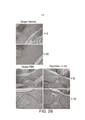
[0046] A Figura 2B mostra tingimento com HE do cordão espinhal. O tamanho da área de lesão do cordão espinhal diminuiu no grupo administrado com fragmento de HMGB1 (11-44) comparado com aquele do grupo controle negativo (administrado com PBS) e efeitos terapêuticos foram também observados nos tecidos patológicos.[0046] Figure 2B shows HE dyeing of the spinal cord. The size of the spinal cord lesion area decreased in the group administered with HMGB1 fragment (11-44) compared to that of the negative control group (administered with PBS) and therapeutic effects were also observed in the pathological tissues.
[0047] A Figura 3 é um gráfico que compara o grupo administrado com HMGB1 de comprimento integral e o grupo administrado com fragmento de HMGB1 (11-44) quanto o efeito de melhora dos sintomas neurológicos em animais modelo de doença afligidos com lesão do cordão espinhal com o tempo.[0047] Figure 3 is a graph comparing the group administered full-length HMGB1 and the group administered HMGB1 fragment (11-44) for the effect of improving neurological symptoms in disease model animals afflicted with cord injury. spine with time.
[0048] A Figura 4 é um gráfico que comparada os grupos administrados com fragmento de HMGB1 (11-44 e 1-44) quanto ao efeito de melhora dos sintomas neurológicos em animais modelo de doença afligidos com lesão do cordão espinhal (#: 1-44, #p < 0,05 vs. PBS; *: 11-4, *p < 0,05 vs. PBS).[0048] Figure 4 is a graph comparing groups administered with HMGB1 fragment (11-44 and 1-44) for the effect of improving neurological symptoms in disease model animals afflicted with spinal cord injury (#: 1 -44, #p < 0.05 vs. PBS; *: 11-4, *p < 0.05 vs. PBS).
[0049] A presente invenção provê composições farmacêuticas para uso no tratamento de lesão do cordão espinhal, as quais compreendem um peptídeo de fragmento de HMGB1 tendo atividade de estimulação de migração celular. Aqui, as composições farmacêuticas para uso no tratamento de lesão do cordão espinal da presente invenção são também expressas como medicamentos, agentes farmacêuticos ou composições medicinais.[0049] The present invention provides pharmaceutical compositions for use in the treatment of spinal cord injury, which comprise an HMGB1 fragment peptide having cell migration stimulating activity. Here, pharmaceutical compositions for use in treating spinal cord injury of the present invention are also expressed as medicaments, pharmaceutical agents or medicinal compositions.
[0050] Na presente invenção, "lesão do cordão espinhal" significa lesão extrínseca ou intrínseca do cordão espinhal. Lesão extrínseca do cordão espinhal inclui, por exemplo, lesão traumática do cordão espinhal, mas não é limitada à mesma. Aqui, lesão extrínseca do cordão espinhal pode ser expressa simplesmente como "lesão do cordão espinhal".[0050] In the present invention, "spinal cord injury" means extrinsic or intrinsic injury to the spinal cord. Extrinsic spinal cord injury includes, for example, traumatic spinal cord injury, but is not limited thereto. Here, extrinsic spinal cord injury can be expressed simply as "spinal cord injury."
[0051] Na presente invenção, uma atividade de estimulação de migração celular se refere à atividade de estimulação de migração celular. Aqui, uma atividade de estimulação de migração celular é também expressa como uma atividade de indução de migração celular ou uma atividade de atração celular.[0051] In the present invention, a cell migration stimulating activity refers to cell migration stimulating activity. Here, a cell migration stimulating activity is also expressed as a cell migration inducing activity or a cell attracting activity.
[0052] As composições farmacêuticas da presente invenção podem ser administradas/adicionadas a quaisquer sítios. Isto é, as composições podem exercer seus efeitos não importa em qual sítio elas sejam administradas, tal como um sítio de lesão do cordão espinhal com necessidade de regeneração, um sítio outro que não o sítio de lesão ou sangue. Por exemplo, quando as composições são administradas/adicionadas, as células são recrutadas para o sítio de administração/adição ou seus sítios próximos, desta maneira induzindo ou promovendo regeneração da lesão. Também, por exemplo, quando as composições são administradas/adicionadas a um sítio de lesão ou sua vizinhança, as células são recrutadas para a lesão, desta maneira induzindo ou promovendo regeneração da lesão. Ainda, por exemplo, quando as composições são administradas/adicionadas a um tecido outro que não um tecido com necessidade de regeneração, células da medula óssea são mobilizadas da medula óssea para o tecido com necessidade de regeneração através de circulação periférica, desta maneira induzindo ou promovendo regeneração do tecido. Aqui, "circulação periférica" é também chamada "circulação sanguínea" ou "corrente sanguínea da circulação periférica".[0052] The pharmaceutical compositions of the present invention can be administered/added to any sites. That is, the compositions can exert their effects no matter where they are administered, such as a site of spinal cord injury in need of regeneration, a site other than the site of injury, or blood. For example, when the compositions are administered/added, cells are recruited to the site of administration/addition or nearby sites, thereby inducing or promoting lesion regeneration. Also, for example, when the compositions are administered/added to a site of injury or its vicinity, cells are recruited to the lesion, thereby inducing or promoting regeneration of the lesion. Further, for example, when the compositions are administered/added to a tissue other than a tissue in need of regeneration, bone marrow cells are mobilized from the bone marrow to the tissue in need of regeneration through peripheral circulation, thereby inducing or promoting tissue regeneration. Here, "peripheral circulation" is also called "blood circulation" or "peripheral circulation bloodstream".
[0053] Administração a um tecido que não um tecido com necessidade de regeneração se refere à administração a um sítio que não é um sítio com necessidade de regeneração (um sítio que não um sítio com necessidade de regeneração). Desta maneira, "um tecido que não um tecido com necessidade de regeneração" pode ser também referido como:[0053] Administration to a tissue other than a tissue in need of regeneration refers to administration to a site that is not a site in need of regeneration (a site other than a site in need of regeneration). Thus, "a tissue other than tissue in need of regeneration" may also be referred to as:
[0054] um sítio que não um tecido com necessidade de regeneração; um sítio que não um sítio com necessidade de regeneração; um sítio distante de um tecido com necessidade de regeneração; um sítio distante de um sítio com necessidade de regeneração; um sítio distal a um sítio com necessidade de regeneração; um sítio distal a um tecido com necessidade de regeneração; um sítio distal; ou um tecido distal.[0054] a site other than tissue in need of regeneration; a site other than a site in need of regeneration; a distant site of tissue in need of regeneration; a site distant from a site in need of regeneration; a site distal to a site in need of regeneration; a site distal to a tissue in need of regeneration; a distal site; or a distal tissue.
[0055] Desta maneira, as composições da presente invenção são usadas efetivamente para regenerar tecidos aos quais é difícil administrar diretamente agentes farmacêuticos a partir do exterior do corpo. Exemplos do tecido que não um tecido com necessidade de regeneração incluem tecidos sanguíneos, tecidos musculares, tecidos subcutâneos, tecidos intradermais, cavidade abdominal e similar.[0055] In this manner, the compositions of the present invention are used effectively to regenerate tissues to which it is difficult to directly deliver pharmaceutical agents from outside the body. Examples of tissue other than tissue in need of regeneration include blood tissue, muscle tissue, subcutaneous tissue, intradermal tissue, abdominal cavity, and the like.
[0056] Na presente invenção, células que são estimuladas a migrar ou células mobilizadas da medula óssea para sangue periférico incluem células não diferenciadas e células em vários estágios de diferenciação, mas não estão limitadas às mesmas. Na presente invenção, células que são estimuladas a migrar ou células mobilizadas da medula óssea para sangue periférico incluem células tronco, células não tronco e similar, tal como, mas não limitado às mesmas. Células-tronco incluem células troncocirculatórias e células-tronco não circulatórias. Células-tronco não circulatórias são, por exemplo, células-tronco residindo em um tecido. Células-tronco circulatórias são, por exemplo, células-tronco circulatórias no sangue.[0056] In the present invention, cells that are stimulated to migrate or cells mobilized from bone marrow to peripheral blood include undifferentiated cells and cells in various stages of differentiation, but are not limited thereto. In the present invention, cells that are stimulated to migrate or cells mobilized from bone marrow to peripheral blood include stem cells, non-stem cells and the like, such as, but not limited to. Stem cells include circulatory stem cells and non-circulatory stem cells. Non-circulatory stem cells are, for example, stem cells residing in a tissue. Circulatory stem cells are, for example, circulating stem cells in the blood.
[0057] Ainda, células estimuladas a migrar ou células mobilizadas da medula óssea para o sangue periférico incluem células derivadas da medula óssea e células-tronco hematopoiéticas, mas não estão limitadas às mesmas. No presente pedido, "células-tronco hematopoiéticas" são células-tronco que podem ser diferenciadas em células sanguíneas tais como células sanguíneas vermelhas, plaquetas, mastócitos e células dendríticas, bem como células sanguíneas brancas incluindo neutrófilos, eosinófilos, basófilos, linfócitos, monócitos, macrófagos e similar. Seus marcadores são conhecidos ser positivos para CD34 e positivos para CD133 em humano e negativos para CD34, positivos para c-Kit, positivos para Sca1 e negativos para marcador de linhagem em camundongo. Células-tronco hematopoiéticas são difíceis de ser culturadas sozinhas quando culturadas em placas de cultura, e elas precisam ser coculturadas com células estromais.[0057] Further, cells stimulated to migrate or cells mobilized from bone marrow to peripheral blood include, but are not limited to, bone marrow-derived cells and hematopoietic stem cells. In the present application, "hematopoietic stem cells" are stem cells that can be differentiated into blood cells such as red blood cells, platelets, mast cells and dendritic cells, as well as white blood cells including neutrophils, eosinophils, basophils, lymphocytes, monocytes, macrophages and the like. Its markers are known to be CD34 positive and CD133 positive in human and CD34 negative, c-Kit positive, Sca1 positive and lineage marker negative in mouse. Hematopoietic stem cells are difficult to culture alone when cultured in culture dishes, and they need to be co-cultured with stromal cells.
[0058] No presente pedido, "células da medula óssea" significa células presentes dentro da medula óssea enquanto "células derivadas da medula óssea" significa "células da medula óssea" mobilizadas da medula óssea para fora da medula óssea. "Células da medula óssea" incluem células contendo populações de célula progenitoras de tecido presentes dentro da medula óssea. Ainda, "células derivadas da medula óssea" podem ser células contendo mesoangioblastos ou células livres de mesoangioblastos.[0058] In the present application, "bone marrow cells" means cells present within the bone marrow while "bone marrow derived cells" means "bone marrow cells" mobilized from the bone marrow out of the bone marrow. "Bone marrow cells" include cells containing tissue progenitor cell populations present within the bone marrow. Further, "bone marrow-derived cells" may be mesoangioblast-containing cells or mesoangioblast-free cells.
[0059] Células progenitoras de tecido são definidas como células não diferenciadas tendo uma potência unidirecional em diferenciar em células de um tecido específico que não o sistema sanguíneo, e incluem células não diferenciadas tendo a potência em diferenciar em tecidos mesenquimais, tecidos epiteliais, tecidos nervosos, órgãos parenquimatosos e endotélio vascular conforme acima mencionado.[0059] Tissue progenitor cells are defined as undifferentiated cells having a unidirectional potency to differentiate into cells of a specific tissue other than the blood system, and include undifferentiated cells having the potency to differentiate into mesenchymal tissues, epithelial tissues, nervous tissues , parenchymal organs and vascular endothelium as mentioned above.
[0060] Aqui "células-tronco mesenquimais da medula óssea", "células pluripotentes estromais da medula óssea" ou "células-tronco pluripotentes da medula óssea" se refere a células existentes na medula óssea, que são diretamente coletadas da medula óssea ou indiretamente coletadas de outros tecidos (sangue, pele, gordura e outros tecidos) e podem ser culturadas e proliferadas como células aderentes em uma placa de cultura (feita de plástico ou vidro). Essas células são caracterizadas por ter um potencial em diferenciar em tecidos mesenquimais tais como osso, cartilagem e gordura (células- tronco mesenquimais) ou em músculo esqueletal, músculo cardíaco, tecidos nervosos e tecidos epiteliais (células-tronco pluripotentes) e podem ser obtidas através de coleta de células da medula óssea.[0060] Here "bone marrow mesenchymal stem cells", "bone marrow pluripotent stromal cells" or "bone marrow pluripotent stem cells" refers to cells existing in the bone marrow, which are collected directly from the bone marrow or indirectly collected from other tissues (blood, skin, fat and other tissues) and can be cultured and proliferated as adherent cells in a culture dish (made of plastic or glass). These cells are characterized by having the potential to differentiate into mesenchymal tissues such as bone, cartilage and fat (mesenchymal stem cells) or into skeletal muscle, cardiac muscle, nervous tissues and epithelial tissues (pluripotent stem cells) and can be obtained through bone marrow cell collection.
[0061] "Células da medula óssea" e "células derivadas da medula óssea" são células-tronco hematopoiéticas e células diferenciadas derivadas das mesmas tais como leucócitos, eritrócitos, plaquetas, osteoblastos e fibrócitos, ou são células-tronco representadas por células que foram até agora chamadas células-tronco mesenquimais da medula óssea, células-tronco pluripotentes estromais da medula óssea ou células-tronco pluripotentes da medula óssea. Conforme aqui usado, "células-tronco da medula óssea" se refere a células-tronco presentes dentro da medula óssea, enquanto "células-tronco derivadas da medula óssea" se refere a "células-tronco da medula óssea" mobilizadas da medula óssea para fora da medula óssea. Na presente invenção, células estimuladas a migrar ou células mobilizadas da medula óssea para sangue periférico incluem "células-tronco derivadas da medula óssea", mas não limitado às mesmas. "Células da medula óssea" e "células derivadas da medula óssea" podem ser isoladas através de coleta da medula óssea (coleta de célula da medula óssea) ou coleta de sangue periférico. Células-tronco hematopoiéticas são não aderentes, enquanto algumas das "células da medula óssea" e "células derivadas da medula óssea" são obtidas como células aderentes por meio de uma cultura celular de uma fração de monócito de sangue obtido pela coleta da medula óssea (coleta de célula da medula óssea) ou coleta de sangue periférico.[0061] "Bone marrow cells" and "bone marrow-derived cells" are hematopoietic stem cells and differentiated cells derived therefrom such as leukocytes, erythrocytes, platelets, osteoblasts, and fibrocytes, or are stem cells represented by cells that have been so far called bone marrow mesenchymal stem cells, bone marrow stromal pluripotent stem cells, or bone marrow pluripotent stem cells. As used herein, "bone marrow stem cells" refers to stem cells present within the bone marrow, while "bone marrow-derived stem cells" refers to "bone marrow stem cells" mobilized from the bone marrow to outside the bone marrow. In the present invention, cells stimulated to migrate or cells mobilized from bone marrow to peripheral blood include "bone marrow derived stem cells", but not limited thereto. "Bone marrow cells" and "bone marrow-derived cells" can be isolated via bone marrow collection (bone marrow cell collection) or peripheral blood collection. Hematopoietic stem cells are non-adherent, while some of the "bone marrow cells" and "bone marrow-derived cells" are obtained as adherent cells by means of a cell culture of a monocyte fraction of blood obtained by harvesting the bone marrow ( bone marrow cell collection) or peripheral blood collection.
[0062] Além disso, "células da medula óssea" e "células derivadas da medula óssea" incluem células-tronco mesenquimais, e têm um potencial em diferenciar em, preferivelmente, osteoblastos (que podem ser identificados através de observação de calcificação após indução de diferenciação), condrócitos (que podem ser identificados através de tingimento positivo com azul alciano, tingimento positivo com safranina O, ou similar), adipócitos (que podem ser identificados por tingimento positivo para Sudan III) e outras células mesenquimais tais como fibroblastos, células do músculo liso, células estromais e células de tendão; e ainda células nervosas, células epiteliais (por exemplo, queratinócitos epidermais e células epiteliais intestinais expressam a família citoqueratina) e células endoteliais vasculares. As células a serem diferenciadas não são limitadas às células acima, e o potencial em diferenciar em células de órgãos parenquimatosos tais como fígado, rim e pâncreas é também incluído.[0062] In addition, "bone marrow cells" and "bone marrow-derived cells" include mesenchymal stem cells, and have a potential to differentiate into, preferably, osteoblasts (which can be identified by observing calcification after induction of differentiation), chondrocytes (which can be identified by positive staining with alcian blue, positive staining with safranin O, or similar), adipocytes (which can be identified by positive staining for Sudan III) and other mesenchymal cells such as fibroblasts, smooth muscle, stromal cells and tendon cells; and also nerve cells, epithelial cells (eg, epidermal keratinocytes and intestinal epithelial cells express the cytokeratin family), and vascular endothelial cells. The cells to be differentiated are not limited to the above cells, and the potential to differentiate into cells from parenchymal organs such as liver, kidney and pancreas is also included.
[0063] Por outro lado, "células-tronco mesenquimais da medula óssea derivadas da medula óssea", "células pluripotentes estromais da medula óssea derivadas da medula óssea" ou "células-tronco pluripotentes da medula óssea derivadas da medula óssea" mobilizadas da medula óssea para fora da medula óssea são células que podem ser obtidas através de coleta a partir do sangue periférico, tecidos mesenquimais tais como gordura, tecidos epiteliais tal como pele ou tecidos nervosos tal como cérebro.[0063] On the other hand, "bone marrow-derived mesenchymal stem cells", "bone marrow-derived pluripotent stromal cells" or "bone marrow-derived pluripotent stem cells" mobilized from the marrow bone out of the bone marrow are cells that can be obtained by harvesting from peripheral blood, mesenchymal tissues such as fat, epithelial tissues such as skin or nervous tissues such as the brain.
[0064] Ainda, essas células são também caracterizadas por ter um potencial em diferenciar em, por exemplo, tecidos epiteliais tais como queratinócitos que constituem a pele, ou tecidos nervosos que constituem o cérebro, quando administradas a uma área de lesão do corpo vivo imediatamente após coleta ou após uma vez sendo aderidas a uma placa de cultura.[0064] Further, these cells are also characterized by having a potential to differentiate into, for example, epithelial tissues such as keratinocytes that make up the skin, or nervous tissues that make up the brain, when administered to an injured area of the living body immediately. after collection or after once being adhered to a culture plate.
[0065] Células-tronco mesenquimais da medula óssea, células- tronco pluripotentes estromais da medula óssea, células-tronco pluripotentes da medula óssea ou aquelas células recrutadas da medula óssea para fora da medula óssea preferivelmente têm uma potência em diferenciar em: osteoblastos (que podem ser identificados através da observação da calcificação após indução de diferenciação), condrócitos (que podem ser identificados através de tingimento positivo para azul alciano, tingimento positivo para safranina O ou similar), adipócitos (que podem ser identificados por tingimento positivo para Sudan III ou similar) e outras células mesenquimais tais como fibroblastos, células de músculo liso, células do músculo esqueletal, células estromais e células de tendão; células nervosas, células de pigmento, células epidermais, células de folículo piloso (que expressam a família citoqueratina, família de queratina do cabelo ou similar), células epiteliais (por exemplo, queratinócitos epidermais e células epiteliais intestinais expressam família citoqueratina ou similar) e células endoteliais; e ainda em células de órgãos parenquimatosos tais como fígado, rim e pâncreas. No entanto, células diferenciadas não são limitadas às células acima.[0065] Bone marrow mesenchymal stem cells, bone marrow stromal pluripotent stem cells, bone marrow pluripotent stem cells, or those cells recruited from the bone marrow out of the bone marrow preferentially have a potency in differentiating into: osteoblasts (which can be identified by observing calcification after induction of differentiation), chondrocytes (which can be identified by staining positive for alcian blue, staining positive for safranin O or similar), adipocytes (which can be identified by staining positive for Sudan III or similar) and other mesenchymal cells such as fibroblasts, smooth muscle cells, skeletal muscle cells, stromal cells and tendon cells; nerve cells, pigment cells, epidermal cells, hair follicle cells (which express cytokeratin family, hair keratin family, or similar), epithelial cells (e.g., epidermal keratinocytes and intestinal epithelial cells express cytokeratin family or similar), and cells endothelial; and also in cells of parenchymal organs such as liver, kidney and pancreas. However, differentiated cells are not limited to the above cells.
[0066] Células da medula óssea humanas e células derivadas da medula óssea humana podem ser exemplificadas por, mas não estão limitadas a, células que podem ser obtidas diretamente através de coleta da medula óssea (células da medula óssea), sangue periférico ou gordura ou obtidas como células aderentes através de cultura de uma fração de monócito isolada. Marcadores para células da medula óssea humana e células derivadas da medula óssea humana incluem, por exemplo, todos ou alguns dos que seguem, mas não estão limitados aos mesmos: positivos para PDGFRα, negativos para Lin, negativos para CD45, positivos para CD44, positivos para CD90 e positivos para CD29, negativos para Flk-1, positivos para CD105, positivos para CD73, positivos para CD90, positivos para CD71, positivos para Stro-1, positivos para CD106, positivos para CD166 e negativos para CD31.[0066] Human bone marrow cells and cells derived from human bone marrow may be exemplified by, but are not limited to, cells that can be obtained directly by harvesting bone marrow (bone marrow cells), peripheral blood or fat, or obtained as adherent cells by culturing an isolated monocyte fraction. Markers for human bone marrow cells and cells derived from human bone marrow include, for example, all or some of the following, but are not limited to: PDGFRα positive, Lin negative, CD45 negative, CD44 positive, positive for CD90 and positive for CD29, negative for Flk-1, positive for CD105, positive for CD73, positive for CD90, positive for CD71, positive for Stro-1, positive for CD106, positive for CD166 and negative for CD31.
[0067] Além disso, células da medula óssea de camundongo e células derivadas da medula óssea de camundongo podem ser exemplificadas por, mas não estão limitadas a, células que podem ser obtidas diretamente através de coleta da medula óssea (células da medula óssea), sangue periférico, ou gordura, ou obtidas como células aderentes através de cultura de uma fração de monócito isolada. Marcadores para células de medula óssea de camundongo e células derivadas da medula óssea de camundongo incluem, por exemplo, todos ou alguns dos que seguem, mas não estão limitados aos mesmos: positivos para CD44, positivos para PDGFRα, positivos para PDGFRβ, negativos para CD45, negativos para Lin, positivos para Sca-1, negativos para c-kit, positivos para CD90, positivos para CD29 e negativos para Flk-1.[0067] In addition, mouse bone marrow cells and mouse bone marrow-derived cells can be exemplified by, but are not limited to, cells that can be obtained directly by harvesting the bone marrow (bone marrow cells), peripheral blood, or fat, or obtained as adherent cells by culturing an isolated monocyte fraction. Markers for mouse bone marrow cells and mouse bone marrow-derived cells include, for example, all or some of the following, but are not limited to: CD44 positive, PDGFRα positive, PDGFRβ positive, CD45 negative , Lin negative, Sca-1 positive, c-kit negative, CD90 positive, CD29 positive and Flk-1 negative.
[0068] Na presente invenção, células estimuladas a migrar incluem células positivas para PDGFRα, mas não estão limitadas às mesmas. Ainda, células positivas para PDGFRα estimuladas a migrar não são particularmente limitadas, mas são preferivelmente células positivas para PDGFRα derivadas da medula óssea. Ainda, marcadores outros que não PDGFRα podem ser exemplificados por todos ou alguns de positivos para CD29, positivos para CD44, positivos para CD90, positivos para CD271, negativos para CD11b e negativos para Flk-1, mas não estão limitadas aos mesmos. Células positivas para PDGFRα incluem, mas não estão limitadas a, por exemplo, células derivadas da medula óssea positivas para PDGFRα, células-tronco mesenquimais derivadas da medula óssea positivas para PDGFRα, células de tecido residindo em tecidos positivos para PDGFRα (por exemplo, fibroblasto e similar), células derivadas da medula óssea positivas para PDGFRα obtidas como células aderentes por meio de cultura de célula de uma fração de monócito de sangue obtido através de coleta da medula óssea (coleta de célula da medula óssea) ou coleta de sangue periférico.[0068] In the present invention, cells stimulated to migrate include, but are not limited to, PDGFRα positive cells. Furthermore, PDGFRα positive cells stimulated to migrate are not particularly limited, but are preferably bone marrow-derived PDGFRα positive cells. Still, markers other than PDGFRα can be exemplified by all or some of CD29 positive, CD44 positive, CD90 positive, CD271 positive, CD11b negative and Flk-1 negative, but are not limited thereto. PDGFRα-positive cells include, but are not limited to, for example, PDGFRα-positive bone marrow-derived cells, PDGFRα-positive bone marrow-derived mesenchymal stem cells, tissue cells residing in PDGFRα-positive tissues (e.g., fibroblast and the like), PDGFRα-positive bone marrow-derived cells obtained as adherent cells by means of cell culture from a monocyte fraction of blood obtained through bone marrow collection (bone marrow cell collection) or peripheral blood collection.
[0069] A proteína HMGB1 na presente invenção inclui, mas não está limitada a, por exemplo, uma proteína compreendendo a sequência de aminoácido de SEQ ID NO:1 como uma proteína MHGB1 derivada de humano e um DNA codificando a dita proteína inclui, mas não está limitado a, por exemplo, um DNA compreendendo a sequência de nucleotídeo de SEQ ID NO: 2.[0069] The HMGB1 protein in the present invention includes, but is not limited to, for example, a protein comprising the amino acid sequence of SEQ ID NO:1 such as a human-derived MHGB1 protein, and a DNA encoding said protein includes, but is not limited to, for example, a DNA comprising the nucleotide sequence of SEQ ID NO: 2.
[0070] Na presente invenção, "um peptídeo de fragmento de HMGB1 tendo uma atividade de estimulação de migração celular" se refere a um peptídeo consistindo em uma porção de uma proteína HMGB1 e tendo uma atividade de estimulação de migração celular. Peptídeos de fragmento consistindo em uma porção da proteína HMGB1 da presente invenção não são particularmente limitados contanto que eles tenham uma atividade de estimulação de migração celular, mas preferivelmente um peptídeo de fragmento de HMGB1 que compreende pelo menos a sequência de aminoácido das posições 17 a 25 da proteína HMGB1 (SEQ ID NO: 3), que é confirmada por experimentos realizados pelos presentes inventores ser o fragmento de peptídeo menor dentre os fragmentos com atividade de estimulação de migração celular (Fig. 1).[0070] In the present invention, "an HMGB1 fragment peptide having a cell migration stimulating activity" refers to a peptide consisting of a portion of an HMGB1 protein and having a cell migration stimulating activity. Fragment peptides consisting of a portion of the HMGB1 protein of the present invention are not particularly limited as long as they have a cell migration stimulating activity, but preferably an HMGB1 fragment peptide comprising at least the amino acid sequence from
[0071] Na presente invenção, peptídeos consistindo em um fragmento de HMGB1 que tem atividade de estimulação de migração celular são, por exemplo, os fragmentos abaixo, mas não estão limitados aos mesmos.[0071] In the present invention, peptides consisting of a fragment of HMGB1 that has cell migration stimulating activity are, for example, the fragments below, but are not limited thereto.
[0072] Na presente invenção, fragmentos de HMGB1 que têm uma atividade de estimulação de migração celular incluem um peptídeo de fragmento compreendendo uma sequência de aminoácido selecionada do grupo consistindo nas sequências de aminoácido de SEQ ID NO: 3, SEQ ID NO: 4 e SEQ ID NO: 5, que é um peptídeo de fragmento de HMGB1 tendo atividade de estimulação de migração celular. Esses peptídeos de fragmento incluem, por exemplo, peptídeo de fragmento compreendendo pelo menos o peptídeo de fragmento 17-25) de SEQ ID NO: 3 com o limite superior sendo o peptídeo de fragmento (11-44) de SEQ ID NO: 4; um peptídeo de fragmento compreendendo pelo menos o peptídeo de fragmento (11-44) de SEQ ID NO: 4 com um limite superior sendo o peptídeo de fragmento (1-44) de SEQ ID NO: 5; ou um peptídeo de fragmento compreendendo pelo menos o peptídeo de fragmento (17-25) de SEQ ID NO: 3 com o limite superior sendo o peptídeo de fragmento (1-44) de SEQ ID NO: 5; mas não são limitado aos mesmos.[0072] In the present invention, fragments of HMGB1 that have a cell migration stimulating activity include a peptide fragment comprising an amino acid sequence selected from the group consisting of the amino acid sequences of SEQ ID NO: 3, SEQ ID NO: 4 and SEQ ID NO: 5, which is an HMGB1 fragment peptide having cell migration stimulating activity. Such fragment peptides include, for example, fragment peptide comprising at least fragment peptide 17-25) of SEQ ID NO: 3 with the upper limit being fragment peptide (11-44) of SEQ ID NO: 4; a fragment peptide comprising at least the fragment peptide (11-44) of SEQ ID NO: 4 with an upper limit being the fragment peptide (1-44) of SEQ ID NO: 5; or a fragment peptide comprising at least the fragment peptide (17-25) of SEQ ID NO: 3 with the upper limit being the fragment peptide (1-44) of SEQ ID NO: 5; but are not limited thereto.
[0073] Na presente invenção, peptídeos de fragmento de HMGB1 que têm uma atividade de estimulação de migração celular incluem, por exemplo, um peptídeo de fragmento consistindo em uma sequência de aminoácido selecionada do grupo consistindo nas sequências de aminoácido de SEQ ID NO: 3, SEQ ID NO: 4 e SEQ ID NO: 5, que é um peptídeo de fragmento de HMGB1 tendo atividade de estimulação de migração celular.[0073] In the present invention, HMGB1 fragment peptides that have a cell migration stimulating activity include, for example, a fragment peptide consisting of an amino acid sequence selected from the group consisting of the amino acid sequences of SEQ ID NO: 3 , SEQ ID NO: 4 and SEQ ID NO: 5, which is an HMGB1 fragment peptide having cell migration stimulating activity.
[0074] Métodos para administração de uma composição da presente invenção incluem administração oral e administração parenteral. Especificamente, administração parenteral inclui, mas não está limitada a, injeção, administração intranasal, administração pulmonar, administração transdermal e similar. Como exemplos de injeção, injeção intravenosa, injeção intramuscular, injeção intraperitoneal, injeção subcutânea e similar podem ser usadas para administrar uma composição da presente invenção sistemicamente ou localmente (por exemplo, sob a pele, na pele, sobre a superfície da pele, globo ocular ou conjuntiva da pálpebra, mucosa da cavidade nasal, mucosa intraoral e mucosa do trato gastrintestinal, mucosa vaginal e/ou mucosa intrauterina, sítio de dano ou similar).[0074] Methods for administering a composition of the present invention include oral administration and parenteral administration. Specifically, parenteral administration includes, but is not limited to, injection, intranasal administration, pulmonary administration, transdermal administration, and the like. As examples of injection, intravenous injection, intramuscular injection, intraperitoneal injection, subcutaneous injection and the like can be used to administer a composition of the present invention systemically or locally (e.g., under the skin, in the skin, on the surface of the skin, eyeball or conjunctiva of the eyelid, mucosa of the nasal cavity, intraoral mucosa and mucosa of the gastrointestinal tract, vaginal mucosa and/or intrauterine mucosa, site of damage or the like).
[0075] Métodos de administração de uma composição da presente invenção incluem, mas não estão limitados a, por exemplo, administração intravascular (administração intra-arterial, administração intravenosa ou similar), administração sanguínea, administração intramuscular, administração subcutânea, administração intradermal, administração intraperitoneal.[0075] Methods of administering a composition of the present invention include, but are not limited to, for example, intravascular administration (intra-arterial administration, intravenous administration or the like), blood administration, intramuscular administration, subcutaneous administration, intradermal administration, intradermal administration, intraperitoneal.
[0076] Não existe nenhuma limitação quanto ao sítio de administração, e, por exemplo, ele pode ser um sítio de tecido com necessidade de regeneração ou sua região vizinha, um sítio diferente do tecido com necessidade de regeneração, ou um sítio distante de e diferente do tecido com necessidade de regeneração. O sítio é, por exemplo, no sangue (em artérias, em veias ou similar), músculo, sob a pele, na pele, na cavidade abdominal, ou similar, sem ser limitado a eles.[0076] There is no limitation as to the site of administration, and, for example, it may be a site of tissue in need of regeneration or its neighboring region, a site other than tissue in need of regeneration, or a site distant from and different from tissue in need of regeneration. The site is, for example, in blood (in arteries, in veins or the like), muscle, under the skin, in the skin, in the abdominal cavity, or the like, without being limited thereto.
[0077] O método de administração pode ser apropriadamente selecionado de acordo com a idade e os sintomas do paciente. Quando um peptídeo da presente invenção é administrado, a dose por vez do peptídeo pode ser selecionada dentro de uma faixa de 0,0000001 mg a 1000 mg por kg de peso corporal de um paciente. Alternativamente, a dose pode ser selecionada dentro de uma faixa de 0,00001 mg a 100000 mg por corpo do paciente, por exemplo. Quando administrando células secretando um peptídeo da presente invenção ou vetores de terapia de gene inseridos com DNA codificando o peptídeo, elas podem ser administradas de tal maneira que a quantidade do peptídeo esteja dentro da faixa acima. No entanto, a dose de composições farmacêuticas da presente invenção não é limitada às mesmas.[0077] The method of administration can be appropriately selected according to the age and symptoms of the patient. When a peptide of the present invention is administered, the dose at a time of the peptide can be selected within a range of 0.0000001 mg to 1000 mg per kg of a patient's body weight. Alternatively, the dose can be selected within a range of 0.00001 mg to 100000 mg per patient body, for example. When administering cells secreting a peptide of the present invention or gene therapy vectors inserted with DNA encoding the peptide, they can be administered in such a way that the amount of the peptide is within the above range. However, the dosage of pharmaceutical compositions of the present invention is not limited thereto.
[0078] Fragmentos de peptídeo de HMGB1 da presente invenção podem ser obtidos como recombinantes através da incorporação de um DNA codificando o peptídeo em um sistema de expressão adequado ou podem ser sintetizados artificialmente. As composições farmacêuticas da presente invenção podem ser formuladas de acordo com os métodos comuns (por exemplo, Remington’s Pharmaceutical Science, última edição, Mark Publishing Company, Easton, U.S.A.) e muitas contêm carreadores e aditivos farmaceuticamente aceitáveis juntos. Exemplos incluem tensoativos, excipientes, corantes, perfumes, conservantes, estabilizadores, tampões, agentes de suspensão, agentes isotonizantes, ligantes, desintegrantes, lubrificantes, promotores de fluxo e agentes saborizantes, embora eles não sejam limitados a esses e outros carreadores comuns podem ser apropriadamente usados. Exemplos específicos incluem ácido silícico anidro, lactose, celulose cristalina, manitol, amido, carmelose de cálcio, carmelose de sódio, hidroxipropilcelulose, hidroxipropilmetilcelulose, acetato de polivinilacetaldietilamino, polivinilpirrolidona, gelatina, triglicerídeo de ácido graxo de cadeia média, óleo de rícino 60 hidrogenado de polioxietileno, açúcar branco, carboximetilcelulose, amido de milho e sais inorgânicos.[0078] HMGB1 peptide fragments of the present invention can be obtained as recombinants by incorporating a DNA encoding the peptide into a suitable expression system or can be artificially synthesized. The pharmaceutical compositions of the present invention may be formulated according to common methods (e.g., Remington's Pharmaceutical Science, latest edition, Mark Publishing Company, Easton, U.S.A.) and many contain pharmaceutically acceptable carriers and additives together. Examples include surfactants, excipients, colorants, perfumes, preservatives, stabilizers, buffers, suspending agents, isotonizing agents, binders, disintegrants, lubricants, flow promoters, and flavoring agents, although they are not limited to these and other common carriers may be appropriately used. Specific examples include anhydrous silicic acid, lactose, crystalline cellulose, mannitol, starch, carmellose calcium, carmellose sodium, hydroxypropyl cellulose, hydroxypropyl methyl cellulose, polyvinylacetaldiethylamino acetate, polyvinylpyrrolidone, gelatin, medium chain fatty acid triglyceride, hydrogenated castor oil 60 polyoxyethylene, white sugar, carboxymethyl cellulose, corn starch and inorganic salts.
[0079] Todos os documentos da técnica anterior mencionados aqui são incorporados aqui a título de referência.[0079] All prior art documents mentioned herein are incorporated herein by reference.
[0080] Abaixo, a presente invenção será ilustrada adicionalmente com referência a Exemplos, mas não deve ser considerada como limitada a eles. Exemplo 1 Avaliação de peptídeos sintéticos quanto à atividade de promoção de migração[0080] Below, the present invention will be further illustrated with reference to Examples, but should not be considered to be limited thereto. Example 1 Evaluation of synthetic peptides for migration promoting activity
[0081] Os peptídeos listados abaixo foram sintetizados especialmente usando o método de fase sólida do Medical & Biological Laboratories (MBL). Os peptídeos foram sintetizados com base na sequência de HMGB1 de camundongo. As sequências de aminoácido das posições 1 a 169 de HMGB1 de camundongo e HMGB1 humana são idênticas, isto é, compartilham 100% de homologia de sequência.[0081] The peptides listed below were specially synthesized using the Medical & Biological Laboratories (MBL) solid phase method. The peptides were synthesized based on the mouse HMGB1 sequence. The amino acid sequences from
[0082] Um peptídeo sintético consistindo na sequência de aminoácido das posições 1 a 10 de HMGB1 (1-10);[0082] A synthetic peptide consisting of the amino acid sequence from
[0083] um peptídeo sintético consistindo na sequência de aminoácido das posições 1 a 34 de HMGB1 (1-34);[0083] a synthetic peptide consisting of the amino acid sequence from
[0084] um peptídeo sintético consistindo na sequência de aminoácido das posições 11 a 20 de HMGB1 (11-20);[0084] a synthetic peptide consisting of the amino acid sequence from positions 11 to 20 of HMGB1 (11-20);
[0085] um peptídeo sintético consistindo na sequência de aminoácido das posições 11 a 25 de HMGB1 (11-25);[0085] a synthetic peptide consisting of the amino acid sequence from positions 11 to 25 of HMGB1 (11-25);
[0086] um peptídeo sintético consistindo na sequência de aminoácido das posições 11 a 30 de HMGB1 (11-30);[0086] a synthetic peptide consisting of the amino acid sequence from positions 11 to 30 of HMGB1 (11-30);
[0087] um peptídeo sintético consistindo na sequência de aminoácido das posições 11 a 34 de HMGB1 (11-34);[0087] a synthetic peptide consisting of the amino acid sequence from positions 11 to 34 of HMGB1 (11-34);
[0088] um peptídeo sintético consistindo na sequência de aminoácido das posições 11 a 44 de HMGB1 (11-44); e[0088] a synthetic peptide consisting of the amino acid sequence from positions 11 to 44 of HMGB1 (11-44); and
[0089] as HMGB1 de camundongo de comprimento integral produzidas em HEK293 (1-215 (HEK)) como um controle positivo foram ajustadas para 100 μl/ml e postas na câmara inferior de uma câmara de quimiotaxia para avaliar a atividade de promoção de migração em linhagem de célula-tronco mesenquimal da medula óssea de camundongo (célula MSC-1; produzida pela Osaka University, Tamai e outros (Tamai e outros, Proc. Natl. Acad. Sci. U.S.A., 108(16): 66096614, 2011)).[0089] Full-length mouse HMGB1 produced in HEK293 (1-215 (HEK)) as a positive control was adjusted to 100 μl/ml and placed in the lower chamber of a chemotaxis chamber to assess migration promoting activity in mouse bone marrow mesenchymal stem cell line (MSC-1 cell; produced by Osaka University, Tamai et al. (Tamai et al., Proc. Natl. Acad. Sci. U.S.A., 108(16): 66096614, 2011) ).
[0090] Pelo menos peptídeos sintéticos (11-34), (1-34), (11-44), (144) e (11-30) foram verificados ter a atividade comparável com ou maior do que aquela do controle positivo (Fig. 1A). Ainda, peptídeo sintético (11-25) foi também verificado ter a atividade (Fig. 1A).[0090] At least synthetic peptides (11-34), (1-34), (11-44), (144) and (11-30) have been found to have activity comparable to or greater than that of the positive control ( Fig. 1A). Furthermore, synthetic peptide (11-25) was also found to have the activity (Fig. 1A).
[0091] A fim de estreitar a localização do centro ativo, os peptídeos mais curtos listados abaixo foram sintetizados.[0091] In order to narrow the location of the active center, the shorter peptides listed below were synthesized.
[0092] Um peptídeo sintético consistindo na sequência de aminoácido das posições 11 a 25 de HMGB1 (11-25),[0092] A synthetic peptide consisting of the amino acid sequence from positions 11 to 25 of HMGB1 (11-25),
[0093] um peptídeo sintético consistindo na sequência de aminoácido das posições 12 a 25 de HMGB1 (12-25),[0093] a synthetic peptide consisting of the amino acid sequence from positions 12 to 25 of HMGB1 (12-25),
[0094] um peptídeo sintético consistindo na sequência de aminoácido das posições 13 a 25 de HMGB1 (13-25),[0094] a synthetic peptide consisting of the amino acid sequence from
[0095] um peptídeo sintético consistindo na sequência de aminoácido das posições 14 a 25 de HMGB1 (14-25),[0095] a synthetic peptide consisting of the amino acid sequence from
[0096] um peptídeo sintético consistindo na sequência de aminoácido das posições 15 a 25 de HMGB1 (15-25),[0096] a synthetic peptide consisting of the amino acid sequence from positions 15 to 25 of HMGB1 (15-25),
[0097] um peptídeo sintético consistindo na sequência de aminoácido das posições 16 a 25 de HMGB1 (16-25),[0097] a synthetic peptide consisting of the amino acid sequence from
[0098] um peptídeo sintético consistindo na sequência de aminoácido das posições 17 a 25 de HMGB1 (17-25).[0098] a synthetic peptide consisting of the amino acid sequence from
[0099] Como controles positivos, sobrenadante centrifugado da pele de um camundongo de um dia de vida (um individual) incubado em PBS a 4° C por 12 horas e a HMGB1 de camundongo de comprimento integral produzida em HEK293 (1-215 (HEK)) foram usados. Células de uma linhagem de célula-tronco mesenquimal da medula óssea (MSC-1) foram postas na câmara superior de uma câmara de quimiotaxia, e a proteína e os peptídeos sintéticos foram adicionados em uma concentração de 5 μM ou 10 μM à câmara inferior da câmara de quimiotaxia. O ensaio de migração foi realizado através do mesmo método acima descrito.[0099] As positive controls, centrifuged supernatant from the skin of a day-old mouse (one individual) incubated in PBS at 4°C for 12 hours and the full-length mouse HMGB1 produced in HEK293 (1-215 (HEK )) was used. Cells from a bone marrow mesenchymal stem cell (MSC-1) lineage were placed in the upper chamber of a chemotaxis chamber, and the protein and synthetic peptides were added at a concentration of 5 μM or 10 μM to the lower chamber of the chemotaxis. chemotaxis chamber. The migration assay was performed using the same method as described above.
[00100] Todos os peptídeos sintéticos foram verificados ter atividade (Fig. 1B). O peptídeo do fragmento de HMGB1 (17-25) foi mostrado ser o menor fragmento que tem atividade de estimulação de migração.[00100] All synthetic peptides were found to have activity (Fig. 1B). The HMGB1 fragment peptide (17-25) was shown to be the smallest fragment that has migration-stimulating activity.
[00101] Camundongos C57BL6/J fêmeas de sete semanas de vida foram usados como animais de teste. Após os camundongos terem sido anestesiados através de inalação de isoflurano, incisão da pele foi feita ao longo da linha média dorsal, e o arco vertebral da nona vértebra torácica foi exposto e excisado. A dura mater foi exposta no mesmo sítio, e o cordão espinhal foi mantido epiduralmente por três segundos usando um porta-microagulha para produzir uma lesão traumática do cordão espinhal. Após geração de lesão do cordão espinhal, a pele foi suturada. Lesão do cordão espinhal foi confirmada no dia seguinte de operação através de avaliação de paralisia de ambos os membros traseiros, e os camundongos que não mostraram paralisia foram excluídos do ensaio. O reagente de ensaio foi preparado diluindo 100 μg de um fragmento de HMGB1 (sequência de aminoácido: aminoácidos de posições 11 a 44; peptídeo sintetizado produzido no MBL) em 200 μL de PBS da Dulbecco (D-PBS). 200 μL de D-PBS foram usados para o controle negativo. No próximo dia de operação, a primeira administração foi realizada através da veia da cauda, e isso foi seguido por um total de cinco administrações diárias. Sintomas neurológicos foram avaliados usando o escore de Basso Mouse Scale (BMS) nos Dias 1, 3, 7, 10, 14, 17 e 21 pós-operatório.[00101] Seven week old female C57BL6/J mice were used as test animals. After the mice were anesthetized by isoflurane inhalation, a skin incision was made along the dorsal midline, and the vertebral arch of the ninth thoracic vertebra was exposed and excised. The dura mater was exposed at the same site, and the spinal cord was held epidurally for three seconds using a microneedle holder to produce a traumatic spinal cord injury. After generating a spinal cord injury, the skin was sutured. Spinal cord injury was confirmed the day after the operation by assessing paralysis of both hind limbs, and mice that did not show paralysis were excluded from the trial. The assay reagent was prepared by diluting 100 µg of a fragment of HMGB1 (amino acid sequence: amino acid positions 11 to 44; synthesized peptide produced in MBL) in 200 µl of Dulbecco's PBS (D-PBS). 200 μL of D-PBS was used for the negative control. On the next day of operation, the first administration was performed via the tail vein, and this was followed by a total of five daily administrations. Neurological symptoms were assessed using the Basso Mouse Scale (BMS) score on
[00102] Com base nos escores de BMS, melhora significante de sintomas neurológicos foi observada do Dia 3 pós-operatório no grupo administrado com fragmento de HMGB1 comparado com o grupo administrado com PBS. Em particular, melhora notável de sintomas foi observada nos Dias 3, 7, 14 e 17 pós-operatório (Fig. 2A). Ainda, enquanto as imagens de tingimento de HE da região danificada do cordão espinhal para o grupo controle negativo mostraram dano em uma faixa ampla (D1), a região danificada (D2) para o grupo administrado com fragmento de HMGB1 (peptídeos 11-44) foi reduzida, e os efeitos terapêuticos foram observados histopatologicamente também (Fig. 2B).[00102] Based on the BMS scores, significant improvement in neurological symptoms was observed from
[00103] Melhora clara de sintomas neurológicos de camundongos afligidos com lesão do cordão espinhal foi observada através da administração de fragmento de HMGB1. Atividade de mobilização de célula-tronco mesenquimal da medula óssea foi verificada para os fragmentos de HMGB1 usados neste exame, e efeitos terapêuticos das células-tronco mesenquimais da medula óssea mobilizadas sobre lesão do cordão espinhal foram esperados. Os efeitos de células-tronco mesenquimais da medula óssea sobre danos a tecido são esperados ser regeneração de tecido através de diferenciação em células nervosas através de pluripotência, bem como ação protetora de fatores de crescimento, citocinas e similar secretados pelas células-tronco mesenquimais da medula óssea sobre tecidos danificados. No presente ensaio, efeitos a curto prazo até a primeira semana após a operação pode ser devido à última ação, e, subsequentemente, a primeira ação pode estar envolvida.[00103] Clear improvement of neurological symptoms of mice afflicted with spinal cord injury was observed by administration of HMGB1 fragment. Bone marrow mesenchymal stem cell mobilization activity was verified for the HMGB1 fragments used in this test, and therapeutic effects of mobilized bone marrow mesenchymal stem cells on spinal cord injury were expected. The effects of bone marrow mesenchymal stem cells on tissue damage are expected to be tissue regeneration through differentiation into nerve cells through pluripotency, as well as protective action of growth factors, cytokines, and the like secreted by marrow mesenchymal stem cells. bone over damaged tissue. In the present trial, short-term effects up to the first week after the operation may be due to the last action, and subsequently the first action may be involved.
[00104] Camundongos C57BL6/J fêmeas de sete semanas de vida foram usados como animais de teste. Após os camundongos terem sido anestesiados através de inalação de isoflurano, incisão na pele foi feita ao longo da linha média dorsal, e o arco vertebral da nona vértebra torácica foi exposto e excisado. A dura mater foi exposta no mesmo sítio, e o cordão espinhal foi mantido epiduralmente por três segundos usando um porta-microagulha para produzir uma lesão traumática do cordão espinhal. Após produção de lesão do cordão espinhal, a pele foi suturada. Lesão do cordão espinhal foi confirmada no dia seguinte de operação através da avaliação de paralisia de ambos os membros inferiores, e os camundongos que não mostraram paralisia foram excluídos do ensaio. Um fragmento de HMGB1 (sequência de aminoácido: os aminoácidos de posições 11 a 44; peptídeo sintético produzido no MBL) foi preparado diluindo 100 μg do fragmento em 200 μL de PBS da Dulbecco (D-PBS). A proteína HMGB1 de comprimento integral foi produzida expressando-a em HEK293 conforme anteriormente relatado, e a HMGB1 purificada (100 μg) foi dissolvida em 200 μL de D-PBS. 200 μL de D-PBS foram usados para o controle negativo. No dia seguinte da operação, a primeira administração foi realizada através da veia da cauda, e isso foi seguido por um total de cinco administrações diárias. Sintomas neurológicos foram avaliados usando o escore de BMS nos Dias 1, 3, 7 e 14 pós-operatório.[00104] Seven week old female C57BL6/J mice were used as test animals. After the mice were anesthetized by isoflurane inhalation, a skin incision was made along the dorsal midline, and the vertebral arch of the ninth thoracic vertebra was exposed and excised. The dura mater was exposed at the same site, and the spinal cord was held epidurally for three seconds using a microneedle holder to produce a traumatic spinal cord injury. After producing a spinal cord injury, the skin was sutured. Spinal cord injury was confirmed the day after the operation by assessing paralysis of both lower limbs, and mice that did not show paralysis were excluded from the trial. A fragment of HMGB1 (amino acid sequence: amino acid positions 11 to 44; synthetic peptide produced in MBL) was prepared by diluting 100 µg of the fragment in 200 µl of Dulbecco's PBS (D-PBS). Full-length HMGB1 protein was produced by expressing it in HEK293 as previously reported, and purified HMGB1 (100 µg) was dissolved in 200 µL of D-PBS. 200 μL of D-PBS was used for the negative control. On the day following the operation, the first administration was performed via the tail vein, and this was followed by a total of five daily administrations. Neurological symptoms were assessed using the BMS score on
[00105] Efeitos sobre a melhora de sintomas neurológicos foram avaliados usando os escores de BMS. A terapia foi mais eficaz no grupo administrado com fragmento de HMGB1 (aminoácidos nas posições 1144) em ambos os Dias 7 e 14. Enquanto o efeito terapêutico foi observado no grupo administrado com HMGB1 (comprimento integral) quando comparado com aquele no grupo controle negativo, ele não foi tão eficaz quanto aquele no grupo administrado com fragmento de HMGB1 (aminoácidos nas posições 11-44) (Fig. 3).[00105] Effects on amelioration of neurological symptoms were assessed using the BMS scores. Therapy was more effective in the group administered with HMGB1 fragment (amino acids at positions 1144) on both
[00106] Após produção de lesão do cordão espinhal, no estágio inicial, o efeito terapêutico no grupo administrado com HMGB1 de comprimento integral foi verificado ser intermediário entre o efeito no grupo administrado com fragmento de HMGB1 (aminoácidos nas posições 11-44) e aquele no grupo controle negativo; no entanto, por volta do Dia 14 pós-produção de lesão do cordão espinhal, uma melhora muito mais satisfatória do efeito terapêutico foi observada no grupo administrado com fragmento de HMGB1 (aminoácidos nas posições 1144) do que em outros grupos. Esses experimentos descreveram que ao invés da proteína de comprimento integral, o fragmento mostra efeitos terapêuticos maiores sobre lesões do cordão espinhal. Peptídeos que podem ser quimicamente sintetizados, tal como este fragmento, podem ser extremamente úteis em aplicações práticas, uma vez que eles permitem produção de produtos baratos e homogêneos em grandes quantidades em produção farmacêutica.[00106] After producing spinal cord injury, at an early stage, the therapeutic effect in the group administered with full-length HMGB1 was found to be intermediate between the effect in the group administered with HMGB1 fragment (amino acids at positions 11-44) and that in the negative control group; however, by
[00107] Camundongos C57BL6/J fêmeas de sete dias de vida foram usados como animais de teste. Os camundongos foram anestesiados através de inalação de isoflurano, incisão da pele foi feita ao longo da linha média dorsal, e o arco vertebral da nona vértebra torácica foi exposto e excisado. A dura mater foi exposta no mesmo sítio, e o cordão espinhal foi mantido epiduralmente por três segundos usando um porta- microagulha para produzir uma lesão traumática do cordão espinhal. Após produção de lesão do cordão espinhal, a pele foi suturada. Lesão do cordão espinhal foi confirmada no dia seguinte de operação através da avaliação de paralisia de ambos os membros inferiores, e os camundongos que não mostraram paralisia foram excluídos do ensaio. Fragmentos de HMGB1 (sequências de aminoácido: os aminoácidos das posições 11 a 44 e aminoácidos das posições 1 a 44; peptídeos sintéticos produzidos no MBL) foram preparados diluindo 100 μg do fragmento em 200 μL de D-PBS. 200 μL de D-PBS foram usados para o controle negativo. No dia seguinte da operação, a primeira administração foi realizada através da veia da cauda, e isso foi seguido por um total de cinco administrações diárias. Sintomas neurológicos foram avaliados usando o escore de BMS nos Dias 1, 3, 7, 10, 14, 17 e 28 pós-operatório. Resultados[00107] Seven-day-old female C57BL6/J mice were used as test animals. Mice were anesthetized by isoflurane inhalation, skin incision was made along the dorsal midline, and the vertebral arch of the ninth thoracic vertebra was exposed and excised. The dura mater was exposed at the same site, and the spinal cord was held epidurally for three seconds using a microneedle holder to produce a traumatic spinal cord injury. After producing a spinal cord injury, the skin was sutured. Spinal cord injury was confirmed the day after the operation by assessing paralysis of both lower limbs, and mice that did not show paralysis were excluded from the trial. HMGB1 fragments (amino acid sequences: amino acids from positions 11 to 44 and amino acids from
[00108] Efeitos sobre a melhora de sintomas neurológicos foram avaliados usando os escores de BMS. Em comparação com o grupo controle negativo, os efeitos terapêuticos foram observados nos grupos administrados com fragmento de HMGB1 (aminoácidos nas posições 11-44 e aminoácidos nas posições 1-44) nos Dias 17, 21 e 28. O fragmento de HMGB1 consistindo nos aminoácidos das posições 11 a 44 e o fragmento de HMGB1 consistindo nos aminoácidos das posições 1 a 44 tinham efeitos terapêuticos comparáveis (Fig. 4).[00108] Effects on amelioration of neurological symptoms were assessed using the BMS scores. Compared to the negative control group, therapeutic effects were seen in the groups administered with the HMGB1 fragment (amino acids at positions 11-44 and amino acids at positions 1-44) on
[00109] Fragmentos de HMGB1 11-44 e 1-44 foram ambos verificados ser eficazes no tratamento de lesão do cordão espinhal. Conforme mostrado na Figura 1, os presentes inventores elucidaram que um dos domínios de núcleo de HMGB1 para a atividade de recrutamento de células-tronco mesenquimais da medula óssea é um peptídeo consistindo nos aminoácidos das posições 17 a 25. Ambos o fragmento 11-44 e o fragmento 1-44 incluem as posições 17 a 25, e o peptídeo de núcleo que exibe eficácia desses peptídeos é previsto ser a sequência de posições 17 a 25. Foi relatado que RAGE não está envolvido na mobilização de células-tronco mesenquimais da medula óssea pela proteína HMGB1 de comprimento integral (Tamai, 2011, PNAS; e similar), e uma vez que não há relatos que o fragmento 11-44 e o fragmento 1-44 sejam ligantes para um receptor conhecido tal como RAGE, esses fragmentos são esperados se direcionar a um receptor que é ainda desconhecido.[00109] HMGB1 Fragments 11-44 and 1-44 have both been found to be effective in treating spinal cord injury. As shown in Figure 1, the present inventors have elucidated that one of the core domains of HMGB1 for bone marrow mesenchymal stem cell recruitment activity is a peptide consisting of amino acids from
[00110] A presente invenção provê usos de peptídeos de fragmento de HMGB1 que retêm a atividade de recrutamento de células positivas para PDGFRα para tratamento de lesão do cordão espinhal. Os peptídeos de fragmento de HMGB1 da presente invenção são peptídeos de fragmento com um peso molecular de cerca de 20 por cento ou menos da proteína HMGB1 de comprimento integral consistindo em 215 aminoácidos. Tais peptídeos em fragmento podem ser produzidos através de síntese química usando sintetizador de peptídeo e são então esperados melhorar a pureza, prover produção estável e reduzir custos na situação de produção de peptídeos como agentes farmacêuticos.[00110] The present invention provides uses of HMGB1 fragment peptides that retain PDGFRα positive cell recruitment activity for treatment of spinal cord injury. The HMGB1 fragment peptides of the present invention are fragment peptides having a molecular weight of about 20 percent or less of the full-length HMGB1 protein consisting of 215 amino acids. Such fragment peptides can be produced through chemical synthesis using peptide synthesizer and are therefore expected to improve purity, provide stable production and reduce costs in the situation of production of peptides as pharmaceuticals.
[00111] Além disso, HMGB1 de comprimento integral é conhecida ter atividade em se ligar a lipopolissacarídeos (LPS) que são um tipo de endotoxina. Contaminação de até mesmo uma quantidade traço de LPS em agentes farmacêuticos causa febre e similar, e frequentemente resulta em efeitos colaterais sérios. Desta maneira, contaminação por LPS em agentes farmacêuticos é estritamente regulada. Como HMGB1 tem afinidade com LPS, é difícil eliminar completamente LPS de agentes farmacêuticos contaminados com os mesmos. No entanto, transformar HMGB1 em peptídeos reduz sua afinidade com LPS, e então é esperado reduzir contaminação de LPS em agentes farmacêuticos. Desta maneira, ao usar um fragmento de HMGB1 compreendendo a porção para recrutamento de células positivas para PDGFRα conforme especificado na presente invenção, é possível desenvolver composições farmacêuticas mais seguras para tratamento de lesão do cordão espinhal.[00111] In addition, full-length HMGB1 is known to have activity in binding to lipopolysaccharides (LPS) which are a type of endotoxin. Contamination of even a trace amount of LPS in pharmaceutical agents causes fever and the like, and often results in serious side effects. In this way, LPS contamination in pharmaceutical agents is strictly regulated. As HMGB1 has an affinity for LPS, it is difficult to completely eliminate LPS from pharmaceutical agents contaminated with it. However, transforming HMGB1 into peptides reduces its affinity for LPS, and thus is expected to reduce LPS contamination in pharmaceutical agents. In this way, by using a fragment of HMGB1 comprising the portion for recruitment of PDGFRα positive cells as specified in the present invention, it is possible to develop safer pharmaceutical compositions for treating spinal cord injury.
[00112] Administração direta do fragmento de HMGB1 da presente invenção ao sítio de lesão de cordão espinhal com necessidade de regeneração, ou à vizinhança do mesmo, pode induzir ou aumentar a regeneração da lesão. Ainda, regeneração de lesão do cordão espinhal pode ser induzida ou aumentada através da administração do fragmento de HMGB1 da presente invenção a um sítio diferente do sítio com necessidade de regeneração, por meio de tal administração intravenosa. Desta maneira, a presente invenção permite tratamento de lesão do cordão espinhal com administração intravenosa, que é amplamente realizada em prática geral; e, então, agentes terapêuticos podem ser seguramente e facilmente administrados em concentrações arbitrárias por um número de vezes arbitrário. Este fato é um dos aspectos extremamente superiores da presente invenção em comparação com métodos terapêuticos convencionais.[00112] Direct administration of the HMGB1 fragment of the present invention to or in the vicinity of a spinal cord injury site in need of regeneration may induce or enhance lesion regeneration. Further, spinal cord injury regeneration can be induced or enhanced by administering the HMGB1 fragment of the present invention to a site other than the site in need of regeneration, by such intravenous administration. In this way, the present invention allows treatment of spinal cord injury with intravenous administration, which is widely carried out in general practice; and, therefore, therapeutic agents can be safely and easily administered in arbitrary concentrations for an arbitrary number of times. This fact is one of the extremely superior aspects of the present invention compared to conventional therapeutic methods.
[00113] Na prática atual de medicina regenerativa ou terapia celular, células-tronco pluripotentes da medula óssea escassas derivadas de pacientes são culturadas ex vivo e usadas para terapias após proliferação; no entanto, uma vez que o processo de cultura carrega o risco de deterioração celular (cancerização ou contaminação por bactérias, vírus e similar), controle de segurança suficiente é requerido. Em contraste, agentes terapêuticos baseados na presente invenção não incluem a etapa de pegar células fora do corpo ou a etapa de inclusão de operação manual, e então eles são acreditados ser relativamente seguros. Este fato é também um dos aspectos superiores da presente invenção em comparação com métodos terapêuticos convencionais.[00113] In the current practice of regenerative medicine or cell therapy, scarce pluripotent stem cells from patient-derived bone marrow are cultured ex vivo and used for therapies after proliferation; however, since the culturing process carries the risk of cell deterioration (cancer or contamination by bacteria, viruses and the like), sufficient safety control is required. In contrast, therapeutic agents based on the present invention do not include the step of taking cells out of the body or the step of manually operating inclusion, and therefore they are believed to be relatively safe. This fact is also one of the superior aspects of the present invention compared to conventional therapeutic methods.
Claims (2)
Applications Claiming Priority (3)
| Application Number | Priority Date | Filing Date | Title |
|---|---|---|---|
| JP2012235786 | 2012-10-25 | ||
| JP2012-235786 | 2012-10-25 | ||
| PCT/JP2013/078759 WO2014065348A1 (en) | 2012-10-25 | 2013-10-24 | Novel method for treating spinal cord injury using hmgb1 fragment |
Publications (2)
| Publication Number | Publication Date |
|---|---|
| BR112015008745A2 BR112015008745A2 (en) | 2017-11-21 |
| BR112015008745B1 true BR112015008745B1 (en) | 2022-08-02 |
Family
ID=50544721
Family Applications (1)
| Application Number | Title | Priority Date | Filing Date |
|---|---|---|---|
| BR112015008745-0A BR112015008745B1 (en) | 2012-10-25 | 2013-10-24 | USE OF A HMGB1 FRAGMENT PEPTIDE TO MANUFACTURE A MEDICINE FOR THE TREATMENT OF SPINAL CORD INJURY |
Country Status (17)
| Country | Link |
|---|---|
| US (1) | US9688733B2 (en) |
| EP (1) | EP2913059B1 (en) |
| JP (1) | JP6253590B2 (en) |
| KR (1) | KR102146822B1 (en) |
| CN (1) | CN104955470B (en) |
| AU (1) | AU2013335685B2 (en) |
| BR (1) | BR112015008745B1 (en) |
| CA (1) | CA2889299C (en) |
| DK (1) | DK2913059T3 (en) |
| ES (1) | ES2673861T3 (en) |
| MX (1) | MX365899B (en) |
| PL (1) | PL2913059T3 (en) |
| RU (1) | RU2649069C2 (en) |
| SG (1) | SG11201503215XA (en) |
| TR (1) | TR201807769T4 (en) |
| WO (1) | WO2014065348A1 (en) |
| ZA (1) | ZA201502829B (en) |
Families Citing this family (11)
| Publication number | Priority date | Publication date | Assignee | Title |
|---|---|---|---|---|
| KR20160070169A (en) | 2008-04-30 | 2016-06-17 | 가부시키가이샤 제노믹스 | Method for collecting functional cells in vivo with high efficiency |
| WO2012147470A1 (en) | 2011-04-26 | 2012-11-01 | 株式会社ジェノミックス | Peptide for inducing regeneration of tissue and use thereof |
| JP6253589B2 (en) | 2012-10-25 | 2017-12-27 | 株式会社ジェノミックス | A novel method for treating myocardial infarction using HMGB1 fragment |
| EP3556378B1 (en) | 2017-01-27 | 2025-03-12 | StemRIM Inc. | Therapeutic agent for cardiomyopathy, old myocardial infarction and chronic heart failure |
| AU2018376452A1 (en) | 2017-12-01 | 2020-06-25 | Osaka University | Ectodermal mesenchymal stem cells and method for producing same |
| EP3718561A4 (en) | 2017-12-01 | 2021-07-21 | Stemrim Inc. | THERAPEUTIC AGENT FOR INFLAMMATORY DISEASE OF THE INTESTINE |
| US20210024594A1 (en) | 2018-02-08 | 2021-01-28 | StemRIM Inc. | Therapeutic Agent for Psoriasis |
| US12304933B2 (en) | 2018-10-05 | 2025-05-20 | StemRIM Inc. | Disease treatment drug based on mesenchymal-stem-cell mobilization |
| US20220009976A1 (en) * | 2018-10-05 | 2022-01-13 | StemRIM Inc. | Peptide Possessing Mesenchymal-Stem-Cell Mobilizing Activity |
| AU2019367943A1 (en) * | 2018-10-25 | 2021-05-27 | Osaka University | Therapeutic medication for cartilage disorder |
| US20230173027A1 (en) * | 2020-04-20 | 2023-06-08 | Shionogi & Co., Ltd. | Formulation containing hmgb1 partial peptide |
Family Cites Families (51)
| Publication number | Priority date | Publication date | Assignee | Title |
|---|---|---|---|---|
| JPS5238680B2 (en) | 1972-12-27 | 1977-09-30 | ||
| US5658894A (en) | 1989-04-23 | 1997-08-19 | The Trustees Of The University Of Pennsylvania | Compositions for inhibiting restenosis |
| US5661127A (en) | 1995-05-01 | 1997-08-26 | The Regents Of The University Of California | Peptide compositions with growth factor-like activity |
| JP3018313B2 (en) * | 1996-02-23 | 2000-03-13 | 雪印乳業株式会社 | Bone formation promotion and bone resorption inhibitor |
| US20040031072A1 (en) | 1999-05-06 | 2004-02-12 | La Rosa Thomas J. | Soy nucleic acid molecules and other molecules associated with transcription plants and uses thereof for plant improvement |
| AU778386B2 (en) | 1999-07-28 | 2004-12-02 | Board Of Trustees Of The Leland Stanford Junior University | Nicotine receptor agonists in stem cell and progenitor cell recruitment |
| EP1114862A3 (en) | 1999-11-17 | 2003-08-06 | Switch Biotech Aktiengesellschaft | Use of polyeptides or their encoding nucleic acids for the diagnosis or treatment of skin diseases and their use in indentifying pharmacologically acitve substances |
| ES2302726T3 (en) | 2000-02-24 | 2008-08-01 | Invitrogen Corporation | STIMULATION AND SIMULTANEOUS CONCENTRATION OF CELLS. |
| JP3421741B2 (en) | 2000-05-18 | 2003-06-30 | 筑波大学長 | Artificial bone marrow, blood cell proliferation method |
| US20040191246A1 (en) | 2003-02-26 | 2004-09-30 | Connelly Patrick R. | Process for in vivo treatment of specific biological targets in bodily fluid |
| US7754217B2 (en) | 2001-03-16 | 2010-07-13 | Bio3 Research Srl | HMGB1 protein inhibitors and/or antagonists for the treatment of vascular diseases |
| EP1390058A2 (en) | 2001-04-30 | 2004-02-25 | Switch Biotech Aktiengesellschaft | Mrp8/mrp14 heterodimer, or its individual components in combination, for treating and/or preventing skin diseases, wounds and/or wound-healing disturbances |
| DE10121254A1 (en) | 2001-04-30 | 2002-11-07 | Switch Biotech Ag | Functional assay on the activity of human MRP8/MRP14 heterodimer, for diagnosing and treating skin diseases, wounds or wound-healing disturbances with reduced quantity of the heterodimer, in particular a diabetic ulcer |
| US7220723B2 (en) | 2001-05-15 | 2007-05-22 | The Feinstein Institute For Medical Research | Inhibitors of the interaction between HMGB polypeptides and toll-like receptor 2 as anti-inflammatory agents |
| JP2005512507A (en) | 2001-05-15 | 2005-05-12 | ノース・ショア−ロング・アイランド・ジューイッシュ・リサーチ・インスティテュート | Use of HMG fragments as anti-inflammatory agents |
| US7304034B2 (en) * | 2001-05-15 | 2007-12-04 | The Feinstein Institute For Medical Research | Use of HMGB fragments as anti-inflammatory agents |
| ITMI20011986A1 (en) | 2001-09-25 | 2003-03-25 | San Raffaele Centro Fond | METHOD AND COMPOSITION FOR THE ACTIVATION OF CELLS PRESENTING THE ANTIGEN |
| KR100704158B1 (en) | 2001-11-19 | 2007-04-05 | 교와 핫꼬 고교 가부시끼가이샤 | Drugs that mobilize multipotent stem cells from tissue to peripheral blood |
| DK1921133T3 (en) | 2001-12-07 | 2015-08-24 | Cytori Therapeutics Inc | System for processing lipoaspiratceller |
| MXPA05000302A (en) | 2002-07-03 | 2005-08-19 | San Raffaele Centro Fond | Use of hmgb1 in the treatment of tissue damage and/or to promote tissue repair. |
| CA2489860C (en) | 2002-07-05 | 2015-02-10 | Universite Laval | Use of an antibody against s100a8 or s100a9 as chemotactic factor inhibitor for modulating inflammatory reactions |
| GB0226251D0 (en) | 2002-11-11 | 2002-12-18 | San Raffaele Centro Fond | Acetylated protein |
| CA2506328A1 (en) * | 2002-11-20 | 2004-06-03 | Critical Therapeutics, Inc. | Use of hmgb fragments as anti-inflammatory agents |
| CA2512512A1 (en) | 2003-01-03 | 2004-07-22 | Alcedo Biotech Gmbh | Uses of hmgb, hmgn, hmga proteins |
| WO2004084928A1 (en) | 2003-03-28 | 2004-10-07 | UNIVERSITé LAVAL | S100 protein as neutrophil activator for alleviating neutropenia in cancer treatment |
| US20050014255A1 (en) | 2003-05-29 | 2005-01-20 | Board Of Regents, The University Of Texas System | Stem cells for clinical and commercial uses |
| WO2005025604A2 (en) | 2003-09-10 | 2005-03-24 | The General Hospital Corporation | Use of hmgb and hmgb fragments to decrease specific immune response |
| ITRM20040058A1 (en) | 2004-02-03 | 2004-05-03 | Marco E Bianchi | HMGB1 INHIBITORS AND ANTAGONISTS ABLE TO REGULATE THE PROLIFERATION OF SMOOTH AND ENDOTELIAL MUSCLE CELLS. |
| EP1768693A1 (en) | 2004-07-20 | 2007-04-04 | Provincia Italiana Della Congregazione Dei Figli Dell'Immacolata Concezione - Istituto Dermopatico Dell'Immacolata | Use of hmgb1 for wound healing |
| MX2007001155A (en) | 2004-07-29 | 2007-08-14 | Creabilis Therapeutics Spa | Methods, systems, and computer program products for providing presence gateway functionality in a telecommunications network. |
| BRPI0514835A (en) | 2004-09-03 | 2008-06-24 | Creabilis Therapeutics Spa | high affinity binding domain box polypeptide variant of human and / or non-human hmbg1 or biologically active box-a fragment of hmgb1, nucleic acid molecule, use, pharmaceutical composition and medical device |
| KR100593397B1 (en) | 2004-10-27 | 2006-06-28 | 한국원자력연구소 | Wound healing or wound healing promoters containing mesodermal stem cells and / or P substances, or cell therapeutics |
| WO2006047820A1 (en) | 2004-11-01 | 2006-05-11 | Newsouth Innovations Pty Limited | Use of calgranulin a and b in the promotion and inhibition of mineralized tissue formation |
| ITRM20050032A1 (en) | 2005-01-21 | 2006-07-22 | Marco E Bianchi | INHIBITORS AND ANTAGONISTS OF HMGB1 ABLE TO INHIBIT PATHOGENESIS AND PROGRESSION OF ATEROSCLEROTIC DISEASE. |
| WO2006080434A1 (en) | 2005-01-27 | 2006-08-03 | Japan Health Sciences Foundation | Cell sheet containing mesenchymal stem cells |
| MX2007011218A (en) | 2005-03-23 | 2007-10-17 | Biosafe Sa | Integrated system for collecting, processing and transplanting cell subsets, including adult stem cells, for regenerative medicine. |
| WO2006114805A2 (en) | 2005-04-28 | 2006-11-02 | Fondazione Centro San Raffaele Del Monte Tabor | Use of hmgb2 and hmgb3 proteins for medical applications |
| WO2007015546A1 (en) | 2005-08-04 | 2007-02-08 | Genomix Co., Ltd | Mesenchymal stem cell inducer, tissue regeneration promoter and method of preparing mesenchymal stem cell |
| WO2007031100A1 (en) | 2005-09-14 | 2007-03-22 | Ostini, Marco | Active immunotherapy of life-threatening systemic inflammation |
| US7829097B2 (en) | 2006-02-06 | 2010-11-09 | University Of Pittsburgh - Of The Commonwealth System Of Higher Education | Use of HMGB1 for protection against ischemia reperfusion injury |
| JP4982739B2 (en) | 2006-06-01 | 2012-07-25 | 国立大学法人 東京医科歯科大学 | Preventive and therapeutic agent for polyglutamine disease |
| EP2046834B9 (en) | 2006-08-11 | 2013-04-10 | Ono Pharmaceutical Co., Ltd. | Monoclonal antibodies against stromal derived factor-1 (sdf-1) |
| WO2008053892A1 (en) | 2006-10-30 | 2008-05-08 | Genomix Co., Ltd. | Pharmaceutical for promoting functional regeneration of damaged tissue |
| KR20160070169A (en) | 2008-04-30 | 2016-06-17 | 가부시키가이샤 제노믹스 | Method for collecting functional cells in vivo with high efficiency |
| JP5660889B2 (en) | 2008-04-30 | 2015-01-28 | 株式会社ジェノミックス | Bone marrow-derived pluripotent stem cell mobilization to peripheral circulation |
| WO2009133940A1 (en) | 2008-04-30 | 2009-11-05 | 株式会社ジェノミックス | Pharmaceutical agent for promoting the functional regeneration of damaged tissue |
| EP2488209B1 (en) * | 2009-10-16 | 2016-09-28 | Rutgers, the State University of New Jersey | Method for treating chronic nerve tissue injury using a cell therapy strategy |
| EP2494977B1 (en) | 2009-10-28 | 2018-06-13 | Genomix Co., Ltd. | Tissue-regeneration promoter using recruitment of bone marrow mesenchymal stem cells and/or pluripotent stem cells in blood |
| WO2012147470A1 (en) | 2011-04-26 | 2012-11-01 | 株式会社ジェノミックス | Peptide for inducing regeneration of tissue and use thereof |
| CN102443064A (en) | 2011-11-03 | 2012-05-09 | 刘誉 | Thrombin activity-based chimeric polypeptide with double targeting effects and application thereof |
| JP6253589B2 (en) | 2012-10-25 | 2017-12-27 | 株式会社ジェノミックス | A novel method for treating myocardial infarction using HMGB1 fragment |
-
2013
- 2013-10-24 AU AU2013335685A patent/AU2013335685B2/en active Active
- 2013-10-24 CA CA2889299A patent/CA2889299C/en active Active
- 2013-10-24 MX MX2015005253A patent/MX365899B/en active IP Right Grant
- 2013-10-24 EP EP13849823.3A patent/EP2913059B1/en active Active
- 2013-10-24 SG SG11201503215XA patent/SG11201503215XA/en unknown
- 2013-10-24 TR TR2018/07769T patent/TR201807769T4/en unknown
- 2013-10-24 WO PCT/JP2013/078759 patent/WO2014065348A1/en not_active Ceased
- 2013-10-24 CN CN201380067951.4A patent/CN104955470B/en active Active
- 2013-10-24 ES ES13849823.3T patent/ES2673861T3/en active Active
- 2013-10-24 PL PL13849823T patent/PL2913059T3/en unknown
- 2013-10-24 US US14/436,920 patent/US9688733B2/en active Active
- 2013-10-24 KR KR1020157013591A patent/KR102146822B1/en active Active
- 2013-10-24 RU RU2015119523A patent/RU2649069C2/en active
- 2013-10-24 DK DK13849823.3T patent/DK2913059T3/en active
- 2013-10-24 JP JP2014543335A patent/JP6253590B2/en active Active
- 2013-10-24 BR BR112015008745-0A patent/BR112015008745B1/en active IP Right Grant
-
2015
- 2015-04-24 ZA ZA2015/02829A patent/ZA201502829B/en unknown
Also Published As
| Publication number | Publication date |
|---|---|
| WO2014065348A1 (en) | 2014-05-01 |
| RU2649069C2 (en) | 2018-04-02 |
| CA2889299C (en) | 2023-02-14 |
| ZA201502829B (en) | 2020-11-25 |
| US9688733B2 (en) | 2017-06-27 |
| CN104955470A (en) | 2015-09-30 |
| HK1212888A1 (en) | 2016-06-24 |
| EP2913059A4 (en) | 2016-03-30 |
| MX365899B (en) | 2019-06-19 |
| TR201807769T4 (en) | 2018-06-21 |
| PL2913059T3 (en) | 2018-09-28 |
| ES2673861T3 (en) | 2018-06-26 |
| EP2913059B1 (en) | 2018-04-11 |
| AU2013335685A1 (en) | 2015-05-14 |
| KR20150102957A (en) | 2015-09-09 |
| US20150274792A1 (en) | 2015-10-01 |
| RU2015119523A (en) | 2016-12-20 |
| HK1213201A1 (en) | 2016-06-30 |
| BR112015008745A2 (en) | 2017-11-21 |
| DK2913059T3 (en) | 2018-06-25 |
| MX2015005253A (en) | 2015-10-29 |
| AU2013335685B2 (en) | 2017-10-12 |
| JPWO2014065348A1 (en) | 2016-09-08 |
| CN104955470B (en) | 2017-06-16 |
| SG11201503215XA (en) | 2015-06-29 |
| CA2889299A1 (en) | 2014-05-01 |
| KR102146822B1 (en) | 2020-08-21 |
| EP2913059A1 (en) | 2015-09-02 |
| JP6253590B2 (en) | 2017-12-27 |
Similar Documents
| Publication | Publication Date | Title |
|---|---|---|
| BR112015008745B1 (en) | USE OF A HMGB1 FRAGMENT PEPTIDE TO MANUFACTURE A MEDICINE FOR THE TREATMENT OF SPINAL CORD INJURY | |
| JP6253589B2 (en) | A novel method for treating myocardial infarction using HMGB1 fragment | |
| JP7452798B2 (en) | Disease therapeutics based on mesenchymal stem cell mobilization | |
| JP7113007B2 (en) | Peptides and their use for inducing tissue regeneration | |
| HK1212888B (en) | Novel method for treating spinal cord injury using hmgb1 fragment | |
| HK1213201B (en) | Novel method for treating spinal cord injury using hmgb1 fragment | |
| HK1211488B (en) | Method for treating cardiac infarction using hmgb1 fragment | |
| HK1212887B (en) | Novel method for treating cardiac infarction using hmgb1 fragment |
Legal Events
| Date | Code | Title | Description |
|---|---|---|---|
| B07D | Technical examination (opinion) related to article 229 of industrial property law [chapter 7.4 patent gazette] | ||
| B06F | Objections, documents and/or translations needed after an examination request according [chapter 6.6 patent gazette] | ||
| B06F | Objections, documents and/or translations needed after an examination request according [chapter 6.6 patent gazette] | ||
| B06I | Publication of requirement cancelled [chapter 6.9 patent gazette] |
Free format text: ANULADA A PUBLICACAO CODIGO 6.6.1 NA RPI NO 2462 DE 13/03/2018 POR TER SIDO INDEVIDA. |
|
| B25D | Requested change of name of applicant approved |
Owner name: OSAKA UNIVERSITY (JP) ; STEMRIM INC. (JP) |
|
| B07E | Notification of approval relating to section 229 industrial property law [chapter 7.5 patent gazette] |
Free format text: NOTIFICACAO DE ANUENCIA RELACIONADA COM O ART 229 DA LPI |
|
| B06U | Preliminary requirement: requests with searches performed by other patent offices: procedure suspended [chapter 6.21 patent gazette] | ||
| B07A | Application suspended after technical examination (opinion) [chapter 7.1 patent gazette] | ||
| B09A | Decision: intention to grant [chapter 9.1 patent gazette] | ||
| B16A | Patent or certificate of addition of invention granted [chapter 16.1 patent gazette] |
Free format text: PRAZO DE VALIDADE: 20 (VINTE) ANOS CONTADOS A PARTIR DE 24/10/2013, OBSERVADAS AS CONDICOES LEGAIS |