WO2019232126A1 - Compositions and methods for increasing tetrahydrobiopterin plasma exposure - Google Patents
Compositions and methods for increasing tetrahydrobiopterin plasma exposure Download PDFInfo
- Publication number
- WO2019232126A1 WO2019232126A1 PCT/US2019/034515 US2019034515W WO2019232126A1 WO 2019232126 A1 WO2019232126 A1 WO 2019232126A1 US 2019034515 W US2019034515 W US 2019034515W WO 2019232126 A1 WO2019232126 A1 WO 2019232126A1
- Authority
- WO
- WIPO (PCT)
- Prior art keywords
- sepiapterin
- subject
- food
- administration
- effective amount
- Prior art date
- Legal status (The legal status is an assumption and is not a legal conclusion. Google has not performed a legal analysis and makes no representation as to the accuracy of the status listed.)
- Ceased
Links
Classifications
-
- A—HUMAN NECESSITIES
- A61—MEDICAL OR VETERINARY SCIENCE; HYGIENE
- A61P—SPECIFIC THERAPEUTIC ACTIVITY OF CHEMICAL COMPOUNDS OR MEDICINAL PREPARATIONS
- A61P3/00—Drugs for disorders of the metabolism
-
- A—HUMAN NECESSITIES
- A61—MEDICAL OR VETERINARY SCIENCE; HYGIENE
- A61K—PREPARATIONS FOR MEDICAL, DENTAL OR TOILETRY PURPOSES
- A61K31/00—Medicinal preparations containing organic active ingredients
- A61K31/33—Heterocyclic compounds
- A61K31/395—Heterocyclic compounds having nitrogen as a ring hetero atom, e.g. guanethidine or rifamycins
- A61K31/495—Heterocyclic compounds having nitrogen as a ring hetero atom, e.g. guanethidine or rifamycins having six-membered rings with two or more nitrogen atoms as the only ring heteroatoms, e.g. piperazine or tetrazines
- A61K31/4985—Pyrazines or piperazines ortho- or peri-condensed with heterocyclic ring systems
-
- A—HUMAN NECESSITIES
- A61—MEDICAL OR VETERINARY SCIENCE; HYGIENE
- A61K—PREPARATIONS FOR MEDICAL, DENTAL OR TOILETRY PURPOSES
- A61K31/00—Medicinal preparations containing organic active ingredients
- A61K31/33—Heterocyclic compounds
- A61K31/395—Heterocyclic compounds having nitrogen as a ring hetero atom, e.g. guanethidine or rifamycins
- A61K31/495—Heterocyclic compounds having nitrogen as a ring hetero atom, e.g. guanethidine or rifamycins having six-membered rings with two or more nitrogen atoms as the only ring heteroatoms, e.g. piperazine or tetrazines
- A61K31/505—Pyrimidines; Hydrogenated pyrimidines, e.g. trimethoprim
- A61K31/519—Pyrimidines; Hydrogenated pyrimidines, e.g. trimethoprim ortho- or peri-condensed with heterocyclic rings
-
- A—HUMAN NECESSITIES
- A61—MEDICAL OR VETERINARY SCIENCE; HYGIENE
- A61K—PREPARATIONS FOR MEDICAL, DENTAL OR TOILETRY PURPOSES
- A61K9/00—Medicinal preparations characterised by special physical form
- A61K9/0012—Galenical forms characterised by the site of application
- A61K9/0053—Mouth and digestive tract, i.e. intraoral and peroral administration
- A61K9/0065—Forms with gastric retention, e.g. floating on gastric juice, adhering to gastric mucosa, expanding to prevent passage through the pylorus
Definitions
- Sepiapterin is a naturally occurring precursor of tetrahydrobiopterin (BH4), a naturally occurring essential cofactor of critical intracellular enzymes including but not limited to phenylalanine hydroxylase (PAH) (Kaufman, 1958), tyrosine hydroxylase (TH) (Nagatsu et al, 1 964), tryptophan hydroxylase (TPH) (lchiyama et al, 1970), nitric oxide synthases (NOS) (Kwon et al, 1989), (Mayer et al, 1991 ) and alkylglycerol monooxygenase (AGMO) (Tietz et al, 1 964).
- PAH phenylalanine hydroxylase
- TH tyrosine hydroxylase
- TPH tryptophan hydroxylase
- NOS nitric oxide synthases
- AGMO alkylglycerol monooxygenase
- BH4 e.g., sapropterin dihydrochloride
- PKU phenylketonuria
- the present invention is directed to the discovery that administration of sepiapterin with food to a subject unexpectedly results in an increase of production of BH4 and resulting BH4 plasma exposure, CSF exposure, and/or brain exposure of the subject.
- the increase in BH4 plasma exposure may result from a delay in absorption of sepiapterin due to increased gastric residence time or a prolonged rate of absorption of sepiapterin due to increased anterior intestine residence time, or from prolonged intracellular concentrations of sepiapterin below, at, or slightly above the maximum velocity of enzymatic activity (V max ) for sepiapterin reductase or dihydrofolate reductase, or a combination of the above, resulting in a greater percentage of the administered sepiapterin being converted to BH4 prior to passive or active transport into circulation for excretion and/or elimination.
- the present invention features compositions including sepiapterin, or a salt thereof, and methods for the treatment of BH4- related disorders.
- the invention features a method of treating a BH4-related disorder in a subject in need thereof, by administering an effective amount of sepiapterin, or a pharmaceutically acceptable salt thereof, with food.
- the invention features a method of increasing the BH4 plasma exposure in a subject receiving sepiapterin therapy by administering to the subject an effective amount of sepiapterin, or a pharmaceutically acceptable salt thereof, with food.
- the invention features a method of reducing the rate of absorption of an oral dosage form of sepiapterin as measured by the concentration of BH4 attained in the plasma over time in a subject in need of a therapeutic effect thereof.
- the method includes administering to the subject an effective amount of sepiapterin, or a pharmaceutically acceptable salt thereof, with food.
- the effective amount is an amount (e.g., 2.5 mg/kg to 100 mg/kg per dose) sufficient to produce a BH4 concentration of at least 50 ng/mL (e.g., at least 60 ng/mL, at least 1 00 ng/mL, at least 200 ng/mL, at least 400 ng/mL, at least 600 ng/mL, at least 1000 ng/mL, or at least 2000 ng/mL) in the plasma of the subject within 10 hours of administration with food.
- ng/mL e.g., at least 60 ng/mL, at least 1 00 ng/mL, at least 200 ng/mL, at least 400 ng/mL, at least 600 ng/mL, at least 1000 ng/mL, or at least 2000 ng/mL
- the effective amount may include a dose that is at least 5% (at least 1 0%, at least 20%, at least 50%, at least 70%, at least 90%, at least 1 00%, at least 1 10%, at least 120%, at least 130%, at least 140%, or at least 150%) lower than the dose sufficient to produce a maximum BH4 plasma concentration (Cmax) of at least 50 ng/mL (e.g., at least 60 ng/mL, at least 100 ng/mL, at least 200 ng/mL, at least 400 ng/mL, at least 600 ng/mL, at least 1000 ng/mL, or at least 2000 ng/mL) in the plasma of the subject within 10 hours of administration of sepiapterin without food.
- Cmax maximum BH4 plasma concentration
- administration to the subject occurs less than 30 minutes prior to consuming food or after consuming food, e.g., immediately prior to the consumption of food up to 1 hour after consumption. In some embodiments, the administration to the subject is substantially at the same time as food.
- the food is a high protein food. In some embodiments of any of the foregoing methods, the food is a high fat food (e.g., at least 25, 30, 40, or 50% of the calories are from fat). In some embodiments of any of the foregoing methods, the food is a high protein and high fat food.
- the food is high calorie food (e.g., the food includes at least 100 calories, e.g., at least 200 calories, at least 300 calories, at least 400 calories, at least 500 calories, e.g., 500-1 500 or 800-1000 calories).
- the food is a meal, e.g., breakfast, lunch, or dinner.
- the administration with food results in an increase (e.g., at least 5%, at least 10%, at least 20%, at least 30%, at least 40%, at least 50%, at least 60%, at least 70%, at least 80%, at least 90%, at least 100%, at least 1 10%, at least 120%, at least 130%, at least 140%, or at least 1 50%) in the Cmax of BH4 compared to administration without food (e.g., occurring more than 2 hours after consuming food until 30 minutes prior to consuming further food).
- an increase e.g., at least 5%, at least 10%, at least 20%, at least 30%, at least 40%, at least 50%, at least 60%, at least 70%, at least 80%, at least 90%, at least 100%, at least 1 10%, at least 120%, at least 130%, at least 140%, or at least 1 50%
- the administration with food results in an increase (e.g., at least 5%, at least 10%, at least 20%, at least 30%, at least 40%, at least 50%, at least 60%, at least 70%, at least 80%, at least 90%, at least 100%, at least 1 10%, at least 120%, at least 130%, at least 140%, or at least 1 50%) in the extent of production and resulting plasma exposure (AUCo-iast) of BH4 compared to administration without food (e.g., occurring less than 30 minutes prior to consuming food or after consuming food, e.g., immediately prior to the consumption of food up to 1 hour after consumption).
- an increase e.g., at least 5%, at least 10%, at least 20%, at least 30%, at least 40%, at least 50%, at least 60%, at least 70%, at least 80%, at least 90%, at least 100%, at least 1 10%, at least 120%, at least 130%, at least 140%, or at least 1 50%
- AUCo-iast resulting plasma exposure
- the sepiapterin is provided in a separate composition from the consumed food (e.g., the sepiapterin is not incorporated into a food product).
- the consumption of food occurs prior to the administration of sepiapterin (e.g., the consumption of food occurs between 1 hour up to immediately prior to the administration of sepiapterin).
- the consumption of food occurs after the administration of sepiapterin (e.g., the consumption of food occurs between immediately after administration up to 30 minutes after administration).
- the invention features pharmaceutical compositions of sepiapterin, or a pharmaceutically acceptable salt thereof, which mimic the effect of administration with food, e.g., compositions formulated to increase gastric residence time (e.g., formulations described in
- the composition is formulated as a bio-adhesive dosage form, a high- density dosage form, an expandable dosage form, a super-porous hydrogel dosage form, or a floating dosage form (e.g., a composition including ion exchange resin, a raft system, an inflatable chamber, an effervescent mixture, a swellable hydrocolloid, or a multi-particulate system).
- a bio-adhesive dosage form e.g., a high- density dosage form, an expandable dosage form, a super-porous hydrogel dosage form, or a floating dosage form (e.g., a composition including ion exchange resin, a raft system, an inflatable chamber, an effervescent mixture, a swellable hydrocolloid, or a multi-particulate system).
- the invention features a method of treating a BH4-related disorder in a subject in need thereof, the method by administering an effective amount of any of the foregoing pharmaceutical compositions.
- the invention features a method of increasing the BH4 plasma exposure in a subject receiving sepiapterin therapy by administering to the subject an effective amount of any of the foregoing pharmaceutical compositions.
- the invention features a method of delaying or reducing (e.g., reducing by at least 5%, at least 10%, at least 20%, at least 30%, at least 40%, or at least 50%) the rate of absorption of an oral dosage form of sepiapterin as measured by the concentration of BH4 attained in plasma over time in a subject in need of a therapeutic effect thereof, by administering to the subject an effective amount of any of the foregoing pharmaceutical compositions.
- reducing e.g., reducing by at least 5%, at least 10%, at least 20%, at least 30%, at least 40%, or at least 50%
- the invention features a method of increasing the level of homovanillic acid and/or 5-hydroxyindoleacetic acid in a subject, the method comprising administering an effective amount of sepiapterin, or a pharmaceutically acceptable salt thereof, with food.
- the level of homovanillic acid and/or 5-hydroxyindoleacetic acid in the cerebrospinal fluid (CSF) of the subject is increased.
- the level of homovanillic acid and/or 5-hydroxyindoleacetic acid in the subject is increased at least 5% compared to the level prior to administration (e.g., the level is increased at least 10%, at least 20%, at least 30%, at least 40%, at least 50%, at least 60%, at least 70%, at least 80%, at least 90%, at least 1 00%, at least 150%, at least 200%, at least 250%, at least 300% compared to the level prior to administration).
- the subject prior to administration of sepiapterin, or a pharmaceutically acceptable salt thereof, has levels of homovanillic acid and/or 5-hydroxyindoleacetic acid that are less than 50% (e.g., less than 40%, less than 30%) of the levels an average subject, (e.g., the subject has CSF levels of homovanillic acid of less than 15 ng/mL and/or has CSF levels of 5-hydroxyindoleacetic acid of less than 5 ng/mL).
- the subject has not been diagnosed with a BH4- related disorder.
- the subject does not have symptoms of a BH4-related disorder.
- the levels of homovanillic acid and/or 5-hydroxyindoleacetic in the subject are greater than 50% of the levels of an average subject, (e.g., the subject has CSF levels of homovanillic acid of greater than 15 ng/mL and/or has CSF levels of 5-hydroxyindoleacetic acid of greater than 5 ng/mL).
- the subject is suffering from and/or been diagnosed with a BH4-related disorder.
- the BH4-related disorder is primary BH4 deficiency, GTPCH deficiency, 6-pyruvoyl-tetrahydropterin synthase (PTPS) deficiency, DHPR deficiency, sepiapterin reductase deficiency, dopamine responsive dystonia, Segawa Syndrome, tyrosine hydroxylase deficiency, phenylketonuria, DNAJC12 deficiency, Parkinson's Disease, depression due to Parkinson’s Disease, impulsivity in Parkinson’s patients, major depression, Autism spectrum, ADHD, schizophrenia, Bipolar disorder, cerebral ischemia, restless leg syndrome, Obsessive Compulsive Disorder, anxiety, aggression in Alzheimer’s disease, cerebrovascular disorders, spasm after subarachnoidal hemorrhage, myocarditis, coronary vasospasm, cardiac hypertrophy, arteriosclerosis, hypertension, thrombosis, infections, endotoxin shock
- the BH4-related disorder is phenylketonuria, a BH4 deficiency (e.g., primary BH4 deficiency), a CNS disorder (such as Segawa syndrome, depression, schizophrenia, autism, or Parkinson’s disease), or a gastrointestinal motility disorders (such as gastroparesis and primary and secondary esophageal motility disorder).
- a BH4 deficiency e.g., primary BH4 deficiency
- CNS disorder such as Segawa syndrome, depression, schizophrenia, autism, or Parkinson’s disease
- a gastrointestinal motility disorders such as gastroparesis and primary and secondary esophageal motility disorder.
- the BH4- related disorder is a BH4 deficiency or phenylketonuria.
- the term“a” may be understood to mean“at least one”;
- the term“or” may be understood to mean“and/or”;
- the terms“comprising” and “including” may be understood to encompass itemized components or steps whether presented by themselves or together with one or more additional components or steps; and
- the terms“about” and “approximately” may be understood to permit standard variation as would be understood by those of ordinary skill in the art; and (v) where ranges are provided, endpoints are included.
- administration refers to the administration of a composition to a subject.
- Administration to an animal subject may be by any appropriate route.
- administration may be bronchial (including by bronchial instillation), buccal, enteral, interdermal, intra-arterial, intradermal, intragastric, intramedullary, intramuscular, intranasal, intraperitoneal, intrathecal, intravenous, intraventricular, mucosal, nasal, oral, rectal, subcutaneous, sublingual, topical, tracheal (including by intratracheal instillation), transdermal, vaginal, or vitreal.
- an“effective amount” of a compound may vary according to factors such as the disease state, age, sex, and weight of the individual, and the ability of the compound to elicit the desired response.
- a therapeutically effective amount encompasses an amount in which any toxic or detrimental effects of the compound are outweighed by the therapeutically beneficial effects.
- An effective amount also
- the term“food,” as used herein, refers to solid food with sufficient bulk and fat content that it is not rapidly dissolved and absorbed in the stomach. For example, a meal, such as breakfast, lunch, or dinner.
- the term“with food,” as used herein refers to administration of a composition between about 30 minutes prior to about two hours after eating, e.g., eating a meal.
- the terms“without food,”“fasted,” or “an empty stomach” refer to the condition of not having consumed solid food for at least about 2 hours until about 30 minutes prior to consuming further solid food.
- compositions represents a composition containing a compound described herein formulated with a pharmaceutically acceptable excipient.
- Pharmaceutical compositions can be formulated, for example, for oral administration in unit dosage form (e.g., a tablet, capsule, caplet, gel cap, suspension, solution, or syrup); for topical administration (e.g., as a cream, gel, lotion, or ointment); for intravenous administration (e.g., as a sterile solution free of particulate emboli and in a solvent system suitable for intravenous use); or in any other pharmaceutically acceptable formulation.
- unit dosage form e.g., a tablet, capsule, caplet, gel cap, suspension, solution, or syrup
- topical administration e.g., as a cream, gel, lotion, or ointment
- intravenous administration e.g., as a sterile solution free of particulate emboli and in a solvent system suitable for intravenous use
- any other pharmaceutically acceptable formulation e.g., as a
- the term“pharmaceutically acceptable salt” means any pharmaceutically acceptable salt of sepiapterin.
- pharmaceutically acceptable salts of sepiapterin include those that are within the scope of sound medical judgment, suitable for use in contact with the tissues of humans and animals without undue toxicity, irritation, allergic response and are commensurate with a reasonable benefit/risk ratio.
- Pharmaceutically acceptable salts are well known in the art. For example, pharmaceutically acceptable salts are described in: Berge et al. , J. Pharmaceutical Sciences 66:1 -19, 1977 and in Pharmaceutical Salts: Properties, Selection, and Use, (Eds. P.H. Stahl and C.G. Wermuth), Wiley-VCH, 2008.
- the salts can be prepared in situ during the final isolation and purification of the compounds described herein or separately by reacting a free base group with a suitable organic acid.
- the compounds are prepared or used as pharmaceutically acceptable salts prepared as addition products of pharmaceutically acceptable acids.
- suitable pharmaceutically acceptable acids and methods for preparation of the appropriate salts are well-known in the art.
- Salts may be prepared from pharmaceutically acceptable non-toxic acids including inorganic and organic acids.
- Representative acid addition salts include acetate, adipate, alginate, ascorbate, aspartate, benzenesulfonate, benzoate, besylate, bisulfate, borate, butyrate, camphorate, camphorsulfonate, citrate, cyclopentanepropionate, digluconate, dodecylsulfate, ethanesulfonate, fumarate, gentisate,
- glucoheptonate glycerophosphate, glycolate, hemisulfate, heptonate, hexanoate, hydrobromide, hydrochloride, hydroiodide, 2-hydroxy-ethanesulfonate, lactobionate, lactate, laurate, lauryl sulfate, malate, maleate, malonate, methanesulfonate, 2-naphthalenesulfonate, nicotinate, nitrate, oleate, oxalate, palmitate, pamoate, pectinate, persulfate, 3-phenylpropionate, phosphate, picrate, pivalate, propionate, stearate, succinate, sulfate, tartrate, thiocyanate, toluenesulfonate, undecanoate, and valerate salts.
- the term“subject” or“patient” refers to any organism to which a compound or composition in accordance with the invention may be administered, e.g., for experimental, diagnostic, prophylactic, and/or therapeutic purposes. Typical subjects include any animal (e.g., mammals such as mice, rats, rabbits, non-human primates, and humans). A subject may seek or be in need of treatment, require treatment, be receiving treatment, be receiving treatment in the future, or be a human or animal who is under care by a trained professional for a particular disease or condition.
- animal e.g., mammals such as mice, rats, rabbits, non-human primates, and humans.
- a subject may seek or be in need of treatment, require treatment, be receiving treatment, be receiving treatment in the future, or be a human or animal who is under care by a trained professional for a particular disease or condition.
- BH4-related disorder refers to any disease or disorder that may derive a therapeutic benefit from modulation of the level or activity of BH4.
- BH4-related disorders to include but not limited to primary BH4 deficiency, GTPCH deficiency, 6-pyruvoyl-tetrahydropterin synthase (PTPS) deficiency, DHPR deficiency, sepiapterin reductase deficiency, dopamine responsive dystonia, Segawa Syndrome, tyrosine hydroxylase deficiency, phenylketonuria, DNAJC12 deficiency, Parkinson's Disease, depression due to Parkinson’s Disease, impulsivity in Parkinson’s patients, major depression, Autism spectrum, ADHD, schizophrenia, Bipolar disorder, cerebral ischemia, restless leg syndrome, Obsessive Compulsive Disorder, anxiety, aggression in Alzheimer’s disease, cerebrovascular disorders, spasm after subarachnoidal hemorrhage, myocarditis, coronary vas
- the BH4-related disorder is phenylketonuria, a BH4 deficiency (e.g., primary BH4 deficiency), a CNS disorder (such as Segawa syndrome, depression, schizophrenia, autism, or Parkinson’s disease), or a gastrointestinal motility disorders (such as gastroparesis and primary and secondary esophageal motility disorder).
- a BH4 deficiency e.g., primary BH4 deficiency
- CNS disorder such as Segawa syndrome, depression, schizophrenia, autism, or Parkinson’s disease
- a gastrointestinal motility disorders such as gastroparesis and primary and secondary esophageal motility disorder.
- the BH4-related disorder is a BH4 deficiency or phenylketonuria.
- the terms“treat,”“treated,” or“treating” mean both therapeutic treatment and prophylactic or preventative measures wherein the object is to prevent or slow down (lessen) an undesired physiological condition, disorder, or disease, or obtain beneficial or desired clinical results.
- Beneficial or desired clinical results include, but are not limited to, alleviation of symptoms; diminishment of the extent of a condition, disorder, or disease; stabilized (i.e.
- Treatment includes eliciting a clinically significant response without excessive levels of side effects. Treatment also includes prolonging survival as compared to expected survival if not receiving treatment.
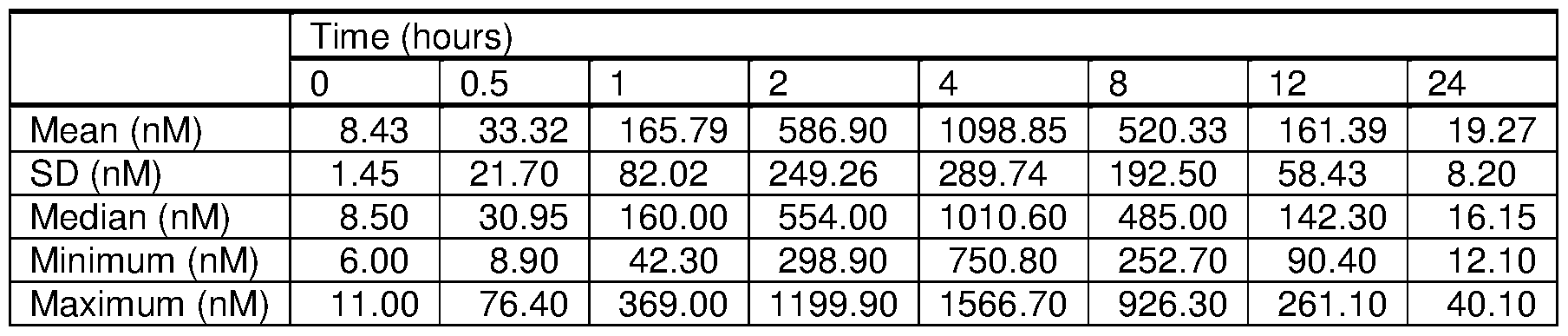
- FIG. 1 is a graph illustrating the mean plasma concentration of BH4 over time in fed and fasted subjects.
- FIG. 2 is a graph illustrating the mean plasma concentration of sepiapterin over time in fed and fasted subjects.
- the present inventors have discovered that administration of sepiapterin, or pharmaceutically acceptable salt thereof, with food unexpectedly results in an increase in the BH4 plasma exposure of a subject. Accordingly, the present invention features compositions including sepiapterin, or a
- compositions and methods for the treatment of BH4-related disorders. These compositions and methods may result in an increase in plasma exposure of BH4.
- Sepiapterin passes into the cell and is converted to 7,8-dihydrobiopterin by sepiapterin reductase. 7,8-dihydrobiopterin is then converted to BH4 via reduction by dihydrofolate reductase.
- sepiapterin reductase and/or dihydrofolate reductase in the cells may become saturated above V max resulting in at least a portion of the administered sepiapterin leaving the cell without being reduced to 7,8-dihydrobiopterin and subsequently to BH4.
- This excess sepiapterin may then be excreted without ever being converted to BH4, resulting in lower levels of BH4 in the plasma compared to administration of sepiapterin with food which reduces the rate of or prolongs the absorption of sepiapterin and results in reaction rates below, at or slightly above the V max for substrate saturation of sepiapterin reductase enzyme and/or dihydrofolate reductase.
- Administration of sepiapterin with food unexpectedly results in an increase in the maximum BH4 plasma concentration (Cmax) and the extent of exposure as measured by the area under the concentration time curve of time zero to last concentration (AUCo-i ast ) of BH4 compared to administration without food.
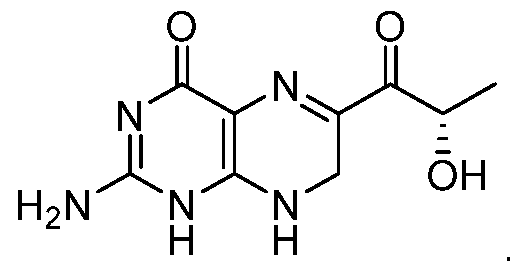
- Sepiapterin has the structure:
- Sepiapterin, or a pharmaceutically acceptable salt thereof can be formulated in a pharmaceutical composition.
- a pharmaceutical composition of the invention includes 20-30% sepiapterin, or a salt thereof, by total weight, e.g., 20%, 22%, 25%, 27%, or 30%.
- the pharmaceutical compositions include greater than 20% sepiapterin by total weight, e.g., greater than 25%, greater than 30%, greater than 40%, greater than 50%, greater than 60%, greater than 70%, greater than 80%, or greater than 90%.
- the pharmaceutical composition includes less than 20% sepiapterin by total weight, e.g., less than 20%, less than 15%, less than 10%, or less than 5%.
- the invention features a pharmaceutical composition including sepiapterin, or a salt thereof, and less than 10% by total body weight of an antioxidant, e.g., 9%, 7%, 5%, 3%, 1 %, 0.5%, 0.25%, or 0.1 %.
- the antioxidant may be ascorbic acid.
- the ratio of sepiapterin, or a pharmaceutically acceptable salt thereof, to the antioxidant is 1 :1 , e.g., 2:1 , 5:1 , 7:1 , or 10:1 .
- the pharmaceutical composition may include 20-30% sepiapterin, or a pharmaceutically acceptable salt thereof, by total weight, e.g., 20%, 22%, 25%, 27%, or 30%.
- the pharmaceutical composition can further include a dispersant, e.g., croscarmellose sodium.
- the pharmaceutical composition may include 0.1 -1 .5% dispersant by total weight, e.g., 0.1 %, 0.5%, 1 %, or 1 .5%.
- the pharmaceutical composition includes at least one anti-caking agent, e.g., colloidal silicon dioxide or microcrystalline cellulose.
- the pharmaceutical composition may include 65-75% anti caking agent by total weight, e.g., 65%, 67%, 70%, 73%, or 75%.
- the pharmaceutical composition includes both colloidal silicon dioxide and microcrystalline cellulose.
- the pharmaceutical composition includes 60-65% microcrystalline cellulose by total weight and 5-7% colloidal silicon dioxide by total weight.
- the crystalline form of sepiapterin is formulated as particles less than 140 pm in size, e.g., 120 pm, 1 10 pm, 100 pm, 90 pm, 80 pm, 70 pm, 60 pm, 50 pm, 40 pm, 30 pm, 20 pm, 10 pm, or 5 pm.
- the pharmaceutical composition includes less than 1 % of an impurity such as lactoylpterin, e.g., the composition includes less than 0.9%, less than 0.8%, less than 0.7%, less than 0.6%, less than 0.5%, less than 0.4%, less than 0.3%, or less than 0.2%.
- the sepiapterin is a salt of sepiapterin, e.g., with sulfuric acid, p-toluene sulfonic acid, methane sulfonic acid, benzene sulfonic acid, malonic acid, tartaric acid (e.g., L-tartaric acid), phosphoric acid, gentisic acid, fumaric acid, glycolic acid, acetic acid, or nicotinic acid.
- the sepiapterin, or pharmaceutically acceptable salt thereof is in crystalline form.
- the crystalline sepiapterin free base or a crystalline form of a salt of sepiapterin can occur as an anhydrate (e.g., without having any bound water or solvent or hydration or solvation) or as a hydrate, a partial hydrate (e.g., hemihydrate, sesquihydrate, and the like), as a dihydrate, a trihydrate, or the like, wherein the crystalline form binds a water of hydration or a solvent molecule associated with the crystalline form of sepiapterin or salt thereof.
- crystalline sepiapterin occurs as a monohydrate or as a hemihydrate.
- sepiapterin is present in a crystalline form.
- the crystalline form of sepiapterin is characterized by an X-ray powder diffraction pattern obtained by irradiation with Cu Ka X-rays having peaks expressed as 2Q at least at about 9.7, about 10.2, and about 1 1 .3°.
- the crystalline form of sepiapterin is characterized by an X-ray powder diffraction pattern obtained by irradiation with Cu Ka X-rays having peaks expressed as 2Q at least at about 9.7, about 10.2, about 1 1 .3, about 14.0, about 14.6, about 19.9, about 22.2, about 25.3, and about 32.4°
- the present invention provides a pharmaceutical composition including a pharmaceutically acceptable excipient and an effective amount of sepiapterin, or a pharmaceutically acceptable salt thereof.
- the pharmaceutically acceptable excipient can be any of those conventionally used and is limited only by chemico-physical considerations, such as solubility and by the route of administration. It will be appreciated by one of skill in the art that, in addition to the following described pharmaceutical compositions, sepiapterin can be formulated as inclusion complexes, such as cyclodextrin inclusion complexes, or liposomes.
- the pharmaceutically acceptable excipients described herein, for example, vehicles, adjuvants, excipients, or diluents, are well known to those who are skilled in the art and are readily available to the public. It is preferred that the pharmaceutically acceptable excipient be one which is chemically inert to the sepiapterin and one which has no detrimental side effects or toxicity under the conditions of use.
- Gastro-retentive drug delivery is an approach with the drug formulation is designed to remain in the stomach longer, e.g., until drug release is complete.
- Bioadhesive dosage forms utilize polymers that are capable of adhering to surfaces and result in a controlled release of the drug.
- the bioadhesive polymers may be anionic (e.g., carboxymethylcellulose, alginic acid, polyacrylic acid, pectin, carrageenan, polycarbophil, or carbomer); cationic (e.g., chitosan, polylysine, or polybrene); or non-ionic (e.g., polyethylene glycol, polyvinylpyrrolidone, dextran, orhydroxypropylmethylcellulose).
- High-density dosage forms are designed to sit in the stomach at a lower level than the pyloric sphincter, and thus avoid emptying.
- Excipients suitable for high-density dosage forms include iron powder, barium sulphate, zinc oxide, and titanium oxide.
- Expandable dosage forms are designed to expand in the stomach to be larger than the pyloric sphincter, and thus avoid emptying.
- dosage forms including a drug core, a swellable hydrocolloid, and an outer semi-permeable polymer are suitable for expandable dosage forms.
- Super-porous hydrogel dosage forms are designed, similarly to expandable dosage forms, to expand in the stomach to be larger than the pyloric sphincter.
- Super-porous hydrogel dosage forms may include polymers such as cross-carmellose sodium.
- Floating dosage forms are designed to have a lower density than gastric fluid.
- Floating dosage forms may include compositions including ion exchange resin, a raft system, an inflatable chamber, an effervescent mixture, a swellable hydrocolloid, or a multi-particulate system.
- compositions of the invention may include antioxidants.
- the antioxidant may minimize the oxidative degradation of sepiapterin.
- antioxidants include, but are not limited to, ascorbic acid, tocopherol, retinol, ascorbyl palmitate, N-acetyl cysteine, glutathione, ethylenediaminetetraacetic acid, sodium bisulfite, sodium metabisulfite, thiourea, butylatedhydroxytoluene, butylatedhydroxyanisole, and vitamin E.
- the pharmaceutical compositions of the invention include ascorbic acid, tocopherol, retinol, ascorbyl palmitate, N-acetyl cysteine, glutathione, butylatedhydroxytoluene, and/or butylatedhydroxyanisole as antioxidant.
- the pharmaceutical composition includes less than 10% antioxidant by weight, e.g., less than 9%, less than 8%, less than 7%, less than 6%, less than 5%, less than 4%, less than 3%, less than 2%, less than 1 %, or substantially free of antioxidant.
- the pharmaceutical composition includes 2-9% antioxidant by total weight, e.g., 2-4%, 3-5%, 4-6%, 5-7%, 6- 8%, or 7-9%.
- the pharmaceutical composition comprises 5-100% of the USP maximum daily dose of the antioxidant, e.g., in some embodiments, the pharmaceutical composition comprises 5%, 10%, 15%, 20%, 30%, 40%, 50%, 60%, 70%, 80%, 90%, or 100% of the USP maximum daily dose of the antioxidant.
- the ratio of sepiapterin to antioxidant is at least 1 :1 , e.g., 2:1 , 3:1 , 4:1 , 5:1 , 6:1 , 7:1 , 8:1 , 9:1 , or 10:1 .
- the pharmaceutical compositions of the invention include at least one dispersant.
- the dispersant may cause particles in the formulation to separate, e.g., release their medicinal substances on contact with moisture.
- dispersants include, but are not limited to, crosslinked polyvinylpyrrolidone, carboxymethylcellulose (e.g., croscarmellose salt, e.g., croscarmellose sodium), starch (e.g., sodium starch glycolate), or alginic acid.
- the dispersant in the pharmaceutical composition is a carboxymethylcellulose such as a pharmaceutically acceptable salt of croscarmellose.
- the pharmaceutical composition may include 0.1 -1 .5% dispersant by total weight, e.g., 0.1 %, 0.5%, 1 %, or 1 .5%. In some embodiments, the pharmaceutical composition includes less than 1 .5% dispersant, e.g., less than 1 %, less than 0.5%, or less than 0.1 %.
- the pharmaceutical compositions of the invention include at least one anti caking agent. In some embodiments, the pharmaceutical compositions include at least two anti-caking agents.
- Exemplary anti-caking agents include colloidal silicon dioxide, microcrystalline cellulose, tricalcium phosphate, microcrystalline cellulose, magnesium stearate, sodium bicarbonate, sodium ferrocyanide, potassium ferrocyanide, calcium ferrocyanide, calcium phosphate, sodium silicate, colloidal silicon dioxide, calcium silicate, magnesium trisilicate, talcum powder, sodium aluminosilicate, potassium aluminum silicate, calcium aluminosilicate, bentonite, aluminum silicate, stearic acid, and
- the at least one anti-caking agent is colloidal silicon dioxide or microcrystalline cellulose.
- the pharmaceutical composition may include 65- 75% anti-caking agent by total weight, e.g., 65%, 67%, 70%, 73%, or 75%.
- the pharmaceutical composition includes both colloidal silicon dioxide and microcrystalline cellulose.
- the pharmaceutical composition includes 60-65% microcrystalline cellulose by total weight and 5-7% colloidal silicon dioxide by total weight.
- the pharmaceutical compositions of the invention are combined with a dosing vehicle prior to administration, e.g., a dosing vehicle with a viscosity of approximately 50-1750 centipoise (cP).
- a dosing vehicle e.g., a dosing vehicle with a viscosity of approximately 50-1750 centipoise (cP).
- a suspending agent e.g., MEDISCA® oral mix with 2.5% glycerin and 27% sucrose in water.
- An appropriate quantity of composition can be added to the dosing vehicle mixture and agitated to suspend the composition just prior to administration.
- suspending agents may also be used as a dosing vehicle.
- Exemplary suspending agents include agar, alginic acid, sodium carboxymethyl cellulose, carrageenan, dextrin, gelatin, guar gum, hydroxyethyl cellulose, hydroxypropyl cellulose, hypromellose, methyl cellulose, polyethylene glycol, povidone, tragacanth, xanthan gum, or other suspending agents known in the art.
- Sepiapterin or pharmaceutically acceptable salt thereof, can be used in any suitable dose.
- Suitable doses and dosage regimens can be determined by conventional range finding techniques.
- the total daily dosage may be divided and administered in portions during the day if desired.
- the present invention provides for a wide range of responses.
- the dosages range from about 2.5 to about 150 mg/kg body weight of the patient being treated/day.
- pharmaceutically acceptable salt thereof may be administered from about 20 mg/kg to about 150 mg/kg, from about 40 mg/kg to about 100 mg/kg, from about 100 mg/kg to about 150 mg/kg, from about 60 mg/kg to about 120 mg/kg, from about 80 mg/kg to about 100 mg/kg, from about 40 mg/kg to about 60 mg/kg, from about 2.5 mg/kg to about 20 mg/kg, from about 2.5 mg/kg to about 10 mg/kg, or from about 2.5 mg/kg to about 5 mg/kg, of subject body weight per day, one or more times a day, to obtain the desired therapeutic effect.
- the dose is an amount sufficient to produce levels of BH4 in the CNS (e.g., brain), e.g., as measured in the CSF and/or sufficient to produce a therapeutic result and/or response, e.g., increased levels of serotonin or dopamine in the CNS.
- an increase in BH4 in the CNS is measured by determining the level of metabolites of a monoamine, e.g., serotonin and/or dopamine (e.g., homovanillic acid or 5-hydroxyindoleacetic acid (5-HIAA)) in the CSF, wherein an increase of metabolites in the CSF indicates an increase in BH4 levels in the CNS (e.g., brain).
- the dose is an amount sufficient to increase levels of BH4 at least two times greater (e.g., at least 10 times greater, at least 20 times greater, at least 50 times greater, at least 100 times greater, or at least 150 times greater) than the levels of BH4 prior to administration as measured in the plasma or an organ of the subject, e.g., the liver of the subject.
- the sepiapterin, or pharmaceutically acceptable salt thereof can be formulated into unit solid oral dosage forms such as particles.
- each unit solid oral dosage form can comprise any suitable amount of the sepiapterin, or pharmaceutically acceptable salt thereof.
- each solid oral dosage form can comprise about 2.5 mg, about 5 mg, about 10 mg, about 20 mg, about 30 mg, about 40 mg, about 50 mg, about 60 mg, about 70 mg, about 80 mg, about 90 mg, about 100 mg, about 125 mg, about 150 mg, about 175 mg, about 200 mg, about 225 mg, about 250 mg, about 275 mg, about 300 mg, about 325 mg, about 350 mg, about 375 mg, about 400 mg, about 425 mg, about 450 mg, about 475 mg, or about 500 mg.
- Sepiapterin or a pharmaceutically acceptable salt thereof, can be used in the preparation of liquid formulations, such as in the form of a solution, suspension, or emulsion.
- Formulations suitable for oral administration can consist of (a) capsules, sachets, tablets, lozenges, and troches, each containing a predetermined amount of the active ingredient, as solids or granules; (b) powders; (c) liquid solutions, such as an effective amount of the compound dissolved in diluents, such as water, saline, or orange juice; (d) suspensions in an appropriate liquid; and (e) suitable emulsions.
- solid oral dosage forms such as capsule forms, tablet forms, and powder forms.
- Capsule forms can be of the ordinary hard- or soft-shelled gelatin type containing, for example, surfactants, lubricants, and inert fillers, such as lactose, sucrose, calcium phosphate, and cornstarch.
- Tablet forms can include one or more of lactose, sucrose, mannitol, corn starch, potato starch, alginic acid, microcrystalline cellulose, acacia, gelatin, guar gum, colloidal silicon dioxide, croscarmellose sodium, talc, magnesium stearate, calcium stearate, zinc stearate, stearic acid, and other excipients, colorants, diluents, buffering agents, disintegrating agents, moistening agents, preservatives, flavoring agents, and pharmacologically compatible excipients.
- Lozenge forms can comprise the active ingredient in a flavor, usually sucrose and acacia or tragacanth, as well as pastilles comprising the active ingredient in an inert base, such as gelatin and glycerin, or sucrose and acacia, emulsions, gels, and the like containing, in addition to the active ingredient, such excipients as are known in the art.
- a flavor usually sucrose and acacia or tragacanth
- pastilles comprising the active ingredient in an inert base, such as gelatin and glycerin, or sucrose and acacia, emulsions, gels, and the like containing, in addition to the active ingredient, such excipients as are known in the art.
- Formulations suitable for oral and/or parenteral administration include aqueous and non- aqueous, isotonic sterile injection solutions, which can contain anti-oxidants, buffers, bacteriostats, and solutes that render the formulation isotonic with the blood of the intended recipient, and aqueous and non-aqueous sterile suspensions that can include suspending agents, solubilizers, thickening agents, stabilizers, and preservatives.
- the compound can be administered in a physiologically acceptable diluent in a pharmaceutical excipient, such as a sterile liquid or mixture of liquids, including water, saline, aqueous dextrose and related sugar solutions, an alcohol, such as ethanol, benzyl alcohol, or hexadecyl alcohol, glycols, such as propylene glycol or polyethylene glycol and other polyethylene alcohols, glycerol ketals, such as 2,2-dimethyl-1 ,3-dioxolane-4-methanol, ethers, such as polyethylene glycol) 400, an oil, a fatty acid, a fatty acid ester or glyceride, or an acetylated fatty acid glyceride with or without the addition of a pharmaceutically acceptable surfactant, such as a soap or a detergent, suspending agent, such as pectin, carbomers, methylcellulose, hydroxypropylmethylcellulose, or carboxymethylcellulose, or emuls
- the present invention features pharmaceutical compositions in an orally tolerable formula that contains a therapeutically effective amount of sepiapterin and less than 10% antioxidant.
- the pharmaceutical composition is a granular formulation that is dispersed in a
- composition can be mixed into water and ingested by a patient (e.g., over the course of 5 to 10 minutes).
- Suitable formulations for use in the present invention are found in Remington’s Pharmaceutical Sciences, Mack Publishing Company, Philadelphia,
- Oils which can be used in parenteral formulations include petroleum, animal, vegetable, or synthetic oils. Specific examples of oils include peanut, soybean, sesame, cottonseed, corn, olive, petrolatum, and mineral. Suitable fatty acids for use in parenteral formulations include oleic acid, stearic acid, and isostearic acid. Ethyl oleate and isopropyl myristate are examples of suitable fatty acid esters. Suitable soaps for use in parenteral formulations include fatty alkali metal, ammonium, and
- suitable detergents include (a) cationic detergents such as, for example, dimethyl dialkyl ammonium halides, and alkyl pyridinium halides, (b) anionic detergents such as, for example, alkyl, aryl, and olefin sulfonates, alkyl, olefin, ether, and monoglyceride sulfates, and sulfosuccinates, (c) nonionic detergents such as, for example, fatty amine oxides, fatty acid alkanolamides, and polyoxyethylene-polypropylene copolymers, (d) amphoteric detergents such as, for example, alkyl-beta-aminopropionates, and 2-alkyl-imidazopeak quaternary ammonium salts, and mixtures thereof.
- cationic detergents such as, for example, dimethyl dialkyl ammonium halides, and alkyl pyridinium halides
- the parenteral formulations will typically contain from about 20 to about 30% by weight of sepiapterin, or a pharmaceutically acceptable salt thereof, in solution. Suitable preservatives and buffers can be used in such formulations. In order to minimize or eliminate irritation at the site of injection, such compositions may contain one or more nonionic surfactants having a hydrophilic-lipophilic balance (HLB) of from about 12 to about 1 7. The quantity of surfactant in such formulations ranges from about 5 to about 15% by weight. Suitable surfactants include polyethylene sorbitan fatty acid esters, such as sorbitan monooleate and the high molecular weight adducts of ethylene oxide with a hydrophobic base, formed by the condensation of propylene oxide with propylene glycol.
- HLB hydrophilic-lipophilic balance
- parenteral formulations can be presented in unit-dose or multi-dose sealed containers, such as ampoules and vials, and can be stored in a freeze-dried (lyophilized) condition requiring only the addition of the sterile liquid excipient, for example, water, for injections, immediately prior to use.
- sterile liquid excipient for example, water
- Extemporaneous injection solutions and suspensions can be prepared from sterile powders, granules, and tablets of the kind previously described.
- Sepiapterin, or a pharmaceutically acceptable salt thereof, of the present invention may be made into injectable formulations.
- the requirements for effective pharmaceutical excipients for injectable compositions are well known to those of ordinary skill in the art. See Remington: The Science and Practice of Pharmacy, 22 nd Edition, Lippincott Williams & Wilkins, (2012); and Encyclopedia of
- Topical formulations including those that are useful for transdermal drug release, are well-known to those of skill in the art and are suitable in the context of the invention for application to skin.
- Topically applied compositions are generally in the form of liquids, creams, pastes, lotions and gels. Topical administration includes application to the oral mucosa, which includes the oral cavity, oral epithelium, palate, gingival, and the nasal mucosa.
- the composition contains sepiapterin, or a pharmaceutically acceptable salt thereof, and a suitable vehicle or excipient. It may also contain other components, such as an anti-irritant.
- the excipient can be a liquid, solid or semi-solid.
- the composition is an aqueous solution.
- the composition can be a dispersion, emulsion, gel, lotion or cream vehicle for the various components.
- the primary vehicle is water or a biocompatible solvent that is substantially neutral or that has been rendered substantially neutral.
- the liquid vehicle can include other materials, such as buffers, alcohols, glycerin, and mineral oils with various emulsifiers or dispersing agents as known in the art to obtain the desired pH, consistency and viscosity.
- compositions can be produced as solids, such as powders or granules.
- the solids can be applied directly or dissolved in water or a biocompatible solvent prior to use to form a solution that is substantially neutral or that has been rendered substantially neutral and that can then be applied to the target site.
- the vehicle for topical application to the skin can include water, buffered solutions, various alcohols, glycols such as glycerin, lipid materials such as fatty acids, mineral oils, phosphoglycerides, collagen, gelatin and silicone based materials.
- Sepiapterin, or a salt thereof, alone or in combination with other suitable components, can be made into aerosol formulations to be administered via inhalation.
- aerosol formulations can be placed into pressurized acceptable propellants, such as dichlorodifluoromethane, propane, nitrogen, and the like. They also may be formulated as pharmaceuticals for non-pressured preparations, such as in a nebulizer or an atomizer.
- the sepiapterin, or a pharmaceutically acceptable salt thereof may be made into suppositories by mixing with a variety of bases, such as emulsifying bases or water-soluble bases.
- Formulations suitable for vaginal administration may be presented as pessaries, tampons, creams, gels, pastes, foams, or spray formulas containing, in addition to the active ingredient, such excipients as are known in the art to be appropriate.
- Solid dosage form for oral administration
- Formulations for oral use include particles containing the active ingredient(s) in a mixture with non-toxic pharmaceutically acceptable excipients, and such formulations are known to the skilled artisan (e.g., U.S. Patent Nos. : 5,817,307, 5,824,300, 5,830,456, 5,846,526, 5,882,640, 5,910,304, 6,036,949, 6,036,949, 6,372,21 8, hereby incorporated by reference).
- Excipients may be, for example, inert diluents or fillers (e.g., sucrose, sorbitol, sugar, mannitol, microcrystalline cellulose, starches including potato starch, calcium carbonate, sodium chloride, lactose, calcium phosphate, calcium sulfate, or sodium phosphate); granulating and disintegrating agents (e.g., cellulose derivatives including microcrystalline cellulose, starches including potato starch, croscarmellose sodium, alginates, or alginic acid); binding agents (e.g., sucrose, glucose, sorbitol, acacia, alginic acid, sodium alginate, gelatin, starch,
- inert diluents or fillers e.g., sucrose, sorbitol, sugar, mannitol, microcrystalline cellulose, starches including potato starch, calcium carbonate, sodium chloride, lactose, calcium phosphate, calcium sulfate, or
- pregelatinized starch microcrystalline cellulose, magnesium aluminum silicate, carboxymethylcellulose sodium, methylcellulose, hydroxypropyl methylcellulose, ethylcellulose, polyvinylpyrrolidone, or polyethylene glycol
- lubricating agents e.g., glidants, anti-adhesives (e.g., magnesium stearate, zinc stearate, stearic acid, silicas, hydrogenated vegetable oils, or talc), and anti-caking agents (e.g., colloidal silicon dioxide, microcrystalline cellulose, tricalcium phosphate, microcrystalline cellulose, magnesium stearate, sodium bicarbonate, sodium ferrocyanide, potassium ferrocyanide, calcium ferrocyanide, calcium phosphate, sodium silicate, colloidal silicon dioxide, calcium silicate, magnesium trisilicate, talcum powder, sodium aluminosilicate, potassium aluminum silicate, calcium aluminosilicate, bentonite, aluminum silicate, stearic acid, polydimethyl
- excipients can be colorants, flavoring agents, plasticizers, humectants, and buffering agents.
- excipients e.g., flavoring agents
- excipients are packaged with the composition.
- excipients e.g., flavorings
- are packaged separately from the composition e.g., are combined with the composition prior to administration.
- the solid compositions of the invention may include a coating adapted to protect the composition from unwanted chemical changes, (e.g., chemical degradation prior to the release of the active substances).
- the coating may be applied on the solid dosage form in a similar manner as that described in Encyclopedia of Pharmaceutical Technology , supra.
- Powders and granulates may be prepared using the ingredients mentioned above in a conventional manner using, e.g., a mixer, a fluid bed apparatus, melt congeal apparatus, rotor granulator, extrusion/spheronizer, or spray drying equipment.
- Methods of Treatment e.g., a mixer, a fluid bed apparatus, melt congeal apparatus, rotor granulator, extrusion/spheronizer, or spray drying equipment.
- Sepiapterin may serve as a useful therapeutic for diseases associated with low intracellular BH4 levels or with dysfunction of various BH4 dependent metabolic pathways including, but not limited to, primary BH4 deficiency, GTPCH deficiency, 6-pyruvoyl-tetrahydropterin synthase (PTPS) deficiency, DHPR deficiency, sepiapterin reductase deficiency, dopamine responsive dystonia, Segawa Syndrome, tyrosine hydroxylase deficiency, phenylketonuria, DNAJC12 deficiency, Parkinson's Disease, depression due to Parkinson’s Disease, impulsivity in Parkinson’s patients, major depression, Autism spectrum, ADHD, schizophrenia, Bipolar disorder, cerebral ischemia, restless leg syndrome, Obsessive Compulsive Disorder, anxiety, aggression in Alzheimer’s disease, cerebrovascular disorders, spasm after
- the various forms of sepiapterin, or a salt thereof, in accordance with the present invention can be administered to a patient in an effective amount to obtain a treatment or amelioration of the disease, disorder or condition.
- the food is a high protein food. In some embodiments of any of the foregoing methods, the food is a high fat food (e.g., at least 25, 30, 40, or 50% of the calories are from fat). In some embodiments of any of the foregoing methods, the food is a high protein and high fat food. In some embodiments, the food is high calorie food (e.g., the food includes at least 100 calories, e.g., at least 200 calories, at least 300 calories, at least 400 calories, at least 500 calories, e.g., 500-1500 or 800-1000 calories). In some embodiments of any of the foregoing methods, the food is a meal, e.g., breakfast, lunch, or dinner.
- a meal e.g., breakfast, lunch, or dinner.
- the actual dosage amount of a composition of the present invention administered to a patient can be determined by physical and physiological factors such as body weight, severity of condition, the type of disease being treated, previous or concurrent therapeutic interventions, idiopathy of the patient and on the route of administration. Depending upon the dosage and the route of administration, the number of administrations of a preferred dosage and/or an effective amount may vary according to the response of the subject. The practitioner responsible for administration will, in any event, determine the concentration of active ingredient(s) in a composition and appropriate dose(s) for the individual subject.
- patients receive 2.5 mg/kg/day, 5 mg/kg/day 10 mg/kg/day 20 mg/kg/day, 40 mg/kg/day, 60 mg/kg/day, or 80 mg/kg/day.
- Patients may receive the pharmaceutical composition including sepiapterin once daily, twice daily or three times daily during treatment
- patients continue their other current medications for BH4-related disorder (e.g., L-dopa/carbidopa, 5HTP, melatonin, MAO inhibitors, and dopamine receptor agonists as prescribed) except for BH4
- BH4-related disorder e.g., L-dopa/carbidopa, 5HTP, melatonin, MAO inhibitors, and dopamine receptor agonists as prescribed
- patients who are taking BH4 discontinue administration of BH4 (i.e., BH4 washout).
- Blood samples for Phe concentrations may be obtained during the BH4 washout period at 7, 5, 3, and 1 day before the treatment with the pharmaceutical composition of the invention or until blood Phe levels are >360 mihoI/L at any time point during BH4 washout.
- pre-dose blood samples are tested for sepiapterin, Phe, BH4, and tyrosine (Tyr).
- any particular embodiment of the present invention that falls within the prior art may be explicitly excluded from any one or more of the claims. Since such embodiments are deemed to be known to one of ordinary skill in the art, they may be excluded even if the exclusion is not set forth explicitly herein. Any particular embodiment of the compositions of the invention (e.g., any compound; any method of production; any method of use; etc.) can be excluded from any one or more claims, for any reason, whether or not related to the existence of prior art.
- a standard high-fat approximately 50 percent of total caloric content of the meal
- high-calorie approximately 800 to 1000 calories
- the blood concentrations of sepiapterin and BH4 were analyzed by MNG Labs.
- CSF cerebrospinal fluid
- the cerebral spinal fluid (CSF) is analyzed by MNG Labs. Descriptive statistics are provided to characterize any changes in neurotransmitter metabolism between the Day 1 , and Day 7 sample results.
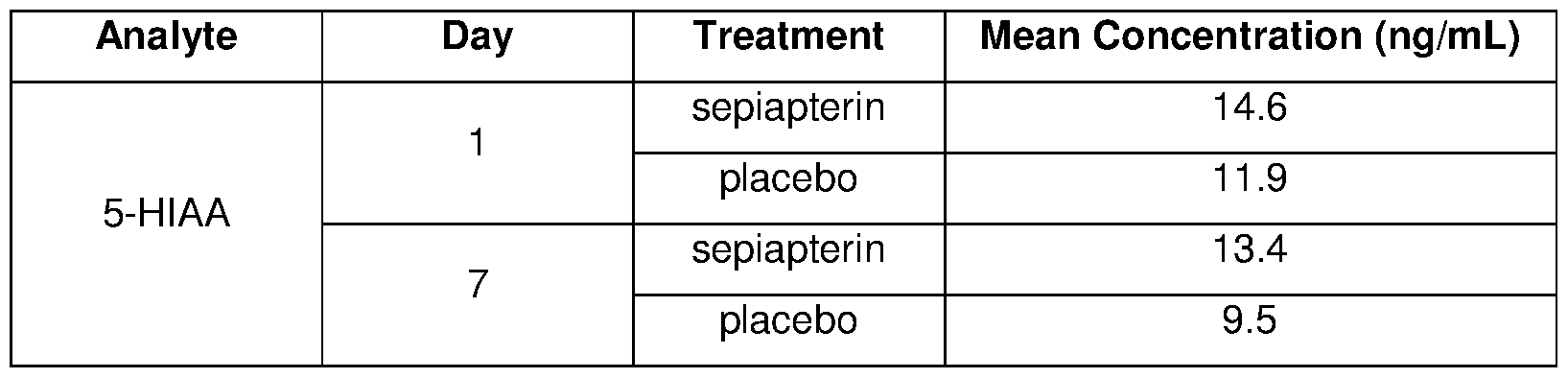
- Analyses were conducted in CSF samples of subjects administered 60 mg/kg sepiapterin or placebo. The following analytes were measured: sepiapterin, BH4, BH2, homovanillic acid (HVA), and 5-hydroxyindoleacetic acid (HIAA). Descriptive (n, mean, SD, median, minimum, maximum) statistics for these analytes at Day 1 and Day 7 +/- 30 minutes from T max and change from baseline at Day 7 were determined for each analyte.
- Changes in neurotransmitter concentrations relative to Day 1 also differ between sepiapterin- treated subjects and subjects receiving placebo.
- the concentration of HVA increased by 1 .378 ng/mL in sepiapterin-treated subjects compared with a decrease of 0.630 ng/mL in subjects receiving placebo.
- the concentration of 5-HIAA decreased in both arms but to a lesser extent in sepiapterin-treated subjects than in subjects receiving placebo (-1 .142 ng/mL versus -2.440 ng/mL).
- HVA and 5-HIAA concentrations for the subject on Day 7 were both higher than the mean concentrations for Day 7 placebo-treated subjects.
- the data is summarized in Table 6 below.
- Plasma-time concentrations of sepiapterin and BH4 were similar after 1 and 7 days of treatment with sepiapterin, with no drug accumulation.
- the pharmacokinetic data is shown in Table 7 below. Table 7. Summary of pharmacokinetic data for multiple administrations of sepiapterin
Landscapes
- Health & Medical Sciences (AREA)
- Pharmacology & Pharmacy (AREA)
- Veterinary Medicine (AREA)
- Chemical & Material Sciences (AREA)
- Public Health (AREA)
- General Health & Medical Sciences (AREA)
- Medicinal Chemistry (AREA)
- Animal Behavior & Ethology (AREA)
- Life Sciences & Earth Sciences (AREA)
- Epidemiology (AREA)
- Physiology (AREA)
- Nutrition Science (AREA)
- Obesity (AREA)
- Organic Chemistry (AREA)
- Nuclear Medicine, Radiotherapy & Molecular Imaging (AREA)
- General Chemical & Material Sciences (AREA)
- Chemical Kinetics & Catalysis (AREA)
- Hematology (AREA)
- Diabetes (AREA)
- Bioinformatics & Cheminformatics (AREA)
- Engineering & Computer Science (AREA)
- Pharmaceuticals Containing Other Organic And Inorganic Compounds (AREA)
- Medicinal Preparation (AREA)
Abstract
Description





Claims
Priority Applications (9)
| Application Number | Priority Date | Filing Date | Title |
|---|---|---|---|
| EP19810058.8A EP3801534A4 (en) | 2018-05-30 | 2019-05-30 | COMPOSITIONS AND METHODS FOR INCREASE TETRAHYDROBIOPTERINE PLASMA EXPOSURE |
| CA3102105A CA3102105A1 (en) | 2018-05-30 | 2019-05-30 | Compositions and methods for increasing tetrahydrobiopterin plasma exposure |
| CN201980050730.3A CN112654356A (en) | 2018-05-30 | 2019-05-30 | Compositions and methods for increasing tetrahydrobiopterin plasma exposure |
| US17/059,632 US12257252B2 (en) | 2018-05-30 | 2019-05-30 | Compositions and methods for increasing tetrahydrobiopterin plasma exposure |
| JP2020566737A JP7547215B2 (en) | 2018-05-30 | 2019-05-30 | Compositions and methods for increasing tetrahydrobiopterin plasma exposure - Patents.com |
| BR112020024329-9A BR112020024329A2 (en) | 2018-05-30 | 2019-05-30 | compositions and methods for increasing plasma exposure of tetrahydrobiopterin |
| MX2020012980A MX2020012980A (en) | 2018-05-30 | 2019-05-30 | Compositions and methods for increasing tetrahydrobiopterin plasma exposure. |
| JP2024146283A JP2024178188A (en) | 2018-05-30 | 2024-08-28 | Compositions and methods for increasing tetrahydrobiopterin plasma exposure - Patents.com |
| US19/070,026 US20250195529A1 (en) | 2018-05-30 | 2025-03-04 | Compositions and methods for increasing tetrahydrobiopterin plasma exposure |
Applications Claiming Priority (8)
| Application Number | Priority Date | Filing Date | Title |
|---|---|---|---|
| US201862677926P | 2018-05-30 | 2018-05-30 | |
| US62/677,926 | 2018-05-30 | ||
| US201862771397P | 2018-11-26 | 2018-11-26 | |
| US62/771,397 | 2018-11-26 | ||
| US201962822365P | 2019-03-22 | 2019-03-22 | |
| US62/822,365 | 2019-03-22 | ||
| GC201937662 | 2019-05-28 | ||
| GC2019/37662 | 2019-05-28 |
Related Child Applications (2)
| Application Number | Title | Priority Date | Filing Date |
|---|---|---|---|
| US17/059,632 A-371-Of-International US12257252B2 (en) | 2018-05-30 | 2019-05-30 | Compositions and methods for increasing tetrahydrobiopterin plasma exposure |
| US19/070,026 Division US20250195529A1 (en) | 2018-05-30 | 2025-03-04 | Compositions and methods for increasing tetrahydrobiopterin plasma exposure |
Publications (1)
| Publication Number | Publication Date |
|---|---|
| WO2019232126A1 true WO2019232126A1 (en) | 2019-12-05 |
Family
ID=68699016
Family Applications (1)
| Application Number | Title | Priority Date | Filing Date |
|---|---|---|---|
| PCT/US2019/034515 Ceased WO2019232126A1 (en) | 2018-05-30 | 2019-05-30 | Compositions and methods for increasing tetrahydrobiopterin plasma exposure |
Country Status (8)
| Country | Link |
|---|---|
| US (2) | US12257252B2 (en) |
| EP (1) | EP3801534A4 (en) |
| JP (2) | JP7547215B2 (en) |
| CN (1) | CN112654356A (en) |
| BR (1) | BR112020024329A2 (en) |
| CA (1) | CA3102105A1 (en) |
| MX (1) | MX2020012980A (en) |
| WO (1) | WO2019232126A1 (en) |
Cited By (3)
| Publication number | Priority date | Publication date | Assignee | Title |
|---|---|---|---|---|
| WO2021150983A1 (en) * | 2020-01-24 | 2021-07-29 | Ptc Therapeutics Mp, Inc. | Methods for treating parkinson's disease with sepiapterin |
| EP3801536A4 (en) * | 2018-05-30 | 2022-03-23 | PTC Therapeutics MP, Inc. | METHODS FOR INCREASE EXPOSURE TO SEPIAPTERINE PLASMA |
| US12257252B2 (en) | 2018-05-30 | 2025-03-25 | Ptc Therapeutics Mp, Inc. | Compositions and methods for increasing tetrahydrobiopterin plasma exposure |
Families Citing this family (4)
| Publication number | Priority date | Publication date | Assignee | Title |
|---|---|---|---|---|
| KR102789662B1 (en) | 2016-11-29 | 2025-04-03 | 피티씨 테라퓨틱스 엠피, 인크. | Polymorphs of sepiapterin and salts thereof |
| WO2018102314A1 (en) | 2016-11-29 | 2018-06-07 | Censa Pharmaceuticals Inc. | Polymorphic form of sepiapterin |
| BR112020003865A8 (en) | 2017-09-01 | 2022-08-16 | Censa Pharmaceuticals Inc | PHARMACEUTICAL COMPOSITIONS INCLUDING SEPIAPTERIN AND THEIR USES |
| US12298026B1 (en) | 2021-04-12 | 2025-05-13 | W. L. Gore & Associates, Inc. | Latent energy transfer laminate for plate pack core |
Citations (3)
| Publication number | Priority date | Publication date | Assignee | Title |
|---|---|---|---|---|
| US20130108694A1 (en) * | 2011-11-02 | 2013-05-02 | Biomarin Pharmaceutical Inc. | Dry blend formulation of tetrahydrobiopterin |
| US20130197000A1 (en) * | 2010-04-22 | 2013-08-01 | Nihon University | Drug and food/drink for preventing or improving cerebral dysfunction |
| US20170000793A1 (en) * | 2007-04-11 | 2017-01-05 | Biomarin Pharmaceutical Inc. | Methods of administering tetrahydrobiopterin, associated compositions, and methods of measuring |
Family Cites Families (28)
| Publication number | Priority date | Publication date | Assignee | Title |
|---|---|---|---|---|
| JPS5925323A (en) | 1982-03-03 | 1984-02-09 | 鐘淵化学工業株式会社 | A therapeutic agent for diseases involving brain neurotransmitters consisting of pterin derivatives |
| US5910304A (en) | 1982-12-13 | 1999-06-08 | Texas A&M University System | Low-dose oral administration of interferons |
| CA1320905C (en) | 1986-11-06 | 1993-08-03 | Joseph M. Cummins | Treatment of immuno-resistant disease |
| EP0854934A4 (en) | 1995-08-18 | 2000-09-06 | Donald W Landry | Detection of organic compounds through regulation of antibody-catalyzed reactions |
| US6036949A (en) | 1998-03-05 | 2000-03-14 | Amarillo Biosciences, Inc. | Treatment of fibromyalgia with low doses of interferon |
| US8188043B2 (en) | 1999-07-28 | 2012-05-29 | The Board Of Trustees Of The Leland Stanford Jr. University | Nicotine in therapeutic angiogenesis and vasculogenesis |
| FR2859996B1 (en) | 2003-09-19 | 2006-02-03 | Aventis Pharma Sa | ACETONIC SOLVAT OF DIMETHOXY DOCETAXEL AND PROCESS FOR PREPARING THE SAME |
| JP2007511520A (en) | 2003-11-13 | 2007-05-10 | ザ ジェネラル ホスピタル コーポレーション | Methods for treating pain |
| US7732599B2 (en) | 2003-11-17 | 2010-06-08 | Biomarin Pharmaceutical Inc. | Process for preparing tetrahydrobiopterin and analogs of tetrahydrobiopterin |
| WO2005049000A2 (en) | 2003-11-17 | 2005-06-02 | Biomarin Pharmaceutical Inc. | Treatment of phenylketonurias with bh4 |
| CA2678124C (en) | 2003-11-17 | 2014-10-07 | Merck Eprova Ag | Crystalline forms of (6r)-l-erythro-tetrahydrobiopterin dihydrochloride |
| WO2006055511A2 (en) | 2004-11-17 | 2006-05-26 | Biomarin Pharmaceutical Inc. | Stable tablet formulation of tetrahydrobiopterin |
| US20100130500A1 (en) | 2004-12-08 | 2010-05-27 | Biomarin Pharmaceutical Inc. | Methods and compositions for the treatment of pulmonary hypertension of the newborn |
| AU2006241673B2 (en) | 2005-04-28 | 2011-02-24 | Daiichi Sankyo Company, Limited | Method for producing hydrazone derivatives |
| US20080075666A1 (en) | 2006-08-25 | 2008-03-27 | Dudley Samuel C Jr | Methods and compositions for treating diastolic dysfunction |
| ES2736730T3 (en) | 2008-08-12 | 2020-01-07 | Orpha Swiss Gmbh | Pharmaceutical administration form containing tetrahydrobiopterin |
| US9884909B2 (en) | 2010-12-01 | 2018-02-06 | Alderbio Holdings Llc | Anti-NGF compositions and use thereof |
| KR20140021585A (en) | 2011-03-01 | 2014-02-20 | 루비콘 리서치 피브이티. 엘티디. | Stable compositions of tetrahydrobiopterin |
| ES2681345T3 (en) | 2012-05-07 | 2018-09-12 | Shiratori Pharmaceutical Co., Ltd. | Method to produce sepiapterin and tetrahydrolactoylpterin |
| EP3213062B1 (en) | 2014-10-31 | 2020-02-12 | Children's Medical Center Corporation | Methods and assays relating to sepiapterin reductase inhibition |
| WO2018102314A1 (en) | 2016-11-29 | 2018-06-07 | Censa Pharmaceuticals Inc. | Polymorphic form of sepiapterin |
| KR102789662B1 (en) | 2016-11-29 | 2025-04-03 | 피티씨 테라퓨틱스 엠피, 인크. | Polymorphs of sepiapterin and salts thereof |
| BR112020003865A8 (en) | 2017-09-01 | 2022-08-16 | Censa Pharmaceuticals Inc | PHARMACEUTICAL COMPOSITIONS INCLUDING SEPIAPTERIN AND THEIR USES |
| WO2019232126A1 (en) | 2018-05-30 | 2019-12-05 | Censa Pharmaceuticals Inc. | Compositions and methods for increasing tetrahydrobiopterin plasma exposure |
| WO2019232130A1 (en) | 2018-05-30 | 2019-12-05 | Censa Pharmaceuticals Inc. | Methods for increasing sepiapterin plasma exposure |
| WO2019232120A1 (en) * | 2018-05-30 | 2019-12-05 | Censa Pharmaceuticals Inc. | Pharmaceutically acceptable salts of sepiapterin |
| HUE069012T2 (en) | 2019-08-05 | 2025-02-28 | Ptc Therapeutics Mp Inc | Use of sepiapterin and metabolites thereof to treat radiation exposure |
| RS67295B1 (en) * | 2019-09-25 | 2025-11-28 | Ptc Therapeutics Mp Inc | Methods for treating hyperphenylalaninemia |
-
2019
- 2019-05-30 WO PCT/US2019/034515 patent/WO2019232126A1/en not_active Ceased
- 2019-05-30 EP EP19810058.8A patent/EP3801534A4/en active Pending
- 2019-05-30 CN CN201980050730.3A patent/CN112654356A/en active Pending
- 2019-05-30 BR BR112020024329-9A patent/BR112020024329A2/en unknown
- 2019-05-30 US US17/059,632 patent/US12257252B2/en active Active
- 2019-05-30 MX MX2020012980A patent/MX2020012980A/en unknown
- 2019-05-30 JP JP2020566737A patent/JP7547215B2/en active Active
- 2019-05-30 CA CA3102105A patent/CA3102105A1/en active Pending
-
2024
- 2024-08-28 JP JP2024146283A patent/JP2024178188A/en active Pending
-
2025
- 2025-03-04 US US19/070,026 patent/US20250195529A1/en active Pending
Patent Citations (3)
| Publication number | Priority date | Publication date | Assignee | Title |
|---|---|---|---|---|
| US20170000793A1 (en) * | 2007-04-11 | 2017-01-05 | Biomarin Pharmaceutical Inc. | Methods of administering tetrahydrobiopterin, associated compositions, and methods of measuring |
| US20130197000A1 (en) * | 2010-04-22 | 2013-08-01 | Nihon University | Drug and food/drink for preventing or improving cerebral dysfunction |
| US20130108694A1 (en) * | 2011-11-02 | 2013-05-02 | Biomarin Pharmaceutical Inc. | Dry blend formulation of tetrahydrobiopterin |
Non-Patent Citations (3)
| Title |
|---|
| "Cerebrospinal fluid", CEREBROSPINAL FLUID, 14 April 2018 (2018-04-14), XP055659887, Retrieved from the Internet <URL:https://en.wikipedia.org/w/index.php?title=Cerebrospinal_fluid&oldid=836321065> [retrieved on 20190805] * |
| MARCOS LUCIANO BRUSCHI: "Colophon; Strategies to Modify the Drug Release from Pharmaceutical Systems", STRATEGIES TO MODIFY THE DRUG RELEASE FROM PHARMACEUTICAL SYSTEMS, no. viii, 16 June 2015 (2015-06-16), pages i, XP009525115, DOI: 10.1016/B978-0-08-100092-2.09987-2 * |
| See also references of EP3801534A1 * |
Cited By (7)
| Publication number | Priority date | Publication date | Assignee | Title |
|---|---|---|---|---|
| EP3801536A4 (en) * | 2018-05-30 | 2022-03-23 | PTC Therapeutics MP, Inc. | METHODS FOR INCREASE EXPOSURE TO SEPIAPTERINE PLASMA |
| US11617752B2 (en) | 2018-05-30 | 2023-04-04 | Ptc Therapeutics Mp, Inc. | Methods for increasing sepiapterin plasma exposure |
| EP4454704A3 (en) * | 2018-05-30 | 2025-01-01 | PTC Therapeutics MP, Inc. | Methods for increasing sepiapterin plasma exposure |
| AU2019277382B2 (en) * | 2018-05-30 | 2025-01-09 | Ptc Therapeutics Mp, Inc. | Methods for increasing sepiapterin plasma exposure |
| US12257252B2 (en) | 2018-05-30 | 2025-03-25 | Ptc Therapeutics Mp, Inc. | Compositions and methods for increasing tetrahydrobiopterin plasma exposure |
| US12329757B2 (en) | 2018-05-30 | 2025-06-17 | Ptc Therapeutics Mp, Inc. | Methods for increasing sepiapterin plasma exposure |
| WO2021150983A1 (en) * | 2020-01-24 | 2021-07-29 | Ptc Therapeutics Mp, Inc. | Methods for treating parkinson's disease with sepiapterin |
Also Published As
| Publication number | Publication date |
|---|---|
| EP3801534A4 (en) | 2022-03-16 |
| JP2021525746A (en) | 2021-09-27 |
| US20210161901A1 (en) | 2021-06-03 |
| CA3102105A1 (en) | 2019-12-05 |
| CN112654356A (en) | 2021-04-13 |
| MX2020012980A (en) | 2021-04-29 |
| EP3801534A1 (en) | 2021-04-14 |
| JP7547215B2 (en) | 2024-09-09 |
| US20250195529A1 (en) | 2025-06-19 |
| BR112020024329A2 (en) | 2021-02-23 |
| JP2024178188A (en) | 2024-12-24 |
| US12257252B2 (en) | 2025-03-25 |
Similar Documents
| Publication | Publication Date | Title |
|---|---|---|
| US12329757B2 (en) | Methods for increasing sepiapterin plasma exposure | |
| US20250195529A1 (en) | Compositions and methods for increasing tetrahydrobiopterin plasma exposure | |
| US12213982B2 (en) | Pharmaceutical compositions comprising sepiapterin and uses thereof | |
| KR20210038848A (en) | Pharmaceutically acceptable salts of sepiapterin | |
| HK40119071A (en) | Methods for increasing sepiapterin plasma exposure | |
| HK40051961A (en) | Administration of sepiapterin without food for use in a method for increasing sepiapterin plasma exposure | |
| HK40051961B (en) | Administration of sepiapterin without food for use in a method for increasing sepiapterin plasma exposure | |
| US20240122931A1 (en) | Methods for treating covid-19 with sepiapterin | |
| JP7811085B2 (en) | Pharmaceutical compositions containing sepiapterin and uses thereof | |
| BR112020024346A2 (en) | methods to increase plasma sepiapterin exposure | |
| CA3207811A1 (en) | Methods for treating glioblastomas with sepiapterin |
Legal Events
| Date | Code | Title | Description |
|---|---|---|---|
| 121 | Ep: the epo has been informed by wipo that ep was designated in this application |
Ref document number: 19810058 Country of ref document: EP Kind code of ref document: A1 |
|
| ENP | Entry into the national phase |
Ref document number: 2020566737 Country of ref document: JP Kind code of ref document: A |
|
| ENP | Entry into the national phase |
Ref document number: 3102105 Country of ref document: CA |
|
| NENP | Non-entry into the national phase |
Ref country code: DE |
|
| REG | Reference to national code |
Ref country code: BR Ref legal event code: B01A Ref document number: 112020024329 Country of ref document: BR |
|
| ENP | Entry into the national phase |
Ref document number: 2019810058 Country of ref document: EP Effective date: 20210111 |
|
| ENP | Entry into the national phase |
Ref document number: 112020024329 Country of ref document: BR Kind code of ref document: A2 Effective date: 20201127 |
|
| WWG | Wipo information: grant in national office |
Ref document number: 17059632 Country of ref document: US |